






Abstract
Purpose:
To analyze effect of pharmacist-conducted medication reconciliation on 30-day readmission rates in chronic obstructive pulmonary disease (COPD) and identify common medication errors among patient with readmissions.
Methods:
Pharmacists were educated on discharge medication reconciliation for patients with COPD. A retrospective chart review was conducted on patients who underwent pharmacist-conducted discharge medication reconciliation to determine 30-day readmissions. Medication errors analyzed included medication omissions and dose or frequency errors. Previously collected internal research without pharmacist-conducted medication reconciliation served as the control.
Results:
There were 65 patients in the control group and 50 in the intervention group. About 25% of patients in the control group and 26% of patients in the intervention group had any cause readmissions within 30 days of discharge (P = .87). Both the control and the intervention group had similar COPD-related readmissions of 12.3% and 12.6%, respectively. Medication dose or frequency errors consisted of 68.9% and 46.7% of total errors in the control and the intervention groups, respectively. Long-acting muscarinic antagonist (LAMA) or long-acting beta 2-agonist (LABA) were the most common drug classes to be incorrectly dosed or omitted at discharge. In the intervention group, 30 errors were identified. Due to inability to coordinate discharges, pharmacists intervened on 13 errors, 7 of which were accepted by the prescriber.
Conclusion:
Pharmacist-conducted medication reconciliation at discharge did not affect 30-day readmission rates of patients with COPD. Confounding factors included a small sample size, passive pharmacist education, and discharge issues. The most common medication errors at discharge were dosing or frequency errors of LABAs or LAMAs.
Introduction
Chronic obstructive pulmonary disease (COPD) is a progressive disease that is characterized by persistent respiratory symptoms and airflow limitation due to airway and/or alveolar abnormality. COPD is usually caused by exposure to noxious particles or gas. The most common risk factor for developing COPD is tobacco smoking. 1 COPD is currently the fourth leading cause of death in the world and is expected to be the third leading cause of death by 2020. 2
As of 2015, the Centers for Medicare and Medicaid Services began measuring all-cause readmissions for patients admitted for exacerbation of COPD and penalizing hospitals for unplanned 30-day readmissions. 3 Studies have shown that medication discrepancies such as omission of medications, discrepancies in dose, discrepancies in frequency, addition of medications, and errors in medication substitution, occurring along the transitions of care, contribute to hospital readmission rates. 4 -8
Studies have shown that pharmacist involvement in the medication reconciliation process such as reviewing discharge forms for discrepancies results in identification of more medication discrepancies. 8 Furthermore, studies have shown that pharmacist interventions including predischarge counseling, postdischarge telephone calls, and postdischarge home visits result in fewer emergency department visits and a reduction in medication-related readmissions. 9 -11 This study will allow us to analyze the effects of pharmacist-conducted medication reconciliation at discharge on 30-day readmission rates in patients with COPD and identify common errors among patients with readmissions.
Methods
Study Setting
This study took place at a community hospital in New Jersey from December 1, 2017, to March 31, 2018. The control group included patients admitted between March 1, 2017, through August 30, 2017. Pharmacists conducted medication reconciliation at discharge for all participants eligible for this study. Focus was placed on analyzing the patient’s hospital treatment regimen and ensuring that COPD medications were appropriately prescribed at discharge. Previously conducted internal research served as the control group which consisted of retrospective chart reviews of patients with COPD without pharmacist-conducted discharge medication reconciliation. The control group served as a comparator when analyzing 30-day readmission rates in patients with COPD with and without pharmacist conducted discharge medication reconciliation.
Inclusion and Exclusion Criteria
To be eligible to participate in this study, patients had to be 18 years of age or older, diagnosed with COPD at discharge, and treated with one of the following medications during the admission: short-acting beta 2-agonist, short-acting muscarinic antagonist, long-acting muscarinic antagonist (LAMA), methylxanthine, long-acting beta 2-agonist (LABA), and corticosteroid combination, phosphodiesterase-4 inhibitor (PDE-4 inhibitor), or macrolide. Patients without a diagnosis of COPD at discharge were excluded.
Study Protocol and Data Collection
The study was approved by the institutional review board at the site. Patient medical record number and discharge date for the current visit were recorded in order to assess whether that patient had a readmission within 30 days of discharge. Baseline characteristics of patients were recorded and included age, gender, smoking history (current smoker, past smoker, or never smoked), use of nicotine replacement therapy during hospital stay, and LACE index score (validated readmission stratification score ranging from 1 to 19, higher number correlates with higher risk of readmission and incorporates length of stay, acuity of the admission, comorbidities, and number of emergency department visits within the last 6 months). 12 Pharmacists on patient floors were passively educated through a 1-hour, lecture-based in-service to immediately begin systematically conducting discharge medication reconciliation by reviewing all patient charts for patients admitted for COPD exacerbations and documenting medication reconciliation errors. Pharmacists used telecommunication to contact medical residents, attending physicians, or nurses regarding medication reconciliation errors. Interventions included medication omissions, dose or frequency errors based on the Global Initiative for Chronic Obstructive Lung Disease guidelines, automatic substitution errors when converting from a medication on the hospital formulary to outpatient medication, and other errors that do not fall into 1 of the previous 3 categories. Appropriate inhaler technique was not assessed as part of the medication reconciliation process. The result of the pharmacist’s intervention was also collected (Appendix A: Patient data collection sheet).
A retrospective chart review was conducted to collect data on whether patients who underwent pharmacist-conducted medication reconciliation at discharge had 30-day readmissions. Data were also collected on patients who had 30-day readmissions and whether the readmission was due to a COPD exacerbation or another cause. Post hoc data was collected on patients who had 30-day readmissions on whether or not they had a positive respiratory panel upon readmission which detects the presence of any of the following pathogens: Adenovirus, Coronovirus 229E, Coronovirus HKU1, Coronovirus NL63, Coronovirus OC43, Metapneumovirus, Rhinovirus/Enterovirus, Influenza A, Influenza A H3, Influenza A 2009 H1, Influenza A H1, Influenza B, Parainfluenza Virus 1, Parainfluenza Virus 2, Parainfluenza Virus 3, Parainfluenza Virus 4, Respiratory Syncytial Virus, Bordatella pertussis, Chlamydophila pneumoniae, and Mycoplasma pneumoniae. Descriptive statistics and χ2 analysis were used to analyze nominal data to determine factors such as percentage of patients who underwent pharmacist-conducted medication reconciliation at discharge and had 30-day readmissions.
Results
Baseline Characteristics
A total of 65 patients were reviewed for the control group, and 50 patients were reviewed for the intervention group (Table 1). The baseline characteristics between the 2 groups were evenly distributed. Some notable differences included the mean age of current smokers in the control group (61.9 years old) was 10 years younger than the patients in the intervention group (71.2 years old), and former smokers had a lower LACE score of 9.2 in the control group than the intervention group at 10. Additionally, 45.5% of patients in the control group were on appropriate nicotine replacement therapy compared to only 33.3% of patients in the intervention group.
Baseline Characteristics.

Abbreviations: n, number of patients; y, years.
Readmission Rates
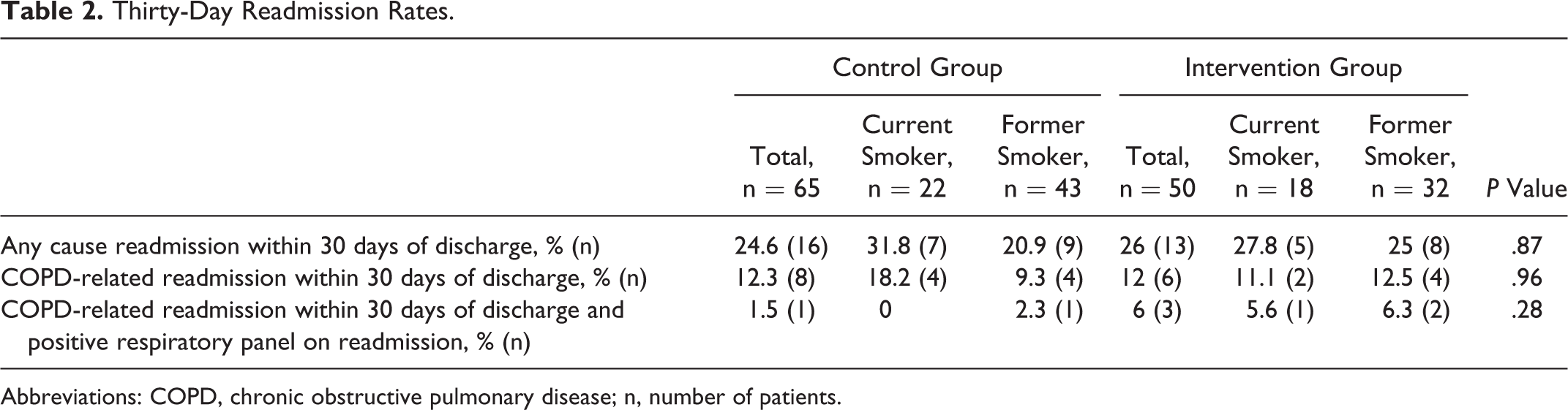
Approximately 25% of patients in the control group had any cause for readmission within 30 days of discharge from the hospital compared to 26% of patients in the pharmacist-conducted medication reconciliation group (P = .87). Further analysis showed that both the control group and the intervention group had similar COPD-related readmission rates within 30 days discharge at 12.3% and 12.6%, respectively (Table 2). Post hoc analysis showed that fewer patients in the control group (1.5%) had positive respiratory panels upon readmission compared to the intervention group (6%). Half the patients readmitted due to COPD-related causes had positive respiratory panels in the intervention group.
Thirty-Day Readmission Rates.
Abbreviations: COPD, chronic obstructive pulmonary disease; n, number of patients.
Medication Reconciliation Errors
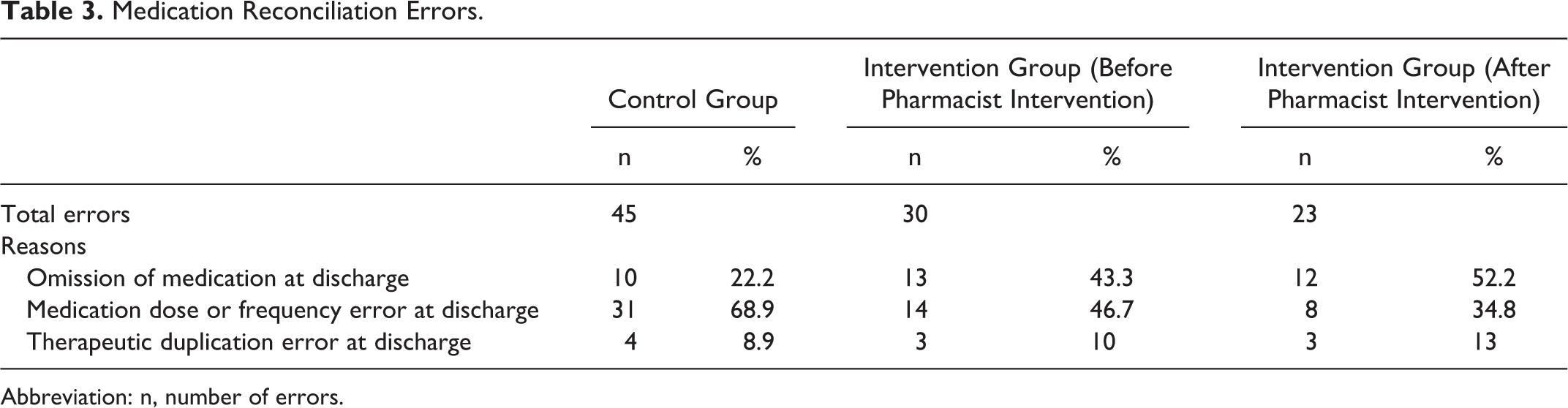
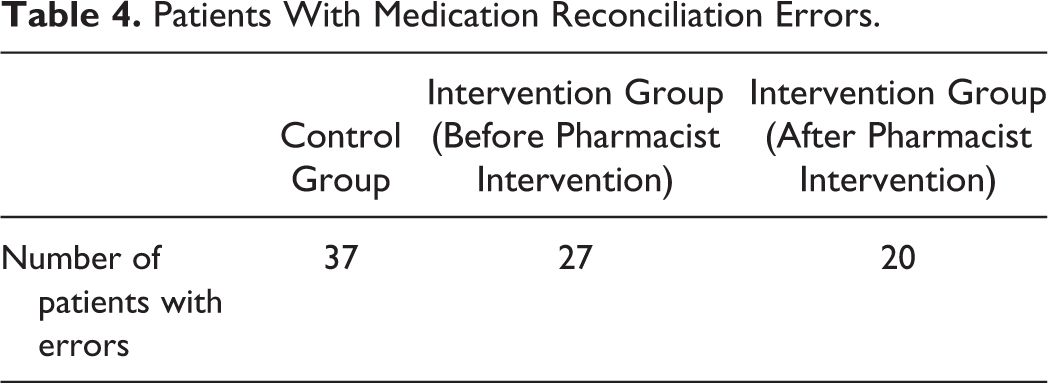
Chart review of patients in the control group identified 45 medication-related errors in the discharge medications (Tables 3 and 4). The pharmacists identified a total of 30 errors when conducting medication reconciliation at discharge in the intervention group and were able to intervene on 13 errors. The intervention consisted of a medication-related recommendation to the ordering physician, and 7 recommendations were accepted and resulted in a medication-related change in the patients discharge medication list. The most common errors in both the groups were medication dose or frequency errors consisting of 68.9% of total errors in the control group and 46.7% of total errors in the intervention group identified by pharmacists. After pharmacist intervention, the number of medication dose or frequency errors at discharge decreased from 14 errors to 8 errors in the intervention group. The second most common error was in omission of medications that accounted for 22.2% of errors in the control group and 43.3% of errors in the intervention group. After pharmacist-conducted medication reconciliation, the number of medications omitted at discharge decreased from 13 to 12.
Medication Reconciliation Errors.
Abbreviation: n, number of errors.
Patients With Medication Reconciliation Errors.
Medication Dose or Frequency Errors
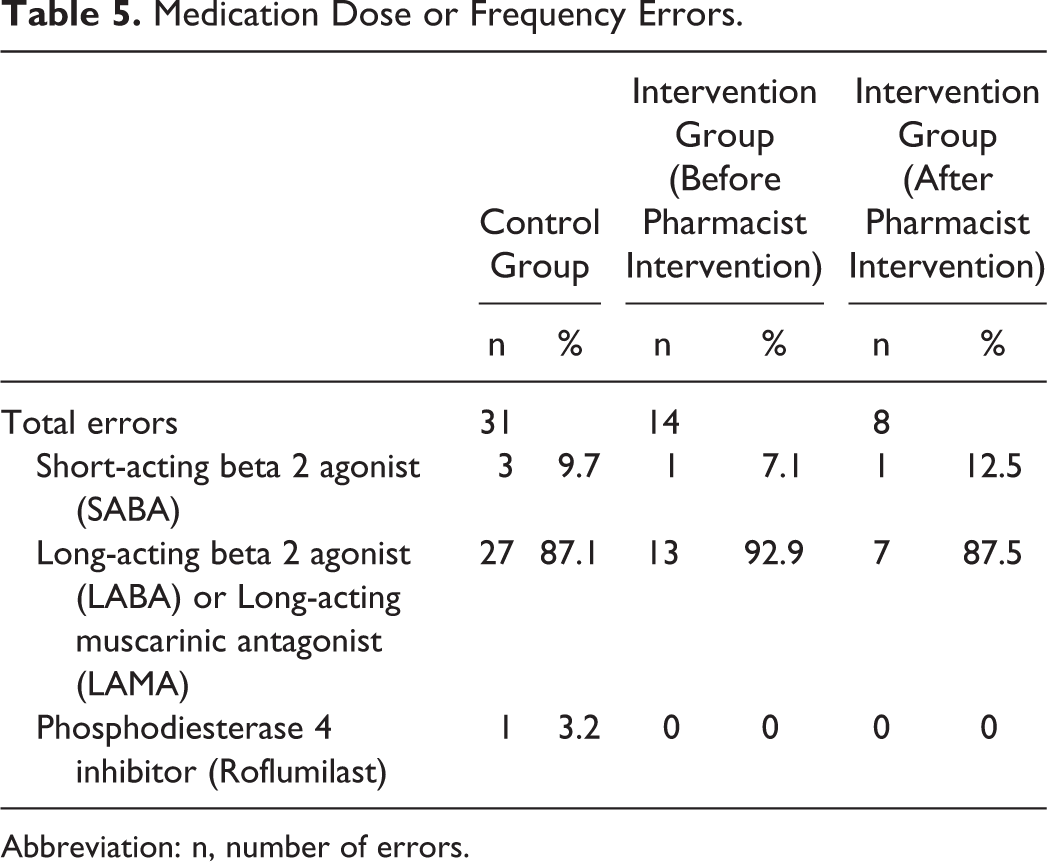
There were 27 errors in the dose or frequency of LABAs or LAMAs in the control group accounting for 87.1% of total dosing or frequency errors. Similarly, there were 13 dosing or frequency errors identified by pharmacists in the intervention group accounting for 92.9% of total dosing or frequency errors. Pharmacists had the largest impact in reducing the number of dosing or frequency errors of LABAs and LAMAs from 13 to 7 errors (Table 5).
Medication Dose or Frequency Errors.
Abbreviation: n, number of errors.
Medications Omitted at Discharge
The most common medications omitted at discharge in both groups were LABAs or LAMAs. There were 2 PDE-4 inhibitor medication omissions identified by the pharmacist in the intervention group, and after making recommendations to the ordering physician, this number was reduced to 1 PDE-4 inhibitor omission in the intervention group (Table 6).
Medications Omitted at Discharge.
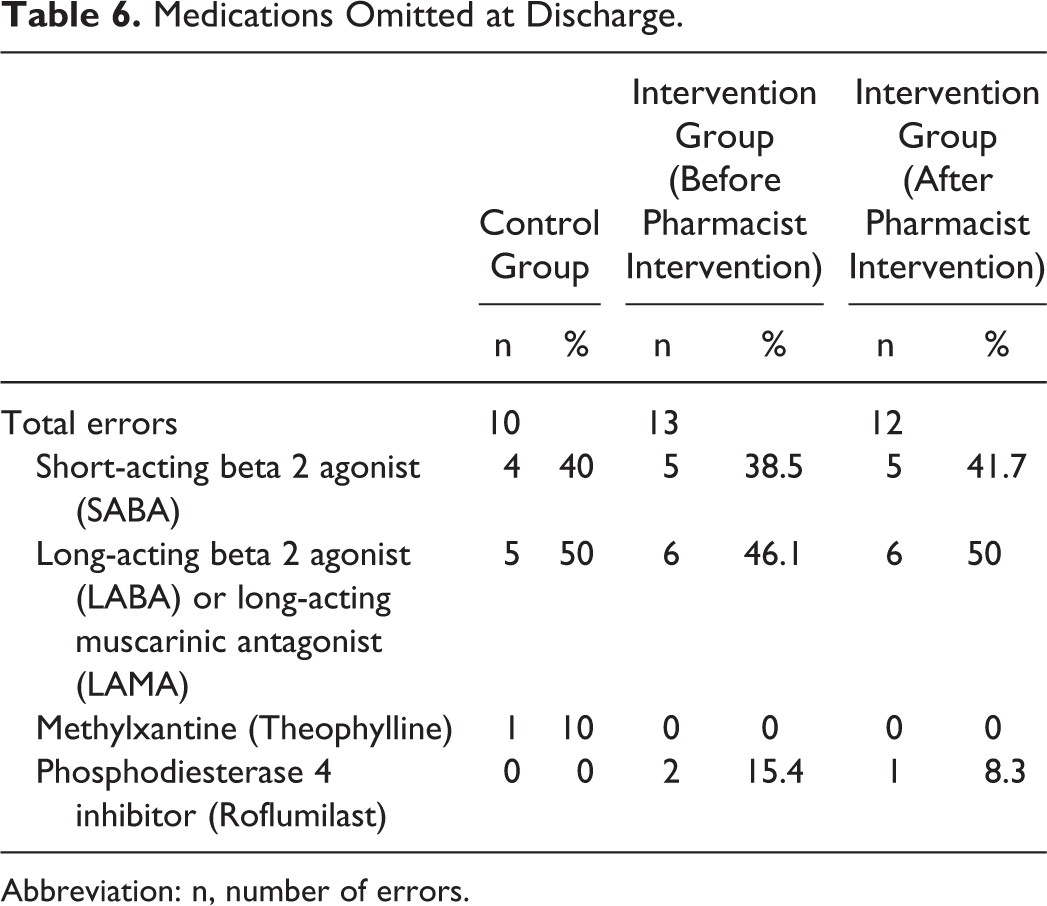
Abbreviation: n, number of errors.
Discussion
Results of this study identify the most common medication errors at discharge in patients with COPD were dosing or frequency errors, followed by omission of medications. Previous studies in COPD have not specified the medication classes contributing to medication errors upon discharge. This study contributes to the literature by identifying that most common medication errors occurred in the dose or frequency of LABAs or LAMAs. Additionally, the most commonly omitted medications upon discharge were also LABAs or LAMAs. The results of the control group helped identify the most common errors in the discharge medications of patients with COPD. The identification of commonly seen errors at discharge within the control group served as a major strength, allowing for pharmacist education through a 1-hour in service prior to the start of this study to be focused toward targeting the most common errors.
Limitations of this study included the small sample size in both the groups. Additionally, social factors may have influenced readmission rates such as access to medications and comprehension of the discharge instructions including the counseling to obtain medications. The inappropriate use of nicotine replacement therapy among patients in the intervention group could have influenced readmission rates, since current smokers have higher rates of COPD exacerbations than former smokers. 13 Another limitation was that the control group and intervention group studies did not occur concurrently. The pharmacist-conducted medication reconciliation occurred during the peak of the flu season which may have played a role in 30-day readmissions, especially since half the patients readmitted due to COPD-related causes had positive respiratory panels upon readmission. The passive education given to pharmacists through a single 1-hour in service may have contributed to the small sample size, since the pharmacists received no incentive to conduct medication reconciliation at discharge and may have chosen to opt out of participating in this research. Furthermore, lack of recommendation follow-up may have contributed to the low acceptance rate of recommendations by the ordering physicians. Additionally, pharmacists were unable to intervene on all discharge medication errors primarily due to the small window of time between the patient’s discharge orders and the patient physically leaving the hospital. Moreover, since inhaler technique was not assessed as part of the medication reconciliation process, incorrect inhaler technique could have contributed to higher readmission rates. Finally, this study may not be generalizable to hospitals with different patient populations such as those with a more affluent or medically literate patient population that may have better access to medications and comprehension of discharge instructions, consequently leading to lower readmission rates than seen in this study.
Conclusion
Pharmacist-conducted medication reconciliation at discharge did not affect 30-day readmission rates of patients with COPD in this study. Results of this study identify the most common medication errors at discharge in patients with COPD were dosing or frequency errors, followed by omission of medications. This study identified that LABAs or LAMAs were the most common drug classes to be incorrectly dosed or omitted at discharge. Future studies should reevaluate the effects of pharmacist-conducted medication reconciliation at discharge on 30-day readmission rates of patients with COPD with a larger sample size, increased pharmacist education via multiple in-services, increased pharmacist buy-in through incentives including recognition for most medication errors corrected, intervention reminders to pharmacists through weekly e-mails, and follow-up phone calls on recommendations made to prescribers.
Footnotes
Appendix A
Declaration of Conflicting Interests
The author(s) declared no potential conflicts of interest with respect to the research, authorship, and/or publication of this article.
Funding
The author(s) received no financial support for the research, authorship, and/or publication of this article.
