






Abstract
Background:
Studies have shown an association between metformin use and vitamin B12 deficiency. Since 2017, the American Diabetes Association (ADA) Standards of Medical Care in Diabetes Guideline has included a recommendation for periodic vitamin B12 measurements in metformin-treated patients, especially those with anemia or peripheral neuropathy.
Objective:
To determine the overall incidence and impact of the ADA Guideline on vitamin B12 monitoring in a veteran population on long-term metformin therapy.
Methods:
Retrospective chart review was performed for patients on metformin who started therapy prior to 2005 at the VA North Texas Health Care System (VANTXHCS). The primary outcome was the proportion of patients with at least 1 vitamin B12 level drawn during 2016 versus 2018. Metformin dose and duration, vitamin B12 supplementation, and incident neuropathy prescriptions or diagnosis were also analyzed.
Results:
Of 394 patients included for the primary outcome, 136 (34.5%) had at least 1 vitamin B12 level in 2016 versus 198 (50.3%) patients in 2018 (odds ratio: 1.94, P < .001). Of the 394 patients, 157 were diagnosed with neuropathy or prescribed a medication for neuropathy without a vitamin B12 level in the previous year or with a low level that was not supplemented.
Conclusion:
Vitamin B12 monitoring significantly increased between 2016 and 2018, aligning with the release of the 2017 ADA guidelines. However, a large proportion of patients were identified who were diagnosed with or treated for neuropathy without adequate vitamin B12 monitoring.
Keywords
Introduction
Metformin is the recommended first-line therapy for the treatment of type 2 diabetes in patients with normal renal function and is widely used.1–3 In the United States, 9.4% of the population has diabetes, a total of 30.3 million people. 4 The prevalence among US veterans is even higher, 20.5%. 5 Among US veterans with type 2 diabetes, almost 70% receive metformin. 6 Considering its widespread use, the beneficial effects and potential harms of metformin have been extensively studied. Many studies have linked metformin to lowering of vitamin B12 levels.7–15 Despite this evidence, vitamin B12 monitoring in patients treated with metformin is not routine and data are lacking regarding the clinical impact of monitoring vitamin B12 levels.8,16
Studies have shown that up to 30% of metformin-treated patients experience subnormal vitamin B12 levels and up to 10% develop vitamin B12 deficiency by laboratory assessment.9,11,17–21 In these studies, the levels of vitamin B12 have been 14% to 30% lower in patients taking metformin than in patients not taking metformin.10,11,22 Longer duration of use and higher doses of metformin have been consistently associated with a greater risk for vitamin B12 deficiency.11,13,18,20–22 One study found that each 1 mg/d increase in metformin dose was associated with a 0.042 pmol/L decrease in vitamin B12 concentration. 20 Due to hepatic stores of vitamin B12, it may take 5 to 15 years to develop absolute vitamin B12 deficiency and for clinical symptoms to appear.23,24 There is no standard value for vitamin B12 deficiency or when to supplement patients; however, studies have utilized values ranging from <148 to <300 pg/mL.9,17–20
Studies have found that metformin-treated patients with low vitamin B12 levels have significantly more severe peripheral neuropathy than those with normal levels.7,25 Since the consequences of vitamin B12 deficiency can overlap with diabetic peripheral neuropathy, the diagnosis of vitamin B12 deficiency could potentially be missed. If left untreated, this could lead to permanent neurological damage. 26 Low vitamin B12 levels in patients on metformin have also been associated with depression and worse cognitive performance. 27
Current guidelines recommend monitoring vitamin B12 levels in patients on long-term metformin therapy.2,11,14 However, before January 2017, the American Diabetes Association (ADA) Guideline Standards of Medical Care in Diabetes did not include a recommendation to monitor vitamin B12 for patients on metformin. In January 2017, the ADA released updated guidelines that included a new recommendation to consider periodic measurements of vitamin B12 levels in patients treated with metformin, especially those with anemia or peripheral neuropathy. 1 The more recent versions of the guideline have continued to include this recommendation.28,29 The guideline also recommends that, for all patients with diabetic peripheral neuropathy, alternative causes should be considered, including vitamin B12 deficiency. 1 The objective of this study was to determine the overall incidence and impact of the ADA recommendation of periodic vitamin B12 monitoring in metformin-treated patients.
Materials and Methods
Subjects
This retrospective cohort study was conducted at the VA North Texas Health Care System (VANTXHCS) and utilized the Computerized Patient Record System (CPRS) to access electronic medical records. Data were analyzed from time of metformin initiation through December 31, 2018, for each patient. Adult patients diagnosed with type 2 diabetes with an active metformin prescription who initiated metformin prior to 2005 were eligible for inclusion. Patients were excluded if they did not have regular Veterans Affairs (VA) follow-up (defined as less than 1 A1c in 2015) or if they were not consistently prescribed metformin throughout the study period (defined as less than 80% proportion of days covered). Additionally, patients were excluded for the subanalyses looking at metformin dose and duration if they had baseline anemia or vitamin B12 deficiency or any documented medications or comorbidities throughout the study period that could impact vitamin B12 levels (ie, proton pump inhibitors, histamine H2-receptor antagonists, multivitamins, Helicobacter pylori infection, gastrointestinal surgery, Zollinger-Ellison syndrome, tropical sprue, celiac disease, or human immunodeficiency virus).
Study Variables
Demographic data collected include age, body mass index (BMI), gender, and race. Clinical data collected include metformin start date, incidence and dates of vitamin B12 monitoring, resulting vitamin B12 levels, and incident diagnoses and prescriptions. Data regarding medications and comorbidities that could impact vitamin B12 levels were also collected. Incident diagnoses of anemia or neuropathy and corresponding prescriptions after starting metformin were searched for using the keywords anemia, neuropathy, gabapentin, pregabalin, duloxetine, venlafaxine, capsaicin, lidocaine, amitriptyline, nortriptyline, and tramadol in the patients’ charts. Both VA and non-VA records were analyzed, if documented. Using the same cohort of patients, data were compared between 2016 and 2018. The primary outcome was the proportion of patients with at least 1 vitamin B12 level drawn during 2016 versus 2018. Secondary outcomes included analyzing the effect of metformin dose and duration on vitamin B12 levels and to examine whether patients are being monitored and supplemented accordingly. An exploratory objective was developed to evaluate patients with incident diagnosis of neuropathy or new prescription medications for neuropathy after the initiation of metformin. Vitamin B12 levels were categorized according to local lab reference ranges as sufficient (180-914 pg/mL), intermediate (145-179 pg/mL), or deficient (<145 pg/mL). If a patient had more than 1 vitamin B12 level documented, the first level of that year was recorded. Vitamin B12 levels as indications for supplementation were analyzed both according to local lab reference ranges and by current VANTXHCS practice (<250 pg/mL). To examine the effect of metformin dose on vitamin B12 levels, doses were categorized as <1, 1 to 2, and >2 g/d. There were no specific guideline education or implementation strategies utilized at the VANTXHCS. There were also no automatic alerts in electronic medical records regarding screening for vitamin B12 deficiency in long-term metformin users. The study protocol was reviewed and approved by the institutional review board.
Statistical Analysis
A McNemar test, adjusted for age, was performed on the primary outcome to compare the proportion of patients who received at least 1 vitamin B12 level in 2016 versus 2018 after the ADA released new guidance on vitamin B12 monitoring. It was estimated that 341 patients would be needed to provide 80% power in order to detect a 47% relative increase in the primary end point between 2016 and 2018 at a significance level of .05. Descriptive statistics were used for all other analyses.
Results
Patient Characteristics
A total of 420 patients who initiated metformin prior to 2005 were assessed for eligibility. Twenty-six patients were excluded due to having less than 1 A1c documented in 2015. The resulting 394 patients were included for the primary outcome (Figure 1). For the subanalyses looking at metformin dose and duration, 312 patients were further excluded. The most common reason for exclusion in the subanalysis was prescription of a PPI (119 patients) or cyanocobalamin (129 patients) during the study period. Of the 394 patients included, 381 (96.7%) were male, 263 (66.8%) were Caucasian, 81 (20.56%) were African American, and 4 (1.01%) were Hispanic. There were also 46 (11.67%) patients with undocumented race. The median age of patients included was 55 years (interquartile range [IQR]: 51-60) and the median BMI was 31.65 (IQR: 26.99-35.55).
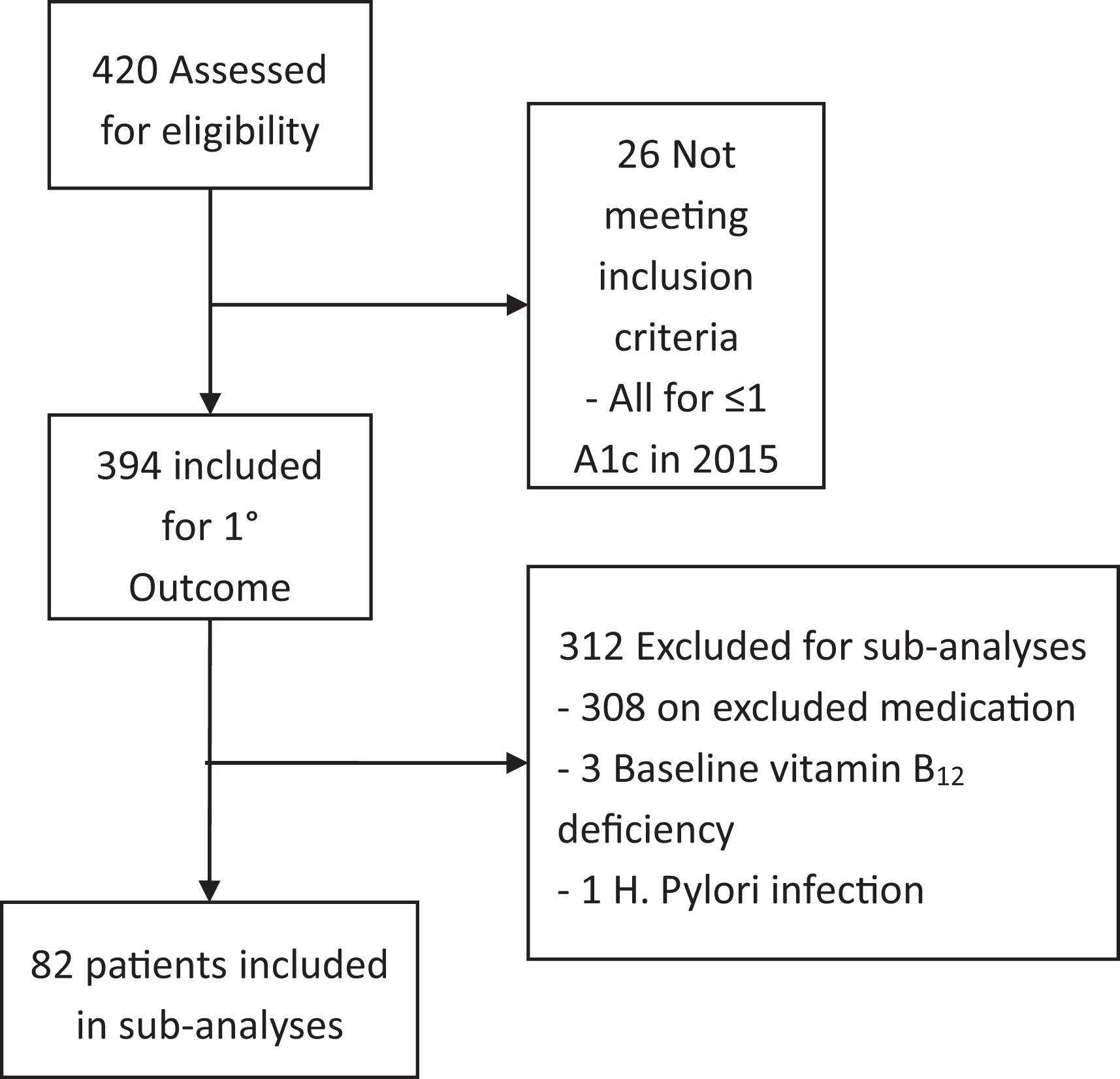
Patient screening for eligibility. Inclusion criteria included diagnosis of type 2 diabetes, age 18 or older, an active metformin prescription, and metformin initiation date prior to 2005. All patients assessed had at least 80% proportions of days covered (PDCs). Excluded medications for subanalyses were proton pump inhibitors, H2 antagonists, and multivitamins throughout the study period. Excluded comorbidities were Helicobacter pylori infection, gastrointestinal surgery, Zollinger-Ellison syndrome, tropical sprue, celiac disease, and HIV infection.
Outcomes
For the primary outcome (Figure 2), 136 (34.5%) patients had at least 1 vitamin B12 level in 2016 versus 198 (50.3%) patients in 2018 (odds ratio: 1.94, P < .001) after adjusting for age. The average duration of metformin use during the study period was 16.33 years (range: 14.01-22.4 years). Of the 136 patients with documented vitamin B12 levels in 2016, 3 levels were identified as deficient (1 supplemented, 2 not supplemented), 3 were intermediate, and 130 were sufficient. There were 20 levels identified in 2016 that were less than 250 pg/mL, of which 11 were supplemented with cyanocobalamin and 9 were not. Of the 198 patients with documented vitamin B12 levels in 2018, 3 levels were identified as deficient (2 supplemented, 1 not supplemented), 14 were intermediate, and 181 were sufficient. There were 33 levels identified in 2018 that were less than 250 pg/mL, of which 19 were supplemented and 14 were not.
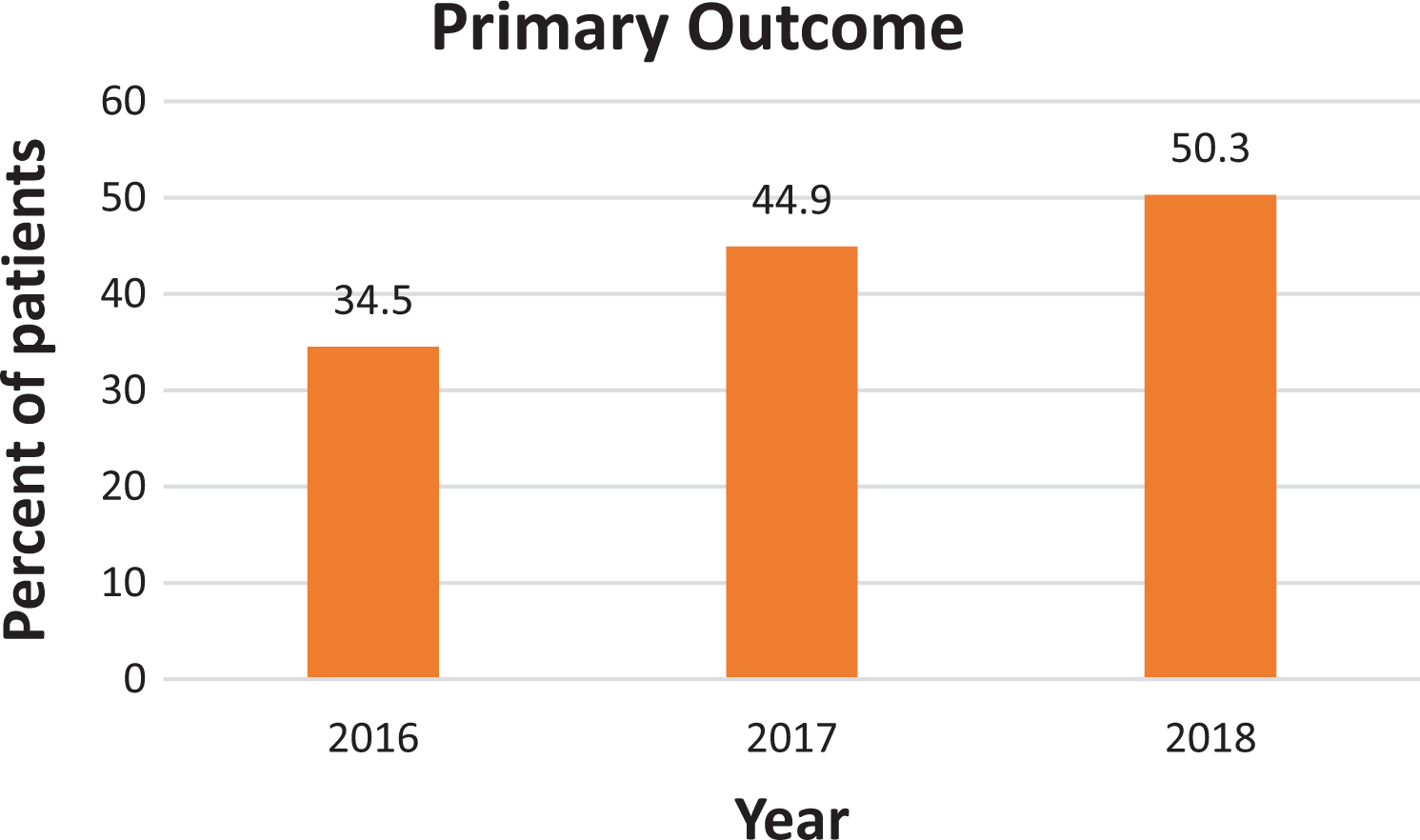
Percentage of patients with at least 1 vitamin B12 level drawn during the respective year.
Figure 3 depicts the number of vitamin B12 levels drawn during the study period. Over the mean 16.33-year duration of metformin therapy during the study period, 55 (13.9%) patients were identified without any documented B12 levels and 59 (14.97%) patients were identified with only 1 level. The results of the subanalyses evaluating the association of metformin dose and duration did not result in any significant trends (Figures 4 and 5).
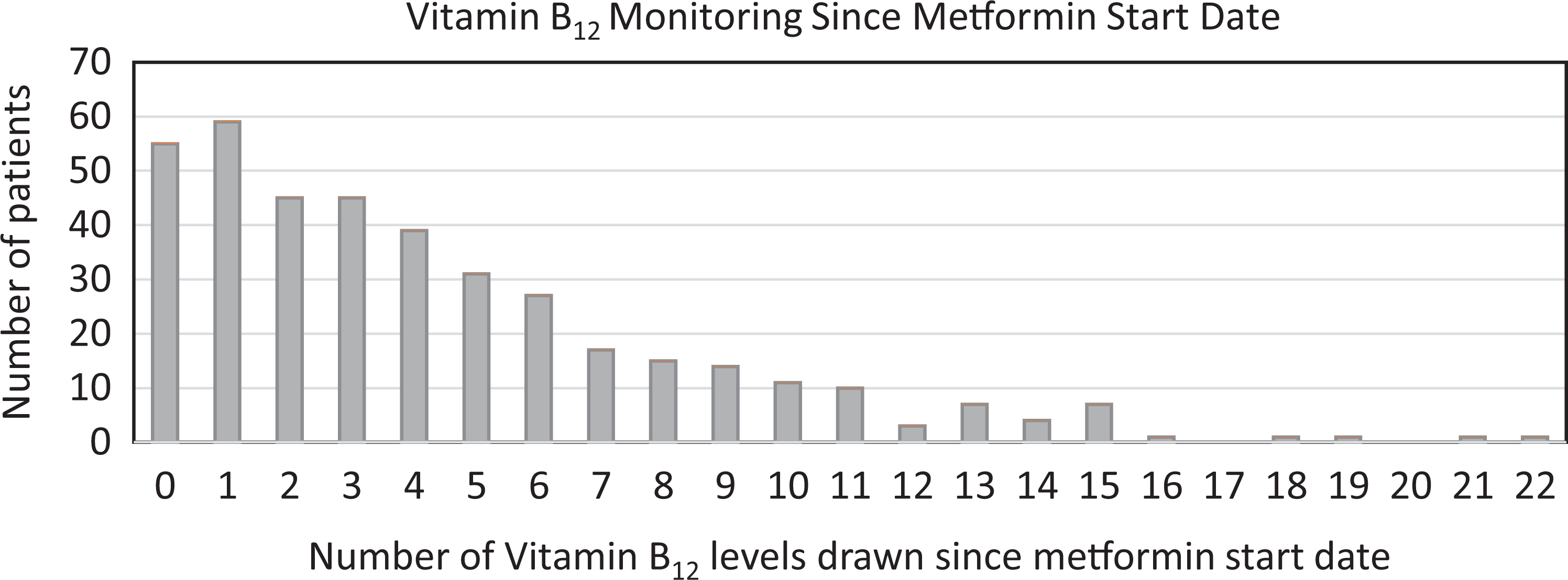
Number of vitamin B12 levels during the study period (metformin start date through December 31, 2018).
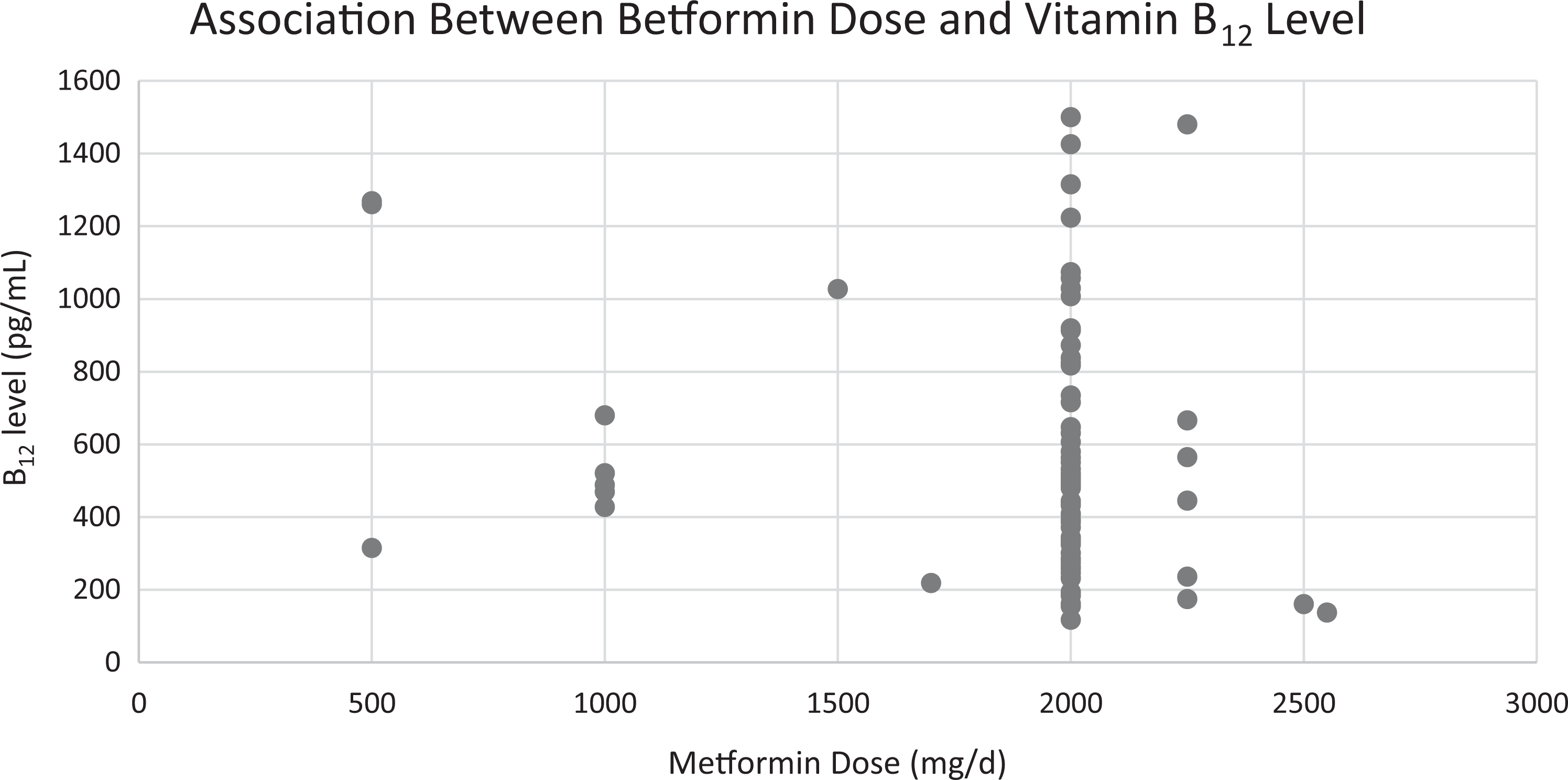
Association between metformin dose and vitamin B12 levels.
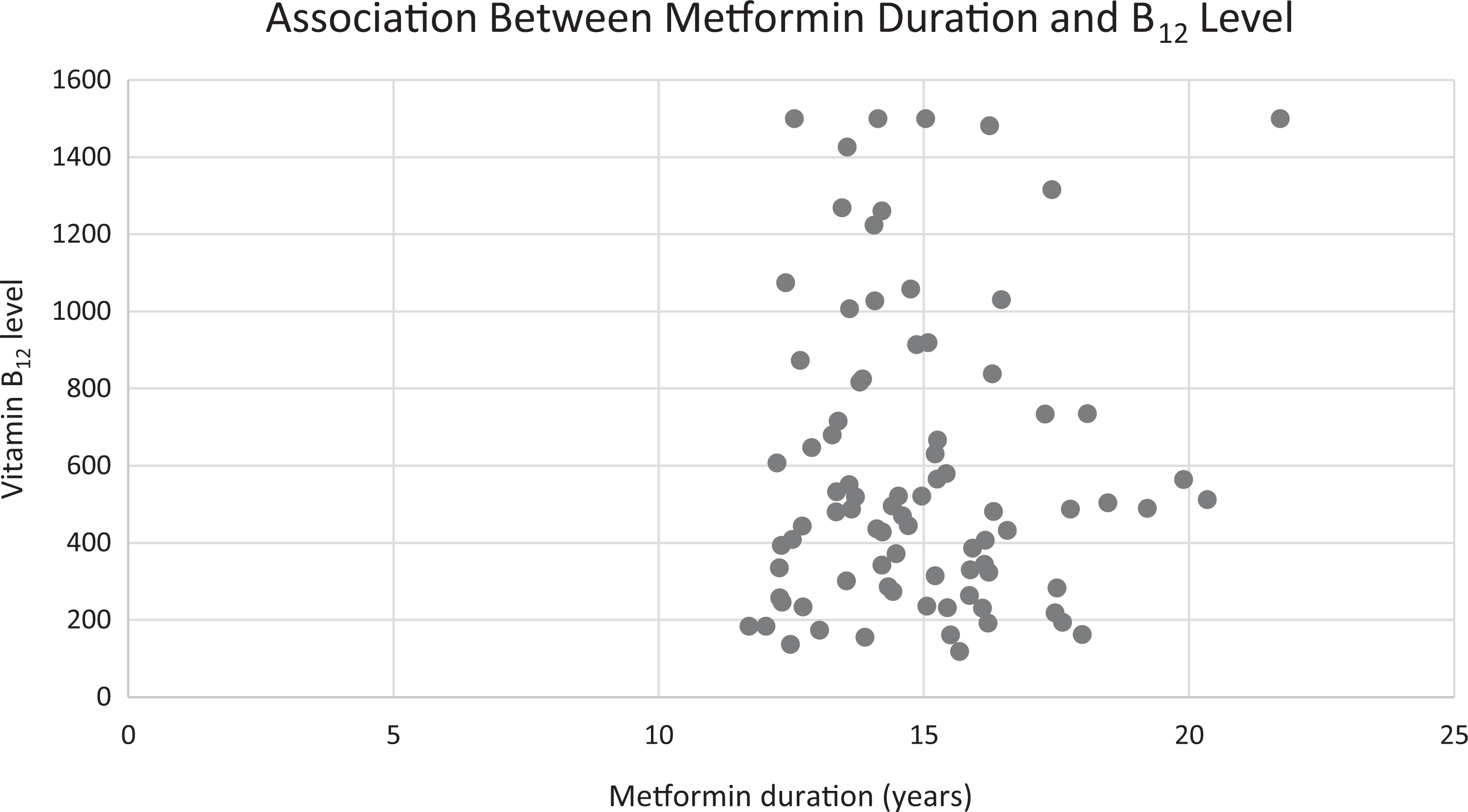
Association between metformin duration and vitamin B12 levels.
Of the 394 patients included in the study, 117 patients were diagnosed with or prescribed medications for neuropathy without any documented vitamin B12 levels since starting metformin. For 39 patients, it had been over 1 year since a B12 level was documented when being diagnosed with or prescribed medications for neuropathy. One patient was also identified as having a vitamin B12 level <250 pg/mL that was not supplemented and was subsequently prescribed a medication for neuropathy.
Discussion
The proportion of patients who received at least 1 vitamin B12 level in 2018 was significantly higher than those in 2016. There was an overall increasing trend between 2016, 2017, and 2018. This aligns with the release of the ADA guidelines in January 2017 that introduced a new recommendation to periodically monitor vitamin B12 levels for patients on long-term metformin therapy. However, the finding of 55 patients with no documented B12 levels over an average 16.33 years of metformin use highlights opportunities for improvement.
The relatively low prevalence of vitamin B12 monitoring found in this study is consistent with prior reports. Prior to the release of the 2017 ADA guidelines, Kancherla et al found that only 37% of older adults with diabetes on long-term metformin received vitamin B12 monitoring. 8 Pierce et al found that, in a veteran population taking at least 2 g of metformin per day for at least 1 year, 60% did not have vitamin B12 measured. 16 Of those who had been taking metformin for 10 years or more, 50% had never had vitamin B12 tested. 16 Less than 1% of subjects had an annual measurement of vitamin B12 levels. 16 Of subjects who had a new diagnosis of anemia or neuropathy during metformin therapy, 29% and 42% did not have a vitamin B12 level measured, respectively. 16
In addition, 23 of the 53 patients identified in this study with levels below 250 pg/mL did not receive supplementation with cyanocobalamin. The insufficient monitoring and supplementation of vitamin B12 levels in this veteran population is concerning for multiple reasons. Untreated vitamin B12 deficiency can lead to symptomatic anemia as well as neurologic manifestations including nerve function loss and gait abnormalities. These symptoms have the potential to be misinterpreted as diabetic peripheral neuropathy if vitamin B12 levels are not appropriately monitored and addressed. After thorough review, this appears to have been a possibility in 39.8% of patients included in this study. However, since this was not the primary objective of this study, these results would need to be confirmed in future studies. The medications often used for diabetic peripheral neuropathy, such as gabapentin and tricyclic antidepressants, can increase central nervous system depression and fall risk, which is especially concerning in the mostly elderly veteran population. Therefore, these medications should be avoided when they are not indicated.
Strengths
To our knowledge, this is the first study to examine the impact of a guideline recommendation on vitamin B12 monitoring in patients on long-term metformin therapy. All data were gathered through the VA CPRS system, which is a comprehensive database for prescriptions, lab results, diagnoses, and notes from all of the patient’s VA providers. Documented non-VA prescriptions were captured as well. Patients were on metformin for an average of 16.33 years during the study period, which is adequate time for vitamin B12 deficiency and clinical symptoms to manifest. The study also included a sample size large enough to meet power requirements.
Limitations
The first limitation of this study is the relatively short amount of time after the release of the 2017 ADA guidelines to allow for implementation of recommendations. Studies have shown that it takes a median of 1 year for implementation of new policy statements and can take up to 10 years. 30 The second limitation regards the exclusion of patients prescribed cyanocobalamin during the study period for the subanalyses on metformin dose and duration. These patients were excluded because cyanocobalamin could influence resulting vitamin B12 levels. However, excluding these patients also limits the studies’ ability to detect a decreasing trend in vitamin B12 levels. This study was therefore unable to determine the effect of metformin dose and duration on vitamin B12 levels. Another limitation is the unclear definition of “periodic monitoring” in the ADA guideline recommendation and no mention of a value for when to start supplementing vitamin B12. A period of 1 year was chosen for monitoring parameters for this study per local expert opinion. Fourthly, serum vitamin B12 measurement has poor sensitivity for reliable detection of B12 deficiency. It is therefore recommended to use more than one biomarker to accurately diagnose vitamin B12 deficiency, such as methylmalonic acid or holotranscobalamin.31,32 Vitamin B12 levels alone were chosen for this study as utilization of the other diagnostic methods was thought to be low. This study was performed as a retrospective chart review, and therefore, no causal effect can be determined. The results of the study have limited generalizability beyond the adult male veteran patient population.
Conclusion
This study demonstrated a statistically significant increase in vitamin B12 monitoring after the release of the 2017 ADA Standards of Medical Care in Diabetes Guideline in a veteran population on metformin therapy. However, multiple patients were identified without any documented vitamin B12 levels since starting metformin therapy. There were also a large number of patients who were diagnosed with neuropathy or prescribed a medication for neuropathy during the study period without adequate vitamin B12 monitoring. Although an increase in vitamin B12 monitoring was shown, greater awareness and compliance with monitoring would assist with preventing complications of vitamin B12 deficiency and reducing the risk of patients being misdiagnosed with or mistreated for diabetic neuropathy.
Footnotes
Declaration of Conflicting Interests
The author(s) declared no potential conflicts of interest with respect to the research, authorship, and/or publication of this article.
Funding
The author(s) disclosed receipt of the following financial support for the research, authorship, and/or publication of this article: Dr Alvarez receives funding from the National Institutes of Health (K08 DK101602).
