







Abstract
Objectives:
In order to meet the needs of the COVID-19 public health crisis and to actively engage students in patient care opportunities, the University of Tennessee Health Science Center College of Pharmacy in partnership with the Tennessee Health Department, developed a remote Public Health Advanced Pharmacy Practice Experience (APPE) Elective. The objectives of this paper are to describe the development of and students’ experiences and learning outcomes during the elective. Faculty preceptor and experiential administrator’s perspectives are also described.
Methods:
This month-long APPE was developed in mid-March and delivered in April and May of 2020. The students volunteered in-person with the State of Tennessee COVID-19 Hotline call centers and conducted topic discussions and assignments virtually with a remote preceptor.
Results:
A total of 16 students completed this rotation experience. Student ratings of the experience were positive, and their knowledge improved in all topic areas. Students collectively completed approximately 700 hours manning the COVID-19 hotline and logged over 1,000 phone calls.
Conclusions:
In a time of unprecedented disruption to experiential learning, the development of this unique public health APPE directly benefited the college, the students, and the citizens of our state. The APPE described in this paper could be replicated in additional waves of the pandemic or adapted for similar disaster response.
Introduction
In the spring semester of 2020, the outbreak of the novel coronavirus (COVID-19) had a profound impact on individuals, communities, and schools of pharmacy across the globe. In order to contain the spread of the deadly airborne virus, many states issued shelter-in-place orders, causing unprecedented social and economic disruption. As demand for personal protective equipment (PPE) rose and risk of disease transmission increased, hospitals and health systems also limited the number and types of trainees allowed to be on-site. As social distancing became the new normal, and only “essential” businesses remained open, the response to COVID-19 put a spotlight on public health and transformed the delivery of pharmacy education.
Public health is a vital area of focus for pharmacists and this has been recognized by the American Association of Colleges of Pharmacy (AACP), the American Society of Health-System Pharmacists (ASHP), and the American Public Health Association (APHA), among other professional organizations.1-3 In 2004, AACP recognized the important role pharmacists can play in public health by including population-based care and public health in its Center for Advancement in Pharmaceutical Education (CAPE) Educational Outcomes. 1 These outcomes emphasized the need for pharmacist involvement to ensure the “availability of effective, quality health and disease prevention services,” as well as the urgency to “develop public health policy.”1,2 According to AACP, out of 110 schools offering dual degree programs, nearly half (46) offer dual Pharm.D./MPH programs. 4 As the practice of pharmacy has evolved, so has the pharmacist’s role in public health. Pharmacists are actively involved in public health efforts across the nation today; from patient education, improving medication adherence and advancing diabetes prevention, to vaccine administration, prescribing naloxone or administering point of care tests.5,6 Historically, pharmacists have also played a role in disaster response and public health emergencies, including hurricanes7-10; the H1N1 epidemic11,12 and tornado relief. 13 These include traditional pharmacy roles in medication management and access, as well as patient triage and communication and administration activities.9,14,15 According to the American Public Health Association (APHA), pharmacists “provide an excellent source of human capital” because they tackle the “essence of public health”—primary prevention through health education. 2 As essential workers and the most accessible healthcare providers during the coronavirus pandemic, community pharmacists and pharmacy interns were on the front lines fielding questions from the public about prevention, preparedness, response and recovery. 16
The aspects of pharmacy education perhaps most negatively impacted by the COVID-19 outbreak were introductory and advanced pharmacy practice experiences (IPPEs and APPEs). In what Fuller and colleagues describe as a “paradigm shift in US experiential pharmacy education,” the pandemic caused a rush to modify, rearrange, or delay pharmacy experiential learning. 17 According to a document collated by AACP describing the innovative ways pharmacy schools addressed didactic challenges, the majority of colleges of pharmacy reported some degree of disruption in experiential education opportunities. 18 In this report, institutional rotations were most widely affected as hospitals around the nation took steps to limit public access. The Centers for Disease Control and Prevention, recommended that institutions of higher education operate remotely when possible via Blackboard, Skype, or Zoom. 19 Many colleges reported that students were allowed to work remotely and complete their APPEs by communicating with a preceptor and providing patient care via telephone, videoconferencing, and virtual access to patient charts.17,20 Unfortunately, there were still many students who were unable to be consistently placed on required and elective experiential rotations, forcing colleges to find innovative solutions in order to keep students on track for graduation. For example, at our institution, over half of the APPE students were displaced (52% in April and 69% in May) from their originally scheduled rotations in the late spring of 2020. Many of these displaced students were able to be rescheduled to existing community and non-patient care APPE practice sites, however, many displaced students (14% in April and 7% in May) were forced to take an off month due to lack of practice sites available. While many colleges scrambled to reclassify rotations or find supplemental activities for existing experiences in a virtual format, while struggling to maintain quality direct patient-care experiences, the University of Tennessee Health Science Center (UTHSC) College of Pharmacy seized upon an opportunity to find APPE placements for our students in a unique and timely practice environment.
The outbreak of COVID-19 presented an exponential increase in public health-related inquiries, a workforce of unassigned APPE students available to provide patient care, and a dependence on virtual communication. Capitalizing upon this unparalleled public health crisis, in order to meet the needs of the public and to actively engage students in patient care opportunities, the UTHSC College of Pharmacy in partnership with the UTHSC Health Department, developed a novel remote Public Health elective APPE.
This paper will describe 1) the development of and 2) students’ experiences and learning outcomes during a remote Public Health elective APPE in response to the coronavirus outbreak. Faculty preceptor and experiential administrator’s perspectives are also described.
Methods
This study was deemed exempt by the UTHSC Investigational Review Board.
This month-long APPE was developed in mid-March and delivered in April and May of 2020. The State of Tennessee (TN) Stay-at-Home Order went into effect April 2nd and was lifted April 30th. The college has 3 campuses across the state (Memphis, Nashville, and Knoxville). The Tennessee Health Department is located in the state capital in Nashville, and had established an emergency COVID-19 Hotline with call centers. Contact was established with a colleague from the state Health Department who referred us to TN Emergency Management Agency (TEMA) to inquire about the potential for pharmacy students to get involved with the COVID-19 response. In our discussions with the state emergency management department, it was agreed upon that pharmacy students could serve as volunteers, answering calls at established call centers.
UTHSC College of Pharmacy begins APPE rotations in March of the third didactic year. Third year Pharm.D. students on the Nashville campus that had been displaced from a previously-scheduled rotation due to COVID-19 closures were assigned to this elective. The preceptor selected to coordinate this experience was an Assistant Professor with a background in community pharmacy practice and research in social determinants of health who was located on the main campus in Memphis.
The students volunteered in-person at 2 COVID-19 call center locations in Nashville. The call centers employed extensive cleaning measures and abided by social distancing mandates, and also provided hand sanitizer, snacks and meals for the students. At the call centers, the students were a part of a group of medical professionals answering questions from the public related to COVID-19. Students signed up for 4 to 6-hr shifts through the online volunteer portal or were assigned by the faculty preceptor to reach a minimum target of 15-30 hours a week.
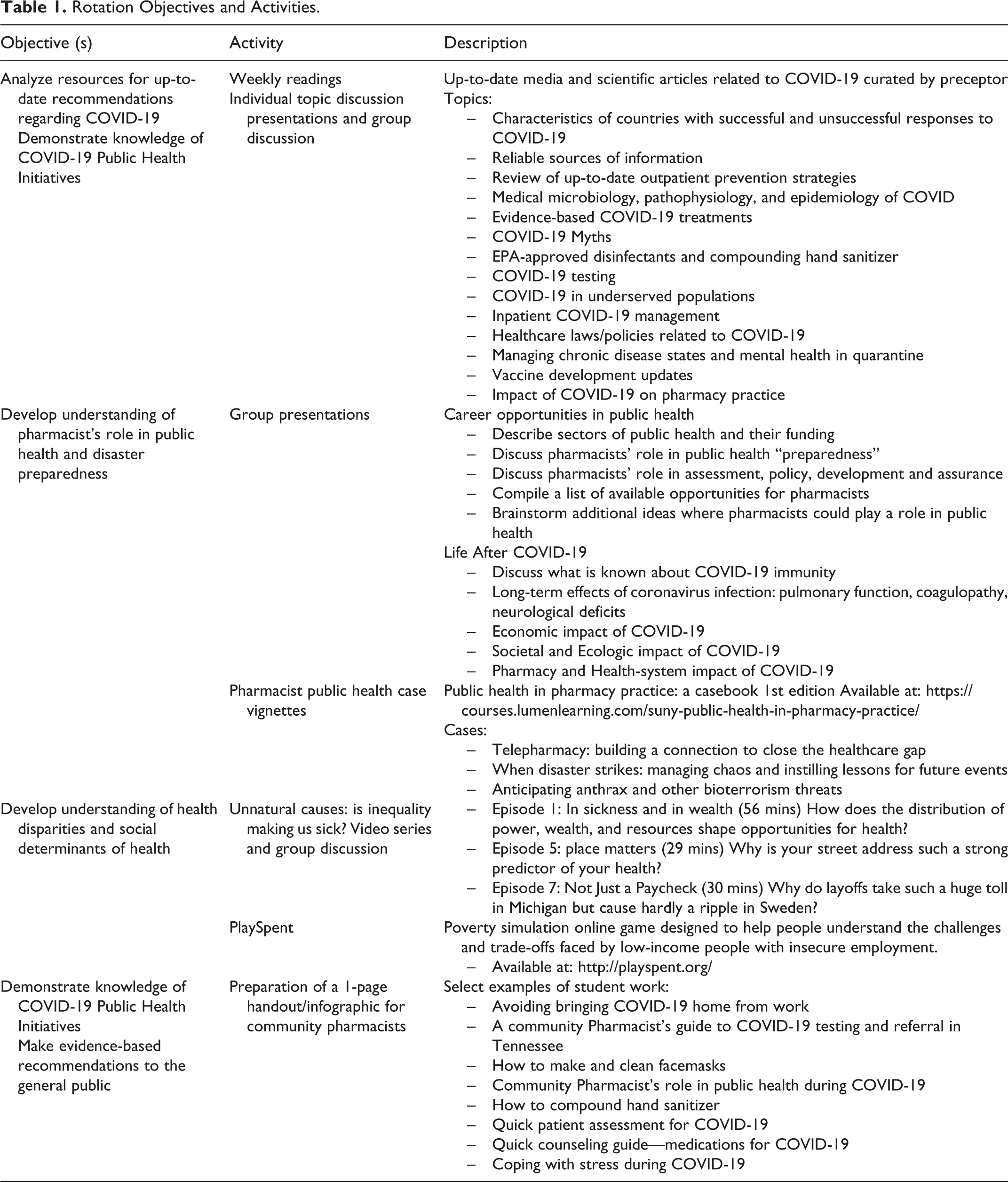
The faculty preceptor conducted bi-weekly topic discussions and assignments/projects remotely through Zoom videoconferencing. All rotation documents were contained in a shared online folder. The rotation objectives and activities are described in Table 1. Students were required to keep a log of their call center hours and interactions as well as submit weekly written reflections.
Rotation Objectives and Activities.
After the APPE, students were asked to complete a brief, online retrospective post-then-pre survey via QuestionPro comparing their perspectives and learning outcomes. Post-then-pre survey designs are single timepoint surveys asking respondents to reflect back after an event has taken place. 21 These are useful when participants may not accurately assess their pre-event perceptions and to account for response shift bias inherent in traditional pre/post survey designs.21,22 T-tests were used to analyze the means of this data. Feedback from the April rotation experience was considered in implementation of the May rotation. Data from the UTHSC standard APPE evaluation was also evaluated. Student reflections and verbal feedback were reviewed, and the perspectives of experiential administration and faculty preceptor were collected.
Results
A total of 16 students completed this rotation experience (9 students in April, 7 students in May). The format of the rotation did not change significantly between the first and second iterations. All students completed the logs and reflections. Fifteen students completed the survey (response rate = 94%) and 11 students completed the standard APPE evaluation (response rate = 69%).
Students on this rotation collectively completed nearly 700 hours manning the COVID-19 hotline and logged over 1,000 phone calls (See Table 2). Call logs indicated that the students answered up to 35 calls in a single shift, and that the majority of calls were related to locating testing centers. Other calls logged by students included assessment of symptoms, updates on state statistics regarding cases and hospitalizations, referrals to COVID-19 information in Spanish, questions about antibody testing and plasma donation, reports of non-compliance or violations at workplaces or nursing homes, recommendations for inter-state travel, and restrictions regarding businesses re-opening.
Summary of Call Center Interventions n = 16.
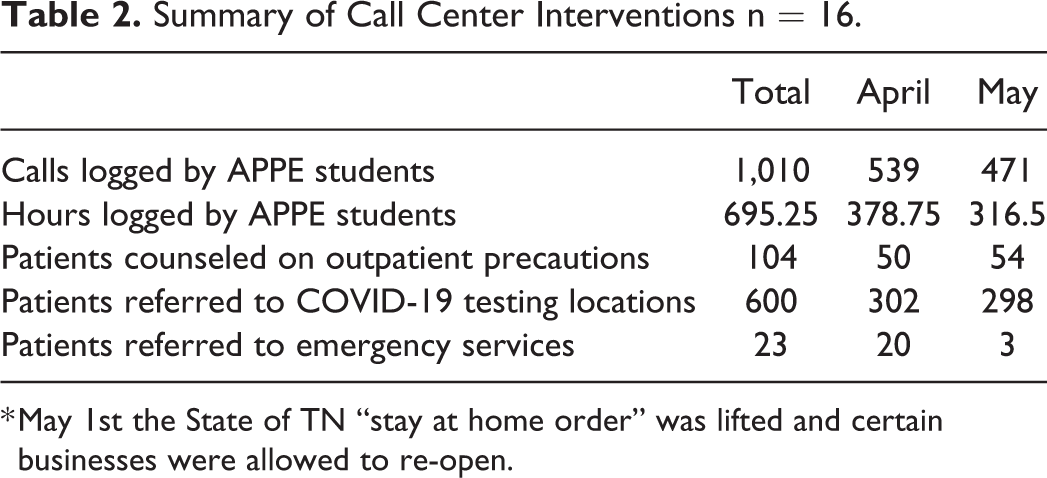
* May 1st the State of TN “stay at home order” was lifted and certain businesses were allowed to re-open.
In group discussions and written weekly reflections, many expressed that they were grateful for the chance to leave their homes and have some social interaction during the lockdown. Several students also shared that they learned from and enjoyed interacting with other healthcare professional volunteers as well as the health department staff.
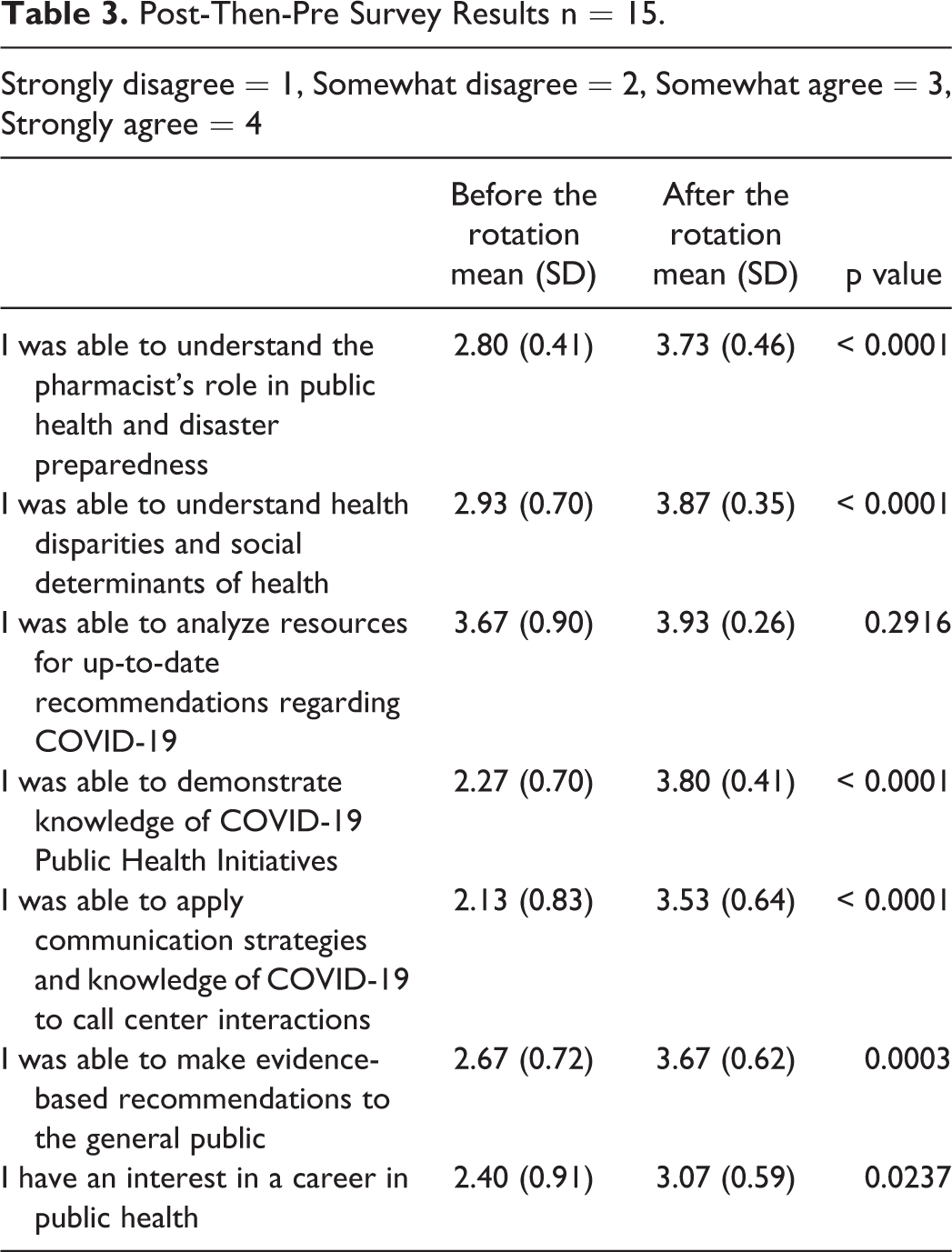
Student ratings of learning objectives increased after completing the APPE, demonstrating that their perception of their knowledge improved in all topic areas (See Table 3). All improvements were statistically significant except for the ability to analyze resources which was rated highly before the course (pre-course mean = 3.67). Student perceptions of the APPE activities are described in Table 4. The call center experiences were rated as highly valuable. For the rotation assignments, the topic discussions and videos were rated the most valuable learning experiences. Students did not rate the written reflections as valuable as the other rotation assignments. Student assessments of the rotation and preceptor are presented in Table 5.
Post-Then-Pre Survey Results n = 15.
Student Perceptions of Rotation Activities n = 15.
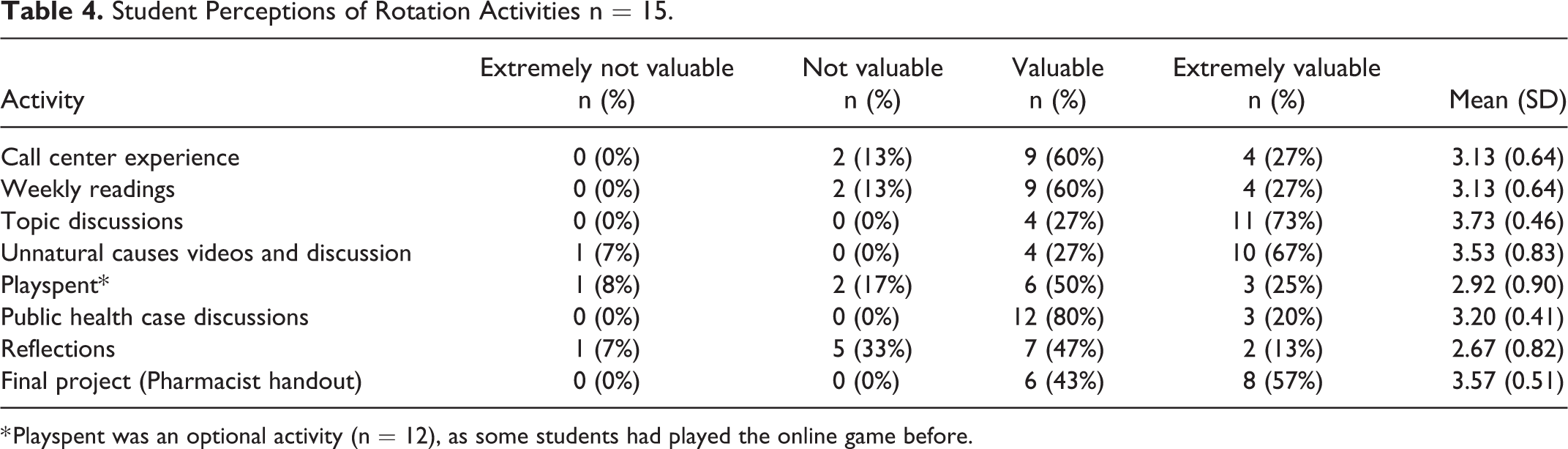
* Playspent was an optional activity (n = 12), as some students had played the online game before.
Summary of Rotation Survey and Evaluation Reports.
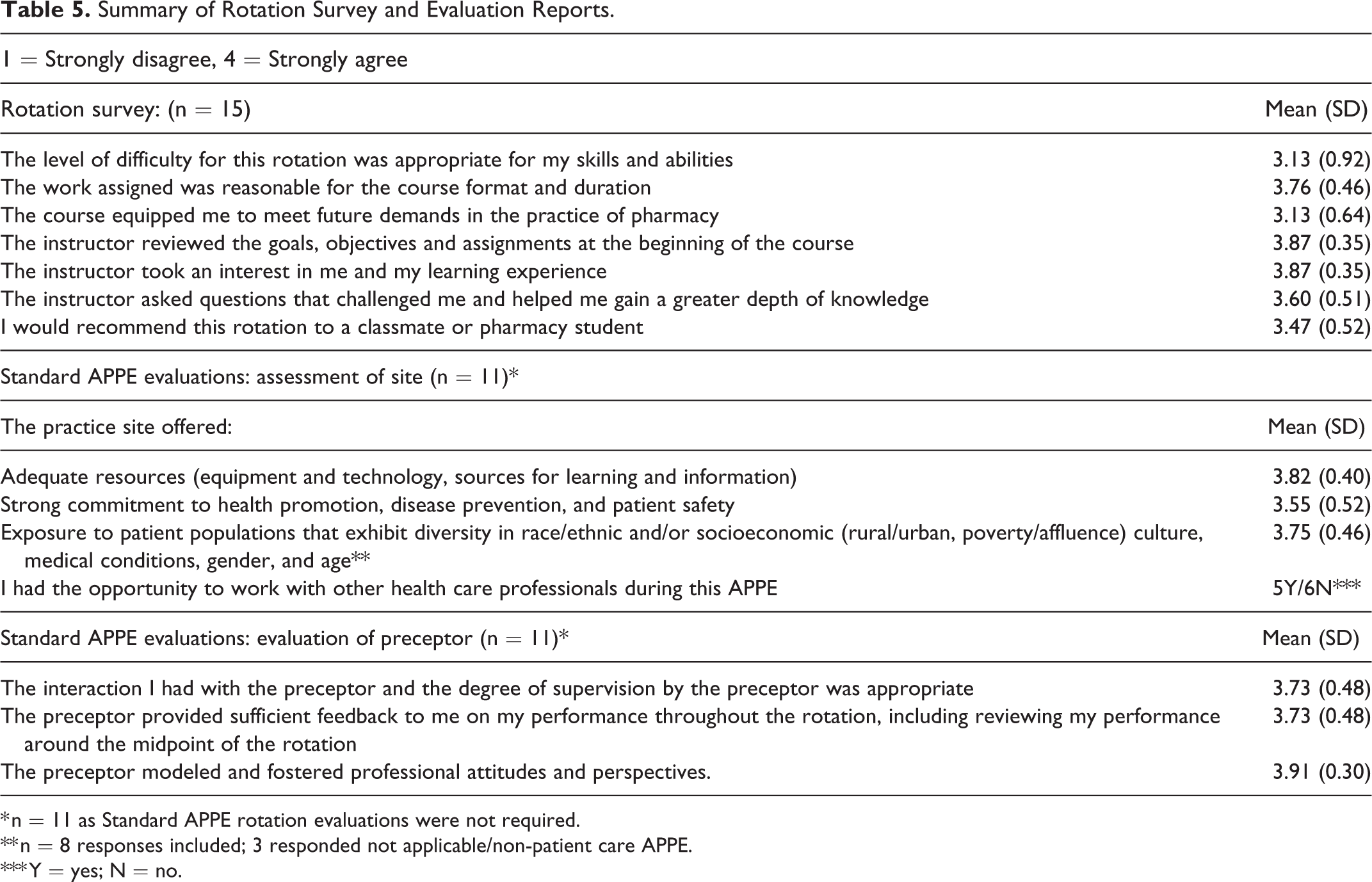
* n = 11 as Standard APPE rotation evaluations were not required.
** n = 8 responses included; 3 responded not applicable/non-patient care APPE.
*** Y = yes; N = no.
Feedback regarding the students from call center agents was also positive. Representatives from the call centers reported appreciation for the students’ service, and satisfaction with their professionalism and performance via email communication with the preceptor.
The students provided positive feedback on the APPE design and structure but expressed frustration with a number of aspects of the rotation experience. A challenge with the call centers was an overcommitment to student volunteers compared with the call center volume, and students were asked not to come in on several occasions after they had signed up for shifts. The students also expressed frustration with the inconsistency in number of calls per shift and repetitiveness of inquiries over the month. In their reflections, several students reported issues with mental health (anxiety, depression and isolation) during the pandemic, but most felt that the assignments for this rotation were a welcome distraction and a good learning experience. There were a few technological difficulties with Zoom, but these were not deemed significant.
Preceptor and Experiential Administration Perspectives
The faculty preceptor for this rotation estimates that approximately 10-15 hours were spent initially in development (developing rotation objectives and activities, curating articles and resources, coordinating with call centers, and creating course materials). Approximately 40 hours (over 2 months) were spent with the students on Zoom (topic discussions, check-ins, evaluations). The 2 call centers had different shift sign-up mechanisms and varying availability, so strategic coordination to ensure that students achieved all required hours was a challenge. The call centers also did not allow students to participate in topic discussions while working at the call center, so this had to be considered in scheduling and assigning topic discussion presentations and group discussions. This was difficult for the faculty to manage while simultaneously transitioning other spring semester coursework from in-person to online, but the preceptor expressed a feeling of satisfaction with helping to ensure that students could progress to graduation. Although the students did not rate the written reflections as valuable, they were invaluable for the faculty preceptor in terms of understanding the student experiences and connecting with them virtually.
From the perspective of the Office of Experiential Learning (OEL), development of this APPE greatly assisted the college in the most challenging of times. The ability to keep as many of our students moving forward in the APPE curriculum was 1 of the primary goals of the OEL during the pandemic. During the early months of the pandemic, there were very limited options for placing students, and without this rotation, these 16 students would not have been able to be reassigned and would have been given an off month. The rapidity with which this APPE was developed and implemented decreased the percent of APPE students required to take an off month from 20% to 14% in April and from 12% to 7% in May. Most importantly, navigating the social distancing mandates, students were able to provide patient care while remaining safe. The call centers experienced waning call volume in late May as the state of TN began to reopen and there was less need for our students to participate at the call centers. As such, this APPE was only conducted in April and May 2020. However, it can easily be restarted in a COVID resurgence and remains on “stand-by” just in case.
Discussion
To our knowledge, at the time of manuscript preparation, this is the first description of the development of a completely novel APPE rotation in response to the pandemic. In the current COVID-19 environment, we are just starting to see published examples of pharmacy practice and education effects and response.16,17,20,23-27 However, there are a few public health APPE examples that have been published in the literature that describe similar rotation experiences. Patterson described an APPE in public health that was conducted at a free clinic that involved direct patient care, written assignments, role play and student discussions. 28 Similarly to the results of our study, students were highly satisfied with meeting the outcomes of the rotation. Whitley developed a public health discussion series within a rural medicine ambulatory care APPE. 29 Similar to our experience, student reflections identified common themes of initial lack of knowledge of public health, future intentions to incorporate some aspect of public health into their career, as well as the importance of culture and considering social determinants of health when designing patient initiatives.
Prior to the pandemic, remote delivery and management of an APPE had also been described. Eiland et al. developed an academic-focused APPE that was conducted remotely with the faculty preceptor and the students physically located in different areas of the state and utilized videoconferencing for discussions and meetings. 30 Students who participated did not see the distance or use of videoconferencing as a hindrance to the APPE and learning outcome ratings increased. Our rotation experience was unique in that it combined a public health APPE with a remote preceptor and relied on videoconferencing for management and discussion topics.
This rotation was able to be developed so quickly due to an existing affiliation agreement with the TN Department of Health and recruitment of an existing faculty member as preceptor. For those interested in establishing a similar experience in the future, the authors recommend first taking steps to establish a relationship with the state health department. Potential contacts may include immunization authorities and/or state emergency management. While remaining cognizant of the time that the public health leaders have already committed to addressing the crisis, those seeking to establish relationships with their local department may require proactive and persistent communication. Of note, the faculty preceptor for this experience was a first-year Assistant Professor. Selecting this “in-house” preceptor allowed for smooth communication in the development of this rotation. Additionally, although a junior faculty member, due to previous advanced didactic training and experience, this preceptor was able to design and implement this APPE within a 2-week period, while simultaneously coordinating and modifying an additional course. Institutions desiring to implement something quickly, should also consider faculty preceptor experience and workload. Additionally, this rotation would not have been possible without the use of videoconferencing and shared online documents. Ensuring all students have consistent access to high-speed internet will be critical to successful implementation of any comparable experience.
At the time of this APPE’s preparation, the COVID-19 crisis was still developing. If a similar rotation were to be established in the future, there may be an opportunity for students to be involved with offering COVID vaccinations though health departments as well as inpatient and community health systems. The authors additionally suggest incorporation of other emerging topics for discussion such as: COVID treatment guidelines, vaccine distribution, and long-term complications related to COVID.
The small sample size of participants was a limitation of this study. Rotation challenges such as mental health and frustration with operational aspects of the rotation may have impacted the student experience. Additionally, while the post-then-pre design has its strengths, responses may be subject to recall bias and/or social desirability. 31 This study was rapidly developed in response to a crisis. Given more time, a more rigorous study design may have been implemented for assessment in multiple domains. For example, future research may investigate how the core pharmacist competencies or EPAs were impacted from this or similar learning experiences.
The responses from the students who participated have been valuable and indicate that remotely precepted APPEs provide quality experiences for students and preceptors. This rotation experience suggests that pharmacy students are a valuable part of health care delivery in the age of COVID-19, and that existing partnerships can be leveraged in times of crisis.
Conclusion
In a time of unprecedented disruption to experiential learning, the development of this unique public health rotation directly benefitted the college, the students, and the citizens of our state. The remote APPE described in this paper could be replicated in additional waves of the pandemic or adapted for similar disaster response.
Footnotes
Declaration of Conflicting Interests
The authors declared no potential conflicts of interest with respect to the research, authorship, and/or publication of this article.
Funding
The authors received no financial support for the research, authorship, and/or publication of this article.
