






Abstract
Background:
In the treatment of idiopathic pulmonary fibrosis (IPF), nintedanib and pirfenidone, with their different mechanisms of action, lead to a reduction in the rate of progression of the fibrosis process measured by the reduction of functional decline, and, in particular, the decrease in forced vital capacity (FVC) and of the diffusion capacity of the lungs for carbon monoxide (DLCO). The objective of this study was to analyze real-life adherence, persistence and efficacy in the use of pirfenidone and nintedanib in the treatment of IPF.
Methods:
A non-interventional multicenter retrospective observational pharmacological study in real-life treat-ment at 1 and 2 years was conducted. Furthermore, we analyzed the levels of FVC and DLCO at 6 and 12 months, respectively, from the start of treatment.
Results:
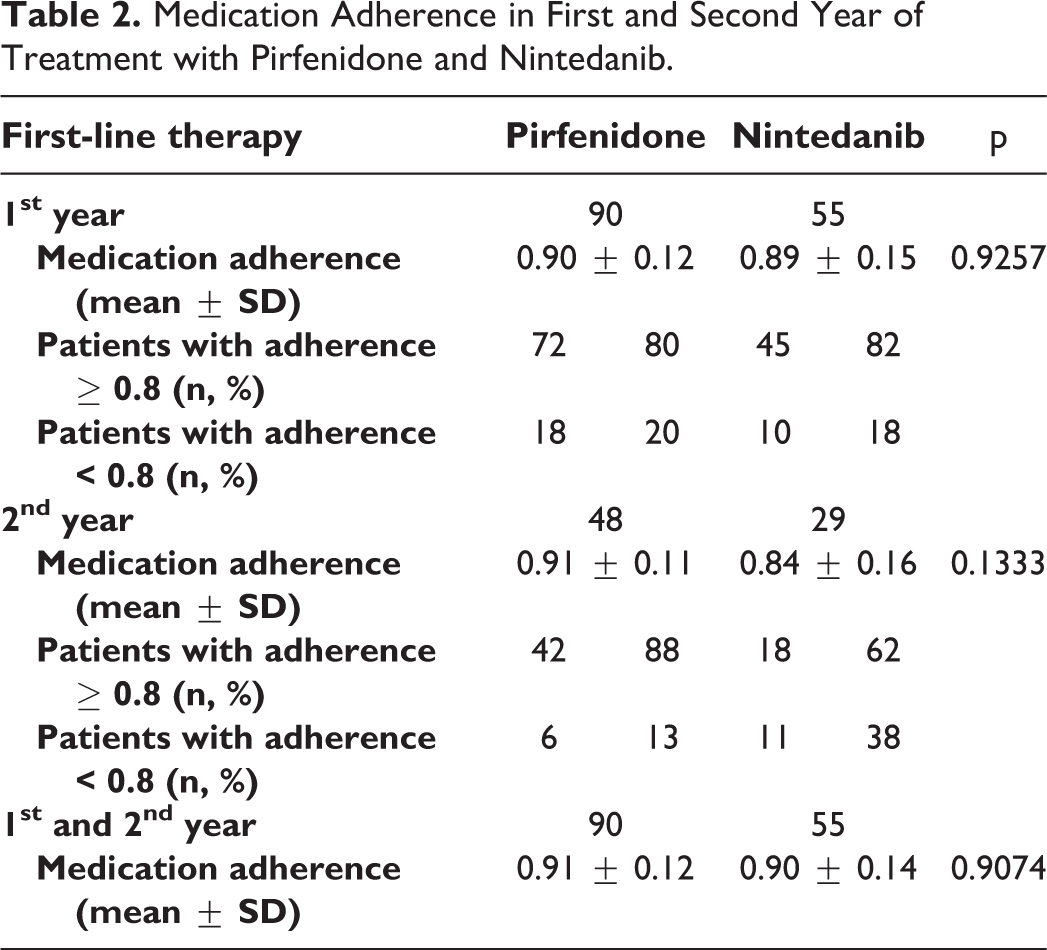
We identified 144 patients in the period between January 2013 and April 2019. From the point of view of adherence, there is no difference between the two drugs, even though patients who used pirfenidone had increasingly higher values: 0.90 vs 0.89, in the first year, and 0.91 vs 0.84, in the second year. In the first year of treatment, the percentage of persistent patients was 67% and 76%, while in the second year, it dropped to 47% and 53% for pirfenidone and nintedanib, respectively.
Conclusion:
The stratification of the adherence values as a function of the response to treatment in terms of FVC at 12 months for both study drugs showed that patients with optimal response scored adherence of more than 90%.
Introduction
Idiopathic pulmonary fibrosis (IPF) has been defined as a specific form of chronic fibrous interstitial pneumonia of unknown cause, which occurs in older adults and is limited to the lungs.1,2 It is an unknown disease; however, numerous studies have identified potential risk factors, including cigarette smoking, environmental and professional exposures to organic and inorganic substances, infections, gastroesophageal reflux, coagulation cascade abnormalities and genetic alterations. The epidemiology of IPF has been difficult to study due to the rarity of the disease: it affects about 5 million people worldwide and is estimated that its prevalence is greater in men than women (2:1 ratio). 3 The onset of the disease occurs on average at age 66, with dry cough and dyspnea, upon exertion at first, then progressively at rest as well. Before the introduction of an effective pharmacological treatment, the estimated median survival rate was 50% 2 years and 20% 5 years from diagnosis. The lines of treatment previously evaluated included the use of corticosteroids as monotherapy4-7 or in conjunction with colchicine;8-12 azathioprine in combination with prednisone and the subsequent addition of inhalation acetylcysteine;13-15 cyclophosphamide;16,17 interferon γ1B;18-20 bosentan;21,22 etanercept; 23 anticoagulants (Warfarin); 24 cyclosporin;25-27 sildenafil;28-32 and, imatinib. 33 Low-dose carbon monoxide (CO) was also considered. 34 However, these therapeutic regimens have proved ineffective - The Panther trial evaluated the efficacy of steroids, azathioprine and N-acetylcysteine, a treatment regiment previously considered to be a standard of care, versus placebo and revealed treatment regiment to be infective with increased mortality likely due to increased infection rates from immunosuppression. 35 To date, there is no definitive therapy for IPF, 36 but nintedanib and pirfenidone represent a new promise for the management of idiopathic pulmonary fibrosis; these therapies, with different mechanisms of action, have consistently shown to reduce the rate of progression of the fibrosis process37,38 measured by the reduction of functional decline, and, in particular, the decrease in forced vital capacity (FVC) and of the diffusion capacity of the lungs for carbon monoxide (DLCO). Among the variables that influence treatment efficacy, adherence to treatment certainly has a considerable weight. 39 Data at our disposal show that adherence to treatment in patients with pulmonary diseases is low. 40 Though efficacy is influenced by treatment adherence, only a few studies have heretofore been conducted on IPF. The objective of this study was to analyze real-life adherence, persistence and efficacy in the use of pirfenidone and nintedanib in the treatment of idiopathic pulmonary fibrosis. Furthermore, adherence was stratified according to the response to treatment, understood as the difference between FVC and DLCO at the beginning of treatment and after 12 months, in order to identify a threshold level of adherence that could distinguish patients with optimal response rate from those with no response.
Materials and Methods
We conducted a non-interventional multicenter retrospective observational pharmacological study in order to analyze adherence and persistence in real-life treatment at 1 and 2 years. Furthermore, we analyzed the levels of FVC and DLCO at 6 and 12 months, respectively, from the start of treatment. We recorded a prognostic index such as the Gender-Age-Physiology (GAP) Index, use of oxygen therapy, family history and smoking habits. The use of GAP in IPF patients predicts more death or lung transplantation utility rather than future pulmonary function decline. The study entitled MedAIPF was authorized by the Ethics Committee of Chieti and Pescara. We included in the study all patients who picked up pirfenidone and nintedanib from the hospital pharmacy, at least twice, from January 2013 to April 2019. We calculated adherence as the ratio between the received daily dose (RDD) and the prescribed daily dose (PDD). 41 We reported the values both as mean ± standard deviation and as stratified as percentage of patients with average adherence ≥ 0.8, considered adherent, and < 0.8, considered non-adherent. We calculated treatment persistence as the difference in days between the first and last drug dispensation date, plus the days ideally covered by the last dispensation. 42 The persistence curve was represented as a Kaplan-Meier estimator. The statistical difference between curves was evaluated by applying the log-rank test. We recorded continuous data as median with ranges or mean ± SD. We used independent t-test samples to assess statistical significance between changes in FVC % (FVC %) and DLCO % (ΔDLCO %). Furthermore, we divided patients on the basis of changes in FVC % in the following groups: significant improvement (≥10%), marginal improvement (5–10%), stability (−5 to 5%), marginal decline (−5 to −10%), and significant decline (≤−10%). We used this classification to stratify adherence according to the response to treatment at one year.
Statistical Analyses
We reported the continuous variables as mean ± SD or median, based on their distribution, and presented them as percentage. We used the Kaplan-Meier analysis to estimate the drug persistence at the 2-year follow-up. We used the log-rank test to compare persistence curves. We considered the value of P <0.05 significant. We performed all analyses using the GraphPad Prism software, version 8.0.2, and GraphPad software, version 23.0, San Diego, California USA, www.graphpad.com (IBM, Chicago, IL).
Results
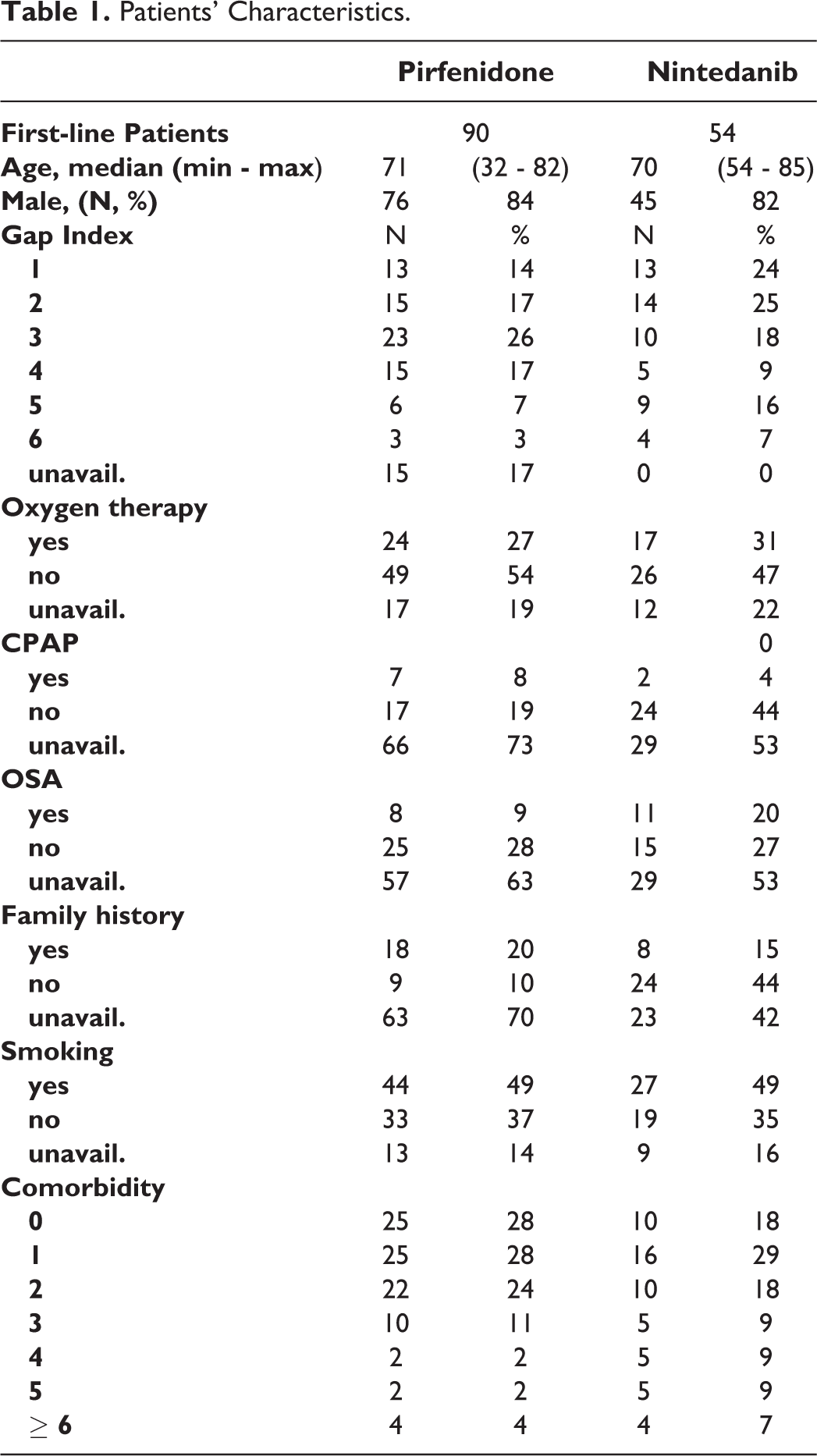
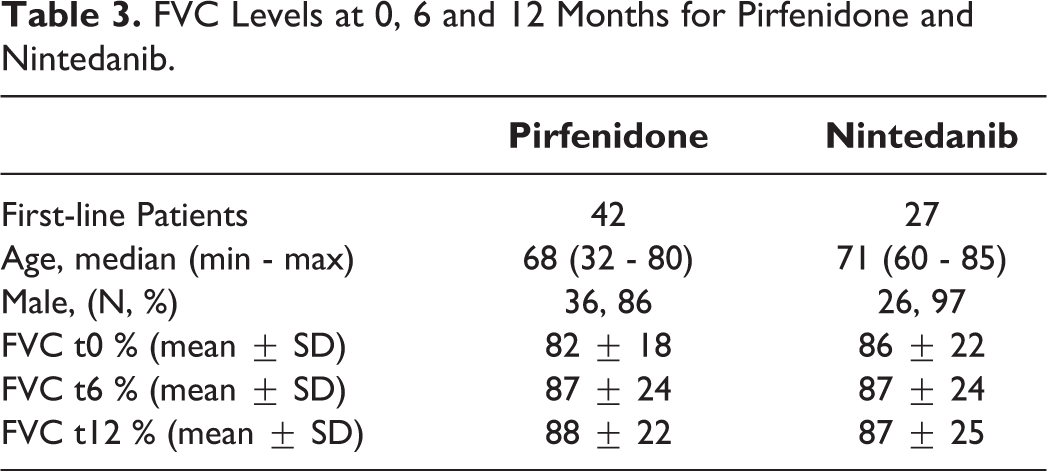
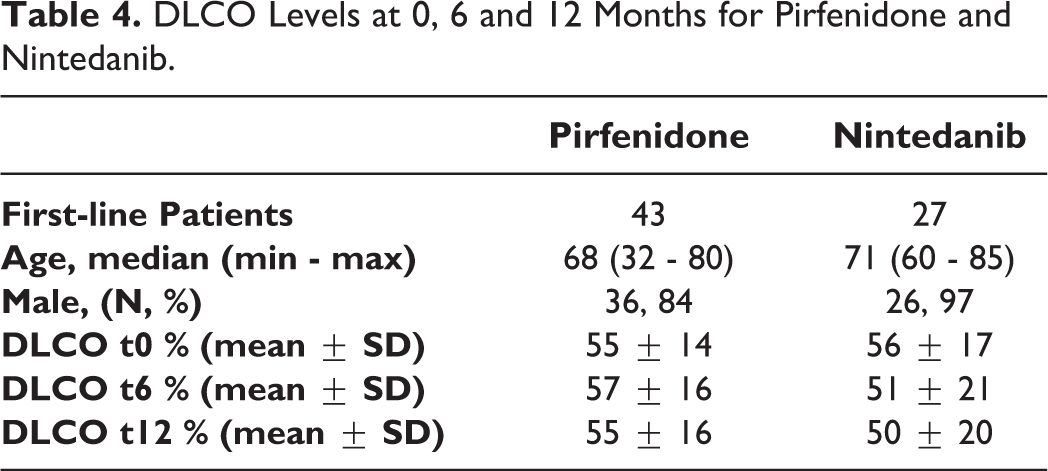
We identified 144 patients in the period between January 2013 an April 2019. Their baseline characteristics are summarized in Table 1. IPF mainly affects men, 84% and 82% for pirfenidone and nintedanib, respectively. The percentage of patients stratified by GAP sees the majority of patients treated with pirfenidone in stage 3 (26%) while for nintedanib in stage 1 and 2, with 24% and 25%, respectively. About half of the patients was not administered oxygen therapy. The percentage of patients with smoking habits was 49% for each drug. Comorbidity analysis found that most patients had 0 to 2 concomitant diseases. For adherence and persistence analysis, we only considered patients who picked up the drugs at least twice. Pharmacoutilization data are reported in Table 2. There is no difference between the two medications, even though adherence to treatment in patients who used pirfenidone was always higher, 0.90 vs 0.89, in the first year, and 0.91 vs 0.84, in the second year, for pirfenidone and nintedanib, respectively. Persistence on year 1 and 2 of treatment is shown in Figure 1. In the first year of treatment, the percentage of persistent patients was 67% and 76%, while in the second year, it dropped to 47% and 53% for pirfenidone and nintedanib, respectively. Both curves do not present a statistically significant difference (p=0.2886 in the first year, p=0.6365 in the second year). Tables 3 and 4 show the levels of FVC and DLCO at 0, 6 and 12 months, respectively, from the start of treatment. In the case of pirfenidone, we go from an average of 82% of FVC at the start of the treatment to 88% at year 1, with an increase of 6%, while for nintedanib we go from 86% to 87%, with an increase of 1%. For DLCO, the levels are maintained at 55% from 0 to 12 months for pirfenidone and 56% to 50% for nintedanib. Figures 2 and 3 show the adherence values at year 1 as a function of the response to treatment as FVC. Figures 2 and 3 show the adherence values to treatment on the basis of the response at year 1 as difference in the FVC.
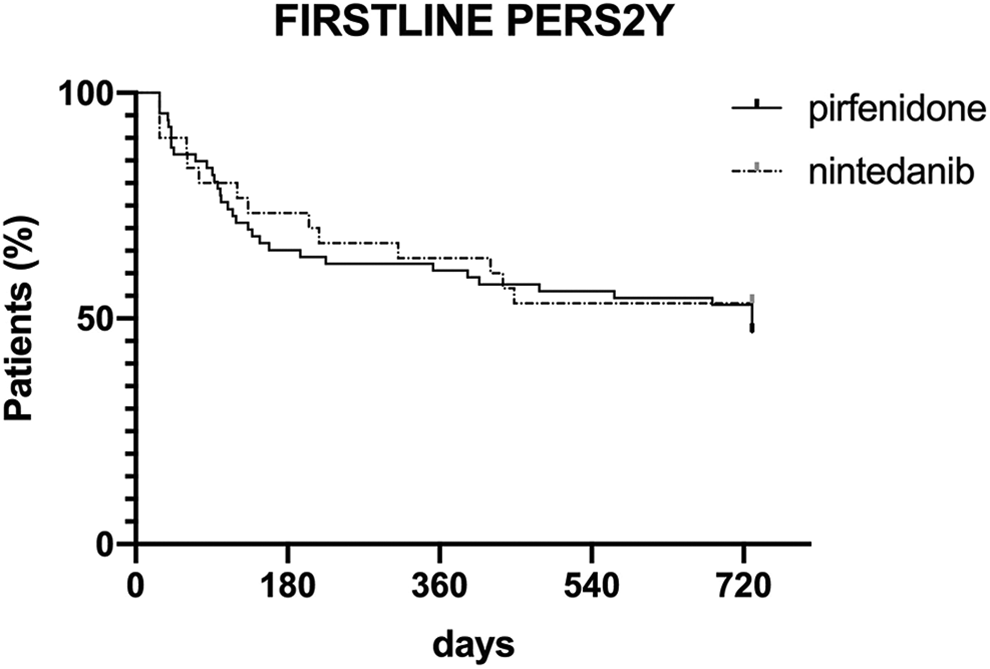
Two Years of Persistence with Pirfenidone and Nintedanib in the Treatment of IPF.
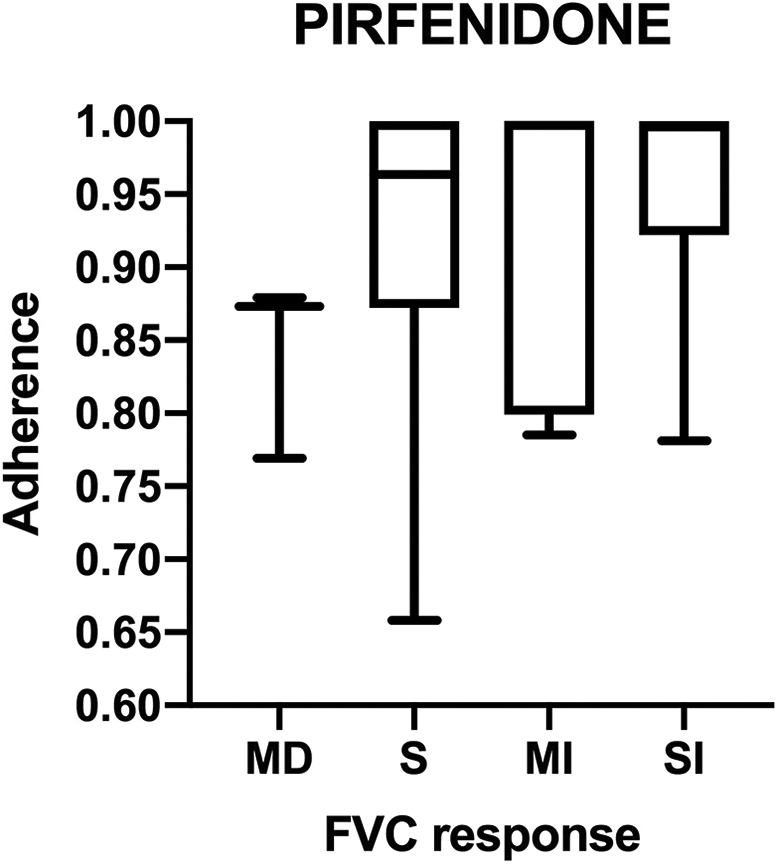
Adherence rate according to the level of response in the 1st year with nintedanib.
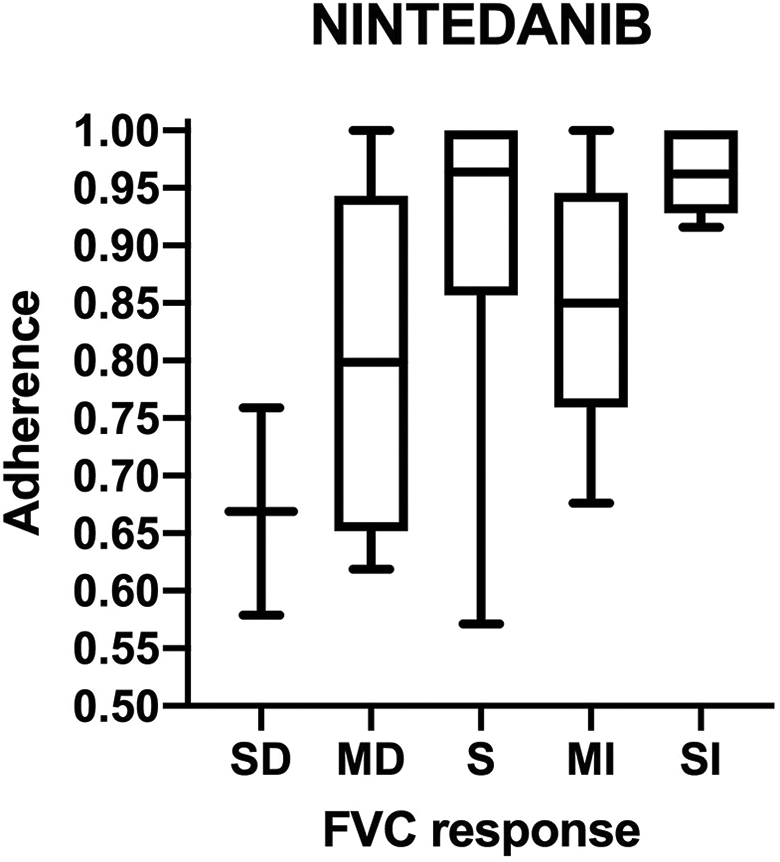
Adherence rate according to the level of response in the 1st year with nintedanib.
Patients’ Characteristics.
Medication Adherence in First and Second Year of Treatment with Pirfenidone and Nintedanib.
FVC Levels at 0, 6 and 12 Months for Pirfenidone and Nintedanib.
DLCO Levels at 0, 6 and 12 Months for Pirfenidone and Nintedanib.
Discussion
In recent years, real-life studies on pirfenidone and nintedanib have increased significantly. Most studies evaluated efficacy and safety profile, confirming both endpoints.43-47 Studies on the pharmacoutilization of pirfenidone and nintedanib are currently non-existent, even though adherence to treatment represents a crucial aspect in home therapy, especially in debilitating diseases with a fatal outcome, such as IPF. Among the different issues that influence adherence to treatment, 48 dosage is an important variable. In fact, the relationship between the decrease in adherence as a function of the number of daily administration49,50 has been demonstrated. In the case of pirfenidone, the dosage regimen includes a 14-day induction period, with 3 capsules a day in the first week and 6 in the second, followed by a full regimen of 9 267 mg capsules per day. Since 2018, maintenance therapy involves the administration of 3 capsules a day, the same dosage. Nintedanib, in 100 and 150 mg formulations, involves the administration of two capsules a day. Based on these considerations, monitoring of real-life adherence is useful, both because there are currently no relevant data, and to highlight hazardous situations linked to non-adherence, which could render therapy ineffective. The analysis we carried out over two years shows that, despite the dosage regimen, adherence to treatment is good for both drugs and remained high throughout the observation period, never falling below the 80% threshold level. The adherence values described in this study demonstrate how for IPF the need for treatment, management by health professionals and inclusion in the Monitoring Register of the Italian Medicines Agency (AIFA) are targeted and thorough. These data were in line with what has already been described in the only work published so far by Ipatova et al. on pharmacoutilization, although such data only harvested results from a 6-month analysis. 51 Treatment persistence values showed an average loss of 30% in the first year and 50% in the second year. This datum includes patients who discontinue treatment for any cause, with a value 25% lower than data published by Margaritopoulos et al., which described an overall survival of 75% at year 2 for pirfenidone alone. 52 This issue is the most critical one, highlighting how in the treatment of IPF the main problem is not due to the use of the drug, described by the levels of adherence, but by the maintenance of the patient under treatment. From an efficacy point of view, evaluated by FVC and DLCO at year 1, there was a 6% increase in patients receiving pirfenidone compared to +1% for those receiving nintedanib. As shown in Figures 3 and 4, we underscore the importance of the adherence factor on the response to treatment with both pirfenidone and nintedanib. In the first case, patients who have a stable-to-significant response all reported an adherence level greater than 95% against those who reported a marginal decline with levels below 90%. The case of nintedanib is even more significant; in fact, the 80% adherence level clearly divides patients with significant and marginal decline from those with a stable-to-significant response. For the latter, the average level of adherence is 90%. This figure is extremely significant because it yields an important datum not only on the need to optimally manage treatment, but also by suggesting a threshold value that is above the conventional one set at 80%. This issue must make all healthcare professionals and patients under treatment with pirfenidone and nintedanib reflect on the need to maintain adherence levels above 90%.
Conclusion
Although further studies with a greater number and longer observation periods are required, this initial pirfenidone and nintedanib pharmacoutilization study showed comparability in terms of adherence and persistence between the two drugs under evaluation. In terms of adherence, 90% seems essential to achieve a better efficacy profile.
Footnotes
Declaration of Conflicting Interests
The author(s) declared no potential conflicts of interest with respect to the research, authorship, and/or publication of this article.
Ethic Study
The study entitled MedAIPF was authorized by the Ethics Committee of Chieti and Pescara.
Funding
The author(s) received no financial support for the research, authorship, and/or publication of this article.
