






Abstract
Among disciplines, the COVID-19 pandemic has reinforced the importance of critical care pharmacists in assuming responsibility for managing medication therapy in direct patient care settings. Historically, pharmacists have been relied upon for prospective evaluation of drug therapy for appropriate indications, dosage, drug interactions, and drug allergies; monitoring patients’ pharmacotherapeutic regimens for effectiveness and adverse effects; providing drug information to providers; and educating health professionals regarding drug therapies. Specific to COVID-19, pharmacists have been an integral member of the multidisciplinary rounding team, assisting with drug shortages and strategies for drug conservation; participating in emergencies, such as advanced cardiac life support (ACLS) and rapid sequence intubations; and creating as well as integrating evidence-based guidelines and pathways during the pandemic into clinical practice. The purpose of this article is to demonstrate the various roles of critical care pharmacists among the healthcare team in caring for critically ill COVID-19 patients.
Keywords
Introduction
In December 2019, a novel pathogen known as severe acute respiratory syndrome coronavirus (SARS-CoV-2, causing COVID-19) was isolated in Wuhan, China with subsequent human-to-human spread worldwide.1-3 To date, 120 million cases have been reported worldwide with 29 million of these cases reported in the United States.4,5 In addition, according to the Society of Critical Care Medicine (SCCM) Virus COVID-19 Registry, a total of 65,150 patients have been hospitalized with nearly 12,000 intensive care unit (ICU) admissions across 27 countries and 300 sites. The clinical spectrum of COVID-19 appears to be wide, ranging from asymptomatic infection to mild upper respiratory tract illness to severe viral pneumonia with respiratory failure and death. 5 The median duration of mechanical ventilation and length of stay in patients admitted to an ICU has been reported as 9 and 7 days, respectively, while the median length of stay in patients hospitalized with COVID-19 has been reported as 7 days. 4
The rapid spread of severe acute respiratory syndrome coronavirus (SARS-CoV-2) around the world has led to the prompt need for collaborative and heroic efforts among many disciplines caring for these critically ill patients. The pandemic has reinforced the importance of pharmacists assuming responsibility and accountability for managing medication therapy in direct patient care settings. 6 Due to an increase in the volume of critically ill patients with COVID-19, pharmacists specializing in critical care, infectious disease, and emergency medicine are among frontline healthcare workers that have been challenged with the care of COVID-19 patients. As a result, pharmacists were added to the tiered staffing model recognized by SCCM to assist in the care of these patients. 7
Fundamental critical care pharmacy services have been defined in the literature to include prospective evaluation of drug therapy for appropriate indications, dosage, drug interactions, and drug allergies; monitoring patients’ pharmacotherapeutic regimen for effectiveness and adverse effects; providing drug information to providers; and educating health professionals regarding drug-related procedures, policies, guidelines, and pathways. 8 Furthermore, the impact of critical care pharmacists on a multidisciplinary ICU team has been shown to improve patient outcomes including mortality, ICU length of stay, and preventable/non-preventable adverse events. 9 Specific to COVID-19, pharmacists have been an integral member of the multidisciplinary rounding team, assisting with drug shortages and strategies for drug conservation; participating in emergencies, such as advanced cardiac life support (ACLS) and rapid sequence intubations; and creating as well as integrating evidence-based guidelines and pathways during the pandemic into clinical practice (Figure 1).
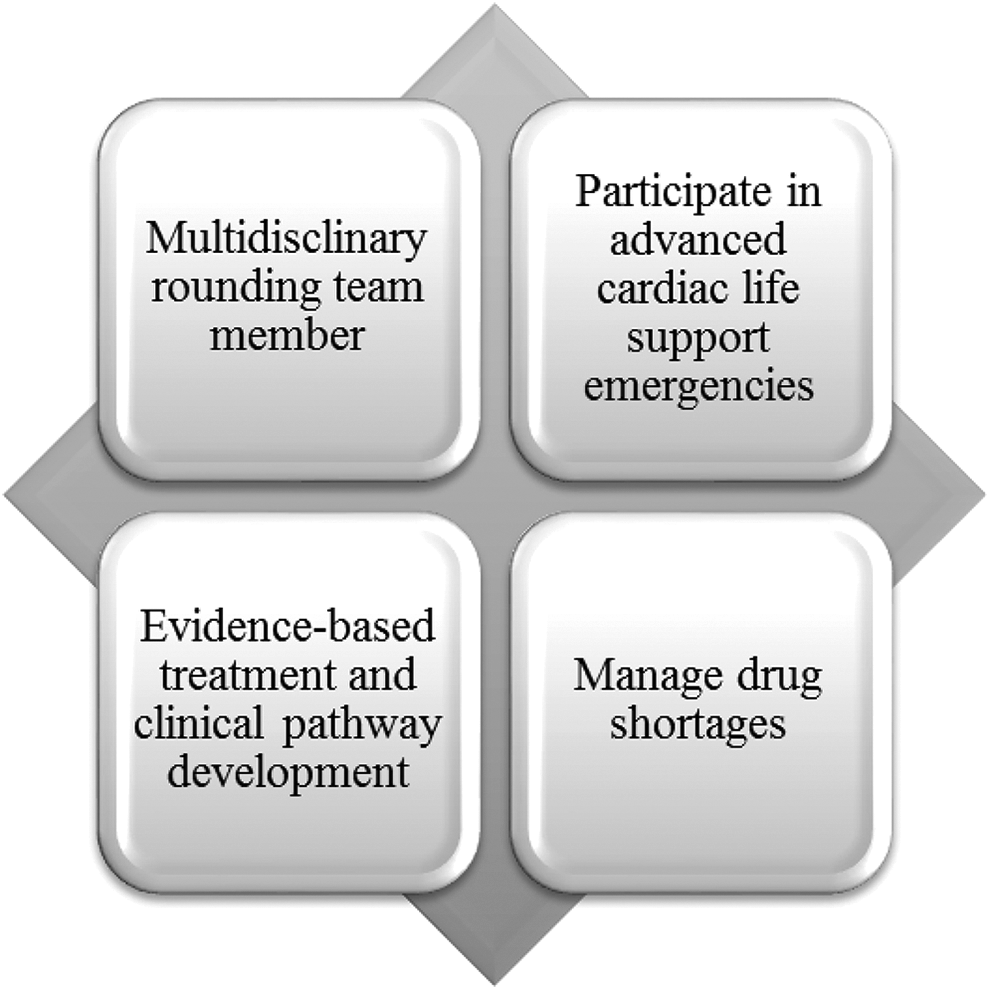
Critical care pharmacists roles during the COVID-19 pandemic.
Multidisciplinary Rounding
Healthcare providers of various specialties were inclined to step outside of comfort zones to assist with caring for critically ill COVID-19 patients. As such, new teams were created with pharmacists remaining constant within these teams. Additionally, as pharmacokinetic (PK) parameters are impacted by critical illness, the critical care pharmacist has been essential in designing safe and effective drug therapy regimens which translate into improved patient outcomes. 10 With a paucity of literature guiding care for critically ill patients with COVID-19, pharmacists have continually assisted with monitoring drug therapy for adverse reactions and re-designing regimens, as appropriate, to meet the individual needs of each patient. For instance, specific to COVID-19, pharmacists have been integral in evaluating the place in therapy for treatments including, but not limited to, remdesivir, dexamethasone, and tocilizumab. Previous and emerging therapies for COVID-19 have required frequent laboratory monitoring and re-assessment for appropriateness. Lastly, as new data are expeditiously published related to drug therapies, pharmacists have helped to analyze and rapidly integrate the evidence into treatment plans and educate healthcare providers.
Managing Drug Shortages
Throughout the COVID-19 pandemic, information surrounding the critical need for ventilators and personal protective equipment (PPE) was routinely emphasized. In addition to a critical need for ventilators and PPE, there was a necessity for front line pharmacists to manage medications necessary to provide care for the influx of critically ill patients with COVID-19. Upon admission to an ICU, patients with COVID-19 commonly remain intubated for several days and require prolonged ICU stays and high doses of sedative, analgesics, and neuromuscular blockers. 11 The combination of increased drug utilization, disruption in drug supply, and patient influx created challenges for practicing pharmacists and ICU teams managing drug shortages.
Challenges during the initial phases of COVID-19 included maintaining an adequate supply of critical medications used to appropriately sedate patients receiving mechanical ventilation and consideration of novel approaches to medication conservation. 12 The influx of ICU patients created a high demand. Along with a high demand, drug procurement disruptions resulted in difficulty maintaining appropriate inventories of sedatives and analgesics. For instance, fentanyl traditionally has been the mainstay treatment for providing analgosedation, but in the early stages of the pandemic, stock was difficult to maintain. 13 Daily use monitoring and changing fentanyl to hydromorphone and morphine infusions were implemented in an effort to provide continued care for patients. The use of sedatives such as propofol, formulated in a lipid emulsion, was problematic as patients with dyslipidemia may have increased severity and mortality associated with COVID-19 and may present with high triglyceride levels.14,15 While triglycerides are monitored in patients receiving propofol, those with elevated levels may be at higher risk for propofol related infusion syndrome.16,17 Other institutions returned to drugs not commonly used as first line agents, such as benzodiazepine infusions, or increased their utilization of a multimodal approach by adding on drugs such as ketamine or dexmedetomidine. 13 In addition to analgesics and sedatives, neuromuscular blockers were also in short supply. Several institutions developed strategies including the use of bolus doses of rocuronium, which allowed opportunities to conserve cisatracurium infusions for those patients uncontrolled by bolus dosing. Lastly, institutions developed weaning strategies with enteral medications such as methadone, oxycodone, and clonazepam in an attempt to limit the need for intravenous infusions.
Other conservation strategies considered utilizing different products and novel ways to administer medications. In light of increased propofol utilization, a conservation strategy considered included priming of propofol lines with 20 mL vials to reduce waste, resulting in conservation of 10 to 20 mL of a 100 mL vial. Additionlly, MRI tubing was suggested for use and drug pumps moved to the hallway. This process reduced PPE use and increased staff safety for frequent drug titrations in critically ill patients. Similarly, scheduling medications at the same time and decreasing the use of frequent drugs helped conserve PPE.
Therefore, collectively, critical care pharmacists have worked to ensure close inventory monitoring and administration of commonly used drugs in the ICU in addition to considering multiple medication options in order to minimize the use of any single medication and maintain an adequate supply.
Participation in Emergencies
Pharmacists’ participation in emergency situations is well documented, including rapid response, emergency code blue, code stroke, and rapid sequence intubation. 18 In everyday practice, it is common to see a pharmacist responding to these emergencies directly at the bedside. However, an infectious disease pandemic presents unique logistical considerations and pharmacist response to emergency situations needed to be innovative and individualized to the hospital layout and available resources.
During COVID-19, pharmacists’ roles in emergency response were both inside a patient room or closely nearby. The layout of patient care areas at an institution are an important consideration. Hinged doors that swing open into hallways logistically create more difficulty with safely passing medications from a clean area to a presumed dirty area. Furthermore, the repeated opening of swinging doors creates persistent movement of air and COVID-19 may be transmitted airborne from aerosolizing procedures during an emergency code. 19 Alternatively, sliding doors are conducive to placing an “ante area,” with a rolling crash cart, immediately outside of a patient room. This promotes the ability of a pharmacist to be close to the bedside, draw up medications at the correct dosages and concentrations, obtain medications from automated dispensing machines, and pass them via an ante space all while minimizing infectious exposure. In addition, glass doors offer the ability of healthcare team members to actively view bedside interventions. It was imperative that pharmacists, including residents with duties related to participation in emergencies, received training to properly don and doff PPE when providing bedside care to minimize the risk of transmission and to ensure the health and safety of healthcare teams. 20
Additional emergency response considerations were the types of resources, including the vehicles that hold medications used in emergencies. Some institutions utilize medication kits for emergencies (e.g., rapid sequence intubation) and crash carts (e.g., emergency code blue). Medication kits may be permeable and inconvenient to clean. Thus, the surface of a medication kit may be contaminated and moved around an institution, exposing healthcare workers. In contrast, crash carts are often metal and/or plastic, and may easily be wiped clean prior to removal from a patient room. Additionally, some institutions created smaller medication bags utilizing plastic that could be easily wiped to prevent waste. Overall, pharmacists were forced to consider institutional layout and resources and individualize their emergency response during the COVID-19 pandemic.
Pharmacist Role in Treatment Guideline and Clinical Pathway Development
When providing pharmaceutical care, pharmacists adhere to standards that promote collaboration with other healthcare professionals to provide high quality care and improve outcomes.21,22 In 2004, the American Society of Health System Pharmacy described the pharmacists’ role in the development, implementation and assessment of critical pathways (CPs). 23 Critical pathways are also known as clinical pathways, guidelines, or maps. 24 They are developed with a multidisciplinary team of health care professionals to provide a set of treatment standards for a defined diagnosis. Some examples of pharmacist involvement in CPs which are associated with improved patient outcomes and reduced harm include anticoagulation management, antimicrobial/antiviral stewardship, emergency response and sedation/analgesia management (Figure 2). 25
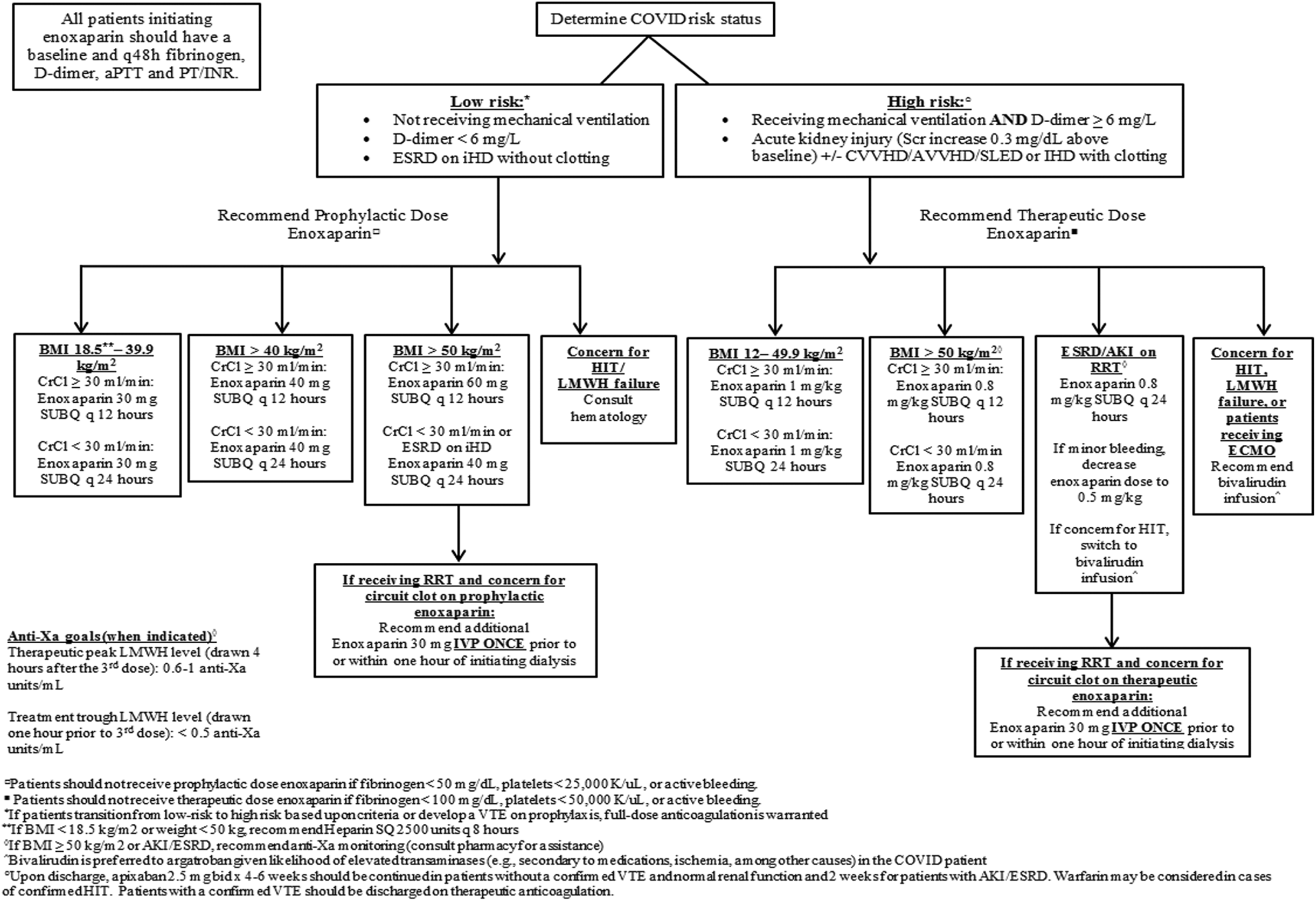
Example of critical pathway for anticoagulation in COVID-19 patients. This pathway is intended as an example and not meant to replace clinical judgment.
Incorporating CPs for COVID-19 into clinical practice may improve clinical outcomes, reduce harm, manage drug shortages and control direct/indirect costs. As COVID-19 spread across the world, pharmacists have played an integral role in the development and dissemination of various treatment guidelines.12,26 At local and regional levels, pharmacists at health systems across the country have embraced the challenge to incorporate the evolving literature into the development of CPs for the management COVID-19 and associated complications to improve patient outcomes. This included reinforcement of sedation and analgesia practices, development of anticoagulation strategies for COVID-19 associated coagulopathy, stewardship of tocilizumab for COVID-19 associated hyperinflammatory syndrome, and stewardship of hydroxychloroquine, azithromycin and remdesivir. However, during the surge in COVID-19 patients presenting to health systems, drug shortages and allocation strategies utilized by wholesalers have created more complexity in the maintenance of various CP 27 , ASHP 28 . This resulted in pharmacists continuously updating CPs to balance inventories of essential medications, which include vasopressors, anti-infectives, analgesics, sedatives, and neuromuscular blockers.
When developing CPs, pharmacists use evidence based criteria for medication selection, assist in identifying adverse effects, assist with monitoring patients for efficacy and promote continuity of care across a health system. 23 As a result, a multidisciplinary team including pharmacists in CP development is crucial to achieve favorable medication outcomes during the COVID-19 pandemic.
Conclusion
Throughout the COVID-19 pandemic, critical care pharmacists have been integral members of the healthcare team, demonstrating knowledge and assisting in the care of these critically ill patients. Additionally, pharmacists further demonstrated significance by rapidly managing drug shortages, providing medication alternatives, assisting with emergency response, and implementing clinical guidelines or treatment pathways.
Footnotes
Declaration of Conflicting Interests
The author(s) declared no potential conflicts of interest with respect to the research, authorship, and/or publication of this article.
Funding
The author(s) received no financial support for the research, authorship, and/or publication of this article.
