






Abstract
Purpose:
Brazil nuts (Bertholletia excelsa) are consumed world-wide and have become a new trend in weight loss supplementation. We present a unique case of severe hypertriglyceridemia-associated acute pancreatitis following daily usage of a Brazil nut supplement product.
Summary:
A Hispanic female presented with severe hypertriglyceridemia and acute pancreatitis several months after starting a Brazil nut weight loss supplement in the setting of poorly controlled Type 2 Diabetes Mellitus. Her initial triglyceride level was undetectably high >10,000 mg/dL but improved rapidly following euglycemic insulin infusion and supplement cessation. The patient was managed with supportive care, started on oral fibrate therapy after abdominal symptoms improved, and was discharged to home in stable condition.
Conclusion:
It is essential for pharmacists to maintain a high index of suspicion for patients taking complementary and alternative medications and supplements who present with acutely altered laboratory parameters or onset of acute disease. In this instance, a patient was found to have profound hypertriglyceridemia with onset of acute pancreatitis following usage of a Brazil nut weight loss supplement.
Introduction
Hypertriglyceridemia (HTG) refers to an increased fasting plasma triglyceride level generally above the 95th percentile for age and sex. 1 The causes of HTG vary but may include disease states such as uncontrolled diabetes mellitus with insulin resistance, obesity, nephrotic syndrome, lipoprotein lipase deficiency, hypothyroidism, or certain autoimmune disorders. 2 Some medications, such as amiodarone, estrogen, and clozapine, have also been shown to precipitate HTG. While many people with HTG may be asymptomatic, some will form eruptive xanthomas or lipemia retinalis and may develop hepatosplenomegaly, neurological issues, or abdominal pain. 1
As triglyceride levels rise, the rapid accumulation of chylomicrons from within the pancreatic vasculature lead to the overproduction of trypsinogen and may cause autodigestion presenting as acute pancreatitis (AP). 3 Hypertriglyceridemia-induced AP is treated with rapid reduction in serum triglyceride values by means of insulin, heparin, hemofiltration, and plasmapheresis. 4
Brazil nuts (Bertholletia excelsa) have become a new trend in weight loss supplementation. While they may have some reported health benefits, mostly pertaining to the correlation between higher selenium concentrations and improved lipid profiles, the evidence for weight loss has not been fully established. 5 Further, little has been reported about the potential harm or risk of Brazil nut supplementation. Although diets rich in plant-based fats, like those from nuts, have been shown to improve lipid profiles and glycemic control, 6 excessive consumption of foods with high fat and carbohydrate content by people with diabetes can perpetuate HTG.
Case Presentation
A 36-year-old Hispanic female with a history of type 2 diabetes mellitus (T2DM) and cholecystectomy presented with a 1 day history of epigastric and lower chest pain, belching, nausea and emesis. The patient reported she had started taking a Brazil nut weight loss supplement about 5 months prior to admission. The weight loss supplement was purchased online and was labeled to contain 167 mg of raw B. excelsa seed, or common Brazil nut. Our patient reported following package instructions for use which recommended taking 1 piece by mouth nightly. Her usage was consistent for the first 2 months, after which she stopped for a month prior to resuming daily ingestion for the 2 months immediately preceding presentation. The patient did not give a reason for temporary therapy cessation and it is not known whether this may have been due to any adverse effects. Given that she eventually resumed therapy, it is unlikely that any untoward effects would have been substantial but it is possible there could have been early concerning effects. Since starting the weight loss supplement 5 months ago, the patient reported having lost 30 pounds.
On presentation, vital signs were stable including a body temperature of 36.6 °C, heart rate 83 beats per minute, blood pressure 108/65 mmHg, respiratory rate 17 breaths per minute, and oxygen saturation of 99% on room air. She was found to be 152.4 cm tall and 70.8 kg which calculates a BMI 30.5, consistent with class I obesity. On physical exam, she was oriented to person, place, and time; well-developed and well-nourished; with tenderness in her mid-sternal chest and moderate tenderness in the abdominal epigastric area. In regard to social history, she denied a current or past history of tobacco, alcohol, and recreational drug usage. Her family history was significant for diabetes in her father and hypertension in her mother. The patient’s home medications included aspirin, glipizide, metformin, and omega-3 fish oil supplements.
Due to the potential for atypical presentation of acute coronary syndrome, an electrocardiogram was ordered and revealed normal sinus rhythm without ectopy. Chest x-ray revealed clear lungs and no acute cardiopulmonary abnormality. A point-of-care (POC) chemistry panel was assessed in which the patient was found to be hyponatremic with sodium 124 mmol/L, hyperkalemic with potassium 6.2 mmol/L, hypocalcemic with ionized calcium 1.07 mmol/L, and hyperglycemic with blood glucose 309 mg/dL. She was found to have normal renal function and normal liver function. A complete blood count was obtained and found to be within normal limits. A troponin was ordered resulting in 0.00 ng/mL and a HEART Score was calculated to be 1 point, correlating with low risk for cardiovascular event.
Due to concerns for hemolysis with the initial POC, a repeat chemistry panel was drawn and the patient was found to be normokalemic, but remained hyponatremic with sodium 126 mmol/L (corrected sodium 129 mmol/L), hypocalcemic with ionized calcium 1.08 mmol/L, and hyperglycemic with blood glucose 309 mg/dL and glycated hemoglobin (HbA1C) 10.8%.
During this time the patient described worsening chest pain and an aluminum-magnesium hydroxide-simethicone and viscous lidocaine compounded medication was administered to attempt to relieve presumed gastrointestinal symptoms. However, this was ineffective. Further laboratory assessment revealed elevated lipase 292 units/L and hypoalbuminemia 3.4 g/dL with grossly lipemic specimen. After negative pregnancy testing, computed tomography of the abdomen and pelvis with intravenous (IV) contrast was read as fatty infiltration of the liver, mild hepatomegaly, and infiltration around the uncinate process of the pancreas consistent with pancreatitis. Further assessment of the patient’s lipid levels were conducted with completion of a lipid panel significant for an elevated total cholesterol 954 mg/dL, low high-density lipoprotein (HDL) 25 mg/dL, and severely elevated triglycerides >10,000 mg/dL.
As a result, the patient was admitted to the intensive care unit with a diagnosis of HTG-induced AP. She received fluid resuscitation with 0.9% sodium chloride, pain control with parenteral morphine and hydromorphone as needed, and was started on IV regular insulin infusion at 0.3 units/kg/hr. To maintain euglycemia and avoid further hyponatremia, dextrose 10% with 0.9% sodium chloride infusion was initiated and titrated to target BG goal 150 to 200 mg/dL. Over the course of her hospitalization, our patient received a maximum insulin dose of 20 units/hour for approximately 25 hours with a total duration of infusion approximately 60 hours.
As her abdominal symptoms improved, the patient was started on fenofibrate 134 mg by mouth daily with breakfast. Triglyceride levels improved to 498 mg/dL (Figure 1) and lipase normalized to 46 U/L by hospital day 4 (Figure 2). Following this improvement in HTG and reduction in triglyceride level below 500 mg/dL, the insulin infusion was titrated down to 5 units/hour before being transitioned to a subcutaneous basal and prandial regimen.
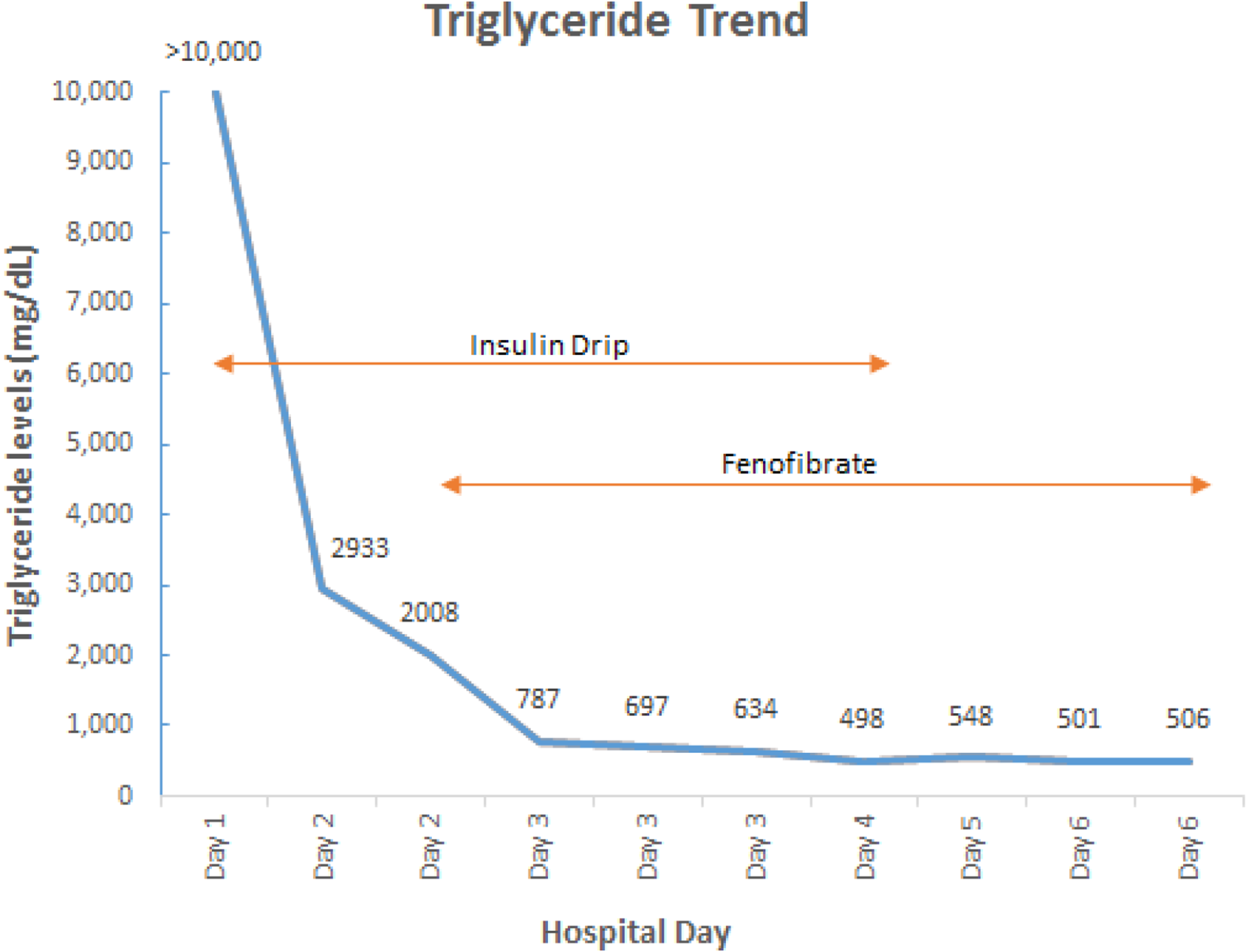
Triglyceride trend. Triglyceride trend during the acute intensive care hospitalization while receiving an insulin infusion and after beginning fibrate therapy.
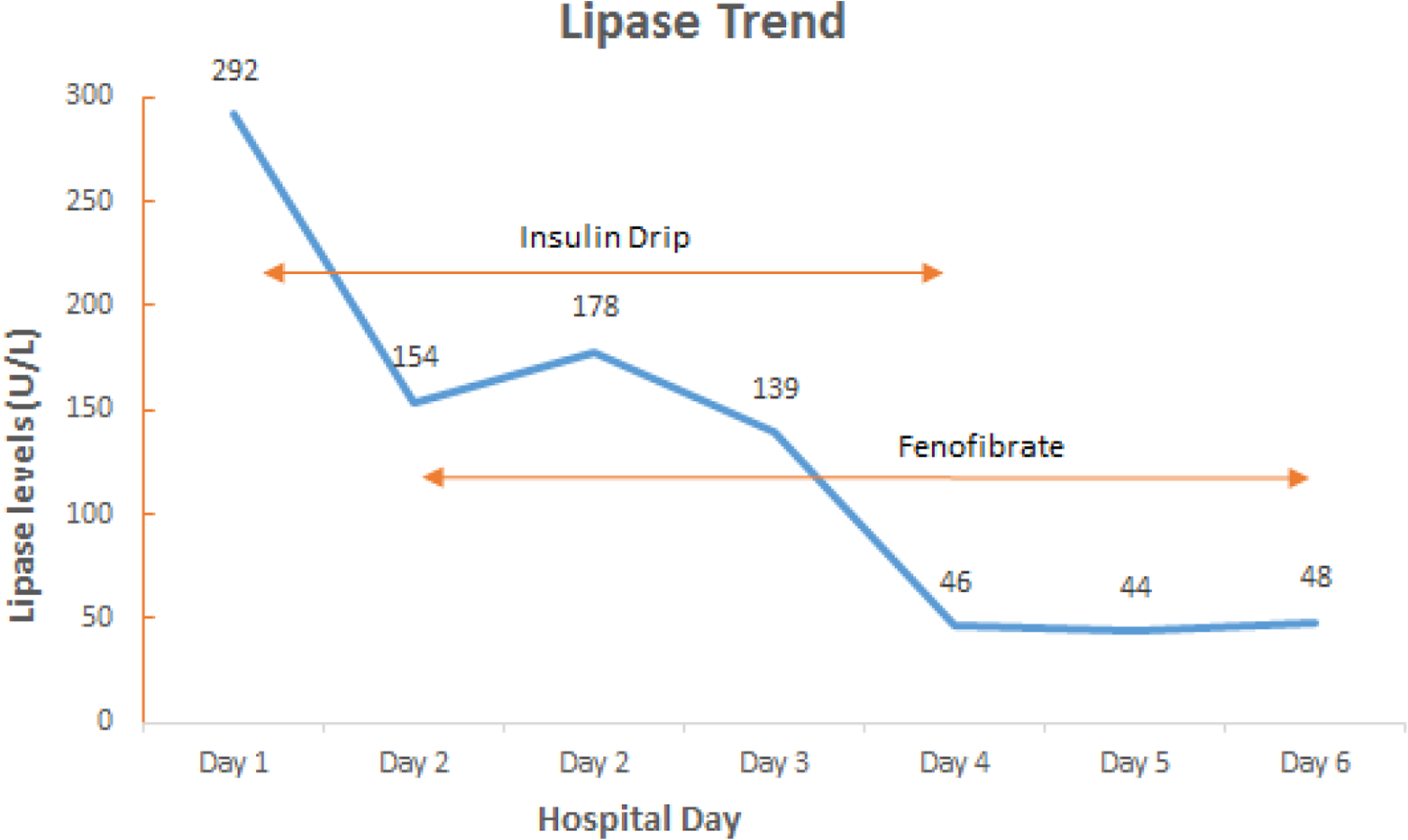
Lipase trend. Lipase trend during the acute intensive care hospitalization while receiving an insulin infusion and after beginning fibrate therapy.
Due to adequate response to therapy, this patient did not require therapeutic plasma exchange for treatment of hypertriglyceridemia. Her total length of stay was 5 days and she was discharged on subcutaneous insulin and fenofibrate in addition to previously prescribed aspirin, metformin, and omega-3 fish oil supplements. The patient was instructed to stop glipizide and Brazil nut supplementation.
Discussion
There exists variable data regarding the effect of nut consumption on cardiometabolic parameters such as triglyceride levels. In a pooled analysis of 25 trials, patients with pre-existing HTG demonstrated a reduction in triglyceride levels associated with daily nut intake. 7 This was particularly true in the PREDIMED nutrition intervention trial which found a higher rate of metabolic syndrome reversion driven by improved triglyceride levels and decreased waist circumference without any change in overall body weight among patients assigned to a Mediterranean diet with a higher level of nut intake. 8 However, other studies have failed to find an association, particularly among patients with baseline normotriglyceridemia.7,9-12 Many of these studies have included variable nut types including almonds, walnuts, cashews, pistachios in addition to unspecified mixed nuts.
A 2013 study was designed specifically to assess the impact of Brazil nuts and found intake of 1 Brazil nut per day had no effect on triglyceride levels in otherwise healthy patients.
13
A second recent randomized, double-blinded, placebo-controlled trial of adults with metabolic syndrome assigned patients to consume either 10 mL of Brazil nut or soybean oil on a daily basis for 30 days.
14
The group receiving Brazil nut oil experienced an increase in triglyceride levels (68.6 mg/dL
Mycotoxin contamination of Brazil nuts is a known public health issue resulting in restrictions for international importation and reported contamination in the United States, Japan, Sweden, and Brazil. 15 Aflatoxin production by Aspergillus fungi, including A. nominus and A. flavus, is a specific concern for Brazil nuts. Animal data in rats has demonstrated increased triglyceride levels and resultant hepatoxicity following 7 days of aflaxoin-B1 exposure. 16 In 2011, the Brazilian Surveillance Agency established a maximum total aflatoxin (B1, B2, G1, G2) level of 10 mcg/kg for “ready to eat” and 15 mcg/mg for any other Brazil nut commodity. 15 Although it is possible the raw Brazil nut content found in this weight loss supplement had a higher degree of aflatoxin contamination, particularly if it was kept in a moist environment, there was no recall of this particular lot number at the time of this case. In addition, the patient did not display any evidence of significant hepatotoxicity as would have been expected with acute aflatoxin exposure. It is possible that low level aflatoxin exposure for a prolonged period of time could have caused an undetectable degree of hepatoxicity that did not result in increases to transaminase levels.
Certainly our patient had other risk factors and explanations for HTG aside from her intake of Brazil nut supplement. Although she denied alcohol intake, obesity, poorly controlled T2DM, and metabolic syndrome are all potential etiologies for HTG. 17 With a BMI of 30.5, this patient was classified as obese and her elevated HbA1c of 10.8% suggested particularly poor glycemic control. An assessment of 103 patients with severe HTG (defined as ≥2000 mg/dL) over a 1 year period within a large county health system found uncontrolled T2DM to be the most common associated condition, present in 74% of cases. 18
Monogenic and polygenic impairments in metabolism of triglyceride-rich lipids are a common cause of HTG, often as an interaction with environmental factors. 19 Unfortunately, there was no genetic testing completed for this patient which may have revealed dysfunctional lipid metabolism, thus, we are unable to confirm if there was an innate contributing cause for her elevated triglycerides. Additionally there were no historic triglyceride levels available via review of the electronic medical record. It is possible that the combined effect of Brazil nut supplement intake, poorly controlled T2DM, and/or genetic factors may have contributed to this case of severe HTG-induced AP.
It is noteworthy that despite the extremely high initial triglyceride level >10,000 mg/dL our patient had a relatively benign clinical picture without significant multi-organ dysfunction. Although she was admitted to the intensive care unit and required aggressive fluid resuscitation and pain control, she was never intubated nor required renal replacement therapy or therapeutic plasma exchange. One may have expected a worse clinical course for this extent of HTG as degree of triglyceride elevation has been shown to positively correlate with severity of AP. 20 In a recent retrospective analysis at a tertiary hospital, patients with severe HTG (defined as ≥750 mg/dL) had a higher rate of organ failure, pancreatic necrosis, and mortality that was proportional to the degree of elevation as measured in 100 mg/dL increments.
Our patient developed severe HTG and AP following prolonged intake of a Brazil nut supplement in the setting of poorly controlled T2DM. She responded well and demonstrated a rapid reduction in triglyceride levels with standard care, insulin infusion, and supplement cessation. To our knowledge, this is the first case report of severe HTG following usage of Brazil nut weight loss supplementation. A calculated Naranjo score of 3 classifies this as a possible adverse reaction. 21 It is essential for pharmacists to acknowledge the potential impact and retain a high index of suspicion for new complementary or alternative medications and supplements begun antecedent to onset of acute disease or significantly altered laboratory parameters.
Footnotes
Declaration of Conflicting Interests
The author(s) declared no potential conflicts of interest with respect to the research, authorship, and/or publication of this article.
Funding
The author(s) received no financial support for the research, authorship, and/or publication of this article.
