






Abstract
Study Objective:
Summarize the studies evaluating the use of 4-factor prothrombin complex concentrates in the management of apixaban and rivaroxaban associated intracranial hemorrhages.
Methods:
A PubMed literature search was conducted for articles published between 2013 and 2020 which contained the following terms in their title: (1) apixaban, rivaroxaban, or factor Xa inhibitor*, and (2) prothrombin complex concentrate*.
Results:
Eighteen observational studies were included. When a ∼25 units/kg (range: 25-26.9 units/kg) non-activated 4 factor prothrombin complex concentrate dose was administered, the hemostatic effectiveness rates were ≥ 79% in 2/4 studies that utilized the Sarode et al criteria, in comparison to 4/5 studies that administered a 50 units/kg dose. The mortality rates were < 20% in 7/9 studies with hemostatic effectiveness rates ≥ 79%. Mortality rates were lower in the studies demonstrating higher hemostatic effectiveness rates and including patients with higher Glasgow coma scale scores and lower intracerebral hemorrhage volumes. Overall, the thromboembolic event rates were 0-18%, with 16/18 studies demonstrating rates ≤ 10%. The thromboembolic event rates were not dose or agent dependent.
Conclusion:
Rates of hemostatic effectiveness were influenced by the definition of hemostatic effectiveness, dose administered, and patient severity. Studies suggest that higher doses may result in higher hemostatic effectiveness rates without increasing the risk of experiencing a thromboembolic event. This review may be used by providers to modify or validate their reversal strategy approach until well designed studies are available.
What Was Already Known
Prothrombin complex concentrates (PCC) are used off-label in the management of apixaban and rivaroxaban associated bleeds.
Support for PCC use in the management of apixaban and rivaroxaban associated bleeds is limited in number and design.
There are no randomized controlled trials comparing PCC to coagulation factor Xa (recombinant), inactivated-zhzo.
What This Study Adds
Higher rates of hemostatic effectiveness were observed with larger PCC doses without an increased risk of thromboembolic events.
The available literature supporting the use of PCC is increasing with 13/18 studies reviewed having been published during 2019 and 2020.
The guidelines have not been updated since 2019 and the studies reviewed and those to come may positively influence future versions’ recommendations.
Introduction
The oral factor Xa (FXa) inhibitors apixaban and rivaroxaban have largely replaced the use of warfarin for stroke prevention in non-valvular atrial fibrillation and treatment of venous thromboembolisms due to their predictable pharmacokinetics, rapid onset/offset of action, and limited drug interactions.1-6 Prior to 2018 providers only managed bleeding events associated with FXa inhibitors with non-target specific antidotes, including 4 factor prothrombin complex concentrates.7-10 Four factor prothrombin complex concentrates are plasma derived, concentrated mixtures of clotting factors II, IX, X, and activated or non-activated factor VII. 11 The proposed mechanism for anticoagulation reversal with these agents is to overwhelm the inhibitory effects of the FXa inhibitors and restore hemostasis.12-14
In May 2018 coagulation factor Xa (recombinant), inactivated-zhzo, received accelerated Food and Drug Administration (FDA) approval as the first specific reversal agent for apixaban and rivaroxaban despite the FDA clinical reviewers’ concerns regarding its short half-life and lack of clinical outcome data.15-17 Coagulation factor Xa (recombinant), inactivated-zhzo is a modified human Factor Xa decoy protein which binds to FXa inhibitors and inhibits tissue factor pathway inhibitor. National societies’ recommendations conflict regarding the preferred reversal strategy. The American College of Cardiology and American College of Chest Physicians suggest coagulation factor Xa (recombinant), inactivated-zhzo can be used as first line therapy, whereas the American Society of Hematology do not recommend one agent over the other.18-20 Currently there are no randomized controlled studies evaluating these reversal agents, but one is ongoing (NCT03661528). 21 This review summarizes the use of 4 factor prothrombin complex concentrates in the management of apixaban and rivaroxaban associated intracranial hemorrhages (ICH) and may be used by institutions to modify or validate their reversal strategy approach until well designed studies are available.
Methods
A PubMed literature search was conducted for articles published between 2013 to 2020 and contained the following terms in their title: (1) apixaban, rivaroxaban, or factor Xa inhibitor*, and (2) prothrombin complex concentrate*. A filter was applied to exclude articles that contained the following terms in their title: warfarin, healthy, guidelines, perioperative, hemophilia, dabigatran, or meta-analysis. Review articles, case reports, pediatric studies, studies which included healthy subjects or animals, and articles related to the management of non-apixaban or non-rivaroxaban associated bleeding events were excluded. Studies that included both efficacy and safety outcomes were included, whereas studies that only evaluated safety were excluded. The bibliographies of included studies were reviewed for additional articles. Results from studies that included ≤ 10 subjects presenting with an ICH were not believed to be generalizable and excluded. Studies that grouped apixaban and rivaroxaban data with other oral anticoagulants were excluded due to an inability to draw anticoagulant specific conclusions. Lastly, studies that did not evaluate hemorrhage progression as an efficacy outcome were excluded. As a reference point, the hemostatic effectiveness, thromboembolic event (TE), and mortality rates of the studies reviewed were compared to those found in the ANNEXA-4 trial.22,23 The ANNEXA-4 trial was an open-label, single-arm trial which evaluated the safety and efficacy of coagulation factor Xa (recombinant), inactivated-zhzo for reversing the anticoagulant effects of FXa inhibitors. The hemostatic effectiveness, TE, and mortality rates in the ANNEXA-4 trial were: 79%, 10.9%, and 18.8%, respectively.
Results
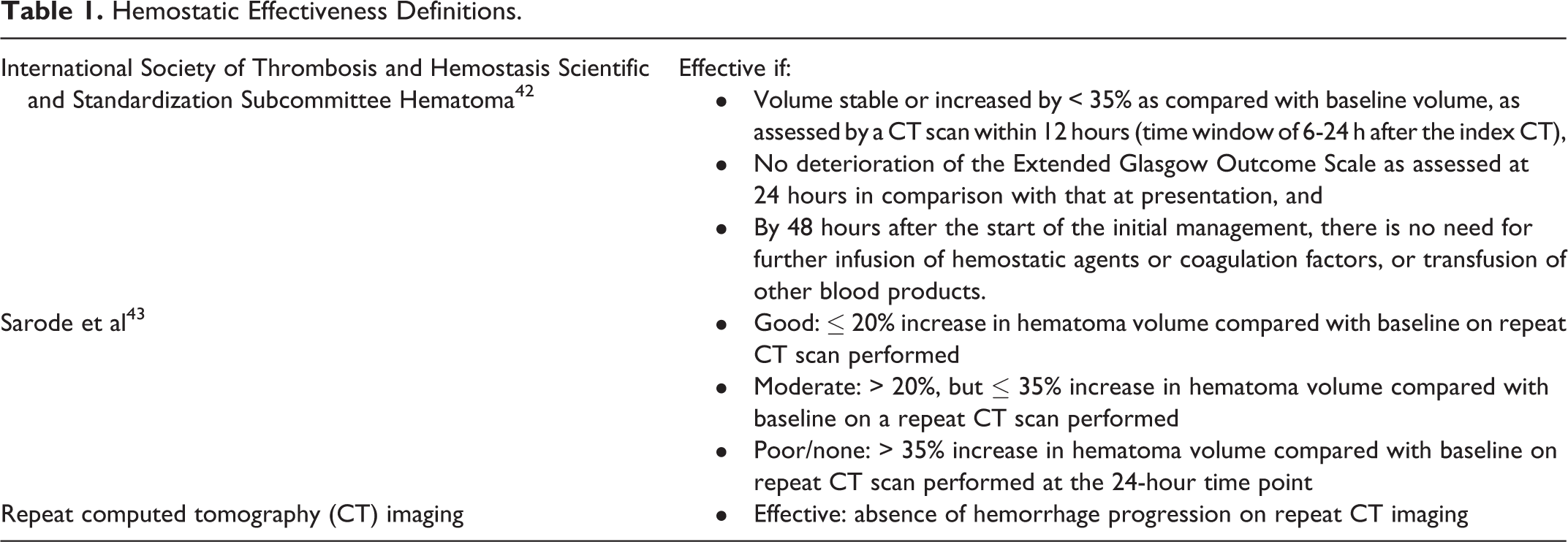
The electronic search identified 295 articles (Figure 1). Following the initial screening 263 articles were excluded and 5 articles were added after a bibliography review. Of the 37 articles assessed for eligibility, 19 were excluded. A total of 18 observational studies were included in this review.24-41 Thirteen studies evaluated non-activated 4 factor prothrombin complex concentrates (PCC), 3 studies evaluated activated 4 factor prothrombin complex concentrates (aPCC), and 2 studies evaluated both PCC and aPCC. The International Society of Thrombosis and Hemostasis (ISTH) Scientific and Standardization Subcommittee criteria was used to assesses hemostatic effectiveness in 5 studies, the Sarode et al criteria was used in 9 studies, and the absence or presence of hemorrhage progression on repeat computed tomography (CT) imaging was used in 4 studies.42,43 Definitions are detailed in Table 1. Repeat imaging was performed within 24 hours of reversal agent administration in all the studies. Overall, the rates of hemostatic effectiveness were 50-94% and varied with the criteria and dose utilized (Table 2). The hemostatic effectiveness rates were 50-74% with the ISTH criteria, 60-89% with the Sarode et al criteria, and 55-94% with repeat CT imaging.
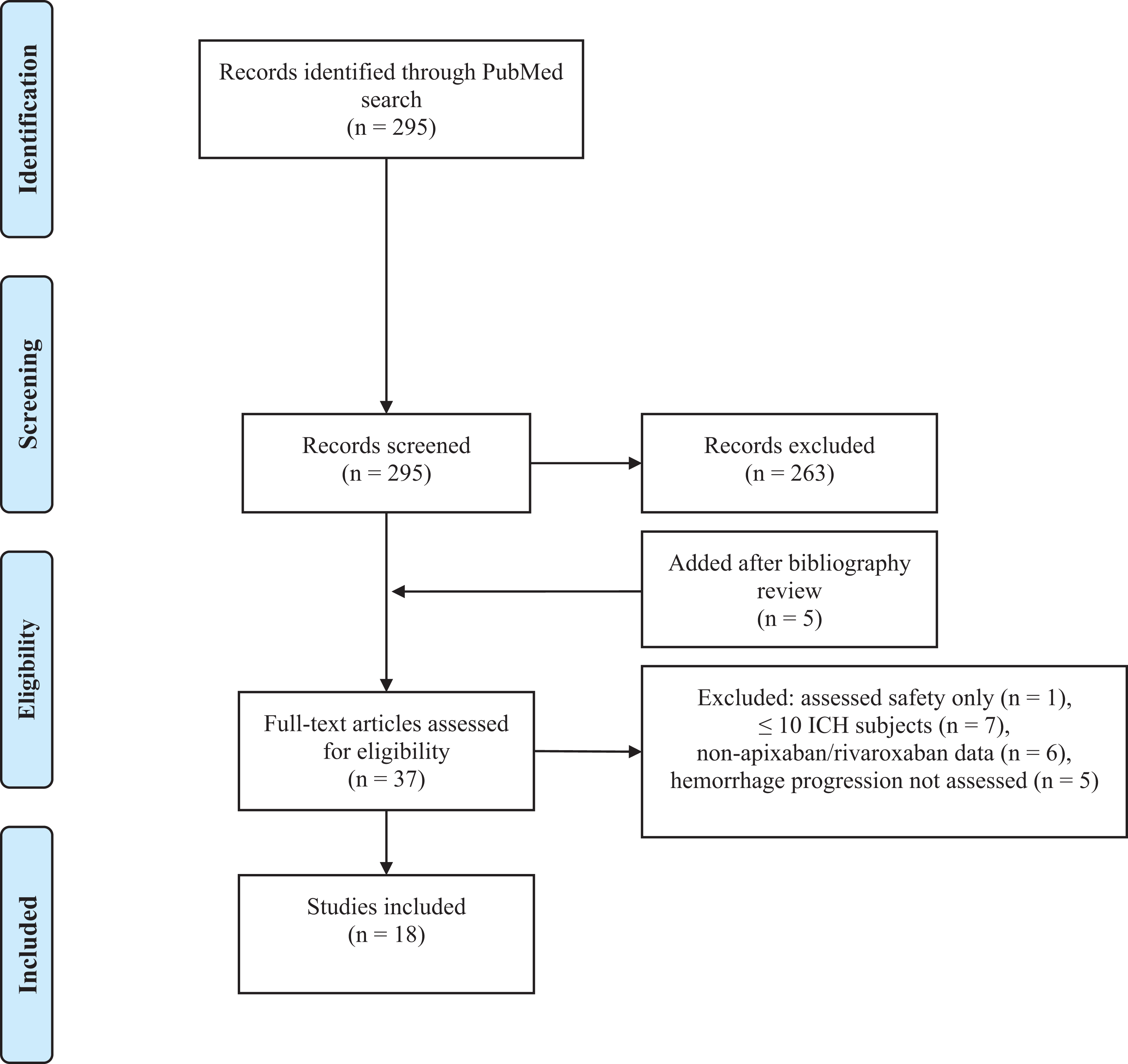
Literature search.
Hemostatic Effectiveness Definitions.
Summary of Studies.
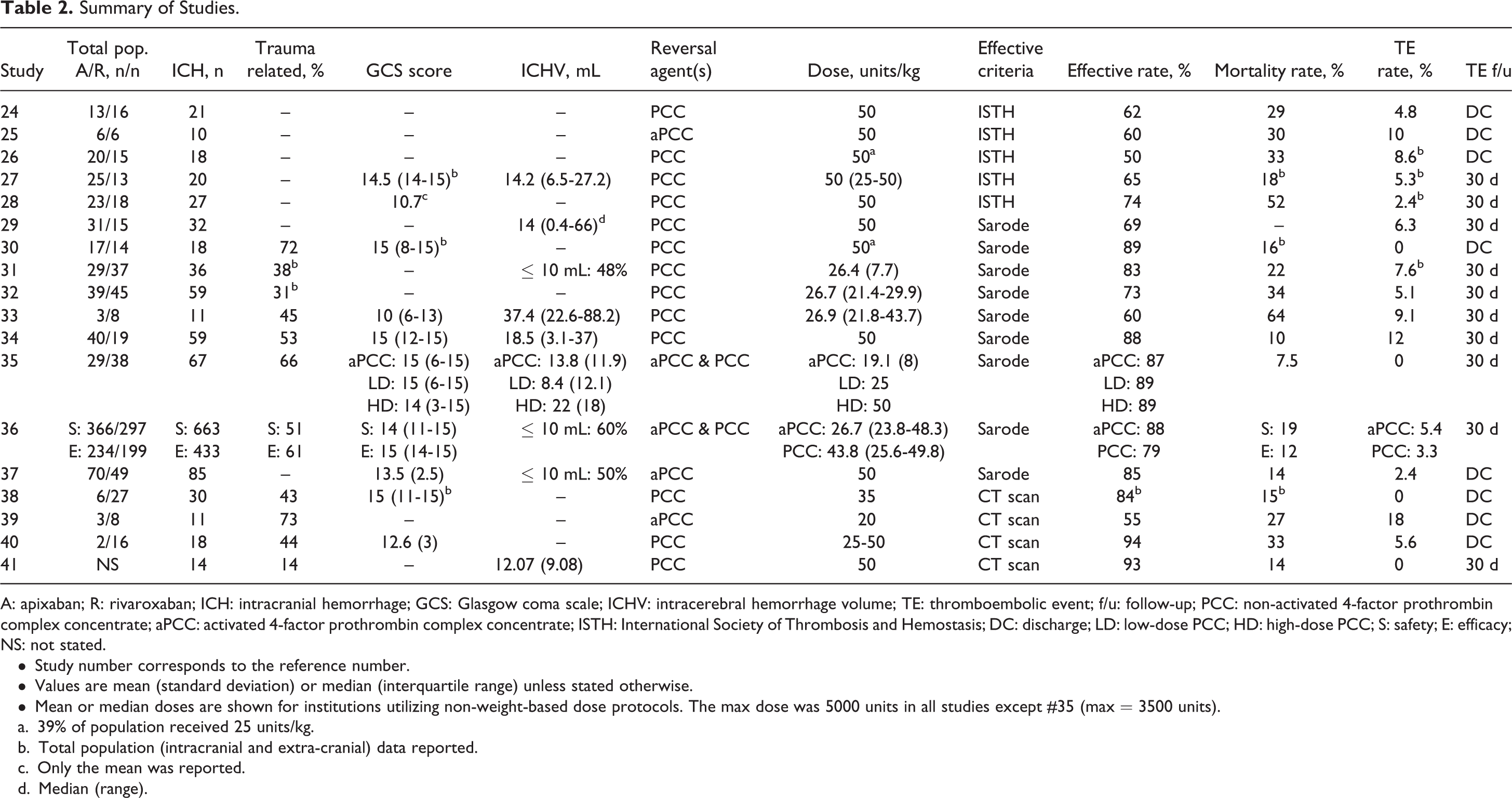
A: apixaban; R: rivaroxaban; ICH: intracranial hemorrhage; GCS: Glasgow coma scale; ICHV: intracerebral hemorrhage volume; TE: thromboembolic event; f/u: follow-up; PCC: non-activated 4-factor prothrombin complex concentrate; aPCC: activated 4-factor prothrombin complex concentrate; ISTH: International Society of Thrombosis and Hemostasis; DC: discharge; LD: low-dose PCC; HD: high-dose PCC; S: safety; E: efficacy; NS: not stated.
• Study number corresponds to the reference number.
• Values are mean (standard deviation) or median (interquartile range) unless stated otherwise.
• Mean or median doses are shown for institutions utilizing non-weight-based dose protocols. The max dose was 5000 units in all studies except #35 (max = 3500 units).
a. 39% of population received 25 units/kg.
b. Total population (intracranial and extra-cranial) data reported.
c. Only the mean was reported.
d. Median (range).
PCC Use and Efficacy
When a 50 units/kg dose of PCC was utilized, there was a 50-74% rate of hemostatic effectiveness with ISTH criteria, 69-89% with Sarode et al criteria, and 84-94% with repeat CT imaging. When a 25 units/kg dose of PCC was utilized, there was a 60-89% rate of hemostatic effectiveness with Sarode et al criteria. None of the studies that evaluated hemostatic effectiveness with ISTH criteria utilized a PCC dose of 25 units/kg dose. In the one study that evaluated hemostatic effectiveness with repeat CT imaging and utilized doses of 25-50 units/kg (3177 ± 776) the hemostatic effectiveness rate was 94%. Overall, when a PCC dose of ∼25 units/kg (range: 25-26.9 units/kg) was administered, the hemostatic effectiveness rates were ≥ 79% in 2/4 studies, in comparison to 7/11 studies that administered 50 units/kg. When a ∼25 units/kg (range: 25-26.9 units/kg) PCC dose was administered, the hemostatic effectiveness rates were ≥ 79% in 2/4 studies that utilized the Sarode et al criteria, in comparison to 4/5 studies that administered 50 units/kg. The hemostatic effectiveness rates were ≥ 79% in all 3 studies that utilized repeat CT imaging and PCC doses ≥ 25 units/kg (range: 25-50 units/kg).
aPCC Use and Efficacy
When a 50 units/kg dose of aPCC was utilized, there was a 60% rate of hemostatic effectiveness with ISTH criteria and 85% with Sarode et al criteria. None of the studies that evaluated hemostatic effectiveness with repeat CT imaging utilized an aPCC dose of 50 units/kg. When a ∼25 units/kg (dose range: 19.1-26.9 units/kg) dose of aPCC was utilized, there was a 87-88% rate of hemostatic effectiveness with Sarode et al criteria and 55% with repeat CT imaging. None of the studies that evaluated hemostatic effectiveness with ISTH criteria utilized an aPCC dose of 25 units/kg dose. Overall, when an aPCC dose of ∼25 units/kg (range: 19.1-26.7 units/kg) was administered, the hemostatic effectiveness rates were ≥ 79% in 2/3 studies, in comparison to 1/2 studies that administered 50 units/kg. The hemostatic effectiveness rates were ≥ 79% in all 3 studies that utilized the Sarode et al criteria and aPCC (dose range: 19.1-50 units/kg).
Time to Reversal Agent Administration
The time from when the last FXa inhibitor dose was taken and the time from hospital arrival to reversal influenced hemostatic effectiveness rates (Table 3). Five studies reported the time from when the last FXa inhibitor dose was administered to reversal (range: 2.6-17.8 hours). The hemostatic effectiveness rates were 73-83% when the last FXa inhibitor dose was administered > 12 hours prior to PCC administration. The time from hospital arrival to PCC administration was approximately < 3 hours (range: 1.57-3.1 hours) in all of the studies and the hemostatic effectiveness rates were ≥ 79% in 5/6 studies.
Time to Reversal Agent Administration.
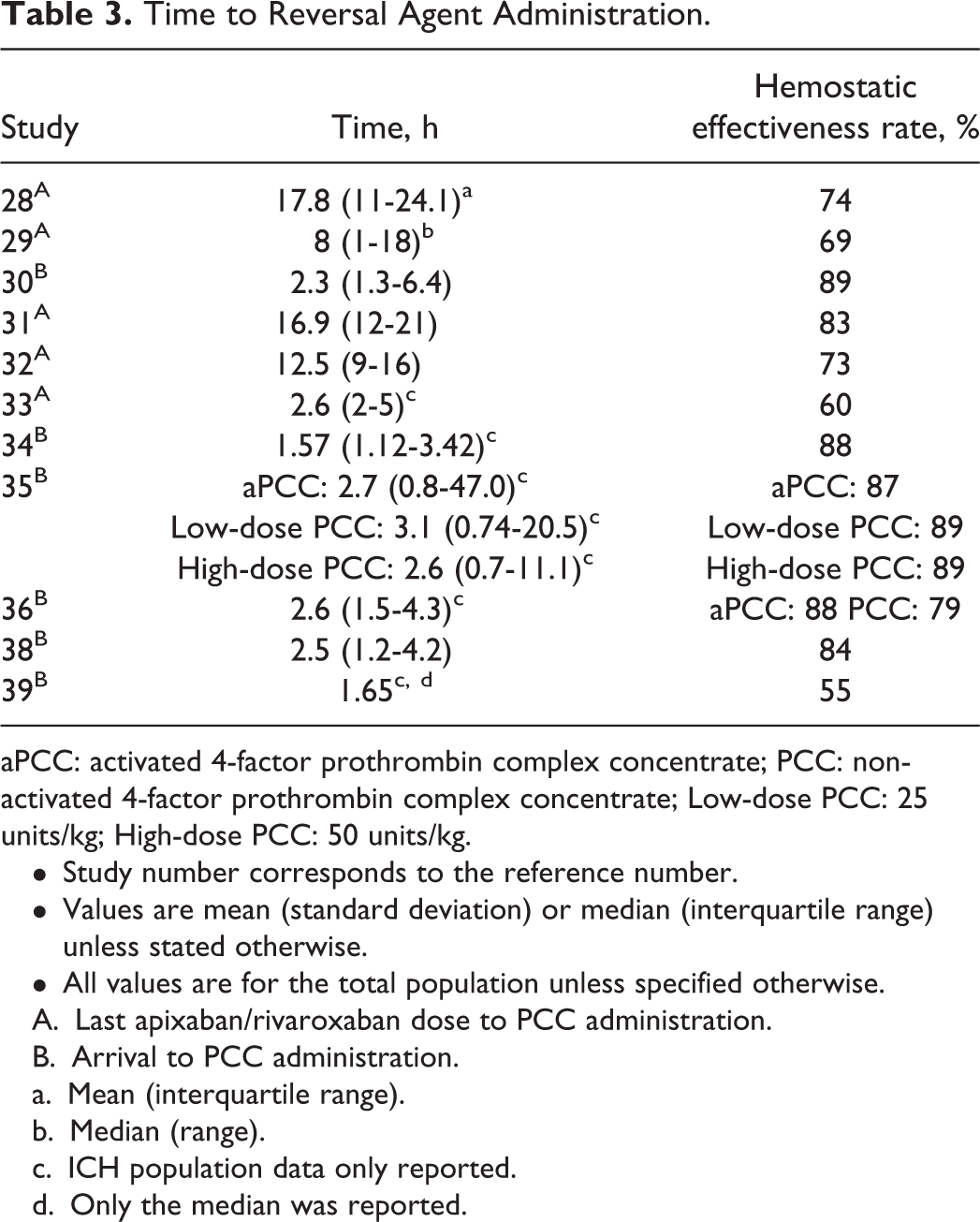
aPCC: activated 4-factor prothrombin complex concentrate; PCC: non-activated 4-factor prothrombin complex concentrate; Low-dose PCC: 25 units/kg; High-dose PCC: 50 units/kg.
• Study number corresponds to the reference number.
• Values are mean (standard deviation) or median (interquartile range) unless stated otherwise.
• All values are for the total population unless specified otherwise.
A. Last apixaban/rivaroxaban dose to PCC administration.
B. Arrival to PCC administration.
a. Mean (interquartile range).
b. Median (range).
c. ICH population data only reported.
d. Only the median was reported.
Mortality
Overall, the mortality rates were 7.5-64%. The mortality rates were < 20% in 7/9 studies with hemostatic effectiveness rates ≥ 79%. The mortality rates were < 20% in all 7 studies which reported an initial Glasgow coma scale (GCS) score ≥ 13. The initial GCS scores were 10-12.6 in the 3 studies with mortality rates > 20% (range: 33-64%). The mortality rates were < 20% (range: 7-22%) in 7/8 studies with intracerebral hemorrhage volumes < 30 mL. The mortality rate was 64% in the one study that reported a volume ≥ 30 mL.
Thromboembolic Events
TE rates were assessed up to 30 days in 10 studies and until hospital discharge in 8. Overall, the TE rates were 0-18%, with 16/18 studies demonstrating rates ≤ 10%. The TE rates associated with aPCC and PCC use were 0-18% and 0-12%, respectively. The TE rates were 0-9.1% and 0-12% in the PCC studies that administered a dose of ∼ 25 units/kg (range: 25-26.9 units/kg) or > 25 units/kg (range: 35-50 units/kg), respectively. A PCC dose < 50 units/kg (range: 25-35 units/kg) was associated with a TE rate ≤ 10% in 6/6 studies, whereas a PCC dose of 50 units/kg was associated with a TE rate ≤ 10% in 10/11 studies. The TE rates were 0-18% and 2.4-10% in the aPCC studies that administered a dose of ∼ 25 units/kg (range: 19.1-26.7 units/kg) or 50 units/kg, respectively. An aPCC dose of 50 units/kg was associated with a TE rate ≤ 10% in 2/2 studies, whereas an aPCC dose ∼ 25 units/kg was associated with a TE rate ≤ 10% in 2/3 studies. Four studies reported no TE and this finding was observed in 2 studies that followed patients up to 30 days and 2 until hospital discharge. In the 11 studies which reported the incidence of trauma related hemorrhage (range: 14-73%), the TE rates were 0-18% and increased with the percentage of patients presenting with a trauma related hemorrhage.
Discussion
Rates of hemostatic effectiveness varied with the criteria used. The lowest hemostatic effectiveness rates were observed in the studies that utilized the ISTH criteria which includes criteria that may not appropriately reflect therapy effectiveness. The Sarode et al criteria evaluates hemostatic effectiveness by comparing hemorrhage volumes before and after reversal agent administration, whereas the ISTH criteria additionally evaluates one’s GCS score before and after reversal agent administration. Four factor prothrombin complex concentrates may restore hemostasis, but do not reverse any damage that has already occurred and patients may continue to decline despite restoration of hemostasis. Not all studies that utilized the ISTH criteria reported baseline GCS scores, but patients presenting with lower GCS scores had higher mortality rates in this review. This finding is consistent with the literature and may explain why lower hemostatic effectiveness rates were observed in the studies that utilized the ISTH criteria.44,45 There is no consensus on the preferred definition of hemostatic effectiveness, but the ISTH and Sarode et al criterion are widely used.40,41 In this review, the Sarode et al criteria was used in 50% of the studies.
Rates of hemostatic effectiveness varied with the PCC dose administered in the studies reviewed, suggesting that larger PCC doses are warranted to restore hemostasis. FXa inhibitors inhibit circulating clotting factors and can inhibit exogenously administered clotting factors. Therefore, providing excess clotting factors via larger PCC doses may be more efficacious. A dose dependent response was not observed in the studies that utilized the ISTH criteria, but this may be related to the inclusion of criteria that may not appropriately reflect therapy effectiveness as previously discussed. Additionally, a dose dependent response was not observed with aPCC use, but this may be due to the inclusion of only 5 studies in this review and additional studies are warranted to evaluate if a dose dependent response exists.
Higher hemostatic effectiveness rates were observed in the studies where more time had elapsed since the last FXa inhibitor dose was administered and the bleeding event. The concentrations of apixaban and rivaroxaban peak within 4 hours after oral administration and their half-lives are approximately 5-12 hours.46,47 Based on their pharmacokinetic profiles, drug concentrations are expected to be lower in patients experiencing a bleeding event having not recently taken a dose and the ability for PCC to overwhelm the inhibitory effects of FXa inhibitors is expected to be more pronounced in this setting. Mortality rates were lower in the studies demonstrating higher hemostatic effectiveness rates and including patients with higher GCS scores and lower intracerebral hemorrhage volumes. In accordance with several other studies, less critically-ill patients are more likely to achieve hemostasis and benefit from anticoagulation reversal therapy.44,45,48 Overall, the mortality rates were high in the studies reviewed, but comparable to those observed in warfarin related ICH studies. Warfarin related ICH mortality rates are reported to be 19-40% despite normalization of INR values following administration of aPCC or PCC.49-52 These findings suggest that the incidence of mortality secondary to anticoagulant related ICH is high irrespective of reversal agent administration.
The TE rates observed in this review were not dose dependent. Similarly, in a safety study of 43 patients who received PCC for a FXa inhibitor associated ICH, one TE was observed in the total population when 51% and 37% of the population received a dose of 25 or 50 units/kg, respectively. 53 In this review higher hemostatic effectiveness rates were observed with larger PCC doses, suggesting that larger doses may result in improved outcomes without increasing the risk for TE. The TE rates were not reversal agent dependent. In comparison to nPCC, aPCC does not contain anticoagulants (heparin or a combination of Protein C, Protein S and Protein Z) and may result in more clot formation. 11 However, this review did not find an increase in TE rates with aPCC use. In the Panos et al study the TE rates associated with aPCC and nPCC use were 5.4% and 3.3%, respectively. 36 Similarly, the Rowe et al study found no difference in TE rates between aPCC and nPCC when used in the management of warfarin related coagulopathies. 54 These findings suggest aPCC carries the same TE risk as PCC and may be used in its place. However, this discovery requires further investigation due to the limited availability of aPCC studies. Higher TE rates were observed in the studies which included a higher percentage of patients presenting with trauma related hemorrhages. The incidence of TE following traumatic brain injury (TBI) is 13-25%.55,56 When venous thromboembolism (VTE) prophylaxis is delayed beyond 48 hours, TBI patients are 3 to 4 times more likely to experience a TE.57,58 Despite timely initiation of VTE prophylaxis, up to 10% of patients may still experience a TE. 59 The studies included in this review did not discuss in detail the use of VTE prophylaxis. However, TBI is an independent risk factor for TE and is likely to have contributed to the higher rates of TE observed in this review.55,56
This review suggests 4 factor prothrombin complex concentrates are comparable to coagulation factor Xa (recombinant), inactivated-zhzo in the management of FXa inhibitor associated ICH. However, due to study design and population characteristic differences, indirect comparisons between the ANNEXA-4 trial and the studies reviewed which utilized a dose of 50 units/kg and the same criteria of hemostatic effectiveness (Sarode et al) can only be made. The hemostatic efficacy was 79% in the ANNEXA-4 trial, whereas the hemostatic effectiveness rates were ≥ 79% in 5/6 studies reviewed. In the ANNEXA-4 trial the 30-day TE and mortality rates were 10.9% and 18.8%, respectively. The TE rates were ≤ 10% in 5/6 studies and the mortality rates were < 20% in 5/5 studies reviewed. Comparison of these 2 agents is currently limited to retrospective chart reviews which have yielded conflicting findings. In the Barra et al study, 18 patients received coagulation factor Xa (recombinant), inactivated-zhzo and 11 received PCC to manage FXa inhibitor associated ICH. 33 The hemostatic effectiveness rates, as assessed per the Sarode et al criteria, were 89% and 60% in the coagulation factor Xa (recombinant), inactivated-zhzo and PCC groups, respectively. 43 However, patients in the PCC group received a 25 units/kg dose and were likely under dosed. In the Ammar et al study, 28 patients received coagulation factor Xa (recombinant), inactivated-zhzo and 16 received PCC to manage FXa inhibitor associated ICH. 60 No difference in efficacy was found between the groups as evaluated by the absence or presence of hemorrhage progression on repeat CT imaging. The available literature supporting the use of 4 factor prothrombin complex concentrates is increasing with 13/18 studies reviewed having been published during 2019 and 2020. The guidelines have not been updated since 2019 and the studies reviewed and those to come may positively influence future versions’ recommendations.
Limitations
This review is not without any limitations. The studies reviewed varied in patient characteristics, interventions utilized, and outcomes studied. Therefore, the ability to draw robust conclusions from the studies reviewed is limited by the presence of heterogeneity and direct comparisons between all the studies included in this review could not be made. The search strategy used may have not identified all relevant studies, but the bibliographies of included studies were reviewed for additional articles. Lastly, few aPCC studies were included and conclusions regarding the use of 4 factor prothrombin complex concentrates are primarily limited to the use of PCC.
Conclusion
Rates of hemostatic effectiveness were influenced by the definition of hemostatic effectiveness, PCC dose administered, and patient severity. Studies suggest that higher PCC doses may result in higher hemostatic effectiveness rates without increasing the TE risk. The available literature is growing, but limited to non-randomized controlled trials. This review may be used by providers to modify or validate their reversal strategy approach until well designed studies are available.
Footnotes
Declaration of Conflicting Interests
The author(s) declared no potential conflicts of interest with respect to the research, authorship, and/or publication of this article.
Funding
The author(s) received no financial support for the research, authorship, and/or publication of this article.
