






Abstract
Background:
Pharmacists routinely interpret and optimize tobramycin dosing for people with cystic fibrosis (PwCF).
Objectives:
To determine the impact of tobramycin therapeutic drug monitoring (TDM) education on pharmacist dose recommendations, and to explore nurses’ and medical doctors’ perceptions toward pharmacist-led TDM charting.
Methods:
This study involved 3 phases: a 12-month retrospective audit of PwCF prescribed tobramycin to identify the appropriateness of pharmacists’ dose recommendations, a pharmacist tobramycin educational intervention utilizing a voiceover presentation with pre- and post-online tobramycin TDM assessment (involving multiple choice pharmacokinetics and case-based scenario questions), and a cross-sectional survey of respiratory nurses’ and doctors’ perceptions toward pharmacist-led TDM charting. The pharmacists’ dose recommendations, in the audit and case-based questions, were considered appropriate if subsequent levels achieved the targeted area under the curve (AUC).
Results:
Audit results revealed that 44.4% of the 277 pharmacist dose recommendations identified were appropriate. The pre- and post-interventional assessments were completed by 51 and 52 pharmacists, respectively. Post intervention, correct scores were significantly higher than pre-intervention, evident in both the pharmacokinetics (median score 75% vs 100%; P = 0.048) and case-based scenario (median score 60% vs 90%; P < 0.0001) questions. Of the 54 nurses and medical doctors surveyed, 92.6% supported the implementation of pharmacist-led tobramycin charting.
Conclusion:
The study demonstrated an increased accuracy and appropriateness of pharmacists’ tobramycin pharmacokinetics knowledge and TDM dose recommendations post-educational intervention and highlighted nurses’ and medical doctors’ support of pharmacist-led tobramycin TDM charting.
Introduction
Cystic fibrosis (CF) is an inherited genetic condition that manifests as a multisystem disease affecting the lungs, gastrointestinal tract, pancreas, and other organs. It is the most common autosomal recessive condition in Australia, with approximately 1 in every 2,500 babies born with this condition. 1 Exacerbations of airway infections in adult people with cystic fibrosis (PwCF) requiring intravenous antimicrobial therapy are often managed with tobramycin, an aminoglycoside antimicrobial that requires therapeutic drug monitoring (TDM).2,3 TDM is particularly important in PwCF as they inherently have high intra-variability of pharmacokinetic parameters which fluctuates the disposition of many medications.4,5
TDM has become a cornerstone of healthcare practice, enabling individualized therapy to optimize patient outcomes. 6 It encompasses comparing serum concentrations to the published medication therapeutic ranges, analyzing an individual’s demographics along with their clinical response, and evaluating the medication’s indication, dose and pharmacokinetics.6,7 TDM is important for aminoglycosides as its bactericidal effects are directly correlated to exposure, and its exposure must be maintained within a narrow therapeutic index in order to avoid serious toxicities including ototoxicity, nephrotoxicity and neurotoxicity.5,8
Pharmacists are key health professionals in the management of medicines that require TDM. Current literature shows that pharmacists reduce patient harm and optimize aminoglycoside TDM and dosing in a variety of patient populations and clinical settings.9-11 In North America, a study observing the implementation of a pharmacist-led aminoglycoside quality improvement program among oncology patients demonstrated that the program significantly increased the number of patients receiving optimal aminoglycoside dosing by 36%. 10 Another study involving pediatric patients with CF demonstrated that pharmacist-led management of aminoglycoside TDM achieved target levels 3 days earlier than management without a pharmacist, with a 3 day reduction in average length of stay. 12 A large study of nearly 200,000 patients treated in 961 hospitals revealed that patients without pharmacist involvement in the management of aminoglycoside or vancomycin therapy compared to those with pharmacist involvement, had higher death rates, longer lengths of stay, higher hospital costs and a higher measurement of renal and hearing impairment. 13
Competency certification consisting of information packages on aminoglycoside pharmacokinetics and TDM techniques, along with multiple-choice examinations based on real-life patient cases have been shown to improve pharmacist aminoglycoside dosing recommendations.9,14 A study examining pharmacists’ vancomycin and aminoglycoside TDM recommendations at a tertiary hospital in Saudi Arabia demonstrated a larger proportion of patients received correct initial doses and subsequent adjusted doses after an educational intervention. 14 In 2012, an Australian tertiary hospital implemented a credentialing program and annual re-credentialing package to enable pharmacists to independently order aminoglycoside drug levels and chart subsequent doses on the patient’s medication chart. 15 The recognition of pharmacists’ crucial role in TDM has led to an increased interest in optimizing pharmacists’ TDM skills through educational interventions and credentialing pharmacists in a charting model.
With this increased interest in the expansion of pharmacists’ scope of practice and potential extension of pharmacy services, there is equally an interest in doctors’ perceptions and their acceptance of pharmacist-led TDM and charting.16,17 Collaboration and support have already been exhibited by doctors in other extended pharmacy services including de-prescribing and partnered pharmacist charting models.18,19 The perception of nurses and medical doctors toward pharmacists’ TDM competency and role in pharmacist-led aminoglycoside charting is currently not well established. The uptake of pharmacist TDM dose recommendations may be used as a surrogate measure of this, with a study demonstrating over 90% of pharmacists’ TDM recommendations being accepted by doctors. 20
Currently, there are no published articles on the appropriateness of tobramycin TDM recommendation provided by hospital pharmacists and the perceptions of nurses and medical doctors toward pharmacist-led tobramycin TDM. The aims of this study were to: i) identify the appropriateness of pharmacists’ tobramycin TDM dose recommendations for adult PwCF, ii) evaluate the impact of an online educational intervention on the accuracy and appropriateness of pharmacists’ pharmacokinetic knowledge and dose recommendations via an online assessment, and iii) explore respiratory nurses’ and doctors’ perceptions toward pharmacist-led tobramycin TDM management and charting.
Method
Study Design and Setting
Monash Health is a large, multi-site, metropolitan teaching hospital in Melbourne, Australia which employs over 250 pharmacists in a variety of roles. It provides 1 of 2 adult CF services in the state, encompassing both inpatients as well as hospital-in-the-home (HITH) treatment services. HITH is a service that provides an option for patients who are non-critically ill to receive their hospital treatment at home. Pharmacy services are available within HITH and this service extends to performing tobramycin TDM. Over 100 pharmacists are regularly rostered at sites which treat PwCF and many of which may be rostered to perform tobramycin TDM.
At Monash Health, pharmacists provide TDM dose recommendations for all patients under their care 7 days a week. CF specialized pharmacists are not employed at this hospital to manage PwCF; instead pharmacists with varying levels of experience can be rostered to perform TDM at any 1 time. To facilitate tobramycin TDM recommendations, pharmacists utilize a local tobramycin protocol in conjunction with an area under the curve (AUC) pharmacokinetics software. The Monash Health local protocol outlines the tobramycin infusion duration, timing of levels, population specific targets and advises users to contact the pharmacist for interpretation of levels and dose recommendations. A rough guide for tobramycin dose adjustments depending on AUC results (from clinical experience) had been formulated and included in the pharmacy TDM education sessions since 2018, but the PowerPoint® presentation was not readily accessible. Thus, our goal was to implement a standardized online educational intervention to improve consistency and appropriateness of pharmacists’ tobramycin dose recommendations in PwCF.
The methods of monitoring aminoglycoside vary between healthcare organizations. Peak and trough concentrations for once daily dosing of aminoglycoside have been questioned in several studies due to insufficient relationships reported with efficacy and toxicity.21,22 The validity of once daily aminoglycoside nomograms has also been scrutinized as they were previously derived from multiple dosing regimens. 23 Paterson et al reports that 2 levels post-dose is a more accurate predictor of AUC and pharmacokinetic parameters than methods that only rely on a single level. 22
The optimization of peak serum concentration (Cmax)/mininum inhibitory concetration (MIC) and AUC/MIC ratios have been demonstrated to correlate with clinical outcomes through improved forced expiratory volume in 1 second (FEV1) and forced vital capacity (FVC).24,25 Turnidge explains that theoretically AUC/MIC is a better predictor of efficacy as changes in clearance would substantially affect AUC while Cmax would remain unchanged. 26 For this reason, AUC/MIC is the pharmacodynamic parameter which optimizes efficacy through its correlation with pulmonary function improvements, as well as minimizes toxicity.25,27
Although a 2-compartment model may more accurately represent the aminoglycoside serum levels, the complexity of the model excludes its clinical use. 23 Hence, a 1-compartment model is widely adopted to accurately predict aminoglycoside serum levels.5,23 The computerized algorithms are intended to assist users with making an informed aminoglycoside dose recommendation and were never a substitute for clinical judgment. 23
Monash Health utilizes MerlinMap® software to assist pharmacist TDM recommendations, in order to achieve a target AUC between 90 to 110mg·h/L. The program utilizes a 1-compartment linear regression model when calculating pharmacokinetic parameters and recommending the next dose. Given a non-linear 2-compartment model is more appropriate, 28 pharmacists are encouraged to contextualize the MerlinMap® estimated pharmacokinetic parameters and make their own recommendations based on clinical judgement. This includes reviewing levels in the context of patient status, dosing history and previous levels before making a non-linear dose adjustment. The pharmacokinetic parameters estimated by the MerlinMap® software program are time critical, and compliance to the tobramycin protocol (in relation to infusion duration and timing of levels) is essential for the accuracy of the program.29,30
This study involved 3 phases.
Phase I: Retrospective Audit
Patients were identified via a retrospective database review of tobramycin serum levels reported from January 2019 to December 2019. Inclusion criteria comprised of adult patients (≥18 years) that were admitted under the care of the CF service (inclusive of HITH patients) and were receiving once daily intravenous tobramycin. A review of the electronic medical records provided patients’ clinical details (presenting complaint, past medical history, clinical status, pathology reports), tobramycin prescribing and dosing regimens, administration times, serum levels and pharmacist TDM reports with recommendations. The data collected included patient demographics (gender and age), weight, height, renal function, dose prescribed, administration times, tobramycin levels, predicted AUC (calculated by MerlinMAP®), pharmacists’ dose recommendation, the next dose prescribed by the doctor and whether the subsequent AUC was within the targeted range. Patients and specific tobramycin levels were excluded if records were unavailable or incomplete, did not have a subsequent dose charted due to cessation of therapy, were taken at a time inconsistent with hospital protocol or were related to a dose not given in accordance with hospital protocol (e.g. administered over an incorrect period) (Figure 1). This was to ensure the appropriateness of pharmacists' recommendation were assessed based on the most accurate pharmacokinetic information provided by the TDM software, which is directly related to tobramycin administration and level sampling occurring at recommended times.
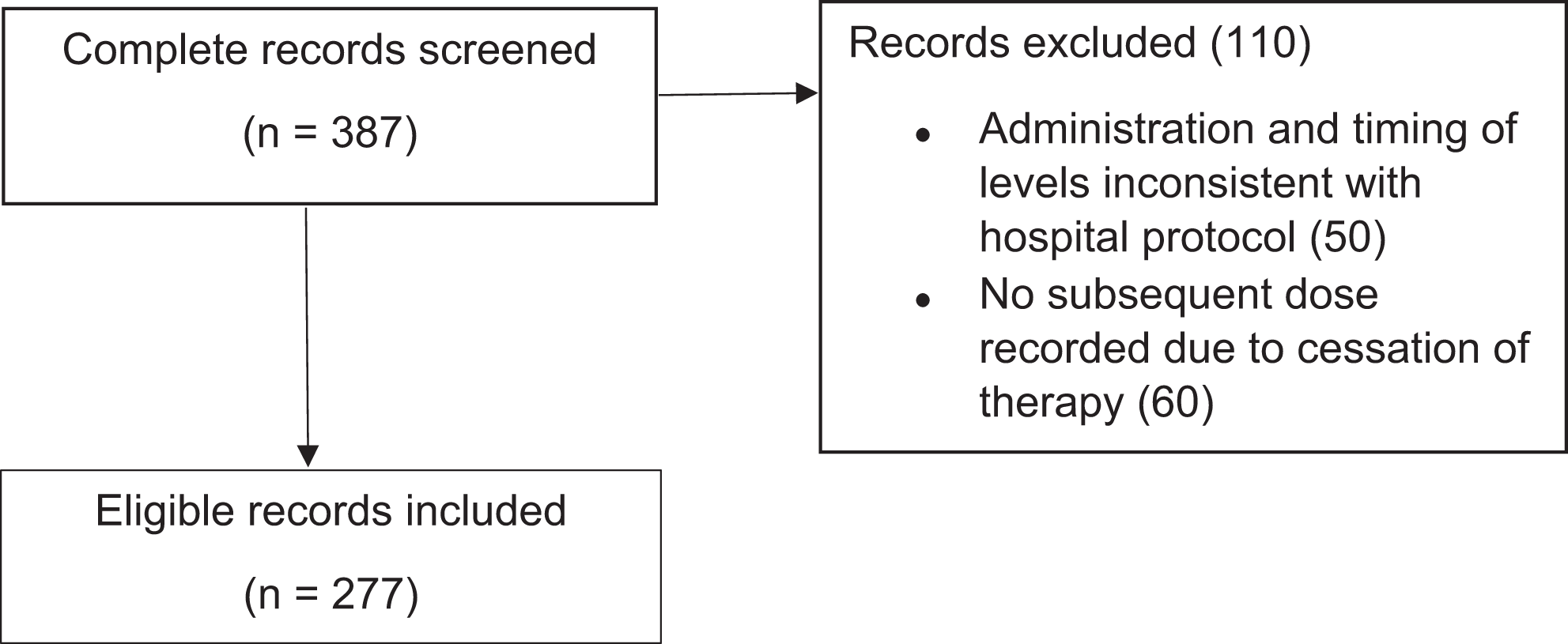
Flowchart depicting number of records screened and excluded.
Phase II: Pharmacist Surveys
Phase IIa: Pharmacist survey pre-intervention
A 2-part pre-intervention online survey of pharmacists’ baseline TDM experience and knowledge was developed (Supplemental Appendix 1). Part A asked questions about participants’ demographic profile including years of experience, scope of practice, frequency of completing tobramycin TDM, clinical areas TDM previously performed (where multiple areas may be selected), previous TDM training or education sessions, attitudes toward performing tobramycin TDM (including confidence to independently perform TDM and whether pharmacists would seek a second opinion) and measured current tobramycin TDM pharmacokinetics knowledge accuracy through 4 multiple choice questions. Part B assessed tobramycin dosing and monitoring recommendation appropriateness, using 10 CF case-based scenarios. Cases were formulated from past adult PwCF who achieved therapeutic tobramycin AUCs after pharmacist dose recommendation. To establish feasibility, the survey was piloted on 8 pharmacists with varying TDM experience. The feedback received was used to clarify minor details of the case-based scenario questions before the survey was distributed. The completion duration for both parts were recorded for each participant. Phase IIa was distributed via email with a SurveyMonkey® hyperlink to all pharmacists who could potentially be providing direct care to PwCF (n = 170) and remained open for completion between April 2019 and May 2019.
Prior to the implementation of phase IIa, pharmacist TDM education was available via didactic presentations sporadically throughout the year. The 1 hour presentation focused specifically on vancomycin and aminoglycoside pharmacokinetics and pharmacodynamics, and provided a generalized guide on interpretation of levels. The presentation included a Power-Point® slide on tobramycin dosing and monitoring in PwCF. Pharmacist attendance was non-mandatory.
Phase IIb: Pharmacist survey post-intervention
An online educational presentation for pharmacists was created by the authors of this study and designed to target the core principles of tobramycin TDM that were highlighted as areas for improvement in phase I and IIa. It consisted of a PowerPoint® presentation with voiceover and provided case-based learning focusing on tobramycin pharmacokinetics, interpretation of drug levels and step by step considerations of the key elements involved in formulating a pharmacist TDM dose recommendation in adult PwCF. It was launched in July 2020 and a post-intervention survey was conducted (the same pre-intervention web-based questionnaire survey from phase IIa, noting that the online educational presentation was not considered as previous TDM education in Part A of the survey). Prior to commencement, participants were not notified about the questionnaire survey linked at the end of the educational presentation. It was distributed via email with a SurveyMonkey® hyperlink to all pharmacists who could potentially be providing direct care to PwCF (n = 218) and remained open for completion between July 2020 and August 2020. The increased sampling pool of Phase IIb (n = 218) in comparison to Phase IIa (n = 170) is reflective of expansion in the department. As surveys were anonymous, individual results from phase IIa and IIb could not be linked during analysis.
For both phase I and case-based questions of phase II, a pharmacist TDM dose recommendation was defined as appropriate if the subsequent dose achieved the targeted AUC. Knowledge accuracy was defined as obtaining a score of 100% for all 4 pharmacokinetic knowledge questions in phase II.
Phase III: Nursing and Medical Survey
In April 2019, a survey was developed for nursing and medical doctors (Supplemental Appendix 2). The questions were formulated to anonymously determine nurses’ and doctors’ perceptions of pharmacist-led tobramycin management and charting. In the survey, charting was described as independently charting subsequent tobramycin doses after the initial dose had been prescribed by the medical doctor. 14 The survey consisted of 9 questions and incorporated a 4 to 5-point Likert scale to measure attitudes. It was distributed via email with a SurveyMonkey® hyperlink to the respiratory ward nurses and respiratory doctors who have worked with PwCF in the last 12 months, identified by the Nurse Unit Manager and medical staff roster (n = 127). It remained open for completion between April 2019 and May 2019.
Sample Size
Phase I sampled the entire population of adult PwCF prescribed tobramycin with TDM performed by a pharmacist in 2019. The estimated sample size required for Phase II was 50 in each group to achieve a power of 80% and a level of significance of 5% (expected mean set at 45%; this value was estimated from the phase I results of pharmacist dose recommendation appropriateness; expected mean set at 70%, standard deviation set of 10 units with a superiority margin set at 30 units). Phase III’s sample size was estimated to be 55 based on a population size set at 127 (95% confidence level, 0.05% standard error, confidence interval set at 10%, proportion set at 50%).
Data Analysis
Descriptive statistics were used in phase I to describe the frequency of pharmacists recommending an appropriate tobramycin dose (if a therapeutic AUC was achieved after pharmacist recommendation) and prescriber acceptance of pharmacists’ TDM recommendations. Comparative statistical analysis was performed in phase II; Mann-Whitney U-test for continuous variables and Pearson’s chi-squared test for categorical variables using Minitab 19.1.1 (Minitab LLC, PA, USA). Statistical significance was defined a priori at p value < 0.05. In phase III, qualitative analysis was used to summarize the nurses’ and doctors’ responses.
Ethical Review
The study was assessed as a quality improvement activity by the Monash Health Human and Research Ethics Committee Coordinator and exempt from ethical review (Monash Health reference: RES-20-0000-495Q).
Results
Phase I
Overall, 31 patients with 55 episodes of care and 277 tobramycin AUC levels (from 544 individual tobramycin levels) were included. The median age was 30 years (range 19-51 years) with 19 (61.3%) male PwCF. The median intravenous tobramycin dose and calculated dose per weight was 380 mg (range 160-620 mg) and 6.0mg/kg (range 3.9-10.0mg/kg) respectively. The median duration of therapy was 14 days (range 1-63 days). The majority of tobramycin levels interpreted by pharmacists were performed on ward-based PwCF (n = 202, 72.9%) in comparison to those being treated by HITH (n = 75, 27.1%). In the retrospective audit, doctors demonstrated high acceptance of pharmacists’ tobramycin TDM dose recommendations (n = 267, 99.6%).
Overall, pharmacists made appropriate dose recommendations 44.4% (n = 123) of the time. Pharmacist dose recommendation appropriateness was similar regardless of the previous AUC level obtained. In total, 100 (36.1%) of prior AUC results were within range (between 90 to 110mg·h/L) and pharmacists made an accurate recommendation in 49 (49%) of those circumstances. Similarly, when the previous AUC was low (n = 122, 44%) or high (n = 55, 19.9%), pharmacists made accurate recommendations in 51/122 (41.8%) and 23/55 (41.8%) of those occasions respectively. When the previous AUC was low or high, 51/177 (28.8%) of pharmacists did not recommend a dose adjustment.
Phase II
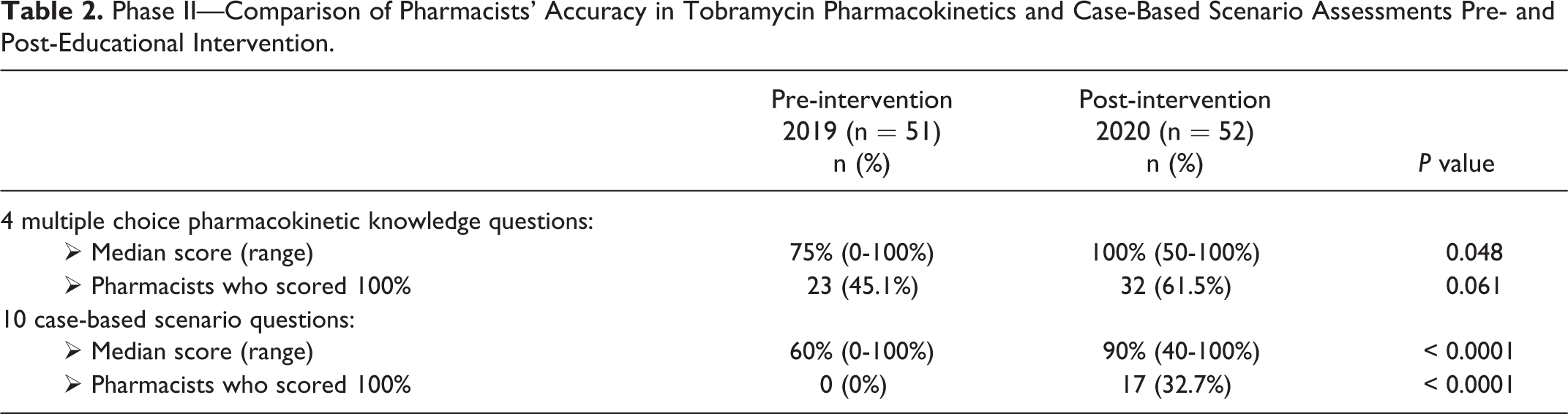
A total of 51 of 170 (30%) pharmacists and 52 of 218 (23.9%) pharmacists completed phase IIa and IIb respectively (Table 1). Pharmacists had similar responses to seeking a second opinion from another pharmacist when completing tobramycin TDM in phase IIa and IIb (n = 26, 51.0% vs n = 28, 53.8% agree/strongly agree; P = 0.771). After completion of the educational intervention, pharmacists in this group reported being more confident to independently assess tobramycin drug levels and provide TDM dose recommendations compared with those in phase IIa, however this was not shown to be statistically significant (n = 44, 84.6% vs n = 35, 68.6%; P = 0.055). A comparison of the accuracy and appropriateness of the pharmacokinetics and dose recommendation questions in phase IIa and IIb are shown in Table 2.
Phase II—Comparison of Pharmacists’ Demographics Pre- and Post-Educational Intervention.
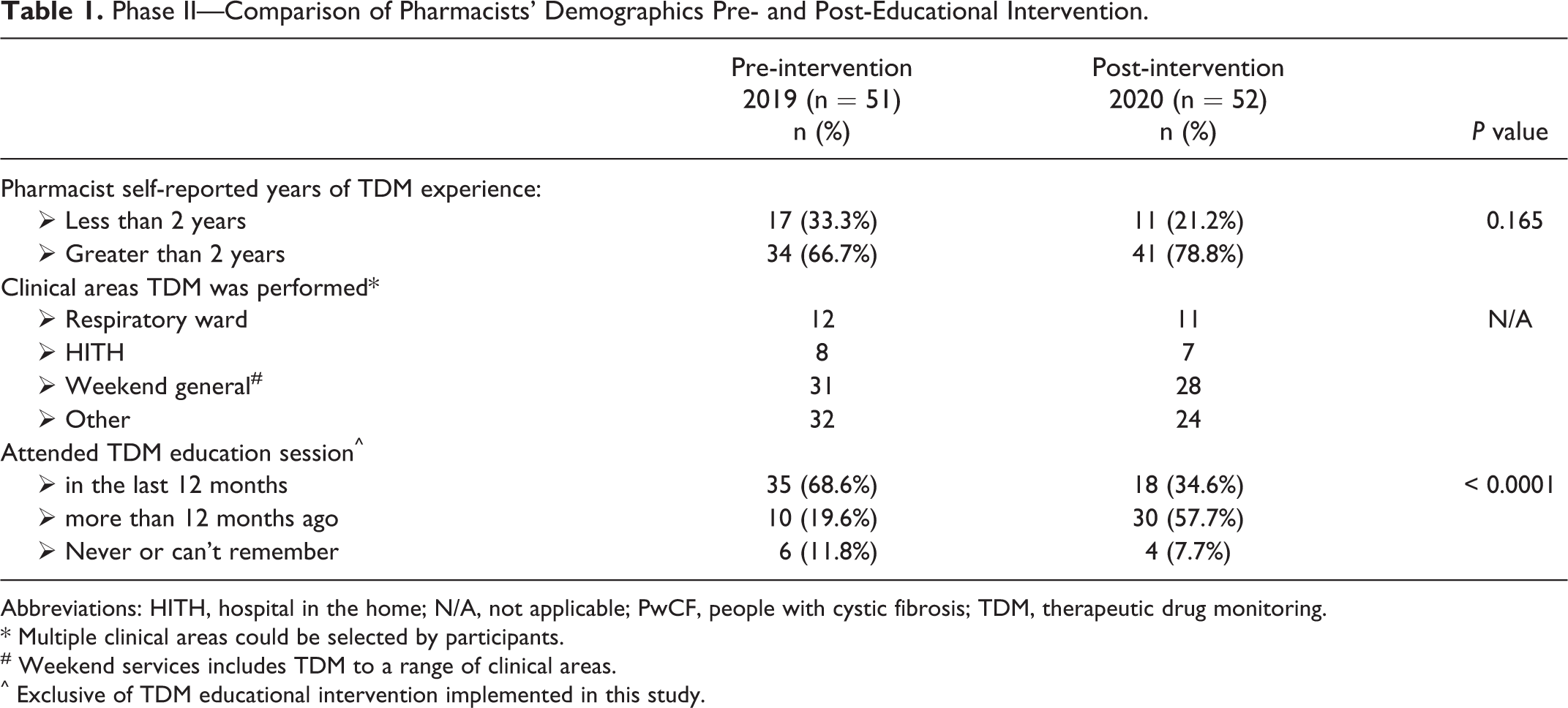
Abbreviations: HITH, hospital in the home; N/A, not applicable; PwCF, people with cystic fibrosis; TDM, therapeutic drug monitoring.
* Multiple clinical areas could be selected by participants.
# Weekend services includes TDM to a range of clinical areas.
^ Exclusive of TDM educational intervention implemented in this study.
Phase II—Comparison of Pharmacists’ Accuracy in Tobramycin Pharmacokinetics and Case-Based Scenario Assessments Pre- and Post-Educational Intervention.
Phase III
Overall, 54 of 127 (42.5%) nurses and doctors completed the survey, with 40 of the participants being nurses and 14 medical doctors (Table 3). Of all respondents, 52 (96.3%) expected pharmacists to monitor tobramycin levels and provide dose recommendations and 50 (92.6%) supported the implementation of pharmacist-led tobramycin charting. Two medical doctors that did not support the implementation of pharmacist-led charting had neutral views. One of which believed the initiative should be a collaborative effort between pharmacist and doctor, however, would allow a CF trained pharmacist to independently chart tobramycin. The other had experienced “rare occurrences of large dose changes recommended by pharmacists” and would prefer doctors to continue to prescribe. Nevertheless, the medical team had overall positive responses with comments including “pharmacy staff have the expertise and experience to dose and prescribe tobramycin dosing at a level far superior to junior medical staff”; “I wholeheartedly support”; “…would be much more efficient for pharmacist to chart the doses”; and “I only dose according to the pharmacist”.
Phase III—Overview of Respiratory Nurses' and Doctors’ Responses to Cross-Sectional Survey on Pharmacist-Led Tobramycin Therapeutic Drug Monitoring Management and Charting.
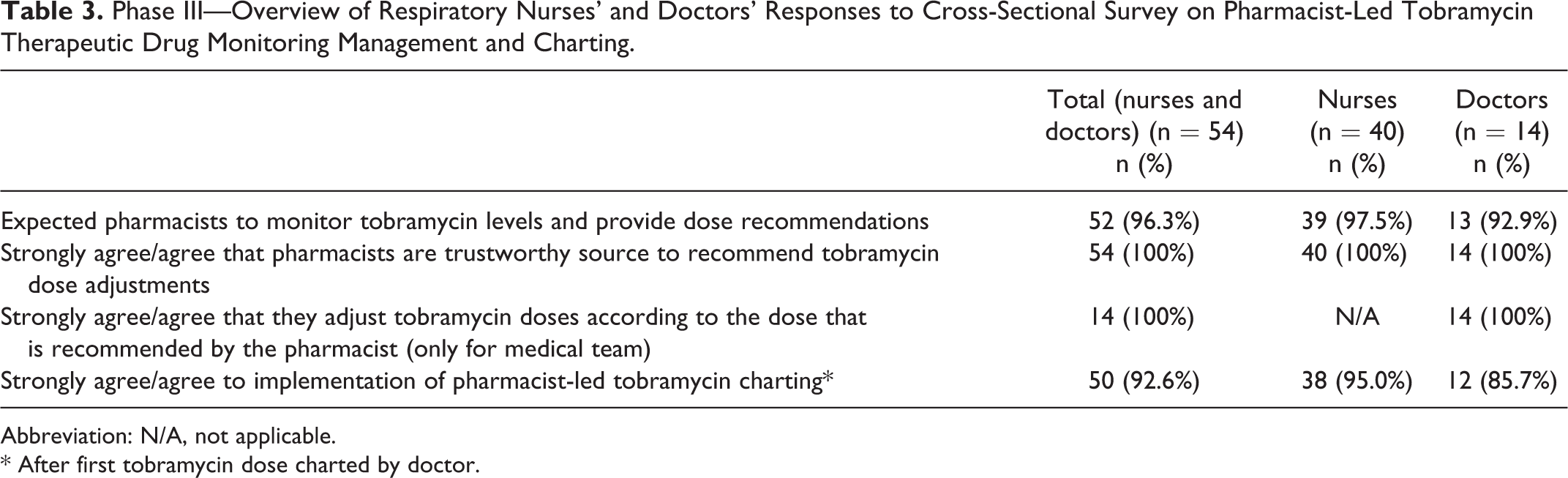
Abbreviation: N/A, not applicable.
* After first tobramycin dose charted by doctor.
Discussion
Our study identified variability in the accuracy and appropriateness of pharmacist tobramycin pharmacokinetic knowledge and TDM recommendations in PwCF. Interestingly, in phase I where the preceding AUC had been therapeutic, subsequent pharmacist recommendations resulted in a continued therapeutic AUC only 49% of the time. This could highlight the unpredictability and large intra-variability of PwCF pharmacokinetics and highlights the need for closely monitored TDM. When the preceding AUC was outside the target range, pharmacists did not recommend a dose adjustment for 28.8% of AUC’s. This may indicate variability in pharmacist knowledge of dose alterations outside the target AUC range, and potentially reflect a deficit in specific tobramycin TDM knowledge, education, and experience. While the variability of PwCF cannot be modified to improve pharmacists’ dose recommendation appropriateness, pharmacists’ knowledge and recommendations can be improved by educational interventions, such as that introduced in phase IIb of this study.
At the time of Phase I and II, there was no formal written guide to help pharmacists with the interpretation of tobramycin TDM. When the online educational presentation was released in July 2020, this was the first formal pharmacist guide on how to interpret tobramycin levels and make dose recommendations. After implementation of the educational intervention, pharmacists reported more confidence in independently assessing tobramycin drug levels and providing TDM dose recommendations (P = 0.055). Since fewer pharmacists attended education sessions in 2020, this reported increase in confidence is unexpected and therefore could be credited to the education presentation implemented and the absence of a time delay between education and completing the survey.
Our findings of higher median scores and the number of pharmacists who obtained a score of 100% in the case-based scenario assessment post-educational intervention are consistent with current literature.9,14 Alhameed et al reported a 31% increase (n = 75; P < 0.0001) in patients receiving optimal initial dosing of vancomycin or aminoglycoside when led by pharmacy residents after they had received a similar interactive educational intervention and assessment questions. 14
A follow up prospective audit of tobramycin TDM dose recommendations for adult PwCF, could be useful to assess the impact of the educational intervention on everyday practice and its longitudinal impact. In order to transition pharmacists to a pharmacist-led tobramycin charting service, additional education methods to a didactic guide may be necessary and should be the subject of future research. The educational presentation could be used to build a future credentialing package to ultimately improve patient outcomes as seen in other studies. 31 Khalil et al reported an error reduction of greater than 80% in patient’s medications following the credentialing of pharmacists to perform collaborative medication reconciliation on hospital admission. 31 Furthermore, future studies can focus on using the educational intervention developed in this study to help define the appropriateness of pharmacist dose recommendations.
Results from the nursing and medical survey revealed that both professions expect pharmacists to be responsible for tobramycin monitoring and agree pharmacists provide trustworthy dose recommendations, which corresponds with the majority of doctors (85.7%) who also reported support for the implementation of pharmacist-led tobramycin charting. With the strong support of CF nurses and doctors and an effective educational intervention from which to build a future credentialing package from, the next phase is the introduction of pharmacist-led tobramycin charting at our hospital.
Limitations
There were several limitations in this study. The definition of pharmacist’s dose recommendation appropriateness being based on subsequent AUC result, while outcome based, is also influenced by many factors beyond the control of the pharmacist (such as patient clinical status, interacting medications or treatments that are not prescribed at the time of recommendation). Future studies should address the pharmacist review and recommendation process as a wider assessment of practice rather than a measure of defined appropriateness. Survey limitations were also present. Results from phase IIb assumed all pharmacists had completed the online education guide, however this could not be confirmed. Additionally, a degree of implied knowledge and potential recall bias is applied to the comparison of results in phase IIa and IIb, as it is not known if the participants that completed the surveys were the same individuals in both phases and the survey questions were identical. The phase IIb survey was also completed immediately post-completion of the education guide, as the survey link was provided at the end of the presentation. The results therefore may not correlate to knowledge retained after a longer period, and this would be of interest in future studies. A post-intervention audit with the methodology of Phase I would validate the findings of this study in a real-life population as the stimulated scenarios implemented in Phase II may not directly reflect pharmacists’ real-life dosing competency. Similarly, a post-intervention survey with the methodology of Phase III would help determine whether the changes in pharmacists’ education would impact on doctors’ perceptions. Finally, with the educational intervention and survey taking more than 30 minutes to complete, questionnaire fatigue may have influenced the results. Future studies should randomize question order to facilitate less potential bias of question order or chance.
Conclusion
This study showed that less than half of the pharmacist tobramycin dose recommendations in PwCF were appropriate in a retrospective audit, prompting implementation of a specific tobramycin recommendation educational intervention. This intervention resulted in an increased number of correct responses in both the knowledge of tobramycin pharmacokinetics and the appropriateness of pharmacist TDM dose recommendations. Nurses and medical doctors had positive attitudes toward the current pharmacist role in tobramycin TDM and are in support of the introduction of a pharmacist-led tobramycin charting service.
Supplemental Material
Supplemental Material, sj-pdf-1-jpp-10.1177_08971900211018419 - Evaluating the Impact of Education on Pharmacist Tobramycin Dose Recommendations for Cystic Fibrosis and a Review of Perceptions on Pharmacist-Led Charting
Supplemental Material, sj-pdf-1-jpp-10.1177_08971900211018419 for Evaluating the Impact of Education on Pharmacist Tobramycin Dose Recommendations for Cystic Fibrosis and a Review of Perceptions on Pharmacist-Led Charting by Tran Le, Louise Lord, Silvana Pignataro, Diana Simioni and Ron Cheah in Journal of Pharmacy Practice
Supplemental Material
Supplemental Material, sj-pdf-2-jpp-10.1177_08971900211018419 - Evaluating the Impact of Education on Pharmacist Tobramycin Dose Recommendations for Cystic Fibrosis and a Review of Perceptions on Pharmacist-Led Charting
Supplemental Material, sj-pdf-2-jpp-10.1177_08971900211018419 for Evaluating the Impact of Education on Pharmacist Tobramycin Dose Recommendations for Cystic Fibrosis and a Review of Perceptions on Pharmacist-Led Charting by Tran Le, Louise Lord, Silvana Pignataro, Diana Simioni and Ron Cheah in Journal of Pharmacy Practice
Footnotes
Acknowledgments
The study investigators would like to acknowledge Samanta Wood, Marianne Jovanovic and Janki Solanki from the Monash Health Pharmacy Education team for critically reviewing the manuscript.
Declaration of Conflicting Interests
The author(s) declared no potential conflicts of interest with respect to the research, authorship, and/or publication of this article.
Funding
The author(s) received no financial support for the research, authorship, and/or publication of this article.

Supplemental Material
Supplemental material for this article is available online.
References
Supplementary Material
Please find the following supplemental material available below.
For Open Access articles published under a Creative Commons License, all supplemental material carries the same license as the article it is associated with.
For non-Open Access articles published, all supplemental material carries a non-exclusive license, and permission requests for re-use of supplemental material or any part of supplemental material shall be sent directly to the copyright owner as specified in the copyright notice associated with the article.
