







Abstract
High-quality evidence to guide the practice of acute cranial surgery across age groups in traumatic brain injury (TBI) remains sparse. Current surgical guidelines generally do not consider age in their recommendations. The aim of the study is to evaluate acute cranial surgery rates and center treatment differences across age in TBI. Data were extracted from the prospective observational Collaborative European NeuroTrauma Effectiveness Research in TBI (CENTER-TBI) study. The CENTER-TBI study included patients with TBI between 2014 and 2017 from 65 level 1 trauma centers across Europe and Israel. Data from all 27,358 patients with TBI enrolled in the CENTER-TBI core study (n = 4509) and registry (n = 22,849) were considered. Eight patients with missing age were excluded, leading to a final analytic sample of 27,350 (core study n = 4504, registry n = 22,846). Variations in probability, defined as case-mix adjusted proportions, of acute surgical treatment of intracranial mass effect (primary decompressive craniectomy or craniotomy), performed within 24 h of initial injury, were expressed using median odds ratios (MORs). Adjusted odds ratios (aORs) were calculated using random-effects linear regression to assess the association between age and the probability of acute cranial surgery for acute subdural hematoma, epidural hematoma, or intracerebral hemorrhage/contusions. MORs and aORs were reported with 95% confidence interval (CI). The odds of acute surgery decreased with older age (aOR = 0.93, 95% CI: 0.92–0.95, per each interquartile range increase of 37 years [y]). Variations in center-specific surgery rates increased with age (15–24 y: MOR = 1.4; 25–44 y: MOR = 1.5; 45–64 y: MOR = 1.6; 65–79 y: MOR = 1.8; ≥80 y: MOR = 3.3), except for patients aged <15 y (MOR = 2.9). Older patients with TBI were less likely to receive acute cranial evacuation surgery, independent from other (comorbidity) factors. Higher age was associated with more surgical treatment variation between centers. Neurosurgery for TBI can be improved by age-personalized treatment algorithms.
Keywords
Introduction
Traumatic brain injury (TBI) is the leading cause of disability and injury-related death worldwide. In Europe, TBI causes 57,000 deaths each year.1,2 Globally, 1.5 million patients are annually admitted for TBI. Of those that survive, more than half suffer from persistent physical, cognitive, and emotional sequelae.3,4 TBI is increasingly recognized as a clinically complex and heterogeneous condition, affecting all ages, other demographics, and injury severities via multiple mechanisms.
Acute intracranial surgery is often necessary to evacuate traumatic intracranial mass lesions, to decompress the swollen brain, and/or to treat secondary brain injury to mitigate neurological decline. The decision to perform intracranial surgery is influenced by patient features, injury characteristics, and institutional and/or individual neurosurgeon’s treatment preferences. 5 The decision to perform or withhold surgery may vary between neurosurgeons, institutional and/or national guidelines, resources, and/or best practices. The neurosurgeon’s knowledge, experience, practice patterns, and the patient’s values play a role in surgical decision making.6–9
Age is an important factor in this decision-making process, with treatment-limiting decisions being more common in older patients compared with younger counterparts.10–12 Sociomedical comorbidities and decreased health reserve in older patients may contribute to poorer outcomes in this population.13,14 Substantial surgical treatment variations across European centers and countries have been shown in TBI. These variations may partially be driven by nihilistic tendencies, influencing surgical decision making.6–9,15 Over time, these tendencies may reinforce through self-fulfilling prophecies, potentially resulting in unwarranted mortality and morbidity. 16
The demographic shift toward an aging TBI population in Western countries and the critical role of age in neurosurgical decision making reinforces the need for age-specific surgical recommendations.2,11,17,18 High-quality evidence for surgical decision making and outcomes in TBI across different age groups is scarce, especially in pediatric and elderly populations. Current surgical guidelines have no age-specific recommendations.9,12,19,20 Accordingly, the aim of this study is to compare acute brain surgeries for TBI across age categories and centers.
Methods
Study design and population
This multicenter, observational, cohort study uses data from the Collaborative European NeuroTrauma Effectiveness Research in TBI (CENTER-TBI) study. 11 Participants were enrolled between 2014 and 2017 from 65 centers across Europe and Israel. CENTER-TBI was conducted in accordance with Good Clinical Practice (CPMP/ICH/135/95) and is registered with ClinicalTrials.gov (NCT02210221). All patients from the CENTER-TBI core study and registry were eligible for inclusion in this study. The core study included patients with a clinical diagnosis of TBI and computed tomography (CT) indication and underwent comprehensive longitudinal data collection, including biomarker sampling and imaging, across defined clinical care strata. The CENTER-TBI registry enrolled all patients with a clinical diagnosis of TBI and CT indication, including limited pragmatic data to assess generalizability and support external validity. 11 Patients with missing age were excluded from the analysis.21,22 This study follows the Strengthening the Reporting of Observational Studies in Epidemiology statement. 23
To accurately determine the probability of surgery and between-center differences, a subselection of patients with indications for certain surgical interventions was made. For acute surgery in acute subdural hematoma (ASDH), only patients with a convexity ASDH were included. 9 For the probability of ventriculostomy for cerebrospinal fluid (CSF) drainage and intracranial pressure (ICP) monitor placement, only patients with severe TBI (Glasgow Coma Scale [GCS] <9) and a Marshall classification higher than 1 (TBI-related intracranial pathology visible on the first CT) were selected. 24
Interventions
Intracranial surgical procedures included all acute neurosurgical interventions aimed at decreasing ICP, that is, a decompressive craniectomy (DC) or craniotomy for evacuation of a lesion within 24 h after initial injury. Acute surgery (DC and craniotomy) was defined as initial surgical evacuation of a lesion within 24 h of injury. Ventriculostomy for CSF drainage, also known as external ventricular drainage, was performed to drain excess CSF in order to lower ICP. Additionally, ICP monitor placement probability is also analyzed across the age groups. The location of the invasive ICP monitor could be ventricular or parenchymal and, less commonly, epidural or subdural.
Statistical analysis
Baseline patient characteristics are displayed using descriptive statistics including standardized mean differences (SMDs), p values, medians with interquartile ranges (IQRs), and percentages between the pediatric age group (<15 years old), adolescents (15–24 years old), young adults (25–44 years old), older adults (45–64 years old), elderly patients (65–79 years old), and octa- and nonagenarians (≥80 years old). The age groups are defined by the median age and its distribution in the current dataset and based on recent definitions of age groups in literature.17,25–27 Appropriate statistical testing for baseline characteristics was based on the type and normality of the data.
The probability of undergoing acute neurological surgery is determined using a two-level random-effects binomial logistic regression model, with a random intercept for treatment center to account for unexplained variability between centers. Age, GCS baseline score, pupil reactivity, the presence of a major extracranial injury necessitating hospitalization on its own, American Society of Anesthesiologists (ASA) classification, the usage of antithrombotic agents, and admission head CT findings, such as the presence of midline shift, ASDH, EDH, intracerebral hemorrhage/contusions (ICH), and traumatic subarachnoid hemorrhage, were considered confounders and included as independent predictor variables. The probability of undergoing acute intracranial surgery is represented by the adjusted odds ratio (aOR) and 95% confidence interval (CI), denoting a shift toward a greater probability of undergoing acute neurological surgery, which is evaluated using odds from the previously mentioned random-effects binomial regression model. These random effects factored in the unexplained differences between centers, in addition to the variables included within the model.
In our effort to assess and contrast the disparities in acute neurosurgical procedures among different medical centers, we employed the MOR. The MOR serves as a measure to quantify the extent of treatment variation between centers, accounting for variations that are beyond chance and not explicable by other factors, such as case-mix.28,29 For example, an MOR of 2 equals a twofold probability of an identical patient undergoing acute surgery in one randomly selected center versus another randomly selected center.
Statistical analysis was performed using version 4.1.3 of R. Missing data were multiply imputed (n = 5 with 20 iterations each) using the “mice” package with predictive mean matching for continuous variables and logistic regression for binary variables. The predictor matrix included all key clinical and imaging covariates used in the primary regression models.
Ethics and approval
The CENTER-TBI study (EC grant 602150) has been conducted in accordance with all relevant laws of the European Union if directly applicable or of direct effect and all relevant laws of the country where the recruiting sites were located, including, but not limited to, the relevant privacy and data protection laws and regulations (the “Privacy Law”), the relevant laws and regulations on the use of human materials, and all relevant guidance relating to clinical studies from time to time in force including, but not limited to, the ICH Harmonised Tripartite Guideline for Good Clinical Practice (CPMP/ICH/135/95) (“ICH GCP”) and the World Medical Association Declaration of Helsinki entitled “Ethical Principles for Medical Research Involving Human Subjects.”11,30 Informed consent by the patients and/or the legal representative/next of kin was obtained, accordingly to the local legislations, for all patients recruited in the Core Dataset of CENTER-TBI and documented in the e-CRF. 30 Ethical approval was obtained for each of the recruiting sites. The list of sites, ethical committees, approval numbers, and approval dates can be found on the CENTER-TBI website. 30
Results
Baseline patient and injury characteristics
Of 27,350 patients, 22,846 were included from the CENTER-TBI registry and 4504 from the core study. Of those total patients, 630 were pediatric (2%), 3718 adolescent (14%), 6119 young adult (22%), 6818 older adult (25%), 5340 elderly (20%), and 4725 octa- and nonagenarians (17%, Fig. 1 and Supplementary Fig. S1). Data on the remaining eight patients is missing. The median age was 54 years (sextiles ≤25, 26–40, 41–54, 55–67, 68–80, >80, Figure 1). Despite statistically significant p values, the SMDs were small for sex, GCS, TBI severity, type of injury, and the presence of certain first CT scan characteristics, such as cerebral contusions, traumatic subarachnoid hemorrhage, compressed basal cisterns, and midline shift (Table 1). Incidental falls was the most common cause of injury in pediatric patients, older adults, elderly, and octa- and nonagenarians (329/630, 53%; 3391/6818, 53%; 3756/5340, 74%; and 4028/4725, 90%, respectively), while road traffic accidents were more common in adolescents and young adults (1619/3718, 45% and 2251/6119, 38%, respectively). Isolated intracranial hemorrhaging on CT imaging was rare since most intracranial lesions were concomitant with other intracranial lesions (Supplementary Fig. S2). ASDH were more frequent in older adults (1260/6818, 19%), elderly (1152/5340, 22%), and octa- and nonagenarians (781/4725, 17%) compared with pediatric (71/630, 11%), adolescent (361/3718, 10%), and young adult patients (732/6119, 12%). Conversely, epidural hematoma (EDH) was more prevalent in pediatric patients compared with the older age groups (Table 1). Octa- and nonagenarians were often female, suffered in higher proportions from comorbidities, and used anticoagulants or antiplatelet aggregation inhibitors more often compared with the other age groups (Table 1). The volumes of ASDH, EDH, and cerebral contusion were generally greater in older patients (Supplementary Table S1).
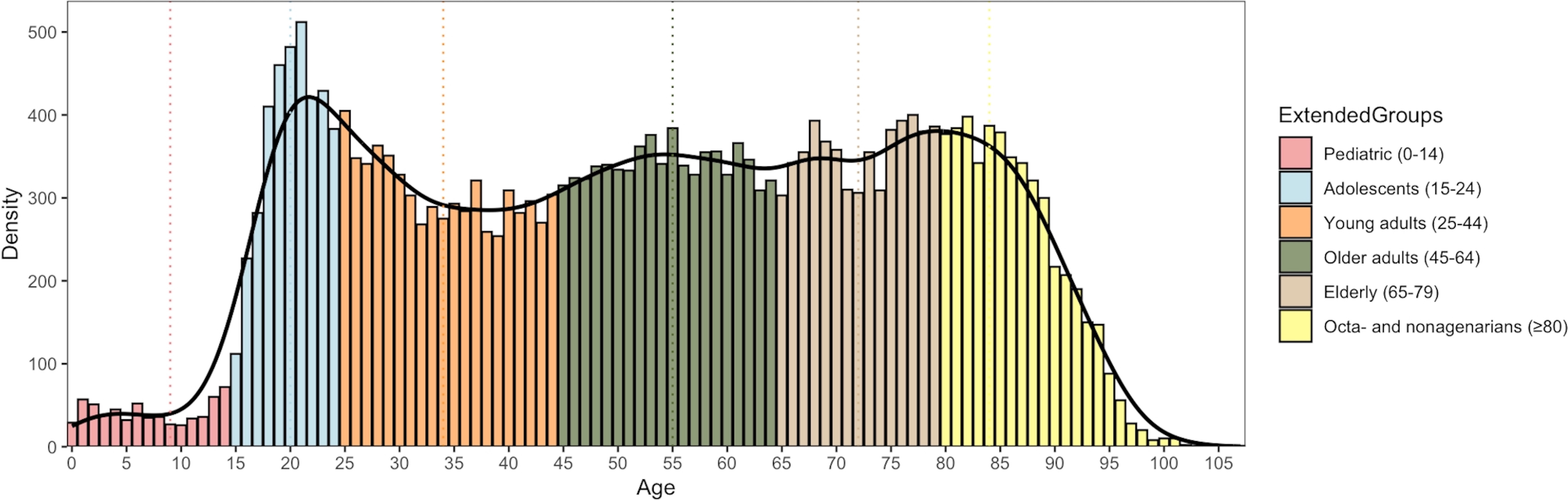
Age distribution of included patients using Kernel density estimation.
Baseline Characteristics of Study Population
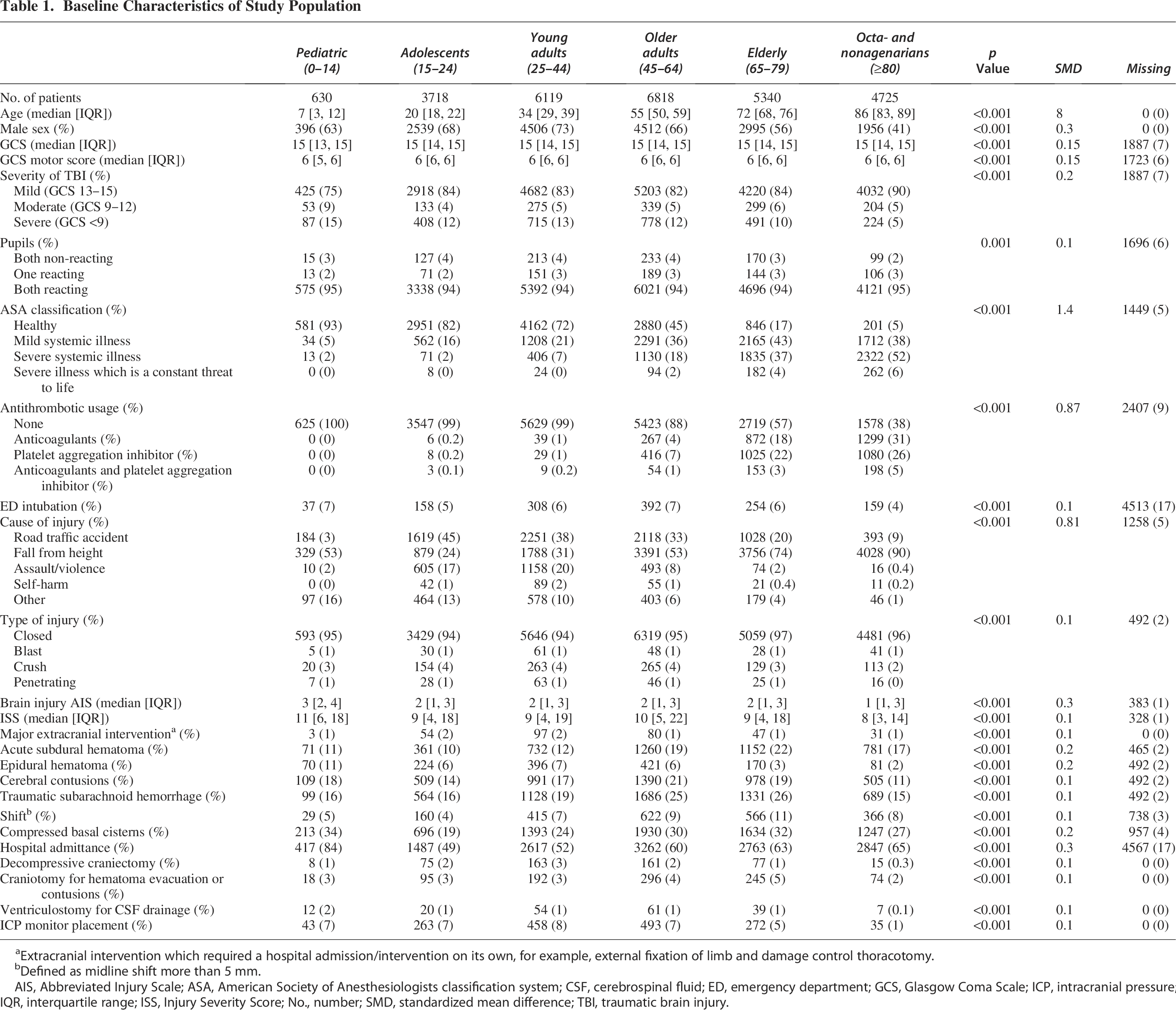
Extracranial intervention which required a hospital admission/intervention on its own, for example, external fixation of limb and damage control thoracotomy.
bDefined as midline shift more than 5 mm.
AIS, Abbreviated Injury Scale; ASA, American Society of Anesthesiologists classification system; CSF, cerebrospinal fluid; ED, emergency department; GCS, Glasgow Coma Scale; ICP, intracranial pressure; IQR, interquartile range; ISS, Injury Severity Score; No., number; SMD, standardized mean difference; TBI, traumatic brain injury.
Intracranial surgical procedures
A total of 1612 acute neurosurgical interventions were performed aimed at decreasing ICP. In all age groups, craniotomy for hematoma or contusion was most frequently performed (Table 1). ICP monitor placement was performed in 1564 patients and, in descending order, most common in adolescent, pediatric, young adult, older adult, and elderly patients (n = 263/453 total interventions, 58%; n = 43/81, 53%; n = 458/867, 53%; n = 493/1011, 49%; and n = 272/633, 43%, respectively, Table 1). Most interventions aimed at decreasing ICP were accompanied by the placement of an ICP monitor (Supplementary Fig. S3).
Surgical probability and between-center variance
The probability of undergoing acute evacuation surgery (craniotomy or DC) decreased as age increased (aOR = 0.93, 95% CI: 0.92–0.95, per IQR increase of 37 years). Similarly, when categorized into age groups, the odds of undergoing acute evacuation surgery were significantly lower in elderly and octa- and nonagenarian patients (aOR = 0.6, 95% CI: 0.48–0.76 and aOR = 0.22, 95% CI: 0.16–0.31, respectively) compared with young adult patients (Table 2). These associations remained statistically significant after adjustment for multiple comparisons (Supplementary Table S2). Moreover, the probability of undergoing acute evacuation surgery per indication (ASDH, EDH, and cerebral contusions/ICH) also decreased with older age (aOR = 0.6, 95% CI: 0.51–0.7, per IQR increase of 34 years, and aOR = 0.6, 95% CI: 0.46–0.78 and aOR = 0.56, 95% CI: 0.47–0.66, respectively, Supplementary Table S3 and Fig. 2). Age was inversely associated with undergoing DC for evacuation of an ASDH (aOR = 0.5, 95% CI: 0.39–0.63, per IQR increase of 34 years). Ventriculostomy for CSF drainage was not associated with age (aOR = 0.95, 95% CI: 0.61–1.5, per IQR increase of 34 years). Additionally, the odds of ICP monitor placement decreased significantly with older age (aOR = 0.51, 95% CI: 0.42–0.63, per IQR increase of 34 years, Supplementary Table S3 and Fig. 2). In a sensitivity analysis, comparable associations were found in both the CENTER-TBI core dataset and registry (Supplementary Figs. S4 and Figs. S5). Also, similar associations were found when additionally adjusting for compressed or absent basal cisterns in the primary linear regression (aOR = 0.93, 95% CI: 0.92–0.95, per IQR increase of 37 years).
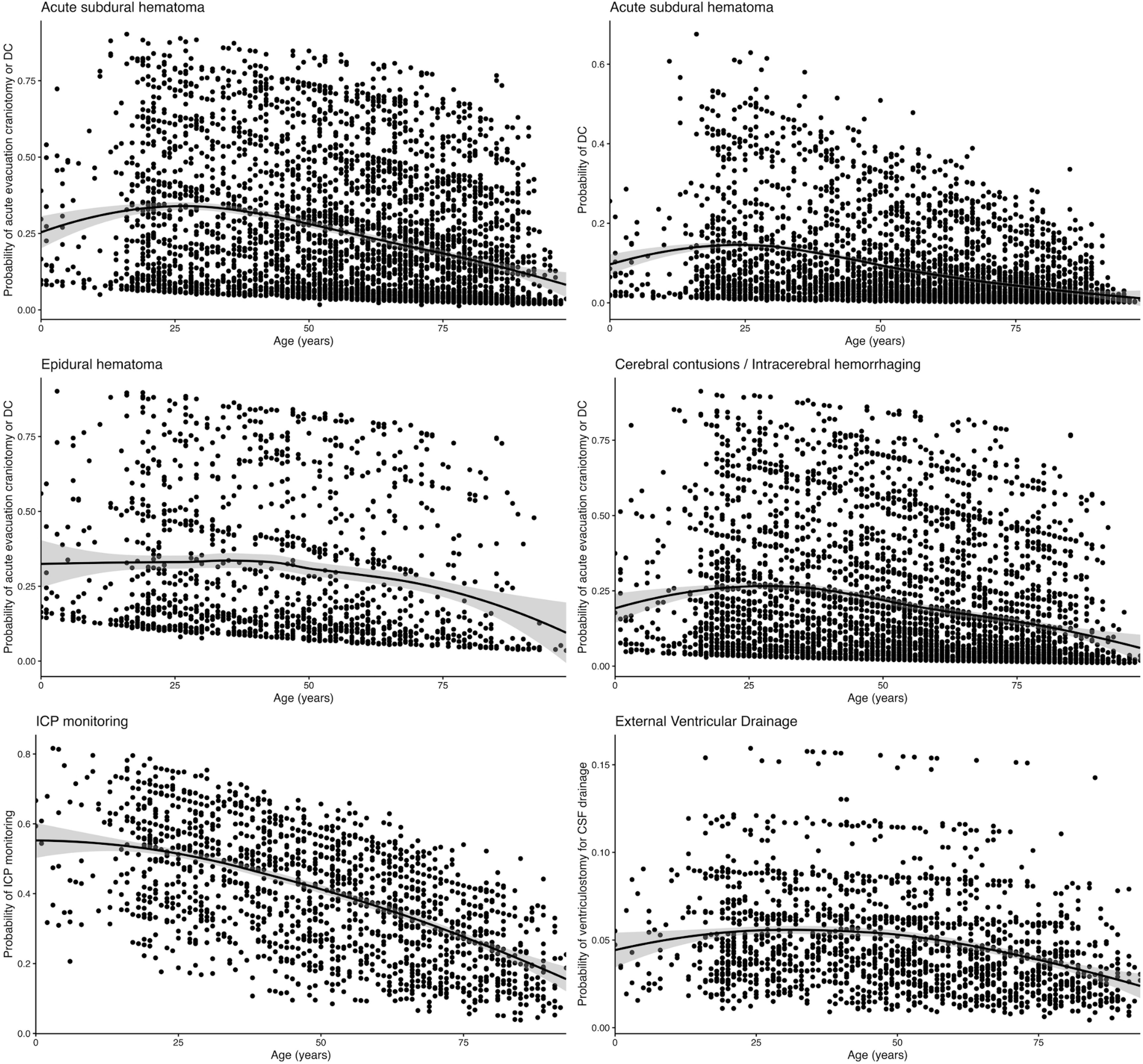
Probabilitya of undergoing acute surgery per indication and patient age. ASA, American Society of Anesthesiologists; ASDH, acute subdural hematoma; CSF, cerebrospinal fluid; CT, computed tomography; DC, decompressive craniectomy; ECI, extracranial injuryb; EDH, epidural hematoma; GCS, Glasgow Coma Scale; ICH, intracerebral hematoma; ICP, intracranial pressure, Log, logarithmic; SAH, subarachnoid hemorrhage. aProbabilities of acute surgical evacuation per age are calculated using random-effects logistic regression, adjusted for GCS baseline score, pupil reactivity, ASA classification, ECI,b and admission head CT findings (ASDH, EDH, contusions/ICH, SAH, midline shift). bExtracranial intervention which required a hospital admission/intervention on its own, for example, external fixation of limb and damage control thoracotomy.
Associations of the Categorized Age Groups with the Likelihood of Undergoing Acute Surgerya
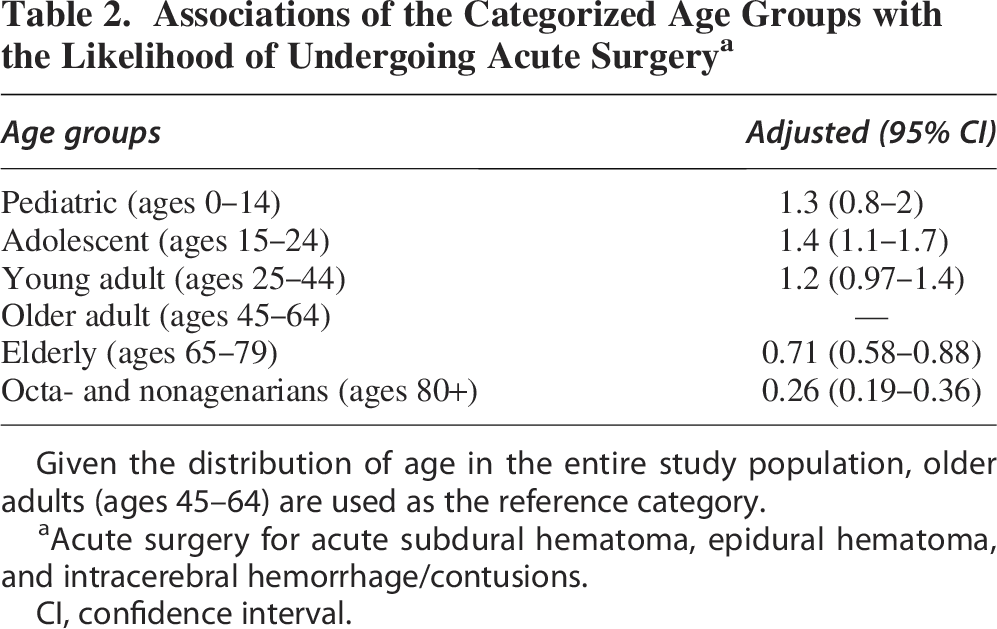
Given the distribution of age in the entire study population, older adults (ages 45–64) are used as the reference category.
Acute surgery for acute subdural hematoma, epidural hematoma, and intracerebral hemorrhage/contusions.
CI, confidence interval.
The MOR for acute evacuation surgery (craniotomy or DC) in ASDH, EDH, or contusions/ICH was 2.9 in pediatric patients, 1.4 in adolescents, 1.5 in young adults, 1.6 in older adults, 1.8 in elderly patients, and 3.3 in octa- and nonagenarians. Similar large variations were found in the log-odds of center- and country-specific acute surgery rate per age group (Fig. 3 and Supplementary Fig. S6).
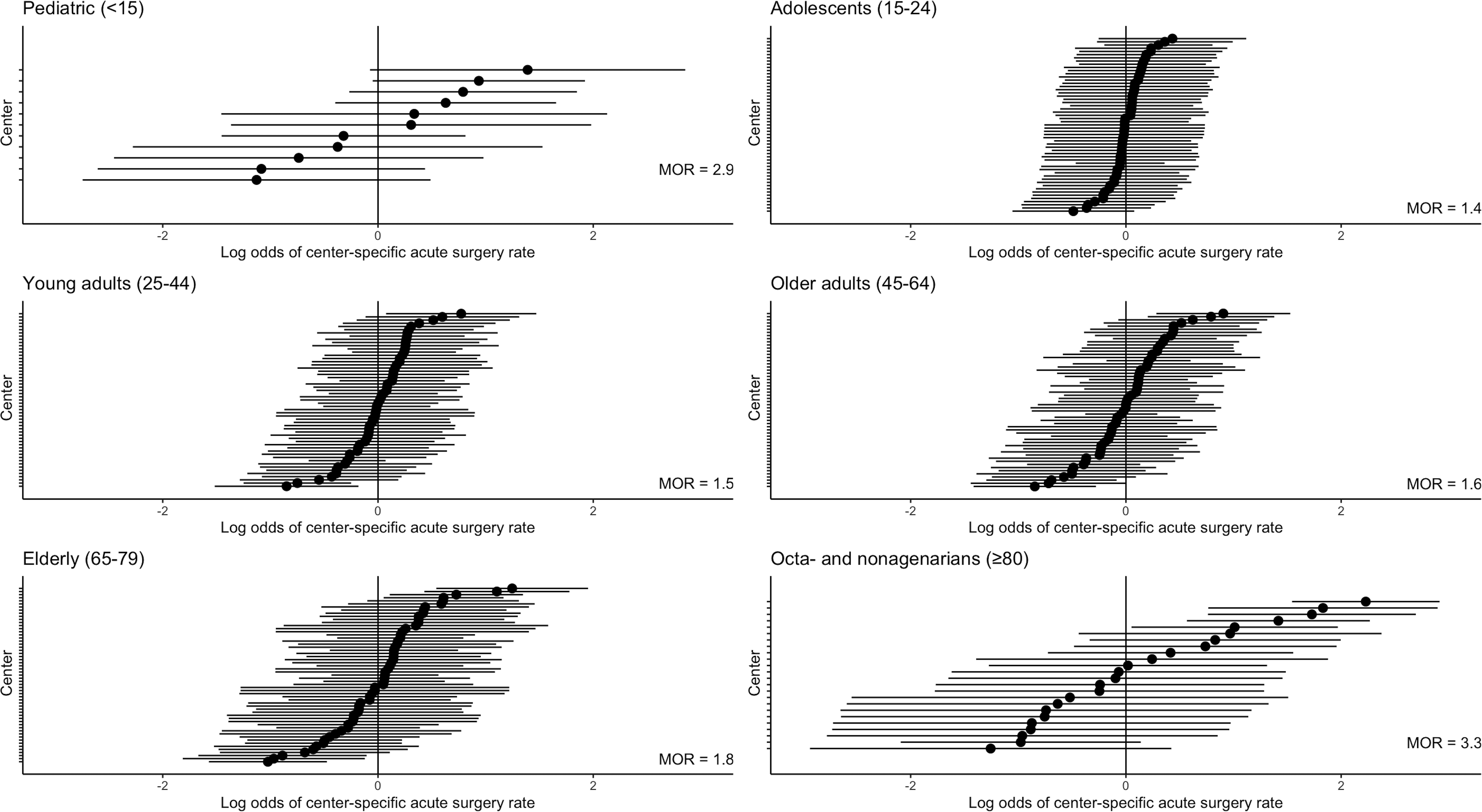
Comparison of variations in center-specific rates of acute surgery (craniotomy/DC) for evacuation of hematoma or contusions. In both plots, the horizontal lines represent the log-odds of the intracranial surgery rate for the individual participating centers (dot) and their corresponding 95% confidence interval (whiskers). DC, decompressive craniectomy; Log, logarithmic; MOR, median odds ratio.
Discussion
We find substantial differences across age regarding baseline patient and injury characteristics, type of acute surgery, the probability of undergoing acute surgery, and between-center variation in acute surgery rates. The between-center variation increased with age, while the odds of undergoing DC, craniotomy, and ICP monitoring decreased with age. The observed increase in between-center variation suggests disparities in regional or institutional surgical decision making or resource allocation in older patients. Understanding these patterns, and their potential association with patient outcomes, is crucial for optimizing treatment strategies and guiding future research on age-specific treatment modalities.6–8
Acute surgical procedures and surgical probability
Older age was associated with a lower probability of undergoing acute surgery (craniotomy or DC) for ASDH, EDH, and contusions/ICH. Moreover, the odds of undergoing DC for ASDH decreased as age increased. Age is a key predictor of outcome and plays a prominent role in surgical decision making.13,14,31 (supplementary references [SRs] 1–3) High resilience and better prognoses in younger patients may have neurosurgeons opt more frequently for surgical treatment instead of conservative treatment when clinical equipoise is present. Older age might prompt neurosurgeons to overestimate poor clinical outcomes, potentially increasing the tendency to withhold surgical treatment. 32 Additionally, the presence of comorbidities may further influence surgical decision making, as some neurosurgeons may favor more conservative treatments in older patients to mitigate potential surgical risks.33,34 Nonetheless, while clinical factors, such as age, have traditionally been used to estimate clinical outcome and determine the necessity for acute surgery, the personal view of a surgeon on the estimated patient outcome likely influences the decision to bring a patient to the operating theater. Uncertain estimation of patient outcome potentially limits treatment decisions. 35 The estimated outcome “threshold” at which neurosurgeons decide to perform or withhold surgery varies between neurosurgeons, centers, and regions. This individual neurosurgical motivation for decision making may be based on the neurosurgeon’s experience and judgment, regional variation in current beliefs and guidelines, the patient and surgeon values and potentially also financial reasons.5,7,9 These factors influence when to perform surgery or, specifically in older, more fragile patients, when to withhold treatment to limit prolonged suffering.5,36 (SR 4) Recent comparative effectiveness reports found no statistically significant difference between centers favoring surgical management compared with initial conservative treatment. 9 Withholding treatment and favoring an initial conservative strategy may therefore be a positive choice, strengthened by experience, instead of nihilism. Similar large treatment variations in surgical management of severe TBI can be found in other research.8,9,15,37,38
Strengths and limitations
This study uses a robust, well-curated dataset containing multicenter, prospectively obtained, harmonized data conforming to the United States of America National Institute of Neurological Disorders and Stroke TBI Common Data Elements to identify age-stratified treatment modalities in intracranial acute surgery type and between-center variability in surgical probability.11,39,40 It is the hitherto largest study describing these regional differences. The collected data are extensive, which allows for greater examination of potential interactions among various factors in the trauma care chain and thus possibly uncovering latent confounders.
Important limitations stem from the observational nature of our study, mainly being residual confounding. 41 (SRs 5–7) Despite the usage of multivariable adjustment using random-effects regression models, residual confounding may persist. 41 While we adjusted for key clinical and demographic predictors, unmeasured factors, such as neurosurgeon-specific decision making, cultural beliefs, institutional norms, and family preferences, are difficult to quantify in a standardized manner and incorporate in statistical models. These factors may both influence treatment decision making and outcome, potentially affecting our study’s findings.
Classifying patients into distinct age groups is inherently arbitrary, as aging is a continuous process and small differences in age may not necessarily translate into clinically meaningful differences. This limitation is particularly present in the pediatric age group, where significant differences in anatomy, physiology, neural repair, and outcomes have been reported within the various developmental stages of infancy and childhood.42–44 (SRs 8–12) The large variation here may signal underlying heterogeneity in pathophysiology, (perceived) treatment response, and outcome potential within the pediatric population. However, further exploration and interpretation of the pediatric cohort were not appropriate due to the limited pediatric sample. Nevertheless, the available pediatric data indicated an important trend worthy of further exploration. To address the limitations of categorizing age into groups, we also analyzed the probability of undergoing acute surgery as a function of continuous age and plotted the variance in this probability per year increase in age.
Additionally, in older age groups, the potential discrepancies between biological and chronological age are likely to increase, which might have had an impact on results, because factors such as performance of daily activities could have influenced the surgeon’s decision to operate. Despite similar chronological age, there might be unmeasured differences in biological age between patient populations across centers and countries. Due to limitations in the available data, we were unable to conduct a detailed analysis of pre-hospital functioning across similar chronological age groups.
Conclusion
Older patients with TBI were less likely to receive acute cranial evacuation surgery, independent from other (comorbidity) factors. Higher age was associated with more surgical treatment variation between centers. Neurosurgery for TBI can be improved by age-personalized treatment algorithms.
Transparency, Rigor, and Reproducibility Summary
CENTER-TBI is preregistered at clinicaltrials.gov (number NCT02210221).
1
The analysis plan for the current study was presented in a protocol available on https://www.center-tbi.eu/data/approved-proposals.
2
The available sample size was 27,358 subjects in CENTER-TBI. After excluding patients with missing data in age, 27,350 subjects were included.3,4 Data were labeled using Global Unique Patient Identifier codes.
5
CENTER-TBI included patients between 2014 and 2017.
6
Data were analyzed using R version 4.1.2. All equipment and software used to perform analysis are publicly available from https://www.R-project.org.
7
The key prognostic factors used in the current study are established standards in the neurosurgical field.
8
The study conceptualization and statistical analysis were supervised by three epidemiologists with ample experience in the field of TBI research.
9
Missing data have been handled using multiple imputation as reported in the methods. Extensive methodology statements of CENTER-TBI are publicly available, as referenced to in the section “Methods.”
9
No replication or external validation studies have been performed or are planned/ongoing at this time to our knowledge.
11
Data and analytic code from this study are available upon reasonable request to the study authors, after approval by the management team of CENTER-TBI. Packages used for coding are publicly available on GITHUB. Common Data Elements used are based on the NIH Common Data Elements for TBI (https://www.commondataelements.ninds.nih.gov/Traumatic%20Brain%20Injury).12,13 The authors agree to provide the full content of the article upon request by contacting the corresponding author (
Authors’ Contributions
R.J.G.V.: Writing—original draft (lead), formal analysis (lead), methodology (supporting), visualization (lead), writing—review and editing (equal), and data curation (equal). R.D.S., J.T.J.M.v.D., and H.F.d.B.: Writing—review and editing (equal) and methodology (supporting). J.K.Y., A.L., B.D., A.Y., and I.A.M.v.E.: Writing—review and editing (equal). W.A.M.: Writing—review and editing (equal), methodology (supporting), and supervision (equal). G.C.W.d.R. and A.I.R.M.: Writing—review and editing (equal) and supervision (equal). W.C.P.: Conceptualization (equal), writing—review and editing (equal), and supervision (equal). T.A.v.E.: Conceptualization (equal), writing—review and editing (equal), methodology (supporting), writing—original draft (supporting), and supervision (equal).
Footnotes
Author Disclosure Statement
The authors declare no competing interests.
Funding Information
CENTER-TBI was supported by the European Union 7th Framework Programme for Research (grant no. 602150; A.I.R.M.), Hannelore Kohl Stiftung (Germany), and OneMind (United States). Patient travel and stipend expenses were supported by One Mind (Staglin Family and General Peter Chiarelli). J.K.Y. reported grants from the Neurosurgery Research and Education Foundation and Bagan Family Foundation Research Fellowship (award no. A139203, to the University of California, San Francisco) outside the submitted work. A.I.R.M. reported grants from the European Union 7th Framework Programme for Research during the conduct of the study. W.C.P. reported grants from European Committee Grant CENTER-TBI and grants from the Netherlands Brain Foundation during the conduct of the study. T.A.v.E. reported grants from the European Union 7th Framework Programme for Research or CENTER-TBI and the Niels Stensen Fellowship during the conduct of the study. The funders of the study had no role in study design, data collection, data analysis, data interpretation, or writing of the report.
CENTER-TBI participants and investigators
Group Authorship: The authors would like to gratefully thank all the CENTER-TBI participants and investigators, who are listed as follows. CENTER-TBI participants and investigators (to be indexed as “Collaborators” in PubMed): Cecilia Åkerlund (Department of Physiology and Pharmacology, Section of Perioperative Medicine and Intensive Care, Karolinska Institutet, Stockholm, Sweden), Krisztina Amrein (János Szentágothai Research Centre, University of Pécs, Pécs, Hungary), Nada Andelic (Division of Clinical Neuroscience, Department of Physical Medicine and Rehabilitation, Oslo University Hospital and University of Oslo, Oslo, Norway), Lasse Andreassen (Department of Neurosurgery, University Hospital Northern Norway, Tromso, Norway), Audny Anke (Department of Physical Medicine and Rehabilitation, University Hospital Northern Norway, Tromso, Norway), Anna Antoni (Trauma Surgery, Medical University Vienna, Vienna, Austria), Gérard Audibert (Department of Anesthesiology & Intensive Care, University Hospital Nancy, Nancy, France), Philippe Azouvi (Raymond Poincare hospital, Assistance Publique—Hopitaux de Paris, Paris, France), Maria Luisa Azzolini (Department of Anesthesiology & Intensive Care, S Raffaele University Hospital, Milan, Italy), Ronald Bartels (Department of Neurosurgery, Radboud University Medical Center, Nijmegen, The Netherlands), Pál Barzó (Department of Neurosurgery, University of Szeged, Szeged, Hungary), Romuald Beauvais (International Projects Management, ARTTIC, Munchen, Germany), Ronny Beer (Department of Neurology, Neurological Intensive Care Unit), Bo-Michael Bellander (Department of Neurosurgery & Anesthesia & intensive care medicine, Karolinska University Hospital, Stockholm, Sweden), Antonio Belli (NIHR Surgical Reconstruction and Microbiology Research Centre, Birmingham, UK), Habib Benali (Anesthesie-Réanimation, Assistance Publique—Hopitaux de Paris, Paris, France), Maurizio Berardino (Department of Anesthesia & ICU, AOU Città della Salute e della Scienza di Torino—Orthopedic and Trauma Center, Torino, Italy), Luigi Beretta (Department of Anesthesiology & Intensive Care, S Raffaele University Hospital, Milan, Italy), Morten Blaabjerg (Department of Neurology, Odense University Hospital, Odense, Denmark), Peter Bragge (BehaviourWorks Australia, Monash Sustainability Institute, Monash University, Victoria, Australia), Alexandra Brazinova (Department of Public Health, Faculty of Health Sciences and Social Work, Trnava University, Trnava, Slovakia), Vibeke Brinck (Quesgen Systems Inc., Burlingame, California, USA), Joanne Brooker (Australian & New Zealand Intensive Care Research Centre, Department of Epidemiology and Preventive Medicine, School of Public Health and Preventive Medicine, Monash University, Melbourne, Australia), Camilla Brorsson (Department of Surgery and Perioperative Science, Umeå University, Umeå, Sweden), Andras Buki (Department of Neurosurgery, Medical School, University of Pécs, Hungary and Neurotrauma Research Group, János Szentágothai Research Centre, University of Pécs, Hungary), Monika Bullinger (Department of Medical Psychology, Universitätsklinikum Hamburg-Eppendorf, Hamburg, Germany), Manuel Cabeleira (Brain Physics Lab, Division of Neurosurgery, Dept of Clinical Neurosciences, University of Cambridge, Addenbrooke’s Hospital, Cambridge, UK), Alessio Caccioppola (Neuro ICU, Fondazione IRCCS Cà Granda Ospedale Maggiore Policlinico, Milan, Italy), Emiliana Calappi (Neuro ICU, Fondazione IRCCS Cà Granda Ospedale Maggiore Policlinico, Milan, Italy), Maria Rosa Calvi (Department of Anesthesiology & Intensive Care, S Raffaele University Hospital, Milan, Italy), Peter Cameron (ANZIC Research Centre, Monash University, Department of Epidemiology and Preventive Medicine, Melbourne, Victoria, Australia), Guillermo Carbayo Lozano (Department of Neurosurgery, Hospital of Cruces, Bilbao, Spain), Marco Carbonara (Neuro ICU, Fondazione IRCCS Cà Granda Ospedale Maggiore Policlinico, Milan, Italy), Simona Cavallo (Department of Anesthesia & ICU, AOU Città della Salute e della Scienza di Torino—Orthopedic and Trauma Center, Torino, Italy), Giorgio Chevallard (NeuroIntensive Care, Niguarda Hospital, Milan, Italy), Arturo Chieregato (NeuroIntensive Care, Niguarda Hospital, Milan, Italy), Giuseppe Citerio (School of Medicine and Surgery, Università Milano Bicocca, Milano, Italy & NeuroIntensive Care Unit, Department Neuroscience, IRCCS Fondazione San Gerardo dei Tintori, Monza, Italy), Hans Clusmann (Department of Neurosurgery, Medical Faculty RWTH Aachen University, Aachen, Germany), Mark Coburn (Department of Anesthesiology and Intensive Care Medicine, University Hospital Bonn, Bonn, Germany), Jonathan Coles (Department of Anesthesia & Neurointensive Care, Cambridge University Hospital NHS Foundation Trust, Cambridge, UK), Jamie D. Cooper (School of Public Health & PM, Monash University and The Alfred Hospital, Melbourne, Victoria, Australia), Marta Correia (Radiology/MRI department, MRC Cognition and Brain Sciences Unit, Cambridge, UK), Amra Čović (Institute of Medical Psychology and Medical Sociology, Universitätsmedizin Göttingen, Göttingen, Germany), Nicola Curry (Oxford University Hospitals NHS Trust, Oxford, UK), Endre Czeiter (Department of Neurosurgery, Medical School, University of Pécs, Hungary and Neurotrauma Research Group, János Szentágothai Research Centre, University of Pécs, Hungary), Marek Czosnyka (Brain Physics Lab, Division of Neurosurgery, Department of Clinical Neurosciences, University of Cambridge, Addenbrooke’s Hospital, Cambridge, UK), Claire Dahyot-Fizelier (Intensive Care Unit, CHU Poitiers, Potiers, France), Paul Dark (University of Manchester NIHR Biomedical Research Centre, Critical Care Directorate), Helen Dawes (Movement Science Group, Faculty of Health and Life Sciences, Oxford Brookes University, Oxford, UK), Véronique De Keyser (Department of Neurosurgery, Antwerp University Hospital and University of Antwerp, Edegem, Belgium), Vincent Degos (Anesthesie-Réanimation, Assistance Publique—Hopitaux de Paris, Paris, France), Francesco Della Corte (Department of Anesthesia & Intensive Care, Maggiore Della Carità Hospital, Novara, Italy), Hugo den Boogert (Department of Neurosurgery, Radboud University Medical Center, Nijmegen, The Netherlands), Bart Depreitere (Department of Neurosurgery, University Hospitals Leuven, Leuven, Belgium), Đula Đilvesi (Department of Neurosurgery, Clinical centre of Vojvodina, Faculty of Medicine, University of Novi Sad, Novi Sad, Serbia), Abhishek Dixit (Division of Anaesthesia, University of Cambridge, Addenbrooke’s Hospital, Cambridge, UK), Emma Donoghue (Australian & New Zealand Intensive Care Research Centre, Department of Epidemiology and Preventive Medicine, School of Public Health and Preventive Medicine, Monash University, Melbourne, Australia), Jens Dreier (Center for Stroke Research Berlin, Charité – Universitätsmedizin Berlin, corporate member of Freie Universität Berlin, Humboldt-Universität zu Berlin, and Berlin Institute of Health, Berlin, Germany), Guy-Loup Dulière (Intensive Care Unit, CHR Citadelle, Liège, Belgium), Ari Ercole (Division of Anaesthesia, University of Cambridge, Addenbrooke’s Hospital, Cambridge, UK), Patrick Esser (Movement Science Group, Faculty of Health and Life Sciences, Oxford Brookes University, Oxford, UK), Erzsébet Ezer (Department of Anaesthesiology and Intensive Therapy, University of Pécs, Pécs, Hungary), Martin Fabricius (Departments of Neurology, Clinical Neurophysiology and Neuroanesthesiology, Region Hovedstaden Rigshospitalet, Copenhagen, Denmark), Valery L. Feigin (National Institute for Stroke and Applied Neurosciences, Faculty of Health and Environmental Studies, Auckland University of Technology, Auckland, New Zealand), Kelly Foks (Department of Neurology, Erasmus MC, Rotterdam, The Netherlands), Shirin Frisvold (Department of Anesthesiology and Intensive care, University Hospital Northern Norway, Tromso, Norway), Alex Furmanov (Department of Neurosurgery, Hadassah-Hebrew University Medical Center, Jerusalem, Israel), Pablo Gagliardo (Fundación Instituto Valenciano de Neurorrehabilitación [FIVAN], Valencia, Spain), Damien Galanaud (Anesthesie-Réanimation, Assistance Publique—Hopitaux de Paris, Paris, France), Dashiell Gantner (ANZIC Research Centre, Monash University, Department of Epidemiology and Preventive Medicine, Melbourne, Victoria, Australia), Guoyi Gao (Department of Neurosurgery, Shanghai Renji hospital, Shanghai Jiaotong University/School of Medicine, Shanghai, China), Pradeep George (Karolinska Institutet, INCF International Neuroinformatics Coordinating Facility, Stockholm, Sweden), Alexandre Ghuysen (Emergency Department, CHU, Liège, Belgium), Lelde Giga (Neurosurgery clinic, Pauls Stradins Clinical University Hospital, Riga, Latvia), Ben Glocker (Department of Computing, Imperial College London, London, UK), Jagoš Golubovic (Department of Neurosurgery, Clinical centre of Vojvodina, Faculty of Medicine, University of Novi Sad, Novi Sad, Serbia), Pedro A. Gomez (Department of Neurosurgery, Hospital Universitario 12 de Octubre, Madrid, Spain), Johannes Gratz (Department of Anesthesia, Critical Care and Pain Medicine, Medical University of Vienna, Austria), Benjamin Gravesteijn (Department of Public Health, Erasmus Medical Center-University Medical Center, Rotterdam, The Netherlands), Francesca Grossi (Department of Anesthesia & Intensive Care, Maggiore Della Carità Hospital, Novara, Italy), Russell L. Gruen (College of Health and Medicine, Australian National University, Canberra, Australia), Deepak Gupta (Department of Neurosurgery, Neurosciences Centre & JPN Apex Trauma Centre, All India Institute of Medical Sciences, New Delhi-110029, India), Juanita A. Haagsma (Department of Public Health, Erasmus Medical Center-University Medical Center, Rotterdam, The Netherlands), Iain Haitsma (Department of Neurosurgery, Erasmus MC, Rotterdam, the Netherlands), Raimund Helbok (Department of Neurology, Neurological Intensive Care Unit), Eirik Helseth (Department of Neurosurgery, Oslo University Hospital, Oslo, Norway), Lindsay Horton (Division of Psychology, University of Stirling, Stirling, UK), Jilske Huijben (Department of Public Health, Erasmus Medical Center-University Medical Center, Rotterdam, The Netherlands), Peter J. Hutchinson (Division of Neurosurgery, Department of Clinical Neurosciences, Addenbrooke’s Hospital & University of Cambridge, Cambridge, UK), Bram Jacobs (Department of Neurology, University of Groningen, University Medical Center Groningen, Groningen, The Netherlands), Stefan Jankowski (Neurointensive Care, Sheffield Teaching Hospitals NHS Foundation Trust, Sheffield, UK), Mike Jarrett (Quesgen Systems Inc., Burlingame, California, USA), Ji-Yao Jiang (Karolinska Institutet, INCF International Neuroinformatics Coordinating Facility, Stockholm, Sweden), Faye Johnson (Salford Royal Hospital NHS Foundation Trust Acute Research Delivery Team, Salford, UK), Kelly Jones (National Institute for Stroke and Applied Neurosciences, Faculty of Health and Environmental Studies, Auckland University of Technology, Auckland, New Zealand), Mladen Karan (Department of Neurosurgery, Clinical centre of Vojvodina, Faculty of Medicine, University of Novi Sad, Novi Sad, Serbia), Angelos G. Kolias (Division of Neurosurgery, Department of Clinical Neurosciences, Addenbrooke’s Hospital & University of Cambridge, Cambridge, UK), Erwin Kompanje (Department of Intensive Care and Department of Ethics and Philosophy of Medicine, Erasmus Medical Center, Rotterdam, The Netherlands), Daniel Kondziella (Departments of Neurology, Clinical Neurophysiology and Neuroanesthesiology, Region Hovedstaden Rigshospitalet, Copenhagen, Denmark), Evgenios Kornaropoulos (Division of Anaesthesia, University of Cambridge, Addenbrooke’s Hospital, Cambridge, UK), Lars-Owe Koskinen (Department of Clinical Neuroscience, Neurosurgery, Umeå University, Umeå, Sweden), Noémi Kovács (Hungarian Brain Research Program—Grant No. KTIA_13_NAP-A-II/8, University of Pécs, Pécs, Hungary), Ana Kowark (Department of Anaesthesiology, University Hospital of Aachen, Aachen, Germany), Alfonso Lagares (Department of Neurosurgery, Hospital Universitario 12 de Octubre, Madrid, Spain), Linda Lanyon (Karolinska Institutet, INCF International Neuroinformatics Coordinating Facility, Stockholm, Sweden), Steven Laureys (Cyclotron Research Center, University of Liège, Liège, Belgium), Fiona Lecky (Centre for Urgent and Emergency Care Research [CURE], Health Services Research Section, School of Health and Related Research [ScHARR], University of Sheffield; Emergency Department, Salford Royal Hospital, Salford, UK), Didier Ledoux (Cyclotron Research Center, University of Liège, Liège, Belgium), Rolf Lefering (Institute of Research in Operative Medicine [IFOM], Witten/Herdecke University, Cologne, Germany), Valerie Legrand (VP Global Project Management CNS, ICON, Paris, France), Aurelie Lejeune (Department of Anesthesiology-Intensive Care, Lille University Hospital, Lille, France), Leon Levi (Department of Neurosurgery, Rambam Medical Center, Haifa, Israel), Roger Lightfoot (Department of Anesthesiology & Intensive Care, University Hospitals Southhampton NHS Trust, Southhampton, UK), Hester Lingsma (Department of Public Health, Erasmus Medical Center-University Medical Center, Rotterdam, The Netherlands), Andrew I.R. Maas (Department of Neurosurgery, Antwerp University Hospital and University of Antwerp, Edegem, Belgium), Ana M. Castaño-León (Department of Neurosurgery, Hospital Universitario 12 de Octubre, Madrid, Spain), Marc Maegele (Cologne-Merheim Medical Center [CMMC], Department of Traumatology, Orthopedic Surgery and Sportmedicine, Witten/Herdecke University, Cologne, Germany), Marek Majdan (Department of Public Health, Faculty of Health Sciences and Social Work, Trnava University, Trnava, Slovakia), Alex Manara (Intensive Care Unit, Southmead Hospital, Bristol, Bristol, UK), Geoffrey Manley (Department of Neurological Surgery, University of California, San Francisco, California, USA), Costanza Martino (Department of Anesthesia & Intensive Care, M. Bufalini Hospital, Cesena, Italy), Hugues Maréchal (Intensive Care Unit, CHR Citadelle, Liège, Belgium), Julia Mattern (Department of Neurosurgery, University Hospital Heidelberg, Heidelberg, Germany), Catherine McMahon (Department of Neurosurgery, The Walton centre NHS Foundation Trust, Liverpool, UK), Béla Melegh (Department of Medical Genetics, University of Pécs, Pécs, Hungary), David Menon (Division of Anaesthesia, University of Cambridge, Addenbrooke’s Hospital, Cambridge, UK), Tomas Menovsky (Department of Neurosurgery, Antwerp University Hospital and University of Antwerp, Edegem, Belgium), Ana Mikolic (Department of Public Health, Erasmus Medical Center-University Medical Center, Rotterdam, The Netherlands), Benoit Misset (Cyclotron Research Center, University of Liège, Liège, Belgium), Visakh Muraleedharan (Karolinska Institutet, INCF International Neuroinformatics Coordinating Facility, Stockholm, Sweden), Lynnette Murray (ANZIC Research Centre, Monash University, Department of Epidemiology and Preventive Medicine, Melbourne, Victoria, Australia), Ancuta Negru (Department of Neurosurgery, Emergency County Hospital Timisoara, Timisoara, Romania), David Nelson (Department of Physiology and Pharmacology, Section of Perioperative Medicine and Intensive Care, Karolinska Institutet, Stockholm, Sweden), Virginia Newcombe (Division of Anaesthesia, University of Cambridge, Addenbrooke’s Hospital, Cambridge, UK), Daan Nieboer (Department of Public Health, Erasmus Medical Center-University Medical Center, Rotterdam, The Netherlands), József Nyirádi (János Szentágothai Research Centre, University of Pécs, Pécs, Hungary), Otesile Olubukola (Centre for Urgent and Emergency Care Research [CURE], Health Services Research Section, School of Health and Related Research [ScHARR], University of Sheffield), Matej Oresic (School of Medical Sciences, Örebro University, Örebro, Sweden), Fabrizio Ortolano (Neuro ICU, Fondazione IRCCS Cà Granda Ospedale Maggiore Policlinico, Milan, Italy), Aarno Palotie (Institute for Molecular Medicine Finland, University of Helsinki, Helsinki, Finland; Analytic and Translational Genetics Unit, Department of Medicine; Psychiatric & Neurodevelopmental Genetics Unit, Department of Psychiatry; Department of Neurology, Massachusetts General Hospital, Boston, MA, USA; Program in Medical and Population Genetics; The Stanley Center for Psychiatric Research, The Broad Institute of MIT and Harvard, Cambridge, MA, USA), Paul M. Parizel (Department of Radiology, University of Antwerp, Edegem, Belgium), Jean-François Payen (Department of Anesthesiology & Intensive Care, University Hospital of Grenoble, Grenoble, France), Natascha Perera (International Projects Management, ARTTIC, Munchen, Germany), Vincent Perlbarg (Anesthesie-Réanimation, Assistance Publique—Hopitaux de Paris, Paris, France), Paolo Persona (Department of Anesthesia & Intensive Care, Azienda Ospedaliera Università di Padova, Padova, Italy), Wilco Peul (Department of Neurosurgery, Leiden University Medical Center, Leiden, The Netherlands and Department of Neurosurgery, Medical Center Haaglanden, The Hague, The Netherlands), Anna Piippo-Karjalainen (Department of Neurosurgery, Helsinki University Central Hospital), Matti Pirinen (Institute for Molecular Medicine Finland, University of Helsinki, Helsinki, Finland), Dana Pisica (Department of Public Health, Erasmus Medical Center-University Medical Center, Rotterdam, The Netherlands), Horia Ples (Department of Neurosurgery, Emergency County Hospital Timisoara, Timisoara, Romania), Suzanne Polinder (Department of Public Health, Erasmus Medical Center-University Medical Center, Rotterdam, The Netherlands), Inigo Pomposo (Department of Neurosurgery, Hospital of Cruces, Bilbao, Spain), Jussi P. Posti (Division of Clinical Neurosciences, Department of Neurosurgery and Turku Brain Injury Centre, Turku University Hospital and University of Turku, Turku, Finland), Louis Puybasset (Department of Anesthesiology and Critical Care, Pitié-Salpêtrière Teaching Hospital, Assistance Publique, Hôpitaux de Paris and University Pierre et Marie Curie, Paris, France), Andreea Radoi (Neurotraumatology and Neurosurgery Research Unit [UNINN], Vall d’Hebron Research Institute, Barcelona, Spain), Arminas Ragauskas (Department of Neurosurgery, Kaunas University of technology and Vilnius University, Vilnius, Lithuania), Rahul Raj (Department of Neurosurgery, Helsinki University Central Hospital), Malinka Rambadagalla (Department of Neurosurgery, Rezekne Hospital, Latvia), Isabel Retel Helmrich (Department of Public Health, Erasmus Medical Center-University Medical Center, Rotterdam, The Netherlands), Jonathan Rhodes (Department of Anaesthesia, Critical Care & Pain Medicine NHS Lothian & University of Edinburg, Edinburgh, UK), Sylvia Richardson (Director, MRC Biostatistics Unit, Cambridge Institute of Public Health, Cambridge, UK), Sophie Richter (Division of Anaesthesia, University of Cambridge, Addenbrooke’s Hospital, Cambridge, UK), Samuli Ripatti (Institute for Molecular Medicine Finland, University of Helsinki, Helsinki, Finland), Saulius Rocka (Department of Neurosurgery, Kaunas University of technology and Vilnius University, Vilnius, Lithuania), Cecilie Roe (Department of Physical Medicine and Rehabilitation, Oslo University Hospital/University of Oslo, Oslo, Norway), Olav Roise (Division of Orthopedics, Oslo University Hospital, Oslo, Norway; Institue of Clinical Medicine, Faculty of Medicine, University of Oslo, Oslo, Norway), Jonathan Rosand (Broad Institute, Cambridge MA Harvard Medical School, Boston MA, Massachusetts General Hospital, Boston MA, USA), Jeffrey V. Rosenfeld (National Trauma Research Institute, The Alfred Hospital, Monash University, Melbourne, Victoria, Australia), Christina Rosenlund (Department of Neurosurgery, Odense University Hospital, Odense, Denmark), Guy Rosenthal (Department of Neurosurgery, Hadassah-hebrew University Medical center, Jerusalem, Israel), Rolf Rossaint (Department of Anaesthesiology, University Hospital of Aachen, Aachen, Germany), Sandra Rossi (Department of Anesthesia & Intensive Care, Azienda Ospedaliera Università di Padova, Padova, Italy), Daniel Rueckert (Department of Computing, Imperial College London, London, UK), Martin Rusnák (International Neurotrauma Research Organisation, Vienna, Austria), Juan Sahuquillo (Neurotraumatology and Neurosurgery Research Unit [UNINN], Vall d’Hebron Research Institute, Barcelona, Spain), Oliver Sakowitz (Department of Neurosurgery, University Hospital Heidelberg, Heidelberg, Germany; Klinik für Neurochirurgie, Klinikum Ludwigsburg, Ludwigsburg, Germany), Renan Sanchez-Porras (Klinik für Neurochirurgie, Klinikum Ludwigsburg, Ludwigsburg, Germany), Janos Sandor (Division of Biostatistics and Epidemiology, Department of Preventive Medicine, University of Debrecen, Debrecen, Hungary), Nadine Schäfer (Institute of Research in Operative Medicine [IFOM], Witten/Herdecke University, Cologne, Germany), Silke Schmidt (Department Health and Prevention, University Greifswald, Greifswald, Germany), Herbert Schoechl (Department of Anaesthesiology and Intensive Care, AUVA Trauma Hospital, Salzburg, Austria), Guus Schoonman (Department of Neurology, Elisabeth-TweeSteden Ziekenhuis, Tilburg, The Netherlands), Rico Frederik Schou (Department of Neuroanesthesia and Neurointensive Care, Odense University Hospital, Odense, Denmark), Elisabeth Schwendenwein (Trauma Surgery, Medical University Vienna, Vienna, Austria), Charlie Sewalt (Department of Public Health, Erasmus Medical Center-University Medical Center, Rotterdam, The Netherlands), Ranjit D. Singh (Department of Neurosurgery, Leiden University Medical Center, Leiden, The Netherlands and Department of Neurosurgery, Medical Center Haaglanden, The Hague, The Netherlands), Toril Skandsen (Department of Neuromedicine and Movement Science, Norwegian University of Science and Technology, NTNU, Trondheim, Norway; Department of Physical Medicine and Rehabilitation, St. Olavs Hospital, Trondheim University Hospital, Trondheim, Norway), Peter Smielewski (Brain Physics Lab, Division of Neurosurgery, Department of Clinical Neurosciences, University of Cambridge, Addenbrooke’s Hospital, Cambridge, UK), Abayomi Sorinola (Department of Neurosurgery, University of Pécs, Pécs, Hungary), Emmanuel Stamatakis (Division of Anaesthesia, University of Cambridge, Addenbrooke’s Hospital, Cambridge, UK), Simon Stanworth (Oxford University Hospitals NHS Trust, Oxford, UK), Robert Stevens (Division of Neuroscience Critical Care, John Hopkins University School of Medicine, Baltimore, USA), William Stewart (Department of Neuropathology, Queen Elizabeth University Hospital and University of Glasgow, Glasgow, UK), Ewout W. Steyerberg (Department of Public Health, Erasmus Medical Center-University Medical Center, Rotterdam, The Netherlands; Department of Biomedical Data Sciences, Leiden University Medical Center, Leiden, The Netherlands), Nino Stocchetti (Department of Pathophysiology and Transplantation, Milan University, and Neuroscience ICU, Fondazione IRCCS Cà Granda Ospedale Maggiore Policlinico, Milano, Italy), Nina Sundström (Department of Radiation Sciences, Biomedical Engineering, Umeå University, Umeå, Sweden), Riikka Takala (Perioperative Services, Intensive Care Medicine and Pain Management, Turku University Hospital and University of Turku, Turku, Finland), Viktória Tamás (Department of Neurosurgery, University of Pécs, Pécs, Hungary), Tomas Tamosuitis (Department of Neurosurgery, Kaunas University of Health Sciences, Kaunas, Lithuania), Mark Steven Taylor (Department of Public Health, Faculty of Health Sciences and Social Work, Trnava University, Trnava, Slovakia), Aurore Thibaut (Cyclotron Research Center, University of Liège, Liège, Belgium), Braden Te Ao (National Institute for Stroke and Applied Neurosciences, Faculty of Health and Environmental Studies, Auckland University of Technology, Auckland, New Zealand), Olli Tenovuo (Division of Clinical Neurosciences, Department of Neurosurgery and Turku Brain Injury Centre, Turku University Hospital and University of Turku, Turku, Finland), Alice Theadom (National Institute for Stroke and Applied Neurosciences, Faculty of Health and Environmental Studies, Auckland University of Technology, Auckland, New Zealand), Matt Thomas (Intensive Care Unit, Southmead Hospital, Bristol, Bristol, UK), Dick Tibboel (Intensive Care and Department of Pediatric Surgery, Erasmus Medical Center, Sophia Children’s Hospital, Rotterdam, The Netherlands), Marjolein Timmers (Department of Intensive Care and Department of Ethics and Philosophy of Medicine, Erasmus Medical Center, Rotterdam, The Netherlands), Christos Tolias (Department of Neurosurgery, Kings college London, London, UK), Tony Trapani (ANZIC Research Centre, Monash University, Department of Epidemiology and Preventive Medicine, Melbourne, Victoria, Australia), Cristina Maria Tudora (Department of Neurosurgery, Emergency County Hospital Timisoara, Timisoara, Romania), Andreas Unterberg (Department of Neurosurgery, University Hospital Heidelberg, Heidelberg, Germany), Peter Vajkoczy (Neurologie, Neurochirurgie und Psychiatrie, Charité – Universitätsmedizin Berlin, Berlin, Germany), Shirley Vallance (ANZIC Research Centre, Monash University, Department of Epidemiology and Preventive Medicine, Melbourne, Victoria, Australia), Egils Valeinis (Neurosurgery clinic, Pauls Stradins Clinical University Hospital, Riga, Latvia), Zoltán Vámos (Department of Anaesthesiology and Intensive Therapy, University of Pécs, Pécs, Hungary), Mathieu van der Jagt (Department of Intensive Care Adults, Erasmus MC – University Medical Center Rotterdam, Rotterdam, the Netherlands), Gregory Van der Steen (Department of Neurosurgery, Antwerp University Hospital and University of Antwerp, Edegem, Belgium), Joukje van der Naalt (Department of Neurology, University of Groningen, University Medical Center Groningen, Groningen, Netherlands), Jeroen T.J.M. van Dijck (Department of Neurosurgery, Leiden University Medical Center, Leiden, The Netherlands and Department of Neurosurgery, Medical Center Haaglanden, The Hague, The Netherlands), Inge A.M. van Erp (Department of Neurosurgery, Leiden University Medical Center, Leiden, The Netherlands and Department of Neurosurgery, Medical Center Haaglanden, The Hague, The Netherlands), Thomas A. van Essen (Department of Neurosurgery, Leiden University Medical Center, Leiden, The Netherlands and Department of Neurosurgery, Medical Center Haaglanden, The Hague, The Netherlands), Wim Van Hecke (icoMetrix NV, Leuven, Belgium), Caroline van Heugten (Movement Science Group, Faculty of Health and Life Sciences, Oxford Brookes University, Oxford, UK), Dominique Van Praag (Psychology Department, Antwerp University Hospital, Edegem, Belgium), Ernest van Veen (Department of Public Health, Erasmus Medical Center-University Medical Center, Rotterdam, The Netherlands), Thijs Van de Vyvere (icoMetrix NV, Leuven, Belgium), Roel P.J. van Wijk (Department of Neurosurgery, Leiden University Medical Center, Leiden, The Netherlands and Department of Neurosurgery, Medical Center Haaglanden, The Hague, The Netherlands), Alessia Vargiolu (NeuroIntensive Care Unit, Department Neuroscience, IRCCS Fondazione San Gerardo dei Tintori, Monza, Italy), Emmanuel Vega (Department of Anesthesiology-Intensive Care, Lille University Hospital, Lille, France), Kimberley Velt (Department of Public Health, Erasmus Medical Center-University Medical Center, Rotterdam, The Netherlands), Jan Verheyden (icoMetrix NV, Leuven, Belgium), Paul M. Vespa (Director of Neurocritical Care, University of California, Los Angeles, USA), Anne Vik (Department of Neuromedicine and Movement Science, Norwegian University of Science and Technology, NTNU, Trondheim, Norway; Department of Neurosurgery, St. Olavs Hospital, Trondheim University Hospital, Trondheim, Norway), Rimantas Vilcinis (Department of Neurosurgery, Kaunas University of Health Sciences, Kaunas, Lithuania), Victor Volovici (Department of Neurosurgery, Erasmus MC, Rotterdam, The Netherlands), Nicole von Steinbüchel (Institute of Medical Psychology and Medical Sociology, Universitätsmedizin Göttingen, Göttingen, Germany), Daphne Voormolen (Department of Public Health, Erasmus Medical Center-University Medical Center, Rotterdam, The Netherlands), Rick J.G. Vreeburg (Department of Neurosurgery, Leiden University Medical Center, Leiden, The Netherlands and Department of Neurosurgery, Medical Center Haaglanden, The Hague, The Netherlands), Petar Vulekovic (Department of Neurosurgery, Clinical Centre of Vojvodina, Faculty of Medicine, University of Novi Sad, Novi Sad, Serbia), Kevin K.W. Wang (Department of Emergency Medicine, University of Florida, Gainesville, Florida, USA), Daniel Whitehouse (Division of Anaesthesia, University of Cambridge, Addenbrooke’s Hospital, Cambridge, UK), Eveline Wiegers (Department of Public Health, Erasmus Medical Center-University Medical Center, Rotterdam, The Netherlands), Guy Williams (Division of Anaesthesia, University of Cambridge, Addenbrooke’s Hospital, Cambridge, UK), Lindsay Wilson (Division of Psychology, University of Stirling, Stirling, UK), Stefan Winzeck (Division of Anaesthesia, University of Cambridge, Addenbrooke’s Hospital, Cambridge, UK), Stefan Wolf (Department of Neurosurgery, Charité – Universitätsmedizin Berlin, corporate member of Freie Universität Berlin, Humboldt-Universität zu Berlin, and Berlin Institute of Health, Berlin, Germany), Zhihui Yang (Broad Institute, Cambridge MA Harvard Medical School, Boston, MA, Massachusetts General Hospital, Boston, MA, USA), Peter Ylén (VTT Technical Research Centre, Tampere, Finland), Alexander Younsi (Department of Neurosurgery, University Hospital Heidelberg, Heidelberg, Germany), Frederick A. Zeiler (Division of Anaesthesia, University of Cambridge, Addenbrooke’s Hospital, Cambridge, UK; Section of Neurosurgery, Department of Surgery, Rady Faculty of Health Sciences, University of Manitoba, Winnipeg, MB, Canada), Veronika Zelinkova (Department of Public Health, Faculty of Health Sciences and Social Work, Trnava University, Trnava, Slovakia), Agate Ziverte (Neurosurgery clinic, Pauls Stradins Clinical University Hospital, Riga, Latvia), and Tommaso Zoerle (Neuro ICU, Fondazione IRCCS Cà Granda Ospedale Maggiore Policlinico, Milan, Italy). NeuroIntensive Care Unit, Department Neuroscience, IRCCS Fondazione San Gerardo dei Tintori, Monza, Italy.
Supplemental Material
Supplemental Material
Supplemental Material
Supplemental Material
Supplemental Material
Supplemental Material
Supplemental Material
Supplemental Material
Supplemental Material
Supplemental Material
Supplemental Material
References
Supplementary Material
Please find the following supplemental material available below.
For Open Access articles published under a Creative Commons License, all supplemental material carries the same license as the article it is associated with.
For non-Open Access articles published, all supplemental material carries a non-exclusive license, and permission requests for re-use of supplemental material or any part of supplemental material shall be sent directly to the copyright owner as specified in the copyright notice associated with the article.
