







Abstract
Mindfulness-based interventions are increasingly applied in health care; however, many remain grounded in secular Western paradigms that insufficiently reflect patients’ spiritual and cultural worldviews. Within transcultural nursing, integrating spirituality into mindfulness may enhance cultural congruence and support holistic care. This systematic integrative review synthesized interdisciplinary evidence on spiritually integrated mindfulness interventions and their relevance for culturally congruent nursing practice. Guided by PRISMA, 28 studies published between 2015 and 2025 were analyzed. Findings indicate consistent improvements in spiritual well-being, psychological distress, coping, and meaning-making across diverse cultural contexts, particularly within Buddhist, Islamic, and Christian traditions. Spiritual mindfulness operates through interconnected mechanisms, including emotional regulation, spiritual connectedness, relational awareness, and compassionate engagement. Integrative synthesis informed by Watson's Theory of Human Caring and CIMO logic suggests that culturally congruent spiritual mindfulness practices facilitate meaning-centered adaptation and person-centered healing. These findings demonstrate the theoretical and practical relevance of spiritual mindfulness for transcultural nursing and highlight the need for culturally grounded and methodologically rigorous research to strengthen evidence-based holistic care.
Keywords
Introduction
Spiritual mindfulness integrates psychological well-being, spiritual meaning, and health care practice. Initially developed as a secular technique for stress reduction (Kabat-Zinn, 1990), contemporary scholarship increasingly recognizes that mindful awareness is often inseparable from existential meaning-making, spiritual identity, and moral orientation within holistic paradigms of care (Landau & Jones, 2021). Within health contexts, this shift reflects an epistemological movement from viewing mindfulness as a purely cognitive technique toward understanding it as a relational and meaning-centered process that engages individuals’ beliefs about suffering, transcendence, and human connectedness.
Within transcultural nursing, spirituality constitutes a fundamental dimension of culturally congruent care, shaping how individuals interpret illness, respond to suffering, and construct meaning in health experiences (Leininger, 2002). Holistic nursing perspectives further emphasize that healing processes involve integration of body, mind, and spirit within relational caring contexts. Accordingly, spiritually integrated mindfulness practices may function not merely as psychological coping strategies, but as caring-healing processes that support awareness of interconnectedness, compassion, and existential meaning across diverse cultural settings (Lim et al., 2021; Mathad et al., 2019).
Emerging empirical literature demonstrates that spiritually contextualized mindfulness practices, including Buddhist meditation, Islamic dhikr and muraqabah, and Christian contemplative prayer, are associated with enhanced psychological resilience, spiritual well-being, and adaptive coping among individuals with chronic illness and life stressors (Maleki et al., 2025; Park et al., 2020). These culturally grounded adaptations illustrate that mindfulness is not a value-neutral intervention but a practice embedded in spiritual ontologies that influence how individuals experience suffering, healing, and transformation.
Despite increasing interest in spiritually integrated mindfulness, the literature remains theoretically fragmented. Existing studies often privilege Western secular frameworks, emphasize short-term psychological outcomes, and insufficiently examine how culturally embedded spiritual worldviews shape intervention mechanisms and healing processes (Dehghan et al., 2021; Landau & Jones, 2021). Consequently, the conceptual boundaries of spiritual mindfulness remain unclear, particularly regarding how spiritual awareness, cultural meaning systems, and caring-healing relationships interact within nursing practice.
To address this gap, this systematic integrative review synthesizes global evidence on spiritually integrated mindfulness interventions, examining their cultural adaptations, underlying mechanisms, and theoretical relevance for transcultural nursing. By integrating interdisciplinary evidence, this review seeks to advance conceptual clarity and contribute to the development of a theoretically grounded understanding of spiritual mindfulness as a culturally congruent and relational process within holistic nursing care.
Literature Review
Spiritual Mindfulness in Transcultural Nursing Care
Within transcultural nursing, health and illness are understood as culturally embedded experiences shaped by spiritual beliefs and meaning systems. Mindfulness and spirituality function as complementary constructs central to culturally congruent care. Mindfulness, rooted in Buddhist traditions, refers to nonjudgmental awareness of present-moment experience (Kabat-Zinn, 2003), while spirituality involves the search for meaning, purpose, and connection with the sacred (Pargament, 2011); both are associated with improved well-being (Koenig, 2015).
Conceptualized as spiritual mindfulness, this integrative approach aligns with holistic nursing values by encompassing ethical awareness, compassion, and acceptance, enabling adaptation across diverse cultural contexts (Grossman et al., 2004; Neff, 2003). In contrast, mindfulness that is detached from patients’ spiritual and cultural belief systems may lack relevance and therapeutic depth in multicultural care settings. Although interest in spiritual mindfulness is increasing, the literature remains fragmented, with many studies privileging Western secular models and short-term designs, limiting understanding of culturally embedded mechanisms in nursing contexts (Landau & Jones, 2021).
In this review, spiritual mindfulness is understood as a culturally situated process of intentional awareness integrating spiritual meaning systems, compassionate presence, and relational consciousness. This conceptualization extends beyond secular attentional models by recognizing that awareness is shaped by individuals’ spiritual ontologies and sociocultural contexts, thereby aligning with holistic nursing perspectives emphasizing unity, interconnectedness, and meaning-centered healing.
Evolution of Spiritual Mindfulness in Nursing and Clinical Contexts
Early mindfulness research emphasized stress reduction and emotional regulation, with interventions such as MBSR improving psychological distress and spiritual well-being among clinical populations (Würtzen et al., 2015). Subsequent studies incorporated spiritual dimensions, particularly in palliative and chronic care, where brief interventions enhanced spiritual well-being and reduced existential distress (Lim et al., 2021; Yik et al., 2021).
Emerging evidence further indicates that spiritually integrated practices, including Buddhist meditation, Islamic Qur’anic recitation, and Christian contemplative prayer, support psychological resilience, and adaptive coping, highlighting mindfulness as a culturally adaptable practice aligned with patients’ belief systems (Al-Jubouri et al., 2021; Grossman et al., 2004; Wachholtz & Pargament, 2005).
Recent scholarship reflects a shift toward holistic and culturally responsive paradigms, expanding mindfulness beyond symptom management to include socio-emotional and ethical dimensions (Cai et al., 2023; Heredia et al., 2020), and situating it within moral, spiritual, and cultural frameworks relevant to transcultural nursing (Landau & Jones, 2021).
Theoretical Frameworks Relevant to Nursing Practice
Several theoretical models inform the conceptualization of spiritual mindfulness in nursing. The MBSR model (Kabat-Zinn, 1990) remains influential due to its demonstrated effectiveness across diverse populations (Park et al., 2020; Vu & Gill, 2018). However, critiques highlight its secular orientation and reliance on self-report measures, which may inadequately capture culturally embedded spiritual experiences (Landau & Jones, 2021).
The Spiritual Well-Being Model, encompassing religious and existential dimensions, has contributed substantially to nursing research on spiritual wellness (Oner Cengiz et al., 2023; Ricci-Allegra, 2018). Nevertheless, its applicability in non-Western contexts remains underexplored, particularly in cultures where spirituality is inseparable from communal and religious life (Mathad et al., 2019). Complementary cognitive and neuroscientific perspectives, including the Three Principles Theory, have advanced understanding of neural mechanisms underlying mindfulness and spiritual awareness (Barnby et al., 2015; Kelley et al., 2017), although their translation into culturally sensitive nursing practice requires further empirical validation (De Souza Marcovski & Miller, 2023).
These theoretical perspectives collectively suggest that spiritual mindfulness may be interpreted as a unitary and relational process consistent with holistic nursing theories that conceptualize persons as integrated beings whose health experiences emerge through dynamic interaction of meaning, consciousness, and caring relationships. Understanding spiritual mindfulness through these theoretical lenses may support the development of culturally congruent interventions that acknowledge spirituality as an essential dimension of healing.
Culturally Grounded and Integrative Approaches
An emerging body of literature highlights culturally grounded adaptations of spiritual mindfulness relevant to transcultural nursing. Islamic-based mindfulness models integrating dhikr and muraqabah have demonstrated effectiveness in supporting stress regulation and strengthening spiritual identity among Muslim populations (Malik, 2025), while faith-based nursing care grounded in Islamic values significantly enhanced spiritual well-being in Indonesian clinical settings (Komariah et al., 2024). Neuroscientific findings further suggest that spiritually contextualized mindfulness practices may activate neural pathways distinct from those engaged by secular approaches, indicating potential added therapeutic value when interventions align with patients’ belief systems (Barnby et al., 2015).
Beyond healthcare, mindfulness has been integrated into leadership, sustainability, and ethical behavior models, mediating prosocial and moral awareness (Alshebami et al., 2023; Mohammed et al., 2022; Vu & Gill, 2018). These findings reinforce the conceptualization of spiritual mindfulness in nursing as a multidimensional construct encompassing relational, ethical, and cultural dimensions of care.
Methodological Trends and Research Gaps
Methodologically, spiritual mindfulness research is increasingly interdisciplinary, incorporating quantitative, qualitative, and mixed-methods approaches. Advanced analyses have clarified relationships among mindfulness, spirituality, and well-being, while qualitative studies highlight lived experiences in culturally diverse populations (Alshebami et al., 2023; De Souza Marcovski & Miller, 2023; Gracie & Wilkinson, 2022; Werneburg et al., 2023). However, the expansion of digital mindfulness interventions raises concerns regarding cultural sensitivity and contextual validity, particularly in non-Western settings (Maleki et al., 2025).
Despite growing empirical support, significant gaps remain. The literature continues to privilege Western secular frameworks, limiting representation of non-Western spiritual ontologies (Yi, 2017). The predominance of cross-sectional and self-report designs constrains understanding of causal mechanisms and cultural dynamics (Dehghan et al., 2021), while key mediating processes such as emotional regulation, transcendence, and meaning-making remain underexplored in culturally diverse contexts (Daniel et al., 2024).
Future research should prioritize longitudinal and cross-cultural designs and reframe mindfulness as a culturally congruent intervention aligned with patients’ spiritual beliefs and lived experiences.
Method
This study employed a systematic integrative review to synthesize interdisciplinary evidence on spiritually integrated mindfulness as a culturally situated, nursing-relevant intervention. An integrative review methodology allows for the inclusion of quantitative, qualitative, and mixed-methods studies, enabling a comprehensive understanding of complex phenomena linking spirituality, culture, and health care practice. The review followed the Preferred Reporting Items for Systematic Reviews and Meta-Analyses (PRISMA) guidelines to ensure transparency and methodological rigor. The study selection process is presented in Figure 1.
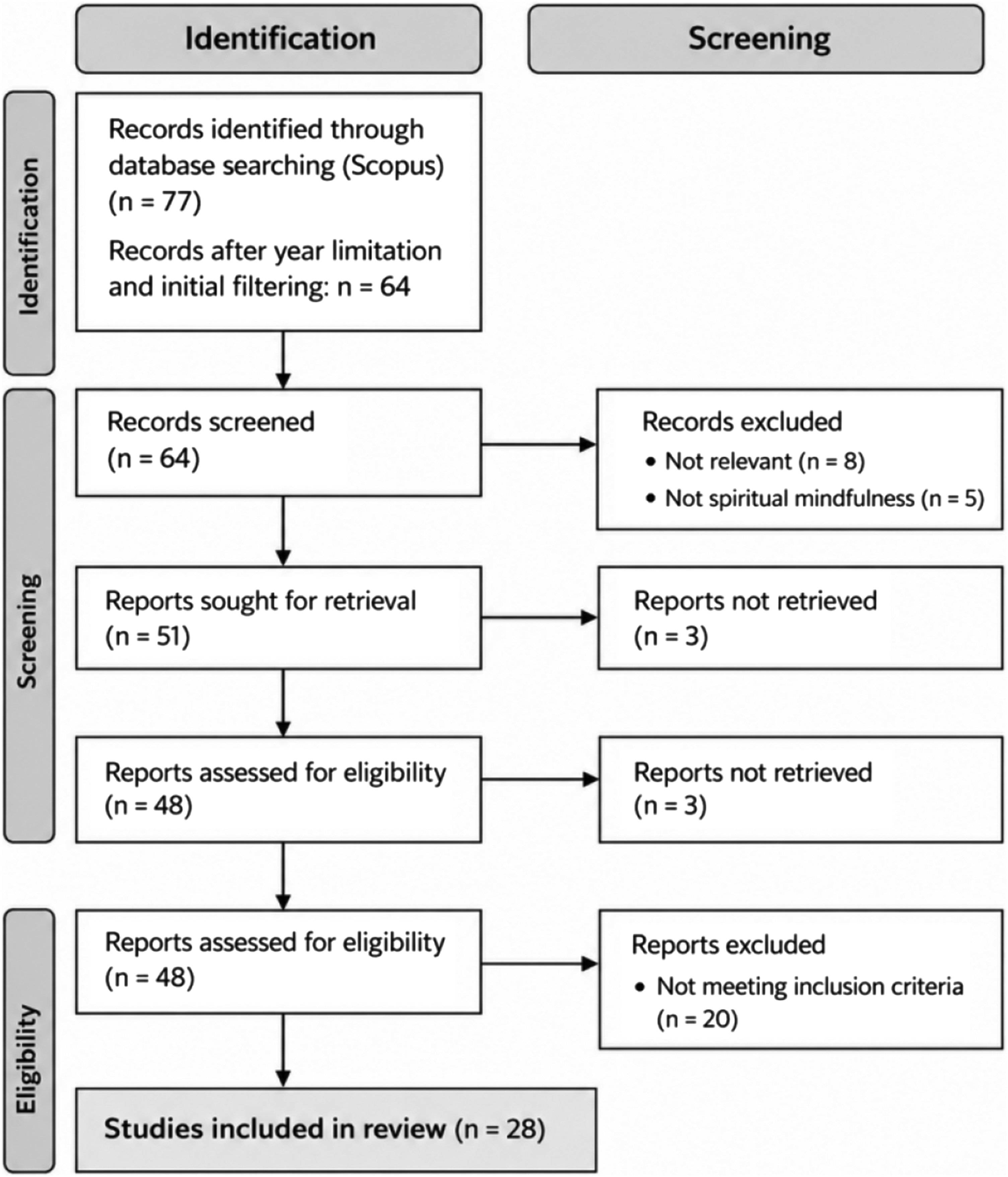
PRISMA Flow Diagram.
Search Strategy and Selection
Literature searches were conducted in the Scopus database due to its broad multidisciplinary coverage and rigorous indexing of peer-reviewed journals in nursing, psychology, medicine, and social sciences. Scopus was selected to ensure inclusion of high-quality international publications relevant to holistic and transcultural nursing research. The database is widely recognized for comprehensive citation indexing, facilitating identification of interdisciplinary studies addressing spirituality, mindfulness, and culturally responsive care.
The search strategy was developed using Boolean operators (AND, OR) and keywords representing spirituality and mindfulness constructs, including “spiritual mindfulness,” “faith-based mindfulness,” “spiritual meditation,” and related terms combined with “nursing” OR “health care.” Searches were conducted in October 2025.
The initial search yielded 77 records. After applying publication-year limits (2015–2025) and removing records without abstracts, 64 studies remained for title and abstract screening.
Screening Process
Screening was conducted in two stages: title–abstract review and full-text assessment. Studies were excluded if mindfulness was conceptualized solely as a secular cognitive technique without reference to spiritual, religious, or transcendent dimensions. Inclusion criteria were: (1) peer-reviewed empirical articles indexed in Scopus, (2) explicit integration of spiritual, religious, or faith-based components within mindfulness practice, (3) reporting psychological, spiritual, behavioral, or physiological outcomes, and (4) relevance to health care or nursing-related contexts.
Backward and forward citation tracking was conducted to identify additional relevant studies. After removal of duplicates and inaccessible full-text articles, 48 studies were assessed for eligibility. Following full-text review, 28 studies met all inclusion criteria and were included in the final synthesis.
Screening was conducted independently by two reviewers. Discrepancies were resolved through discussion to enhance reliability and reduce selection bias.
Data Extraction and Analysis
Data were extracted using a standardized matrix including study characteristics, population, design, theoretical framework, cultural context, intervention characteristics, and outcomes. An integrative analytic approach combining bibliometric mapping and thematic synthesis was applied to identify patterns in knowledge development and core themes relevant to transcultural nursing, including spiritual care, cultural congruence, emotional regulation, relational awareness, and self-transcendence. The analytic process was supported by the Watase UAKE framework to facilitate structured synthesis of multidimensional constructs across interdisciplinary evidence.
Quality Appraisal of Included Studies
Methodological quality was assessed using the Joanna Briggs Institute (JBI) critical appraisal tools appropriate for each study design. Two reviewers independently evaluated methodological rigor and risk of bias. No studies were excluded based on appraisal results; instead, methodological limitations were considered in the interpretation of findings.
Rigor and Limitations
Rigor was strengthened through adherence to PRISMA procedures, independent screening, and standardized data extraction. Limitations include restriction to English-language publications indexed in Scopus and heterogeneity in conceptual definitions and study designs, which may affect comparability. However, this diversity reflects the culturally embedded nature of spiritually integrated mindfulness across health care contexts.
Results and Analysis
Overview of Study Selection and Analytical Orientation
This systematic integrative review synthesizes findings from 28 empirical studies on spiritual mindfulness published between 2015 and 2025, identified through the Scopus database and guided by the PRISMA 2020 framework. The included studies encompass clinical, educational, organizational, and socio-cultural contexts, reflecting the interdisciplinary development of spiritual mindfulness research. From a transcultural nursing perspective, these contexts illustrate how spiritual mindfulness is adapted to culturally situated belief systems and care environments.
Overall methodological quality was moderate, with experimental studies demonstrating stronger internal validity, while cross-sectional designs relied primarily on self-reported outcomes, limiting causal inference. Qualitative studies provided contextual insights into culturally situated spiritual experiences but offered limited generalizability. A summary of the methodological quality appraisal and common methodological limitations of the included studies is presented in Table 1.
Summary of Methodological Quality of Included Studies.
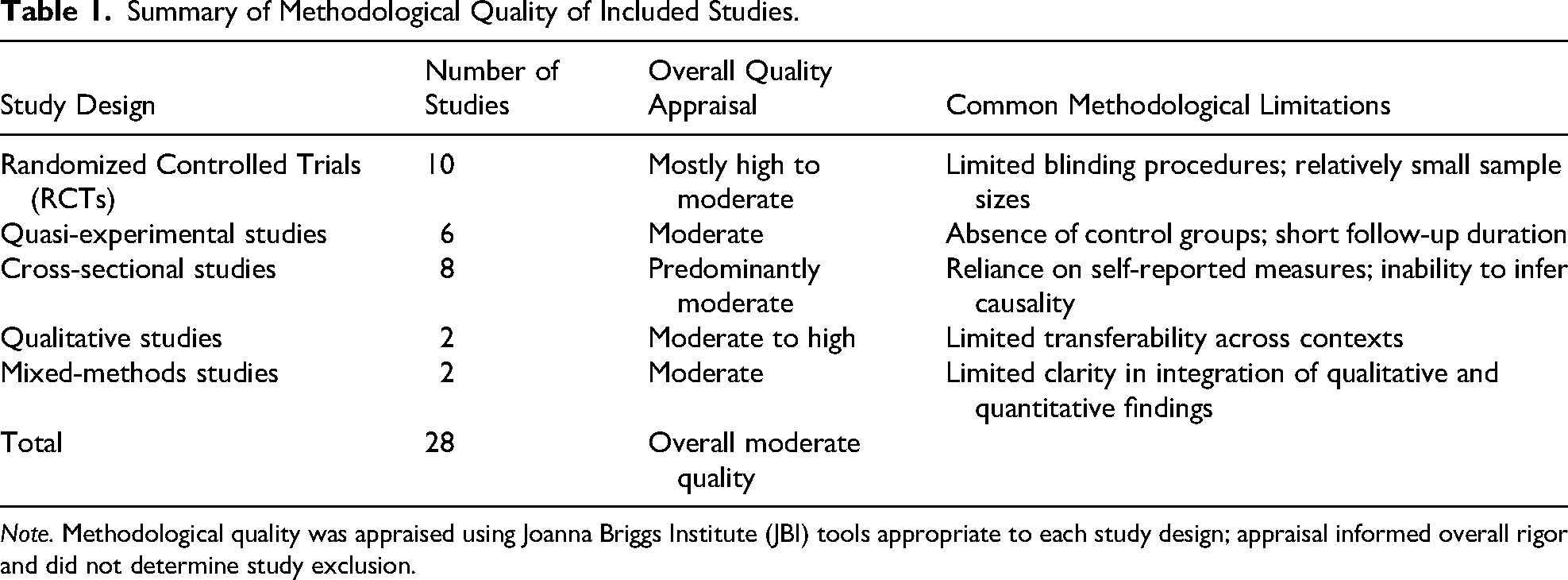
Note. Methodological quality was appraised using Joanna Briggs Institute (JBI) tools appropriate to each study design; appraisal informed overall rigor and did not determine study exclusion.
The Context, Intervention, Mechanism, Outcome (CIMO) logic was selected to support theory-building synthesis of complex interventions within culturally embedded care contexts. Bibliometric analysis was combined with thematic synthesis to identify conceptual patterns relevant to culturally congruent nursing care, including spiritual meaning-making, relational awareness, emotional regulation, and self-transcendence (Table 2).
Watase-Based Thematic Mapping of Spiritual Mindfulness Across Cultural and Nursing Contexts.
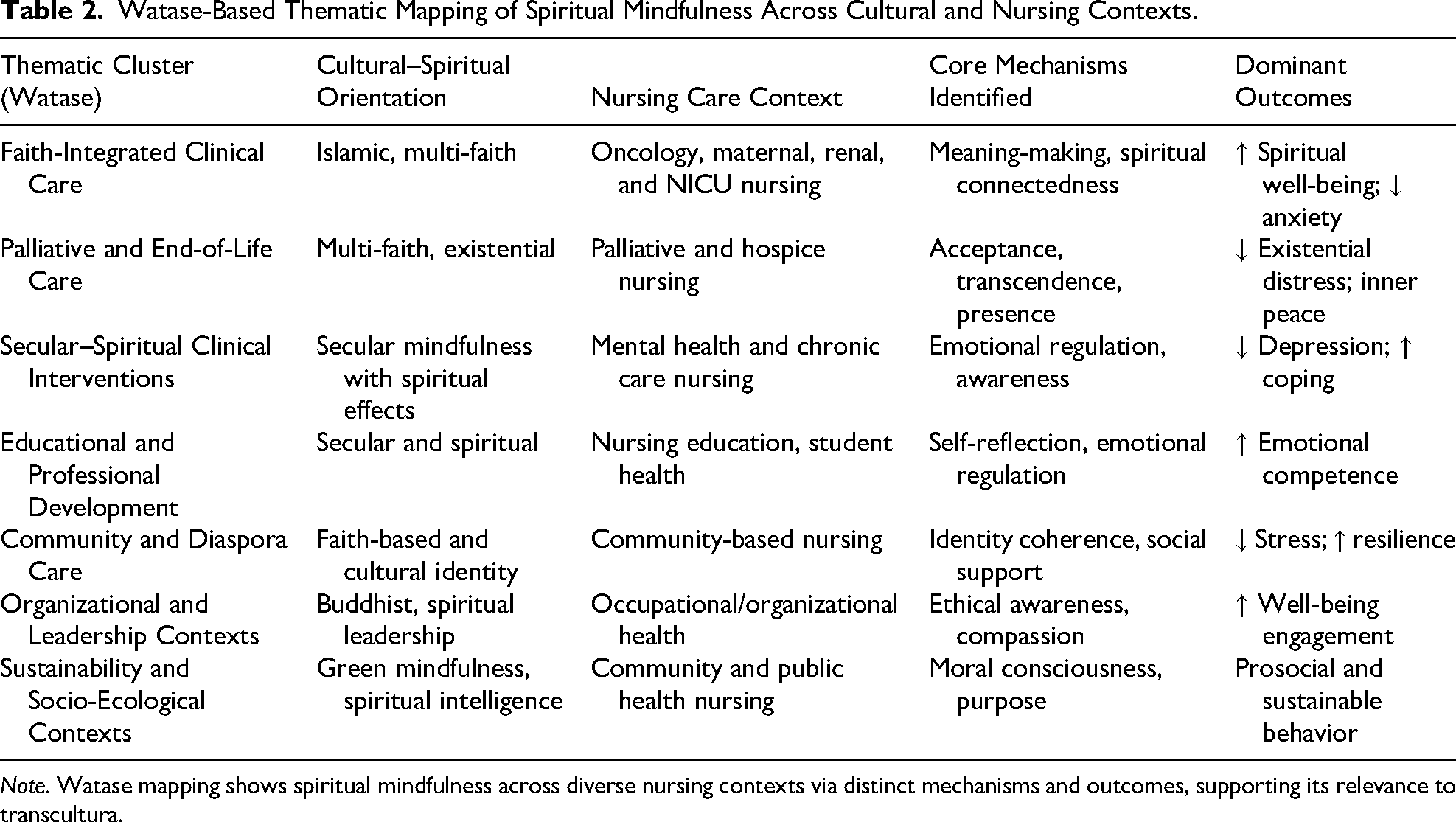
Note. Watase mapping shows spiritual mindfulness across diverse nursing contexts via distinct mechanisms and outcomes, supporting its relevance to transcultura.
Temporal Trends and Growth of Scholarly Interest
Analysis of publication trends revealed a substantial increase in spiritual mindfulness research between 2019 and 2024, with notable peaks in 2021 and 2022. This growth coincides with heightened global concern for mental and spiritual well-being during and following the COVID-19 pandemic. In contrast, earlier studies published between 2015 and 2018 predominantly focused on validating mindfulness-based stress reduction interventions within clinical populations, such as individuals with cancer or chronic illness (Würtzen et al., 2015).
More recent scholarship reflects conceptual expansion beyond symptom reduction toward relational, ethical, and existential dimensions of well-being, including compassion, spiritual intelligence, and ecological awareness (Alshebami et al., 2023; Cai et al., 2023). From a transcultural nursing perspective, this shift indicates increasing recognition that culturally situated meaning systems influence how individuals interpret health experiences and engage with mindfulness-based interventions (Yi, 2017).
Research Design and Methodological Distribution
Quantitative approaches predominated, commonly employing cross-sectional surveys, regression models, and structural equation modeling to examine relationships among mindfulness, spirituality, and psychological outcomes (Oner Cengiz et al., 2023; Ramadas & Simões, 2019). These findings provide empirical support for the clinical relevance of mindfulness-based interventions in nursing populations.
Qualitative and mixed-method studies offered complementary insights into the lived experiences of spiritual mindfulness, highlighting how cultural and spiritual meanings shape engagement with interventions. Such methodological diversity strengthens the applicability of findings to transcultural nursing practice by capturing both measurable outcomes and contextual dimensions of care.
Theoretical Foundations and Conceptual Diversity
Theoretical analysis revealed substantial conceptual diversity across the reviewed studies. While 58% of the studies did not explicitly state a guiding theoretical framework, the remaining studies drew on a range of perspectives, including Mindfulness-Based Cognitive Therapy (MBCT) (Park et al., 2020), Self-Determination Theory (Alshebami et al., 2023; Cai et al., 2023), Spiritual Leadership Theory (Mohammed et al., 2022), and Islamic spiritual frameworks grounded in muraqabah and dhikr (Malik, 2025).
Citation patterns indicate the continued prominence of Western-derived theories, particularly MBCT, which demonstrated the highest citation impact. At the same time, the inclusion of non-Western frameworks reflects increasing efforts to situate mindfulness within indigenous and faith-based spiritual traditions (Komariah et al., 2024). From a transcultural nursing perspective, this theoretical plurality highlights the need to move beyond universalized models toward culturally situated frameworks that honor patients’ belief systems and support culturally responsive nursing interventions. As summarized in Table 3, both Western and non-Western theoretical perspectives inform the conceptualization and implementation of spiritual mindfulness across diverse nursing contexts. The characteristics of the 28 included studies across cultural contexts, spiritual frameworks, and nursing care settings are summarized in Table 4.
Theoretical and Conceptual Frameworks Underpinning Spiritual Mindfulness Studies.
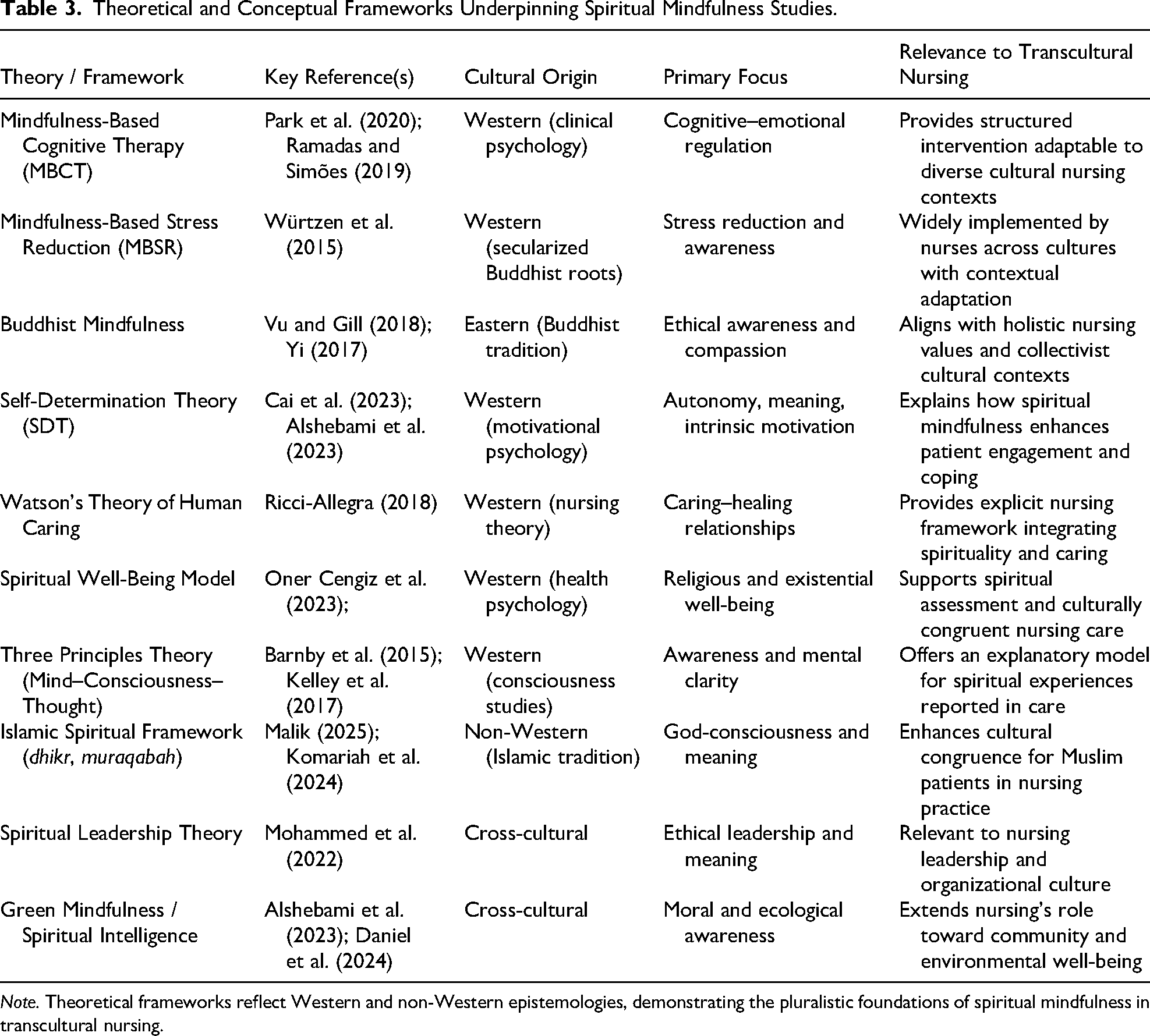
Note. Theoretical frameworks reflect Western and non-Western epistemologies, demonstrating the pluralistic foundations of spiritual mindfulness in transcultural nursing.
Characteristics of Representative Included Studies by Cultural and Nursing Care Context (n = 28).
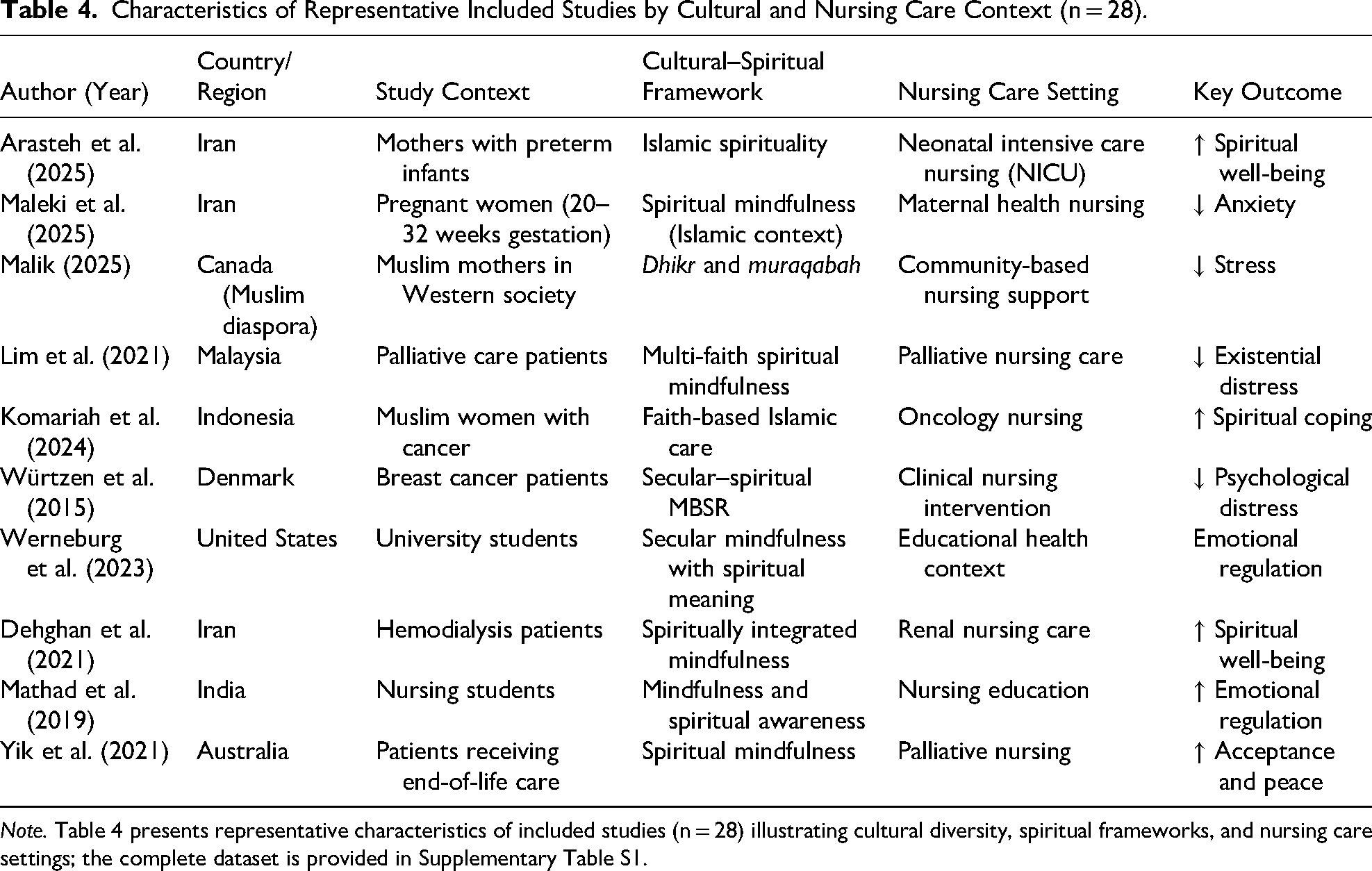
Note. Table 4 presents representative characteristics of included studies (n = 28) illustrating cultural diversity, spiritual frameworks, and nursing care settings; the complete dataset is provided in Supplementary Table S1.
Interventions and Mechanisms of Action
Across the reviewed studies, mindfulness-based interventions consistently demonstrated positive associations with spiritual well-being and psychological resilience in clinical populations, including oncology, hemodialysis, and depression (Dehghan et al., 2021; Park et al., 2020; Ramadas & Simões, 2019; Würtzen et al., 2015). Common mechanisms included enhanced attentional awareness, reduced rumination, emotional regulation, and strengthened spiritual connectedness (Mathad et al., 2019; Lim et al., 2021).
From a nursing perspective, these mechanisms may be interpreted as caring–healing processes facilitated through therapeutic presence, spiritual assessment, and culturally attuned intervention delivery. Such processes reflect interactions among cognitive, emotional, and spiritual dimensions of human experience that are central to holistic nursing practice. Beyond clinical settings, spiritual mindfulness interventions were also applied in educational and organizational contexts, where they promoted ethical awareness, compassion, and purpose-oriented behavior (Cai et al., 2023; Heredia et al., 2020; Mohammed et al., 2022). These findings indicate that spiritual mindfulness operates through both intrapersonal and relational pathways, reinforcing its relevance to holistic and person-centered nursing care.
Outcomes and Nursing-Relevant Effects
Three dominant outcome domains were identified: enhanced spiritual well-being (54.5% of studies), reduced psychological distress (approximately 25%), and improved quality of life or health-related behaviors (21%). Improvements in spiritual well-being were consistently observed across diverse populations, including individuals with chronic illness and nursing students (Mathad et al., 2019; Park et al., 2020). Comparable outcomes were reported in palliative care contexts, where spiritually integrated mindfulness contributed to reduced existential distress and greater acceptance (Lim et al., 2021; Yik et al., 2021).
Qualitative findings further highlighted subjective experiences of inner peace, acceptance, and existential meaning-making (Malik, 2025; Werneburg et al., 2023). These experiences suggest that spiritual mindfulness may facilitate processes of personal transformation that extend beyond symptom management toward relational and meaning-centered adaptation. From a transcultural nursing perspective, such outcomes reflect dimensions of well-being that are responsive to culturally congruent spiritual care.
Contextual Applications and Thematic Clusters
Two primary contextual clusters emerged: clinical health care settings (approximately 60% of studies) and socio-cultural or organizational contexts (40%). Clinical studies primarily focused on individuals with chronic illness, demonstrating that spiritually integrated mindfulness supports psychological adaptation and spiritual acceptance (Dehghan et al., 2021; Oner Cengiz et al., 2023).
Studies situated in socio-cultural contexts extended applications of spiritual mindfulness to educational and leadership domains, emphasizing ethical awareness, relational responsibility, and values-based decision-making (Gracie & Wilkinson, 2022; Vu & Gill, 2018). Thematic subclusters included Islamic spiritual mindfulness (Komariah et al., 2024; Malik, 2025), environmentally oriented mindfulness (Alshebami et al., 2023; Daniel et al., 2024), and emerging digital mindfulness interventions.
These variations indicate that spiritual mindfulness is context-sensitive and shaped by cultural meaning systems, reinforcing its relevance to transcultural nursing practice, where care processes are adapted to align with patients’ beliefs, values, and lived experiences.
Integrative Analytical Synthesis: Implications for Transcultural Nursing
Integrative synthesis identified three overarching conceptual patterns. First, spiritual mindfulness demonstrates cultural adaptability, with interventions aligned to patients’ belief systems showing greater contextual relevance and engagement (Pargament, 2011; Hall et al., 2016). Second, spiritual mindfulness operates through interconnected mechanisms involving attentional awareness, emotional regulation, relational consciousness, and spiritual meaning-making (Lim et al., 2021; Mathad et al., 2019). Third, findings reflect convergence between Western psychological frameworks and non-Western spiritual traditions, suggesting that spiritual mindfulness may function as an interpretive bridge across diverse epistemological perspectives on health and healing (Landau & Jones, 2021; Yi, 2017).
From a transcultural nursing perspective, these patterns indicate that spiritual mindfulness supports culturally congruent care by facilitating relational awareness, compassion, and meaning-centered engagement with experiences of illness and well-being.
To further synthesize relationships identified across studies, a conceptual model was developed to illustrate how spiritual mindfulness operates as a culturally situated caring–healing process within transcultural nursing. Informed by Watson's Theory of Human Caring and structured using CIMO logic, the model demonstrates how culturally embedded contexts influence the implementation of spiritually congruent mindfulness practices that activate relational and meaning-centered mechanisms, contributing to holistic outcomes.
The model illustrates how cultural worldview and spiritual belief systems shape the implementation of culturally congruent spiritual mindfulness, activating relational mechanisms that support holistic outcomes.
Discussion
Interpreted through a transcultural nursing lens, spiritual mindfulness reflects dynamic interaction among spiritual beliefs, cultural lifeways, and experiences of health and illness (Leininger, 2002). Alignment between mindfulness practices and patients’ spiritual worldviews appears to enhance contextual relevance and therapeutic engagement across care settings (Pargament, 2011; Hall et al., 2016).
The integration of Buddhist, Islamic, and Christian contemplative traditions reflects both cultural universality and diversity in approaches to suffering, healing, and transcendence (Komariah et al., 2024; Malik, 2025). These findings indicate that mindfulness is most meaningful when situated within culturally embedded interpretations of illness and human experience rather than applied as a culturally neutral technique (Landau & Jones, 2021).
Across studies, spiritually integrated mindfulness interventions were associated with improvements in spiritual well-being, psychological distress, and quality of life (Lim et al., 2021; Park et al., 2020; Yik et al., 2021). However, variations across cultural contexts suggest that the mechanisms and meanings of mindfulness are shaped by sociocultural values and relational worldviews (Hölzel et al., 2011; Walsh, 2016).
As illustrated in Figure 2, spiritual mindfulness may be interpreted as a relational caring process consistent with Watson's Theory of Human Caring, emphasizing intentional presence, compassion, and interconnectedness (Ricci-Allegra, 2018). Mechanisms such as emotional regulation, attentional awareness, spiritual connectedness, and meaning-making consistently contribute to adaptive coping and existential integration (Lim et al., 2021; Mathad et al., 2019).
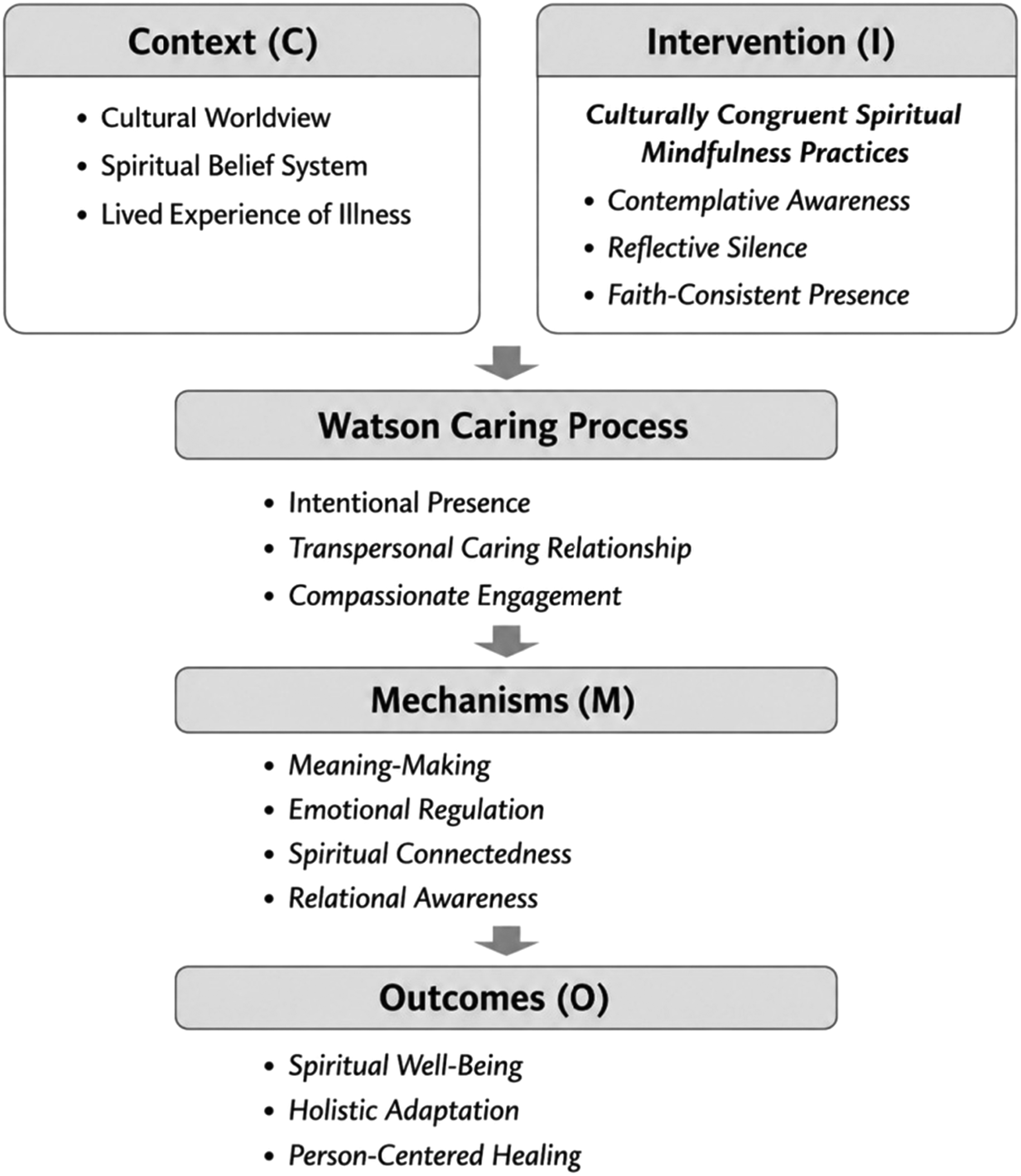
CIMO-Based conceptual model of spiritual mindfulness in transcultural nursing informed by watson's theory of human caring.
Nevertheless, the predominance of Western-derived frameworks such as MBSR and MBCT indicates continued conceptual imbalance in the literature, potentially limiting representation of non-Western spiritual epistemologies (Landau & Jones, 2021; Yi, 2017). Greater theoretical integration of culturally grounded perspectives may strengthen relevance for global nursing practice.
Future research should prioritize longitudinal, mixed-method, and cross-cultural designs to better capture culturally situated experiences of spirituality and clarify mechanisms underlying spiritually integrated mindfulness interventions (Dehghan et al., 2021; Malik, 2025).
Implications for Transcultural Nursing Practice
Findings highlight the importance of integrating culturally grounded spiritual assessment into routine nursing care to support person-centered and culturally congruent practice (Leininger, 2002; Pargament, 2011). Spiritual mindfulness may be operationalized through brief, adaptable strategies such as guided reflection, contemplative silence, or faith-consistent awareness practices developed collaboratively with patients (Lim et al., 2021; Ross et al., 2018; Balboni et al., 2010).
Strengthening nurses’ cultural humility and spiritual competence through education and continuing professional development may support therapeutic presence and relational engagement in diverse care settings (Campinha-Bacote, 2002; Ricci-Allegra, 2018). Health systems may further facilitate implementation through interdisciplinary collaboration and supportive practice environments that recognize spirituality as a dimension of holistic care.
Development of culturally adapted nurse-led mindfulness interventions may contribute to improved spiritual well-being, coping capacity, and relational trust among diverse patient populations (Park et al., 2020; Yik et al., 2021).
Conclusion
Spiritual mindfulness represents a culturally congruent and nursing-relevant approach that integrates emotional regulation, spiritual meaning, and relational awareness across diverse care contexts. This review indicates that mindfulness practices aligned with patients’ belief systems contribute to spiritual well-being, adaptive coping, and person-centered healing, particularly in chronic and palliative care settings. Importantly, spiritual mindfulness should not be understood as a universal technique but as a culturally mediated caring–healing process whose meaning and effectiveness are shaped by sociocultural and spiritual worldviews.
Situated within transcultural nursing perspectives, the findings support a shift from standardized interventions toward culturally responsive and spiritually grounded care. Conceptual synthesis informed by Watson's Theory of Human Caring suggests that spiritual mindfulness may function as a relational process that supports meaning-centered adaptation and holistic well-being. Strengthening theoretical integration and culturally grounded research may further advance the development of evidence-based holistic nursing practice.
Supplemental Material
sj-docx-1-jhn-10.1177_08980101261457682 - Supplemental material for Integrating Spiritual Mindfulness Into Transcultural Nursing Practice: A Systematic Integrative Review
Supplemental material, sj-docx-1-jhn-10.1177_08980101261457682 for Integrating Spiritual Mindfulness Into Transcultural Nursing Practice: A Systematic Integrative Review by Lia Mulyati and Arif Setyo Upoyo in Journal of Holistic Nursing
Footnotes

Ethical Approval
This study is a systematic integrative review of previously published literature and did not involve human participants.
Author Contributions
This research received no external funding.
Author Contributions
Lia Mulyati contributed to the conception and design of the study, data collection, analysis, interpretation of data, and manuscript writing. Arif Setyo Upoyo contributed to supervision, conceptual guidance, and critical revision of the manuscript.
Funding
The authors received no financial support for the research, authorship, and/or publication of this article.
Declaration of Conflicting Interests
The authors declared no potential conflicts of interest with respect to the research, authorship, and/or publication of this article.
Supplemental Material
Supplemental material for this article is available online.
References
Supplementary Material
Please find the following supplemental material available below.
For Open Access articles published under a Creative Commons License, all supplemental material carries the same license as the article it is associated with.
For non-Open Access articles published, all supplemental material carries a non-exclusive license, and permission requests for re-use of supplemental material or any part of supplemental material shall be sent directly to the copyright owner as specified in the copyright notice associated with the article.
