







Abstract
One of the major achievements of humanity over the past half a century has been the steadily rising life expectancy to which health systems all over the world have significantly contributed. The increase beyond the age of 80s in particular, has undisputedly, had many societies struggling heavily with the consequences of such demographic changes, particularly with respect to health and social care needs of a rising proportion of older people who needs continuous care for a prolonged period of time. As countries face population aging, long-term care (LTC) becomes a pivotal concern, with expectations that the demand for the provision of health and supportive services increases with the growing older adult population. This Special Issue focuses on understanding the issues surrounding the state of LTC in selected Southeast Asia and East Asian societies. They can be broadly referred to as part of ASEAN (Association of Southeast Asian Nations) Plus Three (APT) countries comprising the 10 Southeast Asian countries plus China, Japan, and South Korea. APT countries have embarked on cooperation in diverse areas and levels since 1997 (ASEAN Secretariat, 2017). The APT countries represent the diversity of Asia as a region with regard to population aging, from demographically advanced Japan which implemented the first LTC insurance in 2000 in Asia, to Indonesia with a young population, which lacks LTC policies. Nevertheless, with rapid sociocultural changes in the region, we are witnessing a convergence in the concerns of the provision of long-term health and caregiving support for the growing older adult population.
In Asia, where the family plays an intrinsic role in the care and support of older adults, the preference of aging in place in the community rather than in formal care institutions is expected among the older adults and their family members. This is bolstered by cultural values such as filial piety which place expectations on children to provide care for their aging parents. In some countries, the government reinforces this care pattern with old-age policies which re-inscribe the family as the primary site of eldercare. Economic and social changes, however, have lent to changes in family structures and shifts in the organization of care in the family. In the more affluent countries in Asia, LTC has increasingly become transferred to paid workers, especially with growing numbers of women joining the labor force. Falling fertility rates in the Asian region would also signal fewer caregivers for older adults. LTC in general remains a fragmented area; there is a lack of shared definitions, and in many countries it is only just beginning to emerge as an idea at the interfaces between informal and formal care, and between health and social care services. LTC provisions encompass a broad range of support services from personal care, health care, social services, and rehabilitative care. A broader definition of LTC also comprises welfare and social support for currently active older persons, especially those who live alone, in other group settings, or with family members, to enable them to live independently for as long as possible. In other words, how to create an appropriate environment and provide access to services to allow older adults to “age in place” is part of the LTC strategy. Increasingly, besides the family, the role of community is becoming more visible, not only through the state but also civil society and other ground-up efforts. Sited between the family and the state, to what extent community services for older adults contribute to their care and support requires more attention. For the state, besides the need to ensure quality LTC, the expectations for more extensive LTC provisions have led to active aging strategies as preventive measures to keep more older adults healthy and thereby reducing or postponing LTC needs. How can active aging be better integrated in the current LTC policies? The articles featured in this special issue will deepen our understanding of how Southeast Asia and East Asia societies have been responding to the challenges of LTC needs impacting on individuals, families, communities, and the state and how they should do so.
Demographic and Socioeconomic Contexts
Countries in Southeast and East Asia have diverse socioeconomic, demographic, and cultural characteristics (Raymo, Park, Xie, & Yeung, 2015; Yeung, Desai, & Jones, 2018); hence, the needs for LTC for the population and ability to provide it are different. We begin by describing the demographic and socioeconomic trends of APT countries that set the context for examining the varying LTC needs and policies in this region. First, we depict the diverse aging trends in APT countries. Figure 1 shows the trend of population aging in that the proportion of those 65 and above in these countries from 2000 to 2015 in all countries have been rising, although at different levels and rates. As well known, Japan is the oldest nation in Asia. By 2005, one fifth of the population in Japan were already 65 and above. This proportion continued to increase to about 27% in 2015. The rest of the countries in the region are substantially younger than Japan, with South Korea as the next oldest country having about 13% of her population aged 65 and above in 2015. Next comes Singapore, the oldest country in Southeast Asia (11.7% aged 65 and above in 2015), followed closely by Thailand with 10.5% aged 65 and above in 2015. China has about 10% of its population 65 and older. Even though the current rate in China is low, the speed of increase will be very rapid due to the sharp decline in fertility resulting from the one-child policy. The rest of the Southeast Asian countries are much younger compared with the above countries, having 5% or lower proportion of the population older than 65. However, although the proportion of the aging population is much lower there, the rates of increase of this share of the population between 2000 and 2015 in some countries such as Brunei and the Philippines are also rapid.
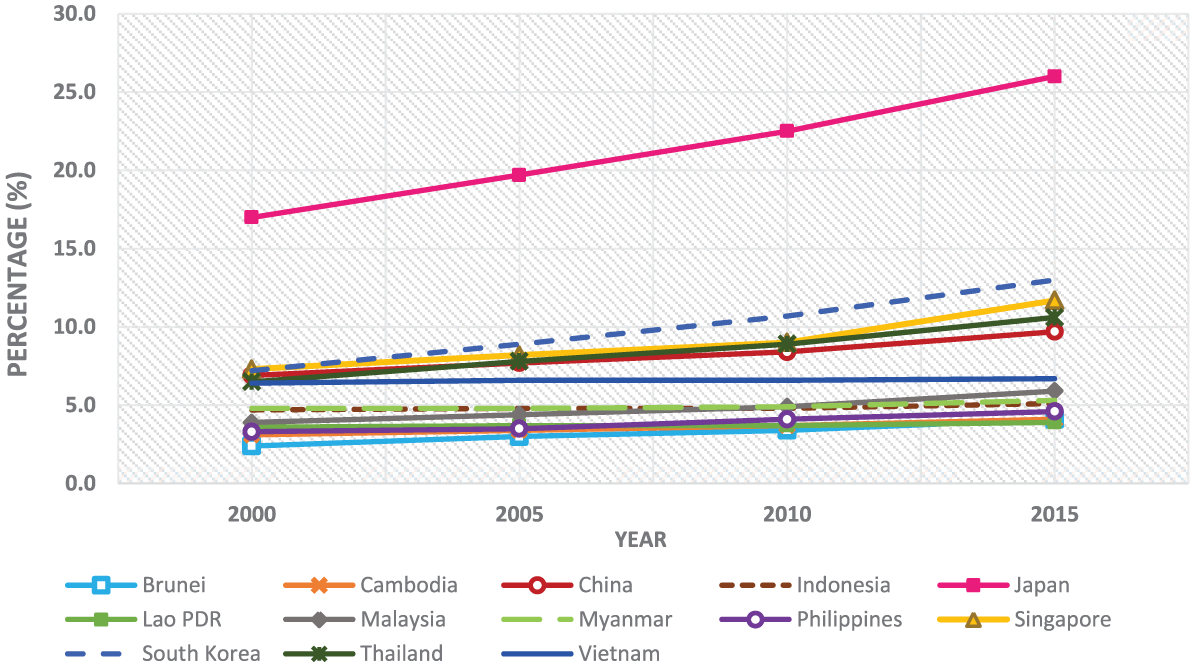
Percentage of total population aged 65 and above of ASEAN Plus Three countries from 2000 to 2015.
This aging trend is the result of the declining fertility rate and lengthened life expectancy in the last few decades. As seen in Figure 2, fertility rates have declined in all countries but at different rates and to different levels. By 2000, the total fertility rate (TFR) in Japan, South Korea, Singapore, China and Thailand had already declined to significantly below-replacement levels to around 1.5. At the other extreme, the TFR in the Philippines and Cambodia remained relatively high at about 3.7, and above 4 in Lao PDR. By 2015, the TFR in the other Southeast Asian countries were at, or slightly above, the replacement level. These countries also have significantly different levels of life expectancy as a result of developments in medical care and improved living conditions due to socioeconomic development. Life expectancy at birth in Japan, Singapore and South Korea is among the world’s highest—above 80—whereas at the other extreme, life expectancy at birth in Myanmar is more than 15 years younger at 65, and that for Lao PDR and the Philippines is also still below 70 (see Figure 3).
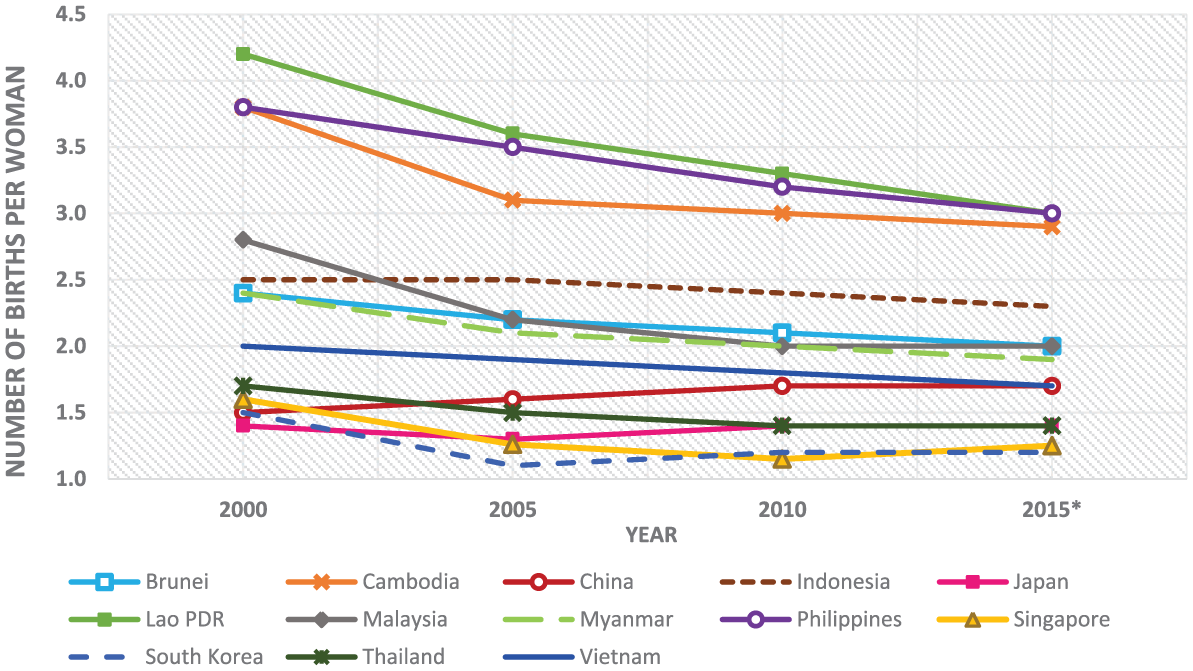
Total fertility rate of ASEAN Plus Three countries from 2000 to 2015.
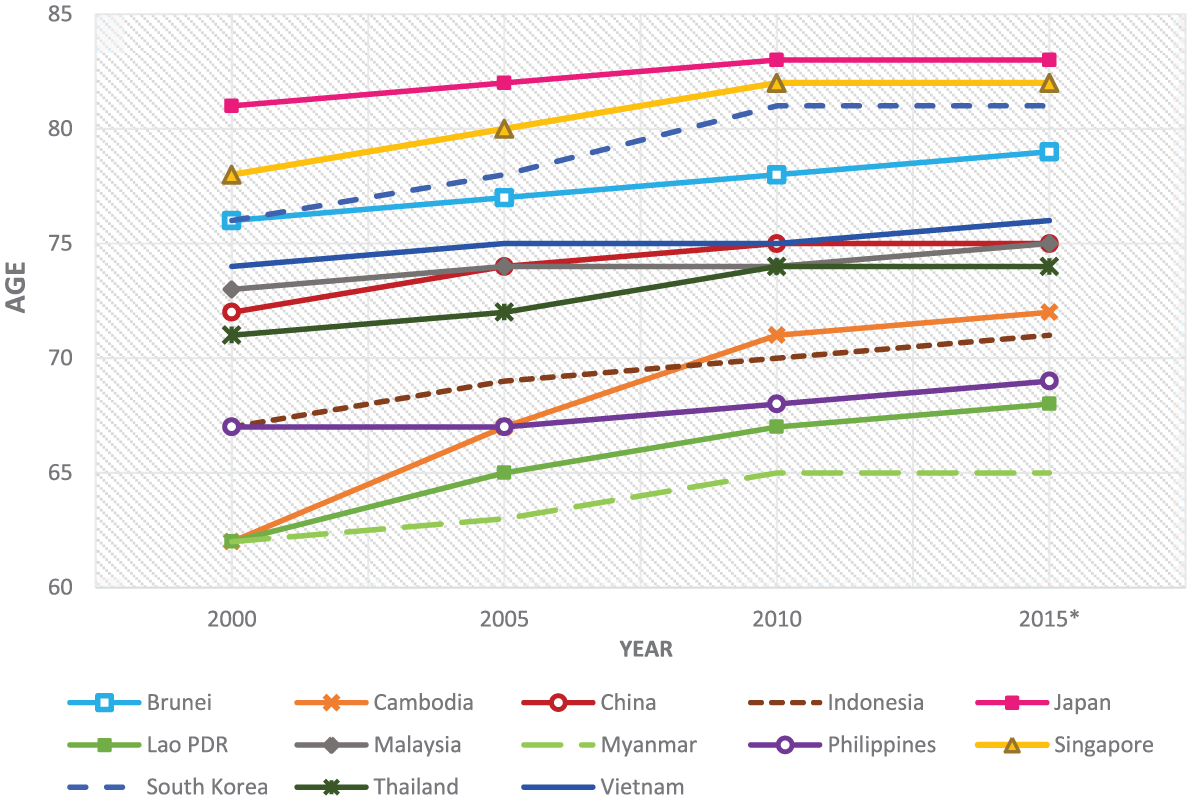
Life expectancy of ASEAN Plus Three countries from 2000 to 2015.
Among the older population, the group aged 80 and above, often referred to as the “oldest-old,” are most in need of LTC. The proportion of this group also varies across countries. Figure 4 shows a similar increasing trend in all countries. In Japan, this age group more than doubled, from 3.7% to nearly 8% during the 15 years (from 2000 to 2015). In Singapore, it also more than doubled to 2.4%. Thailand and Vietnam currently had about 2% of their population in this oldest-old category but this percentage is increasing rapidly. The proportion aged 80 and above is estimated to rise tenfold between 2000 and 2050. Another country with a rapid increase of oldest olds is China—a result of the country’s one-child policy since 1979. The very large population size in the country will greatly magnify the need for LTC in the next few decades.
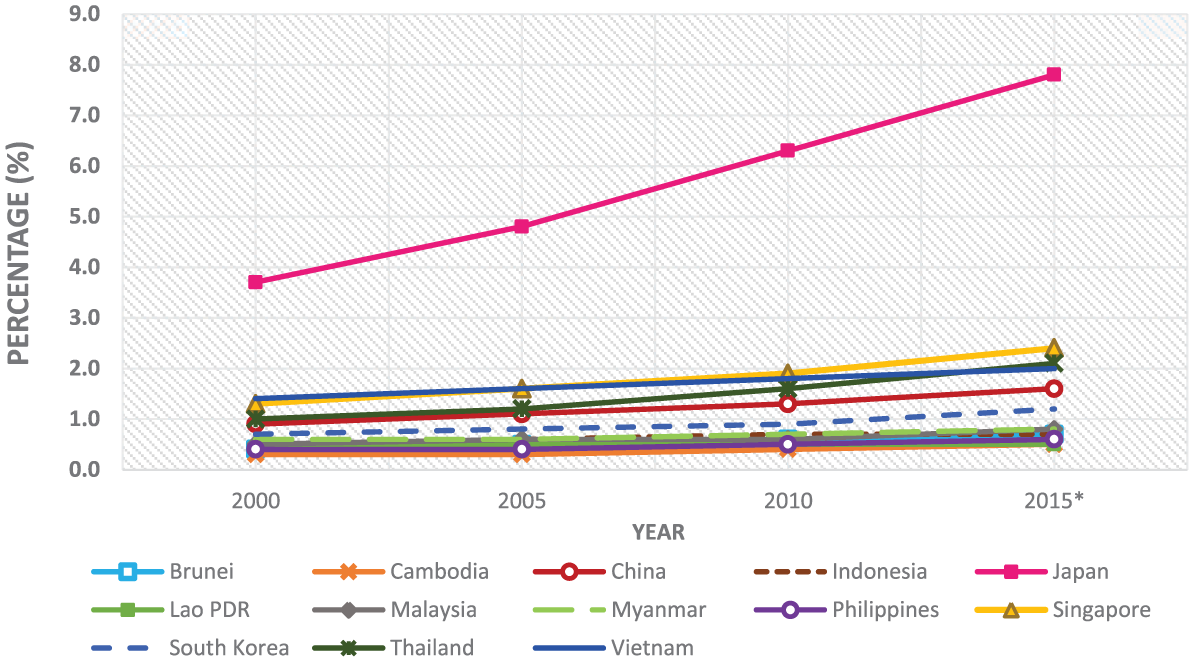
Percentage of total population aged 80 and above of ASEAN Plus Three countries from 2000 to 2015.
It is worrying when rapidly aging countries turn old before they turn rich, inhibiting their ability to meet LTC needs. Figure 5 shows GDP per capita of APT countries from 2000 to 2015, ranging from highest levels in the world such as in Singapore and Brunei to those with a GDP per capita lower than $2,000 such as Cambodia, Lao PDR, and Myanmar. This shows that the demand for LTC and ability of each country to provide it vary widely across Asia. In addition to economic diversity, these countries also have diverse cultural traditions and kinship systems (Yeung et al., 2018) with a large proportion of Muslims and a substantial Buddhist and Hindu population. Some countries such as China, Korea, and Vietnam traditionally follow a more patriarchal kinship system and others such as Thailand follow a more matriarchal kinship system. These have implications on LTC practices and policy needs when considering care provision.
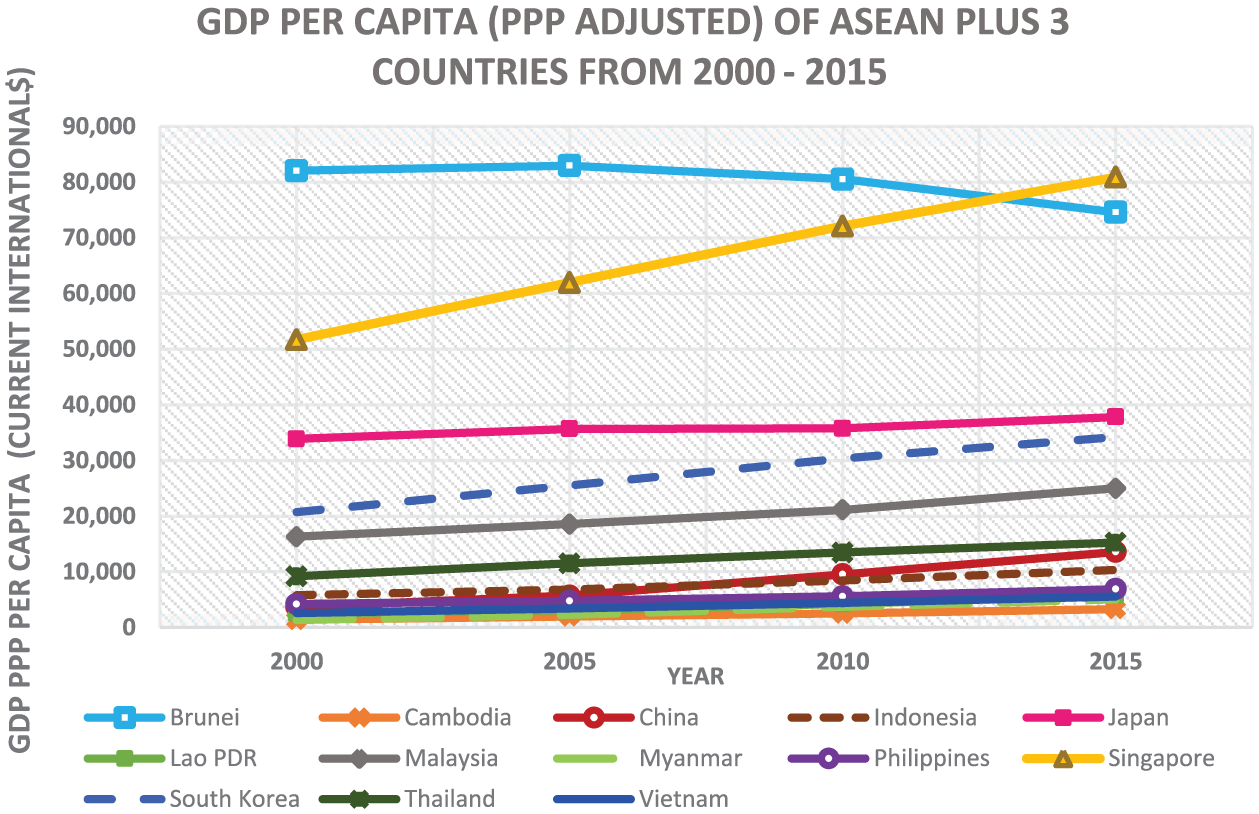
GDP per capita (PPP adjusted) of ASEAN Plus Three countries from 2000 to 2015.
This Special Issue includes seven articles plus this introduction. Thematically, the articles focus on the following four related themes:
a. Understanding LTC needs and support: the pivotal role of the family in caregiving
Changes in demographic as well as sociocultural and economic contexts place constraints on the family in caring for their older family members. This set of three articles suggests a normative basis for family care for the older adults in the region with questions such as the following: What are the needs and unmet needs of care and the circumstances? To what extent can family provide LTC, given the shrinking family size and more mobile population and the fact that many married couples of childbearing-age face dual burdens of caring for the younger generation as well? How do gender affect an individual’s caregiving behavior? These are addressed in separate empirical studies from Thailand, the Philippines, China, Taiwan, and South Korea.
Knodel, Teerawichitchaninan, and Pothisiri (2018) raise concerns about the sustainability of home-based care by family members in the future with Thailand’s rapid aging trend combined with shrinking family size and increased out-migration of adult children. They note the early stage of development of formal state or paid private LTC services in Thailand, having to grapple with key challenges including insufficient numbers of qualified and skilled home care volunteers and the lack of budget to compensate them for their activities. Using data from the 2014 survey of older persons in Thailand, the authors examine the patterns of caregiving, noting the sharp increase in LTC needs with age, especially among older adult women. The fact that children, especially daughters, and spouse constitute approximately 90% of main caregivers reveals the general normative prescription for family members to serve as care provider. The data also indicate that 94% of the main caregivers coresided with the care recipients and the remainder lived adjacent or very nearby. The results have policy implications, especially on the gender dimension of LTC support. Based on the 2014 data, 22% of those aged 50 to 54 had only sons and no daughters, and there were some who did not have any children. The demographics imply the need for increasing involvement of the state, community, and private sector in providing LTC for older Thais to meet the challenge of escalating care support needs.
Along the same line of enquiry on the role of family in caregiving, Abalos, Saito, Cruz, and Booth (2018) examine who provide assistance to older adults in the Philippines who have functional limitations and are in need of assistance based on data from the 2007 Philippine Study on Aging. Results show that, similar to patterns in Thailand, family, particularly spouses and daughters, plays the most important role in providing care. They found grandchildren to be active in providing care as well. Similarly, women were found to have greater needs than men and the need increased quickly with age. Among those in their 60s, 5% needed ADL assistance, with this proportion increasing to 28% among those in their 80s. The level of need was also higher among economically disadvantaged groups and among those living in rural areas. In Thailand, most main care providers coresided with the older adults. Results showed that nearly 1 in 10 older Filipinos had no one to assist them in performing Activities of Daily Living (ADL) or Instrumental Activities of Daily Living (IADL), particularly among those with no children living in the same household or no child at all. Although it is clear that coresidence facilitates the provision of care, non-coresident family members also provided care—more than half (58%) of older Filipinos’ nearest non-coresident child lived next door or within the same barangay. The authors conclude that the Filipino family remains faithful to its filial duty toward the older adults, but raise concerns for the country’s ability to provide adequate LTC due to the changing demographic and socioeconomic context in the country.
Given the central role of family in providing care for older adults, Tan (2018) queries the implications for LTC with constraints experienced by the “sandwiched generations” in East Asia. Using data from China, Japan, South Korea, and Taiwan, she examines the impact on life satisfaction in general and with marital life for married couples facing simultaneous demands from older parents and from children. The “sandwiched” demand is measured by the family structure of married couples residing with older parents and at least one child, or living near parents, or providing frequent financial and physical assistance to their elderly parents.
Three-generational coresidence is more common in Taiwan and Japan (24.3% and 21.4%), and coresidence or provision for both generations is higher in Taiwan and South Korea (53.7% and 44.5%). The analysis shows that the strain of being sandwiched is associated with lower life and marital satisfaction only among women, suggesting that women bear the main burden of caring for both the young and the old in the family. The results show intergenerational transfers of care as the main mechanisms for caring for aging parents, but it should be noted that, frequently, the demands from both the younger and older generations take a toll on the well-being of married women. Whether in Southeast Asia or East Asia, caregiving in the family often relates to women’s role, signifying the need for a gendered perspective in policy supporting eldercare in the family and beyond.
b. Supporting older adults through community efforts: Enhancing health, social well-being, and empowerment
Beyond the family, the issues of LTC are increasingly being explored from the perspective of the community as an extension of the family. Pratono and Maharani’s (2018) case study in East Java, Indonesia, explores how the new integrated service center for LTC for older adults (Posyandu Lansia) works in the country, highlighting the role of community engagement in LTC services. Based on a qualitative study in three areas in East Java Province, the article describes how groups of women volunteer to assist in regular medical check-up services and organize peer groups for older adults in these areas. While community-based services are preferred for their ease of accessibility to older adults, this study finds that apart from accessibility, it is also important for the services provided to be culturally accepted by older adults who are the service recipients. Incorporating cultural and religious values and practices in the care services could increase the efficacy of the program. This highlights the significance of innovation in activities as they are crucial in attracting older adults to the community-based services. The study also discovers the challenges to sustainability when relying only on volunteers. Such realities point to the existence of unmet needs in community-based care services, posing a limit to the expansion of services as well as to attempts to raise the quality of services.
c. Quality of LTC program and quality of life for older adults
As part of the LTC system, eldercare institutions such as nursing homes for vulnerable older adults are increasingly being recognized as necessary alongside the development of family-based and community-based care. In Wang, Wang, Cao, Kia and Wu’s article (2018) focusing on China, the necessity of LTC institutions is recognized especially for the oldest old, as the Chinese oldest olds are noted to be increasingly less likely to receive traditional family care due to shrinking family size and increasing number of adult children leaving home for employment. Furthermore, they note that half of the Chinese urban senior citizens were living in empty nest households by the end of 2013, alluding to a high projected need for more LTC facilities that will increasingly rely on the community and state in the future.
Nonetheless, despite rapid growth in the number of beds in the LTC system in China since the 1990s, this study of the association between perceived social support, empowerment, and quality of life among 515 older adults from nine LTC facilities in Shanghai reveals inadequacies in the system. Among others, they point out the need for more attention on person-centered care. Although such a concept may run contrary to the emphasis on institutional efficiency, it is necessary for raising staff awareness of meeting individual needs, such as empowering the older residents on the care plan they wish to receive and listening to their feedback. Controlling for a set of demographic and health characteristics, the study also shows that those who live in smaller government-owned but private-run LTC facilities are more likely to have a higher level of perceived quality of life compared with those living in bigger and better-equipped government-run facilities. These institutions appear to differentiate in terms of higher level of social support between staff and residents, as well as among the residents, and more active social networking in the smaller institutions. As half of the residents in LTC facilities are functionally capable, activities catering to older residents need to be more varied to meet the functional status and personal preferences of the older residents.
d. Addressing LTC needs through policy intervention
Given the extensive LTC needs expected in the future, countries are devising strategies to meet these needs. Sometimes, it takes only a small shift in the existing structure to effect change on a family’s ability to care for their older parents. An obstacle to the family’s ability to care for older adults in East Asia is the long work hours in these societies. Studies have shown that Taiwan, South Korea, and Japan are among the Asian societies that have the longest work hours in the world. Kim, Lee, and Do (2018) examine the impact of policy intervention on family support by investigating whether the statutory change in workweek from 44 to 40 hr by the South Korean government since 2004 has contributed to any change in visits, and cash or in-kind transfers from adult children to their non-coresident older adult parents. Using longitudinal data from the 2005 and 2013 Korea Labor and Income Panel Study, they find an increase in the frequency of visits and in-kind transfers among male workers, but no significant impact on their cash transfers to parents. No significant impact on any of the helping behaviors among females are found. These results suggest that reducing work hours in countries that have particularly long work hours such as Japan, South Korea, and Singapore may enable adult children to spend more time caring for their elderly parents.
Policy intervention for meeting LTC needs can also be conceived indirectly, such as with preventive measures to keep older adults active and healthy so that the need for LTC can be reduced or postponed. Ko and Yeung (2018) explore how active aging could be integrated into the current LTC policies in China. Using data from the 2011 China Health and Retirement Longitudinal Study (CHARLS), they find that better infrastructure facilities in a community is positively linked to older adults’ engagement in paid work, grandparental child care, community activities, and leisure activities. Those residing in more economically developed areas, such as in urban areas, are more likely to engage in paid work, grandchildren care, community, and leisure activities. The findings underscore the relevance of institutional and sociodemographic environment in enabling active aging. Community infrastructure environment is also equally crucial in sustaining older adults’ involvement in family and community. These results have implications on policy makers planning for community-based LTC.
Concluding Remarks
The articles in this volume focusing on LTC in selected APT countries provide a platform for understanding the current situation, including the challenges and strategies, in meeting the needs of LTC of older adults in the region. While by no means comprehensive, the articles clearly highlight the rapidly rising demand for LTC in this region in the next few decades given changes in structural factors, such as declining fertility, lengthening life expectancy, and increasing migration. Research also show that an increasing proportion of elderly, especially the oldest old, are living alone in Asia, particularly female older adults (Yeung & Cheung, 2015). Thus, attention to problems related to isolation becomes increasingly important. Compared with Western societies, most of APT countries, except Japan, are still relatively young, but the rate of aging is fast and socioeconomic development is still low in these countries. Thus, they are ill prepared to cope with the demand for LTC. The LTC system is still vastly underdeveloped in countries such as Indonesia, the Philippines, Vietnam, Myanmar, Cambodia, and Lao PDR, all with GDP per capita lower than $20,000 (Figure 5). It is imperative for these countries to establish a sustainable system to meet the increasing demands of LTC with limited economic resources. Recent efforts in Myanmar to set up a pension system and promote community-based care through the setting up of Older Persons Self-Help Groups (OPSHGs) are instances of positive developments in eldercare policies (Teerawichitchainan & Knodel, 2018).
While we learn from the different socioeconomic contexts that family, community, and the state all play different roles in providing LTC for older adults, the reliance on family care nevertheless remains a norm. However, evidence shows that the boundaries between family, community, and the state in eldercare are shifting in Asia (Zhang & Yeung, 2012) with community, state, and private sectors expected to play increasingly important roles in the future. Almost all articles in this collection show that women continue to provide the bulk of eldercare in the family. This implies that measures to support the family in care provision should include a gender focus, on one hand, to reduce the stress on female family members as care providers and, on the other hand, encouraging more men to become involved in eldercare. Other measures, such as training of LTC providers and the development of home-based care services to allow families to outsource care responsibility and for older members to age in place are also important for supporting families increasingly faced with the limits of eldercare at home. There is also an optimistic expectation that the expansion of information technology and application has the potential to assist carers in helping to reduce the burden and to permit a more person-centered approach to support older people with a wide variety of long-term physical and cognitive conditions.
Furthermore, it is evident that older adults from poorer households have more unmet needs, as they are more prone to emotional distress and physical challenges. Elderly women also have larger needs for LTC, given the expected period of widowhood and decline in financial resources at advanced age. The phenomenon of feminization of aging noted in many of these studies warrants special policy attention. This denotes the need to look out for this group of vulnerable older adults as well as their caregivers in the same disadvantaged position (Suen & Thang, 2018), both of whom will be at greater risk of falling through the cracks in a family-centered system. Countries such as Singapore have focused on increasing employment activities and enhancing skills for older adults as a strategy to meet their own income needs. However, such a strategy will have limited success, in the case of those with severe disabilities or low human capital.
An alternative approach supporting aging in place is community-based care increasingly being implemented in the different APT countries. Studies examining the different pilots and models of community care services, such as the example in Indonesia in this special issue and other such examples in Thailand (Vipan, 2015), South Korea (Yang, 2018), and China (L. Zhang, 2017), underscore the recent emergence of the approach in these regions. They also highlight challenges such as the need for support from the state for the provision of adequate and sustainable care. It is notable that through the Republic of Korea-ASEAN Cooperation Fund, HelpAge Korea in collaboration with HelpAge International has been working with ASEAN governments and nongovernmental organization partners in developing home-based and community-based service programs at selected sites, learning from Korea’s successful model involving volunteers (Cho, 2014).
Looking forward, home-based and community-based care services are set to become an integral part of the LTC system in the region. Besides cost-effectiveness of these services when compared with residential care, they are also favored for enabling older adults to age in place (The World Bank, 2016).
The dominance of family-based care has also led to an underdeveloped formal LTC sector in most of these countries, as the inadequacy in China’s LTC services has shown. Besides home and community-based care, a comprehensive LTC system will still require adequate beds in institutions to cater to the increasing pressure of caring for those difficult to remain at home or in community care. The study in China suggests that it is important to incorporate older adults’ values and wishes in their care plan and provision. This is a significant aspect in considering care provision as there are vast diversities of ethnicities and values in this region including Muslims, Hindus, and Confucius-belief based communities. While Asian older adults in general prefer care to be provided by family members, some studies have shown that today’s Asian older adults increasingly value self-reliance and privacy, and are more reluctant to burden their family members (Feng & Straughan, 2017; Shi, 2018; Teo, Mehta, Thang, & Chan, 2006). In addition to the changing attitudes, today’s older adults also tend to have more financial resources and are in general healthier and better educated than their predecessors, which will affect the kind of care they need or prefer.
Developing an adequate and effective LTC system will require multisector collaborative efforts, and more integrated ways of data collection, needs assessment, program evaluation, policy formulation, and implementation. To date, only a few APT countries, namely Japan, South Korea, China, Singapore, and Thailand have established formal LTC systems or key elements of LTC (The World Bank, 2016, p. 231). From an APT cooperation perspective, this indicates the need for more collaboration and cross-country learning to leverage on each other’s experiences and lessons. South Korea’s support in the development of home and community-care programs in ASEAN countries is one such collaborative and cross-learning model. Japan and Singapore’s model of comprehensive LTC integrated system further offer valuable sites of learning. For a country considering LTC financing, the experiences of Japan and subsequently South Korea in implementing LTC insurance in 2000 and 2008, respectively, provide not only a structure for reference, but also lessons on resource management (The World Bank, 2016). In Singapore, the Agency for Integrated Care (AIC) set up in 2008 and its efforts to develop a comprehensive community-based model to serve the aging population provide valuable insights on support for older adults and caregivers, as well as stakeholders and partners in care provision to raise the quality of care (see details on AIC website). Considering that many of the lower income countries in the region have been supplying caregivers (especially females) to countries with relatively higher income, and will continue to do so, policy cooperation and integration across national boundaries are imperative.
Finally, policy support for LTC does not need to be restricted to direct LTC provision. Kim, Lee, and Do’s article on the impact of shortened work hours on adult children’s visits to elderly parents in South Korea, and Ko and Yeung’s article on the relationships between building infrastructure and sociodemographic environment and active aging show that policy interventions that improve work lives to promote an aging-friendly environment have positive impact in meeting or preventing LTC needs. In Singapore, housing policies that provide incentives for adult children and their parents to live close-by while in separate nuclear households have led to an emerging norm for such a modified three-generational extended living arrangement facilitating higher frequency of mutual support (Thang & Suen, 2018). These suggest that discussions on improving LTC and quality of life of older adults should not be confined to a particular segment of society, but should cut across to academia and policy makers as well as civic and market sectors, as countries in the region move forward to proactively address the unmet LTC needs for their older adults. Overall, the concepts, indicators, and models for aspects of health and social care and integrated services for LTC and the methodology for international comparisons across countries are still very much in their infancy and need development in these regions.
Footnotes
Acknowledgements
Articles in this special issue included papers that were presented at the “Long Term Care for Older Adults in ASEAN Plus Three” conference held in National University of Singapore (NUS) in March 2016. There are two special issues that have been derived from the conference; this larger special issue consists mostly quantitative papers, while most qualitative papers are published in the Journal of Cross-Cultural Gerontology and referenced in this special issue. The special issue editors, also the conference convenors, would like to thank Asia Research Institute at NUS and the Singapore Ministry of Foreign Affairs for funding the conference. We thank the Centre for Family and Population Research (NUS) for administrative support and Ms. Saharah Abubakar for assistance in copyediting the articles. We also thank Ms. Nawal Binti Mohamed Hashim and Pasaraba Lori Jane Masil for the excellent research assistance they provided.
Declaration of Conflicting Interests
The authors declared no potential conflicts of interest with respect to the research, authorship, and/or publication of this article.
Funding
The authors received no financial support for the research, authorship, and/or publication of this article. Funding was received from Asia Research Institute, National University of Singapore, and Singapore Ministry of Foreign Affairs for organizing a conference in which the papers in this Special Issue were first presented.
