






Abstract
Objectives
To identify characteristics of older adult emergency department (ED) patients aged ≥65 with suicidal ideation and/or behavior.
Methods
A single center retrospective chart review analyzed 392 patients (≥65) with suicidal ideation and/or behavior (2013–2019). Comprehensive full-text searches were used. Subgroup analyses for age and gender were conducted.
Results
Depressive disorder was documented in 50% of cases. Notably, 54% of all women were prescribed antidepressants, compared to only 31% of men. Most patients had general medical conditions (74.5%) and chronic multimorbidity (71.2%). Social stress affected 40.1%; 35.7% were intoxicated upon presentation. Alcohol abuse was more common in the 65–74 age group, while dementia impacted 20% of those ≥75. Men had a six-fold higher 30-day post-discharge mortality.
Discussion
Older ED patients with suicidal ideation and/or behavior exhibit typical characteristics. The dementia prevalence suggests tailored care for those ≥75, and the heightened post-discharge mortality rate in older men requires further research.
Introduction
Elevated suicide rates among older adults are a concerning global phenomenon. Forecasts are indicating that, by 2030, approximately twenty percent of the population will surpass the age of 65 (Conwell et al., 2011). These changes not only result in a larger population of older adults but also extend retirement periods and may lead to increased numbers of persons living alone (Lindner et al., 2014). Given these societal trends in aging, it is reasonable to anticipate a surge in both suicidal thoughts and behaviors, as well as an absolute rise in suicides among older individuals in the coming decades (Yip et al., 2022).
Older adults with suicidal ideation and/or behavior share typical characteristics (Romero et al., 2021; Fässberg et al., 2016; Waern et al., 2002, 2003). These are, for example, physical health problems, social isolation, loss and grief, gender, (comorbid) psychiatric disorders, chronic physical health conditions, functional impairments, or pain. In addition, life events such as bereavement, retirement, or loss of independence can trigger crisis thoughts. Loneliness, social isolation, and lack of social support networks are risk factors for suicidal ideation and behavior in older adults.
A significant proportion of individuals who die by suicide seek medical assistance in the period leading up to their deaths. Nearly half of the persons who die by suicide had contact with an emergency department (ED) within the year preceding their deaths (Laanani et al., 2020; Stauffacher et al., 2022). This establishes the ED as a potential locus for targeted suicide prevention interventions aimed towards older adults. Paradoxically, though, research has indicated that older adults are less likely to undergo screening for suicidality and evaluation of lethal means in the ED (Arias et al., 2017; Betz et al., 2016).
We need to improve our understanding of older adults visiting the ED after self-harm or suicidal behavior. This is of utmost importance because the risk of subsequent suicidal behavior and suicide remains alarmingly high (Bostwick et al., 2016; Troya et al., 2019), and the identification of older adults at risk seems to be difficult. Improving our understanding in this regard could enable us to identify vulnerable older adults and develop tailored strategies for preventing suicide in this age group. Today, there is a lack of data on the clinical and sociodemographic characteristics of older adults admitted to the ED. Therefore, the aim of our study is to investigate clinical and sociodemographic factors for patients aged ≥65 years who present at the ED with suicidal ideation and/or behavior.
Moreover, in almost all industrialized countries, suicide rates are higher in older adults aged ≥75 years compared to younger older adults (65–74 years) (Naghavi, 2019; Waern et al., 2003). This may be associated with an increase in losses (e.g., health, status, autonomy, roles, and relations). In sight of reported age- and gender-related differences within the older adult population experiencing suicidal ideation and/or behavior (Conwell et al., 2002; Grande et al., 2022; Lee et al., 2018; Vasiliadis et al., 2012), an additional research aim is to compare clinical and sociodemographic characteristics in younger (65–74 years) and older (≥75 years) ED patients with suicidal ideation and/or behavior. In addition, potential gender differences are tested, based on prior findings on older adults of a Swiss population suggesting that female gender is associated with higher rates of suicide attempts than for males (Peter & Tuch, 2019).
Methods
Procedure and Participants
A single center retrospective study was conducted with suicide-related data over seven years. From January 1, 2013 to December 31, 2019 data was collected at the University Emergency Department, Inselspital Bern (Switzerland), which is a certified Level I adult trauma center affiliated to Bern University. This interdisciplinary ED has resources to provide rapid care for all critical emergencies; there is an open operating room, an in-house trauma surgeon and on-call specialists available. The study site is an interdisciplinary emergency department that includes psychiatry specialists 24/7. Psychiatrists (on site residents and on call consultants) provide evaluations and care to walk in patients and patients referred from other disciplines within the ED. Residents, also known as junior doctors, were involved in patient care under the supervision of senior doctors. Patients with critical psychiatric conditions are evaluated by psychiatrists upon referral, but patients with less severe mental health issues are primarily seen by internal medicine or surgery, depending on the current psychiatry resources on site. If patients need to be referred to psychiatric inpatient treatment, the psychiatrists organize the admission in the psychiatric hospital close by. The annual patient volume of the Emergency Department (ED) from 2013 to 2019 ranged from 38,027 in 2013 to 50,033 in 2019.
All data were extracted from medical records and files stored in the clinical database system (E.care, BVBA, ED 2.1.3.0, Turnhout, Belgium). This medical database allows the retrieval of past diagnostic reports, consultations, and other relevant medical documents. Cases were retrieved using a comprehensive full-text search algorithm, with the search terms “suicide,” “suicide attempt,” “suicidal behavior,” “self-inflicted death,” or “self-immolation” (i.e., the corresponding German terms “Suizid,” “suizidales Verhalten,” “Selbsttötung,” and “Freitod”) as search terms in the diagnosis, case history, other history, and triage fields of the emergency reports. Each of the 1245 cases identified by the full-text search was manually reviewed for the above inclusion criteria. Classification into the four categories was then based on interpretation of the medical history and third-party information recorded in the case files. In the next step, patients were selected who had given general consent for the anonymous analysis of medical data. Accordingly, no individual informed consent was obtained. The analysis was carried out with anonymized data. Cases were included if the person was aged 65 or older and his or her emergency case history contained one or more of the following conditions: (1) active or passive suicidal ideation; (2) suicidal behavior(s); (3) suicide intentions or plans; and (4) suicide warnings or threats. In the present study, persons with any of these four phenomena were considered “patients with suicidal ideation and/or behavior.” A few individuals who died in the emergency department or on a hospital ward were included in the analyses in the same manner as all others. The selection was performed manually. If a person had multiple events during the period of investigation, all information from these cases was combined and treated as one case.
The Cantonal Ethics Committee of Bern approved this study (reference number: BE 2020–00,590), in accordance with the guidelines of the Declaration of Helsinki and ethical principles for conducting medical research with human subjects. Data were handled according to the standards of the Ethics Committee and Swiss law.
Exposure Variables
In each case, the patient’s history, diagnosis, medication, clinical examination, and consultation entries were used to classify the exposure variables. If the sociodemographic and clinical variables under study were reported as present, then they were coded as yes. In accordance with procedures for recording emergency medicine data, missing variables were coded as not recorded. For each identified case, the reason for presentation to the ED was documented, with multiple options possible per case. This could be suicidal ideation, attempted suicide, planned or intended suicide and/or warnings or threats of suicide. To investigate clinical and sociodemographic characteristics of suicidal ideation and/or behavior in older adults, data on age, sex, living situation, current/past life events, and psychiatric disorders as well as type of referral at the ED were collected, among others. Two age groups were employed in the analyses; those aged 65–74 years were considered as younger older adults and those aged ≥75 years were considered older old adults. In terms of the type of referral to the ED, a distinction was made between referral by an outpatient clinic, self-referral, or referral by a general practitioner, a psychiatric clinic, another hospital, another university hospital clinic, the outpatient psychiatrist, the emergency doctor, or unspecified referral. Settings after discharge from the ED were classified as: in-patient stay in a psychiatric clinic (54%), inpatient stay at the university hospital (29.3%), transfer to another hospital (1.5%), discharge to home (14.3%), or death (0.5%).
Social parameters, physical and mental illnesses were examined, including substance abuse, use of various medications, past suicide attempts, method of the current suicide attempt, as well as the Glasgow Coma Scale (GCS; Teasdale & Jennett, 1976), a tool to measure the patient’s level of consciousness. If the GCS was not documented, it was calculated from the existing clinical data when possible. The following social factors were examined: the influence of the housing situation, that is, alone, with a partner, with a family or a nursing home), the effect of acute social stress situations (e.g., relationship problems with partner/family members, financial problems/loss of job, work overload/everyday overload, and loss of property), early traumatic experiences (e.g., physical or sexual violence, neglect/mental abuse or early loss/separation of family members) up to the age of 18 years, social isolation, a current or feared loss of autonomy and partner's need for long-term care. Current psychiatric disorders were categorized as major depressive disorder, bipolar disorder, personality disorder, psychotic disorder, sleep disorder, and other disorders, such as adjustment and anxiety disorder. If any of these psychiatric disorders were present, then the variable any psychiatric disorder was recorded. A patient could have multiple disorders. Dementia and comorbidity or multimorbidity were also considered. Substance abuse was categorized as follows: alcohol, benzodiazepines, Z-drugs, insulin, opiates, antidepressants, antipsychotics, class I painkillers, and other substances. The date of initial diagnosis of dementia was not usually reported in medical records. Typically, results of follow-up tests, such as the Mini-Mental State Examination are reported. Regularly taken prescription medications were also categorized, including antidepressants, antipsychotics, lithium, antidementia drugs, benzodiazepines, and Z-drugs. Multiple medications could be documented for one person.
Past suicide attempts were divided into one suicide attempt and multiple suicide attempts. If there was a current suicide attempt, methods were classified as intentional overdose/poisoning, cutting, jumping from height, strangulation, gunshot wound, electrocution, vehicular exposure, drowning, or other. On this basis, it was coded whether a person used a single or multiple methods. Date of death is routinely recorded in the hospital information system (SAP) and matched weekly with the report of the federal office, and mortality rates after 30, 60, and 90 days after ED contact were calculated.
Statistical Analysis
Statistical analyses were performed using Stata® 16.1 (StataCorp, The College Station, Texas, USA). The distribution of the categorical variables is presented with the absolute number and percentage. Univariable logistic regression analysis was used to detect differences in categorical variables between the two age groups and between males and females. Odds ratios (ORs) with 95% confidence intervals (CI) for all parameters were calculated with logistic regression. To account for multiple testing, the p-value for significance was set to p < .001.
Results
Descriptive Characteristics
From January 1, 2013 to December 31, 2019, a total of 310,073 ED consultations were documented (see enrolment, Figure 1). Of these, 26.2 % (81,138) involved people older than 65 years. After the full-text search for patients older than 65 years with suicidal ideation and/or behavior, 34% of the potential ED cases fulfilled inclusion and exclusion criteria. After merger of cases with multiple events the proportion was 31% (392 unique individuals), see Figure 1. The proportional incidence of suicidal ideation and/or behavior in older adults at the ED was 1.26 (95% CI: 1.14–1.40) per 1000 ED consultations. The investigated sample consisted of 188 (48%) females (mean age 75.3 years, SD = 8.4) and 204 (52%) males (mean age 75.0 years, SD = 7.7). Flow chart of ED cases with suicidal ideation and/or behavior aged 65 years and above.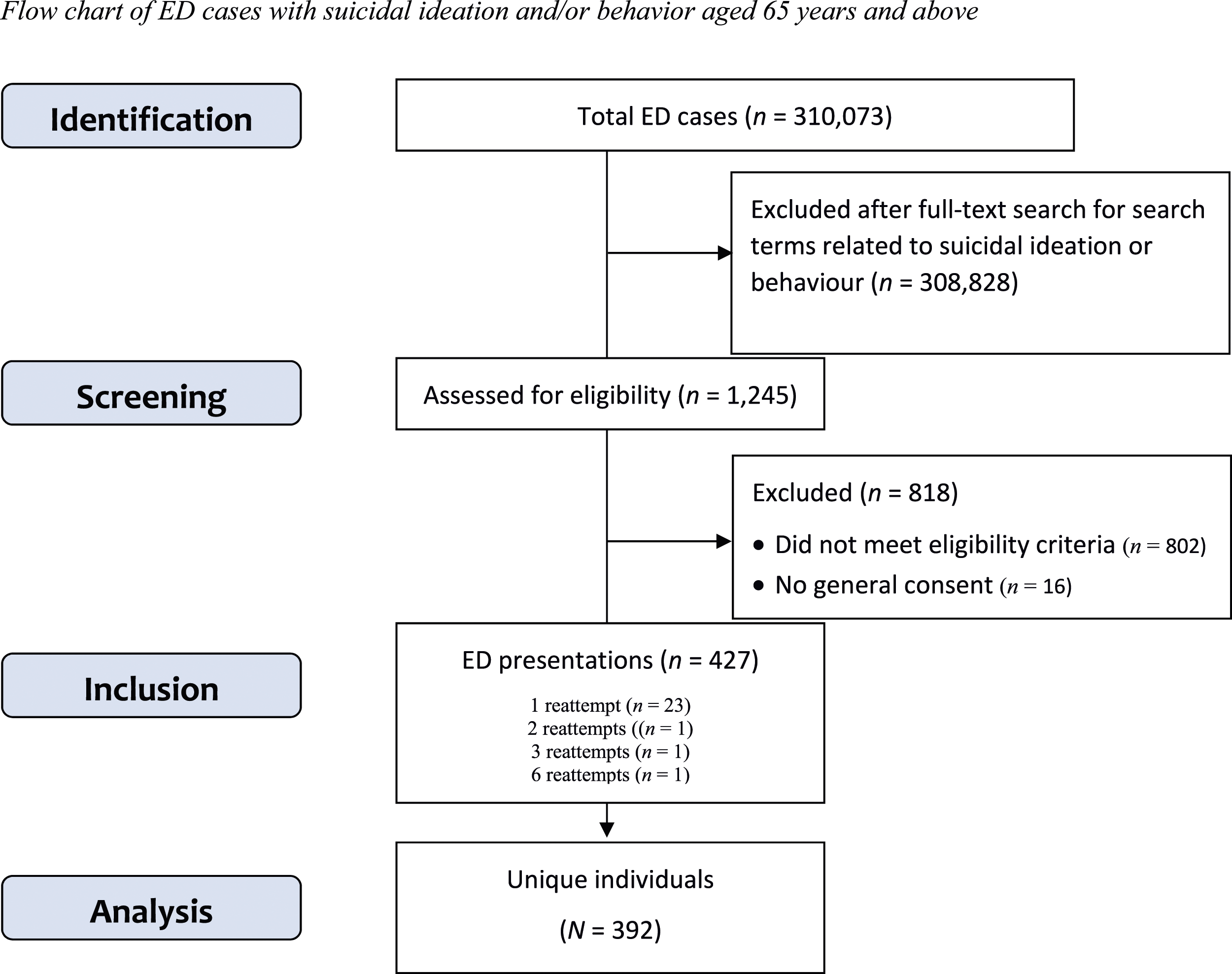
Suicidal ideation was recorded as the reason for ED presentation in 50.3% of the total study cohort and a suicide attempt was noted in 47.4% of the cases. Moreover, 18.4% of the investigated ED patients described suicidal intentions; suicide warnings and threats were recorded in 6.1%.
Among patients visiting an ED in connection with a suicide attempt, intentional overdose/poisoning was employed by 47.8%, making it the most commonly documented method. Only a small percentage (1.4%) of the data indicated that multiple methods were used. Slightly over one quarter (27.4%) of patients employed cutting, while jumping from a height was employed by 12.4%. Multiple suicide methods were used by 5.9%. Any psychiatric disorder was recorded in 74% of all of the ED patients with suicidal ideation and/or behavior. These included depressive disorders (50%), sleep disorders (20%), bipolar disorders (3%), psychotic disorders (10%), personality disorders (2%) or other disorders (adjustment, anxiety disorder; 23%). At least one general medical disorder was recorded in 74.5% of the ED cases. Cardiovascular diseases (48.7%) were highly prevalent and chronic multimorbidity was documented in 71.2%. Furthermore, a clinical diagnosis of dementia was noted in 11% of the study cohort.
At the time of admission, 42% of the older ED patients with suicidal ideation and/or behavior were prescribed antidepressants; one fifth were on antipsychotics, and 30% were on benzodiazepines (29%). Just over a third (36%) were intoxicated upon presentation to the ED. Most intentional overdose/poisoning involved alcohol use (18.6%), followed by benzodiazepines (10.7%), Z-drugs (6.9%), and antidepressants (3.3%). The majority of patients (89%) exhibited GCS scores 13–15, corresponding to mild traumatic brain injury, whereas 4.6% had moderate (GCS score 9–12), and 6.4% severe traumatic brain injury (GCS score< 9).
Forty percent of the study cohort lived alone and 36% lived with a partner (36%). Only a 10th resided in a nursing home, and 2% lived with family. Regarding current/past life events, 40% of the older adults with suicidal ideation and/or behavior were suffering from an acute situation of social stress. Furthermore 15% indicated current or feared limitation of autonomy and 11% social isolation. Only 6% reported early traumatic experiences and 3% long-term care needs of partner. Just over half (54%) were discharged to a psychiatric hospital and 29% received further somatic treatment.
Age Groups
Age Group Comparisons Between Emergency Department Patients With Suicidal Ideation/Behavior Aged 65–74 years and ≥75 years.
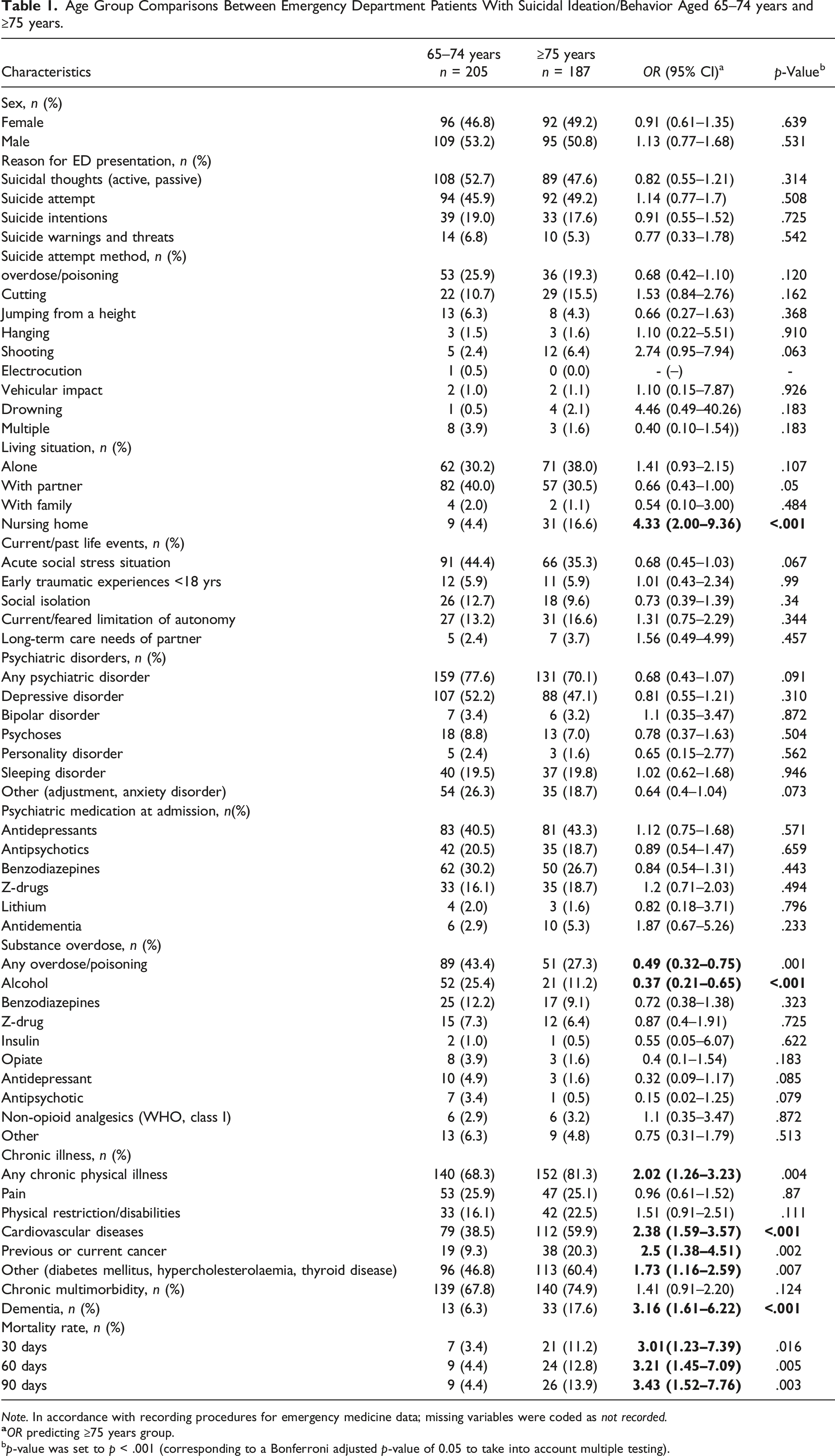
Note. In accordance with recording procedures for emergency medicine data; missing variables were coded as not recorded.
bp-value was set to p < .001 (corresponding to a Bonferroni adjusted p-value of 0.05 to take into account multiple testing).
Gender Differences
Gender Differences of Emergency Department Patients Aged 65+ With Suicide Ideation And/or Behavior.
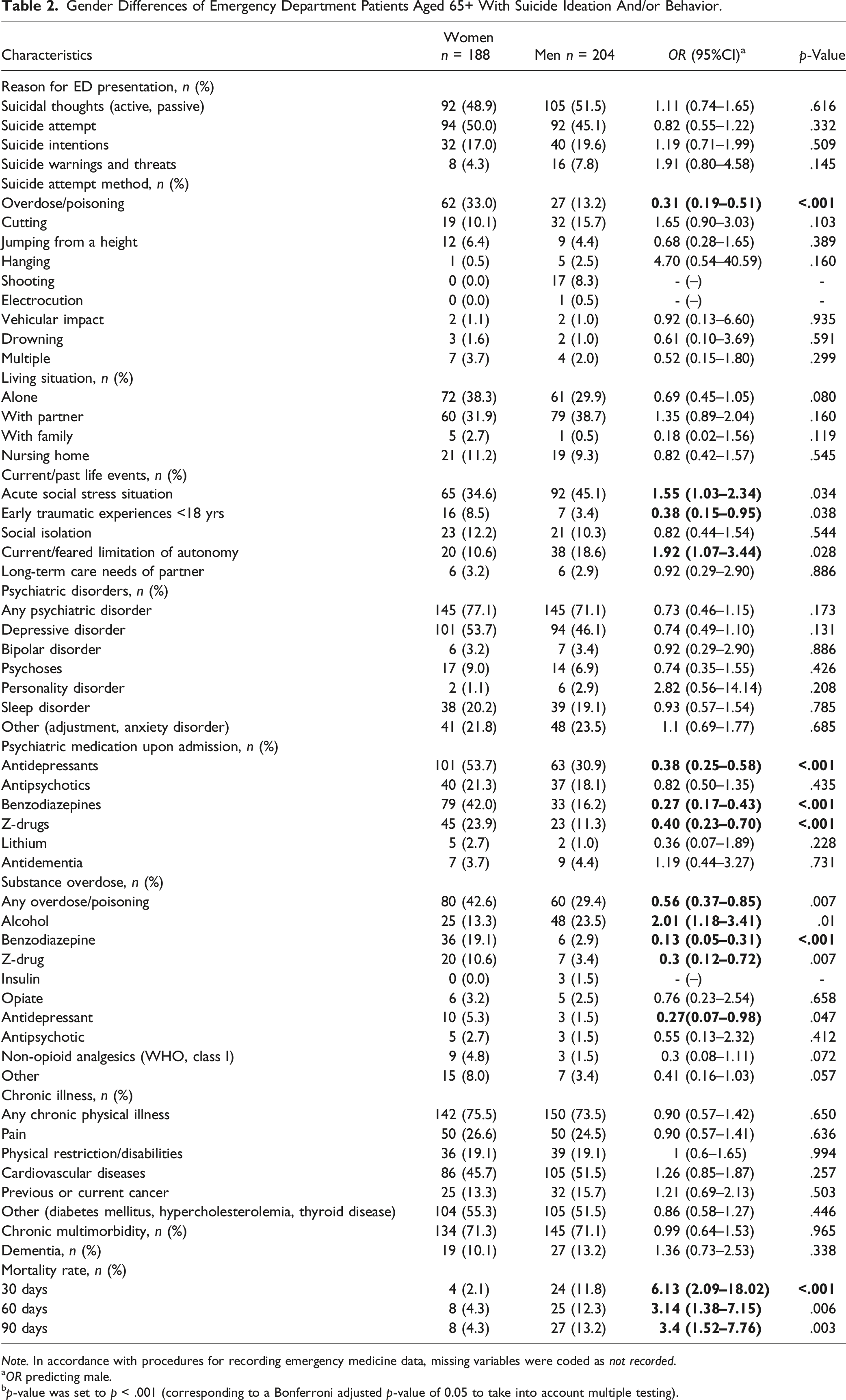
Note. In accordance with procedures for recording emergency medicine data, missing variables were coded as not recorded.
aOR predicting male.
bp-value was set to p < .001 (corresponding to a Bonferroni adjusted p-value of 0.05 to take into account multiple testing).
Men and women did not differ regarding current/past life events. Men were more likely to show substance use with alcohol than women. The risk of death within 30 days was more than six-fold greater for men compared to women (see Table 2).
Discussion
The findings derived from our research into older adults who have presented with suicidal ideation and/or behavior at the emergency department reveal some significant patterns. Some of these correspond to the expected characteristics of older patients with suicidal ideation and/or behavior. Notably, about half of these individuals had documented depressive disorders, with a substantial gender difference in the use of antidepressants. Over half of the women were prescribed antidepressants, in contrast to less than a third of the men. Furthermore, the majority of patients were found to have general medical disorders, chronic multimorbidity, and a quarter of them reported pain, emphasizing the complex health challenges this population faces. Social stressors were prevalent among 40.1% of cases, and 35.7% were intoxicated at the time of presentation. Subgroup analysis revealed higher rates of alcohol use in the 65–74 age group. Importantly, there were no gender differences in the prevalence of suicidal ideation and behavior, but men exhibited a striking six-fold increase in mortality within 30 days following admission. Additionally, one-fifth of individuals aged ≥75 who presented with suicidal ideation and/or behavior were found to have dementia, highlighting the importance of neurodegenerative disorders in this age group.
Older adults in the ED with suicidal ideation and/or behavior were commonly diagnosed with psychiatric disorders, especially depressive disorders, aligning with previous research (Almeida et al., 2012; Beghi et al., 2021; Carlsten et al., 1999; Waern et al., 2003). Sleep disorders were also notable, with a higher prevalence compared to earlier studies (Schmutte et al., 2020). Unlike younger populations, older adults’ suicide attempts are closely linked to depression (Conwell & Brent, 1995; Conwell et al., 2002; Rostami et al., 2018; Wiktorsson et al., 2010). They often exhibit subthreshold depression, depression related to physical discomfort, and undiagnosed psychiatric conditions (Minder et al., 2018; Waern et al., 2003; Ólafsdóttir et al., 2001). Some individuals in our study might have had subthreshold depression severity, not identified due to our study’s limitations. Clinicians should consider these nuances in depression presentation among the elderly during ED assessments.
Most older adults with suicidal ideation/and or behavior at the ED received psychotropic medications including antidepressants, antipsychotics, or benzodiazepines. Upon ED arrival, these patients were often found to be intoxicated, mainly from alcohol, followed by benzodiazepines, Z-drugs, and antidepressants. Notably, older adults struggling with addiction face a significantly higher suicide risk, up to 40 times higher (Schneider, 2009; Waern et al., 2003). Many older adults admitted to the ED after suicide attempts do overdose on their own medications, underscoring the importance of considering medication choices for older adults with suicidal tendencies (Keskin Gokcelli et al., 2017).
Multimorbidity was highly prevalent with three quarters of the older adults presenting at the ED with suicidal ideation and/or behavior along with a general medical condition. Chronic multimorbidity was also highly prevalent. Somatic diseases, which tend to increase with age and are often followed by a decline in autonomy and quality of life, are closely linked to suicidal ideation and behavior (Greune, 2007). In fact, serious somatic illness can triple the risk of suicide in individuals aged 75 and older (Waern et al., 2003). In our study, approximately 25% of individuals with suicidal ideation and/or behavior reported experiencing physical pain, which is consistent with the findings of Schmutte et al. (2020), who also observed similar proportions of pain in this context.
A significant portion of patients who presented with suicidal ideation and/or behavior were concurrently dealing with acute social stress, the actual or anticipated restriction of their autonomy, or social isolation. Notably, social isolation emerged as a prominent factor associated with suicidal ideation and behavior among older adults, as highlighted by Heuser and Howe (2018). In the later stages of life, there is a measurable reduction in the size of an individual’s social network (Lindner et al., 2014; Tesch-Römer, 2010). This loss of social interaction may explain the increased prevalence of suicide among older adults who are widowed, single, or divorced, a phenomenon well-documented by Canetto (1992) and Steck et al. (2016). Therefore, when systematically assessing suicide risk in older adults, it becomes imperative to deliberately explore their current social circumstances, levels of isolation, and the presence of loneliness.
Approximately half of the ED patients displaying suicidal ideation and/or behavior were subsequently admitted to a psychiatric hospital. This rate is somewhat lower than the findings in a large US study (Schmutte et al., 2020). Our figure indicates that nearly half of the patients who presented at the ED with suicidal ideation and/or behavior did not receive referrals for inpatient psychiatric care. This observation may in part reflect concerns about being involuntarily admitted to a psychiatric hospital due to their suicidal ideation and/or behavior. These fears could potentially influence a patient’s willingness to disclose the severity of their suicidal ideation, possibly leading clinicians to underestimate the necessity for psychiatric follow-up care. Given these considerations, healthcare providers must pay special attention to whether older adults who are not referred to psychiatric inpatient care after their ED visit can access adequate support for their mental health needs. Other explanations for lack of referral to inpatient psychiatric care might be that psychiatric outpatient care had been established, or that suicidal ideation had resolved. Fluctuations in suicidal feelings have been shown to be more common among older women than among older men (Fässberg et al., 2020).
Age Differences in ED Patients with Suicidal Ideation And/or Behavior
No notable differences emerged between younger old adults (aged 65–74) and older old adults (age group ≥75) in their rates of ED visits related to suicidal ideation and/or behavior. Likewise, age did not appear to influence the choice of suicide attempt methods. This lack of age-related disparities, given that suicidal ideation typically increases with age in the older adult population (Fässberg et al., 2020), is somewhat surprising but may be specific to the ED setting. In addition, 11 of 392 patients used multiple methods. This overall small number is in contrast to other findings (Muheim et al., 2013) in which approximately 30% reported using more than one suicide method. This may reflect an ascertainment problem in the ED setting, but it could in part be related to the age group studied. The study of Muheim et al. (2013) covered all age groups.
However, both age groups share a common concern regarding potential loss of autonomy if their circumstances change. This finding is especially noteworthy, particularly since older patients (aged ≥75 years) presenting at the ED were more likely to reside in nursing homes compared to those aged 65–74 years. The fear of losing autonomy appears to be a significant concern for older individuals, extending beyond their living situations. In some instances, this fear may be linked to worries about involuntary psychiatric hospitalization due to their suicidal ideation and/or behavior, potentially impacting referrals for psychiatric care.
Within the cohort of patients with suicidal ideation and/or behavior, 11% also had dementia. As expected, dementia was more prevalent in the ≥75 age group. Notably, one-fifth of these older old ED patients with suicide-related presentations suffered from dementia. The literature still lacks a comprehensive understanding of dementia’s relevance as a suicide risk factor (Cipriani et al., 2013; Hedna et al., 2023). This age discrepancy may stem from the unique nature of the emergency setting, where older adults with dementia, especially those in nursing homes, might receive heightened attention for suicidal ideation and behavior, potentially leading to more frequent referrals to emergency units. Given that the date of the initial diagnosis of dementia is typically missing from medical records, and that only results of follow-up tests are documented, there is no basis for assuming a direct correlation between the initial diagnosis of dementia and the suicidal crisis. There is evidence of an increased risk of passive suicidal ideation already in people with mild cognitive impairment (Rymo et al., 2023).
Gender Differences in ED Patients with Suicidal Ideation And/or Behavior
The prevalence of patients with suicidal ideation and/or behavior was comparable between men and women presenting at the ED. This finding was somewhat unexpected, given the higher occurrence of suicidal ideation among women in the general older adult population (Fässberg et al., 2020). Moreover, numerous studies have consistently reported higher rates of suicidal ideation among women compared to men (Koo et al., 2014; Lu et al., 2020; Shiraly et al., 2022; Vasiliadis et al., 2012). It’s noteworthy that women were more inclined to choose intentional overdose/poisoning as the method for their suicide attempts, aligning with previous research findings from the general population (Bostwick et al., 2016).
Highlighting the relatively low rate of antidepressant prescriptions in men, at just 30%, is crucial. This discrepancy may be explained by men’s tendency to delay seeking help for mental health issues, as indicated by previous research (Affleck et al., 2018; Pattyn et al., 2015). Our study aligns with this trend, revealing similar rates of mental disorders in both genders but a noticeable difference in the use of psychiatric medication upon admission, with a higher prevalence among women. The reduced prescription rate of psychotropic medications may suggest lower utilization of psychiatric treatments (e.g., by general practitioners or psychiatrists) among men. Our data revealed a significantly higher mortality rate in men compared to women during the first 30 days post-hospital admission, with a six-fold greater risk. This highlights the elevated risk faced by older men after admission, necessitating enhanced vigilance during this vulnerable period. Incorporating this knowledge into emergency management protocols holds promise for improving the identification of unmet needs of older adults in the ED at high risk for suicidal behavior. Subsequently, these patients can be directed toward appropriate follow-up mental health interventions after their ED visits for suicidal ideation and/or behavior.
Strengths and Limitations
The primary strength of our study was investigating a well-characterized sample from the Swiss older adult population, specifically those presenting with suicidal ideation and/or behavior in emergency settings. This enabled us to compare characteristics between younger and older adults in this context and explore potential gender differences. However, our study does have several inherent limitations.
Firstly, it’s important to note that general consent for the anonymous processing of medical data was obtained from only about one-third of the cases selected from the emergency cohort. This raises concerns about potential selection bias, as individuals with stigmatized conditions such as substance abuse, mental health issues, or suicidal thoughts may be more inclined to withhold their consent. This leads to questions about whether this reluctance to provide consent is more common among older adults, possibly due to greater concerns about stigmatization and data misuse. Unfortunately, the limited available literature on this topic did not provide sufficient context to interpret the high rate of denial of general consent in a broader sense. This is consistent with the relatively small number of patients included, which raises additional concerns about the possibility of missing cases of suicidal ideation and/or behavior in the overall sample. The problem of underreporting of suicidal crises or behaviors in emergency departments is well known, with false-negative cases potentially biasing the data by masking suicidal ideation or behavior as accidents. Factors contributing to this phenomenon include fear of social stigma, perceived ineffectiveness of treatment, and fear of involuntary hospitalization. This trend appears to exist across all age groups, suggesting that there is a subgroup of people who do not seek or receive help. Secondly, because our data was collected in an ED setting and retrospectively coded based on medical records, it was only possible to determine whether certain information was reported or not. Thus, the absence of reported information does not necessarily indicate the absence of the underlying condition. This potential reporting bias means that certain sociodemographic and clinical characteristics may not have been accurately documented.
Thirdly, we were unable to compare the patients exhibiting suicidal ideation and/or behavior with a control group. This limitation stems from the standard practice in emergency departments, which focuses on collecting data relevant to the immediate visit. As a result, patients with suicidal ideation and/or behavior are more likely to be asked for a detailed medical and psychiatric history, including information about trauma and other life events, compared to patients with somatic presentations. Consequently, a case-control comparison was not feasible since controls were not asked for most of the relevant sociodemographic and clinical variables.
To address these limitations, future research efforts should consider establishing a standardized set of required information for all ED patients, regardless of their presenting condition. This would also enhance the study’s power for conducting distinct analyses on suicidal ideation and suicide attempts, potentially necessitating a larger participant cohort.
Footnotes
Declaration of Conflicting Interests
The authors declared no potential conflicts of interest with respect to the research, authorship, and/or publication of this article.
Funding
The authors received no financial support for the research, authorship, and/or publication of this article.
