







Abstract
High annual turnover among volunteers heightens policy and practitioner concern about effective retention strategies. Volunteer commitment is a complex interaction between the antecedents to volunteering, including a volunteer’s personal characteristics and motivations, and situational factors of the volunteer experience such as organizational practices that encourage sustained volunteerism. Using the Penner (2002) volunteer process model to illustrate this interactive approach, I estimate future volunteering intentions among a distinct group: Members of occupational associations. Data come from a large international pool of professional and occupational society members, and analyzed using GZLM and multinomial logistic regression. The findings suggest that the strongest influences on sustained commitment come from situational factors related to the volunteer experience rather than prior social conditioning. The findings support theory building on volunteer motivations generally and are also useful in building an understanding of voluntary membership behavior in professional associations, where research is still in the early stages.
Keywords
Introduction
Policymakers and practitioners have devoted a great amount of attention to the future supply of volunteers. But it is difficult to predict future volunteering without an understanding of the relationship between present behavior and future intentions. For example, although some research suggests that a person’s preexisting motivation to volunteer may be the best predictor of future volunteering, others observe that volunteering occurs not only because individuals are motivated but also because they are given appropriate opportunities and organizational support (Brudney, 1990; Wilson, 2000). Individuals are both encouraged and acculturated, pushed and pulled, in and out of volunteer activities.
A related policy concern is the high rate at which volunteers leave their positions. One rough estimate places the annual rate of volunteer turnover at about 10 times that of paid nonprofit staff (CNCS, 2007). Some of this turnover occurs naturally as volunteers complete their assignments, but volunteers also leave positions because of poor fit, unrealized expectations, and competing demands on personal time. Voluntary organizations that cannot minimize attrition face a highly inefficient level of “volunteer churn” (my term) where positions must be refilled again and again. Minimizing this potential drain on organizational resources makes volunteer retention a managerial and political imperative, a key element in the concept known as volunteer management capacity (Hager & Brudney, 2004).
Understanding Volunteer Behavior as a Multidimensional Construct
Volunteer behavior is no different than other types of human behavior in its dependence on a complex set of cognitive processes and personal experiences that shape the decision to volunteer. The many theories in current use (e.g., planned behavior, social identity, the psychological contract, job-person fit, and social capital) share a common dependence on broader psychological and sociological theories of human behavior (see for example Taylor et al., 2006; Van Vianen, Nijstad, and Voskuijl, 2008). Management and policy research adds information about the organizational and political environments that support volunteer activity (Farmer & Fedor, 1999; Finkelstein, Penner & Brannick, 2005; Knoke & Wright-Isak, 1982; Musick & Wilson, 2008; Prouteau & Wolff, 2008; Rousseau, 1995). Thus, volunteer behavior is best understood as a multidimensional construct that encompasses all of the personal traits, social and family conditions, organizational practices and policy messages that motivate individuals to donate their labor (Hustinx, Handy, & Cnaan, 2010).
More specifically, Davis, Hall, & Meyer (2003), Penner (2002), Roberts, Hann, and Slaughter (2006), and Tidwell (2005) offer variants of a volunteer process model built on older human behavior models that posits volunteering as a complex function of antecedents to volunteer activity, motivations to volunteer, and the experience itself. These influences include personal characteristics of the volunteer, prior socialization, and situational and experiential factors that encourage or discourage volunteerism. As Penner (2002) illustrates in Figure 1, these functions produce, in turn, outcomes such as sustained volunteer commitment.
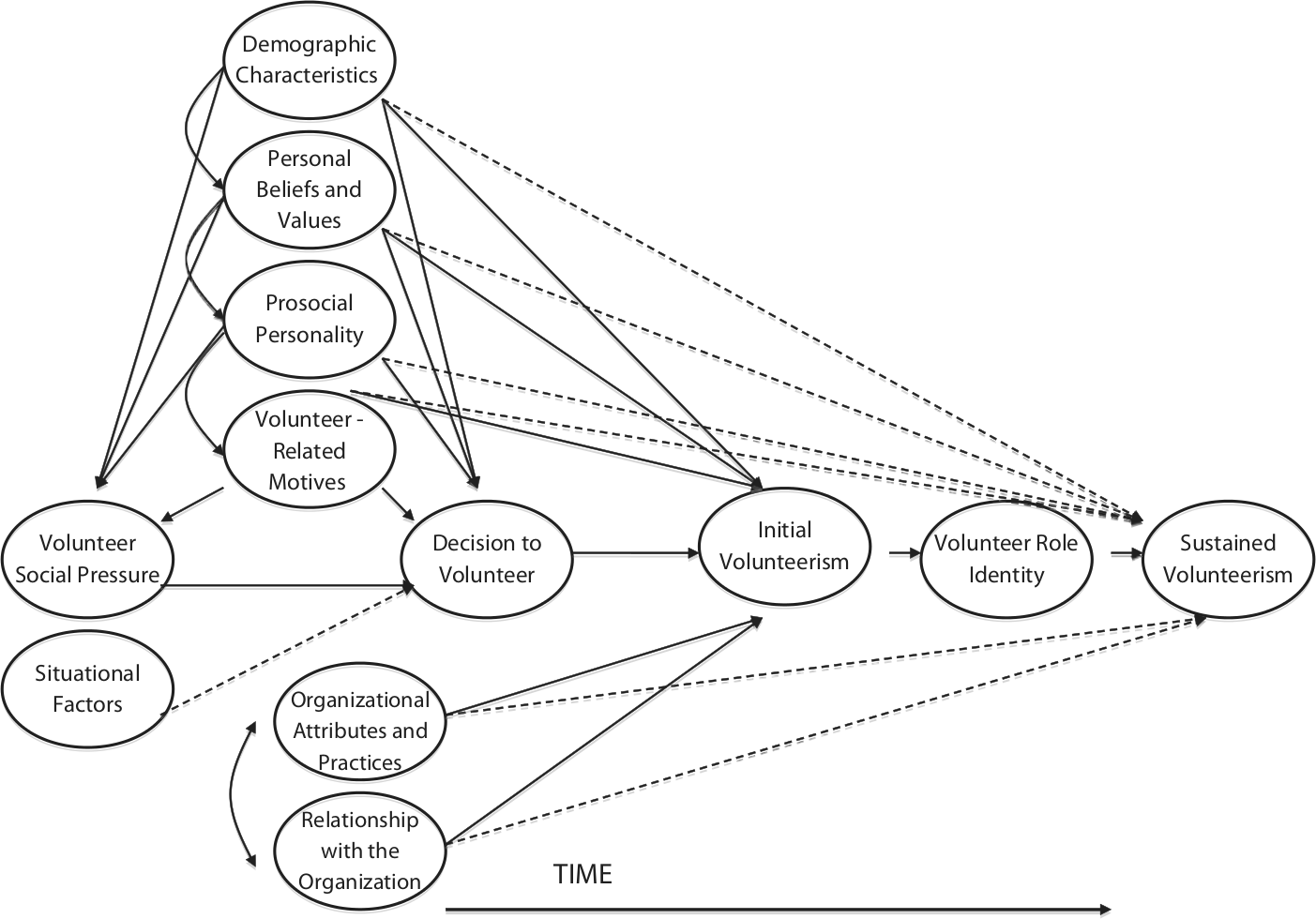
Human behavior model of volunteering. (Source: Louis Penner, Journal of Social Issues 58:3, 2002).
This article tests the Penner model in a particular context, that of professional and occupational associations. The remainder of this literature review discusses the value of focused research on this nonprofit subfield and hypothesizes the effect that each part of a human behavior model might have on sustained volunteering by the individuals who donate labor to associations.
Research Gaps on Volunteering in Professional Associations
Professional/occupational associations and societies educate, train, and credential people in occupational fields such as engineering, medicine, accounting and education, provide commercial services to their members and advocate for mutual interests in the public policy arena. They represent a subfield of the broader sector of membership, trade and mutual benefit organizations recognized under both charitable and noncharitable categories of the federal tax code, and they represent virtually every occupation and industry, from professional pet sitters to plastic surgeons. Many of these associations have an international membership: An occupational society for petroleum engineers may be based in the United States but the members could represent many nationalities or locations.
Members (or their employers) pay dues for association services. The transactional nature of their benefits means one cannot assume members will be asked, or willing, to donate their time as freely as do volunteers in the charitable sector. However, some volunteer service is expected in all associations. Members perform formal and informal functions such as board and committee service (both for the parent organization and local chapters), organizing professional meetings, testifying before legislators, raising money for their association, serving on technical committees, recruiting and training other members, and preparing standards and practices for their industry (Gazley & Dignam, 2008). Although many of these associations rely principally on paid professional staff to provide member services, their volunteers provide the association with considerable benefits. They serve on boards, recruit new members, represent diverse constituencies, mentor new professionals, and offer expertise and resources that ensure the credibility of certification programs.
Despite the strategic importance of volunteers across the entire nonprofit sector, little attention has yet been paid to voluntary activity in mutual benefit organizations such as professional associations (Brudney & Gazley, 2006; Tschirhart, 2006; Webb & Abzug, 2008). Theories that describe what motivates individuals to donate unpaid labor have not been tested in the context of mutual benefit organizations, where the incentives to volunteer may be considerably different (Knoke & Wright-Isak, 1982). Many of the well-established assumptions about voluntary behavior are derived from research on charitable volunteering and may have less salience in these noncharitable settings. Take, for example, the psychometric studies of volunteer motivation developed by Clary et al. (1998) and tested by Briggs, Peterson, & Gregory (2010), among others. In these studies, career-related reasons for volunteering are sometimes played off against more instrinsic or altruistic motivations, and viewed as weak or inconsistent predictors of volunteering, or even impediments to volunteering. Had these studies been placed in the context of professionally oriented volunteering (rather than general population surveys measuring all forms of community volunteering), when volunteers are working on behalf of their own profession, the assumptions about the superiority of intrinsic over extrinsic motivations would have been challenged.
From a comparative point of view, there are also potentially important differences between community-based volunteering, and volunteering for professional associations. Predictors of volunteerism based on social capital theories (such as the argument that an individual volunteers more when other family members volunteer) may be a weaker indicator of volunteer activity in a professional setting where family volunteering is rare. The reciprocal effects of volunteering may be stronger in the mutual-benefit setting of associations, where all members share the benefits of volunteer contributions (Prouteau & Wolff, 2008). Differences in organizational culture should be accounted for in professional associations: Some studies predict less member volunteering within associations that are heavily reliant on paid professional staff (Mook, Handy, Ginieniewicz, & Quarter, 2007; Skocpol, 1999).The mix of activities that volunteers perform, the benefits they produce for organizations, and the way volunteers are managed may also differ between professional and nonprofessional contexts. Yet, in other instances, the empirical research on charitable voluntary activity may be equally applicable to the professional context. For example, research on associational activity finds the same relationship between high socioeconomic status and joining/commitment behavior that scholars find in other contexts (Knoke, 1986).
Testing the Human Behavior Model on Professional Association Volunteering
Penner (2002) explains sustained volunteering as a function of three groups of causal relationships: (a) Antecedents to the volunteer activity, both demographic and situational; (b) a second group of antecedents reflecting an individual’s motivations to volunteer, including the expected benefits and the strength of a person’s prosocial personality; and (c) the volunteer’s evaluation of the volunteer experience itself, determined in part by organizational practices. How volunteering for a professional association might shape these behaviors is discussed below.
Level 1: Antecedents of association volunteering
As Penner observes, volunteering is a partial function of demographic characteristics such as sex, socioeconomic status, family status, and education, both within and without the charitable sector. This fact is supported by U.S. BLS data (2009). These factors are not necessarily antecedents to volunteering in the chronological sense, but they provide the human and social capital that acculturates people into helping behaviors (Wilson & Musick, 1997). For example, individuals who grew up in households in which their parents volunteered are more likely to volunteer themselves (Prouteau & Wolff, 2008). And Sundeen, Garcia, and Raskoff (2009) speculate that variations in the levels of human and social capital available to native-born versus immigrant ethnic groups will also influence volunteerism.
None of these demographic variables have been tested in scholarship on professional associations. But even in a professional context, marital, educational, racial, and socioeconomic status can be linked to financial stability and more extensive social networks, which in turn might facilitate volunteering. Geographic location of the professional might also matter because social and professional expectations vary around the globe, along with the political frameworks that foster or protect civic activity (Hwang, Grabb & Curtis, 2005). Although minority groups appear in many studies to volunteer less than the majority race or culture, these differences are often erased when volunteer activity that does not occur on behalf of formal organizations is included, and when controls for socioeconomic status, opportunity and social resources are added (Kutner & Love, 2003; Mesch, Rooney, Steinberg, & Denton, 2006; O’Neill, 2001; Wilson, 2000). In the context of professional association volunteering, racial and ethnic minorities might actually volunteer more actively if they were recruited by others to meet representational objectives or if they view volunteering as a way of strengthening their social networks.
Level 2: Sustained volunteering as a function of volunteer motivations
A human behavior model of volunteering emphasizes the role of personal beliefs and values, such as a prosocial personality, in the decision to volunteer. Volunteering through an occupation offers both social and professional, instrumental and charitable benefits. Some association members participate in sponsored charitable programs to offer their skills free of charge (such as the medical care offered through the American Society of Plastic Surgeons) but they might also participate to promote policies they favor, to have a voice in setting standards for their industry, to broaden their professional network and gain visibility. Volunteering has long been understood as a means by which individuals can increase their labor market value by learning skills or making professional connections (Menchik & Weisbrod, 1987; Mesch et al., 2006). Some volunteers will commit to future volunteering to maintain these benefits. Some association members might also be socialized more readily into volunteering than others because of the sector in which they are employed (Houston, 2006).
Level 3: The volunteer experience and sustained volunteering
Once an individual is volunteering, several situational factors play a role in the intention to continue. First and most obviously, satisfaction with the volunteer experience itself is an important predictor of sustained volunteering (Dávila de León & Chacón Fuertes, 2007; Finkelstein, 2008). Satisfaction derives in part from what Penner (2002, 461) refers to as “organizational attributes and practices,” including the effectiveness of the volunteer management program. However, organizational psychologists also suggest that theories of organizational commitment, most commonly used to understand employee behavior, can be applied to the voluntary context as well. An association member’s satisfaction with policies and benefits, and her belief in the goals and values of the professional society to which she belongs could influence commitment to volunteering (Mowday, Steers, & Porter, 1979).
In addition, individuals who do volunteer still make choices about where they will devote their time. In the United States, most individuals volunteer for one organization at a time (U.S. BLS, 2009). American data also suggest that most volunteering is an extension of religious practice, family obligations, and other activities linked to one’s social network. Such patterns raise the question of whether community-oriented and professionally oriented volunteering support or compete with one another. Research rarely compares the alternative outlets for volunteer service that an individual may choose or the extent to which one type of volunteering limits or fosters opportunities to engage in other types. For example, although Wilson and Musick (1997) find that formal volunteering increases with children in the household (representing a form of social capital) and socioeconomic status (a form of human capital), they do not isolate types of formal volunteering from one another to determine if family and community obligations cause either tradeoffs or synergistic effects for professionally oriented volunteering.
Two contrasting outcomes might occur. Those who volunteer in their communities (especially those who are raising children) might have less time and interest in volunteering for their professions. In this case, a substitution or crowding out effect would occur between community-oriented and professionally oriented volunteering. Alternatively, some individuals might be willing to volunteer in either context, if they are more socialized into volunteering, see no difference between the two activities, or have the time and resources to do both.
Outcomes: Testing these factors on sustained volunteering
From a theoretical point of view, human behavior models such as Penner’s are superior to research models that treat initial volunteerism as a dependent variable by itself. Rather, the outcome of interest becomes sustained volunteerism, to which practitioners, if nobody else, will assign the greatest value. As noted, the Penner model also allows a combination of situational and behavioral factors to be tested against one another. Many studies have integrated portions of Penner’s model, such as by testing the interaction of demographic and psychological factors (Bekkers, 2005). But only a few combine these with situational factors related to organizational management practices, or carry the hypothesis through to the point of testing these effects on sustained voluntarism (Dávila de León & Chacón Fuertes, 2007). Their results suggest a strong contribution can be expected from the situational nature of the volunteer experience itself.
Data and Method
A principal limitation to attempting a more comprehensive test of the Penner model has been lack of comprehensive, time-sensitive data on volunteering activity that includes sufficient detail on situational and behavioral factors related to the volunteer experience itself. I have partially achieved this task using a dataset created in collaboration with the research division of the American Society of Association Executives (ASAE). Data come from an international survey of association members fielded in November 2007. 1
The 23 participating associations each drew a random sample of current members; most oversampled their known volunteers to ensure sufficient participation in the survey (the analysis uses weighting factors to account for sampling differences). Recommended surveying practices were employed, including pretesting to clarify wording, stratified random sampling to maximize generalizability, and multiple waves and rotated question ordering to improve response rates and minimize response and nonresponse bias. Many of the key survey questions had been tested and refined in prior academic studies, and the wording was changed only when necessary to reflect the context of professional associations. 2 This study was designed to understand member volunteering for their professional association in the context of other volunteering activity. Members were first asked about general volunteering behavior in community organizations such as churches, arts, social service, education, and other organizations, then about volunteer labor they performed for the professional association sponsoring the survey.
The Internet survey was deployed to 185,975 individuals and received 26,305 responses, for an overall response rate of 14%, ranging from a low of 9% to a high of 21% for different participating associations. 3 Given the large size of the sampling frames for each organization, the low response rates still return sufficiently high levels of probability that the respondents match the characteristics of the population—in this case, the overall margin of error is less than 1% at a 99% confidence level. Further possible sources of selection bias are discussed in the endnotes. 4
Dependent Variable
As the emphasis in this article is on sustained voluntarism and volunteer retention, I use as the dependent variable a survey question that asked respondents “How likely is it that you will volunteer for [this association] in the next 12 months?” The observant reader will note that I have employed a cross-sectional study, so this question really is asking a respondent about his or her future intent to volunteer. How future intent might vary from real action is explored later in this article, in the context of theories of planned behavior.
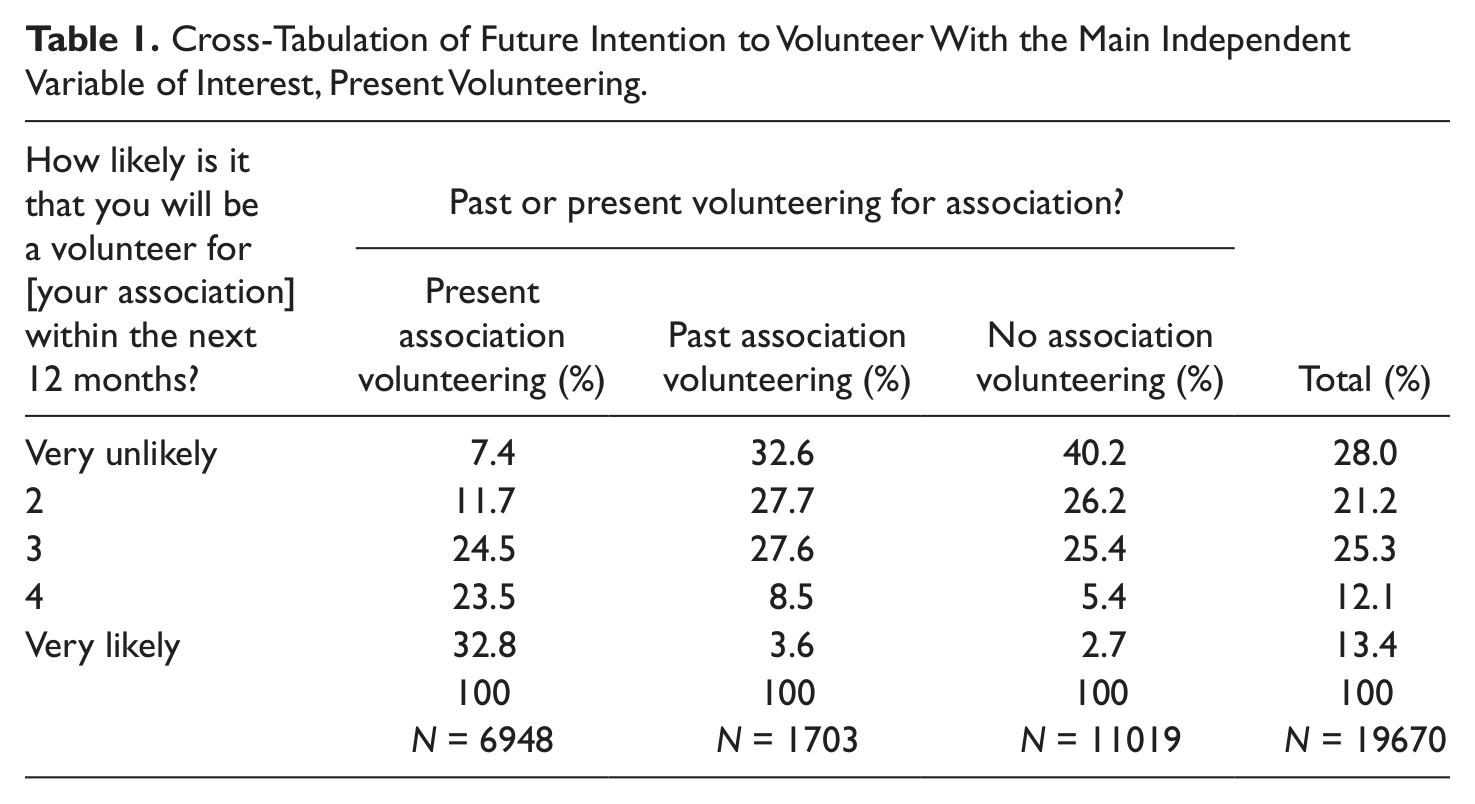
All members were asked this question regardless of present volunteer activity, and given the option of a Likert-type scale response from 1 = very unlikely to 5 = very likely. The frequency of responses to each category is reported in Table 1, compared against the main independent variable of interest, present association volunteering. The responses are distributed toward the negative end of the scale: Half of all respondents (49%) indicate they are Very Unlikely or Unlikely to continue volunteering for their association. My analytic approach is designed to account for this nonnormal distribution of the dependent variable.
Cross-Tabulation of Future Intention to Volunteer With the Main Independent Variable of Interest, Present Volunteering.
Independent Variables
The descriptive statistics for all variables are displayed in Table 2. The main independent variable of interest is whether or not a member presently volunteers for his/her association or has volunteered in the past. A range of sociodemographic variables are also included, mostly expressed as dummy variables. 5 Several variables are described below that were operationalized in a more complex way.
Descriptive Statistics.
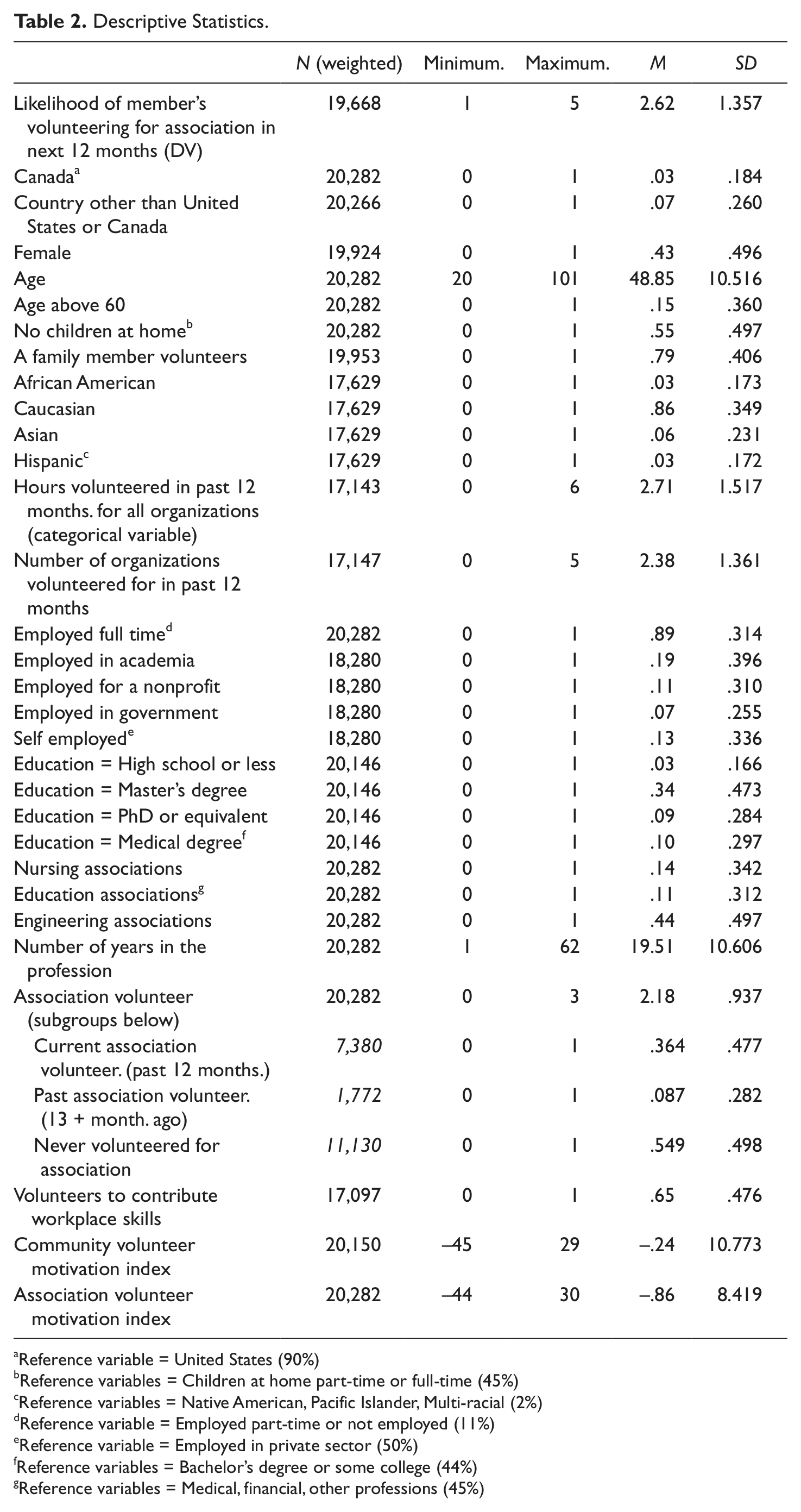
Reference variable = United States (90%)
Reference variables = Children at home part-time or full-time (45%)
Reference variables = Native American, Pacific Islander, Multi-racial (2%)
Reference variable = Employed part-time or not employed (11%)
Reference variable = Employed in private sector (50%)
Reference variables = Bachelor’s degree or some college (44%)
Reference variables = Medical, financial, other professions (45%)
Community volunteering
Respondents were asked to describe the number of organizations they volunteered for anywhere in the past year, and the overall number of hours they contributed. Gazley and Dignam (2008) use the same data to compare these frequencies with the quantity of volunteering reported by the Bureau of Labor Statistics Current Population Surveys. As the comparison suggests that respondents to this survey are more likely to be volunteering, for greater hours and more organizations than the U.S. population at large, the relevant control variables are included.
Volunteer motivation
A rational choice perspective views volunteerism as a way for people to satisfy a range of social and psychological goals. The Volunteer Functions Inventory (VFI) uses a scaled set of questions to elicit from volunteers the relative importance of these goals (Clary, Snyder & Stukas, 1996). The VFI characterizes volunteer motivations as a set of reasons for (or “functions” of) volunteering (for example, to express personal values, to gain career benefits, to learn). The index of questions has been tested in more than a dozen studies to determine the reliability of its scale, the predictive power and relative strength of each functional area (see, for example, Greenslade & White, 2005). 6
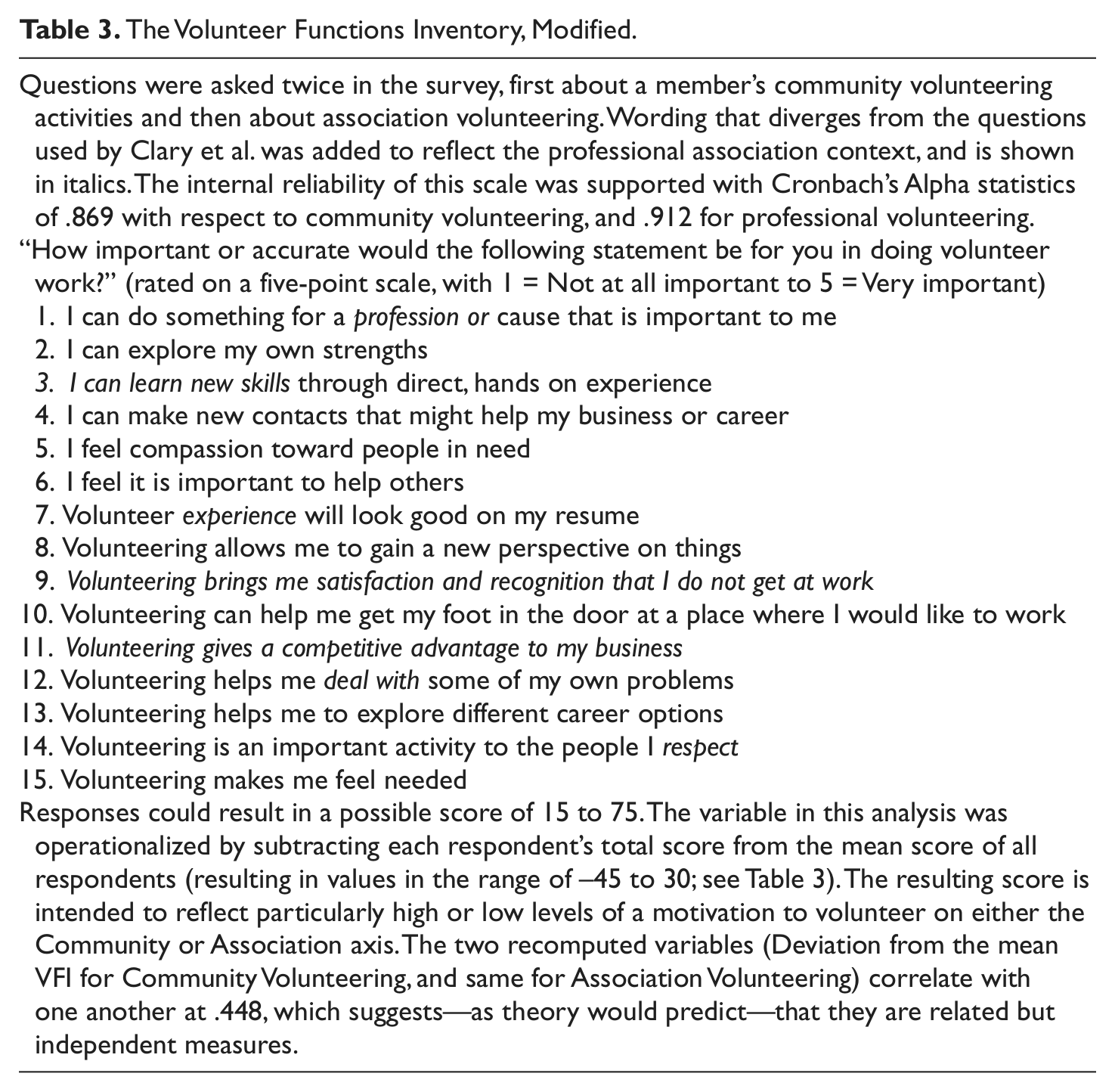
The VFI has not been tested in the context of professionally oriented association volunteering; the one noncharitable test is Granik’s (2005) application to political party membership. And, despite its value to comparative analysis, in no prior study have respondents been asked to answer the VFI questions in the context of different kinds of volunteer behavior. This survey asked respondents to describe, separately, the benefits they expected from their community volunteering and those expected from professional association volunteering (see Table 3). The application of the VFI in this way offers the opportunity for comparative and contextual analysis, but it also presents methodological challenges. An individual who is asked the same question twice may not fully distinguish between the context of each question. Moreover, questions about volunteering often elicit socially desirable answers from any respondent. The VFI is also scaled so that responses of “do not agree” are not necessarily less important than responses of “strongly agree” (as they just indicate that one kind of volunteer benefit is less important than another) so that simply summing the scaled responses is insufficient. To minimize these potential sources of response bias, the answers were recomputed to obtain the variance of an individual’s summed responses from the mean of all responses. The result is a variable that measures the overall strength of a respondent’s perception of volunteer benefits compared with either a community or professional context, and compared with other respondents. The least and most highly motivated volunteers will deviate the most from the mean of all responses.
The Volunteer Functions Inventory, Modified.
Method
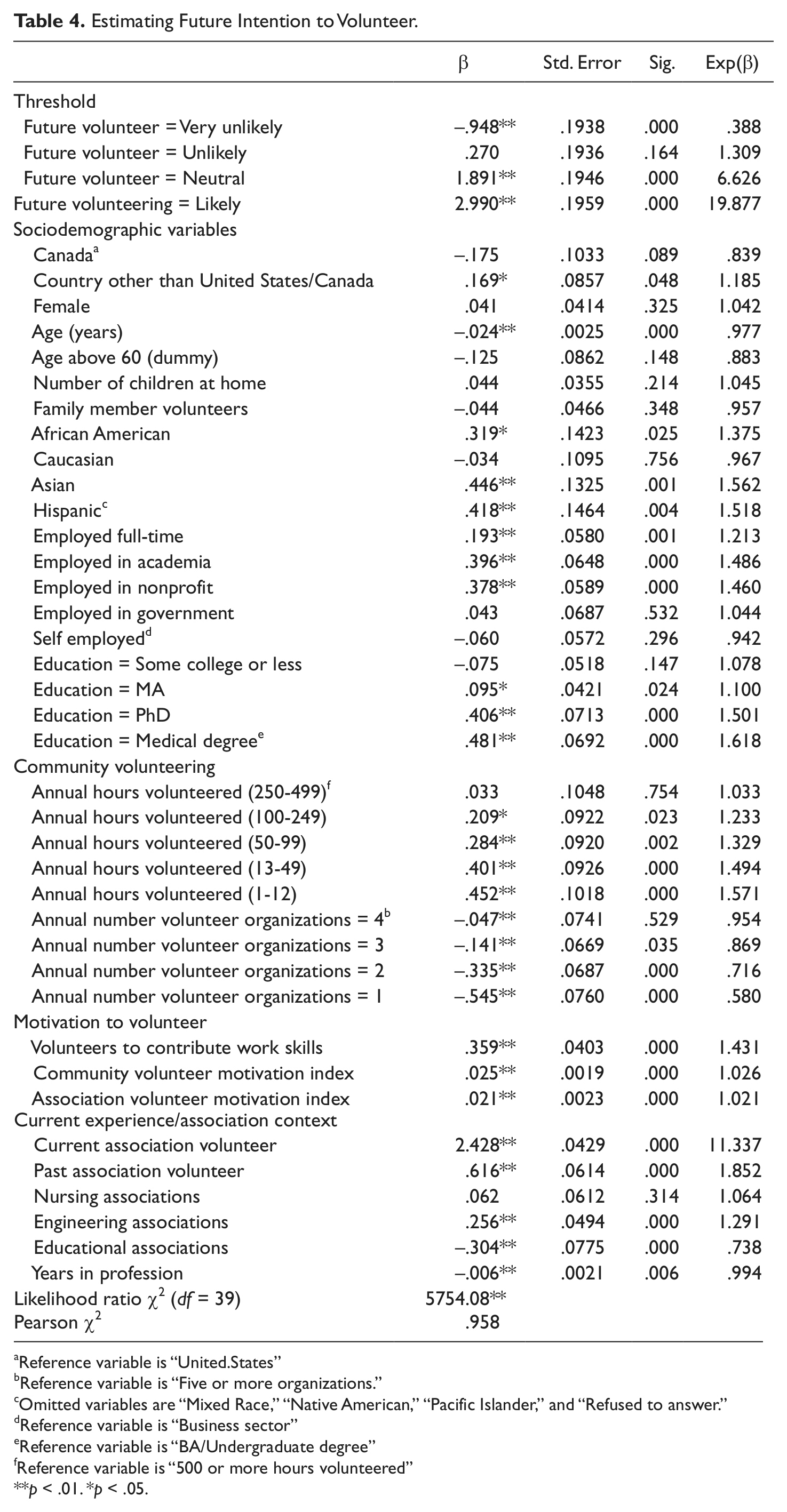
A generalized linear model (GZLM) was used to estimate the association of these variables. Generalized linear regression models closely resemble a linear model but can be used when the dependent variable is not normally distributed. Gill and Meier (2000) have argued for their greater use in social science research given their flexibility and ease of interpretation. The ordinal nature of the dependent variable as a scaled response and its slightly negative and inconsistent distribution of responses (as shown in Table 1) suggested the use of a GZLM using a multinomial (ordinal) logistic regression function. This was confirmed by comparing goodness of fit tests (from a practical perspective, given the number of cases in this dataset, similar results would be generated using ordinary least squares [OLS] and ordered logit). The results are shown in Table 4 as parameter estimates (β) and as odds ratios (eβ). Dependent variable threshold levels should be interpreted as cumulative, meaning a little mental addition is necessary to estimate effects.
Estimating Future Intention to Volunteer.
Reference variable is “United.States”
Reference variable is “Five or more organizations.”
Omitted variables are “Mixed Race,” “Native American,” “Pacific Islander,” and “Refused to answer.”
Reference variable is “Business sector”
Reference variable is “BA/Undergraduate degree”
Reference variable is “500 or more hours volunteered”
p < .01. *p < .05.
From a practical perspective, a great benefit of a large dataset is that it is easier to determine the statistical significance of relationships among variables. However, the relationships with substantive (“practical”) significance are of greater importance for observers, where their magnitude of effect might be large enough to change volunteer behavior or organizational practice. In the discussion of findings that follows, I employ the following rule: An increase or decrease of 1.5 in the magnitude of the odds of occurrence is “substantive” and worthy of practitioner attention. The reader will also note that omitted (or “reference”) variables are necessary to perform this type of analysis; the selection of omitted variables generally depended on which variables were of least interest theoretically.
The findings are reported below, in several “stages” to facilitate discussion of related variables and to reinforce the concept of volunteering as a process with antecedents, prior and present experiences (for more temporal treatments of this approach, see Davis et al., 2003 and Omoto & Snyder, 1995).
Findings
Stage 1: Antecedents of association volunteering as predictors of future volunteering
This analysis finds several demographic variables with substantive significance as predictors of future volunteering. Association members living outside of the United States and Canada, as well as racial/ethnic minorities, are slightly more likely to intend to continue volunteering. These findings are quite important to theory-building as other U.S. and cross-national studies find Americans and Caucasians to volunteer more frequently, not less. In the context of professional activity, those association members outside of North America could rely more heavily on their associations for professional connections and thus derive more value from association volunteering, and they might also have fewer volunteer opportunities competing for their time. Individuals from minority groups and from outside the United States may also be called on more frequently to increase geographic or racial representation within the organization. Because associational status is also associated with education, I tested the interactive effects of race with educational level, but this yielded no additional effect (results not shown).
The coefficients for the age variables weakly reflect the nonlinear nature of age-related volunteering found in other studies. Interest in volunteering declines with increasing age, but not at a substantive level. No additional effect is found for members nearing retirement (age 60+). With respect to career level, half of respondents are at mid-career, one third of respondents are in the senior ranks, and the remainder are split equally between entry-level professionals and Chief Executive Officers. A variable reflecting years in the profession controls for this range in the model. Independent of age, a decline in volunteering interest is also seen for members who have been in their professions longer. This result could be related to member burnout or some other reason, but would have to be investigated separately, in the context of the association volunteering experience itself.
When I test the effect of sectoral and socioeconomic status, I find that members employed in academia or nonprofits (for a similar finding, see Rotolo & Wilson, 2006), and those with higher educational levels are also moderately more likely to intend to volunteer in the future (the reference variable here is commercial sector employment). These results could be explained by a heavier demand on volunteers with certain academic skills (such as research and writing).
Association volunteering in the context of community volunteering
On the question of how a member views professional volunteering in the context of her community activities, this analysis finds an interesting trade-off between the amount of community volunteering and the number of organizations for which a respondent volunteers. Those volunteering for more hours overall express interest in future association volunteering, but at a decreasing level based on the total number of hours contributed in work or community activities. When respondents are compared based on the number of organizations for which they volunteer, those volunteering for just one organization are substantially less likely to express a future commitment to association volunteering. As the number of organizations increases, the resistance to future association volunteering is still present but substantially weaker.
One possible interpretation of these results is that respondents who volunteer for more organizations have managed the time demands more successfully. Other respondents, however, followed a typical pattern for U.S. volunteers in focusing their labor on just one organization at a time, and this analysis suggests a trade-off may occur. I note that these two variables correlate at just 60%. In other words, we may be observing two patterns of volunteering: some volunteers devote all of their time to a limited number of organizations, whereas others spread their time around more equitably. The finding of practical value here is that even members who have multiple community links still represent good volunteer prospects for professional associations provided the time commitment can be balanced. Another possible trade-off was tested by observing whether members are more likely to indicate they will continue volunteering when they have no children living at home. But I found no evidence of the expected preference for more professional and less family-oriented activities.
Stage 2: Association volunteering as a function of a member’s motivational level
Following the practice of Clary and Snyder et al. (1998), volunteer motivation is measured in this model as the sum of a respondent’s agreement with a scaled set of 15 questions addressing the benefits of volunteering. Two indices were produced, one addressing responses about the value of community volunteering and the other for professional volunteering. The variable used in the analysis is intended to capture particularly high or low motivations by respondents. I also include a third variable based on a separate “yes/no” question: whether a respondent has volunteered specifically to contribute workplace skills.
An analysis of responses to the VFI index finds that the strength of a member’s overall motivation to volunteer is positively associated with future intention to volunteer, but not at substantively significant levels. Increasing the strength of a respondent’s agreement with the benefits of volunteering by two standard deviations will increase their likelihood of future volunteering by just a half point on the 5-point Likert-type scale. I interpret these results to suggest that although prosocial motivations may play a role in bringing members into volunteer activities, they play a smaller role in keeping them there. Rather, the considerations related to an intention to continue volunteering are most likely about the particular context of the volunteer assignment and present experiences. Through an additional variable, for instance, I find that sustained volunteerism may be more likely when respondents believe they offer skills that have professional value.
A second finding of note here is that no crowding-out or substitution effect is observed between community-oriented and professionally oriented motivations. Both variables have positive associations with the dependent variable, and an increase in the community VFI (the perceived value of community volunteering) produces identical levels of interest in future association volunteering compared with an increase in association VFI (the perceived value of association volunteering). The results suggest that either a respondent views the benefits of volunteering in these two different contexts to have equal value, or else respondents did not differentiate between the two scales with sufficient discrimination to permit their comparison.
Stage 3: Future association volunteering in the context of present association activity
The final stage of analysis examines intention to continue volunteering in the context of a respondent’s current association experience. The findings suggest that the relationship between present volunteering and an intention to continue volunteering is very positive, even after controlling for the various other sociodemographic and motivational factors in this model. Current association volunteers are more than 11 times as likely to indicate they will continue to volunteer; this volunteer experience moves them more than two points higher on the 5-point dependent variable. Penner’s model refers to “organizational attributes and practices” as influences on sustained volunteering. This analysis suggests that for most volunteers, the experience appears to be positive and worth continuing. In fact, even past association volunteers who do not currently volunteer are nearly twice as likely to express interest in future association volunteering when compared with those who have never volunteered. This strong mediating role of the volunteer experience itself is also consistent with Davis et al.’s (2003) findings.
However, as Table 1 reflects, more than one-quarter of those members who are past or current association volunteers indicate they are unlikely to volunteer in the next year, and another one-quarter of the members are ambivalent about their future intentions (reflected in responses of “3” on the 5-point scale). This finding is consistent with Ajzen (1991), whose meta-analysis of the field of planned behavior finds intended behavior is only partially correlated with actual behavior. Further analysis is warranted to determine how the specific nature of a member’s volunteer experience might shape future intentions. This analysis does not address the context of the volunteer experience in much detail, but I do use occupational field (nursing, engineering, or education) as a proxy to represent any influence from professional fields that foster a culture or receptivity to volunteering that sends supportive signals to these respondents. My analysis of the relationship between the professional field to which a respondent belongs and future volunteering intentions suggests that organizational context matters. Respondents working in the engineering sector are more likely to express a future intention to volunteer whereas those in the educational field have the opposite response. These differing responses suggest that there may be a stronger volunteer culture in some professions and their associations than in others.
Summary and Implications
The benefits of a large, comprehensive and multidimensional predictive model are considerable: its size, scope and level of detail, along with the study’s comparative design permit the inclusion of multiple control variables and the ability to test more than one theory of volunteer commitment at a time. Much of what I have tested in this context can be tested in others as well. This study’s limitations must also be noted, particularly its cross-sectional nature, its emphasis on one professional context, and on volunteering in North America (although the membership of the participating associations is international, the associations are active principally in the United States and Canada). Furthermore, by not employing a longitudinal study, I am only measuring future intentions rather than real behavior.
The participation of a large number of organizations, given the expected variation in their membership base, increases the generalizability of the data to the extent that respondents are representative of members of similar organizations. However, by aggregating responses from different associations, this analysis can lose important contextual details related to the design of each organization’s volunteer program. Scholars should continue to investigate how various professional cultures influence member volunteering. Also, as noted earlier, selection bias is built into surveys of volunteering behavior, as these surveys tend to elicit a greater response from existing volunteers. Although I anticipated this challenge, it is never possible to conclude that one has completely mitigated the effects of selection bias through a study design.
Notwithstanding the methodological challenges, this analysis offers advantages. Using a comprehensive human behavior model to understand volunteer commitment places this behavior in a sophisticated context that accounts for situational factors. Examining volunteering in the context of noncharitable activity and including the more transactional volunteering contexts builds more robust theories of volunteer behavior. The results most certainly confirm the value of a multidimensional model by finding that many discrete factors related to a person’s background, personality and volunteer experiences help to explain a sustained commitment to volunteering. Education plays a role, as does time and opportunity, supply and demand. The value of a robust group of control variables is also reinforced by this study.
It is worth noting once more the positive relationship between racial minority status and future volunteering intention, as this connection is not seen in many studies. Following Sundeen et al. (2009), future research might explore how specific ethnic groups experience volunteerism in a professional setting, including how volunteerism helps to acculturate and professionalize the more recent immigrants. Following a human capital approach, my findings suggest that association members from minority groups both offer and acquire desirable professional skills through their volunteer activities.
The effects I find are no means equal, and do not entirely reflect Penner’s figurative description of volunteering behavior because Penner put a greater emphasis on antecedents to volunteering. Omoto and Snyder (1995), who focused mainly on personality in their groundbreaking research, found the connections between personality and sustained volunteering to be indirect and difficult to explain because they hinged not only on the personality a volunteer brought but also on contextual factors related to the volunteer experience. Davis et al. (2003) found similar results, but missing from both of these prior tests of the volunteer human behavior model was the inclusion of contextual variables related to the volunteer experience. This study suggests the need to include a more robust set of factors related both to the volunteer’s own characteristics and prior experience, and to the level of satisfaction and fit found in the volunteer experience itself. This study helps to cement the argument that both the antecedents and the experience itself shape future intentions to volunteer, but much more needs to be understood about how the psychological contract forms between volunteer and organization, and about the effects of the organizational environment on the individual and his response to it.
As to the question of whether professional association volunteering complements or competes with community volunteering activities, I find some of both effects. The persistence of strong motivational levels for both community and professional volunteering suggests that volunteers with strong prosocial motivations make only a partial distinction between the contexts in which they donate their labor. But I also find a clear trade-off in terms of time available to volunteer. The literature would benefit from more analysis of how time commitment and motivational levels combine to influence volunteer choices.
There is also value in more research to understand how a professional’s prosocial identity is shaped. Individuals are socialized to volunteer in many ways. But the question is worth pursuing as to whether an individual who is given more professional opportunities to volunteer and more career-related incentives to do so eventually shapes his or her volunteer identity (activities, motivations) differently than how it would be shaped through nonprofessional community activities. As my single-organization focus might not have captured all of the professional organizations that shape a member’s volunteer choices, future research should also attempt to understand the sum total of an individual’s professional or volunteer activities. And a related line of future research might look at the affect of professions where networking between members and organizations is important for advancement.
Finally, as noted earlier, commitment to an organization has additional dimensions, many of which have particular salience for membership organizations serving professions and occupations but have not yet been examined in that context. The findings and theories regarding sustained volunteerism are accumulating rapidly, but the assumptions should be tested in this particular context—including the relative strength of a professional’s normative and affective commitments to the organization, the nature of the volunteer psychological contract in a profession, and how structure and culture might support a more collective volunteer culture (Boezeman & Ellemers, 2008; Liao-Troth 2001a, 2001b; Vantilborgh et al. 2011). And perhaps through a better understanding of how membership organizations foster volunteerism in lifelong professions, we can also build our knowledge of the organizational and societal efforts that build each volunteer’s particular sense of fit and purpose.
Footnotes
Acknowledgements
The author also acknowledges Jeffrey Brudney, Kirsten Grønbjerg, Richard Steinberg, and anonymous reviewers for their helpful feedback.
Author’s Note
This research was conducted in collaboration with the American Society of Association Executives.
Declaration of Conflicting Interests
The author declared no potential conflicts of interest with respect to the research, authorship, and/or publication of this article.
Funding
The author received no financial support for the research, authorship, and/or publication of this article.