







Abstract
This article focuses on how membership associations can increase entrepreneurial activity in communities by facilitating access to resources that enable entrepreneurs to launch businesses. While much research differentiates membership associations based on association type, this article suggests that their effect on entrepreneurship may be better assessed by examining the composition of each association’s membership and their engagement in associational activities. An exploratory analysis of every community in the contiguous United States from 1999 to 2008 reveals that when it comes to facilitating entrepreneurial activity, association type may be less relevant than whether the association is sociodemographically diverse and whether its members are also members of other associations. However, engagement may not be as important when assessing an association’s ability to encourage entrepreneurial activity. These findings suggest that future research should look beyond association type and examine additional characteristics by which membership associations can be differentiated.
Introduction
The ability of a community to facilitate the creation of new organizations—its organizing capacity—depends on how well it can create conditions that will encourage its residents to found them (Stinchcombe, 1965). There are four primary factors that affect a community’s organizing capacity: its level of urbanization, its degree of organizational diversity, the education level of its residents, and the richness of its social life. While the first three factors have been considered at length (e.g., Glaeser & Kerr, 2009; Reynolds, Miller, & Maki, 1995; van der Slius, van Praag, & Vijverberg, 2008), the last factor, richness of social life, has been relatively overlooked. A rich social life is broadly defined as one where there are ample opportunities for residents to build trusting relationships with others (e.g., Putnam, 2000). Communities can facilitate their residents’ abilities to have rich social lives by providing them with ample opportunities to form and maintain relationships outside the domains of work and family. Such relationships can facilitate access to resources that enable entrepreneurial activity, such as financial capital, skilled labor, and tacit knowledge (Aldrich & Zimmer, 1986).
This article discusses how communities can increase their organizing capacities by leveraging an unconventional resource: the membership associations residing within their boundaries. Membership associations are typically nonprofit, and designed to allow its members to pursue a diverse range of interests, such as civic, social, political, recreational, religious, and professional. By providing dedicated times and spaces for people with common interests to interact with one another, membership associations are “social capital assets” (Bryce, 2006, p. 312) within communities.
Past research has indicated that a meaningful way to examine the effects of associations is to focus on association type (e.g., Doner & Schneider, 2000), suggesting, for instance, that associations in which members can become directly involved in activities related to launching and expanding businesses are likely to encourage entrepreneurship. Yet association type may not highlight meaningful differences between associations. This article considers three alternative characteristics—sociodemographic diversity, multiple memberships, and levels of participation—that might better explain the relationship between associations and entrepreneurial activity.
The main contribution of this research is to integrate insights from two distinct areas of research, entrepreneurship and membership associations. While the entrepreneurship literature highlights the importance of social interactions in creating successful entrepreneurs and entrepreneurial regions (e.g., Sorenson & Audia, 2000), the role of membership associations in facilitating these interactions is mentioned only at the descriptive level (Saxenian, 1994). The literature on membership associations and organizational dynamics, however, explicitly emphasizes the role these organizations play in fostering social interactions in the name of individual or collective goals (e.g., Small, Jacobs, & Massengill, 2008). This article links this literature’s insights into the role of organizations with the entrepreneurship literature’s concern with economic outcomes to show that membership associations play an important role in facilitating entrepreneurial activity in communities.
Membership Associations and Entrepreneurship
By providing access to information, referrals, resources, and support, membership associations enable members to increase their social capital (Ibarra, 1997). This article focuses on the role of the social connections that involvement in membership associations engenders in providing these benefits (Woolcock, 1998). Information and access to entrepreneurial opportunities are typically transferred through established ties between different organizations and organizational populations (Audia, Freeman, & Reynolds, 2006). Significantly, much of this transfer is localized geographically (e.g., Sorenson & Stuart, 2001). Such ties enhance a community’s capacity to encourage entrepreneurship by facilitating the flow of information (Squazzoni, 2008; Tura & Harmaakorpi, 2005). Membership associations are particularly important in this process as they are central actors in interorganizational networks within communities (Galaskiewicz, 1979).
Membership associations create noncompetitive environments where people who share common interests are brought together, fostering the creation of new organizations in at least three ways. First, by bringing together like-minded people who may not otherwise meet, membership associations allow new social bonds to be formed (McPherson, Smith-Lovin, & Cook, 2001). Because of their centrality in interorganizational networks, membership associations are able to facilitate the creation and maintenance of personal and professional ties (e.g., Saxenian, 1994). Second, membership associations engender trust, of society in general and within interpersonal relationships (Paxton, 2007; Stolle, 1998). As membership associations encourage norms of trust and cooperation to spread within the community, they help build and sustain a culture of embeddedness within the community (Saxenian, 1994), in which the quality of the information being shared is improved and its potential benefits are increased (M. Granovetter, 2005). Third, by coordinating interactions between individuals, membership associations facilitate the discovery of new knowledge and spur innovation (McFayden, Semadeni, & Cannella, 2009). New knowledge, which is often tacit and has a high degree of uncertainty, is best transmitted between individuals who are geographically proximate (von Hippel, 1994). In short, membership associations foster the creation of new organizations because they allow current and future owners to expand their social networks, form alliances, seek advice, develop and refine business ideas, and obtain additional resources they need to be successful.
Not all membership associations are equally capable of bringing individuals together in ways that foster entrepreneurship. To identify the conditions under which they are likely to do so, this article examines the relative importance of association type, composition, and engagement in bringing about this effect. Composition is assessed by determining an association’s degree of sociodemographic diversity and the extent to which its members are also members of other associations within the community. Engagement is assessed by determining the typical level of member participation in the association. In the section below, these factors are discussed further and specific propositions to test are introduced.
Association Type
Much of the literature examining membership associations categorizes associations by type. Association type is commonly used in this role for at least two reasons. First, it denotes the aims and values of the group. Second, it provides insight into current and prospective members’ decisions to be affiliated with the association. Rather than examining each type of association separately, much of the research concerning membership associations uses a typology that groups associations according to whether their activities are directed toward an external goal, toward the self-fulfillment of their members, or both (e.g., Palisi & Korn, 1989). Associations that focus on an external goal have traditionally been referred to as “instrumental” associations, while associations focused on self-fulfillment are referred to as “expressive” associations (Gordon & Babchuk, 1959).
When considering the relationship between instrumentality, expressiveness, and entrepreneurship, it seems logical to hypothesize that the types of associations most likely to benefit entrepreneurs will be business and professional associations, which strive to increase economic activity in the community and help members pursue their professional goals. Members of business and professional associations have greater access to resources, such as legal guidance, potential suppliers, and expertise, than nonmembers (Davis & Aldrich, 2000). This suggests that current and potential entrepreneurs are likely able to gain access to the resources they need to launch and expand new organizations through these membership associations, and that the presence of more business and professional associations in a community should increase entrepreneurial activity within it.
Nevertheless, categorizing membership associations solely according to association type may fail to highlight meaningful differences between them. The reason for this may be twofold. First, association type may not indicate the only reasons that members choose to be affiliated with a specific association (Babchuk & Edwards, 1965). Second, association type may have little or no influence on the creation of social capital among an association’s members, a proposition that has found support in a number of studies (e.g., Isham, Kolodinsky, & Kimberly, 2006).
When examining the relationship between membership associations and entrepreneurial activity, these two issues are particularly problematic. If association type does not represent enough variation between associations to account for differences in entrepreneurial activity, or if it is not relevant for assessing whether current and potential entrepreneurs can obtain access to information, resources, referrals, and support, then it is worth exploring other factors that might be more meaningful. Three possible alternatives are discussed in the sections that follow.
Sociodemographic Diversity
In considering the ability of membership associations to providing entrepreneurs with access to the resources needed to launch and expand new organizations, an association’s type may be less relevant than the degree of sociodemographic diversity present among its members. A considerable amount of variation in sociodemographic diversity is found among associations within the instrumental and expressive categories (McPherson, 1983). Significantly, the sociodemographic diversity of an association suggests the degree to which members’ information, knowledge, and experience differ (Harrison & Klein, 2007). In addition, greater diversity can be found in the networks of members of demographically diverse organizations (McPherson & Smith-Lovin, 1987).
Entrepreneurs benefit from membership in sociodemographically diverse associations in at least two ways. First, such associations typically provide greater access to information and resources than less diverse associations. People commonly form relationships with others whom they perceive to be similar to them in some manner (McPherson et al., 2001), leading to the creation of clusters of individuals within a group or community. The flow of information through networks characterized by such clusters tends to be localized, making the transfer of information between networks much less likely. However, people who have sociodemographically diverse relationships are able to bridge multiple clusters and thus can maximize their access to information, resources, and opportunities (Burt, 1992).
Second, members of diverse associations are better able to act on the information and resources they acquire. Compared with those with less diverse social networks, individuals with more diverse networks have greater problem-solving capacity, increased cognitive complexity, and better information processing capabilities (Williams & O’Reilly, 2008). In addition, members are more likely to meet others who have a diverse range of work and industry experience, and new ventures formed with such individuals typically grow at faster rates (Eisenhardt & Schoonhoven, 1990).
While not all resources an individual has access to may be valuable or relevant, diverse associations are generally beneficial to communities. By providing members greater access to information and resources and helping them act on it, more sociodemographically diverse membership associations should contribute to entrepreneurial activity in their communities more than less sociodemographically diverse ones. While a causal relationship has not yet been shown, there is a strong correlation between communities where more individuals associate with diverse others and increased economic development within the community (Eagle, Macy, & Claxton, 2010).
Multiple Memberships
In addition to providing access to a diverse membership base, membership associations can also increase the diversity of members’ social networks by connecting them to additional associations through the multiple memberships of their members. Such associations are referred to as “connected,” while those hose with few or no such links are considered “isolated” (Paxton, 2007).
As social capital is substitutable (Adler & Kwon, 2002), a valuable connection may compensate for a lack of human or financial capital. As such, the networks of ties between associations that result from the multiple memberships of their members play a vital role in helping entrepreneurs obtain information and resources. Individual A, a member of two associations, can help Individual B, a member of the first association, meet Individual C, a member of the second association, by either providing a direct introduction or “vouching” for Individual B (Coleman, 1990). Assuming that Individuals A and C trust one another, as do Individuals A and B, vouching allows Individual B to form a relationship with and become trusted by Individual C. Although individuals within a single association may vouch for one another, the number of potential new acquaintances increases significantly when multiple associations are involved. In other words, connected associations increase the diversity of their members’ social networks by supplementing the individual ties of their members with membership ties between associations (Small et al., 2008).
Accordingly, current and potential entrepreneurs who belong to connected membership associations can build diverse social networks and reap the benefits just as members of sociodemographically diverse associations can. These approaches differ only in whether a diverse network is created through an association’s own sociodemographically diverse member base or through the ties its members have to other membership associations in the community. In fact, the ties that multiple memberships provide might be even more beneficial because it comes from sources that are not connected to each other, which makes it more likely that entrepreneurs will receive information that is unique (Paik & Navarre-Jackson, 2001).
Member Participation
A likely precondition for association members to build and benefit from diverse social networks is that they must interact with one another through associational activities. Increased face-to-face interactions between members create more opportunities for information sharing (M. S. Granovetter, 1973), serve to increase trust (Stolle, 1998), and create an environment in which the social capital benefits of membership are higher (Isham et al., 2006).
Member participation can range from active to passive (Wollebaek & Selle, 2002). The most active members are those who participate in associational activities frequently and take on leadership roles, while the most passive members are those who only donate money. Entrepreneurs who participated more actively in membership associations gained more access to loan assistance and expert advice than those who participated less actively (Davis & Aldrich, 2000), suggesting that membership associations with a high level of member involvement should foster entrepreneurial activity in a community. More specifically, as the rate of active participation in membership associations increases, the positive effect of associations on entrepreneurship should also increase.
Data and Method
The above-mentioned propositions are examined using data collected from three sources for the years 1999-2008. Data concerning the creation of new establishments come from the Statistics of U.S. Businesses dataset published by the U.S. Census Bureau. Data concerning the number and type of organizations in each community come from the Quarterly Census of Employment and Wages report published by the Bureau of Labor Statistics. Last, data on population and per capita income come from the Bureau of Economic Analysis.
Unit of Analysis
Local communities are geographically bounded areas in which social and economic activity takes place. To define individual local communities, this article uses what the U.S. Bureau of Economic Analysis identifies as economic areas (EAs). An EA consists of “one or more economic nodes—metropolitan or micropolitan statistical areas that serve as regional centers of economic activity—and the surrounding counties that are economically related to the nodes” (Johnson & Kort, 2004, p. 68). EAs and metropolitan statistical areas (MSAs) provide more meaningful information than counties, as they are based on commuting patterns and thus correspond more closely to the geographical areas where people join membership associations. However, EAs are more comprehensive than MSAs in that every county in the United States is in an EA while only one-third of U.S counties are part of an MSA.
Typologies of Membership Associations
Most researchers simply use the same association types found in their data source (e.g., McPherson, 1983; Paxton, 2007). Because membership associations are categorized in different ways, it is difficult to compare findings across studies. In an effort to promote standardization, this article classifies membership associations according to a commonly used classification scheme, the North American Industry Classification System (NAICS). The NAICS is used by federal agencies to classify business establishments for the purposes of collecting and analyzing statistical data. Seven categories of membership associations are identified in the NAICS (5-digit level): labor unions, business associations, professional associations, civic and social associations, political associations, religious organizations, and social advocacy associations (NAICS 2007 Codebook). As explained more thoroughly below, data limitations require examining business and professional associations as a single group, resulting in a total of six association categories. Detailed descriptions and examples of each association type can be found in Table 1.
Classification of Associations.
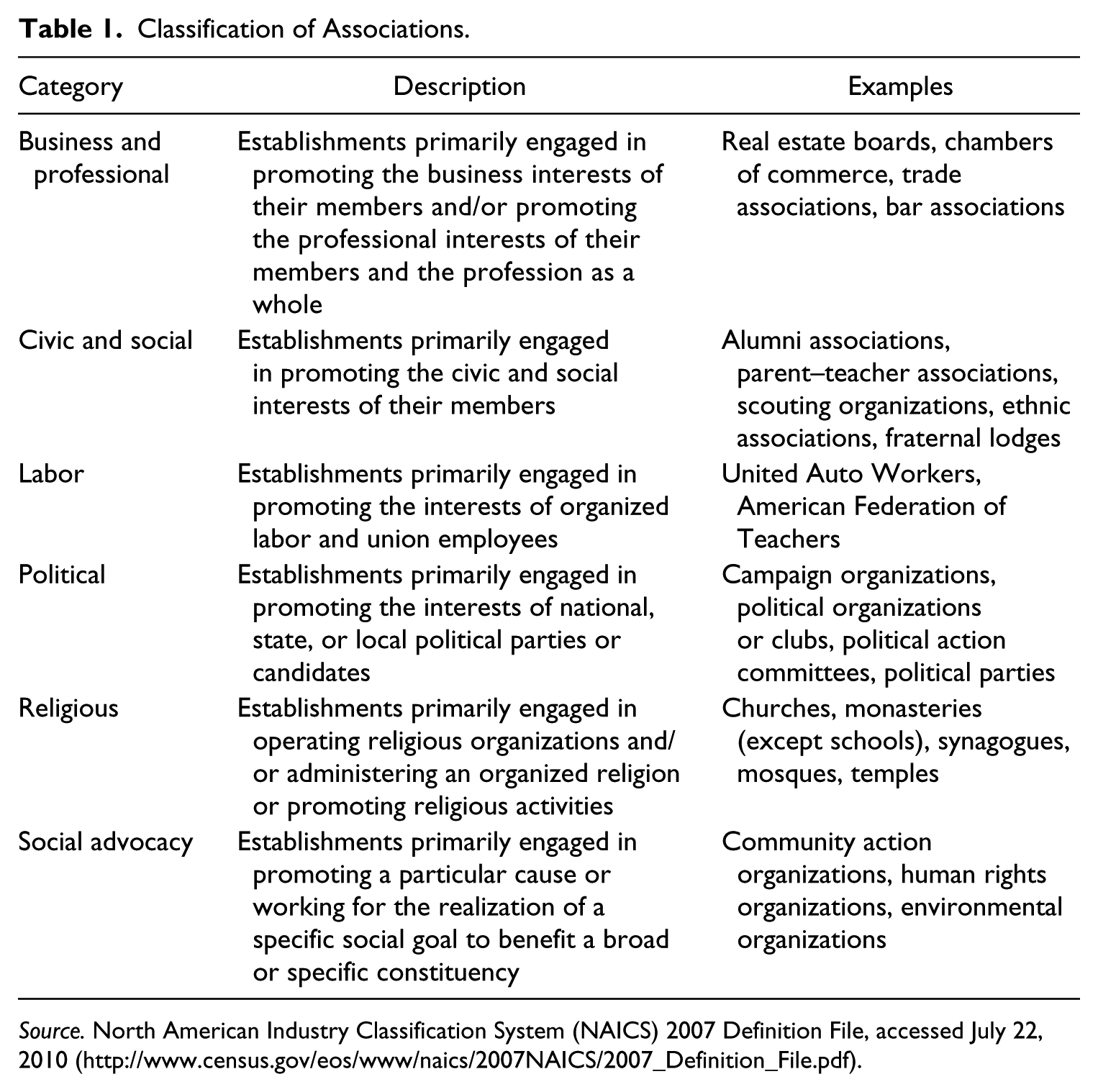
Source. North American Industry Classification System (NAICS) 2007 Definition File, accessed July 22, 2010 (http://www.census.gov/eos/www/naics/2007NAICS/2007_Definition_File.pdf).
Data on participation rates for each type of membership association are derived from the Social Capital Benchmark Survey (SCBS), a survey of U.S. residents administered in 2000 to examine how connected people are to their family, friends, neighbors and membership associations. As the SCBS identifies more membership association types (15) than the NAICS (7), it was necessary to aggregate some categories. Five membership association types—labor unions and political, religious, social advocacy, and professional associations—are identified in the SCBS and the NAICS, so no aggregation is necessary for these categories. Participation data for civic and social associations are obtained by averaging the participation rates for the following association types in the SCBS: sports, youth, parent–teacher, veteran, neighborhood, seniors, fraternal, ethnic, and literary associations, and self-help groups. Finally, business and professional associations are treated as equivalent based on SCBS guidelines (SCBS Codebook, 2000).
The rate of participation for each membership association type is computed using data from the SCBS on the proportion of members that have served as an officer or on a committee and the proportion of members that have attended at least 6 meetings in the past 12 months. Although attendance can be used as a proxy for participation, some membership associations (e.g., sports leagues and literary clubs) may mandate a certain level of attendance to remain affiliated with the association. As membership associations do not typically require members to take on leadership roles, the overall participation rate for each association type can be assessed more reliably by also looking at the proportion of members who serve as officers or committee members. Thus, the measure of active participation used in this article is the average of these two proportions. To assess the robustness of this measure, it was recalculated with the threshold for number of meetings attended by each member in the past 12 months set to at least 1 as well as to 12. The relative ranking of each association type remained unchanged. These results are summarized in Table 2.
Participation Rates of Membership Associations.
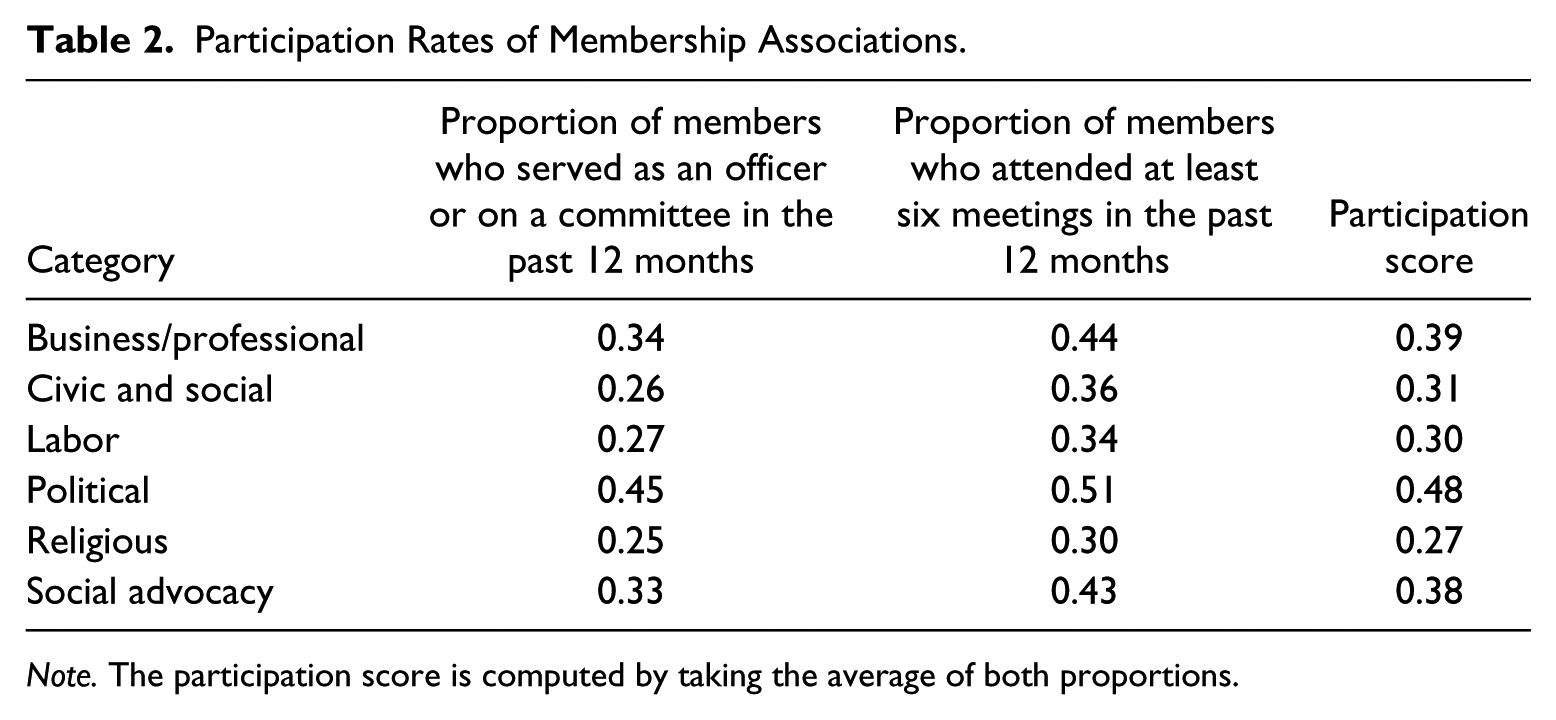
Note. The participation score is computed by taking the average of both proportions.
Data on the sociodemographic diversity for each membership association type are derived from the 2004 General Social Survey (GSS), a survey of U.S. residents that tracks societal trends. As the GSS identifies more association types (14) than the NAICS (7), aggregation of some association types is necessary. Labor unions and political, religious, social advocacy, and professional associations are identified in the GSS and NAICS, so for these categories no aggregation is necessary. Diversity measures for civic and social associations are obtained by averaging the relevant values in the GSS data for sports, school, ethnic, fraternal, youth, hobby, literary, veteran, and Greek associations. Based on conversations with staff at the offices of the GSS organizers, business associations and professional associations are treated as equivalent.
Following the procedure used by McPherson (1983), the level of sociodemographic diversity for each association type is determined by computing the range of values exhibited by members of each type in various commonly used sociodemographic dimensions. First, the mean and standard deviation for the dimensions age, occupational prestige, education, gender, and income are obtained for each association type. Researchers often use inherent sociodemographic characteristics, such as age and gender, and acquired sociodemographic characteristics, such as education, income, and occupational prestige, to determine similarity among people who interact with one another (McPherson & Smith-Lovin, 1987; McPherson et al., 2001). Next, a 1.5 standard deviation window is computed around the mean for each dimension, with two exceptions: when the lower end of the computed window for the income dimension is negative, it is set to zero, and when examining the gender dimension, only the average value is calculated because it is a dichotomous variable. This yields ranges of values for each dimension that characterize the majority of members in each association type. Finally, diversity scores for each association type are calculated by determining the difference between the high and low values of the range for each dimension and calculating the product of these differences, with higher scores indicating more diversity. These findings are detailed in Table 3.
Sociodemographic Diversity of Membership Associations.

Note. The diversity score is computed by taking the products of each range of values and the gender value. For example, the score for religious associations is (72.6 − 23.0) × (69.5 − 26.4) × (18.4 − 10.1) × (69.9 − 0) × (61 / 100) = 756,561.
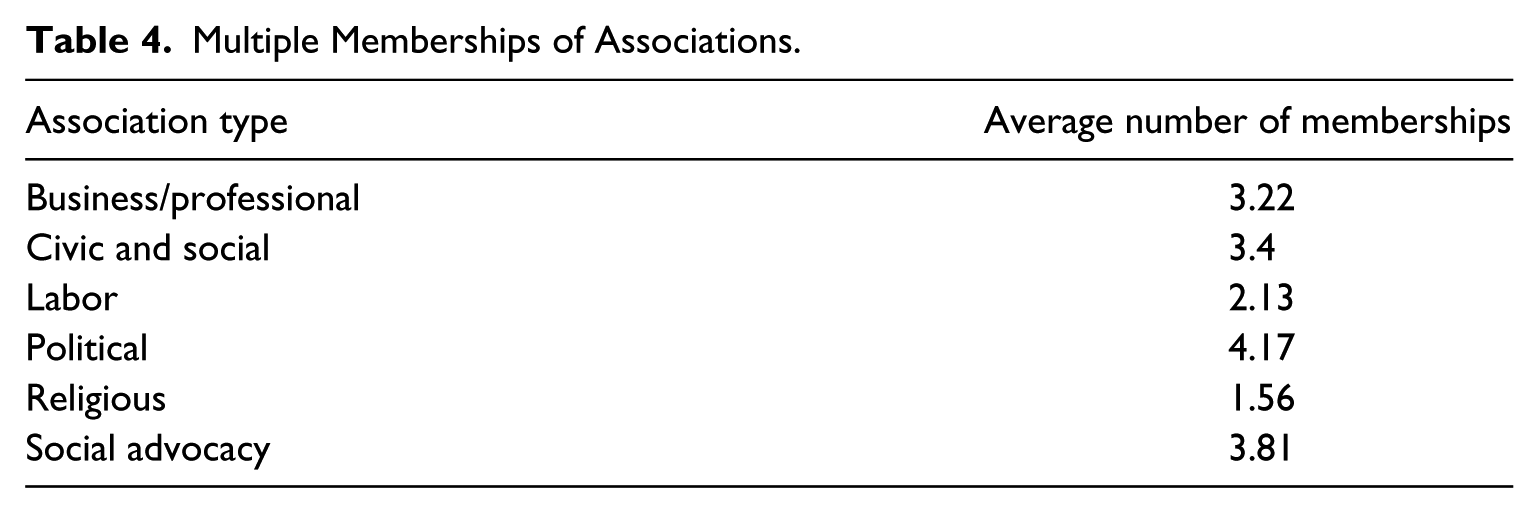
To determine the extent to which members of a given membership association type have additional memberships in other associations, data on the average number of memberships by association type are used from the GSS. This information is reported in Table 4.
Multiple Memberships of Associations.
Variables
The dependent variable is number of new establishment births in a community in the current year. An establishment is a single physical location of an organization; an organization may have more than one establishment in a given community. The key independent variables are the counts of the six categories of associations (see Table 1) within the community.
To discount alternative explanations, researchers studying foundings at the community level typically control for its size, economic climate, prior entrepreneurial activity, and characteristics of its residential and organizational populations as well as that of neighboring communities (e.g., Glaeser & Kerr, 2009; Reynolds et al., 1995; Sorenson & Audia, 2000). To ensure temporal priority and make causal attributions more plausible, all control variables are lagged by 1 year. Previous entrepreneurial activity is controlled for by including the number of deaths in the prior year. To control for a community’s size, the number of private establishments in a community in the prior year is included. Because there may be more establishment births in communities where people have more disposable income due to a greater demand for products and services, per capita income in the prior year is included as a control variable; income may also influence membership association participation and commitment (Garcia-Mainar & Marcuello, 2007). To further control for economic conditions, the unemployment rate in the prior year for the focal community is included. As universities contribute to a vibrant associational life and often serve as entrepreneurship incubators (e.g., Saxenian, 1994), the number of universities in a community is included as a control variable. Finally, establishment births may be facilitated through membership in associations located in nearby communities. To control for the decreasing effect of these nonlocal membership associations, the nonlocal densities of each membership association type weighted by geographical distance are included (Hedstrom, 1994). The geographical coordinates of the center of the most populous county in each EA are used to compute the distance between all possible pairs of EAs. After obtaining these geographical distances, the nonlocal counts of variables weighted by geographical distance (NLVW) are obtained using the following formula:

where j is the focal community, u consists of all communities excluding community j, Vu is the variable to be weighted in community u, and duj is the geographic distance between community u and community j.
All count variables (i.e., except for unemployment rate and per capita income) are standardized by community population to yield employment per million residents. Standardizing by population is a commonly used approach that helps normalize the distribution.
Estimation
The effect of membership associations on entrepreneurship is examined using ordinary least squares regression. Although the dependent variable is a count variable, Cameron and Trivedi (1986) and Greene (2008) maintain that this is an appropriate method for estimating the impact of the independent variables when the mean of a count variable is high and the proportion of zeros is relatively small, as in these data. Cross-sectional and longitudinal variations are utilized. The cross-sectional analysis examines the effect of community-level variables in the year 2000 on the number of new establishment births in the year 2005. The longitudinal analysis uses EA and year fixed effects, helping control for unobserved features that remain constant over time.
Table 5 reports summary statistics for the variables used in the analyses. Within-correlations (not shown) suggested no evidence of multicollinearity. The variance inflation factor was 3.1 and the condition number was below 10, indicating no major problem with statistical dependencies.
Descriptive Statistics.
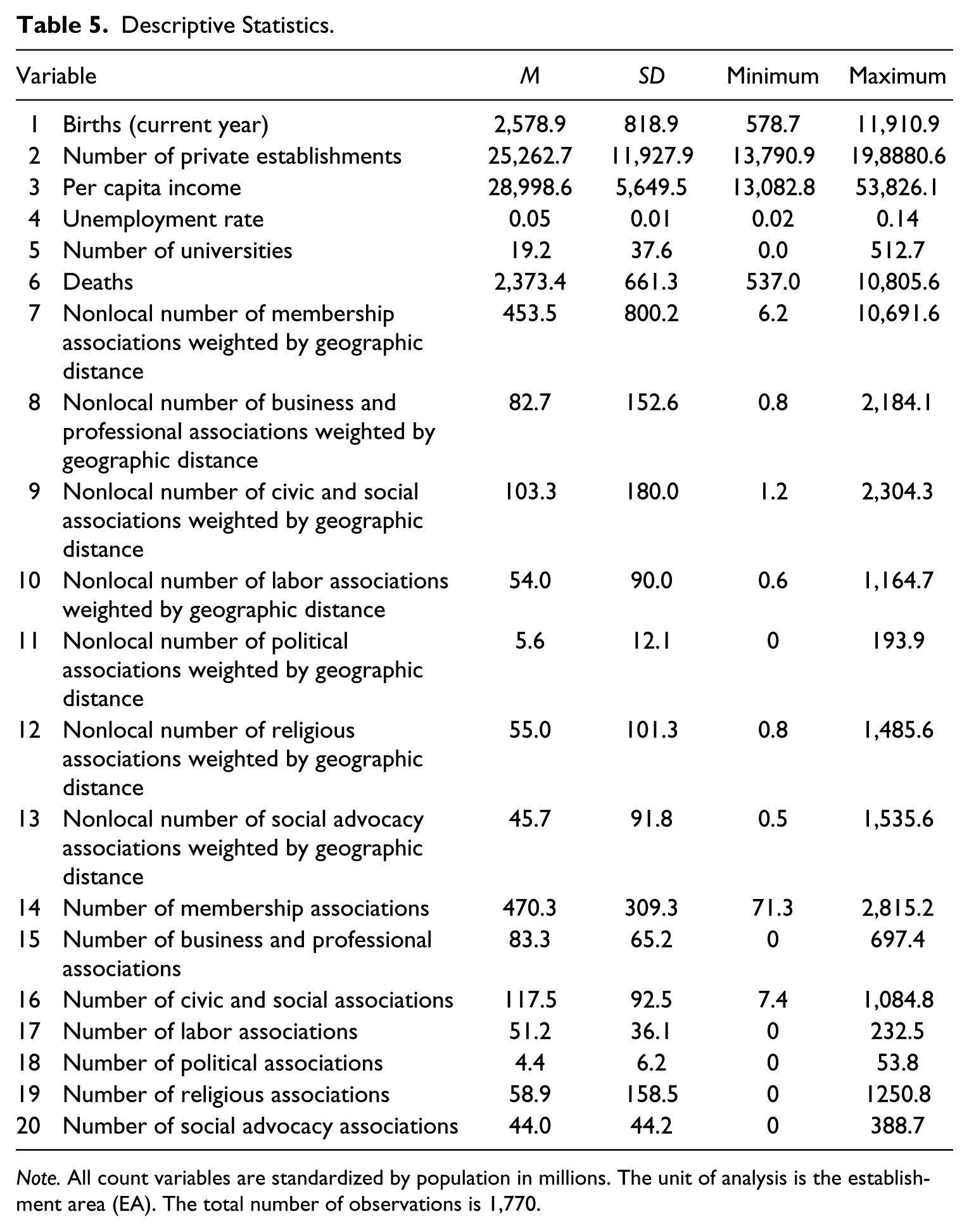
Note. All count variables are standardized by population in millions. The unit of analysis is the establishment area (EA). The total number of observations is 1,770.
Although lagged variables were used to ensure that causality could be inferred, there is still a potential for error due to endogeneity. For instance, it may be possible that the creation of new organizations results in additional workers being employed, and that the number of membership associations increases to accommodate the needs of these employees. Although it cannot be proved directly, there are at least two arguments supporting that the direction of causality runs from membership associations to entrepreneurship. First, the numbers of certain types of associations may increase as the number of establishments decreases, as membership associations are created within a community when there is demand for their services (Hansmann, 1987) and economic downturns increase the need for associations that provide welfare services. The data support this assertion: between 1999 and 2008, the mean change in the number of social advocacy, political, and business and professional associations from 1 year to another was higher in communities where the number of private establishments was decreasing than in communities where the number was increasing. Second, if the rate at which associations were created and disbanded in a community was based on its level of entrepreneurship, then the number of associations should change significantly from 1 year to the next. However, the data reveal quite the opposite. Between 1999 and 2008, more than 50% of communities did not experience any change in the number of labor, business and professional, political, social advocacy, or religious associations, and more than 70% of communities experienced an increase or decrease in the count of each of these association types of no more than one unit.
Results
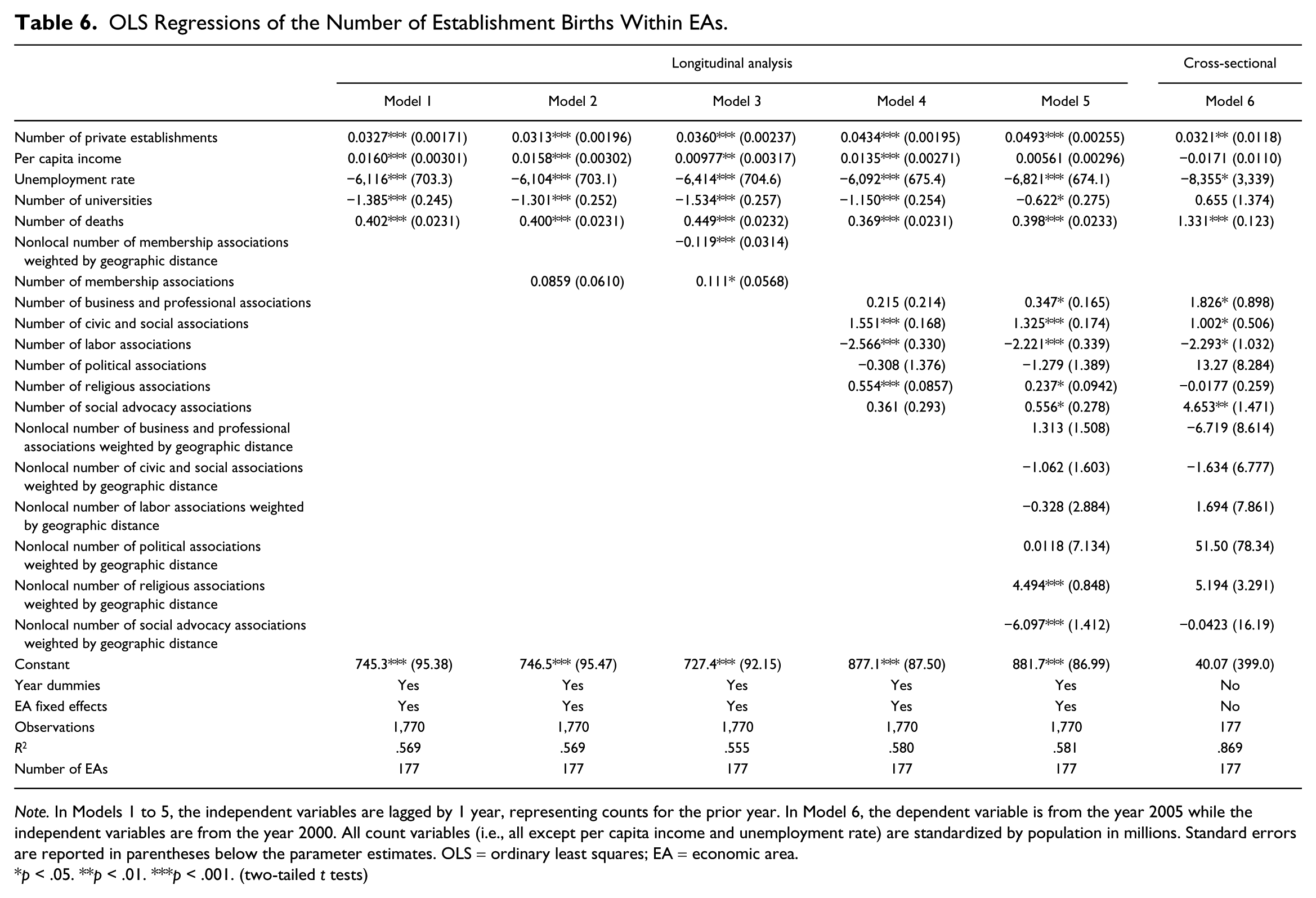
Table 6 reports the results of the regressions predicting establishment births. Models 1 to 5 detail the results of the longitudinal analysis while Model 6 provides the results of the cross-sectional analysis. In Model 1, which is a baseline configuration, all the control variables are significant. Interestingly, the number of universities is negatively associated with the number of establishment births. Model 2 reveals that the total number of membership associations does not significantly affect entrepreneurial activity. But when incorporating the nonlocal number of membership associations weighted by geographical distance (Model 3), the total number of membership associations is shown to positively affect the number of establishment births. For an EA with the average number of residents, one new establishment is created each year for every five membership associations present in the community in the prior year.
OLS Regressions of the Number of Establishment Births Within EAs.
Note. In Models 1 to 5, the independent variables are lagged by 1 year, representing counts for the prior year. In Model 6, the dependent variable is from the year 2005 while the independent variables are from the year 2000. All count variables (i.e., all except per capita income and unemployment rate) are standardized by population in millions. Standard errors are reported in parentheses below the parameter estimates. OLS = ordinary least squares; EA = economic area.
p < .05. **p < .01. ***p < .001. (two-tailed t tests)
Model 4 incorporates the six association categories and reveals that only civic and social, and religious associations positively affect the number of establishment births while labor associations negatively affect it. However, when incorporating the nonlocal number of each association type as weighted by geographic distance, all but political associations are shown to significantly affect establishment births. Model 5 reports that business and professional, civic and social, religious and social advocacy associations positively affect establishment births while labor associations negatively affect it. For an EA with the average number of residents, each additional business and professional association increases the number of establishment births by 0.56, each additional civic and social association increases the number of establishment births by 2.14, each additional religious association increases establishment births by 0.38, and each additional social advocacy association increases establishment births by 0.9. Most importantly, this model demonstrates that civic and social, and social advocacy associations have a greater positive effect on establishment births than business and professional associations do, refuting the first proposition and offering support for the notion that association type may be less important than other associational characteristics.
Model 6 shows that the results of the cross-sectional analysis are similar to those of the longitudinal analysis: although religious associations and political associations are not significantly associated with establishment births in this model, identical effects are seen among the other four association types. Because the fixed-effects analysis contains variation across communities and time, while the cross-sectional model only contains variation across communities, it is expected that the cross-sectional model will have higher explanatory power, as evidenced by the greater R2 value (.87 vs. .58). Model 6 also further refutes the first proposition by similarly indicating that the positive effect of social advocacy associations is greater than that of business and professional associations. An additional robustness check was performed to confirm that these results were not driven by the most populated communities: when the 15 largest EAs were removed from the sample, the results remain unchanged.
To determine whether other associational characteristics may be more important than association type, the correlations between the estimated coefficients for each association type from the longitudinal analysis (Table 6, Model 5) and the level of sociodemographic diversity (Table 3), the number of multiple memberships (Table 4), and the participation rate for each association type (Table 2) are computed. As seen in Table 7, the correlation between the estimated coefficients and sociodemographic diversity is very strong, with a coefficient of .87. The correlation between the estimated coefficients and multiple memberships is moderately strong, with a coefficient of .53. And the correlation between the estimated coefficients and participation is weak, with a coefficient of .27. The relationships between these variables are also depicted graphically in Figures 1 to 3. In the case of strong correlations, such as in Figure 1, the line representing an associational characteristic tends to follow changes in coefficient values. Although these correlations should not be interpreted as conclusive, they do offer support for Propositions 2 and 3, while refuting Proposition 4. Sociodemographic diversity and multiple memberships may be more useful than association type in explaining the effects of associations on entrepreneurship, while participation does not seem to offer similar benefits.
Correlations Between Estimated Effects and Associational Characteristics (Diversity, Multiple Memberships, and Participation).
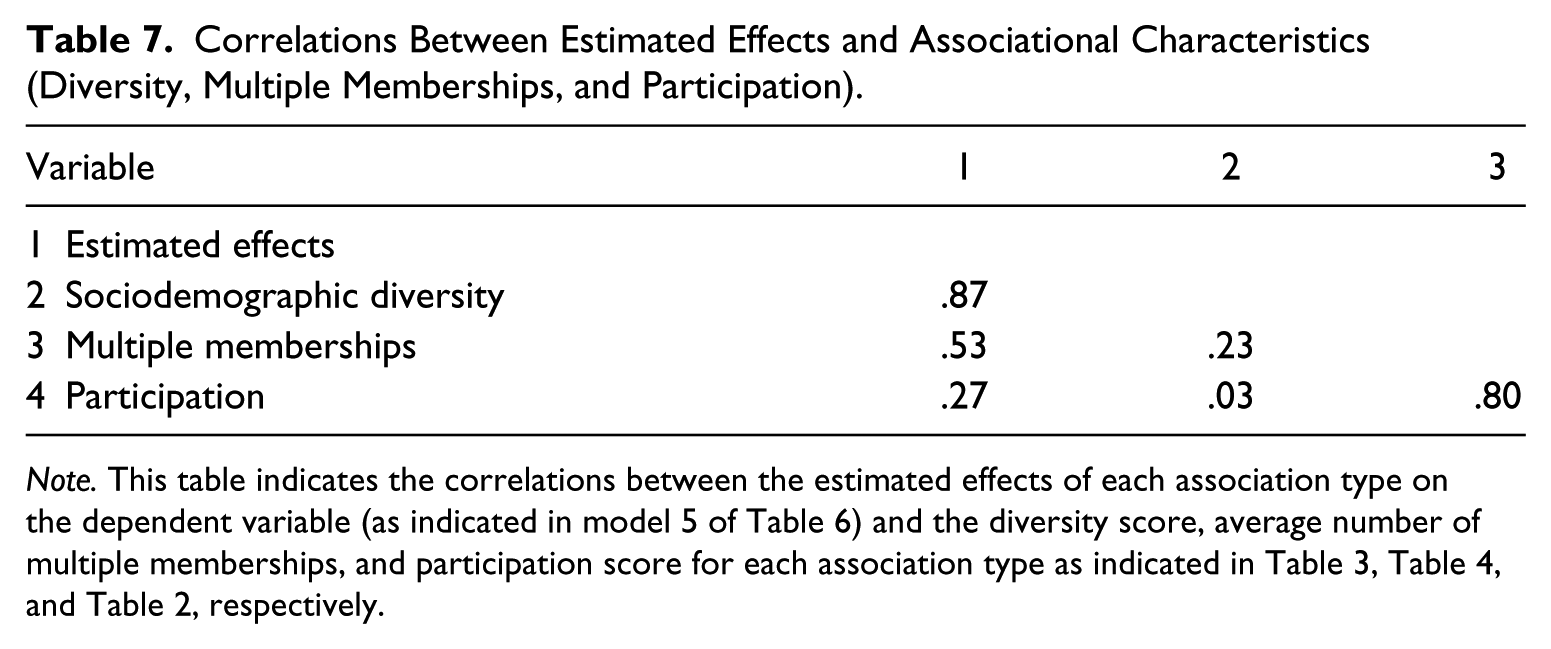
Note. This table indicates the correlations between the estimated effects of each association type on the dependent variable (as indicated in model 5 of Table 6) and the diversity score, average number of multiple memberships, and participation score for each association type as indicated in Table 3, Table 4, and Table 2, respectively.
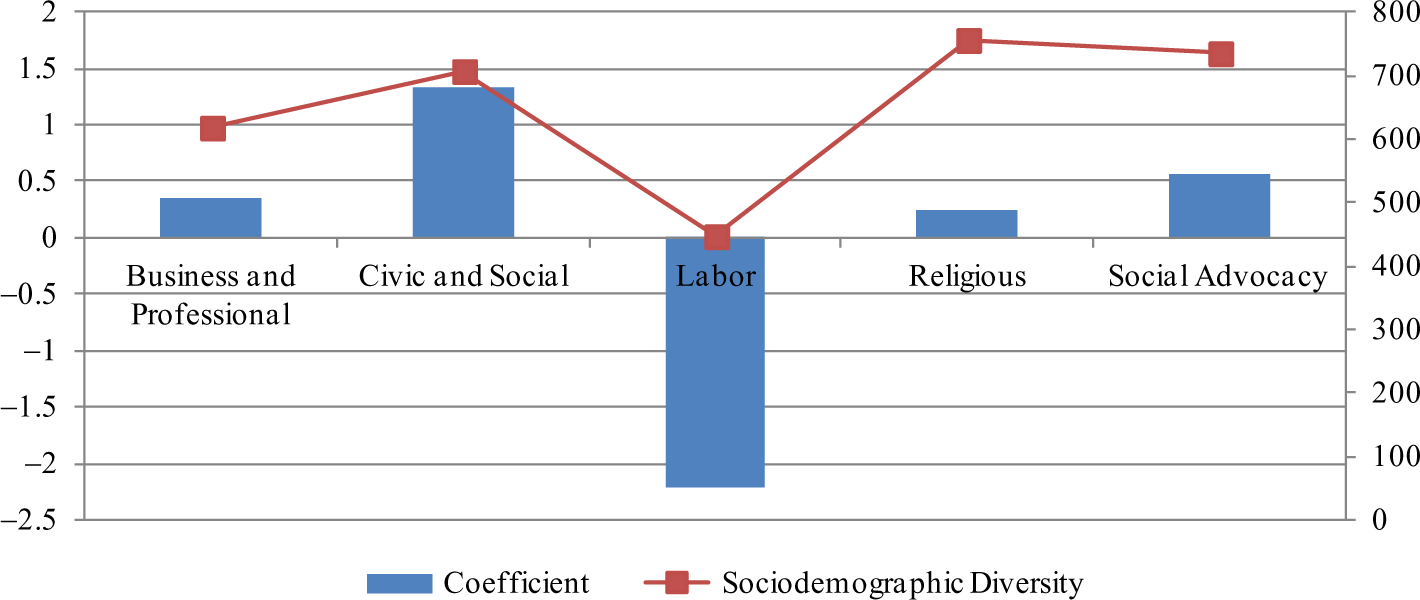
Estimated coefficients and sociodemographic diversity.
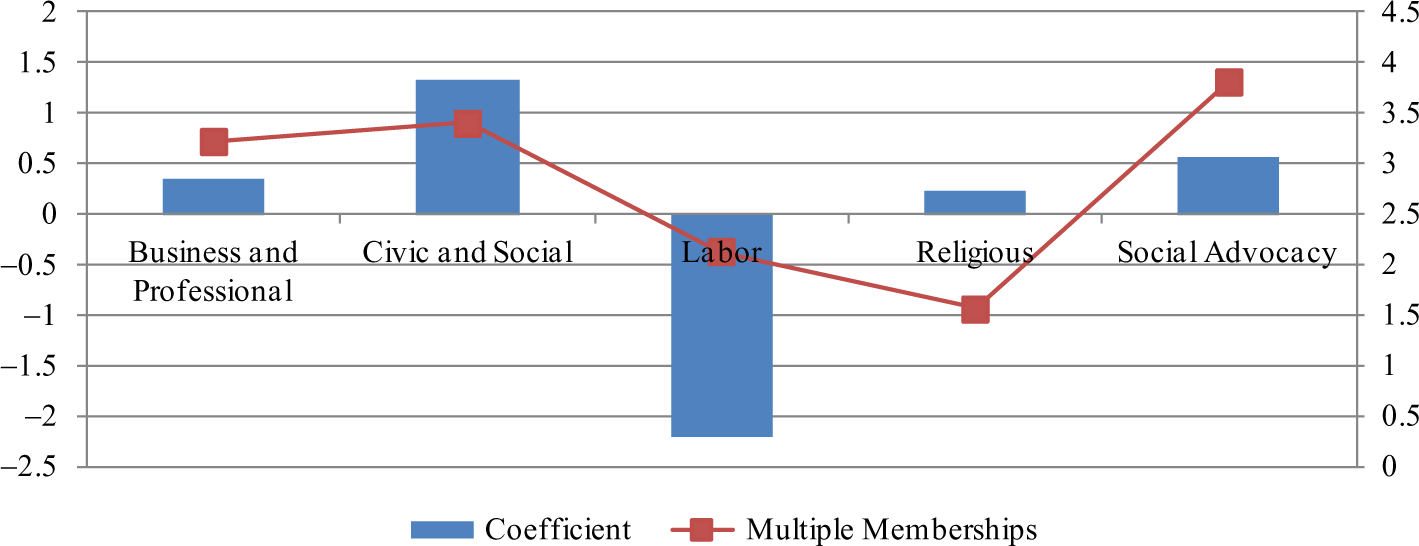
Estimated coefficients and multiple memberships.
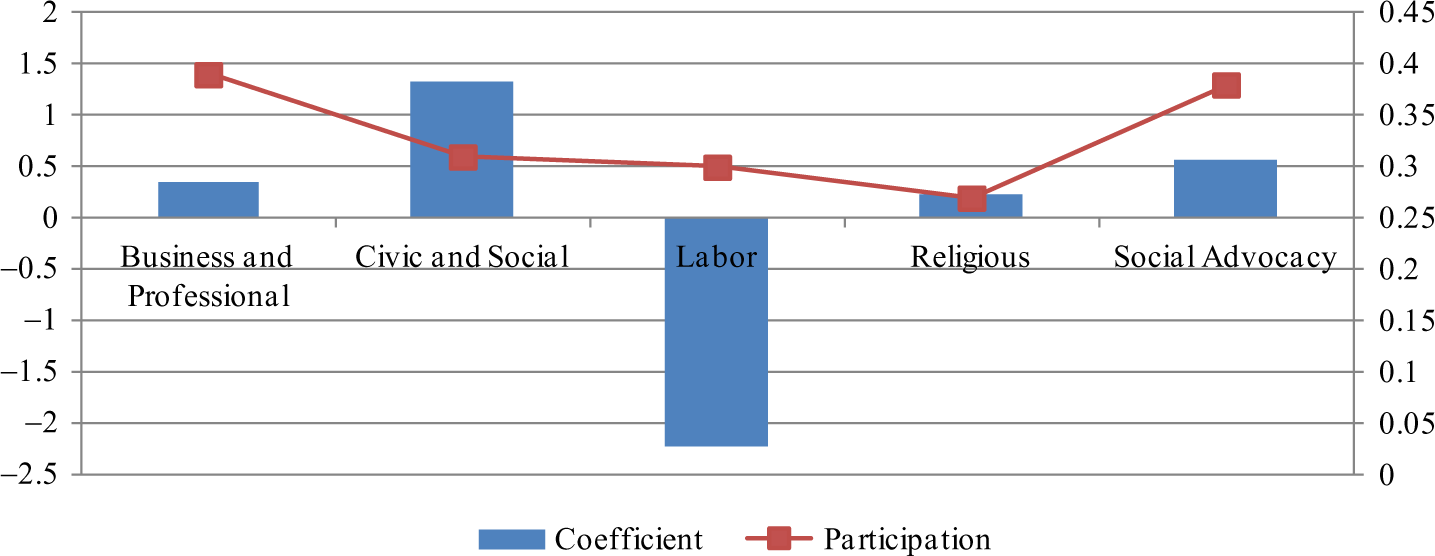
Estimated coefficients and participation.
Discussion and Conclusion
This article examined the role of membership associations in facilitating community entrepreneurship. The analysis revealed that sociodemographic diversity and multiple memberships may be better than association type for predicting an association’s effect on community entrepreneurial activity. However, member engagement levels may not be good predictors of this relationship—a finding that may not be intuitive but is consistent with past research suggesting that participation intensity may not affect social capital formation (Wollebaek & Selle, 2002). The findings suggest that business and professional associations are not effective at promoting entrepreneurial activity simply because they are organized with that purpose in mind, but rather that an association’s organizational capacity is determined by its composition. Entrepreneurs may in fact be better off joining civic and social associations rather than business and professional ones because the former have higher rates of sociodemographic diversity and multiple memberships, which facilitate members’ access to information and resources needed to launch and expand new organizations.
These findings have significant implications for leaders of membership associations and local policy makers. Given their ability to spur entrepreneurial activity, leveraging membership associations may be a more cost-effective way to improve local economic activity than providing tax breaks. Specifically, membership associations can better position themselves to encourage entrepreneurial activity in at least two ways. First, they can work with other local membership associations to create interorganizational alliances and cosponsored events. In addition to bringing together members of different associations and allowing them to interact with one another, such events also help raise the level of multiple memberships for each participating association. Second, associations should actively focus on recruiting more sociodemographically diverse members. A possible way to do this is to encourage membership associations to serve a broader set of constituents. For example, rather than focusing on the education needs of youth from one ethnic group, the association should focus on the education needs of all youth. Doing so would allow the membership association to attract a more diverse range of members and donors, and also benefit local entrepreneurial activity. More generally, public policy officials should also encourage residents to be become active members of one or more local membership associations to increase the diversity of each resident’s social network and to foster a community social structure that facilitates entrepreneurial activity.
It is important to note that, due to at least two limitations in the data, the findings in this study are preliminary. First, the data on sociodemographic diversity, multiple memberships, and participation rates pertain to the association level, not the community level. For instance, the data indicate no difference, in terms of these three characteristics, between a religious association in Los Angeles and a religious association in Chicago. Second, the association data are based on surveys that were administered at a single point in time, and thus indicate that the degree of sociodemographic diversity, number of multiple memberships, and participation rate of an association do not change over time.
Thus, it would be a logical extension of this research to seek more detailed data concerning these three associational characteristics at the community level so that the propositions could be tested using more robust empirical strategies. Studies analyzing broad data concerning associations in multiple communities or rich ethnographic data concerning the benefits of belonging to and participating in associations could further validate the propositions introduced in this article. Ethnographic data could also be leveraged to provide insight into what membership associations actually do at the individual level to facilitate access to resources that can help current and future entrepreneurs. For instance, a considerable body of work shows how individuals or organizations bring together disconnected others for the purpose of facilitating coordinated action, such as organizational innovation (e.g., Obstfeld, 2005). It would be interesting to examine how individual association members bring together disconnected others and what benefits result from their “social skill” (Fligstein, 2001). While social network research typically focuses on how an individual’s network has personal or organizational benefits, it would be useful to also examine how it can affect a community. These benefits may be at the community level, or for the members’ themselves. Such data can also be used to examine whether people who are more likely to be entrepreneurs tend to join certain types of associations. More broadly, this study suggests that researchers must look beyond association type and consider other underlying characteristics of membership associations that could affect not only entrepreneurial activity but various other outcomes, such as social capital. The three characteristics highlighted in this article should be seen as only a starting point.
Footnotes
Acknowledgements
I would like to thank Waverly Ding, Heather Haveman, Emily Choi, David Obstfeld, Gerard Beenen, the Nonprofit and Voluntary Sector Quarterly (NVSQ) guest editors, and the three anonymous reviewers for their insightful and thoughtful comments and suggestions on earlier versions of this article.
Declaration of Conflicting Interests
The author(s) declared no potential conflicts of interest with respect to the research, authorship, and/or publication of this article.
Funding
The author(s) received no financial support for the research, authorship, and/or publication of this article.