







Abstract
Volunteer organizations operate in a challenging environment and their management practices toward volunteers have become increasingly influenced by the private sector. This case study explores the impact of brand heritage on the experience of volunteering in such managed environments. We use data from the U.K. Scouts to show that brand heritage has a positive bearing on the level of engagement volunteers experience and on their reported attitude to the way(s) in which they are managed within the volunteer organization. We then use these findings to establish the salience of brand heritage to both long established and recently formed organizations, extending current volunteer management theory; consequently, we suggest volunteer managers utilize the power of brand heritage through unlocking its ability to retain engaged and satisfied volunteers.
Introduction
Like many developed economies, the U.K. government has facilitated a trend toward tighter public spending, in tandem with increasing demands on the nonprofit sector to provide traditionally state-delivered services (Hurrell, Warhurst, & Nickson, 2011; Lindenberg, 1999), stimulating more professionalization of volunteer management (Dart, 2004; Hurrell et al., 2011; Kreutzer & Jäger, 2011; Ridder & McCandless, 2010). Consequently, outdated notions of ineptitude and amateurish piecemeal contributions previously associated with the nonprofit sector are challenged through its adoption of private sector management practices, which is resource constrained and accountable to a diverse stakeholder group (Blery, Katseli, & Tsara, 2010). The nonprofit sector within the United Kingdom echoes those within similar economies (Hurrell et al., 2011), representing a gross value to the United Kingdom in 2012 of £11.7 billion, increasing to £23.1 billion when including the estimated value of volunteer hours (National Council for Voluntary Organizations, 2012a). As of 2010, the U.K. nonprofit sector possessed net assets worth over £90 billion and maintained a paid workforce of 765,000 (National Council for Voluntary Organizations, 2012b). Despite increased dependence on volunteers and the growth of the nonprofit sector, both in the United Kingdom and globally, evidence suggests high levels of volunteer turnover, decline in sustained volunteer activity (Brudney & Meijs, 2009), and falling levels of public trust in nonprofit organizations (Noble & Wixley, 2014). Research has yet to provide solutions to many of these challenges (Wilson, 2012). The professionalization debate has generated friction within the industry, where there is fierce divergence regarding volunteer management practices and concern as to their impact on volunteer experiences (Ainsworth, 2012; Kreutzer & Jäger, 2011). The changing volunteer landscape is reflected in remarks by former Scouting U.K. Operations Director Stephen Peck, who notes,
We’ve all come across volunteers who are blockers. You get rid of them and lots of other people immediately offer to help. Those people are like a cancer in your organization (Ainsworth, 2012, para. 4)
Peck’s observations exemplify changing management attitudes within volunteering with the clear implication that under- or nonperformance needs to be managed in a voluntary setting just as it would in an employed setting. Peck’s comments raise further questions surrounding the difficulties in engaging with, satisfying, and controlling a voluntary workforce in an increasingly challenging nonprofit sector environment, affected by reductions in funding, and increasing numbers of nonprofit organizations competing for limited resources (Napoli, 2006; Ridder & McCandless, 2010). Building on previous research, we posit that brand heritage (i.e., a series of amassed brand-related stories; Ardelet, Slavich, & de Kerviler, 2015), an ambient asset for any organization (Balmer, 2013), plays an important role in nonprofit organizations and affects successful retention of volunteers. We present a dual contribution: First, we answer calls from the literature to further understand the role of engagement in fostering volunteer satisfaction with management (Vecina, Chacón, Sueiro, & Barrón, 2012); second, we explore the role brand heritage plays within a distinct subset of volunteers (Scouts Volunteers), and a new context (Volunteering in Scotland; for example, Mort, Weerawardena, & Williamson, 2007). The article starts with a brief discussion of theoretical foundations exploring brand heritage, engagement, and satisfaction. Next, based on a conceptual model, seven hypotheses are developed to understand the interplay between brand heritage, volunteer engagement, and resultant volunteer satisfaction with management. Subsequently, empirical analysis allows for discussion of the results and presentation of justified managerial implications.
Theoretical Foundation
Retention of volunteers has long been considered a valid indicator for the extent to which volunteers are satisfied with their volunteering experience (Vecina et al., 2012). Prior research demonstrating increased levels of engagement among volunteers, positively affecting volunteer satisfaction with management, and the subsequent continuation of volunteer activity, illustrates the need for nonprofit organizations to enhance volunteer engagement (Jiménez, Fuertes, & Abad, 2009; Vecina et al., 2012). Some studies opt to explore volunteer engagement and motivations from a self-determination theory (SDT) perspective (see also Haivas, Hofmans, & Pepermans, 2013; Oostlander, Güntert, van Schie, & Wehner, 2014); however, we deem it unsuitable for this research due to its exploratory nature and the application of a combination of constructs in relation to brand heritage in this particular context. Furthermore, this study explores satisfaction with management from a performance perspective, not an innately held assessment of volunteer satisfaction as generally demanded by SDT (Oostlander et al., 2014). The prevalence and innate strength of nonprofit brands—among the most powerful in the world (Laidler-Kylander, Austin, & Quelch, 2004)—demand investigation of their role in retaining volunteers through enhancing engagement and satisfaction within nonprofit organizations; thus brand heritage represents one avenue in need of further exploration.
Described as “a different branding category with its own set of defining criteria” (Wiedmann, Hennigs, Schmidt, & Wuestefeld, 2011, p. 206), brand heritage is distinct from concepts of brand affiliation, perception, and attitude, representing an emergent stream of research, only tacitly considered in a volunteer context (Mort et al., 2007). The compatibility of brand heritage for the nonprofit sector is commensurate with Stride’s (2006) findings which suggest inherent organizational values should be the driving force behind successful nonprofit sector brands, a notion supported by Kylander and Stone (2012) and Lee (2013) who posit successful nonprofit sector external brands require alignment with internal organizational values. Stride’s suggestion that appropriation of marketing strategies from the private sector detracts from nonprofit sector organizations finds little support in the literature, which seldom suggests negative implications of branding practices (Kylander & Stone, 2012; Liu, Chapleo, Ko, & Ngugi, 2015; Sargeant, Ford, & Hudson, 2008). Indeed, Napoli (2006) finds that the most successful nonprofit organizations tend to be more brand-oriented. While research shows the connection between brand orientation and nonprofit sector organizational performance (Hankinson & Rochester, 2005; Napoli, 2006), there is scant investigation of the constituent elements of this relationship (Liu et al., 2015). Liu et al. (2015) find empirical evidence for a positive relationship between brand orientation and staff attachment to a nonprofit organization’s brand. Despite this, brand orientation research does not make specific provision for capitalizing on heritage, maintaining a more general position (Napoli, 2006). Consequently, we answer calls from the literature for greater exploration of effective management approaches utilizing the distinct brand heritage concept (Wiedmann et al., 2011), while also satisfying Mort et al.’s (2007) request to understand the essence of brand heritage in the nonprofit sector.
Brands with heritage are not simply associated with antiquated organizations; rather, they actively extol values and position themselves in relation to their heritage (Balmer, 2013). Brand heritage is described by Urde, Greyser, and Balmer (2007) as
a dimension of a brand’s identity found in its track record, longevity, core values, use of symbols and particularly the organizational belief that its history is important. (p. 4)
Track record refers to evidence that an organization is achieving its aims and meeting its values over a long period of time (Ardelet et al., 2015; Wiedmann et al., 2011); for example, the military veterans’ charity, the Royal British Legion, has a reputation for dignified caregiving, earned over many years of service. Longevity refers to maintained activities within alternative heritage manifestations and can be particularly pertinent to organizations or institutions owned or controlled by successive family generations (Balmer, 2013; Wiedmann et al., 2011). Core values are central to a brand’s identity where they can establish and develop an organization’s heritage over time, acting as a pledge to volunteers, central to an organization’s brand identity (Lee, 2013; Urde, 1994; Wiedmann et al., 2011). Urde et al. (2007) also identify history as a heritage element, which influences identity, fostering relevance to present as well as future volunteers. History can help organizations establish who and what they are, contributing to the clarity and consistency of their marketing messages (Brown, Kozinets, & Sherry, 2003; Wiedmann et al., 2011).
History is noted as a building block of brand heritage; however, its perception is often shaped by individuals and is influenced by “its place in the heart” (Hakala, Lätti, & Sandberg, 2011, p. 448). Research highlights the history element of brand heritage can positively enhance consumer perceptions of authenticity and, subsequently, affect brand choice (Morhart, Malär, Guèvremont, Girardin, & Grohmann, 2015). For organizations with a limited heritage, Balmer (2013) suggests “here an institution appropriates a heritage in one or another form . . . a process often achieved through close affiliation or takeover. While heritage is an important driver for brand heritage marketing, it is not a fundamental prerequisite” (Balmer, 2013, p. 297; Urde et al., 2007). Marketers can enhance, foster, and even create brand heritage where none exists (Beverland, Lindgreen, & Vink, 2008; Holak, Matveev, & Havlena, 2007; Merchant & Rose, 2013), offering a contemporary reinterpretation of the brand’s heritage (Aaker, 2004). Finally, the use of symbols (such as Amnesty International’s wire-clad candle) represents the medium conveying the brand and portraying its values and beliefs on behalf of an organization (Hakala et al., 2011; Wiedmann et al., 2011). While brand heritage is suggested to include these five pillars, Wiedmann et al. (2011) demonstrate the usefulness of an expanded 15-variable approach to its measurement, effectively capturing the essence of the five elements described by Urde et al. (2007). Ultimately, from the perspective of volunteers, the notion of heritage can evoke images of continuity, safety, and familiarity, serving as a reassuring bulwark to the difficulties of reality (Hakala et al., 2011) and offering a potential avenue through which to enhance volunteer engagement.
Work engagement relates to the positive internal mental state of a volunteer toward required tasks. Originally a for-profit concept, work engagement has since been practically applied in volunteer contexts and described as “of great practical interest for non-profit organizations” (Vecina et al., 2012, p. 143). Work engagement is conceptualized as a combination of dedication, absorption, and vigor. In a voluntary context, dedication pertains to feelings of pride, enthusiasm, and inspiration. Absorption denotes a desire to work intensely, and the experience of selfless immersion (Bakker, Schaufeli, Leiter, & Taris, 2008; Vecina et al., 2012). Vigor encapsulates the energy volunteers have while performing their roles. High levels of work engagement are shown to be useful in for-profit and public-sector organizations (Sonnentag, 2003), however, in relation to volunteers and an absence of financial remuneration, enhancement of engagement holds greater bearing on retention. While work engagement has been assessed as a variable, subject to daily fluctuation (Sonnentag, 2003; Sonnentag, Dormann, & Demerouti, 2010; Xanthopoulou, Bakker, Demerouti, & Schaufeli, 2009), engagement is validated as a stable concept, bonded to prevailing job and organizational characteristics (see also Schaufeli, Salanova, González-Romá, & Bakker, 2002; Vecina et al., 2012). Critics of work engagement cite its theoretical similarity to concepts such as commitment, burnout, workaholism, and job involvement as grounds for its irrelevance (Cole, Walter, Bedeian, & O’Boyle, 2012). These arguments are countered through a growing body of evidence (González-Romá, Schaufeli, Bakker, & Lloret, 2006; Shuck, 2011; Vecina et al., 2012). Furthermore, the theoretical basis upon which engagement is conceptualized as a three-factor structure is contested (Cole et al., 2012), with some researchers suggesting that the highly reported correlation between the three factors is indicative of the presence of one all-encompassing factor (Sonnentag, 2003), a position challenged through contradictory evidence for the three-factor approach (Hallberg & Schaufeli, 2006; Vecina et al., 2012). In a volunteer context, Vecina et al. (2012) validate the three-factor structure of engagement, finding the concept to hold explanatory power over volunteer satisfaction and a resultant continuity of volunteer activity. Positive outcomes of engagement include raised productivity, profitability, and safer, healthier employees who exhibit more helping behavior, are less frequently absent, and more easily retained by an organization (Shuck & Wollard, 2010), suggesting work engagement is valuable to both the voluntary and private sector contexts.
Job satisfaction reflects the extent to which an employee, or indeed volunteer, is likely to sustain involvement with an organization, and is often used as an outcome variable in voluntary research (Galindo-Kuhn & Guzley, 2002). Satisfaction is conceptualized as multidimensional, pertaining to task, management, and motivational satisfaction (Galindo-Kuhn & Guzley, 2002; Vecina et al., 2012). However, we focus on volunteers’ satisfaction toward management. Satisfaction is regarded as a useful determinant that volunteers will continue their activities with an organization (Wilson, 2012) and has been shown to be enhanced by levels of engagement (Vecina et al., 2012). Consequently, determining satisfaction of volunteers toward management informs the refinement and development of management practice, while also indicating likely rates of volunteer retention (Vecina et al., 2012; Wilson, 2012).
Hypotheses Development
Hypotheses are now proposed building on the previous discussion, including brand heritage, the different work engagement elements, and satisfaction with management:
Given brand heritage has yet to be investigated in relation to dedication, there is little empirical evidence on which to base our hypothesis. Nevertheless, we expect there to be a positive association, attributable to brand heritage’s inherently appealing traits of trust, continuity, and comfort derived through connection to the past increasing volunteer dedication (Hakala et al., 2011; Urde et al., 2007; Wiedmann et al., 2011). Gilmore and Pine (2007) assert heritage is an important tool for cultivating trust; this notion is further supported within a nonprofit context through research suggesting trust leads to increased engagement in volunteer activities (Uslaner & Brown, 2005). Furthermore, literature indicates connections between levels of employee trust in an organization and their resultant engagement (Wang & Hsieh, 2013). Finally, the literature suggests that harmony between individual and organizational values deepens engagement (Rich, Lepine, & Crawford, 2010). Thus,
Again, the paucity of literature necessitates a more abstract approach. Brand heritage can augment perceptions of organizational support, noted as an antecedent of engagement (Saks, 2006). Similar to dedication, absorption—concerned with volunteer dedication and well-being—shares thematic similarity to satisfaction and positive mental attitudes that are linked to brand heritage (Wiedmann et al., 2011), thus, H2 will likely be enhanced when voluntary organizations exude a spirit of trust, longevity, and history (Hakala et al., 2011; Wiedmann et al., 2011). The literature also suggests nonprofit brands can facilitate cohesion and dedication, by demarcating an organization’s offerings (Kylander & Stone, 2012), enhancing the likelihood of congruence between individual volunteer and organizational values, which can result in deeply engaged and immersed volunteers (Shantz, Saksida, & Alfes, 2014). Consequently,
We expect this relationship to be weaker than dedication and absorption as heritage enjoys less congruence with connotations associated with a vigorously engaged volunteer, substantiated to some extent by previous research (Wiedmann et al., 2011). Nevertheless, Rich et al. (2010) note perceived organizational support can increase an individual’s engagement. Perceived organizational support is enhanced through feelings of trust and safety, speaking to the essence of brand heritage (Wiedmann et al., 2011). Furthermore, brand heritage has a complex relationship with stakeholder support; stakeholders who view themselves as intimately related to a brand’s heritage may exhibit more vigorous attitudes toward fulfilling their roles (Mort et al., 2007; Schultz, 2001), further supporting a relationship. Our next hypothesis is as follows:
Engaged individuals are enthusiastic and feel they are doing their jobs effectively which, in turn, predicts their performance (Salanova, Agut, & Peiro, 2005). Vecina et al. (2012) empirically demonstrate dedication exerts significant influence over satisfaction with management within a volunteer context, suggesting that (like their paid counterparts) more dedicated volunteers (Shuck & Wollard, 2010) and students (Wefald & Downey, 2009) are more satisfied with management. As engagement is described as “a persistent positive affective state . . . characterized by high levels of activation and pleasure” (Maslach, Schaufeli, & Leiter, 2001, p. 417), we note the congruence between its constituent element, dedication, and satisfaction with management. Furthermore, engagement has been identified as a positive mediator between multiple variables and outcome indicators of performance akin to satisfaction with management (Rich et al., 2010). Consequently, we suggest that dedication is positively related to satisfaction with management. Next, we hypothesize as follows:
Similarly, previous studies show volunteer absorption to have a positive effect upon satisfaction with management and volunteer retention (Shantz et al., 2014; Vecina et al., 2012). For absorption to occur, volunteers require appropriate physical, emotional, and psychological resources (Schaufeli et al., 2002; Shuck, 2011), responsibility for the provision of which lies with the management of the organization. Furthermore, Shantz et al. (2014) find volunteer interaction with beneficiaries affects their engagement levels; thus, it is likely that interactions with management could exhibit similar effects. Consequently, we suggest a positive relationship between absorption and satisfaction with management. Next, we hypothesize as follows:
Volunteers exerting vigorous attitudes toward their work have been shown to be more satisfied with management (Vecina et al., 2012), and exert stronger desires to continue (Shantz et al., 2014). Vigor, pertaining to notions of endurance and commitment to work, is hypothesized as having a positive relationship toward satisfaction with management. Rich et al. (2010) link engagement to a broader concept of volunteer satisfaction, thus highlighting the likelihood of congruence between vigor and volunteers’ satisfaction with management (Bakker et al., 2008; Vecina et al., 2012).
The final hypothesis proposes a relationship between brand heritage and satisfaction with management as follows:
Within marketing literature, brand heritage is shown to positively affect satisfaction through its constituent elements of track record, perception of history, values, and use of symbols (Wiedmann et al., 2011). This is supported by research alluding to the positive influence of brand heritage in fostering closer alignment between volunteers and their host organizations (Kylander & Stone, 2012; Mort et al., 2007; Schultz, 2001). Furthermore, the constituent elements of brand heritage, and the importance of trust and stability to volunteers within nonprofit organizations (Sargeant & Lee, 2004), indicate an intimate relationship likely to be strengthened by levels of personal volunteer investment (emotional and time based). Thus, we hypothesize a positive direct and indirect relationship between brand heritage and satisfaction with management via engagement, as we expect the qualities of brand heritage to promote engagement among volunteers and their consequent levels of satisfaction with management. Based on the above literature review and hypotheses, Figure 1 provides a graphical representation of the relationships proposed in this research. It is also the conceptual framework upon which empirical analysis took place.
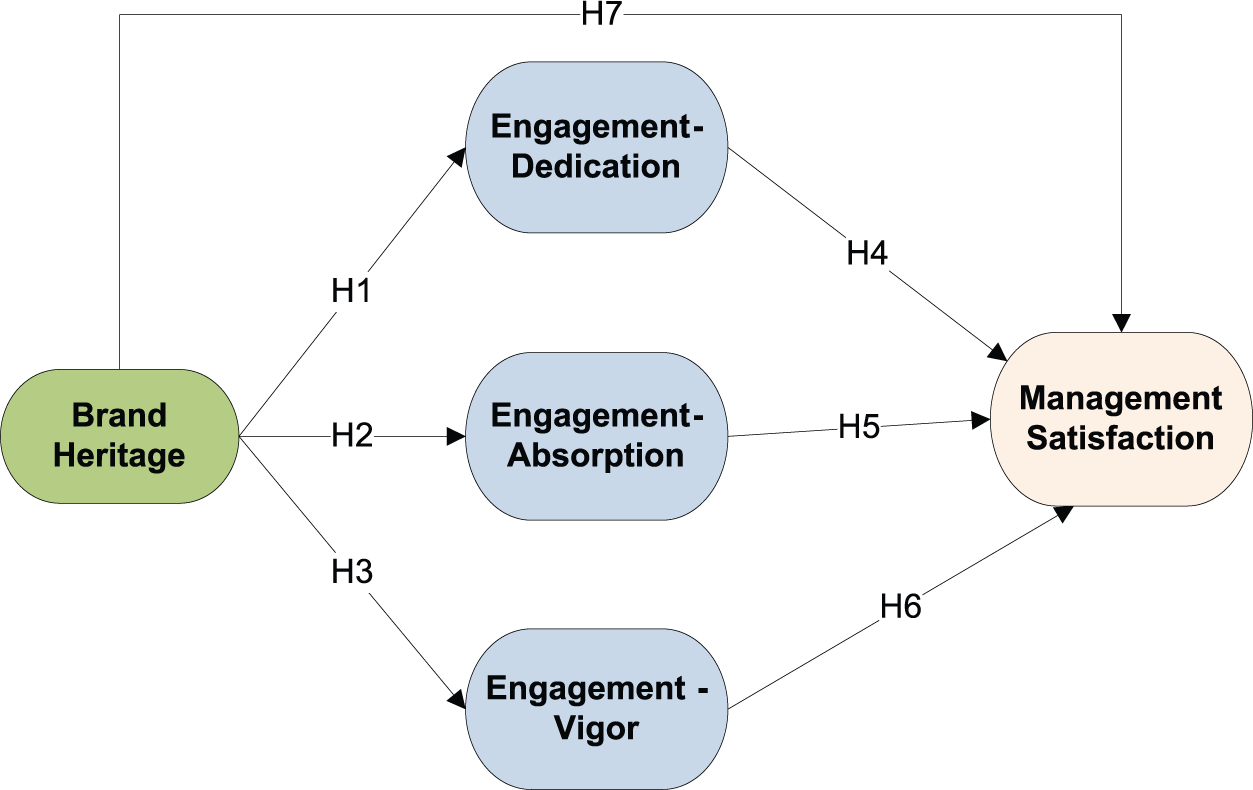
Research model.
Method
Data Collection and Measures
To test the above hypotheses, and upon completion of a pilot survey among 18 people, an online survey was designed and distributed through the membership email system used by the Scouts in Scotland in late May 2014.
The Scouts are an organization possessing a rich heritage, traceable to events during the Boer War (1899-1902). Robert Baden-Powell, a British Army officer, established the first Scout camp in 1907 with the aim of instilling qualities of self-discipline, self-improvement, resourcefulness, and altruism among its cohort of young boys (Mills, 2011). Despite considerable modernization, the Scouts retain many original traditions and much of Baden-Powell’s founding ethos. Scouting UK, the world’s oldest scouting organization, benefits over 400,000 members every year (The Scout Association, 2016) and depends heavily on volunteers. The Scouts, imbued with a considerable heritage are, therefore, an appropriate organization on which to base our study.
Respondents were active Scout volunteers in Scotland, rendering appropriate a stratified sampling approach whereby generalizations for the wider volunteering population could be made. Respondents were asked to complete the survey as fully as possible. To enhance participation, it was conducted anonymously and each participant was given the opportunity to enter a prize draw. Furthermore, the study made clear its aims to explore the intricacies of an organization that respondents, as its volunteers, evidently care for and are invested in. Consequently, a relatively high response rate was expected. Upon closure of the survey and exclusion of partially completed surveys, 1,248 usable questionnaires were retained, equaling a response rate of 19.2%. The questionnaire was available online only, thus, respondents with no access to the Internet or limited information technology (IT) literacy would have experienced difficulty responding. Potential nonresponse bias was checked through an extrapolation method comparing the first weeks’ respondents with latter weeks; (Armstrong & Overton, 1977) no significant difference among any of the constructs used in the model was found. Table 1 shows the demographic characteristics of respondents.
Demographic Characteristics of Respondents.
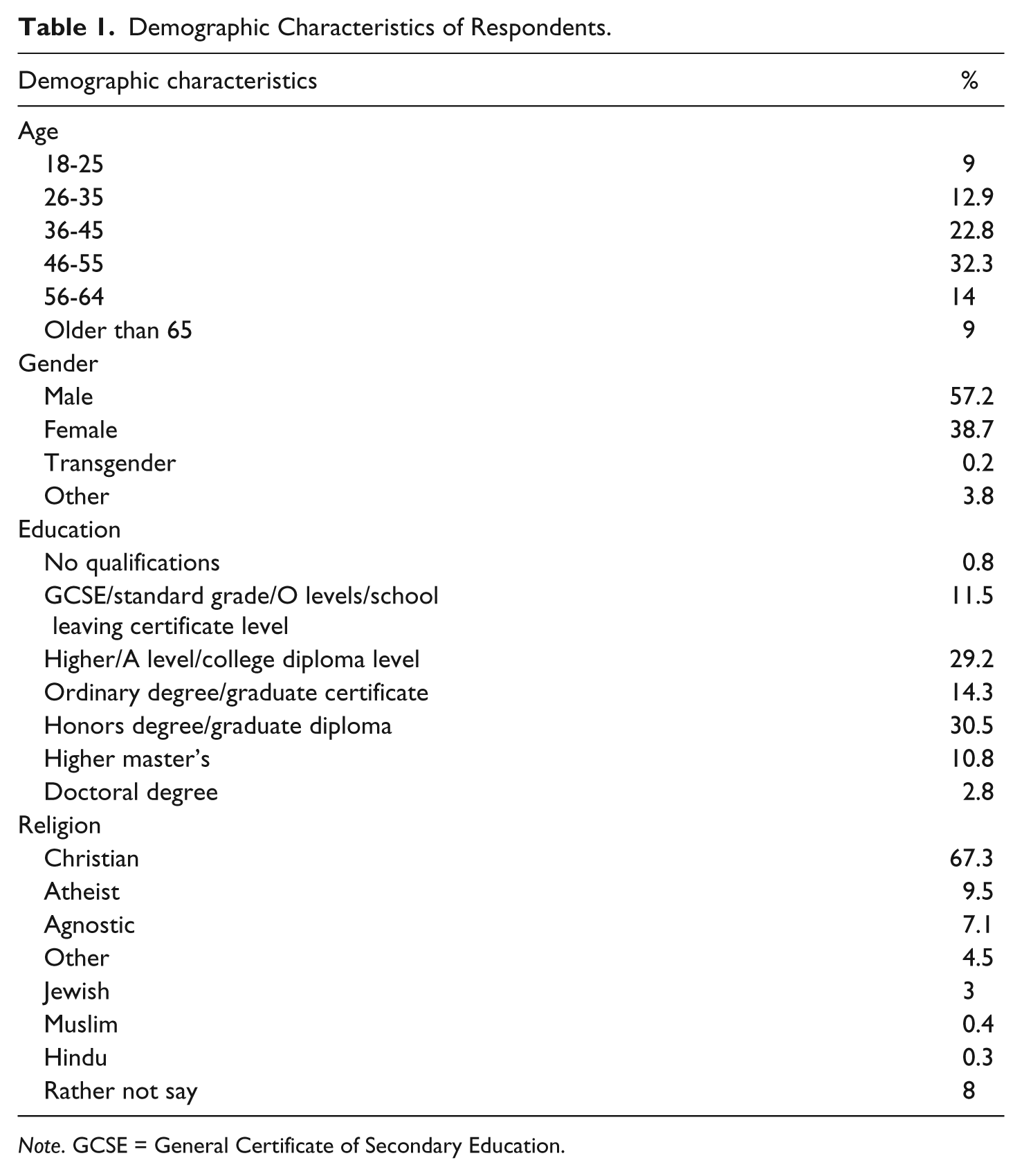
Note. GCSE = General Certificate of Secondary Education.
First, we assessed brand heritage using a 16-item formative measurement scale adapted from Wiedmann et al. (2011). This scale measures items including continuity, success images, bonding, orientation, cultural value, cultural meaning, imagination, familiarity, myth, credibility, knowledge, identity value, identity meaning, differentiation, and prestige. Respondents were asked to indicate their level of agreement on the branding of the Scouts. Second, a work engagement scale used by Schaufeli, Bakker, and Salanova (2006), and Vecina et al. (2012) was used to measure work engagement. This continuous reflective measure includes nine items that fall under three factors: (a) absorption, (b) vigor, and (c) dedication. Respondents indicated their level of agreement regarding their feelings while volunteering with the Scouts. Finally, we measured reflective satisfaction with management using a scale of eight items from Jiménez et al. (2009) and Vecina et al. Respondents indicated their level of agreement regarding satisfaction with the management of the Scouts. Participants rated each statement for the above scales on a Likert-type scale ranging from 1 to 7, with 1 indicating completely disagree and 7 completely agree. The means and standard deviations (SDs) for all variables are displayed in Table 2.
Assessment of the Measurement Model and Descriptive Statistics.
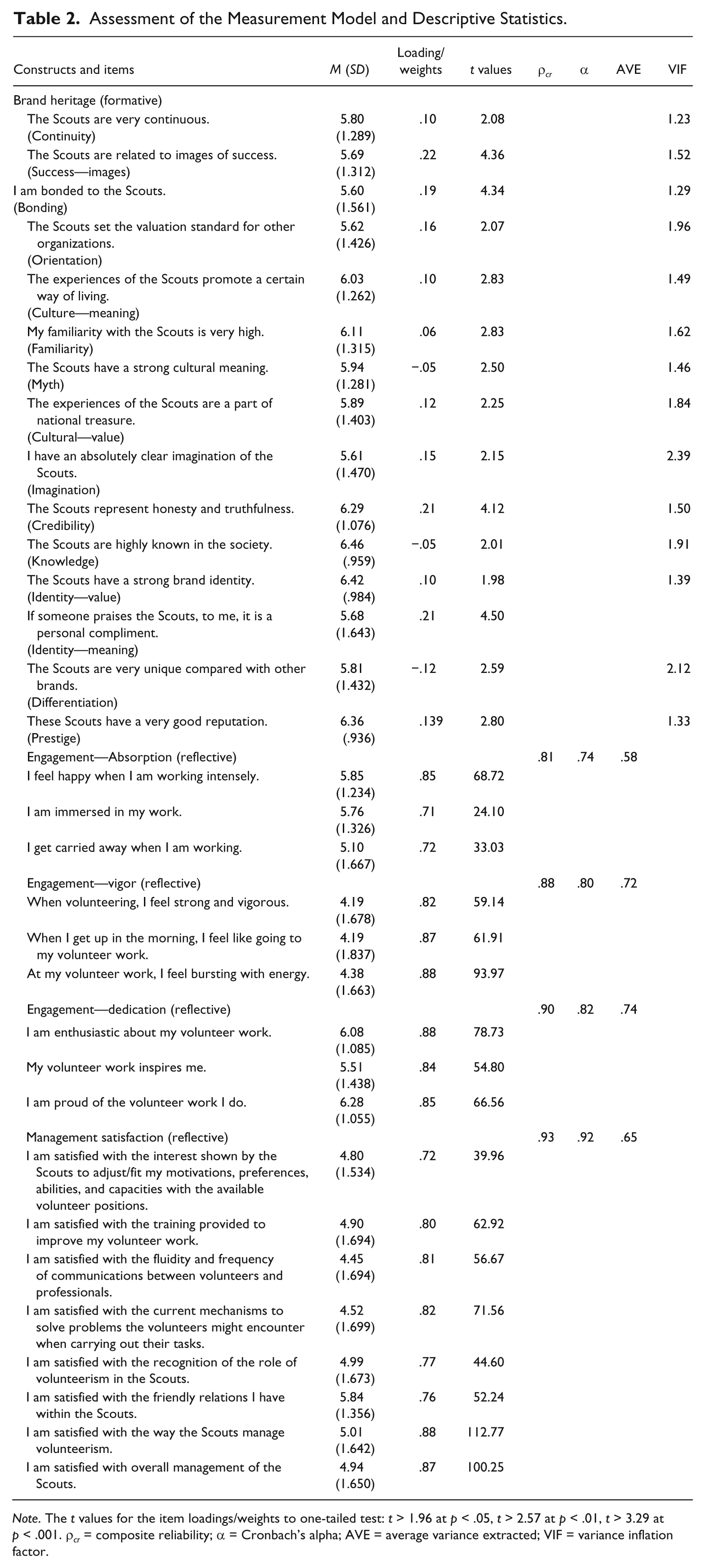
Note. The t values for the item loadings/weights to one-tailed test: t > 1.96 at p < .05, t > 2.57 at p < .01, t > 3.29 at p < .001. ρ cr = composite reliability; α = Cronbach’s alpha; AVE = average variance extracted; VIF = variance inflation factor.
Data Analysis
Partial least squares (PLS) was selected as the method of analysis for the research model. A variance-based method such as PLS is preferable to covariance-based methods as it is more appropriate for both theory building and exploratory research. It can be exhibited in both formative (i.e., the indicators have cause toward the construct) and reflective (i.e., causality is from the construct to its indicators) modes (Hair, Black, Babin, & Anderson, 2010; Hair, Hult, Ringle, & Sarstedt, 2014; Nolte & Boenigk, 2013; Taheri, Jafari, & O’Gorman, 2014). PLS also provides unbiased model estimation with both nonnormal and normal distributional properties (Hair et al., 2014). PLS uses a bootstrapping approach to test the constancy of estimates. Both formative and reflective constructs were used in our model. Both the measurement and structural model were analyzed within SmartPLS 3.0 software (Ringle, Wende, & Becker, 2014). The nonparametric bootstrapping technique was tested with 1,248 cases, 5,000 sub-samples (Hair et al., 2014).
Common Method Variance (CMV)
The use of self-reported data from a single questionnaire raises the threat of CMV. This can cause systematic measurement error and bias in the estimation of the relationship among theoretical constructs (Liang, Saraf, Hu, & Xue, 2007; Podsakoff & Organ, 1986; Witesman & Fernandez, 2012). Consequently, respondents were informed that responses were anonymous, minimizing social desirability bias and helping uncover respondents’ true feelings. Also, dependent and independent constructs were placed in different parts of the questionnaire. The reliance on previously validated constructs and the opinion of academics with expertise on questionnaire design contributed to reduced item ambiguity and biased responses (see also Podsakoff, MacKenzie, Lee, & Podsakoff, 2003).
Two statistical tests were used to ascertain the extent of CMV. The first step, the Harman one-factor test, subjected all questionnaire items to principal components factor analysis. Factor analysis (with varimax rotation) on the questionnaire items presented the existence of seven distinctive factors with eigenvalue greater than 1.5. Therefore, CMV was not biasing the findings. Second, a common method factor was announced to the structured model in PLS step by step (Liang et al., 2007), finding that all loadings of the indicators to the common method factor were nonsignificant. The average variance of indicators and method factor were calculated. The average variance of enlightened indicators was 60.6% while the average method-based variance was 1.1% yielding a ratio of 55:1. Therefore, the CMV was not a concern for the study.
Results
Measurement Validation
For reflective constructs, namely, work engagement and satisfaction with management, Chin’s (2010) recommended procedure including composite reliability, indicator reliability, and discriminate and convergent validity of the measurement model was followed (Table 2). Composite reliability (ρ cr ) scores ranged from .81 to .93 above the recommended cutoff of .7. Cronbach’s alpha reached values above the required thresholds of .7 (ranging from .74 to .92). The average variance extracted (AVE) and item loadings were checked for discriminant and convergent validity (Fornell & Larcker, 1981; Hair et al., 2014). All factor loadings reach the threshold value of .7 and are highly significant, thus indicator reliability is not violated (Chin, 2010). All AVE values and item loadings were higher; also, all the correlations were lower than the squared root AVEs along diagonals (Table 3). All appear to support the reliability and validity of the reflective scales.
Latent Variables Correlation Matrix.
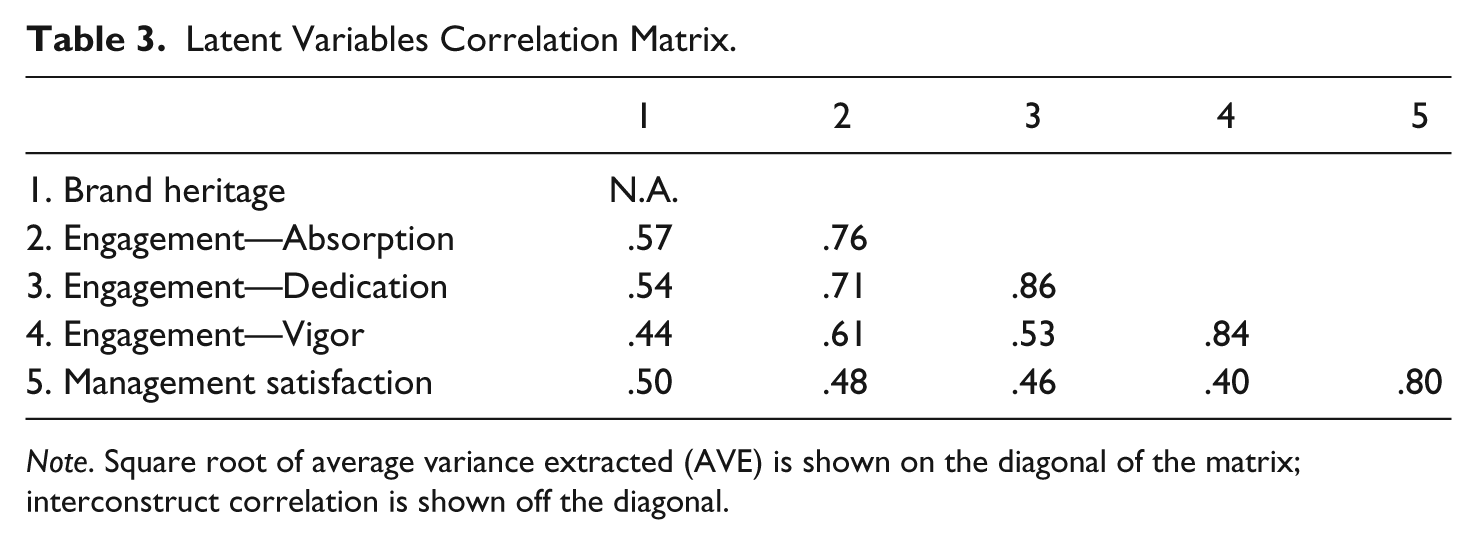
Note. Square root of average variance extracted (AVE) is shown on the diagonal of the matrix; interconstruct correlation is shown off the diagonal.
For the formative construct, we followed Diamantopoulos and Winklhofer’s (2001) four-step procedure for formative scales and constructing indexes based on formative indicators: content specification, indicator specification, indicator collinearity, and external validity. The indicators were drawn from a review of the relevant literature to capture the scope of brand heritage (e.g., Aaker, 2004; Beverland et al., 2008; Holak et al., 2007; Merchant & Rose, 2013; Wiedmann et al., 2011). The multicollinearity among the indicators was checked. The variance inflation factor (VIF) was used to assess multicollinearity (Table 2). Results show minimal collinearity among the indicators, with VIF of all items ranging between 1.23 and 2.39, below the common cutoff of 5. Thus, the assumption of multicollinearity is not violated (Chin, 2010). The majority of items in the formative construct have weight higher than .1. Three items have negative weights. For external validation, we examined whether each indicator could be significantly correlated with a “global item” that summarizes the spirit of the brand heritage scale. Therefore, an additional statement was developed: “In my opinion, this organization is a brand with heritage.” As shown in Table 4, all indicators significantly correlate with the statement; consequently, all indicators are included in this study (Taheri et al., 2014; Wiedmann et al., 2011). After following the systematic four-step approach, brand heritage can be regarded as a valid formative measurement instrument.
Test for External Validity of Formative Measure.
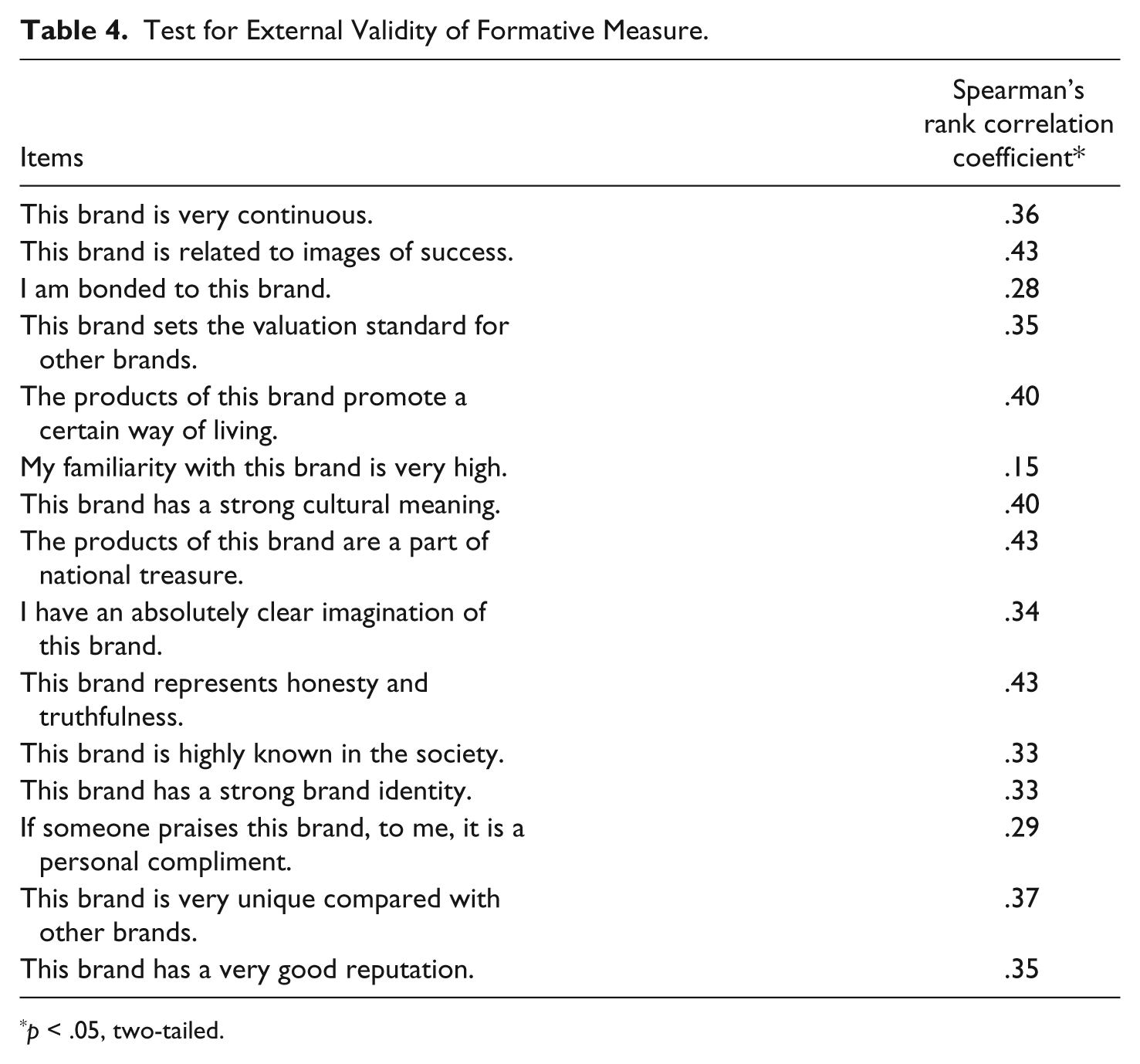
p < .05, two-tailed.
Structural Model
Before testing hypotheses, cross-validation communality and redundancy indices were employed to evaluate the quality of the structural model (Chin, 2010; Hair et al., 2014). All values of Q2 were positive and similar across omission distances, which confirm the model’s predictive relevance and stable model estimates (i.e., blindfolding procedure in SmartPLS; Chin, 2010). Table 5 shows the blindfolding estimates. Omission distances of 7 and 12 were used. The results indicate that the estimates are steady. Goodness-of-fit (GoF) index was also calculated using procedures from Tenenhaus, Vinzi, Chatelin, and Lauro (2005) and Wetzels, Odekerken-Schröder, and van Oppen (2009). The index is assessed against the GoF criterion for small (.10), medium (.25), and large (.36) effect sizes based on Cohen’s (1988) cutoff criteria. The overall GoF is .44, indicating an excellent model fit. The R2 values are greater than the recommended .10 value (Hair et al., 2010). On the structural model level, we tested the coefficient of determination R2, to determine overall model adequacy. With a value of .326 for absorption, .297 for dedication, .195 for vigor, and .324 for satisfaction with management, the model’s R2s show satisfactory explanatory power. According to Chin (2010) and Taheri et al. (2014), R2 should be higher for the formative compared with reflective models because “PLS based formative indicators are inwards directed to maximize the structural portion of the model” (Chin, 2010, p. 665). Nonetheless, when we assessed our model while considering the brand heritage construct as reflective, the value of R2s were as low as those originated by the formative model. These results show that the formative brand heritage construct is appropriate to measure work engagement and, consequently, satisfaction with management.
Blindfolding Results.
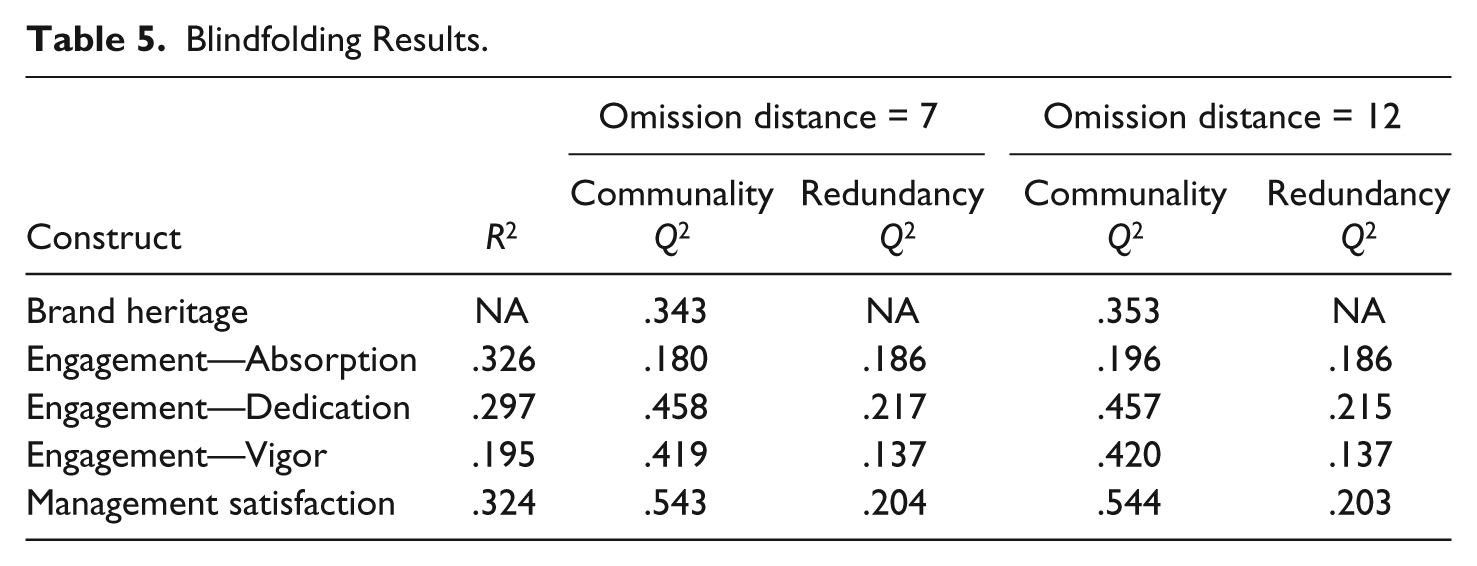
Figure 2 presents the graphical demonstration of the research model. The traditional approach advanced by Baron and Kenny (1986), testing mediation, has been criticized recently (see also Cheong & MacKinnon, 2012; Zhao, Lynch, & Chen, 2010). Zhao et al. (2010) argue that “. . . the one and only requirement to demonstrate mediation is a significant indirect effect . . .” which was tested explicitly in this study (p. 200). Table 6 shows the decomposition of effects (direct, indirect, and total). Donate and Sanchez de Pablo (2015) classify path coefficients that are below .30 causing moderate effects, from .30 to .60 as strong, and above .60 as very strong. H1, H2, and H3 present a positive impact from brand heritage to engagement sub-scales including dedication, absorption and vigor. Thus, brand heritage demonstrates a strong positive significant effect on engagement sub-scales including dedication, absorption, and vigor. Previous studies suggest the three factors of engagement—dedication, absorption, and vigor—have positive relationships upon satisfaction with management (Vecina et al., 2012); these receive empirical support from the data which show that H4, H5, and H6 have a moderate effect on satisfaction with management. Finally, results also confirm direct and indirect effects of brand heritage on satisfaction with management derived through work engagement. To estimate the magnitude of the indirect effect, Klarner, Sarstedt, Hoeck, and Ringle (2013) use the variance accounted for (VAF) value, which shows the ratio of the indirect effect to the total effect. The partial mediation is normed between 0% and 100%. Higher value indicates stronger partial mediations. Here, the VAF value of 41% indicates that approximately 40% of the total effect of brand heritage on management satisfaction is explained by the indirect effect.
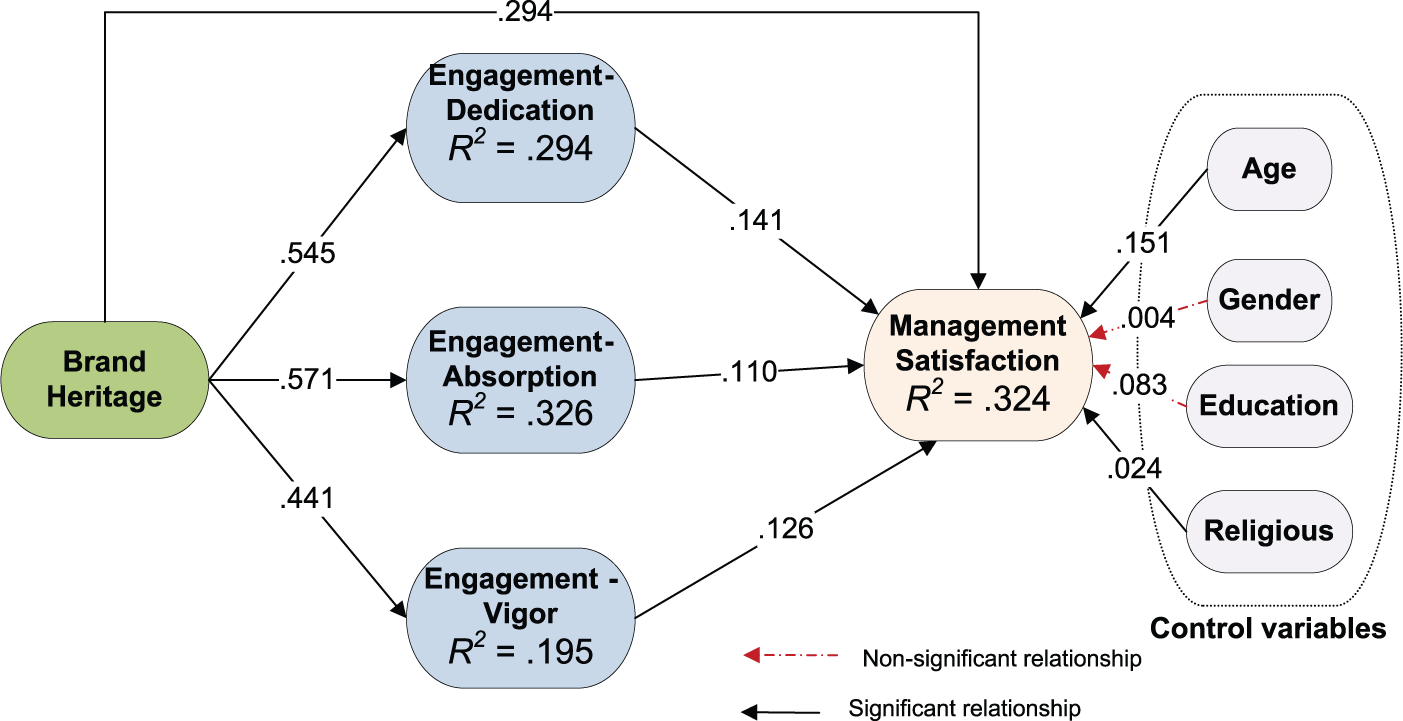
PLS results of the structural model with control variables.
Structural Model: Decomposition of Effects.
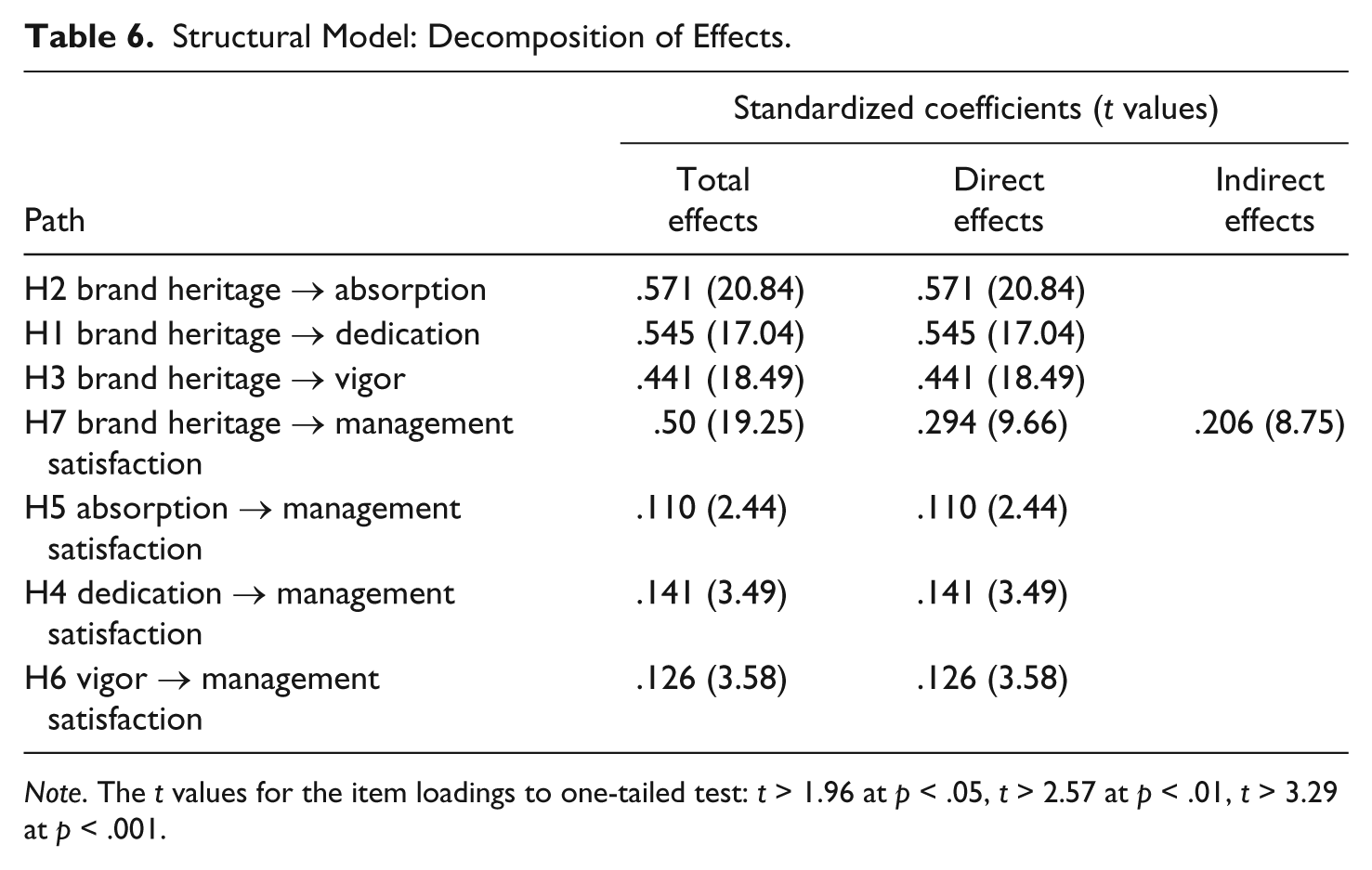
Note. The t values for the item loadings to one-tailed test: t > 1.96 at p < .05, t > 2.57 at p < .01, t > 3.29 at p < .001.
A possible explanation is that levels of engagement with an organization affect exposure and perception of its brand heritage, for example, the more engaged volunteers become, the more affected they are by perceptions of an organization’s core values, longevity, history, track record, and symbols. Consequently, deeper engagement could lead to association and appropriation of elements of an organization’s brand heritage by its volunteers, explaining the evidence of a significant indirect effect. Finally, the study further controlled the effects of participant characteristics such as age, gender, education, and religion, on management satisfaction. Age and religion were found to be significantly related to volunteers’ satisfaction with management. The relationships are positive, implying that age and religious persuasion play a role in volunteers’ satisfaction levels (Figure 2).
Discussion
Theoretical Implications
Given the increasingly competitive and difficult operating environment of nonprofit sector organizations, new approaches to managing volunteers are of increasing salience. Current research shows deeper volunteer engagement results in higher levels of satisfaction and an increased likelihood of sustaining volunteer activity (Vecina et al., 2012); however, prior to our investigation, there has been a lack of empirical evidence supporting the notion of brand heritage as a means of engagement and satisfaction enhancement. Using data from Scout volunteers, our results find strong evidence that brand heritage plays an important role in creating engaged, satisfied volunteers. Derived from volunteers’ current and past personal experiences, our results suggest brand heritage stimulates positive emotional associations between volunteers and their host organization, commensurate with current understanding of brand heritage in nonvolunteering contexts (Wiedmann et al., 2011). Through creating and testing the conceptual model, this study develops understanding of the interplay between brand heritage, volunteer work engagement, and volunteer satisfaction with management. While previous studies linked brand heritage to satisfaction among consumers (Wiedmann et al., 2011), our study further contributes through advancing prior research (Mort et al., 2007) and establishing its role in the context of volunteering. Furthermore, our findings suggest that the effect of brand heritage upon satisfaction with management is enhanced by increasing levels of engagement. Our analysis of volunteer engagement lends the three-factor structure further validation, contributing to discourse questioning its validity and supporting earlier research by Vecina et al. (2012). Our findings support the positive relationship described by Vecina et al. between engagement and satisfaction with management among volunteers.
Managerial Implications
Several managerial implications result from this study. First, our findings emphasize the potential benefits of established organizations unlocking their brand heritage and utilizing this key resource in ways that will improve volunteer engagement. Organizations with a long history, core values, positive track record, and use of symbols possess, whether consciously or not, an inherent advantage in an increasingly competitive volunteer landscape. Symbolic representations of heritage, either through traditional uniforms, ceremonies, or activities therefore constitute mechanisms through which volunteer managers can enhance volunteer engagement and facilitate higher satisfaction levels. Although modernization is important for any organization, especially those dealing with young people, management should safeguard and ensure retention of their brand heritage. Radical change must be carefully considered and, where feasible, nonprofit organizations should engage in adequate archival practices. Furthermore, our findings support the notion that the branding of an organization should be aligned with its genuine heritage, thus encouraging optimization of stakeholder harmony to deepen engagement.
Second, managers of younger organizations should seek to appropriate brand heritage by establishing connections to the organization’s past. This could involve forging links with heritage-rich groups and organizations, supporting local heritage and cultural events, or pairing an organization’s heritage with that of its benefactors, volunteers, or founders. Our findings do not particularly comment on the effectiveness of heritage appropriation on the part of younger organizations but this is an area of potential future research. The limited literature that does exist in this field suggests heritage can be obtained relatively quickly and communicated by modifying the names of organizations, or referring to heritage affiliation throughout internal and external communications. These widely transferable techniques are deployed within the university sector among newer institutions (Balmer, 2013). To this end, managers of nonprofit organizations should identify any heritage inherent to their organization and devise strategies to utilize it and, in cases of heritage deficit, enact the aforementioned appropriation strategies.
Finally, our findings suggest harmful volunteers, described by Stephen Peck, may actually represent volunteers isolated from their organization’s brand heritage, spreading discontent by eroding such connections held by other volunteers. Consequently, we call for managers to give suitable attention to the heritage of nonprofit organizations, not only appropriating it where none exists, but also to safeguard, prioritize, and utilize this value-laden asset for the benefit of volunteers, employees, and beneficiaries in an increasingly challenging nonprofit environment.
Limitations and Further Research
The results of this study are constrained to some extent by its limitations. Our survey was distributed among members of one voluntary organization rather than multiple, resulting in cross-sectional design and risk of self-selection bias (Podsakoff et al., 2003). Thus, the findings should not be viewed as clear evidence of causal relationships but, instead, as an advancement of theoretical understanding of brand heritage, particularly in relation to Scouting organizations, but indicative of similar relationships manifesting among other volunteer organizations. Distributing the survey among multiple organizations could have supported its generalizability. Other studies can also use a longitudinal design to minimize these biases and attain more robust results. We used CMV and correlation matrix (Fornell & Larcker, 1981) to overcome possible causality issues; nevertheless, causality is notoriously complex and contested (Granger, 1980), thus we invite further application of this model to other research settings. Future studies would benefit from segregation of respondents based upon years spent volunteering, thus allowing comparisons between years of service and perceptions of brand heritage to be made. Evaluation of the influence brand heritage has on prospective volunteers should thus be undertaken, potentially allowing managers to use brand heritage to attract volunteers. Given that representatives of an organization shape perceptions of its brand, understanding the effect of brand heritage on benefactors of nonprofit organizations represents an interesting area for future study. Finally, this study operationalizes brand heritage for a volunteer context, and although the scale demonstrates high reliability and validity, further research is needed to fully support its use. Nevertheless, this study makes a useful and original contribution, serving as a catalyst for future research.
Footnotes
Declaration of Conflicting Interests
The author(s) declared no potential conflicts of interest with respect to the research, authorship, and/or publication of this article.
Funding
The author(s) received no financial support for the research, authorship, and/or publication of this article.