






Abstract
Collaborations between nonprofits and corporations aim to serve both social and commercial goals. This study posits that social sponsorships can increase donations to nonprofits and simultaneously benefit corporations by communicating signals of measured societal value. Studies 1 and 2 provide evidence that communication of measured societal value, endorsed by a credible source, can increase willingness to donate to nonprofits through individuals’ perceptions of corporate social responsibility. Study 3 generalizes these findings, simultaneously showing that communication of measured societal value can reduce perceptions of hypocrisy toward corporations. It also examines the underlying mechanism of these results by investigating the serial mediation effects of corporate social responsibility perception and functional fit in the causal relationships from measured societal value to both increased willingness to donate to nonprofits and reduced perceptions of corporate hypocrisy. Furthermore, the work demonstrates that these effects are due to communication of measurement, not the source of the communication.
Keywords
Introduction
Collaborations between nonprofits and corporations provide strategic advantages to both entities (Schiller & Almog-Bar, 2013). Nonprofits can enhance their image as well as their access to resources and networks through collaborations, and corporations can improve their reputation and their competitive advantage (Schiller & Almog-Bar, 2013). For example, Ford Motor Company has partnered with the Susan G. Komen Breast Cancer Foundation as a National Series Sponsor of the Race for the Cure for over 20 years. Ford has dedicated more than US$120 million and in-kind gifts to the Foundation, with more than 75,000 employees engaged in races and events in communities throughout the country (Susan G. Komen, 2016). These types of social sponsorships are defined as “the vehicle through which resources are justifiably allocated from the profit to non-profit sector, when the company’s primary intent is the attainment of social responsibility, accompanied by compensation rewards” (Seitanidi, 1999, p. 33). In contrast to commercial sponsorships, social sponsorships address social needs, facilitating and fostering a company’s corporate social responsibility (CSR) via contributions to selected nonprofit organizations (NPOs; Seitanidi & Ryan, 2007).
While this model of cross-sector interaction has emerged as a prominent platform for companies to engage in social responsibility with nonprofits, and it can clearly benefit both entities, little is known about the measurable value of these activities for either the nonprofit or corporate partners. Bennett, Kim, and Loken (2013) showed that publicizing corporate social sponsorships can actually have a negative impact on individuals’ willingness to support nonprofits because people perceive their contributions might not matter. As both individual contributions and corporate sponsorships are essential components in the success of socio-sponsorship initiatives, it is important to understand the relative gains of nonprofits and corporations in the presumed “win–win” mechanism of their socio-sponsorship.
Looking at individual donations in the nonprofit sector, Andreoni (2006) examined how “leadership giving,” a common strategy to attract these donations, can signal the quality of the nonprofit to potential donors. The central assumption is that an early major gift can signal to other potential donors that the charity is of a high quality (Andreoni, 2006). Given the importance of an informative signal of quality in seeking individual donations, one could ask if other signals also might be effective for encouraging donations. For example, if a nonprofit is sponsored by a for-profit company, might the success of that relationship be an important signal?
Lichtenstein, Drumwright, and Braig (2004) investigated the effects of CSR initiatives on both nonprofits and for-profit corporations. They found that individuals’ perception of CSR affects donations to nonprofits through customer–corporate identification as well as purchase of a corporation’s products. This finding suggests that information supporting perceived value stemming from CSR may increase individuals’ support for both nonprofits and corporations. Notably, Du, Bhattacharya, and Sen (2010) argued that low awareness of and even skepticism toward social responsibility activities are critical impediments for corporate and nonprofit partners’ returns from their participation in sponsorships. Thus, the objective of this research is to investigate how communication of measured societal value can be an effective informative signal to enhance perception and subsequently increase intentions to donate to NPOs and foster positive stakeholder perceptions toward corporations in the context of socio-sponsorship.
Theoretical Foundation and Hypotheses
Signaling Theory
According to signaling theory, signaling conveys information to influence the decision-making processes of individuals under uncertainty and in the case of incompleteness of information (Ndofor & Levitas, 2004). Signaling can be effective in addressing the information asymmetry between buyers and sellers if it provides information to ascertain underlying or unobservable qualities of importance (Ndofor & Levitas, 2004; Spence, 1973, 2002); Similarly, the invisibility of the impact of CSR, including how it influences firm image, goodwill, employee health and motivation, stakeholder attitudes, improvement in local communities, and environment (Lankoski, 2007), can lead to incompleteness of information or information asymmetry. It can be difficult for some stakeholders (e.g., donors, corporate sponsors) to gather information (e.g., how many people were helped, how effectively perceptions of goodwill effort were understood) for their decision-making processes regarding CSR support and investment.
Lankoski (2007) described CSR outcomes as either observable or unobservable; while observable outcomes directly influence stakeholders’ attitudes and actions, unobservable outcomes can influence stakeholders only through the corporation’s valid reputation. In accordance with this thinking, we define measured societal value as quantified or statistical evidence that ascertains the unobservable qualities of CSR outcomes for community and society, and is then presented in standardized format. Measured societal value can be useful in linking needs, resources, solutions, services, and people in nonprofits and giving shape to effective demand and supply in these markets (Mulgan, 2010). It can also concretize the invisibility of goodwill into tangible activities and outcomes and define the abstract benefits in standardized terms. Subsequently, it can reduce stakeholders’ uncertainty and skepticism toward CSR outcomes, and thus potentially influence the stakeholder’s decision-making processes in CSR support and investment. Effectively, measured societal value can enhance the social meanings and perception of CSR, where CSR perception refers to stakeholders’ opinions or beliefs regarding an organization’s activities in social causes or societal obligations (Uhrich, Koenigstorfer, & Groeppel-Klein, 2014). An explicit measured societal value can communicate the effectiveness, trustworthiness, and sincerity of CSR perception. Therefore, more visible and valid claims can enhance the stakeholder’s behavioral intentions of giving to nonprofits engaged in socio-sponsorship.
Corporate Hypocrisy in Corporate Social Initiatives
Wagner, Lutz, and Weitz (2009) introduced the concept of perceived corporate hypocrisy to examine the effects of communication strategies on consumer beliefs and attitudes toward firm CSR practices. They defined corporate hypocrisy as “the belief that a firm claims to be something that it is not” (Wagner et al., 2009, p. 79) and empirically demonstrated that consumer perceptions of hypocrisy negatively affect consumer attitudes toward companies. Furthermore, Waddock and Googins (2011) showed that communicating about CSR can be paradoxical because “it often raises skepticism about the organization rather than achieving its intended aim of illustrating its contribution to society” (p. 24). They suggest that developing trust and ensuring authentic values and practices in communication can mitigate negative impacts (Waddock & Googins, 2011). Taking into consideration the growing need for transparent, trustworthy, and effective communications in CSR, we propose that articulating measured societal value would develop trust with various stakeholders and at the same time reduce the skepticism related to hypocrisy. Thus,
Fit in Socio-Sponsorship
Fit can be defined as the degree of similarity or compatibility that consumers perceive between a brand and a cause in a socio-sponsorship or CSR initiative (e.g., Lafferty, 2007; Pracejus & Olsen, 2004). Simmons and Becker-Olsen (2006) showed how fit between corporations and causes can reinforce or blur a corporation’s brand positioning. They found that high fit reinforces a corporation’s positioning with favorable attitudes toward the relationship, while “low fit dilutes a corporation’s positioning, creates dislike for the sponsorship and lowers firm equity” (p. 164).
In cause–brand alliances, Alcaniz, Caceres, and Perez (2010) described two general types of cause–brand fit: functional fit and image fit. Functional fit is an indicator for evaluating a company’s expertise, skill, and capacity in cause-brand alliances, while image fit is more symbolic and a general indicator related to honesty and trustworthiness of a corporation in cause–brand alliances. In the business-to-business (B2B) brand value framework, Leek and Christodoulides (2012) conceptualized the contributing roles of functional and emotional components separately for industrial brand equity. The functional qualities were mainly identified as technology, capacity, capability, quality, and innovation for the make-up of the B2B brand, while the emotional qualities were identified as trust, credibility, and reassurance (Leek & Christodoulides, 2012).
Mediation Role of Functional Fit in Socio-Sponsorship
We also want to note a similar contrast found in consumer behavior between functional (or utilitarian) and hedonic consumption (e.g., Batra & Ahtola, 1991). This perspective suggests that individuals engage in consumption behavior for two reasons: (a) utilitarian (functional) and (b) hedonic (affective) (Batra & Ahtola, 1991). Overall, a utilitarian benefit results from the functions and instrumentality of products or services, while a hedonic benefit results from the sensations or the image derived from products or services (Batra & Ahtola, 1991).
Given that socio-sponsorship is already socially oriented, stakeholders may focus their expectations for functional value in the management of the cause being supported. Popular press writings often suggest that charities overspend on management. Furthermore, owing to the unique and frequently unobservable or invisible societal outcomes of socio-sponsorship, stakeholders might have low awareness of and even skepticism about the actual functional relationship of these initiatives for society. In this case, the communication of measured societal value that highlights key performance of the social initiative can enhance CSR perception, and subsequently influence stakeholders’ attitudes through the perceived functional relationship of the cause to society. As stakeholders perceive that the functional relationships of causes are successful, they are more likely to have positive attitudes toward organizations in social initiatives. Therefore, it is important for the current discussion that CSR perception and functional fit be treated as serial mediators, linking communication of measured societal value to stakeholders’ perceptions and attitudes toward organizations engaged in social initiatives. Thus,
In the following empirical work, Study 1 is designed to examine whether communication of measured societal value can enhance individuals’ WTD to nonprofits. Study 2 replicates the finding of Study 1 with more complexity. Study 3 generalizes the findings of Studies 1 and 2 with a more representative sample. It simultaneously examines how measured societal value can reduce perceptions of hypocrisy toward a corporate sponsor. Figure 1 presents a visual conceptual model to highlight the relationships examined in this research.
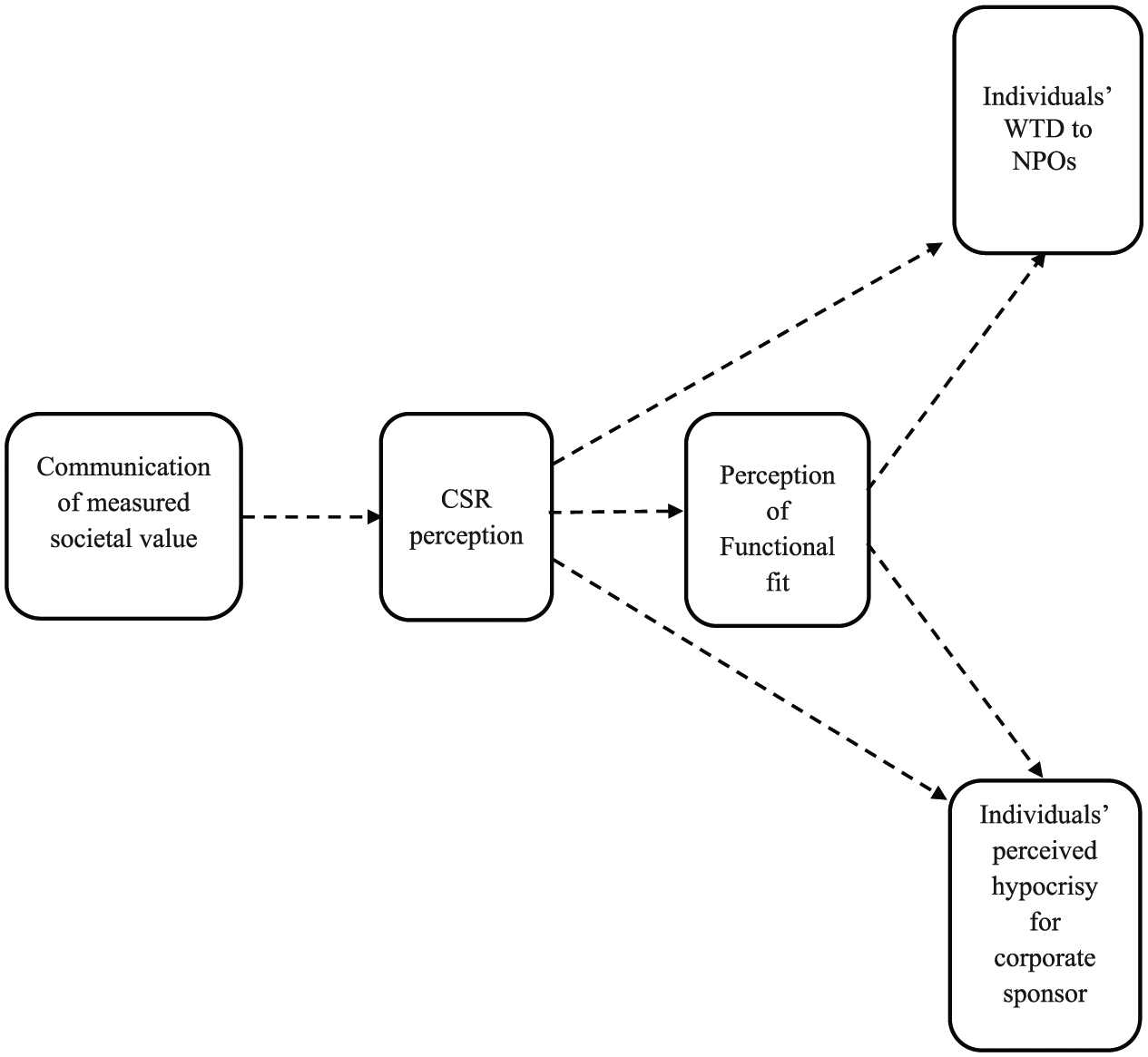
A conceptual model of the impacts of communicating measured societal value.
Study 1
To examine individuals’ behavioral intentions to donate to NPOs, we utilized contingent valuation method (CVM) to measure WTD to NPOs as a dependent variable. We conducted a survey with an experimental design. The first part of the survey asks respondents to read a simulated press release that depicts a recreational sport activity in the form of a collaborative socio-sponsorship initiative between an NPO and a corporation. Subsequently, the second part asks the respondents to answer questions related to their perceptions and attitudes toward the organizations according to stimuli in the simulated press release. Furthermore, they were also asked about how much they would donate to the NPO. We selected the context of recreational sport activity because of its popularity and the need for recreational sport initiatives to communicate their social contributions.
Method
Stimuli development, treatment, and communication source
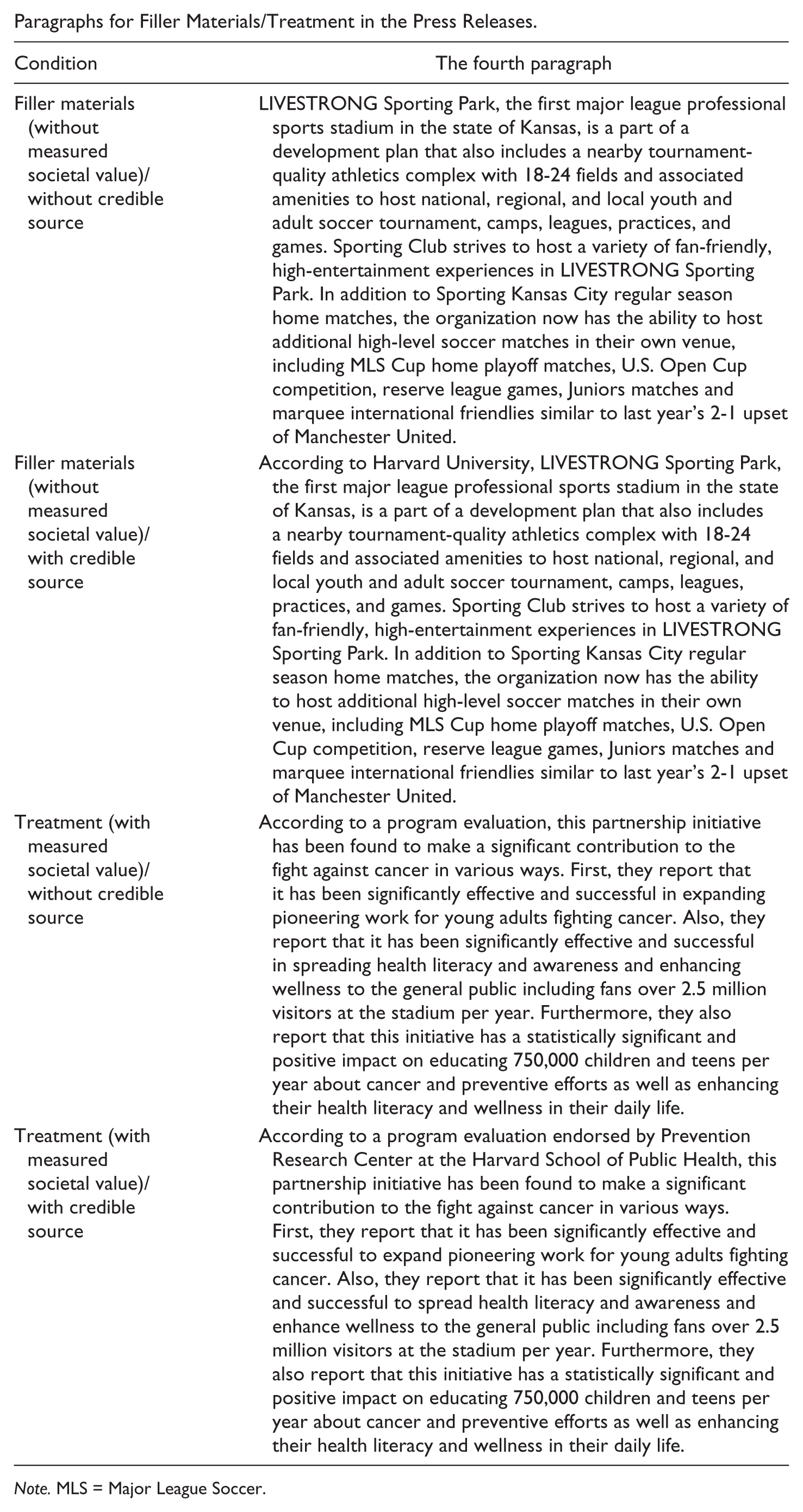
In designing the experimental survey, we selected five different collaborative sport or recreation-based social initiatives for our stimuli development. The cases were (a) UnitedHealth Group and YMCA, (b) Coca-Cola Company and Boys & Girls Club of America, (c) Microsoft Corporation and Right to Play, (d) Gatorade Company and Women’s Sports Foundation, and (e) McDonald’s Corporation and Lose the Training Wheels. The first four cases were real and the last one was fictitious. We chose these brands based on the criteria of being recognizable corporate partners. Five different sets of press releases for the five different social initiatives were constructed as stimuli. A set of press releases for each social initiative consisted of a control condition survey and an experimental condition survey, describing the collaborative relationship and activities between an NPO and a corporation. Each press release had four paragraphs including an announcement about the collaborative initiative, a description of the corporation, a description of the NPO, and a manipulation paragraph constituting the experimental treatment. The first three paragraphs were identical in both the control condition and experimental condition survey. The fourth manipulation paragraph included filler materials for the control group and measured societal value for the experimental group. Thus, while the control group read a paragraph of filler information (e.g., plans, objectives, activities), the experimental group read a paragraph describing the measured societal value in standardized format, using quantification and statistical evidence (e.g., how effectively people were being helped or benefited; see Appendix A).
Given past research that documents the importance of sources in communication (e.g., Dean & Biswas, 2001), we used a credible third party organization, Harvard University, as an endorser for the measurement of societal value. According to Kaufman, Stasson, and Hart (1999), high credibility sources are perceived as more “believable, factual, accurate and true,” while low credibility sources are often perceived as presenting false information “regardless of communication strength” (p. 1993). The issue of message channel bias has also been discussed in previous research (Du et al., 2010; Weiner, LaForge, & Goolsby, 1990), which has suggested that NPOs are perceived to be less self-interested and biased than corporations as the message channel because people are less critical of a message coming from an NPO (Weiner et al., 1990). To control this bias, the message channel was articulated as the respective NPO in all stimuli.
Design, procedure, and sample
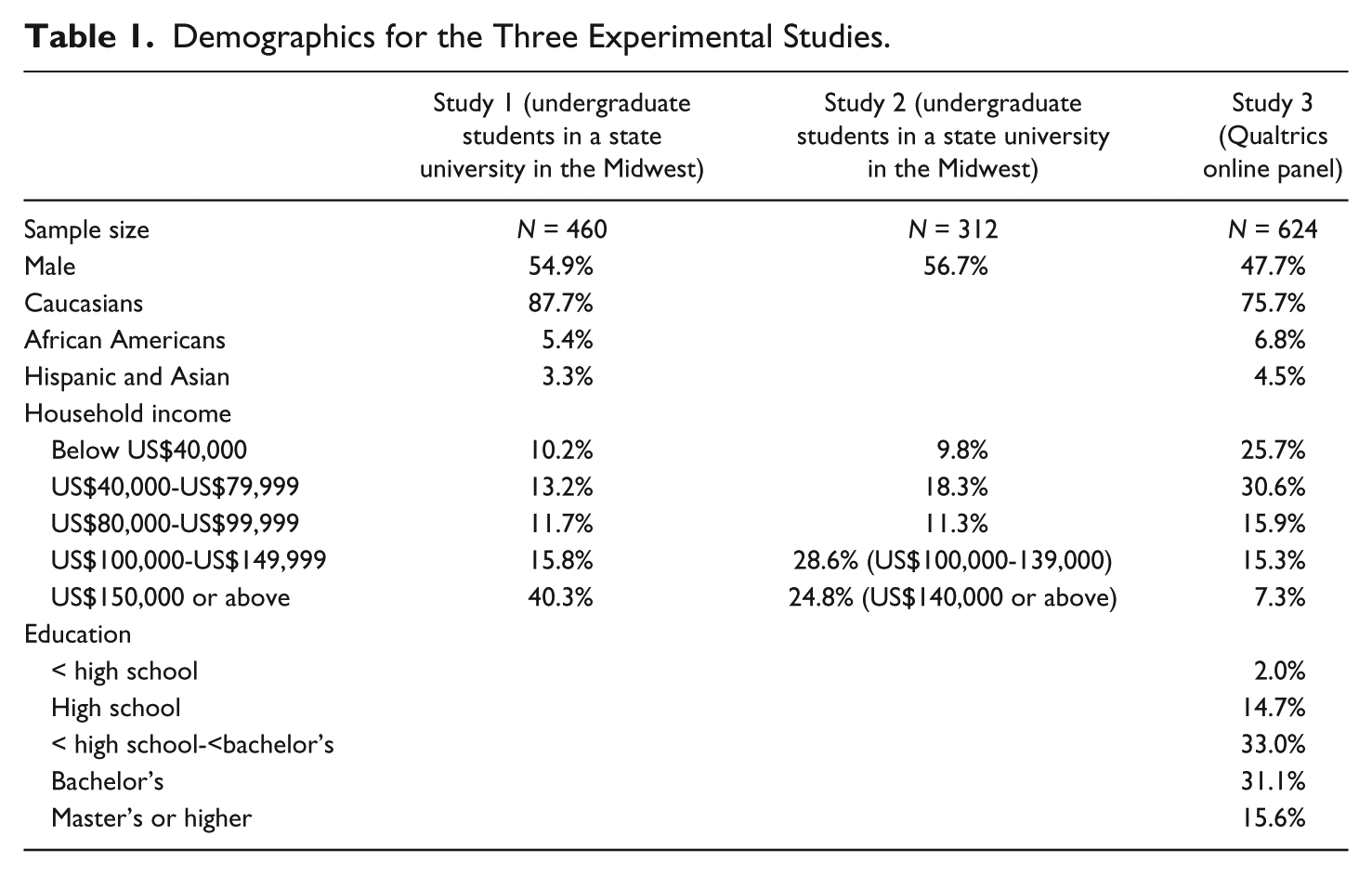
A 2 (with/without measured societal value) × 5 (five NPO brands) between-subject factorial design was used in the experiment. A two-way analysis (ANOVA) was designed with two main factors (measured societal value and five different NPO brands). Four hundred sixty undergraduate students participated in the study at a large state university located in the Midwestern United States (see Table 1 for demographics) and were randomly assigned to one of 10 experimental conditions (see Table 2). In theory-oriented research, homogeneous samples of students are appropriate to generate inferences regarding theoretical relationships as such a sampling approach minimizes between-subject variance as random error when individual differences are not of main interest (Sternthal, Dholakia, & Leavitt, 1978).
Demographics for the Three Experimental Studies.
WTD Values for the Three Experimental Studies.
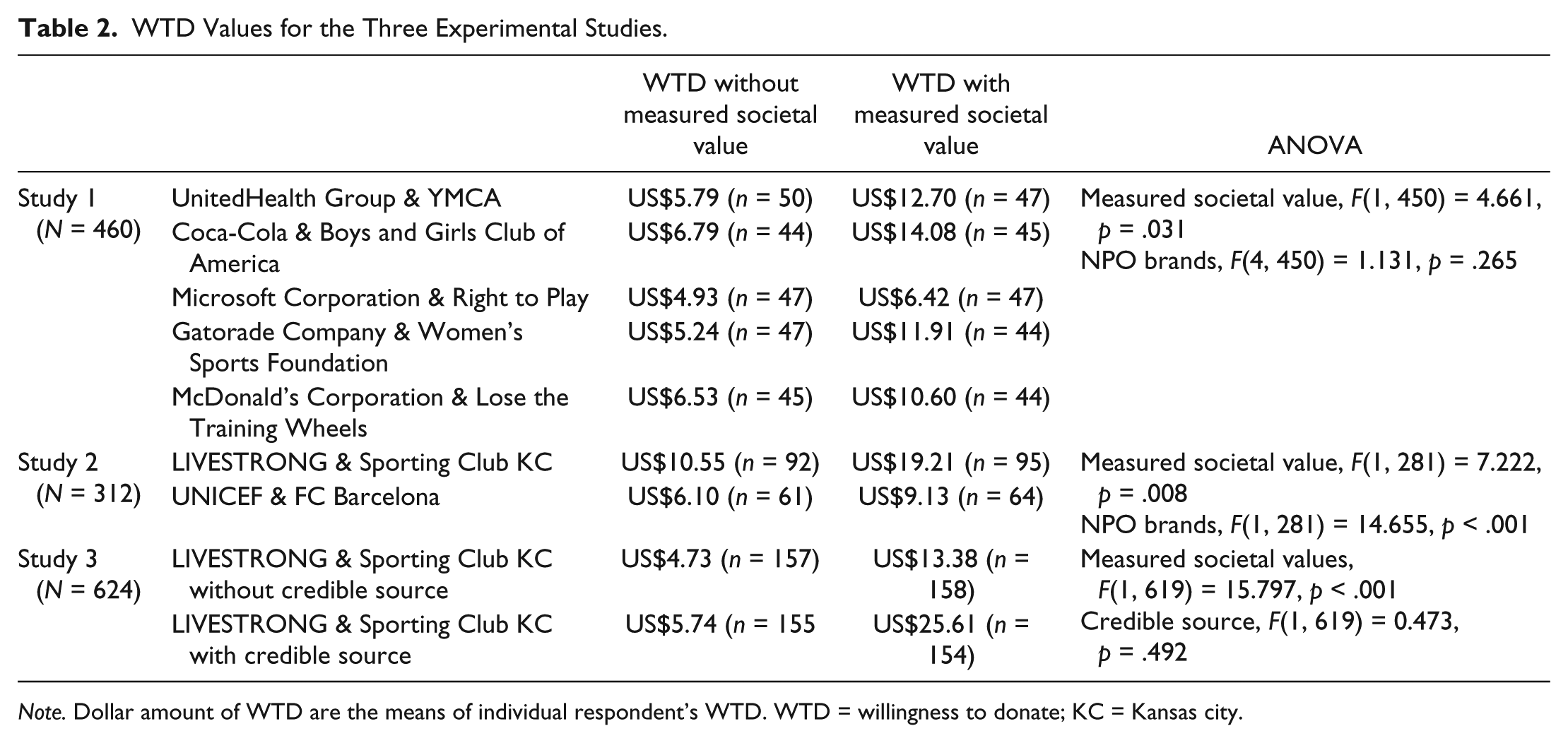
Note. Dollar amount of WTD are the means of individual respondent’s WTD. WTD = willingness to donate; KC = Kansas city.
Measure
To measure WTD to nonprofits engaged in socio-sponsorship, we adapted the CVM. CVM is a survey-based approach to estimate monetary values placed on public goods or nonmarket goods in economics (Haab & McConnell, 2002). Typically, willingness to pay (WTP) is elicited via referendum or donation format in a specific hypothetical scenario. In this study, the scenario was developed based on the hypothetical condition of measured societal value communicated in the experimental group (see Appendix A). One of the strengths of CVM is to put a financial value on difficult-to-measure or unobservable values/utilities based on the contingent scenario. One of the weak points of CVM is that it can raise hypothetical bias and overestimation. To reduce the hypothetical bias in measurement of WTD, we adapted the donation format of CVM using multiple bounded discrete choice (MBDC) elicitation developed by Welsh and Poe (1998). This approach required respondents to express a level of decision certainty for each amount of their WTD by selecting one of the five levels including definitely no, probably no, don’t know, probably yes, and definitely yes (see Appendix B). The maximum dollar amount indicating “definitely yes” was chosen as the dependent variable of individual’s WTD to reduce the hypothetical bias found in the donation format of CVM.
Results
For all five initiatives, the mean WTDs were higher for NPOs with measured societal value than for those without measured societal value. While there was some variability in differences across conditions with NPO brands of high or low prominence, all the means of WTD were in the expected directions (see Table 2). The results from an ANOVA with the square root–transformed WTD show that measured societal value had a significant effect on WTD for the five different NPOs (Mwithout measured value = 2.07, SD = 1.54, vs. Mwith measured value = 2.44, SD = 2.10); F(1, 450) = 4.661, p = .031. The amount of WTD did not significantly vary by the different NPO brands, F(4, 450) = 1.131, p = .265. There was no significant interaction between the two main factors, measured societal value and NPO brand, F(4, 450) = 0.135, p = .969.
Findings
The results show that there was increased WTD to NPOs based on whether the measured societal value was communicated or not. Given that the nonprofit sector has been the less powerful and undervalued partner in corporate–cause relationships (Lichtenstein et al., 2004), the approach of communicating social meanings based on measured societal value is demonstrated here as one approach to increase donations. The findings are, however, limited. To be generalizable, different forms of socio-sponsorships with more complexity and variety are needed, and the underlying mechanism of these results needs to be explained. Studies 2 and 3 were designed to address these issues.
Study 2
Method
Stimuli development, design, and sample
Typically in sport sponsorship, a corporate entity enters an agreement with a sport property where the sport property receives cash or in-kind benefits often in exchange for the communications potential offered by aligning with the sport property (IEG, 2000). In the examples utilized here, however, it is the sport property that pays (donates to) the cause or beneficiary cause partner. These sport properties have other traditional relationships, but in these cases made a strategic decision to create a cause-related partnership.
One example is the (now former) relationship between Sporting Club of Kansas City and the LIVESTRONG Foundation. This collaboration between the Major League Soccer (MLS) team owner, Sporting Club, and the LIVESTRONG Foundation funded the fight against cancer through naming rights of the LIVESTRONG Sporting Park. The LIVESTRONG Foundation was a title sponsor of this MLS team’s home stadium from March 2011 to January 2013. The naming agreement was terminated after Lance Armstrong admitted that he used performance-enhancing drugs. We used this case as a context for our study and conducted an experimental study while the partnership was ongoing. Thus, participants were not exposed to its unexpected termination. A second case we explored was the relationship between UNICEF and FC Barcelona, a European soccer club. This partnership supported the fight against HIV and AIDS in children in developing countries. In both cases, the professional sport organizations, Sporting Club and FC Barcelona, were the corporate entities, and the beneficiary partners, LIVESTRONG Foundation and UNICEF, were the NPOs.
The same approach used in Study 1 was used for stimuli development in Study 2 with the selected two collaborative initiatives, including three identical introductory paragraphs and one treatment paragraph in a stimulated press release. A 2 (with/without measured societal value) × 2 (two NPO brands) between-subject factorial design was used in the experiment. Three hundred twelve students participated in the study at a large state university located in the Midwestern United States (see Table 1 for demographics). Participants were randomly assigned to one of four experimental groups.
Measures
The same donation mechanism of CVM was used to measure WTD as in Study 1. CSR perception was measured in terms of effectiveness, trustworthiness, and sincerity. These items included “ . . . the social performance of the initiative is effective,” “ . . . the social performance of the initiative is trustworthy,” and “ . . . the social performance of the initiative is sincere.” All measures used 7-point rating scales (1 = strongly disagree; 7 = strongly agree). Principal components analysis showed that all three items of CSR perception demonstrated a unidimensionality with one factor accounting for 76.46% of the total variance. Also, the three items exhibited a high degree of reliability (Cronbach’s α = .84).
Results
For both of the cases examined, the mean WTD values were higher for NPOs with measured societal value than for those without measured societal value (see Table 2). While there was some variability across conditions with high or low prominence in NPO brands, all of the WTD means were in the expected directions. The results from the ANOVA with the square root–transformed WTD showed that measured societal value had a significant effect on WTD for the two different NPOs (Mwithout measured values = 2.48, SD = 1.76, vs. Mwith measured values = 3.25, SD = 2.28); F(1, 281) = 7.222, p = .008. The amount of WTD also varied significantly by the different NPO brands, F(1, 281) = 14.655, p < .001, with the LIVESTRONG Foundation indicating higher WTD than UNICEF. This result is understandable given the popularity of LIVESTRONG Foundation’s initiatives among college students in the United States and the relative distance to the European team. There was no significant interaction between measured societal value and NPO brands, F(1, 281) = 2.074, p < .151.
Structural equation modeling (SEM) was used to test for the hypothesized mediation effect of CSR perceptions in the causal relationship from measured societal value to WTD. The partial mediation model results provided a better fit (chi-square / df = 12.692 / 4 = 3.173, Comparative Fit Index (CFI) = .981, Tucker Lewis Index (TLI) = .927, Incremental Fit Index (IFI) = .981, Relative Fit Index (RFI) = .897, Normed Fit Index (NFI) = .973, Root Mean Square Error of Approximation (RMSEA) = .083), compared with the full mediation model (chi-square / df = 19.804 / 5 = 3.961, CFI = .967, TLI = .901, RFI = .871, NFI = .957, RMSEA = .096). As shown in the partial mediation model in Figure 2, measured societal value positively influenced WTD (β = .16, p = .007). In addition, measured societal value positively and significantly influenced CSR perception (β = .15, p = .011), which subsequently positively influenced WTD to nonprofits (β = .15, p = .013). These findings support H1.
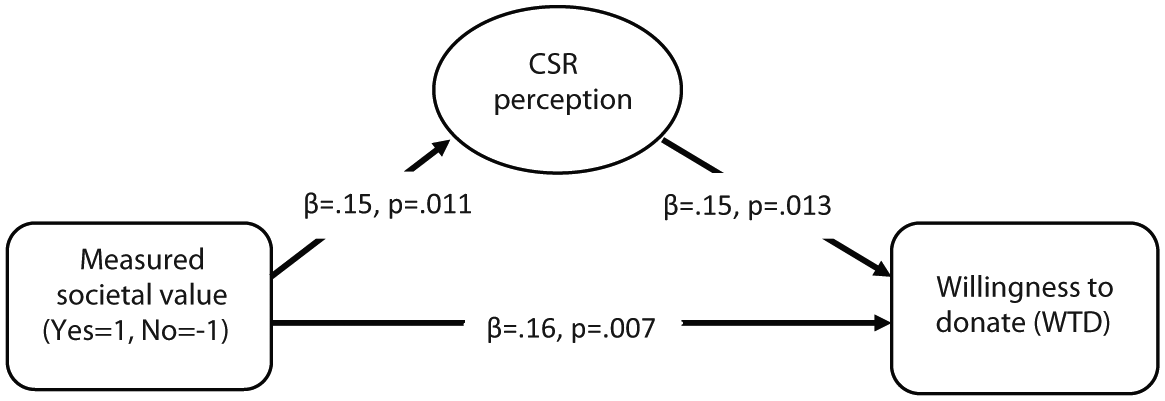
Partial mediation model of CSR perception from measured societal value to WTD.
Findings
The results showed that there was increased WTD to NPOs based on whether the measured societal value was communicated in the simulated press release and that this was further enhanced through mediation effects of CSR perception. These findings revealed the underlying mechanism of these results by highlighting the partial mediation effect of CSR perception in the causal relationships of measured societal value to increased WTD.
Second, Study 1 and Study 2 measured individuals’ behavioral intention of WTD to NPOs; thus, focusing on WTD offers an economically interesting outcome of the sponsorship relationship. It is often assumed that cognition causes affective response, subsequently resulting in behavioral outcomes in sponsorship as in the hierarchical information–processing model of advertising (Cornwell, Weeks, & Roy, 2005). However, the cognitive–affective–behavioral relationship is not guaranteed. Given that the current sponsorship literature has been mainly focused on examining the cognitive (e.g., memory, recall) and affective (e.g., attitude) outcomes, this work offers a behavioral intention measure as an indicator of sponsorship effectiveness.
In both Studies 1 and 2, to ensure respondent believability of the communicated measured societal value, a credible third party organization was given as an endorser for the measurement. Admittedly, source credibility has been discussed as one factor influencing outcomes within persuasion and attitude-change literature because a highly credible source is perceived as offering expertise and being trustworthy (Kaufman et al., 1999). Thus, Study 3 is intended to separate the effect of the measured societal value on WTD from any effect of credible source, simultaneously examining how measured societal value can reduce any perceptions of corporate hypocrisy toward a corporate sponsor.
Study 3
Method
Stimuli development, design, and sample
Study 3 used the same simulated press release about the Sporting Club and LIVESTRONG Foundation partnership case. A 2 (with/without measured societal value) × 2 (with/without credible source) between-subject factorial design was used. We recruited a sample (N = 624) (representative of the U.S. Census in terms of gender, income, race, education, age [above 19]) through the Qualtrics panel service, paying US$5 compensation per respondent (see Table 1 for demographics).
Measures
Similar to Studies 1 and 2, CVM was used to measure WTD to a nonprofit. Perception of corporate hypocrisy was measured as an outcome variable by adapting three reverse coded items from Wagner et al. (2009). Items included “ . . . does exactly what it says,” “ . . . keeps its promise,” and “ . . . puts its word into action.” The same CSR perception measure was used in terms of effectiveness, trustworthiness, and sincerity as in Study 2. Functional fit and image fit between corporation and nonprofit partner were measured using the standard of Alcaniz et al. (2010), who followed the methodology of Lafferty, Goldsmith, and Hult (2004). Participants were asked to respond to the following items: “The functional fit or collaboration of LIVESTRONG Foundation and Sporting Club is . . . ” and “The image fit or association of LIVESTRONG Foundation and Sporting Club is . . . ” by responding to five 7-point semantic differential items anchored with incompatible/compatible, meaningless/meaningful, not complementary/complementary, doesn’t go together/go together, and illogical/logical.
Results
Measurement model validating measures
We employed confirmatory factor analysis to assess the validity of the multiple items measuring the constructs of corporate hypocrisy, CSR perception, functional fit, and image fit. Using the maximum likelihood estimation procedure, the measurement model represents the four constructs with a good fit to the data (N = 624, chi-square / df = 699.173 / 98 = 7.134, CFI = .954, TLI = .936, IFI = .954, RFI = .927, NFI = .947, RMSEA = .099). All indicators loaded significantly on the constructs as expected, showing the convergent validity. They ranged from .92 to .95 for corporate hypocrisy, .89 to .91 for CSR perception, .99 to .92 for functional fit, and .89 to .95 for image fit. Furthermore, all indicators also exhibited reliability with Cronbach’s alphas ranging from .85 to .96. Considering that there was no correlation more than .85 between constructs (Kline, 2005) and there was no squared correlation (.49-.70) between one and any others bigger than Average Variance Extracted (AVE) (0.79-.89) for each construct (Fornell & Larck, 1981), discriminant validity was established.
Two-way ANOVA results
As shown in Table 2, the two-way ANOVA with the square root–transformed WTD as the dependent measure shows that measured societal value itself significantly increased WTD (Mwithout measured value = 1.40, SD = 1.82, vs. Mwith measured value = 2.34, SD = 3.74); F(1, 619) = 15.797, p < .001. On the contrary, credible source was not shown to be significant in increasing WTD (Mwithout credible source = 1.78, SD = 2.43, vs. Mwith credible source = 1.95, SD = 3.44); F(1, 619) = 0.473, p = .492. There was no significant interaction between measured societal value and source effect, F(1, 619) = 0.073, p = .787.
Principal components analysis showed that the three corporate hypocrisy items demonstrated a unidimensionality with one factor accounting for 92.43% of the variance. Subsequently, we conducted a two-way ANOVA on the summed measure of corporate hypocrisy with two factors of measured societal value and credible source. The results showed that measured societal value itself significantly reduced perceptions of corporate hypocrisy, F(1, 612) = 29.981, p ≤ .001, while credible source was not significant in this reduction, F(1, 612) = 0.165, p = .685. There was no significant interaction between measured societal value and source effect for corporate hypocrisy, F(1, 612) = 0.179, p = .672.
From these findings, we can conclude that communication of measured societal value can induce both increased WTD to nonprofits and reduced perception of corporate hypocrisy toward sponsors beyond the endorsement effect of a credible source. To examine the underlying mechanism of these results, we employed SEM.
The mediation effects of CSR perception and functional fit
SEM was used to test the hypotheses including mediation effects in the causal relationship (Iacobucci, Saldanha, & Deng, 2008). Figure 3 depicts the mediation roles of CSR perception and fit measures in the relationships between measured societal value and both WTD to a nonprofit and perception of corporate hypocrisy (N = 624, chi-square / df = 869.456 / 122 = 7.127, CFI = .941, TLI = .917, IFI = .941, RFI = .905, NFI = .932, RMSEA = .099). As shown in the model in Figure 3, measured societal value significantly enhanced CSR perception (β = .31, p < .001), which subsequently enhanced functional fit (β = .80, p < .001) and image fit (β = .78, p < .001). The model also supports the finding that measured societal value increased WTD through the serial mediation effects of CSR perception and functional fit, supporting H3. In addition, it supports the finding that measured societal value reduced perception of corporate hypocrisy through the mediation effect of CSR perception (H2) and the serial mediation effects of CSR perception and functional fit (H4). Interestingly, the direct effect of measured societal value on WTD to a nonprofit was not significant (β = .07, p = .070) and the direct effect of measured societal value on the reduced perception of corporate hypocrisy was also not significant (β = .01, p = .940). As for the inquiry into whether perceived corporate hypocrisy might influence WTD, the model shows that the directional effect from corporate hypocrisy to WTD was not significant (β = .11, p = .091). Importantly, the model also demonstrates that image fit was not a significant mediator for increased WTD (β = −.25, p = .069) nor was it a significant mediator for reduced perceptions of corporate hypocrisy (β = .13, p = .172).
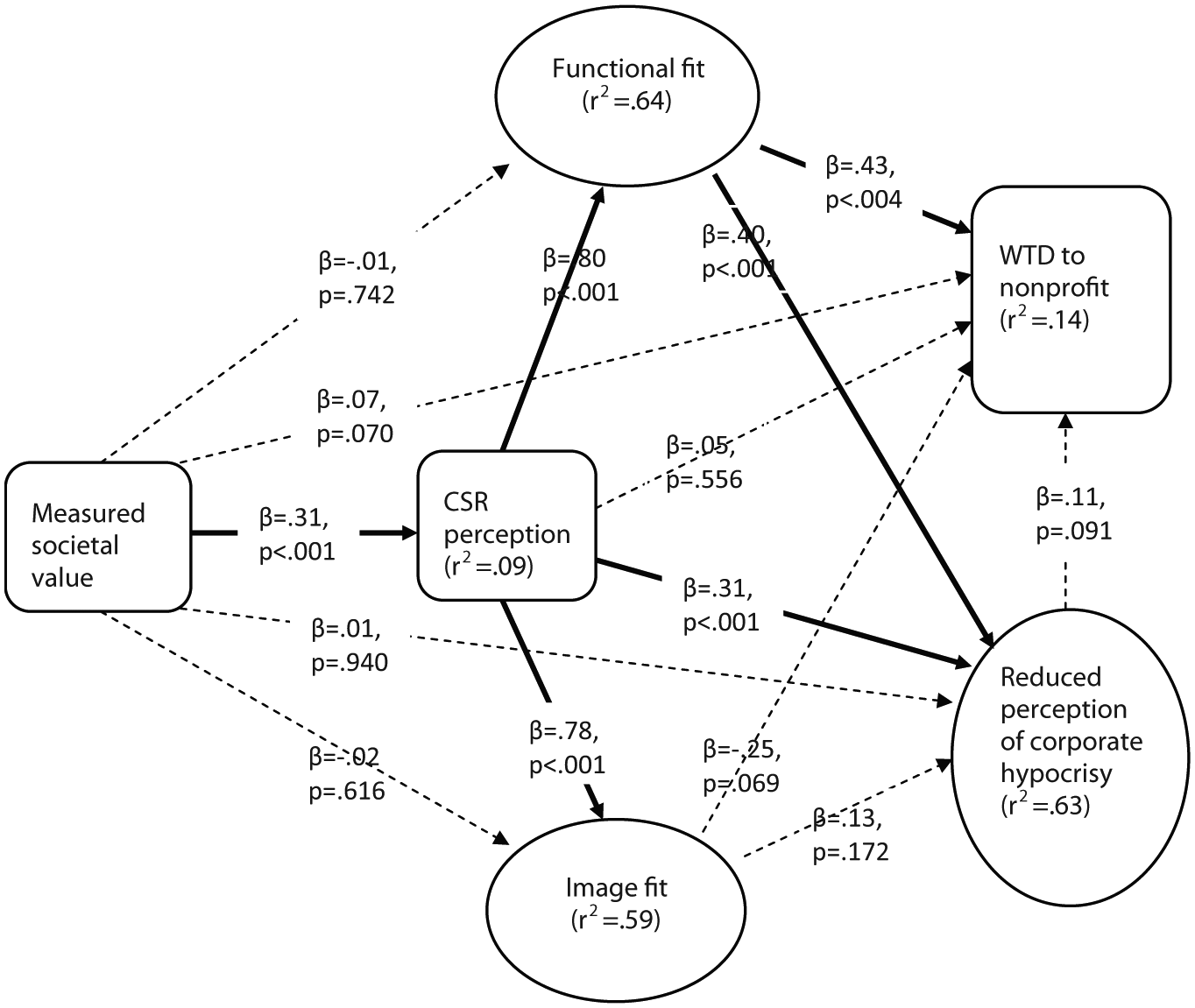
Mediation model of functional fit and image fit from measured societal value to both WTD and corporate hypocrisy.
Findings
Study 3 generalized the findings that communicating measured societal value increases WTD to nonprofits in a socio-sponsorship with a more representative sample than student samples. Simultaneously, the findings showed that the communication of measured societal value reduced perceived hypocrisy toward a corporate sponsor. Importantly, the work demonstrated the serial mediation roles of CSR perception and functional fit that link measured societal value to both enhanced WTD and reduced corporate hypocrisy.
As a complementary effort to reinforce the win–win relationship between nonprofits and corporate sponsors, the findings showed how communicating measured societal value can improve outcomes of both partners. The study also identified the underlying needs of utilitarian/functional value for those exposed to socio-sponsorship initiatives beyond hedonic or “good feeling” needs. Subsequently, it emphasized the significance of leveraging the functional relationship and utilitarian value to attract individual contributions to nonprofits as well as support to corporate sponsors by highlighting the mediation effects of functional fit in the structural model.
Discussion and Implications
This study suggests communication utilizing the measured societal value of a socio-sponsorship results in multiple benefits to NPO partners and corporate sponsors. In particular, this study used measured societal value endorsed by a credible source as specific additive information to communicate the successful delivery of a socio-sponsorship. The results demonstrated that measured societal value significantly increased WTD to NPOs, and reduced perceived hypocrisy toward corporate sponsors through the mediation of CSR perception, supporting H1 and H2. More specifically, the findings highlight that measured societal value increased WTD and reduced perceived corporate hypocrisy through the serial mediation effects of CSR perception and functional fit beyond the endorsement of a credible source, supporting H3 and H4. To address challenges that arise from the invisibility of societal outcomes and the paradoxical nature of communication in socio-sponsorships, measurement-based marketing communication can efficiently validate the societal functional value with stakeholders, as well as enhance the visibility and transparency of communication.
The findings imply the importance of both measurement and communication for the societal utilitarian/functional value to maximize the benefits to multiple stakeholders involved in collaborative social initiatives. These findings have significant implications to academicians, practitioners, businesses, nonprofits, and policy makers and provide an understanding of how to strategically utilize social initiatives to enhance the simultaneous returns for various stakeholders in business and society.
The study encourages nonprofits and corporate sponsors to better document successful and meaningful outcomes to beneficiaries, communities, and society for effective communication with stakeholders. Also, the study might imply how the communication of measured societal value could be operationalized in a socio-sponsorship initiative. First, given that CSR outcomes are frequently difficult to measure in the areas of social equity, health, education, and environment, investment in research and development is required to measure societal value in more standardized and systematic ways in socio-sponsorships. It would be important to discuss what the expected outcomes should be for beneficiaries and specify the objectives and procedures of socio-sponsorships. Survey administration using standardized, quantifiable, and systematic instruments would be an effective approach for psychometric measurement of the societal benefits for beneficiaries. Also, an experimental approach using before-and-after tests or a longitudinal data collection might be appropriate to capture the developmental outcomes of the social initiative over time. Second, the measured societal value could be strategically communicated with stakeholders through press releases, business magazines, social media, or websites to achieve communication objectives.
Limitations and Directions for Future Research
Although this study provides interesting findings, there are some limitations for generalizability. Study 3 recruited a representative sample of the U.S. census using the Qualtrics panel, but these are a self-selected group of participants with distinct motivations. Therefore, the findings of this study are limited but still more representative than those of the student samples of Studies 1 and 2. Also, only seven partnership examples were selected for stimuli development in the experiments. Further research is required to generalize the findings by including specific characteristics of NPOs and corporations in terms of brand, size, and market prominence. In addition, considering that the filler materials failed to become a completely vague societal value condition to examine the effect of measured societal value as a counterpart condition, further research should be developed with a more strictly designed experiment.
Also, hypothetical bias and social desirability bias cannot be completely excluded in measuring WTD to nonprofits because donations can be considered as socially responsible and desirable. Future research should be developed as a randomized, controlled field experiment in partnership with either a corporation or a nonprofit. Allowing respondents to visit actual Internet websites of partnering corporations and NPOs and having them respond to these initiatives in more realistic ways would be effective in examining their actual donation intentions and help to reduce social desirability bias and hypothetical bias.
Finally, in one of our cases, the naming agreement between Sporting Club Kansas City and the LIVESTRONG Foundation was terminated due to a celebrity athlete’s scandal. Future research can examine how measurement-based marketing communication utilizing validated evidence for functional/utilitarian value to communities and society can help NPOs recover from scandals. This information might be compelling to various stakeholders of NPOs (e.g., donors, consumers, corporate sponsors) to recover from damaged relationships with tainted entities, to demonstrate their efforts to repent, and show their ultimate commitment and dedication to social amelioration.
Conclusion
Through this research, we show that communication of measured societal value can benefit both nonprofits and corporate sponsors in collaborative social initiatives because measured societal value effectively validates the societal functional or utilitarian roles of social initiatives. This research adds to the literature on nonprofits, sponsorship, CSR, and marketing communication by identifying the mediating roles of CSR perception and functional fit in the underlying mechanism of socio-sponsorship. Furthermore, we suggest communication utilizing the measurement (or evidence) of the social impact as efficient in achieving the real win–win relationship in corporate–nonprofit partnerships and in overcoming challenges that stem from invisible outcomes of social initiatives and the paradoxical nature of CSR communication. This research also indicates the significance of measurement and communication about the intangible benefits to community, business, and society in making nonprofit–corporate social contributions more visible.
Footnotes
Appendix A
Paragraphs for Filler Materials/Treatment in the Press Releases.
| Condition | The fourth paragraph |
|---|---|
| Filler materials (without measured societal value)/without credible source | LIVESTRONG Sporting Park, the first major league professional sports stadium in the state of Kansas, is a part of a development plan that also includes a nearby tournament-quality athletics complex with 18-24 fields and associated amenities to host national, regional, and local youth and adult soccer tournament, camps, leagues, practices, and games. Sporting Club strives to host a variety of fan-friendly, high-entertainment experiences in LIVESTRONG Sporting Park. In addition to Sporting Kansas City regular season home matches, the organization now has the ability to host additional high-level soccer matches in their own venue, including MLS Cup home playoff matches, U.S. Open Cup competition, reserve league games, Juniors matches and marquee international friendlies similar to last year’s 2-1 upset of Manchester United. |
| Filler materials (without measured societal value)/with credible source | According to Harvard University, LIVESTRONG Sporting Park, the first major league professional sports stadium in the state of Kansas, is a part of a development plan that also includes a nearby tournament-quality athletics complex with 18-24 fields and associated amenities to host national, regional, and local youth and adult soccer tournament, camps, leagues, practices, and games. Sporting Club strives to host a variety of fan-friendly, high-entertainment experiences in LIVESTRONG Sporting Park. In addition to Sporting Kansas City regular season home matches, the organization now has the ability to host additional high-level soccer matches in their own venue, including MLS Cup home playoff matches, U.S. Open Cup competition, reserve league games, Juniors matches and marquee international friendlies similar to last year’s 2-1 upset of Manchester United. |
| Treatment (with measured societal value)/without credible source | According to a program evaluation, this partnership initiative has been found to make a significant contribution to the fight against cancer in various ways. First, they report that it has been significantly effective and successful in expanding pioneering work for young adults fighting cancer. Also, they report that it has been significantly effective and successful in spreading health literacy and awareness and enhancing wellness to the general public including fans over 2.5 million visitors at the stadium per year. Furthermore, they also report that this initiative has a statistically significant and positive impact on educating 750,000 children and teens per year about cancer and preventive efforts as well as enhancing their health literacy and wellness in their daily life. |
| Treatment (with measured societal value)/with credible source | According to a program evaluation endorsed by Prevention Research Center at the Harvard School of Public Health, this partnership initiative has been found to make a significant contribution to the fight against cancer in various ways. First, they report that it has been significantly effective and successful to expand pioneering work for young adults fighting cancer. Also, they report that it has been significantly effective and successful to spread health literacy and awareness and enhance wellness to the general public including fans over 2.5 million visitors at the stadium per year. Furthermore, they also report that this initiative has a statistically significant and positive impact on educating 750,000 children and teens per year about cancer and preventive efforts as well as enhancing their health literacy and wellness in their daily life. |
Note. MLS = Major League Soccer.
Appendix B
Declaration of Conflicting Interests
The author(s) declared no potential conflicts of interest with respect to the research, authorship, and/or publication of this article.
Funding
The author(s) disclosed receipt of the following financial support for the research, authorship, and/or publication of this article: This work was supported by Hankuk University of Foreign Studies Research Fund.