







Abstract
The study of nonprofit advocacy has evolved significantly over the past two decades, yet gaps still remain in our understanding of the processes and roles of nonprofit organizations in policymaking and policy change. In part, these gaps may be exacerbated by limitations in the methodologies and research designs used to examine advocacy, despite the growing scholarship base. To investigate this possibility, this article reports the findings of a systematic literature review of 264 scholarly articles that examine the antecedents, processes, and/or outcomes of nonprofit advocacy. The sampling method relies heavily on scholarship published in six leading nonprofit and public administration journals. Although theory suggests that nonprofit organizations have a vital role in facilitating policy processes, much of the advocacy research relies upon a limited form of research questions and methods. Findings also reveal a need for greater precision in describing data, design, and methods, and suggest a need for clearer, validated measures of both nonprofit advocacy efforts and the resulting outcomes. Finally, we suggest new areas for nonprofit advocacy research, including investigating new venues, different levels of analysis, employing emerging research methods, and examining advocacy over time.
Introduction
Over the last two to three decades, the role of nonprofit organizations engaged in advocacy has been of growing interest to those who study the nonprofit and voluntary sector. Surprisingly, however, the questions asked and methods used have remain remarkably stable. For example, a robust research field of study of nonprofit advocacy has emerged, convincingly examining important questions related to barriers to advocacy engagement (e.g., Bass et al., 2007), the characteristics of nonprofits most likely to engage in the policy process (e.g., MacIndoe & Whalen, 2013; Pekkanen & Smith, 2014), the variation in political activities’ nonprofits may undertake (e.g., Fyall & Allard, 2017; Nicholson-Crotty, 2007), and the influence of government funding on advocacy participation (e.g., Lu, 2018; Mosley, 2012). However, despite this growth, advances in social science research and greater data availability suggest new opportunities for innovative methods to emerge that have not yet been fully leveraged by nonprofit scholars. While these opportunities extend to all areas of nonprofit research, the implications for nonprofit advocacy scholarship are particularly important for addressing previously noted limitations in this subfield (e.g., see discussions in Almog-Bar & Schmid, 2014; Lu, 2018). For example, in Almog-Bar and Schmid’s (2014) review of nonprofit advocacy scholarship, they called for more attention to be paid to the role of leadership in advocacy strategies, the choices of strategies depending on internal organizational decision-making, and their relation to policy processes and policy theories. They also called for more attention to the relative strengths and weaknesses of various advocacy tactics used by organizations.
Motivated by these advances in social science research and data availability, this article has three goals: (a) introduce a guiding framework for studying nonprofit advocacy research; (b) systematically review and analyze existing research methods, research designs, and trends being employed to study nonprofit advocacy; and (c) highlight gaps in current methods and research design. More broadly, we hope this article helps scholars to better understand the role of nonprofit organizations in advocacy and democratic processes. Through a systematic literature review of nonprofit advocacy research, we trace the research design trends used to study nonprofit advocacy. While this study does not include all existing research on nonprofit advocacy, our approach provides a review of scholarship that has been widely influential in the subfield of nonprofit advocacy by the top nonprofit and public administration journals, and the research designs and methods that draw from these core writings. We also identify opportunities for journal editors, scholars, and practitioners to be better equipped to replicate and build on the expertise and knowledge of others.
The focus of our article is policy-oriented advocacy; thus, we rely on Pekkanen and Smith’s (2014, p. 3) definition of nonprofit advocacy as “the attempt to influence public policy, either directly or indirectly.” Nonprofit advocacy has grown over the past several decades, with Child and Grønbjerg (2007) estimating that approximately one-quarter of nonprofits engage in some form of advocacy. Trends of increased advocacy among different subsectors have been noted, including among human services nonprofits (Almog-Bar & Schmid, 2014), associations (Balassiano & Chandler, 2010), and arts organizations (Kim & Mason, 2018), among others. One specific form of advocacy, lobbying, has also seen significant growth (Grasse et al., 2021). According to the Center for Responsive Politics (CRP), a nonpartisan research group, annual expenditures on lobbying by nonprofit organizations has grown from US$9.74M in 1998 to US$64.76M in 2018. Despite this apparent uptick, few nonprofit scholars have closely tracked what proportion of all nonprofits is engaging in advocacy, or to what degree.
As nonprofits have become more involved in the policy process, scholarly interest in the topic has also increased. Symposia and special issues in top public policy and nonprofit journals have been dedicated to the topic, including symposia in Policy Studies Journal, Nonprofit and Voluntary Sector Quarterly, and Voluntas. Despite this uptick in both the practice of advocacy and research, significant gaps in the literature remain. For example, scholars suggest that more research should be done on the limitations of advocacy, advocacy venues, the conditions under which advocacy might be successful, and the gap between “best-practices” of nonprofit practitioners engaged in advocacy and research investigating or assessing these activities (Bass et al., 2014; Pekkanen & Smith, 2014). This article aims to describe some of these trends, and provides researchers with an inventory of research designs, methods, and a catalog of attributes of nonprofit advocacy research, so that, they may better describe their own work.
Guiding Framework
To structure our inquiry, we developed a guiding framework of nonprofit advocacy, focusing on different dimensions of the scholarship of nonprofit advocacy (see Figure 1). These dimensions include the setting, level of analysis, venue, research design, and the stage of advocacy cycles. The purpose of the framework, developed out of a series of workshops and colloquia dedicated to nonprofit advocacy, is to provide a foundational structure to organizing our systematic examination of advocacy research methods. This framework is not comprehensive, nor does it aim to establish a unified theory of nonprofit advocacy. Rather, we use this framework to guide aspects of our inquiry.
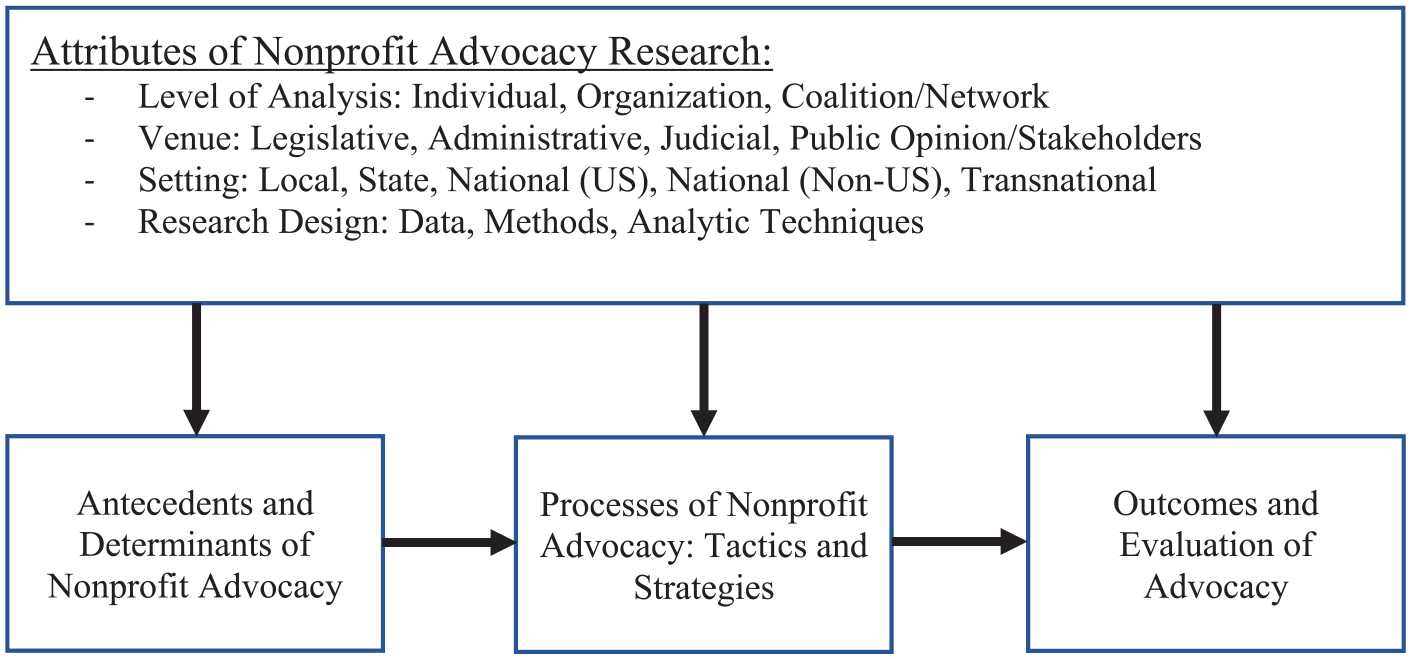
Organizing framework for reviewing methods in nonprofit advocacy: antecedents, processes, and outcomes.
Phase in Advocacy Cycle: Antecedents, Processes, Outcomes
In the antecedent or determinant phase, researchers ask questions relating to: Why do nonprofit organizations engage in advocacy? What are the catalysts or causal drivers of advocacy? What individual, organizational, or community-level characteristics are associated with advocacy? Many scholars have been interested in organizational characteristics as a predictor of engagement in advocacy in both domestic (such as Kim, 2017; Mosley, 2010; Nicholson-Crotty, 2011) and international contexts (Arvidson et al., 2018; Bloodgood & Tremblay-Boire, 2017; Guo & Zhang, 2014).
In the process phase, researchers typically ask questions that relate to the “how” of nonprofit advocacy: How are nonprofits engaging in advocacy? What strategies are they employing? Most process studies focus on the tactics or strategies that organizations choose to engage in (Almog-Bar & Schmid, 2014; Fyall & McGuire, 2015; Gormley & Cymrot, 2006; McNutt & Boland, 1999; Schmid et al., 2008). Research on legislative and administrative tactics, as well as insider and outsider strategies typically relate to process. This category also includes other tactics, such as communications, social media, language, and collaboration.
In the outcomes phase, researchers examine what effect, if any, was produced through advocacy efforts. For example, Buffardi et al. (2017) sought to measure the impact of various tactics and advocacy activities on policy change, and Johansen and LeRoux (2013) explored the effect of organizational networking on the effectiveness of advocacy efforts.
Level of Analysis: Individual, Organization, Coalition
Some scholarship explores the role of individual actors in nonprofit advocacy, including volunteers and supporters (Hopke & Hestres, 2018; Hussey, 2014), legislators (Abdel-Samad, 2017; Guo et al., 2013), or organization leaders (Andrasik & Mead, 2019; Mason, 2015). Research focused on the advocacy efforts among individuals includes evaluating the effectiveness of training board members how to engage in lobbying (Guo & Saxton, 2010), or tactics employed by communications directors.
Nonprofit advocacy research examining the organizational level considers organizations as the key policy actors (see, e.g., Cordero-Guzman et al., 2008; Libby et al., 2017). Associated scholarship examines the organizational attributes and characteristics that predict and explain advocacy activities, and may also investigate how organizations engage in advocacy, such as through social media platforms (Guo & Saxton, 2014, 2018).
Finally, research emphasizing the importance of relationships across organizations may examine the network or coalition as the primary unit of analysis. Nonprofit organizations often enter into coalitions to advocate for significant policy reforms (Fyall, 2016; Fyall & McGuire, 2015), leading some scholars to explicitly examine why and how nonprofit coalitions behave (Chin, 2018; Fyall & McGuire, 2015; Jung et al., 2014).
Venue: Legislative, Administrative, Judicial, Public Opinion
Pekkanen and Smith (2014) emphasized the venue of nonprofit advocacy as an important and understudied area. Legislative advocacy can take the form of educating or lobbying legislators to adopt or change public policy. Administrative advocacy includes advocating for rule changes or changing resource allocations of government agencies. Judicial advocacy includes activities, such as filing lawsuits on behalf of clients or submitting amicus curiae briefs to the courts. Advocacy can also aim to broadly educate the public or sway public opinion. Furthermore, advocacy efforts might be designed to engage stakeholders or beneficiaries of the organization.
Setting: Local, State, National, or Transnational
Advocacy within a particular country occurs in a local, state, and/or federal/national setting. Transnational advocacy reaches across nations, addressing regional or global issues. Among the research within a single national context, some research is U.S.-based, while other studies have a non-U.S. context.
Data and Methods
Our study undertakes a systematic literature review to better understand research on nonprofit advocacy. A systematic literature review allows researchers a chance to sift through the scholarship on a particular phenomenon to identify themes, patterns, and areas for future research (Cooper et al. 2019). We used a process similar to that of Laurett and Ferreira (2018) in our methodology with four distinct phases: (a) identifying and bounding the universe of articles, (b) developing the codebook, (c) systematically coding these articles, and (d) analyzing and interpreting the resulting themes.
Phase 1: Bounding the Universe of Articles
Identifying key terms is an important first step in a systematic literature review (Tranfield et al., 2003). To bound the articles for inclusion, we chose the term advocacy or advoca* (to capture advocacy and advocate) and nonprofit within six journals that extensively cover nonprofit scholarship: Nonprofit and Voluntary Sector Quarterly (NVSQ), Nonprofit and Management Leadership (NML), Public Administration Review (PAR), Voluntas, American Review of Public Administration (ARPA), and Policy Studies Journal (PSJ). These terms distinguished that literature which focused on the role of nonprofit organizations (both formal and informal) in advocacy. We identified advocacy-related research articles published between 1993 and 2018 (limited advocacy research was identified prior to 1993). This process resulted in 99 “anchor” articles. Next, the research team compiled a list of every article that cited these anchor articles. We then harvested all the article citations identified through the Web of Science. Our search identified 1,362 citations, including duplicates, as many articles cited more than one of the 99 anchor articles. After de-duplication, 597 articles remained.
We sorted articles into three categories: for inclusion, to be excluded, and warranting further discussion. Similar to Imperial et al.’s (2007), articles that were included used standard social science research methods, had testable hypotheses, or research questions evaluated by data. Unless otherwise qualified, we excluded articles focused on non-policy advocacy (such as client-based legal advocacy), individuals’ citizenship role without connection to an organization (either formal or informal), or civic engagement unrelated to policy or voting (such as promoting general volunteerism). We also excluded articles that did not present empirical findings, such as literature reviews or essays.
Our total sample for analysis was 264 articles. Metadata for the 264 articles were then imported into Zotero, open-source reference management software. Our goal was not to be exhaustive of all research relevant to nonprofit advocacy—that research spans across disciplines and disciplinary journals. Our goal was to review the articles found in the leading journals prioritized by nonprofit scholars, hoping to understand the contours of the intellectual subfield of nonprofit advocacy.
Phase 2: Developing the Codebook
An initial codebook was developed based on the organizing framework, focusing on the methods being used (quantitative, qualitative, or mixed), method type (survey, case study, interviews, network analysis, or others), sample sizes and response rates, analytic and statistical methods (if any), level of analysis (individuals, organizations, or coalitions/networks), phase in the advocacy cycle (antecedents of advocacy, process of advocacy, or outcomes of advocacy), venue (administrative, legislative, courts, public education/opinion, or stakeholders), and setting (local, state, U.S. domestic, non-U.S., or transnational). To refine the coding guide, and to improve coding reliability, early in the coding process the entire group (four members) tested the guide with approximately 10 articles. The codes were discussed as a group using an inductive approach (Lipsey & Wilson, 2001). This step established coding norms and helped the research team to refine the codebook. Given that some articles examined multiple phases of the advocacy cycle and/or included several methodologies, codes within categories are not mutually exclusive.
It is important to note that early in our coding process we had intended to code articles by commonly employed theoretic orientations, including but not limited to: resource dependency, resource-competition, institutionalism, clientelism, principal-agency, and collaborative governance. However, few articles explicitly state the primary theoretic lens being employed. Furthermore, articles often state they are employing a certain theoretic orientation, but do not always clearly deliver a contribution to the stated body of theory. This seemingly atheoretical nature of the existing research makes it difficult for scholars to clearly formulate and articulate testable hypotheses. Of the 99 anchor articles we coded on these dimensions, only a handful had clearly stated hypotheses. Through the refinement process, we removed our coding for theoretic framing or hypotheses. This is further discussed below.
Phase 3: Systematically Coding the Articles
After identifying the universe of articles and defining the codebook, the research team coded each article on methodological approaches and research focus. Each member of the team coded approximately 50% of the articles. To improve reliability, each article was coded by two members of the research team and any discrepancies were discussed (Cooper et al., 2008). To further improve reliability, the entire group also met regularly throughout the coding phase to discuss coding questions, discrepancies, or disagreements (Littell et al., 2008).
Phase 4: Analyzing and Interpreting the Resulting Themes
Once all articles were coded and discussed, final codes were compiled into a master data spreadsheet. From this file, tabulations, percentages, and cross-tabulations were computed or performed.
Analysis and Findings
Finding 1: Emphasis on the Processes/Strategies and Antecedents of Nonprofit Advocacy, Comparatively Few Studies on Advocacy Outcomes
The vast majority (68%) of the studies examined the processes or strategies of advocacy (see Table 1). These studies investigated the “how” of nonprofit advocacy—what are organizations, individuals, or groups doing to advocate? How are they doing it? Approximately, 44% of studies examine the antecedent or determinant factors of nonprofit advocacy, typically exploring the catalysts or causal drivers that prompted advocacy activities. For example, Guo and Saxton (2018) studied whether and how nonprofit organizations used social media in their advocacy activities, finding that groups with larger networks of followers and those who use their social media channels were more likely to use twitter
Phases in Advocacy Cycle (N = 264).
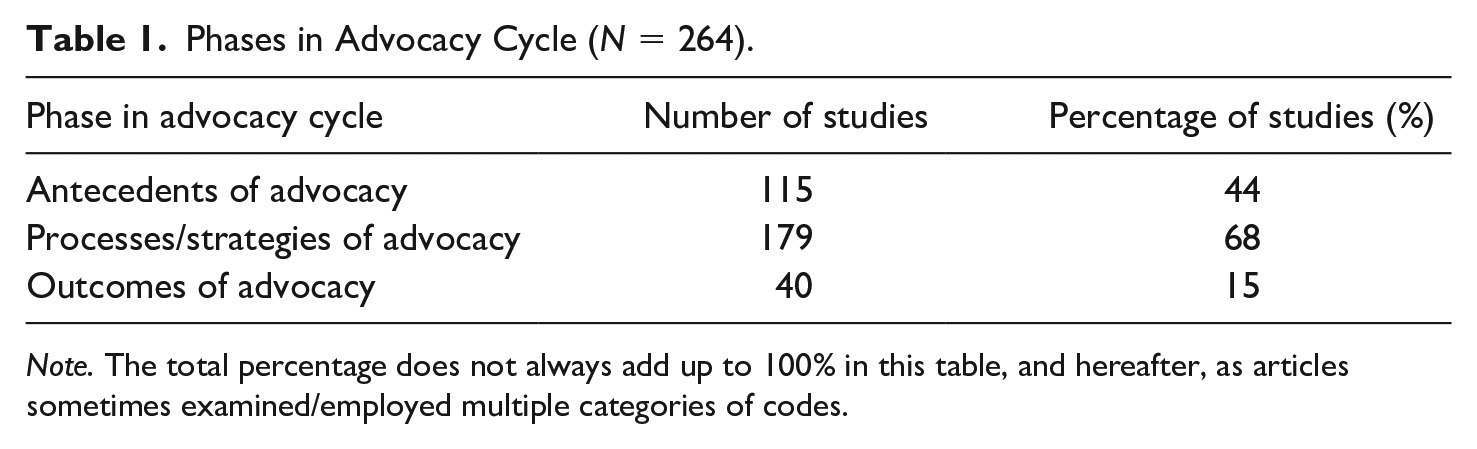
Note. The total percentage does not always add up to 100% in this table, and hereafter, as articles sometimes examined/employed multiple categories of codes.
Relatively, few studies explicitly examine the outcomes of advocacy efforts—only 15% of studies in the sample. Of these 40 articles on the outcomes of advocacy, nine were quantitative while over half (24) were qualitative. 1 Buffardi et al.’s (2017) relatively recent study is among the few that included findings related to advocacy outcomes. Positively, they found that more than three-quarters of the nonprofits in their sample had reported stopping, modifying, or enacting new policies, with those groups that had engaged in coalitions being perceived as more effective in enacting proactive policies. Among these outcome studies, there were not commonly employed or explicit measures of outcomes of nonprofit advocacy, although several articles specifically call on researchers to improve conceptual clarity around nonprofit advocacy outcomes (Almog-Bar & Schmid, 2014; Johansen & LeRoux, 2013).
Finding 2: Most Attention on Organizations as the Primary Level of Analysis, Comparatively Less Investigation of Individuals and Networks/Coalitions
An overwhelming majority of research (80%) examines the organization as the primary level of analysis (see Table 2). Research centered on coalitions or networks as the unit of analysis constitutes 19% of our sample. Of the 51 articles studying coalitions/networks, 26 have been published between 2015 and 2019, and another 12 were published between 2010 and 2014, indicating an emerging approach. Meanwhile, only 24 in 264 studies focused on individuals within nonprofit advocacy. An example of organizations as the primary level of analysis is Kerlin and Reid’s (2010) study of environmental advocacy groups, which explored the different structures and strategies these organizations used based on their Internal Revenue Service (IRS) tax determination, finding that organizations more likely to engage in advocacy had a 501 (c) (4) organization as their “anchor” corporation. However, studies with an organizational focus included such diverse topics as the use of direction action tactics by the nonprofit group ACORN (Brooks, 2005), to a comparative analysis of the meaning and tactics of advocacy between the U.S. and Brazilian organizations (de Brelàz & Aquino Alves, 2011). An example of one of the few studies focused on individuals is Nesbit’s (2017) study on the demographic characteristics associated with volunteering for advocacy groups.
Level of Analysis (N = 264).
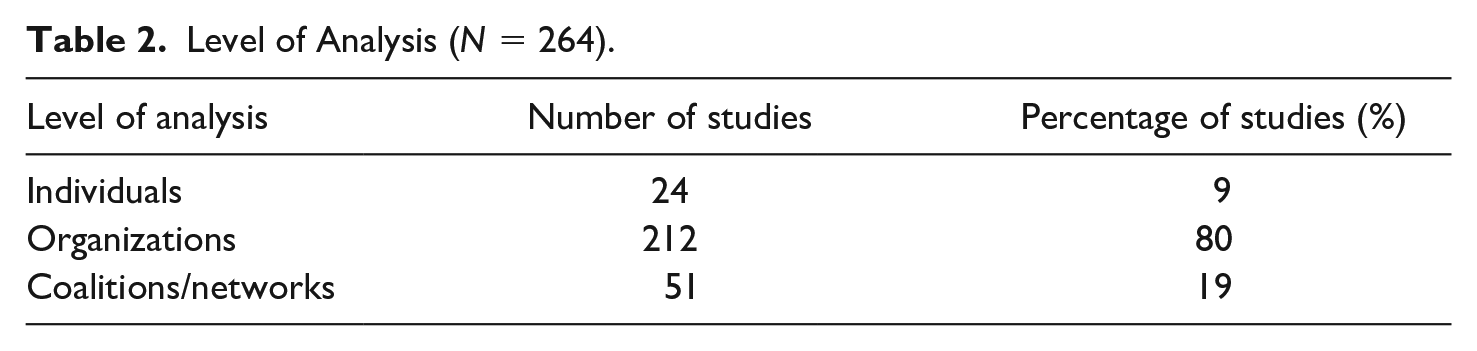
We also checked how methodological approaches (quantitative, qualitative, or mixed) correlated with various levels of analysis, finding that studies examining the organization as the primary level of analysis (n = 212) employed quantitative and qualitative approaches generally evenly. At the network and coalition levels, approximately, 57% of the studies employed a qualitative approach, while around 38% used quantitative methods.
Finding 3: Venue of Advocacy Is Rarely Specified
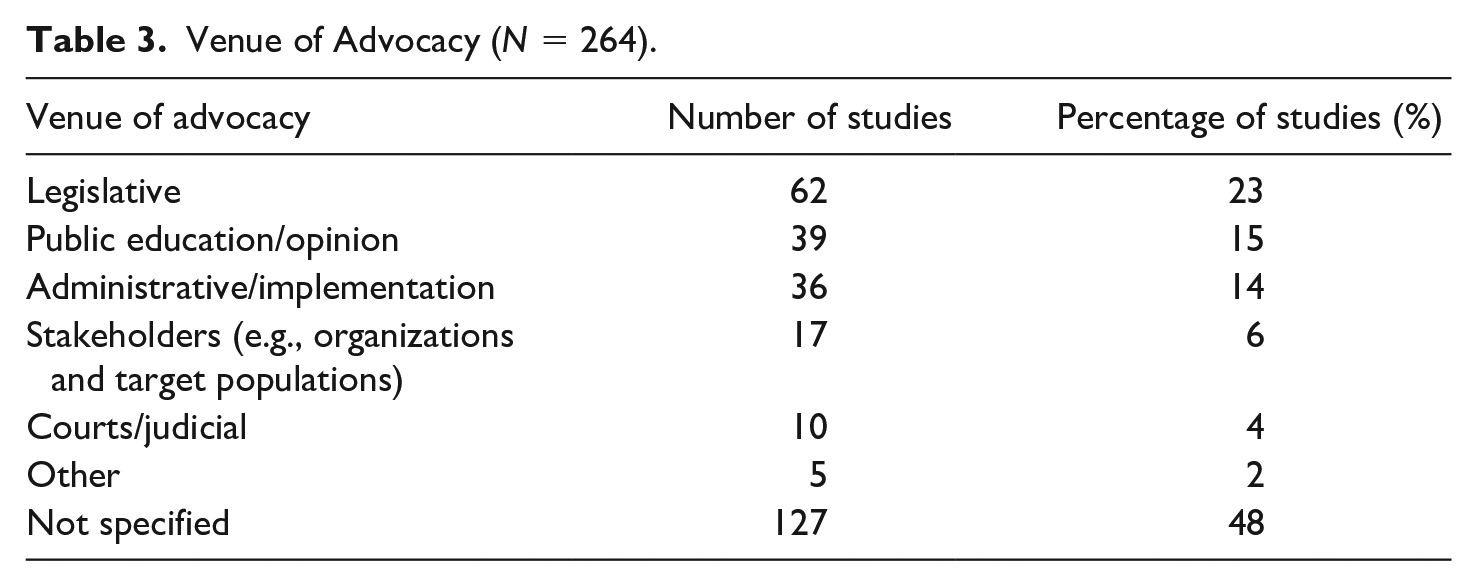
Nearly, half of the articles reviewed (48%) do not clearly specify which venue of advocacy was being examined. When researchers do identify the venue, they commonly examine advocacy occurring within the legislative branch of government (23%) (see Table 3), including the specific focus on lobbying, an activity only applicable to legislative venues (e.g., Grasse et al., 2021; Prentice, 2018). Roughly, 15% examine advocacy aimed at educating the public or swaying public opinion, and another 6% explore advocacy to existing stakeholders. Out of 264 studies, 36 examined advocacy during program administration or implementation. 2 Only 10 studies in our sample focus on the courts/judicial system as a venue for policy change. Lu’s (2018) study provided a good overview of the venues selected by human services nonprofit organizations, finding more than half of the organizations engaged in some form of administrative advocacy, about half engaged in legislative advocacy, and less than 10% engaged in some form of legal advocacy. Altogether, nearly, all (94%) engaged in at least one type of advocacy activity.
Venue of Advocacy (N = 264).
Finding 4: National Setting Is Dominant
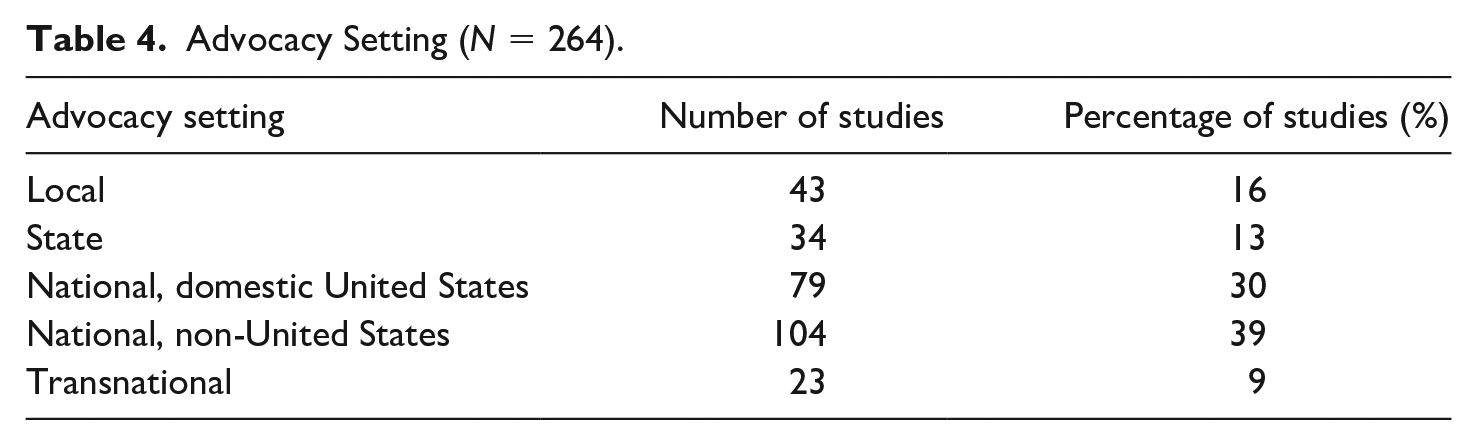
Table 4 provides a summary of articles coded by setting—local, state, national (U.S.), national (non-U.S.), and transnational. About 40% of the studies in our sample examine nonprofit advocacy in a national setting, but in a non-U.S. context, while 30% examine national advocacy within the United States. Thirteen percent of the articles examined state-level advocacy efforts. Local and municipal advocacy efforts compose only 16% of our sample. Chin’s (2018) study showed how New York City-based advocacy coalition serving immigrant health policy worked together to inform both local and state advocacy efforts. In addition, while there were only three internationally focused studies in the anchor articles, the proportion is significantly higher in the second-order articles.
Advocacy Setting (N = 264).
Finding 5: Non-U.S. Advocacy Papers Have Increased Since the Mid-2000s, Particularly Those Focused on Chinese Nonprofit Advocacy
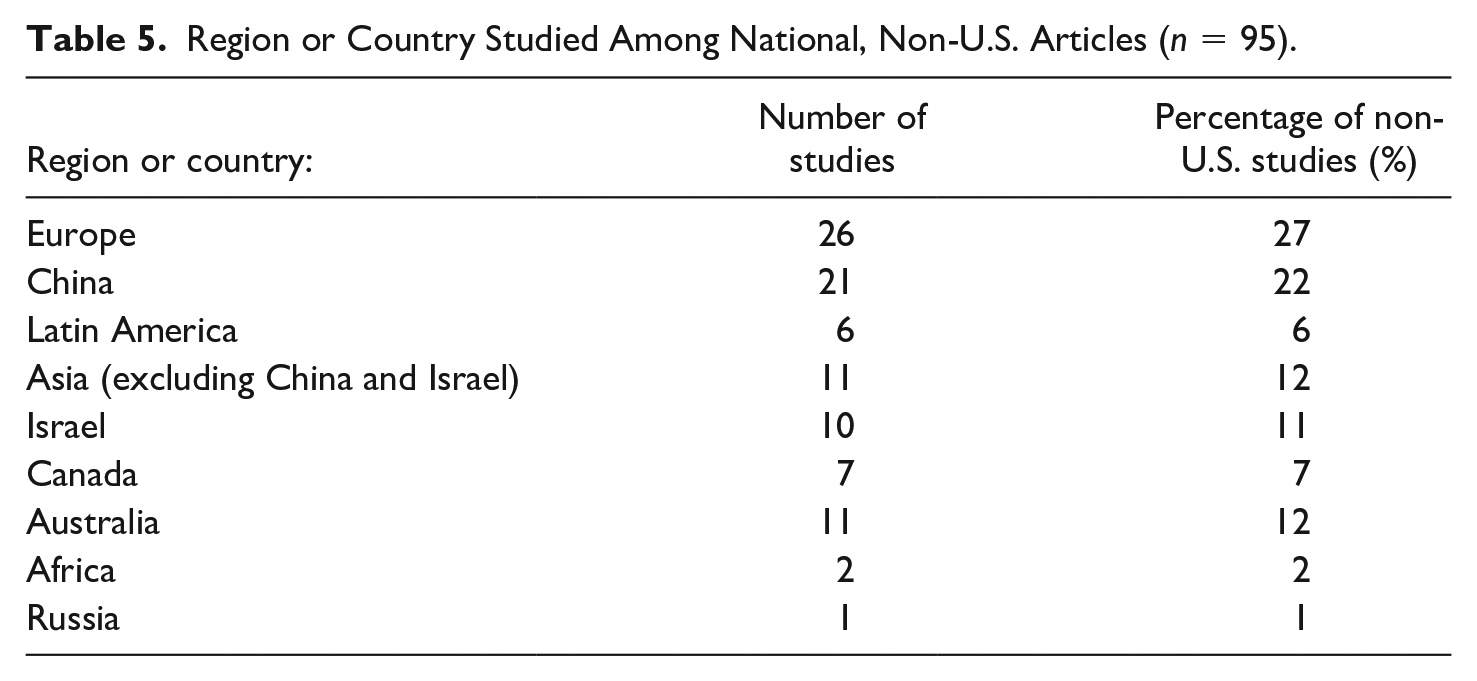
A growing number of articles have come from outside of the United States, with 36% of articles examining advocacy in a non-U.S. context (see Table 5). The publications of these non-U.S. advocacy papers have increased since the mid-2000s, with notable growth in Chinese nonprofit advocacy studies. For example, Zhang’s (2018) article demonstrates the recent growth and an evolving non-governmental organization (NGO) sector in China, and their emerging role in advocacy in a conservative party-state political system. On the other hand, European nonprofit advocacy represented 27% of the sub-sample, while research on Israeli (11%), Australian (12%), and Canadian (7%) nonprofit/NGO advocacy were also well-represented. Africa and Latin America only represented 2% and 6% of our sample, respectively. These papers generally reflected the larger methodological trends, with interviews, surveys, and observational data as the most dominant forms. In the case of European countries, some studies appear to have dual contexts—national and transnational—likely due to the authors’ perspectives toward the European Union (EU). While some authors view nonprofit advocacy in the EU as transnational activities, others treat it as a domestic activity. Potluka and Spa (2017) study of advocacy by Czech organizations in the EU is one example of this trend, finding that many of the barriers of advocacy are capacity-based.
Region or Country Studied Among National, Non-U.S. Articles (n = 95).
Finding 6: Qualitative and Quantitative Approaches Roughly Balanced in Advocacy Scholarship
Approximately, 37% of articles in the sample employed a quantitative approach, while 41% employed a qualitative approach. Figure 2 reports a time-series of quantitative, qualitative, and mixed-methods articles over the past several decades. Both quantitative and qualitative methods are increasing and are being employed at roughly the same rates. Mixed-methods studies and those in the “other” category (such as historical analyses and conceptual articles) are becoming less prevalent. The choice of research design is often contingent upon the questions being asked and the data that are available, although the method deployed is discussed below, a good example of a mixed-method study would be Kim’s (2017) study of arts organizations that used interviews, and more than 900 survey responses appended with IRS Form 990 data.
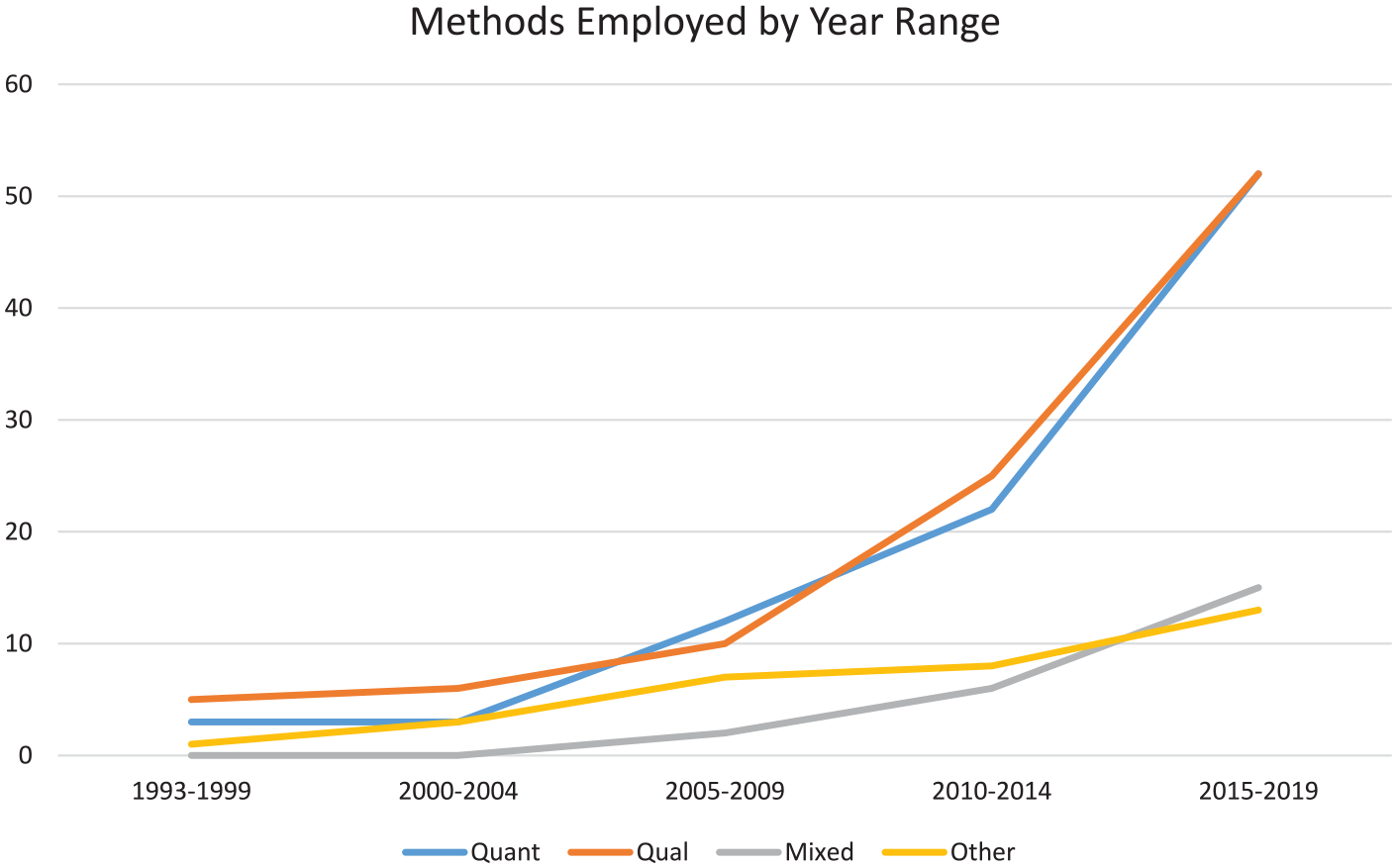
Quantitative, qualitative, or mixed methods (N = 264).
Finding 7: Prominence of Interviews, Case Studies, and Surveys
Nearly, 70% (n = 182) of studies relied on interview and/or survey data. Of the studies (37%) that used interviews as the primary data collection method, the median number of interviews was 31. Fifteen percent of studies did not specify how many interviews were conducted. Approximately 3 in 10 studies employed surveys (n = 84), with more than 80% of surveys having at least 100 responses. Average response rates overall were 47.81%. Over a quarter of studies (27%) used a case study approach (out of 71 case studies, 38 used interviews to inform the case study). Another 69 studies used secondary data as the main data source. 3 Six percent of our sample drew upon data from social media sources. Four percent employed social network analysis (SNA) methods and less than 5% used longitudinal designs. Fewer than 1% of studies used Charity Navigator data (either as primary or supplementary data), and 7% of studies used IRS Form 990 data as either the primary, secondary, or supplemental data source.
Finding 8: Quantitative Estimation Models Employed With Little Variation
There is remarkable consistency in the regression and estimation models employed in the studies in our sample. Of the quantitative articles reviewed, 79 (29% of the entire sample) employed a form of regression analysis, with some articles employing multiple models. Among these regression analyses, 48% employed a form of binomial regression analysis, that is, logit or probit (see Table 6). Ordinary least squares regression is the next most common quantitative modeling approach (20%).
Regression Model Employed (n = 79).
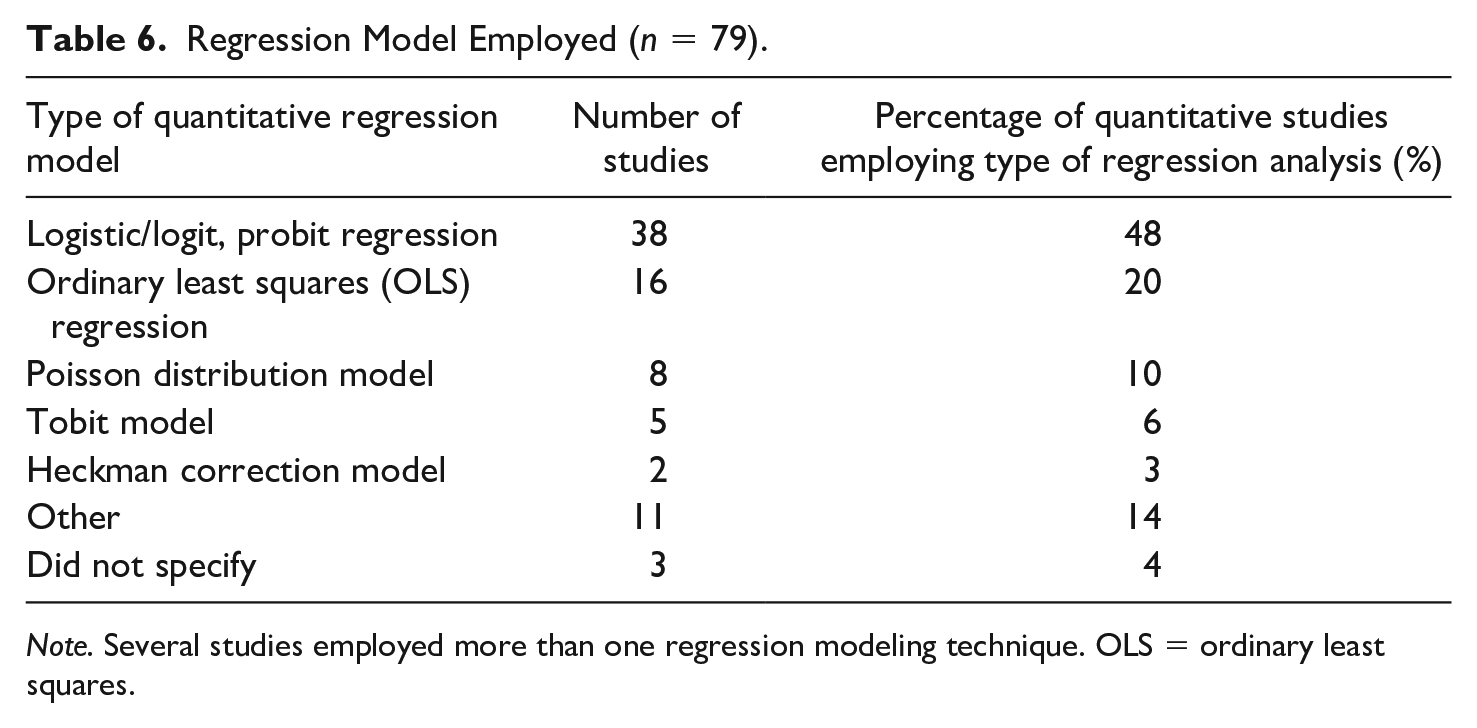
Note. Several studies employed more than one regression modeling technique. OLS = ordinary least squares.
Only four studies (< 2%) in the sample employed structural equation modeling or confirmatory factor analysis, combined. Another eight employed exploratory factor analysis or another form of construct validation. Several others reported out descriptive statistics.
Finding 9: Nonprofit Advocacy Research Is Often Atheoretical and Divorced From the Policy Process Overall
As discussed in the data and methods section above, few articles had clearly defined hypotheses, and many did not engage or test common theories, such as resource dependency, institutionalism, or theories of the policy process. Indeed, most papers are divorced from the policy process overall. Very little research on nonprofit advocacy relied on or tested theories of policy change—whether in their research questions, their design, or findings. In addition, very little research examined the role that politics play on advocacy (Gupta et al., 2018; Mosley & Gibson, 2017). How do state or local political environments influence advocacy efforts, including venue choice and tactics used? How does administrative or legislative turnover influence nonprofit advocacy? Are focusing events or crises related to nonprofit advocacy efforts? How do nonprofits contribute to, or navigate institutional frictions that contribute to slow, incremental policy changes? How do innovative ideas diffuse and what role do nonprofits play in policy transfer? Emerging public policy research on narratives (e.g., Narrative Policy Framework) might also spark ideas for scholars to examine new questions in nonprofit advocacy, that is, what is the setting, character, plot, and moral of the narrative story being told?
Discussion
These findings provide trends in advocacy research design and methods across the intellectual subfield of nonprofit advocacy. While the research design and methods for any given study will always be determined by the research questions, our interpretation of these trends offers several key insights for the future of nonprofit advocacy scholarship. In particular, nonprofits have been theorized as being critical to policy change—yet the research designs employed rarely measure the impact of organizations on policy change. Instead, scholars have largely been interested in studying how nonprofits engage in advocacy, not how the choices around nonprofit behavior can be transformational for communities and society. Below, we provide a discussion on our findings and their implications for the study of nonprofit advocacy. The first set of observations relate to the dimensions of our guiding framework and the second set relates to research design, data, and methods employed by articles in the sample.
First, very little of the research in our sample sought to measure organizational effectiveness in advocacy efforts, or the outcomes produced through nonprofit advocacy. We echo other scholars’ suggestions to develop a clearer inventory of outcomes and effectiveness (Guo & Saxton, 2018; McNutt & Menon, 2008). A few scholars have made similar calls for including more systematic outcome-related research on nonprofit advocacy. For example, Casey (2011) proposes six levels of advocacy outcomes and their potential impact on policies, including: gaining access, getting an item on the agenda, adoption of legislation, implementation of policy, intended impact of policy, and structural/institutional effects of the policy. Bass et al. (2014) also offer some possible categories of what they deem “effective advocacy.” They encourage scholars to examine how nonprofit advocacy shapes how law is executed; influences monitoring and enforcement in implementation; litigates; and mobilizes voters, presumably to elect more sympathetic legislators, without discussing what it is that they are to accomplish. In addition, Shier et al.’s (2019) Intraorganizational Environment for Social Innovation Scale may be another good model for an advocacy scale along with Shier and Handy’s (2016) typology of social change and advocacy efforts by nonprofits.
We also reiterate scholars’ calls for a closer examination of the efficacy of varying advocacy strategies or efforts (Gormley & Cymrot, 2006; Greenspan, 2014; Li et al., 2017; Sarmiento Mellinger, 2017), with several suggesting a focus on social media as an effective tool for investigating nonprofits’ strategic actions for advocacy and the public reactions to those efforts (Goldkind, 2015; Guo & Saxton, 2018; Whitesell, 2019). Importantly, Mosley (2013, p. 238) encourages researchers to talk with the end-users of advocacy, “such as legislators and state agency administrators, to understand how they perceive [advocacy efforts], what types of advocacy and issue framing are most effective, and how evidence is used.”
As summarized in Table 2, it appears that scholars of nonprofit advocacy are only beginning to examine the role that individuals play in executing and implementing advocacy strategies. While other areas of literature, perhaps social movement or social work studies, may explore this issue more directly without the organizational context, little has been explored around the role of individual actors within nonprofit advocacy. These findings echo prior sentiments that encourage greater focus on how individuals are practicing advocacy. As Guo et al. (2013, p. 52) note, it is important to better understand the role of individuals, such as staff and volunteers, who are the “life blood” of nonprofit advocacy activities, as their contribution of time and skills is a critical component in nonprofit advocacy.
Given the importance of coalitions in nonprofit advocacy, research on networks or coalitions is also underdeveloped. While in practice, many organizations work in coalitions to advance their advocacy agenda, network-specific methodologies, such as SNA, were used by only seven studies in our sample. More widespread use of SNA to study trust, power, and resource-exchange within advocacy coalitions could help both practitioners and scholars to better understand the structure and function of group-advocacy. For example, Mosley (2013) called for a closer examination of coalition characteristics (and the relationship between these attributes), as well as more robust state-by-state comparisons of coalitions. Relating to the processes of coalitions, scholars called for more research on communication strategies (Ciszek, 2017; Gen & Wright, 2018; Gupta et al., 2018), strategic decision-making (Chen, 2018; Gormley & Cymrot, 2006), and relationship management to engage clients and stakeholders (Ruggiano et al., 2015). Scholars also called for a better understanding of relationships—both formal and informal processes, and interactions (Ruggiano et al., 2015; Sarmiento Mellinger, 2017). Furthermore, analyzing and comparing whole networks of coalitions within policy subsystems might offer clues as to the important dimensions, characteristics, and attributes of high-performing collaborative advocacy.
As noted in Table 3, many scholars did not describe the target of the organizations’ advocacy as the courts, administrative agencies, or legislative bodies. While 501(c)(3) charitable organizations may have some limitations on the venue they choose based on their tax status, we still encourage scholars to explicitly describe the target of the advocacy activities they are examining. Echoing Buffardi et al. (2017), we believe that it is imperative for researchers of nonprofit advocacy to examine and report the branch of government being targeted (e.g., legislative, administrative, or judicial). Given that policy process theories ascribe venue and setting to strategic decision-making, more transparency and explicit discussion of these features will create stronger links between nonprofit scholarship and other relevant disciplines (Baumgartner & Jones, 2010; Pralle, 2003).
Perhaps unsurprisingly, our findings indicate that country-of-focus reflects larger trends in higher education and participation in international research communities, with the Global North vastly over-represented. Greater inclusion of scholars and scholarship from countries and regions with traditionally less representation will yield a greater understanding of both the variation and universality within nonprofit advocacy.
The second area to explore in our findings is related to the presentation of research design and methods being employed in advocacy research. Our findings suggested that too many studies lacked transparency around data and methods. For example, 15% of all the interview studies and 10% of all of the survey studies lacked information about the total number of responses. Other information that was frequently omitted included a comparison of recruited versus confirmed responses (i.e., response rate), year of data collection, and details about data collection protocols. Other studies did not include clear research questions. Omitting basic data and methods information makes it difficult to assess the quality and credibility of the research, and makes effective replication and hypothesis testing difficult.
Furthermore, the prevalence of certain methods and research choices highlights gaps in the existing literature and opportunities for future research. Some underused methods may help address substantive knowledge gaps. For example, none of the articles included in this analysis employed experimental or quasi-experimental designs, which have the potential to uncover causal mechanisms at both the individual and organizational levels, thereby potentially addressing advocacy outcomes. SNA might be a useful approach for studying coalitions and social media might be a good source of data for investigating nonprofit activity to educate and mobilize the public or their stakeholders. Longitudinal designs can be resource intensive but may be necessary for examining longer-term effects of advocacy. Like Shier et al.’s (2019) approach, exploratory and confirmatory factor analyses, along with cluster analyses, could help the field to advance by better understanding broader categories of advocacy concepts. Structural equation modeling and fuzzy-set qualitative comparative analysis can help to uncover advocacy processes from broader systems and contingent perspectives over the effect of individual variables.
There were also some surprising findings that speak to a need for future research. For example, our coding scheme had to be updated since so few studies incorporated solid theoretical frameworks that could be systematically tested. In addition, many of the papers in our sample did not consider phases of the policy process or identify the venue being targeted by advocacy efforts. The structure and function of political opportunity structures (MacIndoe & Beaton, 2019) and advocacy coalitions have been identified as important factors to affect policy changes, but hardly register in the nonprofit advocacy research included in this study.
We also encourage scholars to examine the complex nonprofit advocacy relationships and structures between entities. Kerlin and Reid (2010) suggest examining the relationship between 501(c)(3) organizations and 527(s), and we also encourage scholars to examine the relationships between 501(c)(3s) and 501(c)(4s) (social welfare organizations), 501(c)(6s) (membership-based associations), and others. Others have called for a closer examination of the relationship between advocacy and intermediary organizations (LeRoux, 2009; Mosley, 2014), as well as the role and function of foundations (Suárez et al., 2018; Suárez & Lee, 2011).
Finally, more research specifically on lobbying has been called for by scholars in the field, including research on the regulatory environment (Grasse et al., 2021; Gugerty & Prakash, 2010; Pacewicz, 2018; Prentice, 2018), and counteractive lobbying (Solowiej & Collins, 2009). Studying these complex structures will no doubt present methodological challenges, but we believe research on these topics will provide a better understanding of how advocacy is evolving and elucidate these oftentimes opaque relationships.
Conclusion
The primary goal of this article is to take inventory of the current research designs and methods being employed to study nonprofit advocacy and identify opportunities for creating a more robust understanding of how and why nonprofit advocacy happens, the impacts of these efforts, and the effect of nonprofit organizations on policy change. However, it is important to note the limitations of this study. First, in this review, we made choices that either included or excluded studies in our sample. Specifically, we selected articles from six leading journals with impact factors (Journal Citation Reports) over a 25-year period, and the journal articles that cited these articles. We did not explore additional literature found in other journals and disciplinary fields, nor books, dissertations, or working papers. Unless, it explicitly discussed nonprofit advocacy, we did not include studies that focused on civil society, public participation, or social movements—scholarship that is closely aligned with nonprofit advocacy. While this may have limited our view of the status of research on nonprofit advocacy, these six journals are the leading source for nonprofit studies and have wide-reaching influence on scholarship in the field and our approach provides a snapshot of the field over the selected time frame. In addition, we only evaluated studies within a specific time frame, in our case, the 25 years from 1993 to 2018. This, by choice, eliminated studies that pre-dated 1993, or the work that has been produced over the past several years. Future research has an opportunity to compare our findings with emerging scholarship on nonprofit advocacy.
Despite these limitations, our findings make several important contributions to the state of nonprofit research on advocacy in the nonprofit sector. For one, we found that while research on nonprofit advocacy has grown, trends in research design choices overlook many aspects of nonprofit advocacy research. These research areas—such as advocacy outcomes, individual actors within advocacy, and non-legislative venues—offer researchers a chance to further develop our understanding of nonprofit advocacy. In addition, researchers interested in studying nonprofit advocacy may find that methods used more intensely in adjacent fields may offer opportunities to study questions from different perspectives, or ways to confirm earlier findings. These methods include experimental designs, quasi-experimental designs, SNA, longitudinal designs, fuzzy-set comparative analysis, merging data sets, and building shareable data sets that scholars can use to build on one another’s work.
Second, we call on scholars to describe, define and present their research designs, data, and methods more explicitly. This will help readers understand the strengths and limitations of the research, assist in systematic theory building and testing, and support the replication of results. We hope this finding will also help journal editors, peer reviewers, and nonprofit methodologists to develop better protocols, checklists, or inventories for describing research methods and reporting findings. While there were inconsistencies across methodologies, we found the widest variance among those studies employing qualitative research, and we see a need for greater standardization in the presentation of qualitative methods.
Ultimately, this review provides a framework from which the study of nonprofit advocacy can be organized and uses this framework to identify gaps in the research designs being deployed, as well as in characteristics and foci of nonprofit advocacy research. This review also helps scholars better understand how nonprofits engage in advocacy, and ultimately, democratic processes. By answering these questions, the field can start to make causal connections between theories of policy change, and the organizations that are often engaged with them placing nonprofit organizations at the center of much policy and social changes processes. With the growth of research on nonprofit advocacy, scholars are poised to better understand the structural and systemic conditions of successful advocacy, which can influence program beneficiaries, target populations, stakeholders, and policy. We hope this article helps the field develop a clearer understanding of who advocates, how they do it, and what works.
Research Data
sj-docx-1-nvs-10.1177_08997640221131747 – Supplemental material for Exploring Nonprofit Advocacy Research Methods and Design: A Systematic Review of the Literature
Supplemental material, sj-docx-1-nvs-10.1177_08997640221131747 for Exploring Nonprofit Advocacy Research Methods and Design: A Systematic Review of the Literature by Kevin D. Ward, Dyana P. Mason, Gowun Park and Rachel Fyall in Nonprofit and Voluntary Sector Quarterly
Footnotes
Declaration of Conflicting Interests
The author(s) declared no potential conflicts of interest with respect to the research, authorship, and/or publication of this article.
Funding
The author(s) received no financial support for the research, authorship, and/or publication of this article.
Supplemental Material
Supplemental material for this article is available online.

Notes
Author Biographies
References
Supplementary Material
Please find the following supplemental material available below.
For Open Access articles published under a Creative Commons License, all supplemental material carries the same license as the article it is associated with.
For non-Open Access articles published, all supplemental material carries a non-exclusive license, and permission requests for re-use of supplemental material or any part of supplemental material shall be sent directly to the copyright owner as specified in the copyright notice associated with the article.
