






Abstract
This article examines how crisis volunteering, that is, volunteering in response to needs arising during crises and ordinary volunteering that addresses needs independent of crises, relates to prosocial attitudes and negative emotions, using a four-wave longitudinal survey of Danish adults (n = 1,225) from the COVID-19 pandemic. Hitherto, crisis and ordinary volunteering have been studied in different contexts, crisis versus non-crisis settings, barring direct comparison. By comparing both within the same crisis context, this study contributes a clearer analytical comparison. Findings show that both crisis and ordinary volunteers exhibit stronger prosocial attitudes than the population average, but crisis volunteers report heightened negative emotions. Fixed-effects models show that declines in generalized trust correlate with crisis volunteering, while engagement in ordinary volunteering is associated with subsequent increases in solidarity. Despite these differences, a considerable overlap between previous volunteering and both crisis and ordinary volunteering suggests that both partly emerge from a common volunteer culture.
Introduction
When a major societal crisis occurs, such as a natural disaster, terrorist attack, or a pandemic like COVID-19, volunteers can provide a crucial supplement to government efforts to handle the situation (Carlsen et al., 2021; Drabek & McEntire, 2003; Park & Johnston, 2017; Schmidt, 2019). Indeed, examples of civil society mobilizing volunteer efforts in response to crises are well documented, including search and rescue operations, the provision of temporary shelter, and the formation of mutual aid groups (Bertogg & Koos, 2021; Haraoka et al., 2012; Yang, 2021). By working together toward shared goals, these volunteer efforts can also play a vital role in maintaining social cohesion during times when societal stability is disrupted (Aldrich, 2012; Dynes, 1970).
During crises, crisis volunteering that addresses urgent needs can coexist with ordinary volunteering, which addresses needs not related to the crisis at hand and may continue from before the crisis. While ordinary volunteering is often linked to prosocial values, socialization, and civic duty (Dekker & Halman, 2003), crisis volunteering is more often conceptualized as a therapeutic response to distress and negative emotions triggered by the crisis (Koolen-Maas et al., 2023; Yang, 2021). Yet these two forms of volunteering are usually studied in separate contexts: crisis volunteering in crises and ordinary volunteering in stable times. This makes it unclear whether the observed differences in drivers and outcomes between crisis and ordinary volunteering stem from differences in the nature of the type of volunteering itself or from the different contexts in which they are studied.
Consequently, our understanding of crisis volunteering remains limited, and it remains an open question whether crisis volunteering should be conceptualized as a continuation of ordinary volunteering operating through the same underlying mechanisms. Research suggests this may be the case, as crisis volunteering has been linked to prosocial attitudes such as trust and solidarity, which foster empathetic concern and a moral obligation to assist those affected by the crisis (Aydinli et al., 2015; Carlo et al., 2005; Kim et al., 2019; Schlesinger et al., 2013). However, research also conceptualizes crisis volunteering as a therapeutic response to emotions directly related to the crisis itself and thus conceptualizes crisis volunteering as a distinct type of volunteering from ordinary volunteering. Such studies show how negative emotions, such as fear and anxiety, can motivate individuals to take matters into their own hands by volunteering, offering both a means of regaining a sense of control and a way to reduce personal distress through contributing to the solution (Lowe & Fothergill, 2003; Steffen & Fothergill, 2009).
Understanding the mechanisms underlying crisis volunteering, and whether these motivations differ from those underlying ordinary volunteering, is crucial, as crisis volunteering plays a vital role in societal responses to crises. Yet existing research tends to conflate crisis volunteering with ordinary volunteering or examine them in separate contexts, limiting our ability to assess whether crisis volunteering operates through distinct mechanisms. Clarifying these dynamics is essential for fostering volunteer engagement and, ultimately, for strengthening societal resilience in times of crisis.
Although certain values and emotions appear to drive both crisis and ordinary volunteering, they may be insufficient on their own. Broader scholarship on volunteering suggests that, while values and emotions play a role in motivating volunteer action, volunteering is also a habitual behavior developed through practice and socialization (Janoski et al., 1998; Wakefield et al., 2022). Consequently, while variations in attitudes and emotions may influence individuals’ motivation to volunteer during a crisis, their ability to act on these motives likely also depends on prior experience with volunteering and the opportunities available to them. In this context, we are particularly interested in potential differences between crisis and ordinary volunteering.
Against this backdrop, we aim to address two interrelated research questions:
To answer these research questions, we employ a four-wave longitudinal survey that collects information on both crisis and ordinary volunteering during the COVID-19 pandemic in Denmark. These data enable us to examine how crisis and ordinary volunteering during the pandemic are associated with prosocial attitudes and crisis-related negative emotions, within the same period and context. The longitudinal survey design also enables us to examine associations between changes in prosocial attitudes, crisis-related negative emotions, and volunteering behavior using individual fixed-effects models, thereby exploring whether these factors may be drivers or outcomes of such behavior. Furthermore, the data makes it possible to examine the relationship between prior volunteer engagement in the year preceding the pandemic and crisis and ordinary volunteering during the pandemic, while accounting for prosocial attitudes and crisis-related emotions.
Our study adds to the existing literature in three important ways. First, by examining crisis and ordinary volunteering within the same crisis context, we advance the understanding of how different forms of volunteering relate to prosocial attitudes and crisis-related emotions. Second, by combining between-subjects and fixed-effects analyses, we provide new insights into the temporal relationship between crisis volunteering and crisis-related emotions, shedding light on whether emotional responses function as drivers or consequences of volunteering during crises. Third, we demonstrate a substantial overlap between ordinary volunteering prior to the pandemic and both crisis and ordinary volunteering during the pandemic. This finding highlights the role of pre-existing volunteer infrastructures and cultures in shaping societal responses to crises and suggests that crisis volunteering does not emerge entirely spontaneously. Rather, it points to the importance of a pre-existing, vibrant volunteer culture, implying that societies that succeed in cultivating strong everyday volunteering are likely to be more resilient when crises occur. The scope of this finding is broadened by the fact that we study a long-term crisis, the COVID-19 pandemic, which, unlike more acute crises such as natural disasters or terrorist attacks that have received scholarly attention (Simsa et al., 2019; Twigg & Mosel, 2017), requires sustained engagement over time.
The remainder of the article is structured as follows. We first outline the theoretical foundations for distinguishing between crisis and ordinary volunteering, review how both relate to prosocial attitudes and crisis-related negative emotions, and examine the role of previous volunteer experience. We then present our data and methods, drawing on a four-wave longitudinal panel survey conducted in Denmark during the COVID-19 pandemic. The results section reports both between- and within-individual analyses, followed by a discussion of the implications of our findings for theories of volunteering, crisis resilience, and future research.
Theoretical Background and Hypotheses
Crisis Volunteering as a Distinct Form of Volunteering
Recent crises, including the COVID-19 pandemic, have drawn attention to volunteering outside formal organizations and established routines (Sengupta et al., 2023; Simsa et al., 2019; Yang, 2021). These crisis-driven efforts raise important questions about how such volunteering differs from ordinary, ongoing forms of engagement. The literature finds that volunteering during crises often occurs more informally and in less organized settings than ordinary volunteering (Haraoka et al., 2012; Lowe & Fothergill, 2003; Rotolo et al., 2015; Simsa et al., 2019; Twigg & Mosel, 2017). The recognition of crisis volunteering as a distinct form of volunteering aligns with a broader call in contemporary research to move beyond a narrow focus on formal volunteering defined as unpaid activities carried out through established organizations with clear membership criteria (Koolen-Maas et al., 2023). A comprehensive understanding of volunteering should also encompass informal volunteering, referring to unpaid activities provided outside organizational settings, typically within social networks, neighborhoods, and other community settings. This broader perspective is also necessary to recognize the volunteer engagement of lower-resource groups, where informal volunteering is more prevalent (Dean, 2022).
However, how to conceptualize volunteering during crises remains debated, as some scholars refer to these activities as “emergent volunteering” (Drabek & McEntire, 2003; Twigg & Mosel, 2017), while others use the term “spontaneous volunteering” (Koolen-Maas et al., 2023). Nevertheless, despite their differences, both terms suggest that crisis volunteering emerges spontaneously in response to urgent situations, presumably without much planning or prior experience, thereby raising questions about the volunteers’ ability to provide effective assistance (e.g., Daddoust et al., 2021; Luksyte et al., 2021; Mayorga et al., 2017; Yükseler & Yazgan, 2022). However, this interpretation is to some extent contested by the disaster management literature, which highlights how formal organizations and their affiliated individuals can and often do participate in crisis volunteering (Whittaker et al., 2015).
To explain the emergence of crisis volunteering, crisis adaptation theory posits that crises disrupt society and create immediate needs (Dynes, 1970; Dynes & Aguirre, 1979). For instance, natural disasters may require shelter and evacuation, terrorist attacks demand emergency medical assistance, and pandemics like COVID-19 necessitate support during social isolation and the closure of welfare institutions. When individuals perceive that existing structures and institutions are insufficient to meet these needs, they may respond by engaging in crisis volunteering (Drabek & McEntire, 2003; Simsa et al., 2019; Twigg & Mosel, 2017). Therefore, crisis volunteering should not be approached as spontaneous or as seemingly emerging out of thin air during crises, but rather as a response to new needs that arise within a crisis.
To avoid taking a specific normative stance on volunteering, we use the term crisis volunteering to refer to all volunteering activities directly related to the crisis. Drawing on Drabek and McEntire (2003), we define crisis volunteering as voluntary activities aimed at addressing immediate needs arising from a crisis. This definition includes both formal and informal volunteering, regardless of whether it is episodic, long-term, or a one-time occurrence. However, during the COVID-19 crisis in Denmark, the majority of crisis volunteering was informally organized and often organized through local networks or online via social media groups (Carlsen et al., 2021). In contrast, ordinary volunteering refers to volunteering activities that address societal needs unrelated to the crisis at hand. Ordinary volunteering may likewise take place in both formal and informal settings and includes activities such as sports or leisure volunteering that might continue from before the crisis period.
While the literature has extensively examined crisis volunteering in the context of rapid-onset disasters, where individuals respond urgently and with limited time to organize, long-term crises have received far less attention (Yang, 2021; Zijderveld & Kalkman, 2023). The COVID-19 pandemic presents a unique case in this regard, as its prolonged nature may blur the distinction between formal and informal volunteering. During the pandemic, formal volunteer organizations were able to rapidly adapt their activities to meet crisis-related needs (Drabek & McEntire, 2003), challenging the traditional view of formal volunteering as a stable and habitual practice (Janoski et al., 1998; Koolen-Maas et al., 2023). Conversely, informal crisis responses could become increasingly organized, challenging the notion of crisis volunteering as purely impulsive and unstructured (Twigg & Mosel, 2017; Zijderveld & Kalkman, 2023).
Attitudes and Emotions as Predictors and Outcomes of Ordinary and Crisis Volunteering
Research shows that the relationship between volunteering and attitudes varies across types of voluntary activities. Dekker and Halman (2003) argue that weak overall associations reflect differences in how specific forms of volunteering align with particular attitudes and values. Accordingly, prior studies suggest that attitudes motivate volunteering primarily when they are congruent with the nature of the activity; for example, altruistic motivations are unrelated to persistence in non-altruistic sport event volunteering, which is instead more strongly associated with egoistic motivations such as personal enhancement and individual development (Kim et al., 2019).
Turning to the literature on volunteering and prosocial attitudes, formal volunteering is often linked to broader prosocial attitudes (Aydinli et al., 2015). Moreover, prosocial motivations such as solidarity are found to be closely related to persistence in volunteering (Kim et al., 2019; Schlesinger et al., 2013; Shantz et al., 2014). On the motivation to enter into volunteering, Janoski et al. (1998) describe two primary approaches to explain the relationship between prosocial attitudes and volunteering. The normativist perspective, drawing on Durkheim and Tocqueville, posits that values and norms acquired through socialization shape individual behavior. According to this view, people are more likely to help others when they have internalized norms and values that promote altruistic behavior. In this model, attitudes and emotions function as predispositions or drivers of volunteering. Omoto and Snyder’s (2002) volunteer process model exemplifies this approach, as it frames the initial decision to volunteer as a result of internal motivations.
In contrast, the social practice approach, based on Bourdieu’s concept of habitus, views social behaviors like volunteering as habitual actions developed through everyday experience rather than as expressions of internalized values or individual motives. From this perspective, individuals acquire habitual predispositions through repeated practices, implying that volunteering itself can foster prosocial attitudes (Janoski et al., 1998). Here, attitudes and emotions are not conceptualized as predictors of entering into volunteering, but as potential outcomes of volunteering experience.
While most research on volunteering and attitudes focuses primarily on ordinary, formal volunteering and its relation to sustained volunteer involvement, volunteer retention is rarely the focus in the literature on crisis volunteering, as this type of volunteering is often understood as emergent and spontaneous (Koolen-Maas et al., 2023). The focus is rather on mechanisms that explain recruitment into crisis volunteering. While some studies categorize crisis volunteering as prosocial behavior (Rotolo et al., 2015), it is more often associated with crisis-related emotions than with broader prosocial attitudes. For example, many studies highlight a link between crisis volunteering and crisis perception: the more severe the crisis is perceived to be, the more likely individuals are to enter into crisis volunteering (Drabek & McEntire, 2003; Haraoka et al., 2012). Crisis volunteering is often framed as a way for individuals to cope with feelings of powerlessness, helplessness, and anxiety, offering a therapeutic effect to the volunteers themselves (Drabek & McEntire, 2003; Koolen-Maas et al., 2023), as also observed during the COVID-19 pandemic (Yang, 2021).
This perspective does not imply that crisis volunteering is self-interested. On the contrary, Twigg and Mosel (2017) find that most crisis volunteering is driven by altruistic motives, such as solidarity with potential victims (Beyerlein & Sikkink, 2008). In addition, crisis adaptation theory links crisis volunteering to pre-existing social relationships, suggesting that shared values and a sense of community responsibility are key predictors of crisis volunteering (Drabek & McEntire, 2003). In the context of COVID-19, studies have shown that crisis volunteering and civic engagement correlate with internal awareness, a sense of individual responsibility, and generalized trust (Lai & Wang, 2023). Similarly, a sense of community responsibility and public service motivation have been associated with crisis volunteering during the pandemic (Toubøl et al., 2022).
The Role of Prior Volunteer Involvement in Explaining Crisis Volunteering
Crises do not occur in a vacuum but unfold within pre-existing social structures and civil societies. This context suggests that patterns of volunteering prior to a crisis may significantly influence volunteering behavior during the crisis itself, which several theoretical mechanisms can help explain.
First, prior volunteering contributes to the development of a volunteer identity, supported by internalized norms and expectations, which increases the likelihood of continued engagement during crises (Wakefield et al., 2022). This reflects a broader process of socialization into volunteering, in which repeated involvement and supportive environments reinforce prosocial orientations over time. Similarly, a sense of belonging to a community and identification with social groups also play a crucial role. Experienced volunteers are more likely to possess the motivation, skills, and social ties necessary to respond effectively in crisis contexts (Jonas, 2012; Omoto et al., 2012). Those with strong community attachment are especially inclined to engage in collective responses to crises (Gray et al., 2024; Wakefield et al., 2022).
Second, individuals with prior experience are often embedded in existing networks and organizations, which can serve as important platforms for mobilizing crisis-related volunteering. Furthermore, research shows that volunteers frequently activate non-disaster-related networks to coordinate efforts in response to crises (Simsa et al., 2019; Whittaker et al., 2015). This indicates that previous volunteers embedded in networks related to volunteer efforts are likely to draw on these networks when engaging in crisis volunteering during a crisis, and might have easier access to recruitment into crisis volunteering. In this context, Swidler’s (1986) theory of cultural toolkits proposes that individuals with volunteer experience can draw on practiced toolkits relating to volunteering to guide their volunteer engagement during the pandemic. Experienced volunteers already possess the skills, habits, and organizational know-how needed to mobilize and engage in volunteering, as they have easier access to engage in volunteering during the pandemic compared with non-volunteers (Swidler, 1986).
Together, this body of literature highlights the potential influence of previous volunteering on crisis-time engagement. During the COVID-19 pandemic, this relationship was evident, as prior volunteering proved to be a strong predictor of participation (Dederichs, 2023; Wakefield et al., 2022). At the same time, the pandemic also mobilized many first-time volunteers (Gray et al., 2024; Høgenhaven, 2026), suggesting that prior volunteer experience and established habits do not tell the full story. One possible explanation is that crises like the pandemic constitute unsettled times, which disrupt ingrained habits and bring broader cultural narratives, such as solidarity and care, into focus (Swidler, 1986). These broadly shared narratives are accessible to both previous volunteers and non-volunteers, which might mobilize new volunteers as well. Moreover, the role of previous volunteer experience may differ for crisis and ordinary volunteering, respectively. To this end, trajectories into crisis and ordinary volunteering during the pandemic have been shown to diverge, including in their relationship to previous volunteering (Høgenhaven et al., 2026).
Hypotheses on Volunteering, Attitudes, and Emotions
Based on the existing literature, it is challenging to disentangle how much of the difference between crisis volunteering and ordinary volunteering can be attributed to the distinct contexts in which they are typically studied, and how much reflects inherent differences between the two forms of volunteering, as they are usually examined separately. A related challenge concerns the distinction between recruitment into volunteering and retention over time. While crisis volunteering is typically examined as a question of initial recruitment, the prolonged nature of the COVID-19 pandemic also raises questions about continued engagement. At the same time, the pandemic substantially disrupted ordinary volunteering, limiting new recruitment and highlighting processes of retention and re-engagement. As a result, individuals may enter, exit, or shift between crisis and ordinary volunteering over the course of the pandemic. Accordingly, our analyses focus on associations between attitudes, emotions, and volunteering engagement at specific points in time, rather than explicitly distinguishing between recruitment and retention processes.
Based on our review of the crisis volunteering literature, we expect crisis volunteering to be associated with both negative crisis-related emotions and prosocial attitudes. We therefore propose the following hypotheses: Crisis volunteering is positively associated with crisis-related negative emotions (H1) and prosocial attitudes (H2). However, these associations only distinguish crisis volunteering from ordinary volunteering when they are not also present in ordinary volunteering. Existing research suggests that ordinary volunteering is indeed associated with prosocial attitudes, either due to selection effects or socialization through volunteering (Dekker & Halman, 2003; Janoski et al., 1998). Accordingly, we hypothesize that ordinary volunteering is positively associated with prosocial attitudes, but not with crisis-related negative emotions (H3). Furthermore, drawing on evidence linking prior volunteering to volunteering during the pandemic (Wakefield et al., 2022), we hypothesize that previous engagement in ordinary volunteering is positively associated with engagement in crisis volunteering (H4) and ordinary volunteering (H5) during the pandemic.
The Context of the Danish COVID-19 Case
Our analytical approach to comparing crisis and ordinary volunteering relies on both types of volunteering occurring within the same context to ensure that observed differences and similarities reflect characteristics of the two forms of volunteering, rather than being confounded by contextual differences. By definition, crisis volunteering occurs only during crises, which necessitates that any comparison between crisis and ordinary volunteering within the same context must also take place during a crisis.
Crises, however, manifest in diverse forms, and we, therefore, account for the specific COVID-19 context in our analysis. As a pandemic and global crisis, COVID-19 is notable for its significant societal impact, including its influence on both ordinary and crisis volunteering (Bertogg & Koos, 2021; Carlsen et al., 2021; Höltmann et al., 2023). From the Danish perspective, COVID-19 constituted a creeping crisis with a gradual geographical onset and sense of an approaching threat, which resulted in the early introduction of restrictions informed by the severe strain on health care systems observed in other countries, most notably Italy (Boin et al., 2020). Temporary restrictions limited in-person activities and reshaped the possibilities of volunteering during the pandemic. While the level of disruption to ordinary volunteering was particularly high during COVID-19 (Dederichs, 2023; Mao et al., 2021), most crises to some extent challenge ordinary volunteering. It is reasonable to assume that during crises, resources are redirected toward urgent crisis-related needs, thereby placing pressure on ordinary volunteering, which may be deprioritized.
Moreover, the omnipresent character of COVID-19, influencing nearly all aspects of social life, supports our core claim that it served as a shared context for both crisis and ordinary volunteering. In contrast, many crises are geographically or socially bounded, meaning they may not serve as a shared context for activities across different spaces. For example, a natural disaster such as flooding may affect only specific areas, making it difficult to determine whether voluntary activities elsewhere are occurring within the same crisis context. Similarly, an economic crisis might predominantly affect certain social strata. While it is typically straightforward to identify crisis volunteering, defined as volunteering aimed at alleviating the consequences of a crisis, it can be more challenging to determine whether ordinary volunteering is occurring within the same crisis context. In this regard, COVID-19 offers a compelling case. Its pervasive nature makes it reasonable to argue that all voluntary activities during periods of lockdowns and restrictions unfolded within the context of a shared crisis.
Denmark is a small, highly urbanized country with close to 6 million inhabitants. It is characterized by both an extensive welfare state and a vibrant civil society. Prior to the COVID-19 pandemic, there had been high and stable levels of volunteering, with 40% of the Danish population engaged in volunteering (Espersen et al., 2021). Most volunteering is organized formally, yet informal volunteering also plays a substantial role, with more than half of Danes reporting that they have provided voluntary help to individuals outside their own household (Espersen et al., 2021; Fridberg & Henriksen, 2014). Danish civil society is traditionally oriented toward leisure-related activities such as sports and culture, which constitute the largest areas of volunteering and coexist with a comparatively extensive welfare state that covers many social and welfare needs. During the COVID-19 pandemic, this landscape was disrupted: ordinary volunteering declined markedly due to restrictions on physical co-presence (Høgenhaven et al., 2025), while many, just under half of the Danish population, engaged in crisis volunteering, often organized through online platforms to address pandemic-related needs (Carlsen et al., 2021).
Thus, although each crisis has its own unique circumstances and characteristics, COVID-19 is, on one hand, atypical compared with short-term crises such as natural disasters or terrorist attacks that are commonly used in studies of crisis volunteering (Twigg & Mosel, 2017). On the other hand, its far-reaching, prolonged nature makes it a strategic case for our comparative analytical strategy. Furthermore, COVID-19 also represents a less-studied type of crisis, a medium-term health crisis, which expands the scope of current research. We return to the limitations and implications of using the Danish COVID-19 case as a case in the discussion section.
Data and Method
The data were collected by Statistics Denmark (DST) in the spring of 2020, at the onset of the COVID-19 lockdowns in Denmark. We draw on four waves of panel data collected in April, May, and June 2020, as well as in April 2021, as illustrated in Figure 1.
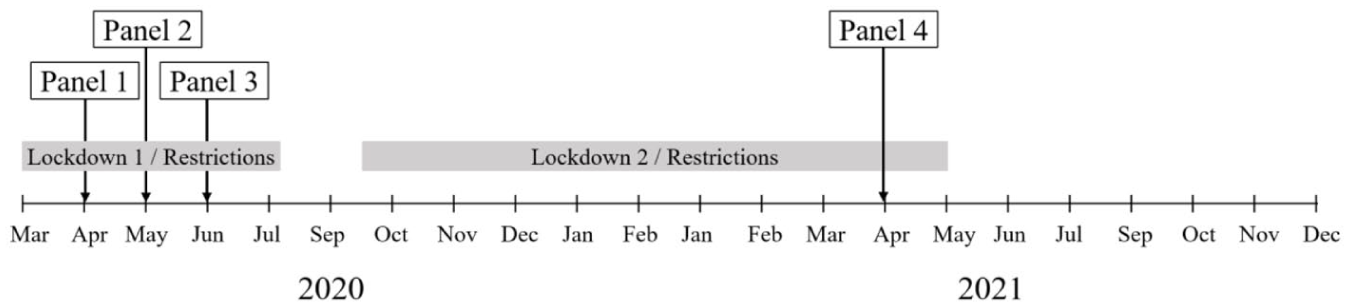
Timing of Survey Panel Rounds and COVID-19 Lockdowns.
DST distributed the survey to a random sample of Danish adults aged 16 to 99 based on information on the full Danish population available in the Danish Civil Registration System (CPR). The survey was distributed primarily as an online survey, 1 with a follow-up option to complete the questionnaire by phone.
In the first wave, the response rate was 43%, yielding 3,435 complete responses, and after retaining only those with complete responses across all four waves, the final balanced panel consists of 1,225 respondents. As in most longitudinal studies, attrition is a potential concern, particularly given the known correlation between volunteering behavior and survey non-responses (Abraham et al., 2009). In our analysis, attrition is more common among younger respondents and those with lower levels of trust. While attrition is not associated with crisis volunteering, prior engagement in volunteering (as reported in the first wave) is positively correlated with continued participation in the panel. However, this does not pose a significant threat to the internal validity of the within-person analyses. Furthermore, we consistently control for prior volunteering in all models, which mitigates bias related to selective attrition. Finally, since respondents and those with higher levels of education are overrepresented among survey participants, we apply weights based on sex, age, and education using register data from the full population.
Measures
We include two measures of volunteering during the pandemic developed for the purpose of this research project. First, crisis volunteering captures whether the respondent engaged in any volunteering activities explicitly related to the COVID-19 pandemic during the 3 weeks prior to each panel round. These items were introduced in the survey as pandemic-related activities and asked respondents which actions they had undertaken or planned to undertake to help others in connection with the outbreak of COVID-19. To cover the full repertoire of new needs arising in the context of the pandemic, crisis volunteering includes child care, information sharing, personal transport, grocery shopping, donations, economic support, and providing support to vulnerable individuals or families. This measure is binary, coded 0 if the respondent did not engage in any of these areas, and 1 if they participated in at least one. Second, ordinary volunteering measures whether the respondent engaged in volunteering not explicitly related to the COVID-19 pandemic during the 3 weeks prior to each panel round. To ensure valid measures comparable to other studies of volunteering in Denmark and internationally, we replicated survey items from the Danish Institute for Voluntary Effort’s ongoing survey program (Sørensen et al., 2021), which aligns with the International Classification of Nonprofit Organizations (Salamon & Anheier, 1996). This item is introduced later in the survey and explicitly framed as general volunteering, not in relation to the pandemic. Posed as a yes or no question, this measure captures any activity the respondent identifies as voluntary work that is not related to the pandemic. Based on subsequent survey items, examples of such activities include sports volunteering, volunteering in leisure-related activities, and volunteering within cultural institutions. The first round is an exception, as it asks about volunteering over the previous 12 months, thus primarily capturing pre-pandemic activity (survey items are available in Online Appendix A.1).
Respondents were able to report engagement in both crisis and ordinary volunteering. To account for the substantial share of respondents participating in both, we include both measures in the models, thereby controlling for the other type of volunteering and accounting for individual-level differences in volunteering engagement.
We also include two measures of pandemic-related emotions which are adapted from the COVID-19 Snapshot Monitoring in Denmark (COSMO-Denmark) questionnaire (Böhm et al., 2020) based on World Health Organization’s (WHO) survey tool and guidelines for monitoring COVID-19 behavior 2 : COVID-19-related helplessness assesses the extent to which respondents felt helpless due to COVID-19, measured on a scale from 0 (“Not at all”) to 5 (“To a very high degree”). This variable is normalized to range from 0 to 1. COVID-19-related anxiety is an index based on four items assessing the extent to which respondents felt that COVID-19 was: (a) close to them, (b) something they thought about frequently, (c) frightening, and (d) worrying. Each item is rated on a 0 to 5 scale, and the index is calculated as the normalized mean of the four items, ranging from 0 to 1. The measure demonstrates high internal consistency, with a Cronbach’s alpha of .81 (Online Appendix A.2).
The following attitudes were measured using replicated items from the Danish edition of the European Value Study 2017 questionnaire (Frederiksen, 2019; Toubøl & Frederiksen, 2019). Generalized trust is a binary variable asking respondents whether, overall, they believe other people can be trusted. The response options are: “No, you cannot be too careful” (coded 0) and “Yes, most people are trustworthy” (coded 1). The second attitude measure is solidarity, constructed as a normalized mean index based on five items. Respondents were asked to what degree the living conditions of the following groups concerned them: (a) neighbors, (b) people in their local area, (c) Danes, (d) Europeans, and (e) humankind. Each item is rated on a 5-point scale from 0 (“Not at all”) to 4 (“To a very high degree”). The index demonstrates high reliability, with a Cronbach’s alpha of .89 (Online Appendix A.2).
To account for the role of previous volunteering, we include a measure based on the first wave, where respondents were asked whether they had participated in volunteering unrelated to COVID-19 within the previous 12 months. This measure was constructed for the purpose of this study and aims to capture volunteering behavior in the year leading up to the pandemic. Finally, we include a set of demographic and socio-economic variables, as these may confound the relationship between volunteering and attitudes. These include sex (Male/Female) based on the CPR registers, age (Young: 16–29 years/Middle-age: 30–59 years/Elderly: 60+ years) coded to reflect distinct life stages, occupation (In occupation/Outside of occupation/Pensioners/Students/Other), COVID-19 health risk group 3 (In the risk group/Not in the risk group), and social network divided into two measures capturing first, how often respondents interact with colleagues or acquaintances in the year before the pandemic, and second, how often respondents interacted with friends and family. Both measures are normalized to range from 0 to 1. A full summary of all measures is provided in Table A.3 (Online Appendix A).
Analytical Strategy
The analysis consists of two main steps. First, to address hypotheses H1 through H3, we examine how crisis and ordinary volunteering relate to negative crisis-related emotions and prosocial attitudes using logistic regression with clustered standard errors to account for the long format of the panel data. This step allows us to test differences among crisis volunteers, ordinary volunteers, and the general population. We then move to an exploratory analysis to address both the normativist perspective and the social practice approach by running two versions of a logistic fixed-effects model. Fixed effect models allow us to explore potential within-individual patterns of correlations between changes in crisis-related negative emotions and prosocial attitudes and engagement in volunteering. In the first version of the fixed effect model, we lag measures of prosocial attitudes and crisis-related negative emotions to ensure they precede changes in volunteering. This specification tests the normativist perspective, which posits that attitudes and emotions drive volunteer behavior. This version is represented by the dashed arrows in Figure 2. In the second version, we do not lag attitudes and emotions, allowing us to test whether changes in volunteering precede changes in attitudes and emotions. Lagging volunteering is unnecessary here, as the questionnaire supports temporal ordering: respondents report on current attitudes and emotions, while volunteering is reported for the preceding 3 weeks. This allows us to explore whether attitudes and emotions are outcomes of volunteering, consistent with the social practice approach. This model is represented by the solid lines in Figure 2.
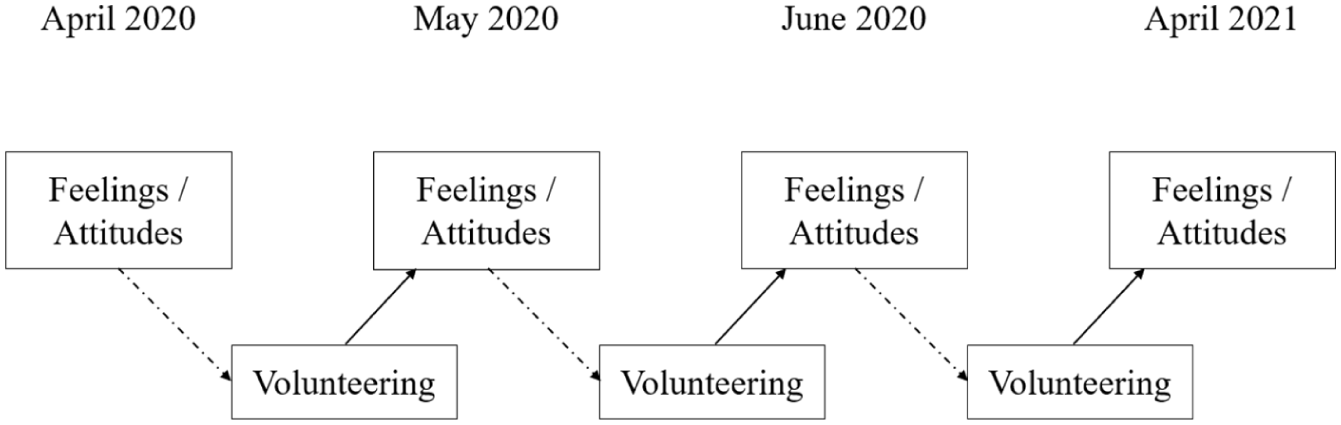
Empirical Models Testing the Normativist (Dashed Arrows) and Social Practice (Solid Arrows) Models of the Correlations Between Volunteering, Attitudes, and Feelings.
Second, to test hypotheses H4 and H5, we begin with simple cross-tabulations to examine the proportion of crisis and ordinary volunteers who volunteered before the crisis, as well as logistic regression with clustered standard errors examining the correlation between prior volunteering and both ordinary and crisis volunteering while controlling for crisis-related emotions and prosocial attitudes.
We repeat the fixed-effects models on subsets of the data based on prior volunteering experience. This allows us to test whether within-individual correlations between negative crisis-related emotions, prosocial attitudes, and volunteering differ between individuals who volunteered in the year prior to the COVID-19 pandemic and those who did not. In addition, we conduct robustness checks by distinguishing between formal and informal volunteering within both crisis and ordinary volunteering. This ensures that differences in the organizational context of volunteering do not drive the observed patterns in the main analyses.
Results
How Crisis and Ordinary Volunteering Relate to Crisis-Related Negative Emotions and Prosocial Attitudes
We begin the analysis by examining how crisis-related emotions and prosocial attitudes relate to crisis and ordinary volunteering when examined within the same context: the COVID-19 pandemic. Figure 2, based on logistic regression models, presents the average marginal effects of COVID-19 anxiety, helplessness, generalized trust, and solidarity on both types of volunteering. Control variables are included in the models, although their estimates are not shown in Figure 3 (see Online Appendix Tables B.1 and B.2 for the full list of estimates).
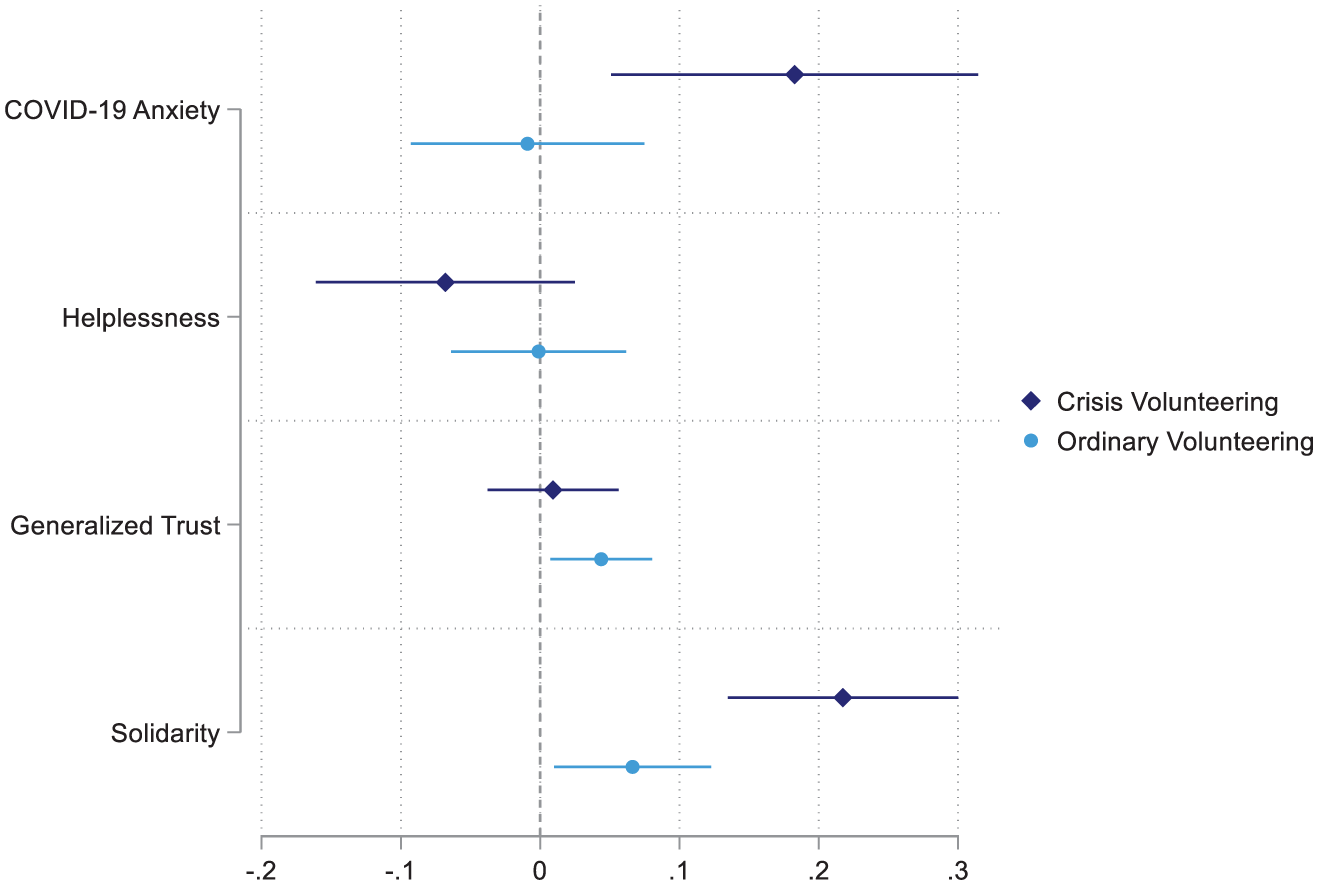
Average Marginal Effects Including 95% Confidence Intervals. Based on Logistic OLS Regression Models.
Figure 3 shows that COVID-19-related anxiety (.18) and solidarity (.22) are significantly associated with crisis volunteering, providing provisional support for H1 and H2. In addition, generalized trust (.04) and solidarity (.07) are significantly associated with ordinary volunteering, even when controlling for prior engagement in volunteering, providing provisional support for H3. These analyses highlight differences between those who engage in crisis volunteering and those involved in ordinary volunteering. While both forms of volunteering are associated with prosocial attitudes, particularly solidarity, crisis volunteering is uniquely linked to pandemic-related anxiety.
Exploring Normativist and Social Practice Explanations
To probe the direction of associations between volunteering, attitudes, and emotions during the pandemic, and to more effectively address selection effects, we examine individual-level changes over time using logistic regression with individual fixed-effects. Figure 4 presents the results of these models, examining the association between feelings and attitudes and changes in volunteering behavior. In these models, COVID-19 anxiety, helplessness, generalized trust, and solidarity are lagged, meaning they are measured before volunteering, in line with a normativist perspective. Figure 4 shows that changes in anxiety and helplessness are not significantly associated with engagement in crisis volunteering. This finding provides evidence against a normativist interpretation of H1, which posits that emotional responses to the crisis drive volunteering engagement.
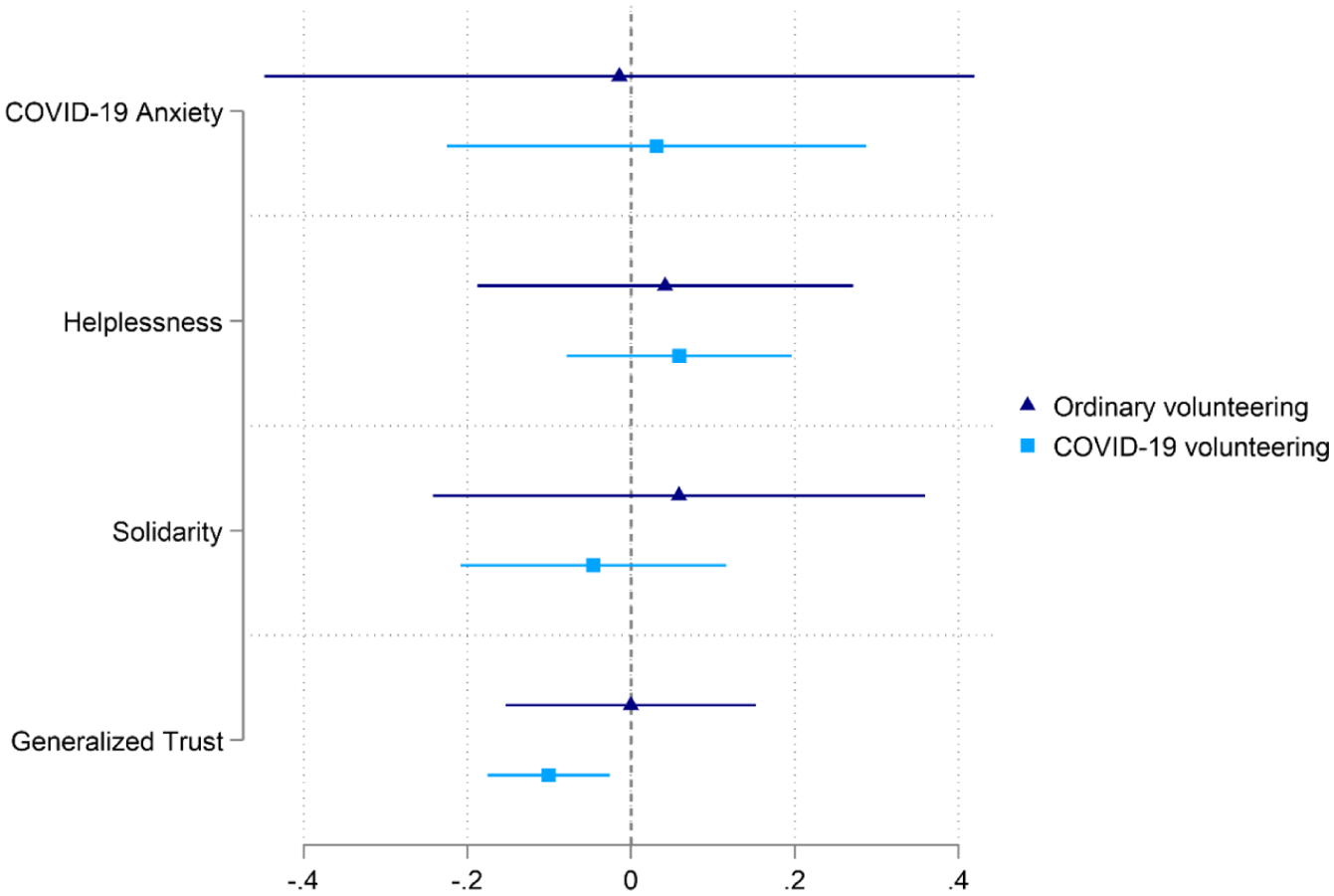
Average Marginal Effects Including 95% Confidence Intervals. Based on Logistic Fixed Effect Models With Volunteering as Outcome.
Next, we find that an increase in generalized trust is significantly and negatively associated with crisis volunteering (-.10). The point estimate suggests that shifting from a cautious view (“you can’t be too careful”) to a more trusting position (“most people can be trusted”) is associated with a 10-percentage point decrease in the likelihood of engaging in crisis volunteering. This represents a substantial change, particularly considering the relatively short time span of the panel data, which covers three waves within 1 year.
These findings regarding generalized trust and crisis volunteering are particularly noteworthy. While we did not find a significant correlation between crisis volunteering and generalized trust in the between-individual analysis (see Figure 2), the fixed-effects models, which capture within-individual changes over time, reveal that an increase in generalized trust is associated with a decreased likelihood of participating in crisis volunteering, whereas a decrease in trust appears to encourage such participation. We will explore possible explanations for this counterintuitive result in the discussion section.
It is also worth noting that no significant relationship was found between generalized trust and ordinary volunteering in the fixed-effects model. However, this part of the analysis is based on a relatively small sample of individuals engaged in ordinary volunteering, which may limit the statistical power to detect such associations.
Given the unexpected findings regarding generalized trust and crisis volunteering, we further investigated whether this pattern persisted across different subsets of the data. For both types of volunteering, we ran separate models distinguishing between formally and informally organized volunteering, as well as between individuals who had volunteered in the year prior to the pandemic and those who had not. Although the results were not statistically significant, likely due to the small number of observations in each subgroup, a negative association between changes in trust and crisis volunteering was consistently observed across all subsets (see Online Appendices C.3 and C.4).
In summary, this part of the analysis offers some support for the normativist perspective in relation to crisis volunteering, as it reveals a negative relationship between changes in generalized trust and subsequent engagement in crisis volunteering.
Next, we reverse the analytical logic in line with the social practice approach and examine whether voluntary activity correlates with changes in generalized trust, solidarity, anxiety, and helplessness.
Figure 5 shows that engagement in crisis volunteering is not significantly associated with changes in any of these attitudes or emotional measures. In contrast, engaging in ordinary volunteering is associated with a 3 percentage point increase in solidarity, providing some support for the social practice approach regarding ordinary volunteering.
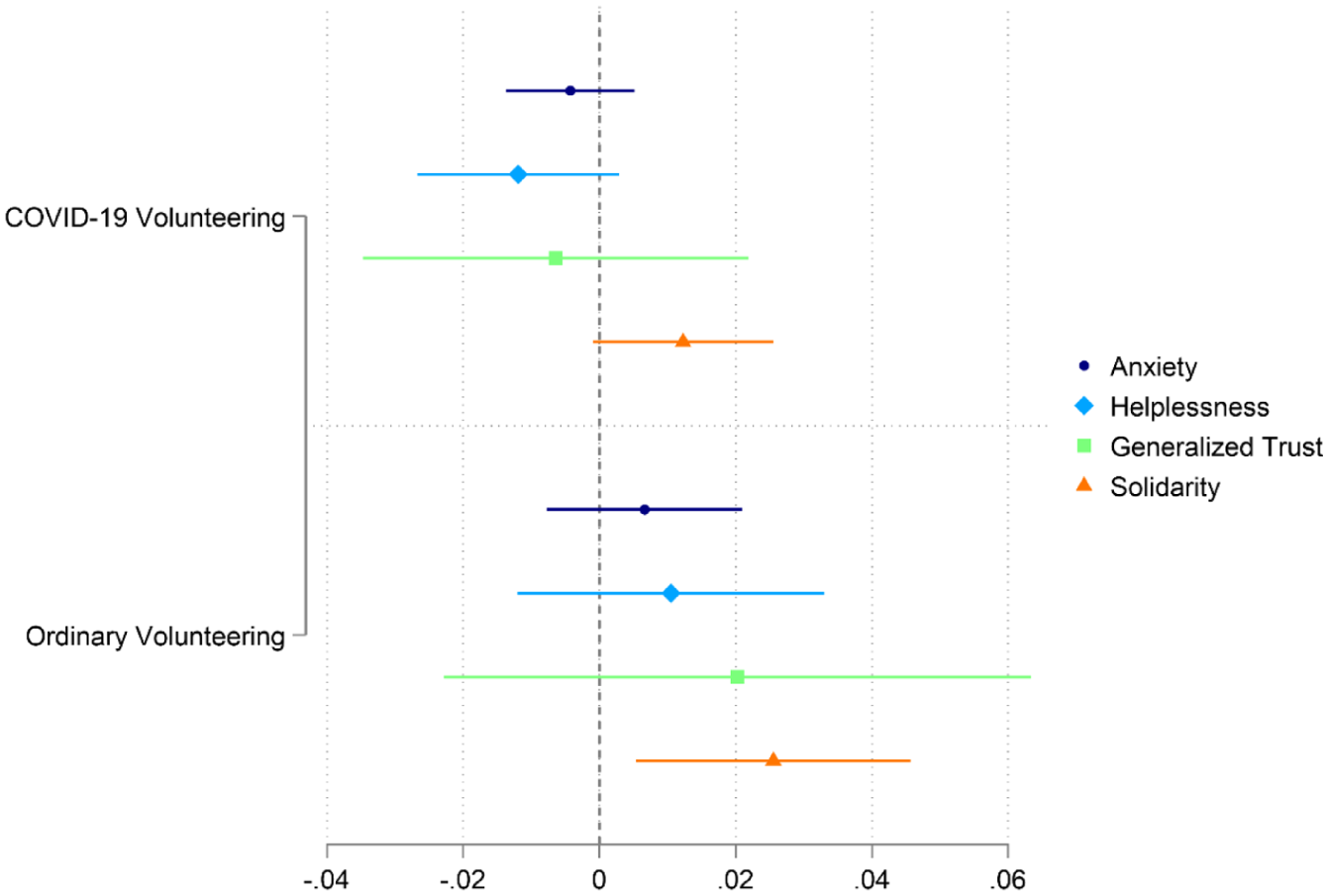
Coefficient Plot Including 95% Confidence Intervals. Based on Fixed Effect Models With Attitudes and Crisis-Related Feelings as Outcome.
We repeated the fixed-effects models on subsets of the sample to account for the role of prior volunteering experience and organizational context. Among individuals who had volunteered before the pandemic, engaging in ordinary volunteering is significantly associated with increases in both solidarity (.03) and generalized trust (.24). While the latter suggests a substantial correlation, the confidence intervals are wide due to the small sample size for ordinary volunteering in this group (see Online Appendix C.6). For individuals who had not volunteered in the year prior to the pandemic, engaging in ordinary volunteering is associated with a significant increase in anxiety (.03; see Online Appendix C.7). In addition, although sample sizes are limited in these robustness checks, distinguishing between formally and informally organized volunteering does not appear to account for the observed differences between crisis and ordinary volunteering.
Previous Volunteering and Crisis and Ordinary Volunteering During COVID-19
Next, we turn to an examination of the correlation between previous volunteering and both crisis and ordinary volunteering during the pandemic. Our analysis reveals that many individuals who volunteered during the pandemic were already engaged in ordinary volunteering before its onset. Nearly half of the crisis volunteers (46%), as shown in Table 1. In addition, we find that 82% of those who participated in ordinary volunteering during the pandemic had been volunteers before the crisis, unsurprisingly indicating that much of the ordinary volunteering observed during the pandemic was a continuation of pre-pandemic activities. This pattern highlights a significant connection between volunteering before and during a crisis.
Share of Previous and New Volunteers in Crisis and Ordinary Volunteering During COVID-19.

Note. Weighted according to sex, age, and education.
While crisis volunteering was more common among those already involved in ordinary volunteering, it is notable that more than half of crisis volunteers (54%) had not volunteered before the pandemic. Thus, although prior volunteer experience increased the likelihood of participating in crisis volunteering, the majority of crisis volunteers were mobilized from a broader pool of individuals who had not volunteered in the year preceding the crisis. An existing volunteer culture to draw from was an important prerequisite for volunteering in the COVID-19 pandemic, but it is not the entire story.
Furthermore, a logistic regression that includes our control variables shows that individuals who volunteered before the pandemic were 10 percentage points more likely to engage in crisis volunteering and 24 percentage points more likely to engage in ordinary volunteering than those without previous experience, as indicated by the average marginal effects in Tables B.1 and B.2 (available in the Online Supplementary Materials). This finding suggests that, all else being equal, individuals already involved in volunteering are more likely to step up during a crisis. The results support both H4 and H5, highlighting the importance of prior engagement in volunteer activities as a foundation for engaging in volunteering during a crisis. This indicates that prior volunteering is a strong predictor of volunteer engagement during the pandemic, particularly for ordinary volunteering. While crisis volunteering has the capacity to mobilize more new volunteers than ordinary volunteering during the COVID-19 pandemic, previous volunteer experience still plays an important role in volunteer behavior during crises, even when emotions and attitudes are considered.
Discussion
Crisis and Ordinary Volunteering in the Same Context
The analysis reveals important differences between crisis and ordinary volunteers when examined within the same context. Specifically, while both groups display higher levels of solidarity than the general population, only ordinary volunteers report higher levels of generalized trust, whereas only crisis volunteers report higher levels of crisis-related anxiety compared with both the general population and ordinary volunteers.
Regarding prosocial attitudes, we found a consistent and robust association between solidarity and crisis volunteering. This relationship held across both groups of crisis volunteers, those who had volunteered in the year prior to the pandemic and those who had not. For ordinary volunteering, we observed positive associations with both solidarity and generalized trust, aligning with existing literature that links ordinary volunteering to elevated levels of prosocial attitudes and social capital (Aydinli et al., 2015; Carlo et al., 2005; Kim et al., 2019; Schlesinger et al., 2013). Interestingly, solidarity showed a stronger correlation with crisis volunteering than with ordinary volunteering. This somewhat unexpected result may reflect the crisis context: crisis volunteering during a crisis likely carries a heightened sense of urgency, making it a more immediate and obvious avenue for those motivated by solidarity and a desire to contribute to society.
Turning to the within-individual analyses testing both normativist and social practice perspectives on the relationship between volunteering and prosocial attitudes (Janoski et al., 1998), the results concerning ordinary volunteering favor a social practice approach, as engaging in ordinary volunteering correlated with subsequent increases in solidarity. Although the result is correlational, these results do propose that engaging in ordinary volunteering can heighten volunteers’ sense of solidarity, which is in line with a dominant line of thought in volunteer literature conceptualizing that participation fosters social capital (Putnam, 2000). The findings for crisis volunteering align more closely with a normativist perspective. The analysis revealed a negative association between generalized trust and subsequent engagement in crisis volunteering, indicating that lower levels of trust may be associated with a higher likelihood of engaging in crisis-related volunteering. This finding is noteworthy, as it challenges the common assumption that trust functions primarily as a prerequisite for volunteering during crises (Gray et al., 2024). However, this relationship should be interpreted with caution. Although causal conclusions cannot be drawn, this pattern could reflect a dynamic in which diminished trust in others’ willingness or ability to respond to the crisis motivates individuals to take action themselves. Alternatively, the association may be shaped by institutional responses during the pandemic, which could influence both trust levels and willingness to engage in crisis volunteering. For example, the extraordinary context of the COVID-19 pandemic may have altered the role of trust in volunteering decisions, as prolonged uncertainty and evolving public responses may have weakened generalized trust while simultaneously increasing perceived needs for citizen-led action. We therefore view this finding as suggestive rather than conclusive, underscoring the need for future research with larger samples and more detailed measures of trust and volunteering.
Crisis Volunteering and Negative Emotions During Crises
While the between-individual analysis using ordinary logistic regression indicates that crisis volunteering is associated with negative feelings related to the pandemic, the within-individual analysis based on logistic regression with individual fixed effects does not support the notion that these negative emotions drive crisis volunteering. This finding contrasts with previous studies that suggest emotional responses to crises motivate helping behavior (Steffen & Fothergill, 2009; Yang, 2021), further challenging the view that crisis volunteering is primarily driven by spontaneous emotions. These results point in the direction of studies not treating emotions as drivers of volunteer engagement, yet finding that volunteers during the pandemic showcased burnout, fatigue, and anxiety (Kanemura et al., 2022).
Another insight from the discrepancies in the results with and without individual fixed effects is the importance of using longitudinal approaches when examining the relationship between emotional states and volunteering during crises to avoid overstating the role of emotions in prompting crisis volunteering. This is especially relevant in the context of short-term or sudden-onset disasters, where longitudinal data is often unavailable. In such cases, researchers may mistakenly attribute crisis volunteering to emotional triggers, when in fact these emotions are correlated with, but not necessarily the cause of, volunteering. Prior involvement in volunteering can be a confounding factor, as those already civically engaged may both experience strong emotions during a crisis and be more ready to act on these emotions. In addition, it is possible that negative emotions play a more prominent motivational role in the context of sudden and acute crises, where the sense of urgency is heightened, compared with prolonged crises like the COVID-19 pandemic, where emotional responses may evolve or dissipate over time.
The Role of Volunteer Experience in Volunteering During Crises
Our findings indicate substantial overlap between volunteering before the pandemic and both crisis and ordinary volunteering during the pandemic, echoing results from other studies (Dederichs, 2023; Wakefield et al., 2022). The overrepresentation of previous volunteers in volunteer engagement during the pandemic could indicate that experienced volunteers drew on their practiced volunteering toolkits and thus had easier access to volunteering (Swidler, 1986). This appears to be especially the case concerning ordinary volunteering, which is unsurprising, as this is the type of volunteering that previous volunteers have specific previous experience with. However, the pandemic also prompted the mobilization of many new volunteers, particularly in the context of crisis volunteering. This could be understood as a mobilization during an unsettled time, where a habit vacuum exists, and broader narratives of solidarity and care dominate (Swidler, 1986). Crisis volunteering perhaps mobilized more new volunteers to relieve the consequences of the pandemic, as this can be understood as a direct response to the salience and urgency of shared cultural narratives during the pandemic.
Policy implications emerge from the interplay between previous volunteering and volunteering during crises. First, the links between prior volunteering and both crisis and ordinary volunteering underscore the value of investing in sustained civic infrastructure and volunteer engagement strategies during non-crisis periods. Supporting a robust volunteer base and fostering a culture of participation enhances responsiveness in times of crisis. Second, the evidence that new volunteers are especially drawn into crisis volunteering during emergencies points to the need for flexible and easily accessible pathways for these volunteers. Crisis volunteering during the pandemic was predominantly informal and often organized through social media platforms, where individuals can quickly coordinate responses and mobilize support (Carlsen et al., 2021; Drabek & McEntire, 2003). While this informal and decentralized model allows for agility and rapid action, it also poses challenges for formal organizations aiming to play a larger role. For formal organizations, creating low-threshold entry points may involve simplifying registration procedures or minimizing training requirements by prioritizing inclusivity over rigidity (Luksyte et al., 2021). Furthermore, emergency agencies can use public display applications to coordinate tasks between emergency services and crisis volunteers, thereby supporting citizen-initiated engagement and expanding the range of tasks available to volunteers (Ludwig et al., 2017; Sha et al., 2025). Such measures can lower barriers for first-time volunteers and facilitate rapid engagement during crises.
Limitations and Future Research
Finally, we reflect on the generalizability of the findings in light of the study’s limitations. Although the results suggest some changes in attitudes over time, attitudes are generally considered relatively stable. Therefore, extending the study’s time frame would be valuable for capturing longer-term relationships between volunteering and its potential impact on attitudes. Moreover, the relatively short and rapid intervals between panel waves limit the likelihood of detecting meaningful changes, as they provide only a brief window for attitudes to shift and for individuals to engage in volunteering. However, this constraint also makes the detected within-individual correlations all the more noteworthy. In addition, the analysis would be strengthened by the inclusion of pre-pandemic measures of attitudes, which would allow for a more robust assessment of selection effects, particularly regarding who chooses to engage in volunteering during crises.
Regarding the use of COVID-19 as a case of crisis, it stands out as a particularly unique example due to its global scope and prolonged duration. However, as discussed earlier, the pandemic offers an ideal context for comparing crisis volunteering with ordinary volunteering. Its extended timeline allowed both types of volunteering to take place, and although opportunities for ordinary volunteering were undoubtedly constrained, they did persist to some extent alongside crisis volunteering, making the comparison meaningful. In contrast, shorter-term crises or disasters are more likely to generate brief windows during which only crisis volunteering is possible, limiting the potential for such comparisons. At the same time, the degree of restrictions imposed on ordinary volunteering during the pandemic is relatively specific to public health crises. Therefore, future research would benefit from examining contexts in which crisis volunteering is mobilized without the simultaneous imposition of strict limitations on ordinary volunteering. Such comparisons could further illuminate the distinct dynamics of crisis and ordinary volunteering under varying crisis conditions.
Finally, the findings may not fully generalize to countries where volunteering was less prevalent prior to the pandemic compared to Denmark, highlighting the importance of cross-national research on crisis volunteering. The results show that a substantial share of crisis volunteers had prior volunteering experience, suggesting that an established culture of volunteering played a significant role in crisis response. While the findings indicate that some previous volunteers experiencing COVID-19-related anxiety may have shifted from ordinary to crisis volunteering, the relationship between volunteering and crisis-related emotions could differ in contexts where prior engagement in volunteering is more limited. In such settings, crisis volunteering may be driven by different motivations or emotional triggers, underscoring the importance of examining these dynamics across diverse national and cultural contexts.
Conclusion
Our findings suggest that crisis and ordinary volunteering represent distinct forms of engagement, even when they occur within the same context. They challenge the notion that crisis volunteering is primarily driven by negative emotions, instead pointing to diminished trust in others to take responsibility as a more plausible factor. This challenges traditional conceptualizations of ordinary volunteering as the primary domain for the expression of prosocial values. The strong links between both crisis and ordinary volunteering and prior volunteering underscore the importance of an active civic culture as a foundation for volunteer engagement in crises.
Supplemental Material
sj-pdf-1-nvs-10.1177_08997640261437116 – Supplemental material for Attitudinal and Emotional Outcomes and Drivers of Ordinary and Crisis Volunteering
Supplemental material, sj-pdf-1-nvs-10.1177_08997640261437116 for Attitudinal and Emotional Outcomes and Drivers of Ordinary and Crisis Volunteering by Lærke Høgenhaven, Hans-Peter Y. Qvist and Jonas Toubøl in Nonprofit and Voluntary Sector Quarterly
Footnotes

Funding
The authors disclosed receipt of the following financial support for the research, authorship, and/or publication of this article: This work was funded by Spar Nord Fonden (Grant number: 2021-0331), Research Fund Denmark (Grant number: 0213-00028B), the European Research Council (Grant number: 834540), The Faculty of Social Sciences and the Center for Social Data Science at University of Copenhagen, and the Department of Sociology and Social Work at Aalborg University.
Declaration of Conflicting Interests
The authors declared no potential conflicts of interest with respect to the research, authorship, and/or publication of this article.
Data Availability Statement
The data and code that support the findings of this study are openly available in Figshare at http://doi.org/10.6084/m9.figshare.31388920
Supplemental Material
Supplemental material for this article is available online.
Notes
Author Biographies
References
Supplementary Material
Please find the following supplemental material available below.
For Open Access articles published under a Creative Commons License, all supplemental material carries the same license as the article it is associated with.
For non-Open Access articles published, all supplemental material carries a non-exclusive license, and permission requests for re-use of supplemental material or any part of supplemental material shall be sent directly to the copyright owner as specified in the copyright notice associated with the article.
