







Abstract
Convincing individuals to donate is a challenge for nonprofit organizations. This research builds on the concept of moral balance to examine the asymmetric effects of prior moral actions on individuals’ likelihood of donating. Through five experiments, we show that individuals with a negative moral balance are more likely to donate as a form of moral compensation. Conversely, those with accumulated moral credit tend to donate less because of moral licensing. Our findings further reveal that communications framed with a shorter moral distance are more effective at encouraging donations among individuals with a positive moral balance. In contrast, lower-level construal frames are better suited to engage individuals with a negative moral balance. This research contributes by highlighting asymmetry in moral regulation: the mechanisms that drive compensatory behavior differ from those that initiate a virtuous cycle. For charities, we suggest actionable strategies to tailor fundraising communications to the moral state of their audience.
Introduction
Charitable organizations aim to promote people’s well-being and rights. In the United States, these organizations collected US$550 billion in 2023. Individual giving is the largest source of funds, as it represents approximately two-thirds of the total giving in the United States (Giving USA, 2023). Despite the considerable effort charitable organizations put into fundraising, they face increasingly intense competition due to the growing number of initiatives and a decline in donor responsiveness to their appeals (Jeon et al., 2019). Consequently, charitable organizations devote considerable efforts to increasing their solicitation effectiveness. Accordingly, improving and optimizing charitable solicitation campaigns have been central topics in marketing research. Prior research has devoted substantial efforts to identifying strategies to increase fundraising communication efficiency to motivate individuals to donate (Waters, 2011).
Although charitable donations can be driven by self-serving goals (Bekkers & Wiepking, 2011; Denis et al., 2020), they are also generally associated with moral objectives (Goenka & Van Osselaer, 2019). Morality remains an important communication level for soliciting prosocial behaviors through the elicitation of guilt or by communicating the virtue of helping (Bekkers & Ottoni-Wilhelm, 2016; Coleman et al., 2020). Accordingly, individuals regularly engage in virtuous behaviors that help them reinforce their moral image (Xu et al., 2014). The concept of moral balance (Lasarov & Hoffmann, 2020; Merritt et al., 2010) goes beyond existing theories of moral licensing and compensatory behaviors, as it suggests that people actively monitor the current state of their morality on the basis of the number of morally significant actions within a given time span.
Whereas charitable giving may affect individual moral balance, its use as a level to compensate for recent misconduct, to acquire moral credit, or to maintain a positive behavioral dynamic has often been overlooked, missing the opportunity to adapt the communication according to the individuals’ prior (im)moral deeds. To address this gap, this research examines under which conditions moral (im)balance (positive or negative) affects people’s generosity. Therefore, five studies using experimental approaches are reported. Our findings highlight the moral licensing effect, which posits that virtuous actions disinhibit people from acting immorally (Mullen & Monin, 2016). In contrast, we also show that giving to charities may serve as a compensatory behavior to recover a moral balance. Moreover, we explore two conditions that moderate these effects, namely, moral distance from beneficiaries and the construal level of the cause.
Our research’s contribution to the academic literature is threefold. First, we provide a new lens for understanding prosocial behaviors and add insights to the existing discussion about morality in charitable giving (Lee et al., 2014; Shang et al., 2020). Whereas moral licensing and moral cleansing theories document why people might feel licensed to act immorally or why people feel obliged to counterbalance guilds after committing a moral transgression, the moral balance framework proposes a much more dynamic perspective. The idea that individuals regulate their moral behavior over time, keeping track of moral credits and debits, suggests that they do not simply license or compensate but actively manage their moral image over time. Accordingly, we highlight that individuals’ moral balance may guide their decision to give to charities. Second, we contribute to the literature on moral balance (Lasarov & Hoffmann, 2020; Merritt et al., 2010). Therefore, we highlight that moral distance from beneficiaries and the construal level of the cause moderate the effect of moral balance in the context of charitable giving. Finally, we offer a fresh perspective on charitable giving by considering it a potential compensatory behavior (when individuals experience a negative moral balance) or an opportunity for self-licensing behaviors (when individuals experience a negative moral balance). In that respect, we claim that understanding charitable giving is a dynamic process. In the following sections, we first discuss the literature and develop our subsequent hypotheses. We then present our methodological approach and the results of our different experiments. In the last sections, we discuss our findings and propose actionable insights for NGOs to enhance their fundraising strategies, maintain donor engagement, and achieve greater social impact.
Theoretical Development
The relationship between an individual’s behavioral tendencies and an individual’s moral system and values has been illustrated many times in recent decades (K. K. Chen et al., 2013; Garrow & Hasenfeld, 2014; Staub, 2013). Many human behaviors are expressions of our personal moral system, and consequently, people regularly face two different (and symmetrically opposite) scenarios. On one hand, people can engage in immoral behaviors that contradict their moral standards, leading to an unpleasant feeling of being in the wrong. On the other hand, people can engage in virtuous behaviors that uphold their values, resulting in moral satisfaction. At the heart of the matter, the notion of moral balance (Nisan, 2013) relies on three main assumptions. First, people regularly deviate from what they know and believe to be the right behavior. Second, people keep a mental score in terms of their actions to set up what can be referred to as a moral balance, which is monitored by personal standards below which one does not allow itself to descend. Third, the status of moral balance can lead people to adopt one behavior over another. Eventually, people end up balancing moral actions to regulate their moral self-worth, which is how individuals evaluate their moral identity (Jordan et al., 2011). Prosocial behaviors are intrinsically linked with the notion of morality and are highly dependent on personal moral standards (Penner et al., 2005). These behaviors have a complex relationship with moral imbalance resulting from immoral or virtuous behaviors (Xu et al., 2012).
Negative Moral Feelings
When people engage in immoral behaviors, they generally experience negative feelings that result from internal conflicts between their personal norms and perceptions of recent behavior (Bissing-Olson et al., 2016). As a common manifestation of a negative moral balance, guilt is generally defined as “an individual’s unpleasant emotional state associated with possible objections to his or her actions, inaction, circumstances or intentions” (Baumeister et al., 1994, p. 245). The concept of guilt is intrinsically linked to the notion of morality, as guilt describes the feelings associated with the internal conflict caused by one’s transgression of moral standards (Kugler & Jones, 1992). In the context of moral balance, individuals who experience guilt from immoral actions might be more likely to engage in prosocial behavior as a form of moral cleansing, helping them to “offset” their moral transgression and restore balance. Consequently, guilt not only serves as an emotional signal of a negative moral imbalance but also promotes behaviors to restore moral balance. For people who have recently engaged in questionable behaviors, other-oriented forms of behavior serve as an excellent lever to restore moral balance. The role of prosocial actions in alleviating guilt has been documented in various contexts (Penner et al., 2005; Xu et al., 2014). Lindsey et al. (2007) even referred to guilt as emotional distress “based in social relationships, which motivates and encourages prosocial behavior” (p. 469). The unpleasant feeling that results from being wrong, or from another’s perception that one is wrong, would lead people to redeem themselves by engaging in positive other-oriented behaviors to restore moral balance (De Hooge et al., 2011; Hauge, 2016).
Positive Moral Feelings
Just as immoral behaviors contribute to a negative balance, virtuous actions are generally accompanied by pleasant feelings from being in the right. Pride often emerges as a primordial positive emotion in opposition to guilt (Antonetti & Maklan, 2014). However, there is much more discussion about the carry-over effect of virtuous acts on subsequent behavior. From a behavioral consistency perspective, pride can influence prosocial behavior by encouraging individuals to continue behaving in a virtuous manner. The authors argued that people value and pursue behavioral consistency because it results in a clear and unambiguous sense of self (Laran & Janiszewski, 2008). Consequently, proponents of this theory suggest that people who recently engaged in virtuous actions are more willing to repeat similar behaviors (Cornelissen et al., 2007). However, it can also be argued that when people enjoy moral credit (through pride), they may be less inclined to engage in prosocial behavior because they feel that they have already earned moral credentials. Accordingly, self-licensing theory suggests that people tend to derive moral credit from recent virtuous acts, entitling them to subsequent behaviors that satisfy short-term personal desires (Meijers et al., 2015). Since 2001, when Monin and Miller published their study on moral credentials, several studies have documented that acting in one moral direction enables individuals to do just the opposite later. For example, Effron et al. (2009) showed that voting for Obama could license individuals to express a preference for hiring a white person for a job. Similarly, Mazar and Zhong (2010) showed that buying green products online may license individuals to cheat more on a subsequent task.
However, the immediate behavioral consequences of virtuous actions remain unclear; both moral licensing theory and behavioral consistency theory suggest potential mechanisms underlying this relationship. Whereas the potential for prosocial acts to alleviate guilt has been recognized, there is much more discussion about the carry-over effect of virtuous acts on subsequent behavior.
Moral Balance and Prosocial Behaviors
To adopt a more holistic view of how people navigate the moral landscape rather than focus on the mirror effects of guilt, pride, and other related moral feelings contributes to further understanding how people balance their moral image and self-regulate. The literature on moral cleansing (i.e., restoring balance) and moral licensing has grown richer, and the experimental evidence has led to a better understanding of the underlying moral dynamics (West & Zhong, 2015). On one hand, it is now widely accepted that people who have recently engaged in questionable behavior are more likely to engage in future moral behavior to offset previous questionable action. On the other hand, recent virtuous actions are generally accompanied by moral credentials that help individuals justify their subsequent questionable behaviors (Brañas-Garza et al., 2013). Favoring moral licensing theory over behavioral consistency is justified by the commonly accepted assumption that people regularly deviate from what they know is right as long as they do not excessively deteriorate their moral balance (Nisan, 2013). Previous research has indeed demonstrated that people are looking for a balance between their good and bad deeds rather than aiming to engage in irreproachable behavior at all costs. In the same vein, previous research has suggested that the reparative effect of a negative balance is limited, as people do not seek redemption at all costs (Xu et al., 2014). Consequently, by favoring pragmatism over an idealistic vision of morality, we formulate the following guiding hypotheses:
The theoretical appeal of symmetry between immoral and virtuous action tends to obscure the conditions under which it applies. Therefore, it is necessary to examine prosocial behavior. Prosocial behavior is defined as a voluntary and intentional behavior that results in benefits for another (Eisenberg & Miller, 1987, p. 92). A prosocial behavior can be distinguished by its recipient (who benefits from it) and by its outcome (the nature of the action). Considering the former, the role of the beneficiary in the decision to engage in prosocial behavior has been well established and constitutes a major research topic. With respect to the latter, the focus is often on the psychological consequences for the benefactor but less on how to promote the potential benefits of the behavior.
Moral Distance From Beneficiaries
Researchers have long been interested in the impact of moral actions on the propensity to adopt prosocial behavior (Heckler, 2024). However, the lack of uniformity of results across different contexts remains a fundamental limitation of the literature, particularly with respect to the effect of a positive moral balance, where behavioral consistency theory and moral licensing theory continue to clash.
To better understand the complexity of the subject, we need to bear in mind that morality remains socially and individually shaped (Penner et al., 2005). In this vein, personal moral standards determine the extent to which people feel morally obliged. To objectify and measure people’s inclination toward morality, Jones (1991) showed that people care more about people who are close to them than about people who are seen as morally distant (p. 376). Since then, we have defined moral distance as the perceived degree of moral obligation one individual has toward another (Aguiar et al., 2008). By exploring the question of whether moral concerns diminish over distance, Waldron (2003) contributed to disentangling moral distance from sheer geography. In the context of prosocial behaviors, Baumeister et al. (1994) referred to the notion of commonality, defined as the perceived (social, cultural, psychological, and/or geographical) distance between people. In line with Jones’ work on ethical decisions, the proximity of the moral issue offers an exhaustive description of human closeness and relates to the feeling of nearness that an individual has for the beneficiaries of a prosocial behavior. More recently, Ghorbani et al. (2013) examined the effect of moral distance on compensatory behaviors resulting from feelings of guilt; they reported that a shorter perceived moral distance was associated with a greater sense of responsibility toward others. Faced with a moral imbalance (positive or negative), the decision to adopt subsequent prosocial behaviors is highly likely to be based on the individual’s perception of the beneficiary of that behavior. In this respect, we assume that the perceived moral distance should influence the decision insofar as it reflects a form of moral obligation toward the latter. Incorporating this notion as a moderator could help explain the variations in the results obtained thus far.
Construal Level of the Outcome
In addition to its benefit, the decision to adopt prosocial behavior is also determined by its outcome. Accordingly, construal level theory (CLT) posits that a behavior can be categorized at varying levels of abstractness with respect to its outcome (Karataş & Gürhan-Canli, 2020). High levels of construal are characterized by a stronger focus on why a certain purpose is to be achieved and, accordingly, a focus on more abstract elements of the outcome. As the focus is on broader goals, values, and outcomes, people are invited to think about the action more abstractly. Conversely, lower levels of construal emphasize the concrete process, that is, how the purpose is achieved (Trope & Liberman, 2003). In this situation, the focus is on the immediate and specific details of how the action is carried out. In this context, Kim et al. (2009) investigated the effect of message framing on political persuasion and reported that emphasizing abstract elements of the outcome (high construal level) is more effective when the promoted behavior is temporally distant. Conversely, a behavior that is expected to occur sooner is better triggered by concrete elements of the process (low construal level). In the context of prosocial behaviors resulting from moral imbalance, the distinction between high and low levels of construal is worth considering, as the latter may affect whether people focus on more distant (abstract) or more immediate (concrete) goals. Indeed, fundraising campaigns triggering moral feelings such as guilt and pride systematically rely on the immediacy of the emotional response (Septianto & Paramita, 2021). While the cause of the emotion may be more temporally distant, the emotion may be experienced in the moment. As explained above, moral balance management is based on the mental score that people calculate with varying degrees of objectivity (Nisan, 2013). Therefore, the balance is more adjustable when moral actions have occurred more recently. These findings suggest that the level of concreteness of prosocial behavior influences how it is approached.
Individuals who perceive prosocial behavior in abstract terms (e.g., “donating to charity to improve society”) might feel more easily morally licensed. They may feel entitled to engage in less prosocial behavior because abstract framing makes their past virtuous actions seem more general and less immediately tied to the specific charitable act. On the contrary, when individuals perceive prosocial behavior in concrete terms (e.g., “donating to a charity that helps children in need right now”), they may be more inclined to engage in prosocial behavior, especially if they are experiencing negative moral balance. Consequently, we hypothesize that when individuals experience moral imbalance (positive or negative), they are more likely to engage in prosocial behavior when they are given information about the concrete elements of the process (low construal level), such that:
Figure 1 summarizes our conceptual framework.
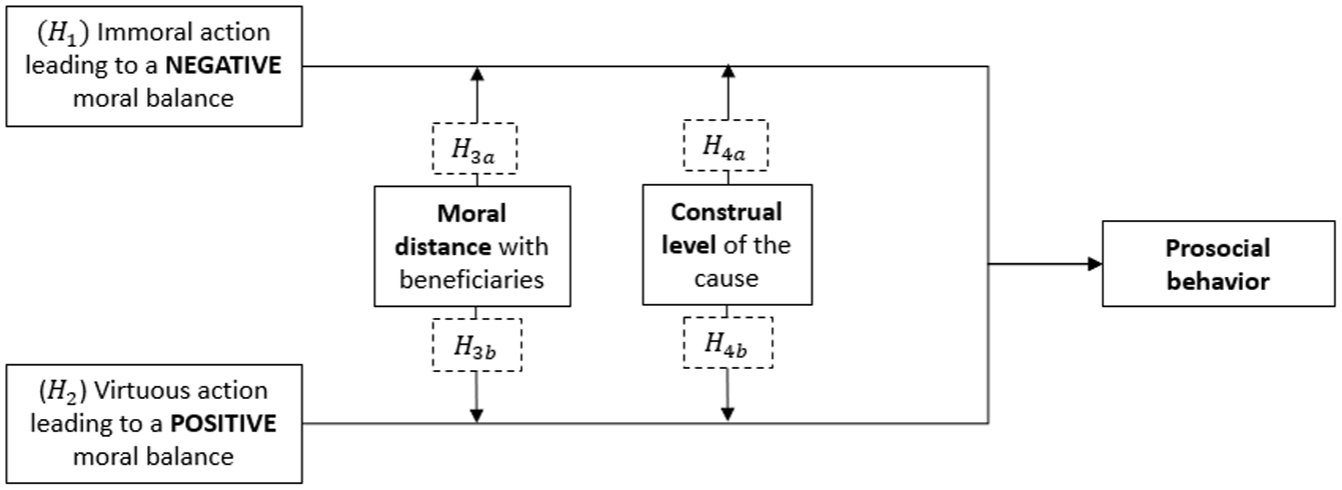
Conceptual framework.
Methodological Approach
Five experiments were carried out to test our hypotheses. Study 1 aims to test the direct effect of moral imbalance, either positive or negative, on donations (H1 and H2). Studies 2 and 3 assess the moderating effects of moral distance from beneficiaries (H3a and H3b) and the construal level of the cause, respectively (H4a and H4b). Finally, the remaining studies aim to rule out alternative explanations and provide additional robustness to our findings. Indeed, prior research suggests that construal level may interact with other communication elements. For example, a short temporal distance is more in line with concrete language about the purpose of promoted behavior. Conversely, abstraction is preferable when the aim is to promote distant behavior in time (Kim et al., 2009). Consequently, our two moderators may not be independent. Our findings would then result from the extent to which the levels of our moderators align, rather than their individual effects. To rule out this alternative explanation, we tested the effect of construal fit with moral distance in Study 4, when moral distance is low, and in Study 5, when moral distance is high.
In all studies, participants were recruited via Prolific and randomly assigned to the conditions of the between-subject designs. An overview of our samples is provided in Supplemental Appendix 1. All respondents were exclusively recruited from the United Kingdom, as it provides a balanced cultural context for examining the relationship between moral balance and prosocial behavior. The United Kingdom is characterized by its Anglo-Saxon cultural heritage, which aligns it with other English-speaking countries such as the United States, particularly in terms of shared values and behaviors related to moral decision-making and charitable giving. However, the United Kingdom is also European in nature, with distinct sociocultural influences stemming from its historical, political, and economic ties to continental Europe. This dual cultural positioning makes the United Kingdom an ideal setting for exploring moral balance and prosocial behavior, as it strikes a unique balance between the Western individualistic influences found in Anglo-Saxon cultures and the more collectivist, socially oriented tendencies present in European cultures. This combination allows for a more nuanced understanding of how moral balance operates, and the findings are well-suited to offer insights that could be relevant to both Anglo-Saxon and European contexts.
Following established procedures in consumer research, we used a writing task to manipulate participants’ moral perspective. This method has been widely used to induce psychological states and simulate personal involvement in experimental settings (Fujita & Robert, 2010; Gao et al., 2009). This method has also been employed by scholars to manipulate moral feelings (Smith et al., 2002; Xu et al., 2014). Only respondents who properly performed the writing were included in the subsequent analysis. Because the evaluation of (im)moral acts is subjective, we checked that our manipulation effectively induced positive, negative, or neutral moral balance. Therefore, following the tasks, negative (five items) and positive (five items) moral feelings were assessed. The items were scored on a 7-point Likert-type scale and were adapted from a scale developed by Marschall et al. (1994). Details of this manipulation check are available in Supplemental Appendix 2. The participants in the five studies were initially paid £0.75 to complete the survey. Once the participants reached the end of the questionnaire and shared their demographic characteristics, they were informed that an additional bonus of £0.25 would be offered to them. At this stage, the participants were told that the research project supported a charity and that they were allowed to donate their bonus to the charity. Throughout the experiments, the dependent variable was whether the participants made a charitable donation (0 = no donation; 1 = donation). The behavioral outcome contributed to increased behavioral realism. As a safety measure, items of empathy were added in the first studies (1–3) to control for possible interference with moral feelings while ensuring the homogeneity of conditions on this variable.
Study 1
The goal of Study 1 was to determine the extent to which people with a negative moral balance due to recent immoral behaviors would consider charitable giving as a compensatory behavior (H1). Considering the other side of the moral balance, we also investigated whether recent virtuous behaviors would lead to less generosity (H2), as suggested by moral licensing theory, or whether recent virtuous behaviors would trigger a positive dynamic of behavioral consistency. The participants were told that the study was about dealing with interpersonal relations in the workplace, and the first part of the questionnaire included questions related to this cover story. After this first section, the participants were randomly assigned to one of three writing tasks. In the first writing task, people were invited to remember a relatively recent situation in which they had done something negative to someone at their workplace. In the second writing task, people had to remember a situation in which they had done something positive for someone at their workplace. For the third and neutral condition, people were invited to remember an anecdote from their workplace. After being invited to immerse themselves in the moment, the participants were asked to summarize the event in one or two lines. After being informed about the £0.25 bonus, the participants were randomly exposed to one of two different solicitations.
A central aspect of behavioral consistency theory is situation similarity, which refers to the extent to which two situations are psychologically comparable (Sherman et al., 2010). To control for a potential interaction effect of situational similarity, the similarity between the initial morally relevant behavior and the charitable decision was tested. Therefore, two fictitious charities were used for this final behavioral measure. The first NGO (“Stop harassment”) was described as an organization dedicated to ending workplace harassment, developing prevention strategies, and providing resources for families and organizations. Directly related to the writing task, this condition aimed at greater situational similarity between moral action and charitable behavior. Conversely, the second NGO (the Wildlife Guardians Network) was described as an organization dedicated to wildlife diversity and preservation (lower situational similarity).
Findings
The final sample included 301 participants (65.4% female; Mage = 37.90 years; SDage = 11.25 years). The study used a 3 (negative vs. positive vs. neutral balance) × 2 between-subjects design. The respondents reported daily and minor wrongdoings (e.g., being rude with someone, gossiping) or rightdoings (e.g., providing help to a colleague experiencing IT issues, organizing a birthday party) through the writing tasks. The manipulation checks of the writing tasks confirmed that the respondents in the negative moral balance condition experienced more negative moral feelings than did those in the neutral condition did (Mneutral = 2.12, SDneutral = 1.25, Mnegative = 3.82, SDnegative = 1.43, p < .000). Similarly, the respondents in the positive moral balance condition reported more positive moral feelings than did those in the neutral condition did (Mneutral = 5.44, SDneutral = 1.40, Mpositive = 5.89, SDpostive = 0.93, p = .005). Accordingly, the manipulation of the writing task induced the expected perceived moral balance.
A moderation analysis was run to test the impact of positive and negative moral balance on generosity and to test whether it varies according to the level of congruence between the (im)moral behavior and the cause. Therefore, we ran a logistic regression with moral balance (neutral as the reference category), moral distance (0 = low similarity, 1 = high similarity), and their interaction as independent variables and generosity as the dependent variable (0 = no donation; 1 = donation).
The results showed that a negative moral balance resulting from recent immoral actions had a significant positive effect on donations (β = .614; Wald = 4.226; p = .040). Conversely, the results also confirmed that a positive moral balance resulting from recent virtuous actions had a negative effect on generosity (β = −.598; Wald = 4.426; p = .035). The main effect of congruence was found to be nonsignificant (β = .093; Wald = .164; p = .686). Finally, we examined the moderating effect of cause congruence on the relationship between moral balance and the decision to donate (βNeg_congruence = .156; Wald = .128; p = .721; βPos_congruence = .204; Wald = .267; p = .605). In line with our first guiding hypothesis (H1), Study 1 revealed that charitable giving can be considered a viable compensatory behavior. The mirror mechanism was also confirmed, as our results confirmed a moral licensing effect of virtuous actions (H2). Interestingly, both effects were observed regardless of whether congruence existed between immoral action and compensatory behavior, providing external validity to our findings. Figure 2 summarizes our results. In an additional study reported in Supplemental Appendix 3, we provide evidence of the underlying psychological process, specifically, the mediating effect of moral self-image. This offers further internal validity to our findings.
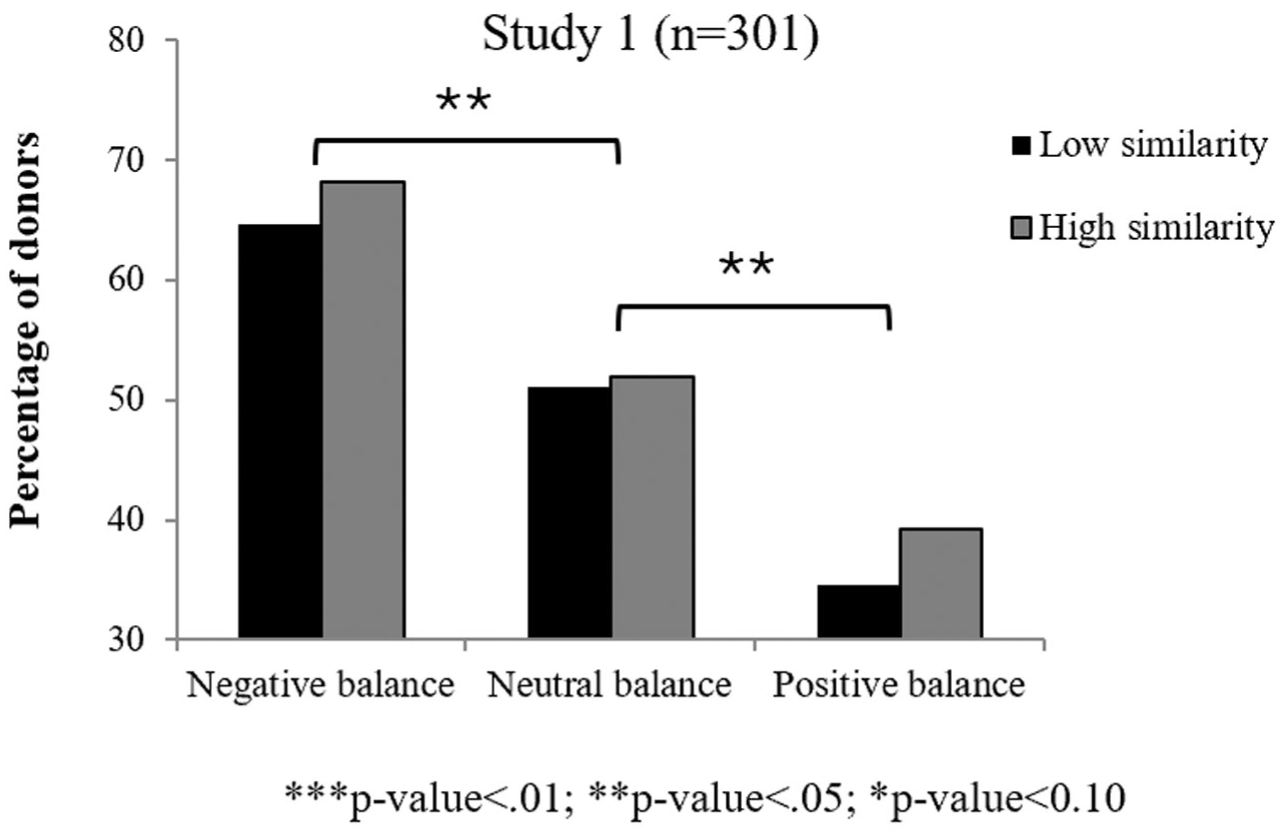
Effect of moral balance on giving at low/high levels of situational similarity.
Study 2
Study 1 confirmed the relationship between moral imbalance and generosity. Study 2 investigated how generosity is influenced by moral distance (H3a–H3b). The respondents were randomly assigned to one of the conditions in a 3 × 2 between-subjects design. People who participated in Study 1 were not eligible to participate in Study 2. The cover story, writing tasks, and measures were identical to those used in Study 1. After being informed about the £.025 bonus, the participants were randomly assigned to one of the two moral distance conditions. We manipulated moral distance through the type of beneficiary supported by the suggested NPO (employee vs. students). In the first condition (low moral distance), we told participants that the research project supported “Stop harassment,” a fictitious U.K.-based NGO dedicated to campaigning against bullying in schools and working for awareness programs across the country to prevent U.K.-based students from enduring moral or physical harassment. In the second condition (high moral distance), the name of the fictitious NGO was similar. Still, we described it as working against workplace harassment and as raising awareness across countries to prevent employees from enduring physical and moral harassment. Although our respondents were employees, students represent a psychologically proximal group because virtually all employees have personal experience as students. Prior group memberships remain a salient basis of social identification, and people maintain a sense of continuity with their past selves (Ersner-Hershfield et al., 2009). As a result, employees can perceive students as biographically and morally close (Reed & Aquino, 2003).
In both conditions, people could either donate their bonus to the charity or keep it for themselves. A pretest was carried out among a sample of 60 U.K.-based participants recruited via Prolific to verify that there were differences in perceived moral distance between the charities. We developed an ad hoc 10-item measure (see Supplemental Appendix 4; Cronbach α = 0.92). Exploratory factor analysis was performed, and the results suggested a unique factor (KMO = 0.889; p < .001). The results confirmed that respondents exposed to the first condition (low moral distance) reported a smaller perceived moral distance (7-point Likert-type scale, MLowDistance = 2.99; MHighDistance = 3.73; t = −2.91; p < .001).
Findings
The final sample included 450 participants (64.4% female; Mage = 38.44 years; SDage = 11.23 years). The study used a 3 (negative vs. positive vs. neutral balance) × 2 (low vs. high moral distance) between-subjects design.
A moderation analysis was conducted to examine how moral distance influences the relationship between moral balance (positive vs. negative) and respondents’ generosity. Therefore, we conducted a logistic regression with moral balance (reference: neutral), moral distance (0 = low, 1 = high), and their interaction as independent variables, and with generosity (0 = no donation, 1 = donation) as the dependent variable.
The results showed that a negative moral balance resulting from recent immoral actions had a marginally significant positive effect on donations (β = .474; Wald = 3.735; p = .053), whereas a positive moral balance resulting from recent virtuous actions had a negative impact on generosity (β = −.451; Wald = 3.913; p = .048). However, no direct effect of moral distance was found (β = −.214; Wald = 1.271; p = .260). We performed a moderation analysis to examine the role of moral distance in the relationship between moral balance and the decision to donate. We found that a lower moral distance moderated the relationship between a positive moral balance and the decision to donate (β = −.674; Wald = 4.443; p = .035). More specifically, the negative effect of positive moral balance was alleviated when moral distance was lower (H3b). In contrast to H3a, moral distance did not moderate the relationship between a negative moral balance and the decision to donate (β = −.044; Wald = .015; p = .903). Figure 3 summarizes our results.
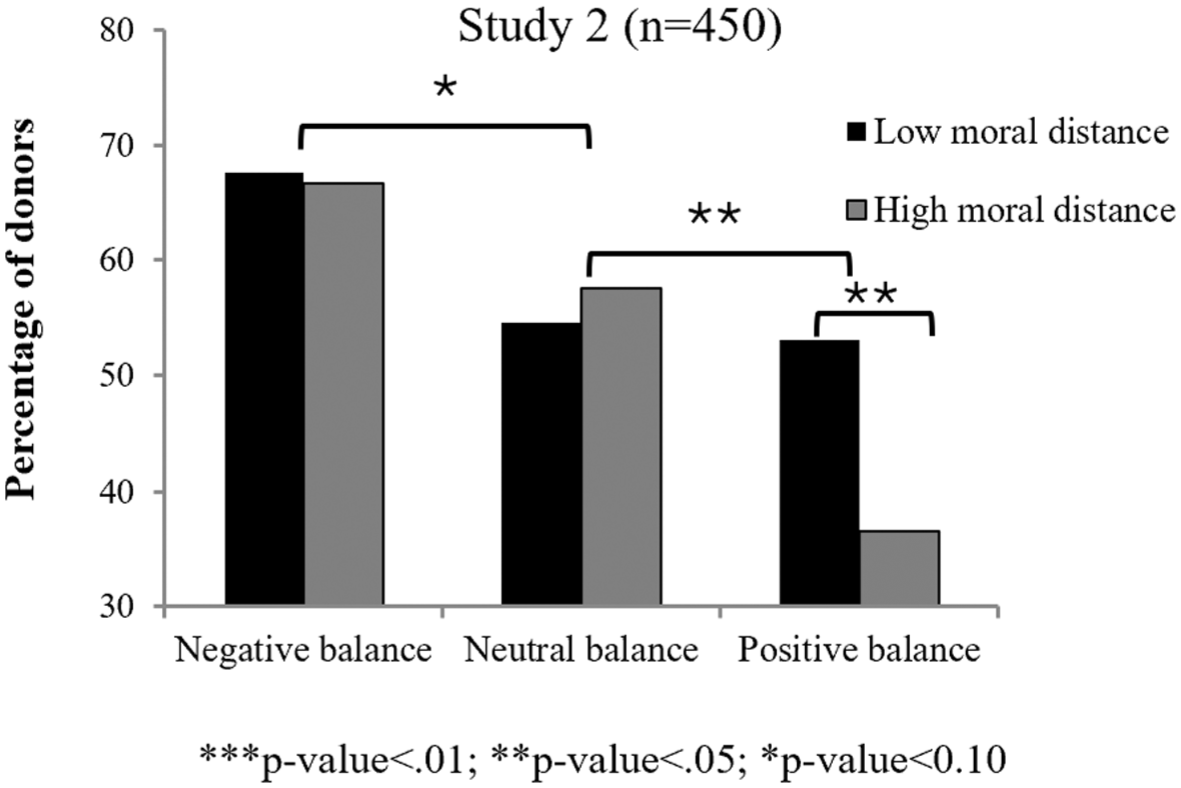
Effect of the moral balance on giving at low/high moral distance.
Study 3
Study 2 explored the moderating role of perceived moral distance in the relationship between moral imbalance and generosity. In Study 3, we considered a second potential moderator: the construal level of the promoted cause (H4a–H4b). The cover story, writing tasks, measures, retribution, and bonus were identical to those used in Studies 1 and 2. People who participated in Study 1 or 2 were not eligible to participate in Study 3. After being informed about the bonus, the participants were randomly assigned to one of the two construal level conditions. In the first condition (high construal level), participants were exposed to a charitable solicitation whose outcome would appear more abstract. We told participants that the research project supported “Stop harassment,” a fictitious U.K.-based NGO described as relentlessly fighting against bullying and moral and physical violence. We concluded the short communication telling people that they had a unique opportunity to support the cause. In the second condition (low construal level), the same fictitious NGO was described, but we told people that each donation would help to finance an awareness-raising plan that would start in 1 month. In contrast with Study 2, the emphasis in Study 3 was placed on the outcome of the donation rather than on its beneficiaries, who were not directly mentioned. In both conditions, people could either donate their bonus to the charity or keep it for themselves. Like in Study 2, a pretest was carried out among a sample of 60 U.K.-based participants recruited via Prolific to verify that there were differences between the perceived construal level conditions. We developed an ad hoc 10-item measure. The results of exploratory factor analysis suggested that there were two dimensions with five items each (KMO = 0.783; p < .001). The results revealed that there were significant differences in construal level between the conditions (low vs. high construal levels) for both dimension 1 (MLowLevel = 3.22; MHighLevel = 4.20; t = −3.12; p < .001; based on items 1, 2, 4, 5, and 9) and dimension 2 (MLowLevel = 4.61; MHighLevel = 5.16; t = −2.08; p = .042; based on items 3, 6, 7, 8, and 10). A univariate analysis also revealed a significant difference (MLowLevel = 3.96; MHighLevel = 4.68; t = −3.23; p < .001) in the perceived construal level between the groups.
Findings
The final sample included 452 U.K.-based participants (61.3% female; Mage = 37.16 years; SDage = 11.18 years). The study used a 3 (negative vs. positive vs. neutral balance) × 2 (low vs. high construal level) between-subjects design.
A moderation analysis tested whether construal level moderates the effect of moral balance (positive vs. negative) on respondents’ generosity. Specifically, we conducted a logistic regression with generosity (0 = no donation, 1 = donation) as the dependent variable and moral balance (reference: neutral), construal level (0 = low, 1 = high), and their interaction as independent variables.
The analysis revealed that a negative moral balance resulting from recent immoral actions had a significant positive effect on donations (β = .490; Wald = 4.554; p = .033). Conversely, the results also confirmed that a positive moral balance resulting from recent virtuous actions had a negative effect on generosity (β = −.50; Wald = 4.421; p = .035). We found that the direct effect of construal level was nonsignificant (β = .017; Wald = .008; p = .928). We then performed moderation analysis to examine the effect of construal level on the relationship between moral balance and the decision to donate. We found that a lower construal level (i.e., a more concrete outcome) marginally moderated the relationship between positive moral balance and the decision to donate (β = −.664; Wald = 3.493; p = .062). Specifically, the negative effect of a positive moral balance was alleviated when the suggested outcome was at a higher construal level (i.e., more abstract). Conversely, we found that a lower construal level (i.e., more concrete) amplified the positive effect of a negative moral balance on the decision to donate (β = .665; Wald = 3.884; p = .049). Study 3 not only replicated our findings about the direct positive (negative) effect of a negative (positive) moral balance on charitable giving but also highlighted the moderating effect of construal level on the relationship. People who engaged in morally questionable behaviors were more likely to engage in compensatory behavior when the latter was triggered through concrete elements (H4a). Conversely, people with a positive moral balance are more likely to engage in subsequent virtuous behavior when promoted behavior is abstractly framed, thus contradicting H4b. Figure 4 summarizes our results.
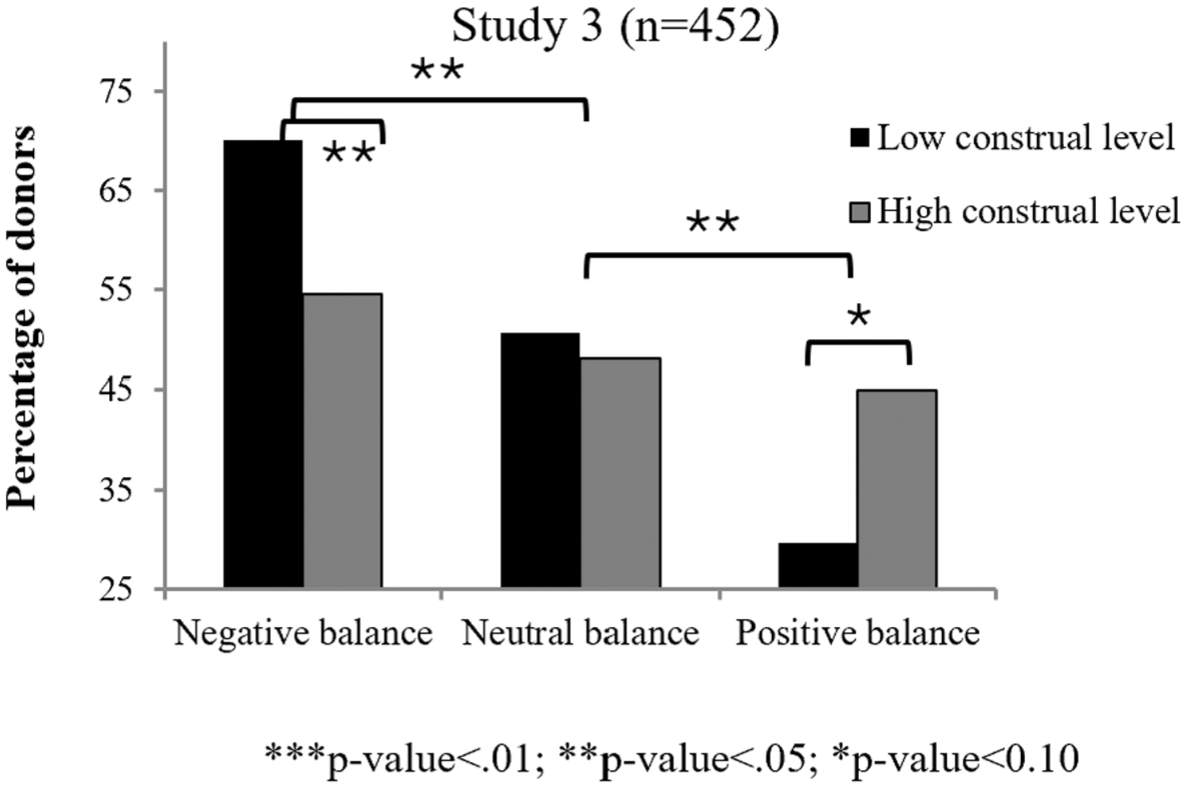
Effect of moral balance on giving at low/high construal levels.
Study 4
Findings from studies 2 and 3 support the moderating role of moral distance and construal level in determining the effectiveness of moral imbalance in triggering generosity. However, prior studies suggest that construal level may interact with other communication components. In that case, the effects would result from the degree of fit between the two moderators instead of their individual effects. To rule out this alternative explanation, we test the effect of construal fit for low moral distance in Study 4.
Therefore, we used (un)healthy eating habits as the cover story. In the first writing task, people were invited to remember that the last time they ate something they knew was unhealthy. In the second writing task, participants were invited to recall their most recent particularly healthy meal. In the last condition, participants were exposed to a very neutral request to recall their last meal with family, friends, or colleagues.
Like in our previous studies, participants were requested to summarize the event in one or two lines. The recruitment method, measures, retribution, and bonus were identical to those used in Studies 1 to 3. After being informed about their bonus, the participants were randomly assigned to one of the two construal fit conditions. In the first condition (low construal fit), “NourishWell” was depicted as a charity campaigning for better nutrition for inner-city children in the United Kingdom. Given the emphasis on more abstract elements of the outcome of the donation, we suggested that healthy nutrition is essential in the first years of life to ensure proper physical and mental development. In the second condition (high construal fit), “NourishWell” was similarly depicted, but this time, we emphasized more concrete elements. More specifically, we told participants that their generosity would be used to finance food workshops in some 50 hotspots in disadvantaged neighborhoods. In both conditions, moral distance was, therefore, framed as short, in line with the results of Study 2.
Findings
The final sample included 418 U.K.-based participants (56.2% female; Mage = 41.22 years; SDage = 12.8 years). The study used a 3 (negative vs. positive vs. neutral balance) × 2 (low vs. high construal fit) between-subjects design.
A moderation analysis was run to test the extent to which construal fit moderates the effect of positive or negative moral balance on respondents’ generosity. To that end, a logistic regression incorporating moral balance (0 = neutral category), construal fit (0 = low, 1 = high), and their interaction as independent variables and donation (0 = no donation, 1 = donation) as the dependent variable was used.
Our findings show a positive main effect of a negative moral balance (β = .505; Wald = 4.107; p = .043) and a marginally significant and negative main effect of a positive moral balance (β = −.487; Wald = 3.743; p = .053) on generosity. However, the main effect of construal fit (low as the reference category) on generosity was nonsignificant (β = .081; Wald = .167; p = .682). In addition, its moderating effects appeared marginally significant for negative moral balance (β = .621; Wald = 3.238; p = .072) and positive moral balance (β = −.632; Wald = 3.245; p = .072). These results suggest that the fit between the construal level and moral distance has a limited impact on the relationship between moral imbalance and generosity.
Study 5
While Study 4 revealed that construal fit has a limited effect as a moderator, this effect was examined when moral distance was low. Study 5 tests this alternative explanation of construal fit in the case of high moral distance.
The experimental design was similar to that of Study 4, except that we investigated only the positive side of moral balance (compared with a neutral state). After being informed about their bonus, the participants were randomly assigned to one of two conditions. In the first condition, “GreenUp” was depicted as a charity fighting against the harmful effects of pesticides in South American crops on farmers’ health (high moral distance), and people were told that their donations would contribute to more restrictive legislation (abstract framing). In the second condition, the charity was depicted similarly, except that it was described as fighting against the harmful effects of pesticides on the health of U.K.-based children (low moral distance). In both conditions, participants would, therefore, be exposed to abstractly framed communication, supposedly their preference (Study 3). We hypothesized that the low moral distance condition would be more likely to lead to donation; however, high moral distance would have the advantage of overall consistency (construal fit).
Findings
The final sample included 280 U.K.-based participants (63.2% female; Mage = 38.04 years; SDage = 12.14 years). The study used a 2 (positive vs. neutral balance) × 2 (low vs. high construal fit) between-subjects design. Like in Study 4, a moderation analysis was conducted to examine whether construal fit moderates the relationship between moral balance (positive vs. negative) and respondents’ generosity. Specifically, a logistic regression was performed with moral balance (0 = neutral, 1 = positive moral balance), construal fit (0 = low, 1 = high), and their interaction as predictors and donation (0 = no donation, 1 = donation) as the dependent variable.
Our findings show that the negative effect of a positive moral balance on generosity was marginally significant (β = −.453; Wald = 3.516; p = .061). Construal fit (low as the reference category) reported neither a direct effect on generosity (β = −.274; Wald = 1.295; p = .255) nor a moderating effect on the relationship between moral balance and generosity (β = −.234; Wald = .470; p = .493). These findings, and those from Study 4, document our effects and support the robustness of findings from Studies 1–3.
Discussion
Complying with moral standards in everyday life is not easy, and the asymmetry highlighted in this research confirms only this assertion. While the theories of moral licensing and moral cleansing offer valuable insights into the underlying mechanisms of moral balance, this article provides a more holistic perspective that captures the complex interplay between these two dynamics. A key contribution of this research is its exploration of how contextual conditions—such as the framing of the charitable cause and the perceived moral distance to beneficiaries—can influence moral decision-making. Moral self-regulation is not a straightforward process of compensating for bad deeds with good actions or vice versa; rather, it is shaped by various psychological and situational factors. Across a series of studies, we provide some insight into how individuals’ recent moral actions influence their subsequent decisions to engage in an other-oriented form of behavior.
Construal Level, Moral Distance, and Moral Recipient
This research confirmed that individuals with a negative moral balance are more likely to engage in compensatory behaviors. This finding is consistent with the process of moral cleansing, which suggests that the unpleasant moral feeling that results from being in the wrong—which is generally referred to as guilt—often leads people to redeem themselves in some way (De Hooge et al., 2011; Hauge, 2016). However, an important nuance revealed in Study 3 is that this relationship is strengthened when prosocial behavior is promoted in concrete terms (low construal level). Specifically, when compensatory behaviors are framed in a concrete and immediate manner, they are more effective in reducing the negative emotional state resulting from immoral actions. This finding underscores the importance of construal level in moral decision-making, as individuals are more motivated to engage in prosocial behaviors when they feel that the actions are tangible and directly impactful. On the other side of the moral continuum, our research supports moral licensing theory (Blanken et al., 2015), as those who recently engaged in virtuous behaviors felt morally licensed to refrain from further virtuous deeds. This reflects the notion that moral credit allows people to act more selectively. However, the findings from Studies 2 to 5 provide important refinements to moral licensing theory. First, we find that when the moral distance from beneficiaries is low, the negative impact of moral licensing on generosity is somewhat attenuated, suggesting that individuals are more likely to act prosocially when they feel a closer connection to the cause. Second, promoting prosocial behavior in an abstract manner also helps attenuate the moral licensing effect, suggesting that abstract framing encourages continued engagement. Furthermore, contradicting our hypothesis and confirming the work of Ghorbani et al. (2013) regarding the relationship between moral distance and moral feelings, our results also indicate that moral distance does not affect the decision to donate. Overall, when individuals stray from their moral principles, any compensatory behaviors are useful according to the results of Studies 1 to 4.
An interesting and novel contribution of this research lies in its exploration of the role of the recipient in moral self-regulation. While prior research has largely focused on the behavioral consequences of other-oriented (im)moral actions (Blanken et al., 2015), our findings in Study 4 suggest that the mechanisms of moral balance also apply when an individual is the victim or beneficiary of their own actions. This extends previous research on vicarious moral licensing (Kouchaki, 2011) and suggests that moral actions, whether directed toward oneself or others, still trigger similar psychological processes in terms of moral self-regulation.
Asymmetry in Moral Self-Regulation
Recent research has contributed to bringing both sides of moral balance closer together. Looking at how individuals’ beliefs in karma influence donations, M. Chen et al. (2022) built upon moral cleansing licensing. However, the literature has not explored the dynamic tracking of moral balance over time. As our results show, the consequences of immoral behaviors do not mirror those of virtuous actions. Therefore, a key contribution of this research is the asymmetry in how individuals manage their moral balance. While immoral behaviors consistently lead to increased charitable generosity as a form of moral compensation, the influence of virtuous deeds is more nuanced. Our findings show that people with moral credit allow themselves to be more selective about their subsequent actions. The results from Studies 2 to 5, however, suggest that this trend is not irreversible. This asymmetry suggests that moral self-regulation is not a straightforward process of balancing good and bad deeds. We show that this balance is influenced by the context in which the moral decision is made, including how a charitable cause is framed and how morally close the beneficiaries are perceived to be. These results contribute to the debate on the respective relevance of the behavioral consistency theory and of the licensing theory. In fact, while our studies encourage a pragmatic vision of morality over an idealistic one, they also provide information on the conditions for triggering a virtuous cycle. Gomez et al. (2024) examined the mechanisms of organizational citizenship behaviors and developed the theory of a virtuous cycle of prosocial actions. Under the right conditions, we believe that a similar mechanism is conceivable in the context of charitable giving. More precisely, our results suggest that this cycle of prosocial actions is accompanied by an increase in the sense of action. The findings of Study 3 support this theory, demonstrating the advantage of a more abstract formulation with regard to promoting generosity. These findings call into question the previously undisputed opposability of the two sides of moral balance in two respects.
Urgency and Virtue in Moral Self-Regulation
A more nuanced understanding of moral self-regulation requires considering the urgency and consistency involved in moral decision-making. Guilt works as an alert system that signals a threat to our morality (Furukawa et al., 2021). Like all alert systems, it implies the notion of urgency to respond accordingly. This urgency to act contrasts with the lack of urgency that individuals with moral credit experience, which helps explain why they are more selective in their subsequent prosocial behaviors.
Furthermore, the concept of virtue in moral self-regulation warrants deeper exploration. The latter is a complex, personal, social, and cultural notion (Simon, 2020). Maintaining a moral balance between good and bad deeds is one thing, but being virtuous is another and implies a certain consistency in behavior. As a philosophical notion (Ratchford et al., 2024), virtue requires taking some perspective. In this vein, the need to be virtuous would explain why people in that moral state are more sensitive to a higher construal level of solicitation. However, a certain closeness to the recipient of the behavior facilitates the decision to engage in other-oriented forms of behavior. As a benevolent virtue (Machan, 1998), generosity would indeed be more easily triggered when oriented toward people closer than toward perfect strangers.
Managerial Recommendations
Extending existing theories of moral licensing and moral cleansing, this article extends beyond isolated instances of moral actions and explores how the ongoing moral ledger influences charitable behaviors. As such, this conclusion not only summarizes our findings but also offers recommendations for NGOs while suggesting areas where further research could expand the current understanding of moral balance and charitable giving. By exploring the dual mechanisms of moral cleansing and moral licensing, this research shows that people who experience a negative moral balance are more inclined to engage in compensatory behaviors. Conversely, people with a positive moral balance may feel licensed to refrain from further prosocial actions, making the process of fostering consistent charitable behavior more difficult. The results of our different studies highlight the importance of contextual factors, such as moral distance from the recipient and the construal level of the promoted behavior. These findings offer valuable contributions to understanding the mechanisms of moral self-regulation and provide actionable strategies for NGOs.
This article offers strategies for tailoring communication strategies, considering the psychological dynamics of moral balance. For donors who are grappling with a negative moral balance due to recent immoral actions, organizations should emphasize the concrete and immediate impact of donations. Messages that clearly outline how contributions will be used in the short term, such as providing tangible examples of how funds will directly aid those in need, can heighten the emotional resonance of the appeal, thereby increasing the likelihood of donations. These types of messages should activate a sense of urgency and accountability, prompting individuals to act to restore moral balance. Conversely, to mitigate the moral licensing effect, framing communication in an abstract and future-oriented manner, such as highlighting the long-term impact of donations, emphasizing the sustained need for support, and discussing how contributions contribute to ongoing, broad societal change, can help prevent donors from feeling that they have “done enough” and reduce the temptation to disengage from further giving. Identifying donors’ moral balance in practice may pose a challenge, as nonprofits typically do not have direct access to individuals’ recent moral experiences. However, certain proxies and behavioral indicators can be considered. For example, time-sensitive campaigns tied to social or personal transgressions (e.g., after the tax season, during public scandals, or during moral awareness events) may align with heightened negative moral balance.
For all donors, especially those with a positive moral balance, reducing the perceived moral distance from beneficiaries is conducive to soliciting donations. Personalizing the cause and sharing compelling stories of beneficiaries who are culturally or geographically closer to the donor should mitigate the negative effects of moral licensing. For example, highlighting local or regional causes or featuring beneficiaries with backgrounds similar to those of the donor can create a sense of shared identity, thus counteracting the distancing effects that might reduce the likelihood of a donation.
Finally, maintaining a virtuous cycle remains a major challenge for charities. To encourage repeated donations, fundraising communications could build upon past virtuous actions, framing subsequent contributions as part of an ongoing commitment to moral and social responsibility. Recognizing previous contributions, perhaps through personalized thank-you messages or public acknowledgment (where appropriate), not only affirms the donor’s sense of moral identity but also reinforces the notion that charitable giving is an integral part of who they are. By framing future donations as an extension of the donor’s moral journey, organizations can foster a stronger sense of identity-based commitment, encouraging donors to remain engaged over time and contributing to the sustainability of their causes.
Limitations and Future Research
Despite our best efforts, this article has its limitations. These limitations relate to the types of events generating positive or negative moral balance, the short temporality of the reaction toward moral balance, and the experimental nature of our study. First, our research examines the balance between positive and negative moral perspectives. Therefore, the respondents reported minor right- or wrongdoings. This approach enhances the ecological validity of our experimental settings, as they are more likely to occur in real-world situations. However, we did not aim to compare minor instances with several right or wrongdoings (e.g., leaving a spot on a bus for someone vs. giving a significant amount of money to someone in need or being rude to someone vs. committing physical aggression) on donation behaviors. However, to proceed in that direction, a sentiment analysis (using the AFINN lexicon, Nielsen, 2011) was conducted on the text written by respondents (writing tasks from the five studies, n = 1,896) to compute a positive or negative score indicating the level of feeling (ranging from −5, very negative, to +5, very positive) and test the impact on the likelihood of donating. However, nonsignificant results were found (p > .05) because of the lack of variance within the positive and negative moral balance groups. Future research should continue in that direction, using the theory of moral licensing or moral compensation (Blanken et al., 2015; Mathex et al., 2025). Second, we focused on the immediate reaction of individuals to an imbalance in their moral balance. Future research could explore the long-term effects of moral balance on charitable giving. Understanding how moral self-regulation evolves over time and across different contexts could provide deeper insights into the sustainability of charitable behaviors. Investigating how cultural standards may influence the relationship between moral balance and prosocial behaviors could reveal significant variations. Morality and virtue are both socially and culturally constructed concepts. In this context, cultures with different moral frameworks or various degrees of religiosity may be exhibited. Finally, we limited the scenarios to traditional solicitations, which are free of social interference. With the rise of digital fundraising, exploring how online platforms and social media influence moral balance and charitable giving could be a fruitful area of research. Understanding how digital interactions affect moral self-regulation could inform more effective online fundraising strategies, as different digital contexts may produce different patterns of moral licensing and cleansing, thus affecting the generalizability of these findings.
Conclusion
Convincing individuals to donate has become a pivotal challenge for nonprofit organizations. The ability to tailor communication to the target audience is a clear advantage in this increasingly competitive sector. This research investigates how these organizations can adjust their communication according to the moral state of their audience. Drawing on the concept of moral balance, we show that it influences people’s willingness to engage in prosocial actions such as charitable donations. Our findings reveal two opposing dynamics. Moral compensation describes how individuals who experience a negative moral balance—for example, after immoral or less-moral acts—are more likely to donate to restore their self-image. In contrast, moral licensing occurs when those with a positive moral balance—for example, after virtuous deeds—are less likely to donate, as they have already “earned” moral credit. These patterns are not symmetrical and are influenced by contextual cues. This nuanced understanding is one of the key contributions of our research.
Across five experiments, we observed that negative moral balance significantly increases the likelihood of donating, whereas positive moral balance decreases it. Moral distance, or the perceived closeness between the donor and the beneficiary, plays a moderating role: low moral distance reduces the impact of moral licensing, making individuals more likely to donate even if they recently behaved virtuously. However, it does not enhance the effect of moral compensation. The construal level of the message, that is, whether the donation appeal is framed in concrete or abstract terms, also influences behavior. Framing communication with low construal, namely, noting the concrete actions induced by donations, boosts giving for those with a negative moral balance. Importantly, we tested whether a fit between message abstraction and moral closeness had an added effect but found only marginally significant results.
This work contributes to the literature by providing a dynamic, real-time perspective on how individuals manage their moral identities. Rather than viewing moral actions as isolated events, we show that people maintain a running tally of moral “debits” and “credits” over time. We also demonstrate that moral regulation is not a mirror process: People are quicker to compensate for immoral acts than to repeat virtuous acts. The asymmetry in how moral gains and losses affect future giving is an essential insight for researchers and practitioners. While moral guilt triggers urgency and immediate action, moral pride does not necessarily create the same impulse. This helps explain why fundraising appeals may succeed more easily when appealing to guilt than when appealing to virtue.
These findings suggest several practical strategies for practitioners. Donors with a negative moral balance respond better to concrete, action-oriented messages that clearly show the immediate impact of their donation. This reinforces their desire to restore moral balance and alleviates the discomfort of guilt. Conversely, donors with a positive moral balance are more receptive to abstract and long-term messages, which help maintain engagement by emphasizing sustained societal impact rather than immediate results. Reducing moral distance is also key to promoting donations. Making the beneficiary feel closer—through geography, shared values, or relatable stories—increases empathy and reduces the psychological distance that might otherwise inhibit giving.
An important insight from this research is that being moral is not the same as being virtuous. Virtue involves consistency over time and a longer-term commitment to moral values. While guilt leads to immediate reparative actions, virtue requires more deliberate framing to sustain engagement. This distinction aligns with philosophical perspectives, where virtue is defined not by isolated acts but by a stable moral character. Our findings suggest that abstract framing may support this form of identity-based engagement. While the short-term behavioral impact of recent moral actions is evident, future research should examine how these effects persist over time. It would also be valuable to test whether the intensity of moral transgressions or good deeds influences the magnitude of moral licensing or cleansing. Moreover, our studies focused on culturally homogeneous contexts, primarily in the United Kingdom. As moral norms and responses to guilt and pride are culturally constructed, cross-cultural replications could help determine whether these dynamics hold across societies.
This research offers a new lens for understanding charitable giving as part of a broader system of moral regulation. People are not just momentarily generous or selfish; they manage their moral standing in an ongoing, dynamic way. By aligning donation appeals with the moral state of their audience, nonprofit organizations can communicate more effectively and increase the likelihood of donations.
Supplemental Material
sj-docx-1-nvs-10.1177_08997640261448571 – Supplemental material for Asymmetric Influence of Moral Actions on Prosocial Behavior: The Role of Moral Balance in Charitable Donations
Supplemental material, sj-docx-1-nvs-10.1177_08997640261448571 for Asymmetric Influence of Moral Actions on Prosocial Behavior: The Role of Moral Balance in Charitable Donations by Etienne Denis and Thomas Leclercq in Nonprofit and Voluntary Sector Quarterly
Footnotes

Ethical Considerations
The authors declare that this research complies with ethical standards.
Consent to Participate
All respondents involved in this research provided informed consent.
Consent for Publication
Not applicable.
Funding
The authors received no financial support for the research, authorship, and/or publication of this article.
Declaration of Conflicting Interests
The authors declared no potential conflicts of interest with respect to the research, authorship, and/or publication of this article.
GenAI Statement
The authors confirm that no generative artificial intelligence (GenAI) tools were used in the preparation of this work.
Data Availability Statement
The data used for the studies reported in this article are available upon reasonable request to the authors.
Supplemental Material
Supplemental material for this article is available online.
Author Biographies
References
Supplementary Material
Please find the following supplemental material available below.
For Open Access articles published under a Creative Commons License, all supplemental material carries the same license as the article it is associated with.
For non-Open Access articles published, all supplemental material carries a non-exclusive license, and permission requests for re-use of supplemental material or any part of supplemental material shall be sent directly to the copyright owner as specified in the copyright notice associated with the article.
