







Abstract
When older adults volunteer, they benefit not only the community but also themselves. However, little is known about volunteering behaviors outside upper-income countries. This study collected data from a national sample of Belizean adults aged 60 to 74. Among the 672 participants, 27.3% had volunteered in the last year, and 54.9% reported neutral or positive attitudes toward future volunteering. Women, younger participants, and those with higher income were significantly more likely than their counterparts to have volunteered. Living with family and reporting higher levels of intrinsic motivation and integrated regulation were associated with neutral or positive attitudes toward future volunteering. These findings suggest that appropriate interventions can be developed to encourage older adults in Belize and the broader Latin American region to volunteer.
Introduction
As the population distribution of older adults increases globally, many fixate on the problems and limitations of these men and women. Rather than focusing on the costs and burdens, we would like to redirect attention to the prosocial behaviors of this population segment. Governments can harness the skills and resources of older people, not only as a way to promote “active aging” but also as a way to offset community needs (Hansen & Slagsvold, 2020; Walker & Maltby, 2012). Older adults have fewer obligations and commitments than their younger counterparts, and with fewer external factors interfering, perhaps this group can be mobilized into an “army of volunteers” (Hansen & Slagsvold, 2020).
Volunteering, defined as unpaid work carried out for a charitable, social, or political purpose in formal settings (e.g., food banks, schools, or shelters) or within informal networks (e.g., family, friends, or neighbors) (Wang et al., 2017), is a common prosocial activity widely recognized as a key factor in successful aging (Burr et al., 2021; Rowe & Kahn, 1997). Evidence suggests that increased engagement in volunteering is most likely to occur after retirement, as this stage of life provides more free time for personal interests, hobbies, and community-based activities such as donating, volunteering, and helping others (Hansen & Slagsvold, 2020; Kalbarczyk & Łopaciuk-Gonczaryk, 2022; Wenner & Randall, 2016). Recent findings indicate that older adults transitioning into retirement are 7.7% more likely to engage in volunteering (Niebuur et al., 2022). While this increase may be due to the freeing of time after retirement (Hansen & Slagsvold, 2020), the nature of this transition varies cross-nationally (Le & Aartsen, 2022), and some studies have even suggested that retirement is not directly associated with increased volunteering (Meijeren et al., 2025). These mixed findings warrant further investigation that takes into account contextual and cultural differences.
Factors associated with volunteering have also been examined. Besides expressing altruism, people are motivated to volunteer because it allows for learning new experiences, obtaining social support, addressing personal emotions, dealing with conflict, and enhancing self-esteem (Meijeren et al., 2024; Veludo-de-Oliveira et al., 2015). Health benefits of volunteering may also motivate older adults to engage in such activities. For example, studies indicate that volunteering among older adults is associated with improved short- and long-term physical and psychological health, enhanced cognition, and stronger social ties (Guiney & Machado, 2018; Han et al., 2020; Infurna et al., 2016; Proulx et al., 2018; Shmotkin et al., 2003). In fact, older adults were found to benefit more from volunteering compared to their younger counterparts (De Wit et al., 2022). Using data from the U.S. Health and Retirement Study, a panel survey of U.S. older adults, researchers conducting longitudinal studies have also found that volunteering more than 100 hours a year results in reduced loneliness, more positive self-perceptions, and fewer depressive symptoms (Cho & Xiang, 2023; Huo et al., 2021). Lawton et al. (2021) used statistical approaches to investigate reverse causality (i.e., do healthier people volunteer?) and provide evidence that volunteering across the lifespan results in greater life satisfaction. Finally, a handful of natural experiments also show the effects of volunteering on well-being (Meier & Stutzer, 2008; Pettigrew et al., 2020). An intervention study involving 445 Australians aged 60 and older found that those randomized to a group engaging in formal volunteering for 1 hour per week over 6 months experienced physical benefits but did not show improved psychological or social outcomes (Pettigrew et al., 2020).
The prevalence of volunteering among older adults appears to vary considerably across countries. In Europe, at least monthly volunteering rates are around 2% to 3% in the southern countries compared with 20% to 22% in the northern countries (Hank & Erlinghagen, 2010). Besides rates, volunteering intensity and settings tend to differ (Le & Aartsen, 2022). Especially in countries where governments provide more health and social services, volunteering occurs in cultural and leisure sites and events (Eurofound, 2011). In addition, episodic volunteering, a form of volunteer work that only requires one-time or short-term engagement rather than long-term commitment, is gaining popularity (Cnaan et al., 2021). A recent population-based study in Norway found that among baby boomers and older adults (ages 53–71 years), the most common form of episodic volunteering was work at arts, music, and sporting events (Hansen & Slagsvold, 2020).
While there is a rich body of literature on volunteering, most studies focus on high-income countries, with data from North America (Infurna et al., 2016; Proulx et al., 2018), Asia (Lam et al., 2023; Okura et al., 2017), Europe (Griep et al., 2017; Morawski et al., 2020), and Australia (Pettigrew et al., 2020). In contrast, research on older adults’ volunteering experiences in low- and middle-income countries, particularly in Latin America and the Caribbean (LAC), remains scarce. Volunteering in high-income countries is often institutionalized and tied to organized settings such as cultural or charitable events, supported by well-developed and accessible public infrastructure (Eurofound, 2011; Hansen & Slagsvold, 2020). However, low- and middle-income countries may exhibit stronger reliance on informal networks due to limited state-provided services (Wang et al., 2017). These structural differences, including resource availability, cultural norms, and institutional frameworks, fundamentally alter how volunteering manifests and is sustained (Hank & Erlinghagen, 2010; Le & Aartsen, 2022). Mixed findings on the link between income and volunteering (Meijeren et al., 2023; Wilson, 2000, 2012) further highlight the need to study volunteering across diverse socioeconomic settings to avoid overgeneralizing patterns observed in high-income contexts.
Belize’s middle-income status, cultural diversity, and limited formal volunteering infrastructure may yield distinct patterns (Corrêa et al., 2022; Hank & Erlinghagen, 2010). Some work done in Brazil by Corrêa et al. (2022) offers preliminary information on this activity. When researchers interviewed adults ages 60 and older at two different times, they found similar volunteer rates (around 27%) at both time points. Volunteering at Time 1 was predictive of better scores on several cognitive tests, including verbal fluency and the Consortium to Establish a Registry for Alzheimer’s Disease recall test (Corrêa et al., 2022). Further research is needed to better understand volunteering behaviors among older adults in low- and middle-income countries. Of note, the relatively young population in Belize may further distinguished it from other LAC countries with populations that are older. With only 8.1% of its population aged 60 and older (Social Security Board), Belize contrasts sharply with older societies in the region like Cuba (21.9%) and Uruguay (20.1%) where volunteering among older adults has been more extensively studied. This demographic youthfulness necessitates targeted investigation, as factors influencing volunteering may differ in populations where older adults represent a smaller segment. Our focus on older adults aged 60 to 74 years captures Belize’s emerging aging cohort entering retirement, when volunteering engagement typically increases (Kalbarczyk & Łopaciuk-Gonczaryk, 2022). Findings may hold relevance for similar middle-income nations with youthful demographics across LAC, though cultural and structural differences highlighted by Eurofound (2011) warrant caution in generalization.
Beyond understanding the current state of volunteering, identifying factors that influence volunteer participation can help shape future strategies to promote engagement. Since volunteering is primarily an unpaid activity driven by personal passion, willingness, and intrinsic motivation, theories that focus on individual-level factors, such as Deci and Ryan’s self-determination theory (SDT) and Ajzen’s theory of planned behavior (TPB), can provide a valuable framework for examining the psychological and motivational processes shaping individuals’ decisions to engage in volunteer work (Ajzen, 1991; Deci & Ryan, 1985; Grano et al., 2008; Ryan & Deci, 2000). The SDT constructs of motivation (intrinsic, integrated, identified, introjected, external, and amotivation) underlie and shape one’s attitudes and subsequently one’s behaviors (Ajzen, 1991; Deci & Ryan, 1985; Ryan & Deci, 2000). The TPB variables, including one’s evaluative appraisals of the behavior (attitudes), thoughts about barriers (perceived behavioral control), ideas about social pressure and current activity (social norms), and beliefs in one’s personal ability (self-efficacy), predict a host of behaviors and intentions (Ajzen, 1991). Considering both the SDT and TPB variables, Grano et al. (2008) found that among 615 older Italian volunteers, positive attitudes and stronger behavioral control contributed to greater intentions to volunteer. Furthermore, deliberate and intentional choice indirectly influenced the participants’ belief systems about volunteering.
As we believe no relevant data exist from Belize, we set out to explore the primary research question: What is the current level of volunteering among Belizean older adults, and what demographic factors and theoretical constructs potentially predict this behavior? To address this question, this study aims to (a) assess the prevalence of formal volunteering among Belizean older adults (60–74 years), (b) identify demographic factors associated with volunteering, and (c) examine associations between SDT/TPB constructs and volunteering behaviors/attitudes. Understanding volunteering in contexts like Belize, where cultural diversity, socioeconomic structures, and formal support systems differ markedly from high-income settings, offers unique insights into how prosocial behaviors manifest in resource-variable environments. Our research is vital for designing culturally relevant programs that leverage local motivators (e.g., intrinsic drives and familial living arrangements), and for promoting active aging across the region. Ultimately, as this study offers a current snapshot of volunteering activity among older Belizeans, it can inform future activities that encourage older people to engage in and increase time spent volunteering, potentially promoting long-term well-being among the older population in similar LAC nations.
Method
Study Design
Our team from the University of Maryland and the University of Belize created a theory-based, cross-sectional, descriptive study to better understand volunteering among Belizean older adults. We collected data in the Spring and Summer of 2023 in Belize’s seven districts. This research was approved by the University of Maryland—College Park Institutional Review Board (1887269-1), the University of Belize (0002-11-07-22), and the Belize Ministry of Health and Wellness (Gen/147/01/22(8) Vol.VI).
Participants
In Belize, adults can begin receiving retirement pensions at age 60 years (Social Security Board, www.socialsecurityboard.org.bz), so we included both male and female adults aged 60 to 74 years regardless of current pension receipt or employment status. Specifically, adults aged 60 to 74 comprise 8% of Belize’s population, comparable with neighboring countries like Guatemala (9%). Inclusion criteria involved being able to speak and understand English (the official language of Belize) and being without significant adverse limiting mental, cognitive, and/or psychological challenges. Our justification for both these criteria was the requirement of a participant’s ability to provide active consent for participation.
Our research team employed a stratified proportionate sampling approach to obtain a nationally representative sample. First, a sample size of 648 was determined using OpenEpi (Sullivan et al. 2014), an open-source software that computes the sample size based on population, proportion, and anticipated precision, with a confidence limit set at 99%, design effect set at 1.0, and a default estimated proportion set at 50%. Using population estimates from the Statistical Institute of Belize (total population = 430,191), we calculated the proportion for each of the six districts (Belize, Cayo, Corozal, Orange Walk, Stann Creek, and Toledo) to determine how many older adults should be sampled. For example, the population in Cayo is 105,190, which is 24% of the total population (105,109/430,191); therefore, our team needed to recruit 156 older adults living in Cayo based on the calculation of 0.24 × 648. Next, our team randomly selected clusters (1 city/town + 2 villages) from each district. Our team obtained rosters from the local council governments and randomly selected households for recruitment.
Data Collection
Data collection occurred from April to July 2023. A single member of the team of 12 trained research assistants approached a selected household to ascertain eligibility and obtain consent. If more than one person was eligible, the researcher randomly selected one person with whom to speak. The survey could be conducted at that encounter, or the research assistant determined with the eligible participant a mutually agreed upon time to talk in person or over the telephone. Researchers read aloud questions and input participants’ responses onto an electronic tablet. Data collection took an average of 20 min per participant. The response rate was 89% (672 completed surveys out of 754 eligible households approached).
Survey Design
Researchers collected data on the participants’ demographics (age range, gender, religion, income, work status, previous occupation, etc.). To measure volunteering attitudes and behaviors, we drew on and adapted questions used by others (Dana et al., 2021; Grano et al., 2008; Le & Aartsen, 2022; Petriwskyj & Warburton, 2007; Sundeen et al., 2007). We used a screening question asking “over the last 12 months, have you engaged in any formal volunteer work?” and among those who responded “yes,” we asked about time spent and settings.
To measure the six types of motivations in SDT, namely intrinsic motivation, integrated regulation, identified regulation, introjected regulation, external regulation, and amotivation, we used survey items adapted from the Motivation to Volunteer Scale (Grano & Lucidi, 2005). This scale was later employed in Grano et al. (2008), which integrated SDT and TPB constructs for a comprehensive assessment of volunteering behaviors. To the improve readability and account for varying literacy levels among older adults in Belize, we made minor modifications to the wording while maintaining the theory constructs and item content. For example, all items were framed using the prompt “I volunteer because . . .” rather than the original phrasing, “I do volunteer for . . .,” which were more straightforward and easier to comprehend without altering the theoretical meaning of the items. In addition, for participants without prior volunteering experience, rather than excluding their responses as in the original measure, we asked them to respond as if they had already decided to volunteer. This design reflects our study’s purpose not only to identify factors associated with past volunteering, but also to expand our understanding of potential theoretical motivations that may impact future volunteering engagement. Excluding individuals without prior experience would bias the data toward established volunteers and overlook the perspectives of those who may be open to volunteering but have not yet had the opportunity to do so. By including these participants, we are able to examine attitudes and intentions that could inform targeted strategies to broaden participation in the volunteer sector among older adults in Belize.
For
Participants considered SDT items on a 5-point scale, where 1 corresponded to “does not correspond at all” and 5 corresponded to “corresponds a lot.” Higher mean scores indicated higher levels for each motivation type. From our sample, we calculated a Cronbach’s α of .86 for intrinsic motivation, .88 for integrated regulation, .92 for identified regulation, .88 for introjected regulation, .85 for external regulation, and .94 for amotivation.
In addition, this study adopted the TPB constructs of subjective norms, perceived behavioral control, and attitudes using the operational framework by Grano et al. (2008), where the authors followed Ajzen’s (1991) recommendations for TPB measurement. We measured
Data Analysis
Our team used SAS version 9.4 (SAS Institute Inc., Cary, NC) to conduct the analyses. We began by considering descriptive statistics of our variables, and then ran chi-square and correlational tests to examine bivariate associations between past volunteering and study variables. A series of simple logistic regression analyses was performed to examine factors associated with past volunteering. We also performed multinomial logistic regression to investigate factors associated with volunteering attitudes during the next 3 months. Of note, while we originally had three categories (i.e., negative, neutral, and positive) for volunteering attitudes, we merged the neutral and positive categories to contrast participants open to volunteering (≥4 on a 7-point scale) against those with overtly negative attitudes. All demographic variables were adjusted for in the final multivariate models, as previous literature has highlighted their role in shaping volunteering behaviors and motivations (Ellis Paine et al., 2020; Kamerāde, 2023; Meijeren et al., 2023; Peters et al., 2021). Notably, some variables, such as ethnicity and district of residence, were collapsed into fewer categories in the final multivariate models to maintain statistical stability due to small cell sizes and improve model reliability. To assess potential multicollinearity among predictors, including living arrangements and marital status, we examined variance inflation factors (VIFs). All VIF values ranged from 1.06 to 3.89, indicating that multicollinearity was not a concern. For all results, statistical significance was set at p < .05.
Results
Table 1 offers information on our sample of 672 participants. Our sample’s age and gender distribution aligns with Belizean national census data for adults aged 60 to 74. Specifically, around 27.3% of participants (male: 26.49%; female: 28.45%) indicated that they had performed at least one act of volunteering in the last 12 months. We found that marital status, education level, and living arrangement were significantly associated with volunteering experience. Specifically, participants who were married, had higher education levels, and lived with a spouse/partner were more likely to engage in volunteering behaviors. Ethnicity and residential districts were also significantly associated with volunteering. Interestingly, age cohort and perceived health were not associated with volunteering behaviors.
Sample Characteristics Stratified by Volunteering Work.
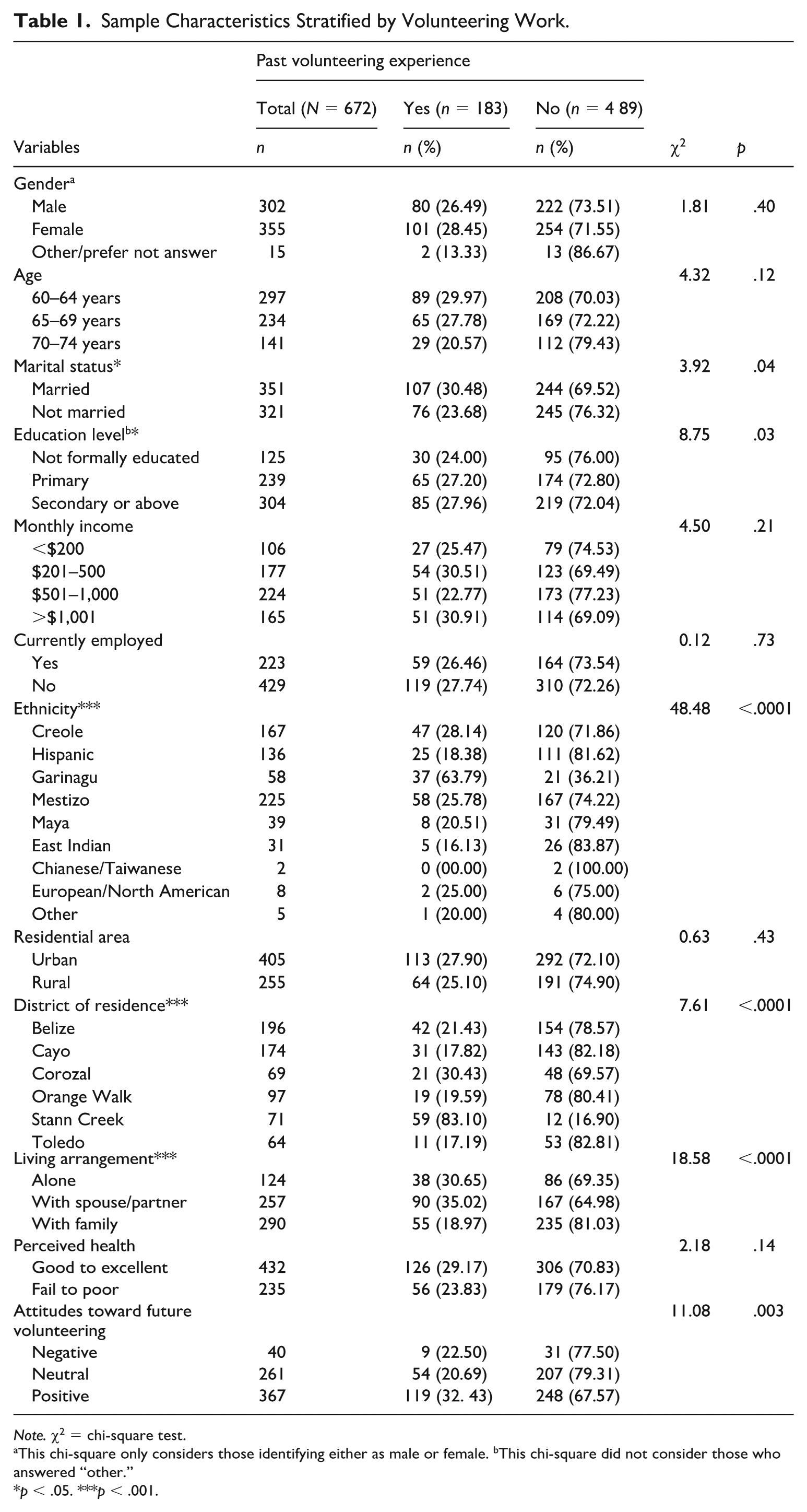
Note. χ2 = chi-square test.
This chi-square only considers those identifying either as male or female. bThis chi-square did not consider those who answered “other.”
p < .05. ***p < .001.
We looked at characteristics associated with volunteering. Notably, among the 183 people with past volunteering experiences, most participants (60.1%) said that they engaged in 0 to 10 hours, followed by those who reported 11 to 20 hours (21.3%) and 21 to 30 hours (10.4%) of volunteering work per week. Around a quarter (26.8%) of the volunteering participants said they did this activity mainly two to three times a month; around a fifth said they did it once a week (21.9%) or more than once a week (19.1%). In addition, 48.6% of the volunteering participants mentioned that they only volunteered through one organization. The most popular places for volunteering were religion-related (34.9%). Just 17.6% of the participants reported that their volunteer work reflected work in their previous occupations; for half (50.6%) of the participants, the fields were unrelated.
Bivariate associations between SDT motivations and TPB constructs are presented in Table 2. Results showed that aside from amotivation, all factors were positively correlated with each other. Interestingly, while amotivation was negatively associated with most factors of volunteering, it was positively linked with participants’ external regulation of volunteering behavior.
Spearman’s Correlation Matrix for Continuous Variables.
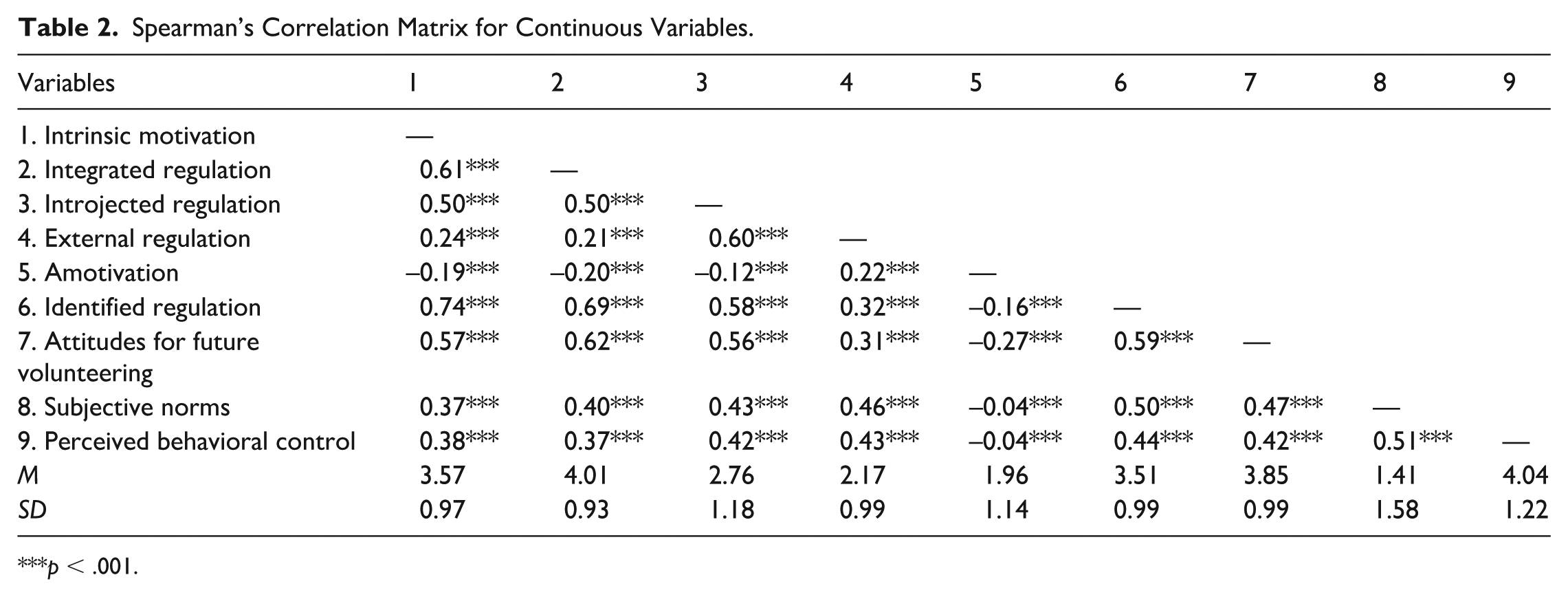
p < .001.
We examined all the participants’ attitudes about volunteering in the coming 12 months and found 367 were positive, 261 were neutral, and 40 were negative about this activity. We examined the association of past volunteering with attitudes toward future volunteering and found a significant association (χ2 = 11.1, p < .01). Participants reported interest in volunteering in areas related to health and wellness (39.9%), business (26.8%) and children and youth (20.8%).
We further examined possible predictors of attitudes toward volunteering during the next 3 months, and the results are presented in Table 3, with both unadjusted and adjusted odds ratios being presented. Before adjusting for covariates, those who lived with family or resided in the central district (i.e., Belize), compared with those living alone and residing in the northern district, were more likely to have neutral or positive attitudes toward future volunteering than negative attitudes. Also, participants who reported higher levels of intrinsic motivation, integrated regulation, identified regulation, introjected regulation, subjective norms, perceived behavioral control, and external regulation were more likely to hold neutral or positive attitudes than negative attitudes toward future volunteering. However, results from the adjusted model indicated that only those who lived with family were more likely to have neutral or positive attitudes. Higher levels of intrinsic motivation and integrated regulation were more likely to be associated with neutral or positive attitudes about volunteering in the upcoming 3 months.
Factors Associated With Attitude Toward Volunteering During the Next 3 Months.
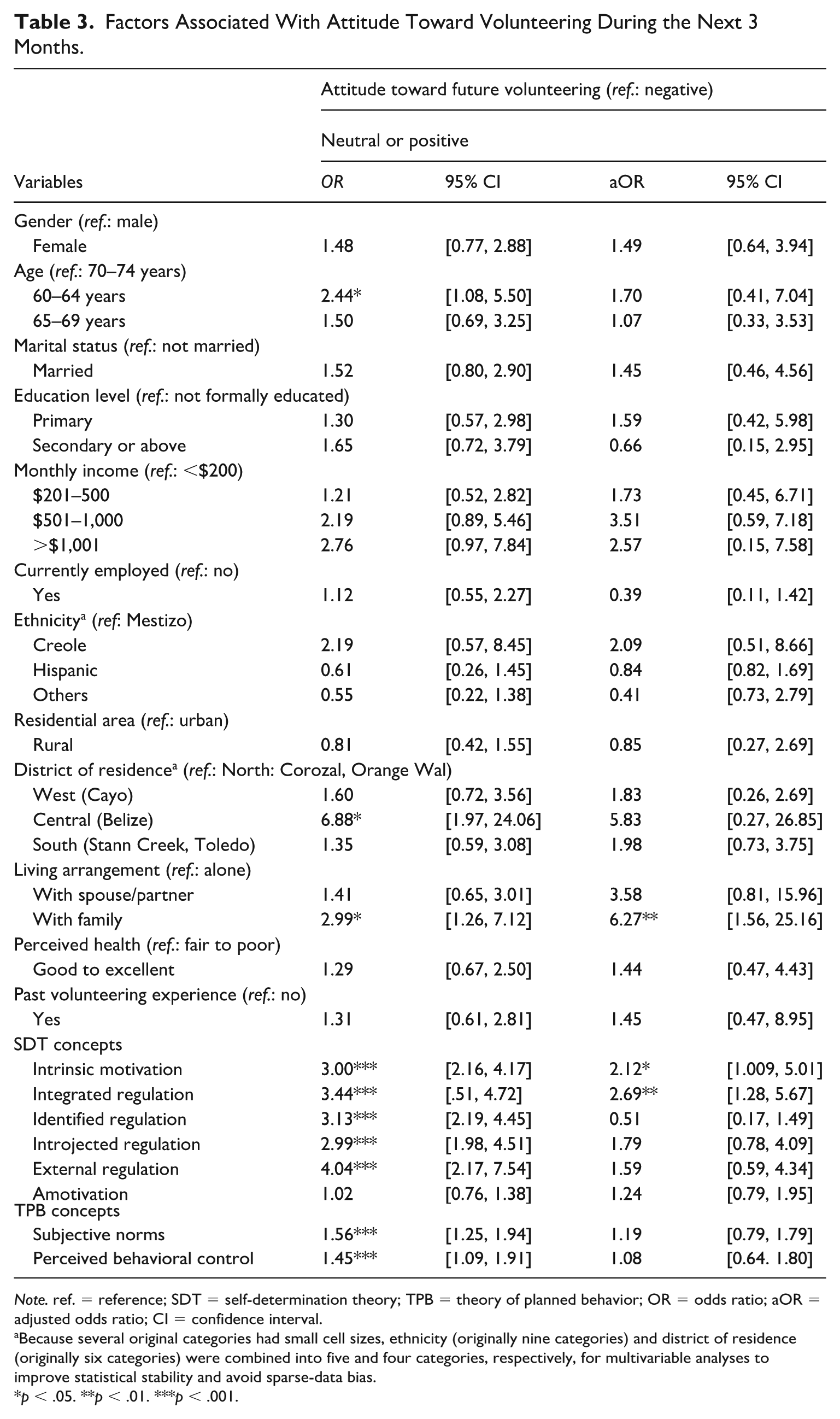
Note. ref. = reference; SDT = self-determination theory; TPB = theory of planned behavior; OR = odds ratio; aOR = adjusted odds ratio; CI = confidence interval.
Because several original categories had small cell sizes, ethnicity (originally nine categories) and district of residence (originally six categories) were combined into five and four categories, respectively, for multivariable analyses to improve statistical stability and avoid sparse-data bias.
p < .05. **p < .01. ***p < .001.
Finally, Table 4 presents the adjusted and unadjusted associations between study variables and volunteering behavior over the last 12 months. Results before adjusting for covariates showed that those who were aged 60 to 64 years and married were more likely to have past volunteering behaviors compared to those who were older (i.e., aged 70–74 years) and not married. In addition, intrinsic motivation, integrated regulation, identified regulation, subjective norms, and perceived behavioral control were all significantly associated with past volunteering experiences. However, after controlling for covariates, only identified regulation and subjective norms remained significant. Interestingly, theoretical concepts that were initially not significant, such as introjected regulation and external regulation, appeared to be significantly associated with past volunteering experiences after adjusting for covariates.
Factors Associated With Past Volunteering Behavior.
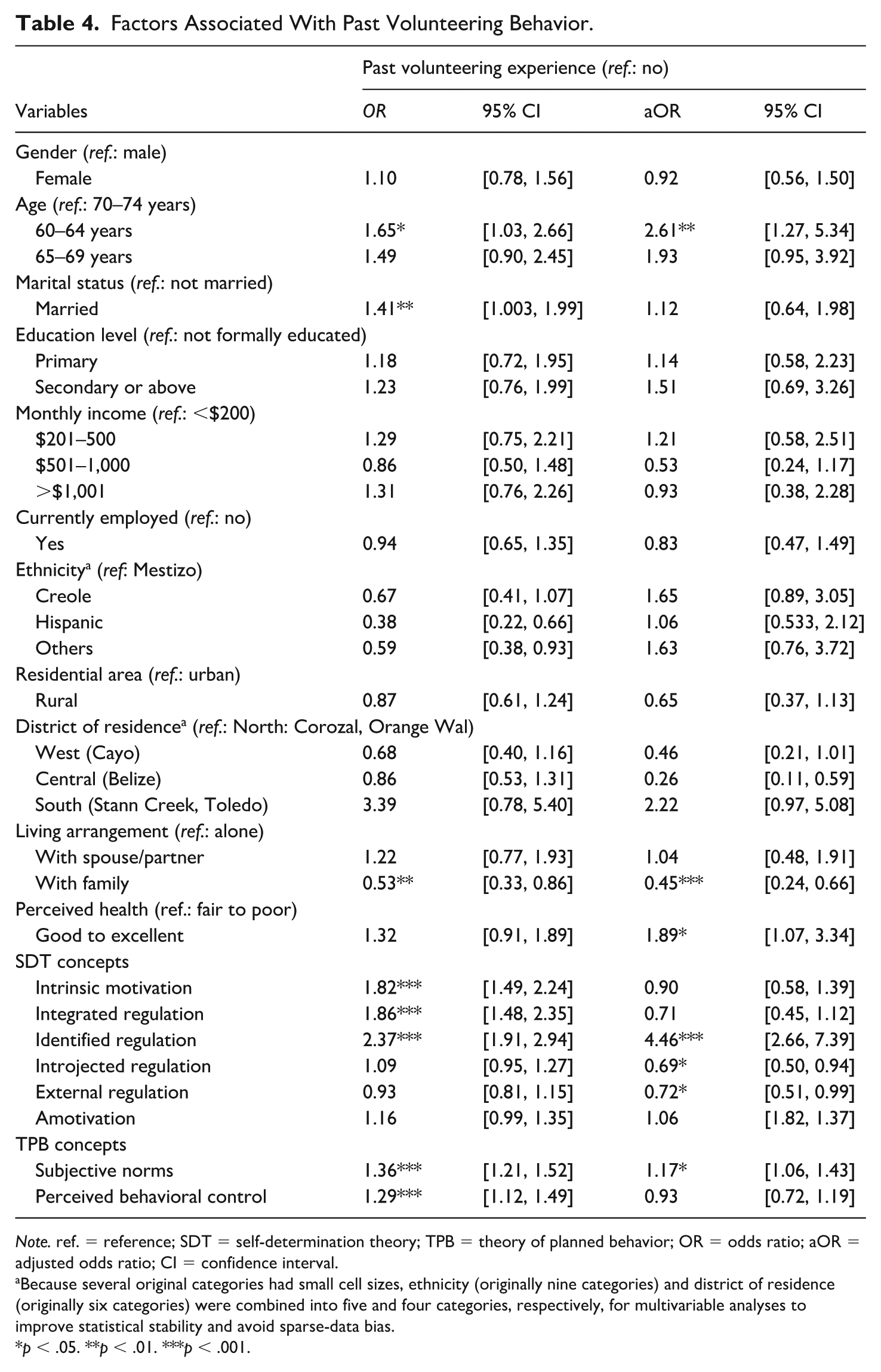
Note. ref. = reference; SDT = self-determination theory; TPB = theory of planned behavior; OR = odds ratio; aOR = adjusted odds ratio; CI = confidence interval.
Because several original categories had small cell sizes, ethnicity (originally nine categories) and district of residence (originally six categories) were combined into five and four categories, respectively, for multivariable analyses to improve statistical stability and avoid sparse-data bias.
p < .05. **p < .01. ***p < .001.
Discussion
Slightly more than a quarter of our sample said they had recent volunteering experiences. Contrary to findings from other studies, where women, younger, higher income, and healthier cohorts were significantly more likely than their counterparts to volunteer (Hansen & Slagsvold, 2020), we did not find significant differences by sex, economic status, and perceived health among Belizean older adults. This divergence underscores potential contextual variations in volunteering determinants. This study found that only a handful of variables, such as marital status/living arrangement, education level, ethnicity, and district of residence, were associated with having volunteered in the last year. Of note, the absence of economic and health gradients aligns with emerging evidence suggesting that socioeconomic status and health may function differently as predictors across volunteer sectors and populations (Meijeren et al., 2023). However, the lack of gender differences contradicts findings by Meijeren et al. (2023), indicating unique sociocultural dynamics in Belize. These inconsistencies highlight that demographic predictors of volunteering are not universally generalizable. The stability of volunteering rates observed in our study (27.3%) is consistent with longitudinal work in Brazil (Corrêa et al., 2022), suggesting potential regional commonalities. Our results reinforce the critical need for region-specific investigations in understudied middle-income settings like Belize and the broader LAC region.
Similar to the work by Grano et al. (2008), we examined how theoretical constructs may predict relatively positive attitudes toward future volunteering behaviors. Different from their approach, which looked at TPB constructs as mediators between SDT constructs and future volunteering, we directly examined the association between all SDT/TPB constructs and attitudes toward future volunteering. Inconsistent with previous findings, where SDT only significantly contributed to TPB variables but did not significantly associate with future volunteering (Grano et al., 2008), we found that SDT variables such as intrinsic motivation and integrated regulation directly and significantly were associated with more open-minded attitudes toward future volunteering (in the next 3 months). We further discovered that after adjusting for covariates, most SDT motivations (i.e., identified regulation, introjected regulation, and external regulation) and one TPB construct (i.e., subjective norms) were significantly associated with past volunteering behaviors (i.e., over the past 12 months).
Notably, our finding that SDT constructs, particularly intrinsic motivation and integrated regulation, predicts future volunteering is especially relevant in the Belizean context. Unlike high-income countries, where volunteering is often embedded within strong organizational infrastructures or institutional frameworks (Nakamura et al., 2025), opportunities in Belize are not as consistently formalized or supported. Consequently, residents who choose to volunteer may be doing so because of the personal meaning attached to such activities rather than institutional reinforcement. In addition, the growing visibility of volunteer tourism and international service projects adds another layer of complexity (Gray et al., 2019). In the eyes of local residents, this external support may inadvertently discourage participation if older adults perceive that “others are already doing the work.” Our findings, therefore, suggest that future volunteering programs seeking to engage older adults in Belize may benefit from prioritizing the framing of volunteering as a source of internal pleasure (i.e., intrinsic motivation) and an expression of identity (i.e., integrated regulation). Additional intervention pathways may also be effective. For example, the significant association between identified regulation (i.e., recognizing volunteering’s value for community needs) and past volunteering suggests that interventions should emphasize tangible community impacts, such as framing opportunities around enhancing local resources or assisting vulnerable groups (Corrêa et al., 2022). By emphasizing the irreplaceable contributions that Belizean older adults can provide, volunteering may be positioned as an avenue for personal fulfillment, a sense of achievement, and the preservation of community traditions, rewards that external actors are unlikely to provide.
Several demographic characteristics were significantly associated with volunteering behaviors. In particular, we found that living with other family members predicted positive future volunteering attitudes, which aligns with prior research that pointed out the role of family members in transmitting service norms across generations. For instance, Nesbit (2012) found that household volunteering composition significantly shapes an individual’s choices, with people who live with other volunteers being more likely to volunteer themselves. Indeed, previous findings suggest that when family members are already engaged through formal organizations, such as religious groups, their participation can create structured opportunities and social networks that encourage other household members to take part in more organized forms of volunteering (Ellis Paine et al., 2020; Kamerāde, 2023). Previous research also indicates the potential success of including family-inclusive volunteer activities, such as intergenerational programs, to harness household support for volunteering engagement (Peters et al., 2021). However, we also observed that co-residency among older adults was linked to lower odds of past volunteering behaviors. Such a contradiction may reflect how household obligations can simultaneously restrict participation while also creating the possibility for future engagement (Kobayashi et al., 2019). Therefore, our results warrant further research to understand how family structures shape volunteering behaviors, to clarify the underlying mechanisms, and assess whether family-inclusive approaches would, in fact, translate into higher participation.
It is also worth noting that we observed higher volunteering rates among Garinagu participants (63.79% vs. other ethnic groups; Table 1) and in Stann Creek district (83.10%), which may call for the development of culturally tailored approaches. Collaborating with Garifuna councils or district-specific organizations could replicate successful local engagement models. These targeted strategies, rooted in local evidence, could effectively expand participation.
Other researchers have found only a small upward change in formal social activities like volunteering before and after retirement, suggesting that if we want older adults to volunteer in the community, interventions may need to focus on younger adults still in the workforce (Kalbarczyk & Łopaciuk-Gonczaryk, 2022). There is heterogeneity in and selection into who volunteers; this activity seems to be stable, suggesting that volunteering earlier in life is associated with volunteering later in life (Lancee & Radl, 2014). Using behavior change theories, we can design campaigns and interventions to promote volunteering across the lifespan.
Several strengths lie in our study. First, it addresses a critical geographical gap by providing the first nationally representative data on older adult volunteering in Belize and the broader LAC region (Corrêa et al., 2022), where such research remains scarce. The finding that only 27.3% volunteered recently challenges assumptions about volunteering prevalence in lower-middle-income countries. In addition, our research team went door-to-door and spoke directly with the participants, encouraging them to complete an extensive survey. Data collectors offered standardized explanations and examples, and our measures proved quite reliable. Previous research on older adults’ volunteering activities typically utilized panels and large national data sets (Binder & Freytag, 2013; Eurofound, 2011; Huo et al., 2021; Lawton et al., 2021; Le & Aartsen, 2022). In contrast to other researchers who rely on a small number of questions inserted into a national panel to capture this nuanced activity, our work offers in-depth information on volunteering experiences and attitudes. The study is unique in that it examines temporal dimensions by distinguishing predictors of past behavior from those of future attitudes and intentions, advancing theoretical understanding of volunteering dynamics (Grano et al., 2008). These context-specific findings highlight the need for tailored interventions beyond those in the Global North.
Limitations
Limitations of this study should be noted. First, although our sampling strategy was stratified and proportionate, it did not involve a pure probability design, and thus claims of national representativeness should be treated cautiously. Second, non-respondents may have been less reachable (e.g., those without a phone or an officially registered address) or less prosocial, potentially leading to an underestimation of volunteering rates (Lawton et al., 2021). Third, as volunteering is universally viewed as a positive activity, participants may over-report their experience or intentions to volunteer, especially during in-person data collection (i.e., door-to-door visits) (Hansen & Slagsvold, 2020). Fourth, while our study intentionally included both participants with and without past volunteering experience to assess SDT and TPB constructs, interpretation should be cautious, given that only 27.3% of the sample reported prior volunteering. Specifically, the observed associations between motivational and normative factors may reflect the anticipated benefits that encourage individuals to initiate volunteering rather than the determinants that sustain ongoing participation. From an SDT and TPB perspective, our findings may be more indicative of how intrinsic motivation and perceived social norms shape openness to volunteering, rather than how these factors operate among individuals already embedded in continuous volunteering activities. Future studies should consider oversampling those with past volunteering histories to allow for a clearer differentiation between constructs that predict initial uptake and those that support sustained participation. Finally, as this was a cross-sectional study, longitudinal and experimental work is needed to provide richer and more directional evidence. Preferably, such studies should be conducted over periods of at least 1 year, as time is needed for individuals to identify and access volunteer opportunities and to acclimate to the setting and colleagues (Pettigrew et al., 2020).
Conclusion
This study offers practical and applied insights for promoting volunteering among older adults in Belize. By testing associations between SDT and TPB constructs and past and future volunteering attitudes, our findings support the development of targeted, evidence-based volunteer engagement strategies. The prominence of identified regulation and subjective norms suggests that interventions should communicate clear community benefits (e.g., “Your skills strengthen local health services”) and engage trusted community influencers (e.g., religious leaders) to foster social approval. In addition, the observed role of intrinsic motivation, integrated regulation, and identified regulation indicates that emphasizing the personal meaning and enjoyment of volunteering may be particularly relevant in contexts like Belize, where formal external incentives are less developed than in high-income countries, which have established organizations institutionalizing and supporting volunteering. At the same time, the mixed findings regarding the potential impact of co-residence on volunteering engagement warrant further investigation before being translated into family-centered strategies. Finally, the ethnic and geographic differences observed point to the value of considering culturally tailored approaches, including collaboration with local organizations that reflect community identity. In conclusion, these findings contribute to a broader understanding of how SDT and TPB constructs operate across diverse contexts and provide preliminary insights into pathways for supporting older adult engagement in Belize.
Footnotes

Funding
The authors received no financial support for the research, authorship, and/or publication of this article.
Declaration of Conflicting Interests
The authors declared no potential conflicts of interest with respect to the research, authorship, and/or publication of this article.
Data Availability Statement
All materials, data, and analyses generated during this study will be made available by the authors upon request.