






Abstract
While a growing body of research has examined the features of nonprofit donation appeals on social media and online user comments, little is known about how specific message constructs shape the content of user responses. Drawing on a large-scale dataset of 674,845 user comments associated with 14,319 donation appeals posted by 794 animal-related nonprofit organizations on Facebook in the United States, this study investigates how the design of nonprofit donation appeals influences the content of user comments. The analysis reveals that emotional sentiment and narrative features of donation appeals are associated with distinct patterns of comments. Specifically, certain appeal constructs are more likely to elicit comments signaling donation action or expressing gratitude, whereas others primarily evoke sympathetic responses. These findings advance understanding of how nonprofits can strategically shape audience interaction on social media and offer evidence-based guidance for aligning message design with specific organizational objectives in digital fundraising contexts.
Introduction
Nonprofit organizations in the United States play a vital role in delivering public goods and services, including social support, housing assistance, health care provision, disaster relief, and education (Faulk et al., 2021). In the digital era, social media platforms have evolved from a peripheral communication channel into a central infrastructure for nonprofit outreach, stakeholder engagement, and fundraising activities. Rather than merely complementing traditional in-person or offline promotion efforts, social media enables nonprofits to disseminate information rapidly, mobilize supporters, and directly call for public action at scale (Campbell & Lambright, 2020). Yet, despite the widespread adoption of social media, maintaining an online presence alone does not guarantee meaningful engagement or successful fundraising outcomes. Effective nonprofit communication on social media depends not only on message reach or visibility but also on the nature and substance of audience responses that unfold within interactive spaces such as comment sections (Comfort & Hester, 2019).
A growing body of research has examined how message strategies shape user engagement and behavioral intentions in nonprofit fundraising contexts. Prior studies demonstrate that emotional framing and narrative modes embedded in donation appeals can significantly influence attitudes toward nonprofits, online engagement, and donation intentions (Aldous et al., 2019; Erlandsson et al., 2018; Li et al., 2022; Mao & Nishide, 2025). Parallel strands of scholarship have analyzed the sentiment, tone, and thematic content of user comments on social media, highlighting how comment sections reflect public opinion, emotional reactions, and social dynamics surrounding nonprofit issues (Alafwan et al., 2023; Reimer et al., 2023; Yousef et al., 2022). However, these two streams of literature largely remain disconnected. Existing research has paid limited attention to how specific constructs of donation appeals systematically shape the dynamics and functional orientation of user comments, leaving a critical gap in understanding how nonprofits can influence not just whether users comment, but how they respond.
This study seeks to address this gap by examining how specific constructs of nonprofit donation appeals on social media shape the content of user comments. It conceptualizes donation appeals based on their emotional and narrative features, and categorizes user responses according to their functional relevance, including action-oriented, gratitude-oriented, and sympathy-oriented comments. Drawing on a large-scale dataset of 674,845 user comments associated with 14,319 donation appeals posted by 794 animal-related nonprofit organizations on Facebook in the United States, this study empirically investigates the linkage between appeal design and comment patterns. By revealing distinct mechanisms through which message features influence user responses, the findings offer insights into how nonprofits can strategically shape and manage comment sections by aligning social media message design with specific organizational goals.
Literature Review
Nonprofit’s Donation Appeals on Social Media
Nonprofit organizations increasingly rely on social media platforms to communicate with the public and promote donation appeals, reflecting broader shifts in how organizations engage stakeholders in digitally mediated environments. Compared to static organizational websites, social media introduces dialogic capacity by enabling information sharing, interaction, and feedback between nonprofits and their audiences (Young, 2017). This interactive environment allows nonprofits to cultivate relationships with both existing and potential donors, enhancing involvement and engagement that are critical for successful fundraising outcomes (Bhati & McDonnell, 2020). Accordingly, scholars have examined communication strategies that can improve online engagement and shape favorable attitudes toward nonprofit organizations. Prior research highlights the effectiveness of emotional appeals in promoting online engagement, fostering positive evaluations of organizations and eliciting actual donation behavior (Erlandsson et al., 2018; Li et al., 2022). In addition to emotional framing, the narrative media and narrative modes can also influence viewers’ intentions and behaviors in response to nonprofit appeals (Mao & Nishide, 2025).
Comments Under Donation Appeals
As a salient form of audience reaction to donation appeals, comments constitute an interactive space where viewers express opinions, exchange information, and communicate with both the organization and other users (Lukyanova, 2020). Unlike passive reactions such as likes or views, commenting signifies active participation and enables users to initiate discussions that can generate extended conversational threads under a single post (Yousef et al., 2022). This dialogic feature amplifies the social visibility of donation appeals and transforms them into collective sense-making processes rather than one-way organizational messages. Importantly, prior research shows that user-generated comments substantially shape how donation appeals are interpreted: comments can influence the perceived trustworthiness of both the message and the nonprofit organization itself (Wiencierz et al., 2015). These comments can shift readers’ attitudes toward the content, affect sharing intentions, alter perceptions of public opinion, and enhance or undermine perceived credibility (Boot et al., 2021). In this sense, the comment section operates as a small, self-organizing community in which shared sentiments, interpretations, and collective judgments about the cause are formed and reinforced, making it a critical arena for nonprofits to cultivate trust and sustain donor relationships.
Building on this line of inquiry, scholars have emphasized that user comments on social media posts vary substantially in their semantic features, topical focus, and communicative functions (Gottipati & Jiang, 2012). A broad literature analyzing public opinion expressed in comment sections across diverse issue domains has primarily relied on two methodological approaches: sentiment analysis, which captures the valence and intensity of expressed emotions, and content analysis, which classifies the substantive themes and discursive strategies embedded in comments (Alafwan et al., 2023; Reimer et al., 2023). Within this framework, prior studies have identified multiple recurring dimensions of comments, including quantitative characteristics (e.g., comment length and volume), content types (e.g., personal opinions, argumentative justifications, media criticism, or propagandistic statements), levels of incivility such as offensive language or personal attacks, the emotional tone (e.g., anger, fear, hatred, humor, or surprise) and linguistic readability (e.g., sentence complexity, use of technical or foreign terms) (Reimer et al., 2023). Taken together, this multidimensional perspective underscores that comment sections are not merely expressions of approval or disapproval but complex communicative environments that reflect heterogeneous forms of engagement.
Missing Link Between Donation Appeals and Comments
Despite a growing body of research demonstrating that the structural and communicative features of social media posts directly shape overall user engagement (Schreiner et al., 2021), existing literature has paid limited attention to how specific constructs of donation appeals influence the dynamics of user comments. Most prior studies operationalize engagement in aggregate terms, examining how message strategies are associated with the volume of likes, shares, or comments as count-based outcomes (Aldous et al., 2019; Bil-Jaruzelska & Monzer, 2022; Wut et al., 2022).
While these approaches offer valuable insights into what drives visibility and interaction, they treat comments primarily as a quantitative indicator rather than as a distinct communicative outcome shaped by message design. Consequently, little is known about how the content, framing, or emotional constructs embedded in donation appeals shape how they respond in comment sections. This gap limits our understanding of the mechanisms through which nonprofit communication strategies shape deliberation, social signaling, and meaning-making in these small online communities surrounding donation appeals.
Thus, this study attempts to address this gap by systematically examining how specific constructs of nonprofit donation appeals shape user commenting behavior, with the goal of providing evidence-based guidance to help nonprofit organizations more effectively craft their messages and strategically manage comment sections.
Analytic Framework
What Comments Benefit Nonprofit’s Donation Appeal
Beyond the sheer volume of engagement, the substantive value of comments under nonprofit donation appeals lies in how they contribute to fundraising effectiveness and broader organizational goals. In this context, nonprofits’ use of social media is commonly understood to pursue three core objectives: information sharing, which disseminates news and updates about organizational activities; community building, which seeks to cultivate relationships, trust, and networks among stakeholders; and action advocacy, which encourages followers to donate, volunteer, or participate in events (Lovejoy & Saxton, 2012). From this perspective, comments that benefit nonprofits are those that acknowledge and validate the organization’s message, strengthen the sense of an online community, and, most importantly, promote concrete prosocial behavior. For donation appeals in particular, comments that signal action are especially valuable because they directly reflect behavioral compliance with the appeal and generate social proof that can motivate others to act (Yousef et al., 2022).
Building on this understanding, this study classifies comments according to their functional relevance to donation appeals into three categories: action, gratitude, and sympathy.
Donation Appeals Framing and Comments
The semantic orientation of user comments does not arise randomly; rather, it is closely tied to how donation appeals are constructed and framed. Specific message features embedded in appeals shape how audiences cognitively and emotionally process the request, which in turn influences how they respond in the comment section. Identifying systematic patterns in the relationship between appeal design and comment content therefore provides insight into how nonprofits can strategically encourage desirable forms of public feedback through deliberate message design. Building on this logic, this study proposes two key mechanisms through which donation appeals influence comment formation: sentiment and narrative mode.
Sentiment
Incentive motivation theory posits that emotionally charged messages function as external stimuli that energize and direct behavior by activating individuals’ tendencies to seek positive affective rewards or to alleviate aversive emotional states (Berridge, 2018). In the context of nonprofit communication, positive emotional appeals can foster favorable attitudes toward the organization and reinforce affective alignment with its mission, thereby encouraging expressions of appreciation and support (Erlandsson et al., 2018). Thus, positive sentiment is expected to increase gratitude-oriented comments because it frames the appeal around hope, appreciation, progress, or successful care rather than immediate distress. Such appeals may reinforce users’ favorable affect toward the organization, beneficiaries, or broader mission.
Conversely, negative emotional appeals heighten perceived need and moral concern, which in turn elicit sympathy and increase prosocial responses (Li et al., 2022). When translated into interactive social media environments, these affective cues not only shape engagement volume but also structure the semantic orientation of user comments. Negative sentiment is expected to increase action-oriented comments because it signals urgency, suffering, or unmet need, making the cost of inaction more emotionally salient. The same negative cues should also increase sympathy-oriented comments because they direct attention to the hardship of beneficiaries and invite empathic concern.
Accordingly, this study theorizes that emotional valence embedded in donation appeals systematically influences the types of comments they generate:
Narrative Mode
In addition to emotional framing, the narrative mode of donation appeals shapes how audiences interpret messages and respond behaviorally. Narrative mode refers to the perspective and focalization through which a message is conveyed, such as who is speaking, who is being addressed, and whose experience is foregrounded. Prior research on fundraising communication highlights the importance of narrative perspective, like first-person versus third-person storytelling, in influencing viewers’ intentions and engagement (Wang et al., 2022). In nonprofit contexts, first-person plural language (e.g., “we”) is commonly used to represent the organization and signal collective identity and mission alignment.
Within third-person narratives, however, important distinctions arise between personalized narratives that emphasize a single, identifiable beneficiary and group-centered narratives that portray outcomes affecting a broader collective. Building on the identifiable versus statistical victim framework, personalized narratives tend to elicit stronger engagement than abstract or aggregated portrayals (Mao & Nishide, 2025). By centering the appeal on a concrete individual with a name, image, or story, personalized narratives reduce psychological distance and allow audiences to more easily empathize with the beneficiary’s situation. This heightened empathic connection increases the likelihood that users express emotional reactions such as sympathy and gratitude toward the organization’s efforts.
At the same time, second-person, donor-centric narratives that directly address the audience using “you” position donors as active agents in problem solving, increasing perceived efficacy and motivation to act (NextAfter, 2023). Such narratives frame the audience as capable contributors rather than passive observers, lowering the cognitive and motivational barriers to action. By explicitly assigning responsibility and agency to the audience, this framing makes behavioral responses more salient, thereby increasing the likelihood of action-oriented comments.
Accordingly, this study theorizes that:
Research Methods
Data Source
Facebook is selected as the data source of nonprofit’s donation appeals and comments due to its unparalleled user base. As of January 2026, Facebook maintains its position as the world’s most popular and widely used social media platform, featuring 3.07 billion monthly active users (Exploding Topics, 2026). This extensive user base offers nonprofits an unparalleled opportunity to reach and engage a broad, diverse audience on a global scale. This study collected 674,845 user comments from 14,319 donation appeals posted by 794 animal-related nonprofit Facebook accounts via the Meta Content Library API as of January 2026.
Meta Content Library API (MCL API), provided by Meta (formerly Facebook), is an API for querying and analyzing the Meta public content archive (Meta Platforms, Inc., 2026). While concerns have been raised regarding Meta’s transparency in informing users that their public interactions may be used for external research, this study strictly adheres to ethical data collection standards. Access to the Meta Content Library is administered through the Meta Secure Research Environment (SRE). The SRE provides a controlled and audited research environment with validated privacy and security protections, including role-based access controls and safeguards that have been penetration-tested by both internal and external security professionals. Researchers are permitted to analyze public content within this secure environment, but are prohibited from exporting raw or record-level data; only vetted research outputs, such as code, tables, figures, and aggregate statistics, may be released following disclosure review procedures.
Data Collection
The data collection process includes three steps: obtaining the list, locating accounts, and collecting donation appeals.
Obtaining Nonprofit List
The sampling of nonprofits is based on the CauseIQ Nonprofit Directory (www.causeiq.com), which contains information on around 425,000 nonprofits across the United States. It collects nonprofit data pulled from IRS tax forms, self-reported information, and other sources. The website allows users to view a list of nonprofits categorized by State and the National Taxonomy of Exempt Entities (NTEE) code. NTEE is used by the Internal Revenue Service (IRS) and the National Center for Charitable Statistics (NCCS) to classify NONPROFITS into 25 named categories plus 1 unknown category.
To provide contextual justification for the focal category, this study concentrates on NTEE code D (animal-related organizations). Prior research indicates that animal-related nonprofits are among the most active in fundraising engagement (Tuckman & Chang, 1998). Empirical evidence further suggests that these organizations attract more donors per organization than any other program service area, as observed in the Omaha Gives campaign (Bhati & McDonnell, 2020). This pattern is often attributed to donors’ stronger emotional attachment to animal welfare causes, which enhances responsiveness to fundraising appeals. Thus, animal-related nonprofits provide a solid context for examining donation appeals and user engagement on social media.
To capture a representative sample of the animal-related nonprofits across the United States, this study first employed a stratified sampling approach based on geographic distribution. The sample reflects the diversity of animal-related nonprofit regional representation. This research viewed the lists in descending order by revenue and recorded up to 60 results in the animal-related category in each of the 49 continental U.S. states (excluding Hawaii). The revenue ranking helps prioritize organizations with an operational scale and financial footprint to utilize social media for fundraising and stakeholder engagement. The initial list contains a total of 2,940 animal-related nonprofit names from CauseIQ.
Checking Facebook Presence
Through the search function in MCL API, nonprofit names captured from CauseIQ served as the search terms for finding the corresponding Facebook account. Specifically, the Facebook/pages/preview endpoint was used to conduct Facebook Page searches, and the first returned result was recorded as the presumed official account. The saved information includes the account name, Facebook ID, description, and other information. However, not every nonprofit has a Facebook account; there were also many irrelevant accounts in the results.
Comparing Name Similarity
To ensure the accounts actually belong to the nonprofits, this research tested the text similarity between nonprofit names in the CauseIQ list and the Facebook account name. The cosine similarity (scaled from 0 to 1) was first consulted to measure similarity based on words in the names. As this method only works accurately when the words in the name are separated by space, it returns zero (no similarity) when the nonprofit is named “XXX YYY ZZZ” and the account name is “XXXYYYZZZ.” Thus, a second method, the Jaccard score (scaled from 0 to 1), was used to measure similarity based on alphabet overlapping, which avoids space problems but has the possibility of making false judgments since it only compares the appearance of alphabets but not the spelling. In addition, some nonprofits use account names different from the organization’s name but have the full name in the account description. Thus, a Facebook account was considered correct if it met one of the two criteria: (a) at least one of the cosine similarity and Jaccard score is over 0.85 and (b) the nonprofit name is found in the account description. After screening, a total of 1,061 Facebook accounts were captured.
Kindly note that, given the variety of organization names, this study used 0.85 instead of 1.00 as the threshold because some names in the CauseIQ Nonprofit List differ slightly from their Facebook account names. For example, “Tenderloin Housing Clinic THC” has the capital of its full name, while its account name is “Tenderloin Housing Clinic.” Similarly, “Franklin Volunteer Fire Dept” has the abbreviation in its name while its account is “Franklin Volunteer Fire Department.” The threshold of 0.85 is a conservative estimate intended to minimize the risk of overlooking valid accounts but may occasionally result in the inclusion of some erroneous accounts.
Collecting Donation Appeals
Through MCL API, the Facebook/posts/preview endpoint was used to retrieve Facebook posts associated with each nonprofit’s Facebook ID, filtering posts that contained any of three donation-related keywords: “donate,” “donation,” or “donating.” The keywords were separated by “OR” so the search will return the posts containing any of the keywords. Given substantial variation in the volume of donation appeals across nonprofits, each query was capped at a maximum of 50 posts and ordered by view count in descending order, prioritizing the most widely viewed appeals. The Facebook accounts that never posted any donation-related content were then removed from the dataset. As a result, 45,647 donation appeals from 1,020 Facebook accounts were collected.
Collecting Comments
The Facebook/comments/job endpoint was used to retrieve user comments associated with each donation appeal based on the post IDs obtained in the previous step. Due to API quota limitations, and to ensure analytical relevance and sufficient user engagement, it was necessary to reduce the number of eligible posts for comment collection. Donation appeals were first sorted by the number of comments in descending order, and only the top 20 posts per nonprofit account were retained for comment collection. Posts were further filtered to include only those with at least 100 views, 10 comments, and one recorded reaction. From this refined set of highly engaged donation appeals, up to 5,000 comments per post were retrieved, forming the final dataset for comment-level analysis. Comments authored by the nonprofit organizations themselves were excluded to ensure that the dataset captured only user-generated responses.
The final dataset consists of 674,845 user comments associated with 14,319 donation appeals posted by 794 animal-related nonprofit Facebook accounts.
Data Coding
Coding: Donation Appeals
The sentiment of donation appeals was coded using VADER (Valence Aware Dictionary for sEntiment Reasoning) implemented in Python, a parsimonious, rule-based sentiment analysis model specifically designed for social media text (Hutto & Gilbert, 2014). VADER is based on a sentiment lexicon of over 7,500 words, each assigned a polarity indicating its positive or negative meaning. Using this lexicon-based method, VADER generated three sentiment scores, positive, neutral, and negative, for each donation appeal. These scores are expressed as proportions ranging from 0 to 1, representing the share of text classified into each sentiment category, and they sum to 1 for each appeal. Prior to analysis, domain-specific words including donate, donating, and donation were removed from the text. This preprocessing step was intended to avoid mechanically inflating positive sentiment scores due to the inherently positive connotation of donation-related terms.
The narrative modes of donation appeals were operationalized through a dictionary-based keyword coding scheme focused on pronoun usage, as illustrated in the coding rules. Second-person, donor-centric narratives were identified by the presence of second-person pronouns (e.g., you, your, yours, yourself, yourselves), which directly address the audience and position the donor as an active agent in the appeal.
Third-person narratives were divided into two subcategories. Personalized narratives were coded based on singular, gendered third-person pronouns (e.g., he, him, his, himself, she, her, hers, herself). In contrast, group-centered narratives were identified through plural third-person pronouns (e.g., they, them, their, theirs, themselves), emphasizing collective beneficiaries rather than a single person.
In addition, structural features of donation appeals were coded using metadata obtained from the Meta Content Library (MCL) API. Based on the multimedia information provided by the API, each appeal was classified by media type into text-only, photo-based, or video-based posts. These categories were operationalized as a categorical variable to capture differences in narrative medium that may influence audience interpretation and engagement (Mao & Nishide, 2025). Furthermore, a separate dummy variable was created to indicate whether a donation appeal contained an embedded URL link. This variable captures the presence of direct pathways to external information or donation pages, allowing the analysis to account for the potential role of call-to-action accessibility and informational cues in shaping audience responses.
Coding: Comments
User comments were also coded using a dictionary-based keyword approach. Three distinct dictionaries were constructed to capture substantively meaningful patterns in user responses to donation appeals: Action, Gratitude, and Sympathy. Each dictionary consisted of carefully curated keywords and short phrases commonly observed in nonprofit comment sections. For example, Action-oriented comments were identified by the presence of words or phrases indicating concrete engagement or behavioral commitment, such as making a donation, completing a payment, sharing the appeal, or explicitly confirming participation (e.g., “donated,” “sent,” “shared,” “done”). Gratitude-oriented comments were coded based on expressions of appreciation, positive evaluation, or blessings directed toward the organization or its mission, while Sympathy-oriented comments captured language conveying compassion, concern, or emotional support for beneficiaries or victims. A comment was assigned a value of 1 for a given category if it contained at least one corresponding keyword or phrase, and 0 otherwise. Because comments could contain multiple semantic signals, categories were not treated as mutually exclusive, allowing a single comment to be coded into more than one category when applicable. The full dictionary can be found in the Appendix.
Reliability Test
While VADER is designed to capture sentiment nuances in informal and colloquial language commonly found in social media (Arora et al., 2024), it remains a lexicon-based method whose performance depends on the coverage and appropriateness of its predefined vocabulary. To assess the reliability of sentiment analysis in this study, a validation exercise was conducted on a subset of 100 randomly selected posts. The positive and negative words identified by VADER for each appeal were first extracted for review. A human reviewer then examined these extracted words alongside the full post and corresponding sentiment scores, and indicated whether they agreed or disagreed with the results. Similarly, to assess the reliability of the dictionary-based keyword classification applied to user comments, a validation exercise was conducted using a random sample of 200 comments. Given that this approach relies on predefined keyword dictionaries to assign comments to categories, its performance depends on the adequacy and specificity of the selected terms. A human reviewer examined the classification results for each comment and evaluated whether the assigned category accurately reflected the content.
Overall, agreement was achieved in over 95% of the cases. Regarding post sentiment, discrepancies primarily arose from limitations in lexicon coverage and context sensitivity; for example, certain uncommon negative terms such as “malnourished” and “dehydrated” were not captured, while contextually neutral words like “original” were assigned positive valence and words such as “accidentally” were assigned negative valence. For comment classification, discrepancies were mainly driven by the variability and ambiguity of natural language expressions, including partial phrase matches (e.g., “I did” versus “I did not”). Additional discrepancies stemmed from contextual misclassification, such as phrases like “mail it to you” that indicate concrete action but were not captured by the keyword dictionary, and phrases like “send love” being interpreted as action-oriented when they do not necessarily reflect actual donation behavior. Despite these limitations in coverage, the overall dictionary performs well, and because the discrepancies were infrequent and did not materially alter the overall patterns, the results are considered acceptable for the purposes of this study.
Data Overview
Donation Appeals Overview
Sentiment of Donation Appeals
Overall, the appeals exhibit a clear predominance of positive over negative language, consistent with the inherently prosocial and affirmational nature of charitable solicitation. Table 1 illustrates the top 10 most frequent positive and negative words captured in the 14,319 donation appeals, revealing substantial variation in both the volume and function of emotional expressions. Notably, the frequency of highly salient positive terms, such as
Most Frequent Sentiment Word in Donation Appeals.
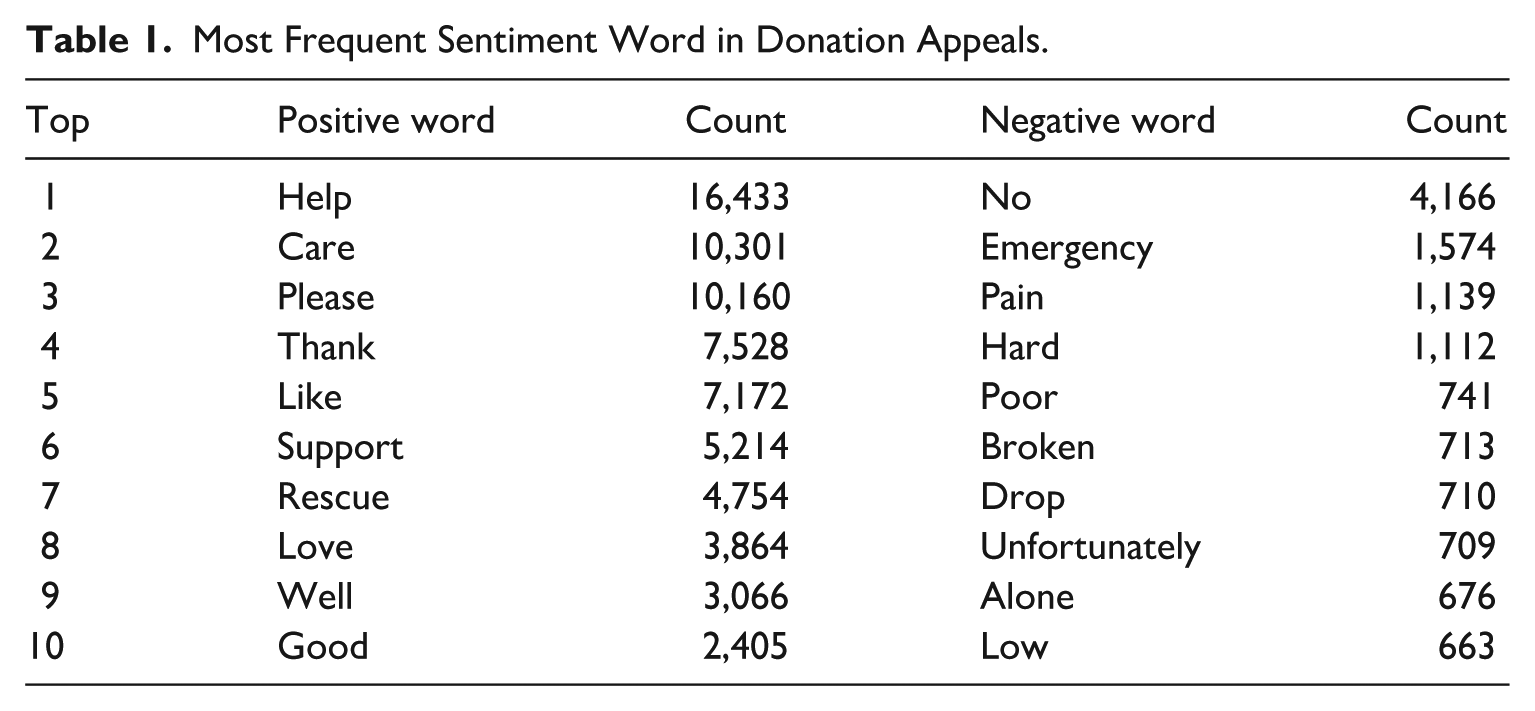
By contrast, the overall frequency of negative words is considerably lower. The most frequent negative term is
Narrative Mode of Donation Appeals
Table 2 presents the frequency and percentage of personalized narratives, group-centered narratives, and second-person, donor-centric narratives across all donation appeals. Overall, group-centered narratives appear more frequently than personalized narratives (58% versus 49%), suggesting that nonprofits more often frame need at the collective level rather than focusing exclusively on a single identifiable beneficiary. It is important to note that, as two distinct forms of third-person narration, personalized and group-centered narratives are not mutually exclusive and can co-occur within the same appeal. For instance, an appeal may reference a specific individual while simultaneously situating that individual within a broader collective or species, as illustrated by the statement: “Little Miss Walrus is giving you  . . . donation now helps our program give our patients the best chance at life, whether returning to where
Distribution of Narrative Mode.
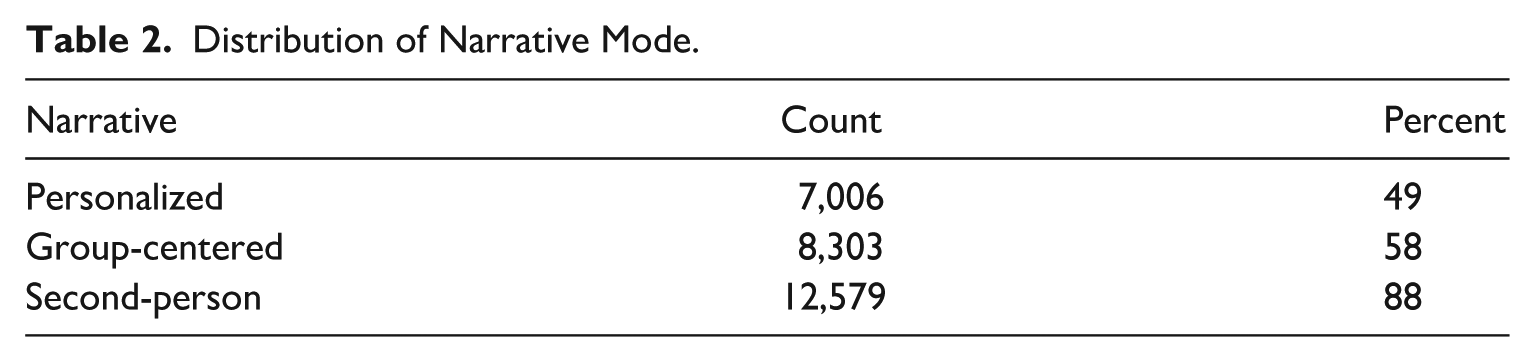
Meanwhile, second-person, donor-centric narratives are used most extensively, appearing in 88% of all donation appeals. This narrative mode facilitates direct communication with potential donors by explicitly addressing them and inviting action through phrases such as “if you can donate please do,” “help in any way you can,” and “here is how you can help,” thereby positioning donors as active participants in the charitable process.
Other Features of Donation Appeals
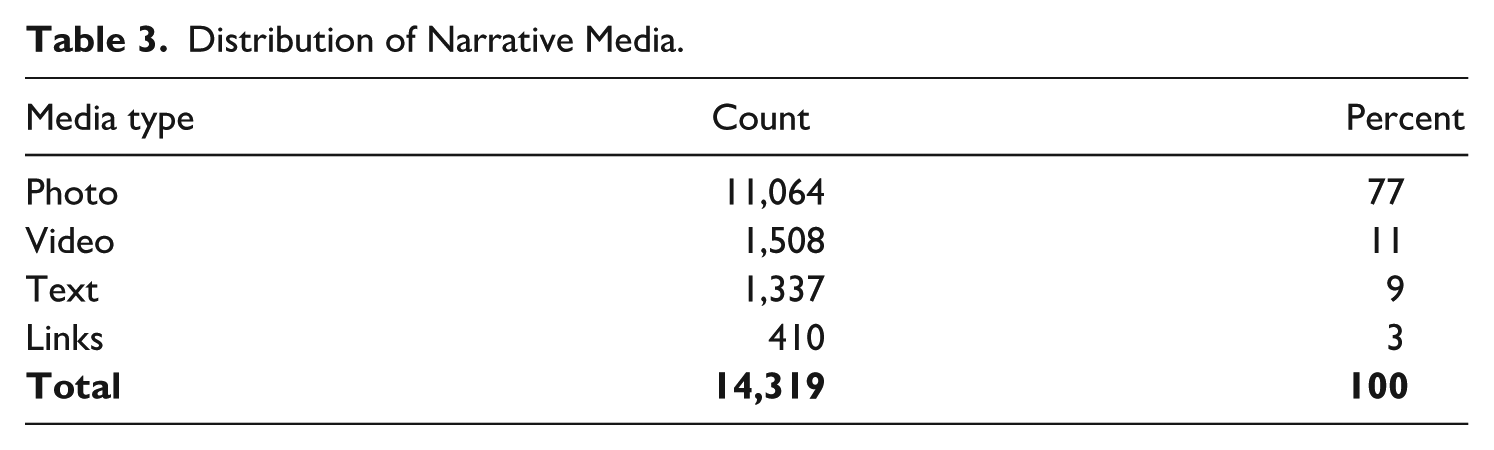
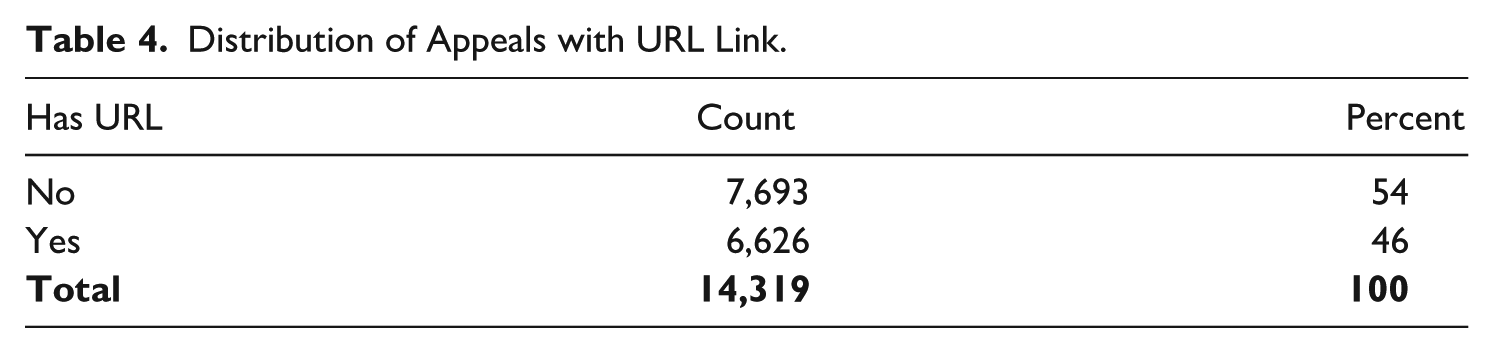
Donation appeals also vary in the forms of media they employ, including text, photos, videos, and external links. Table 3 demonstrates the frequency distribution of these media types across all donation appeals. It is important to note that Facebook donation appeals always contain some textual content; therefore, text in this context refers specifically to appeals that rely on pure text without accompanying other media. The majority of donation appeals incorporate photos (77%), highlighting the central role of visual imagery in fundraising communication. In comparison, a smaller proportion of appeals use videos (10%) or rely solely on pure text (9%), while only a limited share of appeals include external links to other media, such as news coverage or off-platform videos (3%). Meanwhile, 46% of donation appeals contain embedded URLs directing users to the nonprofit’s external donation webpages (Table 4), indicating that nearly half of appeals explicitly provide direct access to donation portals.
Distribution of Narrative Media.
Distribution of Appeals with URL Link.
In addition, the length of the textual content in donation appeals varies substantially, ranging from as few as three words to more than 2,000 words, with an average length of 178 words. The shortest appeals are often highly concise and action-oriented, such as “Welcome, Sasha! tcwr.org/donate,” which serves to redirect audiences to an external news story about a rescued cougar named Sasha. Other brief appeals similarly rely on minimal text, phrases like “Please donate and share” or “Thank you for your donation,” typically accompanied by photos that convey context visually. In contrast, longer donation appeals adopt a narrative, diary-like style, providing detailed stories about individual people or animals, elaborating on their circumstances, personal feelings, and ongoing needs.
Comments Overview
Action-Oriented Comments
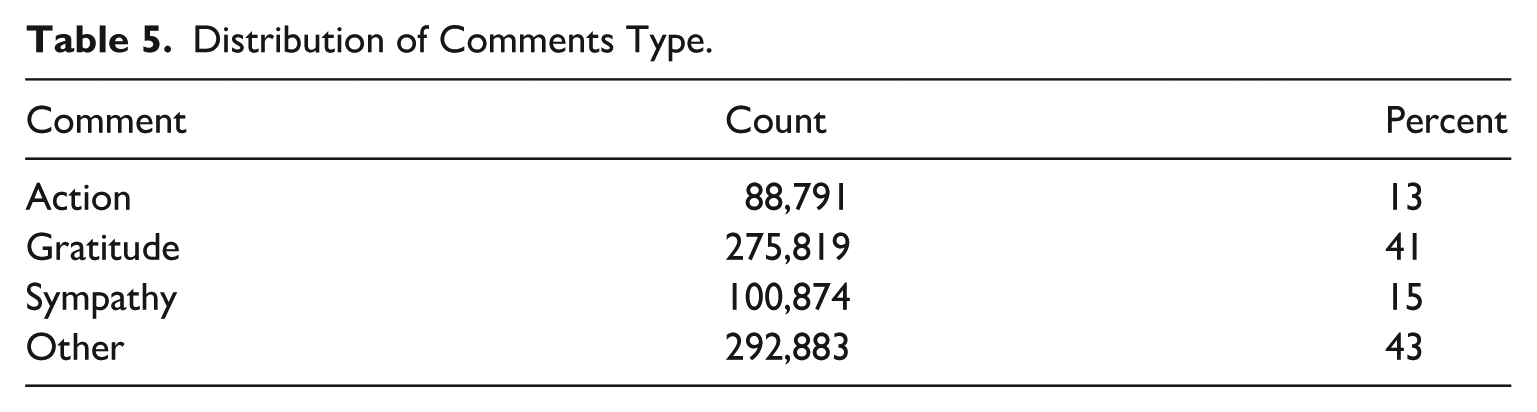
Action-oriented comments constitute approximately 13% of all 674,825 user comments responding to nonprofit donation appeals (Table 5). These comments primarily reflect self-reported behavioral engagement, in which users explicitly state actions they have already taken in response to the appeal. Typical expressions include concise confirmations such as “Donation made,” “Sent two bags and some kitten food,” or brief acknowledgments like “Done ! .” Rather than conveying reactions or moral support alone, action-oriented comments are signals of compliance and participation, indicating that the appeal successfully translated exposure into concrete action.
Distribution of Comments Type.
Gratitude-Oriented Comment
Gratitude-oriented comments represent the largest group of all three types of comments, accounting for approximately 41% of all comments posted under nonprofit donation appeals. These comments primarily express appreciation directed toward nonprofit organizations and affiliated individuals, acknowledging their efforts, impact, and commitment. Typical examples include statements such as “I will always be thankful for the work that you do. If not for your organization, we would not have our beautiful Noah!!!” and “A big thank you to everyone who adopted pets and to DCHS for all you do.” In addition to organization-focused appreciation, a subset of gratitude-oriented comments conveys positive affect toward the beneficiaries, often through expressions of happiness, hope, or prayer (e.g., “So happy for them all” or “Sending prayers for Bunny”). Collectively, the gratitude-oriented comments primarily recognize nonprofit efforts while simultaneously expressing goodwill toward those the appeals aim to support.
Sympathy-Oriented Comments
Sympathy-oriented comments account for approximately 15% of all user comments responding to nonprofit donation appeals. These comments primarily convey empathetic and compassionate reactions toward the beneficiaries featured in the appeals, often emphasizing their vulnerability, suffering, or need for care. Typical expressions include emotionally charged statements such as “Oh my heart  you poor sweet babies,” “Such sad eyes!!!!,” and “So heartbreaking to do to an animal. Hopefully he’s in good hands and will find a loving home.” Rather than reporting concrete actions or offering direct gratitude, sympathy-oriented comments reflect users’ affective engagement with the plight of beneficiaries, signaling emotional resonance and moral concern.
Other Comments
It is important to note that the three comment types are not mutually exclusive, as users may simultaneously express multiple sentiments or behaviors within a single comment. For example, comments such as “DONATED! Poor sweet baby, hope she gets all the help she needs and finds a wonderful home” contain elements of action, sympathy, and gratitude concurrently. Beyond these overlapping cases, approximately 43% of all comments were not classified into any of the three focal categories. A substantial portion of these uncategorized comments consisted of brief affective reactions directed toward the animals themselves, including remarks such as “how cute,” “adorable,” “beautiful girl,” or “WOW!” Given that the dataset primarily comprises donation appeals from animal-related nonprofit organizations, the prevalence of such appearance-focused and exclamatory comments is unsurprising. While these comments contribute to overall engagement and visibility, they do not directly reflect the behavioral, appreciative, or empathetic responses that are the central focus of this study.
Regression Analysis
Analysis Method
To analyze the influence of donation appeals on user comments, this study models the likelihood of different types of comments as a function of appeal-level characteristics. Given the binary nature of the dependent variables, logistic regression is employed as the primary analytical approach. Specifically, separate logistic regression models are estimated for each comment type, with appeal-level predictors entered to examine how variations in message design systematically shape the probability that a donation appeal elicits a particular kind of user response. Robust standard errors clustered at the donation-appeal level are used to account for the non-independence of comments associated with the same appeal.
Variables
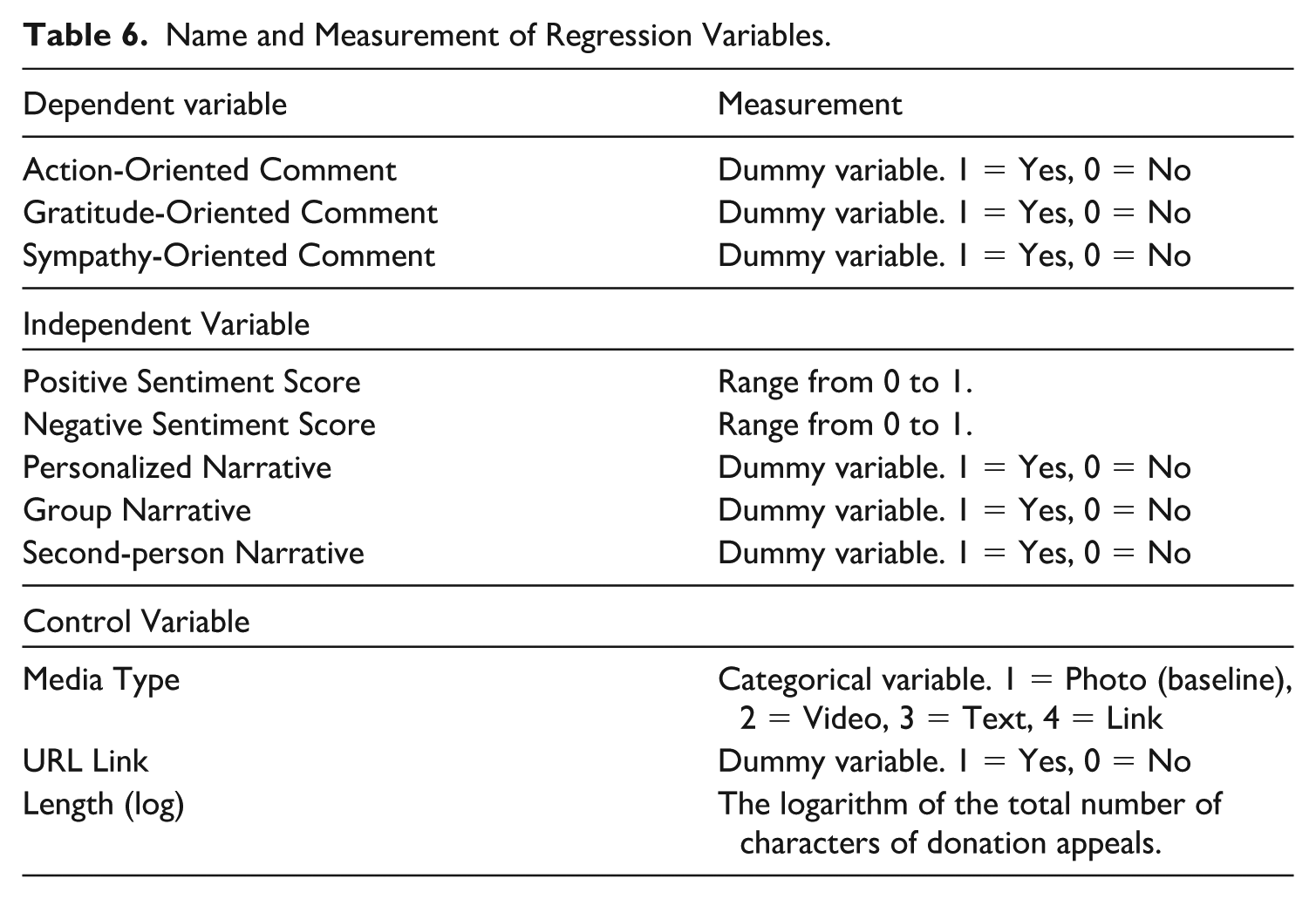
The dependent variables consist of three binary indicators capturing whether a given comment is action-oriented, gratitude-oriented, or sympathy-oriented, respectively. Each dummy variable equals 1 if the comment contains keywords associated with the corresponding category and 0 otherwise.
The key independent variables are the sentiment scores of donation appeals, including positive and negative scores derived from text analysis; neutral sentiment serves as the omitted reference category. Narrative mode is operationalized using three dummy variables indicating the presence of a personalized narrative, a group-centered narrative, and a second-person (donor-centric) narrative, which are not mutually exclusive and may co-occur within the same appeal.
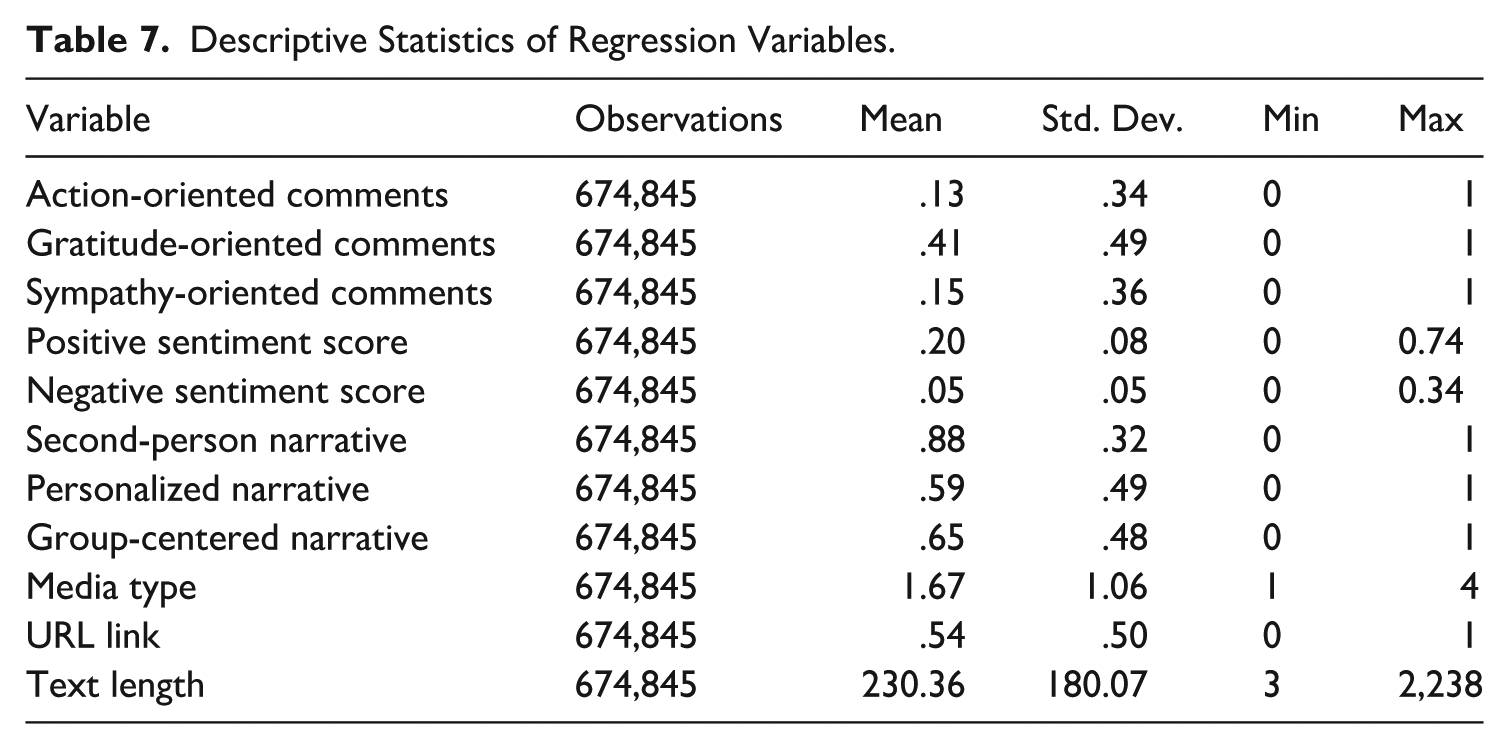
Several control variables are included to account for alternative explanations. Media type is represented by categorical indicators for text, video, and link, with photo serving as the baseline category. An additional dummy variable captures whether the donation appeal includes a URL link. Appeal length, measured as the total number of characters in the post text, is included to control for information volume. Because the distribution of length is highly right-skewed, a natural logarithmic transformation is applied. Table 6 provides a detailed list of all variables and measurement scales. Table 7 shows the descriptive statistics.
Name and Measurement of Regression Variables.
Descriptive Statistics of Regression Variables.
Regression Results
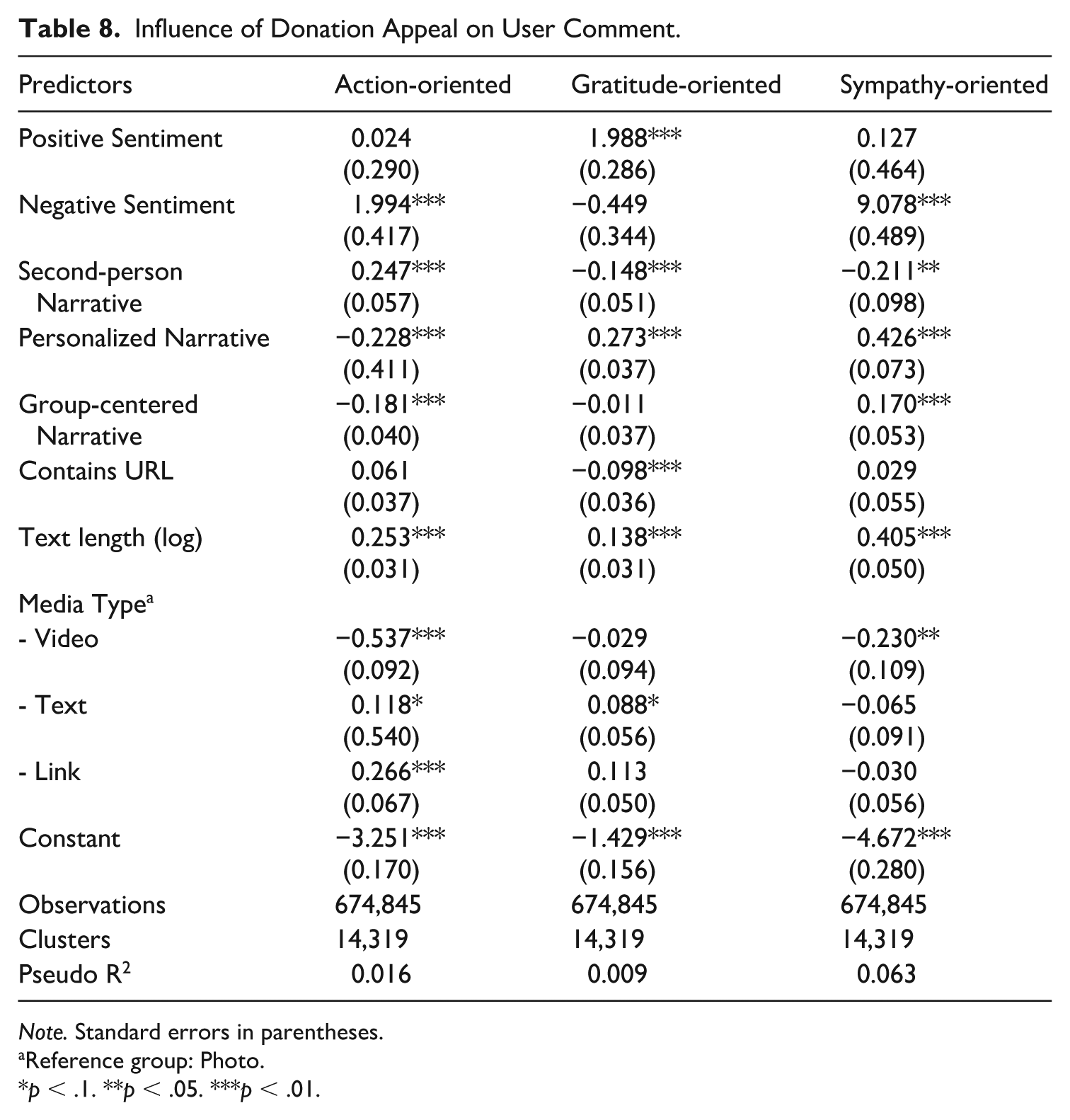
Three logistic regression models were estimated to examine how donation appeal characteristics influence the likelihood of generating action-oriented, gratitude-oriented, and sympathy-oriented comments. Table 8 shows the results of the three models. Overall, the findings provide support for all four hypotheses. Although the pseudo R2 values are modest (.0135, .0088, and .0634, respectively), this magnitude is reasonable given that the independent variables are measured at the post level while the dependent variables are observed at the comment level, a structure that inherently limits explained variance.
Influence of Donation Appeal on User Comment.
Note. Standard errors in parentheses.
Reference group: Photo.
p < .1. **p < .05. ***p < .01.
Action-Oriented Comments
Consistent with Hypotheses H1a and H2a, action-oriented comments are more likely to appear in response to donation appeals that contain stronger negative sentiment and employ second-person, donor-centric narratives, confirming the mobilizing effect of urgency- and agency-focused messaging. In contrast, and somewhat unexpectedly, both third-person narrative modes, personalized narratives emphasizing an individual beneficiary and group-centered narratives highlighting a collective, significantly decrease the likelihood of action-oriented comments. This suggests that shifting attention away from the donor’s role may dampen users’ propensity to publicly signal action.
In addition, donation appeals presented in video format are significantly less likely to elicit action-oriented comments compared to the more commonly used photo-based posts, possibly because watching videos requires greater time and cognitive investment, reducing immediate behavioral responses. Finally, appeals that include external links are more likely to generate action-oriented comments, indicating that providing access to supplementary information or engagement opportunities beyond the post itself may facilitate users’ expressions of action, whereas the inclusion of a direct donation URL within the appeal text does not exhibit a statistically significant effect.
Gratitude-Oriented Comments
Consistent with Hypotheses H1b and H2b, gratitude-oriented comments are more likely to appear in response to donation appeals that contain stronger positive sentiment and employ personalized narratives, suggesting that emotionally affirming messages centered on identifiable beneficiaries encourage expressions of appreciation.
In contrast to the pattern observed for action-oriented comments, the use of second-person narratives significantly decreases the likelihood of gratitude-oriented comments, indicating that direct calls to donor action may crowd out expressions of thanks. Similarly, the inclusion of a direct donation URL is associated with a lower probability of gratitude-oriented comments, potentially because transactional cues shift user attention away from affective responses.
Sympathy-Oriented Comments
Consistent with H1a, sympathy-oriented comments are more likely to appear in response to donation appeals that contain stronger negative sentiment, underscoring the role of distress-focused emotional framing in eliciting empathetic reactions. Interestingly, both forms of third-person narrative significantly increase the likelihood of sympathy-oriented comments, with the coefficient for personalized narratives larger than that for group-centered narratives, providing partial support for H2b.
Meanwhile, the use of second-person narratives significantly decreases sympathy-oriented comments, as direct appeals to the donor may shift attention away from the beneficiaries’ suffering. Similarly, donation appeals presented in video format are less likely to generate sympathy-oriented comments, possibly because videos require greater cognitive engagement which reduce users’ propensity to articulate empathetic responses.
Discussion
Theoretical Contributions and Practical Implications
This study examines how specific features of donation appeals shape the orientation of audience responses. Extending research on emotional strategy, which suggests that emotionally charged messages elicit affective reactions and motivate prosocial behavior (Berridge, 2018; Li et al., 2022), this study demonstrates how emotional valence systematically structures the type of user comments generated in response to donation appeals. Negative sentiment increases the likelihood of both action-oriented and sympathy-oriented comments, suggesting that emotionally adverse framing heightens perceived urgency and elicits concern for beneficiaries, thereby motivating either immediate action or expressions of compassion. In contrast, positive sentiment primarily fosters gratitude-oriented comments, reflecting affirmative emotional resonance and appreciation toward the organization or cause.
Beyond emotional valence, narrative strategy provides an additional lens for understanding how message design shapes audience responses. Building on prior work emphasizing that message framing differentiates audience reactions (Mao & Nishide, 2025; Wang et al., 2022), this study further specifies how narrative perspective influences the orientation of user comments. Second-person, donor-centric narratives are strongly associated with action-oriented comments, indicating that direct address activates a sense of agency and responsibility. In contrast, third-person narratives, particularly personalized narratives centered on identifiable beneficiaries, significantly increase gratitude- and sympathy-oriented comments, underscoring the role of identifiable beneficiaries in eliciting empathetic and appreciative reactions.
In addition, although video-format content can convey richer contextual information (Mao & Nishide, 2025), the findings indicate that its use is negatively associated with both action- and sympathy-oriented comments. This pattern suggests that richer media formats may shift audience engagement toward more passive consumption rather than prompting verbalized responses aligned with urgency or compassion. Such results are consistent with Media Richness Theory, which posits that rich media are better suited for conveying complex or ambiguous information, whereas leaner formats may be more effective in eliciting routine responses such as calls to action or expressions of concern (Daft & Lengel, 1986). In the context of the growing prominence of short-form video and platform-driven content dynamics, these findings point to the need for further investigation into how media formats shape not only engagement levels but also the substantive nature of audience responses.
This study provides important implications for nonprofit communication scholars and professionals. Theoretically, it introduces a more fine-grained conceptualization of user comments that captures distinct behavioral and emotional expressions. While prior literature commonly relies on comment volume as an indicator of overall interaction (Lukyanova, 2020; Yousef et al., 2022). This study advances that approach by examining the qualitative heterogeneity embedded within user responses. By disaggregating comments into action-, gratitude-, and sympathy-oriented categories, it moves beyond aggregate engagement metrics to reveal how audiences express different forms of participation and affect in response to nonprofit messaging. Moreover, this study addresses the need to better understand the relationship between content characteristics and engagement behaviors (Schreiner et al., 2021), by explicitly linking donation appeal constructs to the content of user comments. By jointly analyzing emotional valence and narrative perspective, the findings demonstrate how these strategies operate through distinct mechanisms. This integrated approach contributes to a more comprehensive understanding of how communication strategies translate into meaningful patterns of public engagement in nonprofit contexts.
Practically, as successful nonprofit communication on social media depends not only on reach but also on the substance of audience response (Comfort & Hester, 2019), this study provides evidence-based insights that enable nonprofits to strategically shape and manage user comments by aligning social-media message design with specific organizational goals. When immediate donations or mobilization are the primary objective, nonprofits may deliberately employ negative sentiment combined with second-person narratives to evoke urgency and activate a sense of personal responsibility. In contrast, organizations seeking to cultivate broader social care and moral concern may benefit more from eliciting sympathy-oriented comments, as such comments can reinforce collective awareness and prosocial norms, thereby supporting long-term legitimacy and public engagement (Goenka & van Osselaer, 2019). This can be achieved through negatively framed appeals that emphasize personalized, identifiable beneficiaries while avoiding second-person narratives that shift attention away from victims and toward the donor.
Limitations and Future Research
It is important to acknowledge several limitations of this research. First, with respect to sample representativeness, the nonprofit organizations included in this study were identified through CauseIQ, which primarily compiles data from IRS filings and self-reported organizational information. As a result, smaller or newly established nonprofits with limited financial activity or reporting capacity may be underrepresented in the sample. This potential bias may constrain the generalizability of the findings. In addition, the empirical focus on animal-related nonprofits, while offering a relatively consistent context for theory testing, may limit the extent to which the observed patterns apply to other nonprofit sectors, such as education, health, or advocacy, where audience motivations and emotional dynamics may differ.
In addition, limitations arise from the complexity and diversity of social media content itself. Although this study employed a systematic, dictionary-based coding strategy to capture key dimensions of sentiment, narrative mode, and media type, the content coding cannot encompass all meaningful aspects of donation appeals and user comments. Particularly, because many comments consist of only single words or very short phrases, commonly used topic-modeling approaches based on semantic distance may not be well suited to accurately categorize such brief textual expressions. Moreover, while media type (e.g., text, photo, video) is observed, the substantive content and visual or auditory features of multimedia elements are not analyzed. Such unobserved characteristics, such as imagery and storytelling style, may independently influence user responses and interact with textual features in shaping comment behavior.
Building on the limitations identified above, several promising avenues for future research emerge. First, future studies could broaden the scope of analysis by examining a wider range of nonprofit organizations across diverse sectors, including education, health, advocacy, and community development, to assess the generalizability of the observed relationships. Extending the analysis beyond donation appeals to other types of nonprofit social media posts, such as advocacy messages or community-building content, would further clarify whether the mechanisms identified in this study apply to nonprofit communication more broadly or are specific to fundraising contexts.
Second, future research would benefit from incorporating multimodal content analysis and more fine-grained coding strategies. Advances in large language models and media analysis techniques now make it possible to systematically analyze not only media type but also the substantive content of images and videos, thereby extending beyond text-based features alone. Integrating these multimodal features with textual analysis could provide a more comprehensive understanding of how complex social media messages jointly shape different forms of audience discourse. Such efforts would deepen theoretical insight into audience response mechanisms and offer more precise, actionable guidance for nonprofits seeking to strategically design their online communications.
Conclusion
In conclusion, the findings reveal clear patterns in how specific features of donation appeals shape the orientation of user comments. Negative sentiment significantly increases the likelihood of both action-oriented and sympathy-oriented comments, suggesting that emotionally adverse framing heightens perceived urgency and elicits concern for beneficiaries, motivating either immediate action or expressions of compassion. In contrast, positive sentiment primarily fosters gratitude-oriented comments, reflecting affirmative emotional resonance and appreciation toward the organization or cause. Narrative perspective further differentiates these responses. Second-person, donor-centric narratives are strongly associated with action-oriented, indicating that direct address activates a sense of agency and responsibility. Conversely, third-person narratives, particularly personalized narratives centered on identifiable beneficiaries, significantly increase gratitude- and sympathy-oriented comments, underscoring the role of identifiable beneficiaries in eliciting empathetic and appreciative reactions. Finally, the use of video-format content is associated with a decrease in both action- and sympathy-oriented comments, suggesting that richer media formats may shift audience engagement toward passive consumption rather than verbalized responses aligned with urgency or compassion.
These results provide a more precise understanding of how communication strategies translate into distinct forms of user interaction, offering both theoretical and practical value. By demonstrating how specific message features lead to different types of audience responses, this study equips nonprofit professionals with the ability to intentionally guide, shape, and manage the substance and tone of user comments. In doing so, it provides actionable guidance for aligning social media communication strategies with organizational objectives, whether the goal is to mobilize action, cultivate empathy, or reinforce supporter appreciation.
Footnotes
Appendix

Funding
The author received no financial support for the research, authorship, and/or publication of this article.
Declaration of Conflicting Interests
The author declared no potential conflicts of interest with respect to the research, authorship, and/or publication of this article.
Data Availability Statement
Discipline
Public Affairs and Administration.