






Abstract
Individual giving constitutes one of the most significant resources for many nonprofit organisations globally. However, the literature has focused predominantly on the perspectives and experiences of nonprofit organisations in developed countries. To this end individual giving to African civil society organisations (CSOs) and how they leverage this to promote their sustainability is a relatively understudied phenomenon. Drawing on African philanthropy and the African Grantmakers Network framework as an analytical lens and interviews with 37 local CSOs and key informants in Ghana, this article finds that individual giving, including volunteer labour, knowledge and financial resources, constitutes an important resource for promoting the sustainability of CSOs. Yet, individual giving is undervalued relative to external donor funding. Our findings suggest that individual giving is directed towards localised and social justice issues. Nonetheless, the absence of an enabling environment for local philanthropy has the potential to affect individual giving to CSOs.
Introduction
Individual giving constitutes one of the most significant resources for many nonprofit organisations (NPOs) globally (Charities Aid Foundation [CAF], 2024). According to Giving USA (2024), individual giving accounted for approximately 67% (US$326.87 billion) of all charitable giving to NPOs in the United States in 2023. Beyond their role as a symbol of support for public welfare, individual giving is essential for strengthening the financial capacity of nonprofit organisations (Hoang & Lee, 2022). This article defines individual giving as the voluntary dedication of one’s material and non-material resources for the benefit of others or the common good of society. It encompasses giving of money, goods (e.g., clothes and food items), expertise, knowledge, volunteering time and labour to advance the work of civil society organisations (CSOs) (i.e., formal and informal organisations such as NGOs, community-based organisations (CBOs) and community foundations) (Luria et al., 2015).
The nonprofit literature has established that individual giving is influenced by factors, including the positive impact it has on donors, perceived accountability, individual and organisational characteristics, and institutional contexts (Krawczyk et al., 2017; Wiepking et al., 2021). Despite the variations in individual giving to NPOs across countries, there is excessive focus on the experiences of NPOs in Europe, Asia, and North America (Einolf, 2017; Krawczyk et al., 2017; Wang & Boden, 2024), with only a handful of studies focusing specifically on individual giving to CSOs in sub-Saharan Africa (SSA) (EPICAfrica, 2024). In this article, our point of departure is on the mounting calls by scholars (Obadare & Krawczyk, 2022) who stress the need for more research on individual giving and African civil society, a relatively understudied phenomenon in the philanthropy and nonprofit literature.
While the recent past has witnessed growing academic interests in charitable giving in Africa (Osei & Alagidede, 2023; Owusu-Ansah & Moyo, 2025), these discussions have primarily focused on the determinants of giving without a specific focus on individual giving to local civil society organisations (LCSOs). Thus, there has yet to be any systematic research exploring individual giving to LCSOs in contexts like Ghana. We define LCSOs in Ghana as self-governed, nonprofit organisations that originate and are formally registered within Ghana, owned and managed by Ghanaians. The leadership team and headquarters of LCSOs are based locally, and they operate across national, regional and district levels. LCSOs are not affiliated with INGOs, even if these INGOs have acquired local registration in Ghana (Kumi & Hayman, 2025). The culture of giving to CSOs in Africa is limited due to factors such as their high dependence on external donor funding, the tendency of individuals to give within their families, kinship networks and neighbours as well as the absence of fiscal incentives (EPICAfrica, 2024; Obadare & Krawczyk, 2022). For these reasons, little attention has been given to the dynamics of individual giving and how it supports the work of CSOs in SSA.
Therefore, there is limited understanding in terms of the models and structures of giving, the enablers and constraints of giving and how CSOs leverage individual giving to promote their sustainability. This article addresses this gap by examining how LCSOs in Ghana mobilise and leverage individual giving to promote their work and sustainability. The article asks the following questions: (a) What are the experiences of LCSOs in terms of the models and structures used in mobilising individual giving? and (b) What constrains and enables individual giving for LCSOs in Ghana? We answer these questions by drawing on African philanthropy and the African Grantmakers Network (AGN) framework as the analytical lens and qualitative research involving semi-structured interviews with 37 LCSO representatives and key informants in Ghana.
Ghana provides a compelling case for examining individual giving to LCSOs in SSA. Like many SSA countries, Ghana is experiencing drastic cuts in official development assistance (ODA) (OECD, 2025). Ghana’s transition to middle-income status and the government’s aspiration to reduce its dependence on foreign aid through policies such as the ‘Ghana Beyond Aid’ agenda have shaped the aid landscape considerably (Kumi, 2020). ODA to Ghana, including that channelled through CSOs, has declined substantially, leading to a significant effect on the work of CSOs. For instance, the USAID aid suspension in February 2025 resulted in a funding deficit of approximately US$156 million, prompting the Government of Ghana to explore alternative revenue sources to bridge the funding gap (Government of Ghana, 2025). In addition, the COVID-19 pandemic has underscored the vulnerability of the international aid system, emphasising the necessity for self-sufficiency among Ghanaian-based CSOs that rely on external donor resources for their survival. There is a strong emphasis on promoting domestic resource mobilisation as a mechanism for ensuring CSOs’ sustainability, resilience and addressing civic space concerns (Kumi & Hayman, 2025). It is therefore of policy and practice significance to explore how LCSOs are mobilising individual giving to support their operations in countries experiencing aid reduction and shrinking civic space. Therefore, we expect that the insights from this study will apply to other countries beyond Ghana.
This article contributes to the growing body of literature on African philanthropy and individual giving. First, it provides empirical evidence on how LCSOs are mobilising individual giving in support of their work and sustainability in contexts of aid reduction. Despite the dependency of Ghanaian LCSOs on external donor resources, individual giving constitutes an important resource for LCSOs. Yet they are undervalued relative to external donor funding due to their perceived ‘small monetary contributions’. We show that the mobilisation of individual giving is not limited to grassroots CSOs but also professionalised CSOs. Second, while the African philanthropy literature has it that individuals in Africa tend to give to their friends and families and focus on localised causes in their communities, this article argues that individual giving is also directed towards CSOs and support for social justice issues. Thus, individuals in Africa are not only recipients but are also givers of philanthropy that support CSOs. Third, the article contributes to the theoretical literature by empirically testing the applicability of the categorisation of African philanthropy within the context of African CSOs. In doing so, it contributes to refining and applying existing models and frameworks on African philanthropy in explaining how local CSOs mobilise individual giving to support their work and sustainability. The article challenges the normative assumptions about African philanthropy, mainly focusing on reciprocity, solidarity and mutual aid. We show that individual giving in the African context is not only practised by the wealthy but also by the poor who make in-kind contributions (e.g., the provision of food items, lands, building materials) to support the work of LCSOs.
In the next section, we discuss African philanthropy and the AGN framework as an analytical lens for exploring the different expressions and models of individual giving. Following this, we provide an overview of individual giving in Ghana and our methodological approach. We then present and discuss the research findings. The last section concludes by highlighting the key observations and the implications of the findings for policy and practice.
African Philanthropy as a Framework for Analysis
African philanthropy, prevalent across numerous African countries, is not a novel practice. This tradition stems from the long-standing practice of demonstrating generosity through solidarity, mutual aid, and collective identity (TrustAfrica, 2024). We acknowledge the tensions surrounding the conceptual distinction between ‘Western philanthropy’ and ‘African philanthropy’. According to Fowler and Mati (2019, p. 725), African philanthropy is different from Western philanthropy in terms of its “endogenous moral philosophies, worldviews and languages”.
Conceptually, African philanthropy is defined “as encompassing extra-governmental and private ways through which resources including money, material goods, time, and labour are mobilised/harnessed by and for Africans to address a public need, interest, or cause” (Mati, 2016, p. 18). The extra-governmental and private ways of mobilising resources include those from private sector organisations and individuals for charitable causes. Philanthropic resource mobilisation in Africa is driven in part by the desire to promote the welfare of others or for the public good, as well as shared norms of solidarity and reciprocity. It is worth clarifying that African philanthropy therefore goes beyond monetary donations and does not include extra-governmental and private resource mobilisation by ‘non-Africans’ for ‘Africans’ on the continent (Mati, 2016, p. 19). Thus, as Moyo (2010, p. 260) argues, African philanthropy is about “philanthropic actions that is specific and unique to Africa”.
We acknowledge that African philanthropy is not homogeneous, given that there are variations regarding giving traditions and practices such as Nnoboa (cooperatives), Ubuntu (I am because you are), Kujitolea (volunteering or sacrificing), and fard kifaaya (duties incumbent on the community) (TrustAfrica, 2024). For this reason, while African philanthropy has some shared features like reciprocity and solidarity across countries, there are also differences in the meanings and manifestations of African philanthropy due to the multiplicity of contexts, practices and cultures (Mati, 2016).
Mati (2017) argues that African philanthropy’s structure is based on spheres of philanthropic practice and its underlying motives. Based on the spheres of philanthropic practice, African philanthropy comprises horizontal, vertical and hybrid forms. Horizontal African philanthropy focuses on direct relationships where people give to those close to them without using any institutional intermediation (Mati, 2017). Horizontal African philanthropy is based on norms of solidarity, reciprocity and counter-obligation that are embedded in the ‘economy of affection’, which is “constituted by personal investments in reciprocal relations with other individuals as ways of achieving goals that are seen as otherwise impossible to attain” (Hyden, 2017, p. 409). Therefore, the economy of affection and its informal institutions are mechanisms for allocating and distributing resources. In this regard, ‘philanthropy of community’ (Wilkinson-Maposa et al., 2005), where the poor have developed structures, systems and mechanisms to support each other and contribute to the development of their communities, is critical. Horizontal African philanthropy is built on relations of trust between individuals and communities. Therefore, trust is valued as a prerequisite for giving because it fosters cooperative prosocial behaviours (Wilkinson-Maposa et al., 2005).
Conversely, vertical African philanthropy involves formal giving practised through institutional intermediation such as private foundations, trusts and NGOs. It focuses on the benevolence and the flow of resources from the ‘rich’ to helping the ‘poor’ in society (Mati, 2016). Vertical African philanthropy is influenced by factors such as trust (e.g., organisational, sectoral and institutional trust) (Chapman et al., 2021b) and institutional contexts (Wiepking et al., 2021).
Finally, hybrid African philanthropy combines horizontal and vertical philanthropic practices demonstrated through, for example, mutual aid, self-help groups, community foundations and crowdfunding (Mati, 2017). For instance, community foundations mobilise both financial and non-financial resources from the rich and poor in society to support their operations.
While the framework developed by Mati (2017) is useful, it does not take into account the dynamics of emergent forms of African philanthropy (e.g., philanthropic activities by alumni associations and community-based volunteers) that are mobilised by LCSOs in contexts like Ghana. For this reason, we adopt a complementary framework developed by the AGN to understand the different dimensions of African philanthropy. According to the AGN (2013, pp. 7–8), African philanthropic activities are classified into the following. First, one-to-one giving involves acts of generosity to family and friends, which enhances social bonds. Examples include supporting family members and close friends in need. Second, one-to-many giving involves the giving of large gifts by wealthy individuals towards causes they usually care about, although the beneficiaries are not directly connected to them. Examples include wealthy individuals making contributions towards the building of schools that benefit individuals who are not directly connected to the givers’ personal circle. Third, many-to-many giving focuses on mobilising resources from a group of individual givers towards shared causes which do not directly benefit or impact their immediate circle. This type of giving involves the pooling together of financial and non-financial resources by individuals to support specific causes. Examples include mobilising resources through crowdfunding platforms and alumni associations. Finally, many-to-one giving is about the mobilisation of a large group of individual givers to support causes that benefit or are connected to them directly. This includes community members mobilising resources through, for example, community foundations and associations to support projects in their communities. Figure 1 illustrates the different models of African philanthropy highlighted by AGN (2013).
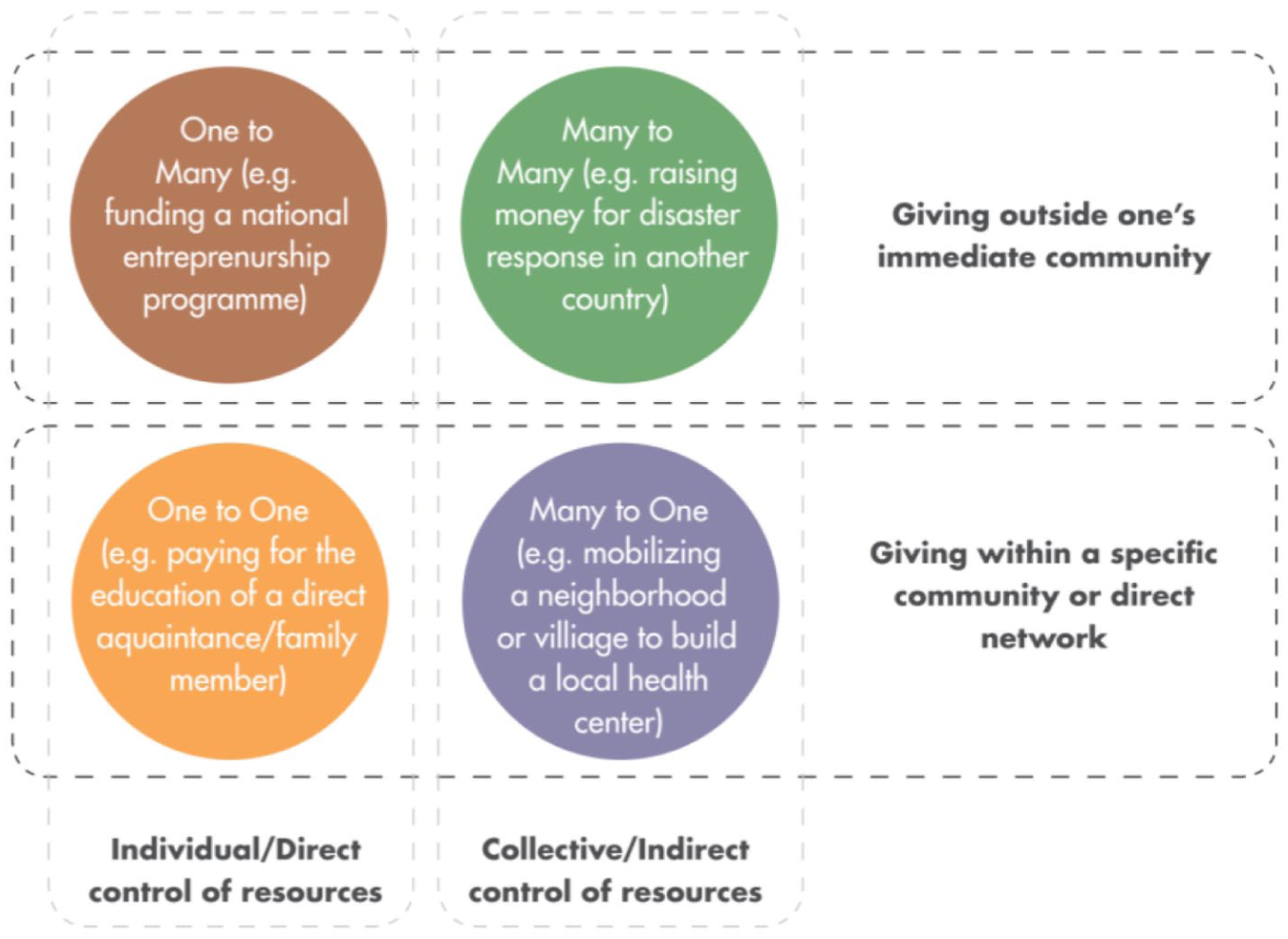
Models of African philanthropy
The elements of the two frameworks discussed above: (i) horizontal, vertical and hybrid; and (ii) one-to-one giving, one-to-many giving, many-to-many giving and many-to-one giving are complementary rather than substitutes, given that they overlap. We integrate and make use of both frameworks as the analytical lens in explaining the empirical findings on the models and structures for individual giving to LCSOs (see Supplemental Table S1). The integration of the two frameworks provides a comprehensive model for understanding the causal mechanisms that drive individual giving to LCSOs and the interplay between traditional African giving practices (i.e., horizontal) and the institutionalisation of philanthropy (i.e., vertical) in Africa.
Research Context: Individual Giving in Ghana
Individual giving has long been a tradition in the Ghanaian polity and is ingrained in the country’s traditional and religious fabric (Kumi, 2019). Historically, horizontal giving has been used as a tool for poverty reduction, social inclusion and supporting the poor in society. Kumi (2019) emphasises that the purpose of giving in many traditional Ghanaian societies is to promote the redistribution of resources and stabilise social relationships. Cultural principles of solidarity and reciprocity are also manifested in, for example, individual giving in funeral donations and supporting family members in need (Gyabaah, 2024).
According to CAF (2025), in 2024, Ghana was the third most generous country in the world, with 82% of people making financial donations in general, while 39% donated money to charitable organisations. In addition, 34% of people volunteered their time with an average of 11 hours and 15 minutes. Individual giving in Ghana is influenced by a complex interplay of demographics, religious, cultural, economic and historical factors (Osei & Alagidede, 2023; Owusu-Ansah & Moyo, 2025). Osei and Alagidede (2023) and Owusu-Ansah and Moyo (2025) identified marital status, household size, religiosity, trust, social norms, and ethnicity as significant predictors of formal cash and in-kind donations. Informal cash and in-kind donations are also shaped by income, religiosity, and empathetic concerns. Traditional practices such as the Nnoboa scheme provide support to community members using the principles of trust, communality and reciprocity (Gyabaah, 2024).
Study Setting
This article draws on data from the Giving for Change (GfC) programme, which aims to promote local resource mobilisation in Ghana. The programme’s vision is to help transform development practices by recognising and emphasising the importance of local resource mobilisation in increasing local ownership, unlocking agency, and strengthening communities’ capacity to assert entitlements from various stakeholders, particularly the government. The GfC is implemented through an alliance led by an international consortium consisting of the Global Fund for Community Foundations, Africa Philanthropy Network, Kenya Community Development Foundation, and Wilde Ganzen, with funding from the Dutch Ministry of Foreign Affairs. STAR Ghana Foundation (SGF) acts as the anchor institution for Ghana, with WACSI serving as a strategic partner.
Methodology
Research Design
The article draws on data from qualitative research conducted in Ghana with a purposively selected LCSOs who serve as partners of the GfC programme. These LCSOs were predominantly NGOs, CBOs, community foundations and associations that operated at national and sub-national levels, with some not formally registered with the Nonprofit Secretariat of Ghana. Thus, the sample comprised formally registered and informally non-registered LCSOs. The thematic areas of the LCSOs included health, education, governance, disability rights and advocacy, climate change, youth empowerment, rural development and sustainable livelihoods. The selected LCSOs varied in size in terms of staff strength and operated in Greater Accra, Ashanti, Central, Western, Eastern, Volta, Ahafo, Bono East, Bono, Northern, Upper West and Upper East regions (Supplemental Table S2). The diversity of regions provided insights into understanding how regional contexts influence individual giving to LCSOs.
The following inclusion criteria were used in selecting the LCSOs. First, the organisation must be an LCSO that is part of the GfC and has implemented initiatives to mobilise financial and non-financial resources from individuals and communities. Second, the LCSO must be willing to participate in the study. Access to the LCSOs was gained through the SGF, through email conversations introducing the authors to the LCSOs. Following this, the authors reached out directly to the LCSOs for their participation in the study.
Aside from the LCSOs, interviews were conducted with government officials, mainly a District Coordinating Director, two Development Planning Officers and a Director of the National Commission for Civic Education, who were selected through purposive sampling based on their expertise and knowledge in the civil society sector. The government officials had, on average, 9 years of working experience. In addition, a senior academic at the University of Ghana and three development consultants who are experts in civil society and local philanthropy were purposively sampled for interviews to understand their perspectives on the dynamics of the individual giving landscape in Ghana. These key informants had extensive engagements and supported LCSOs in designing their resource mobilisation strategies. Access to the key informants was made through the authors’ network. An in-depth semi-structured interview technique, which provides an opportunity for a nuanced understanding of the experiences and perceptions, was used to collect the qualitative data from the research participants.
Data Collection
The data collection was in two distinct phases. The first phase involved semi-structured interviews with the implementing partners of the GfC programme. Data collection took place between July and September 2021. The rationale for phase 1 was to document how LCSOs mobilise individual giving to increase the voice of community members in claiming their rights towards power holders, and also create an enabling environment for giving. As part of phase 1, 11 LCSO representatives in the programme implementing regions of Ahafo, Upper West and Northern regions were interviewed. These LCSO representatives, comprising Executive Directors, Programme Directors, Managers and Finance Directors, were purposively selected because they were directly involved and had unique experience and expertise in mobilising individual donations for their respective organisations. They had worked in their organisations for at least 6 years, with some having close to 20 years’ experience in the civil society sector in Ghana. We also interviewed key informants comprising four government officials, an academic and three resource mobilisation experts to understand the opportunities and structural constraints that affect the giving ecosystem in Ghana. In total, 19 interviews were conducted during phase 1.
The findings from phase 1 were complemented with a further study in phase 2, which took place between May and July 2023. The rationale was to understand pertinent issues such as the individual giving landscape in Ghana, participation of community members in CSOs’ activities and the enabling environment for local philanthropy. As part of phase 2, 14 purposively selected LCSO representatives were interviewed. The LCSOs selected for phase 2 were in the Greater Accra, Central, Ashanti, Upper East and Volta regions. The representatives occupied different positions such as Executive Directors, Programme Managers and Directors, Resource Mobilisation and Partnership Managers, with an average of 12 years’ experience in the civil society sector. As part of the data collection for phase 2, four key informants comprising an organisational development specialist, fundraising experts and resource mobilisation specialists were purposively selected and interviewed to understand their perspectives on how issues of organisational governance structure and capacity influence local giving for LCSOs. In total, 18 semi-structured interviews were conducted as part of the data collection in phase 2 (Supplemental Table S2).
The interviews for phases 1 and 2 were conducted in English using both face-to-face and virtual methods, such as Zoom and Microsoft Teams. We acknowledge the limitations of the virtual interviews (e.g., the absence of verbal and non-verbal cues, disruptions, delayed responses because of the lack of internet connectivity, etc.) and their effects on qualitative data. Strategies such as sending the meeting links earlier to the respondents, allowing participants to repeat unclear viewpoints due to internet disruptions, and short breaks between discussions were adopted to mitigate these challenges. The informed consent of all respondents was obtained before recording any interviews. The average length for the interviews in phases 1 and 2 was between 45 minutes and 90 minutes.
Data Analysis
Analysis of the data was undertaken using NVivo 12. As part of the data analysis process, thematic analysis was used to identify emerging themes and patterns in the data following transcription. An inductive and iterative approach to thematic analysis was employed. The thematic analysis followed the six steps proposed by Braun and Clarke (2006), namely: (i) familiarisation with the data; (ii) generating initial codes or themes; (iii) searching for themes; (iv) reviewing themes; (v) defining and naming the themes; and (vi) report production. The use of a flexible and reflexive approach to data analysis allowed the data to be analysed systematically. As part of the analysis, the data were analysed and coded by two of the authors who have many years of experience in qualitative data collection and analysis. The authors developed the coding frame, which was inductively constructed as part of the familiarisation process and generating the initial codes outlined earlier. The inductive construction of the codes led to the identification of 3 broad themes with 55 individual codes, which were agreed on by the two authors. For instance, the broad theme that explored the experiences of LCSOs in mobilising local giving contained codes such as the models and structures of individual giving to CSOs, while the theme on enablers and constraints focused on issues such as trust, regulatory framework and enabling environment, among others. As part of the coding process, the interview data were imported into NVivo 12 by one of the authors, and after that, the two authors coded the data independently based on the agreed coding frame. The authors then reviewed the scripts coded by each other to identify overlaps and divergences. It is noteworthy that this study did not use intercoder reliability, given that we did not quantify the degree of our agreement in the coding process.
The trustworthiness of the research findings was ensured through researchers’ self-reflexivity, prolonged engagement in the field, and data triangulation. We therefore cross-verified the views of LCSO representatives and the key informants to identify similarities and discrepancies. Discrepancies were addressed through member checking, where two validation webinars were held in November 2021 and October 2023 for phases 1 and 2, respectively, with over 90 stakeholders, including CSOs, government officials, individual community members and academics. The stakeholders reviewed the findings, and their inputs were incorporated into the final analysis and interpretation.
In terms of self-reflexivity, we maintained a reflexive journal of our experiences and reflections as part of the data collection process and further reflected on our positions and methodological choices and how they influenced the outcomes of the research findings. This helped to minimise potential researchers’ biases. Furthermore, the transferability of the research findings was achieved through the detailed description of the research process and the sampling strategies employed. Dependability was demonstrated through a comprehensive documentation of the research process and an audit trail. The names of the individuals and organisations are not disclosed in this article to protect their identities. We recognise that the 25 LCSOs sampled do not cover all the different types of CSOs, including faith-based organisations and INGOs in Ghana. For this reason, our sample is not exhaustive of the heterogeneity of CSOs, and the findings may not be generalised across all CSOs in Ghana.
Findings
Experiences of Local CSOs in Mobilising Individual Giving
Individual Cash Donations to LCSOs as an Expression of Vertical African Philanthropy
Respondents acknowledged that there is a long-standing misconception that Ghanaians give to their family and friends rather than supporting LCSOs. Many of the LCSO representatives explained that individual cash donations constitute an important element of their local resource mobilisation portfolios. Specifically, in quantifying the contributions of individual cash donations to the annual budget of the LCSOs, more than a third of the respondents reported that the contributions ranged between 5% and 25%. One Executive Director of a LCSO that mobilised individual cash donations in the Northern region said: “Looking at our annual budget in 2021, for example, about 7-15% of our money came from individual cash donations. But the bulk of the money we had was from external donor agencies” (Interviewee 8). Another Executive Director said: “I would say we have probably raised around US$2000, which is a huge milestone for us as a smaller organisation” (Interviewee 16).
Interview data reveal how regional contexts matter and significantly influence individual cash donation practices to LCSOs. Representatives of LCSOs in Northern, Upper West, Upper East and Ahafo regions reported that the contributions of cash donations were relatively smaller compared (i.e., on average less than 10%) to their counterparts in the Greater Accra, Ashanti and Eastern regions (i.e., on average 10% to 25%). Among the reasons that accounted for this is that poverty is endemic, especially in the Northern regions (e.g., Northern, Upper West and Upper East) due to factors such as colonial legacies and policy neglect by successive governments; hence, the ability of many individuals to make cash donations to LCSOs is limited. A respondent narrated that: “people perceive that once you are an NGO, you should support the poor in society with freebies and not the other way round. So, from our experience, individuals, especially here in the North (i.e., Northern Ghana), don’t often donate cash to NGOs because they believe they are poor, so the NGOs are rather the ones who should give to them” (Interviewee 19).
In-Kind Donations as an Expression of Horizontal African Philanthropy
According to the CSO representatives, their organisational sustainability depended largely on the goodwill of people who donate non-financial resources to support their activities. They explained that despite the endemic poverty, especially in Northern Ghana, individuals who considered themselves ‘poor’ assisted the work of the CSOs with non-financial resources (e.g., labour, land, clothing and food items). A CSO representative in the Upper West region, who depended on in-kind donations, explained that: “people you would generally describe as poor are willing to contribute by investing their time and labour to support common causes in the communities. For our programmes, it is the poor community members who mobilise themselves to support us” (Interviewee 17). Another respondent added that “individuals in the communities support us with food items, clothing and soaps to help our beneficiaries. So, we have been successful in mobilising huge quantities of in-kind donations” (Interviewee 2).
Gender differences emerged in the pattern of individual giving to LCSOs. According to some LCSO representatives, men in society have a higher preference for making in-cash donations and give higher amounts to LCSOs compared to women, who often have lower economic resources. This view was questioned by some respondents who argued that while women in regions such as Upper West, Upper East, Savannah, Volta and Ahafo do not often make in-cash donations to LCSOs, the monetary value of their in-kind donations, such as clothing and food items, sometimes far outweigh the donations by men, as echoed as follows: From my experience, there are clear differences in the giving patterns between men and women. The men often support us through in-cash donations, while the women give us food items and clothing, especially in helping other women, such as widows. The value of such in-kind donations is often higher. (Interviewee 23)
There appear to be regional differences in giving to LCSOs based on gender. Our findings suggest that while the majority of women in the Northern, Upper West, Upper East, Ahafo, Bono East, Bono and Ashanti regions supported the work of LCSOs with agricultural-based donations such as food items, their counterparts in the Greater Accra region volunteered their expertise by supporting the work of LCSOs in capacity building and mentorship. A representative of a women’s rights organisation explained how some female lawyers volunteered as “women’s rights advocates to secure the basic rights of young women facing violence issues in Accra, building women’s capacity and increasing their participation in decision-making processes” (LCSO 23). Formal volunteering with LCSOs is common among men in the Greater Accra, Ashanti and Volta regions, with some male volunteers using their expertise and knowledge to support LCSOs through engagements in social justice issues on a pro bono basis, as articulated by a Programme Director: Initially, we [LCSOs] had little conversations about individual giving for social justice and environmental causes. But now, there have been some discussions and initiatives where organisations mobilise individual support, not just cash, but also their time, expertise and knowledge in addressing social justice issues and environmental issues, including illegal mining [galamsey]. Some individuals with expertise in social justice offer their services pro bono to support LCSOs. So, there is much emphasis on giving towards social justice issues, especially for LCSOs in Ghana. (Interviewee 26)
Donations by Board Members and Founders (One-to-Many Giving) and Alumni Associations to LCSOs (Many-to-Many Giving)
Another aspect of individual giving for LCSOs relates to the diverse support provided by their founders and board members. For some LCSOs, it was reported that their board members used their personal connections and networks to support them in mobilising financial and non-financial resources. Some board members used their own money to support their organisations because they were unable to meet donor funding requirements. For example, an Executive Director of a youth-led LCSO narrated that: “As an organisation, we have 11 board members who have supported us in diverse ways. When we started our organisation, the donations we received from our board members enabled us to start our programmes and reach out to the communities” (Interviewee 15).
In addition, several respondents reported that their board members used their reputation, legitimacy and networks to support their organisations, as exemplified in the following narration by a Programmes Manager: We have a board of trustees, and the fact that we have them behind us gives us the legitimacy, and we are riding on that to be able to undertake our activities. It wouldn’t have been possible at all without some reputable people on the board. (Interviewee 11)
Analysis of the interview data revealed that donations through collective groups, such as old students’ or alumni associations to LCSO, are an important dimension of individual giving. Some respondents explained that individuals donate cash to LCSOs through their alumni associations. According to the Executive Director of a LCSO in the Greater Accra region, her organisation mobilised donations from the alumni associations of some secondary schools to promote social inclusion through the provision of learning materials for students with disabilities (Interviewee 10).
Many respondents explained that while alumni associations focus their donations on their alma mater, recently, some are collaborating with LCSOs to undertake their activities in communities through alumni volunteerism (e.g., providing pro-bono services in proposal development) and fundraising. It was remarked that some alumni associations have signed a memorandum of understanding with LCSOs where their members provide mentorship, career guidance and also serve as teachers for the beneficiaries of LCSOs’ interventions at the secondary and post-secondary school levels. According to an Executive Director in the Central region, her organisation collaborates with some alumni associations to provide mentorship programmes to secondary schools in the Cape Coast Metropolis. Our findings suggest a strong level of engagement between LCSOs and alumni associations in the Western, Ashanti, Eastern, Greater Accra and Central regions compared to other regions due partly to the activeness of secondary school alumni associations. These regions also host the majority of the top secondary schools (e.g., Mfantsipim School, Presbyterian Boys, Pope John, Adisadel College, Wesley Girls, Holy Child, Saint Augustine, Opoku Ware, etc.) that were established by the missionaries in Ghana.
Structures for Individual Giving for Local CSOs
Expression of Many-to-One and Many-to-Many Giving Through Community-Level Structures
A common narrative reported by many respondents was that the structures for individual giving to LCSOs involved using community-level systems to appeal to individuals in communities and those in the diaspora (i.e., local community members who are living elsewhere, either abroad or in cities across Ghana) to support their development initiatives at the community level. In explaining the approach to individual giving in the communities, one Executive Director emphasised that When it comes to donations, if you do not have cash but you have building materials [bags of cement, iron rods, sand and stones], it is welcome. In some communities, the chiefs donated lands. (Interviewee 15)
Thus, for some of the LCSOs, giving by community members towards development initiatives includes non-financial resources. Other respondents iterated how community leaders, including chiefs, supported their interventions with in-kind donations (e.g., land, building materials). According to some respondents, the donation of these in-kind materials facilitated the construction of clinics and school blocks in some rural communities in the Northern and Upper West regions.
While this is a welcoming development, concerns were also raised by some respondents about potential power dynamics at play when individuals give to LCSOs at the community level. Some LCSO representatives and key informants, including government officials, explained that influential stakeholders at the community level, including chiefs, opinion leaders and politicians, often want to claim credit when individuals make donations to LCSOs as follows: “The powers in the communities would like to hijack the process, and when we mobilise the resources from individuals, politicians and sometimes chiefs, they would want to attribute the success to themselves, and that’s a major risk factor. If we don’t address that, it will negatively affect how individuals would want to support our interventions in the communities” (Interviewee 28).
In addition, some respondents argued that credit claiming of development projects by politicians and traditional leaders has the potential to negatively affect the trust that citizens have in them and their willingness to support the work of LCSOs. For example, some Executive Directors reported that there have been instances where individual donors have threatened to withdraw their support for some community interventions because politicians claimed credit for such interventions, which increased their chances of getting votes. Moreover, for some LCSOs, credit-claiming of community interventions sometimes results in chieftaincy disputes in some communities, which sometimes stall development interventions as highlighted by a respondent: “in one particular community, there was a chieftaincy issue in terms of who brought the development interventions. This slowed down our engagements with the community at a point in time, so it’s one of the major risk factors we face in mobilising community resources” (Interviewee 15).
The findings suggest that the use of community-based volunteerism remains a significant giving structure. Community-based volunteers provide labour and skills for undertaking community development initiatives and support the human resource capacity of some LCSOs, as seen below: Volunteerism is one of the ways we get people to support many CSOs. We have a lot of volunteers supporting our work, and they help us to offset the cost of labour that we would have hired for our work. (Interviewee 12)
It was explained that for many smaller LCSOs, the labour provided by volunteers helped in addressing their human resource deficits, a direct result of the inability to hire and retain staff, caused partly by the lack of core funding and the reluctance of donors to invest in strengthening the organisational capacity of smaller LCSOs.
Community-based volunteers also played the role of fundraisers who contributed significantly to responding to social issues in communities, including the provision of health and education services to community members. By becoming community fundraising champions, community members volunteer their time and resources to promote the development of their communities, as narrated by a respondent as follows: We trained the DPOs, and these groups were used to solicit support by contacting some individuals to donate resources to aid the groups and their members [. . .]. While some received livestock, others were given financial donations to enable them to embark on trade, and some were supported to go to school. (Interviewee 23)
The interview data suggested that women are more likely to be community-based volunteers compared to their male counterparts in regions with high rural populations (e.g., Upper East, Upper West, Volta, Northern), compared to the Greater Accra, Ashanti, Bono and Central regions that have a higher proportion of their population in urban areas. For example, some LCSOs in the Upper East and Upper West regions reported using the services of community-based health volunteers and volunteer teachers in deprived communities where health workers and teachers are in short supply.
Hybrid African Philanthropy: Giving Through Community Foundations and Social Funds
Some respondents reported that they had established community foundations and social funds in some communities to facilitate individual giving to LCSOs. One respondent in the Eastern region, for instance, reported that in collaboration with community members, the organisation has facilitated the establishment of community foundations in some communities to enable members to mobilise individual donations to address their development challenges. Other LCSO representatives explained that the community foundations were established as an institutional apparatus to provide legitimacy and ensure that their organisations won the trust of the people. This is on the basis that the community foundations are managed by local people drawn from different segments of the community, as one respondent narrated, For community foundations, the community manages their own operations. We established the foundations as a way of ensuring accountability among the community members because initially, accountability and gaining the trust of the community were a challenge. So, establishing the foundation was one of the key models we have promoted to solve the problem of accountability and gain the trust of the community members. (Interviewee 19)
Closely related to the community foundation is the establishment of community Social Funds aimed at mobilising local resources to support interventions to address issues pertaining to gender-based violence in Northern Ghana. Resources mobilised through the Social Funds are used to promote advocacy campaigns against witchcraft allegations and banishment to camps.
Enablers and Constraints to Local Giving to CSOs
Three key factors, namely trust building, legal and regulatory frameworks, and the use of digital technologies, were identified from the interviews as key to influencing local giving to LCSOs in Ghana.
Trust as a Prerequisite for Individual Giving
Without exception, all respondents highlighted the significance of trust in promoting individual giving for LCSOs. According to the respondents, organisational and public trust of CSOs influences the willingness of individuals to donate their resources in supporting their work. In doing so, individuals have a high preference for CSOs with track records and have demonstrated accountability and transparency in how the donated resources have been used efficiently and effectively. Some key informants explained that trust in the Ghanaian context is relatively low and is influenced by cultural and contextual factors such as perceived levels of corruption. A key informant narrated how misappropriation of donated funds affects individual giving to CSOs as follows: “For individual giving, trust is everything [. . .] Some individuals often say that CSOs in Ghana are corrupt and they show no accountability. So that is why accountability becomes a key factor in building trust with individuals who support our work” (Interviewee 37).
Analysis of the interview data revealed that trust is also related to organisational visibility and reputation. According to many of the respondents, individual donors are inclined to give to CSOs with perceived high visibility and reputation because they signify high levels of trustworthiness. In sharing their experiences of how individuals give to organisations with high visibility and reputation, one respondent said that: “they [individual donors] are more interested in bigger and credible CSOs that have reputations that can give them visibility” (Interviewee 17). This suggests that a positive reputation is useful in attracting individual donations.
Despite the significance of trust that some LCSOs have garnered over the years in soliciting individual giving, the concern raised was that many LCSOs are unable to sustain their efforts in mobilising individual giving over a longer period. To this end, many LCSOs fail to develop and sustain their long-term relationships with their donors, which results in the withdrawal of their support: In terms of individual donations, I will say we don’t put a lot of effort into it. For example, somebody will just call and say that can I have your MoMo [mobile money] number to donate? We receive the money, acknowledge them and use it, but we don’t follow up again. It’s something that we can do better. (Interviewee 12)
The above quote highlights that the challenge faced by many LCSOs in retaining their donors is attributed in part to the lack of effective communication mechanisms and poor record in relationship building by the leadership of the organisations, which eventually leads to the loss of donors.
Legal and Regulatory Frameworks and Individual Giving to LCSOs
Analysis of the interviews revealed that institutional contexts matter for individual giving to LCSOs. Specifically, many respondents explained that the absence of legal and regulatory frameworks that support individual giving to LCSOs negatively affects efforts to promote local philanthropy. As reported, the Ghanaian philanthropic landscape is not regulated, although there is a Nonprofit Organisation (NPO) policy in place. Some respondents explained that while the implementation of the NPO policy in Ghana is yet to be realised, it does not specifically address the concerns of individual givers, such as the provision of tax waivers to individual donors, because “there aren’t any specific laws directed towards regulating and enhancing the philanthropic space in Ghana [. . .] Even with the new NPO, I don’t think there is anything specific to regulating philanthropic giving” (Interviewee 30).
Respondents explained that the NPO policy and existing laws, such as the Anti-Money Laundering laws, focus heavily on regulating the work of CSOs rather than on giving in general. Respondents mentioned how the Anti-Money Laundering Act 2008 (Act 749) and the Anti-Terrorism Act 2008, enacted to counter terrorist financing and money laundering, could have effects on giving because CSOs are required to report transactions of between GH¢20,000 (US$1,960) and GH¢50,000 (US$4,900) to the government as part of efforts to tackle terrorist financing. They therefore explained that the absence of specific regulations for individual giving serves as a disincentive for supporting the work of CSOs: One challenge with the regulatory framework has to do with the issue of tax exemptions. Given that the regulatory framework doesn’t incentivise people to give, it negatively affects philanthropic giving in Ghana. (Interviewee 36)
The absence of laws and regulations on local philanthropy is because individual giving largely takes place within kinship and family networks without intermediaries. This has meant that individual giving remains undocumented, hence outside the purview of the government. Respondents also mentioned that there are no established government institutions that track individual donations in Ghana, and there is the challenge of quantifying and keeping records of in-kind donations such as volunteering time, food items and clothes by LCSOs. This creates difficulty for both the government and CSOs, which makes individual donations go unnoticed in official statistics.
Moreover, some respondents argued that Ghanaian philanthropic values and norms, such as interdependence, solidarity, reciprocity and collective responsibility, make it difficult to distinguish between what constitutes, in the words of one respondent, a “charitable giving and mutual obligation to family members, friends and neighbours?” (Interviewee 34). The respondent argued that the blurring of charitable giving and mutual obligation creates difficulty in measuring the value of charitable giving in the Ghanaian context.
Digital Technologies and Individual Giving to LCSOs
Many of the LCSOs at the national level reported that they had invested significantly in establishing online giving and social marketing platforms as part of their efforts to mobilise individual donations to support their work. They explained that digital payment systems, digital wallets and crowdfunding platforms make it easier to solicit funds from individual donors. Some representatives of LCSOs in cities such as Accra, Kumasi, Sunyani and Tamale reported that they have redesigned their websites to include donation buttons where individuals could give to support their work while others have actively been using donation crowdfunding platforms such as ‘Yensomubi’ (i.e., Let us lend a helping hand), GoFundMe, GiveDirectly, JustGiving and Global Giving as part of their efforts to mobilise individual giving. Some respondents explained how they are using different digital technologies to raise funds: The Yensomubi platform is a giving platform open to all CSOs in Ghana who want to engage in a campaign to gather support for their local causes. The platform allows CSOs to raise money, and we can also collect resources in kind instead of cash online. So, it allows you to mobilise in-kind and in-cash, and it’s unique. (Interviewee 15) We provide the mobile money number of the organisation to people as a platform to receive financial donations. It is very effective because our donors can just dial a short code (e.g., *920*199# to donate) to make donations. (Interviewee 19)
According to some respondents, the use of digital technologies has been facilitated in part by government policies such as the introduction of the crowdfunding policy and electronic payment technologies like the Ghana Interbank Payment and Settlement System and the Mobile Money Interoperability that make it easier for people to make digital payments. However, some respondents raised concerns about how limited digital infrastructure, such as internet connectivity and mobile network coverage, especially in rural areas, results in a digital divide between LCSOs in rural and urban areas. High mobile and internet data costs make it difficult for LCSOs to have access to digital services. Moreover, according to a section of respondents, trust issues arising from digital security challenges, such as fraud with mobile money platforms and internet banking within the Ghanaian digital space, have implications and influence how individuals are willing to use such digital donation platforms.
Discussion
In this article, we aimed to examine how LCSOs in Ghana mobilise and leverage individual giving to support their work and sustainability. In doing so, we focused on the models, structures, enablers, and constraints of individual giving to LCSOs, drawing on the concept of African philanthropy and the AGN framework as our analytical lens (Supplemental Table S1). Overall it is evident that while individual giving has long been part of Ghanaians’ lives, it is mostly regarded as horizontal African philanthropy; therefore, its contribution to supporting LCSOs and development more generally has been undervalued in existing philanthropic literature (Obadare & Krawczyk, 2022).
Our findings show that although individuals donate money to LCSOs, the quantum of such donations to LCSOs’ annual budgets is smaller (i.e., between 5% and 25%) than external donor funding. Geographical location also plays a significant role, where regional differences determined by the peculiarities of economic structures influence how individuals give to LCSOs (Halada et al., 2024). As demonstrated in our findings, individual cash donations to LCSOs in the relatively wealthier southern regions of Ghana (i.e., Greater Accra and Ashanti regions) are higher than in the poverty-endemic northern regions (i.e., Upper West, Upper East, and Northern regions) (Abdulai et al., 2018). For example, official statistics indicate that the Savannah region in Northern Ghana has the highest rate of multidimensional poverty (i.e., 76.6%) compared to Greater Accra (18.2%) (Ghana Statistical Service [GSS], 2024). The endemic nature of poverty in Northern Ghana is attributed partly to colonial legacies and policy neglect by successive governments in Ghana, which has contributed significantly to the underdevelopment of the area. Our findings corroborate existing literature that establishes how income levels influence individual giving behaviours (Osei & Alagidede, 2023; Owusu-Ansah & Moyo, 2025).
Our findings further demonstrate that board members and founders of LCSOs remain significant in the mobilisation of cash donations for their organisations. This reflects one-to-many giving, involving individuals giving towards causes they care about, even though the beneficiaries are not directly related to them. We show that for many small LCSOs, their perceived lack of capacity and inability to meet donor funding requirements make them rely heavily on donations from their founders. Moreover, board donations act as a signal of governance commitment for their external fundraising (Hung, 2023), which makes fund development a significant role of board members. Aside from financial contributions, board members use their personal connections and legitimacy to help LCSOs acquire financial resources, which underscores their importance in resource mobilisation (Brown & Guo, 2010).
The findings from this research further highlight the relationship between gender dynamics and regional variations in individual giving to LCSOs. Our findings suggest that women participate more in in-kind donations, such as providing food items and clothing to support other women (e.g., those who have experienced abuse or have been accused of witchcraft), while men tend to offer cash donations. Moreover, there were regional differences in the gender dynamics of giving. Specifically, we found that women in rural regions engage predominantly in agricultural-based donations (i.e., food items), while their counterparts in urban areas are more involved in formal volunteering by giving their time, expertise and knowledge to work for LCSOs by building the capacity of beneficiaries, fighting social injustice, and acting as mentors. In addition, men in urban areas are more likely to engage in formal rather than informal volunteering, especially in promoting environmental stewardship by advocating against illegal mining. This highlights the potential of individual giving to promote social justice issues and effect systemic change (Morvaridi, 2015). Our findings also underscore how geography and personal characteristics influence individual giving (Halada et al., 2024) as well as how LCSOs mobilise in-kind donations to support their work, which remains an under-researched area in the nonprofit literature (Boura et al., 2022; Searing et al., 2026).
The use of volunteers in promoting community development reflects many-to-one giving that involves the mobilisation of large groups of individuals to support causes that directly benefit them (AGN, 2013). Women in rural areas focused more on informal community-based volunteering, where they mobilised resources for the construction of clinics and schools in communities in Northern Ghana. This finding departs sharply from existing studies that highlight the non-existence of gender differences in cash and in-kind donations (Osei & Alagidede, 2023).
While acknowledging the exploratory nature of our findings, a plausible explanation is that, although women in Ghana have lower average incomes than men (GSS, 2023), they are more empathetic towards helping others in society (Willer et al., 2015). Moreover, given that the sampled LCSOs focused on issues such as education, health, human rights and advocacy, there is a tendency for them to address issues related to poverty and social justice. This corroborates the literature suggesting that women give more to poverty-related organisations (Willer et al., 2015). Our findings on the gendered asymmetries in individual giving reflect the patriarchal nature of Ghanaian society, where most assets and resources are controlled and dominated by men (Gyan and Mfoafo-M’Carthy, 2022). For this reason, men are advantaged and are more likely to donate more money to LCSOs than women because they have higher incomes (Einolf, 2017). Nevetheless while women have lower incomes compared to men, the monetary value of their in-kind donations to LCSOs can outweigh that of men, highlighting the mixed nature of our findings.
We have also demonstrated that alumni associations collaborate with LCSOs by providing financial and non-financial resources to support their work. In doing so, they actively promote inclusivity and social justice advocacy by providing teaching and learning materials for marginalised schools. This mirrors the literature on alumni associations and their involvement in social justice issues (Campbell & Lavallee, 2020). Giving by alumni associations within the Ghanaian context reflects many-to-many giving, where individuals come together to pool resources to support projects outside their immediate family or community. In addition, alumni giving to LCSOs mirrors vertical African philanthropy, where support is given through an intermediary. For this reason, alumni giving contains elements of both formal and informal giving systems. Moreover, alumni giving represents collective identity philanthropy where the social identities of the donors (i.e., graduates) influence their decisions to give. For example, alumni associations engage in identity-based fundraising by using their shared identity, which creates a sense of collective belonging (Drezner, 2018).
While the literature on alumni associations is extensive and represents a crucial aspect of many-to-many giving, the focus has been on the determinants of their giving behaviour and their role in supporting educational institutions rather than working with CSOs (Drezner, 2018). Findings from this study, therefore, offer insights into the forms of collaborative relationships between alumni associations and CSOs. The findings provide a fresh perspective demonstrating how alumni associations not only provide capital-purpose gifts but also collaborate with CSOs to address social inclusion and promote locally led development interventions.
Regarding the structures of giving, we found that, as part of many-to-one giving, community members mobilise themselves collectively to support LCSOs and their interventions in communities through in-kind donations (e.g., land, building materials, and food items). Moreover, communities pool resources together to establish community foundations and social funds, that utilise community resources to advocate for the rights of community members. This fosters social capital and solidarity among community members and ensures community ownership (Wilkinson-Maposa et al., 2005). In addition, given their collaborative nature, social funds promote shared objectives, and trust among community members.
Notwithstanding, the findings point to potential power dynamics such as elite capture and control associated with community giving, where influential stakeholders, including chiefs and politicians, claim credit for development projects to further their personal benefits, including consolidating power. In a competitive clientelist political settlement context like Ghana, credit-claiming for development projects sponsored through individual donations to LCSOs has the potential to give politicians a competitive advantage by helping them secure votes and build political support (Briggs, 2012). Moreover, the capture of development projects by traditional leaders can result in chieftaincy conflicts and have negative implications for community development.
Our empirical evidence further suggests that trust, organisational visibility, digital technologies, and legal and regulatory frameworks are key variables that both facilitate and constrain individuals’ giving to LCSOs. Specifically, organisational and sectoral trust serves as a prerequisite for individual donations to LCSOs. Scandals such as fraud, mismanagement of funds, corruption, and the perceived lack of accountability in the Ghanaian civil society sector have led to low levels of organisational and sectoral trust. A recent nationwide survey reported that about 56.6% and 11.6% of Ghanaians believe that some CSOs and all CSOs are involved in corruption, respectively, while 31.3% and 12.3% of Ghanaians had little and no trust at all in CSOs, respectively (Afrobarometer, 2025). This, in turn, has negatively affected the level of trust individuals have in CSOs and their giving intentions. Our findings reflect debates in the nonprofit literature on trust as a key determinant of charitable giving (Chapman et al., 2021b). While Chapman et al. (2021a) found that scandals within individual organisations do not affect sectoral trust, in the context of Ghana, our qualitative findings suggest the contrary by highlighting that perceived organisational scandals, such as fraud and corruption, affect the willingness and trust of individuals to support LCSOs. Similar findings have been reported in the literature (Kumi, 2022).
We also show that while organisational–public relationship frameworks argue that maintaining relationships matters for fundraising by nonprofits (Waters, 2011), many LCSOs are unable to dedicate time and resources to developing and nurturing relationships with donors. This stems from factors such as a lack of communication and poor record-keeping of donors by organisational management, which negatively affects the longevity of these relationships.
The institutional contexts within which LCSOs operate exert a significant influence on individual giving. Specifically, the absence of legal and regulatory frameworks, including the lack of fiscal incentives such as tax exemptions, impedes efforts to promote individual giving. Incentives, including tax rewards and rebates, are known to be effective in encouraging charitable donations by individuals (Chapman & Thai, 2026). However, in the context of Ghana and presumably elsewhere in Africa, the absence of a robust institutional context for philanthropy negatively affects the ability of LCSOs to mobilise resources domestically. Indeed, the African philanthropy literature establishes that while there are different regulatory frameworks for philanthropy, no single country has legislation specifically targeted at the philanthropic sector (Murisa & Satuku, 2023). Finally, the findings reiterate the literature on how the proliferation of digital infrastructure can act as both an enabler and a constraint to charitable giving to CSOs. The emergence of platforms such as mobile money and crowdfunding enables LCSOs in urban areas to mobilise individual giving, while their limited availability and reliability in rural areas constrain rural-based LCSOs from mobilising resources through such platforms.
Our findings have significant implications for policy and practice. First, the enabling environment for local philanthropy needs to be created and strengthened. This would entail the establishment and enforcement of legal and regulatory frameworks, including the operationalisation of tax exemptions for individual givers to CSOs. Second, the findings from this article underscore the importance of mobilising local resources from individuals to support the operations and promote the sustainability of LCSOs. This suggests that local resources can be effectively harnessed to ensure the sustainability of LCSOs, particularly in contexts experiencing aid reduction. Finally, investments in digital technologies are prerequisites for effective resource mobilisation for LCSOs. This necessitates that leaders of CSOs be deliberate in how they invest resources in leveraging digital technologies to enhance their resource mobilisation potential.
Given the exploratory nature of this study, the findings open opportunities for further research. First, this study did not examine the motivations and drivers of individual giving to CSOs. Future studies should focus on this and expand the scope to other forms of CSOs, including INGOs and faith-based organisations. Finally, further research that explores the motivations and challenges faced by CSOs in mobilising in-kind donations would provide insights into the dynamics of individual giving to nonprofit organisations.
Conclusion
Overall, a key contribution of this article is that individual giving constitutes significant financial and non-financial resources that support the operations and sustainability of LCSOs. This is particularly important given the evolving configurations and reduction in external donor funding and support. The ability of LCSOs to mobilise financial and non-financial resources is crucial to ensuring self-sufficiency and sustaining the gains made in many developing countries, including Ghana. The article has demonstrated diverse ways in which the less wealthy in society support the work of LCSOs, often through volunteering labour, acting as community fundraising champions, and donating material resources to advance the work of LCSOs. In essence, the mobilisation of individual giving is not restricted to the wealthy in society, but “even the poor in society are willing to give” to LCSOs. This observation underscores the diverse models and structures of individual giving to LCSOs. Our findings challenge the normative assumption that individuals in Africa do not donate to CSOs (CAF, 2020). We argue that this assumption fails to understand and capture the complexities of individual giving as a constituent part of African philanthropy. The findings contribute to the growing recognition of individual giving in addressing the non-economic dimensions of development efforts, often through addressing environmental and deep-seated social injustices. The findings further add to the existing body of work that has shown how structural barriers, including perceived lack of sectoral trust, limited digital infrastructure, and the absence of an enabling environment for local philanthropy, inhibit individual giving to LCSOs in many developing countries.
Supplemental Material
sj-docx-1-nvs-10.1177_08997640261455508 – Supplemental material for Individual Giving to Local Civil Society Organisations in Ghana: An Exploratory Analysis
Supplemental material, sj-docx-1-nvs-10.1177_08997640261455508 for Individual Giving to Local Civil Society Organisations in Ghana: An Exploratory Analysis by Emmanuel Kumi, Thomas Yeboah and Eunice Rachel Abenyadzi in Nonprofit and Voluntary Sector Quarterly
Footnotes

Funding
The authors disclosed receipt of the following financial support for the research, authorship, and/or publication of this article: This work was supported by the STAR Ghana Foundation as part of the review for the Giving for Change Programme.
Declaration of Conflicting Interests
The authors declared no potential conflicts of interest with respect to the research, authorship, and/or publication of this article.
Data Availability Statement
The datasets generated during and/or analysed during the current study are available from the corresponding author on request.
Supplemental Material
Supplemental material for this article is available online.
Author Biographies
References
Supplementary Material
Please find the following supplemental material available below.
For Open Access articles published under a Creative Commons License, all supplemental material carries the same license as the article it is associated with.
For non-Open Access articles published, all supplemental material carries a non-exclusive license, and permission requests for re-use of supplemental material or any part of supplemental material shall be sent directly to the copyright owner as specified in the copyright notice associated with the article.
