







Abstract
The aim of this study was to make visible, and understand, possible opportunities for school improvement based on schoolchildren’s lived experience and visionary ideas of school. Schoolchildren aged 10–12 from the northern part of Sweden participated in the study. The phenomenological analysis resulted in three themes, with no particular order of preference: the school of ‘Friendship and involvement’, the school of ‘Work and play’ and the school of ‘Places and spaces’. The comprehensive understanding of the children’s dream school is the school of ‘Friendship, freedom and fun’, which is discussed with school improvement in mind.
Throughout this article the focus is on children’s workplace – their school. Approximately 1.5 million children are educated in the mandatory school system in Sweden every year (Barnombudsmannen, 2008). According to the Swedish Children’s Ombudsman, the school is not only the largest workplace in the country but also the most important social arena for children (Barnombudsmannen, 2008). Governmental laws and regulations govern these institutions with the aim of providing optimal education for children and youth in Sweden, an aim which is evident, for example, in both the previous and the new curriculum for Swedish schools (Skolverket, 1994, 2010a). Although full of good intentions, reports and studies about children of school age reveal that their psychosocial health and well-being have decreased during the past decade (Ahonen, 2010; Clausson et al., 2003). In addition, the National Agency for Education in Sweden reports that 25.4 percent of the schoolchildren who left compulsory school in the spring of 2002 were lacking grades in one or more subjects (Skolverket, 2003). A Swedish governmental report analysing stress and psychological health in children and youths, points to a clear connection between the school’s ability to carry out its main commission and the schoolchildren’s psychosocial health (SOU, 2006). An additional report focusing on Swedish children’s perspectives revealed that 10- to 15-year-old schoolchildren think they have little influence and that they often feel stressed over school assignments (Barnombudsmannen, 2002). Swedish children of school age wanted to improve experiences affecting their health such as bullying and stress, as well as the learning environment in school (Barnombudsmannen, 2002). According to Bergmark (2007) it is common for schoolchildren to feel that they are allowed to express their opinions but that they are frequently not taken into account when decisions are made; an opinion which reflects a problem within the school system based on ethical values. Therefore it is important to turn to the children in school and ask them to share their thoughts and ideas. The aim of the research study presented in this article was to make visible, and understand, possible opportunities for school improvements based on schoolchildren’s lived experience and visionary ideas of school.
This corresponds with the guidelines for school health care in Sweden, as the National Board of Health and Welfare underlines the importance of improving activities to satisfy the needs of children and adolescents (Socialstyrelsen, 2004). To make this happen, children’s needs have to be assessed, not only based on the adult perspective but also by consulting children about what they know and need in school. Article 12 of the Convention on the Rights of the Child (United Nations, 1989) states clearly how children have the right to express their own views in all matters concerning themselves. Involving children has shown to be fruitful in areas of health promotion (Kostenius and Öhrling, 2009), research (Curtin and Murtagh, 2007) as well as in the school arena (Frost and Holden, 2008). Traditionally, organizational improvements focus on finding problems and then initiating solutions to overcome the problems (Cooperrider and Whitney, 2005). Another perspective is the appreciative and salutogenetic approach which focuses on what is good and then amplifies the positive (Antonovsky, 1987; Ghaye et al., 2008). According to Ghaye (2007: 4) the ‘deficit-based questions lead to deficit-based conversations, which in turn lead to deficit-based patterns of action’. On the contrary, in an atmosphere where positive loaded questions are asked, positive conversations will take place and in turn result in positive actions. Letting children voice their opinions and participate in the positive processes of school improvement can be both challenging and time consuming, but ultimately valuable and worthwhile (Bergmark and Kostenius, 2009; Woolner et al., 2007).
Method
Since the 1980s researchers interested in the child’s perspective have been advocating more research guided by the qualitative paradigm (Woodgate, 2001). According to Greene and Hogan (2005), methods used to gain an understanding of children’s realities through their experiences should be congruent with the qualitative paradigm since they tend to be more open-ended, and therefore able to capture the richness of experience. This current study is based on a phenomenological life-world ontology adhering to Husserl’s (1989) phenomenological concept ‘going back to the things’. In this concept there are two leading principles; first, a turning towards the things, living or material, as a subject is turning towards another subject. Second, it is essential that humility towards the things is shown. There are a number of intertwined dimensions in being human. Merleau-Ponty (1962) refers to the life of consciousness as the intentional arc, which projects our past and our future as well as our physical, ideological and moral situation. To describe and understand the world or human beings who live in this world, one needs to first describe what ‘is’ and then try to understand what ‘is’ means, in other words, find its meaning (Heidegger, 1993 [1927]). With phenomenological life-world research as the ontological point of departure, there were consequences for the research conducted. The phenomenon dream school was viewed by ‘going back to’ the schoolchildren and letting them share their lived experience and their visionary ideas of school through drawings and words, written and oral. In the analysing process the phenomenon dream school was described to present what the children’s dream school ‘is’. An understanding of the meaning of dream school was thereafter illuminated in themes based on humble admiration for the schoolchildren’s expressions of their dreams in drawings and quotations.
Research context and participants
According to Bengtsson (1999) through regionalizing one defines an area of research, as it is impossible to study everything in a life-world. This article presents one part of a larger data collection, which consisted of open letters and drawings focusing on schoolchildren’s lived experiences of health, coping with stress and finally their visionary ideas of school. It is the visionary ideas pertaining to the children’s dream school which are presented in this article. Ninety-six schoolchildren from the northern part of Sweden participated. The children were of the ages 10–12 attending 4th through 6th grade in the smallest (rural) and largest (suburban) schools in the school district. A number of 56 schoolchildren chose to make a drawing of their dream school and 23 of them were invited and consented to participate in an individual interview. The children were invited based on variations of drawings and texts showing a number of different dimensions of health, coping with stress and visionary ideas of school. The drawings and extracts from the interviews pertaining to the schoolchildren’s dream school are presented in this article.
Ethical considerations
By law in Sweden (SFS 2003:460) informed consent must be collected from children participating in a research project and since they are under the age of 18, their parents need to give permission also. This was done through written information to the parents as well as written and oral information to the children. To ensure that children aged 10–12 years could understand the written and oral information of free participation and autonomy a pilot study was done. Before the research project started it was also approved by the ethical committee at Luleå University of Technology (Dnr 2003075).
Data collection
Children’s drawings can tell us something about children’s lived experiences (Alerby, 2003). Drawings can be looked upon as transcended configurations and can therefore be seen as a text telling a story in a non-verbal language with its own grammar (Van Manen, 1990). However, drawings as narratives have been the subject of criticism due to the assumption that drawings enable children to communicate their thoughts better than through other methods (Backett-Milburn and McKie, 1999). Driessnack (2005) points to a deficit in using drawings when clinicians and researchers disregard children’s own words describing their own drawings. One solution is to talk to children and take them seriously, in order to create a true opportunity for them to have their own ideas and explanations heard and understood (Backett-Milburn and McKie, 1999). With this in mind, I invited the schoolchildren to share their visionary ideas of school by making a drawing of their dream school, and then in an interview let them use their own words to describe their drawing. I invited the children by saying that they were welcome to share their experiences, thoughts, wishes and dreams and that there were no right or wrong answers just individual responses, all which were welcome in order to help me and other adults learn more about their perspectives in this particular matter. Even though a drawing can stand on its own as a story, the combination of the drawing and the schoolchildren’s own comments, having both the written and the non-textual language to consider, gave the schoolchildren the opportunity to offer their own interpretations of the narrative story in their own drawing (see Alerby and Brown, 2008).
The primary tool for data collection presented in this article was one page of an open letter, which consisted of five pages in total. On this page the schoolchildren were invited to share their lived experience and visionary ideas of school, by doing a drawing of their dream school. At the top of the page the sentence ‘Make a drawing of your dream school’ appeared, with an open space underneath and at the bottom of the page the sentence ‘Text to the drawing’ appeared followed by open lines. I distributed the open letters to the school in envelopes to ensure privacy and the children were asked to do the writing and drawing on their own; an approach that made original individual responses possible. The writing and drawing were done in school and the schoolchildren were free to work on their open letters a number of times over the course of one week, in order to give time for reflection. To increase confidentiality each child was assigned a number only known by the child and me.
The interviews started with me asking the child to explain more about their dream school drawing. With the point of departure in each child’s unique story, questions were asked to widen the scope of the child’s visionary ideas. I said for example: ‘Tell me about your dream school’; ‘What is this?’ (pointing at a detail in the drawing) and ‘What do you think about that?’ in order to support the child when communicating. The interviews were tape-recorded and after the interview tapes were transcribed verbatim, the text pertaining to the child’s visionary ideas of their dream school was analysed.
Data analysis
The data consisted of the children’s drawings, the children’s written comments regarding their drawings and the interview transcripts – this unit as a whole is referred to as drawings. The process of analysis was done in three steps; seeking meaning, theme analysis and interpretation with reflection as inspired by Van Manen (1990). The seeking meaning consisted of viewing the drawings and transcribing the notes from the interview to a computer text document. The text was read a number of times and together with writing down what first came to mind when viewing the drawings, a sense of the whole was obtained. The second step of the process was theme analysis, trying to determine what experiential structures could be found in the drawings. Considering both form and content, I looked for differences and similarities in the drawings to keep an eye out for different aspects, patterns and variations. The drawings were organized into different experiences in several steps and finally reduced to broader themes of the children’s dream school, originally by myself and then I discussed the results of my preliminary analysis with a group of research colleagues. The third and final step was interpretation with reflection, a process of recovering the embodied meanings in the drawings (see Van Manen, 1990). By viewing the drawings from as many different angles as possible the embodied meaning of the phenomenon dream school was presented in different themes and sub-themes. After receiving helpful comments in this journal’s peer-review process, the second and third step of the analysis was repeated once more in order to ensure that the themes were representative of the data. However, I am in agreement with Schutz (2002) regarding the impossibility of impartiality, and am fully aware that this analysis is my own interpretation, as we never can be the other person, living their life or dreaming their dreams.
The children’s dream school – their drawings and words
The findings based on the three step analysis resulted in three themes, with no particular order of preference: the school of ‘Friendship and involvement’, the school of ‘Work and play’ and the school of ‘Places and spaces’. The themes each have sub-themes, which describe in more detail the schoolchildren’s visions about their dream school. The drawings were chosen to represent one particular aspect of the theme.
The school of ‘Friendship and involvement’
This theme consists of two sub-themes: ‘ “We” are the school’ and ‘A friendly community’.
‘We’ are the school
The schoolchildren’s drawings were filled with people signalling a ‘we’, a ‘we’ that consisted of themselves, peers and adults cooperating with each other. Friends were one of the most important aspects of the dream school according to the children. They described themselves as playing in the schoolyard together with friends, working in the classroom, playing sports or as one child said, ‘Just walking around and talking to my friends’. One drawing showed a child playing hockey with his friends. Another child summed it up in these words, ‘fun environment and friends, that’s what I call a dream school’. Friends were there in good times and in bad, as one child explained, ‘If I have a problem I don’t go to my Mom I go to my friends.’ Friends could be from all over the world, and one child noted, ‘you can talk to them . . . add friends and talk to kids in Italy and the USA on your hotmail’. Adults were also important in the children’s dream school. In regard to the question concerning what is important in a dream school one child exclaimed ‘The world’s greatest teacher’ and continued, ‘a teacher that is nice, fair and caring and not too strict’. The teacher the children described in their dream school was a teacher that waits until everyone has completed their task, and who is understanding and has a calming effect in the classroom. In the children’s drawings, they envisioned a school where they were able to be involved and had a lot of opportunities to influence their school environment. One child exclaimed, ‘Let us pupils decide more!’ Another child had the following thoughts, ‘I think we should be able to decide our own schedule for the week and what goal to reach for the week. I also think we should be able to decide in what way to work. . . . We should also be able to decide how to group ourselves in a class, but I think the teachers should help out a little.’ The schoolchildren described having the power to decide how much they wanted to work, however one child added, ‘as long as it is not too little’. There were thoughts about how many students were just the right number in a classroom and the suggestions varied from ‘small classes’, ‘classes with only girls’, ‘just a few kids’, to ‘no more than 20 pupils in a class’; one child suggested there should be a lot of schoolchildren in the school, more than 100, because ‘Yes you see then one has a larger amount of friends to choose from.’
A friendly community
The children’s dream school was described as a friendly and caring place as depicted in the drawing shown in Figure 1, with the text ‘How are you doing?’ The children wanted everyone to be able to feel a part of the group and accepted for who they are, and one child explained what would make a great school, ‘When everybody gets to take part’. Another explained this with the words, ‘Everybody should feel at home’. The children described their dream school as a place where acceptance and understanding are important. A high level of acceptance was described in the following way by the schoolchildren, ‘That there is no big deal when you make a fool of yourself’, and ‘I think it would be a calmer school if . . . the kids did not compare themselves to others.’ They explained that they would work to create a good community by stopping the perpetrator of, for example, bullying. One child said, ‘No one should be bullied or teased and nobody should be mean to each other’ and another child added, ‘If there were no bullying . . . then more kids would like school.’ One child offered a suggestion in order to prevent teasing over wearing the wrong clothes, ‘I have always wanted a school uniform . . . if you have a school uniform then you can’t get teased because everybody has the same clothes.’
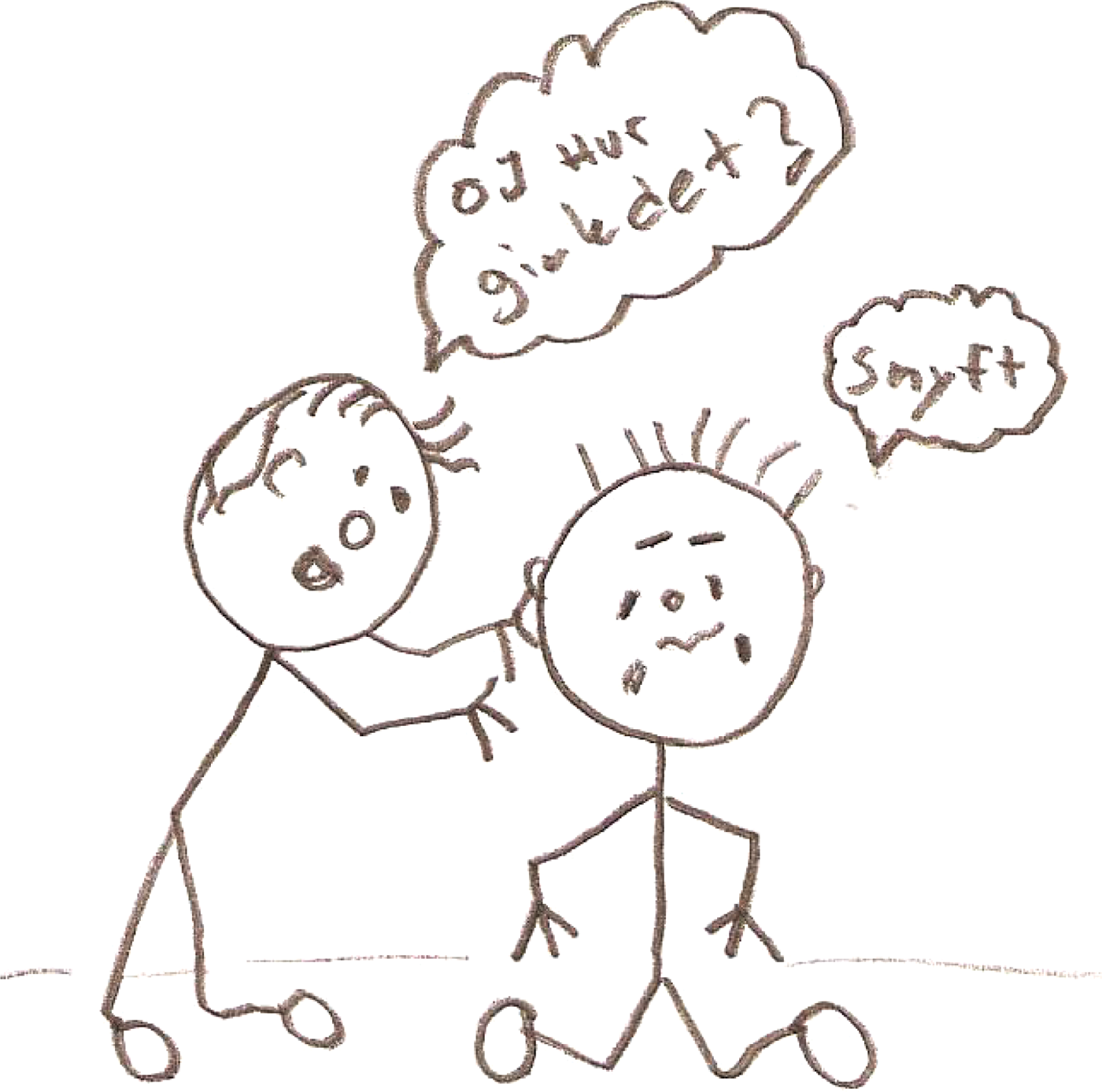
How are you doing?
The school of ‘Work and play’
This theme consists of two sub-themes: ‘A time-wise workplace’ and ‘Activities for fun’.
A time-wise workplace
According to the schoolchildren, having the time for both work and play would make school a better place to be. They suggest, for example, that having the time to work at their own pace would make the schoolwork more enjoyable. The children envisioned a school where work was done mostly in school but they also had a lot to say about homework. Some children asked for no homework and others suggested less homework, more time to do their homework or homework sent via the computer so no books need to be brought home. Another idea was to be able to choose how much work needs to be done, how it should be done and at what time. They suggested doing schoolwork in the classroom or outdoors or ‘with computers or by hand’. Also, shorter lessons for each subject or being able to choose in which order to work with the different subjects were suggested. The schoolchildren described a dream school in which the school days had flexible hours, giving them the possibility to start school later than 8 o’clock in order to facilitate getting a morning off once in a while.
The children expressed the need to set their own time in a way that would best help them to keep a balance between schoolwork and recess. They chose words like ‘flexible school hours’, ‘longer breaks’ and ‘a little time every day approximately 30 minutes to do whatever one wants to do’. Also, having time to take a break from their studies and play games outdoors or take a nap or just a walk outside was included in their visions of their dream school. One child suggested ‘It would be nice if we could take a warm bubble bath and eat pancakes on Mondays and Fridays.’ They emphasized the importance of being able to eat when hungry and move around when not motivated to sit still. One child explained ‘more time for breaks and more time for lunch break so you can eat and have a break before the lesson begins’. One drawing shows the front of the dream school with a big clock, which according to the child was signalling long breaks (Figure 2).
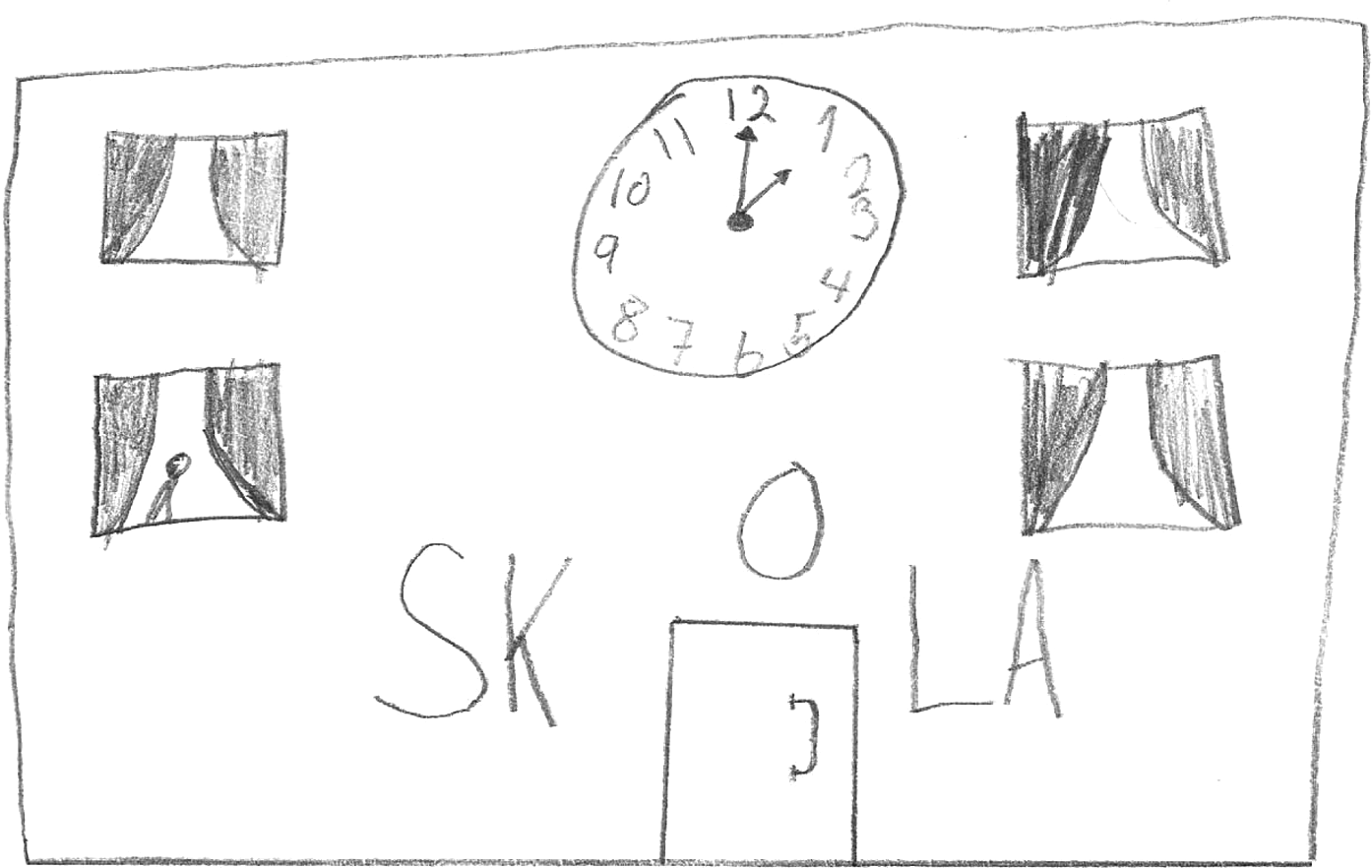
‘Long breaks’
Activities for fun
According to the schoolchildren they would be able to enjoy a lot of fun activities in their dream school. The drawings of the children’s dream school pictured an array of different sports like soccer, ice hockey and basketball (Figure 3). The children envisioned being physically active with activities like hopscotch, skipping, tossing around a ball in the schoolyard and using skateboards on specially built skateboard ramps. Horseback riding and jumping on a trampoline were also activities on the schoolchildren’s wish list. Other activities were connected to music, such as singing and playing an instrument. One child suggested activities such as learning and handling guns and canons like in the army and added ‘just for fun’. According to the schoolchildren, the prerequisites for being able to be active and have fun at school are equipment and space. In the drawings they drew various toys, playground equipment and computers, which they explained were for all the children to use in school. A drawing of one dream school showed a winter landscape with lots of motor vehicles parked outside a building, and the child explained ‘It would be good if the school had snow mobiles and motor cross bikes.’ They also described swimming pools, saunas, basket hoops, bike racks and a schoolyard where they could engage in the activity of their choice. One child envisioned ‘There would be a large soccer field preferably a grass field here in the schoolyard so I could play soccer every day.’ Other children had the following in mind ‘if we could build an indoor ice rink . . . we could build a sport arena too’ and ‘a field where you can sit and swing’. The chosen fun activities were preferably enjoyed together with friends. One child explained, ‘ I want friends who are good at sports . . . so I have something to do all the time.’
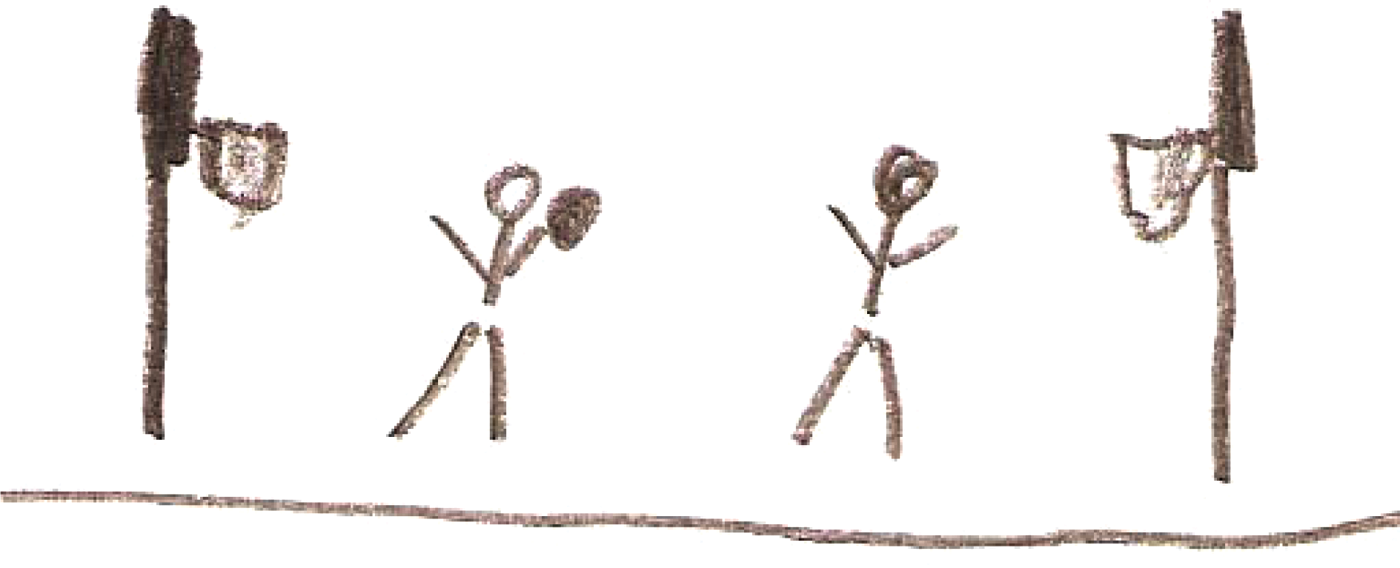
Play basketball
The school of ‘Places and spaces’
This theme consists of two sub-themes: ‘Joyful places’ and ‘Suitable spaces’.
Joyful places
The schoolchildren’ drawings depicted joyful places both indoors and outdoors. When making the drawings some of the children had chosen bright colours, patterns and contrasts. One child said ‘if it is colourful . . . then it feels much more fun to go to school’ and another child had similar thoughts, ‘If we could paint the walls pink, green, blue and red, a little happier colours.’ Nature was also a place described by the schoolchildren as a well of joy and excitement. According to the children, nature and the beauty of nature offered stillness, peace and quite. The drawings show this in a number of ways, for example flowers, trees, animals and sunshine. Having nature close by was important, as one child explained, ‘It should be a school with a great big yard, not with asphalt but with lots of plants and trees.’ Animals like horses, cats, dogs, sheep and birds were found in the schoolchildren’s drawings of their dream school. One child envisioned the enjoyment of having animals near by as giving the children an opportunity to practise caring, ‘My dream school will have animals. There is an animal for each kid to take care of. That would be a lot of fun.’ Another child explained why a stable would be a dream school, ‘The horses can’t stress me.’ Extending the schoolwork out into nature was one suggestion that the schoolchildren offered. One child said, ‘I think this thing with outdoor recreation is good because you get fresh air and you get to move around after sitting still for so long in the classroom.’ The wish to move school to another part of the world other than northern Sweden was shown in the children’s drawings. One child made a drawing of a hut constructed like a building surrounded by the sea and palm trees and explained, ‘My dream school is located on a paradise island’ (Figure 4).
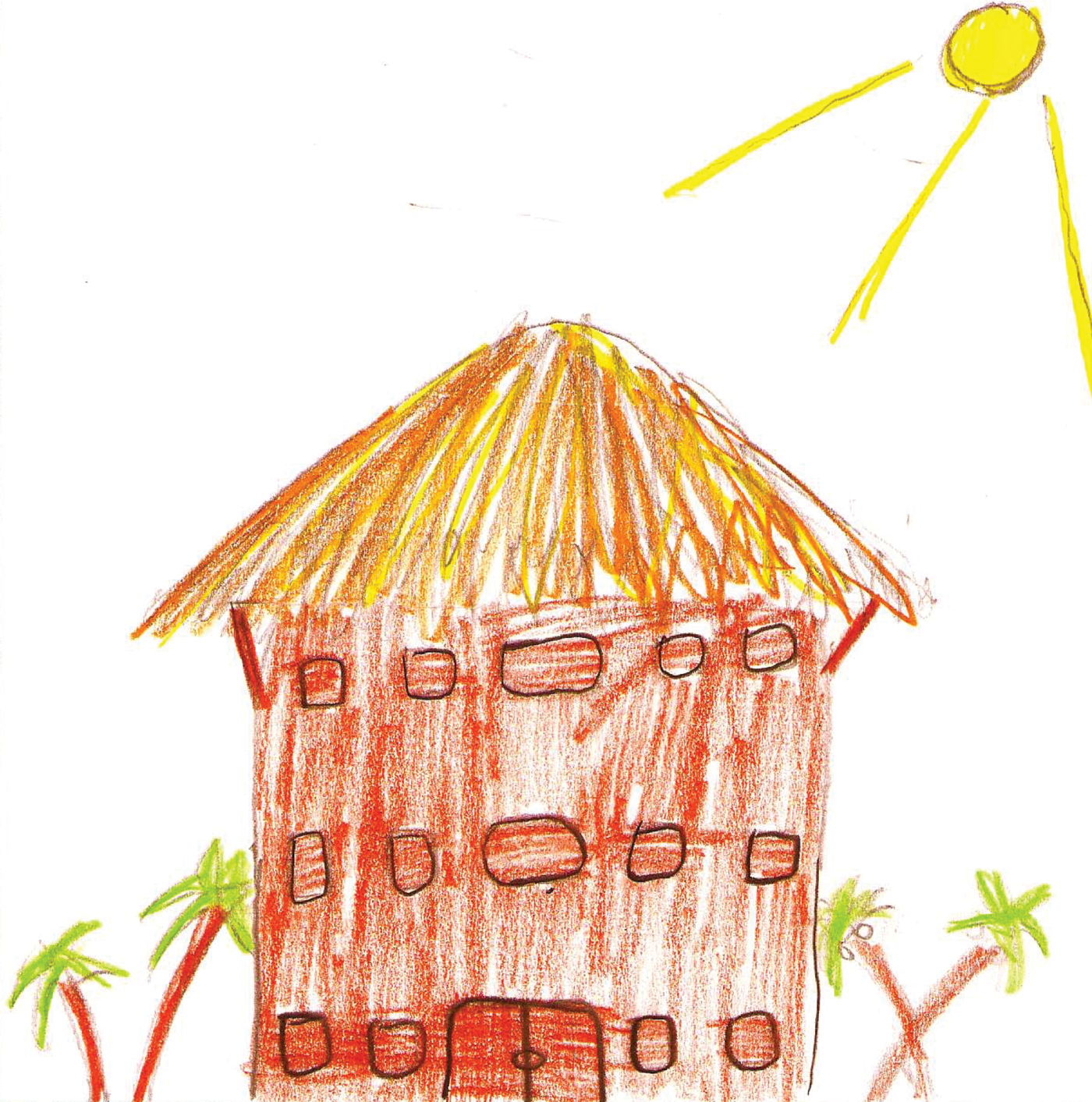
Straw hut on a paradise island
Suitable spaces
The schoolchildren described a school with spaces to fit different needs. The space would be suitable for a number of different activities such as learning, physical activities, stillness, listening to music, eating, socializing or being alone. They expressed the need for a space for silence and stillness where they could be enveloped in tranquillity. One child made a drawing of a room where one could sit and read, explaining, ‘I would like a library or somewhere where it is peaceful’ and continued, ‘when surrounded by peace and quiet it is much easier to work’. Silence was an important asset in their dream school, as explained by one child, ‘I think it would be a calmer school if it could be quiet in the classroom.’ Another child said, ‘I want more quiet and peace and calm . . . it is easier then.’ The children envisioned a space for a slower pace and one child explained, ‘One should be able to take it easy’ and another child had the following idea, ‘One should have a few minutes every day in class to only make a drawing or rest.’ Having plenty of space was important for the children for many different reasons. Some drawings showed large rooms and one child suggested, ‘a couch in a little room where one could be and do whatever for 15–30 minutes’. Another child said, ‘it is a lot more fun when there is lots of space’. Yet another child explained, ‘It should be big, very big . . . then it doesn’t get crowded’ and one child had this idea: ‘It should be a great deal of space . . . then you can do a lot more like sell things.’ One of the drawings showed the wish for a large space depicting a castle (Figure 5), and the child explained, ‘My dream school is a large castle.’ The schoolchildren envisioned a school so wealthy that the school was able to afford to treat the children by taking them to other places, for example fun trips to learn new things and outings to the beach. One child said, ‘I would like a whole sea . . . so we can swim.’ Being together with others and enjoying a space that encourages peace and calm was described, as well as having a place to go all by oneself. One child explained, ‘I also think it is important to have a space in school where I can be by myself.’
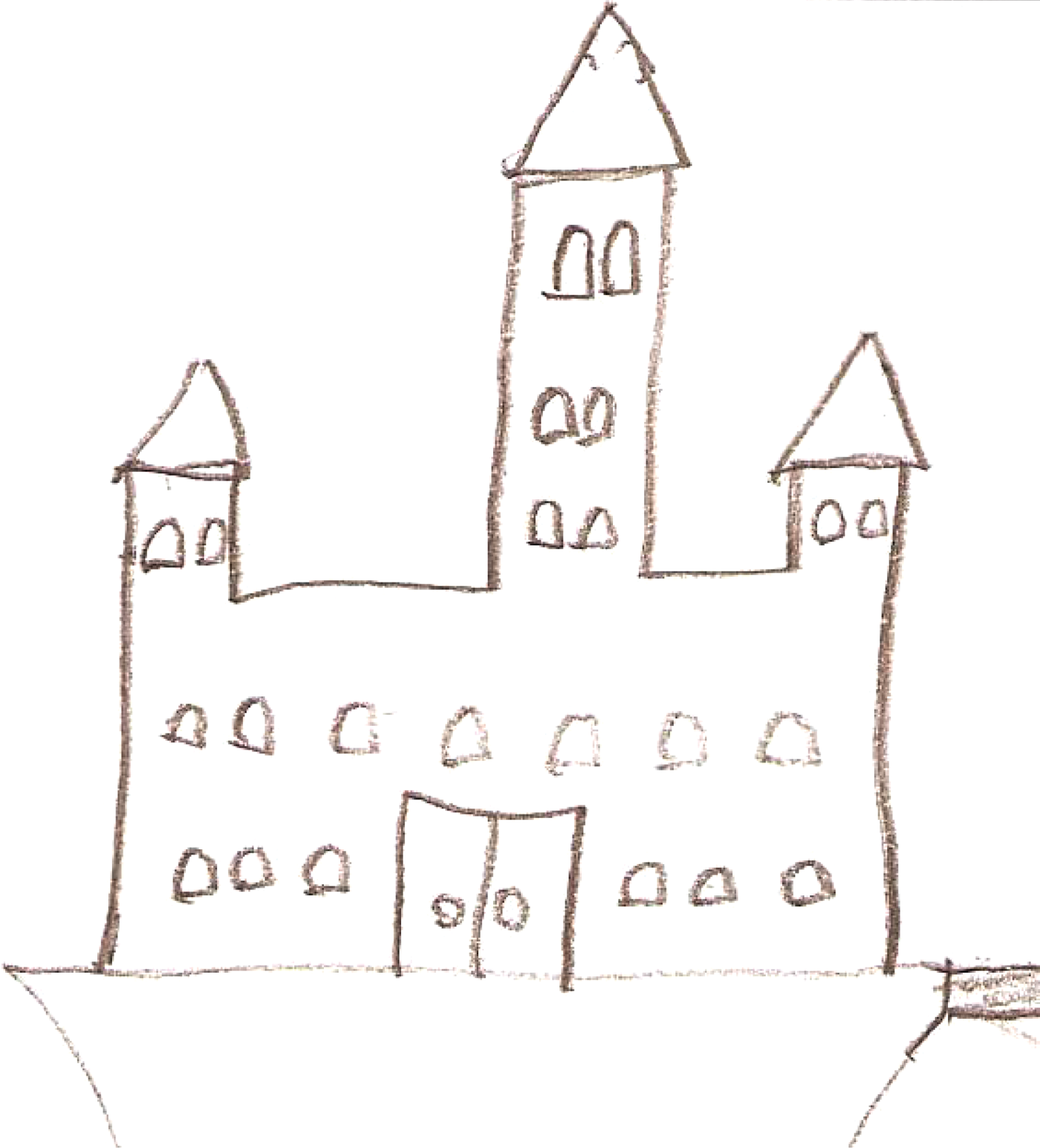
A castle
Discussion
The children’s descriptions of their dream school can be summarized in the following three themes: the school of ‘Friendship and involvement’, the school of ‘Work and play’ and the school of ‘Places and spaces’. My comprehensive understanding of these themes and the sub-themes within each theme is that the children’s dream school can be understood as the school of ‘Friendship, freedom and fun’. This comprehensive understanding reflects the essence of the experiential structures that stood out, as well as the embodied meanings in the drawings based on schoolchildren’s lived experience and visionary ideas of school. The school of ‘Friendship, freedom and fun’ can be viewed as a school where the children are enjoying themselves, and belonging to a ‘we’ where they feel free to speak their mind. Their dream school is a place where they are able to be involved and influence aspects of school which concern them.
Looking more closely at the aspect of friendship which surfaced in this study, connections can be made to the importance of good relationships for our well-being (Kostenius and Öhrling, 2008). Mason and Tipper (2008) emphasize the value of children’s family-like relationships. This involves children’s own electivity, that is, choosing to be close to someone in combination with conditions in the surroundings, and most importantly with the help of other people. Friendship building may then be considered a skill, one that each individual can practise to become better. Friendship building has its own relational prerequisites concerning environment. It may be fruitful on some level to include friendship building in the school curriculum; however, this approach may be as incomplete as giving the children proper training to climb trees and then letting them out onto a paved schoolyard with no trees. Therefore acknowledging the space for friendship in combination with a supportive school environment is necessary, echoing Bergmark’s (2007) thesis on building an ethical and friendly learning community.
Freedom is another aspect of the children’s dream school. They described freedom as being able to choose, something that relates to the question of agency, a theme which is supported in the Convention on the Rights of the Child (United Nations, 1989). Acknowledging the validity of Alanen’s (2010) question concerning how seriously we are taking children’s rights is challenging to all who claim to be participating in the field of children’s rights. Having one foot firmly planted in the context of school and school improvement and the other in a conviction concerning children’s rights, opens up the discussion of rights and responsibilities of children and adults in school. In other words, this involves a discussion about how to decide the extent to which children are to be included and how teachers and other professionals working in school can make room for children’s voices in daily practice. Frost and Holden (2008) found, similarly to the findings in this study, that schoolchildren value well-maintained and adequately resourced spaces at school, friendships and positive behaviour. However more significantly, they argue, is recognizing the value of the consultative process connecting schoolchildren and teachers.
Talati et al. (2010) studied physicians consulting children (aged 11–16) and their parents regarding the question of refusing medical treatment. They found that the physicians were less likely to respect a refusal from a child when the prognosis was favourable and they justified their decision not to respect the child’s wishes based on the grounds of ‘best interest’. Going from this medical context to a school context, one can ruminate upon the degree to which children’s autonomy is respected in regard to school improvement. The ‘best interest’ argument can very well stand in the way of the much desired freedom that the children in this article envisioned in their dream school. Looking, for example, at the fun aspect of the children’s dream school, one can wonder who are to decide if having fun is in the best interest of the children. The following discussion of the fun aspect in school has been influenced by Alard’s (1996) suggestion that adults act as advocates, helping children to verbalize their opinions, and Robinson and Taylor’s (2007) request to make something of children’s ideas.
If the schoolchildren in this study were able to choose, they wanted to be happy and have fun in school. The concept of fun in school was described by the children as having a balance between schoolwork and play, and making school lessons more fun. However, they hardly mentioned learning when envisioning their dream school. This can be understood in a number of ways. One interpretation is that the words ‘schoolwork’ and ‘school lessons’, which they used, entail learning as an implicit task when doing their work at school. The Every Child Matters Framework, a UK initiative, speaks for both enjoyment and achievement as important aspects of children’s rights in school (DfES, 2004a, 2004b; Ofsted, 2005). Barab et al. (2005) argue for making learning fun, using valuable school hours for fun and games, offering an opportunity for an increase in children’s social skills and educational goal fulfilment. The children in this article described fun in school, which can be associated with being happy. According to research, happy people are more likely to feel good (Pettit et al., 2001; Seligman and Csikszentmihalyi, 2000). Rothon et al. (2009) argue that health and well-being are critical partners of optimum education and Kafai (2006) describes how letting children have fun offers them opportunities to form new relationships with knowledge. Peacock’s (2006: 258) description of fun in school is ‘when learning becomes exciting, challenging and joyous’. She goes on to suggest that fun is achieved when the school leaders trust the children and teachers to find their own voice for school improvement. As an advocate for the voice of the children in this article, I conclude that fun in school may add a window of opportunity for school improvement when connecting the experience of having fun with feeling good and learning more.
In both the new and the previous curriculum for Swedish schools (Skolverket, 1994, 2010a), the students’ opportunity to influence their school environment, together with equal rights and teacher responsibility are some of the overriding goals and stated objectives. These goals can be compared with a number of reports on how children in Swedish schools in recent years are increasingly experiencing lack of well-being and are underachieving academically (Barnombudsmannen, 2008; Brobeck et al., 2007; Folkhälsoinstitutet, 2005; Skolverket, 2010b; SOU, 2006). However, there is another contradictory perspective to this negative view of the Swedish school. Examples of children’s positive experiences of school are found in the work of Bergmark and Alerby (2008), and Ghaye et al. (2008), all of which underline the importance of positive relationships and participation. Drakeford et al. (2009) found that proximity to adults making political decisions increased children’s appropriate knowledge to be able to influence effectively. This may be one way to build relationships in school, to find ways to handle freedom and find the intimacy necessary to distribute the power of participation. Alderson (2000), who asked children about life in school, points out that a well-functioning student council with the possibility of affecting change increases children’s positive views of school. This fits well with the aspect of freedom to choose and participate expressed by the children in this study.
Therefore, building a school environment where children’s participation and involvement is a natural part of practice starts with an attitude of appreciation for children’s contributions (see Matthews and Tucker, 2000). By adopting an empowered child perspective, one agrees to take an active roll in involving children, valuing their opinions as well as empowering them to actively take part in their own lives and the development of our society (Kostenius, 2008). In addition to this attitude of an empowered child perspective, it is important to keep in mind that it is necessary to view all participation processes as involving teamwork including both children and adults (Woolner et al., 2007).
In conclusion, the three aspects of friendship, freedom and fun may add a positive synergy, presenting opportunities for school improvement based on children’s visionary ideas of their dream school. Although far from all-encompassing, the findings in this article point to the possibility of children not only being able to verbalize their dreams, but wanting to be part of realizing their dreams. The challenge for adults in schools is giving voice and space to all participants; as Hill et al. (2004) argue, the collaboration of all key stakeholders is necessary in order to achieve tangible outcomes based on the wishes of children. Achieving school improvement starts with building a dream team, consisting of both children and adults, working together to realize the dreams and visionary ideas that surface in the process of participation.
Footnotes
The research reported in this article received funding from the EU Interreg IIIA, the Swedish Research Council and Luleå University of Technology, Department of Health Science.