






Abstract
As classrooms across the USA become increasingly diverse, special education teacher preparation programs must ensure that teacher candidates are equipped to teach mathematics to English learners (ELs) with disabilities. We review evidence-based practices for teaching ELs with mathematics disabilities and report findings from a survey examining special education teacher educators’ and teacher candidates’ readiness to support ELs with disabilities in mathematics. Although both groups affirmed the importance of addressing ELs with disabilities in math methods courses and agreed that teacher candidates will be responsible for teaching this population, they reported low confidence in these areas and limited exposure to relevant content. Reported course experiences emphasized general pedagogical frameworks and instructional routines, with less attention to EL-specific language development and culturally and linguistically responsive mathematics practices. Together, these findings underscore the need for more intentional math methods coursework and sustained faculty development to strengthen preparation for teaching dual-identified learners in inclusive mathematics classrooms.
In recent years, a gradually increasing number of English learners (ELs) with disabilities have been receiving special education services in the USA. According to the U.S. Department of Education (2022), the percentage of school-age ELs with disabilities receiving special education services under the Individuals with Disabilities Education Act (IDEA) increased from 9.07% in 2012 to 15.8% in 2022.
Despite the language and special education support ELs with disabilities receive, many ELs with disabilities still experience limited academic outcomes. One of the academic areas in which ELs with disabilities often struggle is mathematics. Previous studies have found that ELs with disabilities consistently underperform in math compared to non-EL peers with disabilities (Cooc, 2023; Rhinehart et al., 2024). Specifically, data from the 2013 National Assessment of Educational Progress (NAEP) indicate that nearly 66% of fourth-grade ELs with disabilities performed at the “below basic” level in mathematics, compared to only 45% of their non-EL peers (Van Garderen et al., 2017). This gap worsens at higher grade levels, with nearly 98% of 12th-grade ELs with disabilities performing below the required levels (Van Garderen et al., 2017).
Underperformance in mathematics not only affects the grades and test scores of ELs with disabilities but can also undermine their self-efficacy and broader academic confidence (Guillion, 2024), and may further shape how they view their potential for pursuing math-related careers after graduation (Cragg et al., 2017). Against this background, it is important to ensure that current and future teachers are prepared to tailor instruction to meet these students’ linguistic, cultural, and learning needs in school settings, given the critical role they play in delivering effective, targeted mathematics instruction for ELs with disabilities.
Why Is Math Difficult for ELs With Disabilities?
Although people it is widely believed that mathematics is a universal language that contains different symbols and numbers that can be taught with simple instructions in computation (Cavanagh, 2005; Hoffert, 2009), math researchers have shown that math instruction focuses on more than computation skills. For example, breaking down the skills needed to perform different math tasks (e.g., word problems) shows that solving math problems correctly often requires students to leverage their abilities and skills in language and literacy, reasoning ability, and problem-solving as well as demonstrate their understanding of math concepts (Lin et al., 2021; Riccomini et al., 2016). For ELs with disabilities, the dual experience of acquiring English and math proficiency can create unique challenges. Specifically, since these students are still developing their English language skills, many experience difficulty understanding math concepts and skills being introduced at the same time (Slavit & Ernst-Slavit, 2007).
In addition, to understand math concepts, it is essential to understand the vocabulary specific to the math content. Many times, math vocabulary contains different meanings from daily vocabulary usage, potentially creating confusion for ELs with disabilities (Riccomini et al., 2015; Valley, 2019). For math tasks that require multiple steps and embedded skills to identify correct answers, ELs with disabilities may face challenges in several areas. For example, when solving a word problem, they might experience difficulty: (a) understanding the problem without the cultural knowledge necessary to understand its context (Herron & Barta, 2009); (b) comprehending the problem correctly because of language differences (Wang et al., 2023); or (c) accurately performing all the steps of the computation, perhaps due to challenges in organization and executive function (Meltzer et al., 2007).
Thus, ELs with disabilities require diverse and complex instructional support, including evidence-based practices (EBPs) that support them in the area of mathematics. As such, this article serves two purposes. First, it provides an overview of EBPs for ELs with mathematics disabilities. Second, it presents the findings of a survey study conducted with special education teacher educators and teacher candidates to determine the extent to which their experiences and knowledge align with math EBPs for ELs with disabilities.
EBPs to Support Students With Mathematics Disabilities
Previous research has closely examined effective instruction for teaching students with math disabilities (Cook et al., 2020; Fuchs et al., 2021; Jitendra et al., 2018; Powell et al., 2021). For example, reviewing 56 high-quality math intervention studies with K-6 students experiencing math difficulties, Fuchs et al. (2021) identified the following EBPs to be implemented with students individually or in groups: (a) systematic instruction that supports students’ conceptual knowledge, including explicit instruction in solving word problems and instruction that supports students’ understanding and use of clear, concise mathematical language; (b) concrete and semi-concrete representations as well as number lines to facilitate students’ understanding of abstract representations; and (c) timed activities that promote students’ math fluency.
At the secondary level, Rowe et al. (2025) systematically reviewed 50 mathematics intervention studies and identified six EBPs for teaching secondary students with disabilities. First, the Concrete-Representational-Abstract (CRA) strategy framework involves advancing instruction from the concrete, hands-on stage to the representational stage, which includes visual presentations, and finally to the abstract stage, inclusive of mathematical symbols. Second, enhanced anchored instruction uses real-world contexts as the foundation for student math learning and supplements these anchors with multimedia to further engage them in learning. Third, schema-based instruction teaches students how to identify the underlying structure of a math problem and organize important information about the problem in a diagram to facilitate solving the problem using the correct approach. Fourth, Solve It! is a published curriculum integrating cognitive strategy instruction for mathematical problem solving via seven processes, including reading for understanding, creating a problem-solving plan, and verifying work to confirm accuracy. Fifth, video modeling of mathematics skills involves providing students with video demonstrations (i.e., visual representations) to facilitate their skill development. Finally, the Virtual-Representational-Abstract approach is similar to the CRA framework whereby the virtual stage replaces the concrete stage, and provides students with hands-on opportunities to engage with virtual materials, whereas the representational stage involves digital representations.
In addition to the guidance for the elementary and secondary level, practical guidance has also emphasized ongoing assessment as an essential component of effective mathematics instruction. In particular, assessment should be used to monitor students’ progress, evaluate their responsiveness to intervention, and make timely, data-based instructional adjustments to improve mathematics outcomes for students with disabilities (Fuchs et al., 2008).
Supporting ELs with Disabilities in Mathematics
To provide effective math instruction to ELs with disabilities, math instruction should both address mathematical content learning and be culturally and linguistically responsive and affirming (Orosco, 2014; Shumate et al., 2012). Tran and Castro Schepers (2023) identified four essential instructional components for ELs with disabilities: (a) incorporating students’ cultural funds of knowledge, (b) promoting students’ language development, (c) using gestures to support student understanding, and (d) using multiple representations to foster conceptual understanding and connections. First, leveraging students’ cultural funds of knowledge involves recognizing and valuing the unique cultural experiences and assets that ELs bring to the classroom. Kong et al. (2022) proposed five instructional strategies to enact cultural funds of knowledge in mathematics instruction: (a) integrating cultural contexts into word problems and examples, (b) providing culturally relevant resources and artifacts, (c) offering multilingual supports, (d) using culturally responsive and individualized assessments, and (e) celebrating students’ cultural contributions to mathematics.
Second, math instruction for ELs with disabilities should emphasize language development, including both mathematical language and general language skills, such as vocabulary, writing, and oral communication. Language supports, such as explicit vocabulary instruction, anchor charts, and student-friendly definitions, should help ELs with disabilities understand mathematical content and express their mathematical thinking (Kong et al., 2022; Tran & Castro Schepers, 2023). The Institute of Education Sciences’ What Works Clearinghouse (WWC) practice guide on teaching academic content to ELs recommends teaching a small set of academic vocabulary words intensively over several days and providing multiple opportunities for students to use these words through structured speaking, listening, and writing activities (Baker et al., 2014). In mathematics, specifically, the WWC recommends that this instruction focus on both domain-specific vocabulary (e.g., denominator, equivalent) and general academic vocabulary (e.g., compare, justify) that support comprehension of mathematical tasks. The practice guide also emphasizes integrating oral and written language instruction into content teaching by strategically using instructional tools such as short videos, visuals, and graphic organizers to scaffold understanding and support students’ participation in academic discourse. Implementing these supports requires that educators understand second-language development and apply that knowledge to increase linguistic access during mathematics learning (e.g., by clarifying language demands, supporting academic discourse, and explicitly teaching math vocabulary).
Third, incorporating gestures into mathematics instruction can reduce language demands, allowing ELs with disabilities to allocate more cognitive resources to understanding mathematical concepts, comprehension, and expression (Cook et al., 2012). Lastly, using multiple representations in mathematics instruction can support ELs with disabilities in bridging receptive and expressive knowledge by providing multiple lenses through which they can demonstrate their mathematical understanding (Goldin, 2014).
Other studies underscore the importance of pairing culturally and linguistically responsive teaching with the EBPs of explicit and systematic math instruction (e.g., Kong et al., 2022) to support the needs of ELs with disabilities in mathematics. Key components of this approach consistently emerged as foundational across studies.
First, explicit, systematic math instruction involves building students’ background knowledge and intentionally connecting new content to their prior knowledge, helping them learn abstract ideas in familiar contexts (Barrera et al., 2006; Lei & Xin, 2023). Second, implementing this type of instruction teachers provide clear modeling, followed by (a) guided practice with structured support; (b) frequent checks for understanding; and (c) timely, specific feedback (Doabler et al., 2016). Third, teachers should provide instructional scaffolds, including visual scaffolding and linguistic scaffolding (Lei et al., 2020). Lastly, instruction should include explicit instruction of math vocabulary and language structures paired with multiple modalities and repeated opportunities to use terms in math writing, speaking, and comprehension (Archer & Hughes, 2010; Shyyan et al., 2008).
In sum, effective mathematics instruction for ELs with disabilities requires special educators to affirm and leverage students’ cultural and linguistic assets in instruction and assessment while implementing EBPs via explicit, systematic instruction; strategic scaffolding; and routines that build students’ background knowledge and connect new concepts to prior experiences (Powell, 2015).
Teacher Readiness to Teach ELs With Disabilities
Prior recommendations have emphasized embedding EBPs for ELs with disabilities, language acquisition theory, sociocultural considerations, and academic and cognitive supports for ELs within special education teacher preparation programs (More et al., 2016). However, research suggests many preservice and inservice educators feel underprepared to serve ELs generally. For example, Utley et al. (2000) reported low confidence and limited preparation in these areas among special and general educators. Additionally, although some teachers report high self-efficacy for culturally and linguistically responsive teaching (Chu & Garcia, 2014), competence appears uneven across key domains. In particular, Jozwik et al. (2020) found inservice special educators typically self-rated their competence as “emergent” in language development, learner characteristics, assessment, and instruction for ELs with disabilities. In contrast, bilingual educators and those holding English as Second Language (ESL) credentials reported higher competence, highlighting the potential impact of explicit training for building efficacy.
Not surprisingly, teacher candidates have also shown limited knowledge and confidence in teaching ELs with disabilities, consistently reporting a lack of preparation in serving ELs with disabilities from their special education teacher preparation programs (Gonzalez et al., 2021; Li et al., 2017). Miranda et al. (2019) also found that special education teacher candidates are perceived to have an insufficient foundation in second-language acquisition. Qualitative evidence echoes these patterns: In Adams and Hord's (2023) interview study of four special education teacher candidates tutoring ELs with disabilities in mathematics, only two reported prior training related to ELs, and most described limited experience with ELs and very low instructional confidence. These findings suggest that many teacher candidates may enter fieldwork with limited preparation to implement EBPs to ELs with disabilities.
To understand teacher candidates’ perceptions of and confidence in teaching ELs with disabilities, it is important to examine the teacher preparation programs and teacher educators that are shaping candidates’ opportunities to learn and practice EBPs (Hill et al., 2011). Existing studies suggest substantial variability in teacher educators’ knowledge and course integration. For example, Miranda et al. (2019) found wide differences in teacher educators’ familiarity with and attitudes toward including EL-focused content, as well as misalignment between program curriculum maps, reported emphases, and enacted course content. Similarly, Shelton et al. (2025) reported that although many teacher educators felt confident in their EL-related literacy knowledge and preparation capacity, fewer than half noted that EL content was a primary focus in literacy methods courses. Additionally, Robb et al. (2012) reported that among the 57 special education teacher preparation programs they surveyed, few programs included training on supporting ELs who are dually identified with disabilities. Finally, a systematic review of nine studies of teacher preparation programs spanning special education and bilingual education found that four studies did not include coursework on first- and second-language acquisition in their course sequences, whereas six studies included coursework addressing multicultural topics (Wang & Woolf, 2015). These studies suggest inconsistent course-level implementation may limit candidates’ understanding of ELs with disabilities and sustained exposure to EBPs for teaching this group of students.
Teacher Education on Math Instruction for ELs With Disabilities
Although research has identified effective instructional strategies to support ELs with disabilities in mathematics, less is known about how these practices are taught in teacher preparation programs and, therefore, how and if they are implemented in the classroom. For example, none of the aforementioned studies revealed the extent to which preservice teachers learn about ELs with disabilities in the context of mathematics. Nannemann et al. (2025) surveyed 48 recently graduated special education teachers across the USA and found that 58.3% reported taking a mathematics methods course that supported their learning to teach students who struggle in mathematics. Participants also indicated that EBPs were addressed in the course, but often only partially and inconsistently across class sessions. Yet, this study provides no insight into whether these courses attended to the needs of ELs with disabilities.
As demonstrated, research has yet to examine teacher candidates’ and teacher educators’ knowledge, confidence, and perceptions regarding teaching ELs with disabilities in mathematics. What is needed is a better understanding of the extent to which special education mathematics methods coursework explicitly prepares teacher candidates to implement EBPs that integrate mathematics instruction with English language development and culturally and linguistically responsive supports for ELs with disabilities.
Research Purpose
Previous literature provides preliminary insights into teacher candidates’ perceived level of preparation to teach ELs with disabilities and has examined teacher educators’ knowledge and confidence in other content areas. However, far less is known about the extent to which special education teacher preparation programs address EBPs in mathematics instruction for ELs with disabilities. The purpose of our study, therefore, was to examine how special education math methods coursework incorporates EBPs that support the instructional and linguistic needs of ELs with disabilities and to document how special education teacher educators and teacher candidates perceive their knowledge, confidence, and experiences related to implementing these practices in mathematics instruction. We investigated the following research questions:
Research Question 1: To what extent are teacher educators and teacher candidates knowledgeable and confident about teaching ELs with disabilities in mathematics?
Research Question 2: To what extent do teacher educators and teacher candidates perceive preparation to teach ELs with disabilities in math to be important?
Research Question 3: To what extent do teacher educators and teacher candidates focus on math EBPs for ELs with disabilities in math methods courses?
Note: In the following, we refer to special education teacher candidates as teacher candidates and special education teacher educators as teacher educators.
Method
To answer our research questions, we conducted an exploratory survey study of teacher educators and candidates. We used separate survey versions for teacher educators and candidates.
Survey Development
We developed survey questions following a survey study on literacy instruction for ELs with disabilities (Shelton et al., 2025) and aligned the items with resources related to EBPs for ELs with disabilities in the content area of math (Kong et al., 2022; Shyyan et al., 2008). An expert special education faculty member, who works with ELs, then reviewed the proposed survey and provided feedback on its EBPs content, readability, and clarity. We subsequently, refined the survey as needed based on the expert's feedback. The second and fourth authors, who are teacher educators in special education and have worked with ELs, then reviewed and provided final feedback on the survey organization and usability. Final changes were then made.
Survey Description
We obtained research approval from the first author's institutional review board at the University of Maryland, College Park. Both survey options (teacher candidate and teacher educator) opened with an informed consent page describing the study purpose, estimated completion time (15–30 min), confidentiality protections, and a $5 electronic gift card upon completion. The surveys consisted of 49 items, with the number of items presented varying by respondent due to branching logic. Items included Likert and Likert-type scales, rating questions, and open-ended responses.
The survey included five sections. Section 1 gathered professional background information (eight items), including geographic region, institution type, role, and special education area of focus; the teacher educator version also asked about number of years in the program and grade-level focus. Section 2 assessed agreement with statements about teaching ELs with disabilities and included seven items on self-perceived knowledge of EL language development and learning. Section 3 measured confidence in mathematics content knowledge, understanding of math development for ELs, and – for teacher educators only – self-perceived ability to prepare candidates. Section 4 examined teaching philosophy and perceptions (five items), including beliefs about candidates’ responsibilities and program expectations for preparation. Section 5 focused on the mathematics methods course (15 items), asking about the extent of EL emphasis, instructional approaches, targeted EBPs, and perceptions of the adequacy of current program attention to ELs.
Survey Respondents
We used multiple strategies to recruit (a) teacher educators who taught mathematics methods courses in U.S. special education programs and (b) teacher candidates enrolled in such courses.
Teacher Educators
To recruit teacher educators, we first randomly selected 250 higher education institutions with special education programs identified through the Title II Higher Education Act National Teacher Preparation Data (https://title2.ed.gov/Public/Home.aspx
Interested individuals completed a brief screening questionnaire assessing eligibility (i.e., having taught a special education mathematics methods course within the past three years) and provided an institutional email address for verification. Eligible participants then received the survey link via email from the first author. Finally, we recruited additional special education faculty through professional networks using direct email invitations.
Teacher Candidates
To recruit teacher candidates, we distributed the recruitment message through social media platforms and discussion boards of special education organizations and shared it with our professional network to reach convenience samples. Interested individuals completed a screening questionnaire (parallel to the teacher educator screener) to confirm eligibility (i.e., having completed a special education math methods course and currently completing or having completed a teaching internship). Based on screening responses, the first author emailed eligible candidates with study information and the survey link. In addition, we contacted course instructors through our professional networks and asked them to forward the recruitment message and survey link to students who had taken their math methods course and were completing or had completed their internship.
Fraudulent Response Detection
Because both survey versions were anonymous, we used multiple Qualtrics fraud-detection tools to identify bot-generated, duplicate, or invalid responses, including bot detection, duplicate response detection, and fraudulent response detection scores (Griffin et al., 2021; Lawlor et al., 2021). Following recommended procedures (White & Brodhead, 2023), we screened responses using reCAPTCHA (removing scores ≤ .50), RelevantID (excluding scores ≥ 30), and survey completion (retaining only 100% complete responses; Buchanan & Scofield, 2018). We also removed responses with duplicate IP addresses or identical latitude/longitude coordinates (Lawlor et al., 2021) and excluded entries with suspicious email patterns (e.g., >4 trailing digits, repeated domain identifiers, or random character strings; Griffin et al., 2021; Pratt-Chapman et al., 2021). After these checks, 19 of 43 teacher educator responses and 34 of 350 teacher candidate responses were retained.
Study Participants
The study drew on survey responses from teacher educators who taught math methods courses and teacher candidates who had taken a math methods course within a special education teacher preparation program in the USA. A total of 53 participants completed the survey. Participant demographics are summarized in Tables 1 and 2.
Teacher Educator Demographics (n = 19).
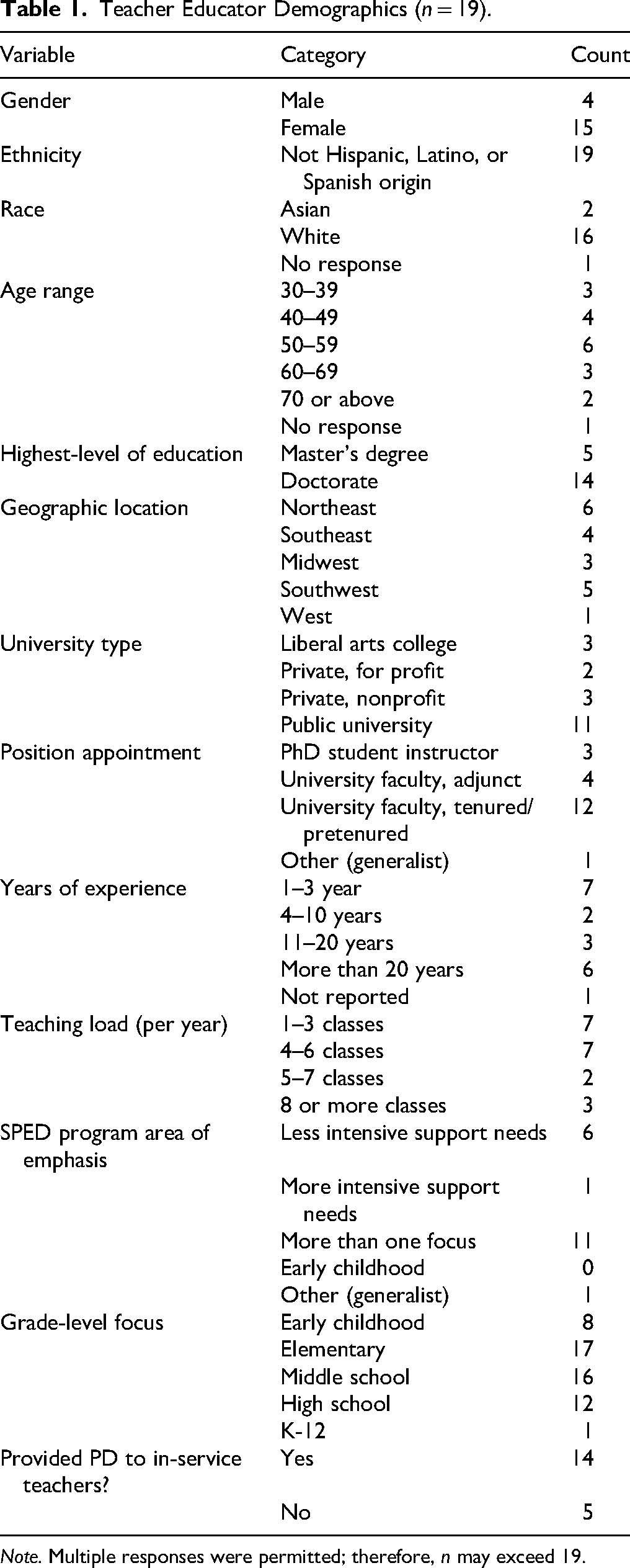
Note. Multiple responses were permitted; therefore, n may exceed 19.
Teacher Candidate Demographics (n = 34).
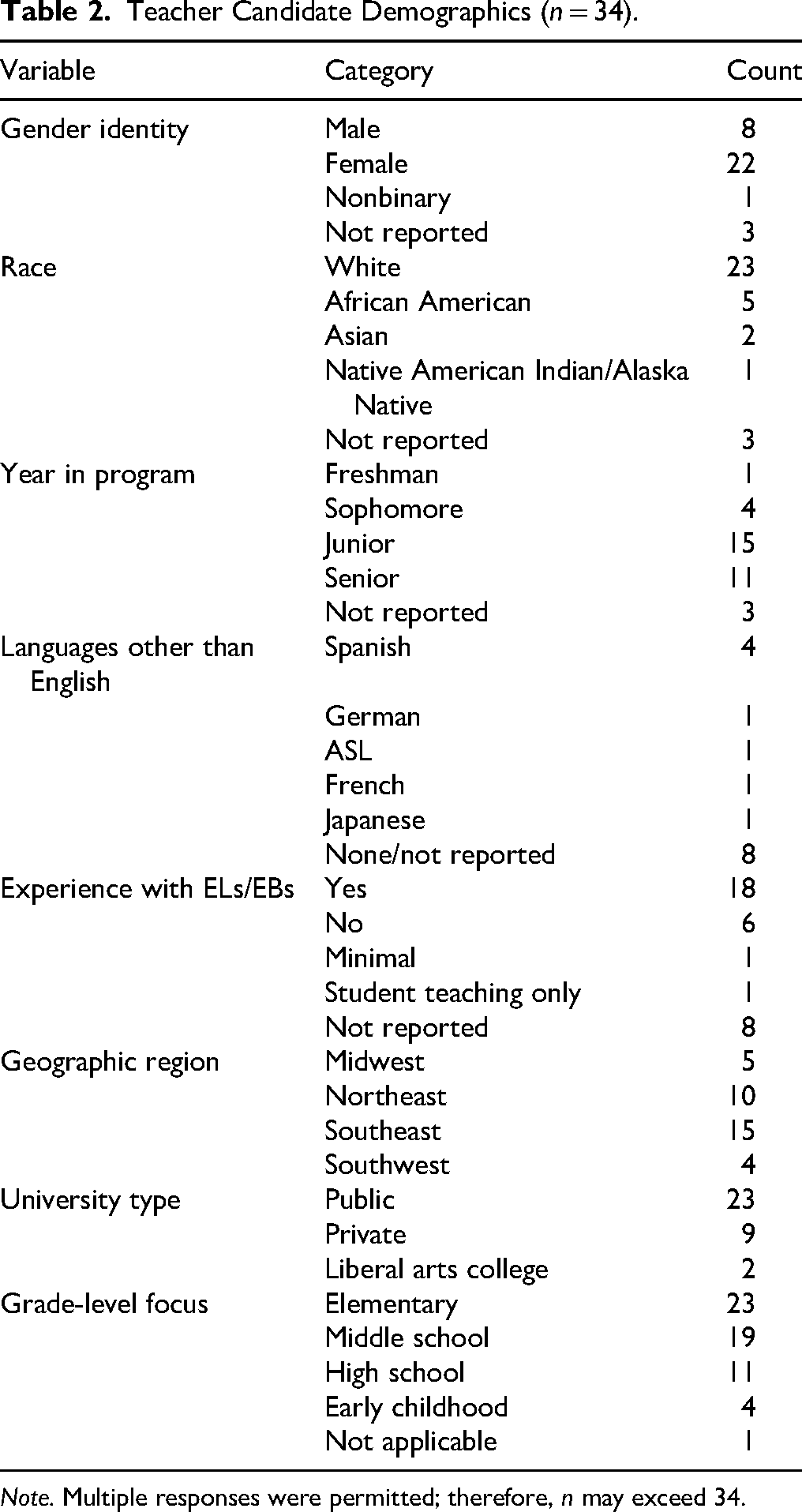
Note. Multiple responses were permitted; therefore, n may exceed 34.
Teacher Educators
Among teacher educators, respondents were distributed relatively evenly across U.S. regions, with the highest representation in the Northeast (n = 6) and the lowest in the West (n = 1). The majority were female (n = 15), White (n = 16), affiliated with public universities (n = 11), and held tenure or tenure-track faculty positions (n = 12). Many teacher educators were early-career professionals, with 1–3 years of experience teaching (n = 7) or later in their career, with more than 20 years of experience (n = 6). Additionally, a majority had experience providing professional development related to ELs with disabilities (n = 14).
Teacher Candidates
Among teacher candidates, most were female (n = 22), White (n = 23), in their junior year of study (n = 15), and attending public universities (n = 23). The largest group of teacher candidate respondents came from the Southeast region (n = 15), with the fewest respondents in the Midwest (n = 5) and Southwest (n = 4). Many teacher candidates had prior experience working with ELs (n = 18) and reported speaking a language other than English.
Data Analysis
Survey data were exported from Qualtrics (2019), cleaned, and verified to ensure accurate transfer and integrity of responses. Descriptive statistics, including frequencies and percentages, were used to analyze the data. For questions specifically related to the math methods course, response rates were calculated based on the number of participants who were expected to answer each item, accounting for skip logic applied within the survey. This approach ensured that rates reflected only relevant respondents. Descriptive trends were then examined in alignment with each research question to identify emerging patterns across participant responses.
Results
Research Question 1: Knowledge and Confidence
To describe the readiness of teacher educators and teacher candidates related to teaching ELs with math disabilities, in the next section, we present findings related to their knowledge, perceptions, and confidence related to math instruction for ELs.
Knowledge
Table 3 shows the survey results for teacher educators and teacher candidates with regard to their knowledge related to ELs’ language development. Using a 4-point scale, participants indicated the extent to which they agreed or disagreed with seven statements, which included both true and false items. The majority of teacher educators correctly identified most of the statements. However, 11 (57.9%) incorrectly marked the false statement: “English learners’ ability to communicate in a conversation in English comfortably and proficiently is a poor indicator of their ability to perform academically in English.” Additionally, 31.6% of teacher educators incorrectly answered the false statement “English learners should be able to acquire English within two years of enrolling in U.S. schools.”
Teacher Educator and Teacher Candidate Knowledge About English Learners and Mathematics Education.
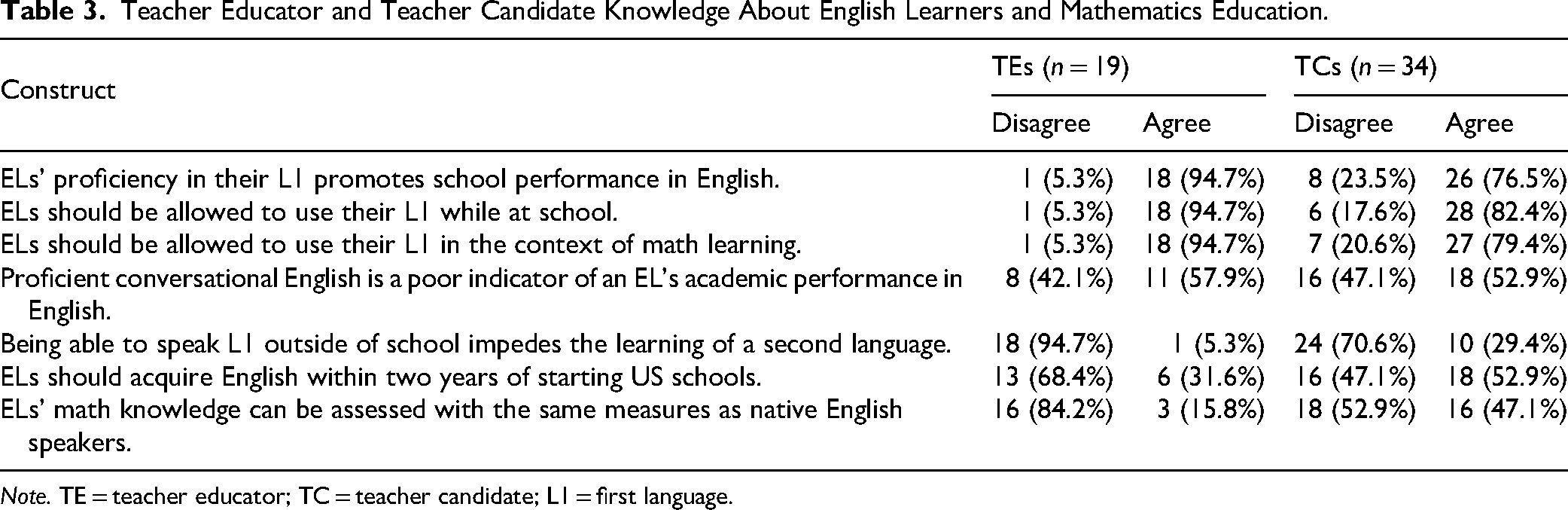
Note. TE = teacher educator; TC = teacher candidate; L1 = first language.
As illustrated, teacher candidates showed more varied knowledge related to language development of ELs in their responses. Compared to teacher educators, 47.1% of teacher candidates incorrectly indicated that the following statement was true: “English learners’ ability to communicate in a conversation in English comfortably and proficiently is a poor indicator of their ability to perform academically in English.” More than half (52.9%) agreed or strongly agreed with the false statement that “English learners should acquire English within two years of starting U.S. schools.”
These findings suggest that misconceptions were common across both groups, particularly regarding the distinction between conversational English proficiency and academic language ability, as well as unrealistic expectations about the timeline for English language acquisition.
Confidence
Table 4 reports the confidence levels of teacher educators and teacher candidates regarding their understanding of math development for ELs and their ability to provide mathematics instruction. As illustrated, most teacher educators (78.9%) reported being confident in their knowledge of math development for students overall, compared to 50.0% of teacher candidates. In contrast, confidence dropped for both groups when focused on ELs: Only 42.1% of teacher educators and 35.3% of teacher candidates reported being confident in their knowledge of math development for ELs. Regarding instructional preparedness, 52.6% of teacher educators felt confident in their ability to prepare candidates to teach math to ELs, by comparison 32.4% of teacher candidates reported confidence in their own ability to teach math to ELs.
Teacher Educator and Teacher Candidate Confidence in Mathematics Knowledge and Instruction for English Learners.
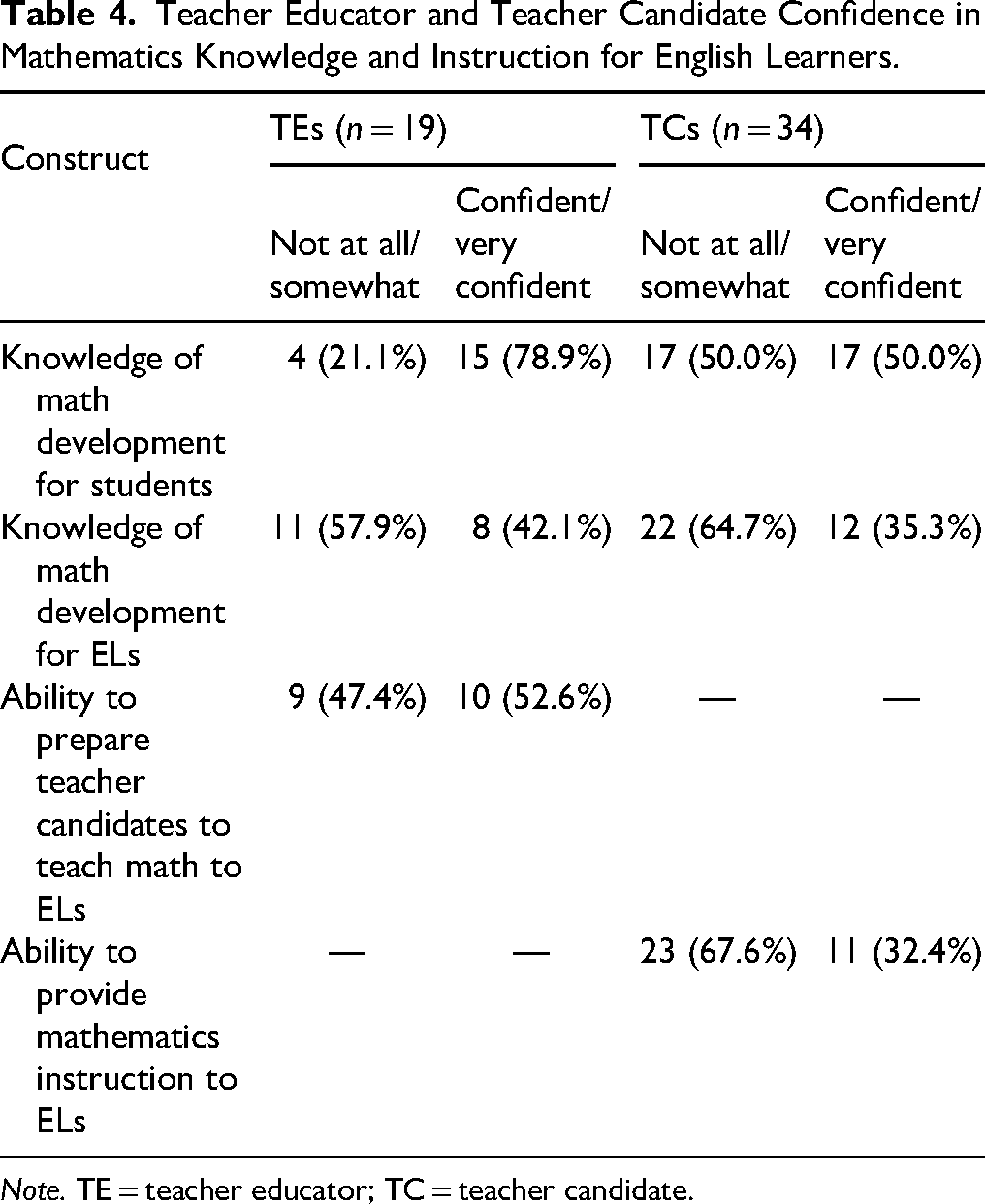
Note. TE = teacher educator; TC = teacher candidate.
The survey results indicate that although teacher educators generally feel more confident in their ability to prepare and guide their teacher candidates, teacher candidates as a whole do not feel equipped to translate this preparation into practice. These data suggest a disconnect between the overall training teacher candidates receive and their readiness to apply their knowledge to support ELs’ mathematics performance.
Research Question 2: Perceptions
Table 5 summarizes teacher educators’ and teacher candidates’ perceptions of candidates’ responsibilities and skills for teaching mathematics to ELs, as well as their beliefs about the extent to which programs should have an emphasis on ELs with disabilities. Both groups viewed teaching math to ELs as part of candidates’ role (78.9% of teacher educators; 67.6% of teacher candidates) and endorsed tailoring math instruction for ELs as an essential skill (94.7% of teacher educators; 82.4% of teacher candidates). Thus, teacher educators expressed stronger affirmation of both the responsibility and the significance of this skill than teacher candidates.
Teacher Educator and Teacher Candidate Perceptions of Preparation to Support English Learners in Mathematics.
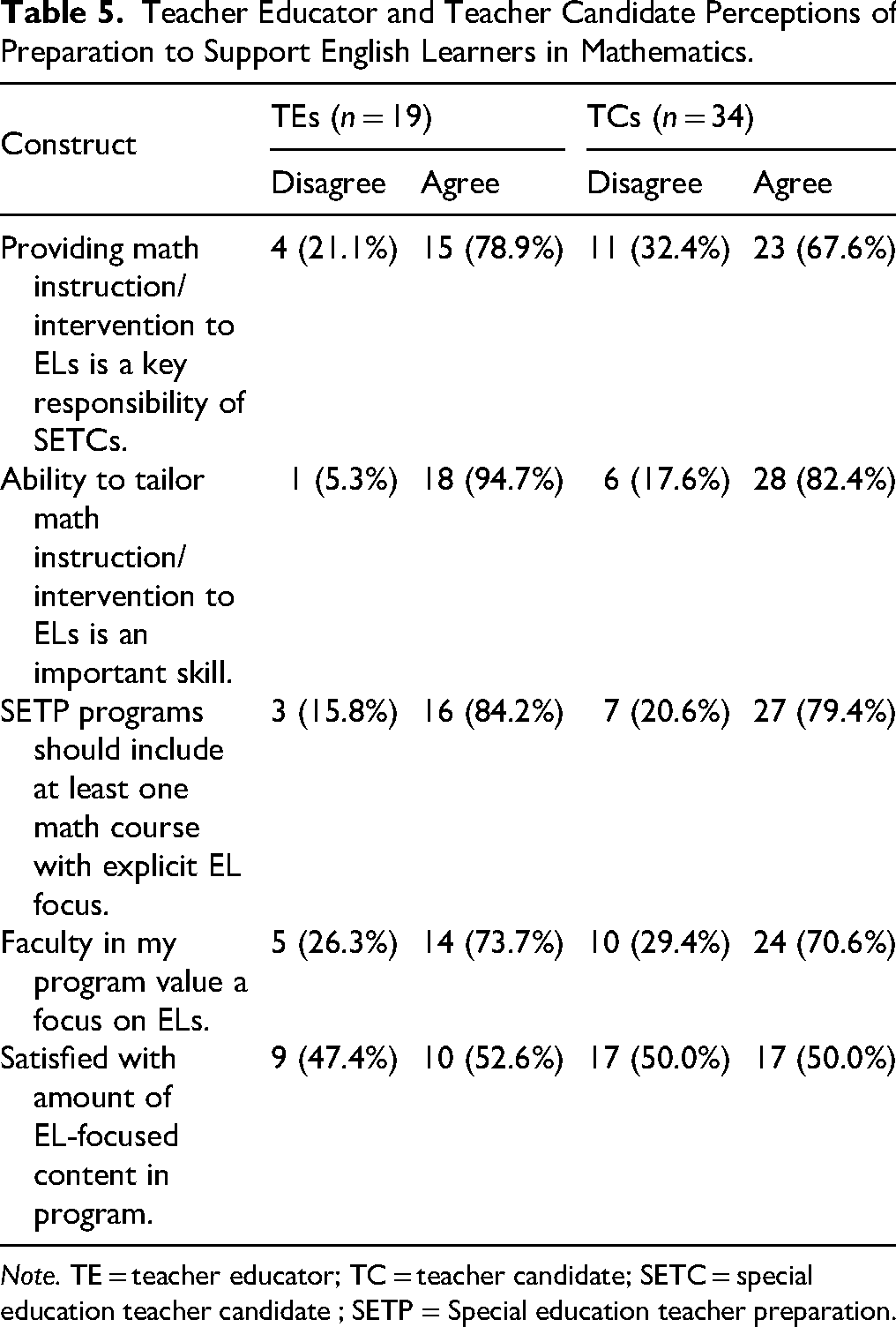
Note. TE = teacher educator; TC = teacher candidate; SETC = special education teacher candidate ; SETP = Special education teacher preparation.
Most respondents also supported stronger programmatic attention to ELs: 84.2% of teacher educators and 79.4% of teacher candidates agreed or strongly agreed that special education teacher preparation programs should include at least one EL-focused course, and many perceived that faculty valued this focus (73.7% of teacher educators; 70.6% teacher candidates). However, roughly half of both groups reported dissatisfaction with the current level of emphasis in their programs, suggesting a gap between perceived importance and enacted program implementation.
Research Question 3: Math Methods Course Focus
Program-Level Course Focus
Respondents described the general course focus on ELs and mathematics within their special education teacher preparation programs (see Table 6). A majority of teacher educators (57.9%) responded that there was no dedicated course on ELs in their program or that they were unsure whether such a course existed. Among programs that included a course focused on ELs, 42.1% stated the course was typically required for teacher candidates. Most teacher educators (89.5%) reported that their programs required teacher candidates to complete at least one mathematics course. However, the math course generally did not place a focus on supporting ELs. Only 35.7% of teacher educators reported that the math course they taught included an explicit focus on ELs with disabilities, and just 14.3% indicated that their course was required to have a focus on supporting ELs.
Mathematics Coursework and English Learner Focus in Special Education Teacher Preparation Programs.
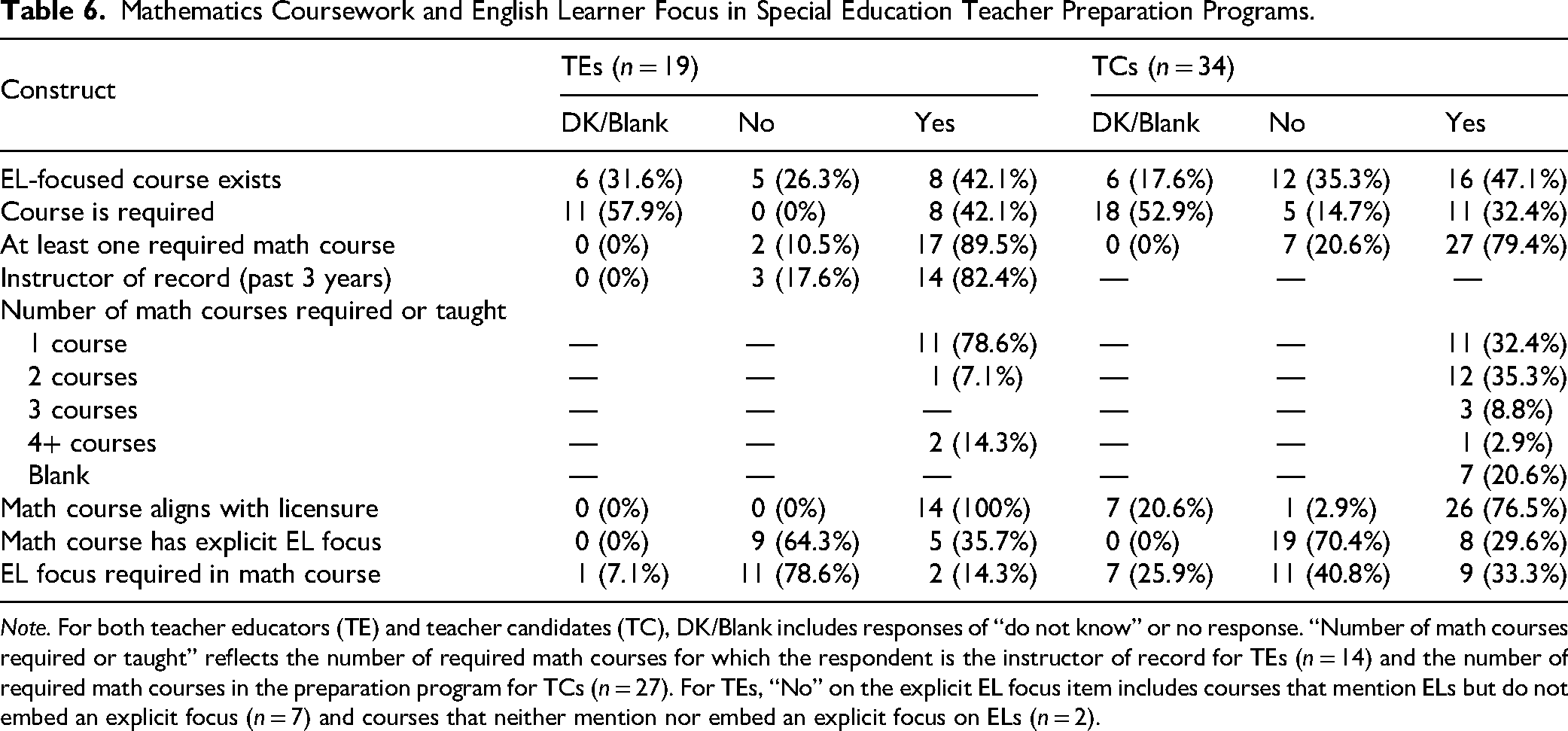
Note. For both teacher educators (TE) and teacher candidates (TC), DK/Blank includes responses of “do not know” or no response. “Number of math courses required or taught” reflects the number of required math courses for which the respondent is the instructor of record for TEs (n = 14) and the number of required math courses in the preparation program for TCs (n = 27). For TEs, “No” on the explicit EL focus item includes courses that mention ELs but do not embed an explicit focus (n = 7) and courses that neither mention nor embed an explicit focus on ELs (n = 2).
For teacher candidates, 47.1% of teacher candidates indicated that their programs include coursework related to ELs, but only 32.4% stated that this course was mandatory for special education teacher candidates. While 79.4% of teacher candidates reported that they were required to complete at least one mathematics course, the majority (70.4%) said that the course did not include a specific focus on ELs. In addition, 66.7% of teacher candidates indicated that their math course either was not required to address ELs or they were unsure about such a requirement. These findings suggest a misalignment between program values and actual course implementation. Although both groups agreed on the importance of content focused on math instruction for ELs, the execution in math methods courses is limited and inconsistent.
Integration of Content on EBPs for ELs
Tables 7 and 8 summarize how content regarding math EBPs for ELs was integrated into coursework, according to teacher educators and teacher candidates who had indicated their courses had a focus on ELs. Four out of five of these teacher educators indicated they integrated the content in a few sessions. The integration was frequently through course discussion (n = 5), assigned readings (n = 4), and specific assignments related to ELs (n = 2). Out of eight teacher candidates, most indicated their math methods course integrated EL-related content within half of the sessions (n = 5). Integration to any extent mostly occurred through course discussion (n = 6), assigned readings (n = 5), and specific assignments (n = 2). When asked about the knowledge emphasized in these courses, teacher educators most frequently identified EBPs that reflected general special education pedagogy, such as high-leverage practices (n = 13), multitiered system of supports (MTSS) (n = 10), or pedagogy on culturally responsive teaching in general (n = 10).
Teacher Educator Reports of Explicit English Learner Focus in Mathematics Coursework.
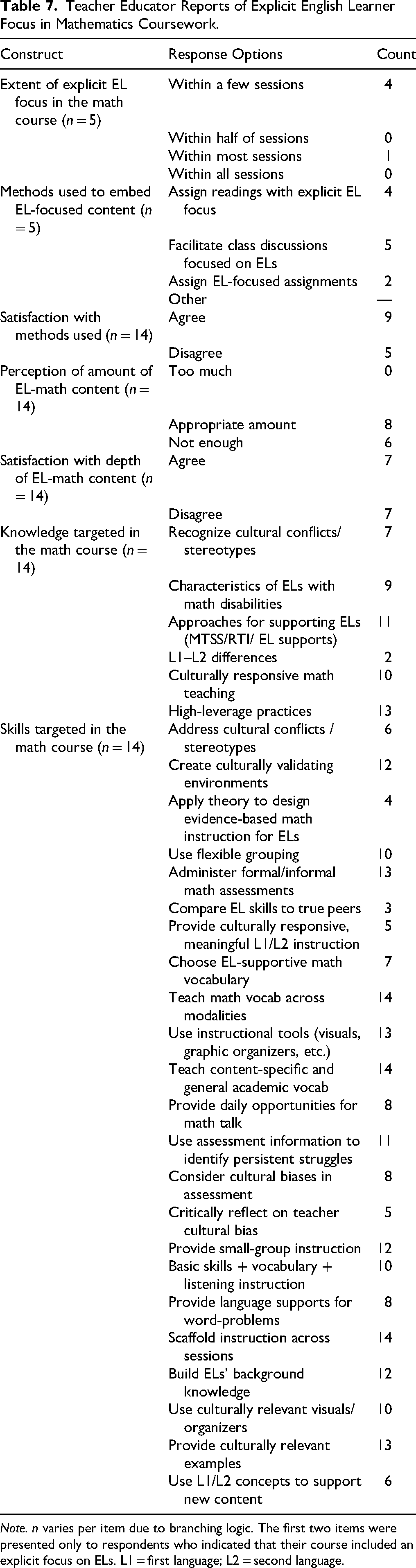
Note. n varies per item due to branching logic. The first two items were presented only to respondents who indicated that their course included an explicit focus on ELs. L1 = first language; L2 = second language.
Teacher Candidate Reports of Explicit English Learner Focus in Mathematics Coursework.
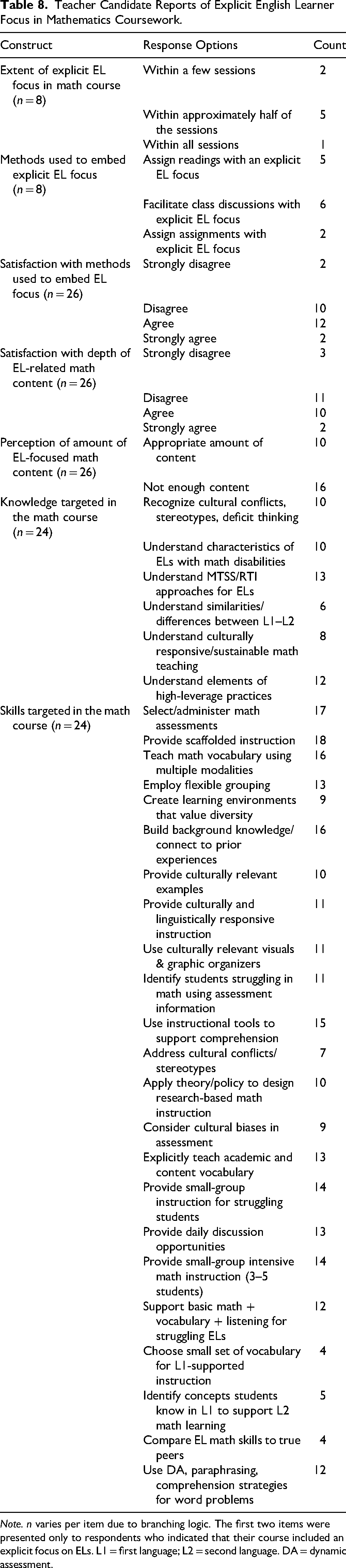
Note. n varies per item due to branching logic. The first two items were presented only to respondents who indicated that their course included an explicit focus on ELs. L1 = first language; L2 = second language. DA = dynamic assessment.
Both groups also reported that math methods courses less frequently focused on language development and the cognitive-linguistic challenges faced by ELs with disabilities in mathematics contexts. Additionally, few respondents from both groups indicated a focus addressing knowledge related to cultural bias, deficit thinking, and language impact on math assessment and special education referrals. Teacher educators less frequently focused on knowledge related to ELs with disabilities in math specifically (n = 9), issues of bias and cultural misunderstandings in math learning (n = 7), and knowledge on language development related to math learning (n = 2). Teacher candidates reported a similar pattern: EBPs linked to special education pedagogy (e.g., MTSS; n = 13; HLP; n = 12) were more commonly emphasized than EL-specific knowledge areas, including cultural awareness/deficit thinking (n = 10), characteristics of ELs with math disabilities (n = 10), culturally responsive math teaching (n = 8), and language development (n = 6).
We also asked respondents to report on the type of instructional skills that were targeted in their math courses. Teacher educators most frequently reported skills related to math vocabulary instruction and the use of instructional tools (e.g., visuals, videos, graphic organizers; n = 14). They also commonly endorsed EBPs involving leveraging students’ home language to support comprehension in English (n = 13), selecting and administering formal and informal math assessments to guide instruction (n = 13), and using culturally relevant examples in math teaching (n = 13). In contrast, fewer teacher educators reported emphasis on skills that explicitly address bias and decision-making, including considering cultural bias in assessment (n = 8), critically reflecting on the impact of cultural bias on instruction (n = 5), applying theory and policy to design math instruction for ELs (n = 4), and using EL peer comparisons when considering special education referral (n = 3).
Teacher candidates similarly reported that their math methods coursework emphasized EBPs centered on general instructional supports, including scaffolded instruction (n = 18), teaching math vocabulary (n = 16), building background knowledge and connecting content to prior experiences (n = 16), using instructional tools to support understanding (n = 15), and providing small-group instruction for students who struggle in mathematics (n = 14). Teacher candidates less frequently reported preservice training on addressing cultural conflicts, stereotypes, and deficit thinking (n = 7); using native language to support learning in English (n = 5); comparing EL's math skills to true peers for special education referral (n = 4); and choosing a small set of target vocabulary during instruction and connecting it to native language (n = 4).
Discussion
In examining teacher educators’ and teacher candidates’ perceptions of teaching math to ELs with disabilities and the focus on ELs in math methods courses, we found that teacher educators generally had solid knowledge about language development among ELs and had more knowledge than teacher candidates. This finding aligned with those of previous studies (Miranda et al., 2019; Shelton et al., 2025). In our study, teacher educators felt confident in their knowledge related to general math development. However, those who taught math methods courses reported less confidence in their knowledge related to math instruction for ELs specifically, as well as in their ability to prepare teacher candidates to teach math to ELs, reflecting a lack of confidence in preparing teacher candidates to meet the dual demands of language and math development for this population of students. The lack of confidence among teacher educators, in turn, might contribute to the broader lack of preparedness reported by teacher candidates, who exhibited notably low confidence across domains in general math knowledge, specific knowledge related to ELs in math, and the ability to provide math instruction to ELs with disabilities in their future careers. In sum, while teacher educators may be relatively more knowledgeable on content related to ELs with disabilities in math, neither group felt well equipped to meet the specific instructional needs of ELs with disabilities in mathematics.
Furthermore, both teacher educators and teacher candidates recognized the importance of addressing the needs of ELs with disabilities in mathematics instruction and believed that teacher candidates would be responsible for providing such services in their future work. This shared perception reflects a growing awareness across both groups that preparing teacher candidates to teach math effectively to ELs with disabilities is a pressing and relevant component of special education teacher preparation (Jozwik et al., 2020; Miranda et al., 2019). Despite the perceived importance, however, both groups expressed dissatisfaction with the current level of focus on ELs with disabilities in their teacher preparation programs. This finding represents a disconnect between the perceived importance of the content and actual course implementation at the program level. Although teacher educators appear committed to integrating EL-related content into their math methods courses, most noted that the course lacked a specific focus on ELs with disabilities. For instructors who included a specific focus, the content was embedded superficially, such as through brief class discussion, rather than in an in-depth assignment that would allow teacher candidates to practice and apply the skills related to teaching math to ELs with disabilities.
Our findings suggest that special education math methods courses place a focus on teaching general EBP-aligned pedagogical frameworks more consistently than EL-specific mathematics knowledge and practices that incorporate students’ linguistic and cultural backgrounds and language-related needs. For example, the most frequently reported instructional skills reported by teacher educators were teaching math vocabulary, applying instructional tools, and administering assessments. While these skills are foundational for teacher candidates to teach diverse learners (Nannemann et al., 2025; Sheppard & Wieman, 2020), they do not necessarily support teacher candidates in tailoring instruction to the cultural and linguistic needs of ELs with disabilities in mathematics. This pattern aligns with prior work suggesting that preparation for teaching ELs with disabilities often relies on broad instructional strategies, with limited attention to how linguistic, cultural, and disability-related supports should be integrated into mathematics instruction (Klingner et al., 2014; Miranda et al., 2019). Consequently, the limited emphasis on EL-specific EBPs may help explain the low confidence reported by both teacher educators and teacher candidates, as well as their dissatisfaction with the current focus on ELs in their courses. These findings underscore the need for special education teacher preparation programs to move beyond general pedagogy and embed sustained, practice-based opportunities to learn and apply research-informed EBPs that explicitly address the needs of ELs with disabilities in mathematics.
Limitations and Future Directions
Several limitations should be considered when interpreting these survey findings. First, participating teacher educators and teacher candidates were drawn from different preparation programs. Variation in course structures, curricular emphases, and institutional priorities likely shaped respondents’ reported experiences, limiting direct cross-group comparisons without matched, program-level data. To enable clearer within-program comparisons of how content on ELs with disabilities is integrated from both faculty and candidate perspectives, future studies should recruit matched samples within the same programs.
Second, the sample sizes for both groups were small, which limits generalizability and may introduce selection bias toward programs and individuals with greater interest in ELs with disabilities to participate. However, during recruitment, many program leads reported that their programs did not offer a designated math methods course, which may explain our limited sample sizes as well as the limited number of teacher educators specializing in mathematics within special education programs (Nannemann et al., 2025). Future research should systematically examine special education teacher preparation programs’ curricula to document required math-related coursework and the extent to which course objectives explicitly address teaching mathematics to ELs with disabilities.
Third, participants were recruited only from traditional special education teacher preparation programs. Thus, the findings do not reflect perspectives from alternative certification pathways. Future studies should include a broader range of program types and compare math coursework trajectories and the integration of content regarding ELs with disabilities across traditional and alternative routes into special education teaching.
Lastly, the item “English learners should acquire English within two years of starting US schools” uses the word should, which may invite normative judgments rather than assess respondents’ knowledge of a fact. As a result, the item phrasing may have influenced participant responses. Future surveys might consider using item stems to more clearly assess knowledge (e.g., “can be expected to” rather than “should”).
Implications
Both special education teacher educators and teacher candidates reported low confidence in their knowledge and skills for teaching mathematics to ELs with disabilities; in addition, teacher educators also expressed limited confidence in preparing candidates to implement EBPs for this population. These responses point to a need for stronger faculty support focused on the intersection of disability, language development, and mathematics learning. Although faculty-development research specific to ELs with disabilities in special education math methods is limited, we can draw on established models, such as professional learning communities, targeted workshops, and coaching that strengthen content-area integration of linguistically responsive practices (Heineke et al., 2020; Penner-Williams et al., 2017). Such supports should explicitly emphasize EBPs for dual-identified learners, including second-language acquisition, culturally and linguistically responsive mathematics instruction, and sound assessment and progress-monitoring practices (de Araujo et al., 2018; Moschkovich, 2015). Important, these initiatives must go beyond one-time training by creating sustained, collaborative spaces where faculty can co-develop materials, align assignments with EBPs, and reflect on candidate learning.
Special education teacher preparation programs would benefit from examining whether math methods coursework provides explicit and sustained opportunities for candidates to learn and practice EBPs tailored to ELs with disabilities. Although respondents viewed this focus as important, they reported limited and inconsistent integration of EL-specific content. Programs need to move beyond superficial inclusion, such as brief discussions or isolated readings, and instead offer sustained opportunities for teacher candidates to build their capacity through structured assignments, case-based learning, and clinical applications that focus on culturally and linguistically responsive math instruction (e.g., WIDA, 2020). Courses might incorporate evidence-based strategies such as math vocabulary scaffolding, leveraging students’ home language and cultural backgrounds, and providing linguistic support during instruction (Kong et al., 2022; Tran & Castro Schepers, 2023). Courses might also incorporate recommendations from the What Works Clearinghouse practice guide on teaching academic content to ELs (Baker et al., 2014) to strengthen teacher candidates’ capacity to support language development within mathematics. For example, math methods instructors can (a) model how to teach a small set of academic and mathematical vocabulary intensively across several days; (b) provide structured opportunities for students to use language through speaking, listening, and writing; and (c) use instructional tools such as visuals and videos to scaffold comprehension and participation in math discourse. By embedding these elements into coursework, teacher preparation programs can better equip future special educators with pedagogical knowledge, cultural competence, and instructional skills needed to support ELs with disabilities in mathematics. In turn, doing so can increase teacher candidates’ confidence and readiness to serve diverse learners, ultimately improving the quality and equity of math instruction these students receive in school settings (Turner et al., 2012; Whitaker & Valtierra, 2018).
Conclusion
The findings of this study highlight the urgent need for special education teacher preparation programs to more intentionally and explicitly integrate content that equips teacher candidates to teach mathematics to ELs with disabilities. Findings revealed a misalignment between the perceived professional responsibility of supporting ELs with disabilities and the actual instructional readiness of both teacher educators and teacher candidates. That is, despite recognizing the importance of addressing the needs of this population, both groups reported low confidence and limited exposure to EL-specific pedagogical strategies within math methods coursework. These findings signal a call to action for programs to invest in targeted faculty development, further research to understand the barriers to course integration, and system-level initiatives to build practice-based learning opportunities. By addressing these gaps, preparation programs can better ensure that future special educators enter the field with the knowledge, skills, and confidence to provide high-quality, equitable math instruction to all learners, including those who are dually identified as ELs with disabilities.
Footnotes

Ethical Considerations
The study was approved by the University of Maryland College Park IRB (2074380-4).
Consent to Participate
Informed consent was obtained by participants prior to participation in the study.
Funding
The authors disclosed receipt of the following financial support for the research, authorship, and/or publication of this article: This work was supported by College of Education, University of Maryland College Park, Hebeler Award.
Declaration of Conflicting Interests
The authors declared no potential conflicts of interest with respect to the research, authorship, and/or publication of this article.