







Abstract
Entrepreneurship education is a complex topic that can be discussed from a variety of perspectives. One key question in the discussion concerns how one can adapt the general core principles of entrepreneurship education, many of which are closely linked to business education, to other academic areas that currently lack this type of education. This article discusses the challenges of developing a model of entrepreneurship education for the creative industries sector. Focusing specifically on film and media arts education, the authors examine the results of a qualitative and quantitative study of both industrial and educational (teachers and students) stakeholders’ perceptions of the relevance and role of entrepreneurship education in this field. In light of the results of the study, the authors propose a strategy and methodology for entrepreneurship education for the creative industries.
This article will deal with the issue of teaching entrepreneurship to students in the creative disciplines, and in particular those enrolled in Bachelor’s or Master’s courses in film and media arts. The article is based largely on the results and outcomes of CIAKL II – the Cinema and Industry Alliance for Knowledge and Learning, a European training and research project funded within the scope of the Erasmus + Knowledge Alliances programme. The article is also based, however, on the outcomes of an actual implementation of the proposed methodology in the context of the European Erasmus Mundus Joint Master’s Degree programme ‘Kino Eyes – The European Movie Masters’ (Erasmus + Ref. 553676-EPP-1-2014-1-PT-EPPKA1-JMD-MOB). This is an educational international programme jointly developed by the Film and Media Arts Department at Universidade Lusófona (Portugal), Edinburgh Napier University (UK) and the Baltic Film School/Tallinn University (Estonia). In general terms, CIAKL II is intended to promote knowledge exchange and cooperation between industry and higher education institutions (HEIs) via the preparation of content and activities involving entrepreneurship for the creative industries sector, to be delivered as part of existing educational programmes in European film and media arts schools. The project goals also include the design of dedicated curriculum and content and evaluation of the attitudes and perceptions of stakeholders – film and media arts school students and teachers and professionals in film and media production – towards entrepreneurship education. In this article, we discuss the findings of several studies conducted in this context and how they can help us improve entrepreneurship education for the creative industries.
CIAKL proposed an integrated experimental educational design approach, implemented in Kino-Eyes (another European project promoted by the same consortium with reference to Kino Eyes – The European Movie Masters). The approach is based on training through projects in development, a method that enables training to be adapted to the context of the market while at the same time addressing real needs. This approach, which links entrepreneurship teaching with practical and real-life projects, has been successfully tested in other fields as a viable approach to entrepreneurship teaching in the creative industries (Brown, 2007). It is our conviction that the first requirement for the implementation of effective training programmes for entrepreneurship in the film and media arts is this focus on actual context-dependent projects. This calls for a closer relationship between the skills taught and market needs that will greatly help schools to fulfil their mission. The fact that ‘creativity’ is identified as a key building block by contemporary models such as EntreComp (Bacigalupo et al., 2016) which frame entrepreneurship as a transversal key competence applicable by individuals and groups, including organizations, across all spheres of life, is not at odds with this assumption. EntreComp locates creativity as one of the competences in the category ‘Ideas and opportunities’. A large proportion of students’ education in the creative fields specifically addresses such competences, and our method proposes that linking entrepreneurship education with training through practice-based projects in development is the best approach if we want to engage students with entrepreneurship in the creative disciplines (Clews and Clews, 2011). Training through projects in development is a learner-centred methodology that focuses on learning by doing, and solving actual market problems and challenges. This is very close to the pedagogy of knowledge instantiation followed, for instance, in computing education. The methodology calls for the type of creativity and technological innovation strongly present in the film and media industry, which film and media arts schools should seek to emulate. By following this approach, HEIs will reinforce entrepreneurship education for the creative industries (Clews, 2007), in particular in film and media arts education, and will also bring entrepreneurship education closer to creativity-based education, with the resulting synergies.
Earlier studies, focusing on the UK context, have already pointed to the importance of applying entrepreneurial methods in creative studies. Clews (2007) is notable for an early recognition that students tend to perceive entrepreneurship training as secondary or even as in tension with other subjects (and, contrary to our findings, according to Clews’s study the teachers agreed). Clews further notes the importance of integrated, hands-on training in entrepreneurship (instead of an isolated, subject-specific module) of a reframing or redefinition of the concept and of deep learning through case studies and industry integration. In an effort to think innovatively about entrepreneurship for creative media and arts students, a decade ago, Kellet (2006a, 2006b) introduced the concept of ‘creative warriors’, which brought notions from business thinking to the context of the creative industries. These examples are indicative of previous efforts to bridge the gap between creativity and entrepreneurship in similar disciplines in HEIs, and therefore the same approach might profitably be tested in film and multimedia arts schools.
Problem and context – Entrepreneurship education and film schools
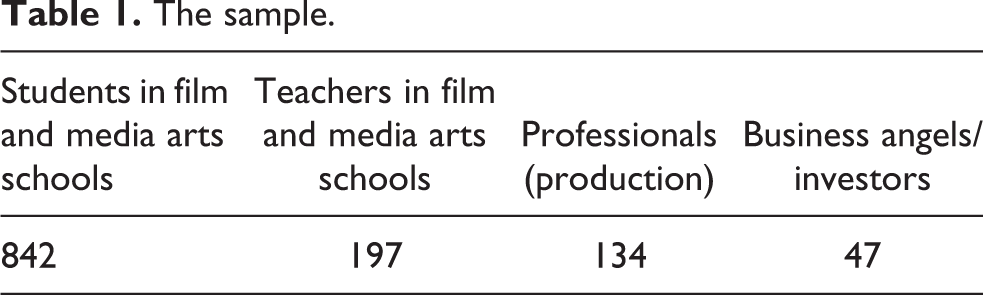
The first issue to be tackled with regard to teaching entrepreneurship to film and multimedia students is that, despite the significant debate about the engagement of creative disciplines with enterprise and the creative industries, film students in particular generally do not regard such engagement as relevant to their studies. To change this attitude, schools must help students realize that entrepreneurship education can empower their individual initiatives, while at the same time providing them with tools to improve their employability and their ability to manage their career progression autonomously – something that will be of critical importance for graduates in these areas (see also Bacigalupo et al., 2016; Sari, 2016). Another problem we identified in the course of our research was that, although our initial investigation of a sample of film and media arts schools in Europe (see Table 1) revealed that the schools felt the need for entrepreneurship education, and were interested in offering it, most claimed that they had neither the institutional nor the human resources necessary actually to do it. This initial research also highlighted the need for specific training for the trainers, in the form of both initial and continuous training activities.
The sample.
Besides convincing these schools of how well entrepreneurship education can fit with their educational methods, it is even more important to convince them of how it can equip them to face the challenges of 21st century education. According to a report of the Tuning Educational Structures in Europe project (CILECT and Artesnet Europe, 2007), a film school is an HEI dedicated to teaching the practical skills of film-making. Many, if not all, uses of the term ‘film school’ now include television, video and film and frequently also animation and/or digital media. One of the main drawbacks of these institutions has been their difficulty in integrating research activities and advanced training in transversal competences (like entrepreneurship) into their curricula and activities. Many European film schools still do not offer a university-type educational model, with research and theoretical reflection embedded in the curriculum and target outcomes. Furthermore, the fact that many of the schools are not part of a larger HEI hinders them from rapidly implementing programmes or subjects oriented to transversal competences. Thus, it is still quite common to find schools – particularly those financed at local level by ministries of culture – that have not adopted the Bologna Declaration (e.g. La Femis in France or HFF in Germany). Another problematic aspect highlighted by the Tuning Educational Structures report is the fact that the variety of university departments and schools offering such training leads to a wide range of intersections between games, interactive design, computing courses and other subjects, with approaches that diverge from media or film practice (CILECT and Artesnet Europe, 2007).
In recent decades, the programmes offered by these schools have changed to cover broader curriculum approaches that include all the technological and aesthetic variations of cinema. The Tuning Educational Structures report notes that film and screen arts graduate and undergraduate course titles vary widely: for example, from ‘Film Production’, ‘Film and Television Production’, ‘Film and Video Production’, ‘Film and Moving Image Production’, ‘Film and Multimedia’ and ‘Film and Video’ to ‘Screen Arts’, ‘Media Arts’, ‘Cinematic Arts’ and ‘Moving Image Production’ – a broad spread of image-based competences. These are often taught alongside radio and journalism or stem from ‘technology-based and/or computer-related activities’ especially in programmes of ‘Audiovisual Production’, ‘Multimedia’ and ‘Communications’ (CILECT and Artesnet Europe, 2007). According to the report, a film and media arts school is defined more correctly as an HEI that offers practical teaching of film and television production, with at least half of the curriculum hands-on, occasionally offering second cycle technical specialization. One of the assumptions in our methodology is that entrepreneurship education for these schools should be part of second-cycle education only. Theoretical media studies and analysis, in many cases with an element of practice, are included.
CILECT (Centre Internationale de Liaison des Écoles de Cinéma et de Télévision), the International Association of Film and Television Schools, has 148 member organizations from 58 countries, distributed over five continents. Given that CILECT members are strongly focused on cooperation and knowledge sharing for the advancement of film and television training, they constitute the primary targets of any initiative in the domain of film and media arts education, considering both their prominence and the overall number of students and teachers they involve.
In the context of complex transformation in the field of film (KEA European Affairs, 2006; Sanz, 2012) – with no area of the discipline unchanged by digitalization, from writing and creative storytelling to production and direction – entrepreneurship education should be included in the curricula of these schools as one more of the transversal and cross-disciplinary skills that mark the evolution and transformation of the film value chain, today also called the ‘digital value chain’.
A significant consequence of entrepreneurship education for teachers and students in film and media arts schools will be the bridging of the distance between the teaching and application of the knowledge and skills they provide. For students, this will lead to better employment opportunities and stronger transversal skills that will be relevant to many aspects of their future professional lives. For teachers, it will provide an opportunity for the implementation of new methods and pedagogies that will better adhere to the paradigms of literacy and audience construction. In both cases, it will increase awareness of the role that business ventures play in shaping the arena in which they act and the opportunities that thus arise.
Entrepreneurship in the creative media industries, in particular film, fluctuates between authorial aspirations, employability and uncertainty. Nevertheless, the collaborative aspects of shooting a film are today becoming clearer, and that is why project management activities and teamwork hold such an important place in the structure proposed by CIAKL II. The role of other team players and creators, notably of screenwriters, is acknowledged and fostered, but the leadership of the producer is not yet recognized as crucial in film development and creation.
The vision of the individual artist collides with the more common aim of becoming an employee. Although becoming an employee may entail the end of creative freedom, it is attractive to some because it apparently brings with it some protection from marketplace uncertainty. The majority of European students who want to enter employment (as opposed to entrepreneurship) fail to understand that embedded in entrepreneurship teaching is a body of knowledge that will enhance their creative potential, which will be useful in any circumstances and in particular in the company and corporate business environments, right from the moment of the first job interview (Blauth et al., 2014; Müller et al., 2009).
Other students live in a permanent state of uncertainty, incapable of forming an idea about what to do with their lives: either they lack self-assessment skills or the academic institution fails to provide coaching, mentoring or personal orientation. One outcome of CIAKL II is the definition of a toolkit for educators that explicitly addresses the need to supplement entrepreneurship education with mentoring activities supported by proper structures.
Students often suspect that the real aim of an entrepreneurship course is to let them loose in the ‘capitalist jungle’. Academia has not done as much as it might to eliminate that belief. HEIs should, for example, highlight the usefulness of entrepreneurship training in meeting the challenges of the sector, in particular the fragile and uncertain digital media value chain, the current unstable industrial environment and the impact of digital distribution. Educators should also focus on the acquisition of competences in value proposition definition and business modelling and planning, with the ultimate objective of producing creative works for their intended audiences (Hsu, 2006).
To summarize, film and media schools need to adapt themselves to the changing environment and further integrate entrepreneurship education into their syllabuses. As part of this process, they have to be convinced that such an approach will help them to fulfil their mission more effectively and to empower their students and alumni in changing technological, economic and cultural environments.
Problem and context: The technological and business gaps
The emergence of an ever more volatile, uncertain, complex and ambiguous (VUCA) environment has impacts on all educational areas and calls for pivotal educational initiatives in sectors such as film and media where the objects and purposes of education are constantly reshaped. In a VUCA environment, two gaps are evident in film and media education: the ‘technologies’ gap and the ‘business’ gap. Previous research (Enyedi, 2011; Milevska, 2013; Oughton, 2013) has already alerted us to these gaps and to why changes in audiovisual culture call for a transformation of the educational model followed by film and media schools.
The ‘technologies’ gap is the mismatch, in a fast-changing technological environment, between the teaching methods and technologies typically used in schools and those that represent the state of the art in the field (cinematography education; see Jarry, 2013). We live in an age of the moving image. The arrival of digital technologies and the Internet, the rise of mobile devices, the introduction of cheap and user-friendly editing tools and the surfacing of dissemination tools such as YouTube and NetFlix, or storage hubs in the Cloud such as Kaltura, have changed the way moving images are connected to society, education and learning.
As the technologies being used are constantly evolving and the skills required from graduates are therefore ever more complex, schools are daily confronted with the fact that the skills they promote are, in many cases, no longer what employers and students want. In other words, many of the methods in use are no longer consistent with the state of the art and educational approaches are often not suitable for the current technological apparatus. In the case of film and media, the rapid digitalization, in the last two decades, of all aspects of the value chain and the introduction of a vast number of technical innovations have completely redefined the competencies required for the field. Entrepreneurship education can play a crucial role here at two levels: first, by relating the teaching of film to project-based activities that are closer to ‘reality’ via the involvement of companies and professionals; and, second, by providing teachers with particular teaching/learning methods that will help them to bring state-of-the-art content to their classes that will ‘force’ them to push the barriers of technology in the realm of their teaching. Research (Eurydice Network, 2011, 2016) suggests that methods which involve students in experiences outside the classroom and connect them to the working world are central to entrepreneurship education. In the case of film and arts education, project-based work can be an essential instrument in bridging this first gap that we have identified.
The second gap, the ‘business’ gap, is related to the difficulty film schools experience in integrating the economic and business aspects of the market and industries they target into their curricula and pedagogies – specifically, those relating to the different aspects of creative production and co-production, and the generation of new business endeavours that results from an entrepreneurial mindset. In recent years, the film industry has become much more complex, even compared to the late 1990s or 2000s. Traditional cinemas have seen the number of competitors rise, in the form of pay-TV, video on demand, Internet streaming and mobile telephones and second screen engagement options. The digital revolution has taken all parts of the value chain by storm, from capture to post-production, distribution and exhibition, transforming not only the experience of audiences but also, and more importantly for us, that of the creators and educators. Film school curricula were designed with a focus on technical specializations and not on the broader competencies required by today’s VUCA environment. Among these, entrepreneurship assumes a crucial role since it reinforces the employability potential of people with high film literacy (i.e. the ability to understand the medium critically in its various forms of expression and to manipulate the associated languages and technical features) and enables them to interact more successfully with local and international stakeholders (Damásio and Cordeiro, 2013; Gulati and DeSantola, 2016; Hazelkorn et al., 2014). A key factor that entrepreneurship education has to address in bridging this second gap is the articulation between the core learning outcomes it proposes – entrepreneurial attitudes, skills and knowledge – and the areas of application to which those outcomes are relevant.
For the case of film and media arts education, Table 2 summarizes the articulation between those learning outcomes and the specific needs in relation to the technological and business gaps that entrepreneurship education should address.
Entrepreneurship education and learning outcomes in relation to film education.
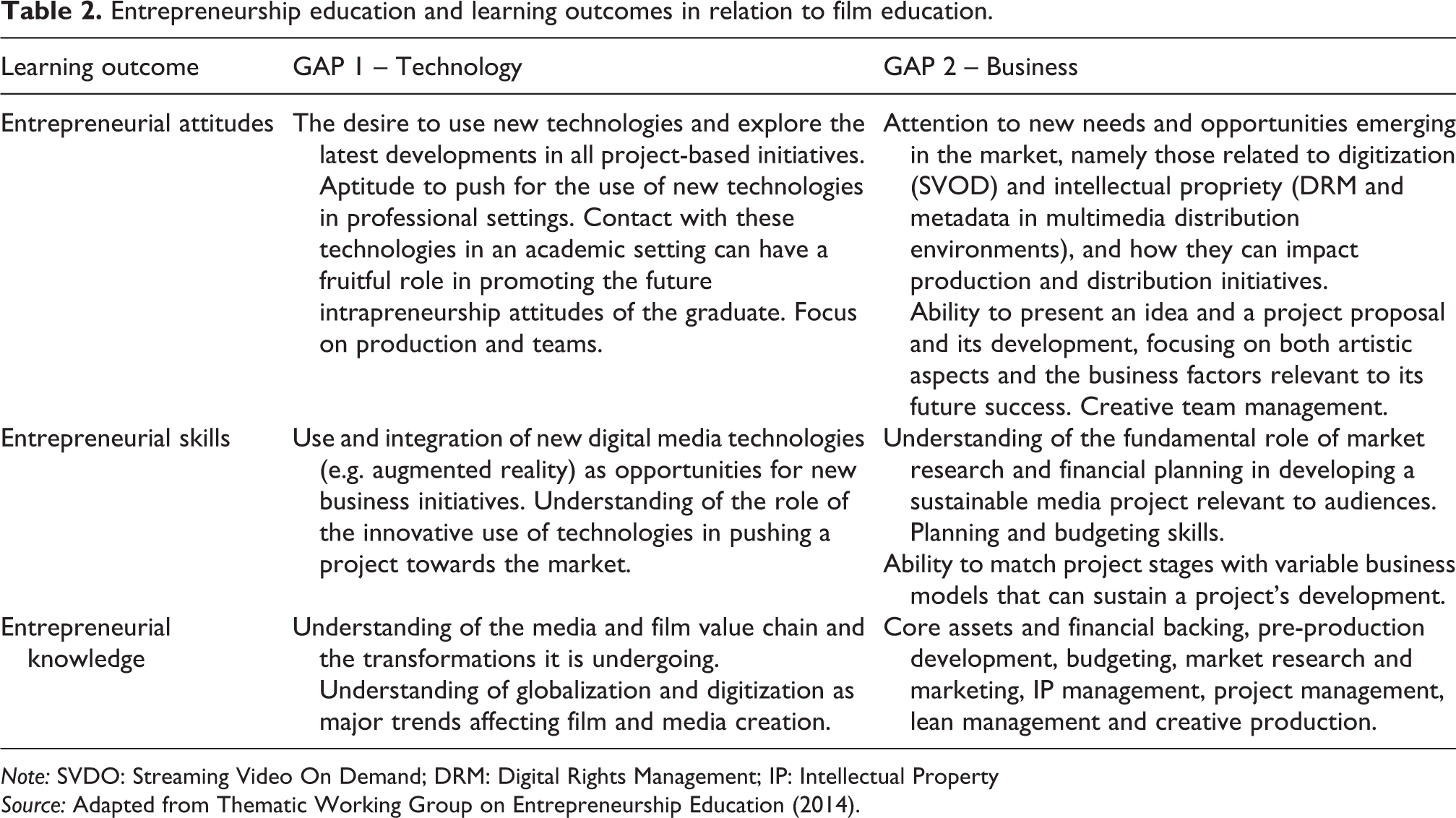
Note: SVDO: Streaming Video On Demand; DRM: Digital Rights Management; IP: Intellectual Property
Source: Adapted from Thematic Working Group on Entrepreneurship Education (2014).
To understand the perspective of film schools on entrepreneurship education, it must be understood that these schools deal with a complex disciplinary model that is partially in debt to artistic education while, at the same time, aiming to affirm itself as an autonomous discipline (in the context of the growing importance of communication and critical media in academia). The academic legitimation of film and media arts schools was paradoxically one of the factors that emerged from our dialogue with film and media schools as propelling the integration of entrepreneurship courses and content in their curricula.
The educational proposal
Today, the primary aim of film and media arts schools is to educate auteurs, that is, writers, directors and producers. These are the three sides of the so-called Triangle system promoted by CILECT from the 1990s, suggesting that film and media applied education should focus on this triangle of specialization (producer, director, writer) and improve understanding of the roles (CILECT and Artesnet Europe, 2007). According to the 2007 CILECT and Artesnet Europe report, before introducing the Triangle, film schools had offered ‘little training for the film producer’. That situation has now appreciably changed, a fact that undoubtedly calls for entrepreneurship education in the schools. The new configurations of the sector also undermine the definition of the discipline in theoretical terms and its significance in academia, since they reduce it to a specific vocational and applied education with no critical or epistemological substrate. There is, then, a need to consolidate the process of the disciplinary emergence of the field, considering the specific value of the knowledge and the particular specialisms it entails for the expansion of technologically grounded processes of artistic and cultural production. At the same time, this process highlights the importance of bridging the gap between the education and the industry.
In pursuing the nature and role of disciplines, studies reveal a complex set of themes that tend to historicize disciplinarity as a product of past transformations in knowledge organization (CILECT and Artesnet Europe, 2007). In this transformation process, a pre-eminent role is played by the ‘hard’ or stabilized sciences. While the contingency of the specific disciplinary ecology emerging from the transformational process is identified, there also arises a question as to whether or not disciplinarity itself is, in some sense, an inevitable development. In other words, are disciplinary subdivisions in some form necessary for the growth and organization of knowledge? Is discipline formation an inevitable consequence of the increased complexity, volume and centrality of knowledge and systems of higher learning for a given social world? All the film and media arts schools with which we discussed this thought so and viewed entrepreneurship education as a supplement to their existing educational offerings. This view constitutes a major drawback to the seamless integration of new content into existing curricula and led us to consider whether a fruitful proposal for the integration of entrepreneurship education in film and media arts schools settings should include the development of stand-alone subjects ready to be integrated into existing graduate degrees as curricular subjects linked to the areas of creative production and project development.
Our research shows that film and media arts schools typically regard entrepreneurship education as a supplement to the education they already offer and mostly related to the ‘production’ axis of the triangle on which their model of specialization is based (see Damásio et al., 2016). At the same time, we found that there was an awareness of the need for entrepreneurship education, especially when the two gaps identified in film and media arts education were taken into account. The educational design we propose is based on the embedding of entrepreneurship education as an integral part of the schools’ graduate programmes in creative production and project development. Our proposal postulates the integration of entrepreneurship-related topics into existing syllabuses but via an articulated model that covers all the core competencies required by entrepreneurship education. This quest for the integration of entrepreneurship education in film and media arts schools programmes responds to both industry and market demands, as well as the recent emergence of more cross-disciplinary competencies associated with the arts, the moving image and the creative (Elberse, 2013; Hearn et al., 2007). The positive impact of including entrepreneurship education in film and media arts schools educational settings has been acknowledged by various stakeholders (from capital players and business angels to producers, professionals and teachers), and the principle of developing cross-disciplinary skills, as opposed to training only writers and directors, has been considered beneficial in that it broadens employment opportunities and enlarges the scope of the discipline (cf. previous research findings, Damásio et al., 2016: 54–67).
Method and objectives
The film and multimedia industry consists of a chain of connected companies, individuals and freelancers within (or parallel to) the creative media environment, all working on different elements of the film-making and exploring process, at varying stages (Finney, 2010). It is a ‘disintegrated model’, in which each element in the chain is dependent on the next player or operator partnership and on cooperation to drive the project forward. In the European context, projects are increasingly co-produced at international and intercontinental levels, often co-funded by national, multilateral and/or private funding (Finney, 2010). This network has to be managed and made to focus on delivering specific commitments and activities. There is no guarantee that any value will be extracted from work and ideas. Some players are socially motivated; others are economically driven. The process is complex, lacks transparency and has inherent deficiencies.
Europe has undervalued the film development process both financially and strategically. In the United States, up to 7% of total audiovisual revenue and up to 10% of each film’s budget are invested in development, while in Europe, the share is only 1 or 2% (figures from Katsarova, 2014). In Europe, film development is a secondary issue but changes in the overall business model of the moving image industry are also forcing film to change (Doyle, 2016). Europe’s problems partly stem from the overwhelming power bestowed on the director. Investors have remained at a distance in this very uncertain and risky business. Recent initiatives, such as the Creative Europe funding programme, have acknowledged this problem and are now much more focused on funding development. Nevertheless, if we look at the situation in many local European funding schemes, the focus is still on production and not on development or promotion.
This situation has resulted in the following weaknesses (adapted from Finney, 2010): the commercial unsustainability of the vast majority of the industry; an unstable, fragmented, complex value chain, a fragile business model and no strategy; insufficient or non-existent research and qualitative analysis before the first day of principal photography; production without sufficient preparation due to production fee payment on the first day of shooting; simultaneous development of some projects to recoup investment costs and create sufficient production fees to cover both the production work and sunken costs; producers remote from the consumer and ill-informed about market demands; resentment between emerging producers and distributors, difficult dialogue; sunken costs that absorb important financial resources; the producer is the weakest link in the relationship with distributors and must work under the shadow of many oligopolies (including the SVOD distributors); the notion of ‘audience’ is tenuous; and a divide between academia and relevant teaching and training methods, insufficient practice and role definition weakening the industry.
Entrepreneurship education should address these weaknesses but, for it to do so, a clear diagnosis of stakeholders’ attitudes and perceptions is needed. Our research design was developed with this objective in mind. A multilevel approach in three stages was adopted. For the first stage, we surveyed the social actors who engage with the creative industries, ranging from producers and professionals to students. Both CILECT and the International Federation of Film Producers Associations (FIAFP) were used as intermediaries for sampling and recruiting. The final sample included more than 900 students, teachers and professionals (Table 1). Exact figures are provided in the sections that follow.
The survey included two types of questions. First, there was an open-ended set of questions concerning intrapreneurial and entrepreneurial drivers for creative people. Our intention was to evaluate through the responses the key factors for innovative business achievement. Following Antoncic and Hisrich (2003), both concepts are defined by referring to emergent behavioural intentions or behaviours that are directed towards, respectively, the inside of an organization (intrapreneurial) or the exterior world of emergent opportunities (entrepreneurial). Second, we used six-point Likert-type scales to assess the importance attributed to entrepreneurship teaching in creative industries education, funding access and incentives and entrepreneurial success factors in the creative industries.
The objectives of this survey were to understand the competencies in creative organizations, the competencies required to be an entrepreneur, the context conducive to entrepreneurship, the importance of support services to potential entrepreneurship, the motivations to become an entrepreneur and the personality traits required in an entrepreneur.
The survey was designed as an initial assessment of the predisposition of the target groups. We are aware of the limitations of the aim of ‘understanding’ since, on its own, it is not an indicator of the behavioural attitude we have previously linked with intrapreneurship and entrepreneurship, but it is in our approach a necessary condition for it. Furthermore, members of the teaching staff in the main international film schools were surveyed about relevant topics to be included in creative industries training curricula. They were also asked about the role of action, analysis and means in business development and obstacles to investment in creative media.
The survey was conducted online, and responses were received between December 2014 and June 2015. We carried out analyses of the open-ended questions using EVOC (Aix-en-Provence, France), SIMI and AVRIL (open source) software applications which allow, respectively, for (1) prototypical evocation frequency analyses with categories formulation, (2) identification of the category similarity index of implication (varying between 0 and 100) (3) production of lexicographical analysis resulting in the optimal graphical display of these relationships in a maximum spanning tree. The Likert-type scale questions analysis was done with SPSS21.
We used a second line of inquiry for qualitative research, holding interviews with venture capital players and business angels. Key stakeholders in the industry were asked for their thoughts about teaching entrepreneurship in higher education and the curricular requirements. These interviews were subjected to content analysis following Bardin (2001).
In the third and final stage, focus groups were conducted with two distinct groups: (a) key staff in film and media schools from the CILECT membership and (b) industry stakeholders – producers and distributors. The complete research design is shown in Figure 1.
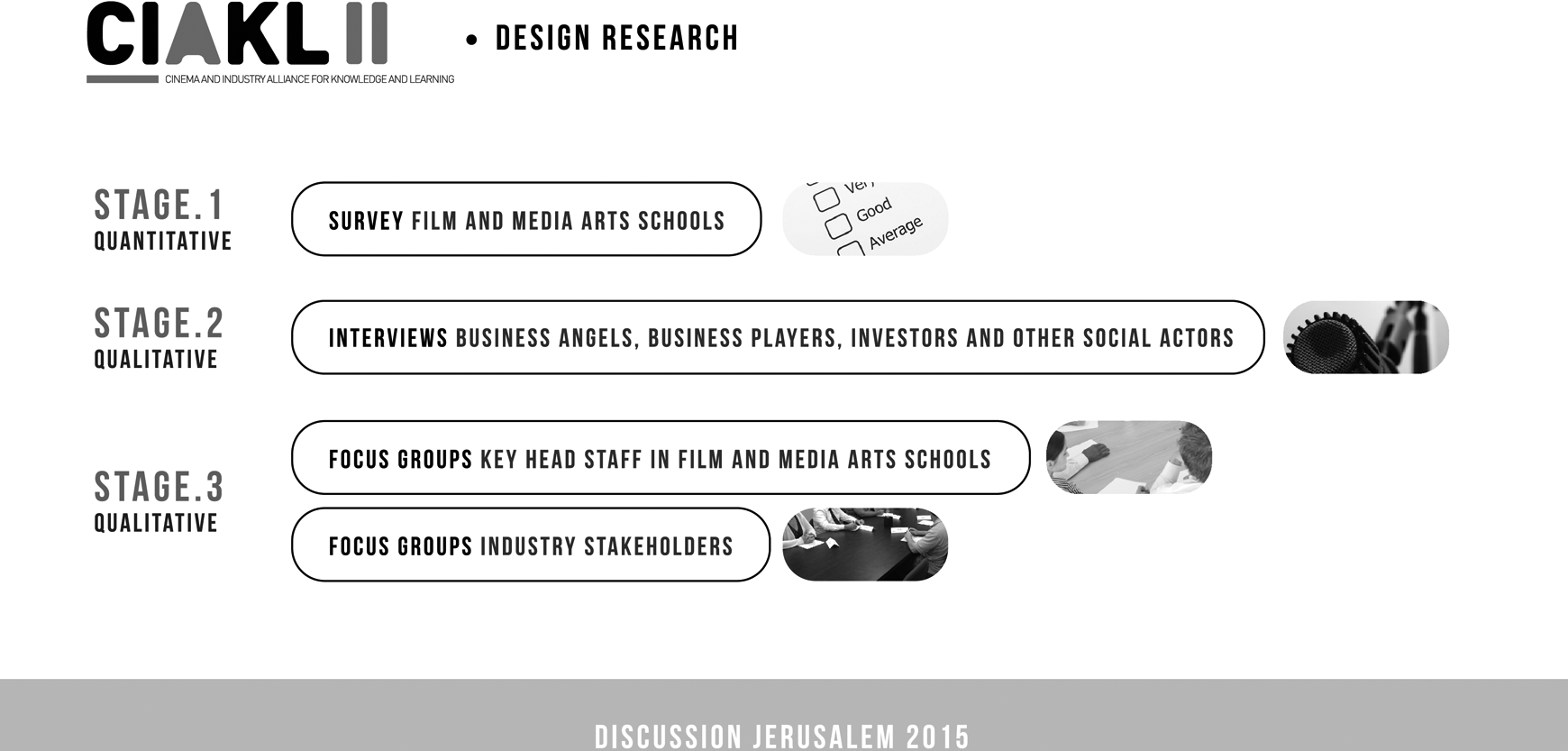
CIAKL II research design. CIAKL II: Cinema and Industry Alliance for Knowledge and Learning.
Previous research has shown that one approach is the teaching of entrepreneurship as a process (Kantor, 1988; Solomon, 2007). Alternatively, it can be treated as a career path. Another approach to entrepreneurship education is to teach units from management-related courses such as finance, marketing and accounting, so that the potential entrepreneur is able to develop a credible business plan. In such an approach, it is important to understand what content is appropriate, as well as the most effective teaching methods, including the use of practical cases that can simulate reality. It should be noted that entrepreneurship has a strong behavioural component in addition to the requisite skills. Investment in self-knowledge is also critical, so that students are able to assess their own potential for entrepreneurship, especially in terms of developing personality traits that can lead to an increase in self-efficacy (Matricano, 2014). Past linear approaches to entrepreneurship teaching have been contested in a context in which flexibility and adaptability have become the norm (Hills et al., 2008) – this is especially relevant for the film and media industries, where change is continuous (Doyle, 2016). In this light, a circular structure with concept and project development as its main elements seems highly appropriate for entrepreneurship education for the creative industries. In the final part of this article, we shall propose such a structure.
The essential aim of entrepreneurship education is to provide graduates with the ability to recognize the potential of their ideas, seizing market opportunities and creating profitable businesses (Vesper and McMullen, 1988). In the context of the creative industries, balancing business and creativity can be difficult. The challenge lies in revealing common failures in the management of creative businesses, in which art and creativity can take precedence over the company or the business itself (Hearn et al., 2007). In our research, we aimed to identify perceptions concerning the knowledge and skills of entrepreneurs in the creative industries, in order to ascertain how students might be better prepared for careers in the sector.
The research design involved all the main stakeholders in this sector at a European level (teachers, producers, distributors) with the goal of identifying the main drivers for intrapreneurship and entrepreneurship among film and creative media students and teachers and the needs and expectations of those involved in the creative industries. The second objective was to compare the views and expectations of investors, sponsors and industry players in various local European contexts.
As already mentioned, in the first stage of this process, a survey was conducted of students (N = 842) and teachers (N = 197) in the member schools of CILECT (148 schools worldwide; 76 in Europe) and European professionals (N = 134) working for companies that are members of FIAFP.
In the second stage, interviews were conducted with business angels, business players, investors and other social actors (N = 47). In the third stage, focus groups (five groups with 12 people in each) were conducted with key senior staff in film and media arts schools and with industry stakeholders at the European level. This mixed quantitative and qualitative exploratory research design allowed for a deeper understanding of the issues under investigation.
As it may be seen as a limitation of the study, it should be stated that we worked with a very small qualitative sample. This was because the ecosystems studied – film schools with a practical training approach and the film industry ecosystems in the countries examined – constitute a somewhat narrow universe. This factor may explain why some of the results seem not to be aligned with those of previous studies (for instance, with some findings detailed in the latest Eurydice reports concerning other levels of education and other training fields). Further research is needed to clarify this issue.
This research was also evaluated by comparison with the EntreComp initiative and the developed typology of the three competence areas of entrepreneurship teaching – ‘Ideas and opportunities’, ‘Resources’ and ‘Into action’ (Bacigalupo et al., 2016) and the stage of development of entrepreneurship education in the field benchmarked with other cross-European studies (Matricano, 2014; Sari, 2016). A key finding of our research, as can be seen below, is that film students do not always understand those three areas of competence as demonstrating relevant entrepreneurship traits or as interrelated; rather, they rate the categories independently and accord them very different levels of importance, seeing them as playing very distinct roles in their activities. On the other hand, the teachers and professionals in our survey indicated an understanding of the interrelatedness and relevance of the three different areas.
Results and discussion
The teaching of entrepreneurship in the creative industries has become a vital necessity for the economic development of the sector, with most businesses now small enterprises with fewer than 10 employees. Thus, we have to foster students’ propensity to be entrepreneurs, whether working for others or in their own company. The methods and content that are needed to teach entrepreneurship in these areas remain a matter of debate.
Our findings show that few students in this sector consider themselves entrepreneurs from the outset, even though they aspire to develop projects for which entrepreneurial and business-related skills are crucial according to experts, decision makers, stakeholders and teachers.
According to teachers, it is vital to train students in entrepreneurship, not only so that they feel better prepared when launching a new project but also so that they acquire appropriate knowledge of markets, audiences, finances and funding or sponsoring schemes.
The first qualitative stage included interviews with venture capital players and business angels. In these interviews, we sought to identify the criteria investors use to select projects in the creative industries. Many of the business angels argued that entrepreneurs in the creative industries with a business project for which they were seeking funding did address the factors that would enable it to become self-sustaining. Thus, when these investors are considering investing in a business in the creative sector, they first try to get to know the entrepreneurs – their personal integrity and the skills they possess to develop the project and explain, as one interviewee put it, ‘what they want to do with the investor’s money’. They then judge whether or not the project is feasible, if it has a well-conceived business plan, if it has adequate markets and customers that will allow a return on investment and if the would-be entrepreneur has a business model that will enable them to scale.
These investors have built some stereotypes in relation to entrepreneurs in the creative industries. They think that many are able to develop a good product but without adequate consideration of the potential market and consumer acceptance. One business angel even said that it had sometimes happened that the entrepreneur had become so enthusiastic about the product that they forgot about the market and consumer acceptance, indicating a lack of knowledge about project management. Also in this research stage, interviews and focus groups (five groups of 12 participants each) with producers and professionals were conducted. In our analysis, we sought to ascertain how important the inclusion of entrepreneurship education in the training curriculum was for these professionals, and what areas should be addressed.
Our findings are Creativity and innovation are essential in the creative industries and should be taught so that students are better able to recognize ideas that can be implemented to achieve innovation (Hansen et al., 2011). For the professionals we interviewed, another key factor is that creative people should be intrapreneurs, implementing innovative ideas in the companies they work for, as well as entrepreneurs creating their own businesses. In terms of skills, the entrepreneur must have extensive knowledge of management, whether in operations, human resources or finance. Knowledge of the economic aspects of a project is vital. It should be noted that managers should influence the implementation of projects, which for many entrepreneurs in the creative industries is not borne in mind. The entrepreneurs must also have leadership skills so that they can manage people effectively and lead them to collaborate and cooperate in project development. These professionals underlined that in many cases it was not easy to know how to attract investment for the creative industries. This implies that the investors should be well informed of the risks that they take and should be aware that frequently the investment is made long before there is a return on it.
One of the main conclusions of this stage of the research was that, for both investors and professionals, there is a common perception of a lack of entrepreneurs in the creative industries, either through lack of training or because the market is small and entrepreneurship learning is scarce.
Last but not least, this stage also included interviews and focus groups with teachers in film and media arts schools that were members of CILECT. According to the teachers interviewed, life requires entrepreneurship and creativity and they should be promoted to leverage economic development. The teachers thought that entrepreneurship education should be based on the following competencies: management at all levels, trading, team leadership, innovation, creativity and learning to live with uncertainty, identifying opportunities, knowledge about the market and market trends, financial skills, business plans and reporting by business owners and managers in the creative industries. All agreed that, in the areas of specialization covered by film and media arts schools, production was the area for which entrepreneurship education was most appropriate. Many teachers said that, although they thought it was an interesting topic, they were not interested in teaching it since most students of the creative industries did not want to hear about entrepreneurship and management.
Following our initial research questions, we proceeded with content analysis of all the data gathered to assess the perceptions and attitudes towards entrepreneurship education of each of the groups studied. Our proposal assumes that only when all these different ‘views’ are articulated can proper educational programmes be formulated for entrepreneurship education for the creative industries.
The first group studied was the students. Figure 2 depicts the three fundamental drivers that students in the creative industries associate with intrapreneurship.
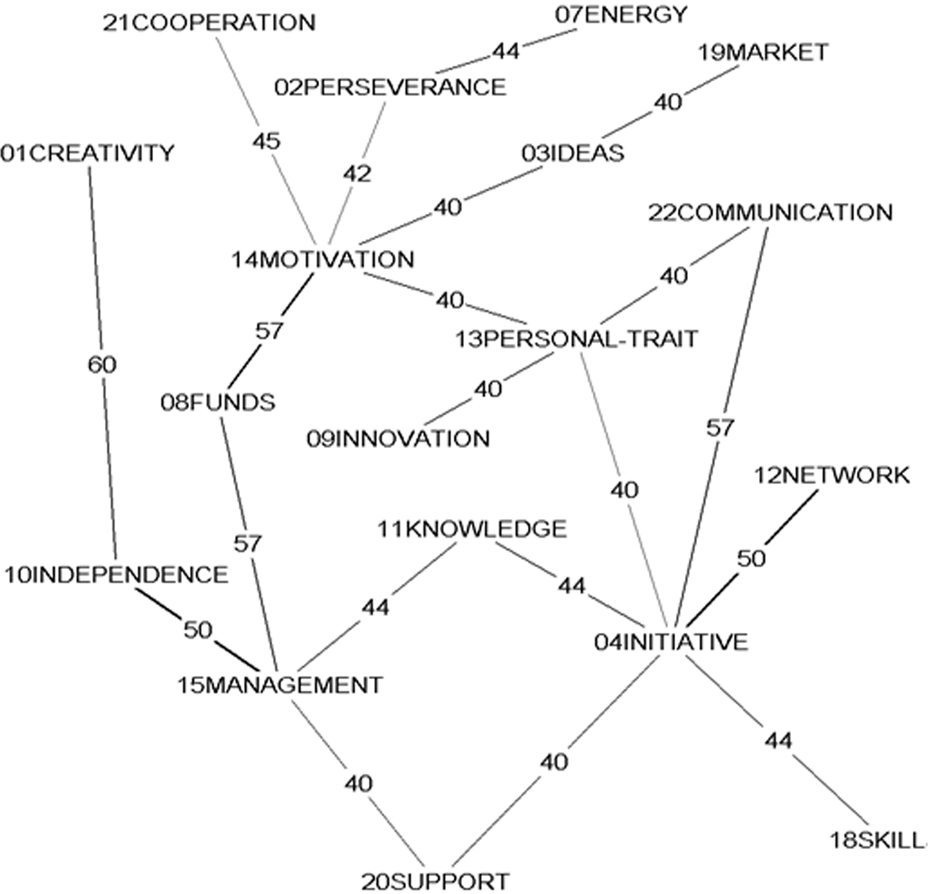
Results for students – intrapreneurship.
This figure is structured around four great stars, of which the strongest is ‘initiative’. ‘Initiative’ is characterized by correlations with drivers such as network access, communication, the support of others and having the necessary skills. Also related to this aspect is the importance of key personality traits, especially independence. A second dimension is the motivation to develop intrapreneurial actions, also associated with personality traits. Other than that, respondents frequently mentioned the importance of management, knowledge, funds and other types of support and cooperation in a company.
Figure 3 still concerns the student group, but here we are looking at the three fundamental drivers the students associated with entrepreneurship.

Results for students – entrepreneurship.
This figure has three main dimensions. The first is the motivation to be an entrepreneur, which is strongly correlated with personal traits such as courage (the third axis) and the ability to overcome difficulties. The second dimension is initiative, also a driver with a high personal aspect and related to dimensions such as communication, work and skills. Finally, organizational dimensions are necessary – specifically, management capabilities and having access to funds.
For students, the correlation between intrapreneurship and entrepreneurship matrices is high (0.32), indicating that for the students there is no significant difference between the two domains. We conclude that students have more rigid and idealized understandings of intrapreneurship and entrepreneurship, though strong resistance to adopting an entrepreneurial attitude.
Figure 4, concerning intrapreneurship drivers for teachers and professionals, is centred on creativity. Creativity is strongly linked, on the one hand, with other personality traits such as initiative and perseverance and, on the other hand, with revenue and funds. There is another, organizational dimension, in which management skills and knowledge are important. Compared with the students’ responses, the teachers and professionals attributed much more importance to creativity as a driver for entrepreneurship and intrapreneurship. Figure 5 confirms this assumption, showing the three fundamental drivers that the teachers and professionals associated with entrepreneurship.
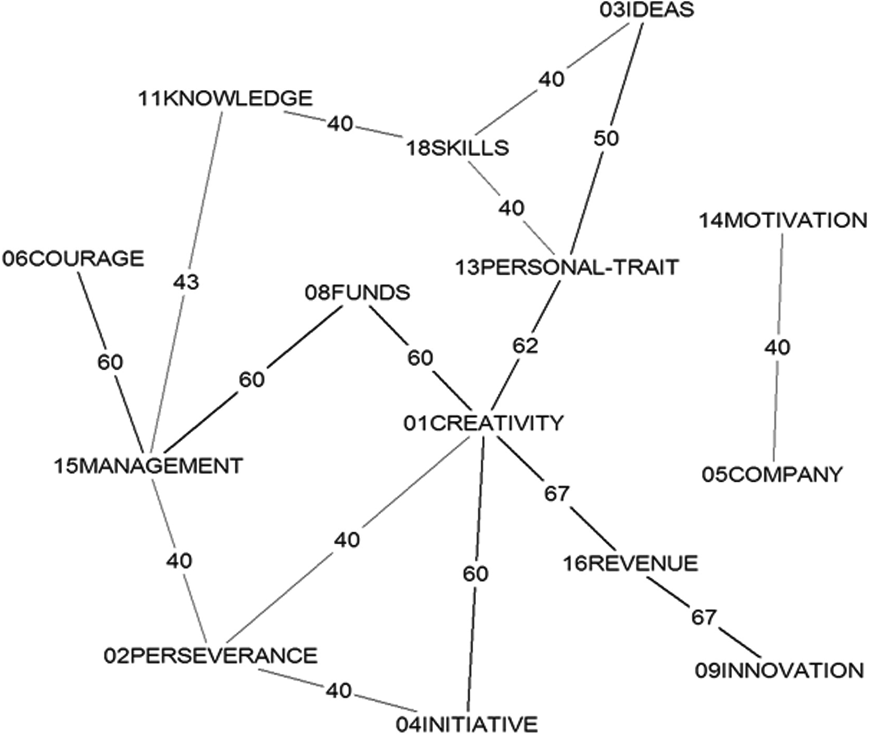
Results for teachers and professionals – intrapreneurship.
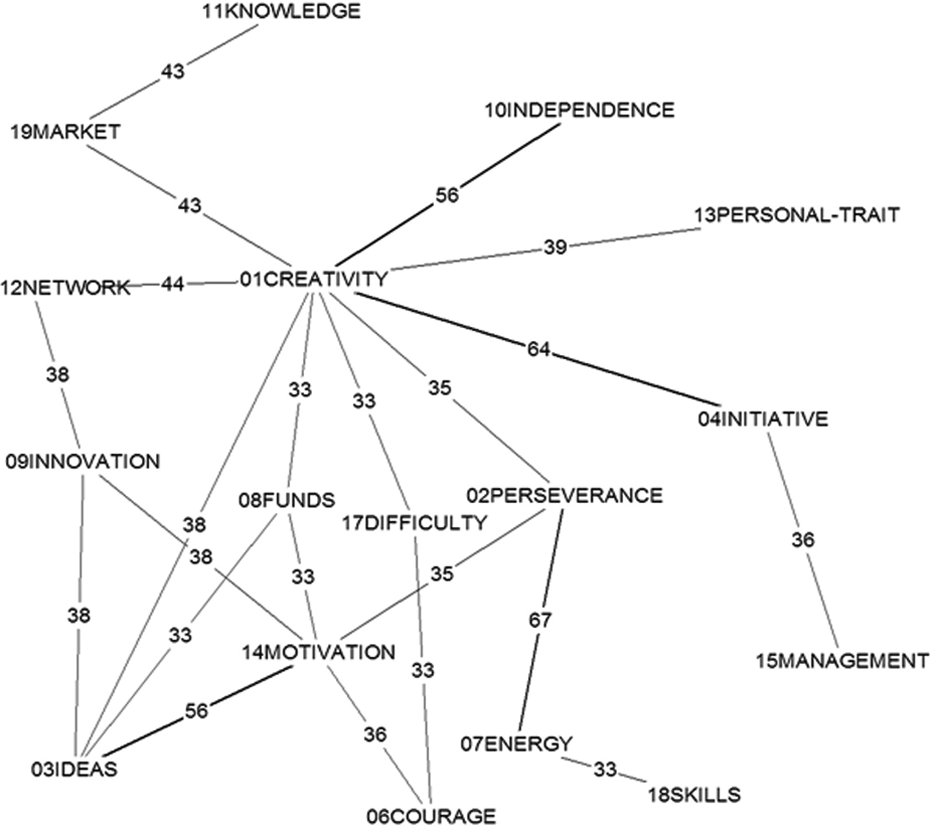
Results for teachers and professionals – entrepreneurship.
The strongest category in Figure 5 is ‘creativity’, which here has diverse meanings through co-evocation with different dimensions. Creativity is a challenging dimension, requiring perseverance, independence, a valuable network and knowledge of the creative industries market. Personality traits are decisive aspects in creative entrepreneurship attitudes and behaviours – specifically, perseverance, initiative, energy and courage. A second star is marked around motivation, a vital dimension for the generation of ideas and innovations. This figure shows that these stakeholders view the reality of the creative industries as challenging and highly demanding.
For the teachers and professionals, the difference between intrapreneurship and entrepreneurship was great, as demonstrated by the low correlation between matrices (0.25). Therefore, the graphic representations in Figures 4 and 5 show marked differences, although they both centre on creativity.
When both these groups were questioned about the topics that should be included in a training curriculum for the creative industries across Europe, the large majority (78%) pointed to teaching the specific aspects of creative industries management and the ways organizations are conceived in this sector as the key content. A significant percentage of respondents (46%) also referred to educational content that could help future professionals learn how to develop products so they could exploit market opportunities.
On the basis of these results, it appears that entrepreneurship education should be supported through training dedicated to the creative sector so that the sector can contribute still more significantly to economic development. This training must be crafted bearing in mind the cultural reality in which the future professional will work, and its content should be such to encourage entrepreneurs to be creative, whether at their place of work or in projects they develop on their own. The training should also address the gaps indicated by investors and professionals: the fact that students seem to lack an entrepreneurial attitude is a core challenge for educators in this area.
In response to these needs, we propose a circular model that follows the known effectual approach (Sarasvathy, 2007). Instead of proposing a process approach, for instance, to business plan development, our proposal focuses on students’ actual learning settings and conditions as a basis on which to build an entrepreneurial attitude. We consider this to be the best approach for film and media education and the one that best aligns with the project development and knowledge instantiation approaches previously discussed. A circular approach also emulates the current state of the art for the film business value chain (McDowell, 2015). The model is focused on the development of the learner’s entrepreneurial capacities, correcting the core flaw we detected in film schools in relation to entrepreneurial education (Figure 6).
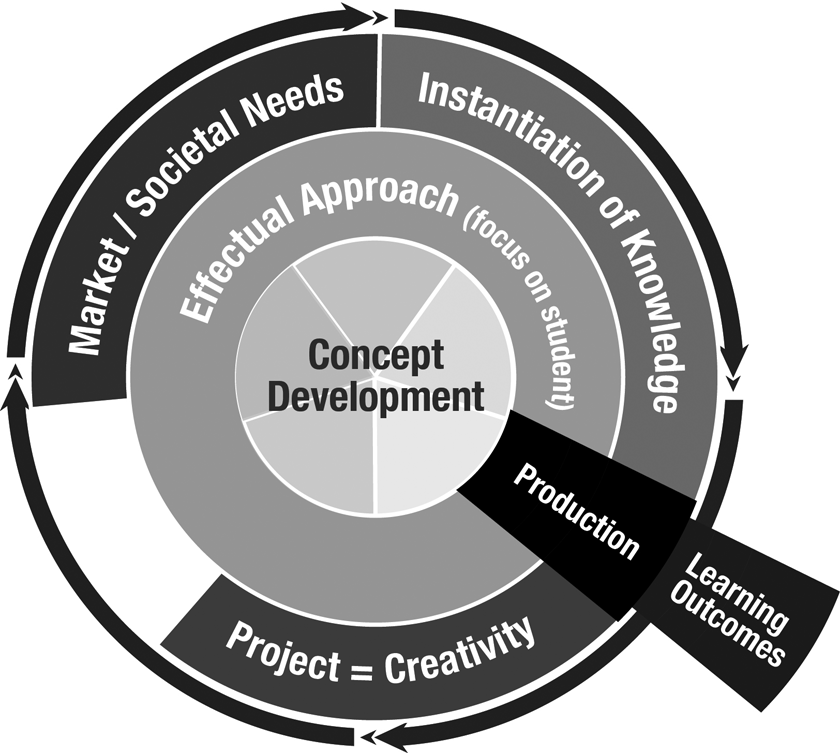
Circular model: entrepreneurship education for film and media schools.
In conclusion, our results show that students tend not to perceive entrepreneurship as a matter of choice or a job option. Personality traits, such as being proactive, persistent, brave and energetic, and not waiting to be told what to do emerge as fundamental attributes that help to overcome obstacles. Access to contact networks is also key to success. Students value motivation besides management and organizational knowledge. Other important competencies include finance, marketing and business plan knowledge. They show some reservations towards becoming entrepreneurs because they feel insecure in many of these areas. Therefore, training is of great importance.
The professionals believed that one could learn to be an entrepreneur, and so they thought that training should prepare students to become entrepreneurial. Additionally, creative industries professionals should be creative people, at the forefront of technology, proactive and free and independent to develop work in the way they think it should be done. To be an entrepreneur is not an adventure but a calculated act, in which risks need to be minimized through adequate preparation.
For many graduates, employment in the creative industries is seen as part of their learning rather than the ultimate goal. It may be part of their portfolio career development and a way of financing a start-up or gaining business experience and clients. Nevertheless, we can see that entrepreneurship education, although not in a formal manner, is already present as a mindset in many schools.
Although the relationship between entrepreneurial competences, individual initiative and self-efficacy has been evaluated in past studies in the context of management, marketing and creative media (cf. Eurydice Network, 2011, 2016; Hills et al., 2008; Matricano, 2014), the specific context of film and multimedia students in higher education has remained largely unexplored. In the course of our research, students manifested a will to create their own companies and, while aware that they will need the skills to manage those ventures, paradoxically they do not portray themselves as entrepreneurs.
Structural and infrastructural factors impede effective dialogue between academics and the creative industry. Collaborations between the creative industries and art and media departments are likely to be an important aspect of entrepreneurship education. Developing entrepreneurship education in creative subjects without proper integration with the school’s other activities will probably lead to failure. Our proposed circular model is intended to address this need for integration by placing the project (specifically, short-fiction final course projects) at the centre of the process.
Two areas in particular that appear to benefit from collaboration with the industry are those of team skills and interdisciplinary work. Implementing work-based learning and training through project-in-development methodologies is clearly an effective means of supporting entrepreneurship education. Many creative industry professionals favour apprenticeship models as assisting students to develop their employability and occupational skills. This symbiosis between the pedagogical approach and the learning environment is addressed in our model via the use of both effectual learning and knowledge instantiation.
Conclusions
The implementation of entrepreneurship education in the area of film and media arts, and more broadly in all educational areas associated with the creative industries, could have a strong impact in the HEIs that follow this path of development, since it will bring their activities closer to the stakeholders with whom they work and will also assure a greater legitimation of their educational model and the outcomes it delivers.
Confirming the results of previous studies in the areas of creative media (Clews, 2007; Mietzner and Kamprath, 2013), our research points to the importance of intermingling highly occupation- and practitioner-oriented training in film and digital media with equally relevant industry knowledge and competences, such as negotiation, funding and financial skills. This finding is in line with previously defined portfolios for competences in this area: for example, Mietzner and Kamprath (2013) focus on the intersection of professional, methodological and personal/social competences as critical for entrepreneurship education in the creative industries. It is also in line with EntreCompt’s understanding (Bacigalupo et al., 2016) of entrepreneurship for the creative industries as a multidimensional competence that promotes the transformation of opportunities into action by mobilizing resources – precisely what our model indicates via its circular flow of learning grounded in project development.
Film and art schools have always been differentiated from more general higher education development policies and pedagogical approaches because they have, since their inception, focused on learner-centred and problem-based learning, with an emphasis on training through projects in development as a key activity. The schools are a significant feature in the European landscape of creative education provision and, like schools in other creative and artistic areas, they also call for distinctive pedagogies and forms of evaluation. Based on our research findings, we have proposed in this article a pedagogical model for entrepreneurship education for film and media schools which is aligned with other educational models for the creative industries and which addresses the two gaps we identify at the outset.
European reports (European Commission, 2010; Nielsén and Power, 2011) have highlighted the importance of the creative industries in economic development strategy, especially in light of the sustainable growth of the sector in the coming years that will increase its impact, especially regarding employment. Reinforcing entrepreneurship education in film and media schools will surely contribute to this objective. Because the creative sector produces highly innovative companies with ‘great economic potential’ and is ‘one of Europe’s most dynamic sectors’ (Biveiniene, 2015), there is a need for definitive action by HEIs to respond to the opportunities and challenges of the field. Our research shows that there is still much to do and that there is a clear need to reinforce entrepreneurship education initiatives to propel innovation in the sector even further.
Footnotes
Authors’ note
This article draws on an extended study published in ebook format (Damásio et al., 2016).
Acknowledgement
We gratefully acknowledge the contribution of the late Professor Francisco da Costa Pereira to this article. He will be missed.
Declaration of conflicting interests
The author(s) declared no potential conflicts of interest with respect to the research, authorship, and/or publication of this article.
Funding
The author(s) disclosed receipt of the following financial support for the research, authorship, and/or publication of this article: The work on which this article is based was funded by the European Union under the project CIAKL II – the Cinema and Industry Alliance for Knowledge and Learning funded within the scope of the Erasmus + Knowledge Alliances programme (Ref. EAC-19-2011-038).