







Abstract
The diversity of the student population in the United Kingdom’s higher education sector evokes a vision of the world as a global village. The effect of this diversity on the UK economy has been considerable. Nevertheless, the research attention given to how overseas students can become integrated into UK culture remains inadequate. This interpretive research study helps to fill that gap by exploring the acculturation of overseas students in the United Kingdom using a London-based university as the contextual platform. It discusses the challenges faced by overseas students, which include culture shock, discrimination and limited opportunities for interpersonal relationships, and looks at how these challenges might be addressed. The article suggests strategic directions for higher education institutions to create value for their target students in the highly competitive education sector.
Multiculturalism is increasingly in evidence in the United Kingdom (see, e.g., Gbadamosi, 2015; ONS, 2011; Taylor-Gooby and Waite, 2014). The trend has significant implications for the economy – offering education to overseas students has been a source of income for many higher education institutions (HEIs) for some time. Nevertheless, there is a dearth of recent empirical studies that explore specifically how overseas students can become integrated into the UK system given the cultural, social and educational structures in place in their home countries. With this gap in the literature in mind, this article examines the acculturation of overseas students at a London-based university. The study addresses several key questions: How do overseas students perceive and cope with ‘culture shock’ on arrival at the UK institution in relation to the differences in pedagogical and curricular approaches between their host and home countries? Do their families and social interactions enhance or inhibit their acculturation in this context, and how could the acculturation process be better handled? What specific interventions would be helpful to ease them into the system? Addressing these questions effectively will enrich our understanding of the acculturation of overseas students in the United Kingdom’s higher education sector.
Theoretical background
Internationalization of UK education: A conceptual overview
UK HEIs have been enthusiastic about attracting overseas students into the country (McMahon, 2011). In a survey of 115 countries concerning the internationalization of higher education, Hsieh (2012) finds that 87% of institutions include internationalization as part of their overall strategic plan. The enrolment of international students contributed US$27 billion to the US economy in 2014 (Guillotin and Mangematin, 2015). While international students travel to a number of countries, including Germany, France, Ireland, Italy, Spain and the United States, to fulfil their higher education ambitions, the United Kingdom has been identified as the second most popular destination (McClelland and Gandy, 2012). Meanwhile, UK HEIs have been confronted with various challenges in recent years, including competition and diminishing university funding (Hemsley-Brown and Oplatka, 2006; Hemsley-Brown, 2012; Leach, 2013). Competition takes different forms and centres around how universities position themselves in the marketplace (Webster, 2003; Yeadon-Lee and Hall, 2013). Universities with strong brands, for example, have looked to the establishment of overseas branches as an effective strategy for increasing their share of the overseas students market and the popularity of their courses (Wilkins and Huisman, 2011). Some are looking at new and exciting ways to modify traditional methods of education delivery by using new technology in teaching, systematically collecting feedback from students (Pence and Wulf, 2009; Zarraonandia et al., 2013) and adopting Facebook as a learning management system substitute, especially among young students (Wang et al., 2012). These are now the critical strategies in the competition to attract students.
It has been suggested that the internal cohesion of the interdependent departments in an institution is crucial to a good internationalization strategy (Jiang and Carpenter, 2013). As the target market for these institutions examines its options, the criteria for doing so continue to expand. Woodley and Wilson (2002) cite Levin (1976) to highlight four important criteria for evaluating the extent to which a nation’s educational system offers equality. According to those authors, these key criteria are equality of access, of results, of participation and of effects on life chances. Wilkins and Hulsman (2011) examine the determinants of international students’ destination choices by means of the push–pull model. Push factors are those that operate within the home country, such as a lack of the desired courses in the indigenous institutions. Pull factors operate in the host country and are those that make it a desirable place in which to study or live. Wilkins and Hulsman (2011) found that push factors had minimal influence on the students’ choice of country and institution, and that pull factors were more significant. They identified common pull factors articulated in such phrases as ‘overseas study is best for employment’, ‘improve my English overseas’ and ‘quality of education in the UK’ (Wilkins and Hulsman, 2011: 78).
There is a contention that racism is a potent, detrimental force in UK schools and that it is endemic in society (Cole and Stuart, 2005; Siraj–Blatchford, 1991), with a consequent need for policymakers to challenge it at various levels (Archer and Francis, 2005; Warren, 2007). Krahe et al. (2005), in a study on perceived discrimination of international visitors to universities in Germany and the United Kingdom, found that the respondents who could be identified as foreign by their appearance had experienced more discrimination. However, apart from the fact that these studies are now somewhat dated (which questions the extent to which we can rely on the arguments), there remains a need for further and deeper inquiry into how such a perception might impact the activities of overseas students in UK HEIs in the current climate. Clearly, there are lingering questions, the answers to which will enrich our knowledge of the UK education system vis-à-vis overseas students. For example, to what extent is discrimination or racism a key factor in HEIs today? In a study of Chinese students, Hsieh (2012) found that a lack of understanding of cultural connotations and background could have a significant impact on intercultural communication as well as teaching activities. So, there seems to be a strong case for the discussion of culture in relation to both the home and host cultural systems of overseas students. Accordingly, Hsieh (2012) suggests that more cultural awareness training for both lecturers and students could foster intercultural relationships and communication.
Overseas students’ acculturation: Integrative perspectives
Culture and acculturation are inextricably linked and are very significant for both international business and individual career development (Fregidou-Malama and Hyder, 2015; Gbadamosi, 2012; Singh and Bartikowski, 2009; Solomon et al., 2016; Viegas–Pires, 2013). A person’s culture defines the overall priorities he or she attaches to various activities (Solomon et al., 2016). It is therefore logical to anticipate some degree of linkage between cultural values and overseas students’ appetite for foreign education in a particular society. Meanwhile, drawing from Berry (1980), Martin (2005) traces the roots of acculturation back to anthropological work in 1880 and the attempt to understand the changes that occur when autonomous cultures interact. Thus it seems appropriate to try to ascertain how overseas students in the United Kingdom respond to their host cultural environment academically, socially and culturally as they pursue their studies.
The notion of ‘culture shock’ is central to the interplay between culture and acculturation. Culture shock is defined as the anxiety that results from the loss of the familiar signs and symbols of social intercourse and the encounter with other cues that are strange (Hall, 1959, in Brown et al., 2010). There have been various theoretical postulations concerning how people experience culture shock. In the business world, it has been shown that success in cross-cultural assignments depends on the ability of the expatriate to adjust to and master a new culture (Friedman et al., 2009), since cultural intelligence serves as a predictor of cross-cultural effectiveness (Chen et al., 2011). Individuals with high cultural intelligence are able to adjust more easily to culturally diverse circumstances (Chen et al., 2011; Earley and Ang, 2003). Kelly and Morgan (2012) show the incidence of cultural shock for international students accustomed to examination as a form of assessment in their home country who found themselves subject to other forms in use in the United Kingdom. Ragavan (2009) notes that international students can be confronted with overwhelming emotion in a strange cultural environment. The impact varies: The effect of a learning environment may be different for different groups of students (Severiens and Wolff, 2008). In a study that focuses on Chinese students in the United Kingdom, McMahon (2011) reports that the main problems for the students arising from living and studying in the United Kingdom were difficulty in meeting British students, financial concerns and a lack of understanding of the health care system. McMahon identifies other factors as the importance of academic success, a lack of confidence in the English language and a reluctance to ask questions in class. In a study on attitudes to seeking professional help among Chinese students in the United Kingdom, Tang et al. (2012) found that the students exhibited significantly less interpersonal openness than British students.
As students experience intercultural adjustments, we can identify various reasons for their culture shock. Goldstein and Keller (2015) found that students tended to attribute the shock to differences in the external environment, such as language and surroundings, rather than to internal affective and cognitive factors such as poor stress management. They also found that more students with a higher level of cultural competence attributed their shock to internal causes than did those with low travel experience.
Given the impact of culture shock on people moving to a new environment, the issue of how to overcome this challenge has attracted considerable attention. It is not uncommon for HEIs to appoint dedicated staff in an attempt to alleviate the problem. For instance, Ragavan (2009) reports on the appointment of an International Student Tutor at Newcastle Law School to help foreign students find their feet in the new cultural system. Kelly and Morgan (2012) argue that adjustments are needed by both institutions and international students for a more effective education support system to emerge and overcome culture shock. Elliot et al. (2015) emphasize that the academic acculturation of foreign students will involve managing both the old and the new ecological systems. This study is underpinned by Ecological Systems Theory (Bronfenbrenner 1979, 1994). According to Elliot et al. (2015), this theory envisages layered systems that stress a person’s interactions with the environment as contexts for development, with the individual at the core of the microsystem.
Li (2012), in a study examining the benefits of wider social contact in relation to the values, religious beliefs and sense of identity of Chinese postgraduate students, describes a case in which students whose support needs were not met by the institution could receive assistance from a local volunteer group, many of whose members were Christians. Similarly, Khawaja and Stallman (2011) find that joining social organizations can be a significant help to students striving to cope in a new cultural environment. They also highlight other coping strategies, such as developing time management, good organization, learning to prioritize tasks and learning about the interests of domestic students. Khawaja and Stallman’s study relates to the Australian context; the extent to which their findings are also applicable to the UK context is as yet unclear and merits research. Meanwhile, the above observations lend some support to Findlay et al.’s (2012) claim that studying abroad helps international students to accrue social and cultural capital. Findlay et al. also suggest that the idea of a ‘world-class’ education is closely linked to a mobility culture that attaches symbolic capital to international living. Nevertheless, such arguments tend not to take sufficient account of issues relating to overseas students’ acculturation, especially in the UK education sector. This therefore remains fertile ground for research.
Methodology
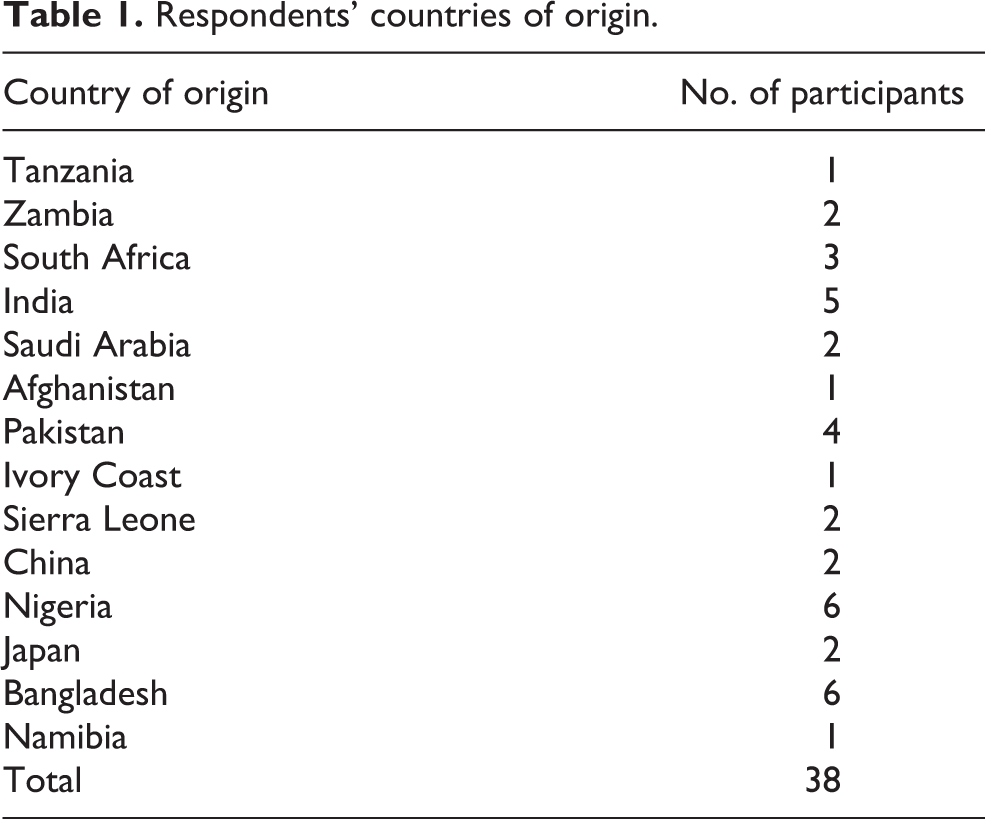
Figure 1 provides an overview of the methodology adopted in this study – as will be seen, the study is rooted in the interpretive research paradigm. Four focus group discussions and thirteen individual interviews were conducted with overseas students at a post-1992 London-based university during the 2013–2014 academic session. All the focus groups and the semi-structured interviews were recorded and subsequently transcribed for analysis. Purposive and snowballing sampling methods were used for the recruitment of the participants on the university campus, with assistance from a paid intern. The participants’ details in relation to their countries of origin are shown in Table 1. Demographically, 10 were married, 26 were single and 2 were divorced. Twenty-two were in the 18–29 age category, 9 were 30–39, 5 were 40–49 and 2 were over 50. The majority, 20, were pursuing a first degree programme, while 14 were enrolled in different master’s programmes and the remaining 4 were studying in various other programmes at the university.
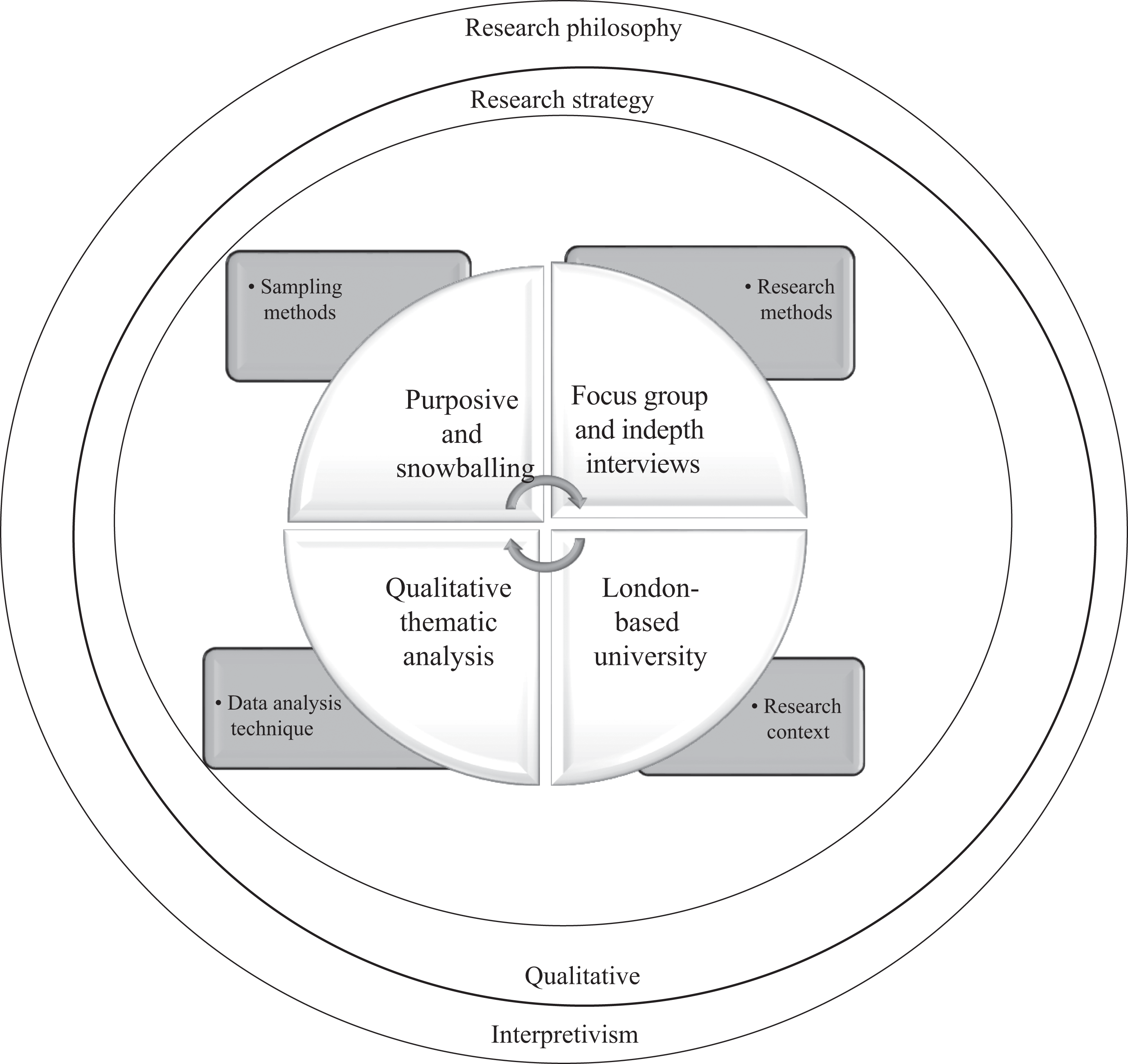
Overview of research methodology.
Respondents’ countries of origin.
The issues of anonymity and confidentiality, voluntary participation, protection from harm and the right to privacy were duly adhered to, in line with the recommendations of Fontana and Frey (1998) and Collis and Hussey (2014). In addition, the study was subject to the scrutiny of the university’s Ethics Committee before it was undertaken. The qualitative thematic data analysis method (Miles and Huberman, 1994) was used to identify themes emerging from the data.
The study is compliant with communicative validity, pragmatic validity and transgressive validity, as proposed by Sandberg (2005) for justifying knowledge developed in interpretive studies. Communicative validity is about ensuring clarity of expression and was achieved during data collection, analysis and discussion of the findings. In this framework, pragmatic validity concerned the need to ascertain whether the respondents had provided undistorted views of their activities and experiences. The use of follow-up questions during the interviews was adopted to achieve this, as recommended by Sandberg (2005). Finally, ensuring transgressive validity required an awareness of certain aspects of the project that might have been taken for granted. To address this requirement, researchers should look out for ‘negative cases’ (Lincoln and Guba, 1985), also known as ‘deviance cases’ (Peräkylä, 1997), in addition to coherence. This was also done. Specifically, while a majority of the respondents mentioned culture shock, social interactions and lack of institutional support as some of the challenges they faced in settling into the university, there were some exceptional responses which indicated that students who already had some acquaintances in the UK system were able to acclimatize more quickly through those existing relationships. Furthermore, different views of some respondents concerning institutional support suggested that there was some institutional support for international students in the university, but that more could be done.
Summary of findings
The convergent views of the respondents highlight several interrelated and sometimes overlapping themes: culture shock, personal challenges, integration, institutional support, government policy and the value of a UK education (see Figure 2). These themes are discussed below.
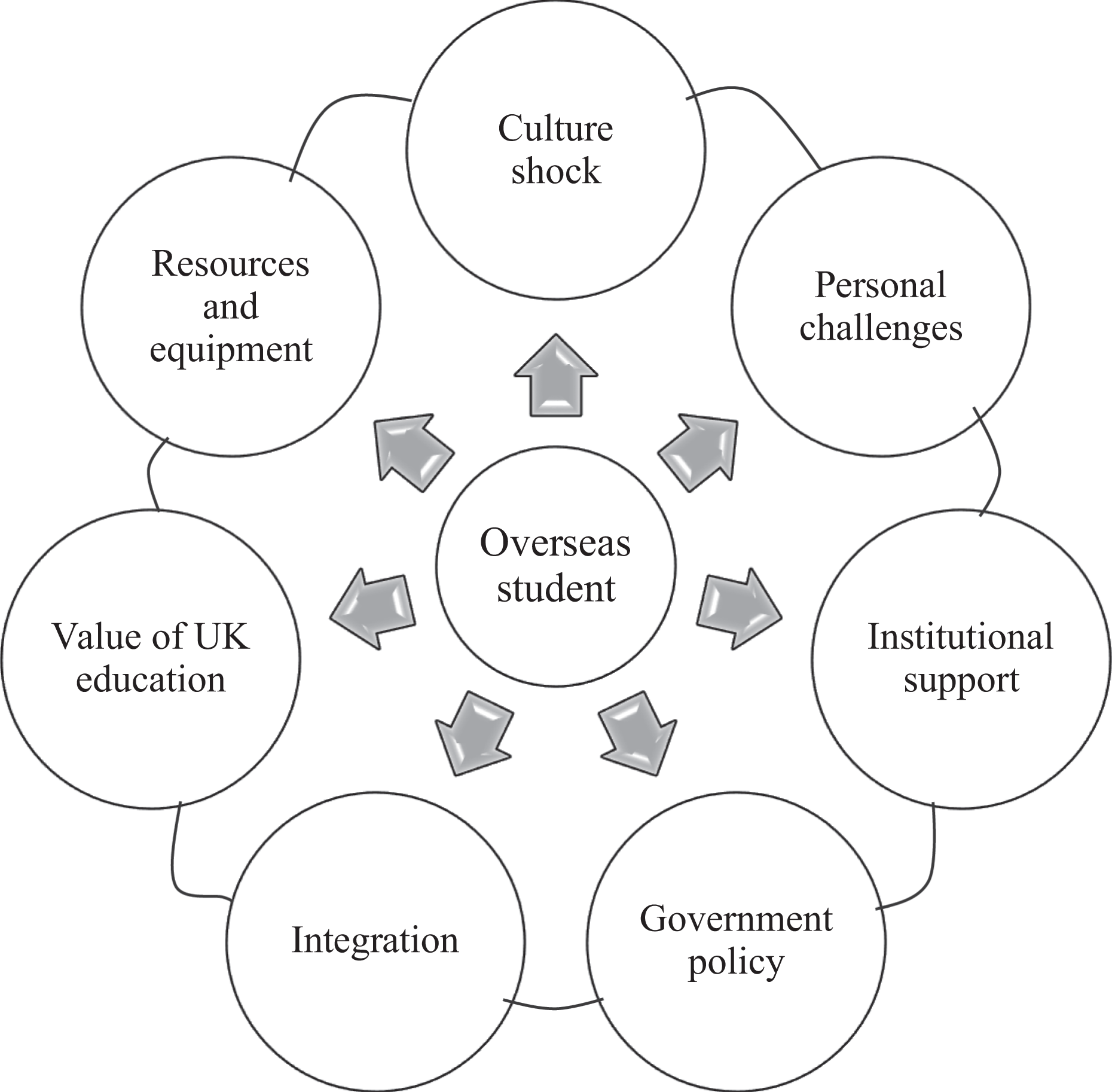
Overseas students’ acculturation.
Culture shock
The participants experienced considerable culture shock as they encountered various factors and practices that seemed strange in light of the systems in their home countries. These differences ranged from issues specifically relating to their education (some highlighted the ‘strange’ demands of the education system, like citations, referencing and criticality in essay writing) to more tangential matters, such as transportation. For example: Okay. When I came here newly, it was actually difficult for me to adjust because even though we learn in English and we knew English back home, you cannot compare, because this is the origin of English. The way they use their sentences is quite different […] So I find it difficult to understand them, and they also find it difficult to understand me. (Female, married, over 50 age group) For me, adapting to a new culture was a challenge, so it took me some time to get used to the transport system and keeping up with appointments. (Male, single, 18–29 age group) I can still remember that experience […] I got an email from the office that I should come for a meeting about my work. I thought, oh! Why, why now? I was told I did not reference the authors properly in my work […] It was as if my life was falling apart because I had other issues about my accommodation that I was battling with. I think I have now learnt my lessons. (Female, single, 18–29 age group) For me, my perception is that British education is of a high standard compared to the one in my own country […] It is stable and you can predict when you are starting and when you are going to finish. (Male, married, 40–49 age group)
Personal challenges
The personal challenges identified by the participants were wide-ranging. Issues outside their academic studies included finance, accommodation and the difficulty in interacting socially, especially with people who were familiar with the value system of the host country and therefore who could be of considerable help to them with regard to their acculturation. In Bangladesh, we depend on our parents. We do not have to do any job, nothing. Our tuition fees and our expenses, everything, my parents pay, but here I need to work. (Female, single, 18–29 age group) The rent is very high and also they ask, ‘Are you a student?’ They do not like students. They want some professionals […] Because I think students are just here for a short period, and you can move anytime. (Female, single, 30–39 age group) Ah, something that was totally new to me when I came to the UK was the fact that I had to back up all of my arguments […] so that I can make [them] valid […] In the UK you have to read the text, come up with the arguments and then back up those arguments and that was totally new to me. (Female, single, 30–39 age group)
Integration
The interactions of international students with other people in the United Kingdom came to the fore from different perspectives. First, some respondents felt that their relationships and the presence of their spouses with them in the United Kingdom had helped them emotionally to deal with the stress and demands of their studies. On the other hand, coping with children could make things more difficult: There are two ways. A husband makes it easier because of paying some rent and then some support as well, but when it comes to children it is quite difficult studying and taking care of children. (Female, married, 40–49 age group) No, it was not easy. The first friends I had were international students as well, yes. Sometimes they [the British students] do not want to talk to you, looking at your accent, so you have to keep going. (Female, divorced, 40–49 age group) It is not very easy […] But my landlady and landlord and the daughter are good, maybe because I have stayed a long time, almost four months. We see each other every day and communicate. When we know each other, it is easier to become friends. (Female, single, 18–29 age group) I have a lot of family here. They helped me quite a lot in the beginning […]. They helped me find my way around, told me how to travel, […] how to use the Tube maps. In my country, there is no Tube and no bus system like here, so it took me a couple of months to get to know it. (Male, single, 18–29 age group) […] the first day it was hard to come here for me, because I think, ‘Yes, I know nobody’, but after just one or two weeks I met my friend and it is good. But also I used a lot of blogs, online blogs. People shared their UK experience, and it made me less alone […] That helps a lot. (Male, single, 18–29 age group)
Institutional support and mentorship
The participants acknowledged that there were some institutional support programmes in place in the university. Most of these are in the form of academic professional support offered by tutors and personal tutors with whom students can discuss personal concerns and anxieties. I think they [the university] helped me to be confident, because the teachers, the international office staff, helped me in every situation. I was sick, so my teacher helped me to go to a walk-in centre. He […] understood me, so these situations make my life easier. (Female, single, 18–29 age group) Sometimes I feel like they need to sit with international students, because we are from different countries, and obviously different systems in different countries. They should not think that we use the system back home. So sometimes I feel they should spend more time with international students […] but sometimes I feel that they should ask, ‘Are you familiar with the system? What do you use?’ so that they can understand the gap or the lack I have, and how to help […] (Male, single, 30–39 age group)
Resources and equipment
The study also pinpointed the impact of the knowledge gap in the use of technology and resources on the experience of the international students. The highly sophisticated equipment and educational resources in the UK universities might not have been available to the participants in their home country. In some cases, respondents feel overwhelmed by these resources: My background is I studied medicine, but there are so many things that I am using here for the first time. I work in a lab. I have to work in a laboratory here for my course, for my thesis, so there are so many instruments that are very new for me. I heard about them, but I know some instruments are very expensive. Back home we cannot provide them, so this is good learning for me. It is more practically based. (Female, married, 40–49 age group) When I look at the UK system, and especially at [my institution], I would say there is access to the textbooks that you need. They are readily available, and especially journals. I like the idea of having journals that I can turn to online in the UK system. In a sense, personally, I find the UK system much easier, because you do not have to buy 20 textbooks. (Male, single, 18–29 age group)
Government policy
Respondents stressed the importance of government policy in relation to their educational experience in the United Kingdom and specifically highlighted the challenges associated with visa regulations. They perceived an inherent discrimination in the system. In their view, home students were favoured over international students with regard to policies affecting work and employment opportunities. They felt that restrictions on the type and extent of job opportunities available to international students constituted a form of inequality in the system: I think also […] as an international student, all you have is the Internet. The Internet is your book, is your information, your source. So I think they should be more explicit and say, especially to international students, that, ‘If you get a visa it is hard to get a job’ […] The international office, because it is there specifically for the international students, should help them to get jobs, or just circulate within the university, so that during the summer holidays they do not go out there to look for work, they work within the institution, so that they do not struggle so much. (Male, single, 18–29 age group) We are all human; international and UK students […] If a UK student would be allowed to work more […] I think that same right should be given to international students. We all have equal rights, so I think that is an injustice, and that has to be dealt with. (Female, single, 30–39 age group)
Value of British education
Much as they highlighted these various challenges, the respondents nevertheless cherished the quality and value of the education they were experiencing, believing that it gave them advantages over their peers. They stressed that the quality of the education was critical and should be maintained: The quality is good, and […] In a sense, I would still say it should not be watered down just because somebody is an international student […] If anything, it should be made more reasonably challenging, so that there is a perception that we want these students to come out as experts in their field […] and we want them to come out as graduates who know what they are talking about in their field. (Female, divorced, aged 50 and over)
Discussion
This article highlights acculturation challenges faced by overseas students in the UK education system. Some of these challenges are related directly to the respondents’ studies and some to other aspects of their lives. They experience culture shock in various ways. The challenges include such matters as the British climate, adjusting to new curricula and pedagogy, discrimination and social life. The variety of concerns identified supports the understanding that culture is a wide-ranging phenomenon encapsulating numerous defining factors of a particular society (Mühlbacher et al., 2006). The study’s findings are also consistent with those of Kelly and Morgan (2012) and Ragavan (2009), which examine overseas students’ culture shock in unfamiliar cultural terrain.
The significance of relationships is generally acknowledged. The students’ responses in this study confirmed the positive impact of supportive relationships with spouses, friends and relatives – especially those who were familiar with UK culture. Also in this category were relationships established through social media. However, the students also stressed the difficulty of making British friends. Li (2012) found that the support provided by volunteers to help overseas Chinese students was very important. Although there is a slight difference in the scope of support offered in the case studied by Li and that in the present study, both studies find that the social support provided helped students to overcome the problem of culture shock and loneliness in a new environment.
The discrepancy between the United Kingdom’s curricula and pedagogy and those in the participants’ countries of origin occupies a central part of this study. Although the students acknowledged that there was some institutional support in place at the university, it was not considered to be addressing the issues adequately. As the literature suggests, institutional support frameworks are in place in various HEIs (Hsieh, 2012; Wilkins and Hulsman, 2011; Zarraonandia et al., 2013), but the extent to which these frameworks address the overall acculturation challenge of overseas students remains a critical question. This study suggests that institutions could do better by incorporating into their acculturation schemes students who have considerable knowledge of local values and culture. The participants felt that they could discuss issues more freely with other students than with tutors. Hence, while the introduction of an international student tutor could help to an extent, the inclusion of students with knowledge of the cultural values of both the country of origin and the host country could help a great deal. A combination of T2S and S2S could lead to highly effective acculturation groups for overseas students, which might be called acculturation focus groups. Such a group could become the reference point for all the various challenges overseas students encounter. Hsieh (2012) has suggested cultural training as a means of fostering intercultural relationships: This study supports that approach and extends it by recommending the implementation of acculturation mentorship with a rich mix of people in small groups to ease the students into the new cultural system.
The participants identified the discrimination they had experienced in various forms and placed great emphasis on government policy in relation to visa and student work regulations. Although many previous studies have also highlighted discrimination experienced by overseas students in the United Kingdom (see, e.g., Archer and Francis, 2005; Krahe et al., 2005; Warren, 2007), the discussion has typically not focused as critically on government visa regulation as did the participants in this study. The scale of the disappointment articulated may be related to a tendency among international students to have high expectations of the UK business environment prior to their arrival without properly exploring the associated limitations.
It is interesting to note the high value the students attached to a UK education, regarding it as a competitive advantage over their contemporaries in their home countries. This perception may well serve to counterbalance their emotional stress in the new cultural environment. It falls into the category of the pull factors that attract overseas students to the United Kingdom, as explained by Wilkins and Hulsman (2011).
Implications
The study has theoretical and managerial implications. Theoretically, it contributes to the literature on international education, ethnic minority groups and acculturation. While various studies have looked at specific groups of overseas students, and others have explored specific cross-cultural aspects of overseas students’ experiences, the diversity in the sample of this study strengthens certain positions on the challenges facing these students. The findings reveal various key points in common among the participating students’ perceptions, despite their different nationalities, and this convergence of views elucidates acculturation challenges that still need to be adequately addressed.
The article also has managerial implications. While there are many factors that constitute pull factors for HEIs – such as, among many others, a wide range of courses, world-class status and a desirable location – the attractiveness of an institution for overseas students could be significantly enhanced by the implementation of structured programmes to aid successful acculturation in the United Kingdom. The use of acculturation focus groups, as discussed above, with the inclusion of both faculty members and students in the team, is likely to especially beneficial. A closely related recommendation of this study is that HEIs should review and where necessary reform their induction programmes, so that problems identified in this study, including the handling of equipment, students’ personal challenges and social integration, can be addressed at the outset, before the students are fully embarked on their studies. While induction programmes are ubiquitous in UK HEIs, the responses of the participants suggest that they may need review and reinvigoration, so that the induction process will have an enduring impact on an overseas student’s overall experience. In an increasingly competitive educational environment, the presence of a strong and effective induction programme might constitute a strong ‘selling point’ for a UK university aiming to attract students from other countries and cultures.
Concerning employability, the study highlights two factors. First, there is a need for a more radical approach to securing and organizing part-time employment opportunities for these students during their period of study, by such means as developing strategic relationships with employers and organizing internship schemes. Although employability issues are being addressed to an extent in many HEIs, it could be argued that there is still a need for more proactive responses. Second, there is a need to manage students’ expectations concerning employment so that they are aware of the limited opportunities available to them within the scope of their status before arriving in the United Kingdom.
In addition to its implications for higher education institutions, this study may also indicate strategic directions for various government agencies, non-governmental organizations and other stakeholders with an interest in international students and their acculturation. For example, government policy on overseas students could be reviewed and made more welcoming. Given that the attraction of international students contributes to the health of the national economy, the government needs to maintain the country’s competitiveness as a preferred destination for higher education.
Conclusions
This exploration of the acculturation of overseas students in the United Kingdom uncovers a number of interrelated issues. They include, among other things, the challenges that confront students in relation to culture shock, interpersonal relationships, discrimination and institutional support. However, the study also shows that students find succour from social interactions they develop in the country and from spouses, family members and friends. Social media have also opened opportunities for them to interact with people who are familiar with UK culture. The respondents in the study noted that adding S2S support to existing institutional support (T2S) would create a robust and more effective acculturation programme. Interestingly, their perception of the highly rated UK education system reinforces their determination to overcome the various challenges they face.
With regard to further research, it is recommended that the student sample be extended to various institutions and cities of the United Kingdom to produce a wider and deeper insight. Such research would enrich our understanding of the cultural difficulties of overseas students in the United Kingdom and the various coping mechanisms that might be adopted.
Footnotes
Acknowledgement
The author gratefully acknowledges funding support from the UEL Undergraduate Research Internship Scheme (2014) for this project.
Declaration of conflicting interests
The author(s) declared no potential conflicts of interest with respect to the research, authorship, and/or publication of this article.
Funding
The author(s) disclosed receipt of the following financial support for the research, authorship, and/or publication of this article: This project was supported by the UEL Undergraduate Research Internship Scheme (2014).