







Abstract
Partnerships between higher education institutions (HEIs) and firms mediated by students’ curricular internships allow increased mutual benefits in the form of the exchange of knowledge and innovation. This study investigates these relationships by testing various hypotheses to measure the influence of certain factors on the student’s personal involvement in curricular internships organized through HEI–firm partnerships. Based on a final sample of 215 students on various degree courses at two Portuguese HEIs (a university and a polytechnic), the results obtained show that students assess internships very positively in all respects (organization of the internship, the HEI’s orientation, the host institution (HI) and the HI’s orientation). This suggests that the professional internships provided by HEI–firm partnerships play a crucial role in students’ entry into a labour market characterized by strong competition and relational aggressiveness. Implications for theory and practice are also presented.
The significant increase in partnerships between higher education institutions (HEIs) and firms has been promoted by the emergence of an economy based on knowledge, globalization, competition, organizations’ budget restrictions and, in the case of HEIs, by a general reduction in public finance for research (Allen, 1997; Arora and Gambardella, 1994; Cassiman and Veugelers, 2007; Frenz and Ietto-Gillies, 2009). There are now collaborative programmes across Europe between HEIs and firms, given the importance of these strategic relationships in industrialized countries, which are always seeking to boost their economic growth and development (Cunningham and Link, 2015). Over time, this type of collaboration has been extended to more countries and universities in the periphery, with the achievement of new technological developments and an increase in the knowledge base of all parties involved (Caloghirou et al., 2001; Lukasik, 2015).
In this context, this intense formation of cooperative relationships between HEIs and firms can produce benefits for society in general as well as for the participants (Siegel et al., 2003). It can be assumed that such cooperation promotes the exchange of knowledge and the resulting technological development (Bekkers and Bodas Freitas, 2008). It is the fruit of strong interaction and relationships in HEI–firm partnerships worldwide, increasingly building relationships based on knowledge (Cricelli and Grimaldi, 2010). Examples of these partnerships are discussed in various studies that address their impact and the benefits that accrue to those involved (Hussain et al., 2004; Lee and Win, 2004; Lehrer et al., 2009; Powers, 2003; Reich, 2002; Woolgar, 2007).
The increase in this type of interorganizational cooperation is due to mutual effort and often due to the pressure felt by the parties, stemming from the growing need for HEIs to adapt to firms’ requirements and the need in firms for a highly qualified workforce that only HEIs can train (Giuliani and Arza, 2009; Meyer-Krahmer and Schmoch, 1998). This pressure on HEIs and firms encourages their quantitative and qualitative development by promoting competitiveness based on innovation capacity and knowledge, achieved via exchanges between the academic and business worlds (Coombs et al., 2003; Dess and Shaw, 2001; Perkmann et al., 2013).
In fact, the creation and application of new knowledge is one of the main drivers of economic growth, with HEIs being an important source of knowledge, especially in the areas of science and technology (Cohen, 2002). The transfer of knowledge from HEIs to firms is therefore of significant importance for a country’s economic development and cannot be neglected (McMillan et al., 2000; Narin et al., 1997). Various empirical studies have analysed the process of knowledge transfer between HEIs and firms, demonstrating that academic publications and patents are fundamental inputs for industrial innovation (Cohen, 2002; Gübeli and Doloreux, 2005; Kingsley et al., 1996; McMillan et al., 2000; Meyer-Krahmer and Schmoch, 1998; Monjon and Waelbroeck, 2003; Narin et al., 1997; Zucker et al., 2001). The knowledge transfer resulting from HEI–firm partnerships enables the development of technological and market knowledge that can be used by firms to improve their standards of innovation development and thereby create new business opportunities (Pavitt, 1984).
The importance of this cooperation and the attendant pressure to engage in it have encouraged HEIs to play a role in commercializing academic knowledge so that it is more directed towards what firms want and need immediately than towards what HEIs might like to present as their educational supply (Bercovitz and Feldman, 2008). In that connection, the interaction between HEI and firm, sometimes involving mutual dependence, provokes some reluctance in academics who fear a loss of independence and control of their own productivity (Lee, 1996), especially as growing involvement with firms may require specific organizational changes which will run counter to the familiar organizational systems (Glaser and Bero, 2005).
Despite the limitations that can emerge in HEI–firm partnerships (Muscio and Vallanti, 2014), various studies have found that the quality of teaching staff is positively related to the academic entrepreneurship that results from the partnerships (Geuna and Nesta, 2006; Siegel et al., 2007), with this type of collaboration being relevant for both parties, albeit more important for firms (Cohen, 2002; D’Este and Patel, 2007; Kilian et al., 2015).
While the literature has demonstrated various effective models of HEI–firm collaboration (Calcagnini and Favaretto, 2016; Hemmert et al., 2014; Liew et al., 2012), partnerships do not always have the expected results (Muscio and Vallanti, 2014). When research is carried out in an HEI–firm partnership, the interests of both parties must intersect, and there may be various forms of interaction, such as joint research, contracted research or research in the form of consultancy, that lead to innovation transfer between the organizations (Boyer, 1996; Humphreys et al., 2000; Perkmann et al., 2013; Perkmann and Walsh, 2009).
One of the current forms of HEI–firm cooperation aiming for mutual benefit is that mediated by internships carried out by students as part of their degrees. Curricular internships are a way for students gradually to become part of the labour market, promoting a relationship of mutual cooperation between HEIs and firms, and in this way obtaining a very positive experience of practical learning in the workplace (Robert, 2001). This can lead to easier entry into the labour market (Mihail, 2006).
Although various studies have sought to show the benefits achieved through HEI–firm partnerships, few have explored the triangulation of interests and objectives in HEI–firm–student partnerships. A few studies have addressed the HEI–firm partnership mediated by the student’s internship to study their needs, expectations, relations, objectives and interests, alongside the other outputs that all parties expect from the internship process (Narayanan et al., 2006). These studies revealed that the type of HEI involved was a determinant of students’ internships. This applies in particular to the Portuguese academic environment, which has been almost completely absent from scientific scrutiny. To fill this gap, the main aim of this study is to assess how students’ curricular internships can be influenced by HEI–firm partnerships. The following research questions were formulated: What factors determine students’ personal involvement (PI) in a curricular internship with the HEI–firm partnership function? To what extent, in the various dimensions identified for the study, are there differences between different HEIs?
With these questions in mind, we undertook a cross-sectional exploratory study to investigate and compare students in two types of HEIs (a university and a polytechnic) in Portugal. Thus, this case study takes students of Portuguese universities and polytechnics as units of analysis.
This study contributes to the literature essentially with regard to the HEI–firm partnership in Europe, since it compares two types of HEI to examine how each approaches the professional internships offered to students as an effective means of assisting them to gain successful entry into the labour market. Knowing and following certain determinant factors can also help HEI managers to ensure successful internships. It should be noted that this case study, relating to the Portuguese context, is relevant because curricular internships are an integral and complementary part of the training of students in HEIs, allowing them to acquire learning and skills which can be extremely useful to them as future professionals (Caires and Almeida, 2000).
Just as in all other European countries, employers in Portugal expect that HEIs will teach students to be professionals with the employee profile the labour market requires (Pfotenhauer et al., 2013). Thus, a new paradigm of HEI–firm relations has emerged that is driven not only by political and economic interests but also by an increasing perception of the potential benefits in knowledge sharing that may accrue from internship activities (Heitor, 2015).
Following this introduction, the article proceeds to a review of the literature and the development of the research hypotheses. Then the methodology used is defined, and the results obtained are presented and discussed. Finally, the main conclusions, contributions, limitations and future lines of research are presented.
Literature review
HEI–firm partnerships as a form of knowledge transfer
In recent years, cooperation between HEIs and firms has increased considerably, with the exchange of knowledge in technical and scientific communities being the crucial element of interaction (Azagra-Caro et al., 2017). Cooperation between the public and private sectors has become an integral part of technology and innovation policy in newly industrialized countries, with HEIs having to orient their activities towards the promotion of research and development (R&D) that will serve the competitiveness of industry and economic growth (Kilian et al., 2015).
For firms, this type of cooperation is beneficial because it allows an equitable division of costs and increased competences resulting from the research carried out in various areas of knowledge (Martinez-Noya and Narula, 2018). The great increase in HEI–firm partnerships has enabled the creation of a strategic working environment for the growth of R&D in various areas of knowledge (Belderbos et al., 2004; Cassiman and Veugelers, 2002; Schmidt, 2005).
Since the 1980s, HEI–firm interaction has grown significantly due to government policies that have promoted and facilitated effective cooperation (Guenther and Wagner, 2008), and the literature has grown accordingly. Among the many recent academic studies on HEI–firm cooperation are those by Dallas et al., 2014; Franco et al., 2014; Giuliani et al., 2010; Ishengoma and Vaaland, 2016; Landry et al., 2010; Lukasik, 2015; and Oladipupo et al., 2014.
This cooperation is considered fundamental for promoting innovation in R&D (Ankrah and Al-tabbaa, 2015) as it is commonly agreed that firms cannot innovate if they do not take advantage of the knowledge produced by HEIs through knowledge transfer (Cassiman and Veugelers, 2002, 2007; Frenz and Ietto-Gillies, 2009). By exploiting the knowledge produced in HEIs and acquired through knowledge transfer, firms are able to compete successfully in their markets with innovative products (Cohen, 2002; Mansfield, 1995; Mansfield and Lee, 1996). The exchange of knowledge between the HEI and the firm is closely related to the kind of research carried out and may be driven by individual or institutional collaboration (Fisher and Frey, 2009).
Knowledge transfer can help to reduce failure in the R&D market, promoting mutual benefits from both the micro- and macroeconomic points of view (Martin and Scott, 2000; Muscio and Vallanti, 2014). HEIs obtain finance for research and training for staff that enables them to respond positively to the demands of the labour market, and firms have access to specialized expertise so that they can respond effectively to market demands (Poyago-Theotoky et al., 2002).
However, there are also barriers to HEI–firm interaction that sometimes hinder this essential knowledge exchange. These barriers relate mainly to norms and laws that regulate the university research system and the private sector (Kilian et al., 2015). Governments therefore need to establish policies to eliminate these obstacles and stimulate increased cooperation (Belderbos et al., 2004; Cassiman and Veugelers, 2002; López, 2008; Schmidt, 2005).
Fairweather (1991) identified seven factors that could inhibit or facilitate HEI–firm cooperation: resource capacity; juridical issues and contractual mechanisms; organizational management; issues relating to technology; political matters; social issues; and other problems. In this connection, Barnes et al. (2002) argue that the success of a partnership project is achieved through a complex interaction of factors which, according to good or bad management, can have positive or negative impacts. However, Siegel et al. (2003) argue that organizational and management questions are the critical factors that facilitate or inhibit HEI–firm relationships. On the other hand, the barriers to cooperation have been reduced over time, thanks to changing mindsets that have affected trust and orientation (Bruneel et al., 2010).
The different forms of organization are promoted by motivations on both sides of the HEI–firm partnership (Siegel et al., 2003), which are related to needs (Barnes et al., 2002), reciprocity (Sherwood and Kacar, 2004), efficiency (Harman and Sherwell, 2002), stability (Boddy et al., 2000), legitimation (Valentín, 2000) and asymmetries (Siegel et al., 2003).
Various studies have reported a positive impact on R&D from HEI–firm cooperation in terms of innovation activities and a respective increase in firms’ productivity and academic quality (Criscuolo et al., 2010; Klomp and Van Leeuwen, 2001; Lööf and Heshmati, 2002) and the creation of new patents (Vanhaverbeke et al., 2002). Faems et al. (2005) found a positive relationship between HEI–firm cooperation and the creation of innovative new products and increased sales. On the other hand, Monjon and Waelbroeck (2003) detailed negative effects of HEI–firm cooperation.
As to how HEI–firm partnerships are formed, various authors have studied this aspect and have presented models (Al-Tabbaa and Ankrah, 2016; Dallas et al., 2014). It is generally accepted that interactive and cooperative partnerships enable improved technological development and increased productivity, with the recognition by universities that their involvement with the industry is fundamental (Kaklauskas et al., 2018). However, other researchers have concluded that it is extremely difficult to create a specific typology to classify types of HEI–firm connection, given the great variety in the nature and complexity of the connections made (Chau et al., 2017; Liew et al., 2012)
The case of curricular internships
Curricular internships are increasingly popular as a means of integrating students into the labour market. These internships establish a kind of HEI–firm–student partnership, but in truth they are managed by the HEI–firm relationship (Narayanan et al., 2006).
Curricular internships are forms of knowledge transfer with an agreed duration, the student being placed in a company, with or without a salary, under one supervisor from the university and another in the firm. This provides students with an opportunity to apply in the real world what they have learned in the classroom (Fuller and Schoenberger, 1991; Hecker, 1992; Richards, 1984). An internship can be considered as a type of initial or experimental job which may become permanent on, or even before, completion of the degree (Callanan and Benzing, 2004; Sagen et al., 2000).
In the internship process, the firm benefits from the student’s specialized knowledge, despite his or her minimal experience, and from the opportunity to assess a potential employee – thus there are potentially mutual gains for both firm and student (Knemeyer and Murphy, 2002). In addition, through internships, HEIs and students have privileged access to the expectations of the firms hiring them with regard to the skills required and the most relevant theoretical and practical domains (Silva et al., 2016). The internship can also help students to acquire knowledge and practical work competences that may be relevant for their future career (Garavan and Murphy, 2001; Gill and Lashine, 2003). The experience gained in an internship can also overcome certain shortcomings in training that are difficult for HEIs to fulfil but that firms can address due to their necessarily practical approach (Herroelen and Leus, 2002); thus the HEI–firm partnership may be regarded as complementary to the teaching and learning process.
Along similar lines, Hocking et al. (2004) refer to the immediate benefits of HEI–firm partnerships in the internship context: (1) for the firm, they note, the immediate benefits are increased efficiency, the opportunity to use low-cost expertise and the possibility to assess potential employees; (2) for the university, there are benefits in student satisfaction with the services it provides and in relation to graduate employment, which will promote the value of the institution and the internships it organizes; and (3) for the student, the benefits result from the development of new competences and future career opportunities, satisfaction with the internship experience and greater confidence when eventually confronting the labour market.
Some researchers have identified critical factors for well-functioning internships. For Monjon and Waelbroeck (2003), there must be a positive correlation between the organization of the internship (OI) and the student’s PI. A correctly organized internship will encourage the PI of the intern and that of the host firm to ensure that the project runs smoothly (Glaser and Bero, 2005). In essence, the objectives defined by each stakeholder and how they are related within the common interest will determine whether the results of the partnership will be positive and thus whether the cooperation will be a success.
Research has also shown that effective collaboration between HEIs and firms promotes successful internship (Thune, 2011), with an emphasis on the relevance of the intern’s placement to their academic programme. If this relevance is assured, internships become an effective means of transferring the students’ newly acquired competencies to a real-life setting and of increasing their understanding of their future profession (Christou, 1999). Studies indicate that assessment by both firms and HEIs provides the most effective monitoring of interns (Lam and Ching, 2007). A well-organized internship will thus help the student to move smoothly from university to industry (Carlin and Manson, 2007). Therefore, the first research hypothesis emerges:
The internship is not only a project that contributes to the student’s training; it can also be seen as a way to open up new paths and relationships in the social sphere, so sustaining the university’s social function and forming a bridge between HEIs and firms. As already noted, internships connect students with practice, heightening their awareness of the relationship between theory and practice (Festinalli et al., 2007). Internships are a way to complement teaching and learning, and so should be planned, accompanied and assessed (Katz et al., 2011).
According to Festinalli et al. (2007), an internship oriented by the teaching institution can help to overcome difficulties associated with lack of experience and lack of confidence in students who are used to theoretical classes and models but have been remote from actual practice. In the supervised internship, knowledge is built and the student, by confronting and analysing problems in the firm, can test models and instruments and can even apply research results to improve the organization’s practices. Such processes lead to greater PI on the part of the student.
In this context, the studies by Albuquerque and Silva (2006) and Festinalli et al. (2007) should be highlighted. They reveal the importance of the lecturer supervising the internship. An effective supervisor will transmit security, allowing the student to attain the levels of responsibility and confidence necessary to carry out his or her professional activities. Moreover, Festinalli et al. (2007) underline that internships require greater preparation and commitment by the teaching staff of HEIs. This leads us to the second research hypothesis.
The relationship between the host institution (HI) and the student’s PI is also a factor explaining the success of the internship, in general and of the intern in particular, in that there is mutual dependence between the good functioning of the host firm and positive increments to the student’s PI, with the latter leading to better functioning of the internship (Callanan and Benzing, 2004; Curtis and Lucas, 2001; Ellis, 2000; Hocking et al., 2004).
According to various researchers, efficient partnerships are fundamental for successful internships, and maintaining their level of quality is a priority for their continuation and possible increase in the future (Callanan and Benzing, 2004). Thus, the following hypothesis is proposed:
Regarding orientation from the host institution (OHI), Saviani (2002) states that collective orientation is enriching, with a positive influence on the quality of work and maximization of students’ learning processes. If OHI adds positively to the student’s PI (Geuna and Nesta, 2006; Siegel et al., 2007), close collaboration between the HEI and the firm is fundamental for the smooth running and success of the internship (Cohen, 2002; D’Este and Patel, 2007). The partnership’s characteristics and mode of operation (Robert, 2001) are fundamental to the success or otherwise of the inter-institutional relationship, with the intern benefitting from an effective partnership (Garavan and Murphy, 2001; Gill and Lashine, 2003), giving rise to the final research hypothesis:
Research methodology
Context and sample
This research focuses on the Portuguese context. Overall, Portuguese tertiary education can be divided into two subsystems, university and polytechnic education, provided in both public and private institutions (Silva et al, 2016). Whereas the university system has a strong theoretical basis and is research-oriented, polytechnic institutions tend to provide a more practical and professionally oriented training. Polytechnics have been the government’s institution of choice to meet the middle-level manpower needs of commerce and industry, and public demand for access to tertiary education has increased in response to those needs. To prepare students more effectively for the labour market in Portugal, a 6-month mandatory internship forms an integral part of a 3-year university and polytechnic course. Polytechnic education in Portugal is an offshoot of technical and vocational education and training, which makes internship a sine qua non for its students. Polytechnic institutions are a product of the democratization process, created as a mechanism to foster equity and increase student numbers to European levels (Tavares, 2008).
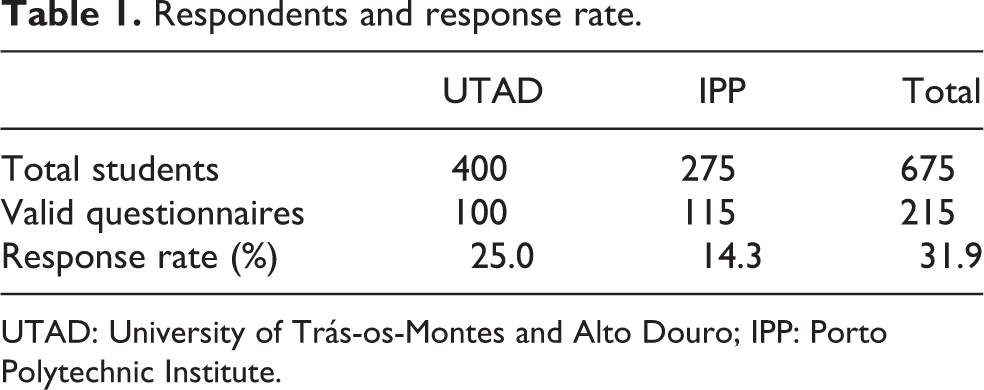
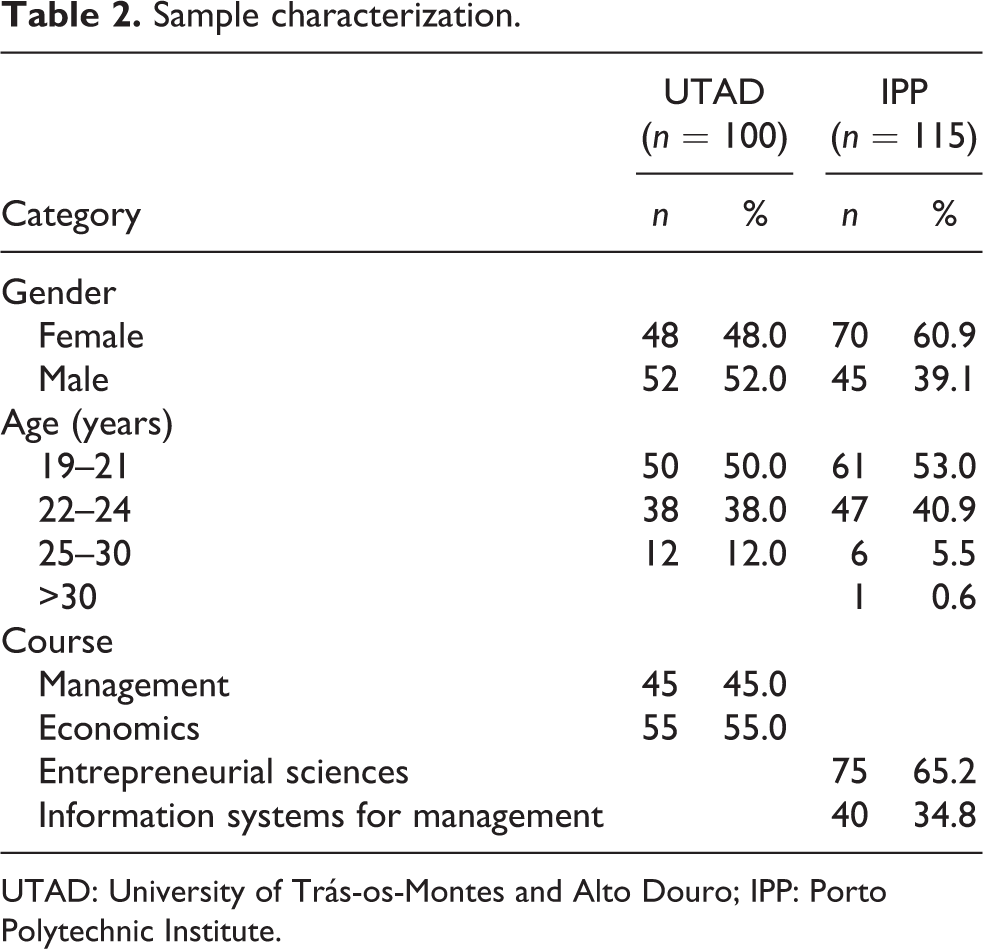
In this context, to achieve the study objectives outlined earlier, a quantitative methodology was adopted. The final sample consisted of students in two Portuguese HEIs: the University of Trás-os-Montes and Alto Douro (UTAD) and Porto Polytechnic Institute (IPP-ESTGF). This convenience sample (Patton, 1990) had the following criteria: (1) different types of HEI (a university and a polytechnic); (2) students attending the third year of their degree course; and (3) students studying entrepreneurial sciences and economics courses. The students in the sample had participated in curricular internships as part of their degree in 2016, and the intention was to ascertain their opinions about the functioning of the internship promoted by the partnership between their HEI and the host firm. Table 1 gives an overview of the students at the two HEIs and the respective response rates. Table 2 presents descriptive statistics, including gender, age and the course of the students participating in the study.
Respondents and response rate.
UTAD: University of Trás-os-Montes and Alto Douro; IPP: Porto Polytechnic Institute.
Sample characterization.
UTAD: University of Trás-os-Montes and Alto Douro; IPP: Porto Polytechnic Institute.
Data collection, variables, measurement and analysis
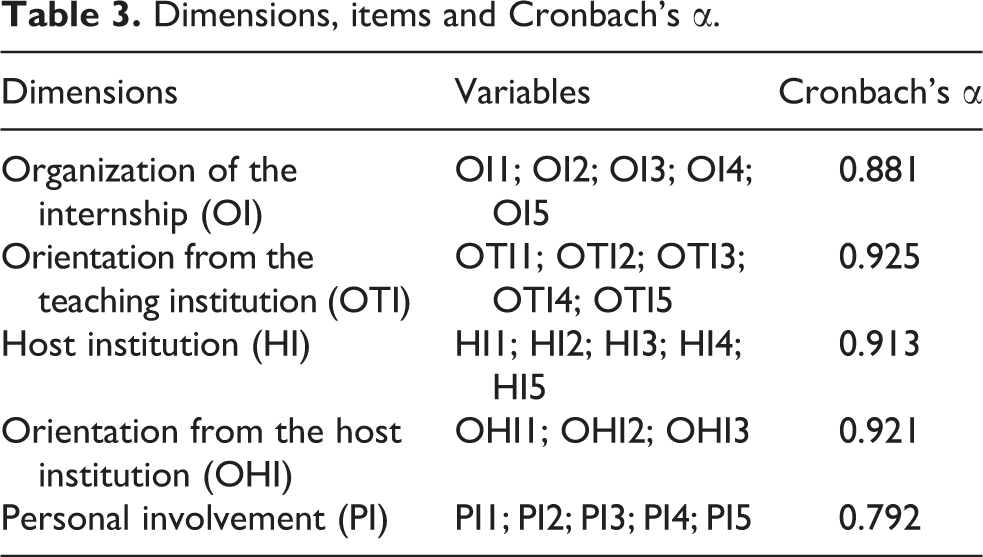
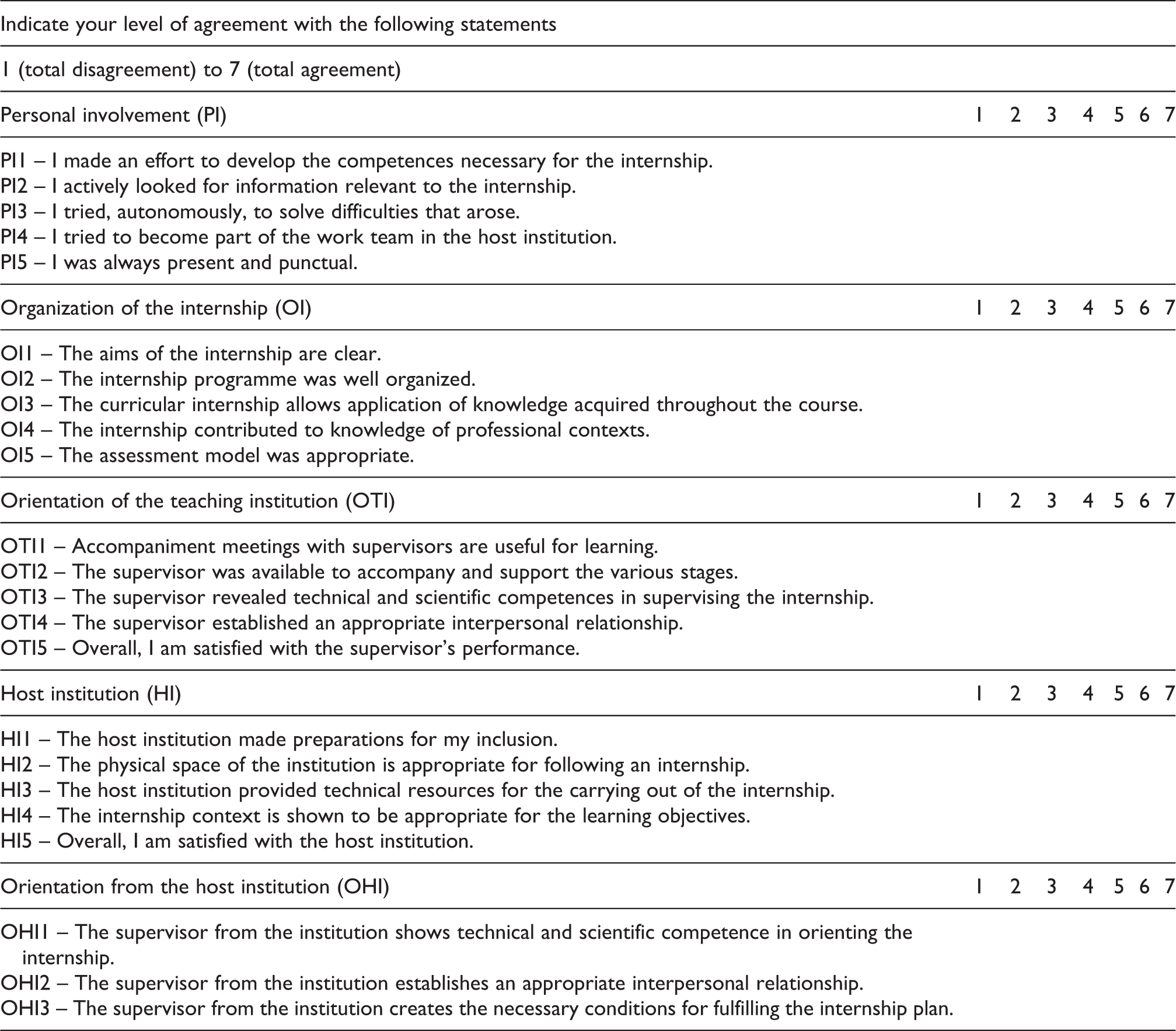
The data were collected by means of a questionnaire survey (see Appendix 1) of the selected students. The questionnaire was administered in the classroom and in the firms in which the students’ internships had taken place. Apart from questions designed to characterize the respondent, the questionnaire used a scale adapted from Católica University (2011) and Claires and Almeida (2000), the objective of which was to ascertain students’ opinions about the impact of the curricular internship on their performance and the HEI–firm partnership. These multi-item measures were used because the scale had already been validated with students from other Portuguese HEIs. Therefore, four dimensions were used as independent variables, as outlined above: OI, OTI, OHI and the HI. More precisely, the aim was to test whether these four dimensions had a positive influence on the dependent variable, PI – see Tables 3 and 4. To measure the variables and these dimensions, a seven-point Likert-type scale was used, in which 1 = completely disagree and 7 = completely agree. In addition, since a comparison of the two HEIs was our main objective, we also considered the type of institution (university or polytechnic) as a control variable. This variable is binary/dichotomous, with 0 if the university and 1 if the polytechnic.
Dimensions, items and Cronbach’s α.
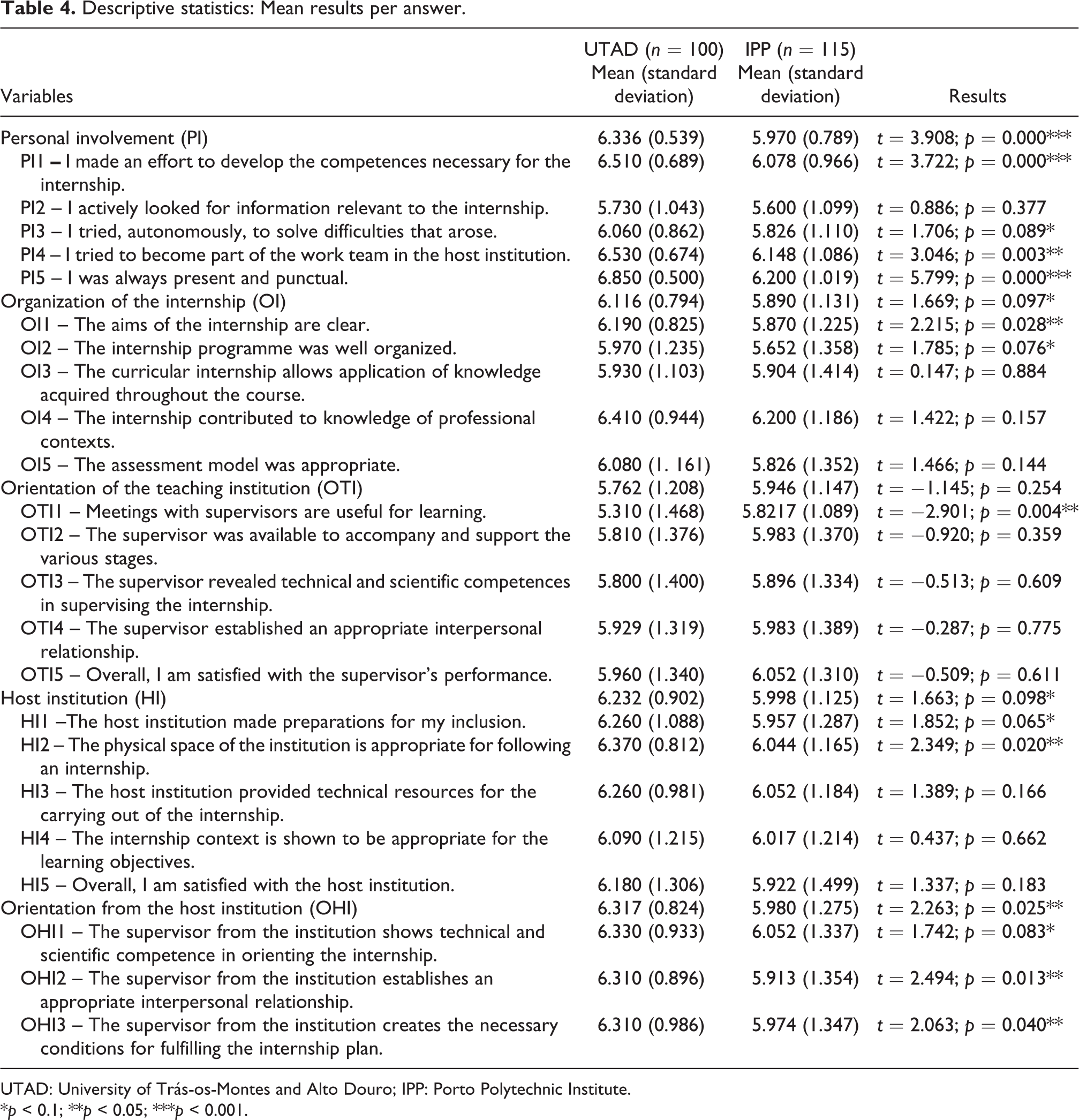
Descriptive statistics: Mean results per answer.
UTAD: University of Trás-os-Montes and Alto Douro; IPP: Porto Polytechnic Institute.
*p < 0.1; **p < 0.05; ***p < 0.001.
To measure the internal consistency of the variables and to assess the reliability of the dimensions used, Cronbach’s α was calculated. The results for each dimension were above 0.7 (Churchill, 1979; Marôco, 2014). Table 3 reflects the dimensions and items (variables), as well as Cronbach’s α per dimension. The Cronbach’s αs are between 0.792 and 0.925, which, according to Churchill (1979), shows acceptable internal consistency of the scales used in this exploratory study.
Data were analysed statistically and interpreted using IBM SPSS Statistics 24; treatment involved descriptive statistics (mean and standard deviations), the t-test for two independent samples and, to validate the hypotheses, multivariate statistical tests (multiple linear regression).
Results and discussion
Students’ perceptions of the internship
To ascertain whether there are differences in the dimensions and factors students rank as important with regard to the internships promoted by HEI–firm partnerships, as mentioned above, we used the t-test. This bivariate procedure reveals statistically significant differences between UTAD and IPP, considering both the responses to the variables and the dimensions considered for the study. Table 4 shows the respective outcomes for all dimensions and variables.
The results for all the dimensions studied demonstrate that the curricular internships organized within the HEI–firm partnership were a success and so increased the positive nature of the partnerships formed by the two HEIs (university and polytechnic) studied here. The fact that the students were satisfied with their internships indicates that this type of partnership has been successful.
Analysis of the results leads us to the conclusion that, for the students surveyed, all the factors studied here were considered very important for the effective functioning of the HEI–firm–student partnerships, since the average values of the variables are above 5. Thus, the students were very satisfied with their PI in the curricular internship, indicating a good HEI–firm relationship.
In light of the results for the ‘personal involvment’ dimension, we conclude that it appears to be significantly more important for students at UTAD, not only in this dimension but also at the variable level. In particular, within this dimension, statistically robust higher scores for the HEIs were found for four of five variables. Among them, the competences necessary for the internship and presence and punctuality stand out as the most prominent differentiators between the two institutions. These results suggest that students are interested in deepening their knowledge in connection with the practical part of the internship while showing some lack of motivation, which is a crucial factor for the success of internships (Jacob et al., 2000).
‘Organization of the internship’ also emerges as an important dimension, with a more significant evaluation in UTAD than in IPP. The aims and programme of the internships are, it seems, more relevant for university students than polytechnic students. However, in both HEIs, the most highly rated variable is OI4 (the internship contributed to knowledge of professional contexts): UTAD = 6410; IPP = 6200. These results indicate that internships are seen as an important factor for students as a means of developing their empirical competences, despite being little associated with the theoretical knowledge gained on the degree course. This suggests that there should be a greater effort by HEIs to adapt their curricular units to the requirements of firms, promoting simultaneously the quality of teaching and responding to the challenges presented by the labour market (Cohen, 2002; Giuliani and Arza, 2008; Glaser and Bero, 2005; Lee, 1996; Meyer-Krahmer and Senoch, 1998; McMillan et al., 2000).
With regard to the ‘orientation of the teaching institution’ dimension, there were no differences in the means between the university and the polytechnic, and so the variation is not statistically significant. However, satisfaction with the supervisor’s performance was found to be crucial for students in both HEIs. Decisively, the low score of OTI1 contradicts the arguments of Hocking et al. (2004) regarding students’ satisfaction with internships in real terms.
Analysing the ‘host institution’ dimension, statistically significant differences were found not only at the level of the dimension but also for two of the variables within it (HI1 and HI2). Nevertheless, these results are more evident in the case of the university than in that of the polytechnic, although the values obtained for both institutions underline the importance of the efficient functioning of professional internships (Curtis and Lucas, 2001; Ellis, 2000).
Analysis of the results of the ‘orientation from the host institution’ dimension shows that the supervisor’s technical and scientific competence and the conditions created by the supervisor to fulfil the internship plan are the variables with the highest scores. Therefore, the results indicate significant differences at both the dimension and variable levels for UTAD and IPP. The values obtained reflect the HEIs’ efforts to contribute positively to the success of the internships (Glaser and Bero, 2005; Geuna and Nesta, 2006; Siegel et al., 2007).
The students consider that the firm is fundamental in the internship process and that its success depends directly on the welcome and orientation given by the firm and on the importance that students and supervisors of the teaching institution give to the firm in the process.
Validation of the hypotheses
To ascertain whether all the dimensions studied here are positively correlated, Pearson’s linear test of correlation coefficients was used. As expected, all dimensions were found to be correlated, including the control variable – the type of HEI (Table 5). These correlations demonstrate that students identify the internship as an opportunity to apply the professional knowledge acquired over their study cycle, contributing to improving their professional knowledge and PI.
Mean, standard deviation and correlation matrix between all dimensions.
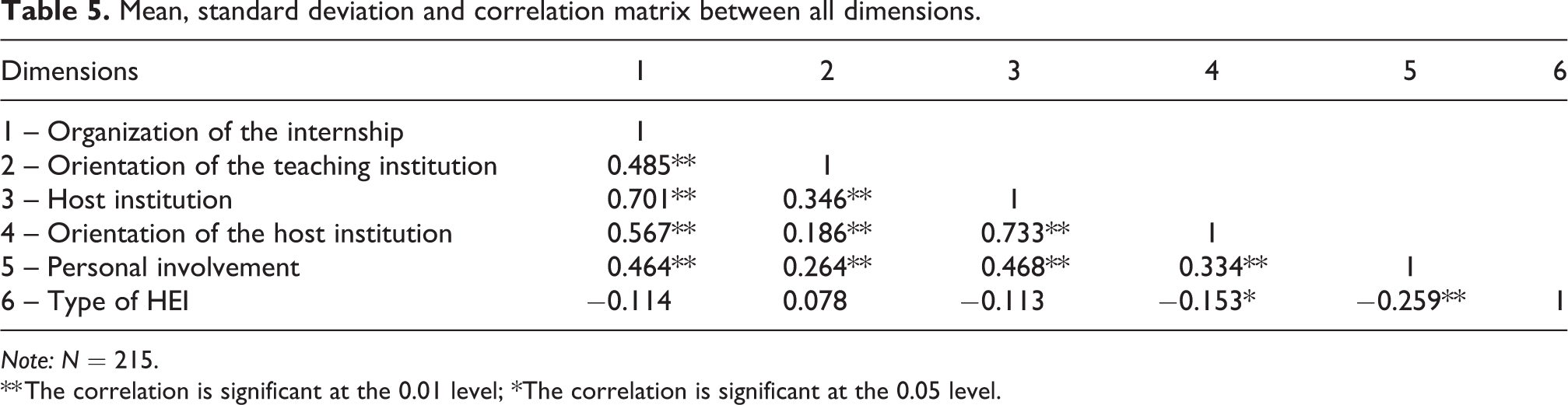
Note: N = 215.
** The correlation is significant at the 0.01 level; *The correlation is significant at the 0.05 level.
The correlations indicate that internships offer interns in almost all fields an opportunity to gain professional experience in their area. Internships are predominantly unpaid, unregulated and domestically oriented (Amua-Sekyi, 2011). Working in a professional environment, interns develop a sense of responsibility as they interact with a wide range of age groups, meet potential role models and obtain feedback through performance assessment. In general, internship programmes are valuable ways to acquire broad competencies where the practical knowledge obtained supports and complements the theoretical studies in the educational institution (Mihail, 2006).
Before proceeding to the results obtained from the regression models, we performed tests to assess potential multicollinearity among the dimensions. For this purpose, we calculated the variance inflation factor (VIF) and t-values. The VIF values for the sample are under the recommended cut-off level of 5 and the t-values are above 0.1 (Rogerson, 2001; O’Brien, 2007), which indicates that the dimensions are only moderately correlated; that is, they are largely independent of each other. From the low VIF, with a maximum of 2945, multicollinearity does not cause problems in our analysis.
Table 6 shows the two regression models followed, considering PI as the dependent variable. Model 1 considered only the predictors/dimensions of internship, while in model 2 the type of HEI (control variable) was inserted. The two models have a high adjusted R2-value as well as a highly significant F-value. In addition, in model 2, the control variable has a significant effect on the dependent variable, leading to the conclusion that the type of HEI has an effect on curricular internship.
Regression analysis of the effect of factors associated with the HEI–firm partnership on personal involvement.
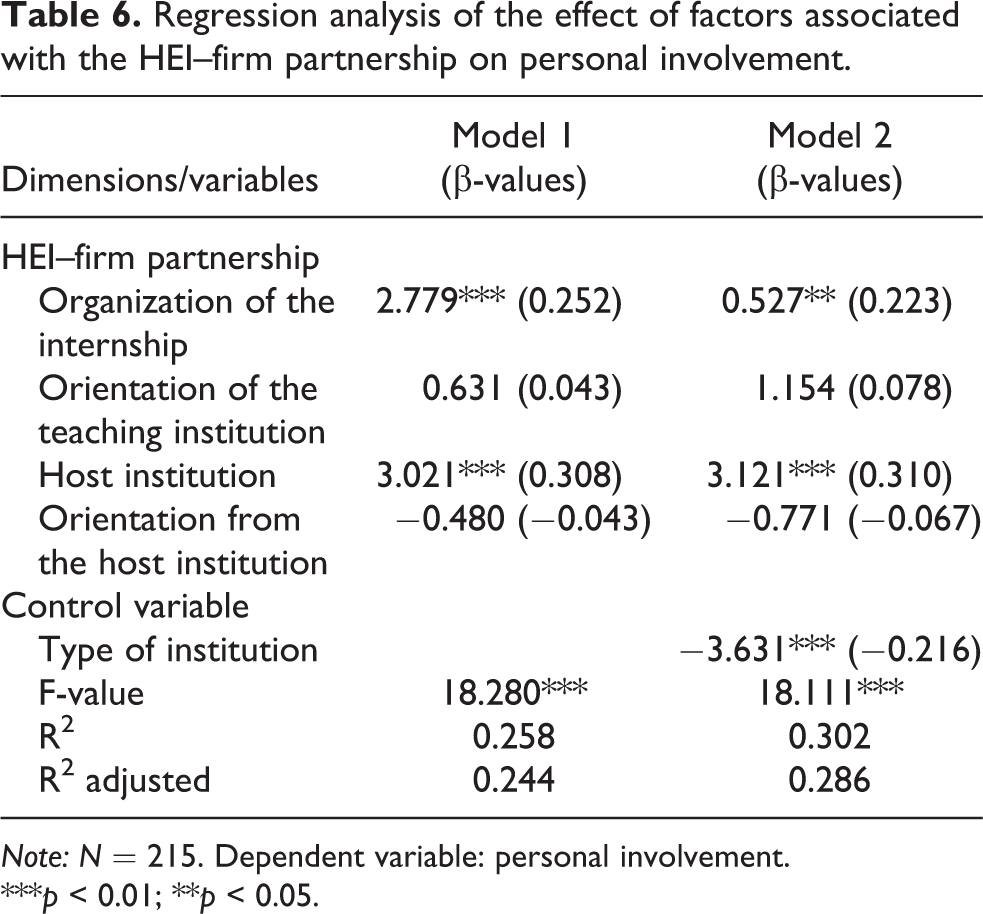
Note: N = 215. Dependent variable: personal involvement.
***p < 0.01; **p < 0.05.
Considering the linear regression models created (Table 6), taking PI as the dependent variable, it is plausible to infer that: The OI and the HI influence PI, since the p-value is statistically significant. Therefore, hypotheses 1 and 3 are accepted.
As hypothesis 1 is confirmed, this means that students feel involved with and/or committed to the HEI’s organization of internships, as they consider their internship as their first professional experience (Callanan and Benzing, 2004; Sagen et al., 2000), from which they can benefit through the sharing of knowledge (Fuller and Schoenberger, 1991; Hecker, 1992). Furthermore, the arguments of Monjon and Waelbroeck (2003) are confirmed, since there is a strong, positive relationship between these two variables, which was also highlighted by Glaser and Bero (2005). Appropriate organization of internships could include removing the various barriers between HEIs and firms (Partha and David, 1994; Belderbos et al., 2004; Cassiman and Veugelers, 2002; López, 2008; Schmidt, 2005), since this sub-dimension is essential (Glaser and Bero, 2005).
The HI also influences the student’s PI in the internship promoted by the HEI–firm partnership. This relationship is supported by Bruneel et al. (2010) and Cricelli and Grimaldi (2010), who argue that the HI plays an important role in ensuring that students have a positive perception of the benefits of the internship for their competences in their area of study and therefore is another factor contributing to the success of these partnerships (Callanan and Benzing, 2004; Curtis and Lucas, 2001; Ellis, 2000; Hocking et al., 2004). HIs are increasingly concerned with graduates’ professional integration and are designing institutional mechanisms to facilitate students’ transition from higher education to work (Silva et al., 2016). 2. The OTI and the OHI do not influence PI, since they are not statistically significant. Therefore, hypotheses 2 and 4 are rejected.
Although these hypotheses are not supported, the orientation of the teaching and HIs has an impact on the student’s PI in the internship in all respects (Belderbos et al., 2004; Cassiman and Veugelers, 2002; Partha and David, 1994; Schmidt, 2005). The type of orientation is an essential factor for successful internships, with synergies for both sides (Geuna and Nesta, 2006; Siegel et al., 2007). Thus, these results can be seen as contradictory; that is, while meetings with the supervisor are rather unsatisfactory, students underline their supervisors’ good performance (results bias), and this performance is one of the strengths of internship referred to in the literature (Fuller and Schoenberger, 1991; Hecker, 1992; Richards, 1984). If the student is well received in the HI, he or she will be receptive to becoming personally engaged in the quality of the work done in the internship, which brings benefits for both sides (Knemeyer and Murphy, 2002), tangible and intangible (Bonaccorsi and Piccaluga, 1994; Cassiman and Veugelers, 2002, 2007; Frenz and Ietto-Gillies, 2009; Narayanan et al., 2006).
Conclusions and implications
The main aim of this study was to investigate HEI–firm partnerships mediated by the students’ curricular internships. The study focused on how students assess the partnerships in the context of their internships and how that assessment influences their PI in the internships. The study was based on a survey administered to a total of 215 students in two Portuguese HEIs, a university and a polytechnic.
An important aspect of this work was to explore how students become involved in the internship and how they feel influenced by the work done by the HEI and the firm in partnership to participate actively in their internship. In addition, we tried to understand the major contributions of the HEI–firm partnership to a successful internship for the student.
On the basis of the empirical evidence obtained, we conclude that students assess their internships positively with respect to all dimensions (OI, OTI, the HI and OHI). This suggests that the professional internships provided by HEI–firm partnerships play a crucial role in introducing students to the labour market, which is characterized by strong competition and relational aggressiveness. Consequently, all parties involved in these partnerships (the HEI, the firm and the student) should continue to strive to increase the benefits provided by internships and to improve their most vulnerable aspects.
Based on the empirical results, we can conclude that the OTI is the dimension that students consider least relevant to a successful internship and the OHI is the dimension they consider most important. In fact, students reiterate that they feel more supported by firms than by the HEI throughout their internship. We can therefore conclude that students’ eagerness to enter the labour market, the need to work in a practical environment and the desire to acquire new knowledge influence, first, their PI in the internship and, second, the success of the HEI–firm partnership. However, something interesting and surprising emerges when we compare the two HEIs studied: we find that students’ satisfaction with the internship, in the various dimensions addressed, is greater in the university than in the polytechnic. The type of HEI can therefore be an important variable in internship programmes.
The results also have theoretical and practical implications. With regard to the theoretical implications, the dimensions studied are associated with cognitive and motivational factors, in terms of the student’s profile and his or her suitability to benefit from an internship, as well as the qualitative characteristics of the HEIs and the firms. These results demonstrate that internships provide significant benefits to students in terms of employability, particularly among graduates from polytechnic institutions – arguably reflecting the fact that polytechnics, with their vocational orientation, tend to be more aligned with labour market demands (Silva et al., 2016).
With regard to the practical implications, the study shows that, from the firm’s and HEI’s perspective, this type of HEI–firm partnership is beneficial since it gives both parties greater visibility. Moreover, the study indicates that subsequent research is needed to assess the impacts of the dimensions examined here on the success of HEI–firm–student partnerships in general, especially with regard to the influence of the HEI’s organization of internships (programmed content versus firms’ demands) and the orientation given to students throughout the internship period. Another contribution of the study is its identification of the mediating role of the intern at the interface of the HEI–firm collaboration. In addition, knowing and focusing on certain determinant dimensions or factors can help managers in HEIs and firms to ensure successful internships. In fact, the success of an internship depends on successful collaboration between all three parties – the firm, the HEI and the student (Clark, 2003; Schappert, 2005) – all of whom need to agree on the conditions of the internship, their respective responsibilities and the reporting requirements. Although internship is often viewed as mutually beneficial to the intern, the HEI and the firm (Thune, 2011), the benefits cannot be guaranteed because the success or failure of an internship depends largely on how the stakeholders collaborate in its implementation.
Finally, internship as a form of workplace learning is a vital component of many professional programmes in vocational education (Levesque et al., 2000). It can help students bridge the gap between the academic learning process and the practical reality (Lam and Ching, 2007). Internships can, then, be considered as a vehicle for linking academic knowledge and practice and so enhancing graduate employability. Institutional collaboration among universities and polytechnics and industry to foster student internship needs to be strengthened.
One of the limitations accepted at the outset, when contemplating this study, related to the sample (only two HEIs and 215 students) and the unit of analysis (students who had participated in curricular internships, firms that had received them and lecturers who had supervised these internships). Furthermore, the sample is not as representative as would be desired, and a homogeneity of answers from each course was not achieved, the response rate to the questionnaire from some courses being higher than from others.
Because this study considered only two HEIs and only some courses in those HEIs which include curricular internships, the conclusions drawn here cannot be extrapolated to other courses not included in the study. For example, neither HEI has a course in medicine, and so the results cannot be considered applicable to that and other scientific disciplines that were absent from this research. Further research might apply the methodology to a larger sample of different HEIs, students and courses so that more wide-ranging conclusions can be extrapolated.
Another approach would be to apply this study to courses in a given area, to a representative sample of Portuguese or foreign HEIs, so as to draw more reliable conclusions that could be used by HEIs and firms to identify the positive aspects and the aspects in need of improvement in curricular internships.
Finally, a longitudinal study could be carried out, comparing the employability of students who undertook curricular internships during their course with that of students who did not have internship experience.
Footnotes
Acknowledgements
The authors thank the anonymous reviewers for very helpful comments that contributed to the development of this article.
Declaration of conflicting interests
The author(s) declared no potential conflicts of interest with respect to the research, authorship, and/or publication of this article.
Funding
The author(s) disclosed receipt of the following financial support for the research, authorship, and/or publication of this article: This study was financially supported by FCT and FEDER/COMPETE through grant PEst-C/EGE/UI4007/2013.

Appendix l: Survey instrument
| Indicate your level of agreement with the following statements | |||||||
| 1 (total disagreement) to 7 (total agreement) | |||||||
| Personal involvement (PI) | 1 | 2 | 3 | 4 | 5 | 6 | 7 |
| PI1 – I made an effort to develop the competences necessary for the internship. | |||||||
| PI2 – I actively looked for information relevant to the internship. | |||||||
| PI3 – I tried, autonomously, to solve difficulties that arose. | |||||||
| PI4 – I tried to become part of the work team in the host institution. | |||||||
| PI5 – I was always present and punctual. | |||||||
| Organization of the internship (OI) | 1 | 2 | 3 | 4 | 5 | 6 | 7 |
| OI1 – The aims of the internship are clear. | |||||||
| OI2 – The internship programme was well organized. | |||||||
| OI3 – The curricular internship allows application of knowledge acquired throughout the course. | |||||||
| OI4 – The internship contributed to knowledge of professional contexts. | |||||||
| OI5 – The assessment model was appropriate. | |||||||
| Orientation of the teaching institution (OTI) | 1 | 2 | 3 | 4 | 5 | 6 | 7 |
| OTI1 – Accompaniment meetings with supervisors are useful for learning. | |||||||
| OTI2 – The supervisor was available to accompany and support the various stages. | |||||||
| OTI3 – The supervisor revealed technical and scientific competences in supervising the internship. | |||||||
| OTI4 – The supervisor established an appropriate interpersonal relationship. | |||||||
| OTI5 – Overall, I am satisfied with the supervisor’s performance. | |||||||
| Host institution (HI) | 1 | 2 | 3 | 4 | 5 | 6 | 7 |
| HI1 – The host institution made preparations for my inclusion. | |||||||
| HI2 – The physical space of the institution is appropriate for following an internship. | |||||||
| HI3 – The host institution provided technical resources for the carrying out of the internship. | |||||||
| HI4 – The internship context is shown to be appropriate for the learning objectives. | |||||||
| HI5 – Overall, I am satisfied with the host institution. | |||||||
| Orientation from the host institution (OHI) | 1 | 2 | 3 | 4 | 5 | 6 | 7 |
| OHI1 – The supervisor from the institution shows technical and scientific competence in orienting the internship. | |||||||
| OHI2 – The supervisor from the institution establishes an appropriate interpersonal relationship. | |||||||
| OHI3 – The supervisor from the institution creates the necessary conditions for fulfilling the internship plan. | |||||||