






Abstract
This paper examines the direct and indirect roles of individual entrepreneurial orientation and entrepreneurship education in determining students’ entrepreneurial intention through the mediation of entrepreneurial motivations. The study also attempts to ascertain the influence of entrepreneurship education on individual entrepreneurial orientation. Cross-sectional data were collected from 323 university students using the convenience sampling method. Confirmatory factor analysis was used to assess the model fitness and the reliability and validity of the data while hypotheses were tested using structural equation modeling. The findings affirm that entrepreneurship education facilitates both individual entrepreneurial orientation and entrepreneurial motivations and also has a positive association with entrepreneurial intention. More importantly, entrepreneurial motivations significantly mediate individual ‘entrepreneurial orientation–entrepreneurial intention’ and ‘entrepreneurship education–entrepreneurial intention’ relationships. The findings provide practical support for the framing of new educational policies to assist students in their existing and future entrepreneurial projects. The study contributes to the literature by recognizing the mediating effect of entrepreneurial motivations on the above relationships. It also adds to the scarce literature on the lately recognized individual entrepreneurial orientation construct.
Keywords
Entrepreneurs, as economic agents, have an important influence in the revival of an economy by promoting economic, technological, social and organizational development (Ács et al., 2014; Bosma et al., 2018). They act as key drivers for economic development through the wide range of economic and social benefits they provide in terms of job creation, the transfer of technology from lab to market, increasing competitiveness and innovation and promoting social empowerment (Ács et al., 2014; Bosma et al., 2018; Fayolle et al., 2016). Start-ups are considered vital for the development of economies (Fayolle et al., 2016); hence the volume of entrepreneurship in a country is linked to its economic prosperity and so governments focus on the promotion of entrepreneurial activities, particularly among millennials (European Commission Brussels, Belgium, 2013). It is in this context that India, with the second highest population in the world and an aim to become the third largest economy by 2030, is making strong efforts to develop an entrepreneurial culture.
According to the GEM Report 2019–2020, India has shown a significant improvement in its total early-stage entrepreneurial activity rate (TEA), standing at 15% (ranking 13th out of 50) in 2019 compared to 11.4% (22nd out of 48) in 2018 (Bosma et al., 2020). In terms of providing entrepreneurship education at the school stage, India scores a value of 5.12 (5th out of 54), which is well above the global average of 3.3, and for the provision of entrepreneurship education at post-school level, it scores 5.65 (8th out of 54), which is also well above the global average of 4.8. Despite providing entrepreneurship education at both school and post-school stages and improvement in the World Bank’s ease of doing business rating of India from 67.23/100 (77th out of 190) in 2018 to 71.0/100 (63rd out of 190) in 2019 (Bosma et al., 2020), the country still lags behind in developing entrepreneurial intention among its adult population. The percentage of adults who develop the intention to undertake a new venture accounts for only 33.3% of the total adult population (Bosma et al., 2020). According to GEDI 2019, India has lost 10 places in the ranking, from 68th out of 137 with a score of 28.4 in 2018 to 78th with a score of 25.1 in 2019 (Ács et al., 2019). By contrast, India’s major counterpart China managed to gain nine places in the overall ranking with a score of 45.9 (34th out of 137) in 2019 compared to 41.1 (43rd) in 2018 (Ács et al., 2019). As per GEM, 2019–2020, despite not scoring as highly as India in pre- and post-school entrepreneurship education, China has still managed to motivate individuals to adopt entrepreneurship as a career option (Bosma et al., 2020).
Providing education to students without examining the quality of education and other critical factors that affect their intentionality will not achieve the goals desired by policymakers or governments through the policies they formulate (Sahoo and Panda, 2019). The main emphasis of universities should be on providing an effective support system to their students so that they will become job creators, not job seekers (Tomy and Pardede, 2020). Against this background, this study examines the key factors of individual entrepreneurial orientation, entrepreneurship education and motivations.
Several researchers have examined the role of entrepreneurial orientation in determining entrepreneurial intention at the firm level and have found that it positively enhances entrepreneurial intention (Frunzaru and Cismaru, 2018; Robinson and Stubberud, 2014; Sahoo and Panda, 2019). However, studies on entrepreneurial intention have not fully examined the individual entrepreneurial concept, which considers proactiveness, innovativeness and risk-taking as entrepreneurial competencies (Anwar et al., 2021; Koe, 2016), and there appears to have been little work on the indirect effect of individual entrepreneurial orientation on the entrepreneurial intention of an individual. Therefore, examining the direct and indirect effect(s) of individual entrepreneurial orientation mediated by entrepreneurial motivations will add to the limited literature on individual entrepreneurial orientation and mediation, leading to better insights into the effect of individual entrepreneurial orientation on the entrepreneurial intention of students.
In ascertaining the mood of the young generation, particularly students, regarding career choice, the understanding of intention is of critical importance and entrepreneurship education plays an important role in the development of intention (Anwar et al., 2020; Anwar and Saleem, 2019a; Hassan et al., 2020). Entrepreneurship can be learned and promoted through entrepreneurship education (Fretschner and Weber, 2013), which assists in the development of entrepreneurial intention (Pittaway and Cope, 2007) and can transform intention into actual behavior (Nabi et al., 2010). Entrepreneurship education also helps in fostering individual competencies or individual entrepreneurial orientation (Farashah, 2013; Franco et al., 2010; Lindberg et al., 2017; Robinson and Stubberud, 2014), which leads to the development of entrepreneurial intention (Fayolle and Liñan, 2014; Ferreira and Trusko, 2018; Saeed et al., 2015). Therefore, this study explores the direct effect of entrepreneurship education on individual entrepreneurial orientation, entrepreneurial motivations and entrepreneurial intention. Further, it also examines the mediating role of entrepreneurial motivations on the less explored relationship between entrepreneurship education and entrepreneurial intention to assess whether or not current entrepreneurship education courses are effective enough to foster the individual competencies, willingness or drive of an individual to choose entrepreneurship as a career option. Therefore, a conceptual model was developed to explore these relationships (shown in Figure 1). Accordingly, the study will explore the following research questions: RQ1. What is the relationship between individual entrepreneurial orientation, entrepreneurship education, entrepreneurial motivations and entrepreneurial intention? RQ2. What is the relationship between entrepreneurship education and individual entrepreneurial orientation? RQ3. What is the mediating role of entrepreneurial motivations on individual entrepreneurial orientation–entrepreneurial intention and entrepreneurship education–entrepreneurial intention relationships?
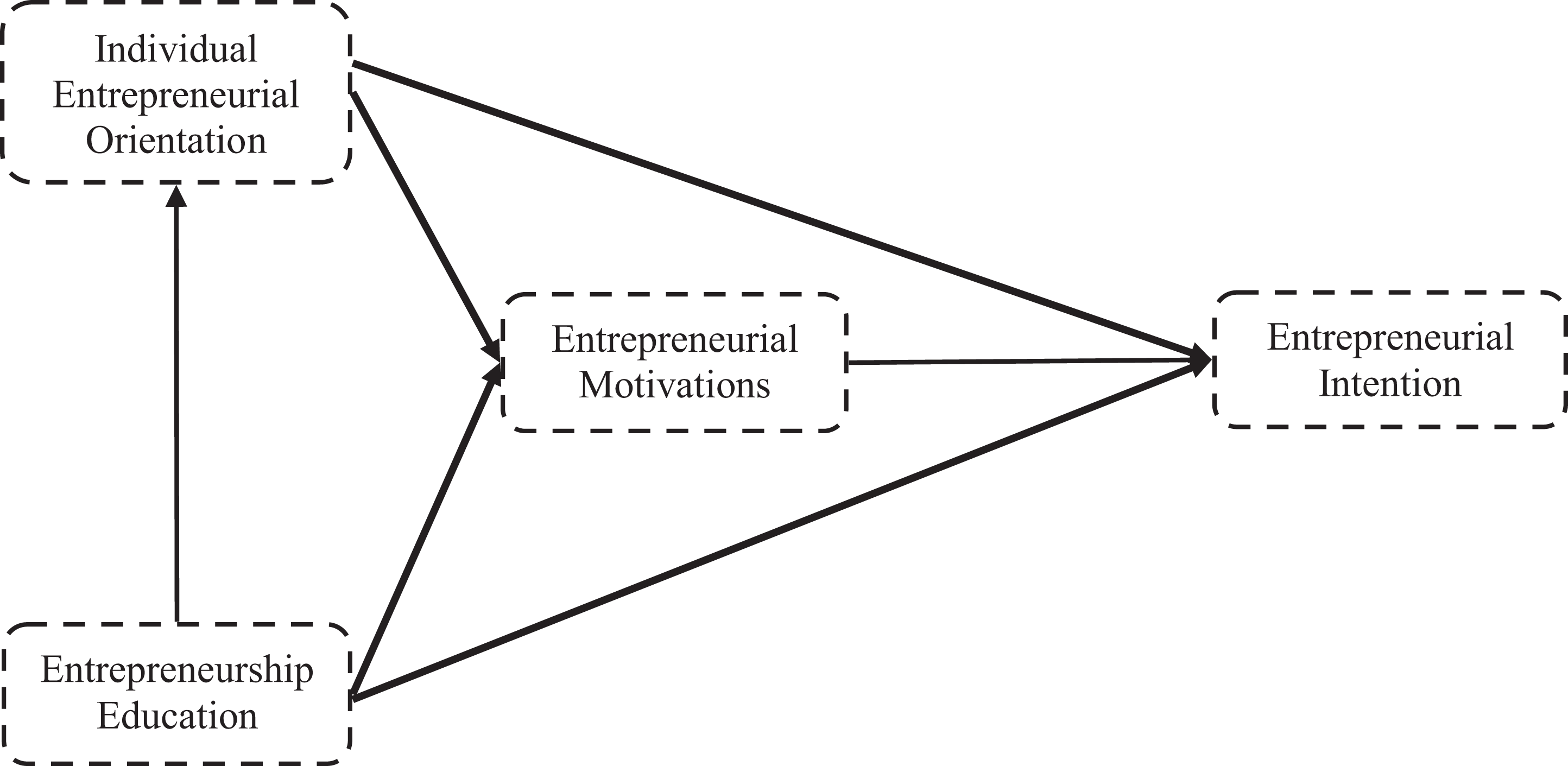
Conceptual model. Note: Bold arrows represent mediating relationships.
The rest of the paper is structured as follows: a literature review giving an overview of previous research to support the model and hypotheses; a section on methodology to clarify the sample and methods employed; a section on the study results reporting the outcomes from structural equation modeling (SEM); and sections containing a discussion of the findings, the implications for theory and practice and the limitations of the research.
Theoretical background and hypotheses development
Individual entrepreneurial orientation and entrepreneurial intention
Entrepreneurial orientation (EO) has been defined as a process that enhances an individual’s capacity to acquire entrepreneurial knowledge, raising awareness and understanding and providing an overall mental picture of entrepreneurship (Ikpesu, 2016). The concept of entrepreneurial orientation was developed by Miller (1983) with reference to three dimensions: risk-taking, innovativeness and proactiveness. Later, Lumpkin and Dess (1996) redefined EO with the addition of two new dimensions – autonomy and competitive aggressiveness. For some years, EO was considered as a firm-level construct that helped to characterize a firm (Chandrakumara et al., 2011; Grande et al., 2011; Gupta and Gupta, 2015; Hafeez et al., 2011). However, recent studies have recommended that it should also be considered as an individual-level construct (Robinson and Stubberud, 2014). Such recommendations have paved the way for researchers to explore EO from a new perspective (Koe, 2016). Taatila and Down (2012) suggest that, to assess students’ drive and competencies for a successful entrepreneurial career, a practical understanding of their EO is essential.
The conceptualization of EO is similar to that of entrepreneurial potential (Lumpkin and Dess, 1996), which signifies a capacity and willingness to become an entrepreneur (Krueger and Brazeal, 1994). Individual entrepreneurial orientation (IEO) can be defined as the capacity for, competence and willingness or drive of an individual to become an entrepreneur (Taatila and Down, 2012). As a recently developed concept, IEO also required measurement instruments and scales (Frunzaru and Cismaru, 2018). Lumpkin and Dess (1996) provided the starting point with their five dimensions of EO and subsequently Bolton and Lane (2012) developed a scale consisting of three dimensions – innovativeness, risk-taking and proactiveness.
Various studies (e.g. Karimi et al., 2016; Kautonen et al., 2015; Maresch et al., 2016) have examined the ‘intent to act’ as the fundamental factor in the creation of an enterprise, as this appears to be the main driver in the entrepreneurship process (Zhao et al., 2010). Understanding and analyzing entrepreneurial intentions (EIs) is vital for deeper knowledge of the entrepreneurial process (Ozaralli and Rivenburgh, 2016). Hisrich et al. (2013) and Liñán and Fayolle (2015) draw attention to the complexity of the entrepreneurship process as it involves entrepreneurial cognition and activities.
IEO is considered an entrepreneurial competency that can be developed through experiential learning (Sahoo and Panda, 2019). Recent studies show a positive relationship between IEO and EI (Ekpe and Mat, 2012; Martins and Perez, 2020; Robinson and Stubberud, 2014; Zhang and Bruning, 2011). Ibrahim and Lucky (2014), for example, studying Nigerian students at the University of Malaysia, found a positive and significant relationship between IEO and EI. Literature is available on EO as a firm-level construct, with many studies having been conducted on its relationship to business performance, but because IEO is a more recent conceptualization, there is comparatively little literature on the construct (Martins and Perez, 2020). This study therefore adds to the existing limited literature on the relationship between IEO and EI by examining the following hypothesis: H1: Individual entrepreneurial orientation positively influences entrepreneurial intention.
Entrepreneurship education and EI
Education can play a key role in promoting entrepreneurship (Martin et al., 2013; Zhang et al., 2014). We use ‘entrepreneurship education’ to refer to any pedagogical program or educational process to impart entrepreneurial attitudes and skills (Fayolle et al., 2006). Education can therefore also play an important role in developing intention toward entrepreneurship (Anwar et al., 2020a; Anwar and Saleem, 2018; Fenton and Barry, 2011; Shapero and Sokol, 1982). Liñán and Fayolle (2015) and Nabi et al. (2017) describe EI as an immediate consequence of entrepreneurship education. Bae et al. (2014) and Botha and Bignotti (2016) argue that entrepreneurship education can shape an individual’s attitude toward entrepreneurship, with attitude being an important antecedent of intention. Studies have also shown that the relationship between entrepreneurship education and EI is stronger than that between general business education and EI (Bae et al., 2014). Many researchers have noted the strong relationship between entrepreneurship education and the intention to undertake a new venture due to the development of the individual’s perceived ability and an increase in their entrepreneurial knowledge (Krueger and Brazeal, 1994; Souitaris et al., 2007; Ubierna et al., 2014). However, other studies have shown inconsistent results (Athayde, 2009; Karimi et al., 2016; Oosterbeek et al., 2010).
Peterman and Kennedy (2003) found that the ability and desire to undertake a venture increased among students after participation in an entrepreneurship program. Souitaris et al. (2007) also found a significant increase in students’ intention to starting a business after attending a training program. However, some studies produced different findings. Karimi et al. (2016), for example, found that the differences in the intention to start a venture before and after attending an educational program were not significant. Oosterbeek et al. (2010) also found results that contradicted those of the previous studies.
In some of these studies, the authors do not specify whether the research was conducted within or outside the university, or whether the the programs in question were mandatory or optional (Asimakopoulos et al., 2019). This study therefore focuses on the inconsistencies between the results on the relationship between entrepreneurship education and EI while giving due consideration to aspects such as the type of program and the location at which the education was delivered. We propose the following hypothesis: H2: Entrepreneurship education positively influences entrepreneurial intention.
Entrepreneurial motivations and EI
Challenges are inevitable in entrepreneurship, and having the motivation to start a new business is one of them (Marques et al., 2013). Johnson (1990) defined motivation as the aspiration or propensity to systematize, manipulate and master ideas or organizations as quickly and independently as possible. Shane et al. (2003) classified entrepreneurial motivations into general (vision, drive, locus of control, passion, need for achievement and desire for independence) and task-specific (self-efficacy and goal setting). Studies have shown that entrepreneurial motivations vary from country to country (Carsrud and Brännback, 2011; Hessels et al., 2008). Schlepphorst et al. (2020) described intention as ambition influenced by a set of motivations, leading to actual behavior. Another study found that women entrepreneurs exhibited psychological characteristics like inventiveness, risk-taking, achievement motivation, problem-solving and determination, and that these constituted motivating factors for starting a business (Singh and Sengupta, 1985). Other studies have shown that entrepreneurial motivations act as a determining factor in the development of EI – for example, Nabi and Liñán (2013); Solesvik (2013); Antonioli et al. (2016); Barba-Sánchez and Atienza-Sahuquillo (2017) and Lang and Liu (2019). Hence we propose the following hypothesis: H3: Entrepreneurial motivations positively influence entrepreneurial intention.
Entrepreneurship education and IEO
Researchers and governments consider entrepreneurship education of significance because they believe it can lead to economic development through the promotion of entrepreneurship (Cheung, 2008). It has been acknowledged that entrepreneurship education plays a vital role in creating entrepreneurial skills and entrepreneurial behavior (Fayolle and Klandt, 2006). There is also evidence that students’ entrepreneurial start-up decisions are significantly affected by the perceived educational support in a university (Anwar et al., 2020a; Engle et al., 2011; Nabi and Liñán, 2013; Trivedi, 2016). Franco et al. (2010), Lindberg et al. (2017) and Robinson and Stubberud (2014) conclude that students’ entrepreneurial competence is nurtured by entrepreneurship education, which leads to the development of EI. According to Iglesias-Sánchez et al. (2016), the university plays a prominent role in developing students’ perception, competency, confidence and conviction by providing cross-curricular courses augmented with specific training on venture creation and creating a culture of entrepreneurship. Education, then, acts as an antecedent in the entrepreneurial capacity building of an individual (Hannon, 2006).
However, the literature shows mixed results regarding the relationship between IEO and entrepreneurship education: Farsi et al. (2014), Westhead and Solesvik (2015), Jones et al. (2017), Hahn et al. (2017) and Passaro et al. (2018) found a significant relationship but Gurel et al. (2010) and Schwarz et al. (2009) did not find any significant relationship between the two. These contradictory results may indicate that education is important but not sufficient to influence students’ entrepreneurial orientation (Kraaijenbrink et al., 2010). Hence this study proposes the following hypothesis: H4: Entrepreneurship education positively influences individual entrepreneurial orientation.
IEO and entrepreneurial motivations
Personal attributes like entrepreneurial orientation and entrepreneurial motivation contribute to the conversion of available opportunities into valuable activities (Eijdenberg, 2016). IEO plays an important role in nurturing individual motivation (Fillis and Rentschler, 2010; Marques et al., 2018), which drives an individual toward undertaking an entrepreneurial activity. Marques et al. (2013), Lages et al. (2017), Malik et al. (2016) and Marques et al. (2018) found that IEO and entrepreneurial motivations are positively correlated with each other and lead to the development of intention to undertake a business venture. Therefore this study proposes the following hypothesis: H5: Individual entrepreneurial orientation positively influences entrepreneurial motivations.
Entrepreneurship education and entrepreneurial motivations
McClelland (1961), Green et al. (1996) and Koh (1996) have described an entrepreneur as an individual in possession of certain common attributes: innovativeness, a propensity to risk-taking, self-control, self-confidence, a tolerance of ambiguity and a need for achievement. Entrepreneurship education can help to nurture these attributes, which promote entrepreneurial activity (Lindberg et al., 2017). It can also contribute significantly to developing students’ knowledge about entrepreneurship and their entrepreneurial ability to cope with market demands (Shi et al., 2012). According to Haynie et al. (2010), individual motivation acts as a cognitive origin for entrepreneurial activity by triggering individual behavior toward starting an enterprise. Those students who participate in an entrepreneurship education program tend to have high entrepreneurial motivations and are the most likely to start their own business (Solesvik, 2013). Khalili et al. (2014), Farhangmehr et al. (2016), and Jakubiak and Buchta (2016) also found that pragmatic entrepreneurship education assisted in improving the entrepreneurial competencies of students and developed their entrepreneurial motivations. On the other had, other researchers have found that entrepreneurship education does not impact the development of entrepreneurial motivations among students (Athayde, 2009; Oosterbeek et al., 2010). Thus the question remains as to whether entrepreneurship education does improve entrepreneurial motivations. A sixth hypothesis is therefore proposed: H6: Entrepreneurship education positively influences entrepreneurial motivations.
Entrepreneurial motivation as mediating the IEO–EI relationship
IEO and EI have been found to be positively correlated with each other (Bolton and Lane, 2012). Entrepreneurial orientation as an entrepreneurial process is encouraged by entrepreneurial motivations such as the need for achievement (Fillis and Rentschler, 2010; Sajilan et al., 2015). Although Koe (2016) found that the direct effect of IEO was not sufficiently strong because the risk-taking ability factor did not influence students’ EI, generally IEO and entrepreneurial motivations appear to have a significant positive correlation with each other (Malik et al., 2016; Marques et al., 2018), with stronger entrepreneurial motivation acting as the most significant factor in determining EI (Alam et al., 2020; Barba-Sánchez and Atienza-Sahuquillo, 2017; Lang and Liu, 2019; Marques et al., 2013). Based on the literature, this study suggests that entrepreneurial motivations serve as a mediator between IEO and EI: there is a strong correlation between IEO and entrepreneurial motivations (Marques et al., 2018; Sajilan et al., 2015), and these entrepreneurial motivations are in-turn highly correlated with EI (Alam et al., 2020). We therefore propose the following hypothesis: H7: Entrepreneurial motivations mediate the relationship between IEO and EI.
Entrepreneurial motivation as mediator in the entrepreneurship education–EI relationship
Researchers have expressed different views on the effect of entrepreneurship education on the EI of individuals, with studies producing mixed. For example, Hassan et al. (2020), Anwar et al. (2020a) and Thomas et al. (2014) found a positive impact of entrepreneurship education on students’ EI, whereas Oosterbeek et al. (2010) and Athayde (2009) found otherwise. However, Khalili et al. (2014), Farhangmehr et al. (2016) and Solesvik (2013) found a stronger correlation between entrepreneurship education and entrepreneurial motivations and other studies have found that stronger motivations act as an important precursor for developing the intention to start a business (Alam et al., 2020; Kanama, 2020; Lang and Liu, 2019; Marques et al., 2013, 2018). This study therefore suggests that entrepreneurial motivations have a mediating effect as they can serve to explain the entrepreneurship education–EI relationship. We therefore the following hypothesis: H8: Entrepreneurial motivations mediate the relationship between entrepreneurship education and entrepreneurial intention.
Research design and methodology
This study uses survey-based cross-sectional data collected from Aligarh Muslim University, a centrally funded university in India. The convenience sampling method was used for collecting the data. This method has been widely used in many EI studies and has produced reliable and valid results (Anwar et al., 2020a; Anwar and Saleem, 2019b; Bazan et al., 2019; Hassan et al., 2020; Roy et al., 2017). In July 2020, a survey was conducted online with the help of Google Forms: 482 students (305 undergraduates and 177 postgraduates) receiving entrepreneurship education at Aligarh Muslim University were contacted. Of these, 349 students responded and completed the survey, giving a response rate of 72.41%. During the data screening process, 26 responses were discarded due to the non-suitability of the data; hence the final sample comprised 323 responses (204 males and 119 females).
Samples
Students studying business and management courses were selected for the study. These included Bachelor of Commerce (Hons), Master of Commerce, MBA in Human Resource Management, Finance and Control, Insurance and Risk Management, and Hospitality and Tourism Management. Topics studied included business and organizational management, accounting, financial management, entrepreneurship and business management, etc. and the courses were delivered by classroom teaching, case studies, presentations, dissertations at postgraduate level, and/or internships in industry.
Questionnaire development
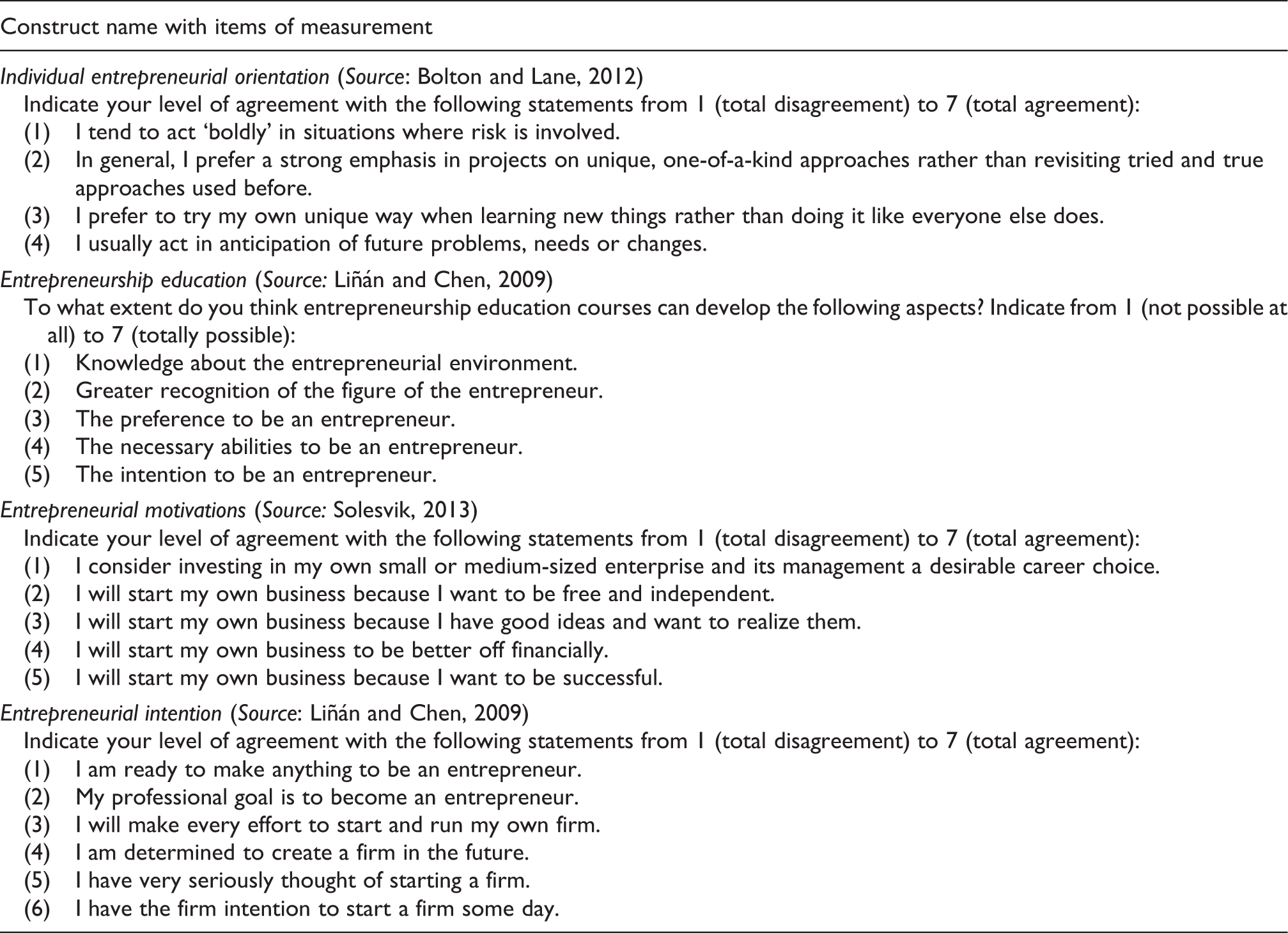
A conceptual model, including entrepreneurship education, IEO and entrepreneurial motivations, was hypothesized to predict students’ EI. Moreover, the researchers also investigated whether entrepreneurial motivations mediated the relationships between entrepreneurship education, IEO and EI. A questionnaire was developed, with validated scales borrowed and contextualized from earlier published studies. The EI questionnaire from Liñán and Chen (2009) was used to measure entrepreneurship education and EI. The scale for IEO was borrowed from Bolton and Lane (2012), while Solesvik (2013) was consulted for entrepreneurial motivations. In total, 20 items were included in the questionnaire (see Appendix 1), excluding items that were used to ascertain the demographic profile (age, gender and father’s occupation).
Data screening
During the data screening process, no questionnaires with missing responses were found. However, 17 questionnaires were found to have been completed without proper engagement (i.e. the same option had been chosen throughout the questionnaire) and thus were removed from the dataset. Furthermore, outliers were identified in the dataset using Cook’s distance method (Stevens, 2012) and seven responses were found showing Cook’s statistics above 1 (threshold); thus, they were also excluded from the dataset. Thus a final dataset of 323 responses was obtained for further statistical analysis, which is considered to be large enough to represent a population above 2000 (Krejcie and Morgan, 1970) – the target population for this study is about 1500 undergraduate and postgraduate students receiving entrepreneurship education at Aligarh Muslim University. The study also fulfills the requirement of a minimum of 10 responses for each observed item used. Since the questionnaire included 20 items, the requirement of a sample of 200 or more responses is also fulfilled for applying CFA and SEM techniques. Another requirement for CFA and SEM using AMOS is the normality of the data, so, to check that this requirement was fulfilled, skewness for each observed and latent variable was computed. The statistics for skewness ranged from −1 to +1 for each observed and latent variable, thus confirming the normality of the data (Kline, 1998).
Common method bias
The remedial suggestions of Podsakoff and Organ (1986) regarding common method bias were also kept in mind while developing the research instrument to ensure that the results were not affected. The language of the questionnaire items was kept as simple as possible, double-barreled questions were avoided, and variables were also described before their measurement items to create psychological separation in the respondents’ minds (Podsakoff and Organ, 1986). The authors also applied Harman’s single factor test to statistically testify whether the variance explained by all 20 observed items under one single factor was below 50% (see Table 1). The explained variance was 42.524%, well below the threshold limit and hence confirming that the study was not affected by common method biases (Podsakoff and Organ, 1986).
Total variance explained (Harman’s single factor test).
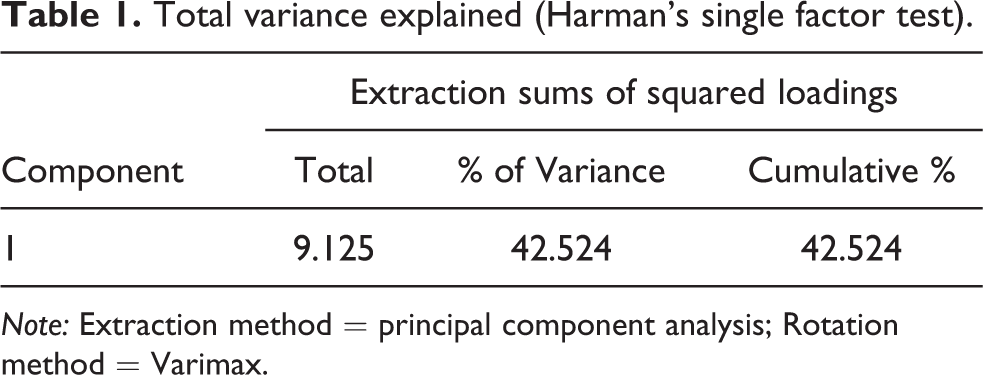
Note: Extraction method = principal component analysis; Rotation method = Varimax.
Demographic profile
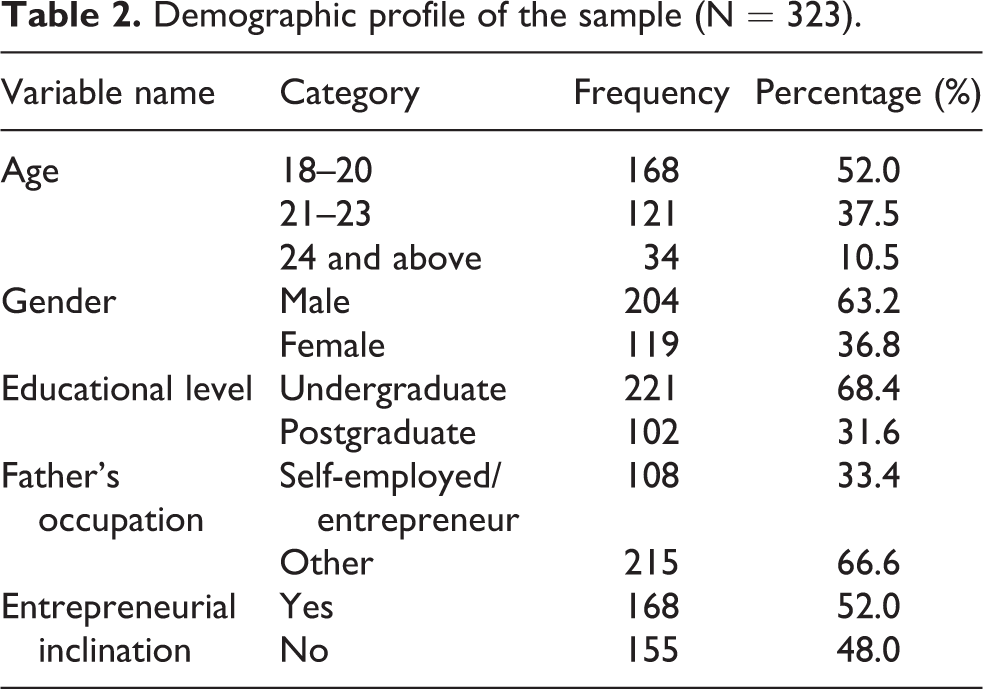
Table 2 reports the demographic properties of the sample. Out of a total of 323 usable responses, 52% and 37.50% of students, respectively, belonged to the 18–20 and 21–23 agre groups, with 10.50% aged 24 years or above. With regard to gender, 63.20% were male and 36.80% were female. As noted above, the sample included both undergraduate and postgraduate students: 68.40% of the students were undergraduates and 31.60% postgraduates. Moreover, to gather information about their entrepreneurial background, respondents were also asked about their father’s occupation: only 108 (33.40%) students reported that their fathers were self-employed or engaged in entrepreneurial activities. Finally, before measuring ‘entrepreneurial intention’ students’ entrepreneurial inclination was also measured by asking ‘Have you ever seriously considered becoming an entrepreneur?’ (Yes = inclined, No = not inclined): and 168 (52%) expressed an inclination toward entrepreneurship.
Later, in the study, CFA was applied to ensure model fitness and the convergent and divergent validity of the data, while for testing the hypotheses (Anderson and Gerbing, 1988), SEM was used.
Demographic profile of the sample (N = 323).
Results
Measurement model: Fit indices, reliability and validity
This study postulates a conceptual model comprised of four latent variables: entrepreneurship education, IEO, entrepreneurial motivations and EI. A CFA model was run on AMOS version 20 to test the model fitness and the convergent and divergent validity of the data. Moreover, fit indices for the SEM model were also measured. As can be seen from Table 3, fit indices for both CFA and SEM models were within the recommended values. Fit indices for the CFA model are: CMIN/DF = 2.295, GFI = 0.917, CFI = 0.954, NFI = 0.922, TLI = 0.946, RMSEA = 0.054. For the SEM model, fit indices were: CMIN/DF = 2.333, GFI = 0.912, CFI = 0.952, NFI = 0.920, TLI = 0.944, RMSEA = 0.058. The average CFA loading (convergence) for each latent variable was also found to be greater than the recommended threshold of 0.70 (Bagozzi and Yi, 1988; Hair et al., 1998).
CFA model fit indices.

To ensure the convergent validity for every latent construct, the average variance explained (AVE) was calculated by making the square of the average CFA loading. The value of AVE for every latent construct was well above the recommended value of 0.50 (Fornell and Larcker, 1981; Hair et al., 2006), thus confirming the convergent validity. Furthermore, to ensure the reliability of the latent constructs, composite reliability and Cronbach’s alpha reliability were also computed. As shown in Table 4, the reliability statistics for each latent variable were above the benchmark of 0.70 (Bagozzi and Yi, 1988; Hair et al., 2006).
CFA loadings, AVE, CR and Cronbach’s alpha.

The divergent validity for each latent construct was ensured by comparing the squared root of AVE (i.e. the average CFA loading) with its correlation with other latent constructs. A latent variable is considered to be divergent from other latent constructs if its squared root of AVE is greater than its correlation with them (Chin et al., 1997). As can be seen from Table 5, the squared root value of AVE for every latent construct is greater than its correlation with other latent constructs.
Correlations, divergent validity and descriptive statistics.
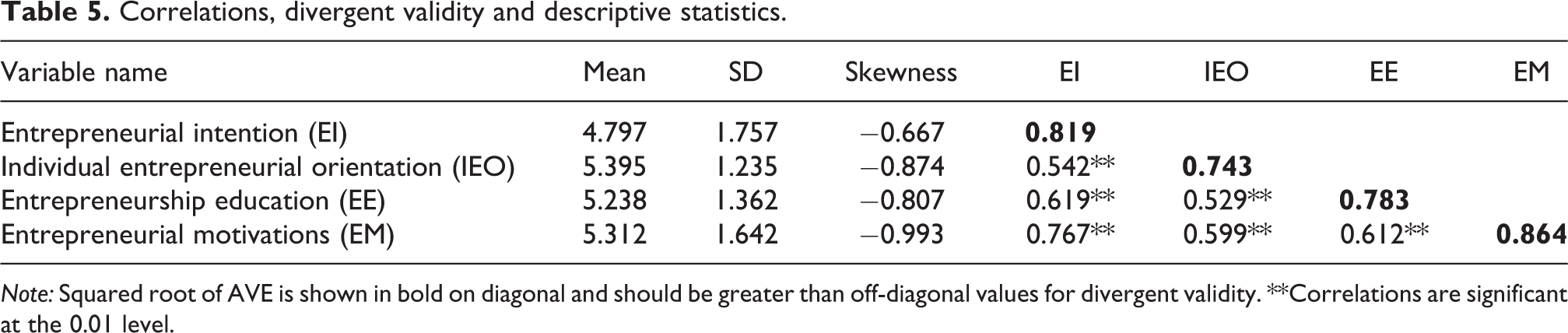
Note: Squared root of AVE is shown in bold on diagonal and should be greater than off-diagonal values for divergent validity. **Correlations are significant at the 0.01 level.
The correlation matrix in Table 5 provides primary support for the hypotheses and confirms that the predicting variables are fairly correlated with the outcome variable in the hypothesized direction. The table also reports descriptive statistics – mean, standard deviation and skewness – for each variable. The skewness statistics were between −1 and +1, thus ensuring the normality of the data for every variable (Kline, 1998).
Hypothesis testing (direct effects)
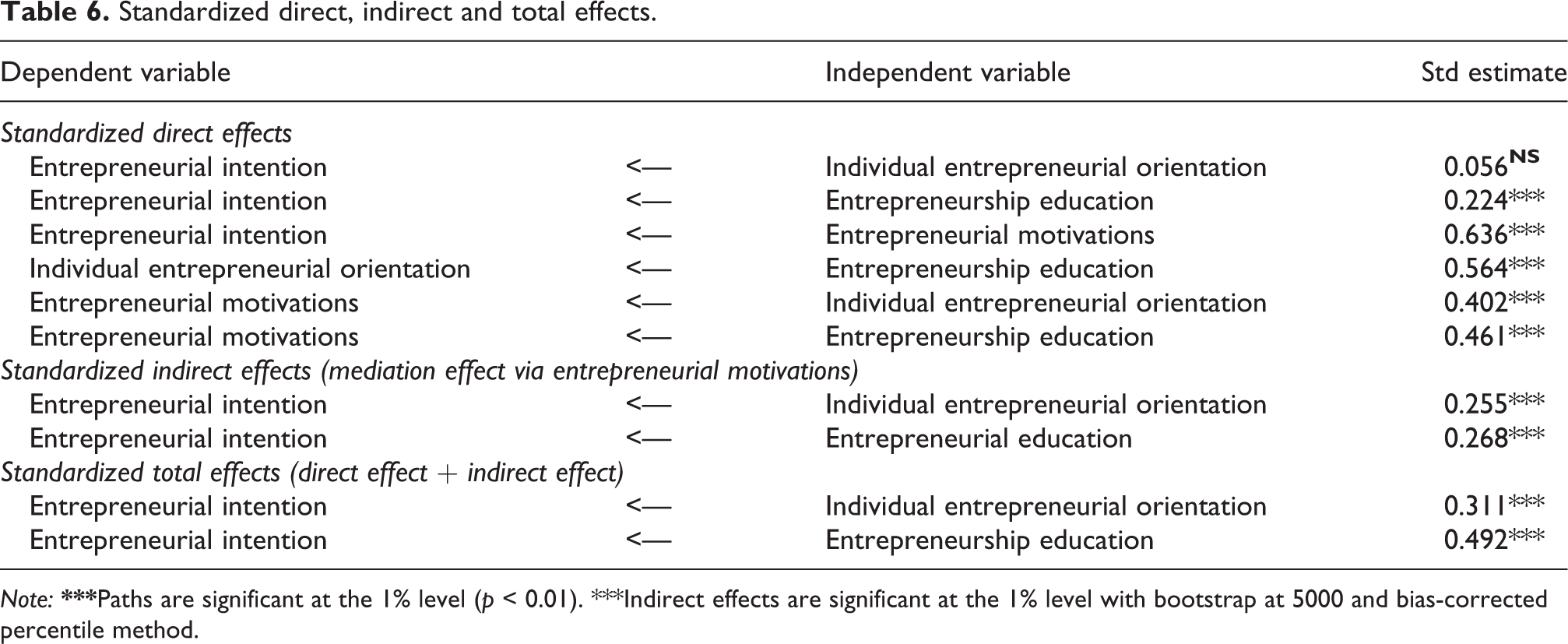
The study aimed to test the direct influence of IEO, entrepreneurship education and entrepreneurial motivations on EI, as postulated in hypotheses H1, H2 and H3, respectively. H4 was proposed to test the direct effect of entrepreneurship education on IEO. Moreover, direct relationships between IEO, entrepreneurship education and entrepreneurial motivations were also tested through H5 and H6, respectively. The results presented in Table 6 show that entrepreneurship education and entrepreneurial motivations positively influence EI, with standardized estimates of 0.224 and 0.636, respectively, hence supporting H2 and H3 while H1 was not supported, with a standardized regression estimate of 0.056, indicating that EI is not directly influenced by IEO. H4 was also supported, indicating that entrepreneurship education significantly enhances IEO, with a standardized estimate of 0.564.
Standardized direct, indirect and total effects.
Note:
Furthermore, IEO and entrepreneurship education were found to enhance entrepreneurial motivations with standardized effects of 0.402 and 0.461 respectively, thus leading to acceptance of H5 and H6. The total variance explained (R2) was 61.50% for the model.
Mediation analysis (indirect and total effects)
In addition to testing the direct effect of IEO and entrepreneurship education on EI, the study also measured the indirect effect of IEO and entrepreneurship education on EI through the mediating role of entrepreneurial motivations (H7 and H8). While testing the hypotheses in AMOS version 20, the indirect effects were also tested using the bias-corrected percentile method with bootstrap at 5000 (Hayes, 2017). As shown in Table 6, the results confirm that the relationship between IEO and EI is fully mediated by entrepreneurial motivations (B = 0.255), while entrepreneurial motivations partially mediate the relationship between entrepreneurship education and EI ((B = 0.268). Thus H7 and H8 are accepted. For mediating paths, the total effects were also calculated, adding indirect and direct effects (Hayes, 2017) as shown in Table 6.
Discussion
Entrepreneurs act as game-changers in the revival of an economy by creating employment for themselves and others. It has therefore become a priority to develop initiatives that promote an entrepreneurial culture. Prior to the 1990s, there was a general belief that entrepreneurs were born with special traits. Since then, however, the narrative has changed, with entrepreneurship researchers arguing that entrepreneurship is not innate but can be developed. Consequently, studies have examined factors other than that could lead to the development of entrepreneurial behavior – among them, university support systems, exposure to role models and entrepreneurship education and training (e.g. Anwar et al., 2020a, 2020b; BarNir et al., 2011; Bazan et al., 2019; Brunel et al., 2017; Roy et al., 2017; Zhang et al., 2014).
Universities play a vital role in overall individual development and in the specific development of EI by fostering existing and inculcating new abilities through entrepreneurship education. The support, education and ecosystem provided by a university can play a crucial role in enhancing an individual’s capabilities and motivation to undertake an entrepreneurial venture (Tomy and Pardede, 2020).
In this study, we examined the direct and indirect effects of IEO on an individual’s EI (shown in the final tested model, Figure 2). While some previous studies have shown a significant positive relationship between the two (Ekpe and Mat, 2012; Martins and Perez, 2020; Robinson and Stubberud, 2014; Zhang and Bruning, 2011), this study contradicts earlier findings and finds that IEO does not directly affect EI, although significantly influencing EI indirectly through the mediation of entrepreneurial motivations. This infers that IEO alone – i.e. innovativeness, risk-taking and proactiveness – is not sufficient to determine a person’s EI; rather, those qualities shape EI significantly when there are also present entrepreneurial motivations that lead to the selection of entrepreneurship as a career choice. Hence, the study indicates the importance of entrepreneurial motivations, suggesting that individuals with underlying motives are more prone to start an entrepreneurial activity. We conclude that IEO acts as an ‘add-on’ feature to entrepreneurial motivation and leads to a stronger inclination to start an enterprise.
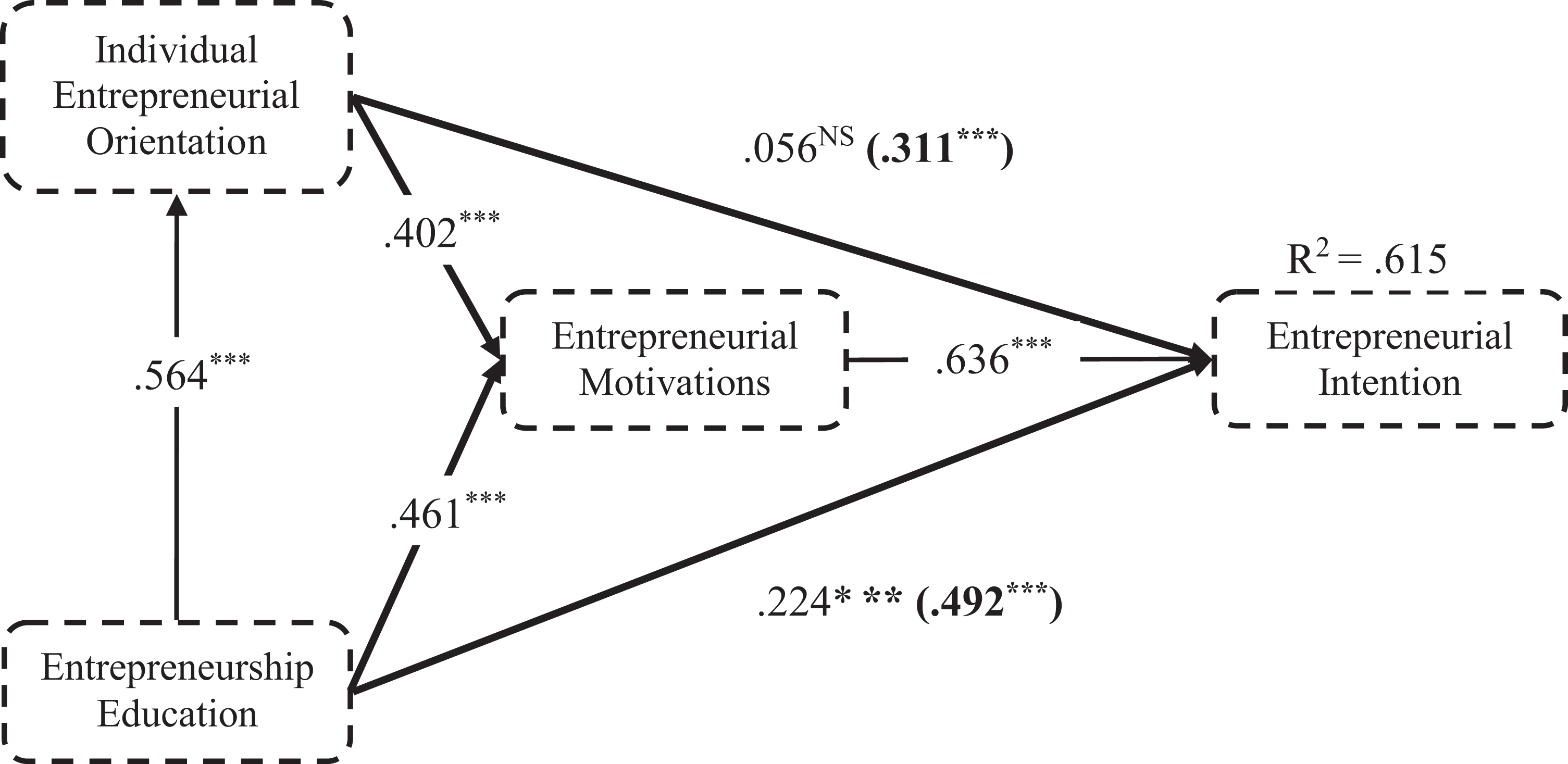
Final tested model, showing results for both direct and indirect paths.
Furthermore, based on the literature review, entrepreneurship education is considered to enhance entrepreneurial motivation and to positively influence the entrepreneurial intention of an individual. Therefore, we surmise that entrepreneurial motivations mediate the relationship between entrepreneurship education and EI. The result for the direct path entrepreneurship education–EI is in conformity with the results of previous studies (Anwar et al., 2020a; Anwar and Saleem, 2019a; Farhangmehr et al., 2016; Khalili et al., 2014; Solesvik, 2013; Souitaris et al., 2007), showing a significant positive correlation between the two. Thus, confirming the findings of this study with those of previous studies, we conclude that entrepreneurship education acts as a determining factor in the development of entrepreneurial intention among students.
Moreover, the indirect effect of entrepreneurship education on EI through the mediating effect of entrepreneurial motivations was found to be significant. It seems that the relationship between entrepreneurship education and EI is stronger when mediated through entrepreneurial motivations. The study also testifies to the influence of entrepreneurship education and IEO on entrepreneurial motivation. The results indicate that students are more entrepreneurially motivated with increased levels of entrepreneurship education and IEO.
Finally, the study also examined the effect of entrepreneurship education on IEO. The results show a significant positive relationship, indicating that entrepreneurship education affects IEO. These results are consistent with those of previous studies that show a positive relatioshipn between the two (Farsi et al., 2014; Fayolle and Liñan, 2014; Hahn et al., 2017; Jones et al., 2017; Passaro et al., 2018; Westhead and Solesvik, 2015). Hence, we conclude that entrepreneurship education nurtures individual competences and drives an individual toward entrepreneurship as a career option.
Conclusion
This paper focuses on the role played by IEO and entrepreneurship education in determining students’ EI. There are four key takeaways from the results. First, the impartment of entrepreneurship education enhances the IEO of students. Second, students with relevant underlying motives are more inclined toward entrepreneurship. Third, entrepreneurial motivations enhance the IEO–EI and entrepreneurship education–EI relationships. Fourth, IEO has an insignificant direct impact on EI.
Implications
Theoretical implications
Koe (2016), Ferreira and Trusko (2018) and Sahoo and Panda (2019) explore the entrepreneurial orientation construct at an individual level and suggest further exploration of the construct in the university context to assess the entrepreneurial orientation of students. Against that background, this study examines the impact of university students’ IEO on their EI and in doing so contributes theoretically to the existing literature on the link between IEO and EI by providing inputs that help toward a better understanding of the role of different personal characteristics like IEO and contextual variables like entrepreneurship education in the development of EI. Furthermore, the study expands on Bae et al.’s (2014) suggestions for further investigation into the entrepreneurship education–EI relationship by examining the mediation effects of different personal and contextual factors.
The findings also suggest that entrepreneurial motivations not only have a strong influence on EI directly, but are equally important in enhancing the impact of IEO and entrepreneurship education in developing stronger EI among students. Therefore, this study adds to the existing literature on the relationships between entrepreneurship education, entrepreneurial motivations and EI and to the literature on the relationship between entrepreneurship education and IEO.
Practical implications
The study is relevant to the context of other similar institutions that deliver entrepreneurship education. Researchers suggest that risk-taking capability and innovativeness can be developed through training and education (Kyro and Tapani, 2007) and the results of this study also show entrepreneurship education as having a positive impact on IEO, risk-taking, innovativeness, proactiveness and entrepreneurial motivations. Hence the findings suggest that universities should focus on framing entrepreneurship education programs such that they enhance both the entrepreneurial competence and entrepreneurial motivation of students, eventually leading to the formation of EI by stimulating the development of an entrepreneurial mindset. This can be achieved by delivering not only theoretical education but also exposing students to real-life problem solving, thus bringing out their innovativeness in idea generation and increasing their interaction with existing entrepreneurs.
Limitations and future scope for research
The study, while contributing to the literature on entrepreneurship, is not free from limitations. The first of these is that the sample comprised only students of management and entrepreneurship, excluding those stufying other disciplines – future research might consider students in the latter category. Such research would enable a comparison to be made between the two sets of students and so would provide a better indication of the overall effectiveness of entrepreneurship education. Second, the sample was limited to students from Aligarh Muslim University (although it shouod be pointed out that the institution is the oldest and largest centrally funded universities in India and attracts students from across the country, with varied cultures, languages and beliefs). Future research might increase the sample size and include students from different universities, which will help cross-institutional and cross-cultural comparisons, thus highlighting inefficiencies in current education programs. Third, only IEO, entrepreneurial motivation and entrepreneurship education have been used to draw inferences concerning entrepreneurial intention. More personal characteristics and contextual factors like attitude, self-efficacy, social capital and role models could be used in future studies to strengthen the model. Finally, a cross-sectional research design was used for data collection purposes, which may or may not reflect the actual entrepreneurial behavior because the intention of an individual may vary over time and may or may not translate into actual behavior (McCann and Vroom, 2015). Therefore, longitudinal empirical evidence will provide a better insight into the interaction effects between predictors and EI (Ephrem et al., 2019), serving as a remedy for this limitation and contributing further to our understanding of entrepreneurship.
Footnotes
Declaration of conflicting interests
The author(s) declared no potential conflicts of interest with respect to the research, authorship, and/or publication of this article.
Funding
The author(s) received no financial support for the research, authorship, and/or publication of this article.

Appendix 1
| Construct name with items of measurement |
|---|
| Individual entrepreneurial orientation (Source: Bolton and Lane, 2012) |
| Indicate your level of agreement with the following statements from 1 (total disagreement) to 7 (total agreement): |
| (1) I tend to act ‘boldly’ in situations where risk is involved. |
| (2) In general, I prefer a strong emphasis in projects on unique, one-of-a-kind approaches rather than revisiting tried and true approaches used before. |
| (3) I prefer to try my own unique way when learning new things rather than doing it like everyone else does. |
| (4) I usually act in anticipation of future problems, needs or changes. |
| Entrepreneurship education (Source: Liñán and Chen, 2009) |
| To what extent do you think entrepreneurship education courses can develop the following aspects? Indicate from 1 (not possible at all) to 7 (totally possible): |
| (1) Knowledge about the entrepreneurial environment. |
| (2) Greater recognition of the figure of the entrepreneur. |
| (3) The preference to be an entrepreneur. |
| (4) The necessary abilities to be an entrepreneur. |
| (5) The intention to be an entrepreneur. |
| Entrepreneurial motivations (Source: Solesvik, 2013) |
| Indicate your level of agreement with the following statements from 1 (total disagreement) to 7 (total agreement): |
| (1) I consider investing in my own small or medium-sized enterprise and its management a desirable career choice. |
| (2) I will start my own business because I want to be free and independent. |
| (3) I will start my own business because I have good ideas and want to realize them. |
| (4) I will start my own business to be better off financially. |
| (5) I will start my own business because I want to be successful. |
| Entrepreneurial intention (Source: Liñán and Chen, 2009) |
| Indicate your level of agreement with the following statements from 1 (total disagreement) to 7 (total agreement): |
| (1) I am ready to make anything to be an entrepreneur. |
| (2) My professional goal is to become an entrepreneur. |
| (3) I will make every effort to start and run my own firm. |
| (4) I am determined to create a firm in the future. |
| (5) I have very seriously thought of starting a firm. |
| (6) I have the firm intention to start a firm some day. |