







Abstract
It is increasingly vital, in the current era of ever-expanding remote work and learning, to develop blended methods for engineering education. This research aims to develop a blended, project-based information and communication technology (ICT) education model, conceptualizing a digital ecosystem based on stakeholders’ experiences and expectations. The article describes the first phase of the first cycle of the design-based research, analysis and exploration. Semi-structured interviews and online surveys were used to gather stakeholders’ – i.e. students’ (N = 27), instructors’ (N = 15) and industry representatives’ (N = 3) – thoughts and expectations about the current holistic integrated and project-based curriculum, on which little academic literature exists. The article gathers design principles for a broader intervention through which ICT education is transferred into blended learning. Study participants included third-year ICT engineering education students and instructors at the Lapland University of Applied Sciences, along with local industry representatives. The vast majority of the students described the integrated curriculum and project-based learning approach as a motivating pedagogical model. The participation of industry representatives was perceived as motivational to students. Working-life cooperation with companies should thus be encouraged and further developed in higher education curricula. The students’ positive attitudes towards integrated project-based learning may inspire higher education institutions to apply this framework.
To enable flexible distance or blended learning, we must further examine the current state of the whole ecosystem – gathering background information to inform educational intervention. Online methods enable time-efficient, sustainable and ecological approaches to collaborative learning within a digital ecosystem. The Covid-19 pandemic has accelerated the global transition to distance learning, even boosting it via official regulations. The business world has also rapidly transitioned to a digital ecosystem to prevent contagion. However, transitioning to distance learning in the field of technology is not straightforward. Currently largely based on face-to-face learning, education in this field requires a wide range of software, hardware devices and tools. Rapid changes in technology, globalization and internationalization are inevitably pushing for integration (Atwa and Gouda, 2014). Engineering education in information and communication technology (ICT) must step up to the challenges, offering a curriculum that is based on new and up-to-date technologies (Kang et al., 2018). The need for continuous development and learning is vital.
Blended learning combines traditional classroom lessons with learning in the online environment, whereby students receive training in real-world skills as well as teaching content – within the paradigm of remote learning and working. Bonk and Graham (2006) describe blended learning as interweaving face-to-face (FTF) with computer-mediated instruction. Kharb and Prajna (2016) find that students describe blended learning as increasing their interest in a subject and encouraging self-regulated learning. FTF learning is also seen as increasing students’ understanding of a topic and improving their level of interaction with the instructor. Yet, according to faculty members, blended learning motivates students to self-study, helps them develop higher-level cognitive skills and improves learning. It also provides flexible access to learning resources (Kharb and Prajna, 2016). Step-by-step support materials and checklists for launching the blended learning approach have been created to support universities in the transfer phase (Graham et al., 2013; Porter et al., 2014).
In integrated curricula (Drake and Reid, 2018), curricular subjects lose their boundaries when they are holistically blended around questions. Subjects are blended by finding overlapping skills, concepts and attitudes across disciplines (Atwa and Gouda, 2014). For example, climate change research requires expertise in the fields of environmental awareness, national economy and political science, among others (Breitmeier and Otto, 2012). Similarly, expertise in system and design thinking and medical science are required in the public health context (Ramaswamy et al., 2019). An integrated curriculum enables deeper learning and increased student engagement and motivation (Drake and Reid, 2018). Industry assignments can also provide real-world context and disciplinary perspectives (Drake and Burns, 2004; Drake and Reid, 2018).
Project-based learning (PBL) is an approach in which students actively explore real-world challenges and problems. It aims to deliver authentic learning (McDermott et al., 2017), with open-ended problems often chosen as the vehicle (Isomöttönen et al., 2019). PBL aims to integrate theoretical and practical content and improve problem solving within constraints (Zhu et al., 2019) in a real-world context, increasing students’ motivation and participation (Hogue, 2011; Sanchez-Romero et al., 2019). Students’ learning is assessed through the products they develop and the observations of teachers (Shambaugh, 2016). Yet some engineering students consider the project-based approach challenging because it is largely based on self-direction, and tasks are unclear and open (Nepal and Jenkins, 2011).
Agile approaches, such as Scrum (Takeuchi and Nonaka, 1986), are widely used in complex project and software development environments in the ICT industry. The framework consists of iterations called ‘sprints’, with new increments added to versions produced in previous sprints, as shown in Figure 1. A sprint review takes place after each sprint. A project team carries out the Scrum process (Gonçalves, 2018; Rising and Janoff, 2000) and high-level collaborative problem solving, learning and innovation are required (Stawiski et al., 2017). Scrum has been adopted in engineering education in several real-world contexts (Chassidim et al., 2018; Mielikäinen et al., 2018; Stawiski et al., 2017).
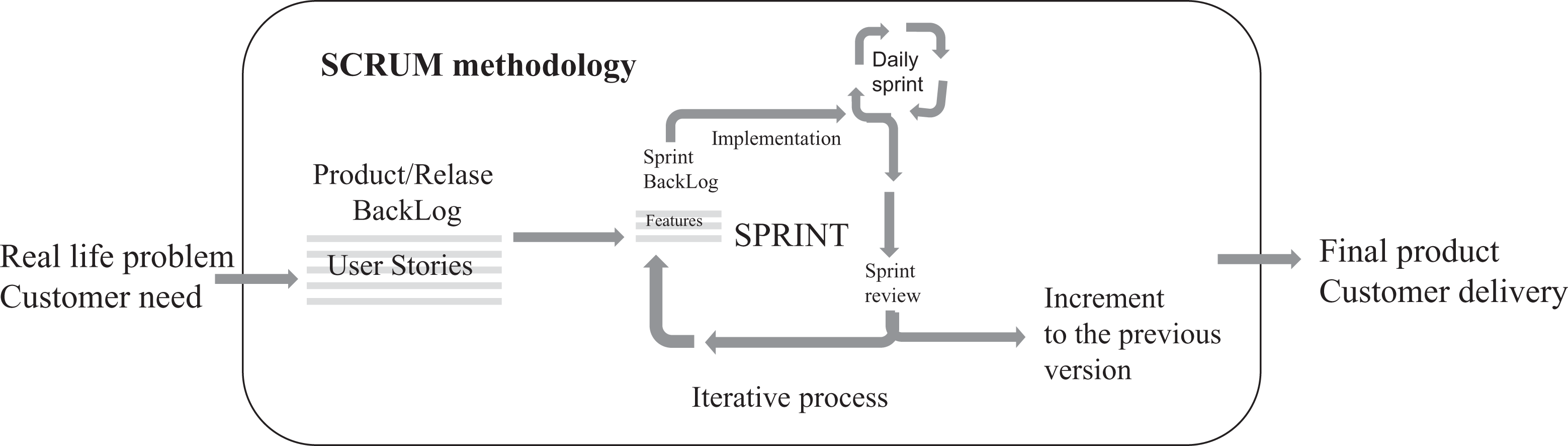
Reduced process of the Scrum method.
Online technologies offer various solutions for eLearning. Forum discussions are enabled through eLearning platforms, which facilitate open online discussion that encourages peer-to-peer learning (Henry, 2016). Web 2.0 tools (Berthoud and Gliddon, 2018; Korhonen et al., 2019) support online learning processes. Zerkina et al. (2019) point out the advantages of Web 2.0, including increased cognitive interest in problems among students, diversifying the main project activities and presenting solutions in a visual and interactive form. Online programming environments and Massive Open Online Courses (MOOCs) (e.g., Andone and Mihaescu, 2018; Onah and Sinclair, 2017) support today’s lifelong learning (Santandreu et al., 2019; Sullivan et al., 2019). Remote laboratories (e.g., Bjelica and Simić-Pejović, 2018; Lopes et al., 2017; Tirado-Morueta et al., 2018) or virtual laboratories (e.g. Coteli and Gokcan, 2018; Li et al., 2018) are promising ways to provide blended environments for experiments and simulation in engineering education.
However, providing authentic learning experiences is challenging. They require a flexible curriculum, a problem set-up, assistance for teams and the need to manage a range of stakeholders – including instructors, clients and students (Rees et al., 2019). Gathering stakeholders’ perceptions of the curriculum they have experienced (Marsh, 2009; Rasi, 2015; Rasi et al., 2017) and negotiating common expectations – e.g. pedagogical perspectives and ways of scaffolding learning – are key to sustainable change (Nylén et al., 2017). This also applies to educational intervention.
Along with hard technical subject competencies, the competency profile of engineering should contain so-called soft skills (Daneva et al., 2019; Fu et al., 2018; Snape, 2017) and common and generic skills, such as problem solving, communication and collaboration. Takala and Korhonen-Yrjänheikki (2019) list holistic understanding, communication and collaboration skills; the ability and willingness to engage in critical and reflective thinking; and creativity, innovativeness and entrepreneurship as key competencies.
This paper’s author identified a gap in the literature regarding examples of holistic integrated curricula applied through PBL in tertiary engineering education. The relevant related research includes a curriculum model at Aalborg University which is based on various levels of integration between the projects and the courses (Edström and Kolmos, 2014) and the use of PBL in the integrated Game Development and Entrepreneurship programme of the University of Ontario’s Institute of Technology (Hogue, 2011). Several researchers have discussed frameworks and results with regard to applying blended learning in higher education (e.g. Andersson and Logofatu, 2017; Kharb and Prajna, 2016; Timmermann et al., 2016). However, they focus mainly on single traditional course settings.
This paper draws on experiences from the Lapland University of Applied Sciences (Lapland UAS), where a holistic, integrated and project-based curriculum in ICT engineering education is being developed. This study was launched before the Covid-19 pandemic. As a result, the interrelationships between distance and contact education were particularly emphasized. There was an acute need for blended learning methods due to the pandemic, which also emphasizes the importance of this study.
Figure 2 presents the ontology of the key concepts in the curriculum. Subjects are integrated with semester projects through a PBL framework. Learning is blended and contains both FTF and online methods.
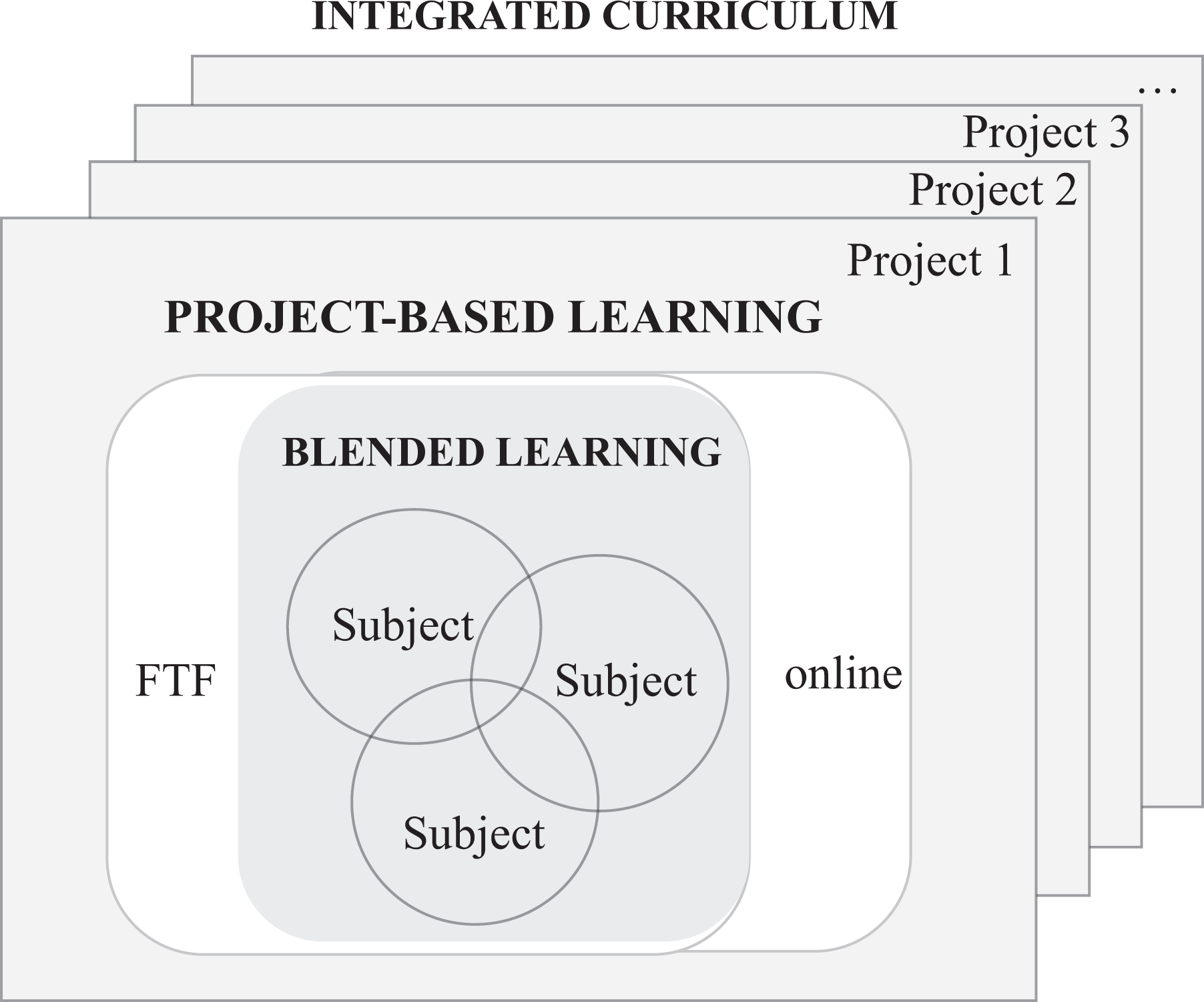
Ontology of the key concepts.
This article covers the first phase of the first cycle of a design-based research study that is being conducted at Lapland UAS. Through focus groups, the article explores the thoughts and expectations of stakeholders regarding further development of curriculum and ecosystem model. Stakeholders are crucial for understanding the problem area. The study described is part of a broader design-based research (DBR). The broader study aims to develop a digital ecosystem model that meets the stakeholders’ requirements, and to adapt the degree programme to a blended learning model. An ecosystem, as referred to in this paper, is an entity that includes the stakeholders – such as industry representatives, students, instructors, R&D personnel and management – as well as the curriculum content, methods and resources and the applied pedagogical approach.
The research questions underlying this contribution address the factors to be taken into account when developing this intervention. How do stakeholders experience the current curriculum, ecosystem and project-based learning framework? What thoughts and expectations do stakeholders have for ICT education over the next few years?
Methodological approach
The methodological approach selected for this study was based on the principles of DBR, as outlined by McKenney and Reeves (2019). The goal of DBR is to solve complex curriculum problems through real-world interventions. When researching such interventions, gaining an understanding of the initial situation can provide information that promotes theoretical understanding and thus contributes to the design work. To define the design principles – and to adapt the curriculum, teaching methods and tools to meet the requirements described above – one must learn more about the implementation of a semester project. This should include understanding the challenges, thoughts and expectations from the perspectives of the learner, the teacher and the administrative management. This article presents and analyses the first phase of the first DBR cycle: analysis and exploration. Cooperation with the stakeholders involved in the problem was emphasized as a way to improve understanding of the problem. As an instructor and team leader, the researcher is an active participant in the process. The result of the analysis phase is a definition of the problem and long-term goals. The findings of the study will be used as a starting point for the subsequent DBR phases and iteration cycles.
In educational interventions, there is a need to understand how students learn and to seek evidence of how guidance practices affect student learning (Mayer, 2005). The curriculum study is seen as having three interrelated objectives: intervention (curricular) optimization, the development of curriculum design principles and the professional development of all participants (van den Akker, 2013). This study applies Collins et al.’s (2004) theory of characterizing variables in educational interventions for the structure of items in the content analysis, since it comprehensively classifies those aspects relevant to educational interventions. The authors define variables – such as social climate variables (e.g., engagement, cooperation, risk taking and student control); learning variables (e.g., content knowledge, skills, metacognitive and learning strategies); and systemic variables (sustainability, spread, scalability, easy of adoption and costs) – that can be used to evaluate content learning and reasoning. Variables like setting (learning environment), the nature of the learners (e.g., age and socioeconomic status), the resources and support required for implementation, professional development, financial requirements and implementation path may affect the success of the design in practice (Collins et al., 2004.)
The framework of aspects is shown in Figure 3. The key concepts of the theoretical framework intersect characterizing variables – forming a matrix so that theoretical aspects are viewed from the perspective of each variable. The aspects should also be considered at cognitive, interpersonal, group, resource and institutional levels. This pattern of thought has been followed in the interview themes and questionnaire, as well as in an analytical structure to categorize the content during the analysis phase.
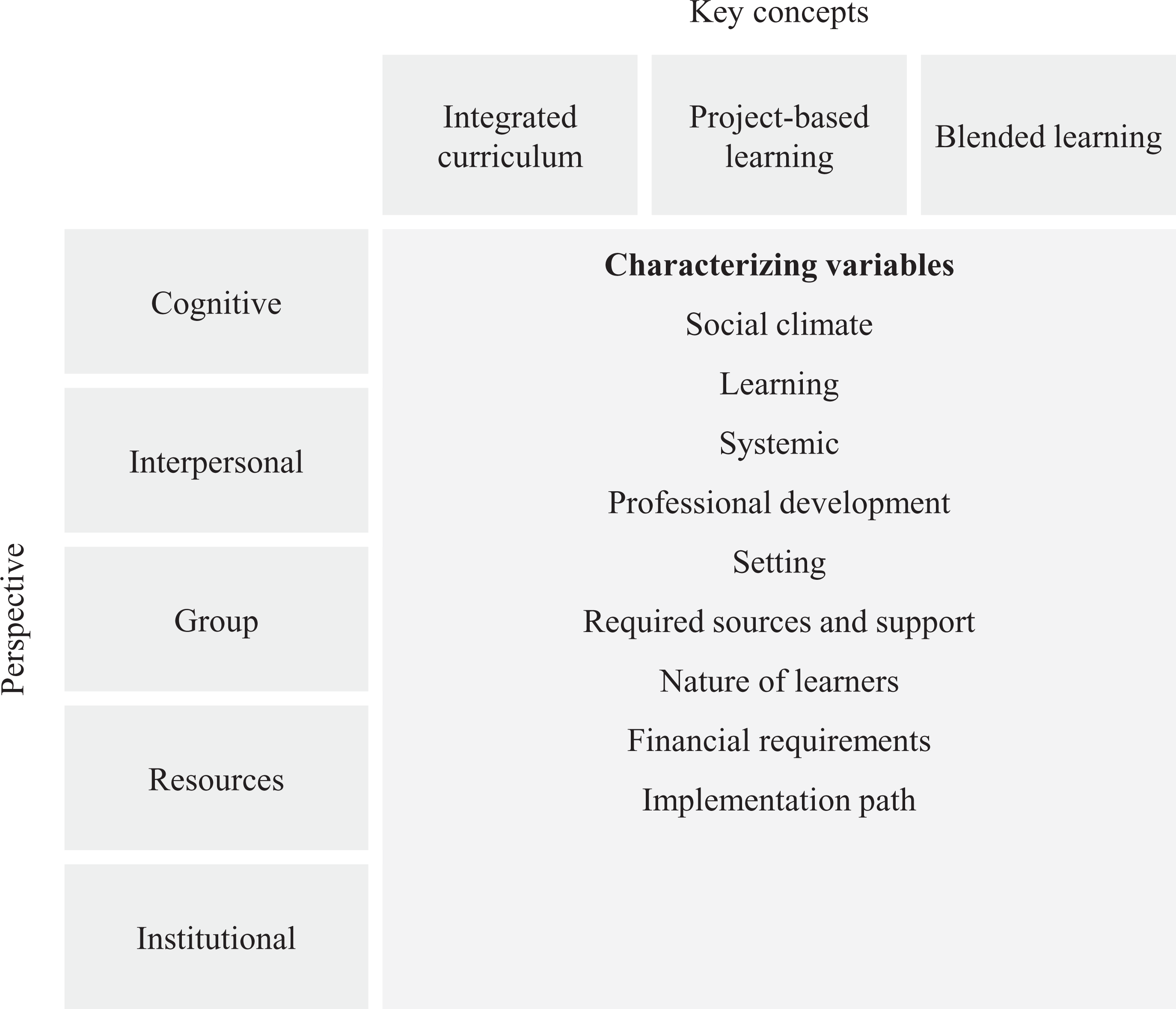
Framework of aspects in educational intervention.
Research setting and data collection
The ICT degree programme at Lapland UAS follows an integrated curriculum. The main structure is shown in Figure 4. The degree of integration of each FTF course with the semester project varies – from a few individual tasks to the entire content of the course. The semester project theme depends on the content of the active industry-based research and development (R&D) projects, as well as on the objectives of the study units. Scrum is used as a framework for project management and the development process. The project teams stage the development in 2-week sprints. The outputs of the sprints are demonstrated to and reviewed by the instructors in sprint reviews. The outputs were developed progressively through the project iterations and each project aims to produce a prototype and presentation materials. Each semester ends with an exhibition at the university, where the project teams present their outputs to the public.
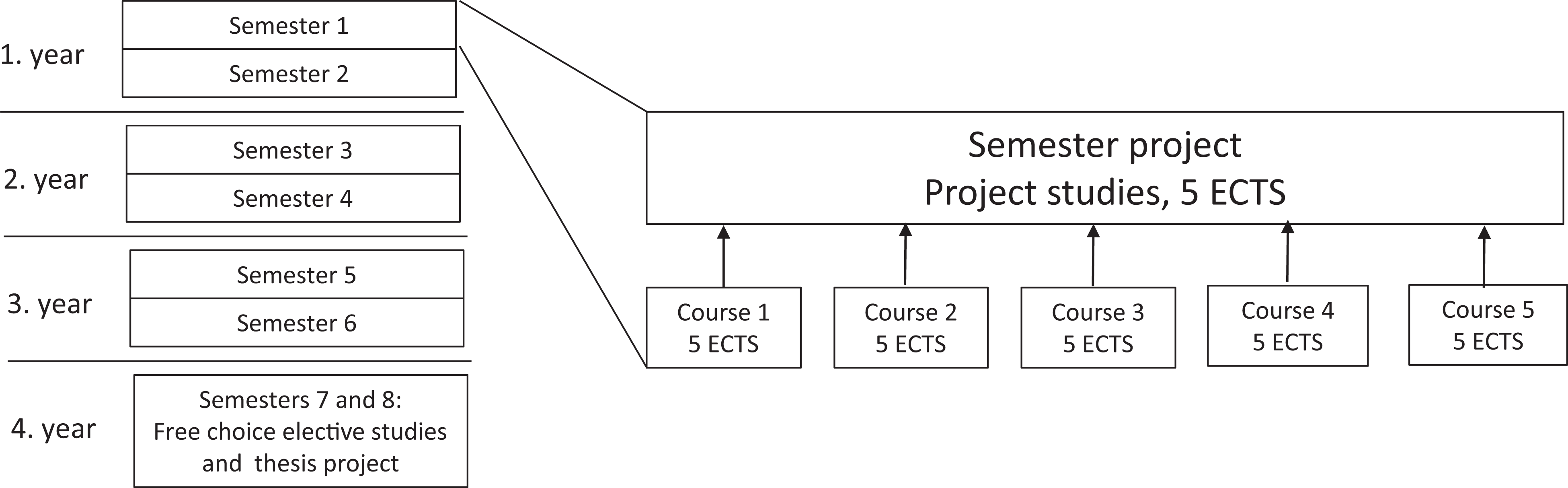
Structure of the semester projects in the integrated curriculum. Note: In the European Credit Transfer and Accumulation System (ECTS), one credit corresponds to 25–30 hours of student work.
The participants in this study were stakeholders with various perspectives. All third-year ICT engineering students (N = 33) were invited to participate, representing the experiences of active learners in several semester project settings. All teachers, R&D personnel and operational management (N = 15) of the ICT engineering education unit of Lapland UAS also participated, providing an instructor and management perspective. The viewpoint of external stakeholders was likewise represented by including all members of the ICT section’s advisory council (N = 20), which is a forum for cooperation between ICT business and industry practitioners in the province and the ICT education section of Lapland UAS.
Semi-structured interviews were used to collect data, using a combination of open and structured questions. In addition to a background questionnaire, 65 supporting questions were created, guided by the themes of the framework. Interviews were conducted with students, who were asked, for example: ‘How do you prefer to study?’, ‘How do you feel about studying in integrated semester projects?’, ‘How do you feel about instructions?’ and ‘How do you communicate with the team?’.
The questionnaires for the other stakeholders, such as teachers, personnel and operational management, were implemented using the Webropol survey program. Stakeholders were asked about their experiences regarding the current integrated curriculum and pedagogical methods, along with their ideas for improving the curriculum to support lifelong learning and R&D integration. The questions took into account the current state of the planned and previously experienced curriculum and mapped expectations for the future of ICT engineering education and industry in Lapland. Participants were asked, for example, ‘What kind of skills and competencies would you expect an ICT engineer in the year 2024 to have?’, ‘Do you think the current curriculum is up-to-date and sustainable?’, ‘What do you think about the current project-based integrated curriculum?’ and ‘What are its benefits or disadvantages, compared to a curriculum consisting of separate courses?’.
An invitation to participate in the interviews was delivered orally to all student project groups by the researcher in March 2019. Eight out of nine project groups participated in the interviews (N = 27) over 2 weeks. Students were interviewed in eight groups. In these group interview sessions, participants were introduced to the study and written consent was requested. Sessions were divided into three sections: an individual background questionnaire, a semi-structured interview and group brainstorming. The background questionnaire was conducted using a Webropol e-form. It included questions about demographic variables, such as age and place of residence during studies, and about the respondent’s previous experience of online studies, such as in programming. Students were given a quick response (QR) code, and they answered using their mobile devices. In the semi-structured interviews, conducted by the researcher in Finnish, students were mainly challenged at a cognitive level with verbal descriptions of ideas to bring out their thoughts. The interview length for each group was as follows: 51 minutes (4 students), 43 minutes (2 students), 73 minutes (4 students), 25 minutes (3 students), 55 minutes (3 students), 29 minutes (4 students), 22 minutes (3 students) and 19 minutes (4 students). The interview with the third group was longer than the others because the participants also offered feedback about the semester. In the group brainstorming sessions, creative and visual data collection methods were used and students were asked to create a mindmap of their dream ICT engineering curriculum. The researcher collected the resulting mindmaps for further analysis.
The external stakeholder questionnaire was sent to the advisory council members in April 2019. It asked four key questions about their visions for the regional ICT ecosystem over 5 years, the key drivers of the ICT sector and ideas for growing the ICT industry in Finnish Lapland. The ICT unit individuals received the same questions. In addition, ICT unit individuals were also asked 19 open-ended questions, based on the theoretical framework. Responses were received from 3 advisory council members and 15 staff members.
Content analysis
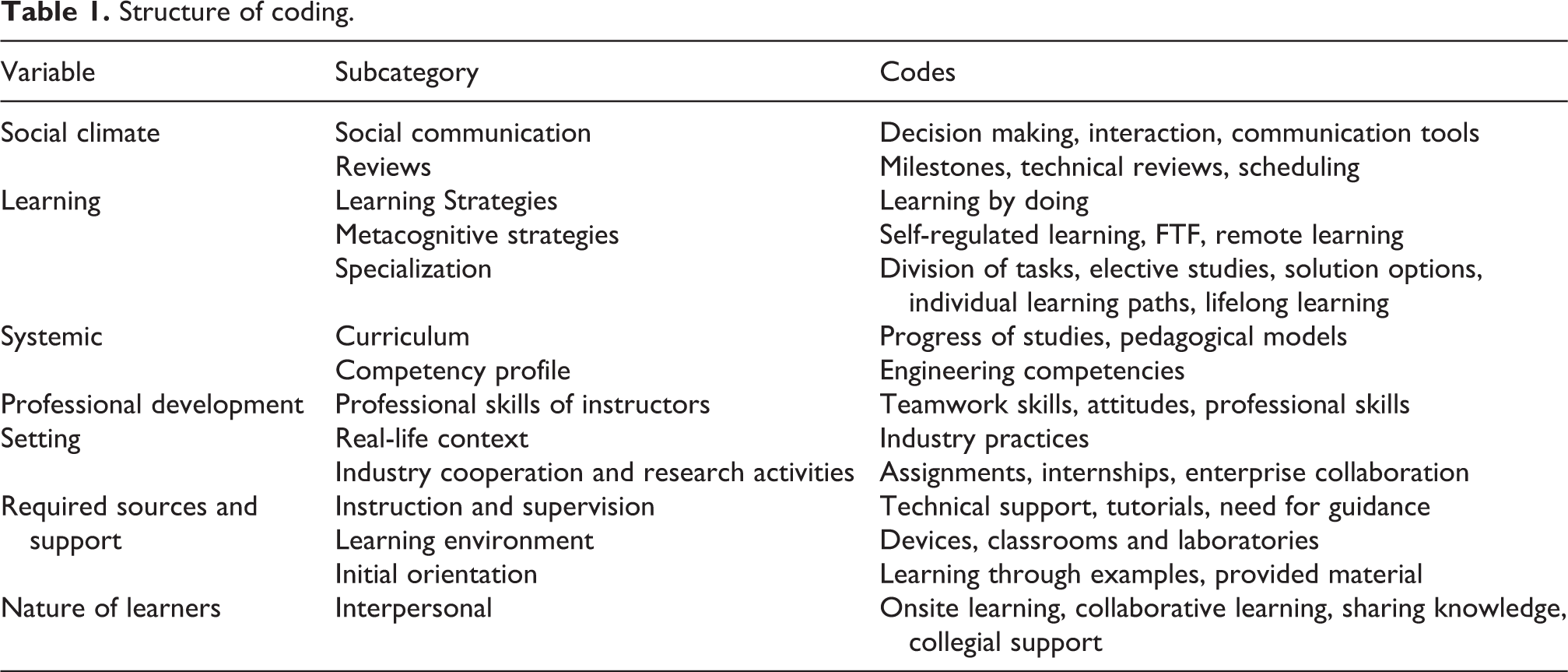
Content analysis is commonly used in qualitative research to analyse data (Elo et al., 2014). Here, eductive content analysis and, to some degree, an inductive approach (Bengtsson, 2016; Elo et al., 2014) were applied. The goal of the content analysis regarding stakeholder interviews and questionnaires was to understand the most meaningful factors for further development. Inductive reasoning was applied to the study’s key research questions to identify meaningful subjects (Bengtsson, 2016). Those aspects corresponding to the research questions that appeared often in the responses, or that could be considered and refined as intervention guidelines, were selected for coding. During the content analysis, the interview transcripts and surveys – including 49,094 words in Finnish and eight mind maps – were studied and imported into the qualitative data analysis software NVivo Version 12. The students’ mindmaps were analysed by collecting the results into a single mindmap and categorizing nodes through the framework. The content analysis proceeded as follows: a) coding inductively; b) grouping; c) reducing groups to eliminate overlaps; d) abstraction; and e) categorization into the framework themes (Figure 3). Analysis units concerning financial requirements and the implementation path included in the framework did not occur. The structure of the coding is described in Table 1 (the table excludes the last two ‘characterizing variables’ in Figure 3 since these did not arise in the interviews or survey results).
Structure of coding.
Findings
There was an extremely uneven gender distribution among the students, as the technology field is male-dominated: there were 26 males and 1 female. The resulting data set from the background questionnaire has the following demographic attributes (N = 24; data from three male students were missing). Ages varied from 21 to 31, with the median being 23.0 and the mean 23.9. All participants lived locally to their place of study. Nine percent of the students worked full-time while studying, 22% worked part-time, and the remaining 69% did not work. Seventy percent of them had never participated in online courses; 30% had participated, but not in an online programming course. Survey data were received from the other stakeholders as follows: advisory council members (N = 3) as external stakeholders, and ICT teachers (N = 10), R&D personnel (N = 4) and management (N = 1) as internal stakeholders.
Experiences of current curriculum, ecosystem and project-based learning framework
Based on the interviews, the students perceived the project-based integrated curriculum as a more meaningful way to study than traditional degrees consisting of separate courses. Only one student disagreed with this. Students experienced collaborative learning and learning-by-doing as effective ways of learning practical skills that are accompanied by close support. Yet they did not experience semester projects as real working-life cases, since interaction was limited with project staff and, in particular, the industry and end customer. PBL did activate the students’ own thinking and problem solving: A project that we can work on ourselves. It has been a good teaching style because people are forced to learn things by themselves as well; everything is not instructed all the time. You can create your own stuff. It has been good. (Student 17) Project based learning is a good way of acquiring an active attitude and the studies progress well too. The downside is that project groups divide their tasks so that one person is concentrating on IoT and another on programming. And some others don’t do much of anything and just get a passing grade. (Instructor) It provides a healthy sort of stress. You have to have consistent results throughout the project. Otherwise, it would go something to the effect of that we have two months to do a project and we end up doing most of it in the last week. (Student 17)
Each of the eight student groups emphasized the need for initial instructions and guidance. In the case of new technologies, a lack of instructions and application notes was a problem. Prior to the Covid-19 pandemic, teaching was largely FTF. Based on their experiences, both students and teachers generally considered contact teaching to be more effective than self-study. The threshold for requesting support and other assistance was high, and there were negative experiences regarding the availability and accessibility of guidance.
Teachers noted that collaboration among different courses had intensified. However, some staff saw colleagues continuing to use traditional course-based thinking, even though the aim of the activity was integrated PBL. This was evident, for example, in an unwillingness to change course implementation to meet project requirements. Some instructors felt that projects limited the development of the content and individual courses were perceived as more agile. Teachers’ activity in group work seemed to vary depending on their general attitude towards PBL.
In the interviews, students were asked about managing peer communication. All the groups used WhatsApp and email for daily communication. Project documentation was managed in the Cloud, as specified in the requirements.
The students appeared to favour strongly interpersonal interaction, preferring to study and do project work together on the spot at the university. They described collaborative problem solving as more natural for them than working alone. When not guided towards remote or self-motivated work due to distance or other reasons, FTF appeared to be their natural choice. Some students were peer-supported, but would not take responsibility for others’ learning: When you work in groups it is much easier to learn because you get help from your classmates. You don’t have to be alone. (Student 12) Everyone is responsible for their own learning in the end, but it is ideal that everyone internalizes all the things that we go through, so that instead of being responsible for the learning of others you are supporting the learning of others. (Student 1)
Expectations of ICT engineering education
When questioned about the essential competencies for ICT engineers, the advisory council’s representative noted that ICT was a broad industry and it was now difficult to find individual competencies. They believed that education should be profiled, but that the profile did not emerge clearly. They saw potential in technologies like machine learning, artificial intelligence, 5G, test automation, blockchain, the Internet of Things (IoT) and 3D printing. They mentioned entrepreneurship, innovation competence, language skills, teamwork and initiative among general competencies and soft skills. Instructors emphasized the importance of extensive expertise and understanding trends, good programming skills, project skills, algorithmic thinking and the ability to learn and innovate, as well as strong basic skills. Basic skills were not specified in the answers.
The current curriculum does not include actual specialization options. Instructors considered these important, and students also wanted more specialization options: It feels like I can’t apply to any jobs because I only know a little of many things. (Student 9)
The students stated that nearly all learning could be transferred to online systems, but the idea did not seem attractive: In my opinion, programming can be learned entirely online. We have never had compulsory attendance on our courses. Most of the students have decided to do the things at home after a couple of classes. (Student 9) It would be more individualized. It would require a lot of solitary contemplating. Of course, you could ask a friend, but it is not the same as working in a group at school. (Student 12)
Students valued and expressed interest in having business representatives as participants in review meetings. Fully technology-focused reviews were also considered desirable: In this project, we had company guests too. I would wish for more participation from them throughout the project. If they were present in the review, that would be really good. (Student 13) You should probably be able to schedule a time slot with the teacher, or the teacher would be available at a certain time during the day. Screen sharing both ways would be beneficial because then the teacher can show you exactly where to click and how to get things to work. (Student 1)
Instructors were asked how they viewed the lifecycle of the current curriculum and whether it could be used flexibly in the coming years. The written curriculum was considered to be successful and would be kept in line with developments as long as it was updated with new technologies. Yet the structure was considered rigid because, for example, specialization was impossible and the number of individual study path options was limited.
The instructors stressed that future explorations should focus on how individual study paths could be more strongly emphasized. Additional flexibility and alternatives would be required for studies. Classroom teaching and distance learning could be combined, with some students on the spot and some studying remotely – this approach is called the ‘hybrid method’ at Lapland UAS. Instead of lecturing, teachers focus on guidance. A few instructors suggested making the integrated modules smaller. Yet deeper integration was also desired by teachers.
Students expected teachers and staff to be familiar with the technologies and equipment used. However, they admitted that problem-solving skills were required in business life and deemed it more important to understand concepts and principles than to be skilled at using various tools and software. The instructors were concerned about developing their own knowledge and skills. The current time resource allocation was perceived as too tight and limited.
Instructors saw potential in industry cooperation. Various professional groups – such as engineers, designers and business administrators – could collaborate on multidisciplinary projects. Students and instructors also desired more lectures conducted by business representatives. External stakeholders saw a link between the attractiveness of the field and the quality of education – a perception of high quality would improve its attractiveness. Internal stakeholders suggested closer cooperation with industry for project assignments. Yet the possible failure of collaborative projects was seen as a risk for cooperation. Internal stakeholders recommended a degree programme to offer ICT experts supplementary support in establishing new businesses. The establishment of small businesses and the emergence of branches of existing companies would create jobs in the region and boost business and industry. Project activities could also generate start-up businesses.
Discussion and conclusions
This study explores the holistic experiences of ICT engineering education stakeholders concerning the introduction of a project-based integrated curriculum. Issues were mapped and suggestions were made for further design principles. The research explores the content of ICT engineering education and anticipates the transfer of the current ecosystem and pedagogical model to a blended learning approach in a digital ecosystem.
The results suggest that the integrated curriculum and PBL model constitute a successful approach to ICT engineering education programmes. Learning by doing and hands-on activities bring to the fore practical skills required in working life. Collaborative problem solving promotes learning motivation and deeper learning. However, this study has illuminated various stakeholder opinions, as follows.
Students felt that the reviews supported learning and provided, through feedback, a more systematic and focused process with clear milestones. Yet some instructors were also critical of the review context. This attitude is partly explained by the teacher team’s reviewing each project group throughout the day, one by one, which can seem time-consuming and frustrating. For the student, the review is a unique experience that is comparable to an exam in a positive sense. Challenges may be due to differences in epistemological views (Ashby and Exter, 2019). Applying the Theory of Planned Behaviour (TPB) Cajander et al. (2017) identify tensions in the academic environment and offers a method to gain an overall picture of students’ expectations of implicit educational standards. This method could perhaps also be applied in critical incidents involving teachers’ attitudes and behaviours. The varying degree of teacher involvement in teamwork may indicate not just time-consuming resources but also attitude and commitment to the approach. A project-based approach with open-ended assignments and a real-life context requires a cultural change in the educational institution. This may challenge traditional teaching values. The principles of project management and the project-based approach may not be familiar to all supervisors, which is also burdensome. An instructor’s critical attitude towards the pedagogical model may be negatively reflected in the learning environment and the approach may not be understood as student-centred. Successfully implementing an integrated curriculum and PBL requires close teamwork and collaboration among instructors, and the continuous feedback provided by students and by observing activities should be actively applied. Teams should be prepared to make quick changes to instructors, support and guidance activities – and to technologies, if necessary. This is a way of working that corresponds to working life.
Students’ and instructors’ opinions towards learning programming remotely were also divided. The students suggested that programming could be studied well at a distance, but the instructors felt it could be successful only with FTF. It should be noted that the interviews and surveys were conducted before the Covid-19 crisis, which forced transition of all teaching to blended or distance learning. The views of both parties have converged in the light of post-observations.
In this study, working life skills seemed to be clearly developed in real-life contexts and PBL. The reviews included in the Scrum method were important to students, without exception. Yet, despite good intentions, students on the whole did not see a link between real-life context and PBL due to insufficient business and industry contacts. The reviews are comparable to the gaming component discussed in Cajander et al.’s (2017) TPB study, in which presenting learning outcomes before a panel divided students’ opinions; some of these opinions were quite the opposite of what had been intended.
The education programme aims to move to a blended learning model, in which some of the content and methods of learning take place online. Stakeholders were critical of online learning and FTF was seen as a more social way of learning, as in studies by Todd et al. (2017) and Yen et al. (2018). However, a blended or hybrid approach – combining the best features of FTF and online – is recommended (Yen et al., 2018). Criticism of online learning may also be due to concerns about the absence of interaction between students and instructors (Fearon et al., 2012). Henry (2016) argues that a blended learning approach to PBL is effective if teachers and students are motivated to fully commit to it. In light of this research, industry and business representatives should be invited as active players in the ecosystem. This would strengthen motivation, increase professionalization and help develop soft skills in a real-life context. As much as possible, the same remote and teamwork tools as used in the partner organization should be used as tools for real-life assignments.
Social connections and interactions must be ensured when transferring a project-based integrated curriculum ecosystem to a blended learning model. Appropriate digital platforms should facilitate group communication, collaboration and support that involve all parties. Laboratory virtualization and remote access allow the versatile use of laboratory equipment, but require longer development time and investment. Deeper business cooperation, industry-based assignments and a hybrid teaching and learning model should be adopted. Online tools and developer platforms provide support for a holistic, real-world context and integrated projects in the transition to blended learning. A valuable first step would be to bring tools used in the corporate world – such as hubs for team collaboration and version control – into wider, active and holistic use in the digital ecosystem, together with asynchronous online learning environments such as MOOCs to enhance skills. This would support distance learning and working, covering most activities in the semester concept as well as practical training.
This study offers new information and understanding about a vital topic that has received only limited attention in the academic literature. Student satisfaction supports the idea that all semester courses can be successfully integrated and implemented in a project-based learning approach. The study confirms the motivating effect of working life oriented practices. The results also encourage the participation of industry, for example by offering authentic topics and participating in project reviews. The students’ positive attitudes towards the integrated PBL will hopefully encourage higher education institutions to apply the framework in their own contexts. Transitioning to an online environment is an inevitable trend, boosted by the pandemic emergency.
The following research questions might be valuable. How do students and instructors experience the use of holistic team collaboration tools from the perspective of online guidance and support? Do these solutions maintain the quality and social structure of work and learning in a digital ecosystem for ICT engineering education?
Limitations
The researcher was involved in the program studied in this paper, as an actor with in-depth knowledge. Although there are benefits to this, it is not without problems. Although in-depth subject knowledge is beneficial, the approach is also subject to a number of disadvantages, including possible ethical challenges in objectivity because of an interactive relationship with the target group. With respect to students, the researcher acted as a teacher carrying out an assessment. With respect to colleagues, she was a team leader. Furthermore, the sample size is small and the study focuses on non-working full-time students who had applied for FTF study. Due the nature of the research questions, the literature review was generally limited to previous empirical studies published after 2010. Searches were focused on engineering or higher education.
Footnotes
Acknowledgements
I thank Päivi Rasi, Associate Professor of Media Education at the University of Lapland, and Hanna Vuojärvi, Lecturer in the Pedagogy of Adult Education at the University of Lapland, for assistance with the process and methodology and for comments. Grateful thanks are also extended to the anonymous peer reviewers, whose comments have significantly improved this manuscript.
Declaration of conflicting interests
The author(s) declared no potential conflicts of interest with respect to the research, authorship, and/or publication of this article.
Funding
The author(s) received no financial support for the research, authorship, and/or publication of this article.
