







Abstract
The application of artificial intelligence (AI) brings new demand to the job market. The concern now is whether higher education institutions (HEIs) have adequately prepared young learners to work in an AI work environment. This research seeks to explore business students’ perceptions of their HEIs in the Netherlands in preparing them for AI work environments. A questionnaire-based survey was completed by 95 students from 27 HEIs in the Netherlands. The findings show that these students believe that their HEIs are not optimally equipped at this time and/or have not optimally utilized their facilities to adequately prepare them for AI work environments. This study reinforces the urgency of updating the curriculum and educational facilities for AI work environments and provides suggestions for future research.
Keywords
Introduction
‘Siri, can you please conduct this research for me?’ It is not beyond imagination that one day, artificial intelligence (AI) will do jobs ‘traditionally reserved for humans’ (Schofield 2018: p. 80). AI is set to transform our way of life (Makridakis, 2017; Sterne, 2017; Scherer, 2016). Its advent is revolutionizing economic activities, mainly in developed countries, and it is generating great economic opportunities as well as social prospects (Gherhes & Obrad, 2018). Businesses in many industries are exploring and investigating how to utilize AI for production facilities and service provision to help in cost reduction, the improvement of services, market penetration and the streamlining of logistics and delivery operations and many other operations both locally and globally (IBM, 2019). In a survey done in London on the impact of AI, 54% of executives said that AI tools had given their company’s productivity a boost and had increased labour productivity by about 40% (Murray, 2019).
The European Commission (EC) (2018) defines AI as intelligent systems that analyse their environments and execute actions – without full human intervention – to attain specific goals. AI can be purely based on software (i.e. a virtual presence such as in Siri, Alexa, etc.), or embedded in hardware devices (such as in robots, drones and autonomous cars) (Delponte, 2018). With AI permeating many sectors of the economy, job markets of the future and the necessary skillsets for human workers in AI-intensive sectors will be significantly different (Siau, 2017, 2018; Rainie & Anderson, 2017). Since AI is demonstrating its potential and capacity to reshape businesses, industries and competitive landscapes, the effect will ripple out to business education (Stine, et al., 2019). Bessen (2018) also states that the need to equip future workers for new tasks and occupations is a necessity, since one of the main intentions of higher education is to make young learners ready for their future careers and to a large extent to fulfil the needs of future employers (Rauf, et al., 2021; Small, et al., 2018).
Some studies suggest that, although university students are generally aware of AI, their perceptions of it are not sound enough to understand its possible impact on their future career, regardless of their choice of industry (Amatrol, 2015; Bessen, 2018; Bristows, 2018; Capgemini Research Institute, 2018; Delponte, 2018; European Commision, 2018). Two questions arise. What are the perceptions of business students or recent graduates of their job prospects in the changing business environments propelled by AI? What are business faculties in higher education institutions (HEIs) doing to narrow the disconnect between AI-enabled business practices and the traditional curricula of business degree programmes? (Stine, et al., 2019).
Though the significance of HEIs delivering high-quality, relevant education cannot be overstated, it is suggested in some studies on HEIs that current education systems and approaches have been largely ineffective (Small, et al., 2018; Abelha, et al., 2020; Rouf, et al., 2016), as they have failed to prepare students sufficiently for the new challenges involving AI (Rauf, et al., 2021). Ascertaining students’ expectations and perceptions about AI education in their HEIs may help to better manage their expectations and to fill the knowledge gap with regard to working in an AI environment.
The Netherlands is one of the European countries with the highest number of business degrees taught in English (Study in Holland, 2020). A study commissioned by Microsoft and conducted by Ernst & Young (2018a) reported that Dutch companies were ahead of those in other European countries in the implementation and application of AI in work environments. It also showed that 75% of Dutch companies considered AI applications to be an important item in their business agendas, but that the main problem was finding appropriately qualified talent to achieve it. The main suggestion from the research participants in that study was that the government should increase AI topics in the education curriculum for future university graduates (Microsoft-EY, 2018a). This view is supported by another study done by Boston Consulting Group (BCG), in which the main findings suggest that the Dutch government should stimulate AI education (BCG, 2018).
The above studies concentrated on the implications of AI from the perspective of employers, but no studies, to our knowledge, have been carried out to understand the situation from the perspective of HEI students. Thus, the aim of this research is to explore the perceptions of students as to whether or not their HEI has adequately prepared them to work in an AI work environment (shortened hereafter to ‘AI education’). The study aims to understand the perceptions of students of the quality of AI education delivered by their HEI. For the purpose of this investigation, the concept of ‘skills’ specifically refers to the generic term that includes the different aspects of professional skills, such as ‘knowledge, qualifications, experiences, and attributes’ as used in a Universities UK report (Universities UK, 2018). The next section presents some insights into this topic based on contemporary literature before we embark on the research design and findings.
Literature review
AI integration in businesses
The use of AI is ubiquitous in many industries and AI technologies are increasingly being embedded in diverse business functions throughout the world (Deloitte, 2017). AI algorithms are already being used in detecting fraud (IBM, 2016), customer behaviour patterns (Deloitte, 2015) and in banking and retail (Deloitte, 2017). AI solutions also enhance and accelerate business decision making, boost customer engagement, create customized products and services, provide intuitive interactions and effective customer services (chatbots) and allow greater scale through the automation of monotonous, manual tasks (Deloitte, 2017). Many businesses are already adopting AI-powered automation to improve and transform the way they do business. In a 2019 IBM study, more than 70% of retail and consumer product executives expected that their companies would be engaging in intelligent automation across the value chain, such as supply chain planning, marketing, advertising and campaign management, customer intelligence and pricing and promotion, by 2021 (IBM, 2019).
In a joint study by Microsoft and Ernst & Young (2018b) of 277 companies across 7 business sectors and 15 countries in Europe, it was reported that AI benefits businesses in different domains in which business graduates will be working and thriving. Examples are: 1) customer engagement, as it is crucial to seek business benefits, such as offering personal assistants like Alexa or Siri; 2) transforming products and services to a new level of solutions for customers; and 3) optimizing production efficiencies by empowering employees through smart operations.
In the context of AI as collaborative intelligence, organizations that attain the highest performance improvements are those that have successfully adopted AI to work alongside their employees (Wilson & Daugherty, 2018). For them to be able to work alongside AI, the majority of employers feel that most existing employees need to be reskilled and retrained, while future employees will need to have the required skills to work with AI through their university qualifications (IBM, 2019). Capgemini Research Institute (2018) found nearly 1000 organizations worldwide that had already integrated AI at scale, and most of these organizations did not want to substitute their employees with AI because they saw employees as a vital resource to market their products and they wanted AI to complement employees’ competences. They preferred to leverage AI to reduce the time humans were spending on repetitive tasks and allow them to concentrate on areas in which human intelligence could drive value. AI is becoming ‘augmented intelligence’ and a reality across innovative businesses (Capgemini Research Institute, 2018). According to the employers interviewed in the IBM (2019) study, skills and culture are critical success factors for AI integration in businesses and business graduates should be equipped with the necessary AI skills in their higher education. Graduates who lack such skills will be detrimental to the smooth operation of the business and its viability (IBM, 2019). To prepare graduates for the future AI work environment, however, it is important to understand the skills that are needed in that environment.
Necessary skills in AI work environments
AI-specific skill sets for industry 4.0.
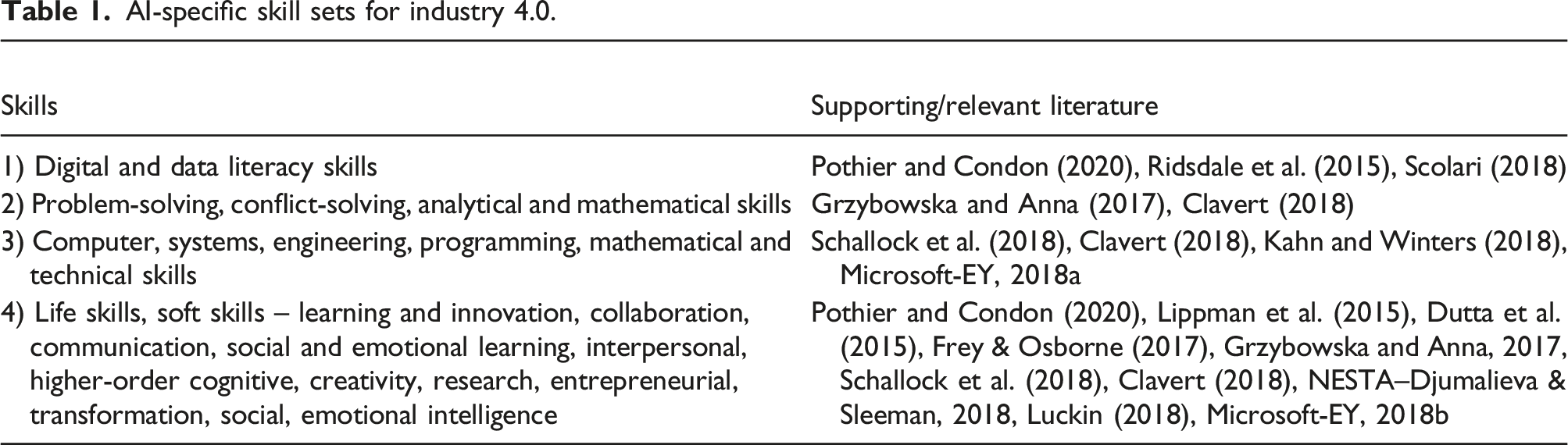
Kereluik et al. (2013) developed a model of 21st century learning which showed nine key domains falling under three categories: • foundational knowledge: core content knowledge, digital literacy, cross-disciplinary knowledge; • meta knowledge: problem-solving and critical thinking, creativity and innovation, communication and collaboration; and • humanistic knowledge (the values we bring to knowledge and action): life/job skills, ethical/emotional awareness, cultural competence.
This model adequately and logically categorizes and synthesizes the list of important skills in Table 1. Kereluik et al. (2013) present digital literacy as a core component of foundational knowledge, and thus it should not be taught only to engineering or computer science students but across all disciplines.
In one study, the authors posit that decision makers need to know their business well so that they can determine how AI can best be leveraged to increase business value (Brynjolfsson and Mitchell, 2017). On the other hand, in another study, the authors state that business managers, in addition to having technical expertise in AI technologies, need to have profound business acumen in order to drive AI strategy and business development (Mohanty and Vyas, 2018). This view is supported by a 2019 study on job advertisements related to AI. The study found that business managers need to have good understanding of AI competencies while developers and data scientists must have good understanding of the business domain and goals as competencies in these two areas will help them to know how AI techniques can be used to create business value (Anton et al., 2020).
Verma et al. (2021) explored the skillsets required for AI and machine learning (ML) positions through a content analysis of online job advertisements posted on Indeed.com. Their research revealed that for ML positions, technical skills like data mining, programming, statistics and big data were more valued. However, for AI positions, more generic skills are required, with more emphasis placed on communication skills, indicating the necessity for interaction with other team members and upper management while working on projects (Verma, et al., 2021; Alekseeva, et al., 2021; Poba-Nzaou, et al., 2021).
These findings on necessary skills in AI work environments are of great significance for students and educational institutions. The discussion on how HEIs should deliver these AI skills cannot be comprehensive without touching on students’ perceptions of AI and the quality of education in HEIs.
Students’ perceptions of AI and the quality of higher education
Studies suggest that most people know in general what AI is but lack a clear understanding of how AI systems work (Bristows, 2018; Qlik, 2019), and most university graduates do not believe they are well prepared to work in an AI work environment (Northeastern University-Gallup, 2018). A study undertaken by London’s Hult International Business School (2018), entitled ‘Visions of the Future’, revealed that only 20% of 400 undergraduates studying in the UK and USA felt ‘very prepared’, and 62% felt only ‘somewhat prepared’ to work in an AI environment, while the remaining 18% did not feel ‘prepared at all’ to face AI in the workplace. While HEIs emphasize the development of students’ ability to learn, companies are keen to employ graduates with wide technical skill sets (i.e. advance computing or ICT skills) (Baird & Parayitam, 2019). Research highlights that university curricula are supply-driven, mainly influenced by academic traditions or lecturers’ interests, and that often little attention is paid to labour market needs, especially for requisite skills (Van der Zwaan, 2017). There appears to be a substantial gap between students’ and employers’ perceptions and expectations regarding the skills obtained by university graduates and their degree programmes’ curricula (Succi & Canovi, 2020). There is a possibility that, if HEIs fail to align study programmes with the evolving workplace needs, they will produce students who are not prepared to work in AI work environments.
In recent decades, higher education has become a product like any other market offer and HEIs are now more market-oriented (Rouf, et al., 2016; Abbas, 2020). This development is highly correlated with the intensity of competition of today’s business environment (Rouf, et al., 2016; Lee & Hwan, 2005). Customer satisfaction is an important factor in business and organizational success (Campos, et al., 2017). Consumers nowadays are concerned not only with the delivery of products and services but more crucially with the quality of the products and services received. Due to the intangibility, heterogeneity and inseparability attributes of services, Zeithaml et al. (2006) propose that the evaluation of service quality (SQ) must be looked at from the customer’s perspective. Although there are several stakeholders in HEIs, such as students, parents, employers, academic staff and government, many researchers regard students as the key customers and stakeholders in HEIs (Galeeva, 2016; Abbas, 2020). Thus, to evaluate the SQ of HEIs, it is important to evaluate the satisfaction level of the students themselves (Rouf, et al., 2016). SQ is vital for HEIs in developing necessary skills and building a positive perception in students’ minds (Prakash, 2018).
This study focuses on the following research question: what are students’ perceptions of the quality of AI education delivered by their HEIs? The study focuses on investigating two aspects of this question: 1) the perceptions of students about the relevant AI skills being taught by their HEIs, and 2) the sufficiency of infrastructure provision for AI education in their institution. To answer the research question effectively, a conceptual framework was developed by adapting Malechwanzi et al.’s (2016) 4-Quality Indicator Model of faculty competencies (Figure 1). The original framework is based on the theory of SQ by three researchers. (Parasuraman et al., 1985) , which shows that students’ perceptions of the four factors will affect their overall perceptions of their HEI’s SQ (right-facing arrow). Students’ expectations of HEIs are influenced by their personal needs – to be sufficiently equipped with skills that will allow them to enter the AI work environment. Thus, students’ perceived satisfaction must be made the ultimate goal in measuring the quality of the institution in preparing them for the new AI work environment (Lane & Saint-Martin, 2021). Conceptual framework of 4-Quality Indicator Model of Service Quality in HEIs.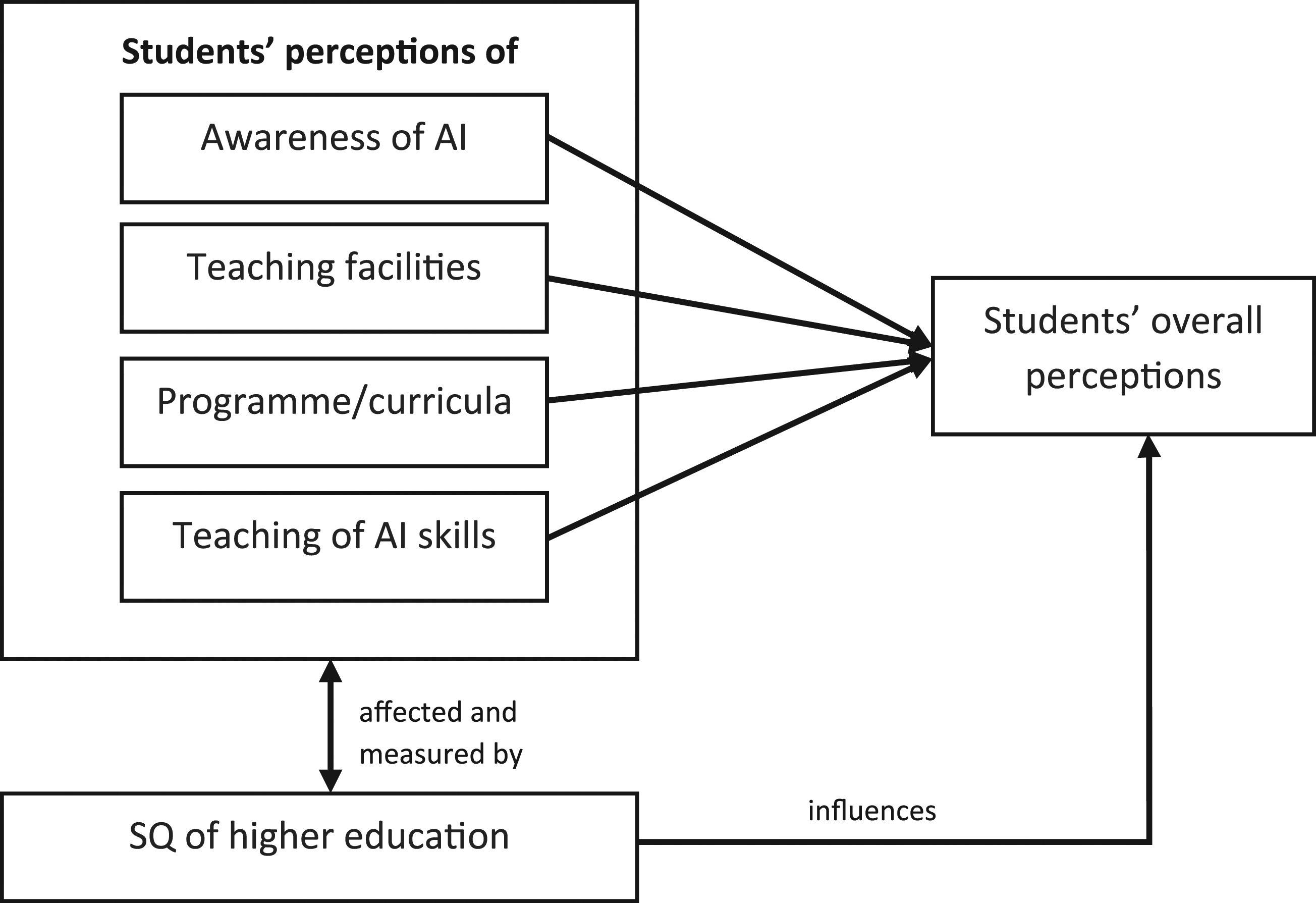
This framework (Figure 1) consists of students’ perceptions of the four factors (awareness of AI, teaching facilities, programme/curricula and teaching of AI skills in the HEI) that will shape their overall perception of the SQ of their HEI in terms of AI education. Students’ overall positive perception of their HEI’s capability to prepare them for AI work environments is dependent on the evidence of the SQ provided by the HEI in each of the four factors. This model postulates that if the SQ of the HEI, as measured by the four factors, is higher, the greater will be the level of students’ satisfaction.
A general scanning was carried out of various Dutch universities’ official websites (and available university documents, such as module handbooks, business course descriptions and marketing materials for study programmes). It was found that very few institutions offer technical (e.g. computer, digital, ICT) modules in their business administration courses. However, the list of skills taught in the various Bachelor’s and Master’s programmes is consistent with the list of skills mentioned above. No information with regard to AI-related seminars or workshops or internships could be obtained from the respective brochures/websites. Two institutions organized a cross-discipline, collaborative project between engineering students and business students, with very limited information available in this regard.
Research methodology
Research design
This research adopts interpretivism philosophy by using an inductive research approach based on both primary and secondary data, as this helps to cancel out the ‘method effect’ (Saunders, et al., 2019). The research population was current final-year students and recent graduates (within the last academic year) from business school programmes in both research universities and universities of applied sciences in the Netherlands. Since the number of final-year students and recent graduates of business school programmes from all HEIs in the Netherlands is enormous, it was not possible to use probability sampling. Therefore, a non-probability, purposive sampling method was used and this approach is in line with the research aim to explore the perceptions of students.
To ensure a representative number of respondents from the HEIs, a combination of heterogeneous sampling and volunteer sampling was chosen (Saunders, et al., 2019). Self-selective sampling requires the publicization of the survey and this was done via emails, Facebook, LinkedIn and the official Facebook pages of various universities (after obtaining official permission from the universities) as well as various open Facebook groups. According to Saunders et al., (2019), in non-probability sampling for a heterogenous population, the minimum sample size required for statistical analysis is 30. The total number of respondents was 114 but only 95 responses were found to be complete and valid for analysis. Of these, 51 were from research universities and the remaining 44 were from universities of applied sciences.
The instrument used for this study was a self-administered questionnaire using Microsoft Forms, which was posted online during the period from 30 March to 30 April 2020. The questionnaire items were developed and adapted as per the literature review as well as from various existing surveys, including studies done by Kwafo (2019) and Gherhes & Obrad (2018), for which written consent was obtained from the authors. The questions were grouped according to the four factors mentioned in the conceptual framework above. The questionnaire consisted of three sections. Section A comprised questions pertaining to the respondent’s demographic details (including gender, age, student status, name and type of institution and programme of study). Sections B and C contained questions relating to the respondent’s perceptions of AI, AI skills and questions pertaining to the programme curricula and facilities at their HEIs. The question items under the four factors can be found under ‘Findings’ below. Some of the questions required respondents to answer using a 5-point Likert scale, while other questions required ranking, yes or no, or open-response answers. The skills were listed in themes and provision was made for respondents to include additional competencies they felt were relevant.
Validity and reliability
To ensure content reliability, the original questionnaire was reviewed by the two researchers actively conducting research in this field. Slight modifications were made based on their feedback. Then, a pilot survey was conducted on ten final-year university students in the Netherlands (who were excluded from the final group of 95 students) and, based on their feedback, further modifications were made to make sure that questions were appropriate for the collection of valid and reliable data. The data obtained were analysed in terms of internal consistency and correlation (Taber, 2017). Cronbach’s α was found to be 0.764, which is above the minimum value of 0.7 (Taber, 2017; Griethuijsen, et al., 2015). This result indicated a satisfactory level of construct validity and internal consistency of the Likert scales in the questionnaire and confirmed that they were fit for the purpose set in the research objectives (Taber, 2017).
Data analysis
Data from the questionnaire were analysed using descriptive statistics and inferential analysis. For open-ended questions, open coding was conducted using grounded theory, and themes were extracted from the data (Xu & Zammit, 2020). These were compared with the emergent themes from the literature review. Inferential analysis was then conducted to analyse the data statistically. Non-parametric techniques were employed as the Likert-type data are ordinal in nature (Roblyer, et al., 2010).
Results
Findings from primary data
Most of the respondents were female (69%) final-year students (71%), in Master’s programmes (61%) and slightly more than half were from research universities (54%).
Mean and standard deviations of survey scale of the four factors.
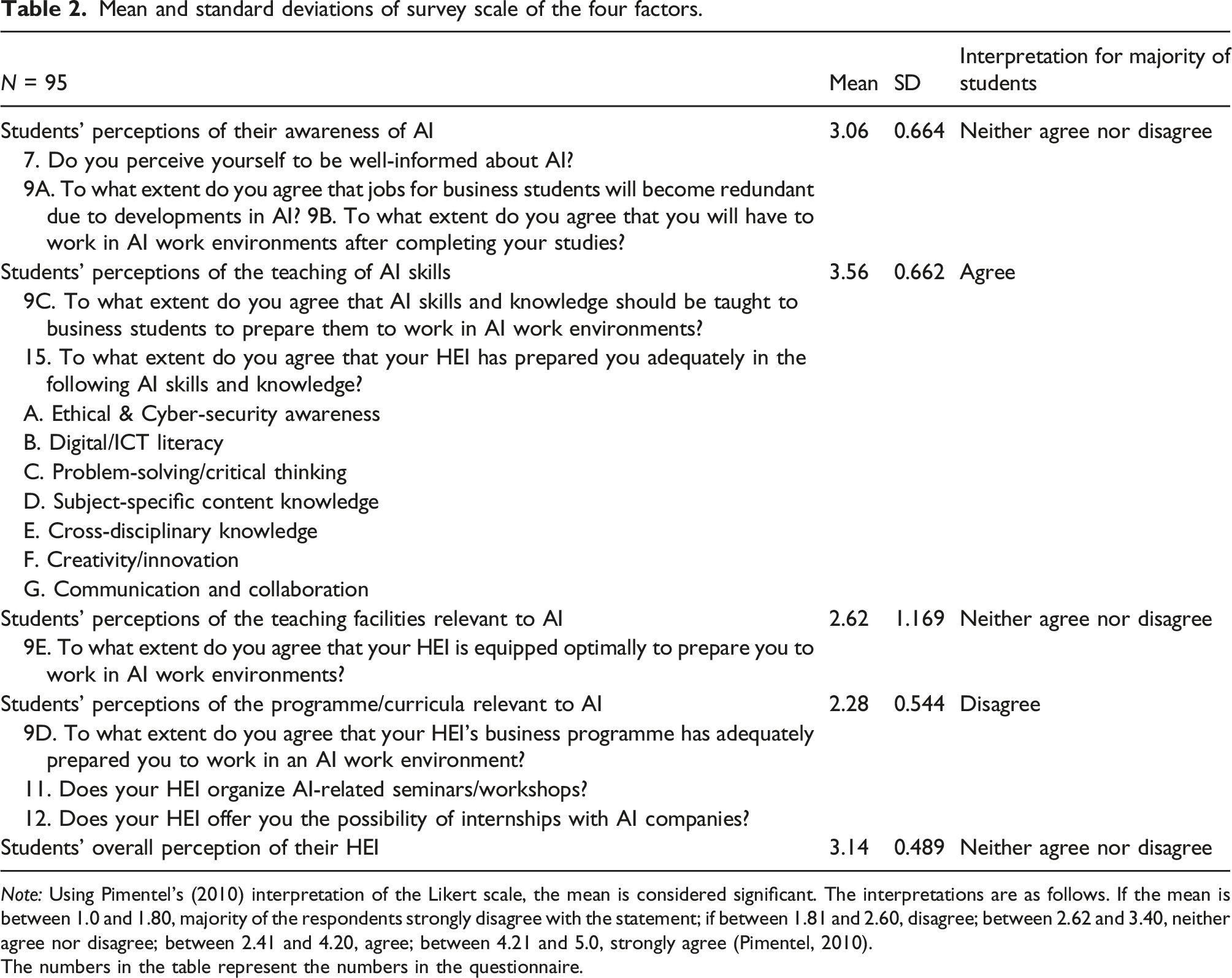
Note: Using Pimentel’s (2010) interpretation of the Likert scale, the mean is considered significant. The interpretations are as follows. If the mean is between 1.0 and 1.80, majority of the respondents strongly disagree with the statement; if between 1.81 and 2.60, disagree; between 2.62 and 3.40, neither agree nor disagree; between 2.41 and 4.20, agree; between 4.21 and 5.0, strongly agree (Pimentel, 2010).
The numbers in the table represent the numbers in the questionnaire.
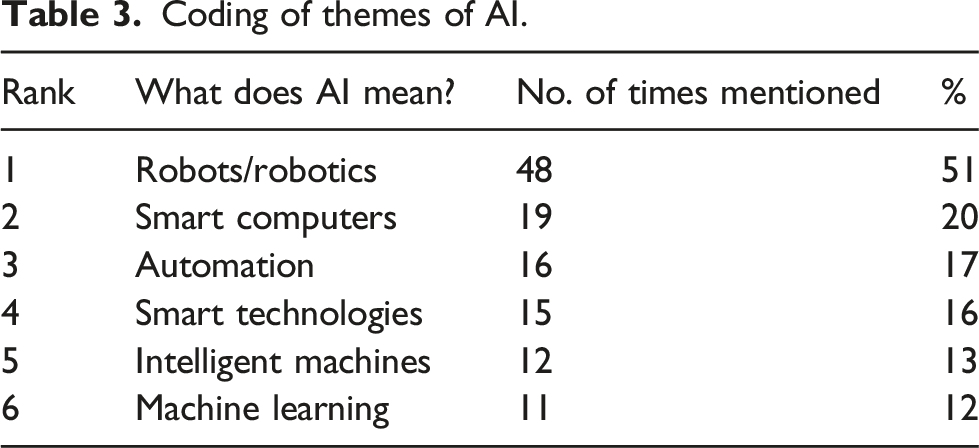
Coding of themes of AI.
To look into students’ understanding of other aspects of AI, Questions 9A (‘To what extent do you agree that jobs for business students will become redundant due to developments in AI?’) and 9B (‘To what extent do you agree that you will have to work in AI work environments after completing your studies?’) were further analysed. It was found that for Question 9A the majority of students (38%) disagreed that jobs for them would become redundant due to developments in AI, but quite high numbers neither agreed nor disagreed (23%) or agreed (29%) (Figure 2). This can be interpreted as indicating that some students understand the impact of AI on jobs (that they will not lose their jobs), but that a high number of students are not sure whether or not their jobs will become redundant due to AI. Students’ perceptions of their awareness of AI: whether jobs for them will become redundant due to developments in AI. (a) To what extent do you agree that jobs for business management students like yourself will become redundant due to developments in AI?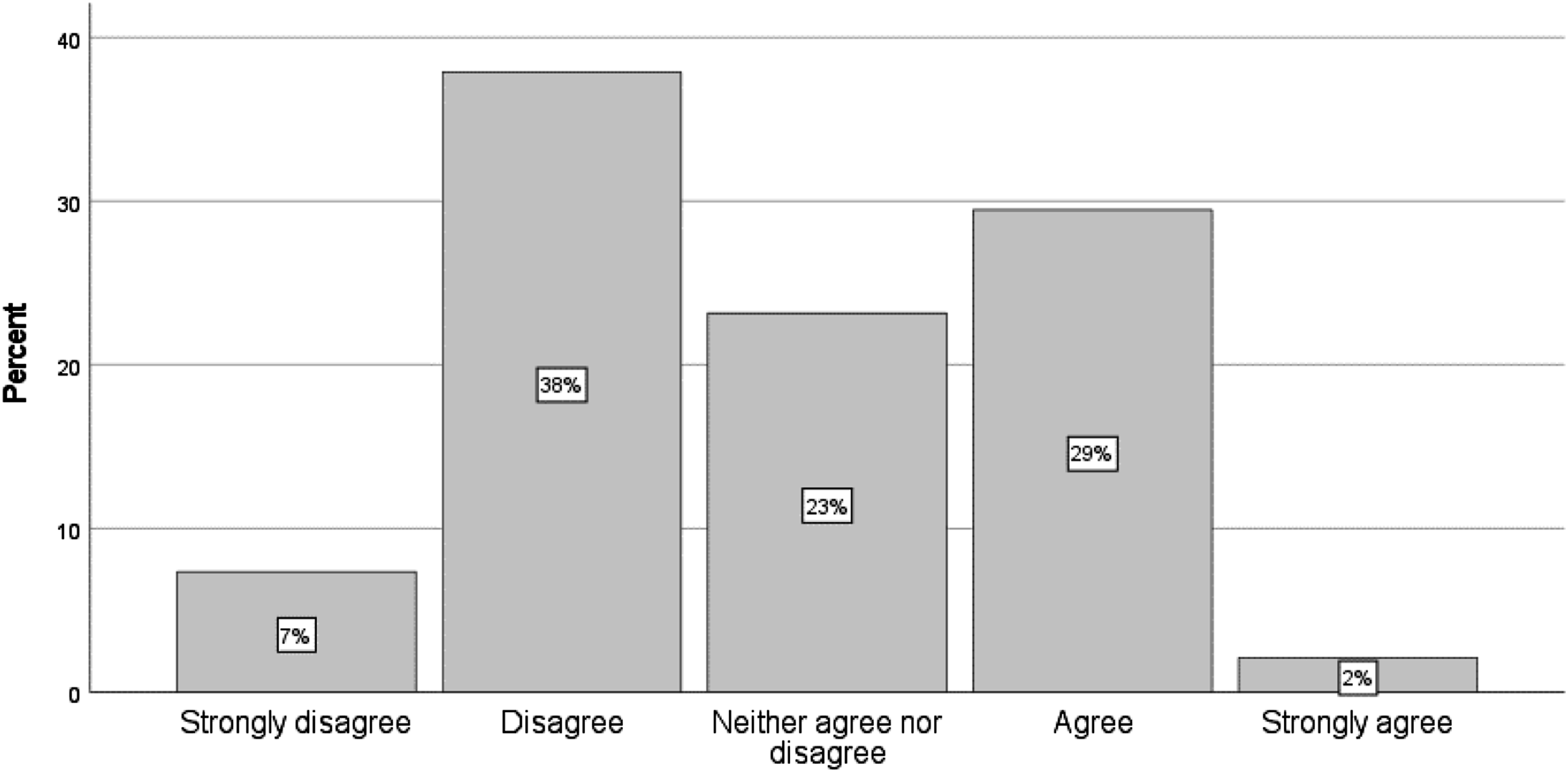
For Question 9B the majority of students (32%) believed that they would work in an AI work environment, but high percentages disagreed (25%) or neither agreed nor disagreed (25%) (Figure 3). Students’ perceptions of their awareness of AI: whether they will work in an AI environment after graduation. (b) To what extent do you agree that you will have to work in AI work environments after completing your studies?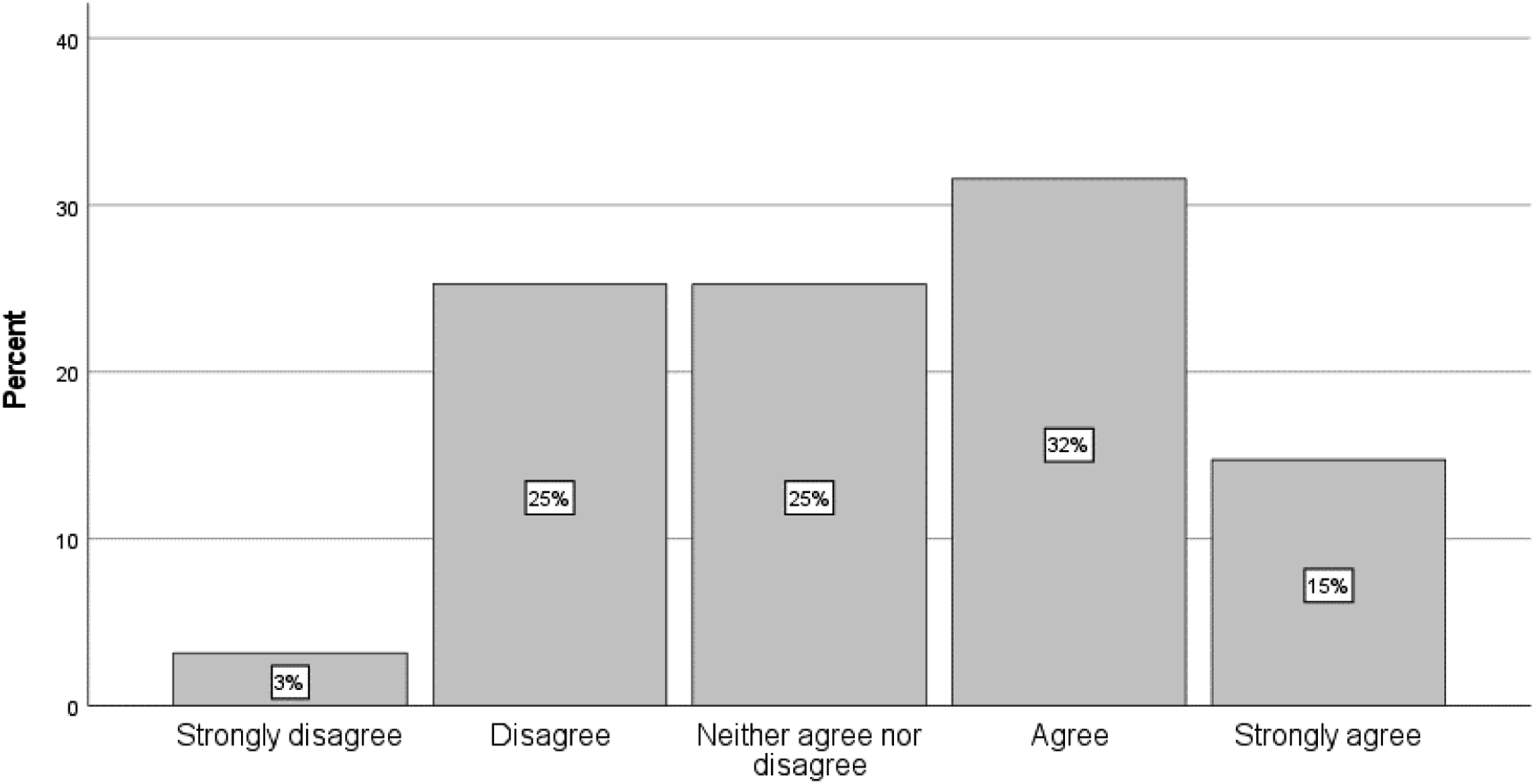
These two findings prove that the students in this study did not have a high awareness of AI or its implications for them in the business environment job market.
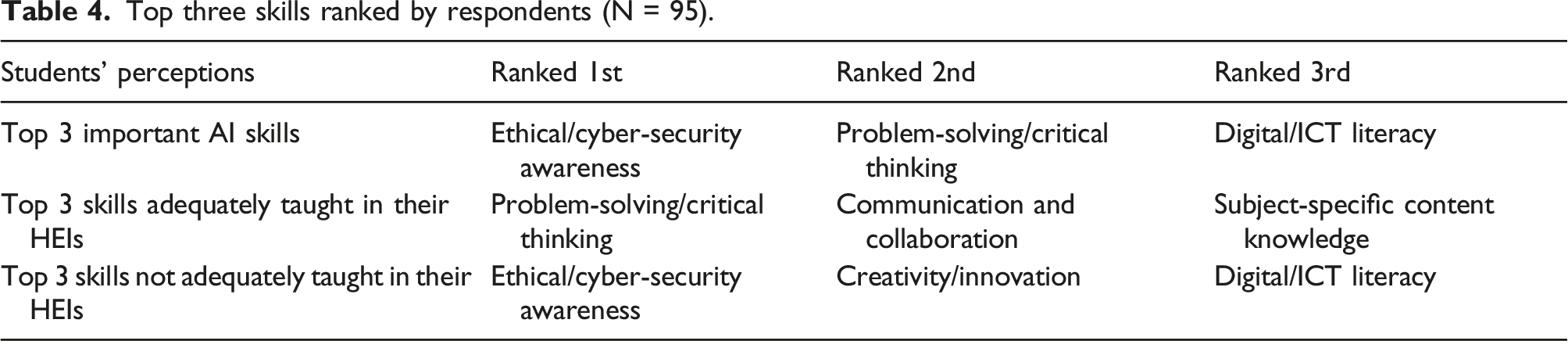
Teaching of AI Skills. With regard to this factor, 8 items were analysed. It was found that the majority of students (Mean = 3.56, SD = 0.662) (Table 2) agreed that AI skills should be taught to business students and that their HEIs had adequately prepared them in the listed AI skills and knowledge: ethical and cyber-security awareness, digital/ICT literacy, problem-solving/critical thinking, subject-specific content knowledge, cross-disciplinary knowledge, creativity/innovation, and communication and collaboration.
Top three skills ranked by respondents (N = 95).
Teaching facilities
With regard to whether or not their HEIs were equipped optimally to prepare them to work in AI work environments, the majority of students neither agreed nor disagreed with the statement (Mean = 2.62, SD = 1.169) (Table 2).
Programme/curricula
Students’ perceptions of the programme and curricula of their HEIs were negative, as they disagreed that their HEI had organized AI-related seminars/workshops in addition to their academic courses or offered the possibility of internships with AI companies (Mean = 2.28, SD = 0.544) (Table 2).
Overall perception
The mean for students’ overall perception of their HEIs’ service quality with regard to preparing them for the AI work environment is 3.14 (SD = 0.489) (Table 2), which means that the majority neither agreed nor disagreed that their HEI had provided a good service in terms of preparing them for an AI work environment.
In answering the open-response question concerning what challenges students face personally in learning about AI, they identified their lack of technical skills, lack of positive attitude/interest and lack of facilities and opportunities as their major challenges.
A comparison of the perceptions of students from universities of applied sciences with those from research universities was also carried out to see if there was any difference in opinions. This is discussed below. The comparison of means among other demographic factors, such as between male and female students or between Bachelor’s and Master’s students or according to age, was not carried out as these considerations were beyond the scope of the study.
Comparison between university of applied sciences and research universities
To compare the perceptions of students in Dutch research universities with those of students from universities of applied sciences, the Mann–Whitney U test was carried out for the following questions.
For the first question, the Asymp. Sig (2-tailed) = 0.596 indicates that there is a statistically significant difference in perceptions between the two types of institutions with regard to whether their HEI’s business programme had adequately prepared them to work in an AI work environment. Similarly, for the second question, the Asymp. Sig (2-tailed) = 0.400 means that the perceptions of students from universities of applied sciences differed from those of students from research universities with regard to whether their HEI was equipped optimally to prepare them to work in an AI work environment. Further research can be carried out to understand better these differences in perceptions between the two types of university.
Discussion
Based on the findings, to answer the main research question, it can be inferred that the general perception of students and graduates studying at HEIs in the Netherlands is that their awareness of AI is not sufficient for them to truly understand its impacts on them or their future careers. This is in line with findings from Amatrol (2015), Bessen (2018), the Capgemini Research Institute (2018) and some other studies in other contexts. Quite a high number of students believed or were unsure of whether AI would make their jobs redundant. Also, a high number disagreed or were unsure that they would work in AI environments. As is evident from the relevant literature reviewed, AI is ubiquitous in many business and industry organizations and AI technologies are increasingly being embedded in diverse business functions and supply chains (IBM, 2019; Deloitte, 2017; Microsoft-EY, 2018a).
Students are of the opinion that it is the responsibility of their HEI to fully equip them with the right skills to enable them to work in AI work environments. This supports the findings from Rauf et al. (2021), Small et al. (2018) and Stine et al. (2019), which emphasize that one of the main intentions of HEIs is to make young learners ready for future job markets and/or entrepreneurial endeavours and to fulfil the needs of future employers. Although students believe that their HEI has prepared them with some major skills, they do not perceive that their HEI is fully equipped to optimally prepare them for work in AI work environments. They also do not perceive that the programmes or curricula cater to this requirement. Thus, their overall perception of their HEI is neither positive nor negative, from which it can be inferred that they do not feel prepared to face AI at their workplace. This finding supports the results of a previous study which revealed that only 20% of the 400 students surveyed felt very prepared to work in an AI environment, whereas 62% and 18%, respectively, felt somewhat prepared or not prepared at all (Schofield, 2018). In the Northeastern University-Gallup (2018) study, only 22% of students felt that their HEI made them ‘well’ or ‘very well prepared’ to work in an AI environment.
It was also found that students’ perceptions of the type of AI skills required to enable them to work in an AI environment were in line with the literature (Dutta, et al., 2015; Ridsdale, et al., 2015; Schallock, et al., 2018; Pothier & Condon, 2020). However, students feel that not all these skills are adequately taught. Reviewing all the factors in the framework (see Figure 1), students’ overall perception of the SQ of their HEI in terms of AI education is unclear. Their overall awareness and understanding of AI are limited, which means that their HEIs have not adequately taught them about AI. Their perceptions of the teaching facilities, programme/curricula and the teaching of AI skills are also either negative or unclear. The negativity or the unclearness concerning these four factors led to students’ unclear perception of the SQ of their HEI in terms of preparing them for AI work environments.
Conclusion and recommendations
Conclusion
This study examines the perceptions of final-year students and recent graduates of business programmes in the Netherlands of the SQ of their HEIs in preparing them for AI work environments. Based on the findings, students’ perceptions of the quality of AI education in their HEIs are not, overall, positive. Although students know what AI is, their understanding is not deep enough to provide them with the skills and knowledge to thrive in an AI work environment.
Students’ perceptions of whether their HEIs are optimally equipped with facilities to prepare them for AI work environments are neither positive nor negative. This is consistent with the findings of studies that conclude that many HEIs do not have adequate facilities (Deloitte, 2017) or, if they have, they have not optimally used them for AI education (Zinshteyn, 2016; Stine, et al., 2019). These studies postulate that, although research universities, as compared to universities of applied sciences, do have developed infrastructure and/or other facilities, these are not optimally used in student learning and development, and instead are used more for research and development purposes.
The literature highlights that it is important for HEIs to stay current with regard to the development of technology and to adjust their curricula to sufficiently prepare students for the evolving work environment (though the students’ own effort is also essential). This study sought to contribute to the literature by presenting business faculty students’ perspectives on AI education in their HEIs. A business degree with a concentration on AI would give graduates a comprehensive understanding as to where businesses are going as the 21st century unfolds. They need to be taught how to leverage data gleaned from AI (Touro University Worldwide, 2018) and the findings from this research show a lack of commitment to this in HEIs.
The factors in Figure 1 determine the SQ of HEIs in terms of preparing business students for AI work environments. To improve students’ perceptions in this respect, HEIs need to put more effort into improving students’ awareness and knowledge of AI. They need to modify their programmes or curricula to infuse the teaching of relevant AI skills. HEIs need to be proactive in ensuring the development of students and the preparation they are given for success (Stine, et al., 2019). Business schools need to rework and augment AI-related courses in their curricula. HEIs should also develop complementary skills that are needed in a workplace where humans work side by side with intelligent machines, as indicated in this research – skills such as digital/ICT, leadership, creative problem-solving and decision making.
Recommendations
The following are recommendations for HEIs based on the critical literature review and findings of this study: ⁃ HEIs should create more awareness about AI, its impacts and its great potential, especially in the business world, for students and academic staff. ⁃ HEIs should include specific modules/courses of AI in their curricula or infuse the topic of AI in all modules, requiring lecturers or tutors to relate the respective modules to AI. ⁃ There should be greater cross-disciplinary collaboration and integration among programmes within the institution and between institutions. ⁃ HEIs should collaborate with AI companies, government agencies and other institutions to share knowledge and experiences through seminars and workshops or internships. Partnering with technological partners can provide personalized, real, practical learning experience to students. However, HEIs should also be able to develop their own training data to build customized models for student training. Students must be given the experience of working side by side with AI and AI systems, solving problems and dealing with ethical issues. ⁃ Training for current academic staff is a necessity as part of establishing the facilities that HEIs must have.
Limitations and implications for future research
The study has limitations pertaining to the population sampled due to the COVID-19 pandemic. Responses were obtained from students of only 27 institutions out of the 34 that offer business degrees in the Netherlands (Study in Holland, 2020); however, the total number of usable responses (95) is above the minimum requirement of 30 and thus may adequately represent demographics within the Netherlands. The authors feel that the findings may be generalized to other HEIs in other countries, but, to obtain a more accurate representation, a higher sample of more than 300 should be sought with equal numbers of females and males, Master’s and Bachelor’s and final-year students and graduates. In addition, the neither/nor response is equivalent to saying ‘I don’t know’ (Sturgis et al., 2014). Further research needs to be carried out in more HEIs, and to investigate further the respondents’ actual reasons for ‘neither agree or disagree’ responses. The impact of the COVID-19 pandemic on education delivery and the focus on AI skills was not considered in this research as the study was conducted just when the pandemic was declared. It would be interesting in future research to consider new AI skill development paradigms and models in the revised IT infrastructure as a result of COVID-19 (Krishnamurthy, 2020). This paper also does not delve into the issues of barriers to the changes proposed, how HEIs can change their curricula or what challenges are faced by faculty in changing the curricula. Future research might target faculty and administrative members in HEIs to ascertain more about these issues.
AI is a relatively new topic in business/management curricula. With the Dutch government pushing for a more robust AI-integrated curriculum, more research needs to be conducted in investigating students’ awareness and understanding about AI, or factors that affect their interest or disinterest in AI. The infiltration of AI into the business world means that prospects and opportunities in business functions and practices will change more rapidly than in the past. Thus, the possibility that the outcomes of prior research will become outdated is correspondingly greater. Further research can be carried out with a focus on qualitative data on a wider scale to ascertain the impact of AI on the business curricula in HEIs in the Netherlands, the difference between the opinions of students in universities of applied sciences and those in research universities, and the difference in opinions of students in Bachelor’s and Master’s programmes.
Footnotes
Declaration of conflicting interests
The author(s) declared no potential conflicts of interest with respect to the research, authorship, and/or publication of this article.
Funding
The author(s) received no financial support for the research, authorship, and/or publication of this article.
