







Abstract
With the ongoing challenges of COVID-19, global economies continue to face uncertainties, widespread workforce volatility and employment challenges. During a sustained crisis such as the COVID-19 pandemic, university students’ self-perceptions about their employability and future career choices in their chosen industry sectors may be affected. Therefore, this study investigates graduate employability concerns and the perceptions of undergraduate students regarding employment prospects and future job security confidence in their disciplines’ industry sectors in light of this global crisis. Through the employment of a mixed methods design, the study investigates the perceptions of graduating students from three disciplines in Singapore: Tourism, Communications and Information Technology. The findings indicate that COVID-19 had a positive impact on perceptions of jobs that could be performed from home and those in essential services. Concurrently, there were notable variances in the students’ perceptions regarding career prospects and job security confidence across the three disciplines with regard to the impact of the crisis on their industry sectors in general and themselves individually.
Keywords
The COVID-19 pandemic has dramatically affected all economies and industry sectors. It is estimated that global GDP contracted by 3.5% in 2020, with 300 million full-time jobs lost (Padhan and Prabheesh, 2021). Economic recovery is expected to be erratic until 2023, due to continued global disruptions in travel and the economy and country-specific restrictions (World Bank, 2022). In particular, small internationally connected countries like Singapore felt the negative effects of COVID-19 considerably; Singapore’s GDP contracted by 5.4% in 2020, although it regained 3%–5% in 2021 (Ministry of Trade and Industry, Singapore, 2021a, 2021b). A sustained crisis such as the global pandemic represents a potential career shock for university students, impacting their career aspirations and self-perceptions about their employability and job prospects within their chosen industry sectors (Akkermans et al., 2020; Capone et al., 2021; Pedersen et al., 2020). Shobha and Johnson (2021) posit that the COVID-19 pandemic has radically altered the concepts of employability and has transformed business models within a reimagined workforce. However, the overall impacts of COVID-19 at the sectoral level remain uneven.
Despite generalised acknowledgements about the employment shocks from this pandemic, there has been divergence concerning the distribution of effects on different industry sectors and occupations. Early COVID-19 related labour-market data (Akkermans et al., 2020; Baert et al., 2020; Dingel and Neiman, 2020; del Rio-Chanona et al., 2020; Garrote Sanchez et al., 2020; Montenovo et al., 2020; Padhan and Prabheesh, 2021) highlight differences in future job security impacts and employability outcomes across industry sectors and occupations. For example, in Singapore consumer-facing sectors (such as the hospitality, tourism and aviation industries) were severely affected, while outward-facing sectors, like the info-communication and media industries, fared better. Concurrently, there has been increased demand for information technology and digital media services, coupled by a strong governmental push for digital transformation efforts (Ministry of Trade and Industry, Singapore, 2021a, 2021b).
Considering these divergences, this study posits that university students’ self-perceptions of graduate employability could be influenced by confidence in industry sectors and occupations, as well as more general concerns about the pandemic and ongoing global economic conditions (Capone et al., 2021). Whilst this study is focused on students’ perceptions during COVID-19, the findings contribute to the development of resilience-based interventions, organised responses, recovery and rebuilding during future pandemics, unexpected crises and shocks (Couclelis, 2020; Nandy et al., 2021). Anticipating post-pandemic recovery in numerous economies and sectors, commentaries from academia and industry caution that the ramifications of this global crisis and the pervasiveness of pandemic-induced habits will linger for years, if not decades, to come (Hall, 2021; Kolata, 2021; Najam, 2021). In fact, Kolata (2021) posits that, based on observations of past pandemics, COVID-19 will be an ‘era’, rather than an episodic crisis that fades.
Therefore, the aim of this study is to investigate university students’ self-perspectives on future job security confidence, contextualised from employability concerns during a time of crisis. As Capone et al. (2021) observe, university students are experiencing high levels of uncertainty about their employability and career prospects during this sustained crisis. Specifically, the study evaluates these employability concerns between different industry sectors in the context of Singapore. Therefore, undergraduate students from three distinct academic disciplines in Singapore are investigated: (1) Tourism, (2) Communications and (3) Information Technology (IT). This is significant since there is an anticipated divergence of impacts from the crisis among industry sectors (including academic disciplines and programmes of study) in Singapore.
Literature review
Graduate employability and employment prospects
This section reviews some key factors that affect graduate employability and employment prospects in higher education. Broadly, graduate employability is defined as the potential for graduates to gain initial employment, maintain employment and obtain new employment if required, based on available alternatives in the labour market (Jackson, 2014; Pool and Sewell, 2007; Saher and Hussain Ch, 2019; Tomlinson, 2012). This perspective on graduate employment and the dimensions for developing ‘career-ready graduates’ assess the prime qualities that make one employable, able to retain employment and able to transfer learned skills to the workplace. Indeed, the issue of graduate employability is of continuing concern to industry and institutional policymakers, especially as the relationship between higher education, industry and the labour market has fundamentally shifted with increased job uncertainties and competition (Kornelakis and Petrakaki, 2020; Tomlinson, 2012). While macro policies and market changes impact students’ perceived employability in different industries, extant studies on the graduate employability discourse (e.g. Capone et al., 2021; Matsouka and Mihail, 2016; O’Leary, 2015) point to the need to address mismatched expectations between fresh graduates and hiring managers, and to embed employability-related support into higher education.
Understanding graduates’ self-perceived employability within and between academic disciplines and industry sectors is important in the graduate employability discourse (O’Leary, 2015; Saher and Hussain Ch, 2019). Self-perceptions about graduate employability are contextualised in terms of how individuals may perceive their own career prospects, aspirations and capacity to successfully compete in the labour market (Jackson and Tomlinson, 2020). However, it is important to acknowledge the complexity of the employability construct and its constituent dimensions beyond just employment attributes. Tomlinson (2012) acknowledges the contested interpretations of graduate employability and increased criticism of dominant discourses on graduate employability in higher education and the labour market that are focused primarily on the economic and employment perspectives. Relatedly, recent contributions to the employability discourse (e.g. Matsouka and Mihail, 2016; O’Leary, 2015; Shobha and Johnson, 2021) highlight the merits of acknowledging individual personal attributes and wider societal factors within a multifaceted construct of employability. Thus, employability-related discourses should examine thematic dimensions beyond employment and workforce outcomes to include considerations such as occupational aspirations, individual identity, contributions to the community and/or societal change.
Wider socio-cultural and individual factors can also frame graduating students’ self-perceptions regarding their future job and career prospects. The extant employability discourse posits a shift from traditional institutional-, state- or employer-centric employability agendas towards a more self-determining concept of employability, wherein future employability is dependent not on the state but on individual factors and responsibility (Saher and Hussain Ch, 2019). Today’s graduates are more trained, confident and self-defined with a diversity of skills. However, they face more competition and volatile job markets while seeking employment (Hite and McDonald, 2020). Further, graduates’ self-belief and future job market identity may be tied to personal dimensions such as social background, gender and ethnicity (Cotton et al., 2021; Tomlinson, 2012). Consequently, the employability discourse must consider the multifaceted interactions between internal (individual factors) and external (workforce environmental factors) dimensions, which may have implications for graduates’ employability outcomes, job security confidence and employment prospects. This may be particularly evident during times of crisis and turbulent market conditions such as the present pandemic.
Impact of crises on graduate job security confidence and employment prospects
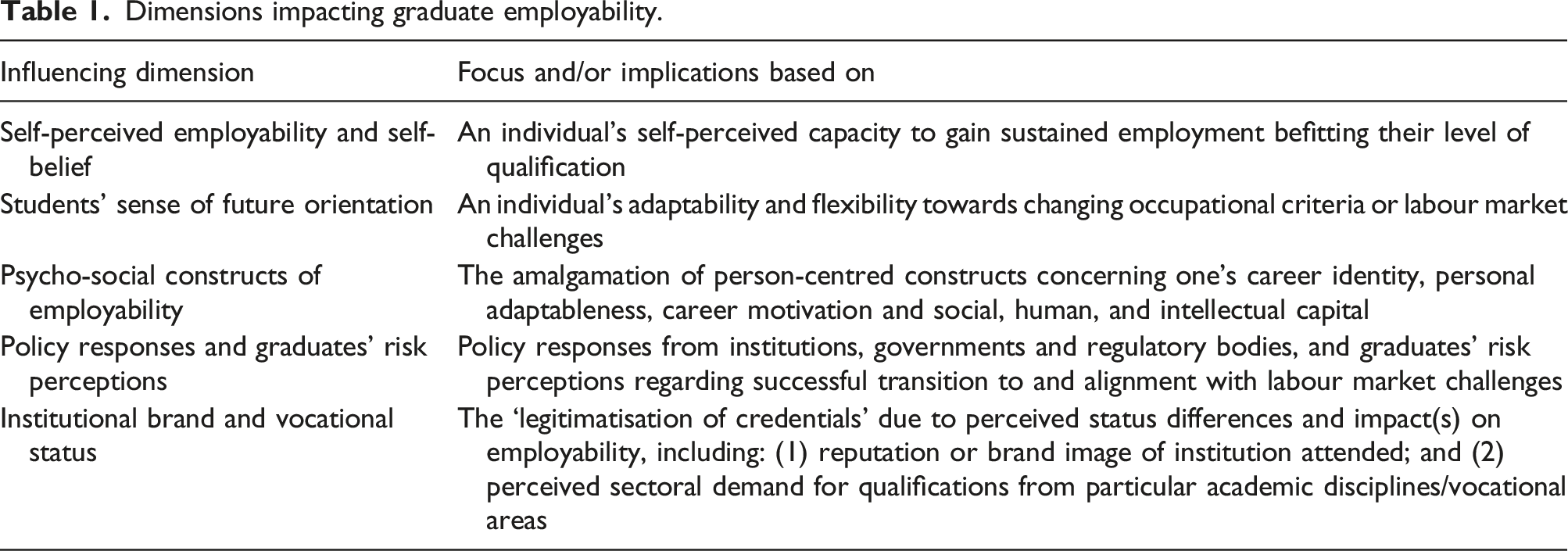
A sustained crisis such as COVID-19 can considerably impact graduate employability outcomes and can lead to major workforce industry adjustments due to the significance and extent of the adverse employment conditions. Such adjustments amid a volatile and uncertain labour market may exacerbate graduates’ employability concerns and career prospects, as well as their ability to pursue opportunities within aligned career roles. Consequently, the future of careers, workforce and workplaces may trigger diverse challenges and opportunities for graduates, depending on individual, contextual and occupational factors (Hite and McDonald, 2020; Pedersen et al., 2020). In this context, Shobha and Johnson (2021) posit that the concept of employability in a post-crisis scenario requires a framework in which (1) internal and external factors and (2) individual and collective environments are incorporated.
Dimensions impacting graduate employability.
The global pandemic has affected market economies, leading to adverse employment conditions and job losses associated with pandemic-related lockdowns, decreased physical and social mobility and reduced demand in the consumption of goods and services (Padhan and Prabheesh, 2021; Pedersen et al., 2020). It is likely, in such a context, that jobs that can be performed at home and are considered to be essential services will encounter different employability impacts. According to Dingel and Neiman (2020), by industry sector the top five jobs that can be performed at home are: (1) educational services, (2) professional, scientific and technical services, (3) enterprise management, (4) finance and insurance and (5) information. And the bottom five are: (1) transportation and warehousing, (2) construction, (3) retail trade, (4) agriculture, forestry, and fishing and (5) accommodation and food services. Correspondingly, employment losses may be larger in jobs that involve face-to-face contact and smaller in jobs that can be performed remotely. At the same time, work continues in essential industries.
Another impacting factor that may affect graduates’ perceived job security confidence is anticipated job risk. In the context of the pandemic, such perceived risks may correspond to imposed regulatory or policy responses (Garrote Sanchez et al., 2020; Leach, 2017). For instance, COVID-19 policy responses such as mandated social distancing measures and lockdowns for affected sectors (Coates et al., 2020) mean that occupations that can feasibly be performed at home, or that are flexible in their relocation, are less likely to suffer from job losses; on the contrary they may potentially offer opportunities for earning higher wages. Conversely, occupations that require closer physical proximity or face-to-face interaction tend to be at greater job loss risks, except where these are related to the health industry, social assistance and public administration. On the labour supply side, the transmission mechanisms of COVID-19 also raise the health risks of work tasks that require face-to-face contact. Such heterogeneity and imbalance in supply and demand shocks could exacerbate the disparities in an already unequal job labour market and society.
Graduates’ self-perceived employability concerns relating to job security confidence can have implications for career choices. When assessing the impacts of events such as the COVID-19 pandemic on graduating students’ career choices, two key thematic dimensions emerge: (1) the degree of job vulnerability and (2) susceptibility to career shocks and the degree of resilience (Garrote Sanchez et al., 2020; Gupta, 2020; Hite and McDonald, 2020; Nandy et al., 2021). While job vulnerability has multiple aspects, vulnerable jobs often relate to tasks, characteristics or sectors associated with non-standard work and with greater risk exposure to economic shocks and labour market disturbances (del Rio-Chanona et al., 2020; Honorati et al., 2020; Montenovo et al., 2020). Besides perceived job vulnerability, graduates’ career choices may also be impacted by the apparent susceptibility to career shocks. As Akkermans et al. (2020) suggest, career shocks have varying attributes that may impose contrasting employability consequences, positive or negative, on different careers and individuals. Career shocks refer to the frequency, intensity, controllability and duration of potentially disruptive and extraordinary events; particularly those triggered by circumstances outside an individual’s control and which may directly impact on their career development and future prospects (Akkermans et al., 2020; Hite and McDonald, 2020). In this context, an individual’s preparedness and ability to recover and adapt to crisis events is consequential. Correspondingly, an individual’s ability to weather labour market upheavals in their career depends on their degree of resilience, reflexivity and ideals of self-identity in the face of challenges (Leach, 2017). From a graduate employability perspective, an individual’s degree of resilience also affects their employability, workplace readiness and transition to the job market (Nandy et al., 2021). These COVID-related challenges and employability concerns are therefore the focus of the study and are discussed below.
Conceptual framework and research questions
Development of a contextualised, conceptual framework may deepen understanding of how COVID-related graduate employability concerns may impact students’ career aspirations, employment prospects and future job security in Singapore and, more generally, during a sustained crisis. Considering the potential heterogeneity in COVID-related challenges and employability outcomes across different industry sectors, an investigation of university students’ self-perceptions across disciplines is valuable. Therefore, the research questions for this study are: • RQ1: How do perceived prospects in jobs that can be performed from home and those in essential services impact graduating students’ future job security confidence? • RQ2: Does job security confidence significantly differ by programme type? • RQ3: Would their perceptions influence graduating students’ perceived career prospects and future job security confidence in each of the three industry sectors?
The key research dimensions of the study discussed in this literature review and its associated research questions are illustrated in Figure 1, which shows the conceptual framework. As illustrated in the figure, to precisely assess the implications of a sustained crisis such as COVID-19, this study investigates graduate employability within the key dimensions of job security confidence and employment (job and career) prospects. Further, it investigates whether perceived job and career prospects are influenced by jobs that can be performed from home and those in essential services (RQ1). Finally, this study posits that there may be variances in the impacts of COVID-19 on graduating students’ career choices and perceived job security confidence between disciplines and industry sectors (RQ2 and RQ3), due to the intersection of the above multidimensional aspects of graduate employability. Conceptual framework of employability concerns during a crisis.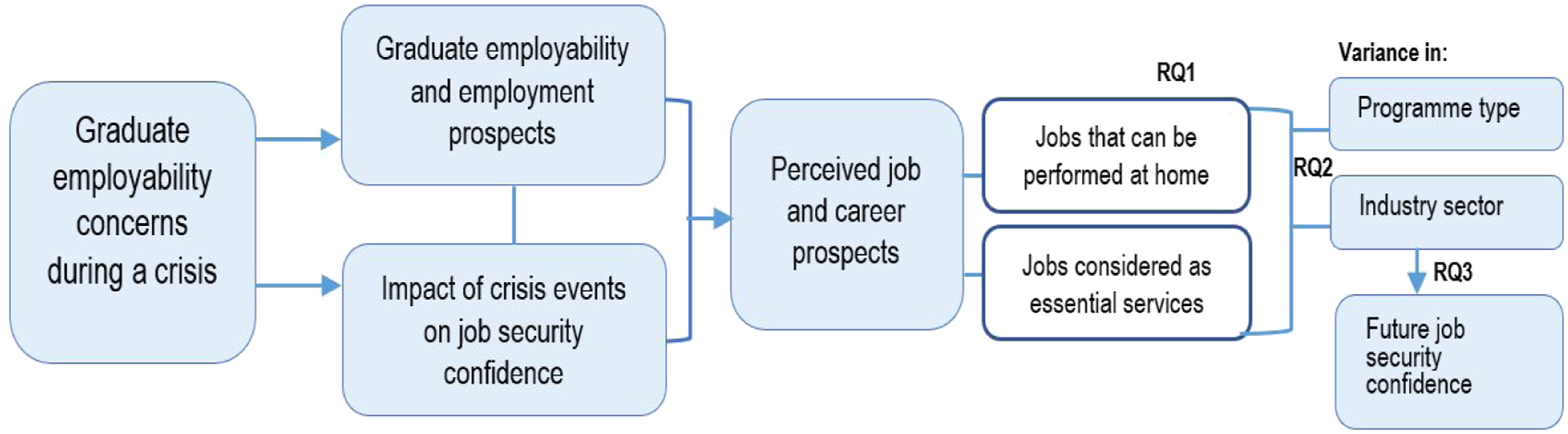
Methodology
This is an exploratory study, adopting a mixed-methods, cross-sectional design that utilises web survey quantitative measures, augmented with qualitative data to examine these pandemic-induced employability concerns. As Castro et al. (2010) suggest, the adoption of an integrative mixed-methods design enables rigorous and integrative analysis of quantitative numeric data with qualitative textual evidence and augments the richness of its interpretation.
Participants
Participants for the survey were recruited using convenience sampling based on their status as students from the classes of 2020–2022 graduating during this pandemic and who were currently undertaking programmes in the disciplines of: (i) Tourism, Hospitality and Events, (ii) Information Technology, and (iii) Media and Communications, at Murdoch University (Singapore). These selection criteria were articulated to potential respondents in the information statement of the survey instrument, which was conducted online via QualtricsXM between July 2020 and June 2021. Following Rothwell et al. (2009), the sample size estimation required to detect a relationship between the students’ self-perceived employability scale was made assuming a medium effect size (given the relatively untested nature of the dimensions evaluated) with a power of 0.80 (α = 0.05), positing a preferred minimum sample size of 102. The total number of valid completions was 175, a valid response rate of 25.4% (687 email invitations were distributed). Given that online surveys yield lower response rates, ranging from as low as 7% to an average of 34% (Shih and Fan, 2008), the response rate for this study is acceptable. Among the 175 participants, nine students were under 21 years old, 122 were between 21 and 34, eight were between 35 and 44 and one student was between 45 and 54 (35 participants chose not to respond to this question). With regard to the question on gender, 67 stated that they were female, 66 that they were male and 42 chose not to specify male or female. With regard to graduation, 24 participants reported their graduating year as 2020, 131 said 2021, and 20 said 2022.
Procedure and materials
On providing informed consent, participants responded to a series of questions assessing employability and job prospects. To ensure the validity and reliability of the measurement items in the questionnaire developed, employability measures based on previously validated items were adapted in the context of the study. These included: (1) Rothwell et al. (2008) for the measurement of self-perceived employability and job prospects by undergraduate students and (2) Baert et al. (2020) and Jackson (2014) for students’ perceptions regarding the impact of a crisis on career prospects and job attainment/retention. Further, to address the research questions posited in RQs 1–3, survey items were adapted from Dingel and Neiman (2020), measuring graduating students’ perceived prospects in jobs that could be performed from home, perceived prospects in essential services and future job security confidence levels. These items were measured on a 7-point Likert scale from 1 = strongly disagree to 7 = strongly agree.
Analytical strategy
“I believe that COVID-19 will have a positive impact on jobs that can be performed from home.”

“I believe that COVID-19 will have a positive impact on jobs that are considered to be essential services.”

Social confidence.

In terms of qualitative analysis, the textual narratives collected from the open-ended questions were reviewed and organised during the open coding process, followed by preliminary clustering of thematic categories that emerged from the data into emergent themes, labels and node categories. Microsoft Excel and QSR NVivo12 were used for the open coding, axial and selective coding processes. The qualitative narratives analysed enrich and contextualise the quantitative data collected, providing support for multidimensional thematic analysis (Castro et al., 2010). The resultant data analysis is discussed below.
Results
Impact of COVID-19 on perceived job prospects across industry sectors
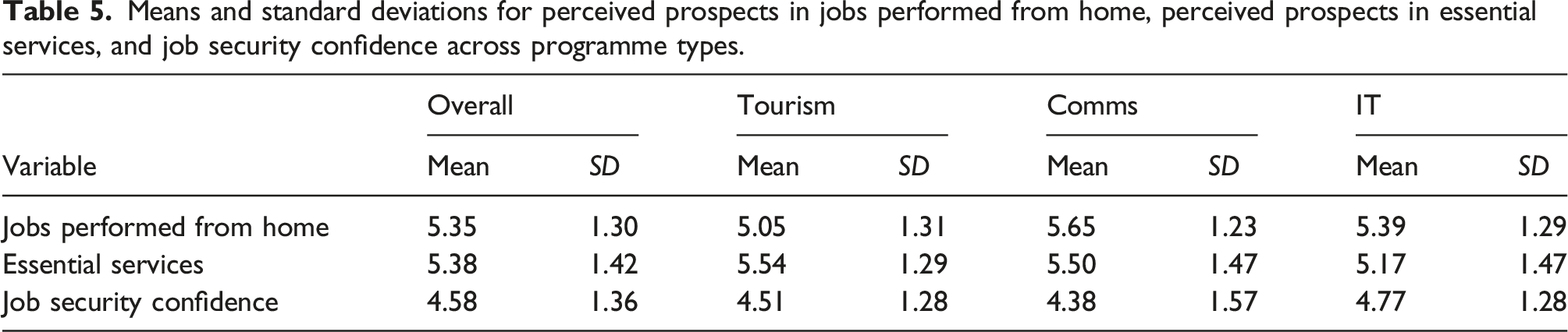
This first section of the analysis relates to the results for RQ1, which assesses students’ perceptions of the impact of COVID-19 on prospects for jobs that can be performed from home, and jobs considered as essential services. Students responded to two items on a 7-point Likert scale: “I believe that COVID-19 will have a positive impact on jobs that can be performed from home”, and “I believe that COVID-19 will have a positive impact on jobs that are considered to be essential services”. Higher scores reflect a stronger belief that the COVID-19 crisis had a positive impact on jobs that could be performed from home (M = 5.35, SD = 1.30) and on jobs considered as essential services (M = 5.38, SD = 1.42). One-way ANOVAs were conducted to examine differences in perceived job prospects in (1) jobs that could be performed from home and (2) jobs in essential services across sectors. The results show that there were no significant differences for prospects regarding jobs that could be performed from home (F (2, 172) = 2.82, p = 0.06) and those that were essential services (F (2, 172) = 1.30, p = 0.27).
When univariate outliers were excluded, the results showed that there was a significant difference across the different disciplines for prospects in jobs that could be performed from home, (F (2, 166) = 5.16, p < 0.01). Post hoc analyses with LSD revealed that perceived job prospects for jobs performed from home were significantly lower for Tourism (M = 5.05, SD = 1.31) than for Communications (M = 5.72, SD = 1.12) and IT (M = 5.61, SD = 1.05); there was no significant difference in perceived prospects of jobs performed from home between the Communications and IT disciplines. Results remained the same for perceived job prospects for essential services when univariate outliers were excluded.
Standard multiple regression analysis was conducted to examine whether perceived prospects for jobs that could be performed from home and for essential services predicted students’ job security confidence levels. The results revealed that both factors accounted for a significant 4.8% of the variability in job security confidence, R2 = 0.048, F (2, 172) = 4.32, p = 0.02. Perceived prospects for jobs that could be performed from home did not significantly predict job security confidence, B = −0.02, t (172) = −0.18, p = 0.86, but perceived prospects for jobs in essential services did, B = 0.22, t (172) = 2.75, p = 0.01. This indicates that students’ perceptions of the prospects for essential services contributed to their confidence in job security. Similar regression analyses were also conducted for each industry sector. The results revealed that these factors did not significantly account for the variability in job security confidence for Tourism (R2 = 0.023, F (2, 53) = 0.63, p = 0.54) and IT (R2 = 0.048, F (2, 68) = 1.70, p = 0.19). However, these factors did significantly account for the variability in job security confidence for Communications (R2 = 0.17, F (2, 45) = 4.68, p = 0.01). Similar to the previous finding, perceived prospects for jobs that could be performed from home did not significantly predict job security confidence, B = −0.07, t (45) = −0.38, p = 0.72, but perceived prospects for jobs in essential services did, B = 0.46, t (45) = 2.89, p < 0.01. When multivariate outliers were excluded, a similar pattern of findings was observed except for the finding relating to the IT discipline. When multivariate outliers were excluded, perceived prospects for jobs that could be performed from home significantly predicted job security confidence, B = 0.30, t (65) = 2.16, p = 0.03, but not perceived prospects for jobs in essential services, B = 0.08, t (65) = 0.62, p = 0.54.
Effects of perceived job prospects on job security confidence across programme types
Means and standard deviations for perceived prospects in jobs performed from home, perceived prospects in essential services, and job security confidence across programme types.
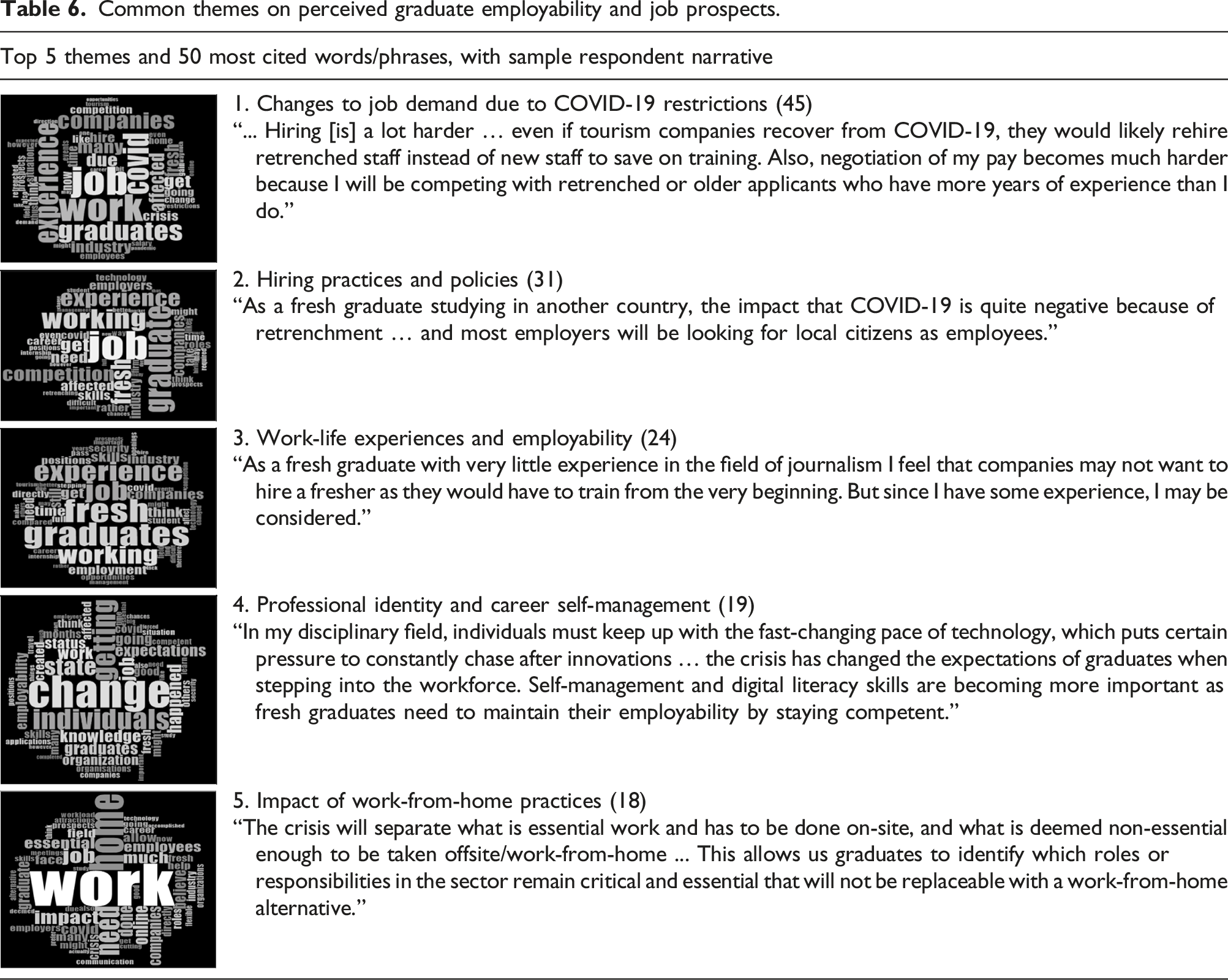
Common themes on perceived graduate employability and job prospects.
Impact of COVID-19 on career prospects across industry sectors
Whilst the above sections relate to students’ perceptions regarding their job prospects (i.e. their ability to attain a job on graduation), this section (RQ3) turns to students’ perceptions regarding their career prospects (i.e. their ability to retain their job in their industry sector). Thus, to assess graduating students’ perceptions of COVID-19’s impact on their career prospects, they were asked how the crisis had impacted their career prospects, and if the impact was generally a positive or negative one. Additionally, students were asked to respond on a 7-point Likert scale to the item “I believe that COVID-19 will have a negative impact on my chosen industry as whole” to assess the extent of their perception regarding the impact of COVID-19. Higher scores on this item reflect a greater negative impact of COVID-19 (M = 3.08, SD = 2.64). A chi-square test of associations was conducted to examine the difference in students’ perceptions of their career prospects across gender. The analysis revealed that there was significant association between perceived impact aboutand gender, χ(1) = 6.98, p < 0.01, indicating that female students were more likely to perceive the impact of COVID-19 to be negative (Figure 2). An independent samples t-test also revealed that female students (M = 5.49, SD = 1.49) perceived the impact of COVID-19 to be more negative than did male students (M = 4.55, SD = 1.87), t (124.12) = −3.23, p < 0.01. Clustered bar chart illustrating the number of male and female students indicating the perceived impact of COVID-19 (positive or negative).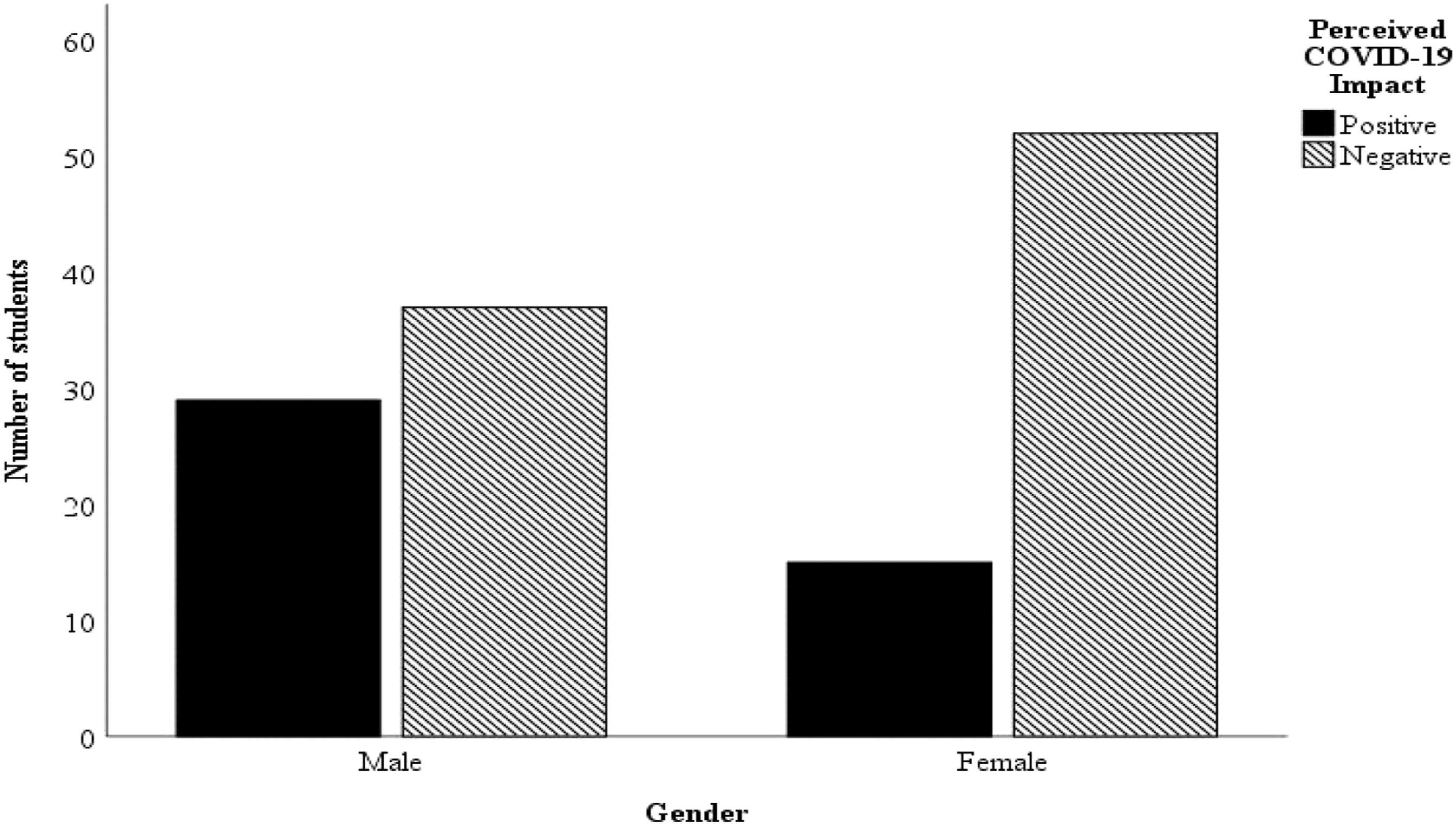
Similar analyses were conducted to examine the differences in students’ perceptions of COVID-19’s impact on their career prospects across industry sectors. A chi-square test of association showed a significant association between COVID-19’s impact and sector type, χ(2) =1 2.22, p < 0.01. This indicates that Tourism students were more likely to perceive COVID-19’s impact as negative than were Communications and IT students (Figure 3). A one-way ANOVA further supported this by revealing a significant difference in the extent of COVID-19’s impact, F (2, 130) = 18.90, p < 0.01. Post hoc analyses with Tukey’s HSD demonstrated that Tourism students perceived the impact of COVID-19 to be more negative than did both Communications students (M = 4.83, SD = 1.60), p < 0.01, 95% CI [0.40, 2.01], and IT students (M = 4.13, SD = 1.72), p < 0.01, 95% CI [1.17, 2.66]. There was no difference in perception between Communications and IT students. Clustered bar chart illustrating students across sector types indicating the perceived impact of COVID-19 (positive or negative).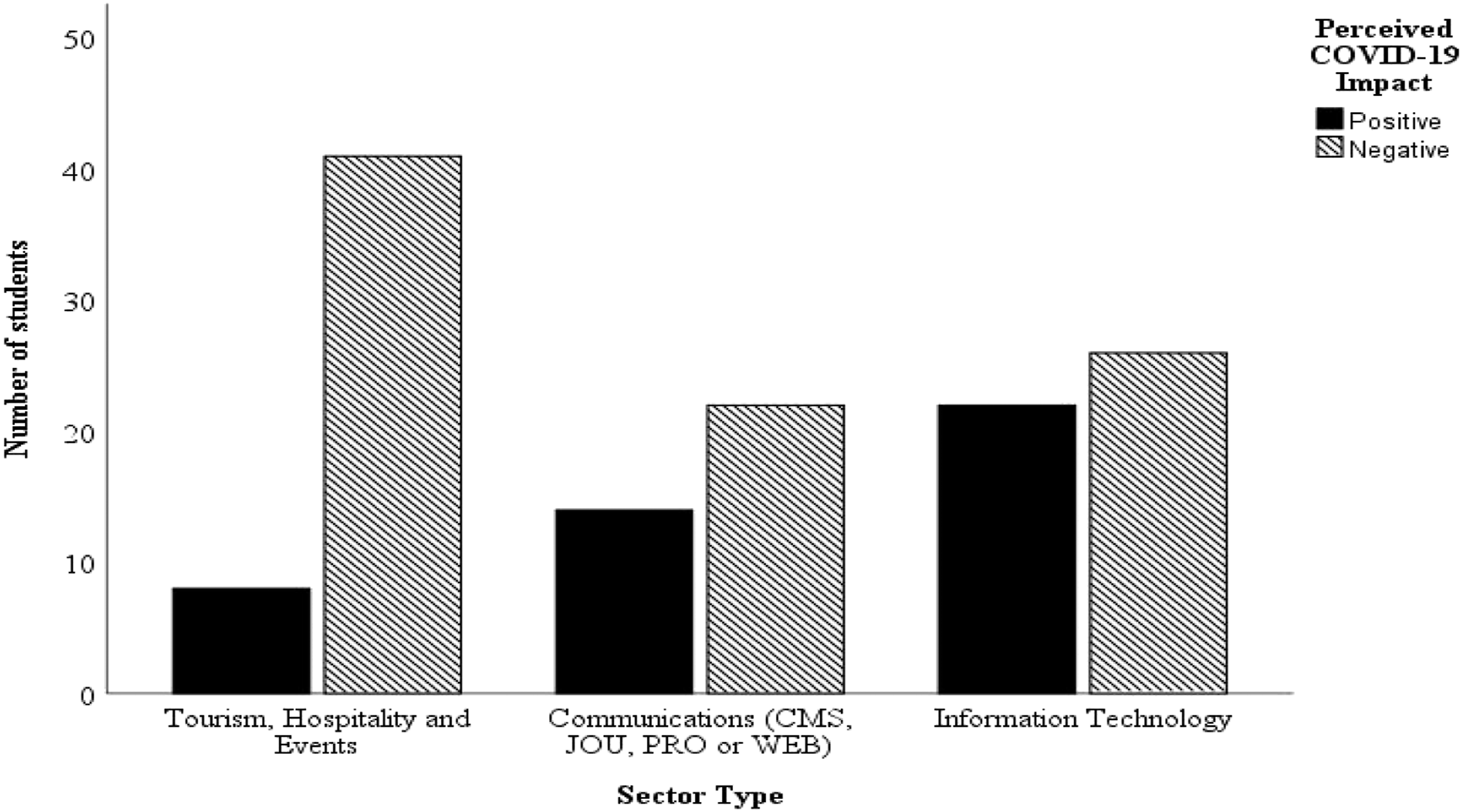
Crises such as COVID-19 may trigger volatile career environments and labour market conditions. This may result in a heterogeneity of impacts among different industry sectors, occupations and job functions, imposing contrasting employability outcomes, positive or negative, on different careers and individuals. Consequently, students were also asked to explain why they believed that the COVID-19 crisis had a positive or negative impact on their career prospects. Figure 4 summarises the perceived positive and negative COVID-19-induced impacts on career prospects (top three clusters and word frequency analysis) expressed in the respondents’ narratives. As illustrated in Figure 4, the most commonly articulated perceived negative impacts of COVID-19 on employability outcomes were: (1) reduced manpower demand, hiring freezes and workplace retrenchments in the industry sector or related occupations; (2) competition among graduates for a limited number of jobs and changes in hiring practices or policies (e.g. restrictions on hiring of non-locals, and work experience requirements); and (3) COVID-19-related restrictions, or changes to jobs in the industry sector (e.g. restrictions on physical/face-to-face interaction and imposed safe management measures). With regard to perceived positive impacts, the most commonly articulated narratives related to: (1) job roles and occupations that were able to function remotely (work-from-home) and considered as essential services; (2) increased demand for positions for specific job skills, function or occupations in the industry sector (e.g. IT, cybersecurity and digital media communications); and (3) opportunities for upskilling and emphasis on adaptability (e.g. support for new skillsets, transferability of skills and knowledge, and being adaptable in the ‘new normal’). Analysis of respondents’ narratives regarding the positive or negative impacts from COVID-19.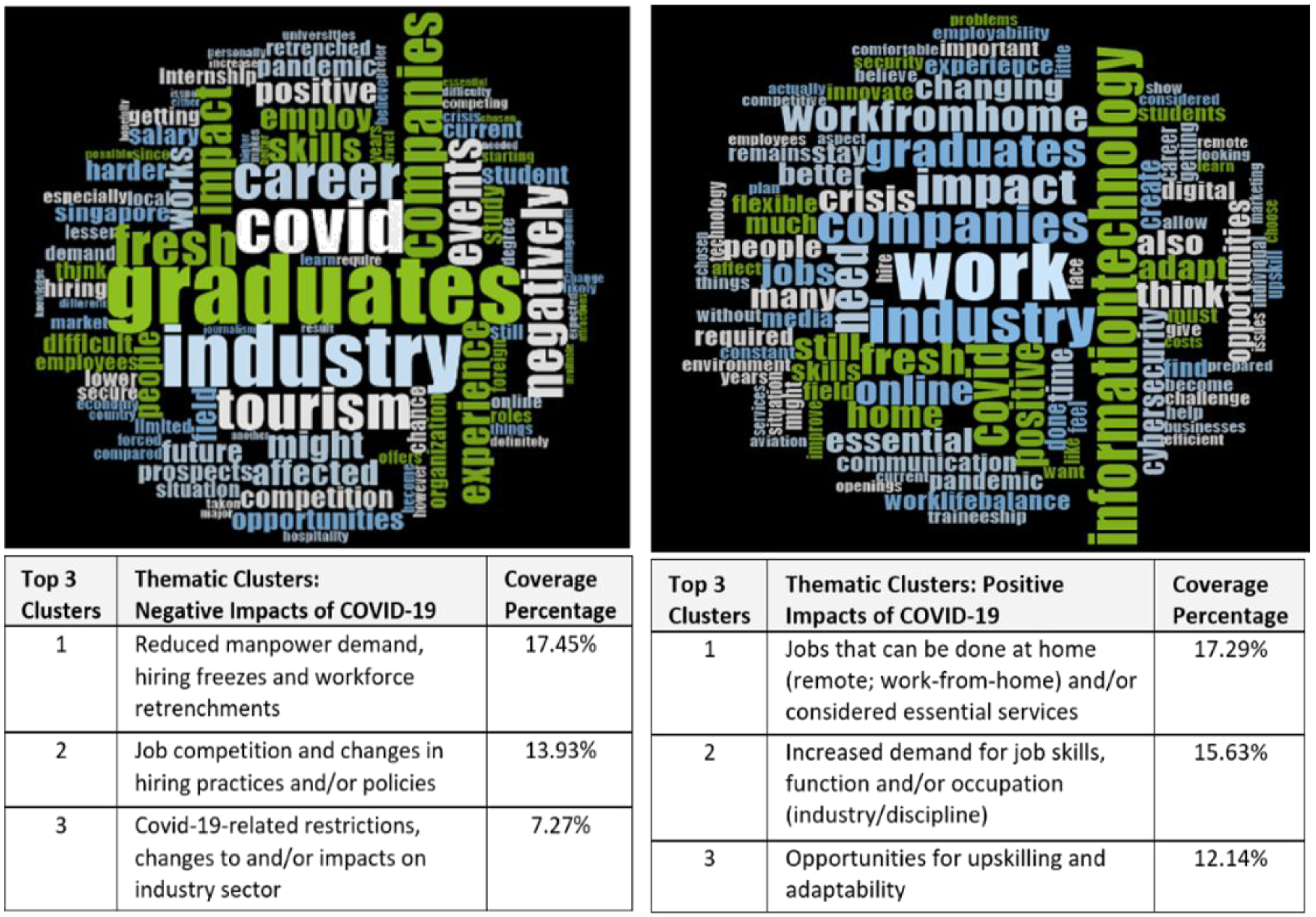
Discussion and conclusions
Summary of research question and findings.
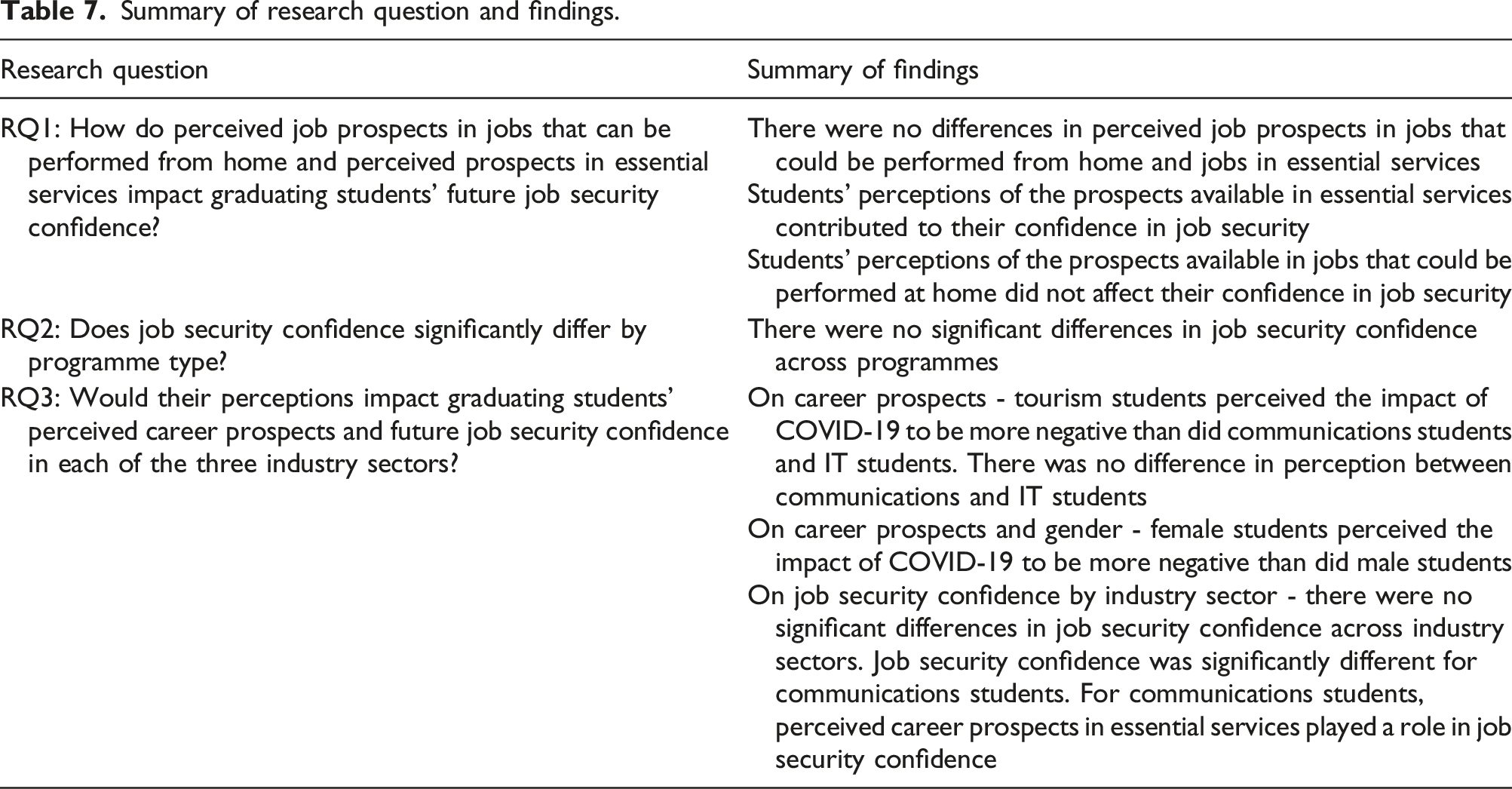
The findings indicate that the students strongly believe that the COVID-19 crisis had a positive impact on jobs that could be performed from home and those in essential services (RQ1). However, there were no differences in perceived job prospects for jobs that could be performed from home and jobs in essential services. Moreover, students’ perceptions of the prospects available in essential services contributed to their confidence in job security. Conversely, students’ perceptions of the prospects available in jobs that could be performed at home did not affect their future job security confidence. These findings were in contrast to those of other research conducted in 2020, during the earlier stages of the pandemic (e.g. Garrote Sanchez et al., 2020; Honorati et al., 2020), in which the least vulnerable jobs were those that could be performed from home. Likewise, Garrote Sanchez et al. (2020) found that the risk of job loss during the pandemic was highest for non-essential jobs. This may explain why this study found that the confidence students had in job security stemmed from their perception of the prospects available in essential services. These observations were also noted in the analysis of the qualitative narratives from respondents, wherein the top five themes (Table 6) related to COVID-19-induced impacts on graduate employability were: (1) changes to job demand due to COVID- 19 restrictions, (2) hiring practices and policies, (3) work-life experiences, (4) professional identity and career self-management, and (5) impact of work-from-home practices.
On the question of whether job security confidence differs depending on programme type (RQ2), the findings suggest that job security confidence was similar across students from Tourism, Communications and IT. This is an interesting finding, albeit contrary to observations such as that of Gupta (2020) that jobs such as digital marketing, data science and cybersecurity have survived better than jobs in tourism and hospitality. It is encouraging to note that, despite economic estimates regarding the severe impacts on the global tourism sector (World Bank, 2022), this study finds that the job security confidence among Tourism students did not differ from that of the Communications and IT students. As supported by the results of the study, students’ favourable view of the prospects available in alternative occupations in essential services and jobs that could be performed from home could indeed play a significant role in their job security confidence.
Lastly, this study examined the question of whether graduating students’ self-perceptions would impact their perceived career prospects and future job security confidence in each of the three industry sectors (RQ3). Compared with Communications and IT students, Tourism students had a less favourable view of how the crisis had impacted their employment prospects. There was no difference in perceptions between Communications and IT students. Consistent with Kabeer et al.’s (2021) study investigating gender differences in the South Korean labour market, this study found gender differences in how students perceived the impact of the crisis on their career prospects, with female students recording significantly more negative perceptions of the impact of COVID-19. Cotton et al. (2021) observed similar gender concerns, particularly in relation to wider social, occupational and (in)equality debates. Extant research suggests that women are affected more in part due to a higher concentration of females in hospitality, casualised employment and care responsibilities, making them more vulnerable to volatile employability conditions (Cotton et al., 2021; Kabeer et al., 2021).
In the present study, there were no differences in job security confidence across the three industry sectors. Interestingly, when examining job security confidence levels within individual industry sectors, the findings indicated that perceived job prospects affected Communication students’ job security confidence levels with more frequency than Tourism and IT students. In particular, the findings revealed that for Communications students, confidence in getting or retaining a job was directly affected by how they perceived job prospects in essential services. It is important to note that the outlook for media and communications sectors is positive, even though these jobs may not be seen as essential services (Fine et al., 2020). This is consistent with the findings from this study: considering the positive job outlook for media and communications, it makes sense that the Communication students’ level of job security confidence was not different from that of the Tourism and IT students. However, the findings showed that, when essential services were considered, Communications students’ confidence in retaining or getting a job was affected. This can be explained by the fact that media and communications jobs were not seen as essential in public discourse. Similar sentiments were noted in the qualitative analysis of the most common narratives on whether COVID-19-induced impacts were deemed to be positive or negative (Figure 4).
In times of drastic change, future job security and longer-term career prospects may lead to a perceived need for continued professional training and development post-graduation. The recent employability discourse has emphasised the value of lifelong learning, continued training and self-development as a strategy for adapting to and evolving with labour market demands (Kornelakis and Petrakaki, 2020; Tomlinson, 2012). Moreover, as discussed, there is a shift from traditional institution- or organisation-focused career trajectories to self-managed and self-directed careers. Thus, graduates need to pivot towards a mindset and relevant skills that will enable them to effectively identify, develop and navigate career pathways appropriate to their own capabilities, circumstances and goals. Pool and Sewell (2007) suggest that, beyond individual skills, knowledge and personal attributes, graduate success and satisfaction are more likely if they develop higher-order self-beliefs in their employability – i.e. self-efficacy, self-confidence and self-esteem. These components can be cultivated when students practice and reflect on their career development learning, work and life experiences, subject knowledge, professional skills and emotional intelligence.
As Tomlinson (2012) highlights, and the current study suggests, there is a need to map graduate employability more comprehensively with the shifting dynamics of the labour market and its relationship with higher education graduate outcomes. Today’s employers accentuate the need for graduates to be agile, adaptable and technically savvy and to be able to transfer their skills across diverse contexts (Jackson and Tomlinson, 2020; Kornelakis and Petrakaki, 2020; Leach, 2017; Shobha and Johnson, 2021). However, crisis events exacerbate the complexities of graduates’ transition to the labour market as they adapt and align themselves to the future labour market demands during a time of uncertainty. Therefore, beyond skill-based considerations, policy makers and higher education institutions need to be cognizant of the variances in individual circumstances and responses to this crisis, and to support graduates by facilitating their ability to respond to, recover from and manage COVID-19-induced career shocks. The students who responded to the study demonstrated an acute awareness that having agility, adaptability and transferability of skills and knowledge across different contexts was paramount. Thus, this should be part of the higher education graduate employability discourse. Moreover, the findings suggest the need to identify job vulnerability among students in programmes of study that are more drastically impacted by the crisis than others. Using such data to map out employability and career support for students will be essential to the value that higher education brings to graduating students in times of change.
The present study contributes to knowledge and practice in several respects. In terms of knowledge contributions, the analysis of the extant literature and findings builds on the discourse regarding the key thematic dimensions impacting graduate employability and employment prospects during a sustained crisis such as COVID-19. Since this study occurred across various stages of the pandemic, it updates and contrasts with earlier published COVID-related employability research. Furthermore, it focuses on COVID-salient employability factors, such as jobs being performed from home and those considered as essential services, across industry sectors. This factor is significant, as it is unique to the current and future potential pandemic scenarios, where social distancing and workplace restrictions may be the new normal. This is a consideration that was not a dominant factor in previous crises. Whilst prospects for recovery are anticipated in numerous economies and sectors, it is envisioned that the implications from this and other potential future pandemics will have much wider and longer-term impacts (Hall, 2021; Najam, 2021).
In terms of practice, this study contributes towards an understanding of the perceptions of graduating students' employability concerns as they prepare to enter the workforce during a sustained crisis. Moreover, as suggested in the above discussion and in other recent discourse, it is likely that the pandemic’s ramifications for employability and transformation of the nature of work will remain for decades to come (Couclelis, 2020; Kolata, 2021; Shobha and Johnson, 2021). Therefore, there is potential for the endurance and relevance of the study’s contributions beyond the present pandemic.
Nevertheless, the researchers acknowledge the limitations of the study, and the boundaries of its parameters – respondents from only three academic disciplines, the study location and the COVID-19 period. As a convenience sample of students from a university in Singapore was utilised, the researchers acknowledge the limitation in the generalisability of the findings. Future research might expand the investigation to the institution’s other locations (including, but not limited to Australia, Dubai and Myanmar). Additionally, while the analysis and discussion in this paper focus on the employment, workforce and sectoral thematic dimensions, future research could expand this discourse to include related employability concerns such as teaching–employability relationships, implications for and from institutional and policy interventions, and changes to teaching and learning in higher education. As the global pandemic continues to evolve, and economies gradually emerge from the crisis, the researchers intend to develop future longitudinal research and focus-group studies to enrich the findings from this exploratory study. Nonetheless, the current findings offer practical insights and context concerning graduating students’ perceptions regarding their employment prospects and future job security confidence during a time of global crisis.
Footnotes
Declaration of conflicting interests
The author(s) declared no potential conflicts of interest with respect to the research, authorship, and/or publication of this article.
Funding
The author(s) received no financial support for the research, authorship, and/or publication of this article.
