







Abstract
Theoretical roots of higher education institutions (HEIs) and Stakeholder Analysis date back to mid-1990s and research was focussed on the role of HEIs in society and sustainable development. While various studies have been published about ‘triple-helix model’ - bringing government, academia, and industry closer, the concept of HEIs and Stakeholder Analysis needs a comprehensive review of the work carried out till date. Bibliometric and content analyses were performed, incorporating citations from Scopus’ database during last 25 years. Thematic mapping was carried out and evolving trends were identified. Findings and analysis of this research disclosed that during the last 25 years there has been a growing interest among scholars towards Stakeholder Analysis and HEIs. It was also noted that majority of research pursuits concentrated in western countries such as USA and UK, while Africa, Asia and South America were under-represented. This work will not only lay a foundation for academics to carry out further research, but it will also give new insights to the policymakers which would enable them to device strategies aiming at enhanced participation of universities/HEIs in the local, regional, and national development.
Keywords
Introduction, rationale and context for this research
Higher education institutions (HEIs) are expected to address the expectations and needs of variety of stakeholders, who may be an individual or a group or who can influence or get influenced by the goals of the organization (Maric, 2013). They include internal stakeholders such as faculty and administration staff, to external stakeholders such as parents, students, policymakers, and employers (Al Shaqsi and Syed, 2022; Asiedu et al., 2020; Gachie, 2020). Since the 1990s, due to the socioeconomic development, HEIs are expected to interact with wide range of external stakeholders to stimulate societal enhancements and economic development (Syed et al., 2022). It necessitates the HEIs to build working relationship with the non-academic world such as public authorities, industry, and society in general (Gachie, 2020). It encompasses transfer of knowledge, innovative activities, outreach, and continuing education (Maroufkhani et al., 2017). The literature on HEIs and stakeholders usually centers on: (i) adapting of stakeholder theory to higher education perspective (Matlay, 2009); (ii) identifying HEIs’ stakeholders, their features and value they add to higher education sector (Effeney, 2020); and (iii) Analyzing perspectives of HEI stakeholders (Kesting et al., 2018). HEIs play a crucial part in society, as they are liable for scientific investigation and transmission of knowledge to grow community (Cerver Romero et al., 2021). The survival of HEIs is warranted by its stakeholder relationships (Ressler and Abratt, 2009; McAdam et al., 2012). Hence, to develop associations with stakeholders, it is essential to formulate inclusive plans and policies that guarantee engagement and teamwork with stakeholders (Miller et al., 2014).
The ever growing relevance of HEIs and Stakeholder Analysis has led researchers across the world to scrutinize aspects such as linkage between HEIs and the environment (Maric, 2013), stakeholder relationships in higher education (Kettunen, 2015), e-learning higher education stakeholder analysis (Wagner et al., 2008), value creation by using stakeholder approach in higher education (Langrafe et al., 2020), stakeholder management in HEIs (Mainardes et al., 2010), sustainable development stakeholder networks in HEI (Falqueto et al., 2020), stakeholder involvement in sustainability reporting in HEIs (Ferrero-Ferrero et al., 2018), stakeholders and their expectations from HEIs (Mainardes et al., 2010), internationalization of quality of HEIs (Kesting et al., 2018), stakeholders of Public HEIs (Ntim et al., 2017), sustainability and sustainable HEIs (Blanco-Portela et al., 2017; Godemann et al., 2014; Velazquez et al., 2006), influence of stakeholders involved in implementation of strategic in HEIs (Falqueto et al., 2020), quality assurance of stakeholder relationships (Lyytinen et al., 2017), HEI-loyalty, reputation and multi stakeholder approach (García-Rodríguez and Gutiérrez-Taño, 2021), CRM strategy in HEIs (Khashab et al., 2022). As we did not come across any comprehensive review of HEIs and Stakeholder Analysis, we decided to use bibliometric analysis together with content analysis (Castriotta et al., 2019) to comprehend the research focused on this topic. The aim is to contribute to the further growth of the research field and to assist future research and development of HEIs and Stakeholder Analysis. The study aims to find answers to the following research questions. RQ 1: How has the publication trend in HEIs and stakeholder analysis progressed? RQ 2: What structures characterize the literature on HEIs and stakeholder analysis? RQ 3: What are the potential future directions of research on HEIs and stakeholder analysis?
Comparison of previous bibliometric studies related to higher education.
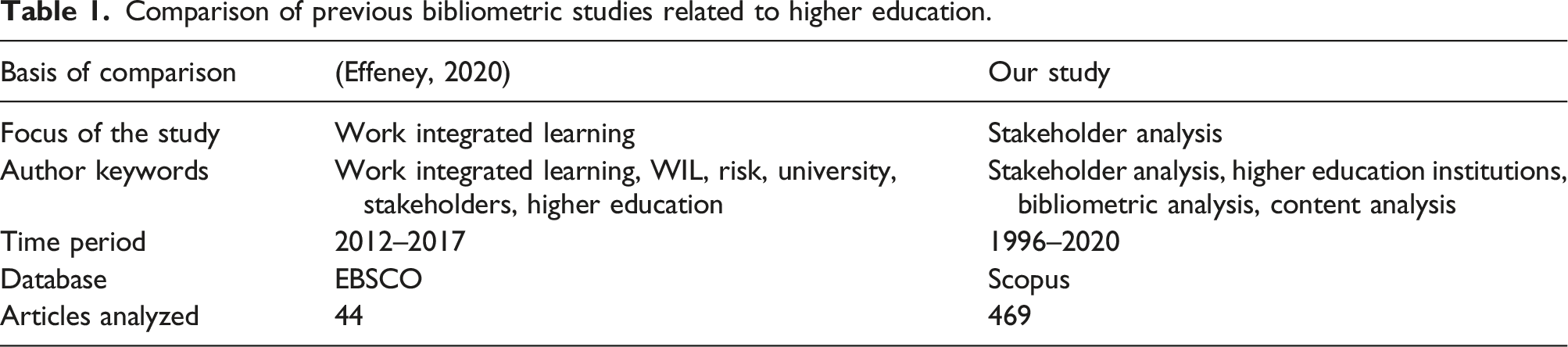
While the key focus of (Effeney, 2020) was stakeholder analysis regarding one aspect of HEIs - Work Integrated Learning (WIL), this chapter incorporates stakeholder analysis and HEIs on a whole. Furthermore, (Effeney, 2020) considered only a 5-year timeline spanning across 2012–2017, this chapter adopts a 25-year timeline (1996–2020). Also, the number of Scopus indexed publications analyzed in this chapter is much higher in number when compared to the number of publications extracted from EBSCO database and analyzed by (Effeney, 2020).
This study will add to theory as well as practice in given manner. First, logical insights in the growth of entrepreneurship development and higher education institutions (HEIs) and Stakeholder Analysis in last 25 years are exemplified, to offer a comprehensive summary of this area. Second, the interrelated and multidimensional facets of higher education institutions (HEIs) and Stakeholder Analysis research area is found, and evolving trends and theme are found, which are then used to find future directions of research. Third, directorial steps, founded on current study, are recommended to policymakers and practitioners about encouraging and developing higher education institutions (HEIs) and Stakeholder Analysis. This article is designed in the following manner: Section 2 explains the research methodology used in this study, and prime research questions investigated. Section 3, findings of the study are exemplified and précised. Section 4 carries conclusion which contains brief outline of the contributions made, limitations of the current research and future research directions.
Research methodology
With regard to reviewing the literature on a particular topic, recognizing a database which is most appropriate is the primary task (Albort-Morant and Ribeiro-Soriano, 2016). Scopus database was chosen because it covers greater number of journals and articles in comparison to others, including WoS - Web of Science (Liu et al., 2013). Moreover, it offers a wide-ranging overview of research published globally which allows a comprehensive bibliographic review (Durán-Sánchez et al., 2019).
Bibliometric reviews are recommended by several authors as they enable researchers to not only acquire thorough understanding of existing knowledge, but also synthesize it effectively to present a comprehensive overview of the progression of the research field (Cisneros et al., 2018). Furthermore, bibliometric study along with content analysis also allows researchers to ascertain the conceptual, social and intellectual structures of the literature (Ronda-Pupo, 2017; Tunger and Eulerich, 2018). Moreover, identification of current trends and future research directions are also facilitated (Li et al., 2017). Figure 1 illustrates the framework of bibliometric review of literature, carried out by incorporating Performance Analysis and Content Analysis. VOS viewer and Bibliometrix (Aria and Cuccurullo, 2017) were the software packages utilized to create visualizations of the bibliometric networks. Cluster analysis (Syed et al. 2022) was also undertaken to identify the structures characterizing the literature on the multifaced, interconnected research topics. Research framework of this study.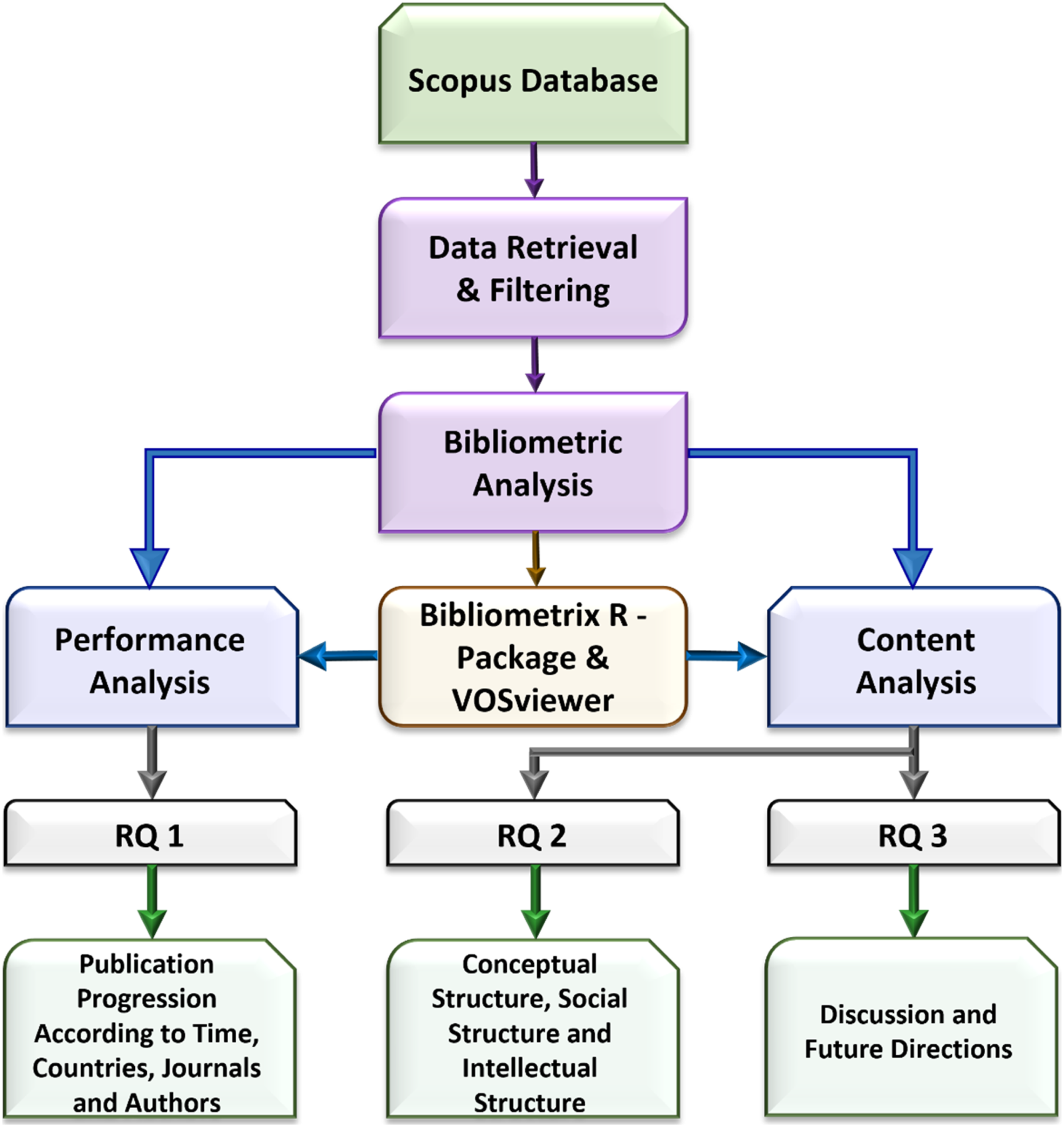
The initial topic search in Scopus database resulted in identification of 1303 articles published. Subsequent filtration involved using parameters such as timeline (last 25 years, 1996–2020), publication stage, type of article, English language, and related fields. This resulted in removal of nearly thousand articles. The remaining 469 articles were utilized to carry out bibliometric analysis. Search strategy, data retrieval process, and statistical summary of the work on stakeholder analysis and HEIs indexed in Scopus database are elucidated in Figure 2. Data retrieval process, search strategy, and statistical summary of the work carried out.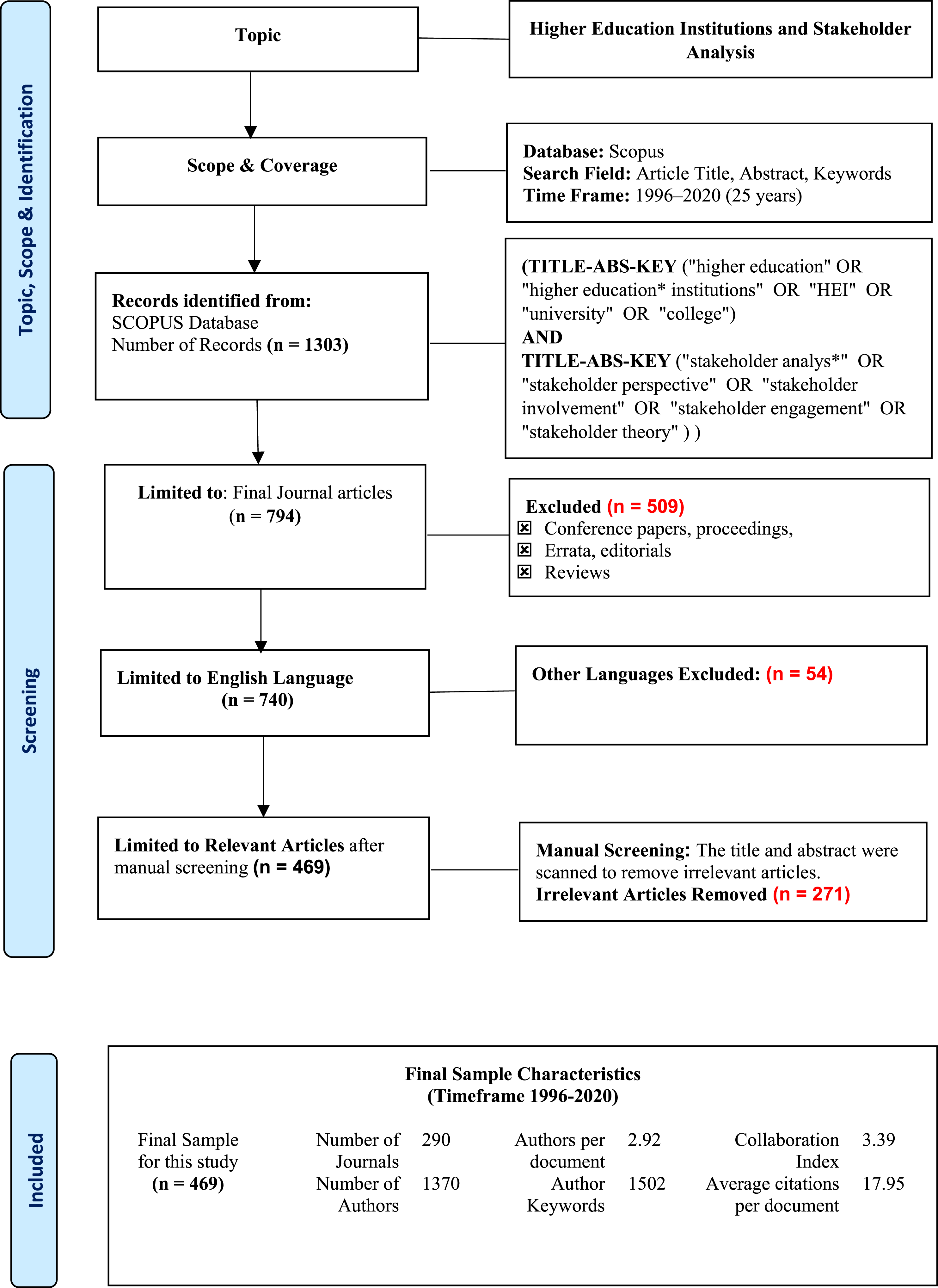
Analysis and findings
RQ 1: How has the publication trend in HEIs and stakeholder analysis progressed?
To probe RQ1, publication trend in SCOPUS database over the last 25 years on HEIs and stakeholder analysis was analyzed by categorizing it in accordance with year, country, authors and journals.
Publication by year
Figure 3 exhibits the number of publications and mean citations per publication in last 25 years on Stakeholder Analysis and HEIs. The gradual increase in number of publications is an indication of increasing interest garnered by this field among researchers. Furthermore, mean citations too exhibit an upward trend, but with non-linear progression. The peaks could be attributed to seminal works published by (Larsen and McInerney, 2002; Miller, Mcadam and Mcadam, 2014; Ntim et al., 2017) within this research domain and widely cited by other authors. Articles published on HEIs and Stakeholder analysis between 1996 and 2020.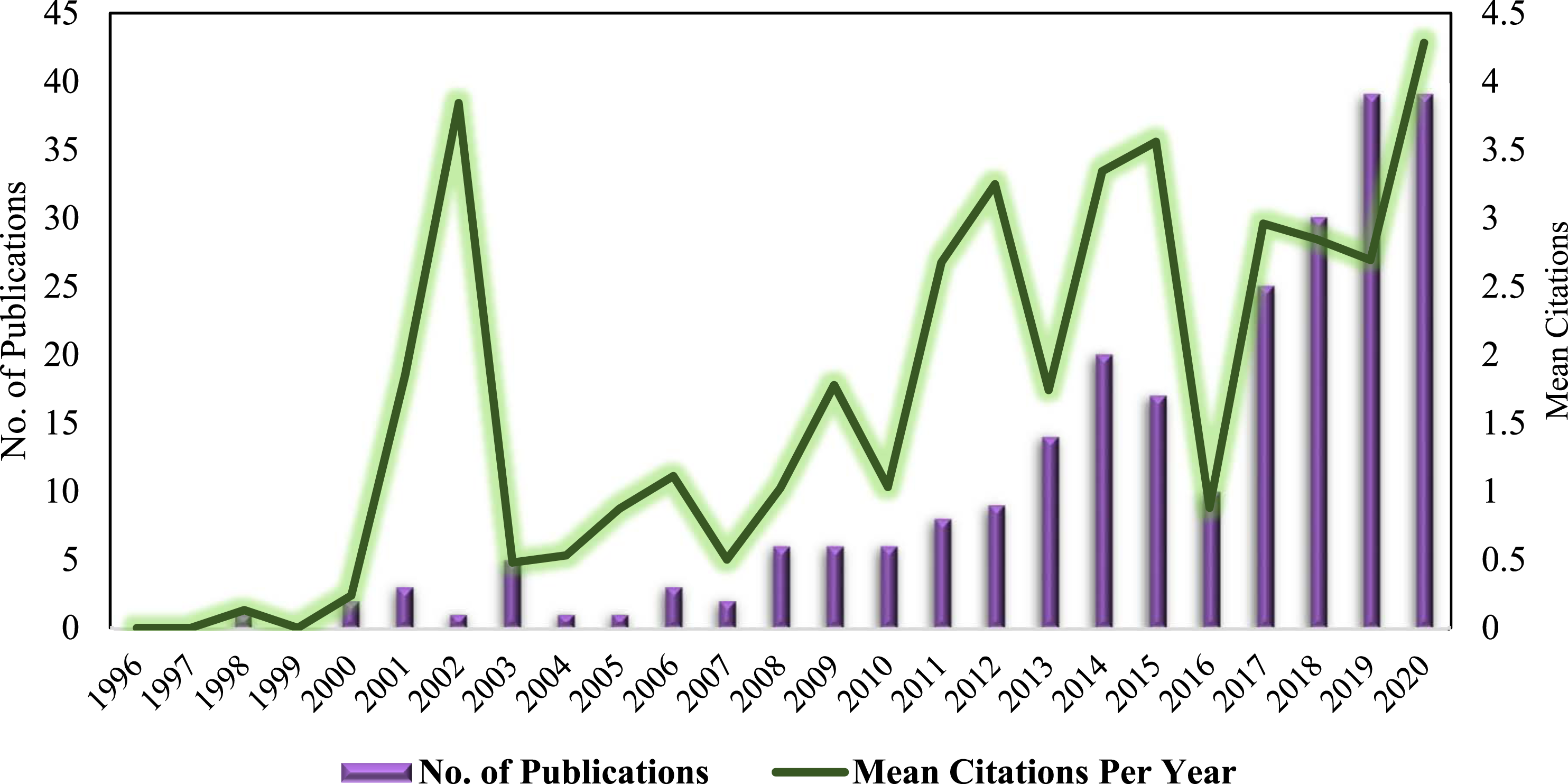
Publication by country
Figure 4 signifies that Stakeholder Analysis and HEIs has gained interest from researchers across the world. However, majority of research pursuits in this field is still concentrated within the western countries. USA and UK top this chart, with the former way ahead of the latter and other countries in terms of total number of publications in this field. It is unsurprising to see USA leading the list as it has pioneered many innovative practices in higher education, and with stronger stakeholder engagement, since 1990s (Grimaldi et al., 2011). This has led to a greater number of research projects carried out and published in various journals. While the UK and Australia have been steadfast in investigating and publishing in this field of research, other countries are yet to catch up. While North American and European countries mark their presence in the list of Top-20 countries, the other regions – Africa, Asia and South America are clearly under-represented with just five countries making it to the list. This could be ascribed to lack of evolution within higher education domain in the post-independence era, resulting in HEIs still working in silos with scant stakeholder engagement. Top 20 countries publishing on HEIs and Stakeholder Analysis.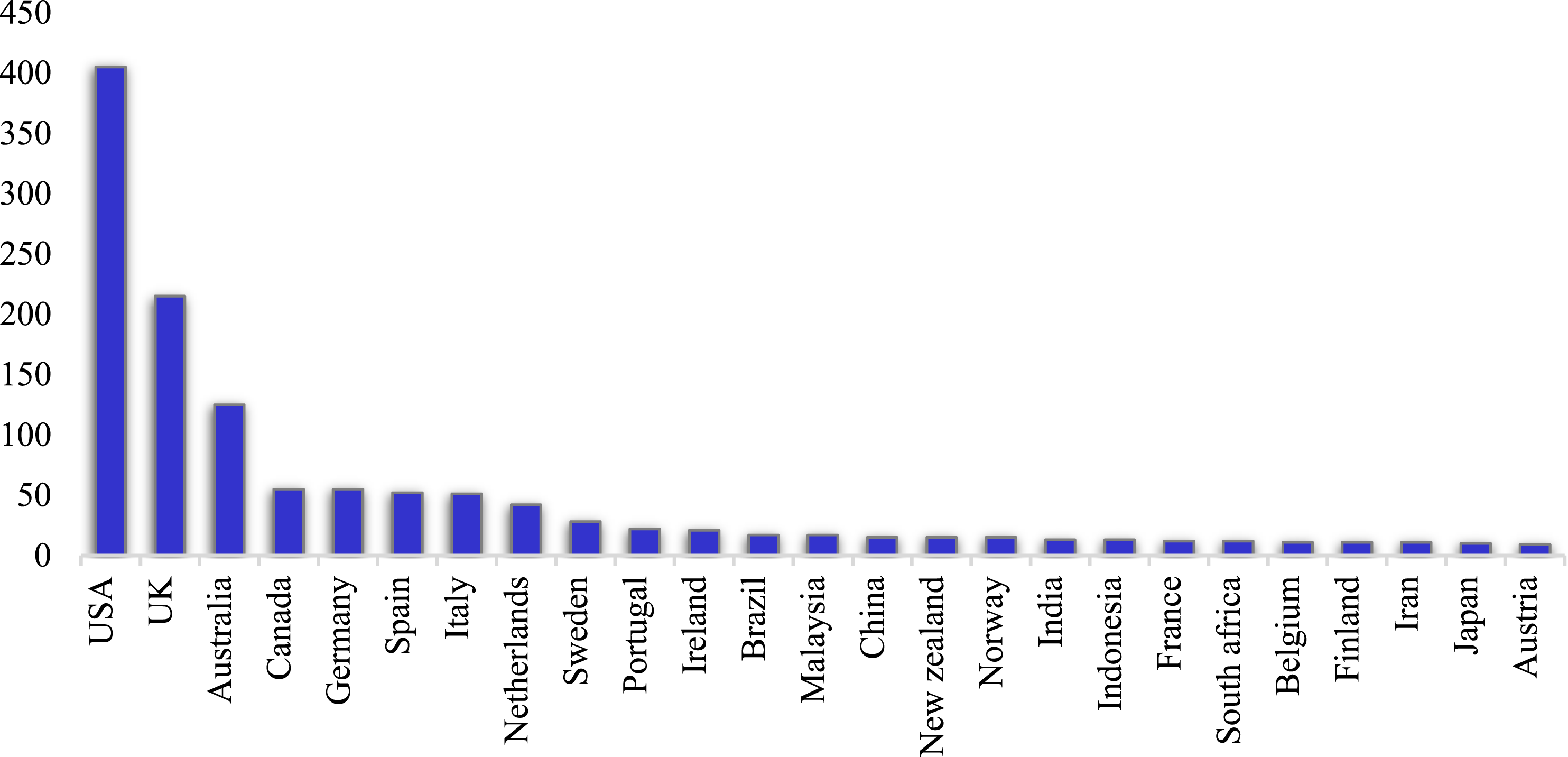
Publication by author
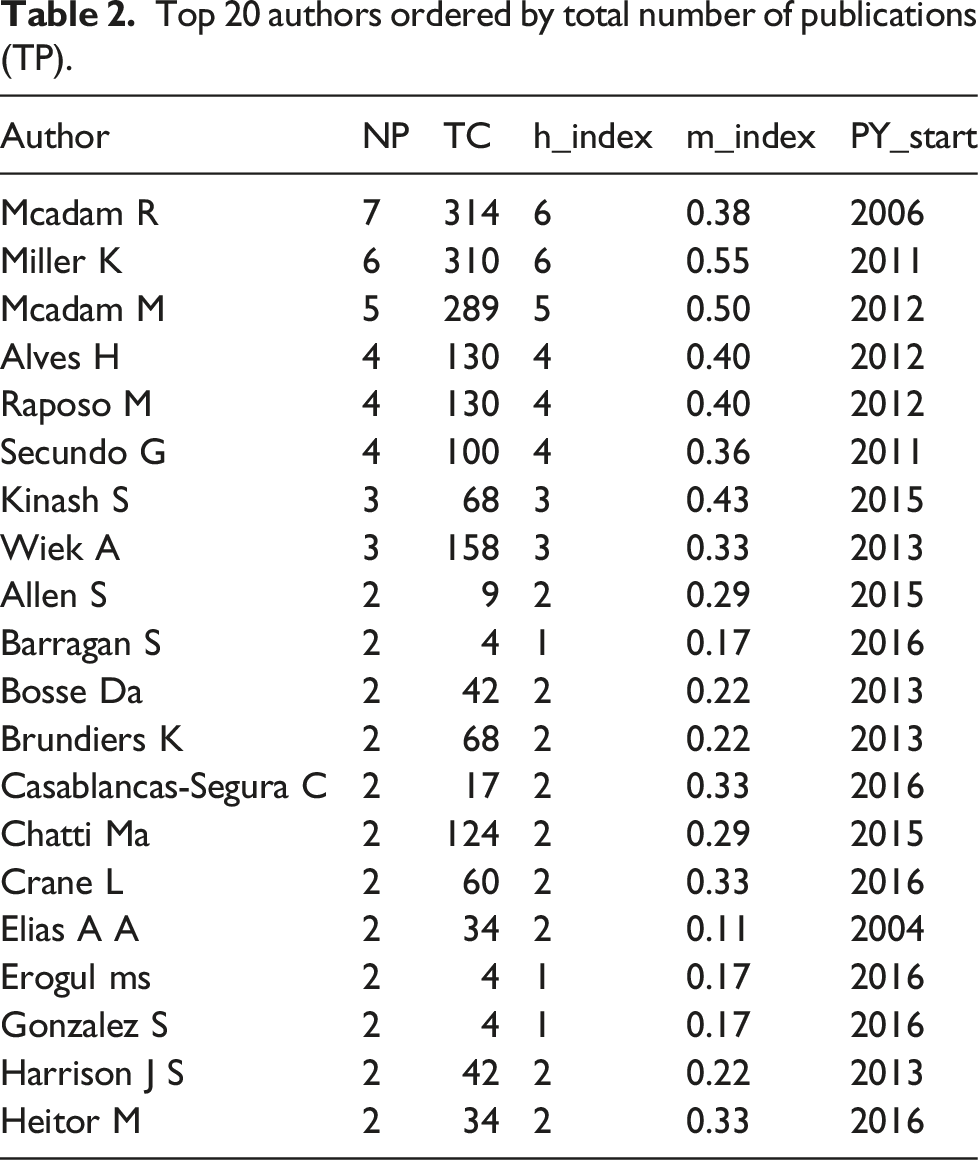
Top 20 authors ordered by total number of publications (TP).
Publication by journal
Top-20 journals with most publications on HEIs and Stakeholder analysis.
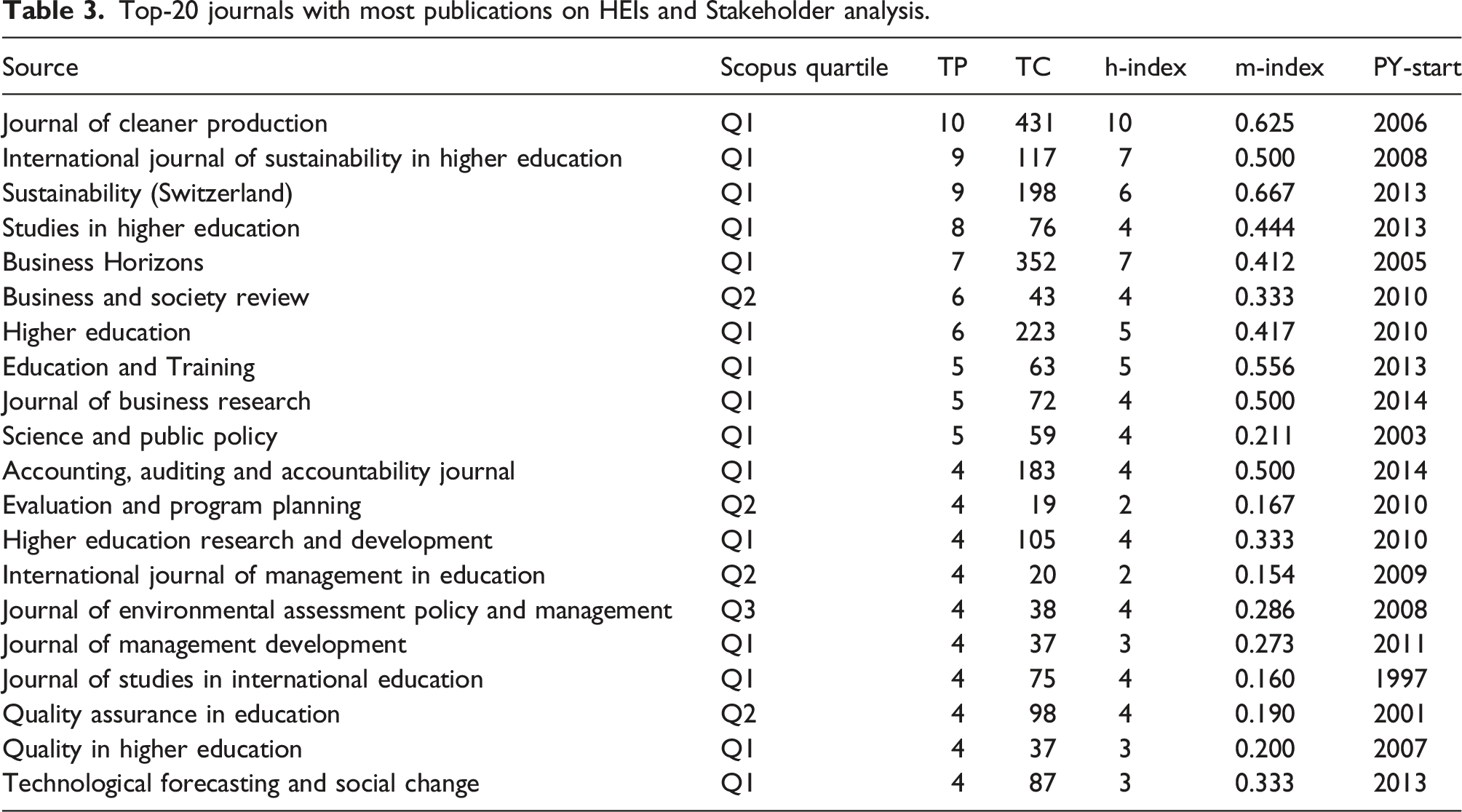
All journals in this list barring one, are ranked Q1 or Q2 which is a testimony to the fact that this field is not only garnering more interest, but also witnessing high quality research being produced and published by top journals. Journal of Cleaner Production leads the table in terms of total number of publications, closely followed by and International Journal of Sustainability in Higher Education, Studies in Higher Education and Sustainability. Furthermore, Journal of Cleaner Production tops the table with highest number of citations (411) and corresponding h-index (10), followed by International Journal of Sustainability in Higher Education and Sustainability. However, the latter exhibits highest m-index among the top 4 in the table. Also, newly launched journals such as Journal of Business Research and Internet and Higher Education boast of highest m-index (0.667) among the top-20, confirming increasing growth and impact in this field.
The journal growth analysis indicates that Sustainability leads the growth chart and has witnessed a rapid progress in the last 5 years with regard to publishing on HEIs and Stakeholder Analysis. It is closely followed by Studies in Higher Education and International Journal of Sustainability in Higher Education. Furthermore, all three journals exhibit an upward slope, while Journal of Cleaner Production and Business Horizons seem to indicate stagnation with minimal growth after exhibiting a gradual upward slope over the last decade. RQ2: What structures characterize the literature on entrepreneurial HEIs?
Conceptual structure
Analysis here focuses on identifying popular themes being explored by researchers working on HEIs and stakeholder analysis. Keyword and co-occurrence analysis are carried out because author’s keywords appropriately represent the article’s content (McAllister et al., 2022). The existence of a relationship between multiple concepts in an article is demonstrated by the keyword co-occurrence (Kent Baker et al., 2020). Usually, co-occurrence analysis is used by researchers to differentiate and classify data in management and business fields (Castriotta et al., 2019). Biblimetrix R and VOSviewer and were utilized to create and demonstrate thematic mapping of this field. Figure 5 illustrates the most popular themes. Network visualization of co-occurrence – Author keywords.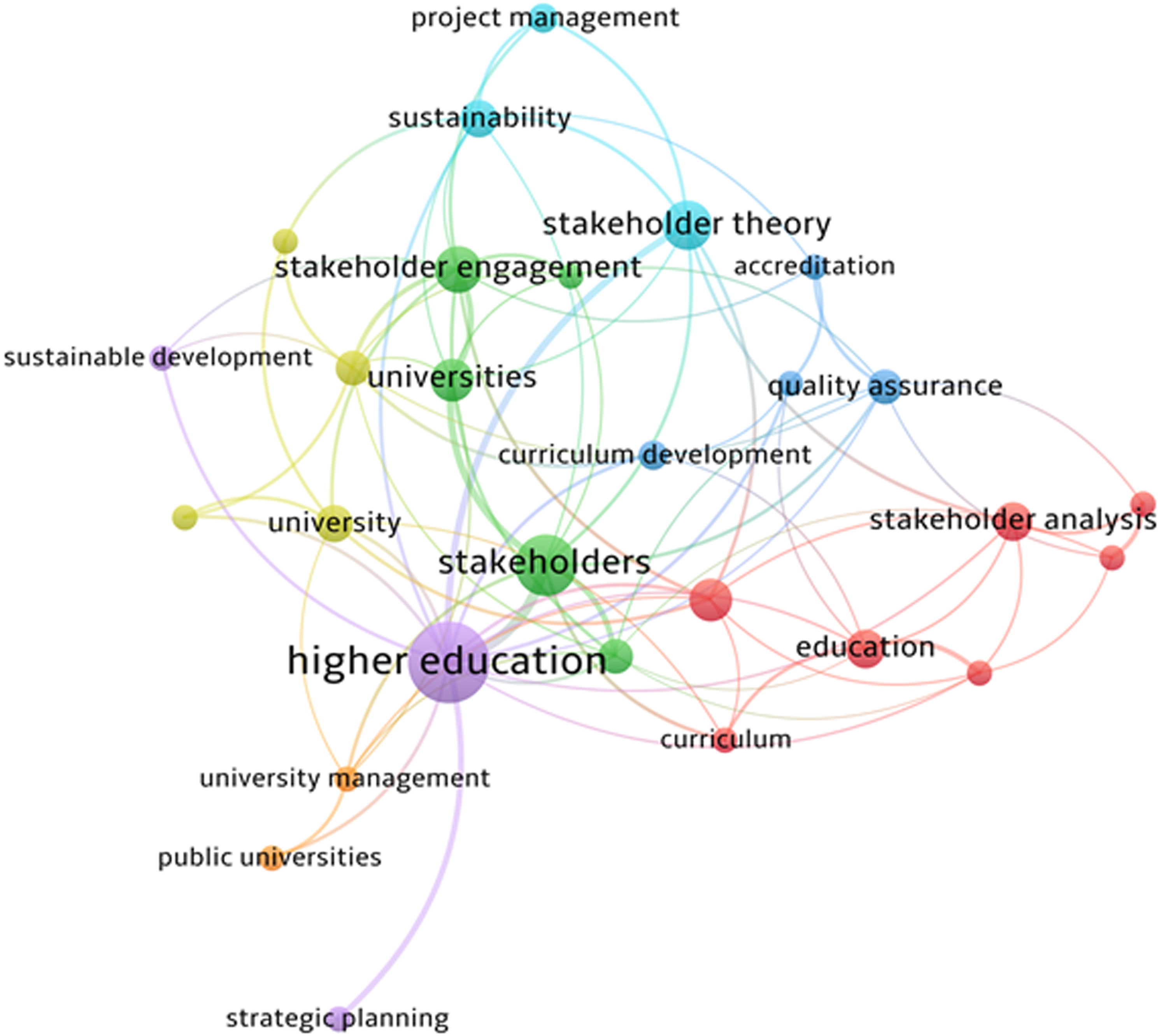
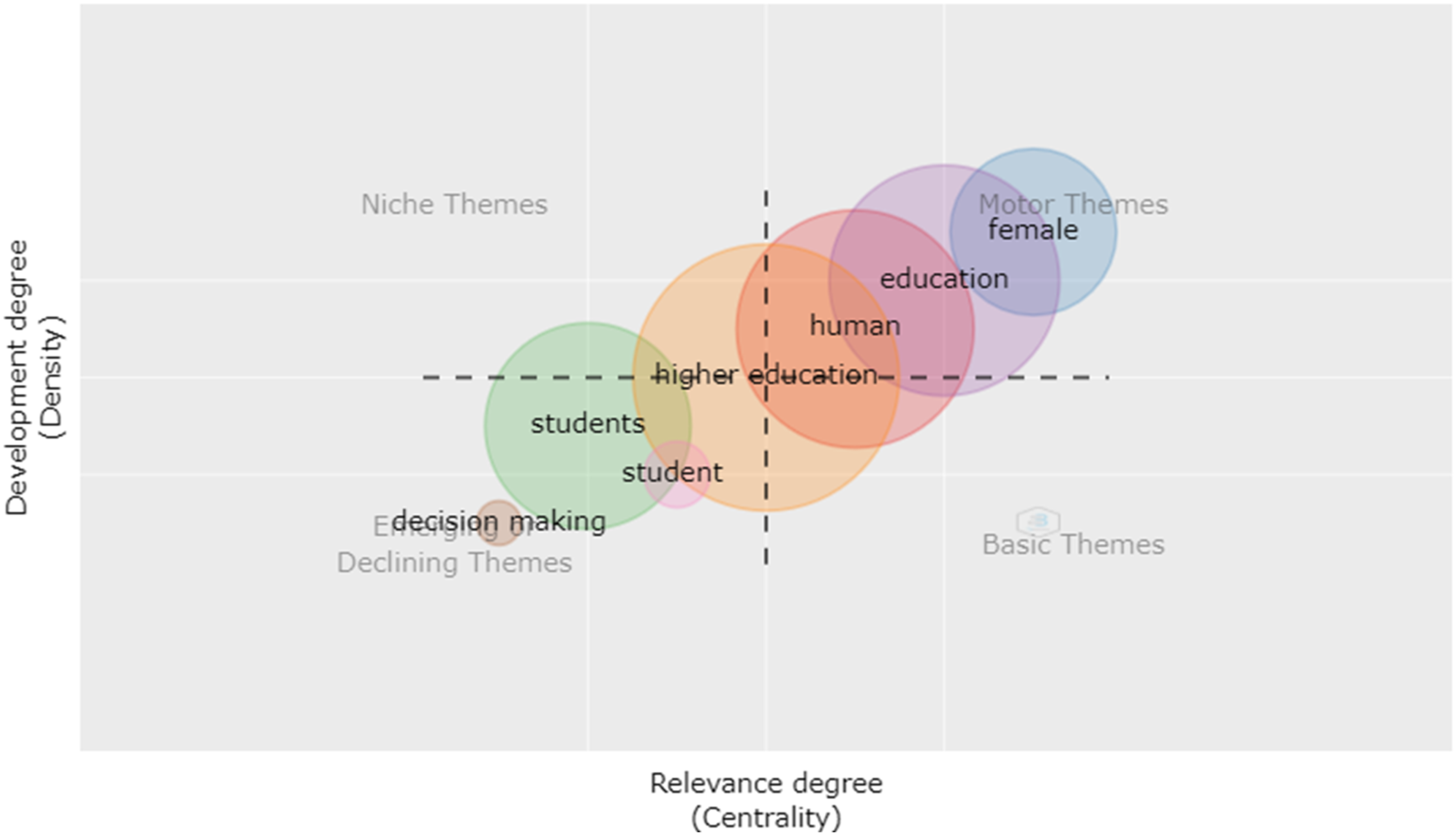
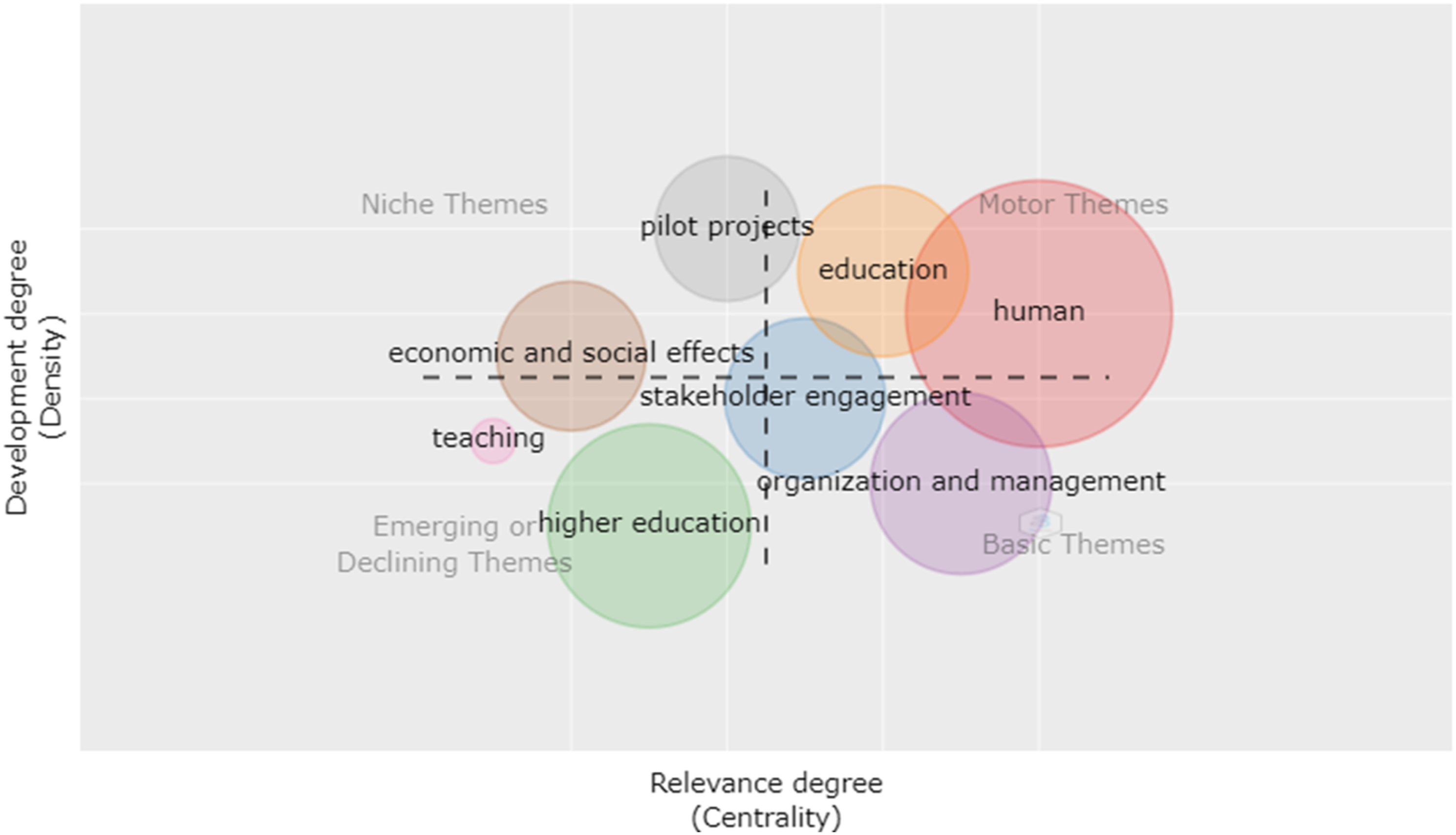
It was noted that proximity of themes to the center of the network map and to each other, increased with greater number of keyword co-occurrences. Furthermore, the size of bubble, depicting each theme, increased with a greater number of times a keyword was used by authors. Also, the different colors of links and bubbles specify distinct cluster with associated themes grouped into each of them. The following section on intellectual structure elucidates more on the related facets of clusters and their significance in development of the field of research. Thematic mapping was conducted to furnish a comprehensive overview of the evolution of the topic and provide further thorough understanding of the different subtopics explored by authors in the last 25 years (Figures 6–8). The timeline was classified into three periods by identification of two cut-off points based on similar number of publications in each category. Below sub-sections illustrate the thematic evolution of this multi-disciplinary field. Thematic evolution of the topic; first time slice (1996–2011). Thematic evolution of the topic; second time slice (2012–2016). Thematic evolution of the topic; third time slice (2017–2020).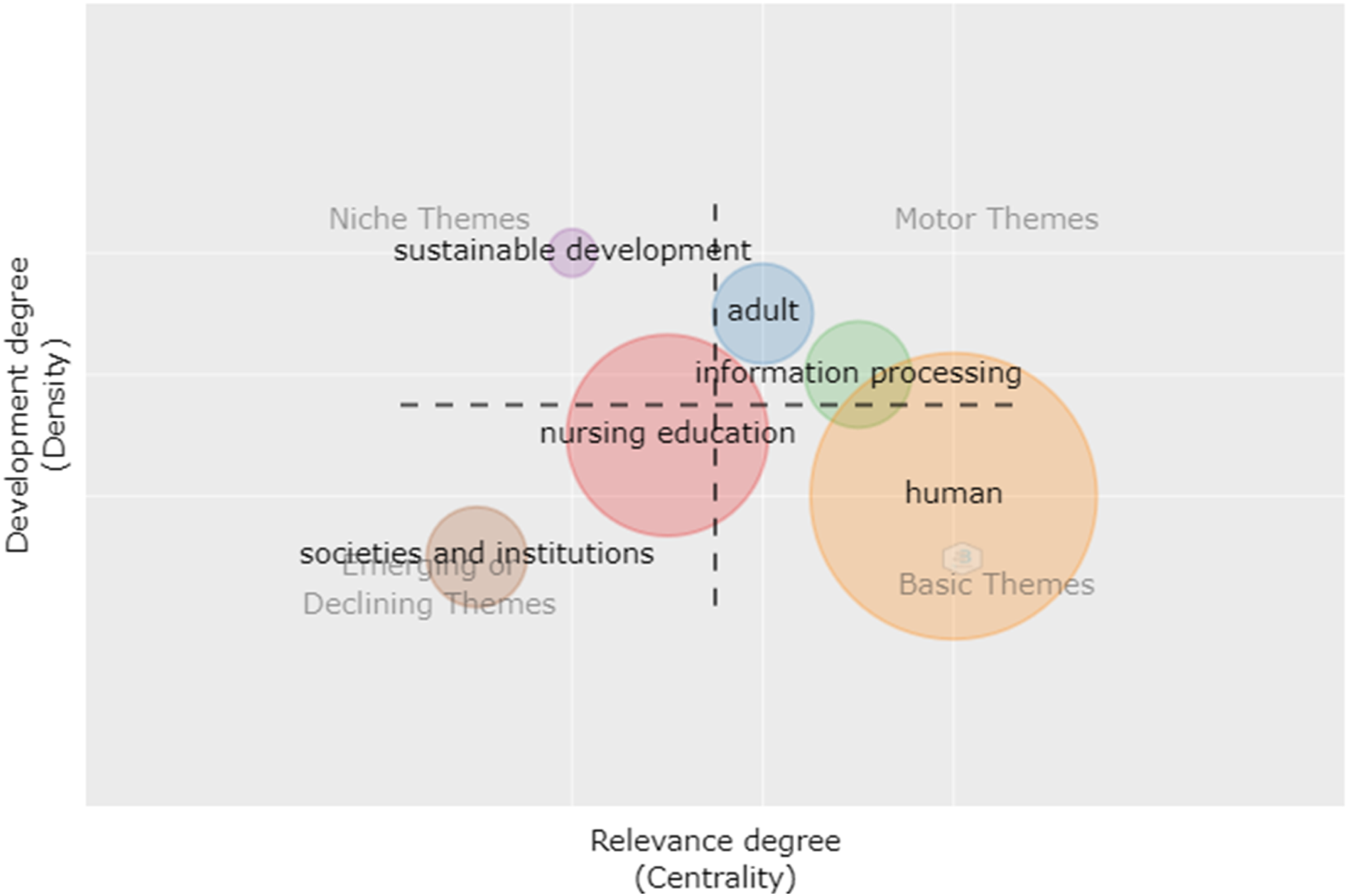
Thematic mapping
The timeline for thematic mapping is classified into three phases (1996–2013, 2014–2018, 2019–2020) by identifying two cut-off points based on similar number of publications in each category. Hence, each phase has a varying duration of years.
Time period 1 (1996–2013)
The first time slice (Figure 6) witnessed articles which were dedicated mainly to sustainable development, society and HEIs. The concept of ‘second academic revolution’ was introduced by (Etzkowitz, 1998) to illustrate the involvement of universities in societal and economic development of a region. During this period, sustained efforts were put in by the policy makers at governmental level to bring the academia and industry closer; resulting in conceptualization of ‘triple-helix model’ depicting collaboration among university, industry and government (Etzkowitz, 2003). The direct impact of these changes was seen through increased number of university spin-offs and these developments led to the academic sector imbibing industrial research goals and complementing the industry by carrying out research which could be commercialized effectively (Toole and Czarnitzki, 2010; Thursby and Thursby, 2011). This in turn led to inspiring some academics to translate their research into business start-ups, which garnered lot of attention from researchers to further probe into different characteristics of academic entrepreneurship (Grimaldi et al., 2011; Mars and Rios-Aguilar, 2010), university spin-offs (Boh et al., 2003; Klofsten and Jones, 2000; Wright, 2014) and university patents (Mowery and Sampat, 2005; Van Praag and Versloot, 2007) from individual/human aspects.
Time period 2: 2014–2018
While research areas such as human factors and HEIs held their fort, newer research topics such as gender/female and students as key stakeholders in higher education began to emerge during the period defined by second time slice (Figure 7). This was the period of increased emphasis on implementing third mission in the business model of HEIs (Audretsch, 2014; Pugh et al., 2016) introduced the concept of ‘entrepreneurial society’ which signifies the role of entrepreneurship in driving economic development, rather than knowledge or financial capital. This led to HEIs assuming a vital role in transforming human capital into entrepreneurial capital, enabling the contribution to and development of social capital on a whole. Hence, a more comprehensive approach is noted in this time slice when compared to the previous one, with increased focus on higher education and students (Ebrashi, 2013). Another interesting aspect in this group is the emergence of decision-making as field of research, which was primarily due to the fact that a stronger emphasis was laid on stakeholder engagement (Ferrero-Ferrero et al., 2018).
Time period 3: 2019–2020
The last time slice (Figure 8) witnessed spurt in the number of articles on organization and management, due to structuring and commercialization of HEIs and making them an integral part of economic and societal development (Clauss et al., 2018). Also, an increased number of publications highlighting role of innovative teaching approaches with regard to specific issues such as region, gender and technology were noted during this time period (Laudano et al., 2019; Shah et al., 2020; Williamson, 2018). This testifies a comprehensive growth of the research field in the last half a decade, encompassing broader aspects and niche topics. Furthermore, the key stakeholders of an HEI – students, are directly impacted by the development of HEIs and positively impacts their creative thinking (Dromereschi, 2018). Thus, HEIs could be seen as production units of not only knowledge, put also entrepreneurial capital which effectively contribute to the economic and societal development of a region (Audretsch and Belitski, 2017; Clauss et al., 2018).
Social structure
It can be clearly seen in Figure 9 that the USA and UK have spearheaded globally for establishing research collaboration in this field, with other European countries following suit. However, a closer examination in this analysis suggests that a major portion of the collaboration is either localized or it is amidst specific countries and authors. A drawback of this is that although the number of publications can increase, yet it necessarily doesn’t result in increase of citations, and it also leads to weaker total link strength. This is the case seen with authors such as Mcadam R and Miller K, wherein lesser collaborative efforts hampered their academic metrics in terms of citations and total link strength. Co-authorship across countries.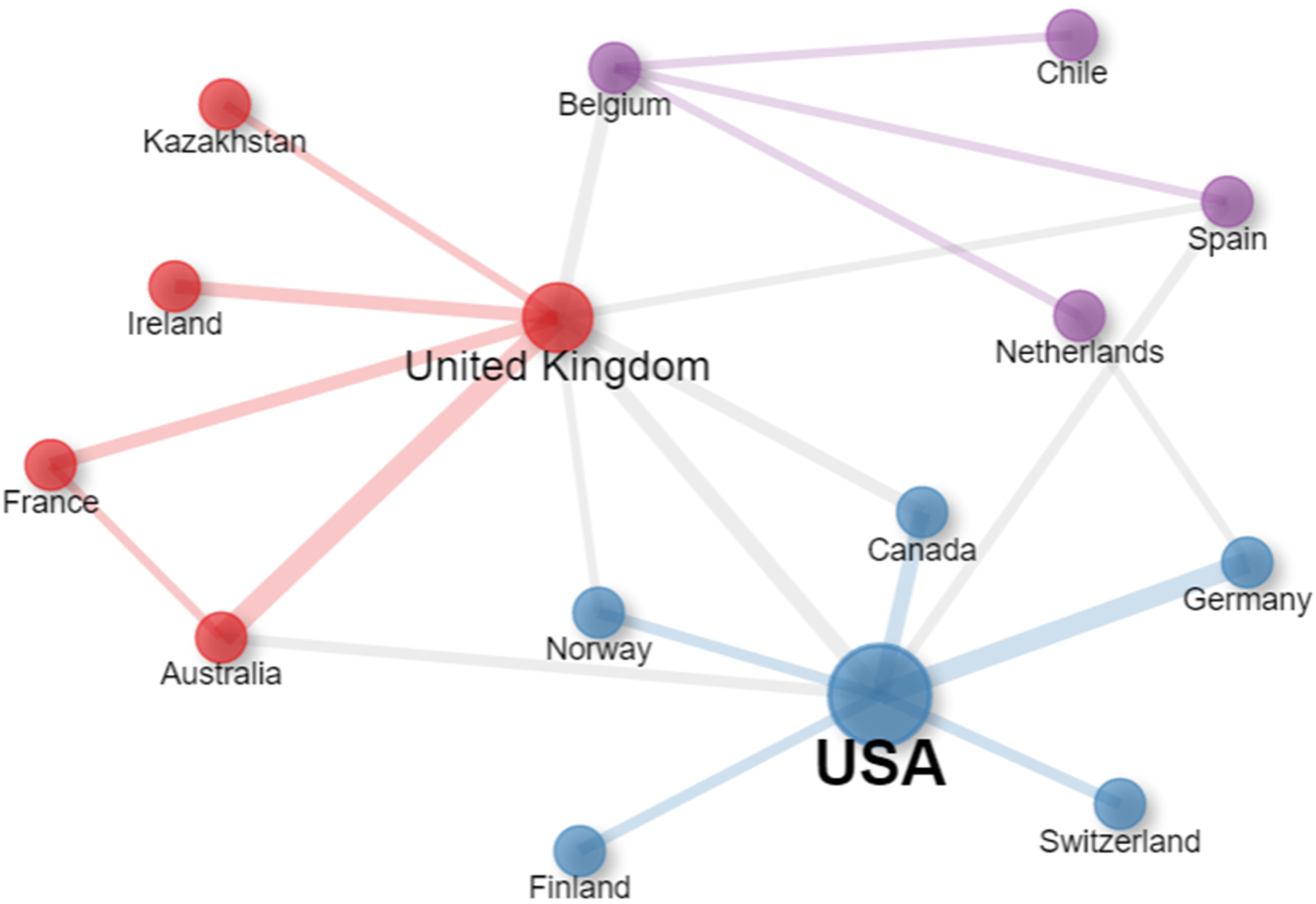
Corresponding author’s country affiliation.
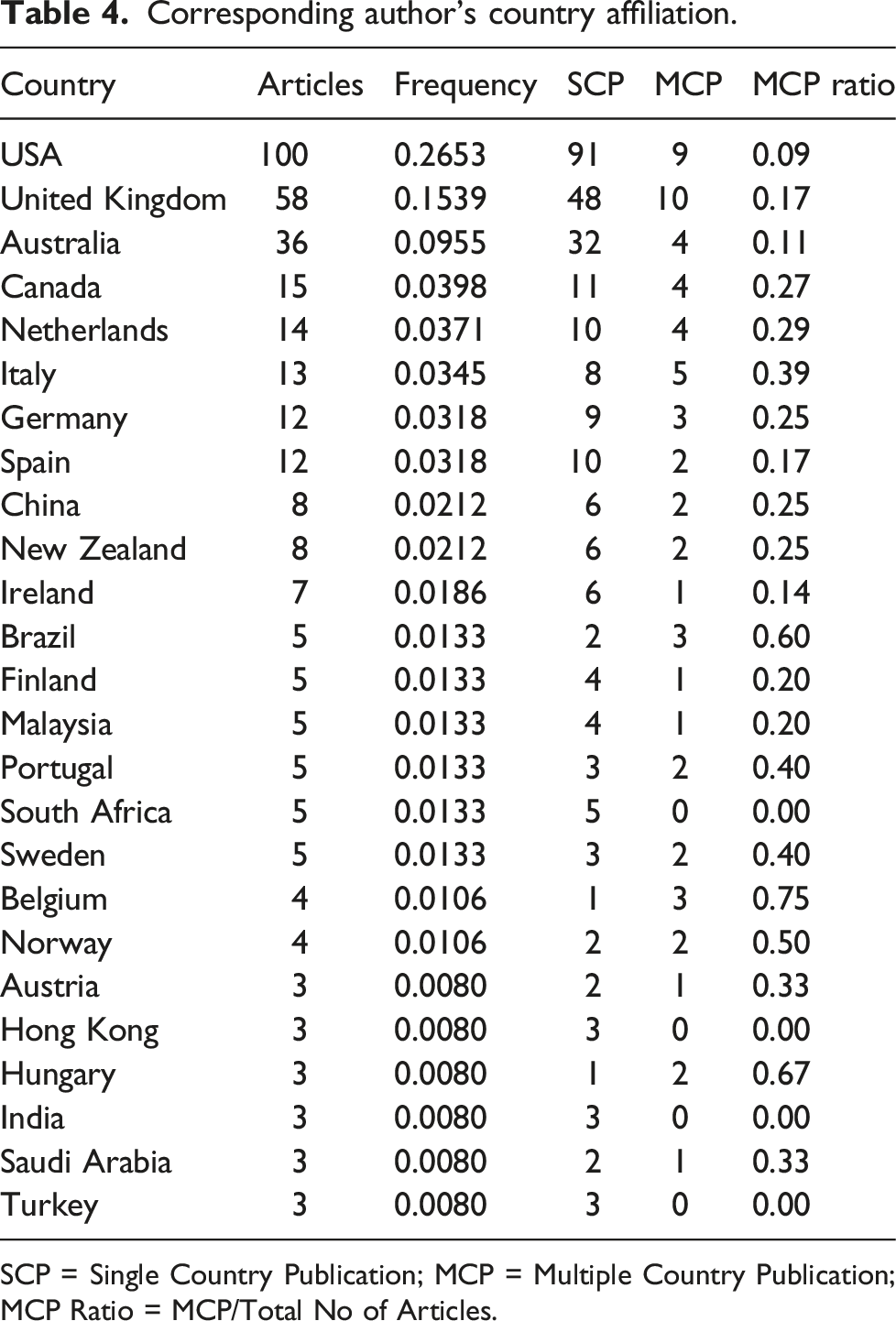
SCP = Single Country Publication; MCP = Multiple Country Publication; MCP Ratio = MCP/Total No of Articles.
Intellectual structure
The intellectual structure of a research domain can be examined by assessing the connectivity between influential articles and authors based on the number of citations, known as co-citation analysis (Singh and Malik, 2022). The co-citation analysis displays the intellectual structure by grouping articles into homogeneous groups (clusters), which can also be recognized as important themes in the research domain. The four prominent research clusters in the present co-citation analysis were created using VoSviewer and keeping a citation threshold of 5, with the option of removing isolated nodes. Papers in each cluster were studied to build a common theme (refer to Figure 10); a conventional approach in bibliometric analysis research (Tian et al., 2018). Development of the four key clusters – content analysis findings.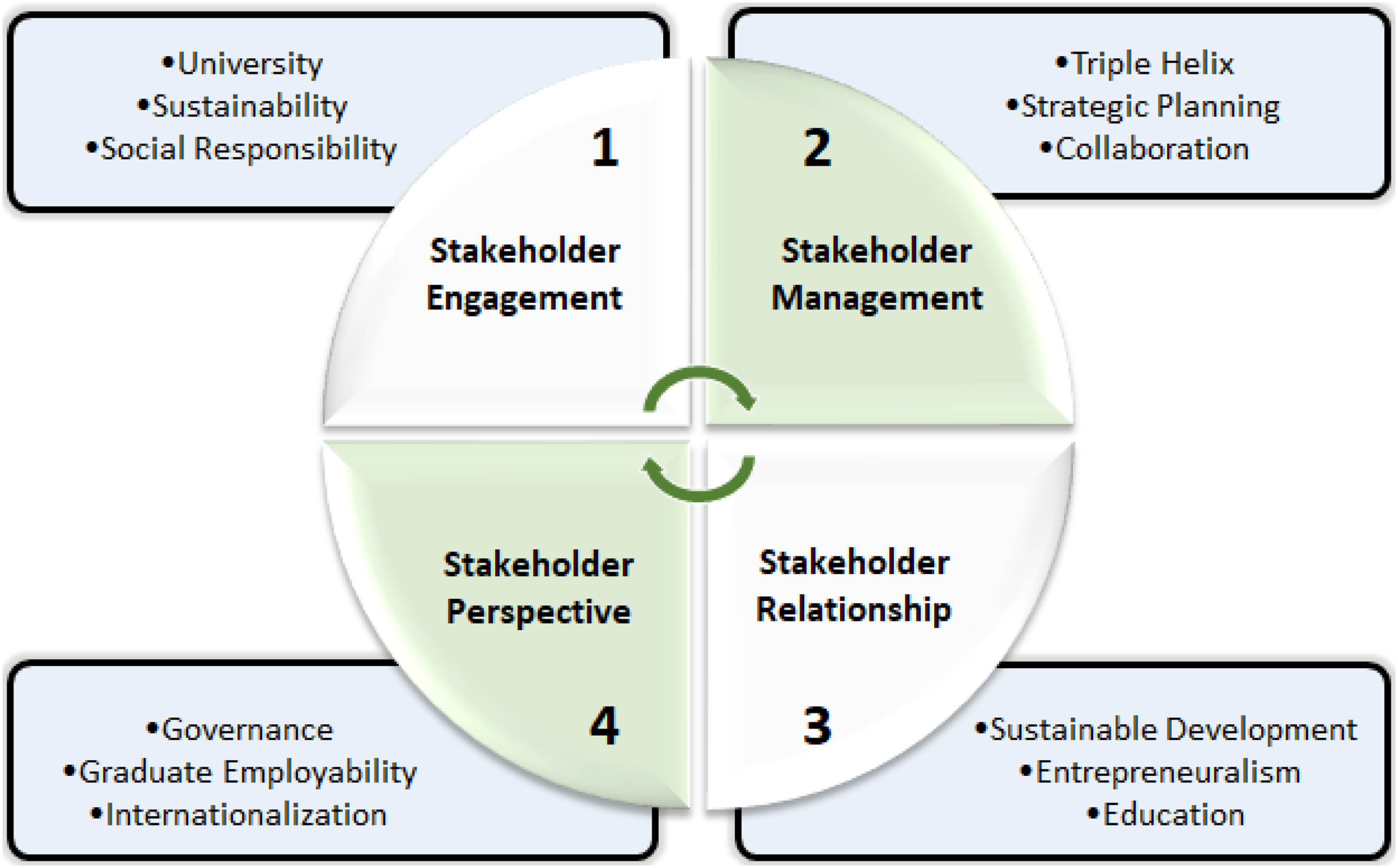
Cluster 1: Stakeholder engagement
This cluster focused on the publications regarding HEIs and stakeholder engagement. The researchers discussed the possible impact and the increasing need for the sustainable development. The policy changes and practices adapted in the higher education sector were highlighted globally (Ceulemans et al., 2015). Also, the impact of stakeholder engagement on social responsibility and development was also highlighted (Godemann et al., 2014).
Cluster 2: Stakeholder management
Management of HEIs key stakeholders is the focus of this cluster. The researchers have presented their views on the role of strategic planning in HEIs (Ramos et al., 2015). As expected, case studies of universities based in western countries are most published. Furthermore, the implementation of triple helix model across regions, and managing key stakeholders such as government and corporates have also been extensively studied (Laplume et al., 2008; Ressler and Abratt, 2009).
Cluster 3: Stakeholder relationship
The integration of entrepreneurialism in HEIs is the primary focus of this cluster (Etzkowitz, 2003; Goethner et al., 2012; Wright, 2014). Moreover, extensive research works have been undertaken across different countries/regions/contexts on the impact and development of entrepreneurial intention among the stakeholders of an HEI; mainly the student community (Ozaralli and Rivenburgh, 2016; Maroufkhani et al., 2017). Furthermore, various works on role of educational programs in collaboration with internal and external stakeholders of HEIs towards sustainable development of a society have also been published (Blanco-Portela et al., 2017; Lozano et al., 2013; Stouten et al., 2018).
Cluster 4: Stakeholder perspective
The stakeholder perspective on governance (Pugh et al., 2016) and graduate employability (Koe et al., 2012) have primarily been discussed by this cluster. The impact of higher education at the micro-level on students from varying contexts was a critical point of focus for majority of the studies (Gianiodis and Meek, 2019; Guerrero et al., 2016; Packham et al., 2010). Furthermore, the motives and dynamics of internationalization of HEIs constitute a seminal theme within this cluster (Zaleniene and Pereira, 2021). RQ 3: What are the probable future directions of research on HEIs and Stakeholder Analysis?
This paper highlights the importance of higher education institutions (HEIs) and stakeholder relationship. Future researchers can explore strategic plans that formally stimulate and institutionalize stakeholder engagement and management in higher education institutions (HEIs).
The synergy of interests and conflicts among different stakeholder groups in higher education institutions (HEIs) can also be investigated. Analysis and prediction of superior conditions for reliable and fair relation between higher educational institutions (HEIs) and their stakeholders can be done so that more value can be created for all the stakeholders. Future research can also be taken up to assess the externalities of higher education institutions (HEIs) and their influence on stakeholder relationships, evaluate possible dissimilarities in strategic goals of higher education institutions (HEIs), possibly impacting the significance of contributions among various stakeholders.
Future research can also include dialogues with policymakers and academic leaders involved in the designing and execution of policy frameworks. Also, stakeholder perceptions, expectations and needs in regard to higher education institutions (HEIs), can be evaluated so that a better coordination can be brought and value creation can be done for all involved. Scholars can explore measures taken by of higher education institutions (HEIs), to foster transformative learning atmospheres in which students collaborate, with regional partners and ascertain real life innovative solutions to sustainable challenges. Cross national and cross-cultural studies will also give new insights.
Contributions, limitations and conclusion
Findings and analysis of this research disclosed that during the last 25 years there has been a growing interest among scholars towards Stakeholder Analysis and higher education institutions (HEIs); though the mean citations exhibited an upward trend, but there was non-linear progression. It was also noted that majority of research pursuits concentrated in western countries such as USA and UK, while Africa, Asia and South America were under-represented. USA was leading in the list as it had stronger stakeholder engagement and it pioneered in innovative practices in higher education. The noteworthy impact is limited to few authors only. The most impactful works were identified, which were core to the growth of this research area and had regional impact. The thematic mapping illustrated that articles were dedicated to sustainable development of society and HEIs, involvement of HEIs in societal and economic growth of region, collaboration among university - industry - government, academic entrepreneurship in HEIs, and human and social capital in HEIs. The content analysis resulted in identification of four prominent research clusters around HEIs: stakeholder engagement, stakeholder management, stakeholder relationship and stakeholder perspective.
This paper thus adds to the field of HEIs and Stakeholder Analysis in multiple ways. Firstly, publications across last 25 years were examined with rigor and classification of existing literature was performed based on year, country, and journal. Secondly, research collaboration in this field and their country affiliation were identified. Thirdly, conceptual structure of the current study was mapped with conspicuous themes by means of co-occurrence and citation networks, allowing scholars to avoid inertia and further disintegration of this field. Fourthly, prominent research clusters were identified through research cluster illustrations, enabling researchers to take further decisions on spending funds and time to become part of prevailing clusters or to develop new categories.
The major limitations of this study are: (a) analysis deliberates only on Scopus database, and (b) selection of keyword is based on our prior understanding and knowledge about HEIs and Stakeholder Analysis gained by an initial review of prevalent literature; some keywords might have been overlooked or they might appear in future. More research based on this study can be conducted by scrutinizing research articles indexed in other databases like Web of Science, ProQuest, Open Access Journals, Academia, and Research Gate etc., Also, an integrated and comparative research between these databases can also be deliberated.
Footnotes
Declaration of conflicting interests
The author(s) declared no potential conflicts of interest with respect to the research, authorship, and/or publication of this article.
Funding
The author(s) received no financial support for the research, authorship, and/or publication of this article.
