







Abstract
This research investigated how entrepreneurial skills influence the mindset of an entrepreneurial engineer. The total number of engineering graduates participating in this research was 65 students who graduated between 2016 and 2022. The results indicated that the entrepreneurial skills of engineering graduates ranged from average to good. The results also indicated that there is a positive, statistically significant relationship between the entrepreneurial skills of engineering graduates and their entrepreneurial mindset. This research concluded that it is essential for engineering students to acquire entrepreneurial skills that support their engineering major and lead them to think broadly about their future career opportunities. Hence, entrepreneurial skills enhance their competitiveness in innovative and emerging engineering disciplines. This research supports the integration of entrepreneurship skills with practical applications in all engineering curricula and courses in universities. This research contributes to the literature as it is one of the few studies that addressed expanding the entrepreneurial horizons of engineering graduates and directing them towards entrepreneurial projects. It also addressed the need to review university engineering curricula to include entrepreneurial skills and capabilities.
Introduction
The economic importance of entrepreneurial culture has highlighted new companies, many of which were started by engineers. More engineers can be encouraged to become entrepreneurs by adopting a “can do” attitude. The comparison with basic elements and situations provides a guide and incentive either for creative engineers to become entrepreneurs, running their own businesses or within existing organizations (Beattie, 2000). One of the essential elements for success in the entrepreneurial economy is the development of a new model of human capital, the “entrepreneurial engineer” who is able to keep pace with technology, innovate in the face of business and societal development challenges, and ensure economic, technological and environmental sustainability (Elia, et al., 2017).
Entrepreneurship provides job opportunities by creating, designing and operating new businesses, especially with the scarcity of job opportunities and high unemployment rates. Entrepreneurship and engineering share the same purpose of serving people and solving their problems (Huang-Saad et al., 2020). Several indicators show that there is a great need for engineers to acquire entrepreneurial skills because today’s business environment faces significant competitive challenges (Duval-Couetil et al., 2012) making entrepreneurship and innovation key success factors in engineering (Rodriguez et al., 2015).
The process of adapting to the new reality requires a deep understanding of the need for change in the traditional education system. Universities around the world are increasingly realizing that they must graduate engineers who not only understand science and technology, but who are also able to identify gaps in the market, start their own business, conduct financial analysis, market new products, and manage various innovative engineering or non-engineering projects (Duval-Couetil et al., 2012). This adaptation process has dramatically increased the provision of entrepreneurship training for engineering students through multi-level courses that provide a deep understanding of the nature and potential of innovation and entrepreneurship, as well as courses that provide theories on how to manage and deliver innovative potential to the economy. Some universities around the world such as the Massachusetts Institute of Technology (MIT) and Stanford University are making these adjustments. Universities in different countries of the world must adapt and reshape the curricula of their engineering programs (Duval-Couetil et al., 2012).
Changes must be made to traditional education systems to advance the progress of modernization and renewal in countries (Dao, 2018). Universities need to adapt by making adjustments to traditional engineering curricula, as students’ lack of entrepreneurship education leads to fewer engineers with valuable skills such as seeking opportunities, effective communication, negotiation and understanding business (Rodriguez et al., 2015). The valuable skills that lead to developing an entrepreneurial engineer mindset are not limited to one engineering track or discipline. Mindset development will create better value wherever it is applied to engineering roles and tasks.
While the ability to work within entrepreneurial, multidisciplinary teams is becoming increasingly important for engineers, research on this topic is still scarce (Neumeyer and Santos, 2023). Entrepreneurship is gaining momentum in engineering and the number of entrepreneurship courses is growing rapidly, and there is a lack of study focusing on how and why engineering teachers facilitate entrepreneurial experiences in their courses (Svensson et al., 2020). This research addressed the following questions: (1) What percentage of Jordanian universities offer courses in entrepreneurship for engineering students? (2) What is the level of entrepreneurship skills among engineering graduates in selected Jordanian universities? (3) What are the main sources of entrepreneurship skills among engineering graduates? (4) Are entrepreneurship courses offered by universities effective in playing an important role in building graduates’ entrepreneurial skills? (5) Is there a relationship between an engineer’s entrepreneurial skills and the development of an entrepreneurial mindset?
Literature review
Globalization and rapid technological changes have created significant challenges for the business sector. These critical changes require the need to create new paradigms to deal with the challenges. A solution that will play an important role in the economy, as an engine of innovation and job creation, is entrepreneurship education (Vodă and Florea, 2019).
It is now necessary to have creative minds who think with an entrepreneurial mindset that will help in creating new innovative entrepreneurial projects that contribute to promoting economic growth and creating new job opportunities (Vodă and Florea, 2019). This means that immersion in entrepreneurship education around the world is not only beneficial to developing economies but also helps students become more involved in pressing real-world problems, develop their critical thinking as well as expand their life skills. The first entrepreneurship course was introduced by Harvard Business School in the 1940s, after the end of World War II accompanied by major economic changes (Vesper and Gartner, 1997).
Further progress appeared in the 1970s when other universities began to adapt and switch to the new educational system (Huang-Saad et al., 2020). Today, top universities around the world are racing to offer their students the best entrepreneurship education systems, which include all the skills needed to help graduates launch their successful startups and think unconventionally before starting the business process. Courses can be categorized into basic business knowledge, entrepreneurship skills, business plan development and prototyping. These universities are known for their contribution to the startup scene. This encourages fresh undergraduate students to enroll in entrepreneurship universities when looking for knowledge and future growth opportunities.
Scientific research shows the importance and effectiveness of integrating university education with entrepreneurial skills, thus increasing the number of successful new venture capital. It is important to highlight the fact that university education should not be defined in the classroom only because the main goal is to develop an entrepreneurial mindset. Valuable educational content must be taught throughout the student’s university life including workshops, labs, competitions, class projects, internships and practices. The main reason for all this is to maintain students’ interest in entrepreneurship and to advance, develop and enhance their future career opportunities (Akpochafo and Alika, 2018).
Engineers tend to have logical, analytical, structured, and quantitative thinking that leads to problem-solving skills. If this is based on traditional engineering education, engineers may not be encouraged to explore innovative solutions. This highlights the gap in identifying customer expectations and needs (Karim, 2016). For engineering skills, technical design skills are essential for building aircraft, cars, energy systems, biotechnology and cities. However, engineers still need to work with people from other disciplines with diverse backgrounds and perspectives to carry out jobs. The engineer must adapt an effective communication strategy to be able to interact with professionals to implement a successful engineering innovation (Wood et al., 2004). This highlights the communication and strategic leadership skills gap for engineers to pioneer and lead future engineering innovations.
Recognition of the economic impact of innovation and entrepreneurship is constantly growing, and broad educational institutions in key areas such as science, technology, engineering, and mathematics (STEM) are increasingly influenced by entrepreneurship educational programs (Shekhar and Huang-Saad, 2021). STEM is now working to move entrepreneurship beyond the business school model as well as immerse themselves in entrepreneurship in their educational systems to create a more entrepreneurial mental strength technical force with advanced business, social and personal skills to contribute effectively to their organisational environment (Wood et al., 2004).
Engineering colleges have tried to apply innovation skills in engineering curricula (Blake Hylton et al., 2020; Duval-Couetil et al., 2012). Some universities such as Aalborg University in Denmark have adapted a blended learning experience of academic and technological knowledge of engineering, as well as various courses in project design and innovation.
The aspiration to professional freedom, to be a leader and a boss, and to become more respected is also always one of the influences that entrepreneurship courses give students. This drives students' energy towards a more diverse career path where they will be able to attract different innovative opportunities. This allows engineers to put all of their valuable skills and scientific and technological knowledge into practice.
Many authors have defined the entrepreneurial mindset. Entrepreneurial mindset is the inclination to discover, evaluate, and exploit opportunities. It is the habit of frequently using entrepreneurial thinking in your daily life, and constantly thinking about making a career out of starting businesses, both within existing organisations and as independent ventures (McGrath and MacMillan, 2000). People who have been described as having an entrepreneurial mindset share a set of personal characteristics that can be developed over time, examples of these characteristics being a passion for looking for new opportunities, a discipline when pursuing opportunities and they are able to recognize and pursue the best opportunities with a strong focus on execution.
Analysis of the engineering and commercial industries indicates that there is a demand when it comes to engineers with an entrepreneurial mindset. The world of engineering is fast emerging and it is no longer adequate for engineering graduates to be only technically qualified. In today's world, when a new engineer is hired, a combination of skills (communication, interpersonal, problem solving) are essential, and these skills are usually associated with an entrepreneurial mindset.
Since engineers are now expected to discover, evaluate, and exploit opportunities, they must learn how to work collaboratively with people with different experiences and backgrounds. Teamwork is essential to growing new innovative projects, and even if engineers are able to focus on product development and rely on other team members to work on turning the product into a viable business, they still need to understand the process and work together on a common goal by applying critical and creative thinking skills (Bosman and Fernhaber, 2018). This demand is not limited to the presence of entrepreneurial engineers in a particular engineering discipline or career path. Instead, developing an entrepreneurial engineer mindset will allow engineers to create better value and benefit from their expertise no matter where it is applied.
It is important to develop the engineers of the future and widening their career opportunities and prospects, as well as improve their abilities to become great leaders in their field.
Based on the literature review (e.g. Baciu et al., 2020; Barba-Sánchez and Atienza-Sahuquillo, 2018; Byers et al., 2013; Cheng et al., 2018; Holzmann et al., 2018; KritiKoS, 2014; Newport and Elms, 1997; Rodrigues et al., 2012; Roy et al., 2020; Saral and Alpkan, 2019; Treanor, 2012), There was a clear need to conduct a study addressing engineering entrepreneurship education. This research focused specifically on entrepreneurship education for undergraduate engineering students in Jordanian universities. Furthermore, it focused on how to develop entrepreneurial engineers and help them get more job opportunities.
This research examined the entrepreneurship courses offered to engineering students in their undergraduate curriculum, in addition to examining the level of entrepreneurial skills of engineering graduates and the entrepreneurial mindset. It also examined the extent to which the mindset of an entrepreneurial engineer plays a role in expanding career opportunities and prospects. To achieve the research goal, the following hypotheses were developed and tested using appropriate statistical analysis techniques: The first hypothesis: The level of entrepreneurial skills among engineering graduates is average. The second hypothesis: There is significant difference in the level of entrepreneurial skills of engineering graduates between Al Hussein Technical University and the other three universities. The third hypothesis: The responses of the engineering graduates reveal the mindset of the entrepreneurial engineer. The fourth hypothesis: There is a statistically significant relationship between entrepreneurial skills of engineering graduates and entrepreneurial mindsets.
Methodology
To study the impact of entrepreneurship education on engineering students in Jordanian universities, it is necessary to analyze what universities offer in their engineering curricula. Examining the available “entrepreneurship and innovation” courses leads to a better understanding of the student’s participation in entrepreneurship during the undergraduate engineering journey. This allows an understanding of the evolution of the “entrepreneurial engineer mindset” of engineering graduates in Jordan. The process of obtaining responses from study participants was divided into three steps as follows:
Reviewing the curricula of engineering programs in all Jordanian universities and then identifying the universities that offer entrepreneurship programs for engineering students, whether public or private universities.
Selecting all universities that offer entrepreneurial courses for engineering students, whether these courses are compulsory or elective courses.
Develop and distribute a questionnaire to graduating engineers from selected universities.
Secondary data were collected through a review of engineering curricula in the twenty-five public and private Jordanian universities, to obtain the necessary information to answer the first question of the study (What percentage of Jordanian universities offer courses in entrepreneurship for engineering students?). The study identified which universities offer entrepreneurship programs for engineering students. 23 universities (92% of the total number of the universities) offer a course in the field of entrepreneurship for engineering students. One university offers it as a compulsory course and the rest as an elective course.
Based on the outcomes of the overview of the study plans for the twenty-five universities, four universities were selected for the purpose of survey. The reason for choosing the mentioned universities is that one of them (Al-Hussein Technical University) is the only university that offers the course as a compulsory course for engineering students while the other three universities selected (University of Jordan, Princess Sumaya University for Technology, and Al-Ahliyya Amman University) offer entrepreneurship course for engineering students as an optional university requirement. It is noted that there is a university in the sample (the only university in the study population) that offers the course as compulsory, so it will be possible to take advantage of it being mandatory and to test whether there are differences in the average “entrepreneurial engineer mindset” between this university and the rest of the three universities.
Primary data was collected using questionnaires distributed to engineering graduates from the four selected universities, to measure the role of undergraduate engineering students’ entrepreneurship courses in developing the “entrepreneurial engineer mindset” and then broadening their career horizons and opportunities. The collected primary data from engineering graduates helped in obtaining the necessary information to answer the other questions of the study.
The questionnaire included demographics questions (gender, university of undergraduate education, year of graduation, engineering major, and employment situation). It also included thirty-two questions to measure the entrepreneurship skills, perceptions of entrepreneurial engineering and broadening job opportunities and prospects. The measurement scale consisted of a 5-point scale: “1 for very poor”, “2 for poor”, “3 for average”, “4 for good”, and “5 for very good”. Each of these points has a length of (0.80 units by dividing the intervals of the original scale used in the questionnaire (in this research is 4) by the number of points on the scale (in this research is 5) denoted by (4/5 = 0.80). Then with respect to research variables, “very poor” falls between (1.00 to 1.80), “poor” falls between (1.81 to 2.60), “for average” falls between (2.61 to 3.40), “good” falls between (3.41 to 4.20) and finally “very good” falls between (4.21 to 5.0). Therefore, the differences between the means were tested using the upper limit or end of the “average” point, which is = 3.40, as a test value.
The total number of engineering graduates participating in this study was 65 students who graduated between 2016 and 2022. Data analyzed using the appropriate statistical analysis techniques. Data were analyzed using descriptive statistics (frequencies, mean and standard deviation). Hypotheses were tested using (one sample t test, independent samples t test and regression).
Findings
This study collected secondary data from the 25 Jordanian universities that offer engineering programs. It examined study plans and engineering curricula and found that 92% of them offer elective or mandatory courses in entrepreneurship for engineering students.
Responses to demographic questions.
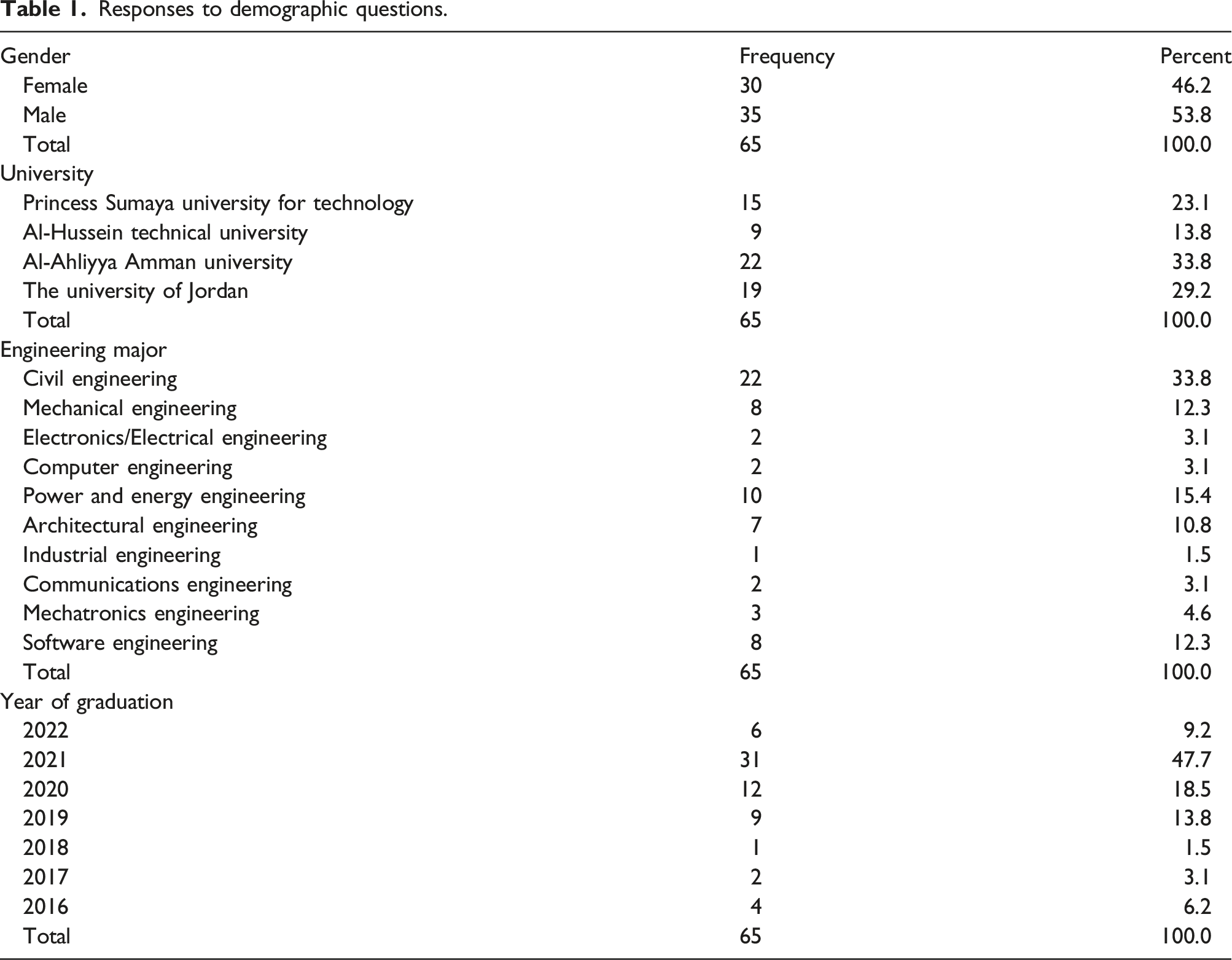
As shown in Table 1, there is no significant difference in the percentage of female and male participants. About one-third of the participants were engineering graduates from Al-Ahliyya Amman University. As for the lowest percentage, it was for Al Hussein Technical University, and the reason is that it has graduated one batch of students so far as a new university. More than a third of the respondents were civil engineers and the remainder were from other engineering disciplines. The majority of engineering graduates (more than 75%) were recent graduates in 2020 and beyond. Therefore, their knowledge, skills and perceptions of entrepreneurship were new.
The distribution of participants according to their employment status.

As shown in Table 2, employment status question is very important to understand if the engineers who are answering the questions have working experiences and are able to answer the questions regarding the relationship between the entrepreneurial knowledge and getting better job opportunities and having wider career prospects. Employed in their engineering major answers represented 44.6% of the study sample, which gives a better indication for the questions regarding engineers having extra skills (marketing, sales, management…) helps engineers get better job offers and positions. Having only 4% as self-employed gives an indication that engineering graduates do not have enough skills and knowledge to be able to start their own businesses, thinking that starting a business needs partners coming from business backgrounds to fill in their gap in business knowledge.
About 67% of the participants enrolled in the entrepreneurship course offered by Jordanian universities as an optional requirement for all students. More than 86% of respondents indicated that this course is not enough to build knowledge on how to be an entrepreneurial engineer. This leads to the conclusion that although engineers obtain some of their knowledge from the courses offered, the courses offered are not sufficient to build a solid foundation of the entrepreneurial knowledge needed to tackle the rapidly emerging engineering industry. About 99% of respondents agreed that having an entrepreneurship course for engineers, as a mandatory requirement for all engineering students would be of greater value.
Participants’ responses to entrepreneurship skills (%).
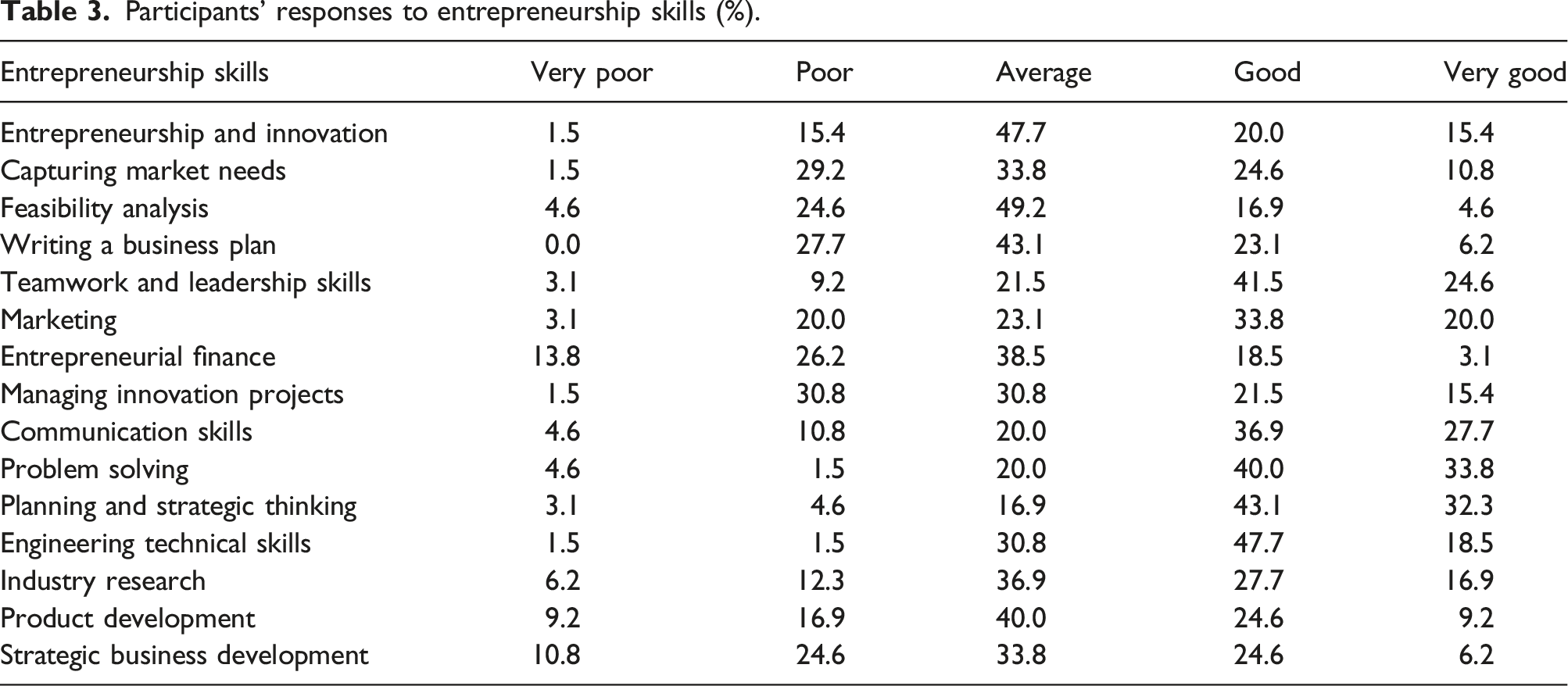
As shown in Table 3, most entrepreneurship knowledge and skills ranged from “poor” to “average” in relevant aspects: identifying market needs, analyzing feasibility, writing a business plan, financing entrepreneurship, and managing innovation projects. While most of them ranged from “average” to “good” for the rest of the relevant aspects.
Descriptive statistics (entrepreneurship skills).
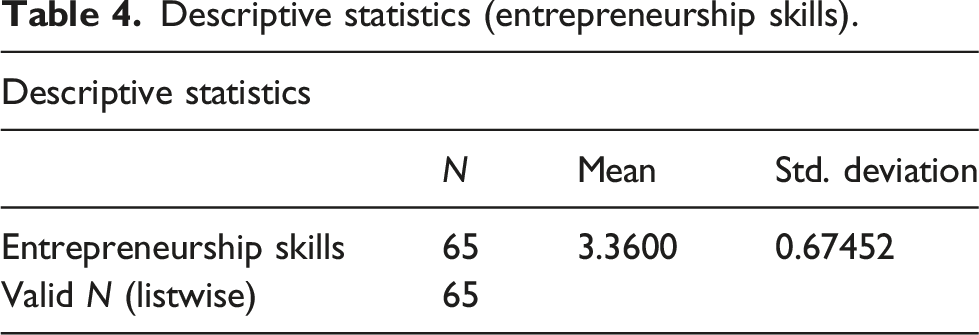
As shown in Table 4, mean of the entrepreneurial knowledge and skills is closer to the “average” point than to the “good” point on the scale.
Outputs of one-sample t test (entrepreneurship skills).
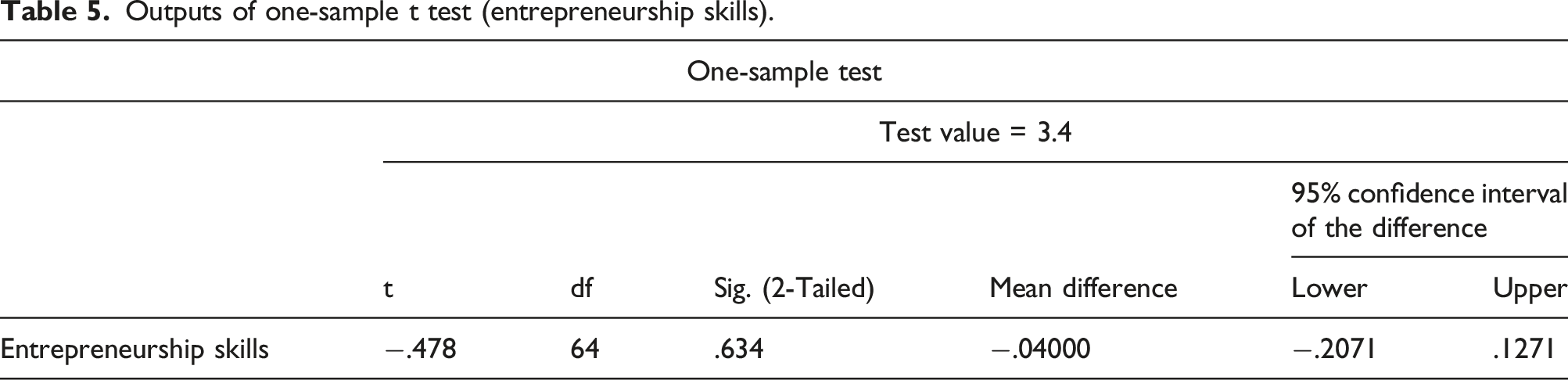
As shown in Table 5, the significance of t value (two-tailed) = 0.634, which is not significant. This indicates that the main of entrepreneurial skills of engineering graduates does not different from the “average” level. Therefore, the first hypothesis is accepted.
Outputs of independent samples t-test.
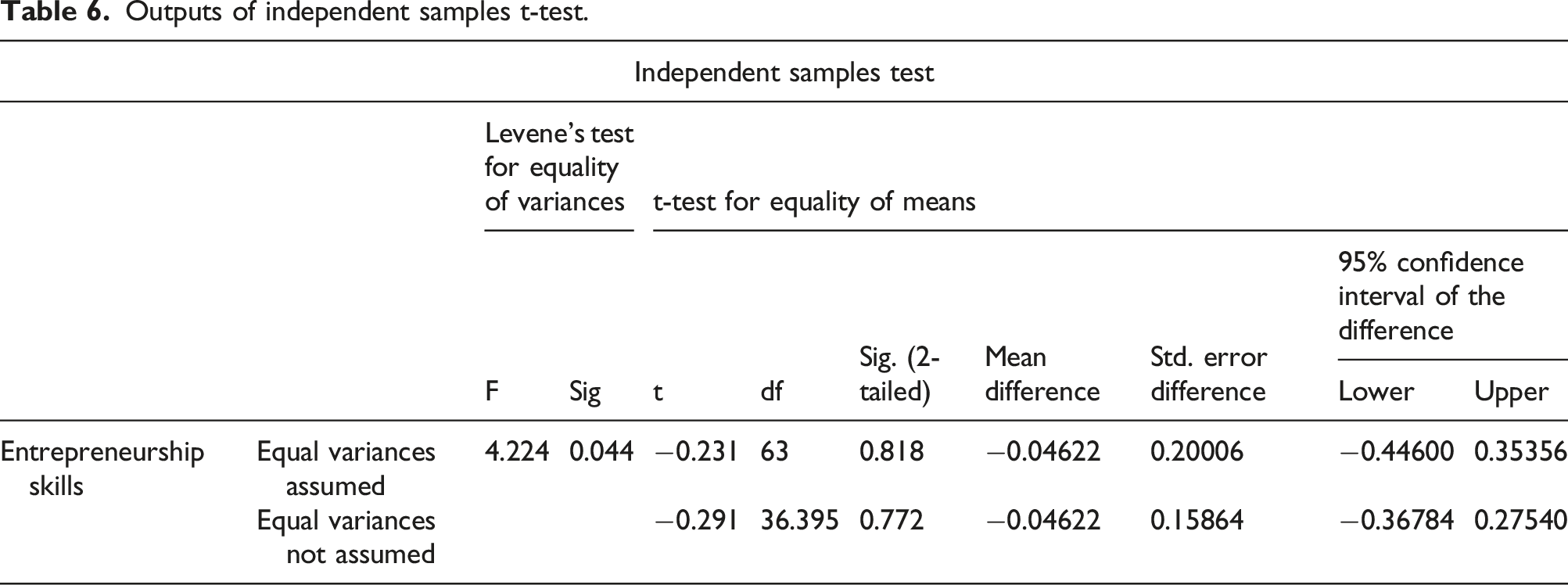
As shown in Table 6, this indicates that there is significant difference in the level of entrepreneurial skills of engineering graduates between Al Hussein Technical University and the other three universities. Therefore, the second hypothesis is accepted. This result is expected and logical, as Al-Hussein Technical University offers the entrepreneurship course as a mandatory course with a practical nature, while other universities offer it as an elective course.
Engineers were asked about their source of entrepreneurial knowledge and skills; they had the ability to choose multiple sources of knowledge. Their responses are shown in Figure 1. Source of Entrepreneurial Knowledge and skills.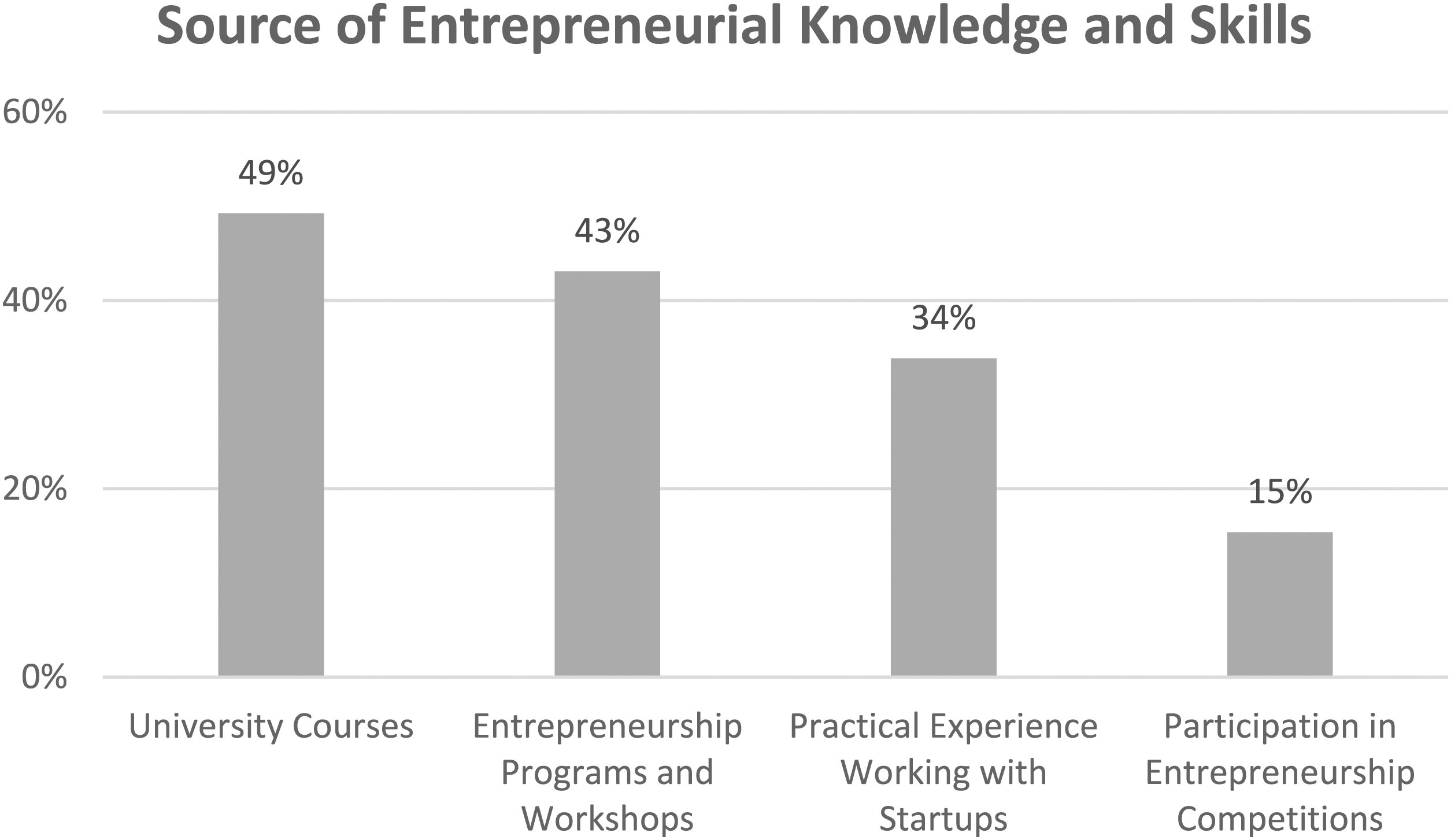
As shown in Figure 1, the main source of entrepreneurial knowledge and skills for engineering graduates is university courses followed by entrepreneurship programs and workshops, then practical experience working with startups and finally participation in entrepreneurship competitions. Having undergraduate courses, as one of the main courses, is a positive indication of the potential that these courses can bring to undergraduate engineering students.
Perceptions of entrepreneurial engineering (%).
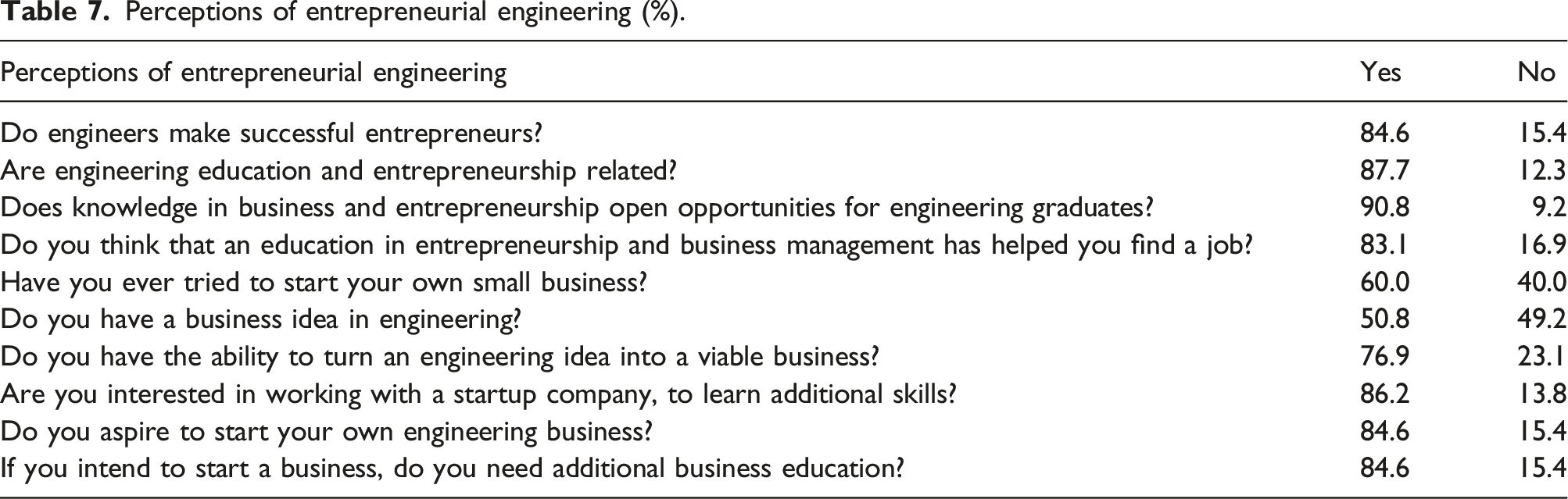
As shown in Table 7, about 50% of them answered “yes” to the question “Do you have a business idea in engineering?”, 60% to the question “Have you ever tried to start your own small business?” and more than 80% for all remaining questions.
Descriptive statistics related to the entrepreneurial engineer mindset.
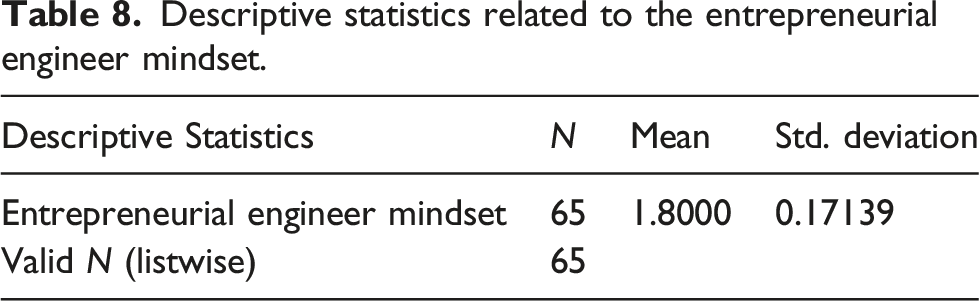
As shown in Table 8, the average of the responses related to the entrepreneurial engineer’s mindset is closer to “yes” than to “no.”
Outputs of one-sample t test (Entrepreneurial Engineer Mindset).
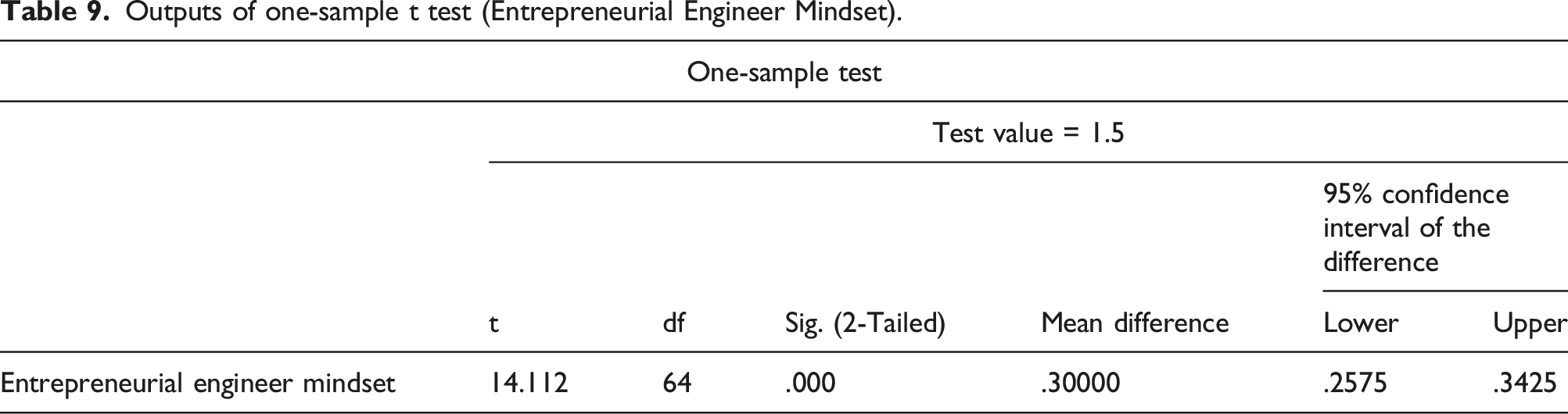
As shown in Table 9, the significance of the t value (2-tailed) = 0.000, which is significant. This indicates that the responses of the engineering graduates reveal the mindset of the entrepreneurial engineer. Therefore, the third hypothesis is accepted.
About 94% of the participants think that having entrepreneurial skills as an addition to your engineering knowledge will broaden their career horizons and opportunities. They also think that engineering graduates with additional skills (management, marketing, sales....) can get better job offers. More than 92% of respondents believe that adding an entrepreneurship course for engineers as a mandatory requirement will help graduates get more career opportunities and broader career prospects.
Regression test results (entrepreneurship skills and entrepreneurial engineer mindset).
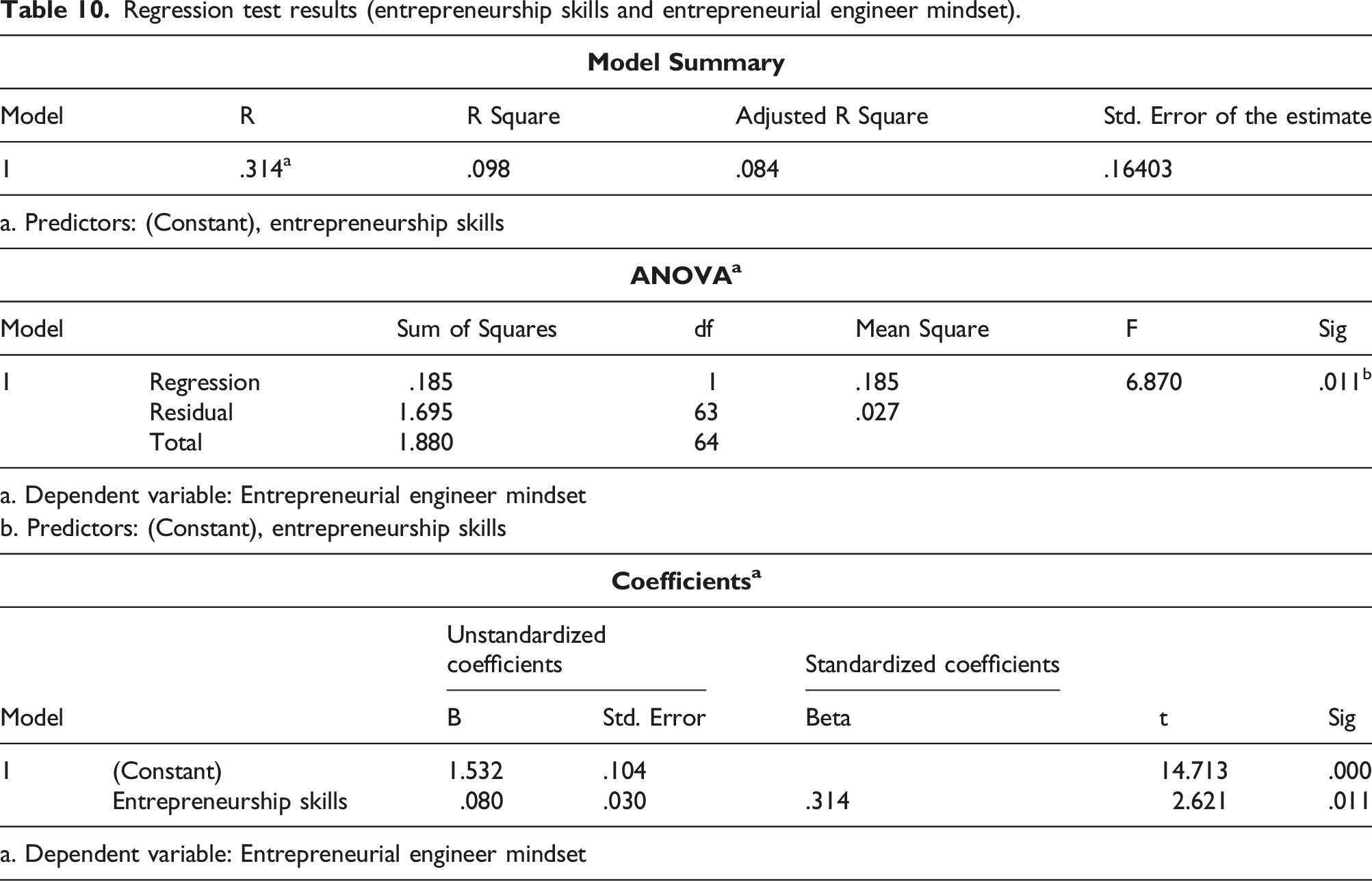
The results of the multiple regression analysis are shown in Table 10 [R = 0.314, R Square = 0.098, adjusted R Square = 0.084, and significance value F = 0.011]. Furthermore, the t significance value for entrepreneurship skills is .011. Therefore, the fourth hypothesis was accepted. This indicates that there is a positive, statistically significant relationship between entrepreneurship skills and entrepreneurial engineer mindset. This confirms that entrepreneurship skills affect the mindset of the entrepreneurial engineer.
Discussion
Based on the findings of this research, 92% of Jordanian universities offer courses related to entrepreneurship. Only 4% offer compulsory and intensive entrepreneurship program for engineering students, while 88% offer elective courses related to entrepreneurship, offered for all undergraduate students. This study gives a positive indicator about the level of the entrepreneurial skills the engineering graduates have. Entrepreneurship skills of engineering graduates are at an average level. Even though the percentage of universities offering the courses is high, engineering graduates have average to good level of entrepreneurial skills. The percentage of engineers who have listed undergraduate courses, as one of their sources of knowledge and skills is 49.2% but 86.2% of engineering graduates mentioned that the courses offered are not enough to build the right entrepreneurial skills needed to keep pace with today’s fast-growing world.
This research sheds light on the relationship between knowledge of entrepreneurship, getting more career opportunities and having broader career prospects. This study leaves us with an important conclusion that engineering graduates need a foundation of entrepreneurial knowledge and skills. Not only does this foundation of knowledge help engineers deal with the ever-growing industry, but it has also been proven through this study that it helps in getting a better job opportunity that expands job horizons and that engineering graduates need the knowledge and skills in entrepreneurship to get broader career prospects, and to get more of employment opportunities. However, engineering curricula in universities do not sufficiently contribute to supporting this need.
The study sample of 65 engineers agreed that having an “engineering entrepreneurship course” would be a positive addition to their undergraduate engineering learning journey. Developing entrepreneurial knowledge, skills, and motivation is considered as the key factor to paving new career paths for engineers. Many researchers focused on identifying the impact of blended programs or engineering curricula reinforced with entrepreneurship education, on graduates and on their future choices and opportunities. The main impact examined was the change in attitude in considering entrepreneurship as a career path. The survey showed how students who did not participate in their undergraduate years in any entrepreneurial courses or programs prefer to work in government jobs or in large companies because they specialize only in their specific engineering field.
The students who participated in the programs and courses were more motivated to start and lead their own business as well as to work in small or medium enterprises where they can learn a lot about different disciplines and roles, making them more knowledgeable and well prepared to lead various innovative engineering projects.
Exposure to such education helps in developing the mindset of creating something new, flexibility and independence when it comes to opening a small business to meet a need in the market (Duval-Couetil et al., 2012). Integrating entrepreneurship education into engineering curricula can contribute to creating a creative learning environment where students learn about business, finance, marketing and many other valuable knowledge. Hence, this helps the students to bridge the gap in business knowledge, which they feel may be their weakness and the reason for their lack of confidence in starting their own business. Several studies have found that psychological attitudes are affected as well. Students after the courses felt enthusiasm for self-realization. It is a psychological expression to describe gaining a better position in society, feeling motivated to be a leader, turning leisure activities and hobbies into useful work, and carrying out innovative ideas (Vij and Ball, 2010).
The results of this research are consistent with the results of previous studies (such as: Beattie (2000); Rodriguez et al. (2015); Elia et al. (2017); Blake Hylton et al. (2020); Shekhar and Huang-Saad (2021); Neumeyer and Santos, 2023)
Recently, entrepreneurship education has gradually begun to develop in Jordanian universities. Elite universities started adding such courses as a potential complement to business education, followed by the rest of the universities, adding entrepreneurship courses as an option in the university's elective requirements. When these adjustments started to take place in the Jordanian universities, it was still unclear whether these programs will increase student’s actual entrepreneurship knowledge and skills, and if it is going to change the economy or the jobs provided by companies for fresh graduates. Some researchers have tried to highlight the fact that the promotion of self-employment should be considered as a potential solution to the unemployment crisis faced by the newly graduated youth in Jordan, which leads to the fact that if the graduates get completed entrepreneurship courses where the business essentials and skills for that are. Establishing an enlightened small project, which may be one of the solutions to solve the unemployment crisis in Jordan.
Adjustments have been made to educational programs in general, with entrepreneurship courses now being added to the list of elective undergraduate requirements. This change is positive but still not enough to encourage engineering students to set up their own businesses and expand their career horizons. There is a significant percentage of students who do not attend such elective courses and some of the students who attends the courses believe they are not enough to build a proper level of knowledge.
Conclusion and recommendations
This research focused on a series of analyses to find out if there is a relationship between providing entrepreneurial education, developing an ‘entrepreneurial engineer mindset,’ and thereby widening engineers job opportunities and career prospects. The conclusion reached by the analysis series is that there is a positive relationship between entrepreneurial knowledge and mindset.
Although engineering graduates have highlighted undergraduate courses as one of their main sources of knowledge, there are some pieces missing for engineers during their undergraduate years in regards to the courses offered. These available classes are incompatible with today’s engineering world’s needs for entrepreneurial knowledge.
Collectively, these findings begin to get an idea of how closely the two fields (entrepreneurship and engineering) are related. This idea is supported by many researchers with previous research conducted globally, and this study comes to support the idea of the relationship between engineering and entrepreneurship to build new and innovative engineering projects in Jordan as well as around the world.
Optimizing existing courses and changing them into mandatory requirements, to get to the point where they form the well-built foundation of entrepreneurial knowledge developing the mindset of the entrepreneurial engineer needed to think freely and outside the box when it comes to the engineer’s career opportunities and prospects. As well as starting contacts and directions with engineering professors about the link between the two fields and the importance of consolidating the concept of entrepreneurship in all engineering courses and topics. As educating future engineers with a solid engineering education and the right entrepreneurial knowledge, it will benefit them and put them ahead of the engineering game today.
Several indicators show that there is a dire need for engineers with skills and knowledge in the field of entrepreneurship because today’s growing environment is full of market competitiveness and business pressure, making innovation and entrepreneurship among the key factors of today’s engineering world.
The study concluded that it is necessary for engineering undergraduates to get the proper entrepreneurial education to be able to correlate it with their engineering major, which results to thinking wider towards their engineering career and future opportunities, as well as being able to compete in today’s innovative and fast emerging engineering industry.
One of the most important theoretical implications of this research is the necessity of enriching academic engineering programs and their curricula with the entrepreneurial dimension as a thought, science, process, and skill, and dedicating a chapter or chapters in their scientific references. Among the practical implications of the research is that entrepreneurship skills are necessary for various sectors, fields, and specializations, whether launching and managing their own projects or launching and managing initiatives and projects in the organizations in which they work. This is expected because the challenges of globalization, openness and competitiveness require providing unique value to customers. Not only entrepreneurship skills, there is also an urgent need for entrepreneurship thought and logic.
Finally, proposing a general framework for engineering curricula in Jordanian universities, which provides a new and practically useful approach to how to develop engineering curricula when combined with the concept of entrepreneurship and the mindset of the entrepreneurial engineer.
Footnotes
Declaration of conflicting interests
The authors declared no potential conflicts of interest with respect to the research, authorship, and/or publication of this article.
Funding
The authors declared no financial support for the research, authorship, and/or publication of this article.
