







Abstract
This study examines the nature of University-Industry collaborations (UI collaboration) in the United Arab Emirates (UAE) and proposes policy recommendations to enhance the collaboration process. Despite the importance of UI collaborations for nations to improve education, foster economic growth, and innovation, there is limited research on UI collaboration development and management in the UAE and Gulf Cooperation Council (GCC) countries. The study uses qualitative research methods to explore the perspectives and experiences of university faculty and industry practitioners involved in UI collaborations. The findings identify drivers of effective collaborations, such as institutional policies, funding opportunities, and research interests, as well as barriers including organizational culture, limited development of collaboration culture, and trust issues. To improve outcomes, institutions must change mindsets, seek partnerships, and prioritise relationship-building based on trust and the exchange of ideas.
Keywords
Introduction
Establishing a University-Industry (UI) collaboration is an important strategy for nations (Awasthy et al., 2020). Such collaborations create a more skilled workforce and develop a knowledge-based society (Nawaz and Koç, 2020). There are major challenges in society, and universities and industries can combine their technical skills, knowledge, and resources to innovate and address those challenges (D’Este and Perkmann, 2011). However, these two entities tend to have diverse interests. The academic culture encourages openness; researchers are motivated to share and publish findings. In contrast, corporate culture is more guarded; they need to monetize their innovations (D’Este and Patel, 2007). These opposing interests often create difficulty in developing the synergy needed for constructive collaboration between industry and academia. Nevertheless, governments worldwide recognize the importance of catalyzing these relationships (Perkmann and Walsh, 2007).
Likewise, the United Arab Emirates (UAE) is focused on developing University Industry (UI) collaborations. Under the National Innovation Strategy Framework in the UAE, education is one of its priorities (UAE national innovation strategy, UAE Ministry of economy, 2015). This framework seeks to enhance education working with and alongside the industry, as reflected by two priorities of the “UAE 2030 Agenda for Sustainable Development”: 1. Competitive Knowledge Economy Driven by Innovation, and 2. First Rate Education system (UAE National Committee on SDGs, 2023). Furthermore, the National Agenda aims to transition the UAE to a knowledge-based economy by promoting innovation and research and development, strengthening the regulatory framework for key sectors, and encouraging the development of high-value-adding industry sectors. Achieving these priorities necessitates the pursuit of UI collaboration.
An additional justification for UI collaborations stems from UAE’s Vision 2021 National Agenda, which emphasises the development of a first-rate education system and begins by recommending a complete transformation of the current education system and teaching methods. This too requires the interrelation of Universities, Industry, and Government (UIG) (UAE National Committee on SDGs, 2023).
A review of the literature reveals that limited research related to UI collaboration development and management in the UAE exists. There are opportunities to bring such collaboration to a world-class level, as it happens in Europe, the USA, or Japan (Stern et al., 2017). This research explores the nature of UI collaborations from the perspective of faculty and industry practitioners. Using a qualitative approach, the researchers interviewed participants within the emirate of Abu Dhabi who previously engaged in UI partnerships. The research objectives are to: • analyse the status of UI collaboration within the UAE. • investigate common barriers and drivers to effective UI collaboration. • propose policy recommendations to enhance UI collaboration.
Literature review
Collaboration between industry and universities is vital to knowledge exchange and economic growth, and it is considered an important driver of entrepreneurship and innovation (Bercovitz and Feldman, 2006). This relationship becomes more diverse in nature where information, knowledge and other resources are exchanged or created across universities and industry (Perkmann and Walsh, 2007).
To fully understand the status of UI collaborations in UAE, it is important to also examine UI collaborations in other countries. Through reviewing research conducted in the UAE and GCC (Gulf Cooperation Council), it is noted that much of the research focuses on evaluating the missing links in these relationships (Singh, 2023), compared to Europe and US where such relationships are more formal and articulated in combined projects and associations which is long well documented (Hall et al., 2001). Even with the advanced level of collaboration in the west compared to the GCC region, some researchers have tried to identify frameworks and models not only to improve and sustain collaboration but also to guide the collaboration (Awasthy et al., 2020).
There are limited research documenting UI collaborations in the UAE and GCC, as these countries have emerged economically and socially in the last two decades; nevertheless, it is evident that these countries are making rapid progress and actively working towards achieving significant milestones in various areas, with a particular emphasis on innovation. For example, the UAE government’s Vision 2021 aims towards innovative Emiratis building a competitive economy (UAE The United Arab Emirates, 2024). Currently, according to the Organisation for Economic Co-operation and Development (OECD), UI collaboration rankings on innovation, developed countries such as Finland, Sweden, Germany, Korea, and Japan have the most UI collaboration projects on innovation (Dawson, 2017), while the UAE and other GCC countries are way below in the ranking. Hence, there is a need for UI collaborations to reach the goals set in Vision (2021) and other GCC national innovation agendas. In addition, UI collaborations are pivotal to reinforcing research efforts to achieve economic development (Stern et al., 2017).
Overview of the barriers
The investigation of common barriers that hinder UI collaboration and how UI participants perceive these barriers has been the focus of many studies. Researchers have attempted to identify different types of barriers to UI collaborations. Some researchers (Bruneel, d’Este and Salter, 2010; Muscio and Vallanti, 2014; Azmana et al., 2018) have categorised their findings as orientation barriers related to the internal structure and norms within the organisation and transactional barriers. Nsanzumuhire and Groot (2020) expanded upon this research by adding additional categories including incentives, competency, governance related and contextual barriers. These studies collectively contribute to a comprehensive understanding of the challenges faced during UI collaboration and offer insights for developing effective strategies to overcome these barriers.
Many researchers have identified differences in organisational cultures between universities and industry as one of the most common barriers. This barrier arises from the contrasting objectives of universities - driven by academic accomplishment and recognition - and firms which prioritise commercialisation and profits (Bradley et al., 2013). Bruneel, d’Este and Salter (2010), Muscio and Vallanti (2014) and Bradley et al. (2013) identified differences in incentives and goals as barriers. These barriers have been described as “misalignment barriers” by Nsanzumuhire and Groot (2020). Bradley et al. (2013) added inadequate incentives to encourage researchers as a barrier. They also highlight that universities have “long term orientation” in conducting research contrary to industry who has “short term” in addition to the ignorance of expectation and norms.
Similar barriers can be found in UAE and GCC including the differences in goals between universities which are more academically focused and industry, which focuses on financial prosperity (Alshehri. et al., 2016), and the lack of incentives to initiate collaboration, (Singh, 2023; Stern et al., 2017), especially with the private sector (Alshehri. et al., 2016).
All these barriers affect knowledge transfer if not managed properly (Ankrah and Al-Tabbaa, 2015). On the other hand, researchers agreed that these differences can be lowered by cross-sector researcher mobility, joint projects, and firms adopting universities’ norms (Bjerregaard, 2010). A well-established relationship can also help in reaching mutual goals and lowering these barriers through building more trust (Muscio and Vallanti, 2014).
Regarding transactional barriers, they are related to knowledge transfer and management of collaboration, including conflicts over IP Intellectual property (Azmana et al., 2018; Muscio and Vallanti, 2014). Bradley et al. (2013) identified inflexible administrative procedures in universities and underperforming technology transfer offices (TTO’s) that oversee collaboration as hinderances. They believed that if these offices and staff can perform competently, universities’ performance would be elevated. Additionally, networking issues arise in the absence of collaboration facilitators or official agreements, as highlighted by Muscio and Vallanti (2014) and Lopes and Lussuamo (2021).
Lack of trust is widely recognised as a major barrier to UI collaboration, as noted by Lopes and Lussuamo (2021) and Bruneel et al., (2010). These studies suggest that trust can serve as an instrument to lower barriers, particularly transactional barriers. In the case of the UAE Singh (2023) agrees on both trust and governance as factors that can hinder collaborations along with the issue of incompetent liaison staff. Their inexperience with industry affects UI collaborations and the employability of students in the industry. Singh (2023) also identified the innovation gaps and lack of financial resources in universities. According to Alrajhi and Aydin (2019), many researchers face a lack of time for research due to their overwhelming instructional schedule.
Overview of the drivers
Much research has been conducted to study UI collaboration, either to identify factors of success or determine the drivers for achieving it. Some studies have discussed the role of universities in this effort through their programs, or dedicated units they built to encourage collaboration such as technology transfer offices and science parks (Marhl and Pausits, 2013). Universities and researchers view UI collaboration as way to acquire funding and equipment to conduct research (Muscio and Vallanti, 2014; D’Este and Perkmann, 2011). UI collaborations benefit both universities and industry as such exposure supports learning, transfer knowledge and future employment (D’Este and Perkmann, 2011; Vrie et al., 2019). Such expectations are also evident in GCC where collaboration is focused on learning (Chryssou, 2020). Furthermore, Singh (2023) finds that for universities to fulfill their role in finding employment for students, they should seek collaboration with industry.
D’esta’s & Perkmann (2011) surveyed UK universities and found that collaboration is initiated using different channels such as consultancy & contract research, joint research, or post graduate training. Ankrah and Al Tabbaa (2015) identified operational activities that accrue in UI collaborations, which includes “(1) Meetings & Networking; (2) Communication;(3) Training; (4) Personnel Mobility; and (5) Employment”. In the context of the GCC, workshops, seminars and professional development courses are offered to facilitate collaboration (Chryssou, 2020), and according to Alsherhri et al. (2016), collaborative relationships in the GCC are often built through collaborative visits and student internships. Chryssou (2020) found that in these engagements are mostly initiated by faculty through their personal contacts. On the other hand, some researchers find that firms perceive too many channels to cause transactional barriers due to its complicity in management and follow up (Bruneela, D’Esteb and Salter, 2010).
To enhance UI collaborations, many researchers have identified establishing better communications be an important factor in lowering cultural differences (Azmana et al., 2018) and setting the groundwork for trust (Awasthy et al., 2020). Trust is one of the main factors in establishing and maintaining UI collaboration and that can be developed through maintaining regular meetings (Muscio and Vallanti, 2014; Ciasullo, 2021). As noted in UAE research studies, governance is a key factor to enhance UI collaboration (Singh, 2023).
Some researchers analysed best practices to establish frameworks that can be followed to enhance UI collaboration. Awasthy et al. (2020) developed a framework similar to the findings of Ankrah & Al-Tabbaa (2015). Rybnicek (2018) proposed a conceptual model emphasizing the importance of identifying mutual goals and benefits, sharing results, and agreeing on IP from both sides. In addition, Philbin’s (2008) process model argues that individual or collaborative agents involved must possess characteristics such as effective communication skills, building mutual trust, possessing a collaborative mindset, establishing a shared vision and objectives, and handling conflicts and disagreements among other qualities that strengthen relationships and ensure proper policy setting. Strong reward systems have also been identified as a factor for university researchers in GCC (Alrajhi and Aydin, 2019). Alshehri. et al., (2016) and Singh (2023) suggested that policy makers in UAE and other GCCs need to implement strategic initiatives and policies to encourage collaboration and entrepreneurship activates. On the other hand, universities’ administrations also need to facilitate more UI related services specialty liaison offices that will enhance this collaboration (Stern et al., 2017).
Research design and methodology
This study is exploratory in nature and employs a qualitative design approach. The researchers gathered data using semi-structured in-depth interviews. Qualitative research method is an appropriate choice for this study, as it allows researchers to interact with participants and gain a comprehensive overview of the topics explored directly from the participants (Ary et al., 2010). As Creswell (2015) explains, qualitative research provides participants an opportunity to express their views and experiences freely with the researcher.
Instrument, data collection, and analysis
The researchers designed interview protocols for three categories of participants: university administrators, faculty, and industry representatives. Each protocol contained 13 to 14 open-ended questions, which the researchers derived from an analysis of secondary data. Initial questions focused on the nature of the participant’s job and responsibilities for demographic insights. The main questions served to gather details about the participants’ experiences with UI collaboration including motivations, enablers, challenges, and outcomes associated with each experience. Final questions allowed participants to reflect on their experiences and express lessons learned along with key recommendations to improve UI collaborations. Each question aimed to draw out participants’ reflections and conclusions regarding their UI collaboration experiences. The researchers in turn were able to gather direct details from each participant’s viewpoint and follow-up with probing questions as needed. The interviews were conducted either face to face or via Zoom, depending on the interviewee’s preferences. Each interview lasted 30 to 60 min and was recorded.
Data analysis involved several steps. First, each recording was transcribed. Next, the research team analysed transcriptions and notes using qualitative analysis techniques. Specifically, the team conducted thematic analysis of all data to identify recurring patterns and themes that emerged from the interviews.
Participants
A total of 11 interviews were conducted with representatives from higher education (n = 9) and industry (n = 2). The academic participants are based across two federal Higher Education Institutes (HEIs). One HEI is a research Institution (RI) while the other is a teaching institution (TI). Six participants are faculty from various disciples with UI collaboration experiences, and the remaining three academics occupy administrative roles as described: • Dean, Faculty Affairs & Applied Research (for TI): Responsible for development of applied research and scholarly activities, administering funded research, and faculty development. • Director, Research Services (for RI): Responsible for managing funded research grants and contracts, developing policies and systems to support grant activities. • Director, Employability & Industry Engagement (for TI): Oversees industry partnerships & collaborations and facilitates students’ career opportunities through employment, sponsorships, or work placement.
Participants interviewed.
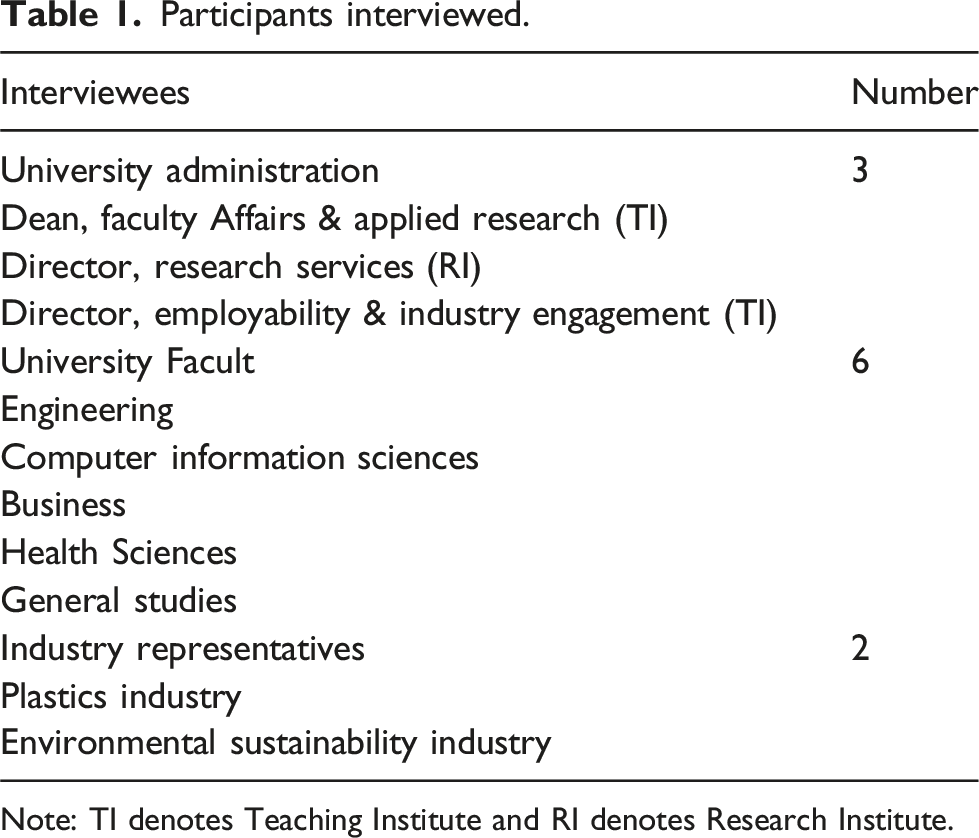
Note: TI denotes Teaching Institute and RI denotes Research Institute.
Findings
This study explores the status of UI collaborations in the UAE. An analysis of the data gathered from 11 interviews resulted in several themes, which are labeled as: sources of initiation, types of collaborations, maturity of collaborations, drivers for collaborations and barriers.
Sources of initiation
Personal networks play a significant role in facilitating collaboration between universities and industries in the UAE. Most of the academic participants reported having established relationships with businesses through personal contacts. Additionally, prior experience collaborating with industries through research institutes or PhD projects was found to be important in facilitating collaboration.
The study also found that meeting academic program requirements, specifically students’ internships, was a major motivation for universities to establish relationships with industries. The university administrative participants emphasised the importance of understanding the industry’s needs to prepare graduates with the necessary skills, knowledge, and personality traits for future jobs. Establishing internships for students sometimes resulted in further collaborations as one interviewee stated: “I actually started in the beginning of the collaborations (working with) industry to accommodate our students to find a place in the companies”. (University Faculty member)
The findings also indicated that supporting the UAE in its development as per the national strategy is found to be a key motivation for the industry in the UAE to establish relationship. Participants from research focused universities indicated that the national strategy is used as a filter to identify the needs of the UAE and government funding and performance expectations are used to support universities in their research and development efforts. Therefore, UI collaboration is part of their (Key Performance Indicators (KPIs) and the core business.
Type of collaborations
Student internships and projects were the most reported types of collaboration reported. This finding aligns with previous research in the region (Alshehri. et al., 2016) and suggests that internships and other forms of experiential learning can enhance students' employability and career readiness. Additionally, some participants reported establishing collaborations to enhance students' learning experience through industry speakers and applied research projects. Similarly, administrator participants confirmed collaboration with industry in various forms such as applied research, work placement, curriculum development, and adjunct lecturers from industry.
Participants also identified training and awareness events as another type of collaboration established between universities and industries in the UAE. This type of collaboration is aimed at enhancing the knowledge and skills of students and faculty in specific industries and domains, which in turn can help bridge the gap between industry needs and university offerings.
Maturity of UI collaborations in UAE
Based on the interview data, it is apparent that UI collaborations in the UAE are still at an early stage of development. Even though there have been some notable successes especially related to students’ training and employability, the overall maturity of these collaborations, particularly in research, is still in its infancy stage and evolving, compared to the west. This thought is reflected in the comments of one participant: “(In) the west, there is more maturity in the relationships (between universities and industries) and better understanding in the collaboration of ideas, but still there is also difficult to align the goals between the two” (University Director of Research Services)
Interviewees’ responses also indicate that industry or local entities involved in UI collaborations in the UAE are generally following their Key Performance Indicators (KPIs), as well as national sustainability development goals, including the United Nations' Sustainable Development Goals (SDGs). While there have been some commendable initiatives and successful partnerships, there is still a long way to go to achieve the desired level of maturity in the UI collaboration landscape in the UAE. Nonetheless, the emergence of collaboration that focuses on industry research highlights the potential for further growth and development in this area, signaling a positive step towards establishing more advanced and fruitful collaborations. The comment of one participant echoes this progression: “It (the collaboration) started with work placement, then we have now student projects (with industry)” (University Faculty member)
Common drivers and barriers
The themes of drivers and barriers were further categorised into subthemes: Drivers are defined as organisational and individual. Barriers are identified as organisational culture and inadequate culture of UI collaboration.
Organisational drivers
The findings from interviews underscore the pivotal role of institutional policies and programs in fostering effective UI collaborations in the UAE. These findings shed light on several key drivers, including the establishment of dedicated collaboration units within educational institutions. Additionally, the promotion of industry engagement through internships or apprenticeships has been identified as crucial. Incentives, such as a time, monetary resources, and promotions for faculty research have also emerged as significant contributors.
Furthermore, hosting industry events to strengthen ties with relevant sectors has been recognised as an effective strategy. Another important aspect is the promotion of collaborative research projects, which have proven instrumental in facilitating UI collaboration. The feedback from participants also emphasised the value of having an Industry Advisory Committee to provide guidance on curriculum development and ensure alignment with industry advancements. “Providing 40% of the faculty’s time for research is essential for the institution’s quality of research, Part of the performance evaluation of faculty is related to how they do with external research programs and their impact with research and to achieve this, faculty needs time”. (University Director of Research Services)
During the interviews, various Key Performance Indicators (KPIs) for assessing UI collaboration were identified as significant factors driving the field. Interviewees specifically highlighted several key KPIs, including the level of funding received from industry sources, the extent of student participation in internships, the frequency of hosting industry events, and the degree of involvement in research activities. These KPIs serve as concrete metrics for evaluating collaboration.
The interviewees emphasised the importance of assessing the success of university-industry engagement. Doing so not only enables the evaluation of impactful partnerships but also helps meet industry demands. “Currently 4 colleagues are involved in UI collaboration projects. This number is not very high, but with the amount of teaching and administration work we have, it is difficult to engage in UI collaboration. There are KPIs for research for faculty (from lecturer to associate professors) but no time to do the needful for research”. (University Faculty member)
The interviewees shared insights regarding their access to internal and external grant opportunities. Universities, industries, and government agencies have strategically incorporated grant funding into their overall approach, aiming to promote collaborative projects. It was noted that many grants necessitate partnerships with industry.
Faculty from both the research institution and teaching institution provided details on the presence of internal grants on their campuses provided through their respective research offices. Both types of institutions also encourage faculty to pursue external grants, although the quantity, diversity, and weight of such opportunities are greater at research institutions. “We have partnerships with leading Abu Dhabi corporations, we do many other collaborations. It is a 3rd of our revenue (external grants and contracts). We have internal funds, some from government, some from semi-government and some from industry”. (University Director of Research Services)
The interviews revealed that UAEs strategic agendas play a significant role in driving UI collaborations. Universities in the UAE align their policies with elements of the country’s strategic agenda, which in turn fosters UI collaborations. For instance, academic institutions prioritise research projects that contribute to the strategic agenda, while industry-focused Corporate Social Responsibility (CSR) initiatives are aimed at promoting collaboration.
Moreover, opportunities for research projects and grants have been specifically designed to align with the priorities of the UAE’s agenda. These priorities include economic diversification, innovation and entrepreneurship, education and workforce development, and infrastructure development. By aligning research initiatives and funding opportunities with these strategic priorities, the UAE aims to drive progress and success in these crucial areas. “If we want to be a world class university, we need to be research oriented. We focus on research in the interest of the UAE to support the UAE in development as per the national agenda”. (University Director of Research Services)
Universities benefit from UI collaborations by gaining practical insights from industry partners. This knowledge exchange enriches academic programs and research initiatives, ensuring they remain relevant and aligned with industry needs. Additionally, collaborations with industry open doors for funding opportunities, further enhancing the capacity for knowledge application and real-world impact. One interviewee from a reputable organisation aptly expressed the value of UI collaboration by stating: “This company is interested in encouraging UI collaboration in the engineering field and in Oil and gas related research. We need scientists to run the fields, factories and plants. Mainly for our company chemical engineering”.
The interview results underscored two additional drivers which are categorised as individual drivers. These individual drivers include faculties’ strong personal interest in UI collaborations and their personal relationships with industry professionals. As reported by participants, many of them persisted in UI collaborations despite obstacles because of their personal interests in developing research and connecting with industry. Others were able to pursue collaborations due to their existing relationships with industry, which often emanated from prior projects or interactions. As expressed by participants, existing contacts within the industry and shared research interests can facilitate UI collaboration.
An example highlighted during the interview showcased faculty members collaborating with a local company on recycling process improvement. This collaboration resulted in various opportunities, including capstone projects, field trips, recycling process improvements, awareness campaigns, and research on waste regulation, management, and innovation. It also opened doors for collaboration with other government organisations on related research.
The success of this collaboration stemmed from the faculty members' personal interest in sustainability research and their proactive efforts to build industry relationships. Their genuine passion for sustainability served as the driving force for collaboration engagement. By leveraging their personal interests, the faculty members were able to establish relations with industry partners for collaboration.
Organisational culture as barrier
The findings from the interviews revealed several key factors that hinder effective UI collaboration. The most frequently mentioned barrier was the high workload faced by faculty, particularly in teaching institutions. Participants stressed the limited time available to engage with relevant industries and fulfill additional responsibilities associated with applied research. This time constraint significantly hampers their participation in UI collaborations.
Another significant issue raised by participants was the perceived lack of rewards and incentives for their UI collaboration efforts. Faculty expressed frustration over the minimal impact of their collaborative endeavors on their annual appraisals and career advancement: “No management support, no time for faculty to work on the project, no sufficient funds and not reliable team members”. (A participant reflecting on unsuccessful collaboration experiences).
“Reduce Bureaucracy, streamline the processes, incentive for participants (Faculty, students, staff, etc.), time reduction or remuneration or vouchers”. (A participant’s recommendations to improve UI collaborations)
“It's important to note that collaborative research projects may not always yield immediate or tangible outcomes or impact, which can pose challenges when it comes to recognising and adequately rewarding the contributions of researchers and collaborators. Nevertheless, it is crucial to reward the work of the researchers and their contribution to learning and knowledge.”
As indicated in the previous comments, respondents shared challenges related to unclear policies and inflexible bureaucratic procedures within educational institutions. These challenges were observed in areas such as contracts, purchasing processes, and handling external donations. The lack of clarity in these aspects resulted in prolonged decision-making processes, with some cases remaining unresolved for extended periods, ranging from months to even years. This inefficiency in policy implementation had a detrimental effect on the relationship between faculty members and industry collaborators.
Furthermore, industry interviewees highlighted that unclear policies could expose their organisations to increased legal liability. Ambiguous policies may be difficult to defend in court should a lawsuit be filed, thereby posing potential risks to the industry partners involved.
Additionally, several responses emphasised the lack of long-term commitment from students, particularly within teaching institutions, towards research projects. Students struggle to balance the demands of courses with the requirements of research projects. Some students fail to fully grasp the significance of UI collaboration projects, leading to incomplete and substandard work.
Inadequate culture of UI collaboration as a barrier
Trust in the outcome and management of resources are issues indicated by both parties (Industry and University). The culture of UI collaboration in the UAE is just starting, and only a few academic institutions have developed long-term relationships with industries. Some challenges cited include: 1) difficult logistics, 2) unfeasible expectations, and 3) challenging deadlines. “ Industry is not used to working with university. Industry is looking for specific solutions. Often it is difficult to find common interests. Especially here, where industries are not very mature. Industry looks at the University as suppliers. Finding common ground is a challenge. Sometimes it takes a long time to get things started.” (University Faculty)
When there is a lack of aligned interests and expectations for university and industry collaboration, misunderstandings between the university and industry partners can lead to disagreements, delays, and ultimately the failure of the collaboration, which can damage the reputation of both parties. This can negatively affect future collaborations and relationships with other partners. As per an industry representative, collaboration between UI cannot be successful: “If the goals of the project are not aligned with the specific objectives or strategy of the organisation.
Another industry representative provided some recommendations to improve UI collaboration. “Sometimes university needs the industry more than the industry needs the university so the University should accustom the way of working of the industry. To have mutual benefits without affecting the industry business”.
Limitations and recommendations for future research
While this study contributes to the existing literature on UI collaborations in the UAE, the researchers must acknowledge several limitations. This study uses a qualitative approach which allowed participants to share their insights on the topics explored in depth. However, the 11 participants were in one emirate, and most were academics from two federal institutions. Future research should include a larger sample size across the UAE, a higher number of industry professionals, and participants from private institutions. Quantitative research can also be explored to validate the results of this study. Despite the limitations mentioned, this study provides a notable foundation of exploration on the topic of UI collaboration in the UAE.
Discussion
This study examined three key objectives, and findings provide valuable insights into factors that influence the success of university-industry collaboration in the UAE. The first objective, which revolves around the status of UI collaborations in the UAE reveals several key considerations. Many of the reported collaborations have stemmed from student internships and work placement experiences in industry, which typifies the GCC (Alshehri et al., 2016). However, there is a growing trend of research-related collaborations. This is especially true of research intensive HEIs. However, even within a teaching institution, faculty are expected to engage in research projects with industry, as outlined in the institutional KPIs.
Several academics interviewed mentioned opportunities for research funding on their campuses that stipulate collaboration with industry. Still, faculty initiates most collaborations. Overall, these considerations highlight continuous efforts to implement UI collaborations in the region, but additional efforts are needed. As noted by several participants, the practice of UI collaborations is still in its infancy compared to Western nations. Institutions must continue to engage in UI collaborations to further develop the culture for such collaborations.
A second objective of this study investigated common drivers and barriers to effective collaborations between universities and industries. Many of the findings coincide with those of earlier studies. Some drivers stem from the organisation, which are institutional policies, programs, and strategic agenda items. Specific examples include KPIs, funding opportunities, and initiatives related to industries’ CSR practices and government strategies like UAE Vision 2030. An additional category of drivers is labeled individual drivers, which stems from strong research interest of faculty and their willingness to connect with professionals for UI collaborations. Each of these drivers plays a critical role in motivating all levels of participants to enter collaborative activities. Strong personal interests in research opportunities coupled with institutional requirements and support motivates academics. Industry, however, may envision UI collaborations as an opportunity to meet CSR goals and achieve other business objectives. While policy makers should continue to implement these drivers, they must also consider some persistent barriers.
The most significant barriers to successful collaborations arise from two core issues 1) organisational culture (largely within academic organisations), and 2) the limited development of UI collaboration culture in the UAE. The first issue – organisation culture – suggests the need for clearer policies and procedures to support faculty in pursuing UI collaborations. Although respondents noted the presence of opportunities and requirements to engage in such collaborations, many explained that their progress was often inhibited by normal workload responsibilities and bureaucratic procedures. Several faculties also noted problems with securing long-term commitment from student researchers.
Regarding the limited development of UI collaboration as a culture in the UAE, both academic institutions and industry are relatively new to the concept of such collaborations as compared to other nations. Therefore, several issues have been identified that can primarily be addressed as time passes and more successful UI collaborations are documented. The issues at hand include industry’s confidence in academic research, alignment of research interests between all parties, and trust within academia between faculty and administrators. These issues, particularly trust, can only be resolved through repeated collaborations and the continual development of effective partnerships between industry and academia. Both parties must see the other as a full partner, and not simply a vendor or client. Effective partnerships require clear communication and commitment.
Recommendations
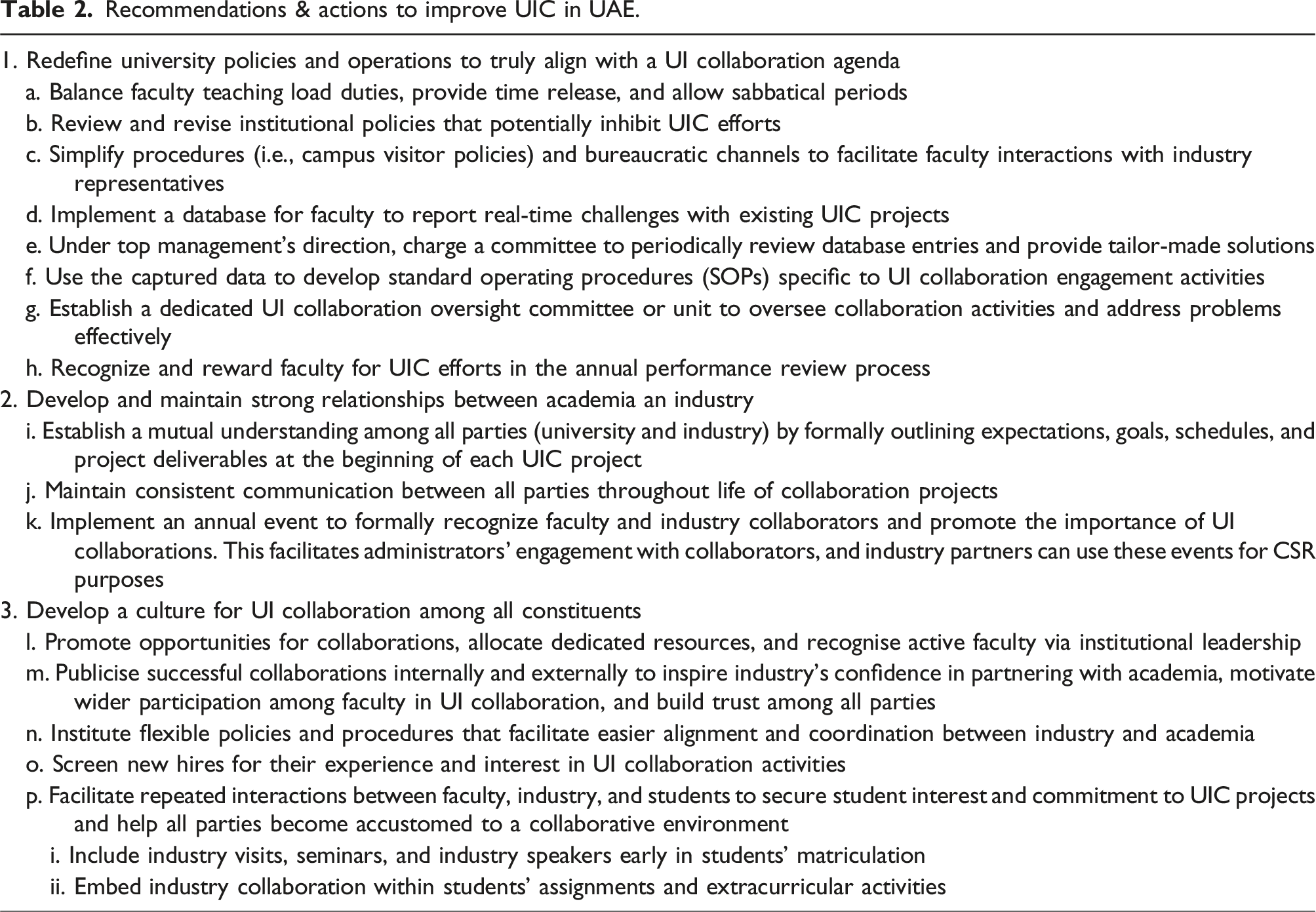
Recommendations & actions to improve UIC in UAE.
University operations must redefine policies and operations to truly align with a UI collaboration agenda
The ongoing development and success of UI collaborations, to a large degree, depends on the interest and willingness of faculty to undertake such projects. These elements, in turn, are heavily dependent on the support faculty receive from their respective institutions. Given the comments of participants, institutions must enhance current resources to facilitate faculties’ continued engagement and participation with UI collaborations. Namely, they must balance the workload duties, provide time release, and simplify the process for faculty to interact with industry by removing traditionally restrictive policies. As some participants reported, current processes make it difficult to arrange visits with industry partners due to time constraints and longstanding security requirements. In the matter of time release, some institutions must decrease the current teaching load requirements, as well as make it easier for faculty to take sabbaticals in the interest of UI collaborations. Providing faculty with a more flexible work arrangement and reduced workload will not only enable an environment that fosters UI collaborations, but these changes will enhance the quality of teaching in the classroom. It is logical to conclude that as faculty interact more with industry partners and contribute to research, they will have greater enthusiasm and knowledge for the classroom.
To understand the problems faculty encounter with UI collaborations, institutions should implement a database for faculty to report problems and challenges. This database will allow administrators to capture problems in real-time. To gain further insight from both faculty and industry directly, administrators should conduct evaluation interviews at various stages of UI collaboration projects. Top management should charge a committee to periodically review complaints and provide tailor-made solutions. An added benefit of these data collection mechanisms is that outcomes can be used to develop standard operating procedures (SOPs) specific to UI collaboration engagement activities.
Establishing SOPS will provide clear guidelines necessary to enhance leadership’s ability to effectively manage resources, particularly the time respondents noted was often loss during projects in pursuit of answers to unclear policies. Furthermore, the frustration of collaborators will be reduced, as project initiatives can be achieved closer to schedule.
Streamlining organisational processes is also critical, as some participants commented that several of their problems stemmed from bureaucratic issues and inflexible policies that sometimes conflict with the aims of a UI collaboration agenda. It is suggested that administrators analyse the existing policies of various internal units that affect collaboration activities and adjust such policies as needed to remove potential inhibitors. Both ambiguous and severely detailed policies must be reviewed to mitigate potential legal and ethical risks for industry and alleviate intellectual property concerns for both parties. Establishment of a dedicated UI collaboration oversight committee or unit may be necessary for some institutions to oversee collaboration activities effectively.
In addition, some participants felt that their superiors did not fully recognise their UI collaboration efforts. This was especially true of participants based at a teaching institution. Therefore, administrators should review their UI related KPIs and ensure that such efforts are adequately recognised in the annual performance review process in practice – not just on paper. Faculty must see evidence that their institutions value the extra time and effort they commit to UI collaboration. One line of evidence would be clearly communicated measures of performance for UI activities outlined in the annual review process and promotion guidelines.
Academia and industry must develop and maintain strong relationships
Successful UI collaborations thrive on consistent clear communication and strong personal ties between faculty and industry. Several participants intimated the importance of developing clear objectives for both parties coupled with clear outlines for the collaboration process. This finding is consistent with the research of Singh (2023) and Alrajhi and Aydin (2019), which noted that clear understanding of expectations and benefits is crucial for building successful university-industry collaborations. At the beginning of each UIC project, all participants must formalise expectations, goals, and schedules to establish a mutual understanding of project outcomes. This step is critical, as academia and industry often operate on different timeframes. Beyond the initial stages of establishing a partnership, both parties must work hard to build trust and maintain the relationship.
As noted by interviewees, institutions can facilitate partnership development and maintenance by providing more opportunities for industry stakeholders to interact with academics. This finding is supported by the research conducted by Alshehri. et al. (2016) which found that effective collaboration requires regular communication and opportunities for engagement between academic and industry partners. Current interactions recognised by study participants revolve around student internships, workshops/conferences, and some collaborative projects. However, institutions should implement an annual event to formally recognise both faculty and industry collaborators. Such events will give administrators an opportunity to interact with industry partners while acknowledging the collaboration efforts of faculty. Industry partners can use these events for CSR purposes, and beyond cementing relationships, these events will help promote the importance of UI collaboration.
UAE institutions must develop a culture for UI collaboration among all constituents
Several participants commented on the infancy of UI collaboration in the UAE compared to Western institutions and suggested that more time is needed to fully develop a culture for such collaborations. Developing this culture is critical to addressing several barriers cited by participants including industry’s lack of confidence in academia, the mistrust within academia, and students’ inability to commit to UI collaboration projects. To improve these issues, institutional leadership must consistently promote opportunities for collaborations, allocate dedicated resources, and recognise active faculty. Institutions should publicise successful collaborations to inspire industry’s confidence and motivate wider participation in UI collaboration, as well as build trust among all parties. At the operational level, leadership must institute flexible policies and procedures that facilitate easier alignment and coordination between industry and academia. New hires should be adequately screened for their experience and interest in UI collaboration activities.
Securing students’ interest and commitment requires early and repeated exposure to collaboration activities. Both academia and industry should continually facilitate regular interactions between faculty, industry, and students. Typical ways to achieve this include industry visits, seminars, and industry speakers in the initial stages of students’ matriculation. In addition, curriculum developers should embed industry collaboration within students’ assignments and extracurricular activities. These interactions will help all parties become accustomed to working in a true collaborative environment.
Furthermore, these interactions will help students develop the skills needed to later join collaborative projects as research assistants. To keep student researchers motivated, project leaders must effectively and repeatedly communicate the value of the research and students’ contributions. Students may become disengaged if they feel uninformed or excluded from the project’s progress.
Conclusion
Overall, institutions must change the mindset of all constituents to effect positive attitudes, beliefs, and actions aimed at increasing successful UI collaboration outcomes. It takes time to change attitudes and build trust both internally and externally. Therefore, the way forward is to continually seek collaborative partnerships and focus on maintaining established relationships. A heightened level of trust between all parties will facilitate the much-needed exchange of ideas to solve many of the barriers identified by participants.
The results of this study provide valuable insight on the status of UI collaboration activities in the UAE. While such collaborations clearly exist, continual efforts are needed to strengthen the relationship between academia and industry and address current obstacles to effective collaborations. The outcomes of this study should interest multiple stakeholders including university administrators working to attract industry partners, industry members focused on increasing engagement with academia, and promoters of government initiatives aimed at increasing UI collaborations. Future studies should explore the topic from the perspective of industry in greater detail and government officials.
Footnotes
Declaration of conflicting interests
The author(s) declared no potential conflicts of interest with respect to the research, authorship, and/or publication of this article.
Funding
The author(s) disclosed receipt of the following financial support for the research, authorship, and/or publication of this article: This research was funded by Higher Colleges of Technology (HCT) Seed Research Grants, 83707.
