







Abstract
Innovation and competitiveness are linked to people’s innovative behavior, which implies that professional training should focus on both technical aspects and the development of competencies and skills to innovate. However, few studies identify innovation skills in university students in developing countries. Therefore, this research validated, through a structural equation model, an instrument with five dimensions that explain innovation skills in university students. The sample consisted of 536 undergraduate and graduate students in administration and business fields in Colombia. The results showed that the dimensions of creativity, critical thinking, initiative, teamwork, and networking have a direct and positive relationship with innovation skills. This research is the first study in Colombia to empirically validate the measurement scale and provides important information for decision-making in universities regarding the improvement of curriculum designs to develop innovation skills in future professionals, enabling them to be drivers of innovation and change in the organizational context.
Keywords
Introduction
Innovative behavior in people is related to the ability to generate, create, develop, apply, promote, carry out, and modify based on new ideas to contribute to innovation processes within a company (Pérez-Peñalver et al., 2018), in such a way that competitiveness is enhanced. Facing changes in the environment and generating competitive advantages are constant challenges in developing countries, such as Colombia, where innovation remains low due to investment limitations, weaknesses in human capital, limited access to financing, and in the relationship with its stakeholders that affect the dynamics of cooperation. This is reflected in global innovation results, with Colombia ranking 63rd out of 132 countries in the generation of innovation inputs and 71st out of 132 countries in the generation of innovation products (World Intellectual Property Organization [WIPO], 2023).
In order to generate innovation, universities need to develop not only technical competencies in future professionals but also innovative skills that enhance their innovative behavior within companies (Hero et al., 2021; Xie et al., 2023). These skills are the result of learning and involve knowledge, abilities, and attitudes (Hero et al., 2021), which are necessary both to create ideas and to implement them in order to generate innovation. Among the innovation skills, creativity, critical thinking, initiative, teamwork, and networking are commonly highlighted in the literature (Pérez-Peñalver et al., 2018).
Regarding innovation skills or competencies, studies focus on the characteristics of innovators, especially cognitive abilities, personality, motivation, and knowledge, through the analysis of behavioral indicators. However, there is no consensus in the literature on the variables that identify innovation skills or on the instruments used to identify and evaluate them. In this regard, studies in Colombia and Latin America are scarce.
Furthermore, the studies published worldwide that have evaluated innovation skills in higher education students are limited. One of the most widely used instruments to assess these skills is the one developed by Hurt et al., in 1977 (Alan, 2019; Atasoy et al., 2023; Koyuncuoglu, 2021; Rahman et al., 2023). Other instruments that have been used to analyze innovation skills in university students include the scale designed by De Jong and Den Hartog in 2010 (Alt et al., 2023), the innovation ability scale developed by Scott and Bruce in 1994 (Han et al., 2024), the innovation skills measurement tool developed by Chell and Athayde in 2009 (Avsec et al., 2022), as well as the model proposed by Pérez-Peñalver et al. (2018), who, through a literature review, identified five dimensions that explain innovation skills. However, there is no evidence of studies that analyze how innovation skills are being developed in future professionals in the areas of administration and business in Colombia.
This research contributes to identifying and validating the variables that make up the innovative ability of future professionals in the areas of administration and business, based on a group of 536 undergraduate and graduate students in Colombia. An online questionnaire was administered with a five-point Likert scale based on the model of Pérez-Peñalver et al. (2018). The data were validated using a structural equation model. The reliability of the scale and convergent validity were confirmed, and the goodness of fit of the model was verified.
The results obtained confirm the hypotheses proposed. Therefore, creativity, critical thinking, initiative, teamwork, and networking are directly and positively related to innovation skills in university students of administration and business in Colombia. According to the chi-square and RMSEA, the designed model is positive, and the standardized coefficients were significant.
Likewise, it was observed that the most important items for each of the dimensions are as follows: the creative way in which problems are addressed and the generation of new ideas or methods to solve complex problems (creativity); the evaluation of solutions to make recommendations or take decisions (critical thinking); taking actions to implement new ideas (initiative); how to understand and accept team members (teamwork); and acquiring, assimilating, transforming, and exploiting external knowledge to establish, manage, and learn from informal organizational ties (networking).
This research provides decision-makers in universities with an instrument to measure the level of development of innovation skills in university students, thereby determining the needs for strengthening academic programs to train professionals with the skills to generate innovation and improve business competitiveness.
Literature review
To be innovative, one must closely follow information and technology, think critically, solve problems, and possess entrepreneurial and innovative skills. Thus, people who develop innovation-related products have high levels of multifunctional skills (Atasoy et al., 2023), referred to as 21st-century skills by Cevik and Senturk (2019). These skills focus on information and technology literacy, critical thinking and problem solving, entrepreneurship and innovation, social responsibility and leadership, and professional awareness. According to the National Research Council (2011), 21st-century skills are classified into cognitive (critical thinking and non-routine problem solving), interpersonal, and intrapersonal skills (adaptability, self-management, or self-development).
Various studies have focused on identifying the behavioral patterns of people considered innovative based on the results of their organizations and trying to decipher what Dyer et al. (2012) call the DNA of innovative people. In this regard, these authors propose five skills that determine this: the ability to associate ideas and concepts, questioning, observation, networking, and experimentation.
Regarding the skills or competencies required for innovation, studies focus on the characteristics of innovators, especially cognitive abilities, personality, motivation, and knowledge, through the analysis of behavioral indicators. Richard Cantillon, in 1755, was one of the pioneers in studying the reality of the innovative person, innovation as a form of entrepreneurship, and its reference to the concept of the innovative entrepreneur (Kirzner et al., 1983). For their part, Dimova and Pela (2018) and Shane and Venkataraman (2000) suggest that innovation has historically been associated with people’s ability to identify and take advantage of business opportunities, turning them into profitable ventures.
When discussing innovation skills in undergraduate and graduate students, Tutkun (2010) states that they can meet the demands of the 21st century and solve contemporary problems if they are trained through education. Therefore, it is necessary to educate students as critical thinkers, entrepreneurs, leaders, and producers of innovative knowledge, equipping them with skills for an environment of constantly changing and developing technology (Atasoy et al., 2023). This will ensure that future professionals are well-prepared for the future and become pioneers of innovation and change (Honey et al., 2020).
Fostering innovation skills in students can help them go beyond their routine lives and produce creative work. As a result, they will become professionals who can integrate creativity into the activities they undertake, with innovative students being characterized as curious, original, creative, and open to new ideas (Atasoy et al., 2023).
Some studies, such as those by Derasid et al. (2016), identified three main constructs that determine innovative performance in students: innovative human capital, innovative culture, and innovative leadership. Students who combine the ability to foresee and the mindset to foster a culture based on different leadership styles tend to be innovative. Human capital focuses on promoting knowledge and certain cognitive, behavioral, functional, and technical skills, as well as the ability to solve problems. Innovative culture is related to the dimensions that define the culture in organizations seeking to develop ideas in line with their vision and objectives. It is also associated with the innovation infrastructure (educational processes aligned with the objectives of innovation, creativity, and empowerment), the influence of innovation (connecting students to innovation processes and their ability to sell new ideas), and implementation (the ability to put an idea into practice). Finally, innovative leadership results from a combination of different leadership styles.
According to Pérez-Peñalver et al. (2018), people’s innovative behavior reflects the ability to generate, create, develop, apply, promote, carry out, and modify new ideas to contribute to innovation in the company. The generation phase mainly involves the dimensions of creativity and critical thinking, while the implementation phase involves three other dimensions: initiative, teamwork, and networking. Their model proposes a measurement scale with 131 variables that make up these five dimensions.
One of the skills most highlighted in the literature is creativity. Pérez Alonso-Geta (2009) argues that human being needs to innovate and be creative in order to live, progress, and transform the quality of life through actions and strategies that allow them to make the most of their capabilities and aptitudes. According to Scott and Bruce (1994), while creativity involves the production of ideas, innovation can be seen as the successful implementation of creativity. In the words of Asurakkody and Shin (2018), innovation is the implementation of creativity, new ideas, products, processes, and policies. A distinction that leads some academics to support that the basis of innovative ideas is creativity. However, although all innovation requires creativity, creativity does not necessarily lead to innovation.
There is a need to possess 21st-century skills focused on creativity and critical thinking, which are essential for students and must be developed from an early age, in addition to problem-solving, research, and collaboration. These skills are particularly important in a new employee, according to Wannapiroon and Pimdee (2022), who analyzed STEAM curricula and determined that critical thinking, problem-solving, collaboration, and communication are influential in generating innovation. In this context, learning processes have increasingly adapted to the evolving needs of users, largely driven by the intensive use of the internet. Emerging learning concepts are transforming the way knowledge is disseminated within the, making it more accessible, dynamic, and global. This shift enhances the potential to reduce educational inequalities and to create new learning opportunities. However, these advancements also demand significant investments in both technology and education (Fuentes Contreras et al., 2023).
Thus, the development of transferable skills such as critical thinking is essential to prepare students for the challenges of the 21st century. This skill provides students with the ability to analyze, evaluate, and make informed decisions, making it important for addressing complex and multidisciplinary challenges and fostering innovation. According to Librado-Gonzalez et al. (2024), analyzing innovation among university students is imperative, particularly in light of the combination of global factors, such as armed conflicts in certain regions and the escalating impacts of climate change, that have significantly hindered progress toward the Sustainable Development Goals (SDGs) and the major challenges of the 21st century, especially in the most disadvantaged economies. In this context, fostering innovation-related skills among students becomes essential for advancing the 2030 Agenda and its objectives. Therefore, universities face the challenge of preparing students to cope with the labor market, which demands a broad set of innovation skills, including critical thinking, communication, and collaboration (Patel et al., 2024).
Critical thinking, thus, involves the ability to analyze, evaluate, and synthesize information, as well as an interest in participating in these cognitive activities. It is important in the testing and implementation phases of innovation, as it helps evaluate, analyze, and provide feedback on the effectiveness of innovative ideas, and address complex problems in a creative and effective way. Its approach is disciplined and logical, unlike, for example, creative thinking. Critical thinking can be instrumental in helping to develop design thinking skills (Patel et al., 2024).
Regarding teamwork and team teaching, these provide advantages related to creativity and innovation, allowing them to be fostered among coworkers. Thus, organizational leadership programs based on the team concept can improve creative thinking and offer many advantages over metacognition. When challenges arise, collaborative teams generate more responses, gaining access to more resources, recognition, and incentives. Structured collaborative strategies improve behavioral and communicative reflection, which helps teams succeed when working together to solve problems (Choudhary et al., 2022).
Current competitive processes based on innovation require the generation of strategies, especially for small and new companies in the market, which seek to participate in networks to overcome limitations in resources, knowledge, and copentencies. It is necessary to build network capacity, seen as the ability to manage and obtain benefits from external relations to improve organizational innovation levels, helping emerging companies reduce uncertainty and risk (Parida et al., 2017).
Networking is seen as the ability to involve external actors outside the usual work team (Marin-Garcia et al., 2013). In this sense, it requires connecting ideas and experiences from one’s own area of specialization with those outside the sphere or industry to which one belongs. Thus, it is argued that the generation of innovative ideas is facilitated when leaders “gain a radically different perspective when they dedicate time and energy to finding and testing ideas through a network of diverse individuals” (Dyer et al., 2011: 117). Innovative leaders intentionally interact with people, conferences, and organizations from different backgrounds and perspectives to expand their domains of knowledge.
Building relationships is a fundamental part of networks, as they allow for the creation of a community and the adoption of a broader perspective to examine more options, work together, and find better solutions (Gonzales et al., 2024). Collaboration helps acquire new knowledge, and participatory learning is modeled through associations, achieving the exchange of capabilities, forging new ideas, and fostering innovation. Thus, the perspective of others makes the innovations generated more successful due to the multidisciplinary component (Gilbert et al., 2007).
The exchange of knowledge is a primary source for promoting innovation, known as collaborative innovation, which has transcended from traditional linear innovation to network innovation. Thus, the creation of networks influences collaborative innovation, as they provide external resources and enhance the capacity to innovate (Miao et al., 2023).
Regarding initiative, ability includes making decisions that foster positive changes and the ability to influence creative individuals and those who have to implement the ideas. In this sense, students with high levels of initiative are more likely to generate original ideas, seek creative solutions to complex problems, and assume leadership roles in collaborative projects (Keinänen et al., 2018).
Based on the approaches presented and the model of Pérez-Peñalver et al. (2018), to identify the dimensions that determine innovation skills in university students, this research proposes the following hypotheses, which were validated through a structural equation model: H1: Creativity is directly and positively related to innovation skills. H2: Critical thinking is directly and positively related to innovation skills. H3: Initiative is directly and positively related to innovation skills. H4: Teamwork is directly and positively related to innovation skills. H5: Networking is directly and positively related to innovation skills.
Methodology
This study employed a quantitative, cross-sectional research design, with undergraduate and graduate students in business administration and related fields serving as the unit of analysis. Data were collected through a digital survey distributed to a database of students from various universities, regions, and educational levels across Colombia.
A non-probability convenience sampling technique was employed, chosen for its practicality, feasibility, and operational efficiency (Creswell, 2014; Hevi et al., 2024), yielding a total of 536 responses. Although this method is not representative of the entire population of business administration students in Colombia, it is considered appropriate for exploratory and applied research in education and the social sciences, particularly when the target population is accessible (Etikan et al., 2015; Golzar et al., 2022). The sample was selected based on participant accessibility, the speed of data collection, and the low likelihood of randomness, as the objective was not to produce statistical inferences at the population level (Etikan et al., 2015), but rather to identify patterns and trends within the study group.
Sample characteristics.
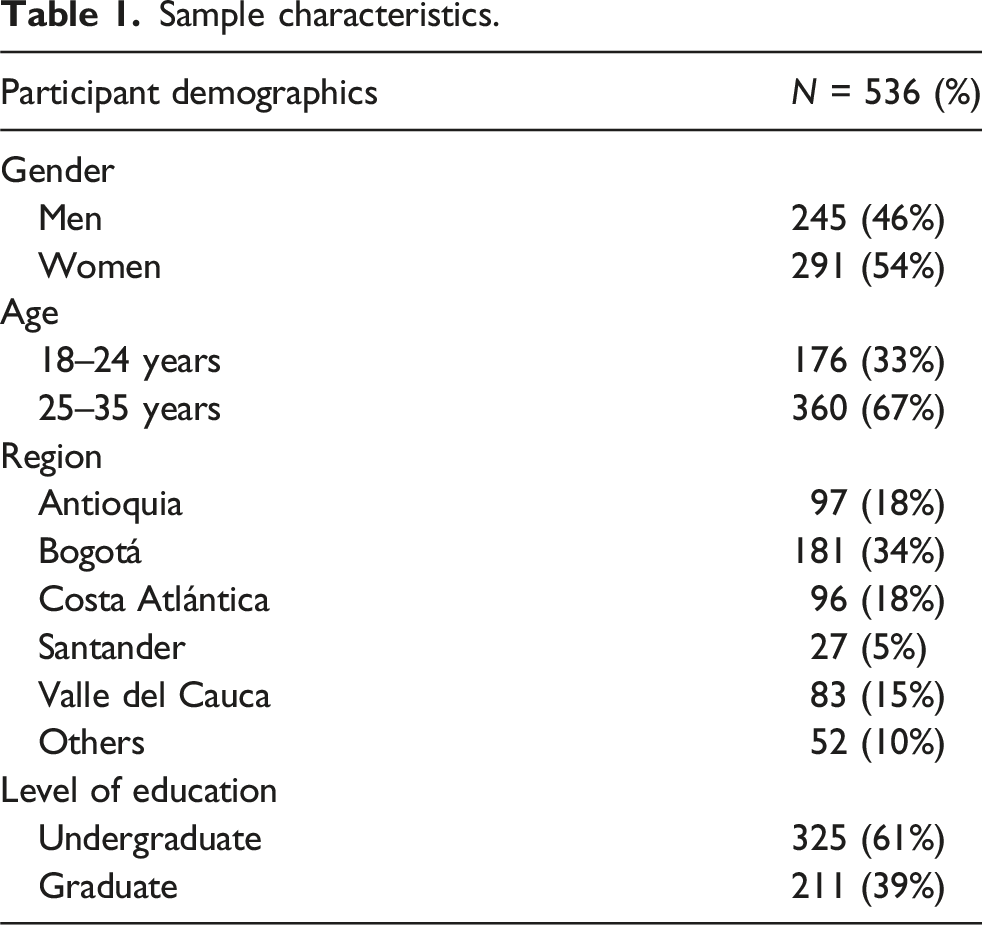
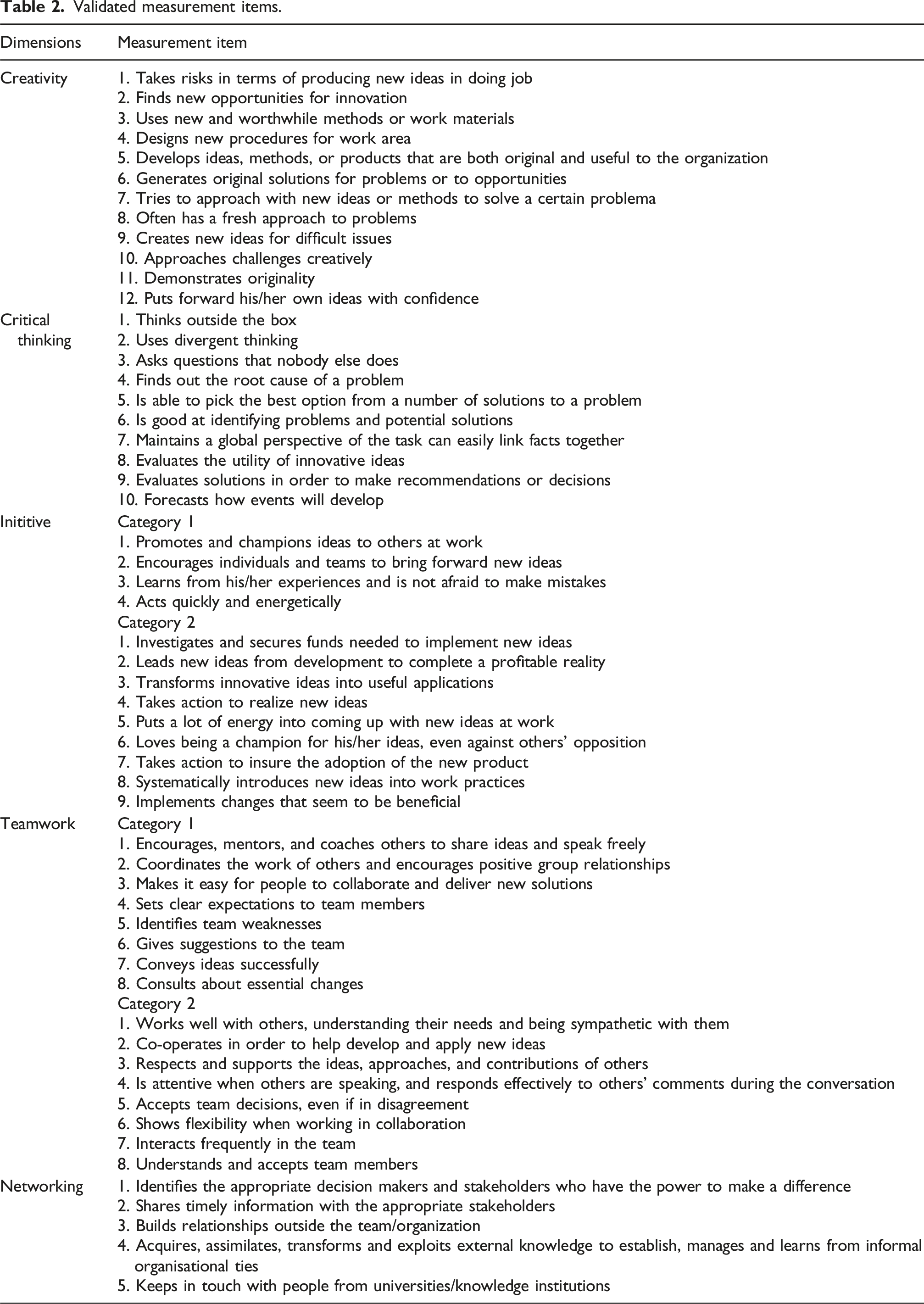
Figure 1 shows the path model, including the validated dimensions and elements, as well as the causal relationships among them. Innovation skills were assessed using a five-point Likert-type questionnaire. Initially, the instrument comprised five dimensions—creativity (CR), critical thinking (CT), initiative (INI), teamwork (TW), and networking (NW)—and a total of 131 items (Pérez-Peñalver et al., 2018). The questionnaire was subsequently validated for content and construct adequacy, and reduced to 56 items (see Table 2). Proposed theoretical model. Validated measurement items.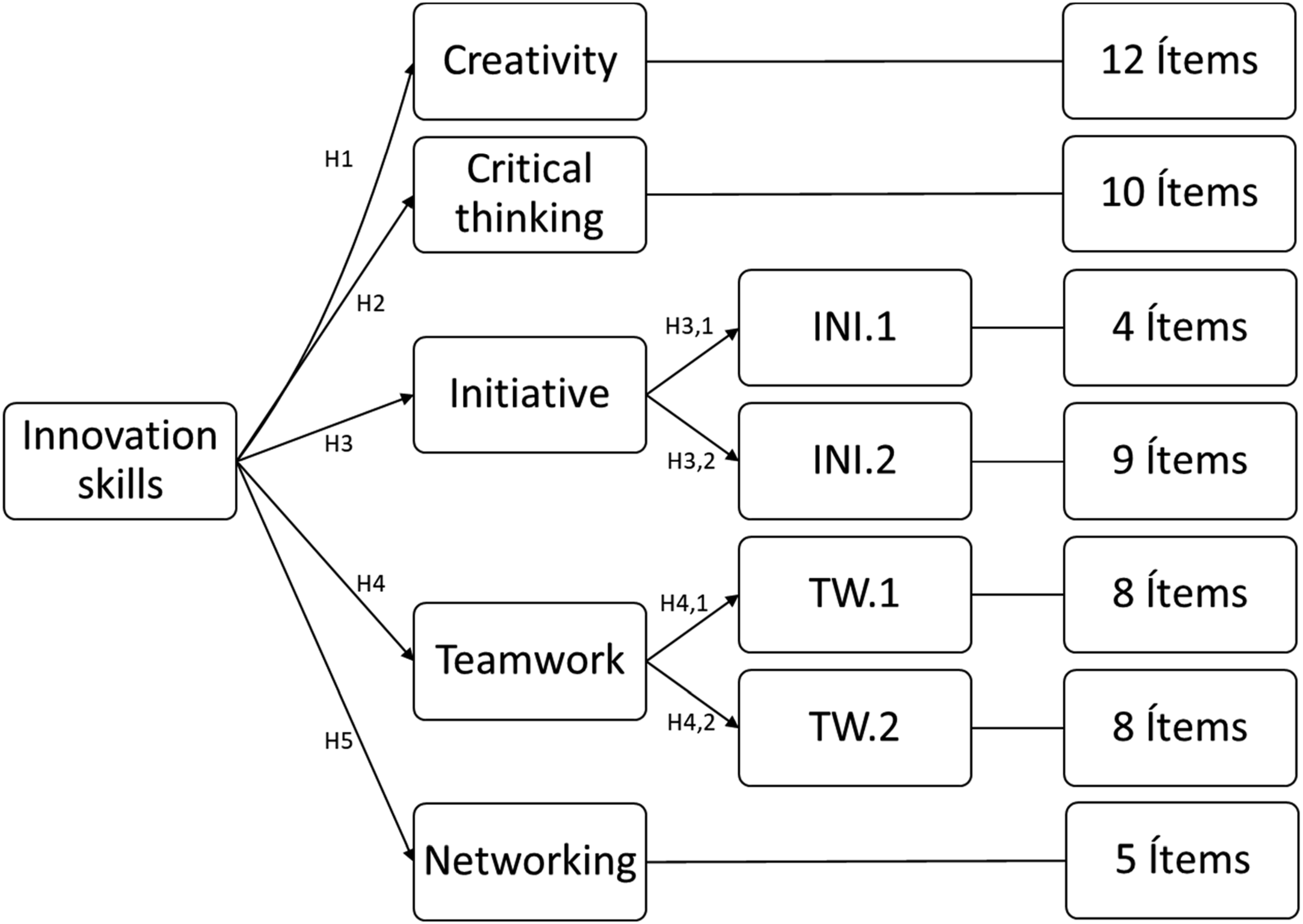
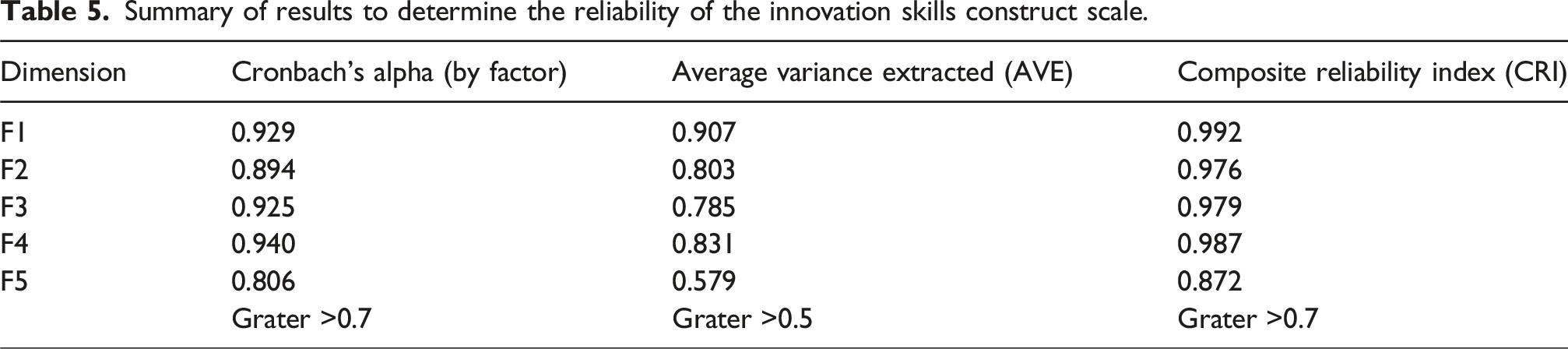
The structural validation of the instrument was conducted through Confirmatory Factor Analysis (CFA) to determine whether the proposed theoretical model fits the empirical data from the sample, in other words, whether the observed items adequately measure the latent constructs. To ensure the instrument’s reliability, several indices and tests were applied in accordance with standards established in the scientific literature. The process began with Cronbach’s alpha to assess the internal consistency of each dimension (Nunnally and Bernstein, 1994). The results indicated strong values across all dimensions, ranging from 0.806 to 0.940. Subsequently, item refinement was carried out by removing those items that did not significantly contribute to the scale, thereby improving its overall reliability (Saxe and Weitz, 1982).
Regarding convergent validity, the Average Variance Extracted (AVE), which ranged from 0.579 to 0.907 across all dimensions, exceeded the 0.50 threshold proposed by Fornell and Larcker (1981). which demonstrates that the explained variance is greater than the variance due to measurement error. Composite reliability also confirmed the internal consistency of the factors, with all values above 0.70. Construct validity was assessed through convergent validity. In this case, the standardized factor loadings of all items were found to be significant and above 0.69 (Bagozzi and Yi, 1988), indicating that each item consistently measures its corresponding latent dimension. Discriminant validity was also confirmed, as the correlations between dimensions were theoretically appropriate, demonstrating that each factor measures a distinct and unique construct.
Once the reliability and validity of the measurement scale were established, the structural model analysis (SEM) was performed to test the causal relationships between the dimensions. The quality of the structural model fit was assessed using several goodness-of-fit indices. The Chi-square test (χ2 = 0.00000) indicated an excellent fit. The Root Mean Square Error of Approximation (RMSEA) was 0.036, which is below the 0.08 threshold and thus considered acceptable according to Browne and Cudeck (1992). The Comparative Fit Index (CFI) reached a value of 0.928, exceeding the minimum standard of 0.90, and confirming an adequate comparative fit of the model. These results demonstrate that the structure of the measurement instrument is statistically solid, reliable, and valid (see Figure 1).
SPSS version 25 (IBM Corp., 2022) was used to generate basic descriptive statistics, including Cronbach’s alpha coefficients and item standard deviations. EQS version 6.2 (Multivariate Software, 2016) was used to perform the structural equation modeling (SEM) analysis and to validate the proposed hypotheses.
Results
Validation of the theoretical model of innovation skills in undergraduate and graduate students of administrative and business areas in Colombia
This section presents the results obtained from the research. First, the validation of the measurement scale of the innovation skills construct is presented through factor analysis to assess the adequacy of the model. Next, the validation of the hypotheses is shown through Structural Equation Model (SEM), based on the proposed model for the innovation skills construct, which is determined by five factors: Dimension 1: Creativity (CR) Dimension 2: Critical thinking (CT) Dimension 3: Initiative (INI) Dimension 4: Teamwork (TW) Dimension 5: Networking (NW)
The reliability analysis of the scale was determined using four statistics: a) Cronbach’s alpha, b) the values of the corrected total item correlation statistic, c) the average variance extracted (AVE), and d) the composite reliability index (CRI).
To determine the corrected item-total correlation values and the Cronbach’s alpha values, the entire set of variables for the innovation skills construct was used. The measurement model of the construct is shown in Figure 1.
The confirmatory factor analysis determined the reliability of the scale. The standardized solution shows the coefficients for each of the five dimensions that make up the innovation skills construct: creativity, critical thinking, initiative, teamwork, and networked collaborative work. In the case of the initiative and teamwork dimensions, these are latent variables.
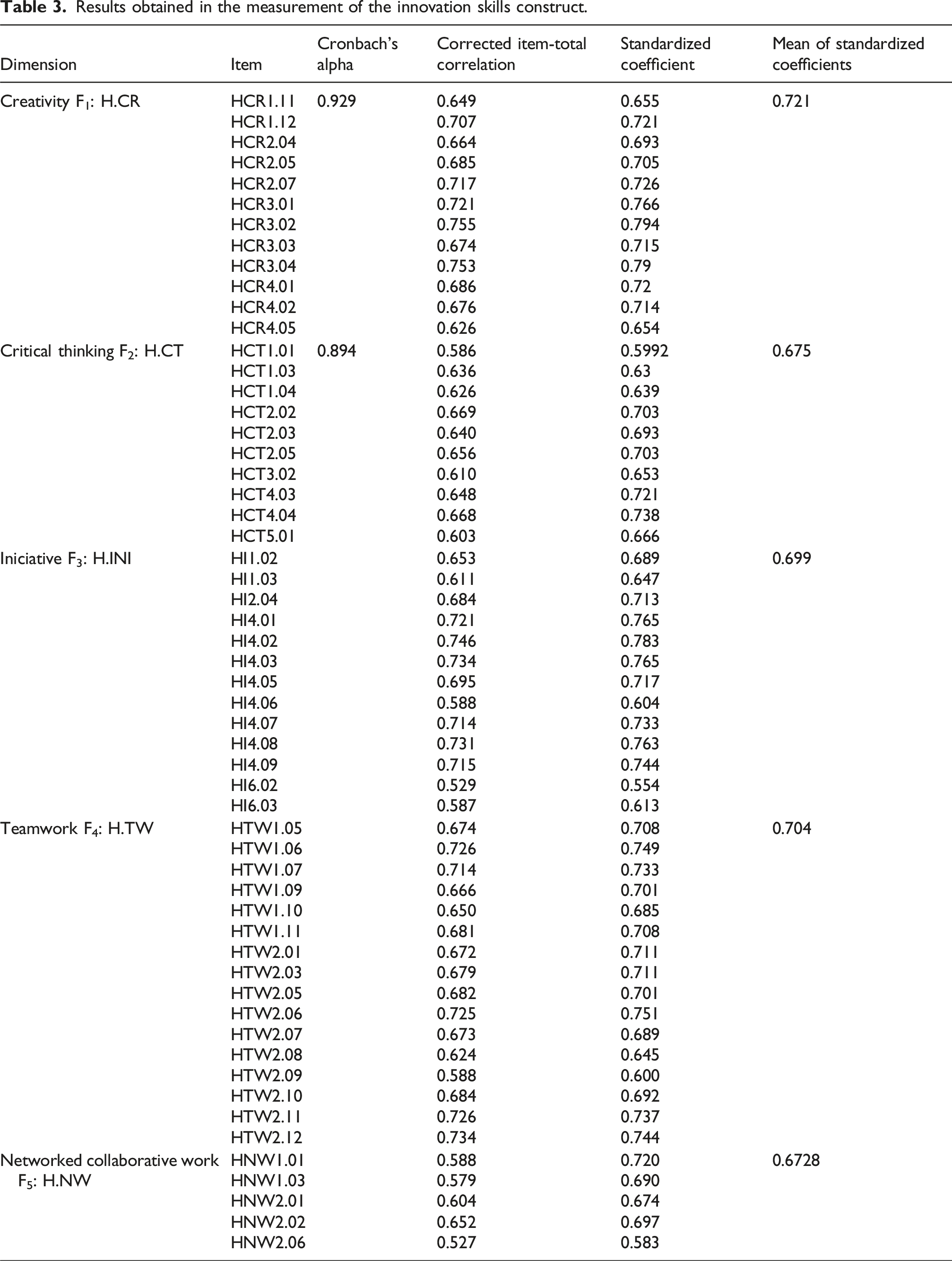
Cronbach’s alpha and corrected item-total correlation
The Cronbach’s alpha for the innovation skills construct scale was reliable, with a value greater than 0.80. According to Nunnally and Bernstein (1994), Cronbach’s alpha values equal to or greater than 0.70 are required if the scale is under development, greater than 0.80 for already validated scales, and 0.90 for decision-making.
Results obtained in the measurement of the innovation skills construct.
Average variance extracted (AVE)
According to Fornell and Larcker (1981), a scale is reliable when it obtains a lambda value (λ) or standardized factor loading equal to or greater than 0.50, where: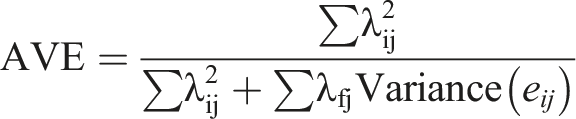
Data for calculating the AVE of the innovation skills construct.
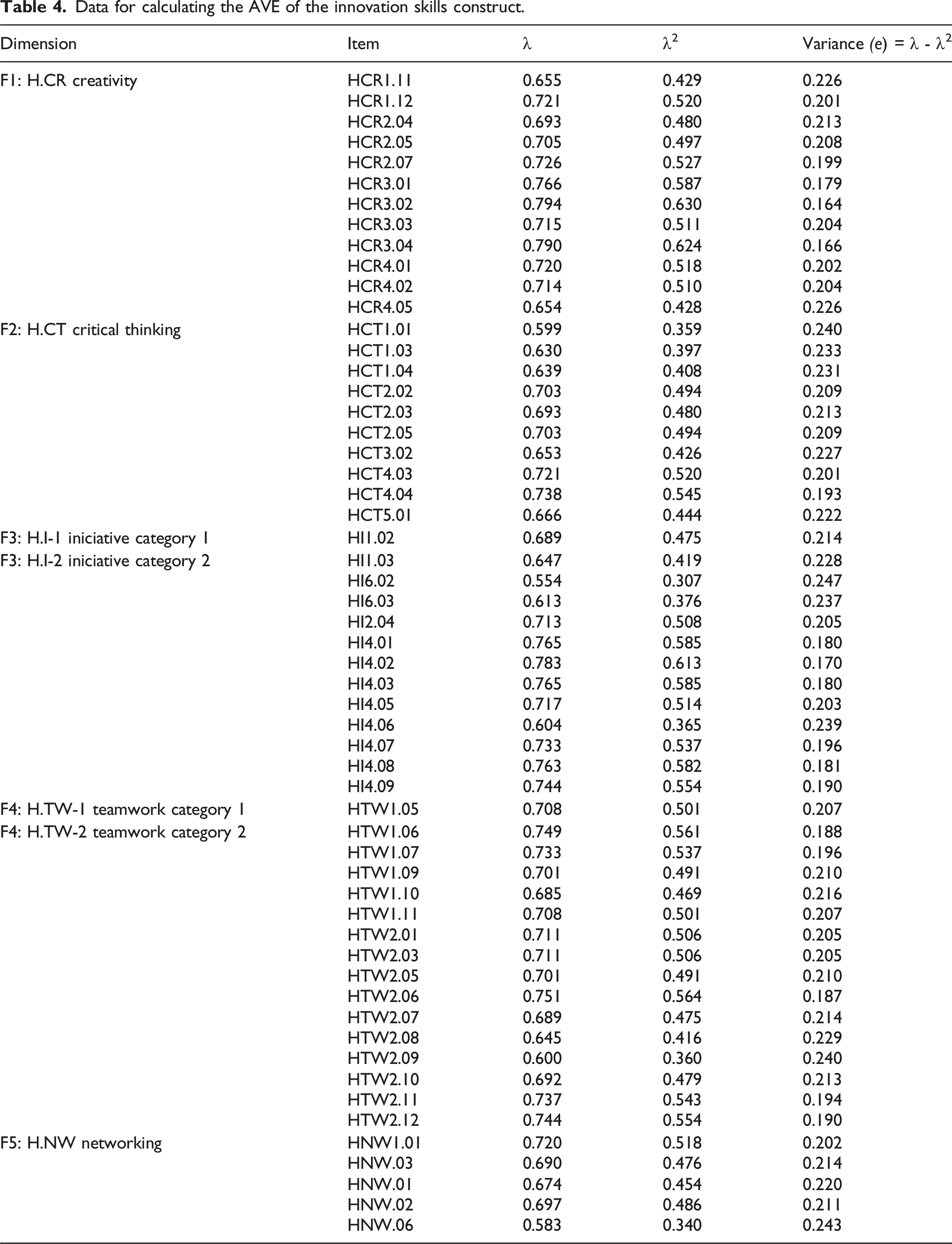
Summary of results to determine the reliability of the innovation skills construct scale.
The composite reliability index (CRI)
The CRI was calculated from the data provided by the standardized model. According to Fornell and Larcker (1981), its calculation must yield values equal to or greater than 0.70 for the scale to be reliable, where: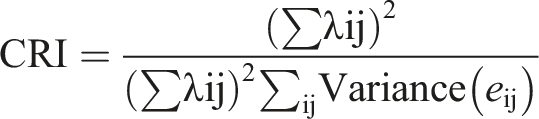
As shown in Table 5, all dimensions presented composite reliability indices greater than 0.70. Consequently, it can be deduced that the scale for the innovation skills construct is reliable.
Convergent validity of the measurement scale for the innovation skills construct
To determine convergent validity, which assesses whether the measure used has a strong correlation with other measures of the same construct, the procedure outlined by Churchill (1979) was followed. This involved using the statistical significance of the factor loadings corresponding to all the indicators of each dimension.
When analyzing the values of the standardized coefficients from the confirmatory factor analysis for each item of the measurement scale, it is found that these are equal to or greater than 0.69 and, therefore, are consistent with Bagozzi and Yi (1988). Likewise, the average of the standardized coefficients for each of the latent variables falls within the parameters set forth by Hair et al. (1999), who consider that the scale meets convergent validity when values equal to or greater than 0.70 are obtained.
Figure 2 shows the goodness of fit of the measurement model for the innovation skills construct, according to the proposed scale, which had values consistent with those proposed by Hu and Bentler (1999) and Ullman (2006), confirming that the values are adequate and the model can be accepted. Regarding the Chi-square and RMSEA, the values were adequate according to Browne and Cudeck (1992). Likewise, all the standardized coefficients of the model were significant, with p-values less than 0.001 and considerable explained variance (R2). Results of the structural model. Goodness of fit: Satorra-Bentler Scaled Chi-Square = 2487.0240 on 1465 Degrees of Freedom; p = 0.00000; BBNFI = 0.842; BBNNFI = 0.925; CFI = 0.928; IFI = 0.929; RMSEA = 0.036.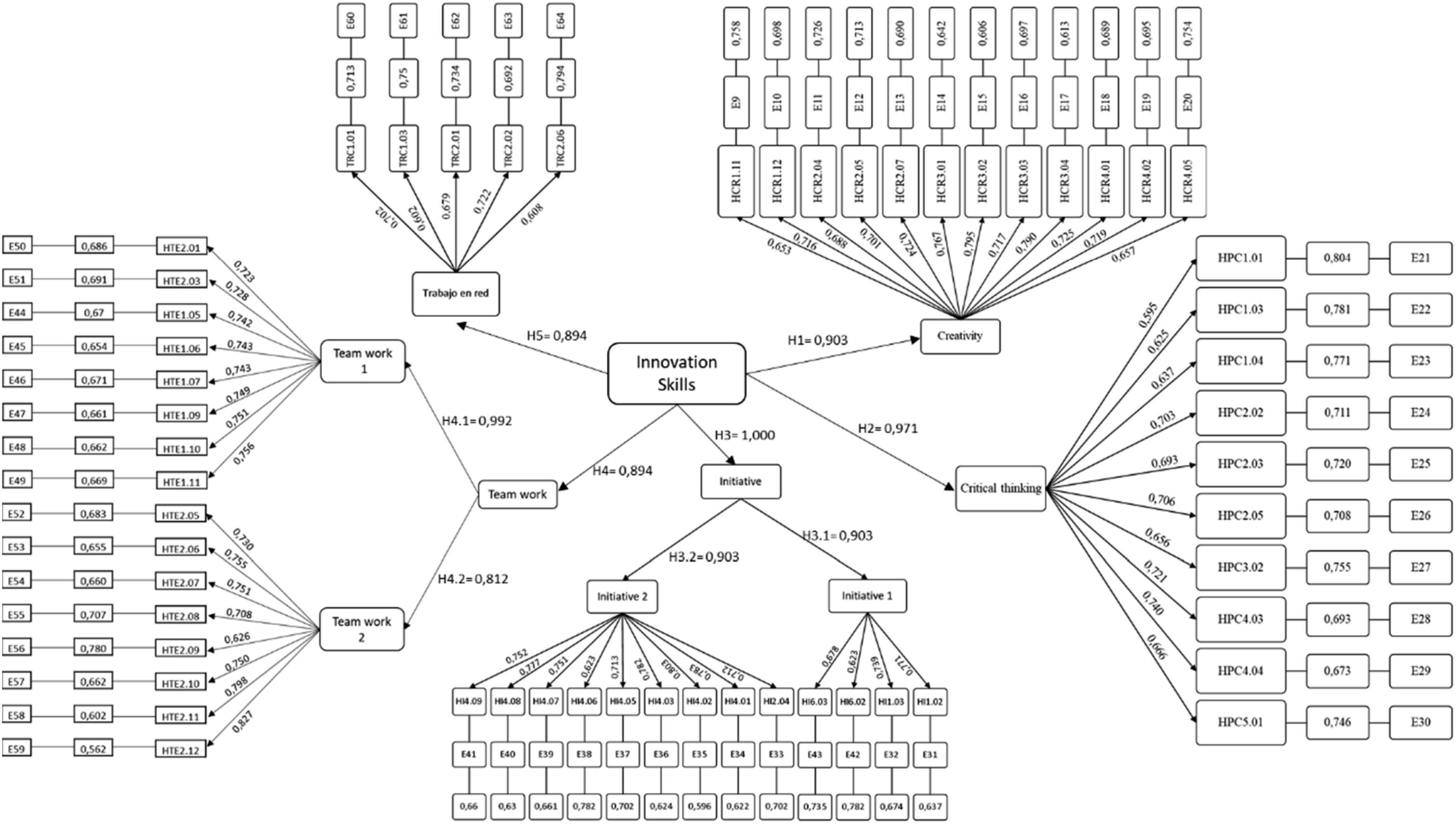
Regarding the Chi square and RMSEA, the values were adequate. For this model, the Chi square value was 0.00000 and the RMSA value was 0.036. According to Browne and Cudeck (1992), these values lead to the model being considered acceptable. Likewise, all the standardized coefficients of the model were significant with values of p < 0.001 and a considerable explained variance (R2).
Divergent validity of the measurement scale for the innovation skills construct
Once the goodness of fit of the model has been verified, the discriminant validity of the scale is determined to check that the estimators take theoretically adequate values and are also significant.
The analysis of the estimation results confirmed that the values are theoretically appropriate, both for the correlation values and for the goodness of fit of the model. These results, in turn, confirm the reliability as well as the convergent and discriminant validity of the scale used to measure the innovation skills construct (No se hace referencia a una tabla o gráfica ¿???).
Structural analysis
After validating the reliability of the scale, the structural model is evaluated, which yields positive results, not only for the model’s fit values, but also for the load values that explain it (standardized beta), as shown in Figure 2, which solves the theoretical and statistical model (Figure 1).
Regarding creativity, the most important item due to its weight load (0.795) was H.CR-3.02 related to the creative way in which problems are approached; followed by H.CR.3.04 (0.790), related to the generation of new ideas or methods to solve complex problems.
With respect to critical thinking, the most significant item was H.PC.4.04 (0.740), which is related to the evaluation of solutions to make recommendations or decisions.
Regarding initiative, the most important item was H.INI.4.03 (0.803), which is related to taking action to implement new ideas.
In teamwork, the most important item was H.TE.2.12 (0.827), which is related to manner how team members are understood and accepted.
Finally, in the case of networking, the most significant item was H.TRC2.02 (0.722), related to acquiring, assimilating, transforming, and exploiting external knowledge to establish, manage, and learn from informal organizational ties.
These results show that the innovation skills construct is multidimensional, with direct and positive relationships between five dimensions, two of which are latent variables, each with its respective measurement items (Hair et al., 1999). In this sense, the research confirms the hypotheses proposed for the population of university students in administrative science programs in Colombia.
Discussion
The results of the structural analysis to validate the five proposed hypotheses determined a direct and positive relationship between creativity, critical thinking, initiative, teamwork, and networking, and innovation skills. This implies that the five dimensions analyzed are decisive for university students to develop and improve their innovation skills, which, according to Cevik and Senturk (2019), are essential for addressing the business challenges of the 21st century. In the workplace, these skills serve as driving forces for innovation and business competitiveness (Pérez-Peñalver et al., 2018; Xie et al., 2023).
The results of the presented hypotheses validate the construct model proposed by Pérez-Peñalver et al. (2018), based on a scientific analysis that involves both the generation of ideas (creativity and critical thinking) and their implementation to generate innovation (initiative, teamwork, and networking). They are also consistent with the studies by Ferreras-Garcia et al. (2021) regarding the influence of the five validated variables on the innovative competence of university students in business administration and management.
Furthermore, the results are consistent with the studies by Rampersad (2020) and Tan et al. (2021) regarding the contribution of critical thinking and teamwork as key factors that foster innovation in university students and as essential interpersonal skills for entering the labor market. They are also consistent with the findings of Keinänen and Kairisto-Mertanen (2019), who determined the influence of teamwork and collaborative networking on innovative behavior, as well as with the studies by Alt et al. (2023) and Perignat and Meloche (2020) regarding the influence of creativity on innovative behavior in university students as drivers of innovation.
In practice, this may imply the importance of creativity (Avdeeva et al., 2021; Perignat and Meloche, 2020) and critical thinking (Li, 2023) for learning and university education, as they promote motivation, reflection, and self-regulation. Thus, it generates challenges for teachers and improves their capacity to implement activities that strengthen these skills to develop the potential for innovation. This, in turn, requires strengthening teaching competencies to encourage problem-solving, multiple perspectives, and self-regulation.
According to the results obtained in the research, as students improve their skills in creativity, critical thinking, initiative, teamwork, and networking, they will be better prepared to face the professional and business challenges of the market and will have greater potential to generate innovation. In this regard, Colombian universities could apply the instrument validated in this study to identify specific gaps in their students’ innovation skills. Based on these findings, they could then design and implement curriculum strategies aimed at enhancing those skills. For instance, if low or moderate levels of creativity and critical thinking are identified, faculty members could be trained and encouraged to incorporate active pedagogical strategies into their courses that foster idea generation, such as problem-based learning, project-based learning, design thinking, or gamification, among others.
Similarly, if students are found to have low or moderate levels of teamwork or networking skills, faculty members could be capacited and incentivized to incorporate active and collaborative pedagogical strategies into their courses, with a focus on implementing innovative ideas. Examples of such strategies include collaborative learning and project-based learning. In addition, engaging with external stakeholders, along with the strategic use of digital environments and academic social networks, can support the expansion of students’ professional networks and the development of networking skills, thereby preparing them to interact effectively in diverse professional and social contexts.
Finally, if students are found to have low or moderate levels of initiative, faculty members could be trained and encouraged to incorporate pedagogical strategies into their courses that promote autonomy, proactivity, and responsible decision-making. In this regard, strategies such as challenge-based learning and inquiry-based learning are appropriate alternatives for fostering these skills.
Conclusions
By validating the construct of innovation skills, this research becomes the first empirical study to analyze innovation skills in university students of administration and business in Colombia. The results confirm the measurement scale of innovation skills proposed by Pérez-Peñalver et al. (2018), who proposed the five dimensions validated in this research: creativity, critical thinking, initiative, teamwork, and networking.
The relationship between the variables analyzed within the higher education context reveals a significant finding for decision-making in universities, particularly regarding the improvement of curriculum designs aimed at developing the innovation skills of future professionals. This, in turn, contributes to enhancing their employability. This also suggests that future research could focus on analyzing whether the internal capacities and skills of universities contribute to generating value through the development of students’ skills. Additionally, it is important to continue validating the results in other professional fields and other geographical contexts.
This study had certain limitations. One of the main constraints was the sample size, as limited time and resources restricted the reach of the survey to a broader population of university students. Additionally, given that the survey was administered online and contained a substantial number of items, some participants dropped out before completing it, which further reduced the final sample size. Nevertheless, a sufficient number of valid responses was obtained to allow for the statistical validation of the proposed hypotheses.
Another limitation of the study lies in its exclusively quantitative approach. While the use of Structural Equation Modeling (SEM) and Confirmatory Factor Analysis (CFA) enabled a rigorous validation of the instrument’s structure and the relationships among variables, the study did not include the collection of qualitative data that could offer subjective and contextual insights. Incorporating such evidence in future research could enrich the understanding of the phenomenon and enhance the applicability of the findings.
Footnotes

Funding
The authors disclosed receipt of the following financial support for the research, authorship, and/or publication of this article: This work was supported by Universidad Pontificia Bolivariana (051A-02/23-03P).
Declaration of conflicting interests
The authors declared no potential conflicts of interest with respect to the research, authorship, and/or publication of this article.