







Abstract
Competency development in higher education (HE) students is a global concern. Employers need graduates who are ready to perform jobs based on futuristic technologies, processes and models. Higher education institutions bear a logical responsibility to develop work-based competencies in students that enable them to think, act and work with a long-term perspective. This paper aims to develop a systematic review using PRISMA protocol on competence development of higher education graduates and innovations in curriculum design with an international perspective. A total of 56 papers were studied from 2014-2024 from two databases namely, Web of Science (WoS) and Scopus. To broaden the scope, ResearchGate was also utilised. Findings show that most publications are from United States, India, United Kingdom, Germany and Africa. Key trends affecting competency development and curriculum design include alignment with sustainability goals, student-centred learning, use of a transnational approach and technology in pedagogy and faculty preparedness on learning and assessment tools and techniques.
Keywords
Introduction
Companies are not only competing locally but also on a global scale for top talent. This global competition has heightened the challenge of attracting and retaining highly skilled individuals. A common concern of labour market is their inability to find competent graduates to fulfil the performance targets of industry 5.0. Global business organizations are emphasizing competency-based education as a strategic approach to prepare graduates with required skills and abilities thereby navigating the complexities and dynamic nature of modern business environments (Birdman et al., 2022).
Higher education institutions worldwide are incorporating new methods of teaching to make students ready for any future jobs and profession. However, the main issue lies in the curriculum that is still following the old patterns of knowledge-based teaching.
Competence which is generally understood to be the combination of skills, abilities and behaviours is what the world looks for in the students passing out from higher education institution.
In the study of competence, particularly within management and organizational contexts, different approaches have emerged, in which the American and the British perspectives are prominently referred by researchers In American approach competence is mentioned as a cause that drives behaviour and performance, and; in British Approach, competence is stated as an effect or outcome influenced by managerial, behaviour and organizational factors. In the American approach competence, is defined around a person’s abilities, thereby focussing
On a comprehensive set of attributes. In the British approach definition of competence is closer to a “performance standard” associated with a job position. However, despite having the required definitions of competence, very limited efforts are made by HEIs around the world to incorporate them in their curriculum.
The role of higher education in producing well-trained graduates is central to addressing the demands of a dynamic economy. This involves aligning the educational programs with the labour market and demand for work-based futuristic competencies. The debate around qualifications in higher education often centres on the alignment between academic curricula and the evolving needs of the labour market. This discussion highlights a critical issue: fields of study that fail to adapt to market demands may struggle, while those that align with current trends are more likely to thrive. (Butum et al., 2015).
The sustainable development summit organised at United States in 2015 was an important landmark in sustainable educational vision. All the world leaders accepted to adopt. The 2030 Agenda for Sustainable Development which emphasise to align Education for Sustainable Development (ESD in to all dimensions of education. For this specific education goals as well as indicators were required in Sustainable Development Goals (SDGs) (Chang and Lien, 2020). The main purpose of ESD is to push development of competencies in individuals making them critically-analyse their actions and its global impact. It emphasizes a comprehensive and transformative approach to education that encompasses several key dimensions like learning outcomes and content, the learning environment and pedagogy (Cebrián et al., 2020).
The growing emphasis on learning outcomes and graduate employability has indeed spurred research on competence across various academic fields (Azevedo et al., 2012). The shift towards emphasizing learning outcomes in higher education reflects a broader ideological change in how universities and their roles are perceived in society. This shift aligns with the increasing focus on meeting the needs of the market and the knowledge-based economy. Although the learning outcomes have been adopted globally as part of the consensus among member nations of UN, to shift to outcome-based education, they are yet far from being measurable and achievable. How learning outcomes and competence development should be aligned in HE curriculum and what will be the challenges and issues in adopting them is another aspect to be studied (Azevedo, 2012).
The above perspectives underline the aim of this study, which is to present a systematic review on competence development and curriculum strategies that aim to understand the global factors affecting competence development in HE graduates and the emerging innovations in curriculum.
Hence, the research questions were defined as follows- Q1. What are the prevailing themes on competency development for HE graduates? Q2. Are there any specific innovations & trends in curriculum design to incorporate competency development?
This section provides a comprehensive description of the research methodology, outlining the process of collecting data and its analysis. This procedure ensures the rigor and validity of the research process, enabling reliable and actionable findings.
Methodology
Adhering to the Preferred Reporting Items for Systematic Reviews (PRISMA) guidelines is a critical step in ensuring the quality, replicability, and transparency of research outputs. The use of a review protocol that outlines article selection criteria, search strategies, data extraction methods, and analysis procedures strengthens the reliability and value of the research outcomes. By employing such rigorous methodologies, researchers can generate evidence-based findings that are robust, trustworthy, and impactful in informing future research, policy decisions, and practice.
Data sources and search strategies
Two electronic databases were systematically searched (Web of Science & Scopus) between the years 2010 to 2024. We identified peer-reviewed studies with articles written in English. To identify as many eligible studies as possible, we broadened search terms and strategies. Search terms were modified together with informatics and combined with Boolean operators as follows. The terms “competences* AND” skills*AND “higher education*AND” “Curriculum in higher education” AND Curriculum were the keywords in the topic section of (WoS), keywords, title article and abstract in (Scopus). Web of Sciences- “Competency Development” And “Higher Education”. Scopus- “Competency Development” And “Higher Education” Total, “competency-based curriculum”. Total 63 papers were shortlisted in which 7 papers were found to be not eligible.
So far, competency development and competency-oriented curriculum have been the research areas mostly in medical science and school level education. Medical science education is primarily task based and hence CBC is widely used as preferred education method. Also, the papers published on competency development in medical sciences are found to be related mainly with assessing its suitability in upcoming medical fields.
School education and its curriculum and pedagogy are also different from professional education. The published papers do not contribute to the research question of this studies and hence, we deliberately excluded papers from these two fields to understand the issues pertaining to competency development and curriculum implementation specifically at higher education level. The reference lists of the eligible articles were also manually searched. We also referred to papers from Research Gate to broaden the search. The term higher education for this study refers to post-intermediate institutions. Studies that used HEI to indicate school-level research were excluded.
Selection of studies
The researcher (P.J. & D.B.) screened the titles and abstracts of papers to ascertain their eligibility to be included in the study. The studies found to be relevant were further reviewed in their full text for final inclusion. All inconsistencies were fixed by the researcher by carefully reviewing the details. The studies were selected based on the following criteria- (1) Years of studies- 2014 to 2024. (2) keywords- “curriculum”, “curriculum in higher education institutions”, “competence development”, “competency-based education” (3) Type of documents (a) Only research articles (b) Open access (c) Full-length articles (d) Language- only English
Process of quality assessment and extraction of data
A rigorous approach to extract data and ensure paper quality was completed by two researchers to enhance the reliability and accuracy of the extracted data. The use of an evidence table to record data from each study helped to organise and synthesise information effectively.
Furthermore, the collaborative effort between the two authors in collecting data helped in maintaining the integrity and validity of the research findings. This systematic and transparent approach to data extraction and quality assessment contributes to the overall credibility and trustworthiness of the research study.
Eligibility criteria
The process of selecting articles consisted of three different phases. In the first phase, the screening of titles and abstracts was conducted to identify relevant articles. The second phase involved a detailed analysis of the selected articles based on established selection criteria aligned with the research question. For more clarity, a table was constructed to organise the results systematically. Studies without full-text availability were excluded at this stage.
In the third round, we comprehensively examined the selected articles and integrated the findings into a single document. This final round aimed to ensure a thorough evaluation of the articles to determine their inclusion in the study. To address the specific research questions related to trends in competence development and curriculum design, papers that did not meet these criteria were excluded from the review process. This systematic approach to article selection helps maintain the focus and relevance of the study’s findings.
Composition of the body of analysis
The shortlisted papers were assigned code based on their sequence and database. Total 63 articles were finally yielded on the basis of defined criteria. Further, a total of 56 articles were shortlisted based on the established exclusion criteria (Figure 1), to the present systematic review of the literature. Seven articles were excluded from these 56 as they were not directly related to the research questions. Table A1 in Appendix A presents the included papers in the systematic review. The codes assigned are based on following system – database initials followed with paper number. (SC = Scopus, WOS = Web of Science; RG = Research gate). Systematic review as per PRISMA guidelines.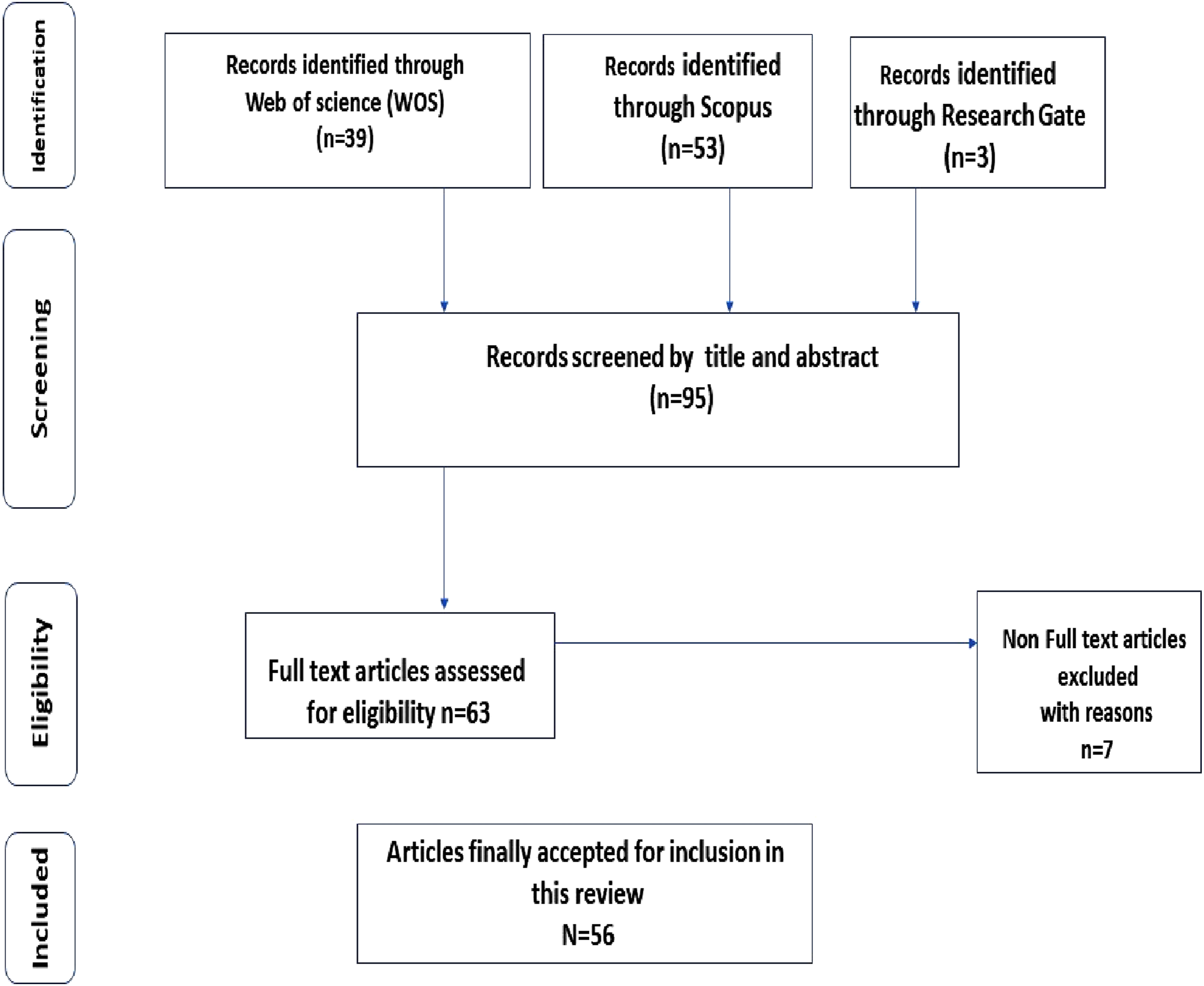
Characteristics of included studies
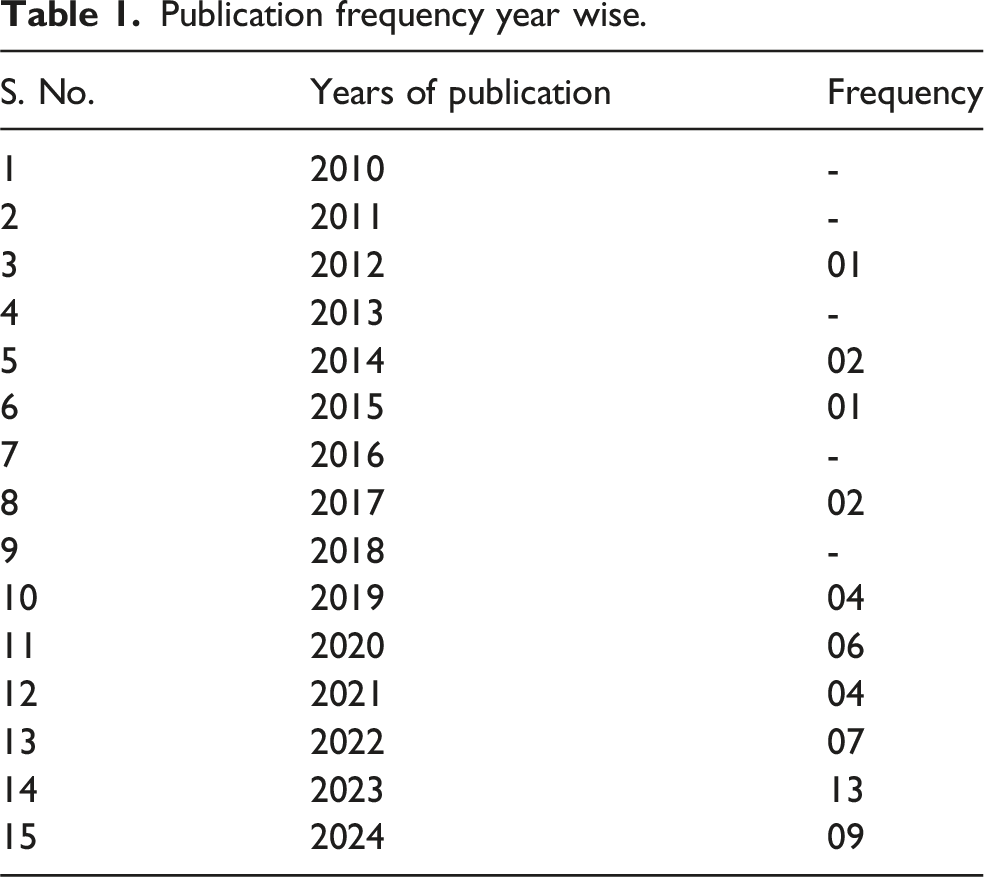
Publication frequency year wise.
Publication frequency in journals.
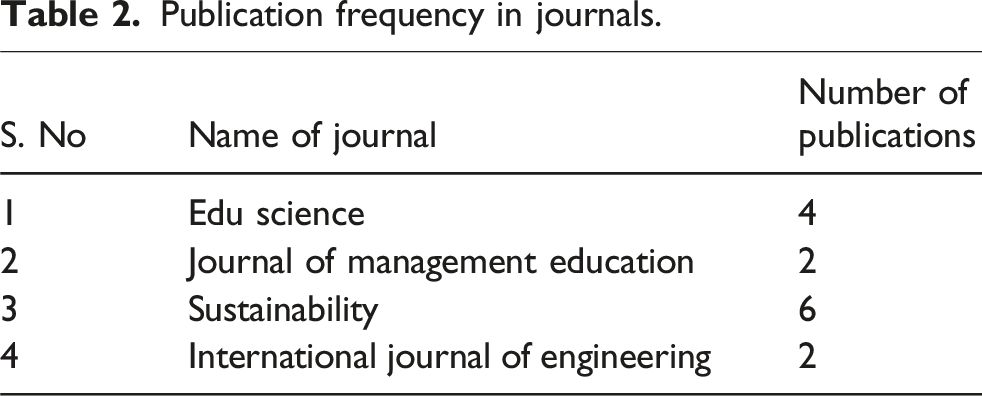
The below Table 2 outlines different areas of knowledge covered in the selected research studies
Strengths and limitations
The PRISMA protocol followed in this study strengthened the relevance of the results. Authenticity was maintained at all levels of this review to present real and useful content for researchers as well as HEIs. Maintaining focus on keywords lead to finding the most relevant papers providing quality insights on the topic. However, this also led to narrowing down to a small set of only 56 papers representing 18 countries. This is also one limitation as not many studies were included on topic thus restricting in scope.
Results
This segment presents a structured approach to research findings derived from a systematic review process were shared. By organizing the results in order of the research questions, the study aims to provide a clear and coherent presentation of the outcomes. This methodical approach enhances the transparency and comprehensibility of the research findings, allowing readers to easily follow the logical progression of the study and understand how the results address the specific research inquiries.
What are the prevailing themes on competency development in HE graduates?
The international scenario of business is changing at a fast pace with new methods of production replacing the older ones that is aided by extensive adoption of information technology (Cutillas et al., 2023). This has a direct impact on the worldwide employment scenario (Butum et al., 2015). suggest that companies now need freshers who can perform new age jobs and roles and are equipped with independent thinking abilities and generic skills to cope with fast-paced development affecting work and business (Azevedo, 2012). Paper (Alshammari et al., 2023) discusses the gaps in industry requirements to find matching skills and competences.
Industry-academia gap in skills
There is a common concern by all the stakeholders including corporate, alumni as well as students on the curricular gaps affecting competency development. Authors, Ganguli et al., 2014, findings indicate a dissatisfaction among 51% corporate respondents on what is being taught in universities and what they actually require.
The survey of employers conducted by Misra (2017) outlined their demand to assess the quality of training given by the faculty. Paper (Butum et al., 2015) outlines students’ expectations from universities in developing a more practical curriculum.
The findings of the study by Ganguli et al., 2014, revealed that students had no idea about what outcomes they should expect at the end of their courses. This raised a question on the quality of the current curriculums and level of student’s involvement of in the learning process.
Two important aspects have been highlighted in the papers [Das and Burman (2019), Ganguli.M. et al. (2014), Misra, 2017], as the main cause of the industry academia gaps. Firstly, it’s the misalignment of curricula with market demand. The surveyed companies put forward their concern on obsolete curriculum being followed in universities. Companies expect the courses to be developed considering the industrial and technological developments taking place (Lethoko & Mtapuri, 2014). Secondly, most of the companies find that the universities are following traditional pedagogy and tools to teach university students. Knowledge and not skills are the focus in teaching leading to shortage of competent workforce. Kumar. V et al., (2023) analyses the need to update the university curriculum with industry specific competences. Considering the digital reorientation of industry, the labour markets now demands futuristic skills specially the transversal skills. Also survey of recruiters and academicians revealed that industry requires all the functional, strategic and behavioural skills in entry level management graduates however the perspective on the significance of these skills is found to be divergent between the two stakeholders. This can be one reason for the inefficient pedagogies and teaching by faculties (Shukla et al., 2021). Curriculum are also required to adjust and incorporate foreign language proficiencies to equip students with basics for adopting the transversal skills (Oksana et al., 2022).
Competency and competence development
As per the findings of the paper by Fuchs (2023). Front. Educ. competencies are mistaken for knowledge-based pedagogies by most of the universities. Soyka and Schaper (2024) defined the word competency to provide a clarity on what is been expected in terms of student’s capability. It is defined as an ability to manage any situation or task successfully. Kumar. V et al., (2023) outlines a definition that is accepted by most of the literature that explains competency as the combination of knowledge, skills, understanding and ability.
Paper, Cutillas et al. (2023) outlines four basic dimensions of competency development that include presence of cognitive skills, ability to solve real work problems, character of self-motivation in students to enable learning and self-development and, a social disposition for performing in a team environment. Moreover development of professional competencies is a sequential process that goes through different stages of interest development influenced buy various intrinsic and extrinsic motivational factors (Nuphanudin et al., 2022).
Olmos-Gómez et al. (2020) finds out that quality of HE studies is an important concern among students as well as employers. Skill Development is first among the four essential factors of student evaluation of quality of studies in higher education from the perspective sustainable careers in long term.
Role of HEI in competency development
Paper, Butum et al., 2015 brings out the role of the universities in developing market ready professionals. That is not restricted to delivering knowledge-based education to students. In paper (Depoo et al., 2020) higher education institutions are explained as social systems that need to develop futuristic human capital equipped with competencies to contribute to the progress of a knowledge-based economy. The paper (Cutillas et al., 2023) also explores the responsibility of HEIs to develop competencies in students. This can be done by aligning the functional skills in the curriculum to develop a “well rounded education with a futuristic approach. Competency mapping and alumni surveys should be a regular activity to understand the gaps in curriculum (Lethoko and Mtapuri, 2014).
Butum et al. (2015) find that students expect HEIs to use modern teaching methods that can help them develop work ready competencies like transdisciplinary and innovation competence (Ovbiagbonhia et al., 2023), transdisciplinary and inter cultural competences.
Cruz-Sandoval et al. (2023) draws upon the usefulness of competency training in development of skills in university students. Authors (Sultanova et al. (2017) analyses the significance of defining outcomes by universities while planning competency development methods. Outcomes are indicators of efficiency of university education and considered as parameters of on job performance of graduates.
In their paper (Azevedo, 2012) highlights the history of competency-based education with England being the first country to implement competency-based model in higher education curriculum. This paper analyses the development of eight predetermined competencies in students. Competencies like critical analysis of situations for example were found to be moderately developed in Mexican students especially female respondents as per the study conducted by Cruz-Sandoval et al., 2023. This establishes the perception of students towards significance of competency development procedure.
Sustainability goals in competency development
Muhamad Noor et al., 2024 brings forth the need to integrate sustainable competencies in HE curriculum. Sustainable competence is mentioned in the sustainable development goals published by Common wealth. For this suitable pedagogy should be used to build thinking abilities in students. Olmos-Gómez et al., 2020 describes the role of sustainability as a transversal method in higher education curriculum which will enable formative development in students. This will equip learners with the ability to internalize long term business values and understand intricate systems, enabling them to proactively take actions that promote ecosystem well-being and social justice. By fostering a deep understanding of sustainability principles, individuals can envision and work towards creating workable futures.
Olmos-Gómez et al., 2020) outlines two important competences namely specific and transversal competences in reference to fulfilling the SDG goals in university education. The paper suggests that the SDGs should be aligned with learning methods by integrating these two competencies in all subjects of all basic courses of universities. Sustainability in education is a subject that is found to be gaining consideration globally in graduate education literature. Paper by Hammer and Lewis, 2023 outlines the acknowledgement of students as well as instructors of the fact that sustainable competencies should be a part of the curriculum that prepare them for future. The study brings out gaps in students’ involvement in competency selection and learning styles which should become a formal part of the curriculum. CBE model is found to be advocated in all sustainability studies to make students competent in sustainable procedures.
Competence based education
Paper, Wan & Hanafiaha (2022), analyses the features and limitations of outcome-based education that is the foundation concept of competency-based curriculum. OBE is followed all across the world and is among the most accepted form of proficiency building method in HEI.
The paper brings out new trends in OBE curriculum which are - (1) Adding General education subjects in courses (2) Industry training (3) Quality assurance process (4) Accreditation
Authors like Cebrián et al., 2020 & Telesford.et al. (2024) analysed the relevance of competency-based education (CBE) in developing sustainable competencies. Research conducted in countries like Switzerland, UK (Hammer and Lewis, 2023; Weston et al., 2019), among graduates, faculties and other stakeholders strengthens the need for a structured competency-based education outlining specific competencies framework for each professions. of various professional courses. Authors Voronov.M et al., (2015) analysed the the new learning elements introduced towards competency-based education by Russian science federation and ministry of education for higher education courses. The five new elements were tested for their implementation smoothness and effectiveness that included; Inclusion of valid competencies, easy access to learning resources, provision for variable pace for learning, reliable assessments and alignment of outcomes, assessments and pedagogy. CBE, therefore is an extension of OBE and focus on aligning curriculum with competency-oriented design.
Competency based education has been advocated by authors because of following reasons- (1) Completely practical in nature emphasize application of knowledge to real world issues and challenges. (2) Proven holistic view of various fields of knowledge (3) CBE assessments can evaluate real time competency development in students. (4) Students are aware of their progress as they are the prime actor in the model.
The aim of the paper by authors, Damázio L and Hanriot M (2017) is to understand the steps and consideration involved in changing a traditional curriculum of marketing into competency-based curriculum. CBC aims to make learners demonstrate their learned skills in real situations. For this active learning is considered to be most useful as it allows students to be the key drivers in the process. The study was a mixed method approach that took interviews of students as well as professors on their perception regarding current curriculum practices, systematic organizational view, technological and teaching challenges and changes in content required for adopting such a curriculum. The paper outlines the process and the steps for implementing CBC in university.
Transdisciplinary approach
Paper by (Telesford.et al., 2024) findings supports the use of “transdisciplinary” approach for competency development. Transdisciplinary teaching goes beyond traditional disciplinary boundaries by integrating various subjects through common themes or issues. It emphasizes collaboration among different disciplines to develop a unified curriculum where students work together to address complex problems. This approach necessitates innovation, cooperation, and deliberate planning to create a holistic learning experience for students.
Buchanan and Bharadwaj, 2022 focuses on the transnational model that involves partnership between international universities giving all round “exposure to students in competency development. An important mention by the author was incorporating a multicultural perspective in curriculum to support transnational education. This dimension has been advocated by other researchers keeping in mind the scope for international opportunities in all sectors.
A comparatively different strategy to reducing skills gap has been studied in paper Kumar. Vu et al. (2023). The paper talks about micro credentials especially suitable for the gig economy. Micro credentials are short term courses designed to cater to competencies required by the industry. These credentials hold equal weightage like a full qualification. This study of micro credentials aligns with the much-discussed model of competency development for filling the skill gap and making graduates ready for industry demands. The findings of paper (Wheelahan and Moodie, 2022) suggest adoption of these credentials in the curriculum of HE similar in lines of vocational course curriculums as these credentials suit the need of the gig community.
Results reveal that globally, employers are expecting higher levels of competencies in graduates. The graduates are not equipped with abilities to perform in future work environments, that is mainly due to obsolete curriculum followed in most of the universities worldwide. Trends like SDGs, micro credentials, transdisciplinary and global education, student centric learning signifies an extended version of outcome base education which is already accepted by all the nations as most useful form of education. Competency based curriculum with emphasis on practical training and student involvement has emerged as the most common solutions to developing competent graduates.
Are there any specific innovations & trends in curriculum design to incorporate competency development?
Different themes on competency development have been studied in the previous section. The discussion culminates into some common solutions including sustainable curriculum designs, adopting CBC for developing skills and following a transitional approach in teaching students. Thus, change in curriculum design by HEI has emerged as one of the essential steps towards CD. This is because the responsibility of CD can be fulfilled trough academic intervention only. Hence, it is required to understand the global perspective and trends in curriculum strategies for CD.
Curriculum has been defined by authors (Kumar. Vu et al. (2023), Wan and Hanafiaha (2022) as a learning experience designed and planned by universities for learners. The main parts of curriculum are- (1) Lesson plan (2) Learning objectives (3) Topics for discussion (4) Assessment methods (5) Teaching and learning design
Butum et al. (2015) analyses the feasibility of practicing international partnerships between universities from different countries. These changes in curricula can considerably help in filling the competency gaps in university graduates along with making them global professionals. Sustainable competencies are in demand by employers to find their relevance in the long run.
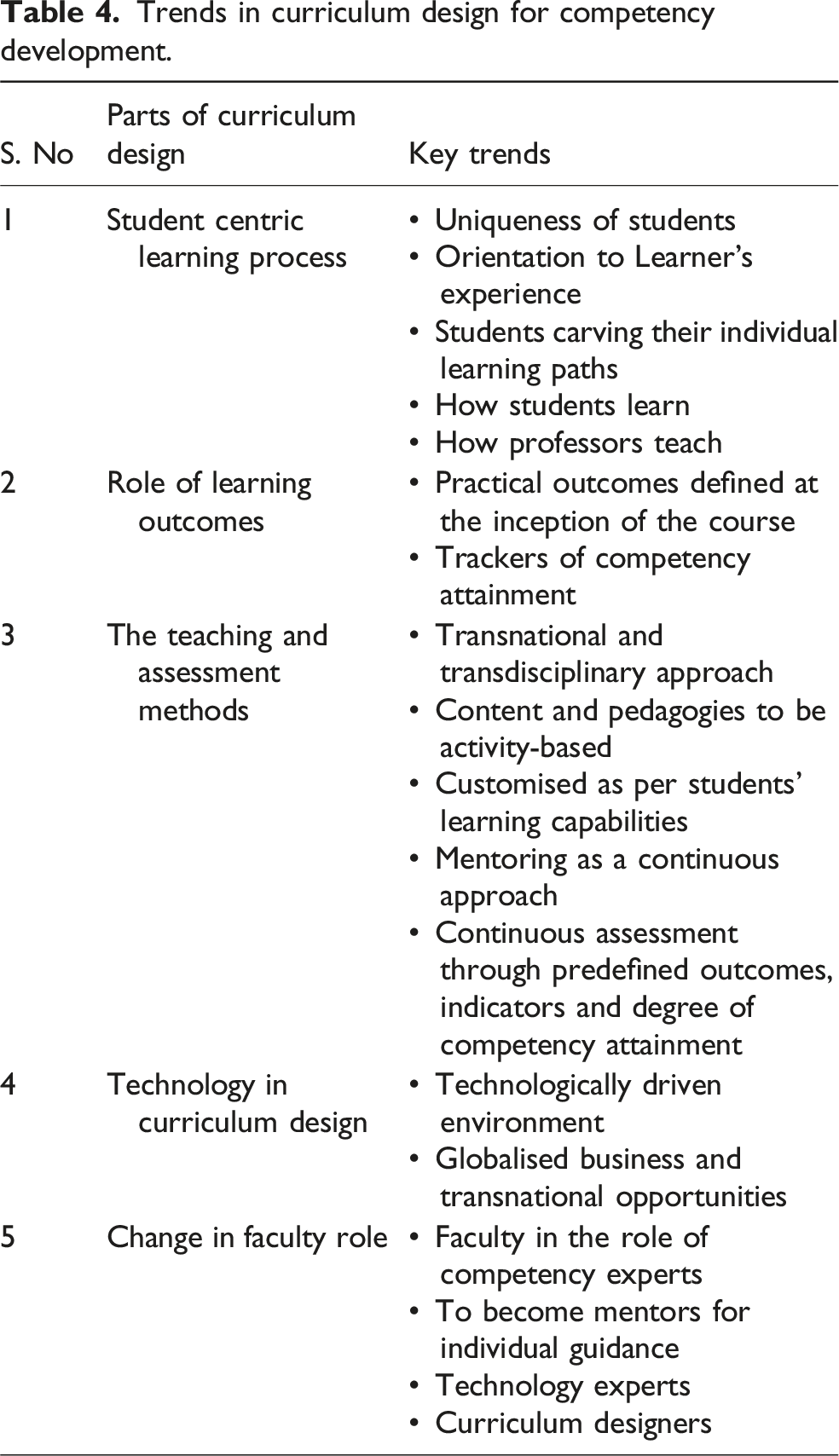
Student Centric learning
Vargas-Mendoza and Gallardo (2023) discusses the need to move the design of the higher education curriculum from an objective approach to a competency-based approach. Curricular design is based on the self-regulation theory that keeps students at the forefront of the teaching process. The paper examines the role of extrinsic and intrinsic motivation of students to lead themselves in such a curriculum design and found that intrinsic motivation plays a significant role in making student-centric modules a success. The student-centric approach has been further elaborated in the paper (Riza et al., 2024) that examines the uniqueness of each student in terms of background, learning styles and experiences. Authors Clemens and Lieneck, 2019 conducted a survey of alumni of Healthcare courses of Texas university who raised their concern about old edition coursebooks nd less exposure to practical inputs. Involvement of students in the learning and feedback system can enhance their overall learning and satisfaction levels. Students get autonomy to plan and adopt their own learning goals. This will therefore require teachers to adjust their lectures and pedagogy based on individual needs of the students, interpersonal skills and personality traits (Tordai and Holik, 2018).
Telesford et al. (2024) brings out the solution to filling the competency gap in graduates of HEIs. The paper suggests on adopting a “continuous education” system that puts students at the focus of the learning system. This makes students own the responsibility of their competency development. Such a system allows students to create their own unique paths. The analysis of the paper finds out that a competency-based education program is the most logical method in education that can stop talent shortages. The paper also suggests to make curriculum flexible enough to incorporate any kind of chronic or sudden change, like Covid 19.
The key point emphasized by the authors Lovren et al., 2020 is that a curriculum is a learner’s experience of developing knowledge, skills and capabilities, and this is what makes the curriculum useful as far as achievement of learning outcomes is concerned.
Learning outcomes
Azevedo, 2012 studied the role of learning outcomes and what criteria should be followed to develop them. They identified three dimensions that define learning outcome are integration of cognitive, psychomotor and affective skills. These are the parameters that need to be included while designing the learning goals and pedagogy.
The main consideration in curriculum design should include-
(1)] Objective-based [2] self-paced student centric flexible pedagogy, and [3] Giving student flexible timeline to develop competencies on their preferred device.
The paper (Lovren et al., 2020) also outlines that provisions of learning elements like video tutorials, use of software for calculations and simulations and thematic summaries improve students’ access and planning of content and method of delivery.
Authors González et al. (2024) discusses about two important considerations during pedagogical review of curriculum. First, to understand how students learn, i.e., what makes students grasp the content and secondly, how professors teach?
Assessments methods
The paper (Azevedo, 2012) aimed at identifying factors affecting the success of the assessment system, and findings suggest that developing limited outcomes in the curriculum can lead to the certainty of development of competencies in students. The faculty should create the teaching content & pedagogies to cater to these pre-determined outcomes. An important contribution of the paper is the development of an articulated path in the curriculum that can help students and faculty track the stage-wise progress of developing a specific competency.
Sultanova et al. (2017) explores the assessment technique used for evaluating students’ performance. The grade point average (GPA) method was aligned with a new technique of employee readiness indicator (ERI). It is believed to enhance the university’s effort in producing employable graduates. Factors like curriculum, assessment and instruction were identified as points of difference affecting GPA & ERI. Hence, employability levels should be defined on the basis of GPA and ERI for the course computation of graduates to ascertain their level of achievement of defined competency levels.
Kumar.V et al., (2023)analyzed the feasibility of a new assessment model called SAM (Students Assessment Management) process. The model assesses students’ performance on four categories namely direct tools, indirect tools, certification and amount spent per student. An interesting point listed by the author is inclusion of multiple assessors to rate the competency development of students Sampath et al., 2023 The raters include SMEs, faculty team and lab staff, and experts from startups and industry. An innovative experiment with learning analytics was conducted for tech enabled assessments of competency development in paper (Vargas et al., 2024) providing enriching practical insights on student’s interest, their learning styles and achievement areas as well as inputs for teacher’s performance and teaching innovations. This study laid a foundation for data-based decision making to improve learning styles andcareer choices. The study found promising results from this assessment system in student’s competency development.
Moore and Thaller (2023) explored on the development of course curriculum for social work students. The change is required to equip the students with professional competencies in cultural awareness and ethical practices at work that are required to suit the norms of different countries. The paper tested the feasibility of NACE competences and how these can be converted into career readiness indicators that can further be utilized for assessment of students’ readiness at the end of the learning process.
“The (NACE) National Association of Colleges and Employers (2023) is a professional association in the United States that connects nearly 17,000 college career service professionals, university leaders, and industry experts, fostering collaboration and advancing career development and employment opportunities for students and graduates.”
Innovations in pedagogy
Paper (Das and Burman, 2019; Misra, 2017) discusses revamping the curriculum for future needs. The study brings out some essential considerations in pedagogy, like adopting blended learning & student-centered approaches. These techniques form the basic feature of a competency-based curriculum. Students from STEM backgrounds need intercultural competencies to understand and accommodate in the living-learning environment in study abroad programs. This study (Starr et al., 2022) brings out the latest trend of STEM courses and outline, self-awareness, and individual feedback as essential pedagogical elements in competency development.
In their Paper (Birdman et al., 2022) suggested reorienting learning goals to build sustainable competencies. There is a need to adopt learning methods that are student-centric and use active learning practices. This means enabling students to reflect on their abilities and self-transformation. Learning by teaching is one such pedagogy that was studied in paper (Pollock et al., 2023) on accounting students and found its relevance in developing team work and development of knowledge as well as abilities through direct involvement in similar work environment. The paper finds some useful pedagogies like experience-based learning, project-based learning and problem-based learning techniques that are found effective for specific courses like research-based jobs, health sciences and engineering.
In their paper Membrillo-Hernández et al. (2023) developed and checked the feasibility of a unique pedagogy for competency development called COIL (Collaborative Online International Learning). This concept adopts the model of a global shared learning classroom approach which is facilitated by two professors from two different countries in an online mode. They use challenge-based learning techniques to prepare students to real life challenges using digital tools. This teaching technique is in line with earlier mentioned “transnational” approach to the global education system
Key themes on competency development studies.
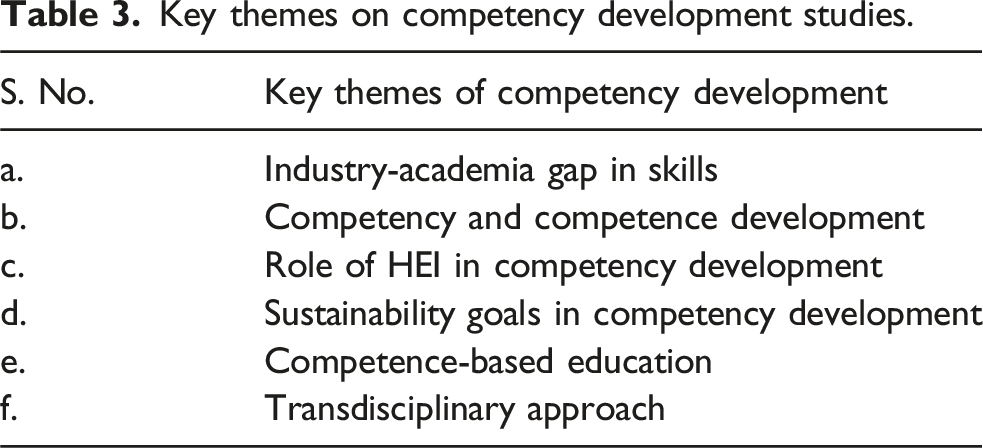
Trends in curriculum design for competency development.
Study by Sultanova et al. (2017) aim was at studying the effectiveness of two student centered pedagogies that are enquiry-based and work-based approach. Both are found to be effective in enhancing the ability of students to think, analyze and perform real time tasks of today’s VUCA world.
Almutiry et al., 2022 in their paper aimed at exploring the strategies used by NBU, China to implement HIPs (High Impact Practices) for the development of workforce-ready competencies. HIPs are pedagogies adopted by universities to improve the learning process and skill development of students and are preferred by many universities in US, UK, and China due to its many benefits, like modest improvement in student performance, student exposure to diverse forms of learning, thereby building workforce skills. The paper finds out key factors affecting the implementation of HIPs that include- (1) Faculty qualification and expertise (2) Curriculum adaptability (3) University capabilities and infrastructure (4) Students and community feedback.
The paper brings forth the Launch, Measure & Learn model as imperative to continuously assess the system for long-term success. Another competency-based learning approach was explored in Mexico for engineering graduates called as Challenge based learning (CBL) that is found to contribute in developing flexible problem-solving abilities in a collaborative and scientific work environment. This study in paper (Félix-Herrán et al., 2022) suggests ti incorporate more transversal competencies to support innovation at work by these upcoming professionals.
Another student-oriented pedagogy that is especially suitable for research-based jobs is inquiry-based learning that is taught through mentoring by professors. Author Cutillas et al. (2023) findings reflect the importance of preparing graduates for managing an uncertain and unpredictable environment at work. The authors outline the benefits of mentoring in competence development and professional development. Mentoring by professors, experts and alumni in the form of feedback and guidance was found to have a positive impact on students’ learning.
Paper (Birdman et al., 2022). Suggests the importance of an active learning approach that is effective in the holistic development of students.
Change in faculty role
Birdman et al., (2022) findings further suggest the alignment of teaching activities with student’s assessment to achieve competency development goals for students. The paper also examined the learning tools used in CBC. Experiential learning has been suggested as a suitable tool to build complex problem-solving experiences. To follow such pedagogy, additional commitment by instructors to lead students through the setbacks and failure encountered in experiential learning systems. It was also found that the role and efficiency of professors become prominent in such a system. They are expected to recognize individuals’ learning style of each student and customize their content, pedagogies and teaching tools accordingly.
Riza et al. (2024) aimed at finding the challenges in getting quality lecturers for HEIs. To keep the curriculum updated with global trends, lecturers must possess competencies to develop relevant curriculum techniques for students’ engagement, research and development. The paper also outlined some key challenges for lecturers that are- • Dealing with a diverse set of students • Alignment of the learning process with technological advancement. • Balancing teaching, research and administrative tasks. • Lack of organizational support. • Maintain positive interaction with students.
The paper findings suggested that lecturers follow two main techniques. These are UDL techniques and an inclusive learning approach. The paper also discussed the significance of adopting academic mentoring and active industry collaborations as two trends in developing lecturers’ competencies. An important issue discussed in all papers is the capability of lecturers to impart competency-oriented training to university students. Competency development workshops have been suggested as a measure for lecturers to upgrade their ability to design, implement and train student-centric learning content, tools and pedagogies.
Technology in curriculum design
Technology enabled learning (TEL) is fast gaining importance in higher education courses. Online education is filling the massive education and employability gaps specially in developing countries. Authors Orozco-Messana et al., 2020 tests the implementation efficiency and effectiveness of TEL based resources developed for master’s level research. Project. The collaborative feature enabled through technological integration assist faculties to develop student centric pedagogies that also enhance their own academic and research skills. Paper (Alshammari et al., 2023) outlines the use of technology in aligning techniques of learning, development and assessment in curriculum design. Trends like AI, analytics, blockchain and big data are found to be replacing the traditional methods of pedagogy and overall education process. Mobile or m-learning and gamification (Roslan et al., 2023) are useful in identifying the strengths, weaknesses and major gaps in students learning profile. Students enjoy using such tech-based pedagogies that is found to considerably enhance their performance in competency development.
Digitalized curriculum, a new trend in curriculum design has been discussed in the paper (Khoza and Mpungose, 2020). Digital presence of education shows a lot of potential in competency development and will be an inevitable extension in HE policies. Although it is yet to be implemented, it already grabs positive consideration from many countries.
Deep learning which is among the upcoming trends in technology has been tested by Chinese authors Zuo & Wang (2021) in their paper that successfully tested application of deep learning principles on the design and evaluation of Higher education course curriculum in china and other countries. Named as the the teaching design under the deep learning model, it provides a check on all the major learning points like, curriculum, teaching style, students learning etc.
The analysis of results brings forth global trends and innovations in the curriculum design of higher education institutions. Many curriculum designs have been discussed that pave the way for professors of HIE to experiment with effective teaching. An important dimension raising major concerns is the assessment method for measuring the degree of competency level attained by students through the learning process.
Discussion
The purpose of this scoping review is to map and synthesise existing literature on the topics of competency development in graduates and trends in curriculum design. This review considered competency development as the base subject to be studied. In order to explore all possible dimensions of competency development the first research question was framed. The goal of this research question was to understand the prevailing themes of research on competencies development for graduates in HEI. Almost all the papers studied talk about the industry concern over the supply of competent graduates from higher education institutions. For this, it is suggested to adopt a well-rounded education system. Both the current batch of students and alumni are expected to learn (Butum et al., 2015) skills and competencies at end of the programs. Buchanan and Bharadwaj, 2022 findings indicate that students of HE lacks clarity on what type of competencies they are seeking to develop. Authors of the study Deepoo. et al., (2020) found that most of the students at professional levels expect specific outcomes from thoer studies however these outcomes are different for different students and the key goal for every student is increase in their long term employability. A gap in awareness on career opportunities and competencies in demand by the corporate was found, for which curriculum planning and change is required. Professional social networks like LinkedIn and their jobs provide ample data on skills sets in demand and the need for competency-oriented programs (Boshkoska et al., 2024). Moreover, students were dissatisfied with the training procedures adopted to impart competencies like entrepreneurial abilities, skills and traits (Adewumi and Cele, 2023). Also, students did not find the course structure relevant for learning contemporary skills and competency (Ganguli et al., 2014). Sustainability is among the top priorities around the world in all economic and non-economic systems. Considering the volatile and fast-changing nature of industries, it is necessary to align the SDGs in all HE courses curricula (Mair and Druckman, 2023). This is essential to develop sensitivity towards the environment in future graduates by nurturing activities like real-world connections, reflection, and interaction.
Curriculum design has been referred to the overall approach a university follows towards students’ education and training (Misra, 2017). The creativity in preparing the course and learning content, the time period and defining of learning outcomes and course objectives. It generally involves the following parts- (1) Lesson plan (2) learning objectives (3) Topics for discussion (4) Assessment (5) Pedagogy
Technology has changed the entire business scenario with innovations in employee-employer relationships, time and distance issues in employment, etc. HEIs need to upgrade their courses and curricula to meet the demand of the upcoming trends, like the gig economy and use tools such as Tricuspoid. Which is an internet-based tool to assess students’ capabilities and competency levels and is useful in designing focussed learning strategies for students (Achcaoucaou et al., 2014). Micro credentials are a perfect innovation in course structure in addition to the regular curriculum followed in university. These short-term skill-based courses are designed to develop specific industry-based competencies like AI and Data Analytics. However, such courses need accreditation for equivalence from external and internal authorities.
Another expectation of the employers is to introduce a multicultural perspective in curriculum design to ensure students having ability to work in an international environment. The same has been adopted by some institutions in disciplines like research, business studies, and engineering. Studies conducted across U.S, Kazakhstan, Mexico, Spain, and India emphasized the need to align curricula with industry needs, and for this, it is essential to overcome the obsolete and traditional curriculum patterns.
Most of the research highlighted the need to adopt competency-oriented curricula. CBC is based on pre-defined learning outcomes for every single competence. There should be a few outcomes that are planned along an articulated path. This path should be defined considering the number of levels decided to acquire competency. This also needs to maintain a competency document for every student’s performance that will act as a track record of the levels achieved in competency development. This will be further helpful in providing one-to-one feedback. Therefore, HEIs should aim to develop a constructive alignment between course outcomes, curriculum strategies and assessments.
An urgency was felt in all papers for HE to shift their focus from teacher-centric learning to student-oriented learning. This subject was studied by researchers through both quantitative and case-based methods. For instance, in their paper authors (Birdman et al., 2022). Analyses industry and alumni views on the quality of pedagogy. From both the industry and students’ perspectives, pedagogies were considered to be more theoretical and lecture-based, following obsolete teaching methods. Both raised dissatisfaction on expertise and competencies of lecturers to train students in futuristic skills (Vu et al., 2023). It was found that when teachers consider the personality traits of each student while planning pedagogy, it results in better learning experiences. A student-centric curriculum can foster self-regulated learning in which the students plan their learning paths and timeline. Self-Directed learning that is presently a part of the medical science curriculum can be adopted in other professional courses like MBA, however it is required to first assess the competencies of students to manage their own learning journey including pace, pedagogies and courses. Faculty need to equip themselves with not only subject matter expertise, but they also need to be well trained on understanding students’ psychology, learning styles, creating customized content and pedagogies etc.
With changes in employment conditions, nature of work and technological integration in all jobs, activity-based pedagogies are a must (Butum et al., 2015). This will equip students with not just skills but also cognitive as well as behavioural competencies to perform any future work. Most of the research supported the use of active learning practices with the transnational education model in the curriculum. Project-based learning was also tested in two studies, especially in MBA, engineering and research-based courses. Inquiry-based learning and work-based learning approaches were among other pedagogies that align best with a CBC.
Some of the learning tools found to be effective in competency development included- • Video Tutorials • Calculation and simulation software’s • Iterative thematic summaries,
Also, sustainable Pedagogies were also suggested like- • Case studies • Flipped classrooms (Hernàndez-Sabaté et al., 2024) • Internship programs • Problem-based learning.
The concept of the global classroom, as an internationally accepted domain, is yet another effective method for CD. The same has been tested for its feasibility in Mexico with positive results (Hernández-Sabaté et al., 2024). Digital skills and technology are at the forefront of such international classroom models. Another interesting strategy is the use of mentoring as a learning technique in which students attach themselves to their mentors and learn with them various competencies Mentoring is a practice based on Bandura’s social learning theory, which pace up the skill development in student along with building confidence and professional attitudes and values. This is because students get direct access to their mentors who help them adopt the learning system. Professors and experts were found to play a significant role in this approach. (Cutillas et al., 2023).
Motivation of students is another interesting aspect studied in Russian and Indonesian universities. The degree of CD in students is directly affected by intrinsic and extrinsic motivational factors. These factors also helped in defining stages in attaining expertise in a competency. Motivational strategies were most needed during the retardation and saturation stages. A right balance of intrinsic and extrinsic motivational strategies should be provided for overcoming any barriers in the learning process (Nuphanudin et al., 2022).
A major cause of low competencies in students was the inappropriate assessment system prevailing in HEIs. The pedagogy used was not capable of developing workplace competencies (Das and Burman, 2019). A competency should be assessed with predefined expertise levels. Different studies have highlighted the need to change the assessment of students from a grade point system to an employability readiness indicator system (Sultanova et al., 2017) which is considered an effective method of assessing competencies when aligned with all levels of blooms taxonomy. This starts by firstly developing learning outcomes for each competency and then deciding on different levels of expertise for each competency. Self-assessment by students of their performance was a unique aspect tested in papers that fulfil students’ need to develop their foundational competence.
Conclusion
This paper aims to present a review of competence development and curriculum strategies in higher education institutions. The focus of the paper is to find international trends in competency development and how they affect the HE curriculum strategies. The countries from where the papers have been included for this review suggest a wider coverage, although the frequency of publication on these subjects is sluggish. In the past 15 years, only the years 2023 and 2024 show a higher number of publications. In this, studies on competency development are more numerous compared to curriculum strategies & design. Hence, more research on these subjects is required to understand their feasibility from different dimensions, like faculty acceptance, government and HE management perspectives.
Competency development has gained prominence among employers and students due to a transnational approach in business, which should be incorporated in the HE curriculum to equip students with the required competencies. Sustainability and OBE are among the most common subjects affecting competency development needs. The Sustainable Education Goals, which are an outcome of SDGs adopted worldwide, are found to be driving most of the studies on CD. A new set of sustainable competencies is now demanded by employers across the world to keep up with economic and industrial development.
The demand for specific skills and abilities demanded by employers has a direct effect on HE teaching content and techniques, such as pedagogies and assessment systems. An intent for active participation by employers towards competency training and its assessment was found missing in all papers analysed.
Research on competency-based curriculum in HEI was mostly found in the medical science field of study. This is because CBC was initiated in medical sciences worldwide. Fields like engineering, PhD research and undergraduate courses have been studied on this subject so far. These field show mixed outcomes in terms of the feasibility of competency development through change in curriculum design. Adopting new pedagogy and assessment systems presented mixed outcomes, including positive as well as restricting results. Three main stakeholders, namely, students, lecturers and employers emerged to be mostly affected by the research themes.
Our results suggested that student centric learning and role of professors are two important factors affecting a successful shift towards competency-based curriculum. However, assessment and accreditation of new curriculum design are essential changes for this method of teaching which will take some more years to be formalised in the education system. This is because HEIs around the world are still following traditional methods of teaching and changing age-old systems will bring together challenges like resistance from faculties, college management and infrastructural issues. Adopting a new approach keeping student at the centre, shifting to technology-oriented pedagogies and a competency-based assessment system will demand behavioural as well as technical upgradation by faculties and management systems and infrastructure. These factors still need to be researched to find the viability of this approach.
The studies, however, have shown a positive intent of all the key stakeholders to upgrade their respective gaps like infrastructure, new age teaching skills, adopting new pedagogy and assessment models and approaches. This is an encouraging result to move forward with the discussed strategies to prepare future-ready competency graduates all around the world.
There is also a need to formalise a competency-based curriculum for its early adoption. Government, accrediting agencies and HEI direct involvement is needed. To achieve positive results in competency development, students’ needs should be segregated on the basis of their goals, personality traits and learning styles, and course certifications can be designed to suit the needs of such groups of students.
Supplemental material
Supplemental material - Advancing competency development through curriculum design in higher education institutions: A systematic review
Supplemental material for Advancing competency development through curriculum design in higher education institutions: A systematic review by Payal Johri, Deepak Bangwal in Industry and Higher Education.
Footnotes
Funding
The authors received no financial support for the research, authorship, and/or publication of this article.
Declaration of conflicting interests
The authors declared no potential conflicts of interest with respect to the research, authorship, and/or publication of this article.
Supplemental material
Supplemental material for this article is available online.
Appendix
References
Supplementary Material
Please find the following supplemental material available below.
For Open Access articles published under a Creative Commons License, all supplemental material carries the same license as the article it is associated with.
For non-Open Access articles published, all supplemental material carries a non-exclusive license, and permission requests for re-use of supplemental material or any part of supplemental material shall be sent directly to the copyright owner as specified in the copyright notice associated with the article.
