







Abstract
This paper presents Reverse Sabbaticals 2.0, a curriculum-centered framework designed to address persistent gaps between academic instruction and evolving industry requirements. Although universities and industries collaborate through internships, guest lectures, sponsored research, and technology transfer, these interactions rarely influence the design of core curricula. Reverse Sabbaticals 2.0 proposes structured two-way exchanges between faculty and industry professionals to enable curriculum co creation and applied learning. The model organizes participation across three tiers of engagement; Engage, Embed, and Elevate and two participation tracks involving faculty externships in industry and practitioner participation in academic roles. The framework is informed by a systematic review of 28 peer-reviewed studies supported by bibliometric mapping and expert consultation. Building on principles of experiential learning and collaborative curriculum design, the paper also outlines a research agenda across six domains to guide future empirical testing and institutional implementation of structured academia–industry collaboration.
Keywords
Introduction
Despite ongoing dialogues on bridging academia and industry, a persistent disconnect remains between the competencies imparted in higher education and the dynamic demands of modern workplaces. Employers across sectors, including business, technology, engineering, and healthcare, frequently report that graduates lack essential skills, such as contextual problem-solving, digital fluency, and cross-functional collaboration (Agrawal and Shukla, 2024; Chan, 2023; Kelly et al., 2023). This gap is amplified by technological shifts that outpace curriculum reform. For example, practices such as data-driven decision-making, sustainability integration, and platform-based work systems have become standard in industry, while academic syllabi often remain static and theoretically oriented (Kaicker et al., 2023; Otache, 2022).
Such misalignment affects not only employability but also the role of universities in contributing to innovation ecosystems and economic development (Marques et al., 2024). While most institutions acknowledge the importance of collaboration, prevailing engagement models tend to be episodic and marginal to curriculum development. Guest lectures, corporate seminars, and internship tie-ups offer exposure but rarely evolve into co-owned instructional design or pedagogical renewal (Ahmed et al., 2022; Kulkarni and Desai, 2021; Menon et al., 2021; Misra, 2020). Formal instruments, such as MoUs or advisory boards, often function as procedural checklists rather than active platforms for knowledge co-creation (Kaicker et al., 2023; Otache, 2022). These initiatives frequently rely on individual networks, lacking institutional continuity or curricular impact (Hartman et al., 2025; Witt et al., 2021). Feedback from industry is seldom integrated into course revision cycles, resulting in slow curricular adaptation and minimal linkages to real-time sectoral shifts (Kelly et al., 2023; NASSCOM–AICTE, 2025; Pereira et al., 2020).
Furthermore, most collaborations lack differentiated engagement tracks or role-aligned responsibilities, limiting their scalability and long-term effectiveness (Marques et al., 2024). Despite the growing emphasis on work-integrated learning and stakeholder participation in curriculum governance, few frameworks provide mechanisms for structured, repeatable exchanges (Kettunen et al., 2022; Malhotra et al., 2023; Pereira et al., 2020). International evidence and policy movements, including India’s National Education Policy (NEP) 2020, are increasingly calling for systemic models that treat the curriculum as a shared, evolving asset (Kelly et al., 2023; Kolb and Kolb, 2005; Government of India, 2020).
In response, this paper introduces a new framework rooted in curricular immersion and role progression. It is based on insights from a systematic review of 28 peer-reviewed studies and informed by conceptual models such as experiential learning, boundary spanning, and co-design. It proposes structured, tiered formats for sustained academia–industry engagement, with an emphasis on relevance, adaptability, and institutional alignment.
The key objectives of this paper are to: • Define the proposed framework and its structural elements; • Establish the conceptual and policy foundations that inform its design; • Synthesize findings from the supporting literature; • Outline practical tools and formats for implementation; and • Present a future-facing research agenda to validate and refine the model.
Conceptual and policy foundations for Reverse Sabbaticals 2.0
Theoretical underpinnings
Contemporary approaches to curriculum-linked engagement in higher education increasingly draw on three interrelated theoretical perspectives. First, experiential learning theory emphasizes learning as a process grounded in context, iterative practice, and reflection, making real-world immersion a critical element of professional development (Kolb and Kolb, 2005). This supports the idea that educators and practitioners benefit from active participation in each other’s domains, where knowledge is acquired through application and reflection.
Second, boundary-spanning theory highlights the value of individuals who operate across institutional or sectoral divides, enabling the flow and adaptation of ideas, tools, and practices (Tushman and Scanlan, 1981). Such roles help bridge the gap between academic content and industry application, facilitating mutual understanding and innovation.
Third, the concept of communities of practice underscores the importance of shared purpose, joint activity, and identity formation in shaping collaborative learning environments (Wenger, 1998). Through structured interactions and co-engagement, academic and industry actors can co-create curricular and pedagogical assets that evolve over time.
Together, these frameworks provide a conceptual foundation for models that emphasize role-aligned, immersive engagement and support pedagogical renewal, knowledge exchange, and institutional adaptability. Future empirical work could also examine the role of boundary-transitioning actors, including faculty members or industry professionals who move between institutional settings, to understand how training structures, role design, and institutional mandates influence collaboration success and curriculum co-creation.
Curriculum as a shared, co-owned asset
In the Reverse Sabbaticals 2.0 (RS2.0) model, the curriculum is reimagined as a dynamic, co-owned platform for mutual value creation. Moving beyond traditional faculty-led models, RS2.0 positions the curriculum as a living interface shaped through sustained, role-specific collaboration between academic and industry participants. This approach draws on experiential learning theory, which emphasizes context-based application (Kolb and Kolb, 2005), and boundary-spanning frameworks that stress the value of shared interpretation across domains (Tushman and Scanlan, 1981). Under this framing, the curriculum is not just an academic output but a process of continuous exchange in which pedagogy, content, and assessment evolve in response to real-world needs and institutional goals. RS2.0 advances this idea through structured tools, such as rotational immersion, co-teaching formats, and embedded feedback mechanisms, that formalize curriculum co-ownership. By placing the curriculum at the core of engagement, RS2.0 avoids one-off interactions and instead fosters durable, outcome-driven collaboration. It transforms curriculum design into a shared institutional responsibility, balancing academic rigor with industry relevance.
Policy hooks: India and global alignment
The proposed Reverse Sabbaticals 2.0 (RS2.0) framework closely aligns with both Indian and global higher education reform priorities. In India, NEP 2020 advocates greater curricular flexibility, stronger industry–academia linkages, and expanded stakeholder participation to improve graduate employability and institutional relevance. RS2.0 addresses these goals by embedding co-design and immersion directly into the curriculum development process. This alignment extends to national quality assurance systems. Frameworks such as the National Assessment and Accreditation Council (NAAC) and the National Institutional Ranking Framework (NIRF) incentivize institutions to demonstrate structured collaboration, curricular responsiveness, and outcome-based education. RS2.0 offers a pathway to operationalize these expectations through role-aligned, tiered engagement formats (Office of the Principal Scientific Adviser to the Government of India, 2024).
India’s 2% Corporate Social Responsibility (CSR) mandate further strengthens the model’s feasibility by enabling companies to fund education-focused initiatives. These may include academic residencies, co-teaching partnerships, and joint curriculum development, each well-suited to RS2.0’s modular design. Globally, the framework aligns with the trend toward institutionalizing work-integrated learning and curriculum co-ownership. Its adaptable structure allows for integration into diverse regulatory, funding, and accreditation contexts, positioning RS2.0 as a scalable tool for enhancing academic–industry synergy across systems.
Global perspectives and work-integrated learning (WIL)
Work-integrated learning (WIL) has evolved globally from a focus on employability to a broader pedagogical movement aimed at embedding real-world experience in the heart of academic practice. Contemporary WIL models now go beyond conventional internships to include academic residencies, applied capstone projects, and digital innovations, such as computer-mediated internships (Bayerlein and Jeske, 2018). These approaches aim to enhance student preparedness while fostering reciprocal capacity building between institutions and external stakeholders. However, most WIL initiatives remain student-centric and peripheral to core curriculum development, limiting their lasting influence on teaching design and institutional structures (Pereira et al., 2020; Young et al., 2017).
Early models of integrating professional experience into academic programs laid the foundation for current experiential approaches. Incorporating real-world expertise into IT curricula can facilitate the advancement of domain-specific competencies and curricular reform (Holt, 2004). Building on these insights, Reverse Sabbaticals 2.0 (RS2.0) extends the WIL paradigm by incorporating faculty and industry professionals into structured, tiered exchanges that explicitly target curricular transformation. By emphasizing bidirectional engagement, institutional fit, and progression by role, RS2.0 complements existing WIL strategies while addressing their structural gaps. It functions not only as a platform for applied learning but also as a governance-aligned model for sustained, curriculum-integrated industry participation in higher education.
Methodology
Literature review design
This review aimed to identify the conceptual foundations, implementation models, and policy insights that could inform the development of the RS2.0 framework and its proposed research agenda. The methodology was anchored in four pillars: (1) A systematic literature review guided by PRISMA 2020 protocols to map models of academia–industry engagement with curricular relevance. (2) Bibliometric mapping using Litmaps Pro for citation tracing, thematic clustering, and visualization of conceptual pathways. (3) Expert inputs were obtained through structured workshops and informal consultations with academic and industry stakeholders to assess relevance and feasibility. (4) A structured framework construction process to ensure conceptual clarity, practical adaptability, and alignment with national and global education policy directions.
This layered approach ensured that the resulting RS2.0 framework was informed by both scholarly evidence and practitioner insight, supporting its conceptual robustness and practical implementation potential.
Literature search and screening
The systematic literature review followed PRISMA 2020 guidelines to ensure methodological rigor and transparency (Page et al., 2021). Google Scholar served as the primary database, and journal quality was assessed using the Scimago Journal Rank (SJR) tool. A Boolean string combining key terms related to academia–industry collaboration and curriculum co-creation was applied to capture both conceptual and empirical studies: “industry-academia collaboration” OR “academic-industry exchange” OR “curriculum co-creation” OR “faculty industry immersion” OR “faculty externship” OR “academic industry immersion” OR “hands-on curriculum” OR “industry-based learning”
The search was restricted to publications from 2013 to 2025, with additional backward and forward citation tracing conducted via Litmaps Pro to enhance coverage of foundational and emergent studies. A total of 813 unique records were initially identified. Screening proceeded at three levels; title, abstract, and full text using the following eligibility criteria:
Inclusion criteria
• Peer-reviewed journal articles (2013–2025) • Indexed in Tier 1 or Tier 2 journals (Scopus-based SJR) • Focused on higher education curriculum innovation, academia–industry collaboration, or structured exchange programs • Methodologically defined, English-language studies
Exclusion criteria
• Journals below Q2 or not Scopus-indexed • Grey literature (e.g., reports, blogs, white papers) • Studies unrelated to higher education or limited to vocational or school-level education
After removing 618 duplicate records, 195 studies remained for a preliminary review. Of these, 125 studies were screened based on title and abstract relevance. After screening exclusions, full texts were sought for 101 studies, of which 87 were assessed for eligibility. Ultimately, 28 studies were retained for the final synthesis (Figure 1). PRISMA 2020 study selection process. This figure presents the four-stage screening process (identification, screening, eligibility, and inclusion) used to identify the 28 peer-reviewed studies that informed the development of the RS2.0 framework.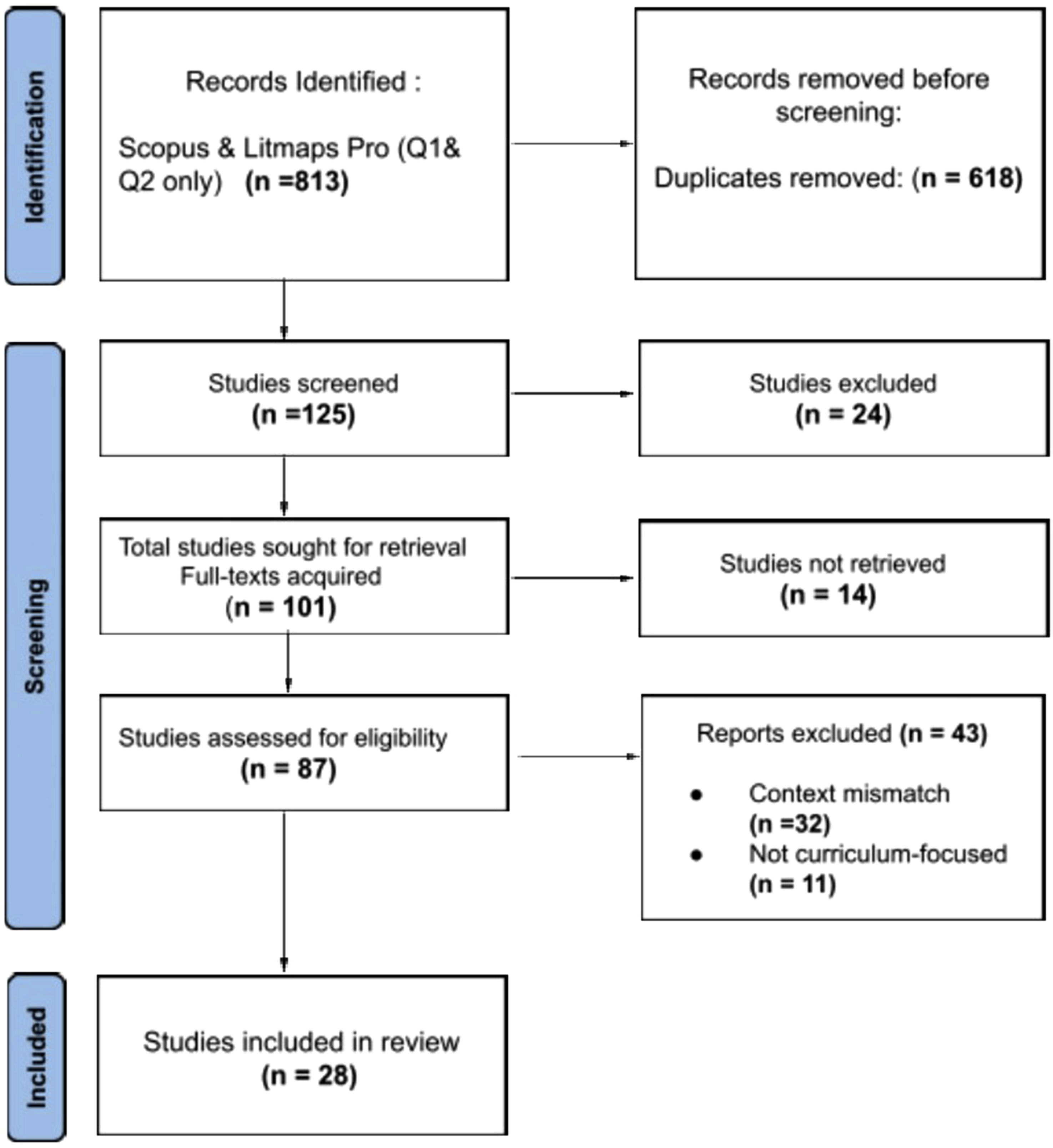
Bibliometric mapping and thematic synthesis
To complement thematic coding, bibliometric mapping was conducted to visualize the conceptual structure, recency, and influence of the selected studies. Using Litmaps Pro, a citation network was generated based on backward and forward tracing across the 28 peer-reviewed articles. This process helped identify both foundational contributions and emerging works offering relevant conceptual or structural insights. Recent studies have provided methodologically strong and thematically aligned perspectives, despite modest citation counts (Chan, 2023; Hartman, 2025; Marques, 2024). Foundational literature has also provided reference points for structured engagement models (Wohlin, 2014; Garousi, 2016). The resulting map (Figure 2) plots articles by publication year and citation strength, with node sizes reflecting relative influence. This temporal citation layout supports the RS2.0 framework by combining established foundations with more recent developments in curriculum-integrated collaboration. Temporal-citation map of literature informing RS2.0. Source: Author-created using Litmaps Pro. The figure plots 28 key studies by year of publication and citation influence, showing connections between foundational works and emerging contributions.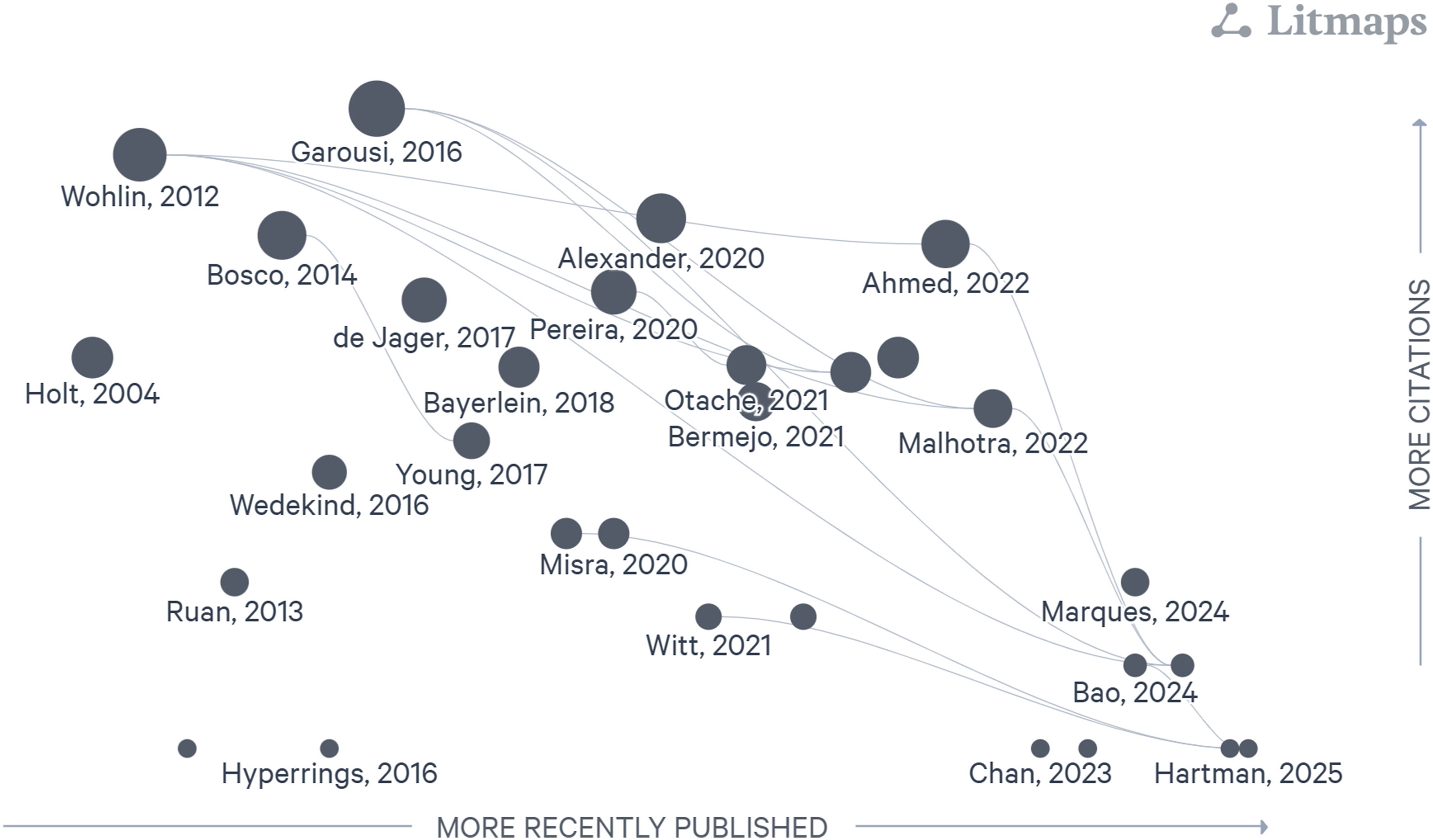
Framework development: Reverse Sabbaticals 2.0
The Reverse Sabbaticals 2.0 (RS2.0) framework was developed through a structured process integrating evidence from a systematic review and insights from collaborative iteration. The approach involved three key stages:
Thematic synthesis
Themes from the 28 selected studies, such as curriculum co-ownership, role alignment, and engagement sustainability, were distilled into core design elements. These informed the scaffold for RS2.0, mapped against known gaps in current collaboration models.
Expert consultation and iterative refinement
Input was gathered through workshops and informal exchanges with faculty, researchers, and mid-to-senior industry professionals. This dual-perspective feedback helped ensure practical relevance and institutional fit. Suggestions on the progression logic, feasibility, and governance alignment were incorporated in two iterative rounds.
Analytical pattern matching
The framework was refined through pattern matching with established models, including experiential learning (Kolb and Kolb, 2005), boundary spanning (Tushman and Scanlan, 1981), and co-design frameworks (Kettunen et al., 2022; Pereira et al., 2020), to ensure conceptual consistency.
The RS2.0 model presents a modular, tiered structure that links academic and industry roles to curriculum development via reciprocal immersion. It is built for scalability, policy alignment, and real-world integration through stakeholder-responsive mechanisms.
Research agenda formulation
To support future empirical examination of the RS2.0 framework, a structured research agenda was developed through an inductive process. This agenda drew on thematic gaps identified in the systematic literature review, bibliometric mapping, and expert consultations. Studies lacking empirical investigation in areas such as exchange formats, curricular outcomes, and role-specific engagement were thematically coded and grouped into six domains: format efficacy, stakeholder motivations and constraints, curriculum outcomes, institutional enablers, role design across engagement tiers, and equity in access.
This agenda formulation follows established approaches in conceptual and future-oriented educational research (Thongnun et al., 2025). Rather than prescribing specific outcomes, it outlines areas where further empirical inquiry may help assess the feasibility, effectiveness, and contextual applicability of RS2.0-inspired collaboration models. The proposed domains therefore provide a preliminary roadmap for multidisciplinary research that could examine how structured academia–industry exchanges influence curriculum development, institutional collaboration practices, and access to partnership opportunities across different educational settings.
Themes emerging from the systematic review
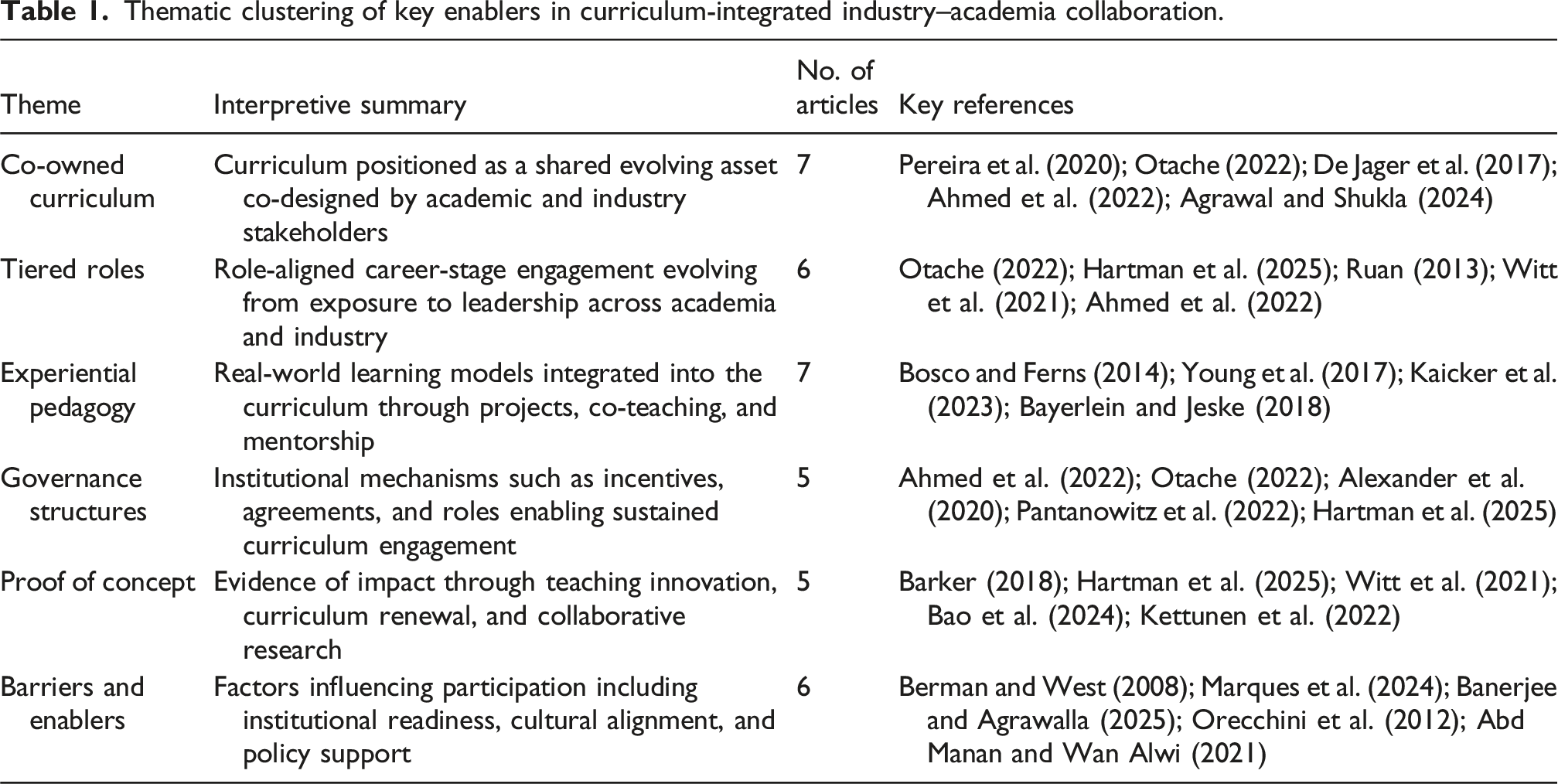
This section synthesizes insights from 28 peer-reviewed studies focused on academia–industry collaboration in curriculum development. While drawn from varied disciplines, the studies converge on a core issue: collaboration remains largely peripheral to academic structures. Thematic coding and clustering surfaced six interrelated themes, each reflecting recurring patterns, structural limitations, and emerging models of practice. Rather than offering prescriptive solutions, these themes expose systemic tensions and practical innovations that directly inform the design of the RS2.0 framework and its accompanying research agenda.
Theme 1: Curriculum as a co-owned construct
A growing body of research indicates that curriculum development is moving beyond the academic domain to become a shared responsibility involving industry and policy actors (Otache, 2022; Pereira et al., 2020). Tools such as joint curriculum mapping, employer feedback mechanisms, and co-teaching formats have been shown to improve alignment between academic content and workforce expectations (Ahmed et al., 2022; De Jager et al., 2017; Waterbury et al., 2017). This evolution resonates with experiential learning theory, which views the curriculum as a dynamic space shaped through application, reflection, and interaction (Kolb and Kolb, 2005). Government initiatives and structured collaborations between academia, industry, and policy bodies are facilitating curriculum redesign based on real-world practices (Agrawal and Shukla, 2024; Ahmed et al., 2022). A European-wide study further reinforces this trend, reporting strong support for employer involvement and internship-based models in curriculum design highlighting both feasibility and stakeholder interest (Pereira et al., 2020).
Similar shifts are evident in the South African context, where institutional responsiveness and employability are increasingly viewed as joint responsibilities between higher education and industry. The value of sustained, structural engagement over short-term input has been emphasized, reinforcing the RS2.0 principle that durable impact stems from embedded, role-aligned collaboration (Wedekind and Mutereko, 2016). Collectively, these findings support the growing consensus that the curriculum should be viewed as a co-owned, evolving construct rather than a fixed academic product.
Theme 2: Tiered roles for faculty and industry
Research consistently stresses the importance of differentiated, role-based engagement between academia and industry. Generic or one-size-fits-all models often fail to sustain collaboration or deliver meaningful curricular outcomes (Otache, 2022). In contrast, tiered involvement, spanning brief exposure to sustained co-creation, has emerged as a more effective and scalable approach. Faculty benefit from structured formats such as industry placements, externships, or collaborative sabbaticals, which expose them to operational realities and help align teaching with current practice (Hartman et al., 2025; Ruan, 2013). On the industry side, engagement is more impactful when it matches professional maturity, for example, guest lectures or mentoring by early-career experts and curriculum design or advisory roles for senior professionals (Ahmed et al., 2022; Witt et al., 2021).
These tiered roles foster deeper integration of applied knowledge, encourage mutual respect, and enable sustained partnerships grounded in institutional support and aligned incentives. They also offer a practical structure for embedding real-world relevance without overwhelming academic schedules or industrial timelines.
Theme 3: Authentic learning and experiential pedagogy
An increasing body of literature underscores the value of authentic learning approaches in enhancing curriculum relevance and graduate employability. Strategies such as project-based learning, case-led assessments, and joint faculty–industry mentorship allow students to engage with real-world complexity while deepening their academic grounding (Bosco and Ferns, 2014; Prabhuram et al., 2020; Young et al., 2017). Grounded in experiential learning theory, these methods treat learning as an active cycle of doing, reflecting, and refining—moving beyond static content delivery (Kolb and Kolb, 2005).
Institutions are now embracing interactive, co-created formats in which students, faculty, and practitioners collectively shape the learning process, rather than viewing the curriculum as a fixed structure. This shift strengthens curriculum design and promotes institutional collaboration and nurtures student agency (Chen, 2023; Valiente Bermejo et al., 2022). Case examples, such as the Intel PESU partnership, illustrate the potential of co-designed, industry-delivered courses that integrate project mentorship and align academic outcomes with professional expectations (Kaicker et al., 2023). Digital formats, including computer-mediated internships (CMIs), expand these benefits by offering scalable, guided opportunities for applied learning across broader learner cohorts (Bayerlein and Jeske, 2018). Together, these models highlight the importance of embedding real-world tasks within course architecture, not as optional additions, but as integral elements of instructional design and pedagogical intent.
Theme 4: Governance and institutional design
Experiential learning models are gaining traction; however, their effectiveness often hinges on structured institutional mechanisms. Without formal governance, academia–industry collaborations tend to remain fragmented or reliant on personal networks (Ahmed et al., 2022; Otache, 2022). Establishing clear frameworks, incentives, and accountability mechanisms is essential for sustaining engagement over time.
The literature outlines multiple governance strategies, including phased engagement models (Ahmed et al., 2022), standardized agreements between institutions and firms (Pantanowitz et al., 2022), and meta-governance rules that align academic and industry goals (Alexander et al., 2020). These mechanisms reduce friction, clarify expectations, and enable scalable collaborations. Incentive systems are equally critical. Faculty participation increases when industry-facing activities are formally recognized through promotion pathways, FDP credits, or integrated sabbatical plans (Hartman et al., 2025). On the industry side, meaningful engagement is more likely when contributions are acknowledged through CSR-linked credentials or honorary academic roles (Marques et al., 2024). Governance is therefore not merely supportive but foundational. Co-owned knowledge systems, shared risk frameworks, and feedback-driven curriculum loops are increasingly identified as important components for building trust, aligning expectations, and sustaining continuity in curriculum-linked partnerships (Kettunen et al., 2022).
Theme 5: Proof of concept and longitudinal value
Empirical evidence suggests that when academia–industry collaborations are designed with a clear intent and structure, they can deliver sustained curricular and institutional value. Faculty who participate in industry sabbaticals often return with renewed pedagogical strategies, improved alignment between theory and application, and expanded opportunities for collaborative research (Barker, 2018; Hartman et al., 2025). Programs that include co-teaching, externships, or industry-led mentorship have consistently shown mutual benefits, enhancing course content, encouraging innovation, and improving students’ preparedness for professional environments (Dearing et al., 2010; Witt et al., 2021). Longitudinal impact is also visible in models such as joint laboratories and translational research hubs, where academic and industry actors co-own the processes of learning and discovery (Bao et al., 2024; Kettunen et al., 2022; Pantanowitz et al., 2022). These settings embed real-world exposure into curriculum design and support continuity through institutional scaffolding. Such initiatives reinforce the idea that sustained, curriculum-integrated engagement, when backed by leadership commitment and governance mechanisms, can shift from experimental pilots to scalable practices within academic systems.
Theme 6: Barriers and enablers of sustained exchange
Despite several promising case studies, sustained academia–-industry collaboration remains inconsistent. Cultural mismatches, including differing timelines, priorities, and communication norms, often hinder progress (Marques et al., 2024). While academics typically value inquiry and depth, industry often prioritizes speed and tangible outcomes (Banerjee and Agrawalla, 2025). Other persistent barriers include unclear incentives, weak program structures, and limited policy support (Abd Manan and Wan Alwi, 2021; Orecchini et al., 2012). At the same time, new enablers are emerging. Government policies, CSR-backed teaching initiatives, and efforts by professional societies are opening more formal pathways for engagement (Abd Manan and Wan Alwi, 2021; Marques et al., 2024). Co-developed internships, project-based coursework, and shared decision-making models show potential, provided they are supported by institutional commitment and coordination across stakeholders.
In software engineering, recurring challenges such as goal misalignment, undefined roles, and clashing timelines have been widely reported (Garousi et al., 2016). These findings reinforce RS2.0’s emphasis on role clarity and tiered engagement as tools to reduce fatigue and sustain momentum. Structural critiques of India’s collaboration landscape also highlight the risks of asymmetry, ambiguity, and market-driven overreach (Nadh, 2022). These underscore the value of safeguards, such as co-governance, distributed responsibility, and phased immersion, all of which are built into the RS2.0 model.
Thematic clustering of key enablers in curriculum-integrated industry–academia collaboration.
The Reverse Sabbaticals 2.0 (RS2.0) framework
This section introduces the RS2.0 framework, developed to translate insights from the systematic review into a structured, actionable model for academia–industry collaboration. Unlike traditional sabbaticals or sporadic exchange programs, RS2.0 institutionalizes bidirectional, role-aligned, and time-bound immersion, allowing faculty and industry professionals to engage with one another’s environments while retaining continuity in their primary roles. As illustrated in Figure 3, RS2.0 places the curriculum at the heart of collaboration, treating it as a shared platform for learning design, applied problem solving, and long-term co-creation. The model organizes participation into three progressive tiers–Engage, Embed, and Elevate–mapped not by academic rank but by role readiness and institutional context. This structure enables flexible, scalable formats that evolve from brief exposure to strategic leadership, anchoring collaboration for pedagogical purposes and curricular transformation. The framework visually synthesizes this tiered exchange model, highlighting how curriculum-centered immersions can align academic and industry roles through structured engagement pathways. Reverse Sabbaticals 2.0 (RS2.0) framework. Source: Author-created. This is a conceptual illustration of the tiered exchange model aligning faculty and industry roles through curriculum-centered immersion formats.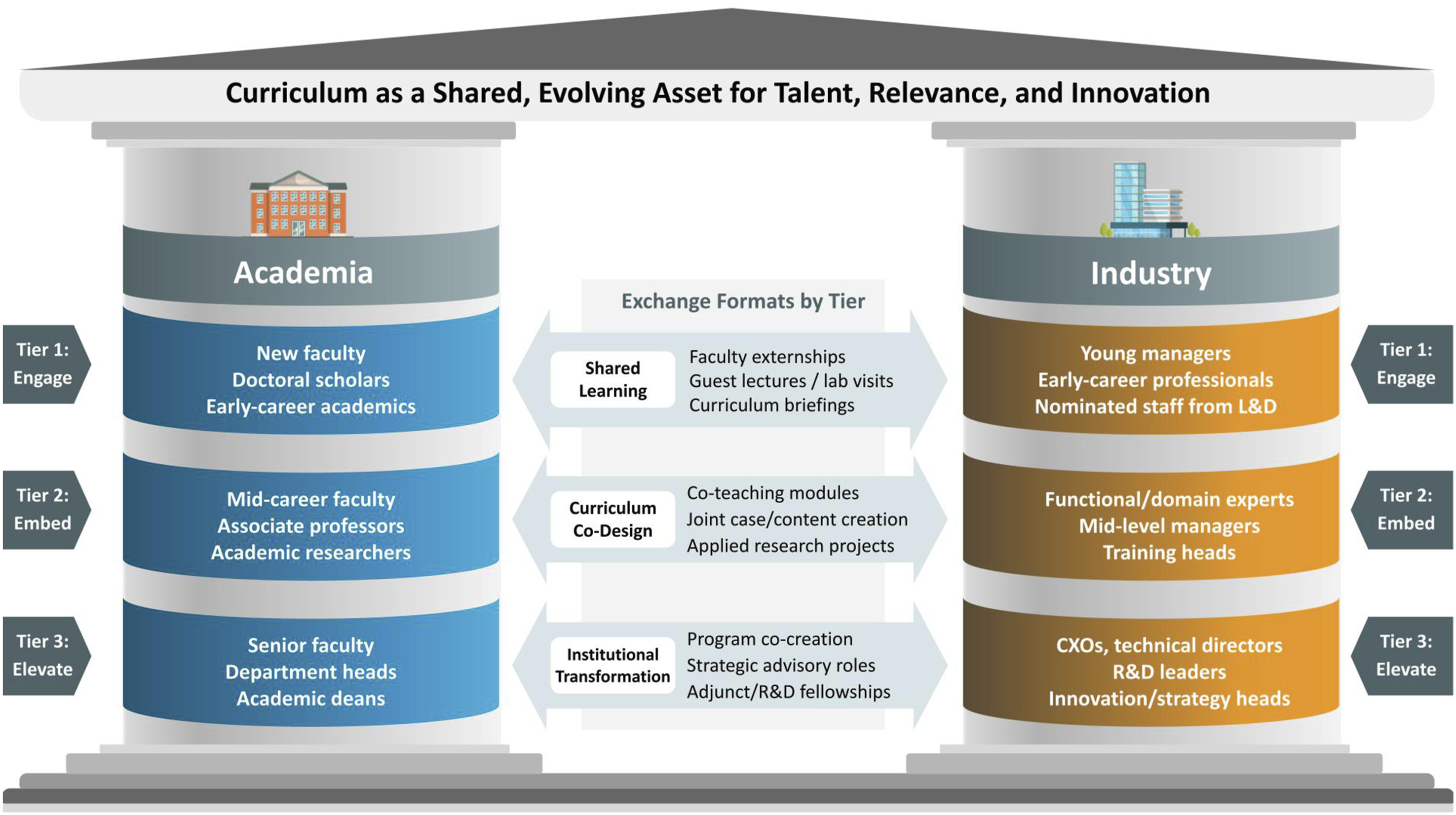
Tier 1: Engage – Short-term, role-aligned exposure
The Engage tier initiates structured, low-intensity collaborations between early-career faculty and emerging industry professionals. It serves as an orientation stage, designed to build foundational awareness, reduce institutional distance, and foster curiosity about cross-sector dynamics. For academics, this typically involves 1–2 week externships in operational settings, such as analytics teams, product design units, or learning and development cells, providing exposure to real-time workflows, commonly used tools, and business communication styles.
For industry participants, engagements may include guest lectures, participation in academic panels, campus immersion, and mentoring student projects. These interactions help demystify academic processes while offering professionals a firsthand understanding of learner expectations, institutional timelines, and pedagogical approaches. Although brief, these exchanges play a pivotal role in building shared vocabulary and cross-institutional empathy. They help participants grasp the rhythm, constraints, and priorities of the other domain, thereby laying the groundwork for more involved collaborations. By easing psychological and procedural barriers, the Engage tier sets the stage for meaningful, curriculum-linked partnerships in subsequent tiers.
Tier 2: Embed—Medium-term immersion and co-development
The Embed tier moves beyond observation to structured co-creation. Mid-career faculty, such as associate professors or academic researchers, participate in immersive externships involving applied research, content development, or co-assessment design. These formats allow academic expertise to be contextualized for real-world business and learning environments.
From the industry side, functional leaders, typically mid-level professionals in training, product, or domain roles, contribute through curriculum panels, co-teaching, or case development. Such engagements infuse live sectoral insights into academic delivery, making instruction more relevant and applicable. These exchanges usually span three to 4 weeks and are anchored in mutual outputs, such as project-based modules, field-tested assignments, or live case interventions. By fostering shared instructional responsibility, the Embed tier meaningfully bridges academic theory with professional practice, shaping content and pedagogy in ways that are context-sensitive and discipline-specific.
Tier 3: Elevate—Strategic leadership and institutional transformation
The Elevate tier targets senior faculty and industry leaders positioned to influence institutional strategy. Academic participants, such as deans, department heads, or senior faculty, engage with corporate innovation councils, capability-building initiatives, or strategic research and development efforts. These extended engagements move beyond teaching to include ecosystem shaping, credential design, and policy-level contributions. From the industry side, CXOs, technical heads, and innovation leaders serve as adjunct faculty, curriculum co-designers, or program advisors. Their involvement may include curriculum benchmarking, interdisciplinary program co-leadership, or advisory roles aligned with long-term talent development and institutional reform.
Unlike short-term teaching assignments, these collaborations unfold over several months or through recurring cycles. Figure 4 presents a simplified Tier 2 (Embed) exchange between a hypothetical university X and industry partner Y to illustrate how the RS2.0 framework operates in practice. The illustration traces a progression from exchange triggers to embedded collaboration, shared outputs, and institutional impact for both partners, showing how medium-term immersion can translate academic–industry interaction into curriculum-aligned learning and workforce-relevant outcomes. Illustrative Tier 2 (Embed) exchange between University X and industry partner Y. Source: Author-created illustration. The figure demonstrates a typical sequence of activities and outcomes in a medium-term embedded exchange, showing how collaboration progresses from exchange triggers to embedded collaboration, shared outputs, and institutional impact for both partners.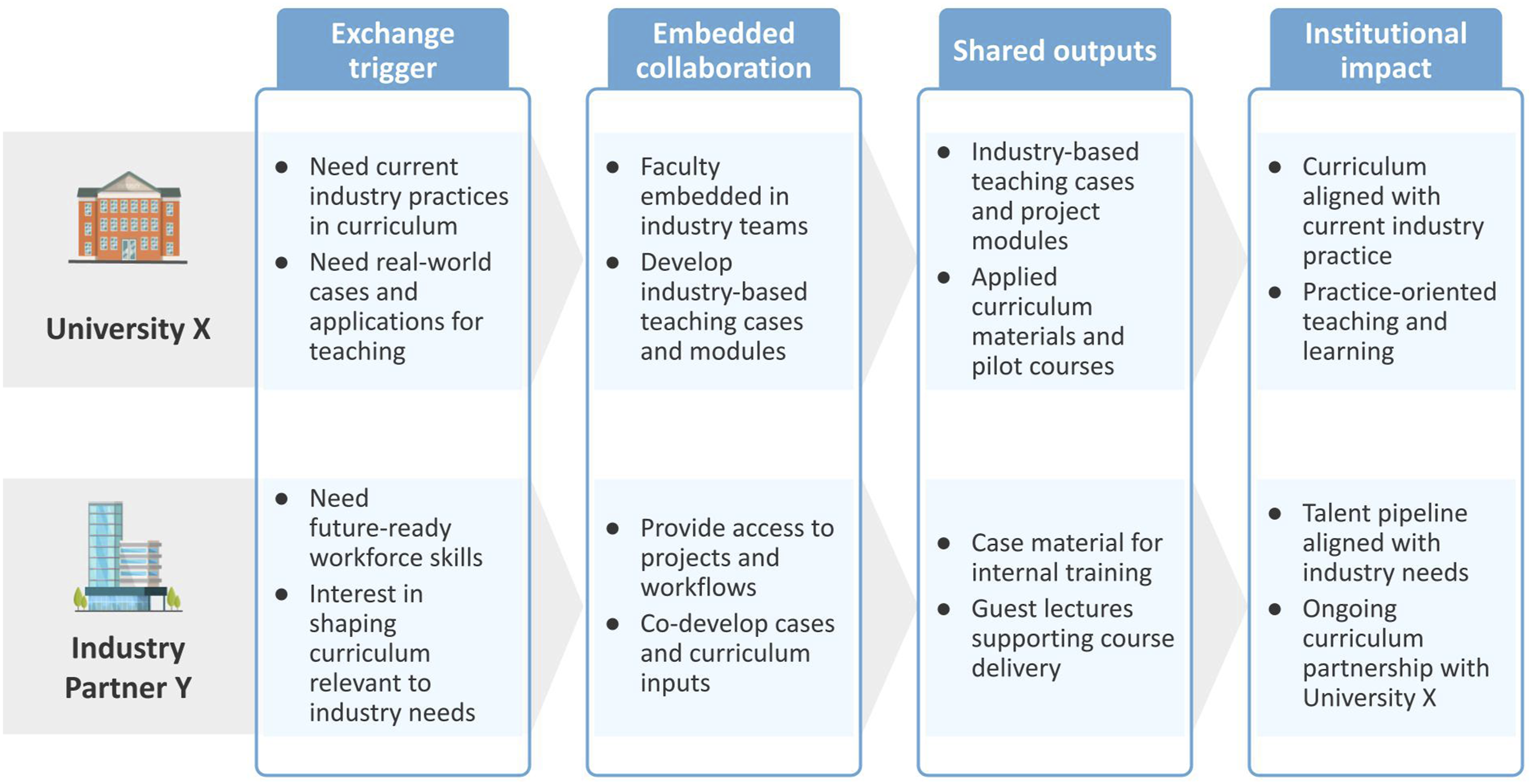
Research agenda and empirical pathways
The Reverse Sabbaticals 2.0 (RS2.0) framework proposes a structured, curriculum anchored model for academia–industry collaboration. While the framework is conceptually grounded in existing literature and practice insights, its practical relevance requires empirical examination across diverse institutional and disciplinary contexts. This section outlines a forward looking research agenda intended to guide such investigation. The agenda builds on the processes described in Section 3.5 and reflects gaps identified through the literature review, bibliometric mapping, and expert consultations.
The proposed agenda spans six research domains aligned with three broad dimensions of inquiry: (1) Evaluating the efficacy of engagement formats, (2) Understanding motivational and institutional drivers, and (3) Assessing curricular and pedagogical outcomes.
Proposed research agenda.
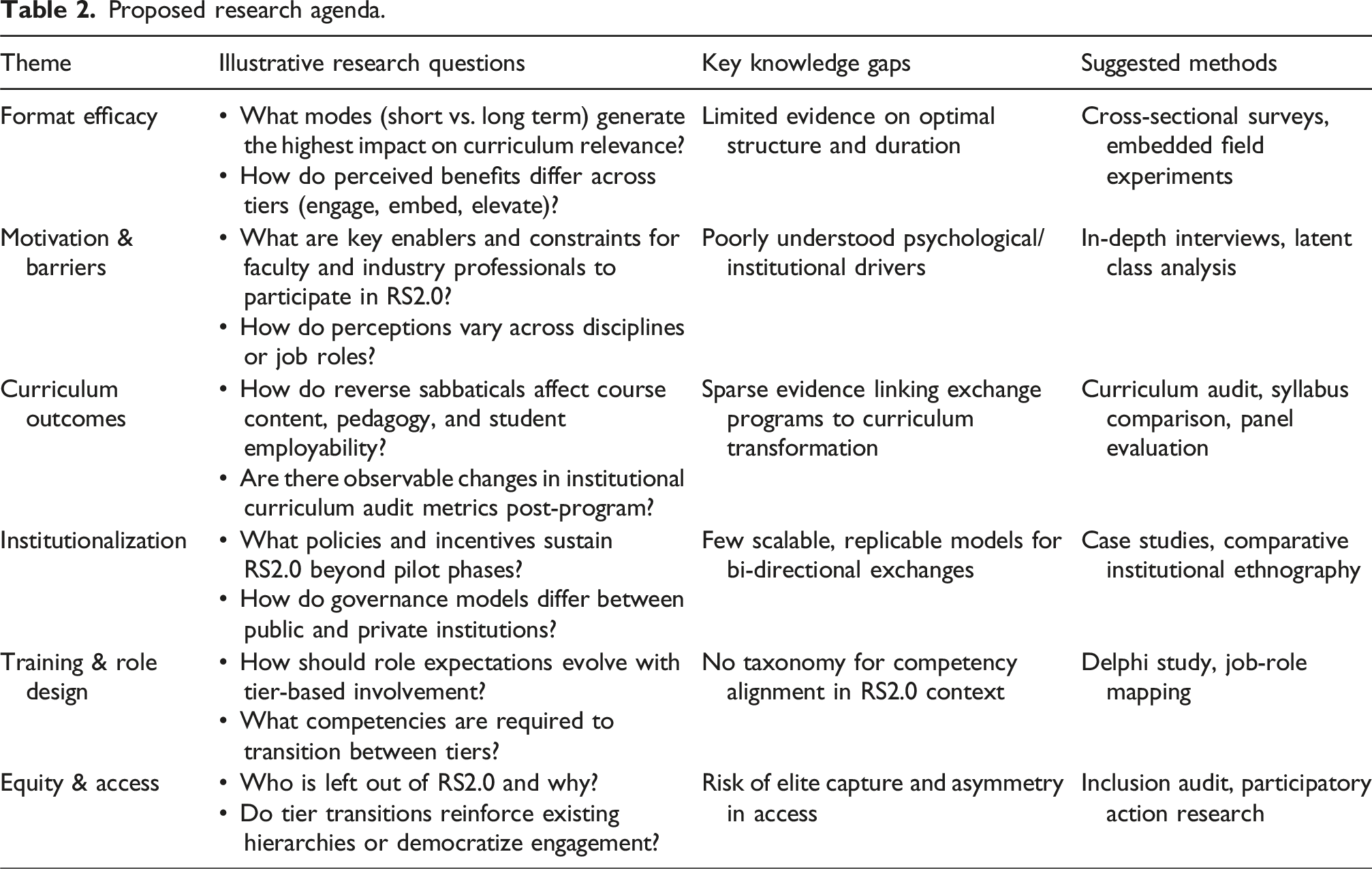
This agenda builds on established approaches to research planning in areas such as curriculum innovation, digital collaboration, and institutional ecosystem governance (De Reuver et al., 2018; National Research Council, 2005). Future studies may benefit from mixed methods approaches that combine stakeholder interviews, longitudinal tracking of exchange programs, institutional benchmarking, and curriculum analytics (Abd Manan and Wan Alwi, 2021; Banerjee and Agrawalla, 2025). Such work could contribute to assessing the feasibility, contextual adaptability, and potential educational implications of structured exchange models.
In future empirical investigations, the implementation of RS2.0 within an institution could be examined using several observable indicators. These may include the extent of curriculum co-creation between academic and industry participants, the frequency and depth of practitioner–faculty exchange engagements across the proposed tiers, the integration of practice-informed modules or case material within academic programmes, and the development of sustained institutional partnerships supporting teaching and applied research. Additional indicators may include student exposure to practitioner-led learning experiences and evidence of increased curriculum responsiveness to evolving professional skill requirements. These indicators are not intended as definitive metrics but as possible points of reference to guide empirical evaluation while allowing flexibility across institutional contexts.
Discussion
The Reverse Sabbaticals 2.0 (RS2.0) framework proposes a structured model for strengthening academic–industry collaboration through curriculum-linked exchanges. Rather than focusing on isolated engagements, the framework emphasizes structured and progressive interactions between academic and industry participants at different levels of involvement. The tiered structure (Engage, Embed, and Elevate) provides a mechanism through which collaboration intensity may evolve, allowing institutions to align engagement formats with program needs, faculty development priorities, and governance arrangements (Ahmed et al., 2022; Alexander et al., 2020).
From a pedagogical perspective, RS2.0 aligns with the literature that emphasizes curriculum co-design and experiential learning as mechanisms for strengthening professional education (Kolb and Kolb, 2005). By treating the curriculum as a shared and evolving asset, the framework encourages sustained interaction between practitioners and educators, potentially enabling academic programmes to remain responsive to technological and professional developments (Barker, 2018; Zou and Yang, 2024). The inclusion of flexible engagement formats, such as short-term exchanges and digitally mediated collaboration, also reflects emerging practices, such as computer-mediated internships and hybrid learning environments (Bayerlein and Jeske, 2018).
At the institutional level, prior studies have highlighted the importance of governance clarity, incentive alignment, and policy support in sustaining industry–academia partnerships (Alexander et al., 2020; Hartman et al., 2025). RS2.0 incorporates these considerations by suggesting structured mechanisms, such as recognition of collaborative teaching contributions, integration of exchange activities within faculty development pathways, and institutional support for long-term partnership arrangements (Ahmed et al., 2022).
From a policy perspective, the framework may also support ongoing reforms aimed at increasing experiential and industry-linked learning in higher education systems. In India, for example, the National Education Policy (NEP) of 2020 emphasizes multidisciplinary learning, industry collaboration, and curriculum flexibility (Agrawal and Shukla, 2024). RS2.0 may offer one possible implementation pathway through which institutions can operationalize such policy goals within structured exchange programs.
Beyond the immediate contexts of universities and industry partners, the framework may also be relevant to intermediary actors, such as accreditation bodies, professional associations, and regional innovation ecosystems. These organizations often play an important role in shaping curriculum standards, evaluating program relevance, and facilitating collaboration between educational institutions and employers (Asiri, 2025).
Finally, the underlying logic of RS2.0 is consistent with structured collaboration approaches observed in other knowledge-intensive sectors. For example, cross-functional knowledge exchange mechanisms are increasingly used in fields such as technology development and healthcare innovation to support continuous learning and workforce adaptation (Anthuvan, 2024). Similar maturity-based collaboration models have also been proposed in governance frameworks for emerging technologies (Anthuvan and Maheshwari, 2025). These parallels suggest that structured, role-aligned exchange mechanisms may have broader applicability beyond the immediate context of higher education partnerships.
Limitations
Despite its conceptual depth and structural clarity, the RS2.0 framework has certain limitations. Most notably, it remains untested at scale, and its tiered structure has not yet undergone empirical validation. Its applicability may differ across contexts depending on institutional autonomy, regulatory flexibility, and the maturity of existing academia–industry relationships. Successful implementation also depends on the presence of motivated stakeholders, aligned incentives, and formal mechanisms for collaboration, conditions that may not be uniformly available across sectors. Disciplinary disparities may further constrain adoption; fields with limited industry interfaces or slower innovation cycles may find it difficult to initiate relevant exchanges. Moreover, RS2.0 assumes a foundational willingness to share curricular control, which may not be realistic in more hierarchical or rigid academic environments.
While the framework emphasizes modularity to support adaptability, its effectiveness ultimately depends on the enabling policies, sustained leadership commitment, and governance structures that are still evolving in many institutions.
Practical implications
The RS2.0 framework generates differentiated implications across stakeholder groups and levels of engagement. For academic institutions, Tier 1 exchanges may support curriculum updating through short-term practitioner immersion in teaching, guest lectures, and programme design. Tier 2 collaborations can deepen institutional learning through joint teaching initiatives, applied research collaborations, and practice-based course modules. Tier 3 partnerships may extend these interactions into longer-term strategic collaborations, such as co-developed executive programmes, industry fellowships, and sustained curriculum innovation initiatives. For industry partners, the three tiers provide structured pathways to contribute domain expertise, influence the skill development of future graduates, and develop longer-term knowledge partnerships with universities. Policymakers and academic administrators may use the tiered model as a governance scaffold to support industry-academia mobility programmes, align incentives for collaborative teaching and research, and enable curriculum co-creation initiatives.
Beyond these stakeholder-specific roles, RS2.0 may offer institutions a structured pathway for integrating real-world insights into academic curricula. Its tiered design allows exchanges to begin with low-intensity engagements and gradually progress toward deeper collaboration, which may make the model feasible even for institutions with limited resources or prior collaboration experience. Policymakers may consider using similar structured exchange mechanisms to support work-integrated learning initiatives, including reforms encouraged under India’s National Education Policy (NEP) 2020 and comparable international policy directions.
The practical adoption of RS2.0 would likely require supportive institutional conditions, such as governance clarity, recognition of collaborative teaching contributions, and mechanisms that enable faculty and industry professionals to participate in exchange programmes without disrupting core responsibilities. In addition, pilot implementations across different types of institutions may be necessary before broader policy recommendations can be made.
In future empirical work, the effectiveness of RS2.0 implementation could be assessed using indicators such as the extent of curriculum co-creation between academic and industry participants, the frequency and depth of practitioner–faculty exchanges across engagement tiers, the integration of practice-informed modules within academic programmes, and the development of sustained institutional partnerships supporting teaching and applied research. Evidence generated through such pilot programmes and comparative institutional studies may help determine whether the framework warrants wider adoption or policy endorsement.
Conclusion
This study addresses the persistent gap between academic curricula and evolving industry needs. Most existing models of collaboration remain episodic and disconnected from core teaching practices. In contrast, Reverse Sabbaticals 2.0 (RS2.0) introduces a structured, curriculum-anchored approach that embeds industry–academia exchanges within the design of learning activities. By treating the curriculum as a shared and evolving asset, RS2.0 reframes faculty externships and industry academicships as mechanisms that may support pedagogical relevance, employability, and institutional renewal. Grounded in a systematic review of 28 studies, bibliometric mapping, and expert input, the framework proposes a tiered model, Engage, Embed, and Elevate, suited to varied institutional roles and capacities. It also outlines practical tools, such as sabbatical registries, modular immersions, and co teaching formats, aligning with national policy directions, such as India’s NEP 2020, and broader international interest in work-integrated learning (WIL).
To support validation and wider uptake, this paper outlines a multi-theme research agenda covering exchange design, stakeholder motivations, curriculum outcomes, role structures, and equity considerations. Future research may translate the RS2.0 framework into practical policy guidance through empirical pilot studies and comparative institutional case analyses. Evidence generated through such studies could inform institutional decision-making and broader higher education policy discussions. In this way, RS2.0 is presented as a conceptual and practical framework intended to stimulate structured experimentation in curriculum-integrated collaboration between academia and industry.
Glossary
Industry–Academia Collaboration (IAC): A formal partnership between educational institutions and industry players to align teaching, research, and skills training with real-world needs. It is often used as an umbrella term for initiatives such as guest lectures, co-teaching, and curriculum design.
Curriculum as a Co-Owned Asset: A key concept in RS2.0, treating the curriculum as something jointly developed and evolved by faculty and industry professionals for mutual value and relevance, rather than a fixed academic product.
Reverse Sabbatical: This paper refers to short-term, bidirectional exchange programs in which faculty immerse in industry and professionals contribute to academia. It focuses on contextual learning, role progression, and curriculum enrichment.
Faculty Externship: A short-term observational visit by academic faculty to an industry workplace. Unlike internships, externships emphasize learning through immersion rather than performing tasks. This is central to Tiers 1 and 2 of RS2.0.
Industry Academicship: This reciprocal role involves industry professionals teaching, mentoring, or contributing to curriculum design in academic institutions, providing contextual insights, and enhancing employability-focused education.
Engage–Embed–Elevate: The three-tier model in RS2.0: • Engage (Tier 1): Initial exposure and low-intensity engagement (e.g., guest talks). • Embed (Tier 2): Mid-term co-development (e.g., co-teaching, project mentorship). • Elevate (Tier 3): Strategic-level roles for institutional transformation.
Experiential Learning: This theory emphasizes learning through real experiences, reflection, and active experimentation. It underpins the RS2.0 model, ensuring that faculty and professionals gain practical understanding during exchanges.
Boundary-Spanning Roles: Individuals who operate across academic and industry boundaries, facilitating knowledge exchange, translating needs, and supporting partnership continuity.
Curriculum Co-Creation: A process in which academic and industry stakeholders jointly design, update, and deliver the curriculum to reflect emerging sectoral skills and practices.
Work-Integrated Learning (WIL): Educational models that integrate classroom learning with practical workplace experience, such as internships, capstone projects, or residencies. RS2.0 builds on and extends this idea.
Computer-Mediated Internships (CMIs): Virtual or hybrid internships in which students engage with real-world industry projects remotely under faculty guidance. CMIs increase access and scalability for work-based learning.
Externship: A short, unpaid, observation-driven visit to an industry setting focused on learning workflows and context. Externships are primarily taken by faculty under RS2.0 to inform pedagogy.
Feedback Loops: Continuous channels for collecting feedback from participants—students, faculty, and industry–to improve the curriculum, teaching design, and future collaborations.
PRISMA Framework: A globally accepted guideline used to conduct and report systematic literature reviews. It ensures transparency, replicability, and rigor in research synthesis.
Bibliometric Mapping is a technique for visualizing the connections between academic studies by tracking citation flows and clustering related research themes. It was used in this study to support framework development.
NEP 2020 (National Education Policy – India): This policy emphasizes interdisciplinary learning, curriculum flexibility, and industry linkages. RS2.0 is aligned with NEP 2020’s call for experiential, employability-focused education.
Footnotes

Consent for publication
Yes.
Funding
The authors received no financial support for the research, authorship, and/or publication of this article.
Declaration of conflicting interests
The authors declared no potential conflicts of interest with respect to the research, authorship, and/or publication of this article.