







Abstract
An ecosystem approach is essential for fostering entrepreneurship, as it accounts for complex interactions between entities and their environment. This study uses a mixed-methods, exploratory sequential design with two stages: qualitative followed by quantitative. In the first stage, a multi-case study identified key elements of Iran’s entrepreneurial ecosystem (EE) through semi-structured interviews with 15 experts from 10 provinces, analyzed using MAXQDA20. In the second stage, a quantitative study validated these elements and developed a reliable scale. A structured questionnaire was administered to 122 professors from seven agricultural colleges, with data analyzed using SPSS26 and SmartPLS3. Findings categorized the EE into three elements: actions (policy, economic factors, culture, communication, social factors), actors (private sector, government, universities, support institutions, mentors, technology assistants, orchestrators, intermediaries), and requirements (soft and hard infrastructure, business plans, practical courses, physical spaces). All elements were validated. Results show a circular interconnection of elements and highlight the need for government intervention to promote policy, long-term strategies, and globalization of knowledge-based enterprises.
Introduction
Entrepreneurship plays a crucial role in addressing societal challenges and driving economic progress. It is widely recognized as a catalyst for human development, offering innovative solutions to emerging problems (Sagar, 2024; Sieg et al., 2023). In Iran, entrepreneurial development has faced significant challenges, with many initiatives struggling to achieve their intended objectives (Rezaei-Moghaddam et al., 2021; Tohidyan Far and Rezaei-Moghaddam, 2019).
An ecosystem-oriented approach has gained wide recognition as an effective strategy for fostering entrepreneurship. While EE are most commonly studied at regional or community levels, recent research has applied the concept at the national level, particularly where a broader systemic perspective is valuable (Fredin and Lidén, 2020; Hess et al., 2025; Zeng et al., 2025). In this study, we adopted a national-level perspective to examine Iran’s EE, recognizing both its potential benefits and limitations.
To frame this investigation theoretically, this study draws on the concepts of the entrepreneurial university (Feola et al., 2021; Henry and Lahikainen, 2024; Reyes, 2016), the triple/quadruple helix model of innovation (Fidanoski et al., 2022; Taratori et al., 2021; Zadegan et al., 2025), and institutional capability development (Vargas-Zeledon and Lee, 2024). These frameworks provide a lens to understand how higher education institutions interact with government, industry, and society to foster entrepreneurial capacity. By situating the study within these theoretical perspectives, we aimed to link practical insights to broader scholarship and highlighted the mechanisms through which universities contribute to national EEs.
Although education is only one component of an EE, it is particularly critical in emerging contexts like Iran. Higher education institutions provide a foundational role in promoting entrepreneurial awareness, skills, and culture, which can subsequently strengthen other elements of the ecosystem. Established EE models (e.g., Isenberg, Stam, Spigel) provide valuable frameworks; however, they are primarily developed in Western contexts and may not fully capture the dynamics of emerging ecosystems in Iran. Since entrepreneurship as a structured ecosystem is relatively new in Iranian universities, we conducted a qualitative exploratory study to understand which components of these models are applicable and whether additional elements emerge in the local context. The findings from this stage then informed the development of a contextually valid model, which was subsequently validated in the quantitative stage.
Given these challenges, this research aims to analyze the elements of Iran’s EE from the perspective of experts. By explicitly grounding the study in established theoretical frameworks and addressing the limited empirical evidence on higher education-driven ecosystems in Iran, this study fills a clear scholarly gap while providing actionable insights for policymakers and university administrators. The study seeks to answer the following two main questions:
Literature review
To provide a comprehensive understanding of the EE and its relevance to Iran, this section reviews existing models and examines the role of universities and higher education institutions in fostering entrepreneurship. It highlights key elements, interconnections, and challenges identified in prior research.
The EE concept provides a structured framework for supporting entrepreneurial activities by considering the roles of various actors and their interconnectedness (Spigel, 2017). Although relatively new in entrepreneurship research (Fernández et al., 2015), the concept has been applied in diverse contexts. Tanzli first introduced “ecosystem” in ecology, and Valdez (1988) adapted it to entrepreneurship, suggesting human behavior is shaped by interactions with the environment, similar to ecological systems. Moore (1993) applied natural systems theory to business, arguing that environmental changes determine which enterprises thrive or fail.
Valdez’s model emphasized economic factors but omitted cultural, social, and policy dimensions (Cantner et al., 2021; Harrison, 2024). Stam (2015) proposed a comprehensive framework, including system and framework conditions such as networks, regulations, support mechanisms, culture, market demand, and infrastructure, though soft infrastructure is not explicitly addressed. Isenberg (2010) further developed the concept, highlighting leadership, culture, markets, financial capital, and the need for shared vision and commitment among stakeholders. These interconnected elements contribute to EE growth and survival, similar to natural systems (Valkokari, 2015).
From a theoretical standpoint, the entrepreneurial university model (Garomssa, 2025; Ruiz et al., 2020) emphasizes the role of higher education institutions in generating knowledge, fostering innovation, and creating entrepreneurial linkages with industry and government. The triple/quadruple helix framework (Hailu, 2024; Roman et al., 2020) further situates universities within a network of interactions with state, industry, and society, highlighting how collaborative dynamics drive regional and national entrepreneurship. Institutional capability development (Ceci et al., 2026; Luo et al., 2024; Schaap et al., 2025) provides an additional lens, explaining how universities develop internal structures, governance, and routines that enable them to contribute to ecosystem growth. These frameworks collectively guide the analysis of Iran’s higher education-driven EE, providing a robust theoretical foundation for both the qualitative exploration and quantitative validation phases.
Universities and higher education institutions play a pivotal role in fostering entrepreneurship (Tohidyan Far and Rezaei-Moghaddam, 2024). Education equips individuals with knowledge and skills to navigate complex challenges (Badzaban et al., 2021). Higher education institutions increasingly foster entrepreneurship through innovation promotion (Pacheco and Franco, 2024), with agricultural universities cultivating entrepreneurial environments and supporting knowledge-based enterprises (Chirinda et al., 2024). They provide students opportunities to launch ventures and facilitate transitions into science and technology parks through faculty-student collaboration (Zandazar et al., 2025).
Despite their importance, universities face significant challenges. Graduate unemployment remains high, with 14.4% of university graduates unemployed as of summer 2021 (Labor Population and Census Office, 2022), and the limited availability of suitable job opportunities increases pressure on universities to foster entrepreneurial environments (Filippelli et al., 2025). Agricultural higher education institutions must implement strategies to promote entrepreneurship among students and faculty, aligning with national goals for innovation and economic growth (Dalmarco et al., 2018).
Research method
This study employs a sequential mixed-methods approach, integrating qualitative and quantitative data to comprehensively investigate the EE in Iranian universities. Mixed-method research can follow three main designs: (1) merging two data sets, (2) connecting two data sets, and (3) embedding one data set within another. In this research, the connection design was adopted, where findings from the qualitative stage informed the quantitative stage.
The qualitative stage was conducted as an in-depth, exploratory investigation to identify and understand the key elements of the EE in the context of developing countries like Iran. This stage allowed the researchers to capture rich, contextualized insights from experts with extensive academic and practical experience in entrepreneurship. By exploring which components of existing EE frameworks (e.g., Isenberg, Stam, Spigel) are applicable and which additional elements emerge in the local context, the qualitative analysis establishes a theoretically informed foundation for the study. This approach addresses a critical gap in the literature, as EEs in Iran remain emergent and underexplored.
The qualitative data collection was conducted over 6 months, from March 2023 to August 2023, including interviews, and document review. Data inclusion was limited to participants with substantial expertise in Iranian EEs, and responses that did not pertain to the study objectives were excluded.
Following the qualitative stage, a quantitative survey was conducted to validate the elements identified, ensuring that the proposed EE scale is empirically robust, reliable, and contextually relevant. Confirmatory factor analysis, along with tests of convergent and discriminant validity and composite reliability, were employed to rigorously examine the scale’s psychometric properties. This quantitative validation not only reinforces the theoretical grounding of the study but also provides a practical tool for scholars, policymakers, and decision-makers to assess and develop EEs in Iranian universities.
The quantitative data collection occurred over 5 months, from September 2023 to January 2024. Data were included only from faculty members with complete responses to the EE questionnaire; incomplete or inconsistent responses were excluded to maintain analytical rigor.
By combining qualitative exploration with quantitative validation, the study integrates theory and empirical evidence, ensuring methodological transparency, analytical rigor, and alignment with the research objectives. This approach strengthens the scholarly contribution by linking observed phenomena to established EE theory while offering actionable insights for emerging higher education ecosystems.
Qualitative stage: Sampling and data analysis
In the first stage, a multi-case study approach was employed as a subset of the broader case investigation framework, providing an in-depth, contextually rich exploration of the EE in Iranian universities (Rezaei-Moghaddam et al., 2019). This approach allows for capturing complex interactions among ecosystem components and enables the emergence of nuanced insights grounded in real-world practice.
Participants were purposefully selected based on their expertise and experience in entrepreneurship, particularly individuals recognized as facilitators and influential actors within the Iranian ecosystem. Experts were drawn from Tehran, Fars, Khuzestan, Khorasan, Ilam, Yazd, Isfahan, Kohgiluyeh and Boyer-Ahmad, Hormozgan, and Sistan and Baluchestan provinces, using a combination of purposive and snowball sampling to ensure coverage of diverse regional perspectives.
Data were collected through in-depth, semi-structured interviews, guided by a protocol of open-ended questions. While the protocol ensured systematic coverage of key topics, its flexible design allowed participants to freely share perspectives, introduce novel ideas, and elaborate on locally relevant ecosystem dynamics. This approach maximized the richness and authenticity of the qualitative data while avoiding bias from rigid question structures. Supplementary questions were developed based on prior literature, relevant documents, and patterns identified in the initial stages of the research. All participants provided informed consent, voluntarily agreed to participate, and were guaranteed anonymity and confidentiality, in line with standard research ethics practices.
Summary of interviewees’ personal characteristics.
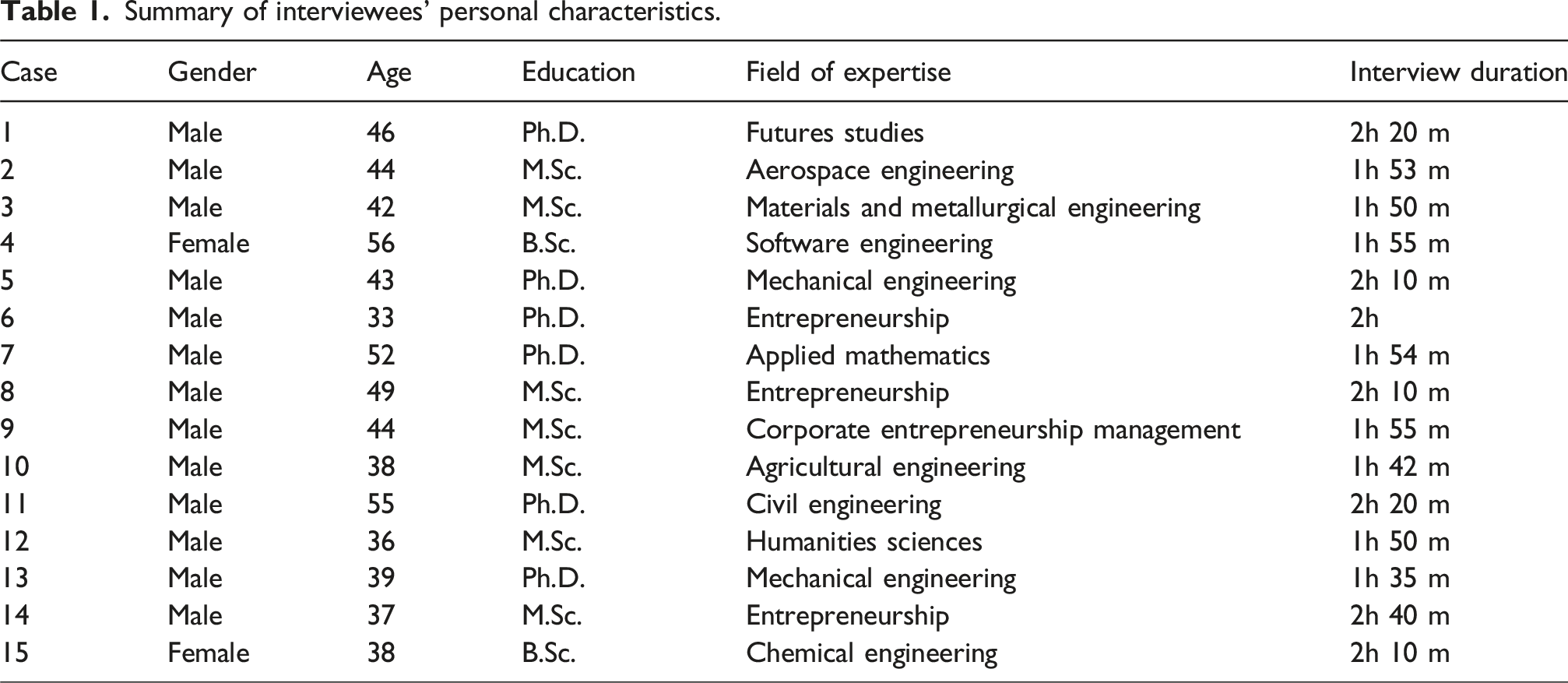
To enrich the qualitative dataset, researchers conducted observational visits to sites where respondents engaged in entrepreneurial activities, including start-up companies and student teams. These observations provided contextual insights into collaborative dynamics, resource utilization, and informal interactions within the ecosystem. All interview data were systematically transcribed, coded, and analyzed using MAXQDA20 software, which is well-suited for qualitative content analysis. The following analytical techniques were applied (Fatemi and Karami, 2011): 1. Coding and category development: All collected data were reviewed and segmented into meaningful units. Each unit was assigned a concept that accurately represented its core theme, with subcategories identified to allow for systematic progression of conceptualization. 2. Enumeration: Key concepts were quantified based on their frequency in participant responses, enabling identification of recurrent themes and patterns for further analysis. 3. Hierarchical classification: Ideas within each domain were organized into a tree diagram, moving from broad categories to more specific subcategories, facilitating structured and accessible visualization of complex data relationships.
This qualitative stage not only captured expert perceptions of Iran’s EE but also provided the theoretical and empirical foundation for the subsequent quantitative validation of the ecosystem scale. By combining structured coding with flexible, open-ended inquiry, this approach ensured both methodological rigor and contextual relevance, addressing a critical gap in understanding EEs in developing country contexts.
Quantitative stage: Sampling and data analysis
The second stage of the study employed a quantitative survey to validate the EE scale derived from the qualitative findings and existing literature. This stage aimed to assess the empirical robustness, reliability, and applicability of the identified EE components, ensuring that the scale can be used in future research to measure and develop EEs in Iranian universities.
The statistical population for this stage comprised all faculty members of agricultural colleges in Iran. Agricultural universities were selected because, in the Iranian context, these institutions, along with engineering campuses, have historically led the development of entrepreneurial education and played a central role in fostering local EEs. Focusing on these institutions allowed for capturing a representative sample of active participants within the higher education ecosystem. Additionally, the authors’ expertise in agricultural education facilitated rigorous sampling and analysis within this domain.
To ensure representativeness, agricultural colleges were divided into seven clusters, and one college was randomly selected from each cluster. Based on the sampling formula (Fowler, 2009), a total of 122 professors from Shiraz, Tehran, Ahvaz, Mashhad, Kerman, Sari, and Tarbiat Modares universities were selected using random cluster sampling. While this approach provides a robust and informative dataset, future studies could extend similar research to other disciplines, such as engineering, business, or social sciences, to examine the consistency of the EE scale across different academic contexts.






Data were collected via a structured questionnaire, with items measured on a Likert scale ranging from 1 (completely opposed) to 5 (completely agree). The face validity of the questionnaire was confirmed by professors at XX University. Following data collection, responses were analyzed using SPSS software for descriptive statistics, and the EE model was validated using SMartPLS3 software. The validation process included three key analyses: composite reliability, convergent validity, and discriminant validity, ensuring that the EE scale is both reliable and empirically sound.
By connecting qualitative insights with quantitative validation, this mixed-method approach (Figure 1) bridges contextual exploration with empirical rigor. The resulting EE scale not only reflects the nuances of Iran’s higher education ecosystem but also provides a theoretically grounded and practical tool for scholars, policymakers, and decision-makers seeking to strengthen entrepreneurial capacity in emerging university contexts. Flowchart of the process of mixed method research based on exploratory sequential design.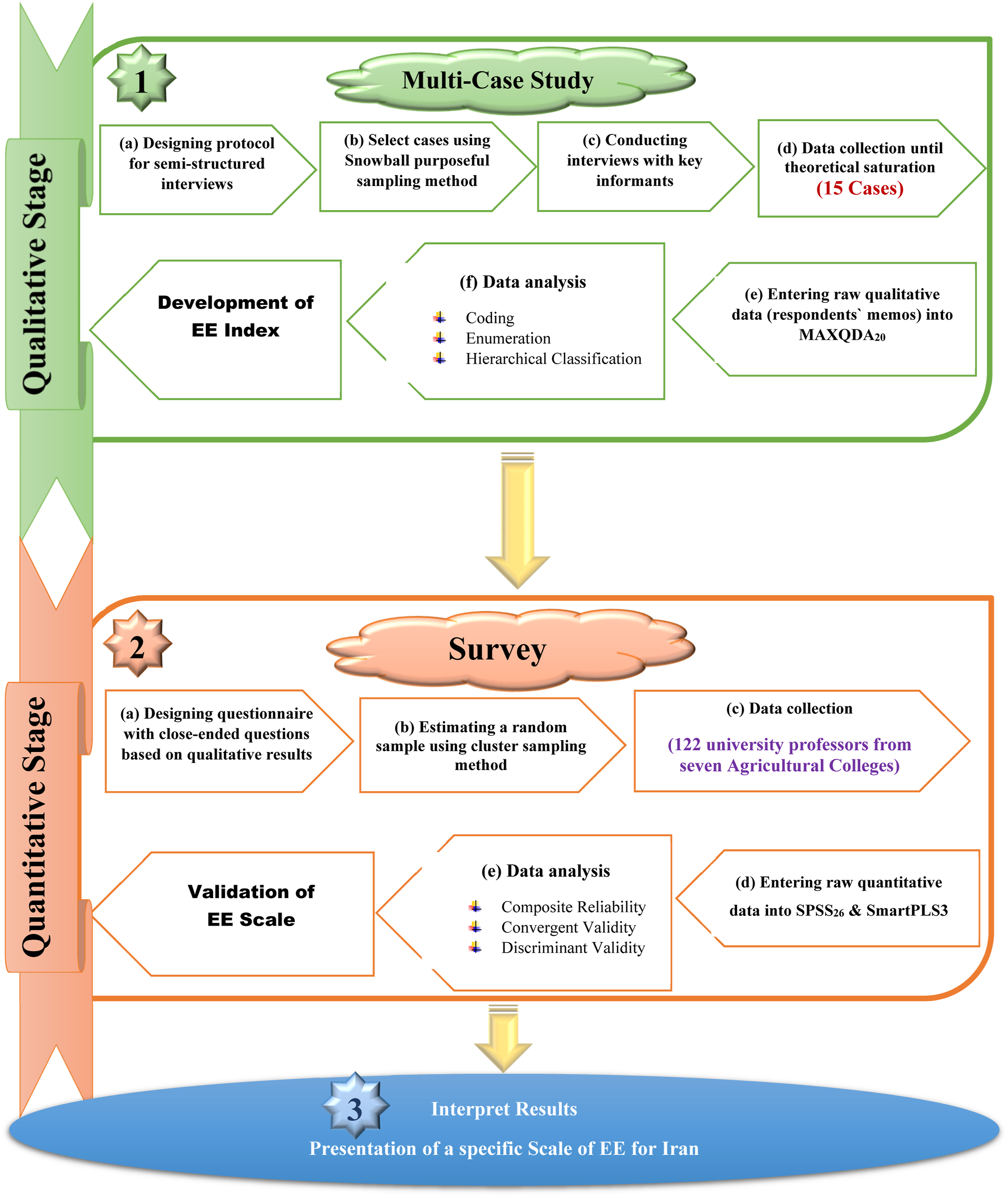
Results
Qualitative analysis: Development of an EE index
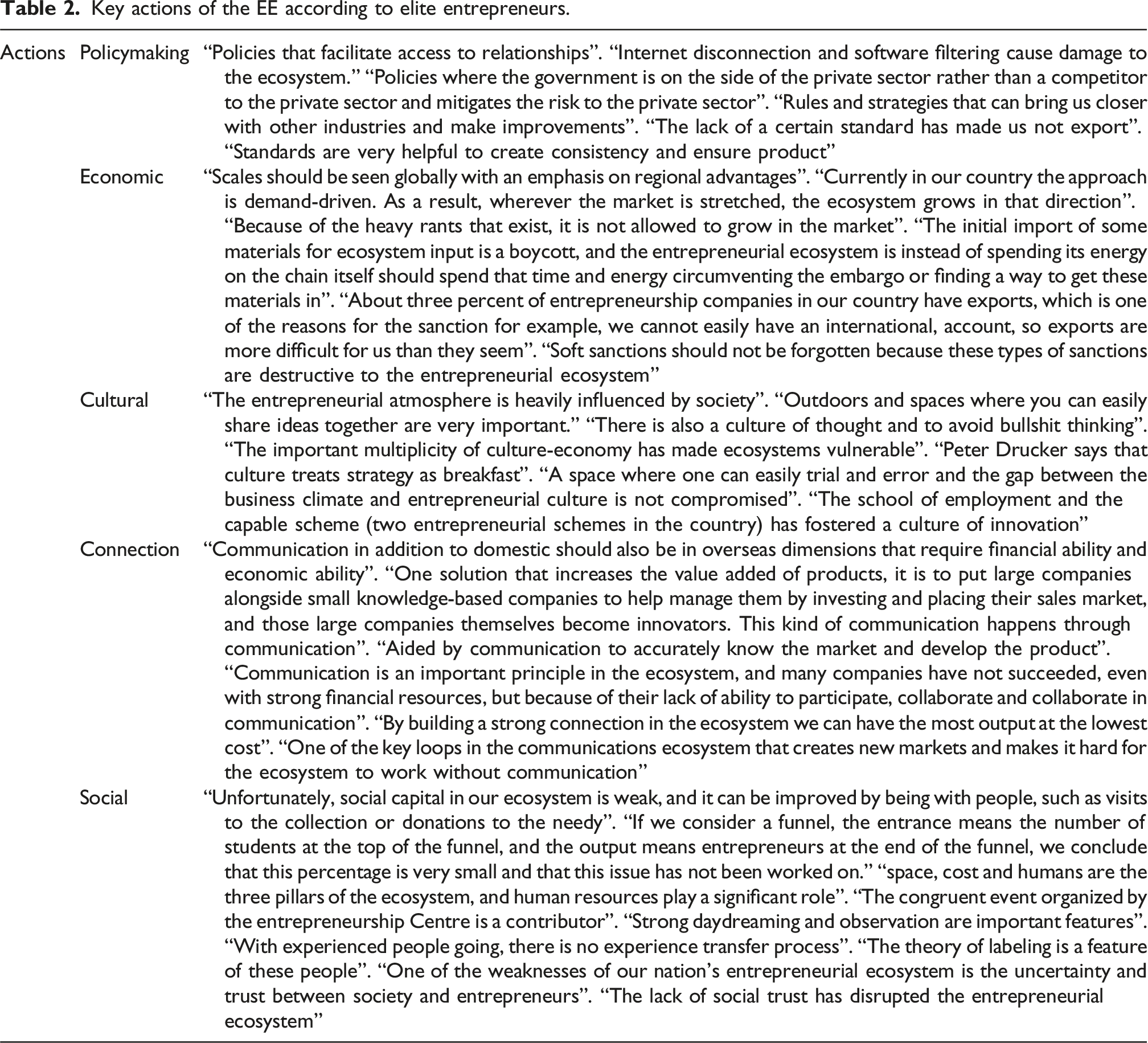
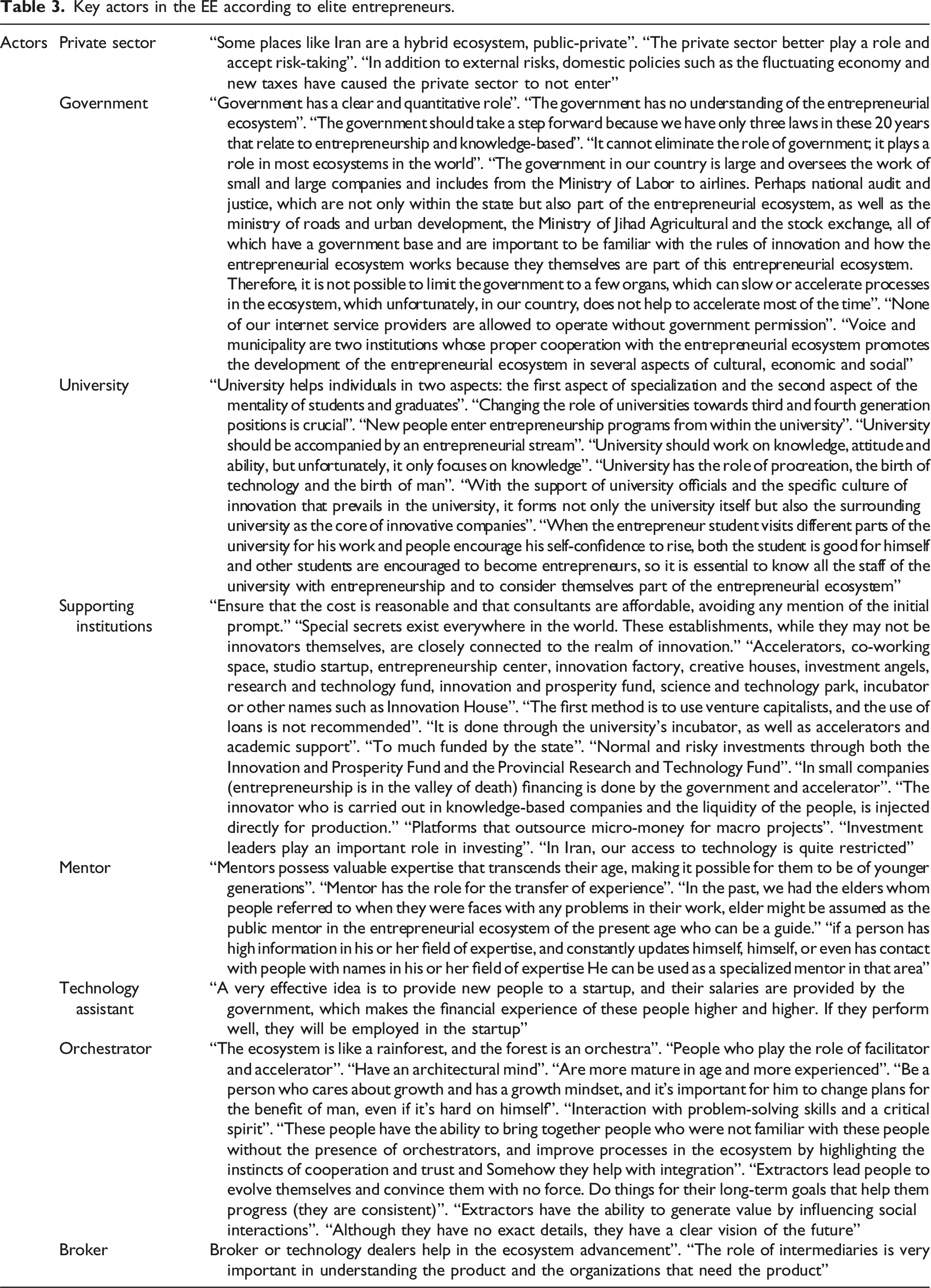
Based on the qualitative interviews and memos, the constituent elements of the EE in Iranian universities were categorized into three overarching dimensions: actions, actors, and requirements. These dimensions reflect both the practical and theoretical underpinnings of EE frameworks proposed in prior literature (Isenberg, 2010; Spigel, 2017; Stam, 2015).
Key actions of the EE according to elite entrepreneurs.
Key actors in the EE according to elite entrepreneurs.
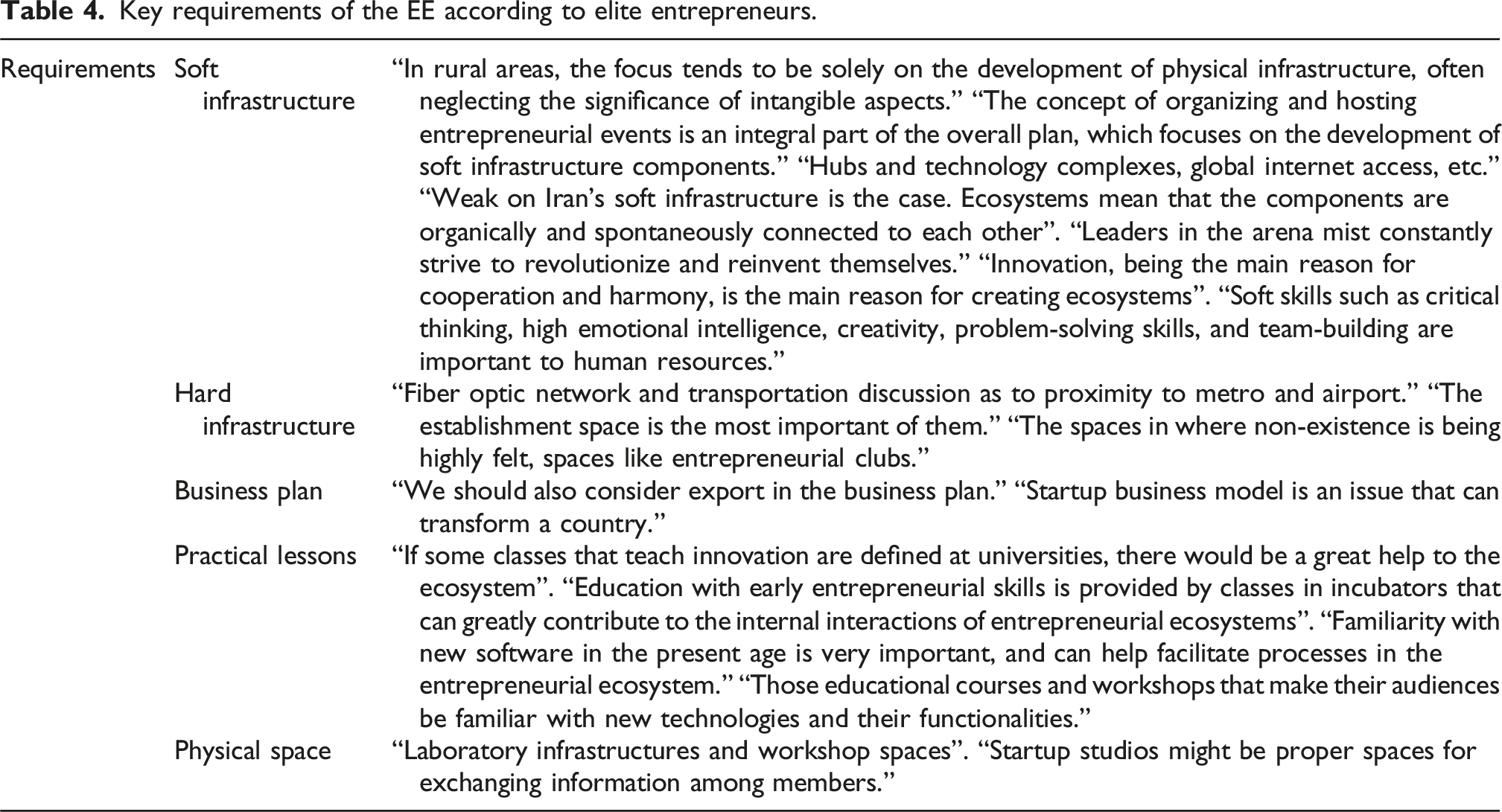
Key requirements of the EE according to elite entrepreneurs.
The actions
It encompass the key processes and interactions—such as policy-making, economic activities, cultural initiatives, connection, and social engagement—that drive and sustain the entrepreneurial ecosystem.
Policy-making
Government policies, laws, and strategic initiatives were identified as pivotal in shaping the EE. Interviewees noted that policy support facilitates entrepreneurship by providing incentives (e.g., R&D tax credits, patent laws, technology transfer regulations) and by creating an enabling environment for innovation. These findings resonate with the triple-helix framework, which emphasizes the role of government in orchestrating interactions between academia, industry, and society (Adachi et al., 2024; Leydesdorff and Zawdie, 2010).
Economic factors
Interviewees highlighted those economic conditions and activities—such as market research, prototype development, and enterprise management—directly influence the sustainability and growth of entrepreneurial ventures. The importance of private investment and risk-taking firms for long-term ecosystem resilience was emphasized, complementing the literature on venture financing and resource mobilization within EEs (Campos-Blázquez et al., 2024).
Cultural factors
Cultural norms, values, and attitudes were reported as foundational drivers that shape entrepreneurial behavior. Initiatives such as entrepreneurial education, mentoring, and community engagement were found to strengthen the entrepreneurial mindset, echoing prior findings that culture is a critical enabler of innovation within ecosystems (Isenberg, 2010; Spigel, 2017).
Connection
Effective, multi-directional communication among actors facilitates knowledge transfer, collaboration, and ecosystem synergy. This finding supports the conceptual emphasis on networks and relational infrastructure within EE scale (Stam, 2015), demonstrating that communication channels are not merely administrative but structural enablers of entrepreneurial activity.
Social factors
Respondents identified gaps in the social dimension of the ecosystem, noting that weak social ties can impede tacit knowledge transfer and collaborative learning. Encouraging interactions and trust-building among actors enhances innovation potential, confirming prior literature on social capital as a vital component of EEs (Neto et al., 2024; Reyes Bautista et al., 2025).
The qualitative analysis not only confirms the relevance of established EE frameworks but also identifies context-specific nuances for Iran. For example, the strong role of government in policy orchestration, the cultural adaptation of entrepreneurial education, and the emerging importance of social networks reflect unique characteristics of a developing-country ecosystem. These insights contribute theoretically by expanding EE frameworks beyond Western contexts and practically by informing policies and university strategies to strengthen entrepreneurship capacity.
The actors of the EE
The EE comprises diverse actors who collectively sustain and drive innovation, including the private sector, government, universities, support institutions, mentors, technology experts, orchestrators, and brokers. The private sector contributes by investing in ventures and fostering productive innovations, while the government provides incentives, mechanisms, and programs to support startups, intellectual property protection, and capital access, embodying principles of community governance (Moore, 2006). Universities play a pivotal role through entrepreneurship education, incubators, science and technology parks, and employment centers, advancing knowledge production beyond the academic environment. Support institutions, often government-funded and non-profit, act as catalysts for collaboration within innovation hubs. Mentors guide individuals by sharing experience-based strategies and skills. Technology assistants enhance students’ competencies in entrepreneurship, teamwork, and innovation leadership. Orchestrators manage and coordinate interactions among all ecosystem stakeholders, aligning resources and opportunities to create synergies, reduce transaction costs, and foster collaboration. Brokers facilitate essential connections, promoting a culture of innovation and ensuring the ecosystem functions cohesively and efficiently. Together, these actors contribute to the development, resilience, and sustainability of the EE.
Requirements of the EE
The EE relies on a combination of foundational requirements, including soft and hard infrastructure, business plans, practical courses, and physical spaces. Hard infrastructure encompasses essential physical elements such as transportation, location, and accessibility, while soft infrastructure emphasizes human relationships, networks, and collaborative ties, which are critical for knowledge sharing and ecosystem cohesion (Nate et al., 2022; Wang et al., 2023). Developing a business plan provides a strategic operational framework and forward-looking approach, helping ventures identify opportunities and enhance their market potential. Practical courses equip individuals with key entrepreneurial skills, fostering personal, social, and professional development; for example, the Business Model Canvas offers a structured method to understand fundamental business principles. Physical spaces, such as well-designed work environments, significantly impact business productivity and success by facilitating collaboration and innovation. These requirements form the essential conditions that enable actions and actors to function effectively within the EE. Standards and regulations further enhance coordination, interoperability, and competition among stakeholders, promoting domestic market development, facilitating export processes, and enabling the integration of new technologies into existing systems (Tohidyan Far and Rezaei-Moghaddam, 2024). For a comprehensive visualization, a hierarchical diagram (Figure 2) illustrates the interplay of these elements and their subcomponents, as identified through expert interviews. Hierarchical diagram of the key elements in the EE.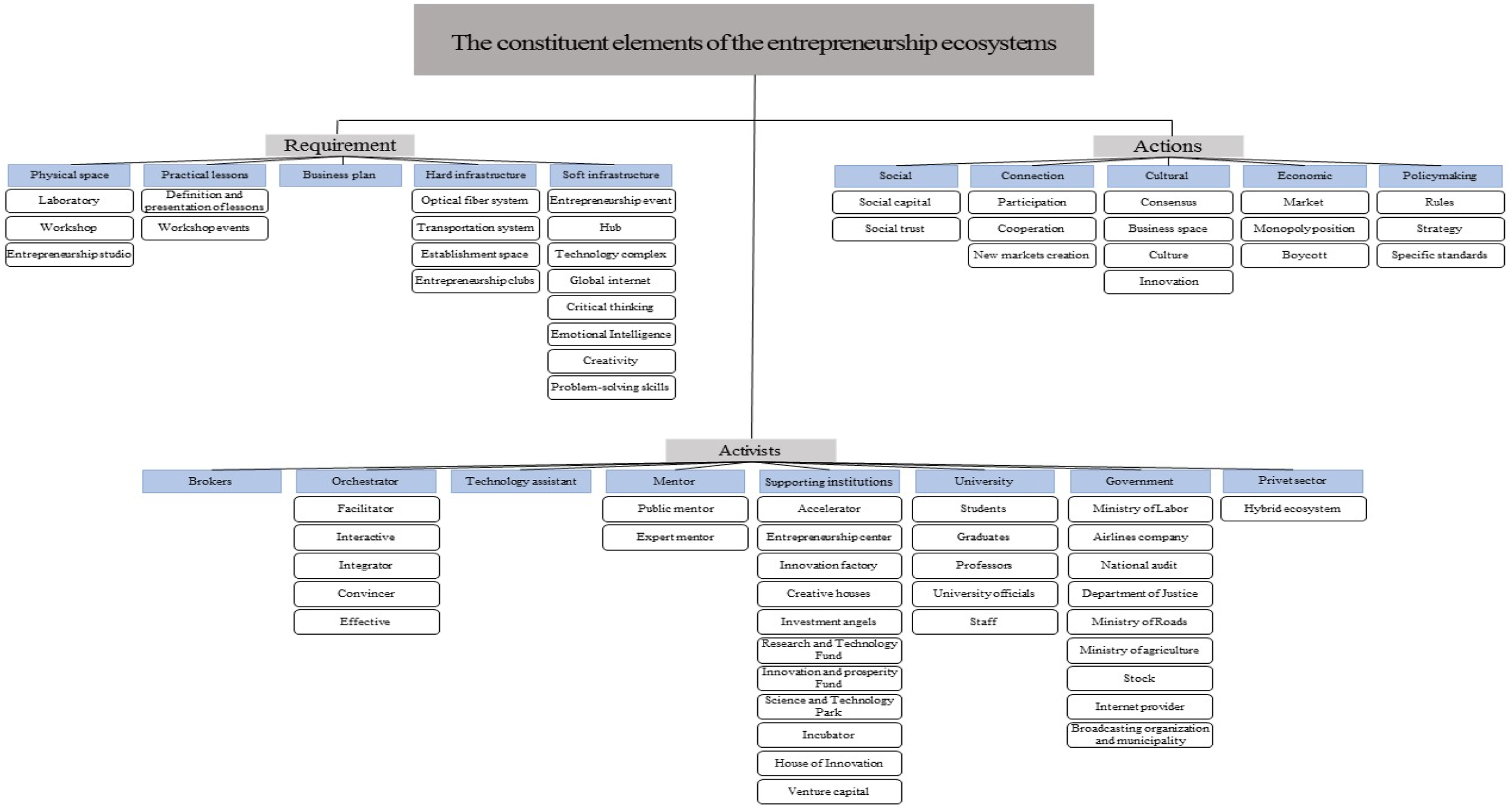
Economic, cultural, and participation factors play a pivotal role in driving the EE. An active market motivates individuals and stimulates entrepreneurial activity, whereas challenges such as rent-seeking behaviors and sanctions can restrict investment opportunities by concentrating resources within specific groups. Culture, encompassing entrepreneurial, innovation, and business-oriented mindsets, fosters creativity and challenges traditional norms, accelerating ecosystem growth. Participation of stakeholders, including students, graduates, faculty, and university officials, is essential for cultivating an entrepreneurial mindset and promoting academic entrepreneurship.
The hybrid nature of Iran’s EE highlights the critical interplay between the public and private sectors. Given the government’s significant role at multiple levels, collaboration among various entities—including ministries, regulatory agencies, and service providers—is crucial to advancing interactions within the ecosystem. Support institutions, such as accelerators, startup studios, entrepreneurship centers, innovation factories, angel investors, research and technology funds, science and technology parks, and incubators, further facilitate innovation by providing infrastructure, advisory support, and opportunities for knowledge exchange. Science and technology parks, often situated near universities, leverage academic resources to foster collaboration between companies and faculty, while incubators and accelerators offer structured pathways for startups to develop and scale. Mentors, particularly specialized ones, and orchestrators—such as facilitators, integrators, and persuasive influencers—play essential roles in connecting stakeholders, fostering integration, and ensuring value creation within the ecosystem.
Infrastructure underpins all ecosystem activities and is categorized into hard and soft components. Soft infrastructure includes hubs, technology complexes, global internet connections, and critical skills such as creativity, emotional intelligence, problem-solving, and critical thinking. Investments in soft infrastructure enhance ecosystem functionality and learning. Hard infrastructure comprises physical facilities, including fiber optic networks, transportation, laboratories, workshops, entrepreneurial clubs, and startup studios, which support collaboration, idea generation, team formation, and the development of entrepreneurial ventures. These elements create a synergistic environment that enables actors and actions to function effectively and sustain the EE.
Enumeration of key elements in the EE
All interviews were systematically analyzed using MAXQDA2020 software, with coding employed to identify recurring elements of the EE. The frequency of each element’s mention provided insight into its perceived importance among respondents, as visually represented in Figure 3, where the diameter of each element reflects its recurrence. Graphical representation of the key elements in the EE based on enumeration technique.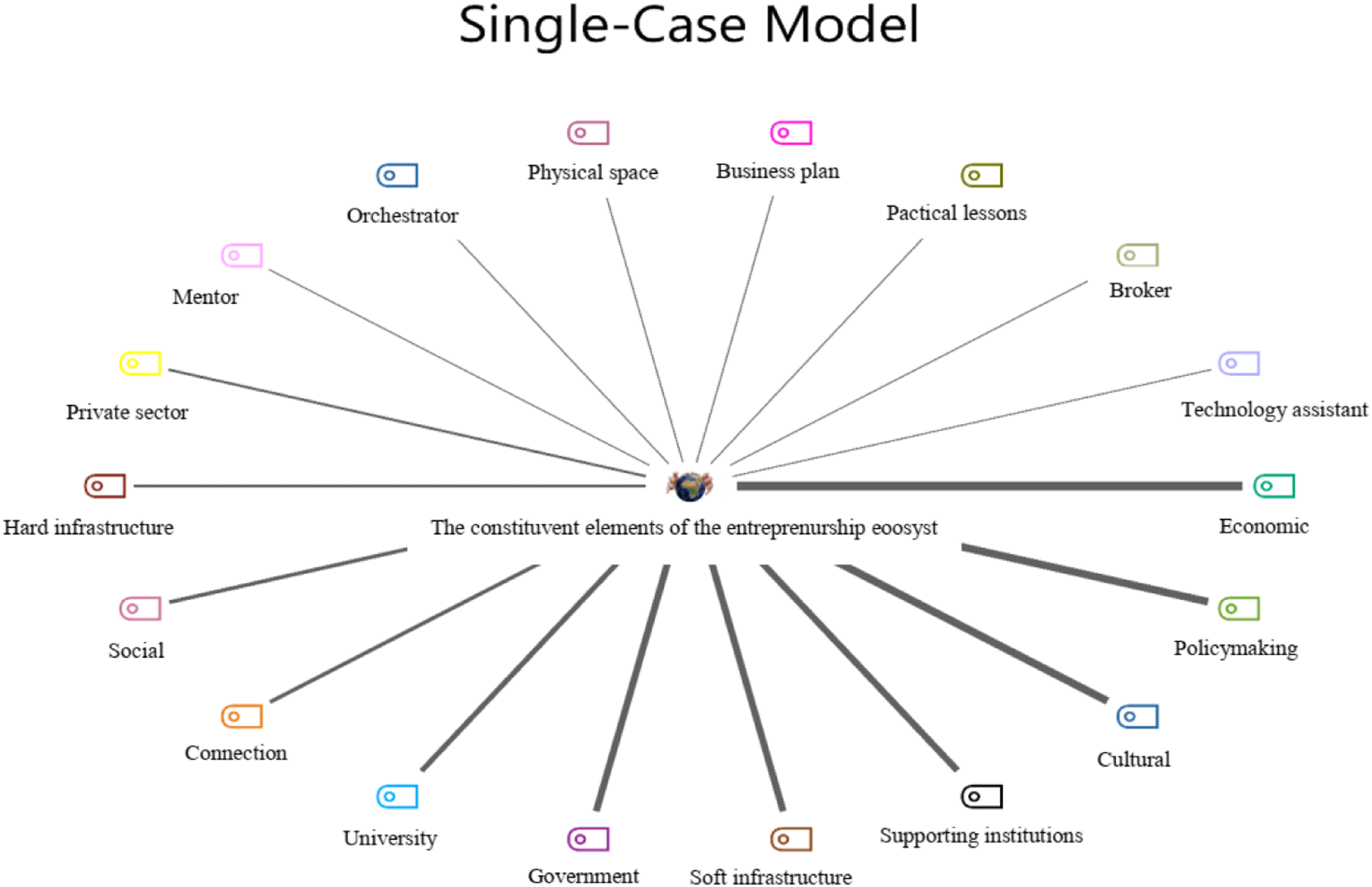
Economic factors emerged as the most frequently cited element, highlighting the centrality of market activity, recognition, and the impact of rent-seeking behaviors and sanctions on entrepreneurial development. Policy formulation ranked second, emphasizing the importance of establishing clear rules, strategies, and standards to enhance ecosystem efficiency, support international collaboration, and boost exports. Cultural factors, including intellectual culture, business climate, entrepreneurial norms, and innovation-oriented mindsets, were identified as the third most significant element, underscoring the role of a supportive culture in fostering creativity and innovation.
Support institutions—including accelerators, startup studios, entrepreneurship centers, innovation hubs, creative houses, angel investors, research and technology funds, science and technology parks, incubators, and venture capitalists—were also highlighted as critical drivers of ecosystem development, reflecting the need for structured backing, resources, and networks. Other key elements, in order of frequency, include soft infrastructure, government involvement, universities, connection, social interactions, hard infrastructure, private sector engagement, mentors, physical space, business plans, applied courses, brokers, and technology assistants.
The frequency counts underscore areas of particular emphasis by respondents: policy-making, support institutions, cultural factors, participation, soft infrastructure, and government received the highest mentions (ranging from 48 to 62). Science and technology parks, accelerators, and incubators were mentioned 28–32 times, reinforcing the importance of institutional support. Additionally, elements such as problem-solving skills, global internet connectivity, orchestrators, and brokers, though less frequently cited (7–17 mentions), were recognized as vital contributors to ecosystem integration and functionality. This analysis provides a clear, empirically grounded hierarchy of elements that can guide future research, policymaking, and practical interventions within Iranian universities’ EEs.
Quantitative analysis: Measurement and validation of the EE scale
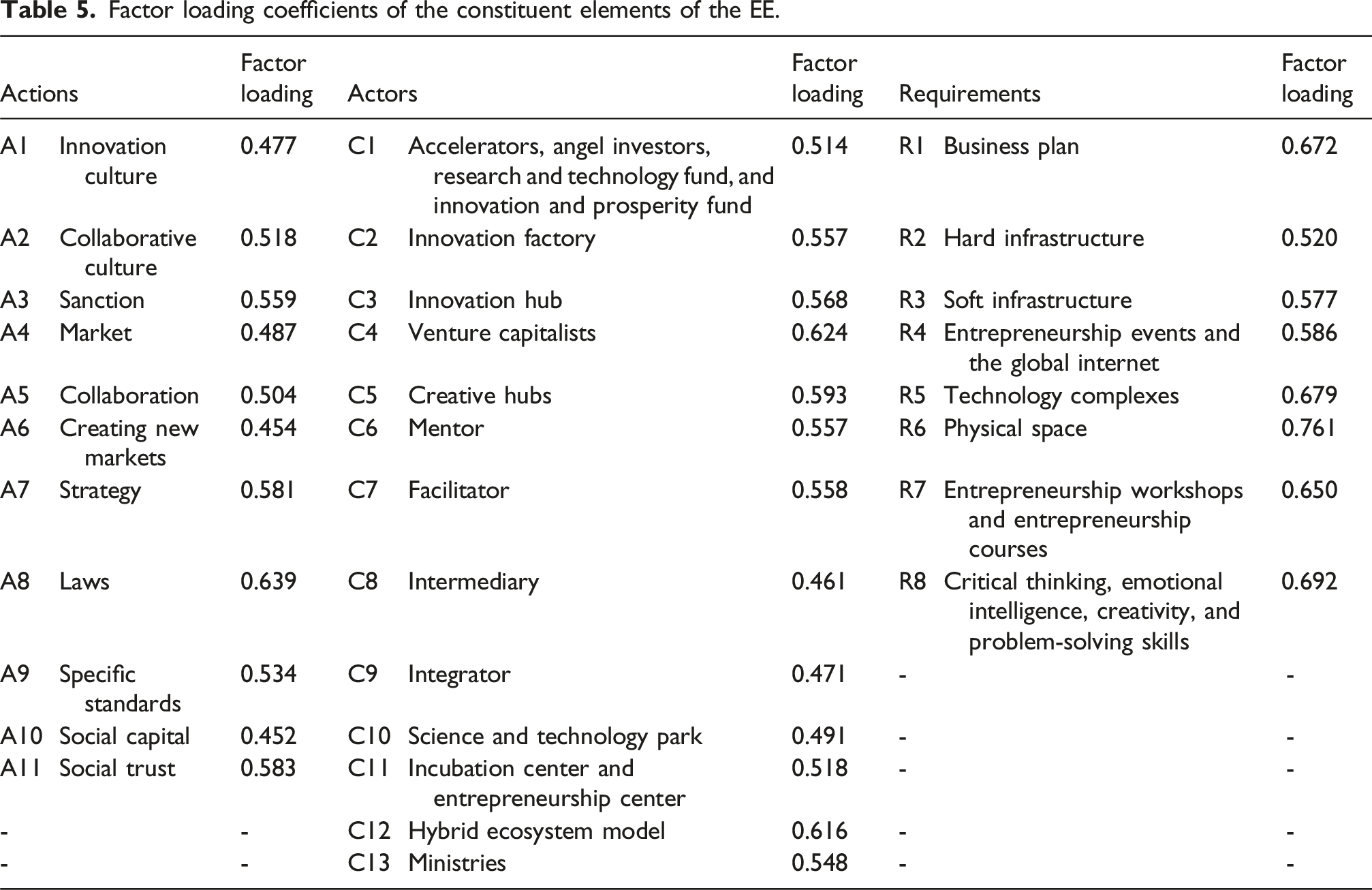
Following the qualitative stage, all identified elements of the EE were rigorously analyzed using SmartPLS3 software, which employs the Partial Least Squares (PLS) method for structural equation modeling. This stage aimed to validate a localized EE scale for Iran, ensuring that the constructs derived from interviews and literature are empirically robust, reliable, and suitable for future research. Reliability and validity were assessed through factor loadings, Cronbach’s alpha, composite reliability, convergent validity, and discriminant validity (Figure 4). Measurement model of the EE elements.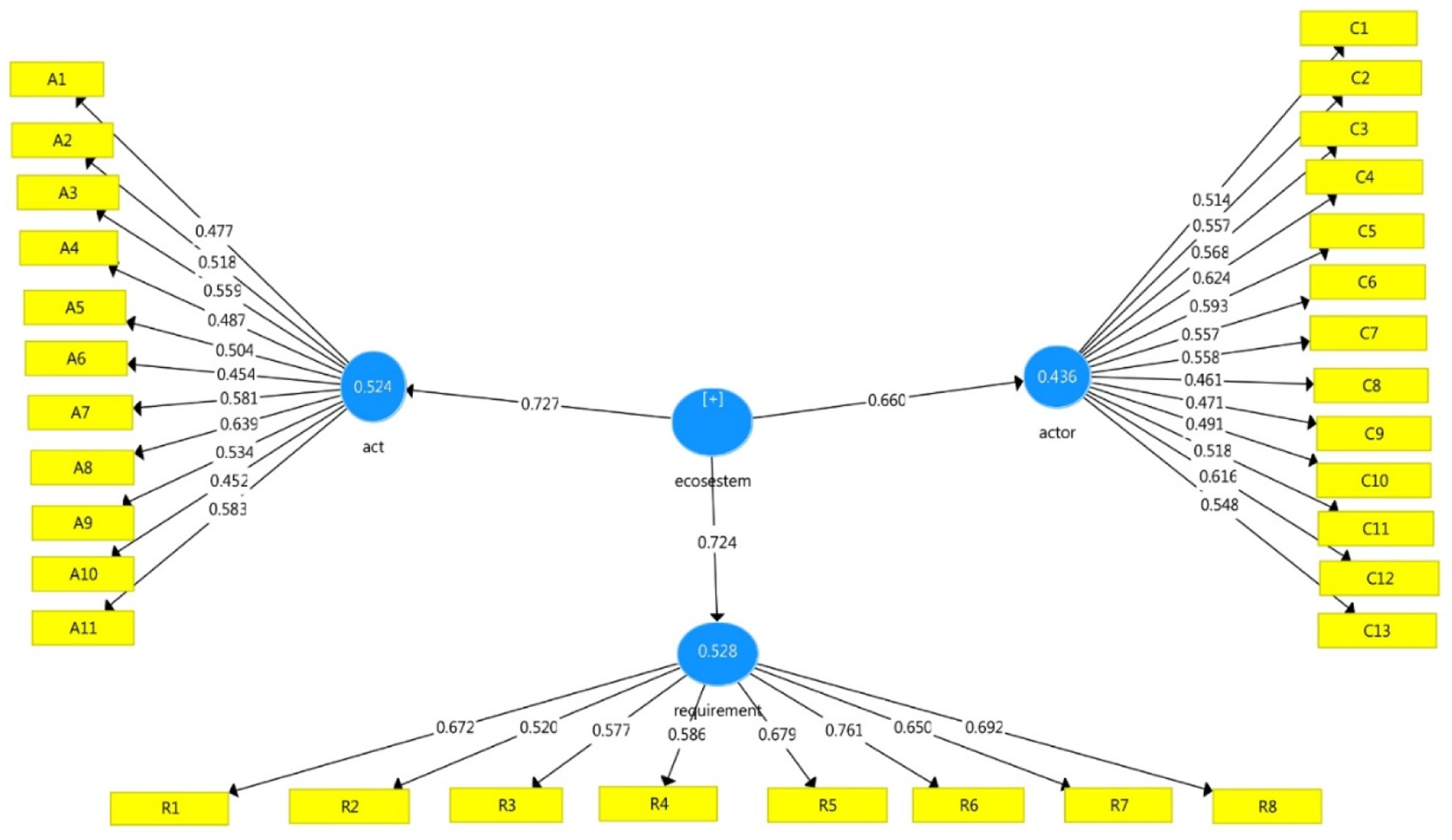
Coefficients of factor loadings
Factor loading coefficients of the constituent elements of the EE.
Cronbach’s alpha and composite reliability
Cronbach’s alpha, composite reliability, and AVE for the constituent elements of the EE.

Convergent validity
Convergent validity assesses whether a construct correlates strongly with its indicators. The Average Variance Extracted (AVE) quantifies the average variance shared between a construct and its items, with a value above 0.5 considered acceptable (Fornell and Larcker, 1981). Table 6 shows that all constructs in the model have AVE ≥0.5, confirming convergent validity and demonstrating that the measurement items adequately capture their respective constructs.
Discriminant validity
Examining the discriminant validity of the constituent elements of the EE.
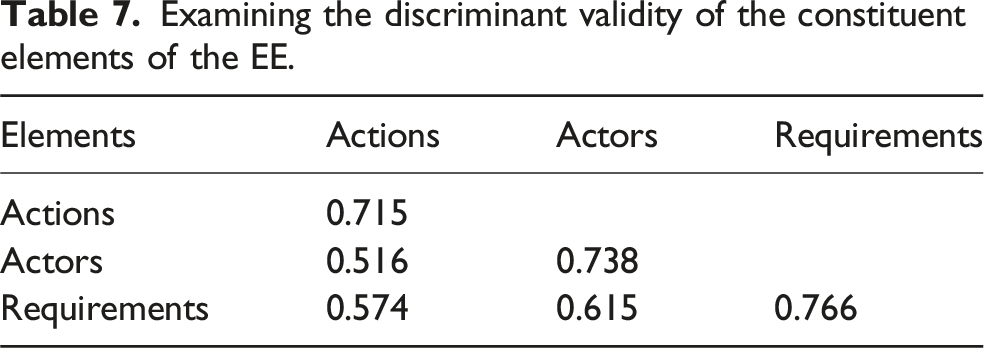
All criteria meet or exceed the recommended thresholds: Cronbach’s alpha >0.7, composite reliability >0.7, and AVE >0.5. Discriminant validity is confirmed for all constructs. These results establish that the EE scale is reliable, valid, and suitable for measuring the key elements of Iran’s EE. This validated scale provides a rigorous empirical foundation for future studies to test, refine, and develop EE research within Iranian universities and potentially other developing country contexts.
Conclusion
This study advances the literature on EE by identifying and empirically validating the key elements that shape university-centered ecosystems in a developing country context, specifically Iran. While dominant EE frameworks (Isenberg, 2010; Spigel, 2017; Stam, 2015) were largely developed in Western institutional environments, this research demonstrates that ecosystem configurations in emerging economies are shaped by distinct structural, cultural, and institutional dynamics. By integrating qualitative exploration with quantitative validation, the study develops a context-sensitive and empirically tested EE scale, offering both theoretical refinement and methodological contribution.
The findings reveal that universities in Iran serve not only as knowledge producers but as institutional anchors of entrepreneurial capacity building. Higher education institutions play a foundational role in cultivating entrepreneurial awareness, skills, and culture, thereby strengthening other ecosystem components. At the same time, systemic challenges—including slow policymaking processes, limited coordination among actors, rent-seeking behaviors, and economic sanctions—shape ecosystem evolution. These characteristics reflect a hybrid ecosystem structure in which government facilitation and orchestration are central to ensuring coordination and long-term sustainability.
Importantly, the study highlights the strategic role of soft infrastructure—entrepreneurship education, mentorship systems, cultural transformation, networking mechanisms, and participation—alongside hard infrastructure such as financial and physical resources. This finding refines established EE models by demonstrating that, in emerging contexts, institutional capability development and cultural readiness may precede and condition the effectiveness of financial investment and market expansion.
Theoretical implications
This study contributes to ongoing debates about the role of universities in regional innovation systems by demonstrating that, in emerging ecosystems, universities function as ecosystem orchestrators and institutional stabilizers rather than merely technology transfer agents. In contexts where private-sector dynamism and institutional maturity are still evolving, universities assume expanded responsibilities in shaping entrepreneurial culture, coordinating stakeholders, and compensating for institutional gaps.
The findings also enrich triple and quadruple helix perspectives by illustrating how interactions between government, academia, industry, and society unfold in environments characterized by strong state presence and developing market institutions. Rather than market-driven evolution, ecosystem development appears to follow a staged process in which soft infrastructure (skills, norms, participation) strengthens actor alignment, which in turn enhances economic and policy effectiveness.
Furthermore, the study advances theoretical understanding of institutional capacity evolution in emerging ecosystems. It shows that entrepreneurial capacity building is cumulative and multidimensional, requiring coordinated development of cultural, educational, regulatory, and infrastructural components. By validating a localized EE measurement scale, the research extends academic entrepreneurship and innovation education theory beyond Western contexts and provides a structured framework for analyzing ecosystem maturity in developing regions.
Practical and managerial implications
This study offers actionable insights for university leaders, policymakers, and ecosystem practitioners operating in similar emerging contexts. First, universities aiming to strengthen innovation capacity should prioritize structured entrepreneurship education programs, applied training (e.g., business model development), mentorship systems, and interdisciplinary collaboration platforms. Investment in soft infrastructure—critical thinking, creativity, networking capabilities, and leadership skills—proved foundational in enhancing ecosystem resilience.
Second, effective governance mechanisms are essential. Clear regulatory standards, reduced bureaucratic delays, and improved coordination between ministries, universities, and private-sector actors can significantly enhance ecosystem efficiency. The findings underscore the importance of ecosystem orchestrators and brokers in reducing fragmentation and transaction costs.
Third, support institutions—including accelerators, incubators, science and technology parks, startup studios, and innovation funds—should be strategically integrated rather than operating independently. Competitive entry mechanisms, structured mentorship, proximity to universities, and access to advisory and financial support were identified as effective practices for accelerating venture development.
Finally, the study highlights key lessons learned: addressing cultural resistance, reducing rent-seeking practices, strengthening inter-organizational trust, and promoting participatory governance are critical for sustainable ecosystem growth. The validated EE model developed in this research can serve as a diagnostic and evaluation tool for administrators and policymakers seeking to assess ecosystem maturity, identify structural gaps, and design targeted institutional reforms.
Research limitations
This study, while providing valuable insights into the EE in higher education, has several limitations that should be acknowledged. First, the research relies primarily on data collected from university professors and entrepreneurship experts. Although this sample is robust for scale development and validation, it may not fully capture the perspectives of other key ecosystem stakeholders, including entrepreneurs, students, industry practitioners, and policy actors. Future studies could benefit from a more diverse sample to provide a comprehensive understanding of ecosystem dynamics. Second, the research focuses on a single-country context—Iran—and primarily on agricultural higher education institutions. While the findings provide in-depth insights into emerging EEs, they may not fully generalize to other institutional types or national contexts. Comparative, multi-institutional, or cross-disciplinary studies are needed to validate the transferability of the results. Third, data availability and methodological choices impose additional constraints. The cross-sectional design captures the ecosystem at a single point in time, limiting the ability to assess temporal changes, policy impacts, and long-term sustainability. Longitudinal research designs or repeated measurements could better track the evolution of university-based entrepreneurial ecosystems. Finally, while the validated EE scale is contextually adapted for Iranian universities, its applicability to other disciplines, institutional types, or countries remains to be tested. Further research should examine the scale’s robustness and adaptability across diverse settings, ensuring broader theoretical and practical relevance.
Future research directions
Building on the current study, several promising avenues for future research can be identified. First, comparative studies across multiple countries or regions would provide deeper insights into how entrepreneurial ecosystems operate under different economic, cultural, and policy environments, helping distinguish between universal EE elements and context-specific factors. Second, future research should consider multi-institutional designs that include technical, business, and non-agricultural universities. This would enhance the generalizability of the validated scale and deepen understanding of institutional factors affecting entrepreneurship capacity. Third, integrating digital transformation and technological advancements into the EE framework is increasingly important. The role of online learning, virtual networking, and digital entrepreneurship warrants detailed exploration, particularly in developing countries where technology adoption is rapidly changing how entrepreneurship is taught and practiced. Fourth, longitudinal or experimental studies could assess the long-term effectiveness of policy interventions and institutional strategies. Tracking ecosystem evolution over time would allow researchers to evaluate how governance mechanisms, cultural interventions, and support structures influence entrepreneurial outcomes and sustainability. Finally, further refinement and contextual adaptation of the validated EE scale is encouraged. Testing the scale across diverse institutional settings—including universities with different disciplinary focuses, technical institutions, and business schools—would strengthen its robustness and practical utility for scholars, administrators, and policymakers seeking evidence-based strategies for entrepreneurship development.
Footnotes

Ethical considerations
This study was reviewed and approved by the Higher Education Committees at both the Agricultural School and Shiraz University levels, ensuring adherence to ethical considerations. All participants provided informed consent before taking part in the study. We confirm that all research was conducted in accordance with the relevant ethical guidelines and regulations governing research with human participants, as outlined by the Higher Education Committees at Shiraz University, and in compliance with internationally recognized ethical principles.
Funding
The authors received no financial support for the research, authorship, and/or publication of this article.
Declaration of conflicting interests
The authors declared no potential conflicts of interest with respect to the research, authorship, and/or publication of this article.