







Abstract
This study identifies the profiles of female and male sports science students (SSS) with high and low entrepreneurial intentions (EI) and examines gender differences in the predictors of EI. The sample comprises SSS from six European countries (N = 723). Data were collected using a structured, previously validated questionnaire. Cluster analysis and multi-group structural equation modelling were performed. Results revealed statistically significant differences in students’ profiles with high and low-EI according to gender, country of origin, entrepreneurial training, work experience, and social connections with entrepreneurs. Gender-based differences have also been found in the predictors of EI. Perceived behavioral control (PBC) significantly predicted EI in both female groups (high and low-EI), whereas it was significant only among males with low-EI. For both genders, strong entrepreneurial skills (ES) formed the foundation of the high-EI profile by positively influencing attitude toward entrepreneurship (ATE). In contrast, the low-EI profile for both genders was predicted by ATE and PBC. These findings highlight the importance of considering gender and EI level as important contextual factors in promoting entrepreneurial thinking among university students.
Introduction
Europe reports some of the highest youth unemployment rates worldwide (14.40%) (International Labour Organization, 2024; Statista, 2024). In this context, entrepreneurship has been recognized as a mechanism for job creation and economic development (Carree and Dejardin, 2020; O’Leary, 2022). Entrepreneurship refers to the dynamic process of creating new ventures through critical decisions and preparatory actions (Korunka et al., 2003). Entrepreneurs contribute to economic growth and help reduce unemployment rates (Schumpeter, 2004; Teixeira et al., 2018).
Accordingly, universities have increasingly expanded their traditional mission toward fostering local development and entrepreneurial activity (Dalmarco et al., 2018). Higher education institutions now play a key role in entrepreneurial education, promoting entrepreneurial mindsets and supporting social and economic development (Budyldina, 2018; Lombardi et al., 2017; Schimperna et al., 2021).
Despite these efforts, gender disparities in entrepreneurship remain substantial. The Global Entrepreneurship Monitor (GEM, 2023) shows that women consistently report lower Total Entrepreneurial Activity (TEA) rates across most European countries. Similarly, the Global University Entrepreneurial Spirit Students’ Survey (GUESSS) indicates that female university students generally display lower entrepreneurial intention (EI) than males (Sieger et al., 2024). One explanation for this gap is the persistence of gender stereotypes associating entrepreneurship with traditionally masculine traits (Gupta et al., 2019).
Universities can help challenge these stereotypes by fostering women’s self-confidence and encouraging female entrepreneurship (Costa and Miragaia, 2022). The GUESSS report (Sieger et al., 2024) also stresses the importance of identifying determinants of EI and systematically promoting female entrepreneurship among students. In this regard, sport science students (SSS) and graduates are considered especially relevant because they tend to show greater entrepreneurial initiative than average students (Jakubiak and Buchta, 2016).
However, the sports industry remains strongly male-dominated (Costa and Miragaia, 2022; Vyas-Doorgapersad, 2020), with women underrepresented in leadership and entrepreneurial positions (Evans and Pfister, 2021). Research on female entrepreneurship in sport is still scarce (Costa and Miragaia, 2022), highlighting the need to better understand the factors influencing EI among SSS from a gender perspective. Since EI is a key antecedent of entrepreneurial behavior (Dehghan and Peymanfar, 2021), identifying its determinants is particularly relevant.
Previous studies analyzing gender differences in EI among SSS remain limited and inconclusive (Grimaldi-Puyana et al., 2019; Westhead and Solesvik, 2016). While some studies found no moderating effect of gender on EI predictors (e.g., González-Serrano et al., 2016; Grimaldi-Puyana et al., 2019), others reported that male students show higher entrepreneurial interest and stronger confidence in their entrepreneurial skills and competencies than females (da Costa et al., 2023).
Therefore, the first objective of this study is to identify the profile of female and male SSS with high and low levels of EI in European countries (Poland, Hungary, Slovenia, Spain, Croatia, and Serbia). According to Liñán and Chen (2009), individuals with high EI show a stronger predisposition toward entrepreneurial activity, whereas low-EI individuals are less likely to engage in entrepreneurship. The second objective is to analyze gender differences in the predictive variables of EI, based on the Theory of Planned Behavior (Ajzen, 1991), using a cross-cultural perspective.
To the best of our knowledge, no previous study has cross-culturally examined profiles of male and female SSS with high and low EI while simultaneously analyzing the predictive variables for each group. Moreover, the use of cluster analysis to distinguish high- and low-intention groups by gender represents a novel contribution compared with the regression approaches commonly applied in this field. The findings may help develop more tailored policies and entrepreneurial education strategies aimed at promoting both female entrepreneurship and overall entrepreneurial activity among students.
Theoretical framework
Research on entrepreneurship within specific industries is valuable because entrepreneurial processes vary across sectors (Kubow, 2017; Ratten, 2012). In the sports context, entrepreneurship has been defined as “the process by which individuals, acting in a sports environment, pursue opportunities without resources currently controlled” (Hammerschmidt et al., 2020: 842). Sports entrepreneurship has become an important and growing field of research (González-Serrano et al., 2020; Pellegrini et al., 2020).
Several studies have shown that physical activity and sport participation can foster entrepreneurial skills (ES) and intentions among elite athletes (Hindle et al., 2021; Vidal-Vilaplana et al., 2024), the general population (Rial et al., 2021; Rodrigues et al., 2020), and SSS (González-Serrano et al., 2017, 2023; Matic et al., 2022).
In addition, the European sports industry is expanding rapidly, with an estimated annual growth rate of 10.64% between 2022 and 2027 and a projected market value of $467.80 million by 2027 (Statista, 2024). This growth creates entrepreneurial opportunities for young graduates in the sector (González-Serrano et al., 2017). Nevertheless, despite the growing economic relevance of sport, entrepreneurship within this industry remains underexplored (Hammerschmidt et al., 2023). At the same time, several authors emphasize the need to strengthen women’s entrepreneurship and participation in entrepreneurial education programs due to women’s lower EI levels (Matic et al., 2022).
Predicting variables of EI: High vs. low levels and gender perspective
Ajzen’s Theory of Planned Behavior (TPB) (1991) is one of the most widely used frameworks to explain EI among university students (Gao et al., 2022; Sampene et al., 2023). According to the TPB, EI is determined by three main components: attitude toward entrepreneurship (ATE), subjective norms (SN), and perceived behavioral control (PBC).
ATE refers to the individual’s evaluation of entrepreneurship as favorable or unfavorable, whereas SN reflects perceived social pressure from relevant reference groups regarding entrepreneurial behavior (Ajzen, 1991). PBC refers to the perceived ease or difficulty of becoming an entrepreneur. The influence of these components may vary depending on the context analyzed (Ajzen, 1991).
Gender has been identified as an important factor within the TPB framework (Nguyen, 2020). The Global Entrepreneurship Monitor (2022) reports that men are more likely to assume entrepreneurial roles across sectors and countries. Likewise, GUESSS findings consistently show lower EI among female university students (Sieger et al., 2024), suggesting that men tend to report greater entrepreneurial confidence and stronger belief in their entrepreneurial capabilities.
The TPB proposes that higher levels of ATE, SN, and PBC lead to stronger EI (Ajzen, 1991). Previous studies have consistently found positive effects of ATE and PBC on EI among university students (Barba-Sánchez et al., 2022; Fragoso et al., 2020). However, findings regarding gender differences among SSS are mixed. Costa and Miragaia (2022) reported that PBC had a stronger influence on EI among male SSS, whereas González-Serrano et al. (2016) found slightly stronger effects of PBC among female students and similar effects of ATE across genders. More recently, Matic et al. (2022) identified ATE as the dominant predictor of EI among male students, while PBC predicted EI only among female SSS. Based on this reasoning, the following hypotheses are proposed:
ATE will be a stronger predictor of EI for male SSS than for female students.
PBC will be a stronger predictor for EI for female SSS than for male students.
However, the role of SN remains more controversial (Barba-Sánchez et al., 2022; Krueger et al., 2000). Several studies suggest that SN is the weakest direct predictor of EI (Krueger et al., 2000; Liñán and Chen, 2009) and may instead influence EI indirectly through ATE and PBC (Aga, 2023; Barba-Sánchez et al., 2022; Liñán and Chen, 2009). González-Serrano et al. (2016) found a weak but significant negative influence of SN on EI among male SSS only, whereas Costa and Miragaia (2022) reported no gender differences. Thus, the following hypothesis is formulated:
The impact of SN on the EI, ATE, and PBC will be different according to the gender of the SSS.
Other studies in this area have focused on how individual personality traits and ES can influence the development of entrepreneurial attitudes and PBC (Adeel et al., 2023; Bieńkowska-Gołasa and Krzyżanowska, 2023; Chlebiej, 2022; González-Serrano et al., 2023; Liñán, 2008). Costa and Miragaia (2022) showed that male SSS had more confidence in their ES and competencies than female SSS. Thus, the following hypothesis is proposed:
The impact of ES on the ATE, PBC, and SN will be different according to the gender of the SSS.
However, other external factors such as country culture (CC) towards entrepreneurship can also play an important role in the EI of SSS.
Entrepreneurial climate towards entrepreneurship: Hofstede values and entrepreneurial activity according to countries
Macro-level factors such as culture, economic development, and political history “combine to either stimulate or retard entrepreneurial initiative and thereby determine the size of the entrepreneurial segment of a population.” (Mueller and Goić, 2002: 65). Cultural factors play a crucial role in shaping and guiding the formation of entrepreneurial behavior patterns. CC refers to the broader societal and cultural environment towards entrepreneurship in their respective countries (Mueller and Thomas, 2001). Societies that encourage innovation, risk-taking and support for entrepreneurial initiatives tend to generate higher levels of entrepreneurship (Autio and Rannikko, 2016; Urbano et al., 2019).
In order to better understand these differences, this study applies Hofstede’s cultural dimensions framework to compare entrepreneurial cultures across the selected European countries (Figure 1). Hofstede values according to the European countries of the SSS sample.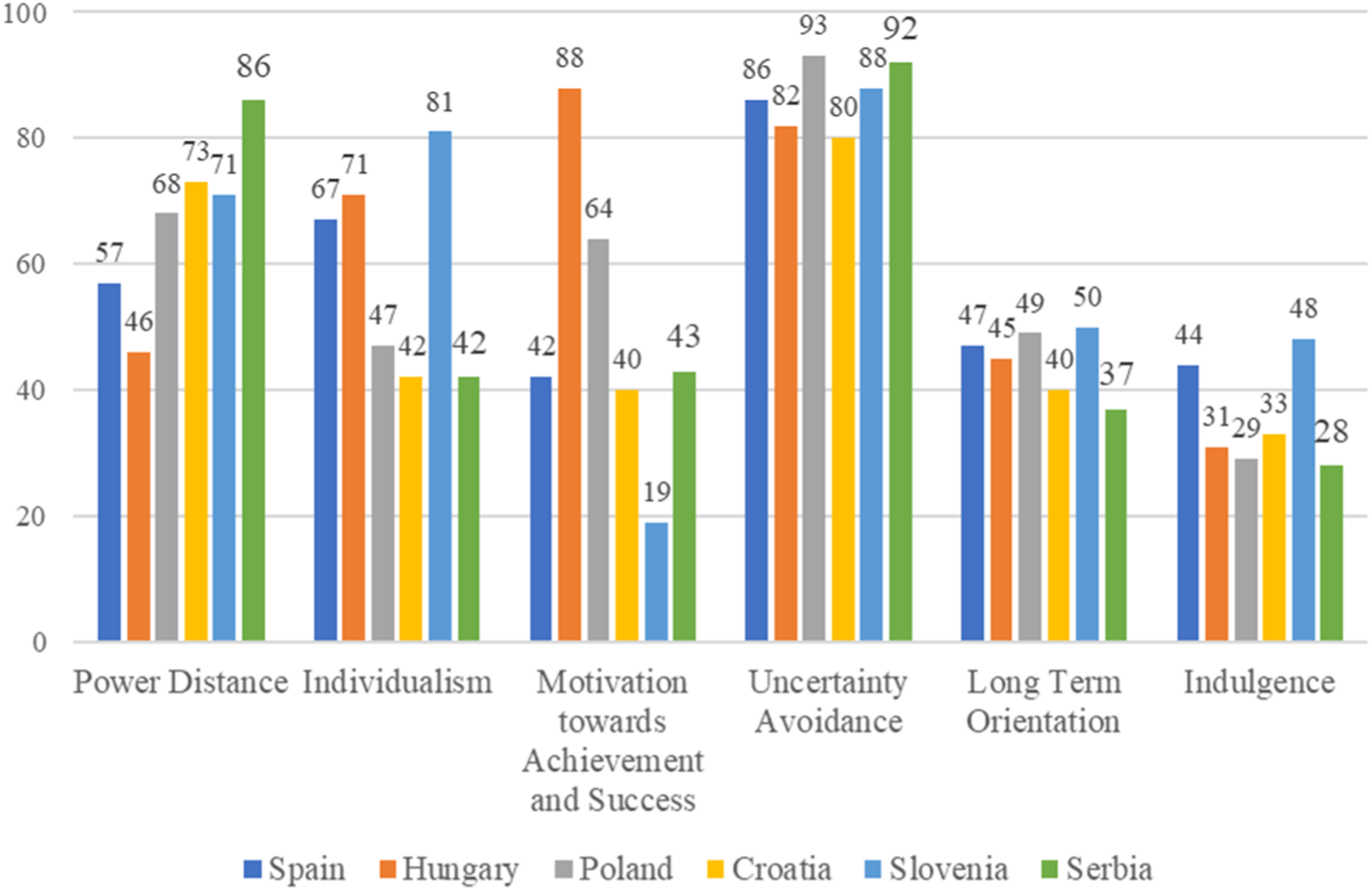
Specific characteristics of economy profiles based on the Global Entrepreneurship Monitor (GEM).
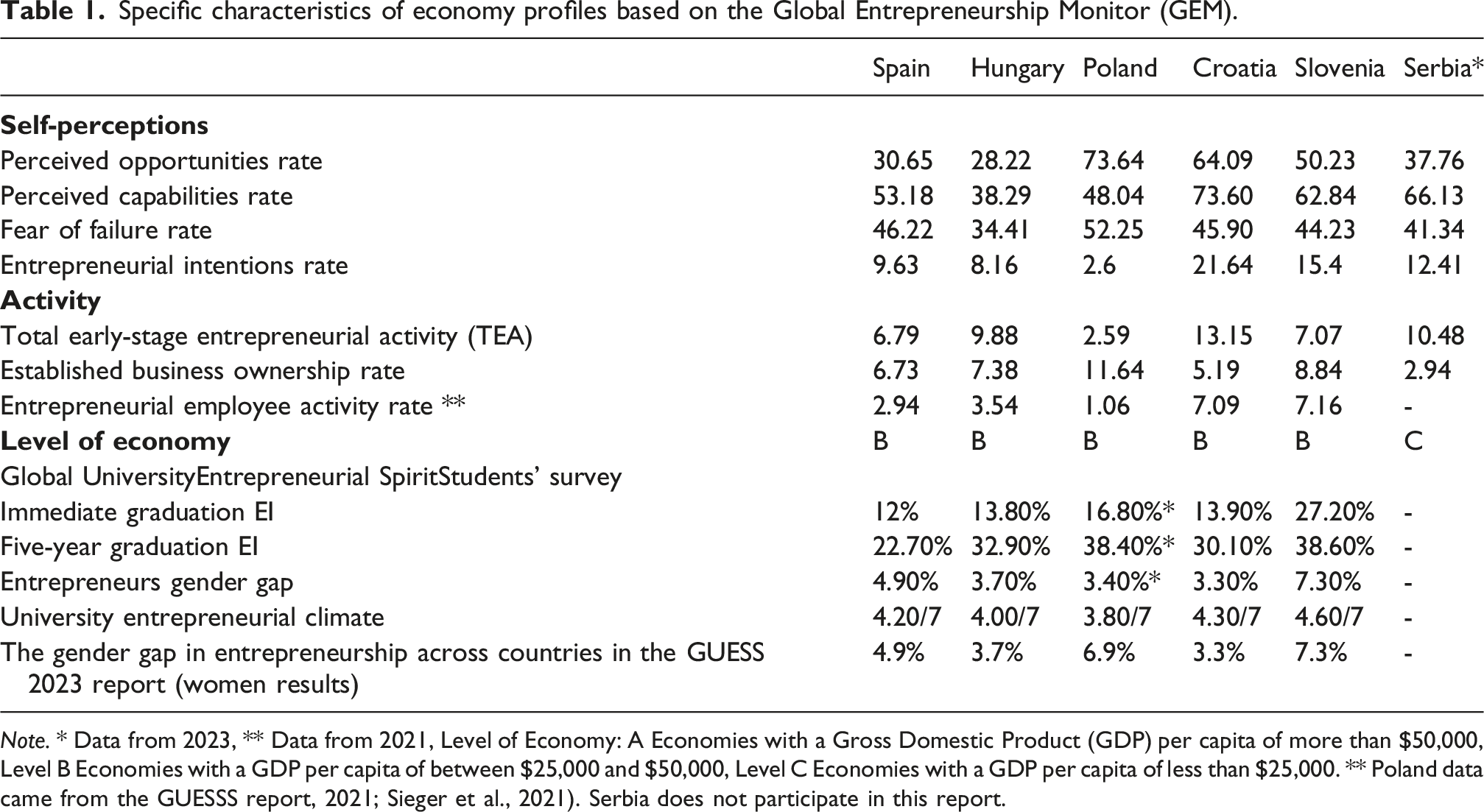
Note. * Data from 2023, ** Data from 2021, Level of Economy: A Economies with a Gross Domestic Product (GDP) per capita of more than $50,000, Level B Economies with a GDP per capita of between $25,000 and $50,000, Level C Economies with a GDP per capita of less than $25,000. ** Poland data came from the GUESSS report, 2021; Sieger et al., 2021). Serbia does not participate in this report.
The Perceived Opportunities Rate reflects how individuals perceive business opportunities in their countries. Poland shows high entrepreneurial optimism but a relatively low EI rate (2.60%), possibly due to its high Fear of Failure Rate (52.25%). Hungary benefits from a lower Fear of Failure Rate, which may favor entrepreneurship. Croatia reports the highest perceived capabilities (73.60%) and EI (21.64%), suggesting strong entrepreneurial confidence. Slovenia presents a moderate entrepreneurial environment with greater intrapreneurial orientation, while Spain still shows room for improvement in early-stage entrepreneurial activity. Serbia, despite being a C-level economy, demonstrates relatively solid entrepreneurial activity. Proposed hypothesized model of high vs. low EI according to sports sciences student’s gender.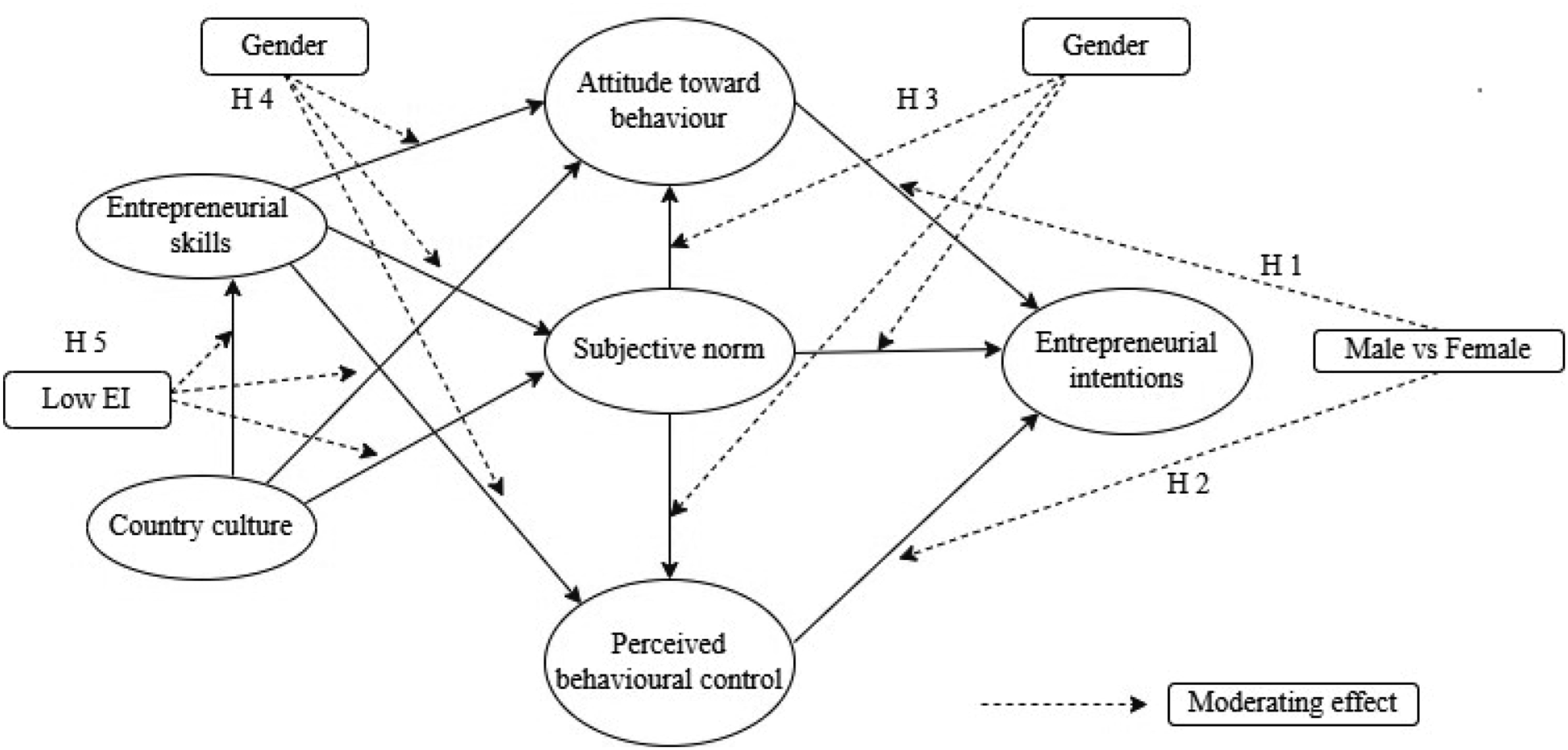
Previous studies have shown that national culture influences entrepreneurial attitudes and intentions. Valliere (2019) found that culture strongly affects ATE, particularly among individuals with lower entrepreneurial predisposition. Similarly, Schlaegel et al. (2013) showed that national culture directly and indirectly affects EI. Countries characterized by lower individualism and higher uncertainty avoidance tend to exert stronger influence on individuals with lower EI. Likewise, Boucher et al. (2023) found that in economically disadvantaged contexts, national culture has a stronger impact on less entrepreneurially inclined individuals, who are more influenced by collectivist norms and governmental support. Based on this, the following hypothesis is formulated:
The impact of CC on ES, ATE, and SN will be higher in the SSS with lower EI of both genders.
Figure 2 shows all hypotheses within the Proposed hypothesized model of high vs. low EI according to sports sciences student's gender.
Method
Sample
Internal consistency, composite reliabilities, and correlations for the examined latent factors (all respondents).
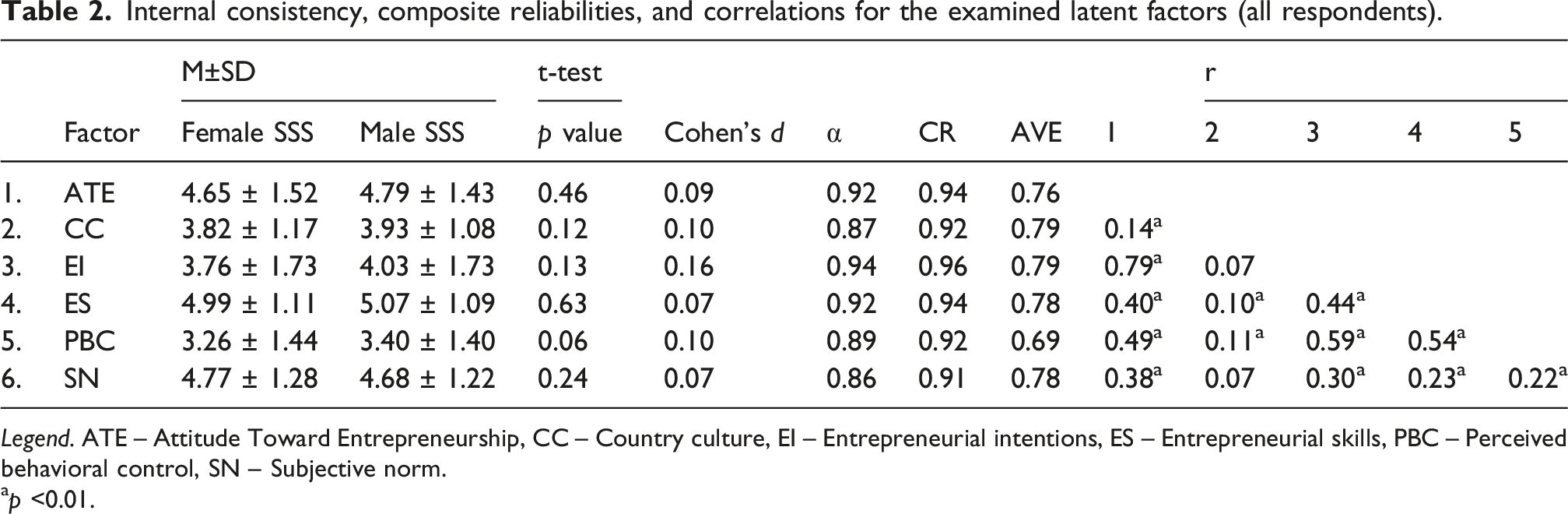
Legend. ATE – Attitude Toward Entrepreneurship, CC – Country culture, EI – Entrepreneurial intentions, ES – Entrepreneurial skills, PBC – Perceived behavioral control, SN – Subjective norm.
p ˂0.01.
The selection of first-year sport science students is important because this allows for the identification of baseline differences in the predictors of entrepreneurial intentions by sex across European contexts, minimizing the effects of academic socialization. Thus, focusing on students at the entry point of their studies provides universities with early evidence that can inform the design of more targeted and effective entrepreneurship education policies throughout the degree program. This is particularly relevant for adapting interventions to different student profiles from the outset of their academic training.
Students from these six countries (Spain, Poland, Hungary, Croatia, Slovenia, and Serbia) were selected using a theoretically and empirically grounded comparative design aimed at capturing variation in entrepreneurial cultural and institutional contexts within Europe. Based on Hofstede’s cultural dimensions, the countries represent distinct cultural profiles related to individualism, power distance, and uncertainty avoidance, forming three broad clusters: Poland and Hungary (more individualistic and low power distance), Croatia and Serbia (more collectivist and higher power distance), and Spain and Slovenia (higher uncertainty avoidance and moderate power distance).
These differences are supported by GEM (2023) indicators showing variation in entrepreneurial perceptions and activity, confirming heterogeneous entrepreneurial ecosystems. Serbia was additionally included as a non-EU pre-accession country to provide an institutional contrast with established EU members, strengthening the comparative scope of the study.
Instruments
EI-related factors were measured using Liñán and Chen’s (2009) Entrepreneurial Intention Questionnaire (EIQ) as a suggested and validated questionnaire. The level of students’ preparedness to become entrepreneurs or establish a business was measured with the EI scale (6 items).
Dimensions of the previously explained TPB included 14 items (the ATE scale had five, the PBC scale comprised six, SN scale included three items). ES scales developed by Liñán (2008) comprise six items that determine and measure different entrepreneurship-related skills.
The CC towards entrepreneurship scale evaluates the status of entrepreneurs at the national level and the factors that enhance the likelihood of their success. CC was measured using a 5-item scale suggested by Liñán and Chen (2009) with the following items: (1) entrepreneurial activity clashes with the culture in my country, (2) the entrepreneur’s role in the economy is not sufficiently recognized, (3) Many people consider that it is hardly acceptable to be an entrepreneur, (4) Entrepreneurial activity is considered too risky to be worthwhile, (5) It is commonly thought that entrepreneurs take advantage of other people. It is important to state that the responses within CC represent individual perceptions of the entrepreneurial environment at the national level (status of entrepreneurs in the country, degree of support from relevant entities, educational opportunities, etc.).
All the scales were evaluated using Likert-type scale questions, considering classifications from one (strongly disagree) to seven (strongly agree). Lastly, the survey included sociodemographic information about the participants, such as age, gender, entrepreneurship training, labour experience, and country.
Procedure
The research design involved a cross-sectional study, using a quantitative approach. The distribution of the survey questionnaire was carried out online at the beginning of the 2022-2023 academic year. The questionnaire was distributed online by professors at the beginning of their classes through institutional learning platforms in EU countries (Slovenia, Poland, Croatia, Spain, and Hungary), while in Serbia it was distributed via Google Forms. The authors sought to achieve a satisfactory gender representation across the subsamples from all participating countries, considering that the proportion of women enrolled in sports science programmes is lower than that of men (Forsyth et al., 2019).
Members of the research team performed a two-way translation of the questionnaire in each country (English to the native language, and back to English), which ensured the validity and uniform application of the questionnaire in all countries. Respondents participated voluntarily and had to give their consent via an online survey. The process of completing the survey took approximately 15 minutes. An important aspect of the research is that the level of discomfort for the respondents was minimized, i.e. similar to those they already experienced in daily routine checks or related psychological testing. The Ethical Committee approved this study with the identification number 46-06-02/2020. Participants have been provided with written informed consent before taking part in the study. This study was conducted in accordance with the Declaration of Helsinki.
Data analysis
The determination of the relationships and paths between the analyzed latent dimensions of the hypothesized model was studied using confirmatory factor analysis (CFA) and structural equation modelling (SEM). Accordingly, according to the suggestions of Hu and Bentler (1999), the application of CFA allowed the examination of the metric characteristics of all applied scales, as well as the internal fit indices with factor loadings. In addition, the calculation of Cronbach’s alpha was used to calculate the inter-item reliability of latent dimensions, while finally the composite reliability (CR), and average variance extracted (AVE) indices were also applied. Besides, means differences in the entrepreneurial variables according by student gender were analyzed using t-test non-related sample. For quantification of potential gender differences, Cohen’s d is applied as a measure of the effect size. Cohen proposed the following scale: small effects values from 0.10 to 0.29, medium from 0.30 to 0.49, large from 0.50 to 0.69 and very large ≥ 0.70 (Cohen, 1992).
In the next step, a cluster analysis was performed, using two-step cluster analysis with Schwarz’s Bayesian information criterion (BIC) to divide male and female students into low and high-EI subsamples.
After that, a model for predicting the EI of SSS of the different groups was performed. A multi-group SEM analysis was carried out once the measurement invariance of the various subsamples was determined. The proposed model was examined for linearity and multicollinearity (calculated by using tolerance – less than 0.2, and Variance Inflation Factor above 4), which is suggested by Hair et al. (2010). All outliers were removed in terms of multivariate normality. The software IBM SPSS (Statistical Package for Social Sciences), version 26.0, was used for performing the statistical analysis, as well as the package AMOS 24.0.
Results
The reliability of the latent constructs was satisfactory (see Table 2). The obtained coefficient values indicate that the scales are internally consistent across all constructs. According to Cronbach’s Alpha results, in three dimensions (ATE, EI, and ES) it was excellent (α ≥ 0.90), and in the other three dimensions (CC, PBC, and SN) internal consistency was good (α ≥ 0.80). Similar to these results, the composite reliability was at a high level, where the lowest value was 0.91. AVE indicators show that all latent variables explain more than half of the variance (at least 0.69 for the PBC construct), which indicates good convergent validity. Therefore, we can consider that these are highly reliable and valid constructs, which can be suitable for use in similar research. Mean differences between males and females were small (all Cohen’s d < 0.20), with males showing slightly higher EI. The largest effect size was observed for EI (d = 0.16), which suggests somewhat higher EI of males than females, which indicates that male SSS report slightly higher entrepreneurial propensity. The dimension of ATE has a mean of 4.65 (SD = 1.52) in females, or 4.79 (SD = 1.43) in males SSS, indicating positive ATE in general. The mean score of CC (females M = 3.82, SD = 1.17; males M = 3.93, SD = 1.08) revealed that participants perceived national culture as neutral to moderately supportive of entrepreneurship. Also, SSS in both genders had a moderate level for the mean of PBC, which indicates that participants feel some limitations in controlling their entrepreneurial outcomes and lack confidence in the entrepreneurial undertaking.
Model fit summary.
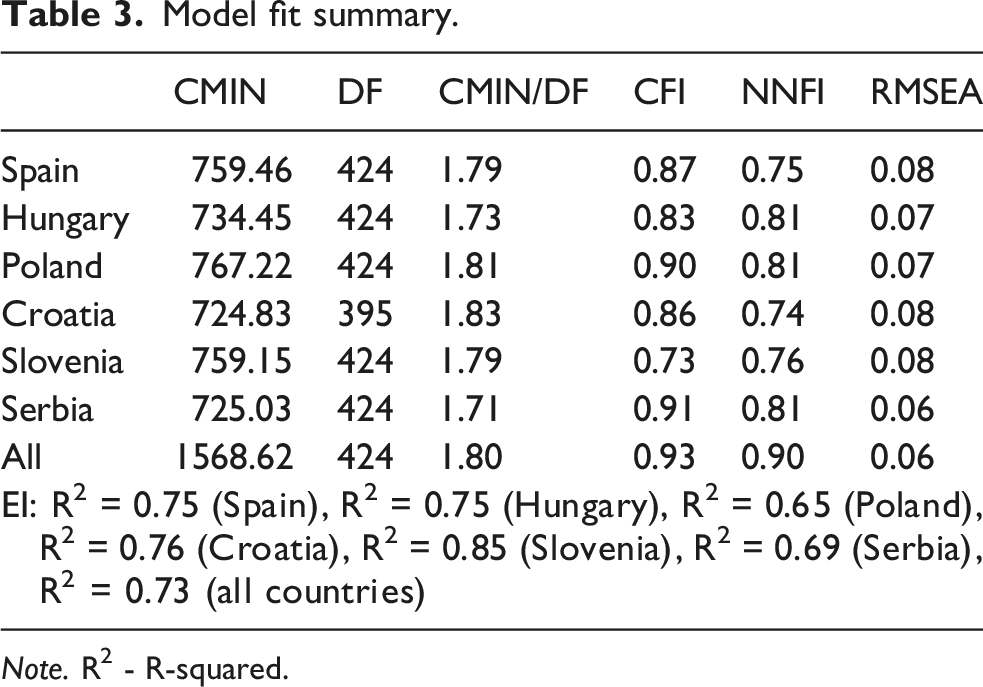
Note. R2 - R-squared.
Furthermore, a multigroup analysis showed that the p-value of the chi-square difference test was significant, indicating that the model differed across male and female groups of SSS. Global test results calculated in unconstrained model χ2 = 2.045,880, df = 848, constrained model χ2 = 2.069,271, df = 858, with difference of 23.991, and df = 10, p is 0.009.
Cluster solution: variable importance Female and Male SSS.
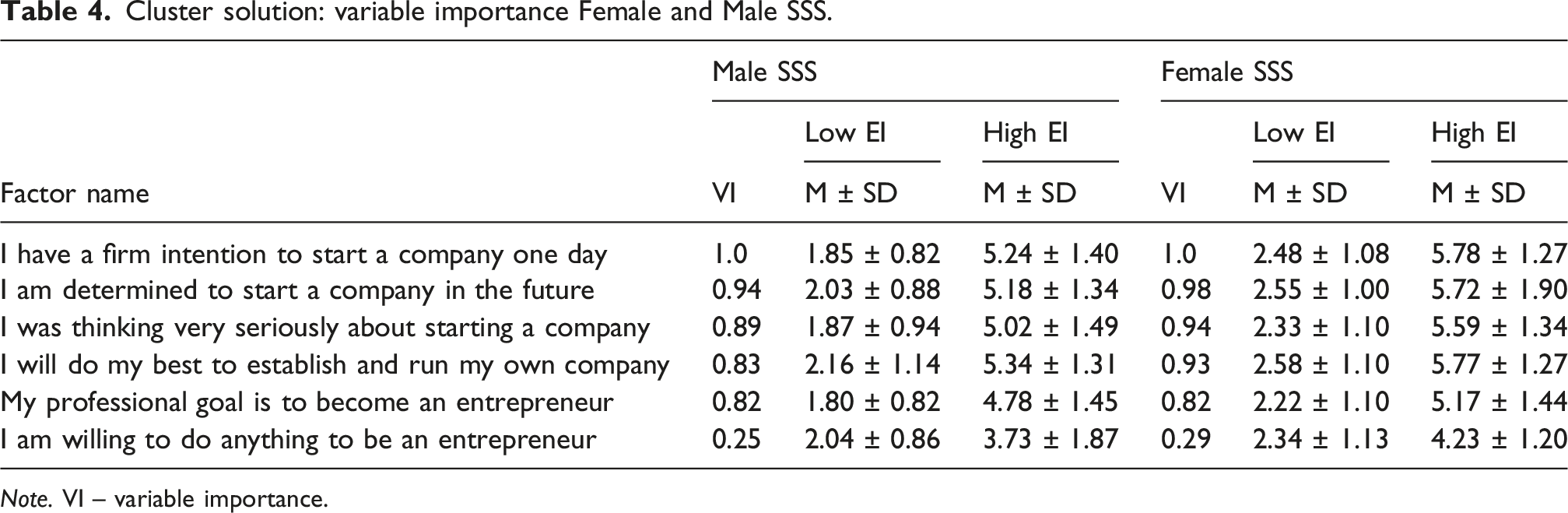
Note. VI – variable importance.
The information is presented for variable importance (VI) regarding intentions to start a company, along with their corresponding mean (M) and standard deviation (SD) values. Low-EI Groups of SSS showed limited engagement and intention compared (means < 2.55), while High-EI Groups of SSS consistently demonstrated stronger EI across all statements (means > 3.70).
Then a multigroup analysis was performed across males’ and females’ low and high-EI groups.
Multigroup global test - male and female students.
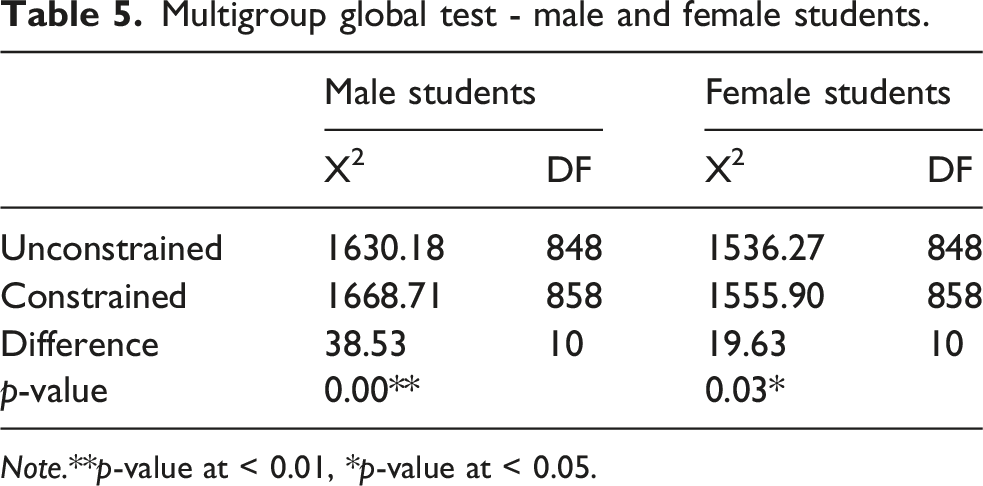
Note.**p-value at < 0.01, *p-value at < 0.05.
Distribution of demographics and factor scores by clusters considering high vs. low EI and student’s gender.
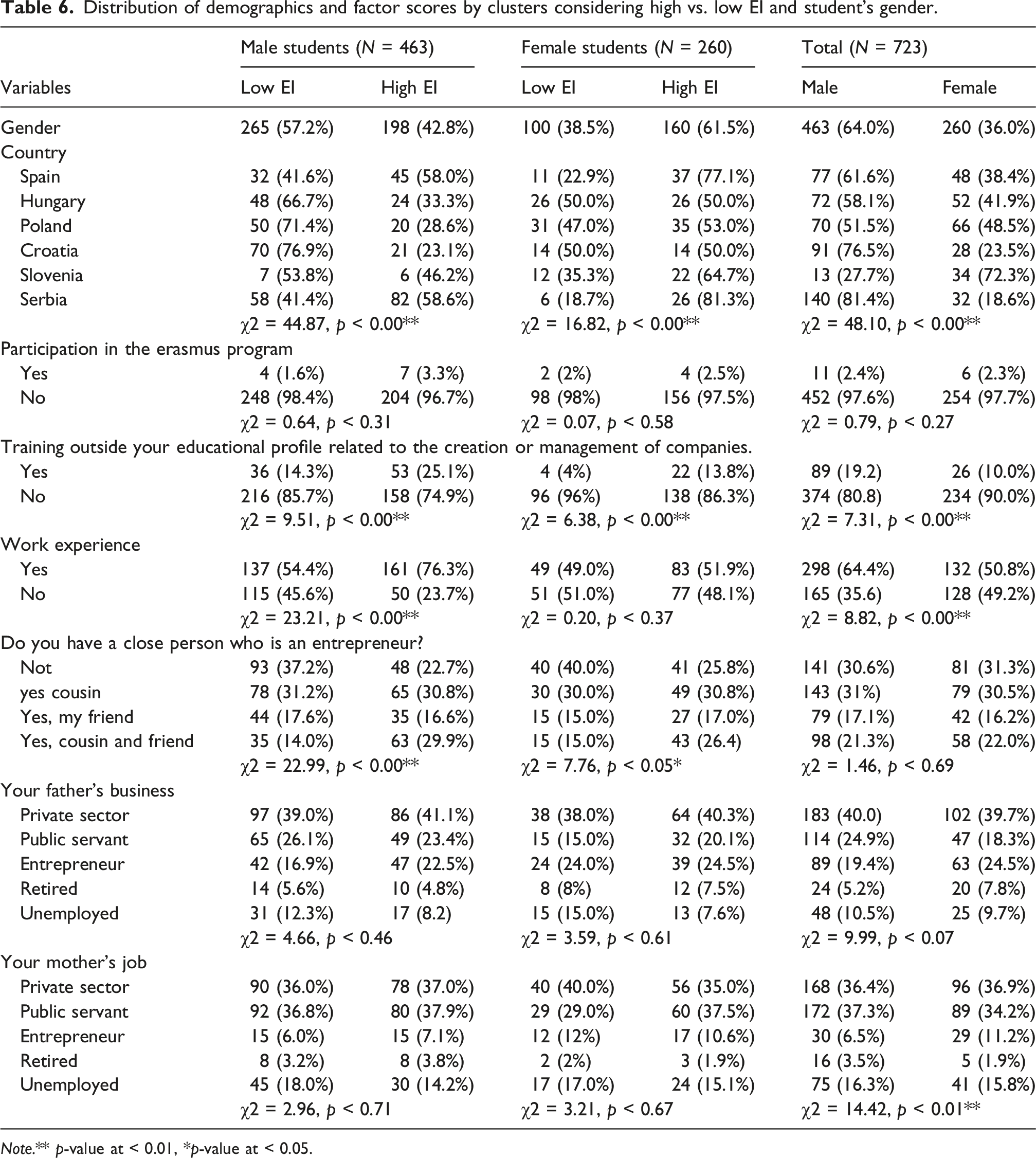
Note.** p-value at < 0.01, *p-value at < 0.05.
Chi-square tests of independent samples established statistically significant differences between the sexes, which are slightly greater in terms of EI in men (Cohen’s d = 0.16). It is interesting that after the two-stage cluster analysis, a higher proportion of female students (61.5%) than male students (42.8%) belong to the category with high-EI. Thus, men showed slightly higher average EI scores, whereas a greater proportion of women belonged to the high-EI group. The majority of SSS with groups of high levels of EI, regardless of gender, are from Serbia, Spain, and Slovenia. Besides training and work experience are key differentiators, particularly for high-EI individuals. Male SSS with high-EI (25.10%) and female SSS with high-EI (13.80%) are more likely to have received entrepreneurial training than their low-EI counterparts. Similarly, male SSS with high-EI (76.30%) reported significantly more work experience than those with low-EI (54.40%), while the difference among female SSS is less pronounced. Furthermore, social connections with entrepreneurs are more common in high-EI groups, with a larger proportion of individuals with high-EI knowing entrepreneurial cousins or friends, emphasizing the role of networks in fostering entrepreneurial aspirations. Other factors, such as participation in the Erasmus program and parental occupations, showed limited influence on EI levels. Across all groups, Erasmus participation is rare, with no significant differences between the low-EI and high-EI groups.
Fathers’ occupations remain consistent across categories, while mothers’ entrepreneurial roles show a slight association with high-EI among females. These patterns highlight the multifaceted nature of EI, driven by gender, culture, training, work experience, and social connections. The Chi-Square analysis reveals statistically significant differences in EI based on gender, country, training, work experience, and social connections.
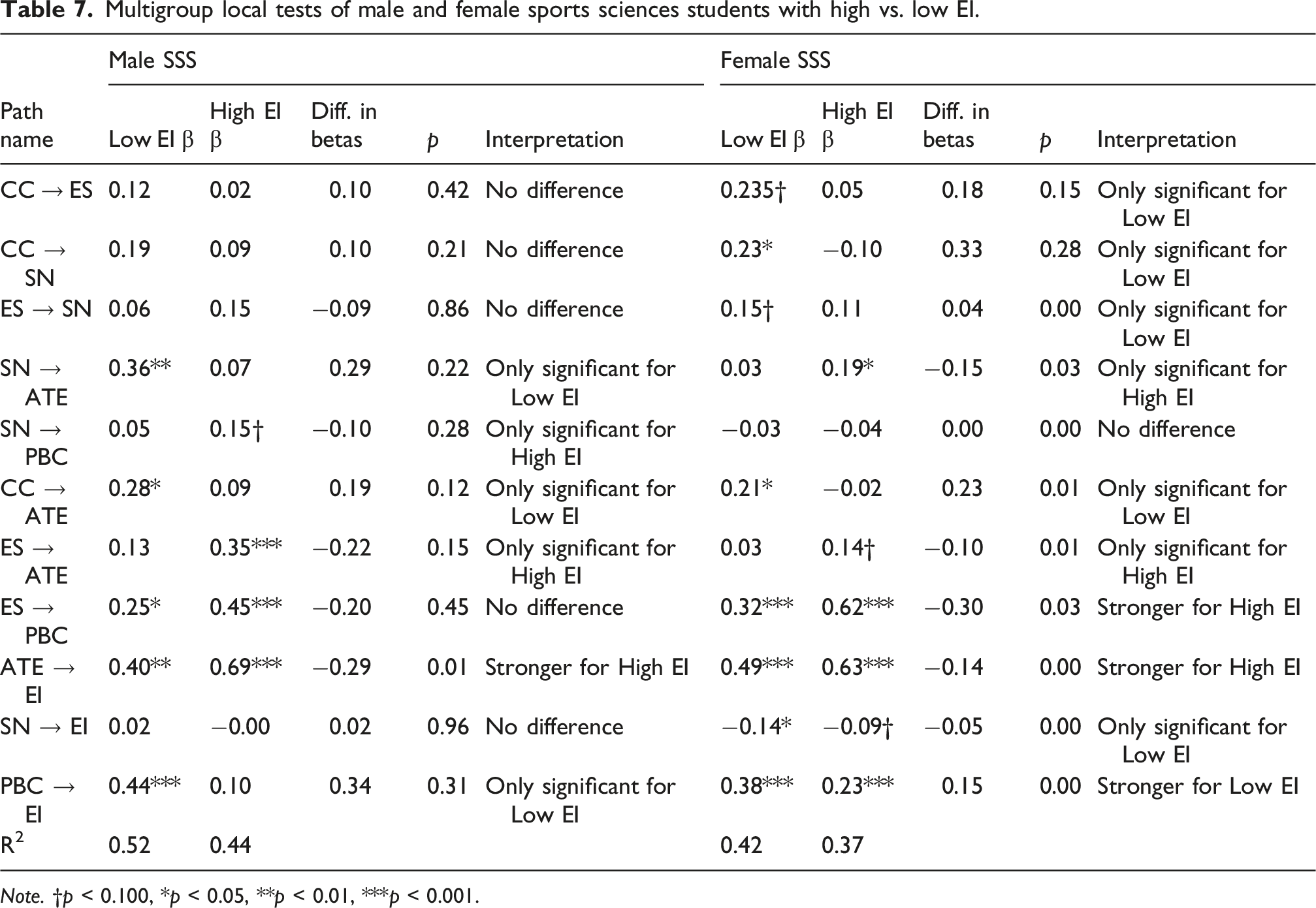
Multigroup local tests of male and female sports sciences students with high vs. low EI.
Note. †p < 0.100, *p < 0.05, **p < 0.01, ***p < 0.001.
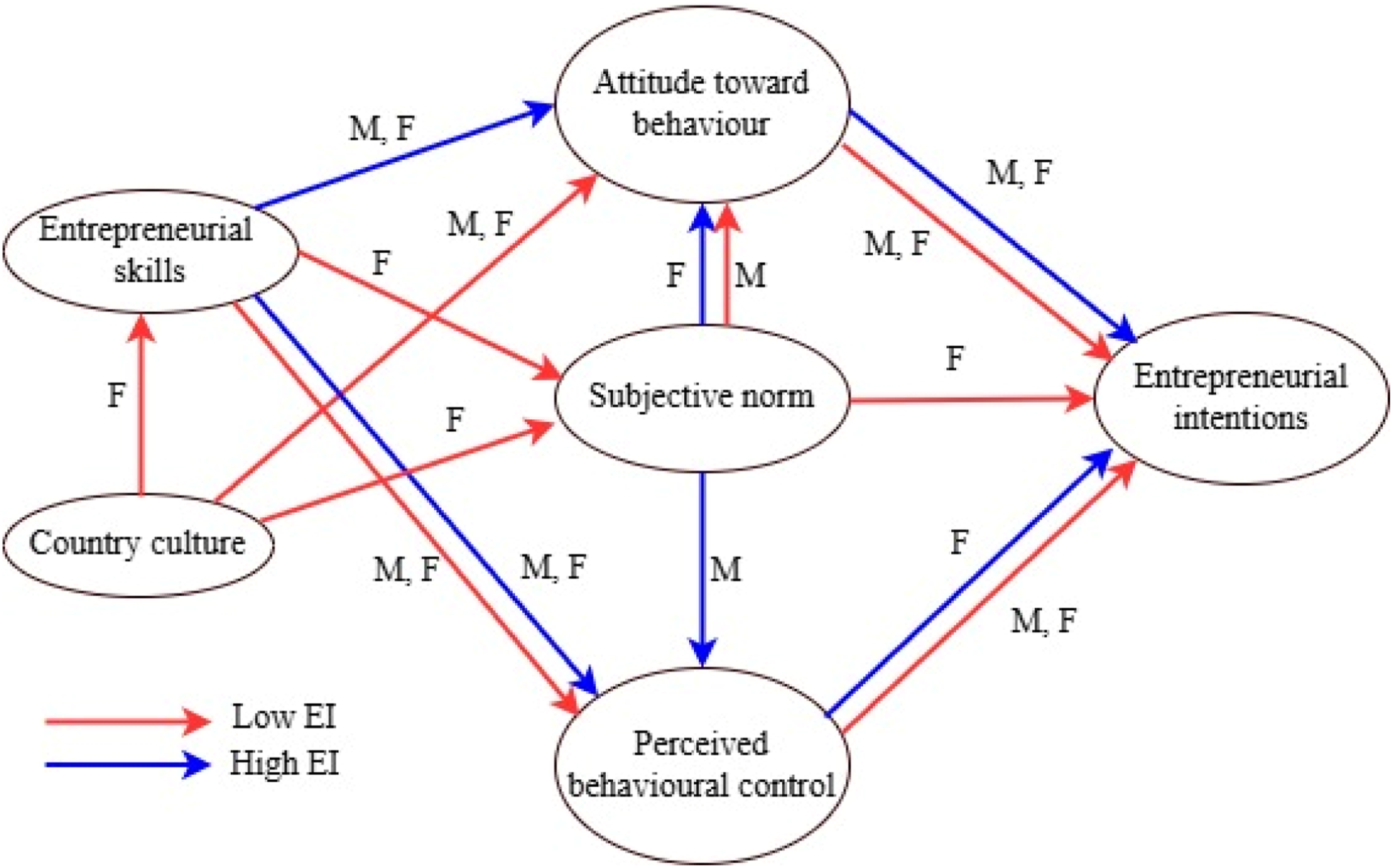
Statistically significant paths regression of high (blue colour) and low (red colour) EI clusters of males (M) and females (F) sports sciences students.
Among males, the multigroup local test showed that paths SN → PBC, while ATE → EI was significant in both male subsamples and slightly revealed stronger relations for high-EI. On the other hand, paths SN → ATE and CC → ATE were significant only for the low-EI SSS. For females, the interpretation of results considered that SN → ATE and ES → ATE were only significant for high-EI levels, while ES → PBC and ATE → EI were stronger for high-EI levels. In five relations (CC → ES, CC → SN, ES → SN, CC → ATE, SN → EI), only significance for the low female SSS, while only impact PBC → EI was stronger for low-EI. Relation ES → ATE was the only significant in terms of SSS high-EI for both genders.
Equal strong effects of ATE in the prediction of EI were found in both genders in the SSS groups with high-EI, which declares that Hypothesis 1 is rejected. Further, there were statistical gender differences in the prediction of EI from PBC. In female students, impact of PBC on EI exists at both EI levels, whereas in males it only exists on low-EI SSS. Thus, Hypothesis 2 is partially confirmed. Male SSS with low-EI showed a more substantial reliance on the subjective norm (SN → ATE) when forming ATE with significant effects observed only for low-EI (β = 0.36, p < 0.01). Conversely, males with high-EI are more influenced by ES (ES → ATE) when shaping attitudes (β = 0.35, p < 0.001). These findings suggest that low-EI males depend on social expectations, while high-EI males focus on internal emotional factors and skills to guide their EI.
In contrast, female SSS exhibit a different moderating effect of EI on similar pathways. Females SSS with high-EI placed significant importance on the subjective norm (SN → ATE; β = 0.19, p < 0.05) which positively impact ATE and ES (ES → PBC; β = 0.62, p < 0.001), which strongly influence their PBC. This shows that high-EI females can leverage emotional and social inputs to enhance their self-perception of control over entrepreneurial actions. Thus, hypothesis 3 is fully confirmed, while hypothesis 4 is partially confirmed. Lastly, findings showed that the impact of CC → ATE in low-EI for both genders, while other paths (CC → ES, CC → SN) were significant only for low-EI females. Thus, it is revealed that Hypothesis 5 is confirmed.
Discussion
The purpose of this research was to explore how EI differ among male and female SSS with varying intention levels while identifying gender-specific predictors within a cross-cultural framework. This approach is needed because the number of female entrepreneurs remains lower than that of male entrepreneurs across most of Europe and the number of entrepreneurs differs across countries (GEM, 2023). Thus, more research is needed to develop tailored policies to promote female sports entrepreneurship across Europe.
According to the cluster analysis results, and after excluding gender, the highest proportion of SSS with high entrepreneurial intentions (EI) was found in Serbia, Spain, and Slovenia. This pattern is largely consistent with national indicators reported by the Global Entrepreneurship Monitor (GEM, 2022/2023), suggesting a certain alignment between individual-level psychological profiles and broader entrepreneurial ecosystems. In Serbia, higher EI levels among students may be related to relatively strong perceived entrepreneurial abilities despite less favorable economic conditions, pointing to the potential role of psychological resources in compensating structural constraints. In Spain, the relatively high EI observed could be associated with the ongoing expansion and increasing professionalization of the sports industry, which is generating new entrepreneurial and innovation-driven opportunities. In Slovenia, the combination of favorable socioeconomic conditions, supportive university environments, and entrepreneurship-oriented policies may help explain the stronger EI profiles identified. Although Croatia is less prominent in the high-EI clusters, it stands out within the EU for high perceived entrepreneurial capabilities and entrepreneurial intentions, suggesting that there is still substantial untapped entrepreneurial potential among sport science students.
On the other hand, the lower representation of Polish students in the high EI clusters is consistent with national-level evidence reporting relatively low entrepreneurial intention rates, which may be associated with elevated fear of failure. In contrast, Hungary presents a more complex pattern: although national indicators suggest relatively low fear of failure, this advantage does not appear to translate into higher entrepreneurial intentions in our sample. Taken together, these findings highlight that macro-level conditions, such as perceived entrepreneurial opportunities, self-efficacy, fear of failure, and overall entrepreneurial activity, may not act in a linear or deterministic way, but rather exert an indirect and context-dependent influence on students’ entrepreneurial intentions. Consequently, combining individual perceptions of the entrepreneurial culture with objective macroeconomic indicators offers a more comprehensive and nuanced framework for interpreting cross-national differences in entrepreneurial intention among sport science students.
Regarding the profile of female and male students with high and low levels of EI, findings showed that female students demonstrate stronger entrepreneurial aspirations than male SSS.
These findings contrast with previous studies that did not find differences between the EI in SSS according to their gender (González-Serrano et al., 2016; Lara-Bocanegra et al., 2022).
Moreover, they contradict da Costa et al. (2023) and Adatepe and Unlu (2022), who found that male students showed greater interest in being entrepreneurs. A possible explanation is the rise of sectors such as fitness, health, and wellness, where entrepreneurship is common and where many women in sports science may be inclined towards these sectors. In this line, Blázquez and Feu (2012) found that women tend to have a strong inclination towards sectors related to wellness and fitness, which can be translated into their professional field.
The higher entrepreneurial aspirations observed among female students may be partly explained by slight association with mothers’ entrepreneurial roles. These findings may be interpreted through the theory of entrepreneurial identity, i.e., by introducing family dynamics into the process of its formation, where the importance of parental influence on the entrepreneurial identity of their daughters is present (Sarfati and Ulreich, 2025). According to Greene et al. (2013), this phenomenon can be viewed as a role model of behavior, where daughters imitate their mothers in the context of entrepreneurial behavior or encourage their daughters to pursue entrepreneurial paths (González-Morales and López-Núñez, 2024), or intergenerational transmission of EI in mother-daughter relationships (Soares et al. (2023).
Moreover, entrepreneurial training and work experience seem to be distinguishing features of male SSS with high levels of EI and having connections with entrepreneurs for both gender groups of SSS with high levels of EI. In line with this, prior studies have indicated that students with prior work experience tend to exhibit stronger EI (Adatepe and Unlu, 2022; González-Serrano et al., 2017). These insights highlight the multifaceted factors shaping EI across demographics.
The perceptions of having or possessing ES influence positively the ATE in the high entrepreneurial profile of students (both genders), as students with strong ES are likelier to see entrepreneurship as attainable and rewarding. This finding aligns with several studies that revealed individuals with strong ES have higher aspirations to develop positive ATE (Bagheri and Pihie, 2022; Lans et al., 2021). This suggests that abilities like creativity, willingness to take risks, and effective problem-solving play a crucial role in shaping individuals’ perception of entrepreneurship as a feasible, worthwhile, and fulfilling career path.
Consistent with the presented results, numerous studies indicate that a positive ATE and high PBC (self-efficacy) are strong predictors of EI (Lortie and Castogiovanni, 2015).
Among students with high-EI, a positive ATE has a significant and direct influence on their intention to engage in entrepreneurial activities, regardless of gender. This implies that when SSS have a positive outlook on entrepreneurship, seeing it as a beneficial and exciting career path, they are more likely to develop strong EI. This positive attitude stems from being grounded in positive ATE in general in both genders. Similarly, PBC positively relates to EI in low and high-EI females and low-EI males SSS. This suggests that both female groups (and low-EI males) who feel confident starting and managing a business are more likely to have EI. High perceived control can reduce fears and uncertainties associated with entrepreneurship, making it a more attractive option (Gao et al., 2024; Markowska and Wiklund, 2020).
Low-EI males show greater reliance on SN, which to a certain extent depends on social circumstances and external factors, and such students need support through mentoring, and institutional or university support. On the other hand, males with high-EI rely more on their ES, i.e. internal (own) competencies, and their priority is to further develop these competencies through training and practical entrepreneurial activities. For females, the situation is somewhat different, considering that the influence on the group with high-EI comes from both external (SN) and internal (ES) factors. In this regard, entrepreneurship education should offer networking, teamwork, and leadership capacity development that should enable the development of entrepreneurial self-confidence. These findings are aligned with Janković et al. (2022) and Zwane and Ebewo (2023) which emphasized the crucial role family and friends play in forming ATE but without examination of gender differences.
Additionally, strong ES equips students of both genders with low and high-EI with the necessary abilities to succeed, indirectly increasing their EI. These factors can either strengthen or weaken a student’s intention to become an entrepreneur; for instance, a positive attitude and high confidence can be undermined by a lack of social support or an unsupportive country climate. Conversely, strong ES can mitigate the negative impacts of less favourable SN or CC. According to Gallegos et al. (2024) and Martins et al. (2023), ES are closely linked to the self-confidence of students in launching and running a business. When SSS possess the appropriate competencies, knowledge, and support, they tend to feel more empowered and are consequently more inclined to develop EI. Research by Bagheri and Pihie (2022) found that ES is essential in enhancing students’ confidence to launch entrepreneurial ventures. Piperopoulos and Dimov (2015) confirmed similarly that ES developed through education and practice impacts self-efficacy, providing a better business launch capability.
A contrasting perspective is provided by Oosterbeek et al. (2010), which emphasized that understanding the real challenge of entrepreneurship, acquired through entrepreneurial education, decreases students’ intentions to pursue entrepreneurial ventures. The meta-analysis by Martin et al. (2013) indicated the problem of translating improving knowledge and skills into higher confidence in entrepreneurial abilities. The complexity of starting the business introduces students to the challenges and risks of entrepreneurship and can sometimes decrease confidence, even if ES is present.
The findings indicate that cultural norms and values exert a stronger influence on students with low-EI, with this effect being particularly present among female students. Among female students with low levels of EI, CC appears to be a significant factor shaping their attitudes toward entrepreneurship. This finding aligns with previous research highlighting that access to local resources can sometimes amplify individuals’ likelihood of pursuing entrepreneurial activities, even if broader cultural or economic conditions are less favourable (Fritsch and Storey, 2014). Other authors emphasized the importance of strong personality traits related to confidence and risk-taking, which are more valuable despite the broader economic and cultural environment (Rauch and Frese, 2007).
Finally, this study presents several limitations. This study used a cross-sectional design, which represents one of its main limitations. Future research should therefore adopt a longitudinal approach. Such an approach would allow researchers to follow changes in students from enrolment to the final year of study and examine the influence of contextual factors on the development of EI. Besides, when interpreting the findings, it is important to consider that the data were collected in only a few European countries. The research focused on assessing the EI of SSS, rather than tracking their actual future entrepreneurial behaviours. Lastly, these results could differ from the previously mentioned Hofstede’s cultural dimensions and GEM indicators at the macro level. These dimensions were used only for contextual discussion in the theoretical part of the paper and discussion and were not included in the SEM model.
Future research should include a larger and more diverse sample of countries to improve the generalisability of the findings and explore potential cross-cultural differences. Longitudinal studies are also needed to examine whether entrepreneurial intentions predict future entrepreneurial behaviours and career outcomes over time, rather than only entrepreneurial intentions.
Implications
The theoretical and practical implications derived from this study emphasize the necessity of adapting entrepreneurial education strategies based on gender differences and levels of EI. The results emphasize the essential role that ES have in developing EI among both male and female students. Developing these skills is essential, as they not only influence entrepreneurial attitudes (ATE) but also act as a driving force in shaping entrepreneurial behaviors. In this sense, interventions should prioritize ES as a primary focus before aiming to enhance EI directly.
From a practical standpoint, differentiated strategies are required to support students effectively. Male students with high-EI benefit most from skill development, innovation-driven challenges, and mentoring programs aimed at consolidating entrepreneurial ventures. Conversely, those with low-EI rely more on institutional and social support networks (SN), which can help foster a positive attitude and increase PBC. Similarly, female students with high-EI thrive in environments with strong social support and continuous skill development opportunities, reinforcing both their self-confidence and perceived control. For women with low-EI, interventions should focus on reducing contextual barriers (CC), enhancing perceived control, and providing social validation through exposure to role models and targeted networking opportunities.
Cultural context is also a key factor in forming entrepreneurial attitudes, especially for female students with low-EI, as their views on ES and SN are heavily shaped by the broader environment. Tailored policies should consider country-specific conditions, addressing gender disparities through initiatives like female-focused competitions, scholarships, and networking platforms. In regions with low overall EI, integrating entrepreneurship education into university curricula and fostering university-industry collaborations can create more opportunities. Additionally, continuous assessment and data-driven policy adjustments are necessary to align educational initiatives with evolving student and societal needs.
Ultimately, adapting interventions according to gender and EI level enhances the effectiveness of entrepreneurial education programs. While high-EI individuals benefit from targeted mentoring and skill development, low-EI students require structural support, social validation, and contextual adjustments.
Such an approach promotes inclusive and varied opportunities within entrepreneurship education, preparing students with the skills and resources needed to participate in entrepreneurial endeavors with greater confidence.
Conclusions
University entrepreneurial policies and programs should be tailored to students’ gender and their initial level of entrepreneurial intention (EI). The present study highlights the key role of gender in shaping entrepreneurial intentions among sport science students. Moreover, the development pathways of entrepreneurial intentions differ between male and female students, particularly when comparing individuals with high versus low initial levels of EI.
Strong entrepreneurial skills and a positive attitude towards entrepreneurship form the basis for building high EI in both sexes; on the other hand, PBC has a stronger influence among women. Female students appear to be more influenced by cultural and social context when forming entrepreneurial attitudes (especially those with lower initial intentions). These findings suggest that universal approaches to entrepreneurship education may be less effective than gender-sensitive approaches.
The design of education in sports science programs should take these differences into account. Based on that, female students may benefit from additional support in building PBC, higher levels of self-confidence, enabling the monitoring of various role models from the field of entrepreneurship and supportive social networks. At the same time, cultural and contextual barriers that favour the female gender should be removed.
For male students, it would be important to emphasize the development of entrepreneurial skills and the process of transforming positive attitudes into action intentions in the design. Recognizing differences in the context of high or low EI within each gender provides an opportunity for more precise action in the application of educational strategies.
The integration of gender perspectives in universities across Europe can be a generator of great potential for the diversity of future sports entrepreneurs, with a huge contribution to gender equality in sports science students.
Footnotes

Ethical considerations
The Ethical Committee of the Faculty of Sport and Physical Education, University of Novi Sad in Serbia, approved with the identification number 46-06-02/2020. Written informed consent to participate in this study was provided by the participants before taking part in the study.
Funding
The authors disclosed receipt of the following financial support for the research, authorship, and/or publication of this article: This manuscript is part of a project conducted by the Faculty of Sports and Physical Education, University of Novi Sad (Reg. No: 142-451-3459/2023-01), funded by the Provincial Secretariat for Higher Education and Scientific Research. Additionally, the research was part of a project funded by John Paul II University in Biala Podlaska (Project No: PB/16/2022). Lastly, the research was financed by the Thematic Excellence Program 2021 Health Sub-programme of the Ministry for Innovation and Technology in Hungary, within the framework of the EGA-10 project of the Pécs University.
Declaration of conflicting interests
The authors declared no potential conflicts of interest with respect to the research, authorship, and/or publication of this article.