







Abstract
This study explores factors influencing Mexican Gen Z high school students’ intention to pursue tourism degrees, using the Theory of Planned Behavior. A validated questionnaire was applied to 310 students (ages 16–20). Results from factor analyses and structural equation modeling showed that attitudes toward tourism and subjective norms positively influenced intentions, while perceived behavioral control had a negative effect. Pre-pandemic interest predicted current intention, but COVID-19 perceptions did not. The tourism sector is recovering but faces a talent shortage; thus, understanding these influences is key. The study offers insights for vocational guidance and educational marketing in tourism.
Keywords
Introduction
According to the World Tourism Organization (2025a), 2024 is recognized as the year of international recovery from COVID-19 pandemic, considered the worst crisis of our time, with positive numbers in several destinations and international arrivals are expected to grow from 3% to 5% this year.
This will translate into a growing job offer for the coming years. However, despite the positive numbers and expected growth, tourism faces various challenges, such as staff shortages to fill the jobs generated by the sector, which, according to the World Tourism Organization (2025) ranks fifth. Mexico is internationally recognized for its hospitality, an ancestral trait of Mexican culture, as well as its natural and cultural richness, which make this country a unique destination. In the 2024 Travel & Tourism Competitiveness Index of the World Economic Forum, Mexico ranks first in natural resources and fifth in cultural resources. In the international tourist arrivals ranking, Mexico ranks sixth with a total of 45 million tourists showing full recovery from 2019, competing with countries as important in tourism as France, Spain, the United States, Turkey, and Italy. In the Americas, Mexico is the second country with the most international visitors after the United States (World Tourism Organization, 2025b). This means that Mexico is a country with high potential for tourism development.
However, despite all these advantages, Mexico, like other countries around the world, faced the well-known challenges in the tourism, such as job losses as a result from the COVID-19, or the decline of the tourism sector coupled with environmental issues such as natural disasters and climate change (Choy and Yeung, 2022). As a result, the attraction and retention of talent for positions offered nationally and internationally by this sector are compromised (Ho and Law, 2022). This problem can be exacerbated by the negative perceptions about work in this sector. According to the literature, some of these perceptions are: low wages, a high number of jobs that do not require professional training, work outside regular hours, unpaid overtime, lack of family time, temporary jobs, lack of labor benefits or regulation, among others, which can directly affect students’ willingness to study a degree related to tourism or hospitality (Richardson and Butler, 2012).
According to data from Asociación Nacional de Universidades e Instituciones de Educación Superior [National Association of Universities and Higher Education Institutions] (ANUIES), Mexico has an educational offer made up of 217 tourism study titles from technical university level to doctorate, in 601 campuses of 410 higher education institutions throughout the country for the 2023/2024 cycle (Díaz et al., 2025). These authors also point out that, since COVID-19, enrollment in Mexican universities offering bachelor’s degrees in tourism has decreased by up to 23%. This represents a challenge for universities in attracting students interested in studying tourism and coincides with what the UN Tourism Department establishes regarding the challenge of staff shortages for the jobs that tourism will generate in the coming years. All the above could represent a bigger problem for young people of generation Z, a generation who is currently in the workforce and/or pursuing a bachelor’s degree.
According to literature, Gen Z are known as digital natives since they have grown up immersed in technology. They have different learning preferences and career priorities and expectations than previous generations (Hernandez-de-Menendez et al., 2020). Social media and digital content are influencing this generation decision making processes (Peredy et al., 2024). Gen z places great importance on work-life balance, flexibility, they want to have a meaningful work, and personal well-being when evaluating career options, which may influence their perceptions of tourism and hospitality professions (Jayatissa, 2023; Kusá et al., 2024).
This makes Generation Z, which is about to study a bachelor’s degree, an important point to investigate their intentions about studying tourism. Although previous studies have extensively examined tourism and hospitality students’ career intentions, i.e., university students to determine their attitudes towards workforce in tourism (Schroth, 2019), most research has focused on undergraduate students already enrolled in tourism programs (Roney and Öztin, 2007; Walmsley, 2012).
The advantage of these studies lies in better understanding the current segment of students who have already chosen a bachelor’s degree in tourism, allowing them to analyze their characteristics, motivations, and interests for their professional future (Choy and Yeung, 2022). While limited attention has been given to high school students before making their higher education decision (Gong and Jia, 2022).
Only a few studies focus on high school students to determine their intentions to study a tourism degree (Airey and Frontistis, 1997; Li and Zhang, 2023). Among this literature there were no studies identified to analyze the career choice in tourism using the Theory of Planned Behavior (TPB). To address this gap, this study aims to determine the relationship between current high school students’ attitudes, subjective norms, perceived behavioral control, and their intention to study a degree in tourism, according to the TPB. Additionally, studies have sought to relate the COVID-19 pandemic with the intentions to study tourism (Li and Zhang, 2023; Tan et al., 2023). To investigate if COVID-19 has influenced the intentions to study a bachelor’s degree in tourism, two dichotomous variables were added.
Literature review
Career choice and vocational guidance
Career choice is an important step for high school students, as it is one of the first decisions that will have a direct long-term impact on their personal and professional future (Akosah-Twumasi et al., 2018). During high school, students continued their development and maturation process, forming their identity, experiencing different situations, and growing within a specific family or cultural context. At this age, young people have interests, motivations and skills that can lead to a vocation and begin to visualize their professional future. Vocation can be understood as the set of psychological processes that a person engages in in relation to the adult professional field they aspire to join or in which they already participate. This vocation is linked to the decision about which career to pursue (Castañeda-Rentería and Solorio-Aceves, 2014). Career choice is defined as a set of attitudes and behavior and a person perceives individually, linked to their life experiences and work-related activities over time, and shaped by the broader family or cultural environment (Neequaye and Armoo, 2014). Finally, at school, institutions have provided vocational guidance for a long time to help students to shape their future. Vocational guidance is defined as the professional support that is guided by schools to help students to find the right path. This guidance helps students to take better decisions by providing information about careers, professional world, helping students to be aware of their skills and competencies to discover their interests and motivations to choose a path or a bachelor’s degree (Banagiri et al., 2022). Proper career guidance can help students reduce the stress and uncertainty of choosing without ruining their future. On the other hand, poor career guidance can lead students to make poor decisions about their professional future, increasing the rate of major changes or dropping out in the first semesters. The convergence of vocation, vocational guidance, and career choice is a complex process of intentions and decision-making that is also influenced by other external factors that can be analyzed through the Theory of Planned Behavior.
Theory of planned behavior
The theory of planned behavior has been widely used to explain and predict people’s behavior in different contexts. Its predecessor is the Theory of Reasoned Action, proposed in 1975. In the Theory of Reasoned Action, the authors argued that determining a behavioral intention was sufficient to predict behavior when the behavior was assumed to be under volitional control. However, Ajzen later expanded this Theory by incorporating perceived behavioral control as an additional predictor of behavioral intention (Ajzen, 1985, 1991, 2020).
The theory of planned behavior establishes that intentions to perform behavior are determined by three factors: attitudes toward performing the behavior, the subjective norm toward performing the behavior, and perceived behavioral control over performing the behavior (Ajzen,1991, 2020).
Attitudes toward behavior refer to the individual’s positive or negative evaluations about performing that behavior. These evaluations are formed with individual beliefs regarding the outcomes of performing the behavior. Therefore,
H1 establishes that a positive attitude toward tourism as an educational field is significantly associated with a greater intention to choose a career in tourism.
Perceived behavioral control refers to an individual’s belief that they have the internal factors, such as skills, intelligence, physical ability, and competencies, to perform the behavior, as well as the certainty that external factors, such as money or legal barriers, will not hinder the behavior. In other words, this construct refers to individuals’ perceptions about the ease or difficulty of performing a given behavior. Perceived behavioral control has its counterpart in self-determination theory, self-efficacy. Therefore,
H2 establishes that a higher level of perceived behavioral control regarding student’s skills, competencies, personality and interest is positively associated with the intention to choose a career in tourism.
The subjective norm corresponds to the individuals or groups the person considers as references. The norm, then, corresponds to the probability that a reference will approve or disapprove of the behavior. In other words it is the perceived social pressure to perform a behavior. It is also known as external influence (Ajzen, 2020) and may include family, friends or role models. Therefore,
H3 establishes that the perceived influence of significant others (family, friends, or role models) is positively associated with the intention to choose a career in tourism.
According to the Theory of Planned Behavior, individuals are more likely to develop stronger behavioral intentions when they hold favorable attitudes toward the behavior, perceive social support for it, and believe they have sufficient control to perform it (Ajzen, 2020).
In this study, intentions to pursue a career in tourism are influenced by attitudes toward tourism as an educational and professional field, by social influences such as family, friends, and role models, and by students’ perceived behavioral control regarding whether they have the necessary skills, competencies, and personal characteristics to pursue a career in tourism. These perceptions may differ among Generation Z students due to the characteristics and expectations associated with this generation.
Gen Z
Generation Z includes individuals born between 1995 and 2012. Gen Z shares characteristics with Gen Y or Millennials, but they differentiate in behavior patterns (Schrot, 2019). This generation is currently in high school or university, and they are the subjects of this study. Gen Z are also known as digital natives because they have grown up in connected environments (Kusá et al., 2024). As they rely on technologies, they have developed distinct learning preferences and the challenges of reaching them through education are related with their career expectations which differ from previous generations (Hernandez-de-Menendez et al., 2020; Jayatissa, 2023).
They are the offspring of Generation X, distinguished by their individualism, love for freedom, need for speed, and reliance on technology. They seek instant gratification and have a penchant for multitasking, often engaging in multiple activities simultaneously rather than focusing on just one. This generation value experiential learning and expects experiences that are connected to professional contexts (Hernandez-de-Menendez et al., 2020; Yordudom et al., 2025).
Maintaining a balance between work and leisure time, flexibility and personal well-being is crucial for them when they evaluate career options (Kusá et al., 2024; Romero et al., 2024). These characteristics may influence their perceptions of tourism and hospitality professions (Jayatissa, 2023). Social media and digital content are shaping this generation’s decisions including career choices (Peredy et al., 2024).
When talking about consumption, literature shows that across Asia, many Gen Z individuals view the internet as their primary resource for researching new products. In the United States, 40% of Gen Zer’s acknowledge being influenced online, frequently by the brands highlighted in the videos they watch. When selecting products, they heavily rely on friends’ recommendations before making a purchase. They also pay attention to online reviews, whether in video form on YouTube or as endorsements from influencers (Kusá et al., 2024).
Generation Z enjoys, learns, and explores while appreciating the convenience of online shopping (Romero et al., 2024).
All these characteristics can represent a change in subjective norms. This poses a challenge for universities, which must make their offerings attractive through platforms that increasingly reduce the time or size of the content. Vocational guidance faces a challenge as well since this generation is different from others. As they are recognized to be individualistic and to pay more attention to social media or other technologies, counseling might be more difficult.
This generation has the characteristic of being a generation that lost 2 years of their school time because of COVID-19 lockdown. COVID-19 affected Gen Z education, habits, and mental health (Becker, 2021). For those young students COVID-19 might have had an impact in their career choice.
COVID-19 and its influence on career choice in the tourism sector
COVID-19 has been considered the worst crisis the world and the tourism sector have faced in modern times (World Tourism Organization, 2025). Job losses and industry uncertainty have led to changes in young people’s decision-making, both regarding their work in tourism and their choice of tourism-related careers. In their study, Li and Zhang analyzed the influence that COVID-19 had over the perceptions of working in the tourism sector and went above to analyze if the pandemic had an impact on career choice in hospitality sector. These authors found that students had positive perceptions of tourism sector before the pandemic, but they changed to negative during the pandemic which in tourn negatively influenced the intentions to study a bachelor’s in hospitality principally defined for the uncertainty of the sector recovery (Li & Zhang,2023). In accordance with the above, two variables were included in this study to analyze whether COVID-19 has influenced the intentions to study a bachelor’s degree in tourism. These variables do not refer to fully developed vocational intentions during childhood or early adolescence, but rather to students’ and families’ perceptions regarding tourism as a viable educational and professional option before and after the COVID-19 pandemic. Therefore, the following hypotheses establish:
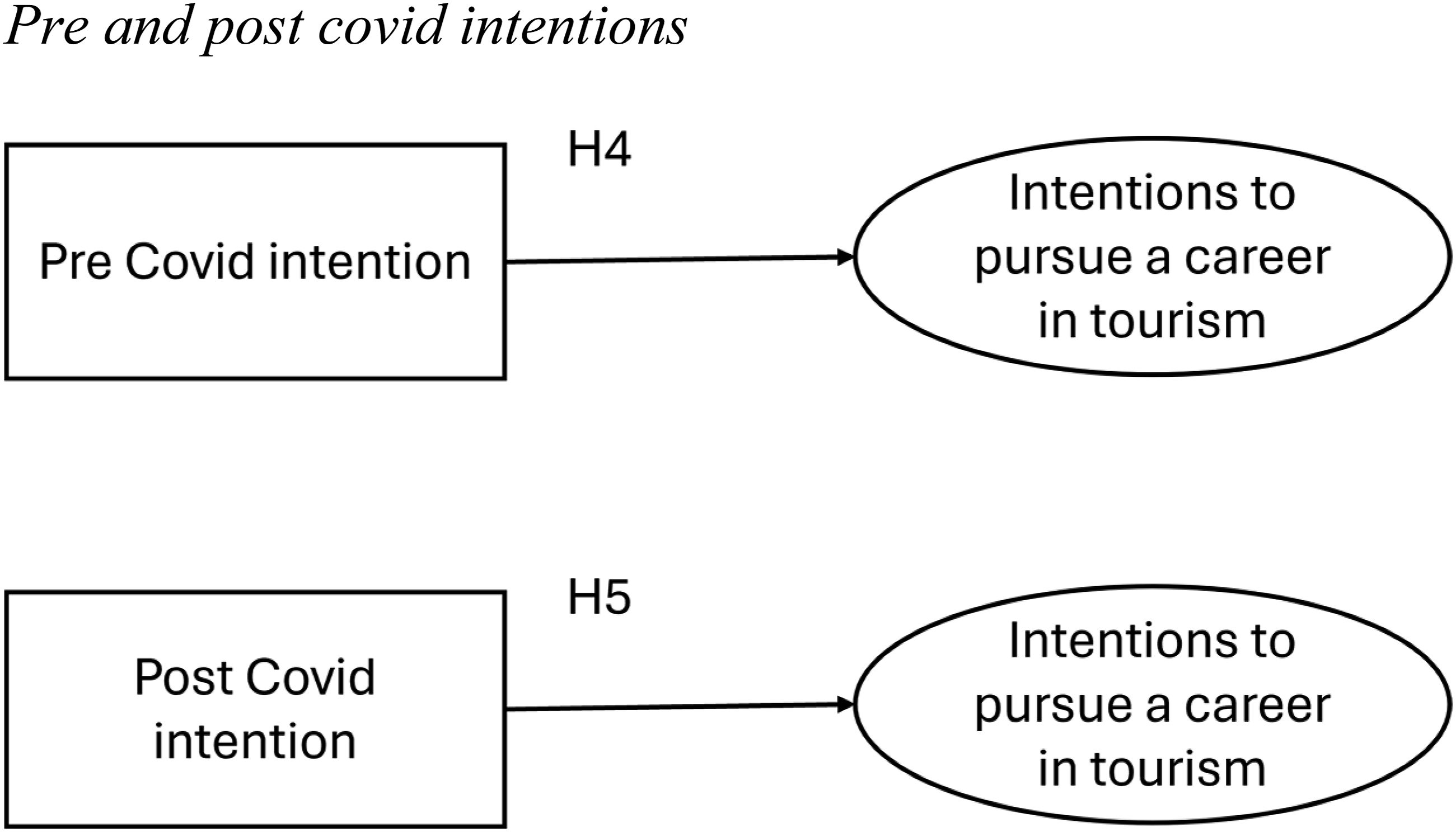
H4 Positive perceptions toward tourism-related studies before the COVID-19 pandemic positively influence current intentions to study tourism.
H5 The perception that the COVID-19 pandemic negatively affected employment opportunities in tourism negatively influences current intentions to study tourism.
Methodology
This study has a quantitative approach with a correlational scope and cross-sectional design (Hernández et al., 2014; Kerlinger and Lee, 2002).
A questionnaire was designed according to the research needs and study site. The questionnaire was divided into three sections. The first section consisted of sociodemographic data such as age, gender, and school. The second section comprised 28 items related to the intentions of studying a bachelor in tourism according to Theory of Planned Behavior (TPB). These items were taken from scales previously validated in other studies. For example, perceptions of studying and working in tourism (Dorta-Afonso and Cantero-García, 2020; Hoque and Ashif, 2020; Richardson and Butler, 2012); factors that influence the bachelor choice like own capacity, interests, vocation, or external influence (Peró et al., 2015; Vu, 2020). Additionally, according to literature COVID-19 has had an impact in the intention to study or work in the tourism sector. The third section contained 2 items about the impact of COVID-19 on the decision to study tourism (Li and Zhang, 2023). The questionnaire used a Likert scale 1 is “completely disagree” and 7 is “completely agree.” The COVID-19 section used a dichotomous yes/no option.
To adapt the items of the scales used to the Mexican context, a translation and back-translation process was conducted (Beaton et al., 2000). Subsequently, content validity was carried out through expert judgment (Escobar-Pérez and Cuervo-Martínez, 2008). The 11 judges were composed of psychologists, education experts, educators, and tourism experts.
Hernandez Nieto’s method (2003) was used to determine the content validity coefficient per item. According to this method, when items have a content validity coefficient >.90, they are excellent; >.81 but <.89, they are good; >.71 but <.80, they are acceptable, and >.60 but <.70, they are deficient. Items with values <.80 were eliminated from the questionnaire. The 30 items obtained values >.90 (Hernández Nieto, 2003).
The unit of analysis consisted of high school students or recent graduates aged between 16 and 20 years from private or public high school. In the first step, data was collected for a pilot test. The sample size was n = 150. Bartlet’s test of sphericity and the KMO test were then applied to determine the feasibility of the factor analysis. The KMO test results indicate a positive factor when they are greater than .80, and the test of sphericity results are closest to 0. The results were KMO = .90 and Bartlet sphericity test = .000, therefore the exploratory factor analysis (EFA) was performed to determine the factors of the questionnaire (Kline, 2016; Lloret-Segura et al., 2014). The maximum likelihood method and Kaiser’s rule were used to extract factors. Factor rotation was performed using orthogonal rotation. The reliability analysis of the instrument was performed using Cronbach’s alpha (Hernández et al., 2014; Kerlinger, 2002; Lloret-Segura et al., 2014).
Given the characteristics of the study and the accessibility of the target population, a non-probabilistic convenience sampling strategy was employed. Therefore, the sample was not intended to be statistically representative of the entire population of Mexican high school students. Including students from multiple institutions was intended to provide a broader perspective than focusing on a single institution. However, the selection of participating institutions was primarily influenced by accessibility and participant availability rather than by a strategic sampling process. Consequently, institutions where the researchers had greater access through existing professional or personal contacts were more likely to be included in the study. Nevertheless, efforts were made to include participants from different educational contexts, including both public and private institutions, in order to increase variability within the sample.
The units of analysis were high school students or recent graduates between 16 and 20 years of age. Data collection was carried out by university students under the supervision of the researchers. These students invited acquaintances enrolled in high schools or visited institutions where students voluntarily agreed to participate. No restrictions were established regarding gender or type of institution (public or private). The only eligibility criteria were being a current high school student or a recent graduate within the specified age range.
Two criteria were considered to determine the sample size: (a) the rule of thumb suggesting a minimum of 10 observations per item (Hair et al., 2006; Wolf et al., 2013), and (b) the statistical requirements associated with the analyses performed. According to Kline (2016), confirmatory factor analysis (CFA) and structural equation modeling (SEM) generally require a minimum sample size of 200 observations. The final sample consisted of 310 participants.
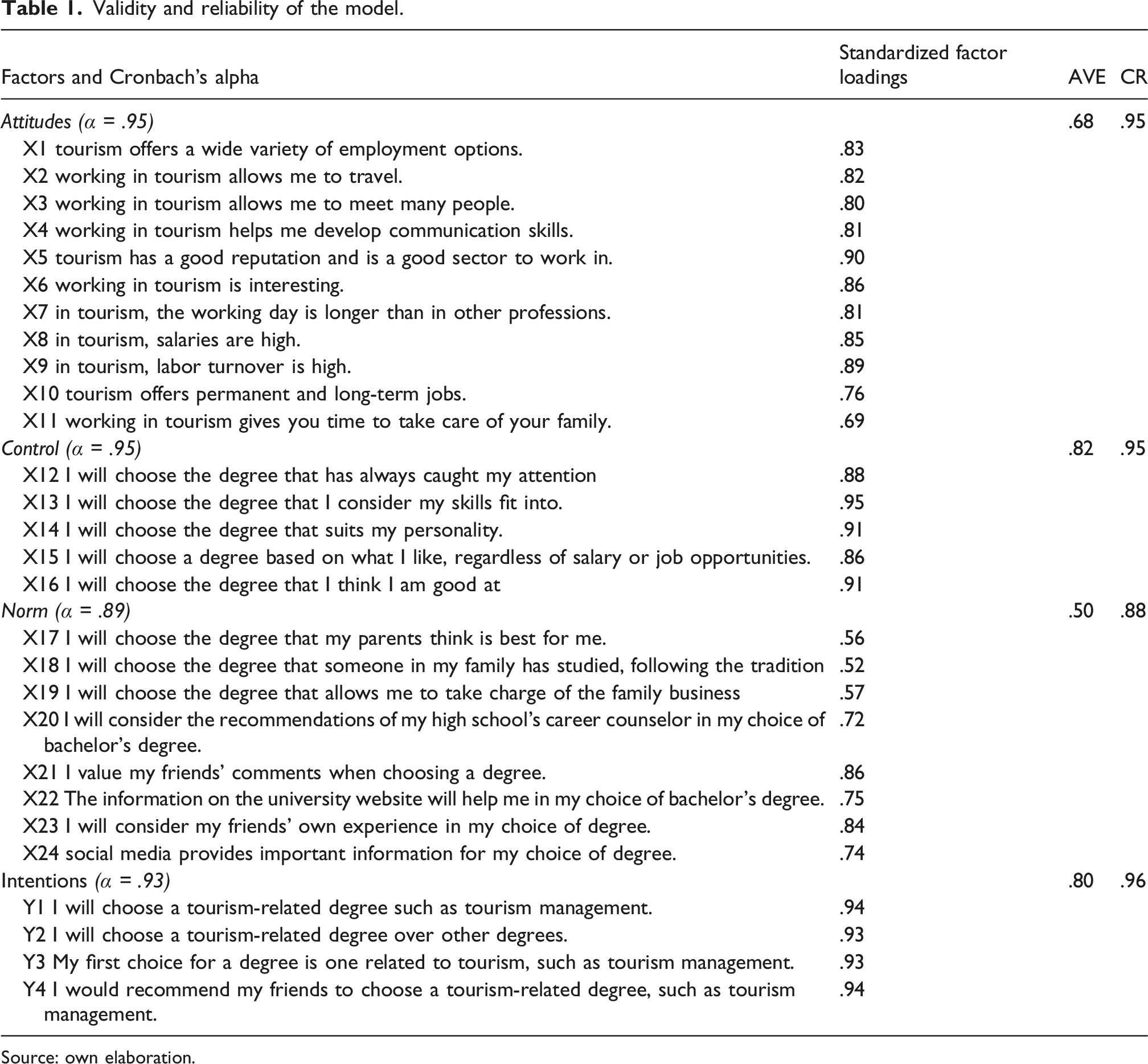
Confirmatory factor analysis was performed to ensure the reliability and validity of the proposed theoretical model (Batista-Foguet et al., 2004). The model was evaluated using goodness-of-fit indices. In this research, the following were considered: X2 and X2/df RMSEA, CFI, TLI, and SRMR (Hooper et al., 2008). The X2/df is used in this study since it is sensitive to changes in sample size. According to Hooper et al. (2008), X2/df values are considered good when they are less than 5. For RMSEA it is good when it is less than .09, the CFI, TLI, are considered good when they are greater than .90 and excellent when they are greater than .95. For the SRMR, a good fit is considered when it is less than .09 (Hooper et al., 2008; Kline, 2016). Once the results of the goodness-of-fit indices are satisfactory, the validity and reliability of the model are analyzed using Cronbach’s alpha for each construct, standardized factor loadings, and convergent validity (CR) and discriminant validity (AVE). Factor loadings must be ≥ .5; AVE values must be ≥ .5; and CR values must be ≥ .7 (Hair et al., 2006).
The SEM model was subsequently developed to validate the theory used. According to (Cupani, 2012) SEM models allow for simultaneous analysis of multiple dependency relationships, allowing for better analysis in a more complex environment. SEM models are developed in 6 stages: specification, identification, parameter estimation, fit assessment, model re-specification, and interpretation of results (Cupani, 2012; Kline, 2016). In the specification stage, the model is established with respect to the theory and the hypotheses posed in a graphical form. A model is said to be identified when the model parameters can be estimated from the elements of the covariance matrix and observed variables. There are several methods for estimating parameters. Maximum likelihood was used in this study because it produces consistent, unbiased estimates, which contributes to the convergence of parameter estimates even when the data are not normal. The evaluation of the model was performed according to the goodness-of-fit indices proposed for the CFA. When necessary and to improve the values of the goodness-of-fit indices, a re-specification of the model can be used, which means covarying the error terms in the same factor according to the recommendations of the program used.
The two dichotomous variables from the COVID-19 section were then used to establish a direct correlation with the intentions to pursue a bachelor’s degree in tourism. Each variable was correlated individually to determine the direct relationship. Finally, each of these models was evaluated using the previously described goodness-of-fit indices.
Declaration of ethic’s
The study was conducted following general ethical principles for research involving human participants. Participation was voluntary and anonymous, and respondents were informed that the information collected would be used exclusively for academic and research purposes. No sensitive personal data were requested, and the questionnaire focused only on perceptions, attitudes, and educational intentions related to tourism studies. Participants were also informed that they could withdraw from the study at any time without any consequence. The research procedures were designed to protect participants’ privacy and confidentiality in accordance with ethical standards commonly applied in social science research involving minors, consistent with the principles of the Declaration of Helsinki.
Results
The EFA results showed that the total variance explained was 72.93% across 4 factors, which is consistent with the theoretical model. The rotated component matrix did not yield any items below .50, therefore, all were retained. Cronbach’s alpha was applied, yielding a result of .95.
Of the 310 observations, 63% were women, 35% men and 2% preferred not to tell. In terms of the age range, 35% were 16 years old, 31% 17 years, 16% 18 years, 4% 19 years and 14% were 20 years old. 70% were students of a private school and 30% were from public school.
Validity and reliability of the model.
Source: own elaboration.
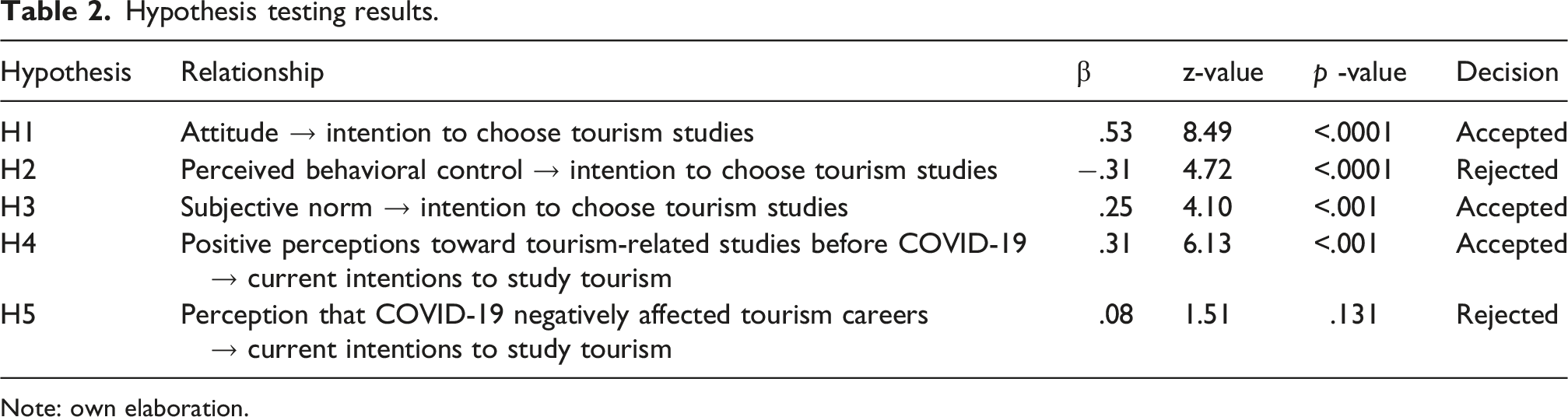
Hypothesis testing results.
Note: own elaboration.
SEM results
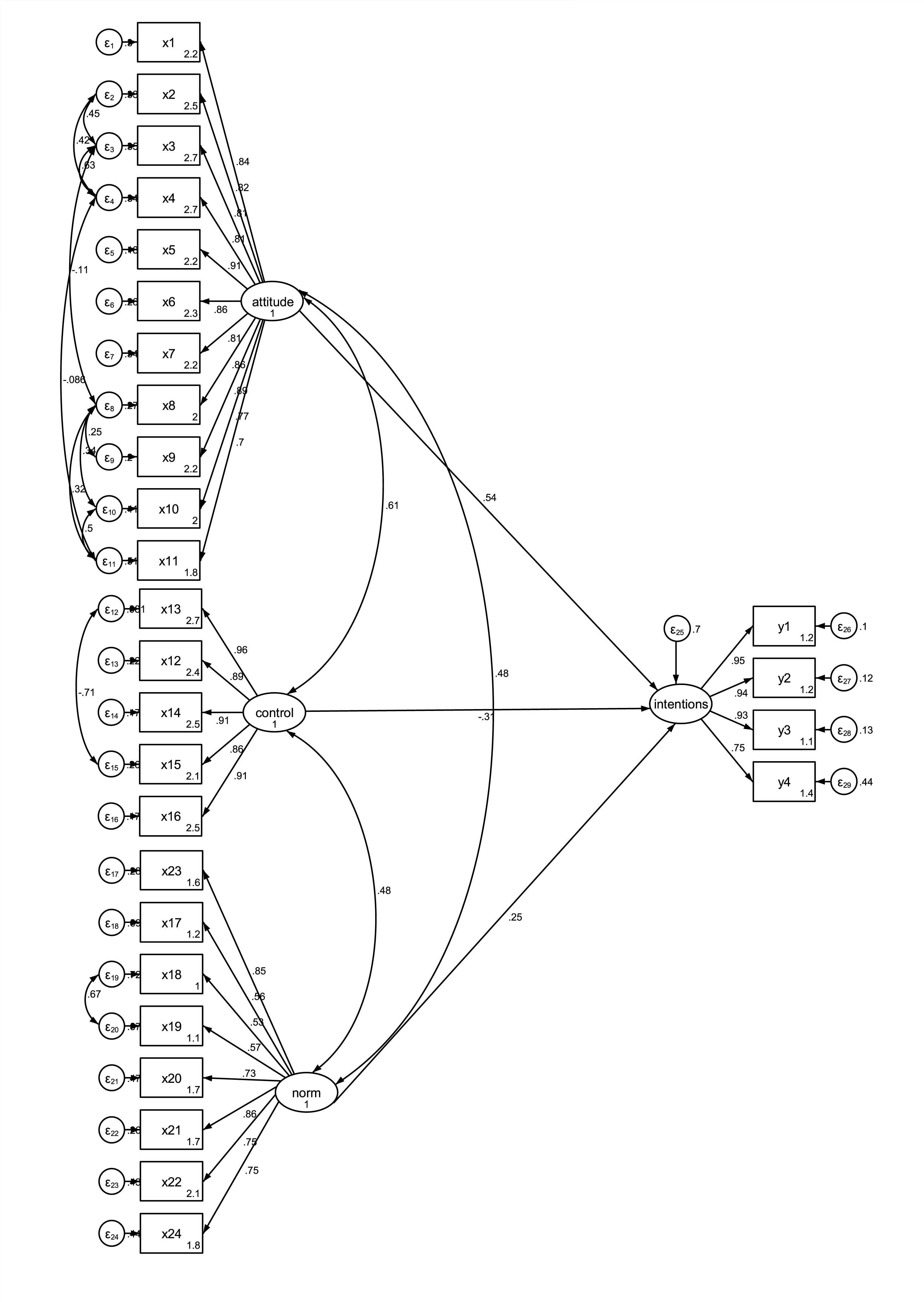
The results of the structural equation model (SEM) showed that attitudes had a positive and statistically significant relationship with intentions to choose tourism studies (β = .53, z = 8.49, p < .001), supporting H1. Subjective norm also showed a positive and statistically significant relationship with intentions to choose tourism studies (β = .25, z = 4.10, p < .001), supporting H3.
In contrast, perceived behavioral control showed a negative and statistically significant relationship with intentions to choose tourism studies (β = −.31, z = 4.72, p < .001). Therefore, H2 was rejected. The goodness-of-fit indices for the structural equation model were acceptable: X2 = 1033.243; X2/df = 3.10; RMSEA = .08; CFI = .92; TLI = .91; SRMR = .08.
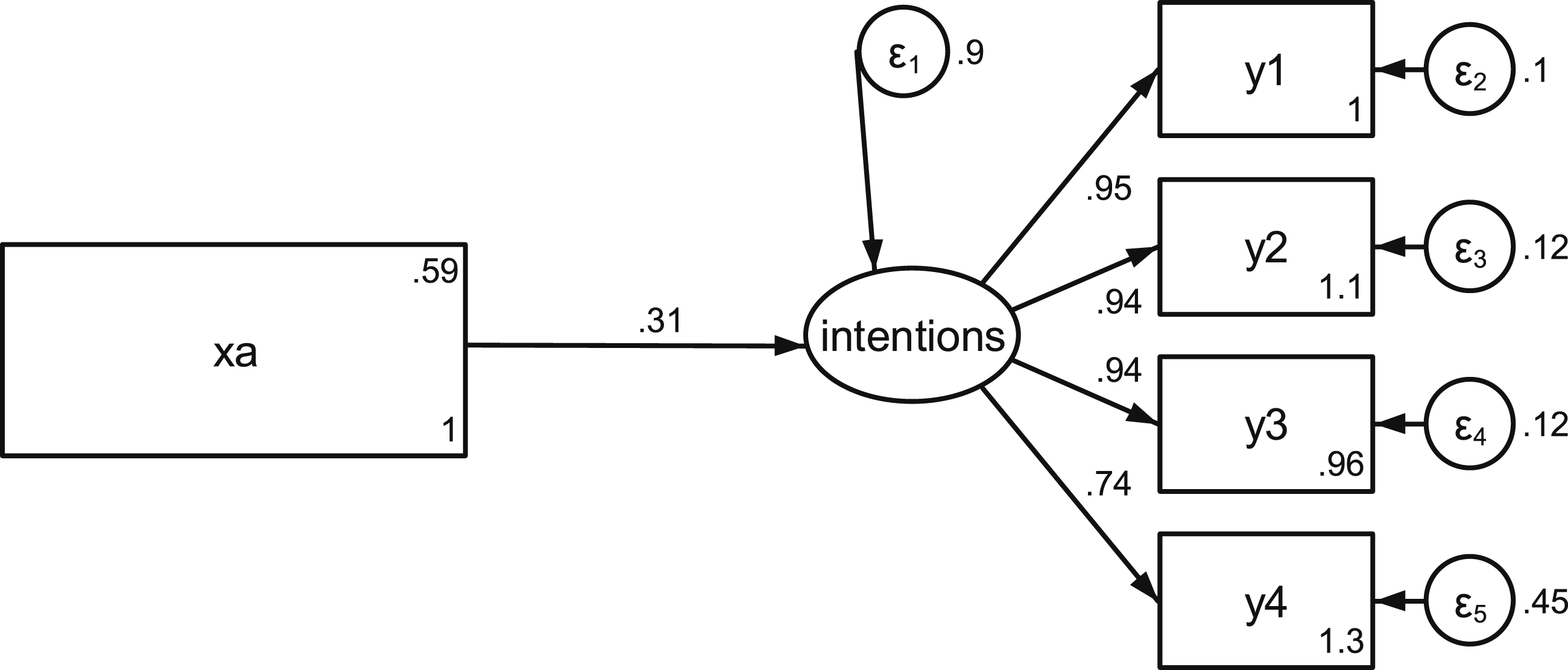
The first additional model included the variable related to perceptions toward tourism studies before the COVID-19 pandemic. The item asked participants whether, before COVID-19, they had considered studying a tourism-related degree. The results showed a moderate and statistically significant positive relationship with current intentions to study tourism (β = .31, z = 6.13, p < .001), supporting H4. The goodness-of-fit indices for this model were: X2 = 0.506; X2/df = .10; RMSEA = .000; CFI = 1.000; TLI = 1.006; SRMR = .007, indicating an adequate fit of the model to the observed data.
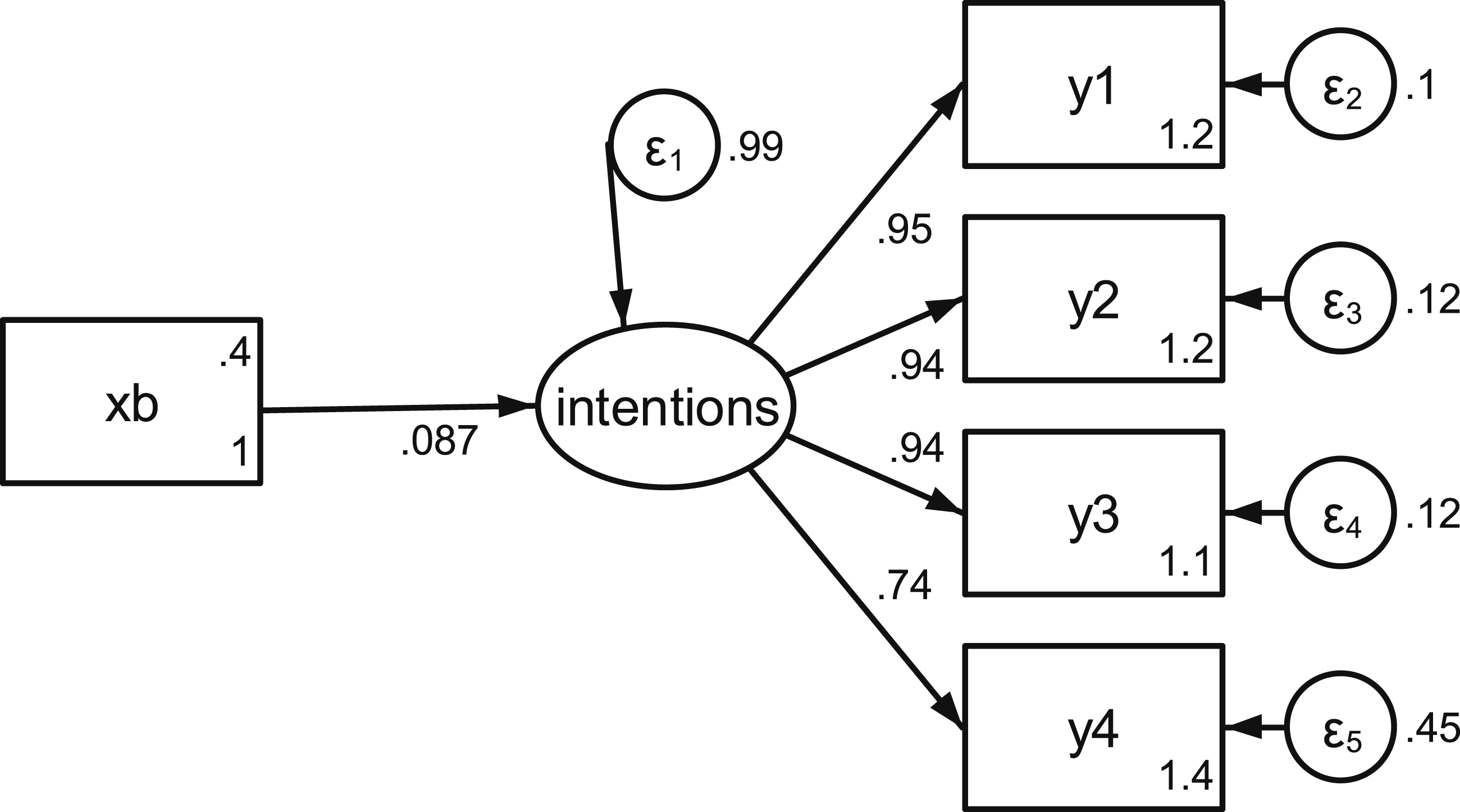
The second additional model included the variable related to the perception that the COVID-19 pandemic negatively affected the decision to choose a tourism-related degree. The results showed a non-significant relationship with current intentions to study tourism (β = .08, z = 1.51, p = .131). Therefore, H5 was rejected. The goodness-of-fit indices for this model were: X2 = 1.058; X2/df = .211; RMSEA = .000; CFI = 1.000; TLI = 1.007; SRMR = .003, indicating an adequate fit of the model to the observed data (Figures 1–5). Theoretical model. Pre and post covid intentions. Structural Equation Model. Source: own elaboration. Structural model including pre-COVID-19 tourism study intention. Source: own elaboration. Perceived COVID-19 Impact on Tourism Career Choice. Source: own elaboration.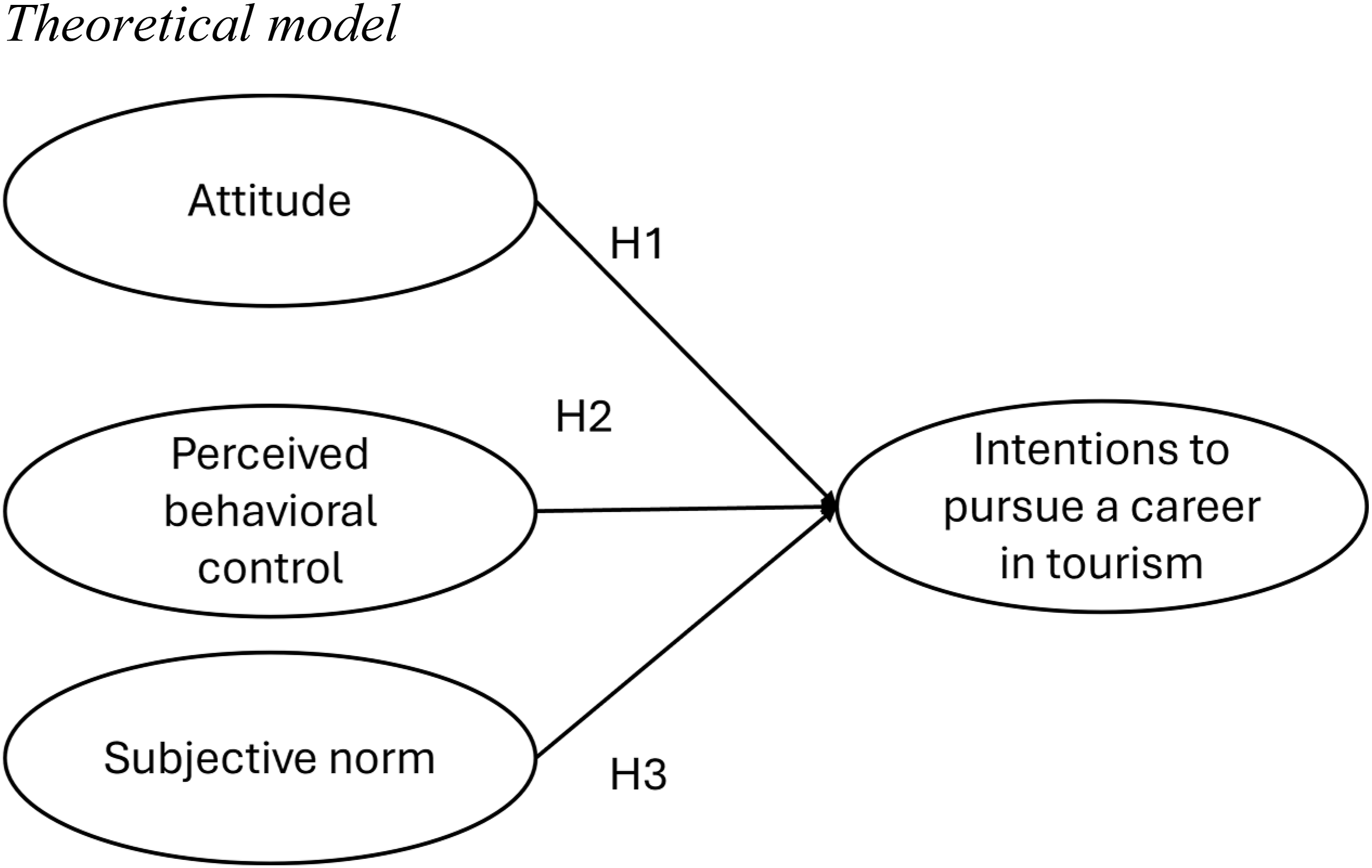
Discussion
According to results, attitudes towards studying tourism are the most important predictor of intention. This means that the more positive the student’s perception of tourism is the greater the intention of choosing a bachelor’s degree in tourism will be.
Subjective norms also positively influence intentions, albeit to a more moderate extent. This means that the influence of important people such as family, friends, career counselors, social media, the website, and even influencers is relevant in the decision-making of Generation Z youth when choosing a degree in tourism.
Meanwhile, perceived behavioral control had a significant but negative weight, which may be related to the fact that young people may perceive obstacles related to the economic, employment, or even social spheres that hinder their choice of pursuing a degree in tourism, decreasing their intention despite having a favorable attitude. This means that young people may think that tourism and hospitality is an area in which they could see themselves working, but that they will not choose due to the potential barriers mentioned above.
Both COVID-19 models show that the data fits well structurally, however, only xa has a significant and relevant effect on intentions. This suggests that the prior willingness to study tourism before COVID-19 (xa) is more closely related to current intentions, while the perception that COVID was a direct impediment (xb) does not have as much explanatory power.
Previous studies have examined vocational decision-making in the tourism sector; therefore, these have focused on students already enrolled in tourism-related undergraduate programs, aiming to understand their motivations, attitudes, and career expectations. While these studies offer valuable insights into the retention and satisfaction of students within the field, they do not capture the critical moment of career choice that occurred prior, in high school. Only a few studies have explored the intentions of high school students to pursue tourism as a career, and, to the author’s knowledge, no study has applied the Theory of Planned Behavior (TPB) to this population in the context of tourism education in Mexico. This study addresses this gap by applying the TPB to high school students in Mexico, which offers a novel perspective on the factors that influence the intention to pursue a tourism degree at this stage. This approach enhances the understanding of the antecedents of career choice in tourism and provides actionable insights to improve vocational guidance.
A relevant finding of the study is the importance and need of tourism universities collaborating with career counselors to promote tourism career opportunities to become an option for students. According to (Psicólogos Córdoba, 2023) The most widely used career guidance tests are the Kuder Test, the Holland RIASEC model, and the CHASIDE Test. Therefore, these tests tend to group interests into broad areas such as “administrative accounting,” “social service,” “scientific,” or “mechanical,” but do not explicitly include hospitality or tourism as a career option. This might result in a lack of knowledge or information. Thus, when a career counselor relies on the results of these tests, they only recommend careers that appear in the identified profiles or areas, leaving tourism off students’ radar. They can avoid that even though many students may have an affinity or potential for tourism, they fail to consider it because it does not even appear as an option in the results. Therefore, universities must actively participate in high schools, offer updated materials, include tourism in local tests or vocational workshops, and train counselors to ensure that tourism is a valid and informed alternative for students. Another barrier could be the new trend of AI in the application of tests (IEGE, s.f).
Limitations
Some of the limitations of this study are that the sample was limited to participants from Mexico City and therefore cannot be generalized to all Mexican high school students. Another limitation of this study lies in the use of two dichotomous items to measure the perceived influence of COVID-19 on students’ career intentions. Although these variables provided an initial approximation, dichotomous response formats (yes/no) restrict the variability of the data, reducing the sensitivity of the measurement and limiting the possibility of capturing gradations in participants’ perceptions. Future research should consider multi-point Likert-type scales to assess this construct with greater precision and comparability to other studies in the field.
Future research
Based on the findings of this study, future lines of research could include conducting comparative studies between high school students and university students already enrolled in tourism programs, to analyze differences before and after making the decision to study tourism. This would contribute to existing knowledge by providing information on the Mexican context.
By increasing the presence of universities in high schools, it would be relevant to evaluate the impact of workshops, fairs, and other campaigns on the intentions to study tourism. Finally, it is suggested to delve deeper into the structural barriers faced by young people, such as the absence of tourism in psychometric vocational guidance tests or in guidance counselor recommendations, to make this career path visible as a professional option.
Conclusions
This study provides empirical evidence regarding the factors influencing Generation Z students’ intentions to pursue a degree in tourism in the Mexican context. The findings showed that attitudes toward tourism were the strongest predictor of intention, suggesting that students with more positive perceptions of the tourism sector are more likely to consider tourism as a professional career path. Subjective norms also played a significant role, indicating that family members, friends, counselors, social media, and other influential actors contribute to shaping students’ vocational decisions.
One of the most relevant findings was the negative relationship between perceived behavioral control and intention. This suggests that although some students may feel attracted to tourism careers, concerns related to working conditions, salaries, professional growth opportunities, or the social image of tourism employment may discourage them from choosing tourism as a degree option. This finding highlights the importance of addressing not only the promotion and visibility of tourism careers, but also the structural conditions associated with employment in the sector.
Another important finding of the study is the potential role of vocational guidance processes in limiting tourism career visibility among young people. The results suggest that tourism is often absent from psychometric orientation tests and career counseling practices, reducing students’ exposure to tourism as a possible professional pathway. In practical terms, this highlights the need for stronger collaboration between tourism universities and high schools through vocational workshops, updated informational materials, and counselor training initiatives that position tourism as a valid and competitive career option.
Regarding COVID-19, the findings suggest that prior interest in studying tourism before the pandemic was more influential than perceiving COVID-19 itself as a direct obstacle. This may indicate that students with a stronger preexisting interest in tourism maintained their intentions despite the uncertainty generated by the pandemic.
Overall, the study contributes to a better understanding of the social, perceptual, and structural factors influencing tourism career intentions among young people in Mexico. The findings also reinforce the importance of improving the visibility, guidance, and perceived professional value of tourism careers in order to attract future talent to the sector.
Footnotes

Ethical considerations
During the preparation of this work the author(s) used [CHAT GPT] in order to [IMPROVE LANGUAGE ]. Participation was voluntary and all data was collected and analyzed anonymously. Declaration of generative AI and AI-assisted technologies in the writing process. After using this tool/service, the author(s) reviewed and edited the content as needed and take(s) full responsibility for the content of the publication.
Funding
This research did not receive any specific grant from funding agencies in the public, commercial, or not-for-profit sectors.
Declaration of conflicting interests
The author declares that there is no conflict of interest regarding the publication of this article.