






Abstract
Over the last decade, India has witnessed more than 46% increase in number of institutions of higher education. However, during the same period, the number of state private university increased by over threefold. With the rise in the number of universities, the gross enrolment ratio (GER) of students in higher education has also increased considerably. The total enrolment of students in Indian universities has grown by 26.5% from 2015-16 to 2021-2022. The surge in universities, particularly the private universities is not uniform, while state universities across the country in general increased by single digits, private universities came up in clusters and in a few selected cities. A few of the top private Universities are outperforming several national-level institutions in terms of teaching, research, placement, and publications. However, there remains a noteworthy gap in the GER between castes and genders. This paper provides insight into the role of private universities in improving GER and strengthening higher education in the country.
Introduction
Globally, higher educational institutions have experienced rapid and significant changes in recent years, characterized by a substantial rise in total enrollment, advances in information and communication technology, and progress in research achievements. Currently, more than 235 million students are enrolled in universities worldwide, figure that has doubled over the past 20 years. Despite the growing demand, the overall enrollment rate remains around 40%, with notable disparities across countries and regions (UNESCO, 2023).
India is succeeding toward a knowledge-based economy, in which higher educational institutions play a crucial role in fostering human resource development, as envisioned in the Indian Constitution. The ‘Right to Education Act,’ which mandated free and compulsory education for children aged 6-14 years, has revolutionized the country’s education system, evidenced by a notable increase in school enrolments over recent years. Consequently, the higher education sector in India has experienced a surprising growth in the number of universities, university-level institutions, and colleges. The National Education Policy (NEP) 2020 aims to increase the Gross Enrolment Ratio (GER) in India’s higher education to 50% by 2035. Currently, India ranks as the third-largest country in terms of higher education enrolment, following China and the United States. During 2020-21, enrolment in higher education stood at 41.4 million students, reflecting a 21% increase from 2014 to 15 (AISHE report, 2021). The significant contribution of private institutions and universities to this achievement cannot be overstated, as today about 60% of higher education institutions in India are operated by the private sector (Sheikh, 2017). Limited government investment in higher education has opened avenues for private sector participation in addressing the growing demand.
Over the years, considerable improvements have been observed in equity, efficiency, and quality within the higher education system (Raj, 2022). Despite the rapid expansion of private institutions in the country, there remains a significant gap in understanding of how privatization affects key dimensions of higher education, including affordability, equity, regulatory governance, and rural accessibility. Most of the published literatures largely focused on institutional growth and enrolment expansion, while inadequate attention has been paid to the wider implications of privatization for inclusive and equitable higher education. To address this gap, the present study analyzes the status and growth of private higher educational institutions in India over the past decade and evaluates their role in strengthening higher education and increasing the Gross Enrolment Ratio (GER).
Methods
To comprehensively assess existing knowledge on the role of private higher educational institutions in bridging GER gaps in India, this review employed a structured literature search and an integrative synthesis approach. A standard process was adopted for identifying relevant databases and search terms, applying inclusion and exclusion criteria, and critically evaluating the selected studies to ensure an inclusive and unbiased literature survey from sources like Google Scholar, Scopus, PubMed, Web of Science, and published literature of national agencies like the Ministry of Education, Govt. of India (NIRF and AISHE reports available in their respective websites). The search targeted peer-reviewed journals, articles, book chapters, and synthesis reports published during 2011-2026, capturing a period of decadal changes in the higher educational system. The search strategy was planned based on the study objectives, combining keywords such as “higher education”, “private institute”, “private university”, “gross enrolment ratio”, “quality education”, “teaching and research”, along with their synonyms and variations. Exclusion criteria eliminated studies/papers/reports unrelated to higher education, grey literature, or studies with insufficient data (Figure 1). Data generated were analyzed using statistical software (Minitab-11), and a graphical representation of the collected data was done using MS-Excel. The study is limited by its reliance on secondary data sources and institutional reports. The flowchart of methodology used to extract information from different sources.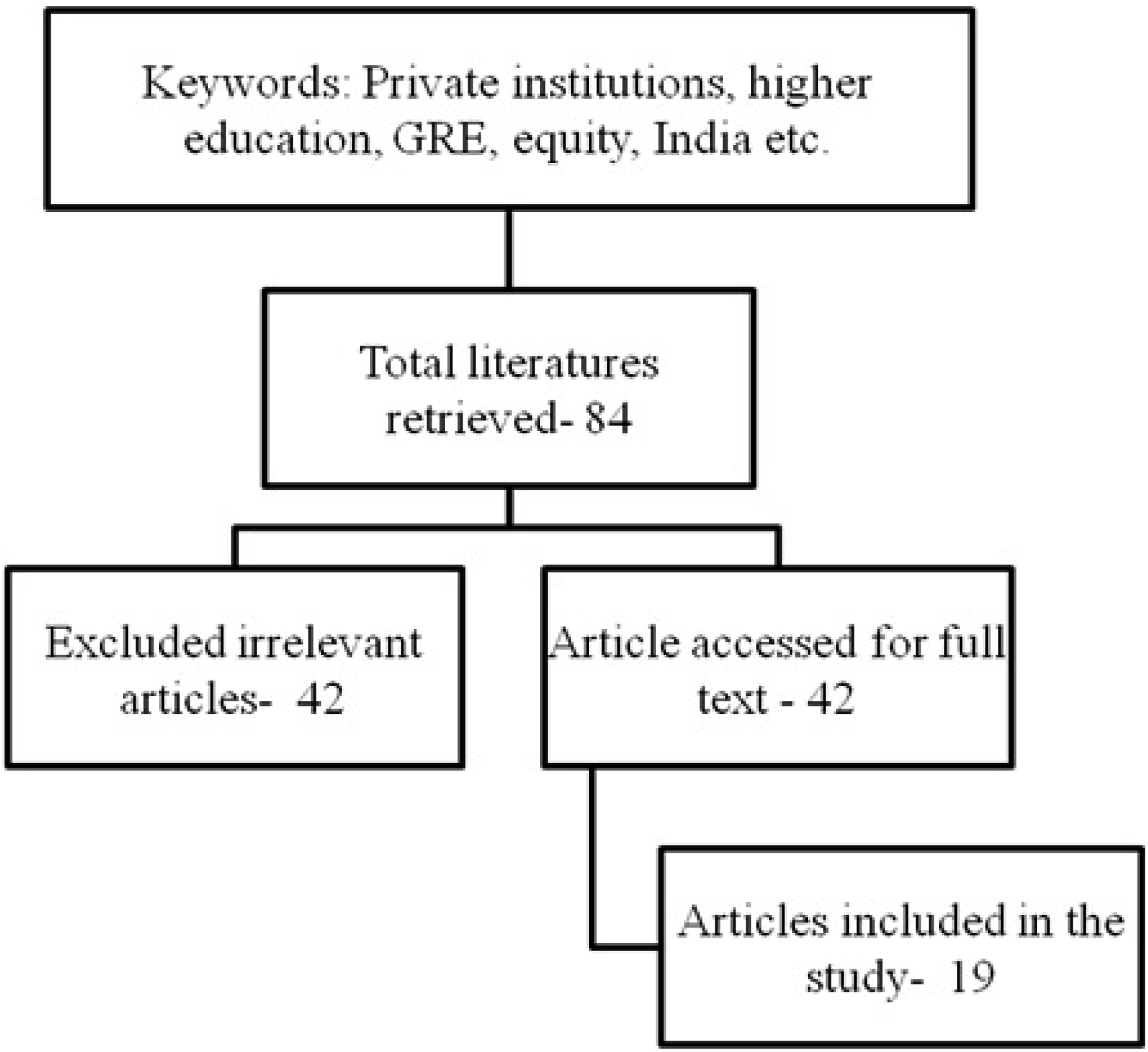
Results and discussion
State and regional scenario of higher educational institutions in India
As of January 2023, India had a total of 1472 universities, including 398 recognized universities under section 12(B) of the UGC Act, and 455 (approximately 31% of the total universities) private universities (UGC report, 2023). Region-wise, Central India hosts the highest number of private universities, followed by Northern and Western India (Figure 2). Within Central India, Madhya Pradesh and Uttar Pradesh have the largest concentration of private universities. In Western India, Gujarat leads in the number of private universities, surpassing Maharashtra and Goa. Among the North Indian States, Rajasthan and Haryana have the highest number of private universities. In Southern India, Karnataka and Telangana have the most private institutions. Similarly, in Eastern India, West Bengal leads other states in the number of private universities. Among the states of Northeast India, Arunachal Pradesh and Meghalaya lead in the number of private universities, with nine institutions each, outnumbering public universities in both states. Assam the most populous state in northeast India, has the highest number of higher education institutions among all the states in the region. Of the 29 universities recorded in Assam during 2022-23, 18 are state universities, 8 are private universities, 2 are central universities, and 1 is a deemed-to-be university. Region and State-wise number of institutions/universities of India under different categories.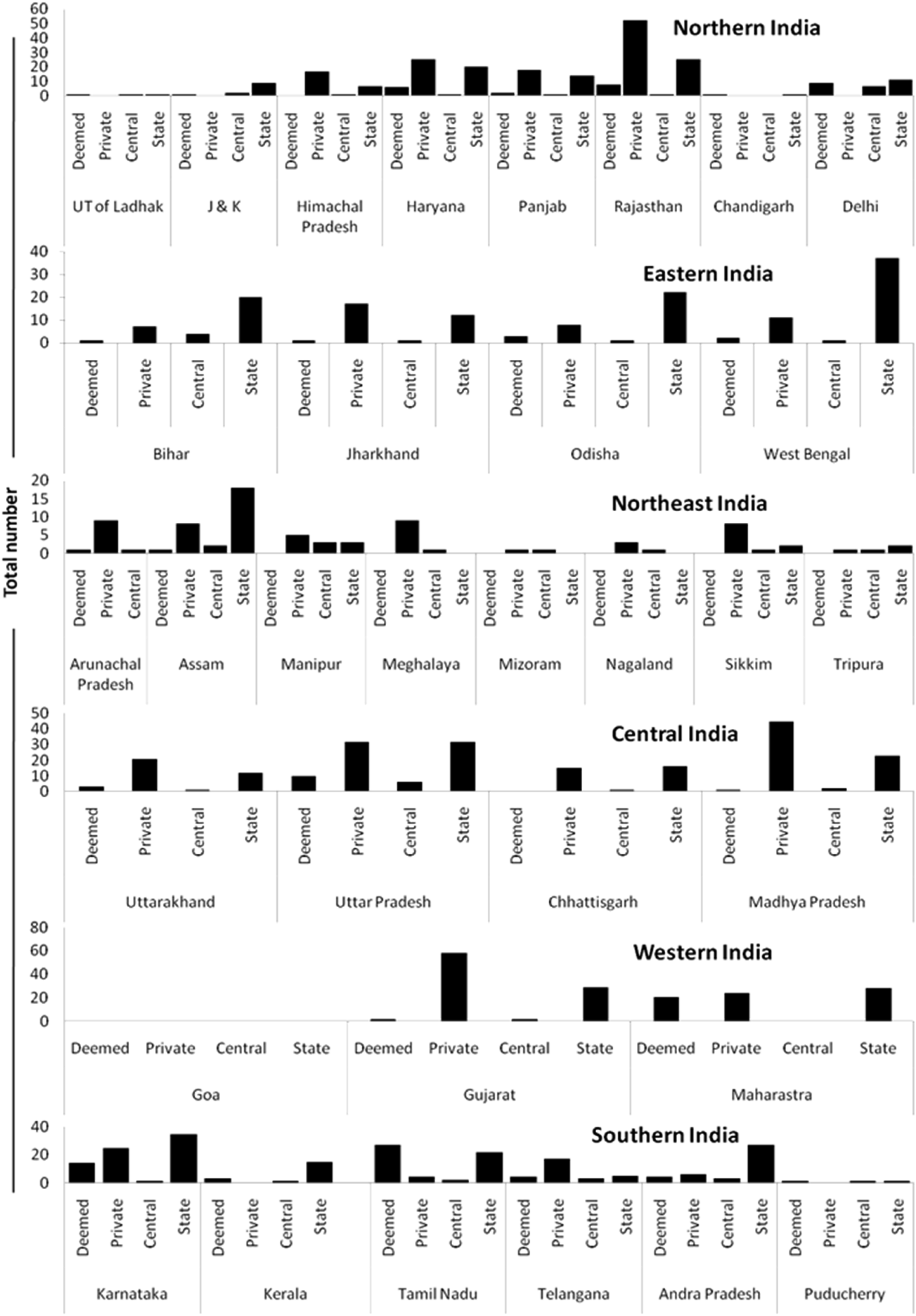
Nevertheless, over 50% of country’s total student enrolment comes from the six states: Maharashtra, Uttar Pradesh, Madhya Pradesh, Tamil Nadu, West Bengal, and Rajasthan. In recent years, private universities have grown substantially in all these states (AISHE report, 2019 and AISHE report, 2020). These six states also account for more than 51% of the population of India in the 18-23 age group. However, in recent times, private higher education in India is witnessing rapid decentralization process. Private institutions, once concentrated mostly in metropolitan cities, are now expanding into Tier-2 and Tier-3 cities, peri-urban corridors, and rural areas. This expansion is remarkable in the Northeast, where universities like Assam downtown University located in Panikhaiti, Guwahati and Assam Don Bosco University located in Sonapur, offer modern, ritzy campuses just outside the Guwahati city to cater to migrating rural and semi-urban talent from the northeastern states.
Growth in the state private universities in India
Total student enrolment in India reached 4.33 crore, and the number of universities and similar institutions increased by nearly 46% since 2015-16 (AISHE report, 2021-22). In India, during the last few years (i.e., from 2015 to 16 to 2021-22), 57 new state public universities and 30 new private universities were established. However, the growth of private universities occurred in clusters and was limited to certain states, while state universities generally grew in the single digit across most states. Notably, the number of private universities grew approximately 3.4 times during the last decade i. e, from 2011 to 12 and 2022-23 (Figure 3). About 10% of the private universities have student populations exceeding 30,000, compared to just 2% of public universities, and 15% of private universities have between 20,001 and 30,000 students, whereas only 3% of public universities fall into this category (Ministry of Education, 2023). Additionally, 22% of private universities have more than 10,000 students, which is higher than the 17% of public universities with over 10,000 students. A decadal changes in the number of higher educational universities/institutions in India (from 2012-13 to 2022-23). The lines on the bars represent the standard error (SE).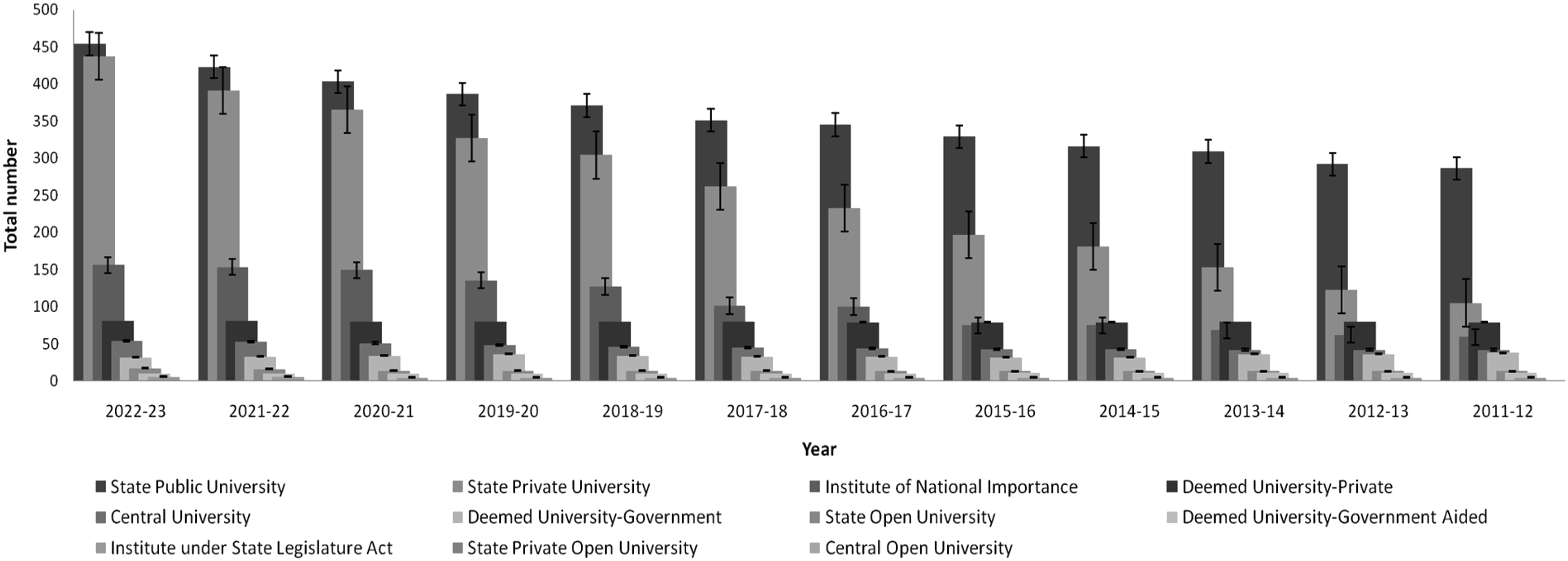
Among the NIRF-ranked institutions, the largest proportion comprises Institutions of National Importance and State Public Universities, accounting for 21% and 19%, respectively. Private deemed universities and affiliated colleges rank third and fourth in representation. Within Institutions of National Importance, engineering institutions dominate with 49, followed by management institutions with 31, and research institutions with 22. Across all institutions, both public and private, engineering institutions rank second only to colleges, making it one of the most competitive categories. Notably, the number of engineering institutions increased to 1314 in 2023 from 1249 in 2022 with 5% increase in a single year.
Private universities have shown improvement across all parameters in the recent NIRF ranking, reflecting growing competition among the top private institutions. The Research and Practice (RPC) parameter experienced the most significant growth in 2023, with an increase of over 11% compared to 2021, highlighting notable advancements in research outcomes of private universities. However, 29% of private universities scored below 20 in the RPC, compared to 26% of public universities, signifying scope for improvement. Although public universities still lead private ones overall, they experienced a decline in average scores for Graduation Outcomes (GO) and Perception (PERC) parameters in 2023 compared to 2022.
Among the top 100 ranked management institutes in the country, 31 are institutions of national importance, 27 private autonomous institutes, 14 state private universities, and 12 deemed private universities, which indicates that among the management institutions, the contribution of private institutes/universities is significant. In the medical category, only 11 private deemed universities are listed among the top 50 institutes. Christian Medical College (CMC) in Vellore and Kasturba Medical College (KMC) in Manipal are highly regarded private medical institutions in India. The limited representation of private medical colleges among country’s top medical institutions reveals that established public medical colleges are benefitting from historic reputation, broad patient exposure, and strong government-funded research ecosystem. The National Institutional Ranking Framework (NIRF) also awards high weightage to research output, an area where older, government-funded institutions often have an advantage.
GER in higher educational institutions in India
India’s higher education sector has witnessed significant growth, with enrolment numbers reaching 4.33 crore in 2022, attaining an 11.1% rise from 2019-2020 and a 26.5% rise from 2014-2015 (Figure 3). While private universities surged by 480% over the last 15 years, the public sector still drives most enrolment, with private universities accounting for about 26.3% of total students (Ministry of Education, 2025). Kerala has the highest GER among states and union territories, while Bihar has the lowest GER. Both male and female GERs have contributed to this upward trend and is positively correlated with the overall GER of the country (r > 0.95). Over the last decade, the Gross Enrolment Ratio has surged 1.44 times, with the female enrolment ratio increasing 1.53 times. Notably, female enrolment reached the 2-crore mark in 2021-2022, with an increase of 13 lakh as compared to 2019-2020 (Figure 4). Overall and female enrolment (in crores) in higher education in India during last decade (2011-12 to 2021-22). The lines on the bars represent the standard error (SE).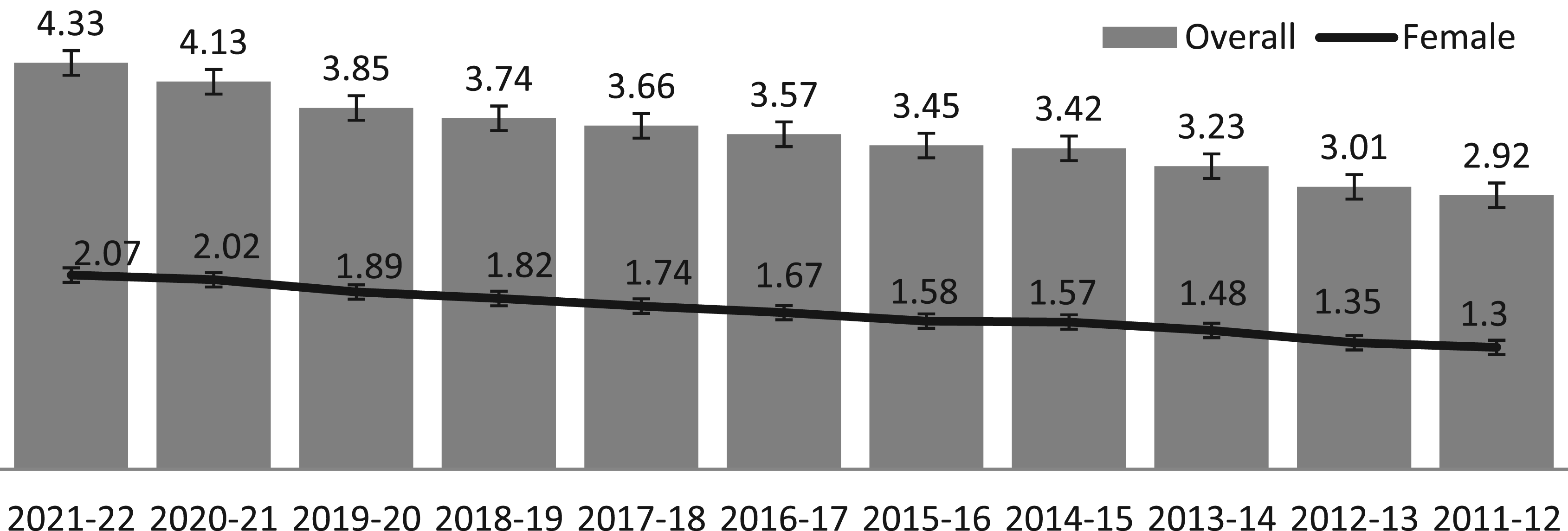
Similarly, enrolment ratios for SC (scheduled caste) and OBC (other backward caste) students have also grown, rising 1.72 and 1.74 times, respectively, in the last decade. The ST (scheduled tribe) student enrolment ratio has increased 2.06 times during the same period (Figure 5). The National GER for SC students has risen from 20.3% in 2016-17 to 23.1% in 2020-21, and for ST students, it has increased from 14.8% to 18.9%. Growth in the enrollment of SC, ST and OBC students between 2011 and 2022 is found to be positively correlated (r > 0.90). These gains indicate progress in access of reserved category students to higher education. However, the overall GER excluding SC and ST increases to 28.25% which indicate that SC and ST populations still continue to trail behind the national average, highlighting the need for targeted efforts to bridge this divide (Sharma and Singh, 2020). To address this gap in GER among the reserved categories, several premier private universities are implementing reservation policies for SC, ST, and OBC, adhering to the state and central mandates. Also to counter socio-economic barriers, private institutions offer wide-ranging tuition waivers, and grants targeting rural youth, female students, and economically weaker sections (EWS). Gross enrolment among OBC, SC, and ST students in higher education in India.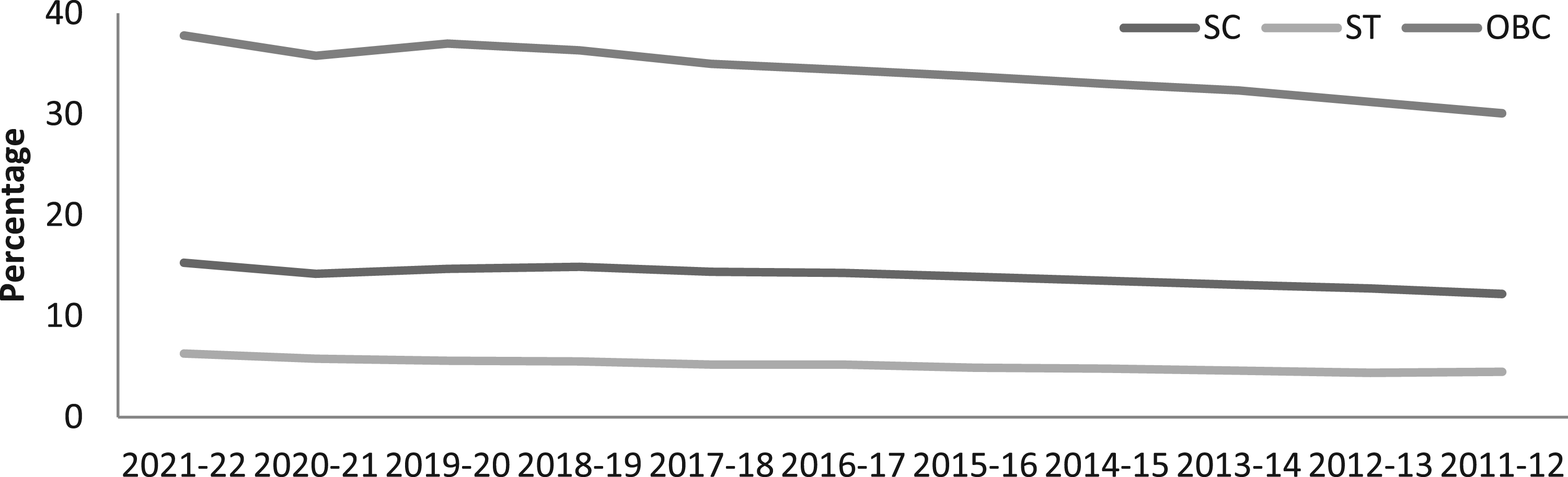
In terms of university enrolment, State private universities and private deemed universities host 16.77% and 8.84% of students, respectively. Collectively, private universities accommodate 25.64% of students. Between 2015 and 2020, 30 new private universities were established in India, resulting in a more than twofold rise in enrolment across diverse education levels (AISHE report, 2021-22). The north eastern region of India has also witnessed notable growth, with over 29% increase in enrolment and a 34% rise in female student enrolment in 2020-2021 compared to 2014-2015. This can be attributed to the rapid growth in educational institutions, government scholarships targeting women and socially disadvantaged groups, and progressive changes in societal perceptions towards women’s education and empowerment across the region.
The emergence of a large number of new universities in recent years has been accompanied by increasing enrolment in private institutions. Although overall enrolment in government universities (Central and State Govt. universities) grew between 2012 and 2016, it appears to have stagnated after 2015-16 till 2019-20, after which slight growth was visible. In contrast, enrolment in State private universities doubled during the same period (Figure 6) (Krishna, 2022). Enrolment growth (in lakhs) in private and government Universities. The lines on bars represent the standard error (SE).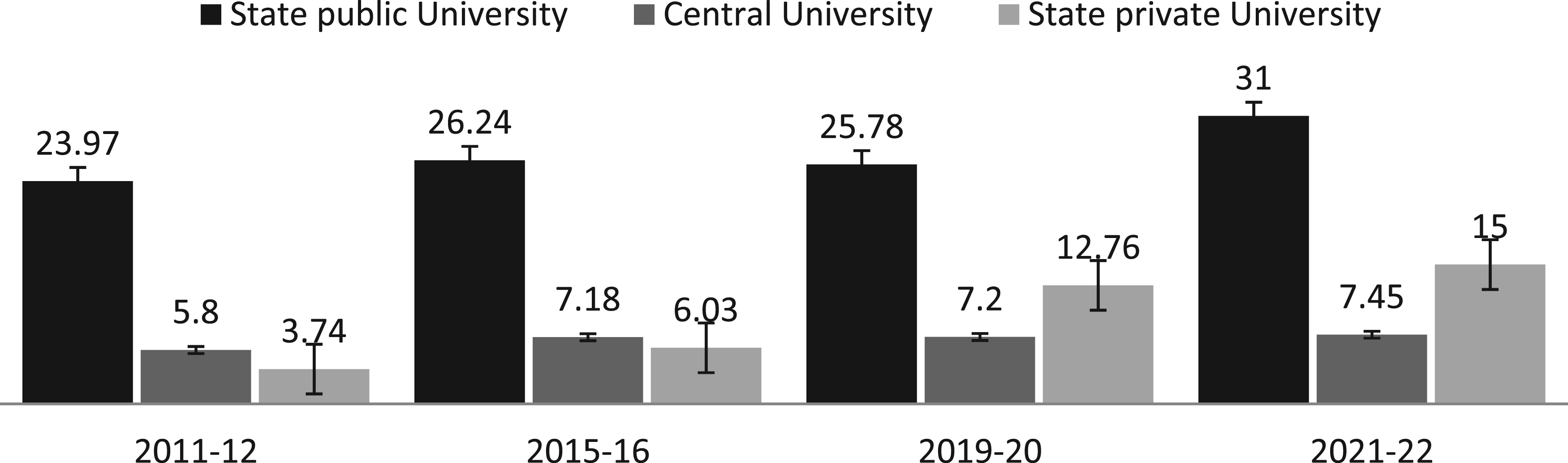
In private institutions, students enrolment in higher education is more skewed towards technical education and professional courses (71.1%) and a highest proportion of students from southern region get enrolled in private institutions for higher education (84.5%), followed by western India (74.6%), central India (70.3%), northern India (65%), eastern region (55.8%) while north eastern region recorded minimum number of students enrolled (39.8%) for technical education and professional courses in private institutions (Maiti and Jana, 2025). Overall national level data revealed that the rural area contributes a significant portion of enrolment to the private higher education (56.6 %). Region wise, southern India contributes highest percentage of enrolment from rural areas (78.5 %), while lowest (26.7%) was recorded in north eastern region (Maiti and Jana, 2025).
Gender-wise analysis of enrolment for students aged between 18 and 23 years reveals that during 2015-16 to 2017-18, the enrolment ration of male was higher than the female in higher educational institutions, however, after 2017-18, the growth in female enrolment was higher than that of males (Figure 7). In the year 2021-22, GER in higher education for age group 18-23 years increased to 28.4, from 23.7 in 2014-15 (AISHE report, 2021-22). Female GER has increased to 28.5 in 2021-22 from 22.9 in 2014-15 (as per population projection based on the 2011 census). Moreover, during this period, female enrolment in private universities more than doubled, rising from 1.7 lakhs in 2015-16 to 4.4 lakhs in 2019-20. Male enrolment in private universities also nearly doubled, increasing from 4.2 lakhs to 8.3 lakhs. However, in the State universities, female enrolment showed a marginal rise from 1.27 lakh to 1.29 lakhs, whereas male enrolment decreased from 1.35 lakhs to 1.27 lakhs. This trend was consistent across all levels of higher education—undergraduate, postgraduate, and research. Gross enrolment ratio of students of the age group 18 to 23 years at higher educational institutions in India (Source: AISHE).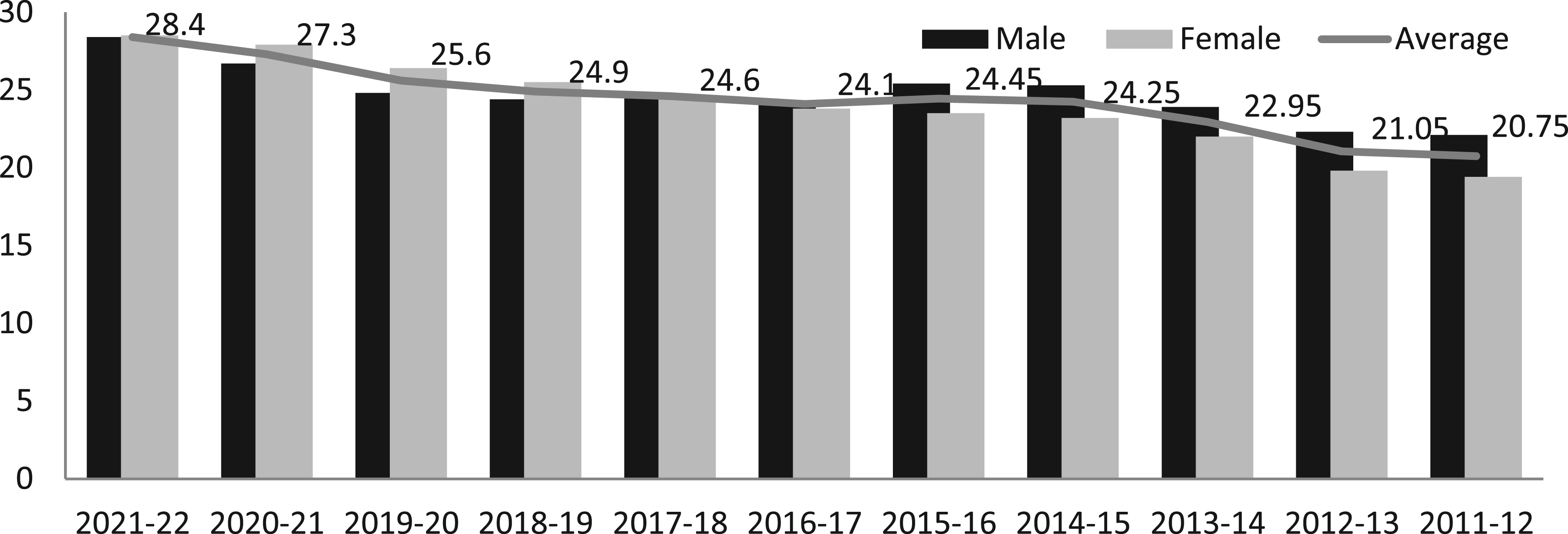
From 2015 to 16 to 2021-22, enrolment in private universities more than doubled for undergraduate courses (Figure 8). A similar trend was observed in enrolment for postgraduate courses in private universities, with a twofold increase in private universities. In PhD programs, all categories of universities experienced growth, with enrolment in private universities expanding nearly threefold. However, during the same time period, central Universities recorded slight decline in undergraduate enrolment especially in 2015-16 and 2019-20. Enrolment in private universities (in lakhs).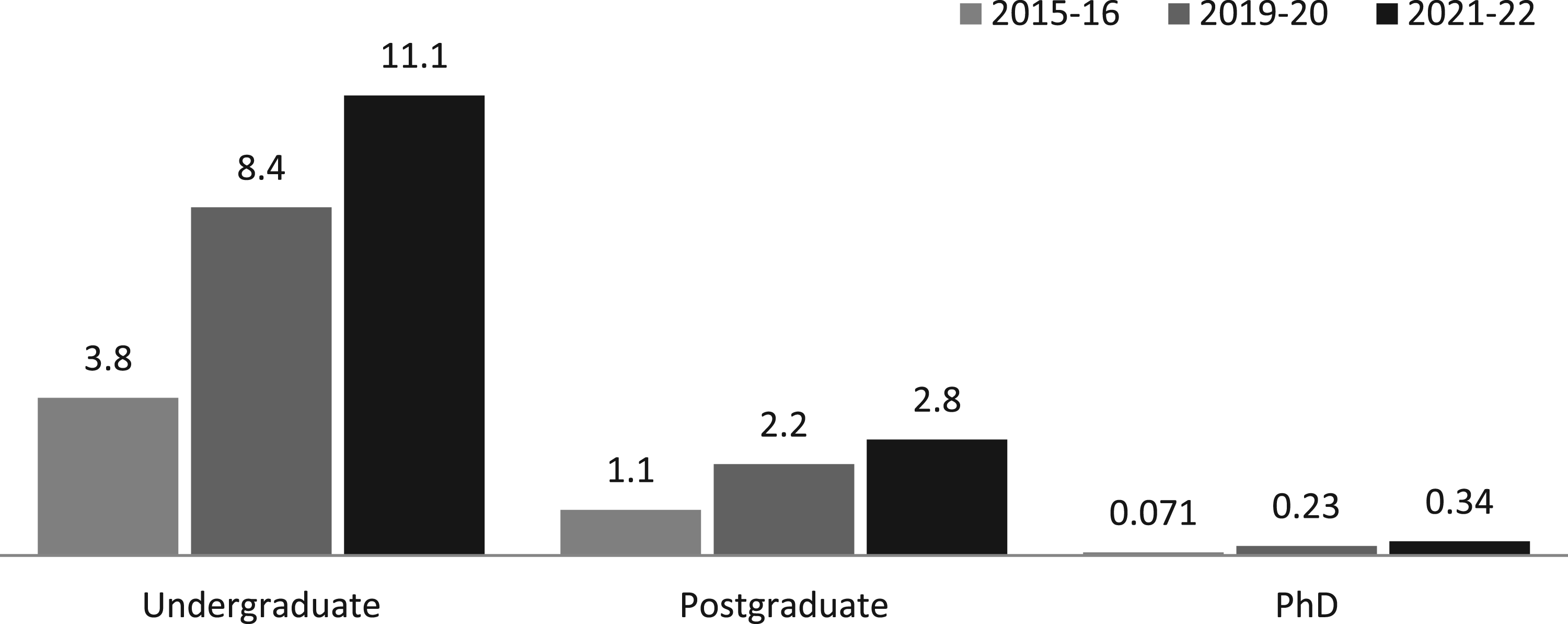
For the country like India, which possesses world’s highest young population, with more than 65% of its population below the age of 35 years, improving Gross Enrolment Ration (GER) in higher education is crucial for transforming its demographic advantage into sustainable economic development. A higher GER expected to enable a greater proportion of young people to acquire advanced knowledge, technical skills, and professional competencies required in a rapidly evolving global economy. Expanding access to higher education will not only enhances employability and productivity but also foster innovation, entrepreneurship, and technological advancement. Moreover, a well-educated workforce can strengthen the country’s capacity to compete in knowledge-intensive industries and adapt to emerging economic opportunities. Increased participation in higher education can also contribute to social mobility, poverty reduction, and inclusive growth by providing individuals from diverse socio-economic backgrounds with opportunities for upward advancement. Therefore, raising GER is not merely an educational objective but a strategic imperative for harnessing India’s demographic dividend and achieving long-term economic and social development.
Scopes for growth in private universities
Private universities are expanding appreciably both in terms of number and quality of education. Notably, a few top private universities are outperforming several national-level institutions in areas such as teaching, research, placement, and publications. As per the NIRF 2023 (Ministry of Education, 2023), among engineering category institutions/Universities, private state universities account for 11.09% of the publication share; however, IITs dominate the publication landscape, contributing 35.17%, followed by NITs (18.42%) and Deemed Universities (16.07%). The NIRF rankings during the last few years demonstrate significant improvements in newly opened private universities, not only in terms of increased enrolment but also in the quality of education. Notably, the 2022 NIRF rankings featured 11 new universities among the country’s top 100, with 10 being private universities established after 2007, showcasing consistently strong performance and improved rankings over the years. However, as per the recent NIRF ranking (2024), among 100 highly productive institutions in India, private universities (i.e., Deemed University-private and State private University) contributed over 29% of the total publications (Figure 9(a)). While, at the individual institute level, IITs, Central University, and AIIMS outperformed other institutions (Figure 9(b)). (a & b): Publication share of top 100 highly productive institutions (a). Total publications by each Category of institute; (b). Average publication of institutions under each category (Source: NIRF, 2024).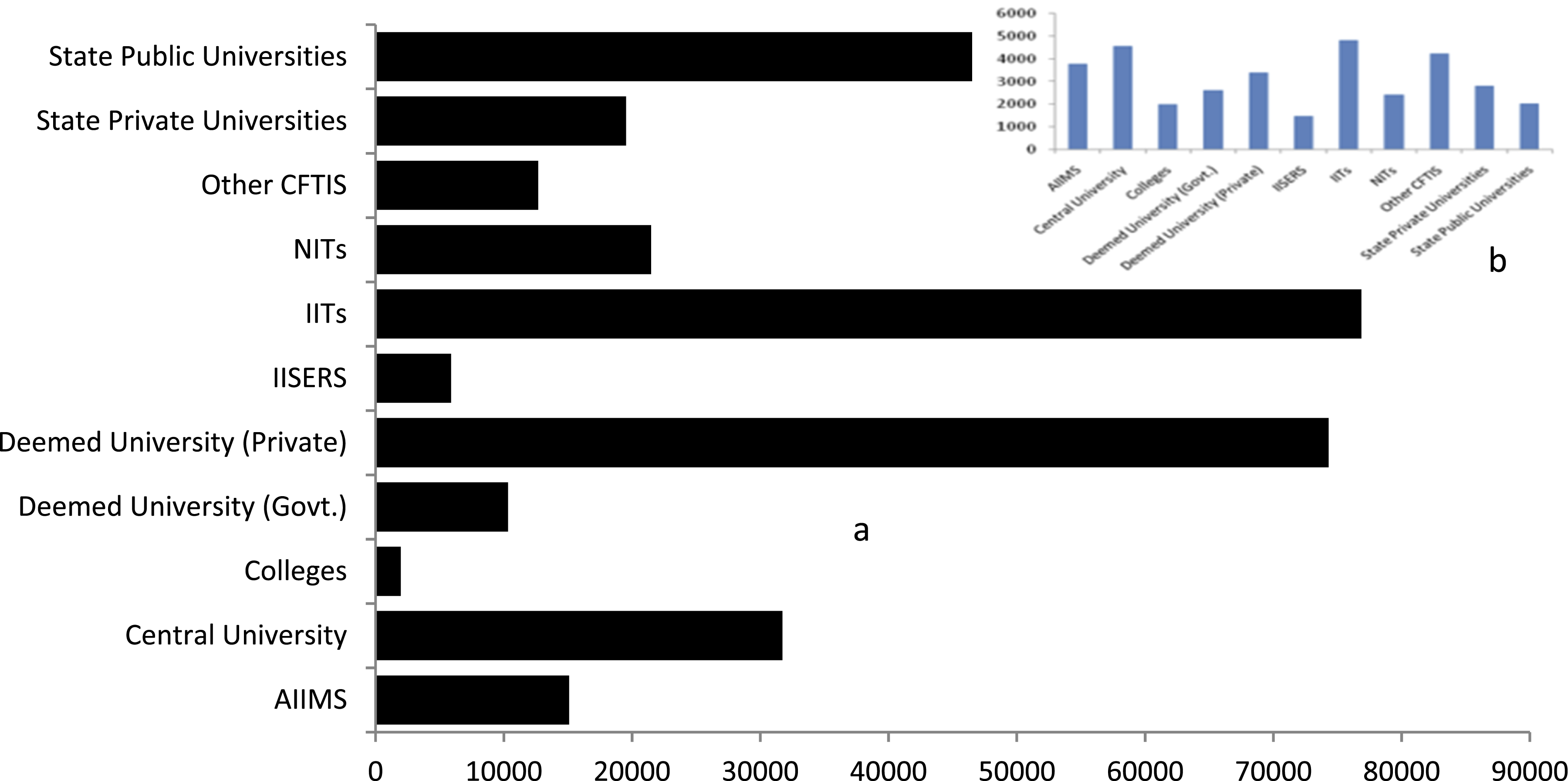
The growth and advancement in private universities in India thus has contributed to overall publication and quality of higher education. The liberalization of higher education to private universities/institutions is nurturing a harmonious coexistence between government and private institutions. It will foster healthy competition, ultimately benefiting students. Furthermore, the increasing number of national-level private universities will play a significant role in meeting the growing demand for higher education in the future (Maiti and Jana, 2025).
Private universities, by supporting the government in expanding access to quality education in rural areas, increase the Gross Enrolment Ratio (GER). Private universities are also promoting skill-based, innovative, and interdisciplinary programs that cater to emerging job markets by leveraging their flexibility in financial and administrative processes, thereby enhancing students’ employability. The globalization of higher education is a major policy objective under the National Education Policy 2020, which allows leading international universities to set up autonomous campuses in India. At present most of the international University campuses are concentrated in metropolitan and Tier-1 hubs, soon Tier-2 and Tier-3 cities will become the new frontier for international education in India (Niti Aayog, 2025).
Conclusion
Private universities in India are playing a pivotal role in shaping a resilient, diverse, and globally competitive higher educational landscape. They have a significant contribution in expanding access to quality education, bridging regional disparities, and offering diverse academic programs for common people that cater to the evolving demands of the global job market, fulfilling the UN SDS-4 goals (quality education). Their expanding subsistence positions them as a key driver of the nation’s aspiration to emerge as a global education hub. Previous studies have also highlighted the positive influence of higher educational institutions in shaping the future of higher education and fostering sustainable development (Salvioni et al., 2017; Yadav et al., 2023).
Despite challenges such as regulatory hurdles and the need for sustained quality assurance, the private universities in India is growing rapidly. However, the growth of private institutions has so far been heavily twisted towards professional and technical disciplines. In fields such as engineering and medicine, enrollment is inexplicably high in private institutions, thereby limiting entrance to students from the economically weaker sections. Moreover, rapid privatization in higher education and increase growth of private institutions raise concerns about equity and inclusiveness. The social inequalities need to be minimized through the massification of higher education and, even if various progress has been made in terms of increased participation, inequalities still persist to some extent. Inclusion policies, by promoting a progressive increase of participation of people from weaker and socially-backward classes will contribute in a safe, even if slow way, to progressively lower the level of inequity (Amaral, 2022). Addressing these challenges is indispensable to guarantee equal educational opportunities for all sections of society (Gopinath and Banerjee 2025). To further strengthen its contribution to India’s educational advancement and socio-economic development in the years ahead, the private higher education sector should espouse appropriate policy support, effective governance, and coordinated efforts from relevant stakeholders (Schmidt et al., 2025).
Private universities also adopted the new education policy of India (2020) and are outshining NEP goals through industry-aligned curricula, strong research and innovation, digital and pedagogical advancements, multidisciplinary programs, and collaboration with industry and global partners. Their greater flexibility and capacity to attract funding from multiple funders like government, non-government, endowment, philanthropic, etc., is an advantage for them to implement reforms more swiftly and effectively, thereby improving employability and contributing to India’s goal of becoming a global education hub.
It is worth noting that in recent years, education, particularly in private institutions, has undergone a significant transformation, characterized by extensive digital integration and a more personalized approach to learning. Integration of advanced technology like Artificial Intelligence & Virtual Reality, and skill-based education, has transformed traditional pedagogical practices. Correspondingly, virtual and hybrid learning models have gained prominence, accompanied by a growing demand for specialized classrooms designed to support technology-enhanced instruction. Supporting these developments, Haleem et al. (2023) highlight the positive impact of recent technological advancements in teaching and learning processes. Consequently, rapid growth has been observed in involvement of private investors in technological interventions at higher educational institutions.
In addition to technological progress, private education is increasingly shaped by institutional efforts to enhance community engagement, address affordability concerns, and build resilience against global disruptions such as pandemics. However, timely and adequate training of students in modern teaching tools and techniques remains essential for preparing them for future academic and professional success. Equally important is the establishment of clear ethical guidelines governing the use of emerging technologies, particularly AI, within educational environments. Providing comprehensive training and ensuring ongoing professional development for educators and students alike are critical steps toward fostering the responsible, effective, and equitable integration of AI in education.
Further attention needs to be paid on skill-based education targeting local and global industries/markets to make our youth competitive and ready for employment and entrepreneurship. Stronger collaboration between industry and academia is essential to align curricula and skill development with current market requirements. However, with an increase in the number of enrolments, there is a growing need to improve the quality and access of higher education and to address the above, universities should focus on strengthening faculty strength, fostering industry-academia collaboration, enhancing digital infrastructure, and improving quality assurance mechanisms.
Footnotes

Funding
The authors received no financial support for the research, authorship, and/or publication of this article.
Declaration of conflicting interests
The authors declared no potential conflicts of interest with respect to the research, authorship, and/or publication of this article.
Declaration of generative AI and AI-assisted technologies in the manuscript preparation process
During the preparation of this work, the authors used ChatGPT in order to improve the language. After using this tool/service, the authors reviewed and edited the content as needed and take(s) full responsibility for the content of the published article.