






Abstract
Using occupational data from O*NET and 46,514 Dice.com job postings, this study examines how real-time labour-market intelligence can inform curriculum transformation in higher education. Guided by skill-biased technological change and socio-technical systems theory, the analysis identifies 914 high-frequency digital skills and shows that employer demand combines technical capabilities with transversal competencies such as collaboration, management, and communication. The results also expose a distinct long tail of niche skills and the growing complexity of foundational roles. The study contributes a practical framework for translating complex labour-market signals into curriculum review, programme design, and micro-credential planning.
Keywords
Introduction
Digital transformation has made digital capability a moving target rather than a fixed graduate attribute. Across sectors, rapid advances in artificial intelligence (AI), cloud computing, data analytics, automation, and digital platforms are reshaping the nature of work and altering the competencies required for effective job performance. Employers increasingly expect graduates to combine technical fluency with judgement, collaboration, communication, problem-solving, and adaptability, reflecting the growing importance of hybrid skill profiles in contemporary labour markets. At the same time, the pace of technological change continues to accelerate, making workforce requirements increasingly dynamic and difficult to predict. Traditional approaches to understanding labour market needs, which often rely on static reports and periodic surveys, struggle to keep pace with rapidly evolving skill demands (Qin et al., 2023). Consequently, static curriculum review cycles risk producing misalignment between educational provision and employer expectations, highlighting the need for more agile and evidence-informed approaches to curriculum development.
This challenge is particularly significant for higher education institutions, which are under increasing pressure to prepare graduates for digitally intensive workplaces while maintaining broader educational objectives related to critical thinking, innovation, and lifelong learning. The persistent discourse surrounding the digital skills gap suggests that workforce development is not a one-time problem to be solved, but rather an ongoing process requiring continuous adaptation. As technological capabilities evolve, educational institutions must move beyond occasional curriculum revisions and adopt mechanisms capable of identifying emerging skill requirements in near real time. Such an approach is especially important given that contemporary workforce demand includes not only specialized technical competencies but also socio-technical capabilities that enable individuals to work effectively within technology-rich organizational environments.
Recent advances in labour-market analytics offer new opportunities to address this challenge. In particular, web scraping has emerged as a powerful method for collecting real-time information from online job postings and professional platforms, enabling researchers to identify emerging workforce trends with greater immediacy and granularity than conventional approaches (Ashioya, 2023; Gondil et al., 2021). Previous studies have successfully applied web scraping techniques to monitor labour-market developments, evaluate employment trends, and generate workforce intelligence across diverse sectors (Alibasic et al., 2022; Jha, 2023). However, while existing research has contributed substantially to understanding skill demand, comparatively less attention has been dedicated to how such evidence can be translated into curriculum decision-making and institutional governance processes. In particular, there remains limited understanding of how real-time labour-market intelligence can support curriculum transformation when workforce demand is simultaneously characterized by highly specialized technical skills and broader socio-technical competencies.
This study addresses this gap by analysing online job postings alongside structured occupational data to demonstrate how real-time labour-market signals can be converted into curriculum intelligence. Rather than treating labour-market analytics solely as a workforce planning tool, the study positions such evidence as a strategic resource for curriculum design, programme review, and educational governance. Its contribution is threefold: empirically, it identifies the most relevant digital skills and competency patterns emerging across technology-oriented occupations; conceptually, it reframes digital capability formation as a hybrid combination of technical, professional, and adaptive competencies; and practically, it offers a governance logic for agile curriculum review capable of supporting continuous curriculum transformation. In doing so, the study contributes to ongoing debates concerning graduate employability, digital capability formation, and the role of labour-market intelligence in supporting responsive and future-oriented higher education systems.
Theoretical framework and research questions
The interpretation of the findings is guided by three complementary theoretical perspectives. First, Skill-Biased Technological Change (SBTC) explains why labour market demand increasingly favours workers who can complement digital technologies with higher-order cognitive capabilities such as judgement, problem-solving, and decision-making (Acemoglu and Autor, 2011; Autor et al., 2003). Second, Socio-Technical Systems Theory explains why collaboration, communication, leadership, and management emerge alongside technical competencies such as programming, data analytics, and cloud computing (Bostrom and Heinen, 1977; Trist and Bamforth, 1951). Third, Long-Tail Labour Market Theory helps explain the substantial number of low-frequency skills identified in the dataset, reflecting labour market heterogeneity and the growing importance of niche and specialized expertise (Anderson, 2006).
Research questions
RQ1: What digital skills are most demanded across technology-oriented occupations? RQ2: How do technical and professional competencies combine to form hybrid skill profiles? RQ3: What implications do labour-market patterns have for curriculum transformation? RQ4: How can real-time labour-market intelligence support agile curriculum governance?
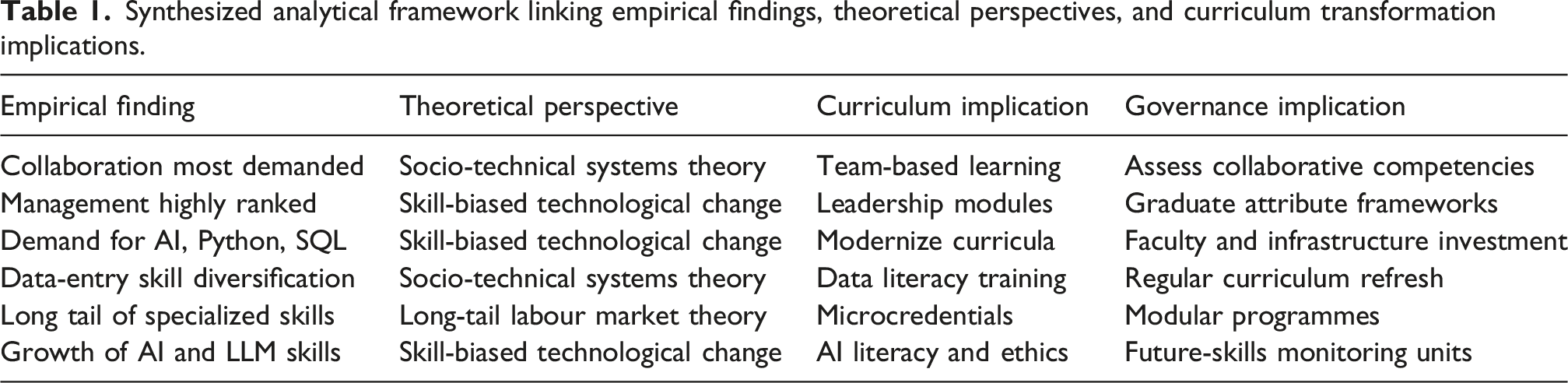
Synthesized analytical framework linking empirical findings, theoretical perspectives, and curriculum transformation implications.
Data-driven curriculum transformation framework
The three complementary theoretical perspectives, namely, Skill-Biased Technological Change (SBTC), Socio-Technical Systems Theory and Long-Tail Labour Market Theory; taken together, provide a framework for understanding digital capability formation in contemporary labour markets. They suggest that higher education institutions should not conceptualize digital skills as a narrow collection of technical competencies, but rather as an integrated capability set comprising technical, professional, and adaptive dimensions. This theoretical framing therefore supports the study’s central argument that curriculum transformation should move beyond periodic content updates toward a more agile and data-informed approach that responds to evolving workforce requirements.
To operationalize the theoretical perspectives discussed above, Figure 1 proposes a Data-Driven Curriculum Transformation framework that links labour market intelligence to curriculum renewal and workforce readiness. The model illustrates how institutions can move from periodic curriculum review toward a continuous evidence-based process in which emerging skill demands are systematically identified, translated into curriculum interventions, and evaluated through graduate and labour market outcomes. In this way, the framework positions curriculum transformation as an adaptive governance process that enables higher education institutions to respond proactively to technological change and evolving workforce requirements. Data-driven curriculum transformation framework.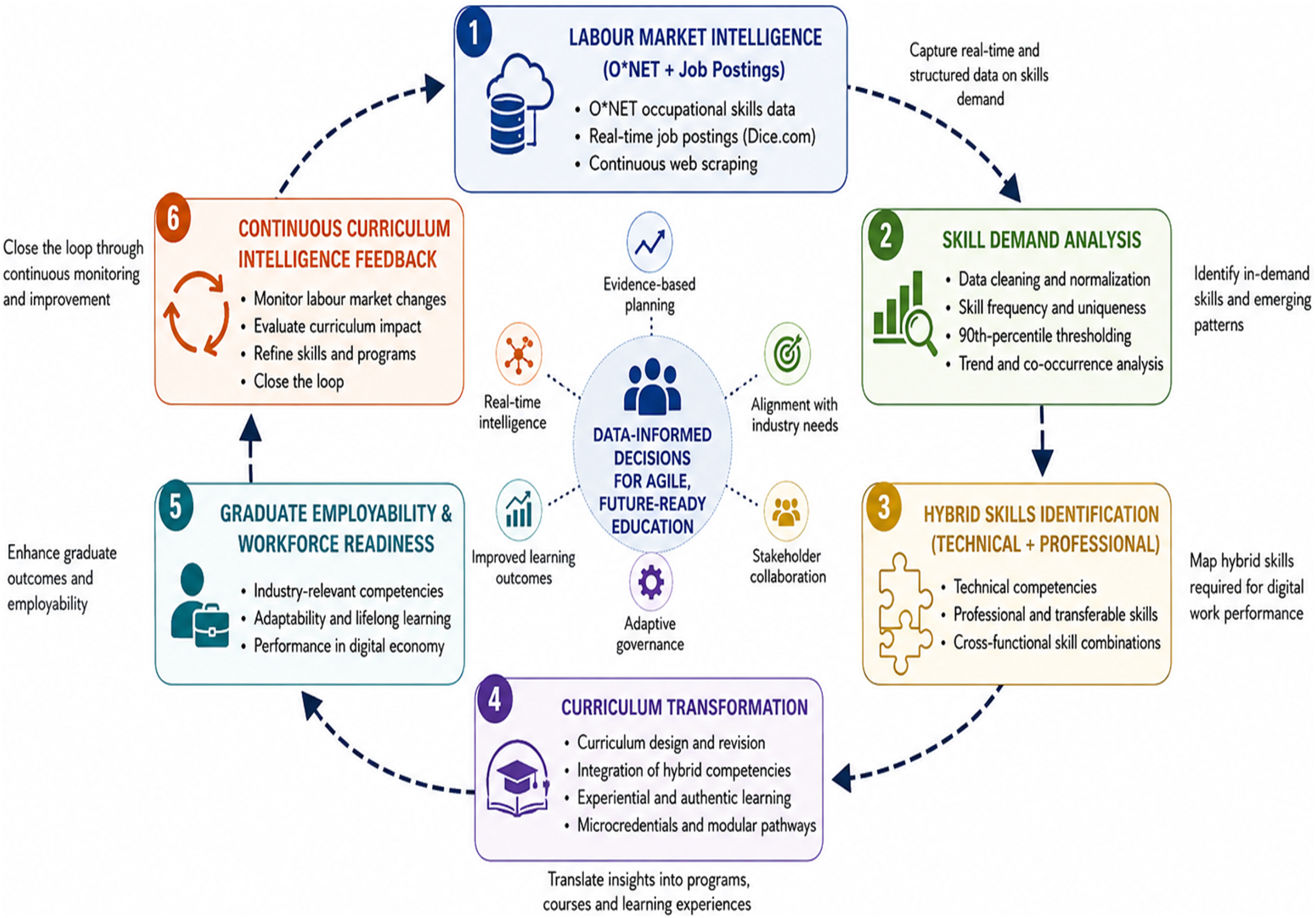
Methodology
This section outlines the systematic, data-driven framework employed to identify in-demand digital skills, presenting it as a replicable blueprint for educational institutions to conduct ongoing labour market intelligence for curriculum planning. The approach involved three primary stages: data collection, data processing, and data analysis, developed and refined iteratively to ensure robust and reliable findings crucial for informing high-stakes curriculum decisions.
Strategic data sourcing for curriculum relevance
The primary data source for this study was online job postings, specifically from Dice.com. This platform was selected due to its specialized focus on technology and IT-related positions, making it a prime source for identifying digital skills relevant to the Information and Communication Technology (ICT) sector (Dice, 2024a; Siri, 2023). Dice.com offers a comprehensive volume of over 200,000 technology job listings monthly from more than 5000 companies, serving approximately 2.4 million monthly visitors, including around 7 million registered technology professionals (Dice, 2024a). Its detailed job descriptions often include specific skill requirements, responsibilities, and qualifications, making it ideal for accurately extracting and categorizing digital competencies (Dice, 2022). Furthermore, the platform provides real-time access to current job postings, which is essential for capturing evolving skill demands and understanding shifts in the labour market (Dice, 2024a, 2024c).
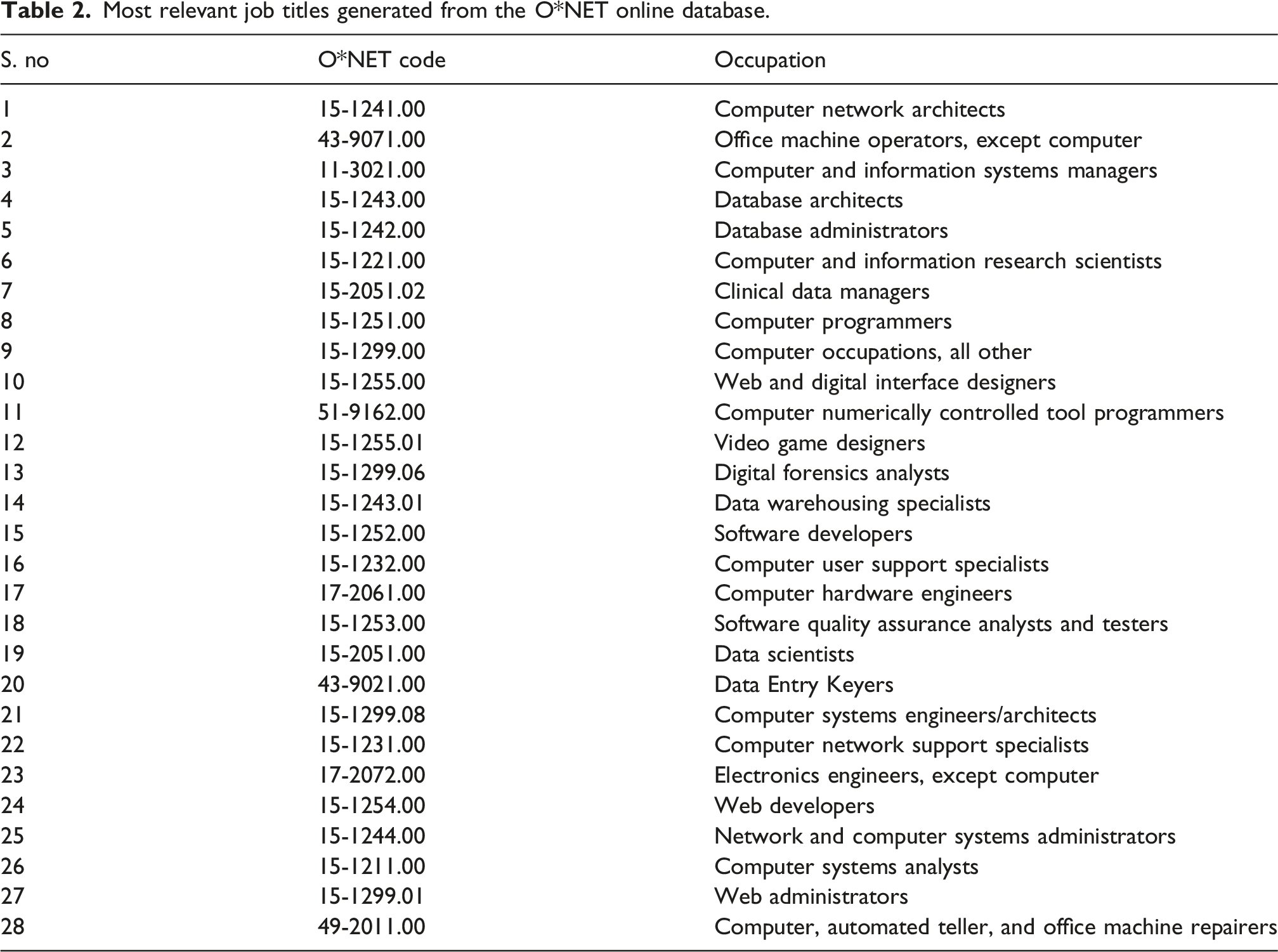
To methodically identify relevant job titles and occupations for targeted scraping, the Online Occupational Information Network (O*NET) Online database, maintained by the U.S. Department of Labour, was employed. O*NET offers extensive, structured data on over 1016 occupations, including detailed descriptions of required skills, knowledge areas, and typical work activities (U.S. Department of Labor, 2025; U.S. Department of Labor, 2019). It uses standardized occupational descriptors, providing a consistent and comparable framework for analyzing job roles and identifying transferable digital skills (Handel, 2016; U.S. Bureau of Labor Statistics, nd). This database is grounded in an evidence-based framework derived from surveys of workers and employers, ensuring reliability and applicability to real-world scenarios (U.S. Department of Labor, 2019; Handel, 2016). This framework can be adapted by other educational bodies to systematically identify and validate skill demands specific to their regional labour markets or specialized program areas.
Data extraction and preprocessing for actionable insights
For data extraction, Python was utilized as the primary programming language due to its robust libraries. The BeautifulSoup library was employed for efficient parsing of HTML content, while Selenium was integrated to simulate user interactions and retrieve dynamically loaded content from Dice.com. Custom Python scripts automated the extraction of key fields, including job title, company name, full job description text, explicitly listed skill requirements, approximate location, and posting date. To mitigate anti-scraping measures and ensure continuous data flow, randomized delays and user-agent rotation were implemented.
Once collected, the raw data underwent rigorous preprocessing to ensure accuracy, consistency, and suitability for analysis. This involved converting all text to lowercase, removing punctuation, special characters, and common English stop words. A dictionary-based approach, augmented by fuzzy string matching, was used to group synonymous skill terms and variations (e.g., ‘JavaScript’ and ‘JS’, ‘Artificial Intelligence’ and ‘AI’) to ensure accurate frequency counts. A manual review of a subset of extracted skills validated this standardization. Strict deduplication was performed on job postings, removing records with identical job titles, company names, and high textual similarity in job descriptions, ensuring each unique advertisement was counted only once.
Analytical approach for skill identification and categorization
Most relevant job titles generated from the O*NET online database.
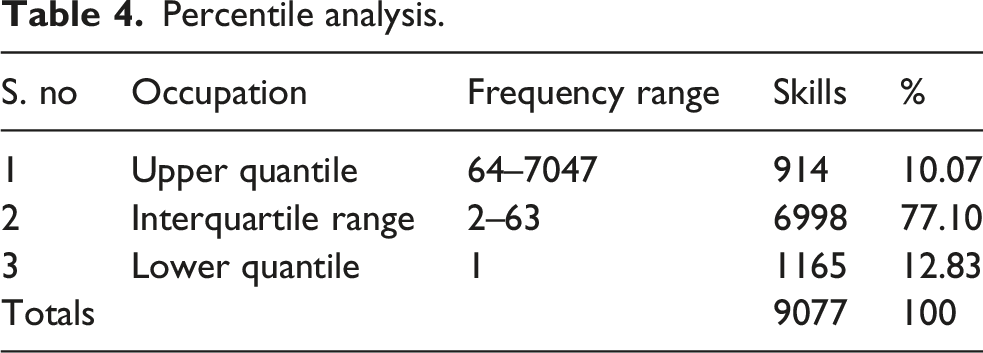
Following tokenization and normalization of skill mentions, frequency analysis was conducted by counting occurrences of each unique skill string across the dataset and ranking skills by prevalence. To distinguish core technical skills from transversal competencies, the analysis combined data-driven frequency counts with thematic categorization informed by digital-literacy and workforce-competency frameworks. The 90th-percentile threshold was used as a transparent prioritization rule: because the distribution is heavily skewed, the top decile isolates the skills most likely to warrant immediate curriculum attention while preserving the broad long tail for specialist pathways and micro-credentials.
Ethical considerations for responsible data collection
Ethical considerations were paramount throughout the research process. The study adhered strictly to legal and ethical guidelines pertaining to web scraping, including a thorough review and respect for Dice.com’s Terms of Service and robots.txt protocols. To ensure minimal impact on the website’s infrastructure and avoid any perception of malicious activity, the automated scraping process incorporated randomized delays between requests and utilized dynamic user-agent rotation. Crucially, no personally identifiable information (PII) of individuals or specific employers (beyond aggregated company names for job count purposes) was collected. All extracted job posting data was immediately aggregated and anonymized by removing any potentially sensitive company-specific identifiers not relevant to skill analysis. The collected data was stored in a secure, encrypted local database with restricted access, ensuring robust data protection standards were maintained throughout the research lifecycle.
If educational institutions are to adopt similar data-driven methodologies for curriculum design, they must establish their own comprehensive ethical guidelines for data collection, storage, and use. This includes ensuring transparency with data sources, respecting terms of service of third-party platforms, rigorously anonymizing sensitive data, and implementing robust security measures to protect collected information (Mydyti and Ware, 2025). The ethical framework employed in this study provides a template for such practices, emphasizing the importance of proactive development of ethical AI and data policies within educational governance to maintain trust and ensure responsible innovation in curriculum development.
Findings: Key digital skill demands informing curriculum content and structure
The systematic web scraping process yielded a substantial dataset, providing a comprehensive overview of digital skill demands in the contemporary job market. Initial results from Dice.com, based on the 28 O*NET-derived occupations, equaled 371,038 total skill mentions and 57,130 unique skills extracted from 46,514 jobs harvested from 27 of the 28 occupations. One occupation, Computer, Automated Teller, and Office Machine Repairers, returned zero job postings, likely due to the platform’s specialized focus on technology development and IT roles rather than general hardware repair.
Occupational landscape and skill density
The distribution of jobs across the identified occupations provides a clear picture of employer demand within the technology sector. Web and Digital Interface Designers accounted for the largest percentage of job postings (10.57%), followed closely by Data Entry Keyers and Data Scientists (both at 9.53%). This indicates a high employer demand in these specific digital domains, suggesting robust activity in areas related to user interface design, data management, and advanced data analysis.
The analysis of skill mentions per occupation provides further depth into the specific competencies required for each role. Consistent with job volume, Data Scientists and Data Entry Keyers also led in total skill mentions (12.00% and 11.38% respectively). This suggests that these data-centric roles are characterized by highly detailed and comprehensive skill requirements in job advertisements, indicating a broad scope of expected competencies. Furthermore, Data Scientists also led in unique skills (12.39%), followed by Data Entry Keyers (12.15%). This indicates that roles within data-intensive fields not only require a high volume of skills but also a broad diversity of distinct competencies.
Summary breakdown by of jobs and skills by occupation.
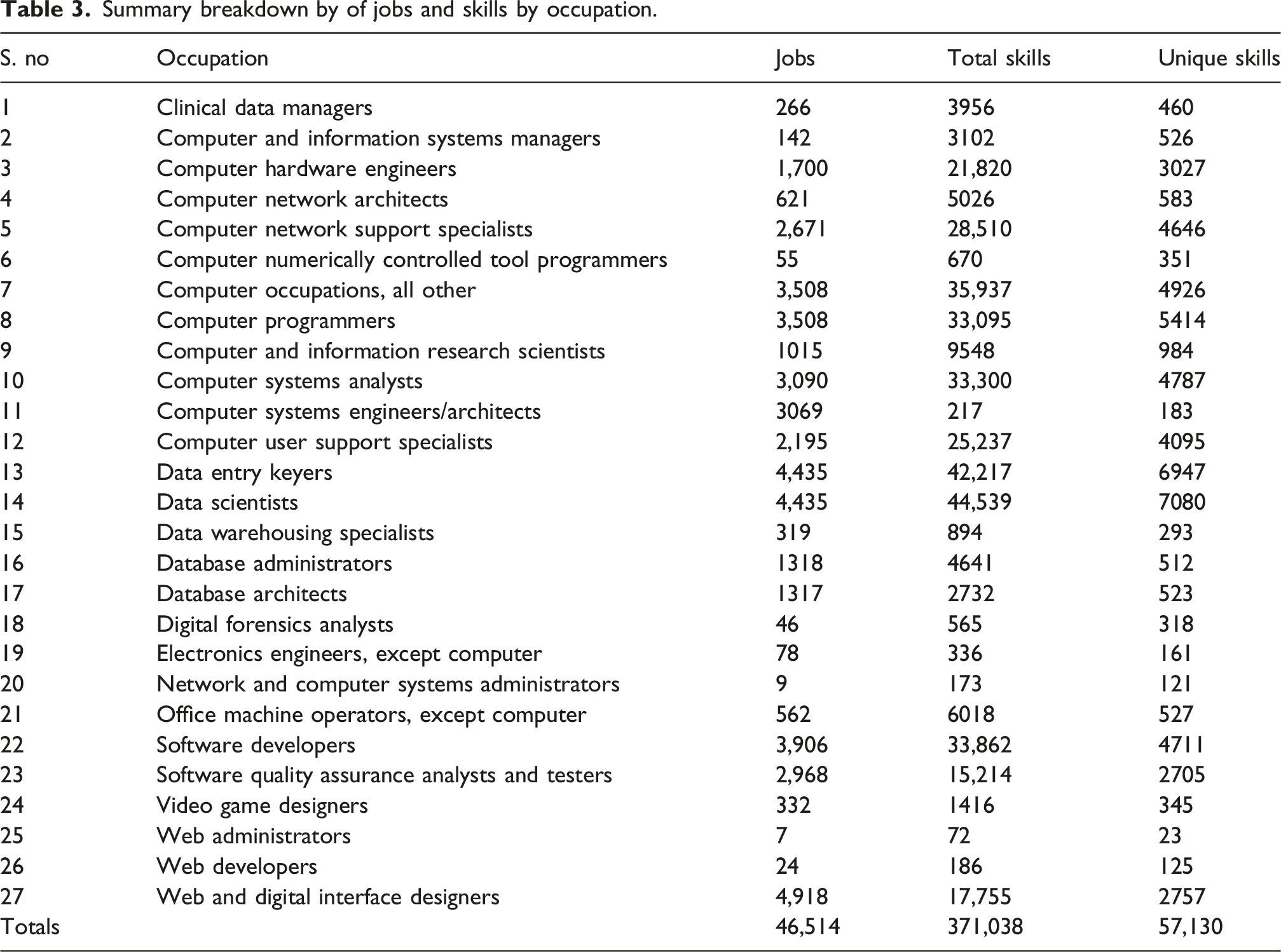
For educational institutions, this data is crucial for understanding where current job market demand is highest, directly informing decisions about which programs to expand, invest in, or develop. The Total Skills and Unique Skills columns indicate the complexity and breadth of skills required for each occupation. A high number of unique skills, as seen with Data Scientists, suggests a need for diverse modules and interdisciplinary approaches in curriculum design for that field. Conversely, occupations with fewer unique skills might benefit from highly specialized, focused programs. By combining job volume with skill density, institutions can strategically plan their offerings. For instance, Data Scientists show high job volume and high skill density, indicating a robust and complex field requiring significant curriculum investment. This table serves as a direct input for strategic program portfolio management.
The landscape of in-demand digital skills
Percentile analysis.
Top in-demand digital skills for curriculum integration (selected).
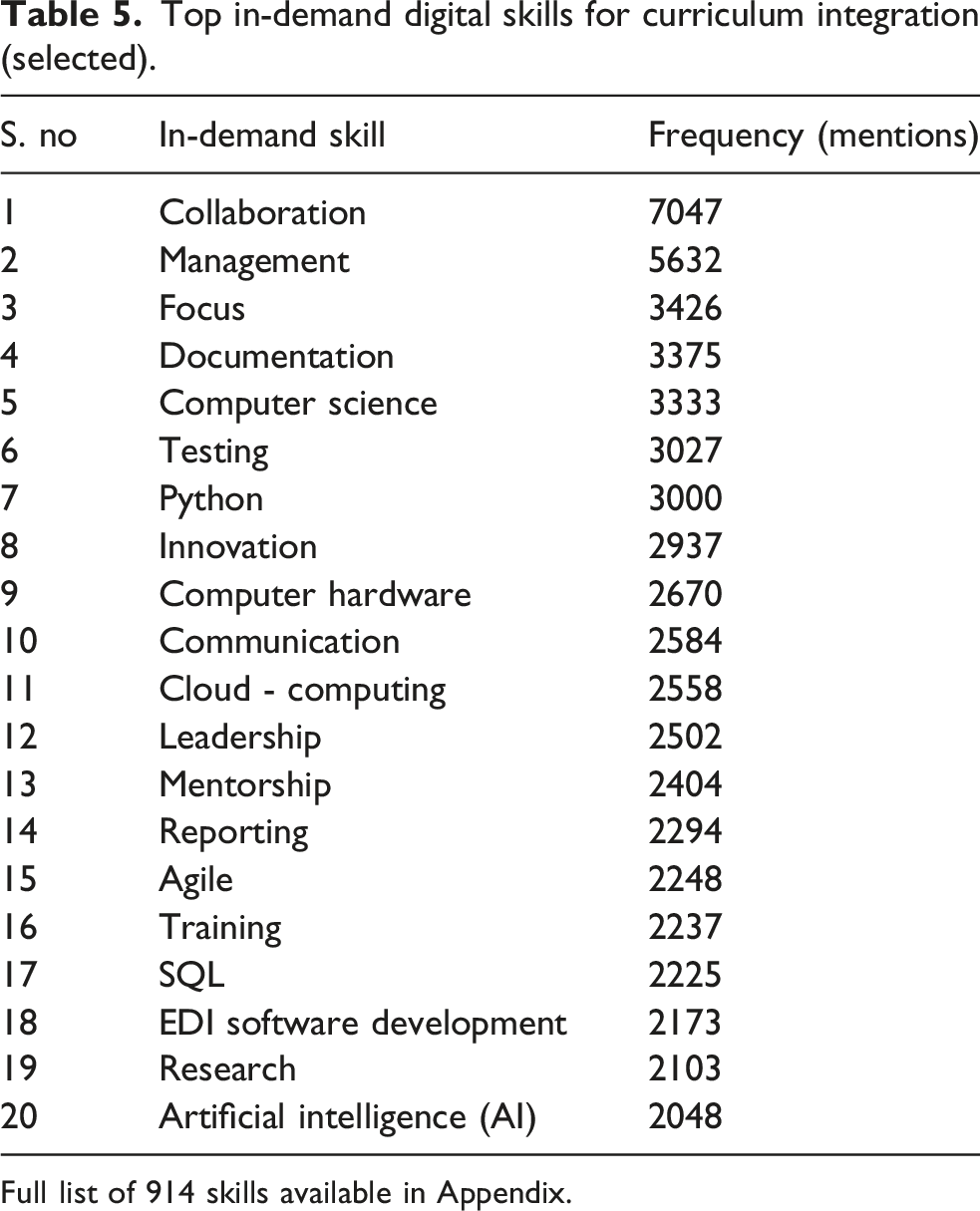
Full list of 914 skills available in Appendix.
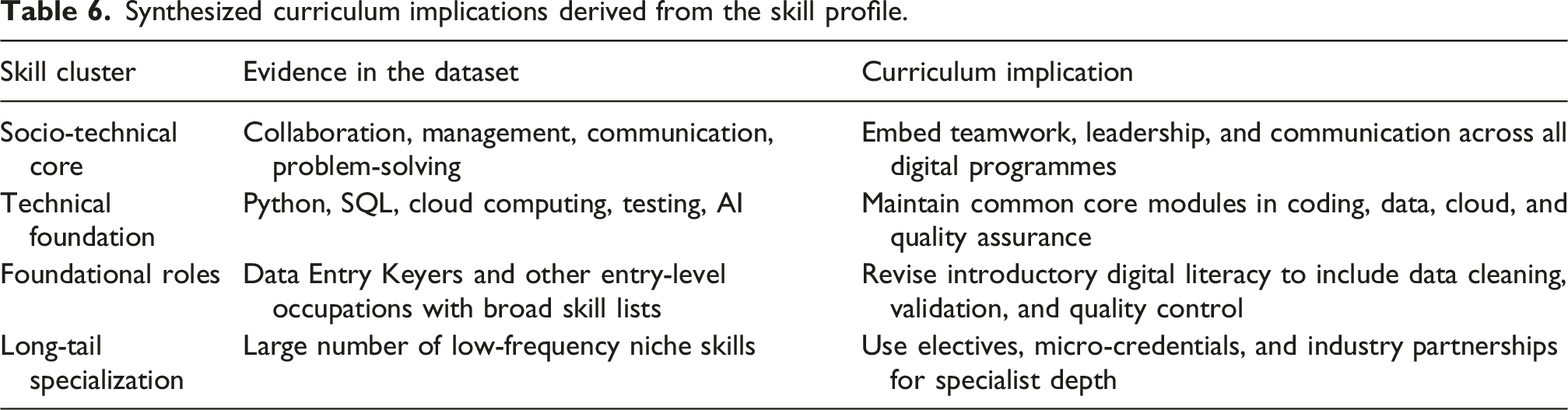
Synthesized curriculum implications derived from the skill profile.
The hybrid skill set imperative
Analysis of the most in-demand digital skills reveals a consistent and high demand for both foundational technical skills and critical professional competencies. Collaboration (7047 mentions) and Management (5632 mentions) emerged as the most frequently mentioned skills, underscoring the paramount importance of interpersonal and organizational abilities in technology-driven environments. Other highly prevalent professional competencies include Communication (2584), Leadership (2502), Problem-Solving (1698), and Attention to Detail (708). Simultaneously, there is strong demand for core technical proficiencies such as Computer Science (3333), Python (3000), Testing (3027), SQL (2225), Cloud Computing (2558), and Artificial Intelligence (AI) (2048). This dual emphasis indicates that employers seek a hybrid skill set for success in the digital economy.
The high ranking of Collaboration and Management above many traditional technical skills offers a significant observation about the nature of digital work. This challenges a narrow, technical-only view of digital skills and implies that the digital skills gap is not solely about a lack of coders or data scientists. Instead, it points to a deficit in individuals who can effectively apply their technical skills within complex, collaborative, and often remote digital environments. If the most demanded skills are interpersonal and organizational, it indicates that technical proficiency, while necessary, is an insufficient condition for success in the digital economy. The ability to work within digital teams, manage digital projects, and communicate effectively in digital contexts is paramount. This redefines digital literacy to include a strong socio-technical component, where human skills are essential for leveraging technology. This understanding is crucial for educational institutions and workforce development programs, emphasizing the need for integrated curricula that foster both technical and professional competencies, moving beyond siloed technical training to integrated programs that embed professional competencies within technical projects, fostering interdisciplinary learning and team-based problem-solving. This shift requires educational innovation beyond traditional lecture formats.
The findings indicate that employer demand increasingly centers on hybrid skill profiles that combine technical expertise with broader professional and adaptive capabilities. Figure 2 conceptualizes this relationship through a Hybrid Digital Capability Framework, which positions digital capability as an integrated construct comprising technical, professional, and adaptive competencies. The framework extends conventional understandings of digital skills by emphasizing that successful participation in the digital economy requires not only technological proficiency, but also the ability to collaborate, lead, learn continuously, and adapt to emerging challenges. Consequently, curriculum transformation efforts should focus on developing balanced capability portfolios rather than isolated technical competencies. Hybrid digital capability framework diagram.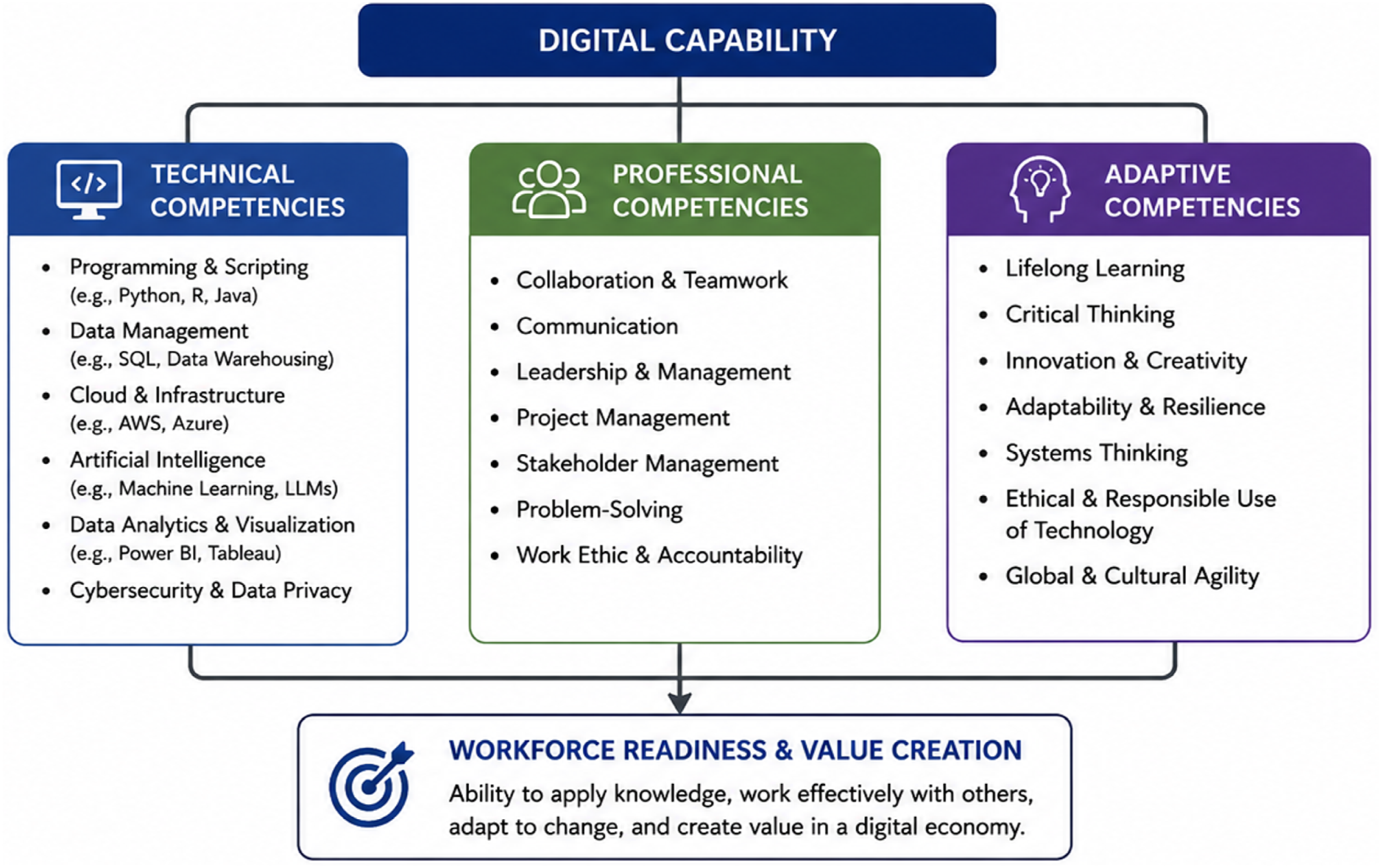
Evolving foundational roles: The case of Data Entry Keyers
A noteworthy observation is the high ranking of Data Entry Keyers in terms of both total jobs and the volume and diversity of skills mentioned. This finding is somewhat unexpected for a role often perceived as less complex or digital than, for example, Data Scientists. This suggests a potential evolution in the nature of seemingly administrative or foundational roles within the digital economy. It could indicate that data entry now involves more sophisticated data handling, cleaning, validation, or even basic analysis, requiring a broader array of skills than traditionally assumed. Alternatively, it might reflect a tendency for job descriptions in this category to be unusually comprehensive in listing all associated competencies.
This finding challenges the conventional understanding of basic digital roles, indicating that even entry-level or seemingly administrative positions in the digital economy are evolving to require more sophisticated data literacy. This includes skills related to data cleaning, validation, and potentially basic analytical tools, moving beyond simple data input. This means that foundational digital literacy programs cannot solely focus on basic software use but must incorporate elements of data handling and critical data evaluation. Consequently, educational institutions offering vocational training or foundational digital skills courses must update their curricula to reflect this increased complexity, ensuring graduates are prepared for the evolving demands of even entry-level digital work. This also presents opportunities for upskilling existing workers in these roles to meet the new requirements.
The “long tail” of specialization
While the study focuses on the in-demand skills identified in the Upper Quantile, the percentile analysis also reveals a vast “long tail” of unique skills with very low frequencies, comprising over 89% of all unique skills in the Interquartile Range and Lower Quantile. This pattern signifies a high degree of specialization within the broader digital job market. While foundational skills are broadly demanded, a vast array of niche or highly specialized skills exists.
This pattern suggests that a successful educational strategy must balance foundational digital literacy and broadly applicable skills with opportunities for deep specialization. Institutions should offer core programs that cover the head skills (e.g., Python, SQL, Collaboration) to ensure broad employability, while also developing flexible pathways, electives, or micro-credentials for students to acquire niche skills from the “long tail”. This allows for both general workforce readiness and the cultivation of high-value, specialized expertise. Policymakers should consider supporting diverse educational models, including traditional degrees, vocational training, and modular micro-credentialing, to cater to both broad skill needs and highly specialized demands. This approach ensures that the educational system can respond effectively to the varied and evolving demands of the digital economy.
Discussion: Strategic implications for curriculum analysis and refinement
The empirical findings of this study translate into concrete strategic implications for educational institutions, providing actionable guidance for curriculum analysis, development, and refinement to better align with the dynamic digital economy.
Integrating technical and professional competencies
The high demand for Collaboration, Management, Communication, and Problem-Solving alongside core technical skills confirms a socio-technical pattern rather than a purely technical one. In line with socio-technical systems theory, curricula must intentionally integrate these competencies instead of treating them as optional additions.
Addressing emerging technologies and future skill shifts
The rise of Artificial Intelligence (AI), Large Language Models (LLMs), and generative AI signals a further shift in skill demand that is consistent with skill-biased technological change. Institutions should therefore move beyond basic coding instruction and prepare students to evaluate, supervise, and co-produce work with intelligent systems.
Actionable guidance includes introducing courses on prompt engineering, ethical AI development, and the societal implications of AI. Curriculum should focus on skills that complement AI capabilities, such as critical evaluation of AI outputs, creative problem-solving, and human-AI interface design. Institutions must also establish robust mechanisms for continuous monitoring of technological advancements and their potential impact on future skill requirements, integrating this foresight into curriculum planning. This proactive approach to curriculum development, moving from reactive to anticipatory, necessitates dedicated future of work or skill foresight units within educational institutions that continuously scan the horizon for technological disruptions and translate those into educational strategies and curriculum adjustments.
Re-evaluating foundational digital literacy programs
The unexpected prominence of Data Entry Keyers in terms of job volume and skill diversity suggests that even foundational digital roles now demand more sophisticated data handling, cleaning, and validation skills. This calls for a re-evaluation of introductory digital literacy courses and supports the view that digital capability formation is progressive rather than binary.
Fostering transferable competencies for adaptability
The high frequency of professional competencies like Collaboration and Management across diverse IT occupations suggests their broad applicability as transferable competencies. Their curricular value lies in portability: they raise employability across roles, sectors, and levels of specialization.
Educational institutions should develop a university-wide or program-specific core competency framework that explicitly defines and integrates these transferable skills across all curricula, not just technical programs. Promoting interdisciplinary programs allows students to apply digital skills in various contexts (e.g., Digital Humanities, Health Informatics). Cultivating a mindset of continuous learning and adaptability is also crucial, emphasizing that skill acquisition is an ongoing process, not a one-time event. This approach emphasizes the utility of these competencies across various career paths and industries, supporting the development of more flexible and modular curriculum structures.
Designing specialized programs for niche skill development
The “long tail” of specialized skills, comprising a vast number of unique skills with very low frequencies, indicates a demand for deep expertise in less common, high-value areas. This pattern supports modular provision through short, focused micro-credentials and advanced electives.
Synthesized analytical framework linking labour market intelligence to curriculum transformation.
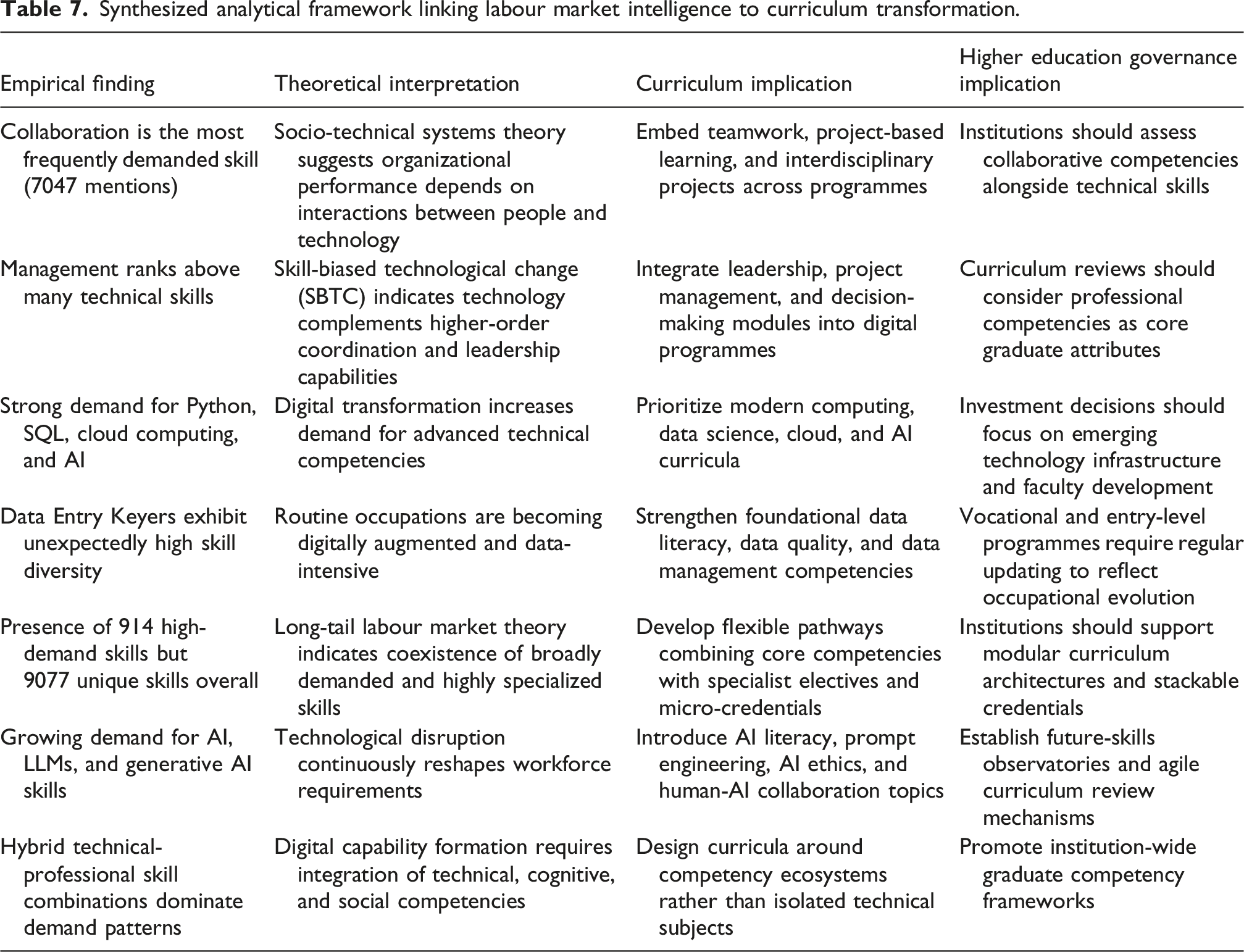
Collectively, these findings suggest that effective curriculum transformation requires not only the incorporation of emerging technical competencies, but also institutional mechanisms capable of continuously monitoring labour market developments and translating workforce intelligence into curriculum innovation. The following recommendations outline practical strategies through which higher education institutions can operationalize these insights.
Recommendations: Decision-making framework for educational leaders and policymakers
To effectively navigate the dynamic digital skills landscape, educational leaders and policymakers must adopt a structured framework that leverages real-time labour market intelligence for strategic curriculum decision-making.
Establish a Continuous Curriculum Intelligence Unit (CCIU)
A critical first step is the creation of a dedicated unit or task force within educational institutions or government bodies responsible for ongoing labour market intelligence. This unit would be tasked with implementing the methodological framework outlined in this report to continuously monitor skill demands, track emerging trends, and identify skill obsolescence. Such a unit should be staffed by experts in data science, educational technology, curriculum design, and labour market analysis, ensuring a multidisciplinary approach to understanding and responding to workforce needs.
Implement a dynamic curriculum review process
Educational institutions must shift from static, multi-year curriculum review cycles to an agile, data-driven process. This involves conducting quarterly or bi-annual data refreshes using web scraping and O*NET integration to capture the latest skill demand data. An annual curriculum audit of existing programs against this updated data would identify gaps and areas for refinement. Furthermore, developing mechanisms for rapid prototyping and piloting of new courses or modules is essential to address immediate skill needs, allowing institutions to respond swiftly to market shifts rather than lagging behind.
Foster cross-stakeholder collaboration
The necessity of strong partnerships between educational institutions, industry, government, and individual learners cannot be overstated. Establishing active industry advisory boards with leaders from relevant sectors can provide direct input on curriculum relevance and emerging skill needs. Government policies and funding mechanisms should be advocated for to support agile curriculum development, lifelong learning initiatives, and reskilling programs. Integrating robust feedback mechanisms from current students and recent graduates regarding their preparedness for the job market will also provide invaluable insights for continuous improvement.
Invest in faculty development and pedagogical innovation
Curriculum transformation fundamentally requires parallel investment in faculty capabilities and innovative teaching methods. This includes providing comprehensive training for faculty in emerging digital skills and technologies, such as AI and cloud computing, to ensure they remain at the forefront of their fields. Professional development in project-based learning, interdisciplinary teaching, and fostering professional competencies is also crucial. Adequate resources must be allocated for developing new teaching materials, establishing cutting-edge labs, and acquiring necessary software licenses to support updated curricula.
Promote a culture of lifelong learning
Educational institutions must position themselves as central hubs for continuous learning, moving beyond the traditional model of initial degree attainment. Bridging the digital skills gap requires an adaptive ecosystem where formal education is understood as the initial phase of a lifelong learning journey. Institutions must transform into dynamic learning ecosystems that support individuals throughout their careers, providing continuous upskilling and reskilling opportunities. This necessitates developing or partnering with platforms offering flexible, modular learning pathways, such as micro-credentialing programs. Offering discounted or specialized programs for alumni can encourage continuous skill updates. Furthermore, public awareness campaigns should educate individuals on the critical importance of continuous skill development in the digital economy. Policymakers should consider incentives for both individuals and employers to engage in continuous professional development, potentially through tax credits, subsidies for micro-credentials, or employer-sponsored training programs.
Conclusion
This study demonstrates the value of combining occupational taxonomies with real-time job-posting data as a methodological approach for systematically identifying in-demand digital skills in today’s rapidly evolving job market.
Beyond its specific findings on current skill demands, the methodology developed, combining O*NET for structured classification with dynamic web scraping and rigorous data processing, is a significant contribution in itself. This positions the paper not just as a source of empirical results, but as a foundational blueprint for ongoing, real-time labour market intelligence. This transferable research design can be adapted for different industries, geographical regions, or types of skill analysis, thereby fostering continuous research and policy development in workforce analytics.
The dynamic nature of digital skills means that any single study, no matter how comprehensive, offers but a snapshot in time. Therefore, bridging the digital skills gap is not a one-time fix but requires an adaptive ecosystem of education, industry, and individual learning. This reinforces the idea that continuous monitoring, agile curriculum development, and lifelong learning are not merely recommendations but necessities for navigating the evolving digital landscape. Educational institutions must anticipate future disruptions, particularly from rapidly evolving AI and Large Language Models, shifting curriculum focus to areas like human-AI collaboration and AI ethics. Concurrently, the importance of fostering transferable competencies crucial for adaptability across diverse digital domains cannot be overstated.
In conclusion, the imperative for proactive, data-driven curriculum transformation is clear. By embracing the strategic framework presented, educational institutions can cultivate a competitive and adaptable workforce, well-prepared for the multifaceted challenges and opportunities of the digital economy.
Supplemental material
Supplemental material - Data-driven curriculum transformation for the digital economy: A strategic framework for higher education institutions
Supplemental material for Data-driven curriculum transformation for the digital economy: A strategic framework for higher education institutions by Duncan Nyale, Simon Karume, Andrew Kipkebut, Fidelis Mukudi, Abrar Sharafat in Industry and Higher Education.
Footnotes

Consent for publication
We hereby provide consent for the publication of the manuscript detailed above.
Author contributions
DN provided a concise overview of the existing literature, formulated the methodology, collated and analyzed data. SM, AK and FM helped refine the content. AS helped refine the methodology, collection and analysis of data. All five authors collaborated on the selection of the final paper collection. The final version of the paper received approval from all authors.
Funding
The authors received no financial support for the research, authorship, and/or publication of this article.
Declaration of conflicting interests
The authors declared no potential conflicts of interest with respect to the research, authorship, and/or publication of this article.
Data Availability Statement
The data and materials used in this paper are available upon request. The comprehensive list of included studies, along with relevant data extracted from these studies, is available from the corresponding author upon request.
Supplemental material
Supplemental material for this article is available online.
References
Supplementary Material
Please find the following supplemental material available below.
For Open Access articles published under a Creative Commons License, all supplemental material carries the same license as the article it is associated with.
For non-Open Access articles published, all supplemental material carries a non-exclusive license, and permission requests for re-use of supplemental material or any part of supplemental material shall be sent directly to the copyright owner as specified in the copyright notice associated with the article.
