







Abstract
This study aims to systematically examine global research on digital human resource management (HRM) in healthcare using bibliometric analysis of 61 documents published between 1988 and 2024. This number reflects the emerging and highly specialized nature of digital HRM in healthcare research. VOSviewer software was utilized to map co-authorship networks and keyword co-occurrences and to generate overlay and density visualizations. A threshold-based approach was applied to identify key themes and research patterns across the literature. There has been significant publication growth, especially after 2018, with the United States, United Kingdom, and India emerging as the leading contributors. Results reveal four thematic clusters representing technological, organizational, demographic, and governance perspectives. These insights illuminate underexplored areas, such as leadership integration and equity, which are essential for guiding digital transformation in healthcare workforce management. Healthcare managers and policymakers should prioritize the strategic integration of digital HRM tools into system-level planning. Emphasis should be placed on aligning digital solutions with organizational leadership, workforce development, and public health goals, particularly in resource-constrained settings.
Keywords
Introduction
The healthcare sector is experiencing rapid digital transformation, with profound implications for delivering and managing health services.1,2 One key area undergoing significant change is human resource management (HRM). 3 Traditionally reliant on manual, paper-based processes, healthcare HRM is increasingly adopting digital solutions, giving rise to the concept of digital HRM, or electronic HRM (e-HRM). e-HRM refers to the use of digital technologies, such as information systems, artificial intelligence, and cloud-based platforms, to manage workforce functions, including recruitment, scheduling, training, and performance evaluation.4,5 Amid workforce shortages, high staff turnover, and growing service demands, digital HRM offers potential to enhance efficiency, coordination, and employee engagement, although adoption and impact vary across countries and institutions. 5 Unlike broader digital health research, which primarily focuses on clinical technologies, digital HRM specifically addresses the digitalization of workforce management functions and governance mechanisms within healthcare organizations and systems.
The adoption of digital HRM reflects a broader trend in the digitization of health systems. 6 From electronic health records and telemedicine to workforce analytics and e-learning systems, digital tools are reshaping healthcare operations.1,2 In HRM, these tools streamline administrative tasks, support data-driven decision-making, and facilitate professional development.3,7 Nevertheless, integration remains uneven, with implementation challenges, variable digital readiness, and limited assessment of outcomes across settings, highlighting the need for a systematic understanding of global trends and patterns. 8
Despite increasing research on digital HRM, the literature remains fragmented and narrowly focused. Existing studies examine isolated tools, single institutions, or high-income countries, with limited evaluation of impacts on workforce governance, quality, or equity.5,8 Moreover, existing reviews tend to subsume digital HRM within broader discussions of healthcare HRM or digital health, without systematically examining it as a distinct and evolving research field. Systematic reviews have noted that much of the literature is atheoretical, hospital-focused, and lacks insight into collaborative networks or thematic evolution. 9 Emerging areas, such as integrated workforce coordination technologies and policy-driven digital planning, remain underexplored, leaving a critical gap in understanding how digital HRM is evolving globally and informing practice.10,11
A bibliometric approach offers a solution by providing a quantitative, objective synthesis of research productivity, collaboration, and thematic development. Unlike narrative or systematic reviews, bibliometrics can reveal global trends, influential contributors, and underexplored areas, capturing the structure and dynamics of the field.12–14 This approach enables linkage of digital HRM research to broader health systems challenges, including workforce shortage, governance gaps, and inequities in digital readiness, offering insights that conventional reviews cannot fully provide.
This study addresses this gap through a bibliometric analysis of research on digital HRM in healthcare. It aims to map global publication trends, influential authors and institutions, collaboration patterns, and the thematic structure of the field. The analysis is guided by four research questions: (1) What are the global publication trends in digital HRM in healthcare? (2) Which countries and institutions contribute most to this literature? (3) How are international collaborations structured? and (4) What themes dominate the field and which areas are emerging? This study adds to the healthcare management literature by clarifying the conceptual scope of digital HRM as a distinct domain, mapping its intellectual structure, and identifying emerging governance- and equity-oriented research priorities that remain underexplored in earlier reviews. Conceptually, it situates digital HRM at the intersection of digital transformation and workforce governance in healthcare and traces the field’s evolution from operational technologies toward more strategic, leadership- and equity-oriented workforce systems.
Methods
Research design
This study adopts a bibliometric research design to systematically explore the global scientific output related to digital human resource management (HRM) in healthcare. Bibliometric analysis is a quantitative method used to evaluate academic literature through statistical and visualization techniques. It enables researchers to identify publication trends, influential contributors, collaboration networks, and emerging research themes across a specific domain.12–14
Data source
The bibliometric data for this study were retrieved from the Scopus database, one of the largest and most reputable abstract and citation databases for peer-reviewed literature. Scopus was selected due to its broad coverage of international journals, comprehensive indexing, and robust citation tracking features, which are particularly suitable for bibliometric analyses. Although Scopus was used as the primary data source, preliminary checks indicated a high degree of overlap with Web of Science and PubMed for relevant literature. To ensure consistency and reproducibility, Scopus was selected as a single, comprehensive database. Nonetheless, the potential omission of some records indexed exclusively elsewhere is acknowledged as a limitation.
Search strategy
The search was conducted in April 2025 and included all literature published up to December 2024. The thresholds for co-authorship and keyword occurrence (minimum of two and three, respectively) were chosen to maintain visual clarity and thematic precision in mapping. The search query was designed to capture articles related to both digital HRM and the healthcare sector. The final search string used in Scopus was: (TITLE-ABS-KEY (“digital human resource management” OR “e-HRM” OR “electronic HRM” OR “HRIS” OR “human resource information system”) AND TITLE-ABS-KEY (“healthcare” OR “hospital” OR “clinic” OR “health facility” OR “primary health center” OR “health system”))
The search was limited to journal articles and conference proceedings published in English, with no restriction on publication year to capture the full evolution of the field up to 2024.
Inclusion and exclusion criteria
To ensure the relevance and quality of the dataset, specific inclusion and exclusion criteria were applied during the article selection process. Studies were included if they focused on digital human resource management (HRM) or HR-related technologies, such as e-HRM or HRIS, within healthcare systems. Eligible documents comprised peer-reviewed journal articles and conference proceedings published in English, encompassing empirical, theoretical, or conceptual studies. Articles were excluded if they did not directly address HRM in healthcare (e.g., studies focused solely on digital health or clinical technologies without HR relevance), were not published in English, or fell outside the scope of academic literature, such as editorials, book chapters, theses, reviews, and other forms of grey literature. This filtering process ensured that only scholarly, relevant, and high-quality publications were included in the final analysis. Finally, a total of 61 articles were included in the analysis.
Data analysis
The collected bibliographic data, including titles, abstracts, author names, keywords, institutional affiliations, and references, were exported in.RIS and.CSV formats from Scopus. These files were then imported into VOSviewer (version 1.6.20), a specialized software tool used for constructing and visualizing bibliometric networks. VOSviewer was selected for its recognized accuracy in constructing bibliometric networks. Two types of analyses were conducted: (1) Co-authorship Analysis: To map collaboration among authors, institutions, and countries and (2) Co-occurrence Analysis: To identify frequently occurring keywords and thematic clusters in the literature. VOSviewer was used to generate visual maps representing these relationships, with nodes (e.g., authors, keywords) and links (e.g., co-authorship, co-occurrence) displayed based on frequency and strength of association.
Ethical considerations
As this research relies solely on publicly available bibliographic data, it does not involve human subjects or sensitive information. Therefore, ethical approval was not required.
Results
Global research trends on digital HRM in healthcare
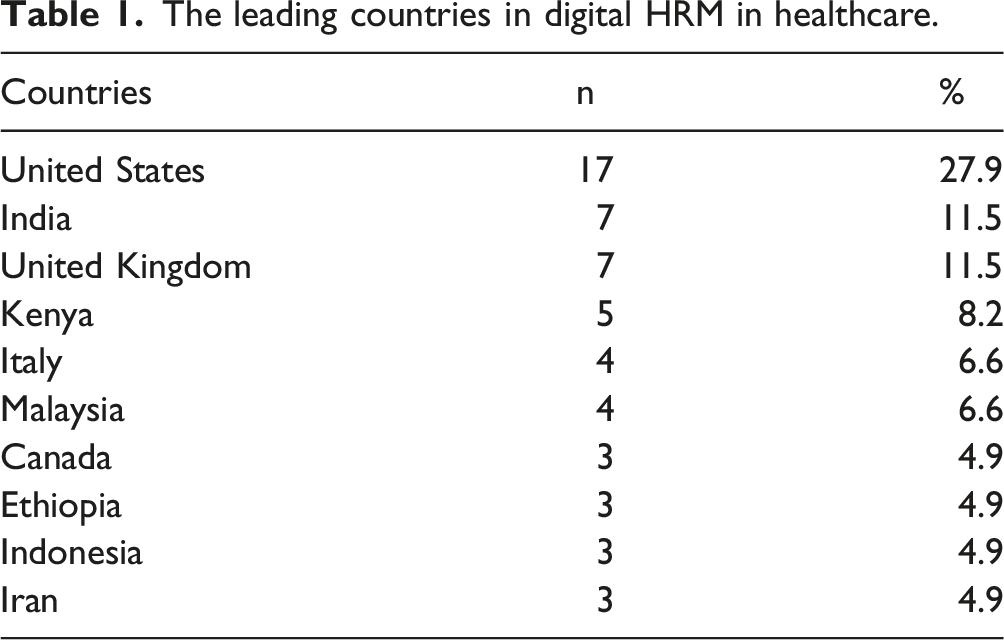
The leading countries in digital HRM in healthcare.
A significant uptick occurred from 2018 onwards, with the number of publications increasing more sharply. The years 2019, 2020, and 2024 each recorded the highest number of articles (n = 7), suggesting a peak in scholarly activity around the period of global digital acceleration during and after the COVID-19 pandemic. This is further supported by consistently high output between 2020 and 2024, indicating sustained academic focus on the integration of digital technologies into healthcare HR systems (Figure 1). Trends in annual publications on digital HRM in healthcare research.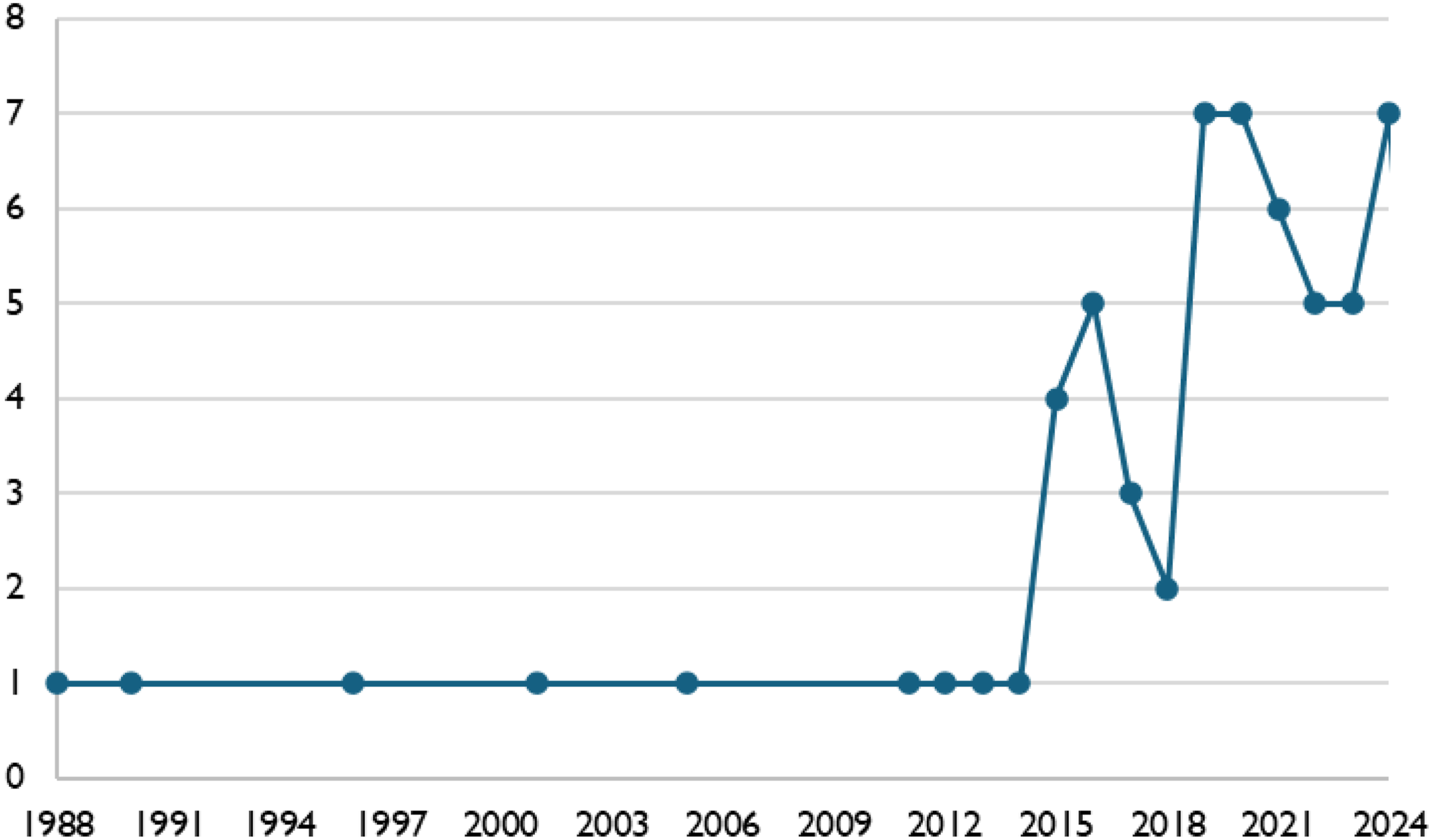
Leading countries in digital HRM in healthcare
Table 1 lists the top ten countries with the highest number of publications on digital HRM in healthcare. Research on digital HRM in healthcare included contributions from 47 countries. Out of 61 documents, the United States (U.S.) was the most influential, with 17 documents (27.9%). India and the United Kingdom (U.K.) followed with 7 documents (11.5%) each.
Leading institutions in digital HRM in healthcare
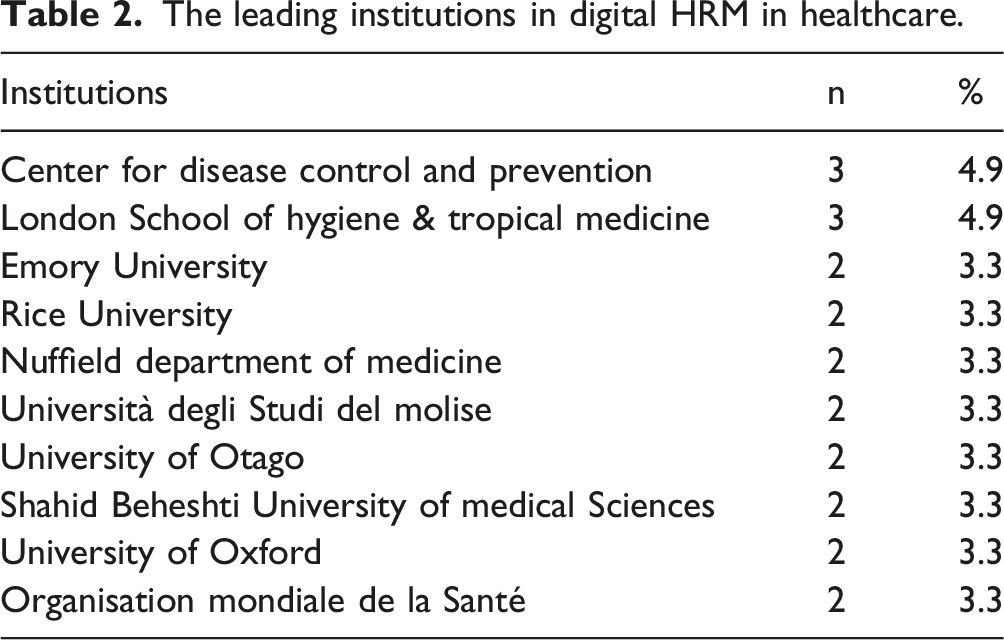
The leading institutions in digital HRM in healthcare.
Patterns of international collaboration
With a minimum threshold of two co-authored documents, Figure 2 illustrates the international collaboration network in digital HRM research within healthcare. The U.S. emerged as the most prominent hub of international collaboration, frequently partnering with countries such as Canada and Brazil. Following closely, the U.K. ranked second, showing notable collaborative ties with countries like India. These patterns indicate strong transatlantic and intercontinental research connections, reflecting the global relevance and growing interest in digital HRM practices across diverse healthcare systems. Country collaboration map related to digital HRM in healthcare.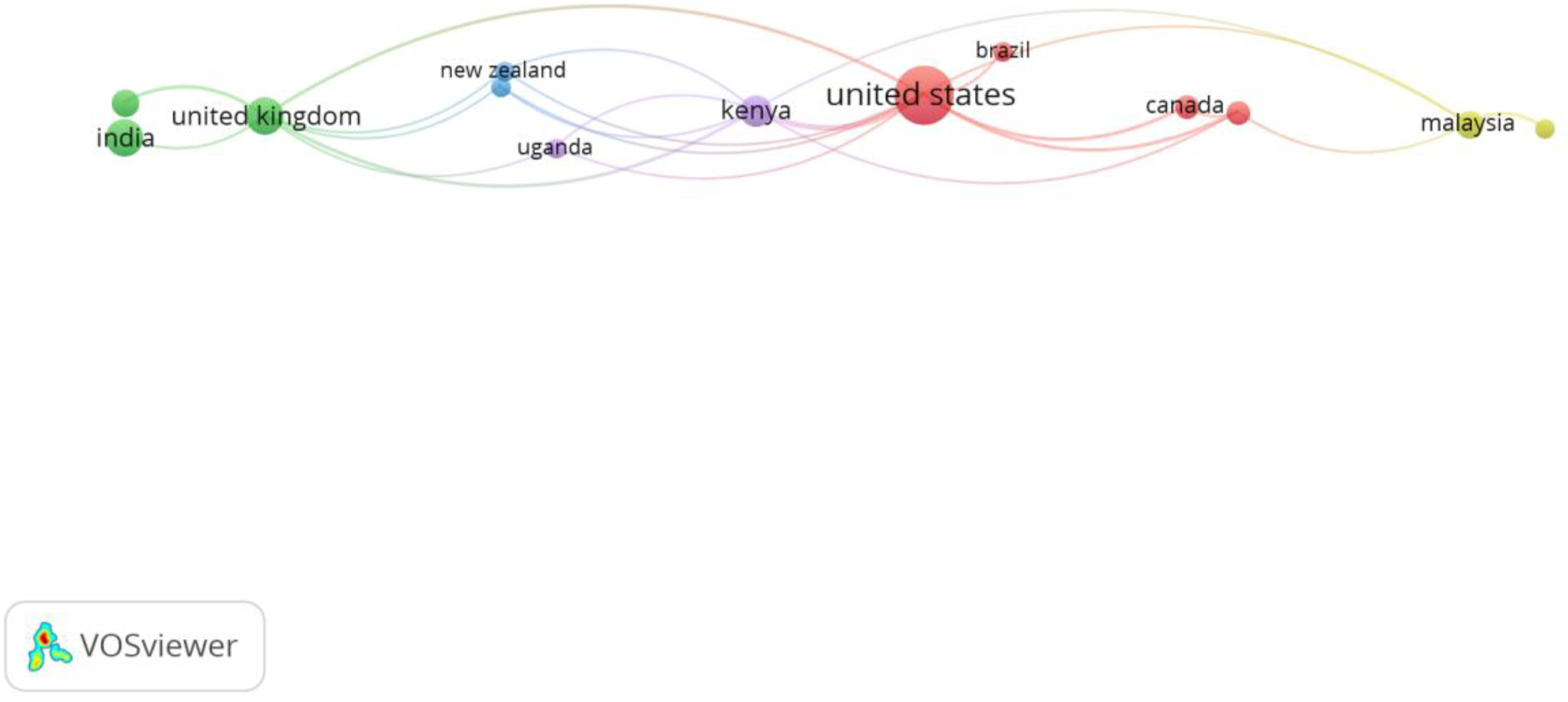
Thematic landscape and emerging trends in digital HRM in healthcare
Keyword co-occurrence analysis
The keyword co-occurrence analysis conducted using VOSviewer revealed a structured thematic landscape of the literature on digital human resource management (HRM) in healthcare. With a minimum occurrence of three for all keywords, a total of four main clusters emerged, each representing a distinct focus area within the field. These clusters were identified based on the frequency and co-occurrence strength of author keywords, titles, and abstracts in the dataset. The visualization output illustrates the intellectual structure of the research domain, with closely linked terms grouped, indicating thematic proximity. Leadership, governance, and equity-related dimensions are identified in this analysis based on their empirical presence as recurrent but comparatively lower-density keywords across distinct clusters, rather than as externally inferred themes. Figure 3 depicts the keyword co-occurrence in digital HRM in healthcare. Network visualization of terms based on clusters.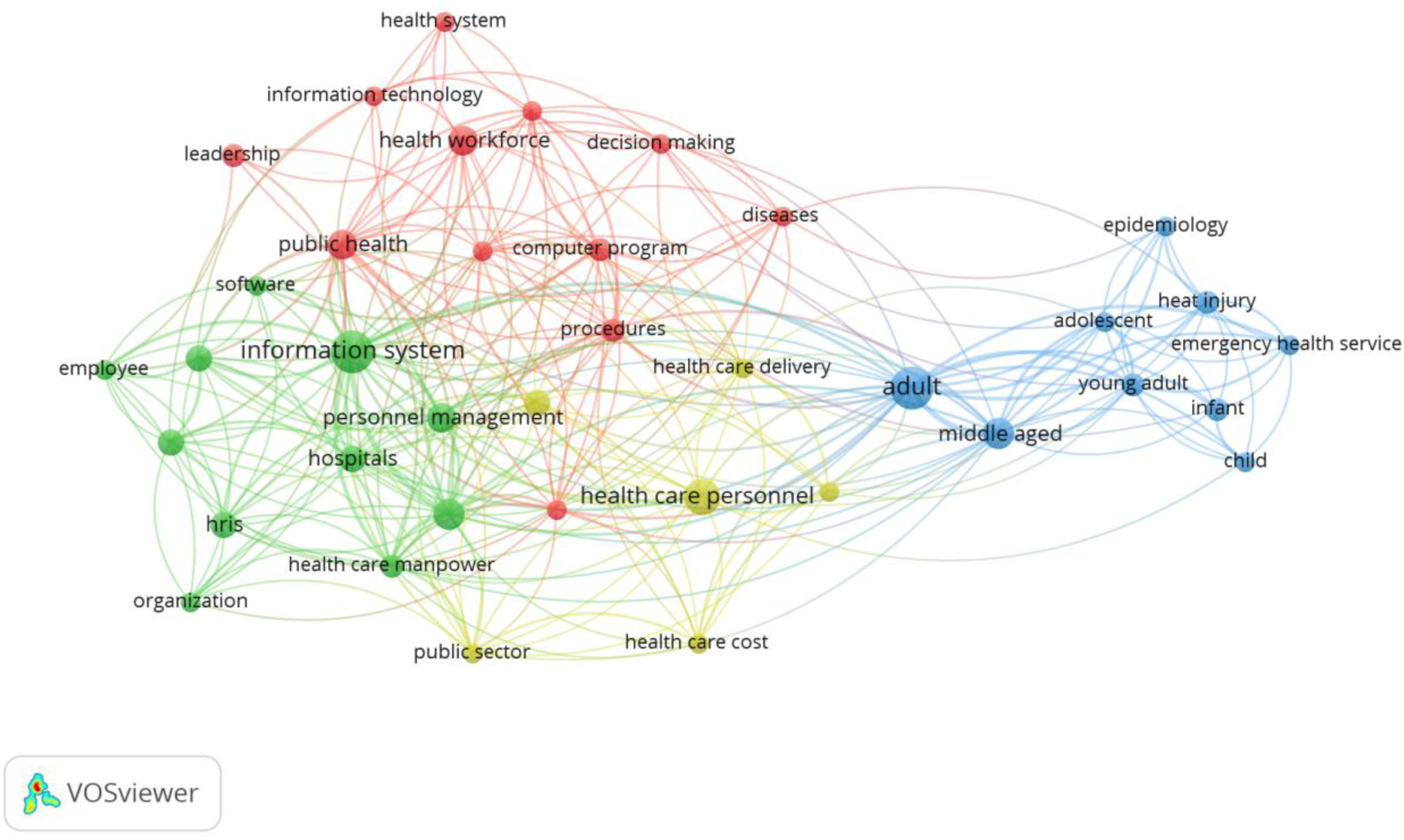
The red cluster (Cluster 1) focuses on digital systems that support workforce operations and clinical decision-making. Key terms such as computer programs, decision-making, healthcare facilities, health workforce, information dissemination, information technology, leadership, and nursing emphasize the integration of digital tools into clinical workflows. The inclusion of leadership and decision-making as co-occurring keywords indicates that leadership emerges within the dataset as an operational and managerial dimension linked to digital systems, rather than as a purely conceptual construct.
The green cluster (Cluster 2) highlights research related to HRM systems and organizational infrastructure. It includes terms like employee, HRIS, HRM, organization, personnel management, resource management, and software, reflecting a focus on human resource management within healthcare organizations. The dominance of HRIS-, software-, and personnel-related terms in this cluster indicates that organizational infrastructure and formal HRM systems constitute a core empirical foundation of the literature, against which higher-level themes such as leadership and governance appear as less densely represented but distinct dimensions. This cluster captures institution-level HRM infrastructure and internal organizational processes, distinguishing it analytically from system-level governance and policy concerns addressed in Cluster 4.
The blue cluster (Cluster 3) is centered around service demographics and healthcare delivery contexts. It features terms such as adolescent, adult, child, emergency health services, epidemiology, heat injury, infant, middle-aged, and young adult, underscoring the diverse population groups in healthcare delivery. The prominence of population-specific terms reflects attention to workforce management across diverse demographic groups, providing a data-driven basis for interpreting equity-related concerns within the literature.
The yellow cluster (Cluster 4) pertains to policy, governance, and public sector HRM. Keywords such as government, healthcare costs, healthcare delivery, healthcare planning, healthcare personnel, and public sector highlight the policy and governance aspects of healthcare management. The concentration of policy-related terms in this cluster provides an empirical basis for identifying governance as a distinct thematic dimension within the digital HRM literature. Unlike Cluster 2, which focuses on internal organizational HR systems, this cluster operates at the macro level, emphasizing public sector governance, policy coordination, and system-wide workforce planning.
Overall, these four clusters illustrate a multidimensional research landscape. They reveal how digital HRM in healthcare is explored at various levels, ranging from micro-level technological tools and organizational systems to population-specific strategies and policy frameworks. This thematic mapping underscores the interdisciplinary nature of the field and highlights opportunities for future research that bridges operational practices, strategic management, and health system governance.
Temporal trends from overlay visualization
As shown in Figure 3, the overlay visualization generated in VOSviewer presents the evolution of research themes over time in the domain of digital human resource management (HRM) in healthcare. By assigning colors based on the average publication year of keywords, the overlay map reveals how scholarly focus has progressed from foundational digital systems toward more strategic and system-level concerns (Figure 4). Overlay visualization of terms based on publication years.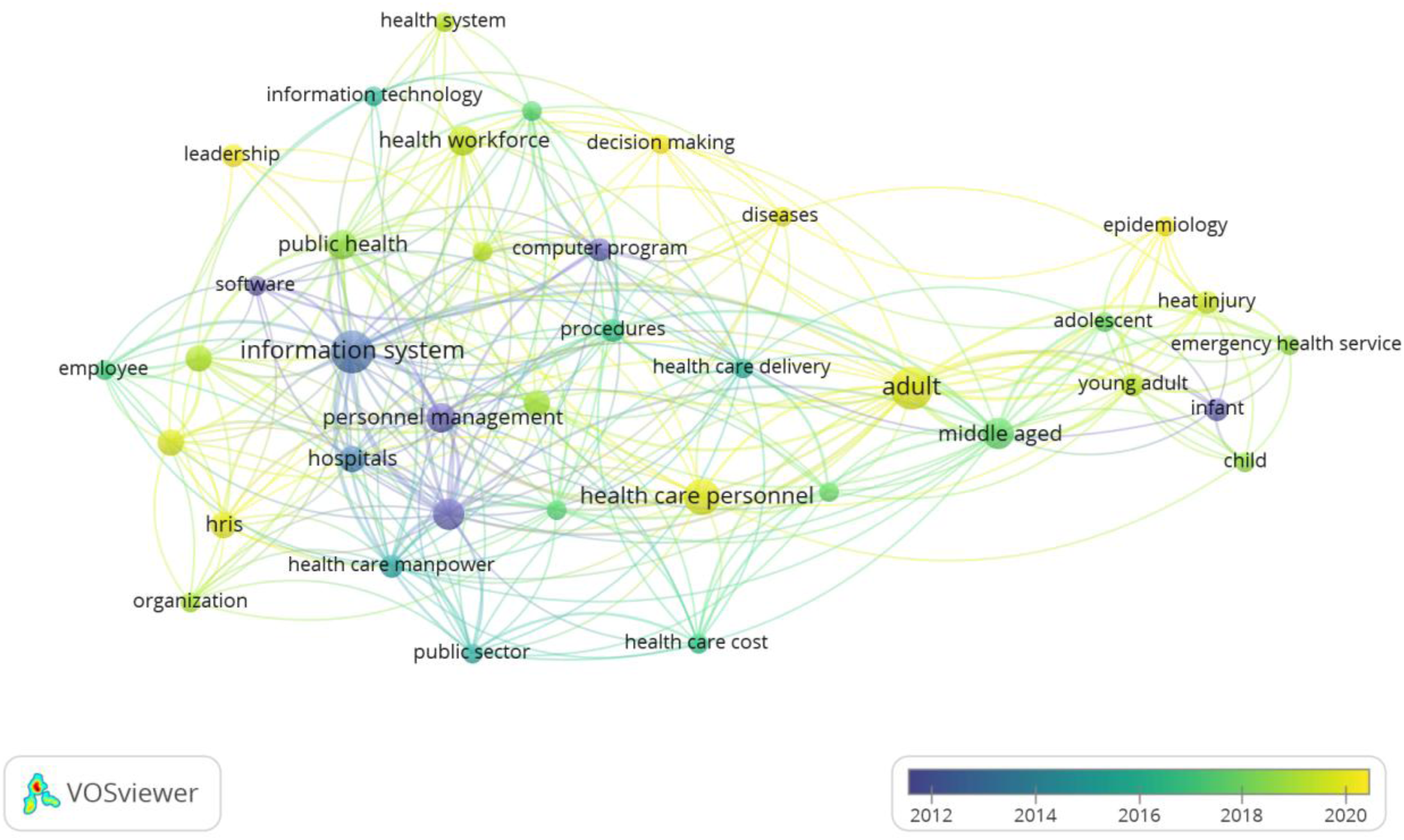
In the early phase of the research field (around 2012), dominant keywords included information system, software, personnel management, and infant, reflecting a focus on foundational technologies and basic workforce components. During the mid-development period (2016-2018), the emphasis shifted toward operational aspects, with keywords such as information technology, employees, procedures, middle-aged, and healthcare delivery gaining prominence. By 2020, the field demonstrated a more strategic and system-level orientation. Frequently occurring terms included HRIS, leadership, decision making, healthcare personnel, health workforce, health system, and epidemiology, indicating a growing interest in workforce optimization and health system integration. This temporal progression highlights the maturing trajectory of digital HRM research in healthcare, evolving from early-stage technology adoption to more complex discussions on strategic governance, system-wide planning, and real-time decision support. This evolution mirrors broader trends in healthcare digitalization, where the focus increasingly lies in leveraging integrated information systems to address immediate challenges while enhancing long-term organizational resilience. The appearance of leadership and system-level terms in later publication periods supports their identification as emerging themes grounded in temporal keyword patterns rather than post-hoc interpretation.
Keyword density visualization
As shown in Figure 5, the density visualization generated in VOSviewer provides insights into the concentration and popularity of specific keywords in the literature on digital human resource management (HRM) in healthcare. In this map, areas with higher keyword occurrence and co-occurrence are displayed in bright yellow, indicating hotspots of research attention, while less frequently mentioned terms appear in green to blue areas, suggesting emerging or peripheral topics. Keyword density visualization.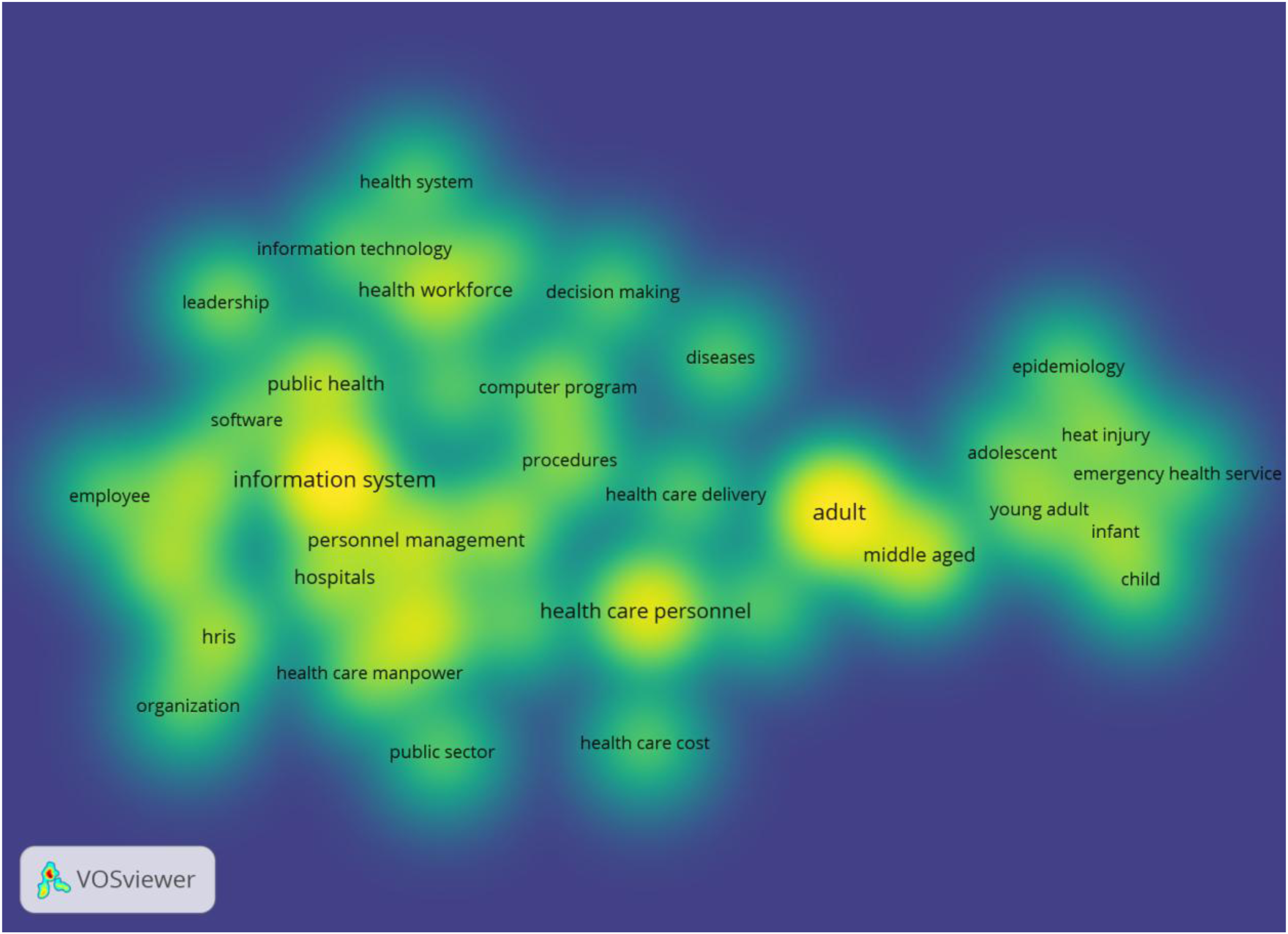
The bright yellow areas in the density map highlight the most frequently discussed terms, including information system, adult, healthcare personnel, personnel management, and middle-aged. Surrounding these, the moderately yellow areas feature terms such as software, public health, hospital, and HRIS, indicating important but slightly less dominant themes. As the color shifts toward green and blue, the map reveals a wider range of keywords, including leadership, decision making, disease, epidemiology, infant, child, adolescent, healthcare cost, organization, and public sector. Overall, the density map complements the overlay visualization by illustrating not only the temporal evolution of digital HRM research but also the relative maturity and thematic intensity of different areas. While foundational topics like personnel management and digital systems remain central, the growing density around leadership, public health, and population-specific themes signals a broadening and deepening of the field, pointing to emerging directions and opportunities for future research. Overall, the overlay and density visualizations distinguish well-established research streams, such as digital HR systems and personnel management, from emerging and comparatively underdeveloped areas, including leadership, governance, and population-specific workforce strategies. These latter themes appear with lower density but increasing temporal prominence, indicating areas of growing scholarly attention rather than fully consolidated research domains.
Citation-based analysis indicated that the most cited works, such as Tursunbayeva et al. (2016) and Alam et al. (2016), served as conceptual anchors shaping digital HRM discourse. The dominance of research from the U.S. and U.K. aligns with their early digital maturity, while increasing publications from LMICs demonstrate expanding inclusivity and policy relevance.
Discussion
This study suggests that research on digital HRM in healthcare is shifting from a predominantly technology-focused perspective toward a more strategic and governance-oriented approach. The increase in publications, particularly after 2018, reflects growing attention to digital HRM as part of broader efforts to strengthen health system resilience, a shift likely shaped in part by the COVID-19 pandemic. At the same time, the concentration of research in high-resource settings points to a need for more context-specific evidence from lower-resource settings. The emerging emphasis on leadership, strategic planning, and workforce management also indicates a broader rethinking of digital HRM, positioning it as a component of workforce governance and system coordination rather than solely a technical solution.
The growth in publications on digital HRM in healthcare aligns with the increasing demand for digital solutions to workforce management, particularly in response to global challenges like health worker shortages and the COVID-19 pandemic. 15 While this distribution underscores the relevance of digital HRM worldwide, it also highlights the predominance of high-resource settings in shaping the discourse. The U.S.’s leadership is consistent with earlier bibliometric studies, 8 while India’s growing output points to rising interest in digitized HR strategies within developing health systems. 16 Though the field is still maturing, 9 the international participation indicates its broadening scope. Expanding comparative and collaborative studies across regions could enhance the global applicability and transferability of digital HRM innovations.
The predominance of studies from high-income countries underscores a persistent digital divide. 17 Integrating HRM theories and digital transformation frameworks suggests that leadership capacity, institutional readiness, and governance quality are decisive for successful digital HRM implementation. 18 Future initiatives should prioritize inclusive digitalization strategies, particularly considering the population-specific keywords and the uneven geographic distribution of publications observed in this analysis. These interpretations are grounded in the bibliometric evidence, particularly the keyword co-occurrence, cluster structure, and density and overlay visualizations, which show leadership, governance, and institutional readiness appearing as lower-density but increasingly prominent themes over time. These patterns likely reflect contextual contingencies across health systems, including variations in digital maturity, regulatory frameworks, and workforce governance structures. Differences in data infrastructure, financing mechanisms, and regulatory oversight may shape both the adoption of digital HRM tools and the research emphasis observed across regions, highlighting that the identified trends should be interpreted in relation to local system contexts rather than as universally generalizable.
The observed evolution of digital HRM scholarship aligns with socio-technical systems theory, emphasizing that successful digital transformation depends on alignment between human and technological components. 19 Interpreting these empirically observed patterns through socio-technical systems theory and technology acceptance perspectives, used here as interpretive lenses rather than formal theoretical frameworks, helps explain why organizational adaptation and leadership engagement remain critical gaps despite technological advancement. Technologies such as artificial intelligence (AI) and machine learning (ML) are increasingly applied to workforce analytics, predictive scheduling, and performance evaluation, complementing traditional HRM tools. 20 The Technology Acceptance Model similarly explains differential uptake across healthcare organizations, where leadership support and perceived usefulness influence adoption. 21 Interpreting our results through these frameworks reveals that while technological tools are increasingly integrated, organizational adaptation and leadership engagement remain critical gaps.
Despite contributions from prominent institutions like the CDC and LSHTM, both with strong legacies in public and global health, publication counts per institution remain modest. This suggests the research is still dispersed and not yet centralized within dominant academic hubs. However, the presence of such institutions signals the strategic value of digital HRM for health systems strengthening, particularly through its role in managing national workforce strategies and large-scale health programs.22,23 The field could benefit from greater institutional coordination through dedicated research centers and collaborative networks.
International collaboration patterns, particularly between high-income countries (e.g., the U.S. and U.K.) and emerging economies (e.g., Brazil and India), reflect the field’s global importance. These partnerships suggest a growing trend of knowledge exchange between high-resource and developing health systems.16,23,24 Such transcontinental collaborations reinforce the universal relevance of digital workforce management, especially considering shared challenges like staffing shortages, data integration, and care coordination. Nonetheless, the limited participation from low-income countries reveals a geographical gap and underscores the need for more inclusive global research that reflects diverse health system realities. 9 Strengthening South-South collaboration and regional research networks may help broaden the perspective and applicability of digital HRM innovations.
The thematic clustering analysis further clarifies the field’s development. The red cluster (Cluster I) emphasizes technologies supporting frontline health professionals, particularly nurses and clinical leaders, to enhance coordination, efficiency, and care quality.11,25,26 This cluster bridges workforce and system-level considerations, reflecting how digital tools align staff with care processes and bolster decision-making. The green cluster (Cluster 2) includes research on the implementation and operation of digital HR platforms within healthcare institutions. Studies in this cluster focus on digital HR platforms related to strategic planning, performance monitoring, and administrative functions.27,28 The organizational lens suggests that researchers are not only studying individual tools but also how they fit into broader institutional HR strategies and infrastructures.29,30 In contrast, the blue cluster (Cluster 3) centers on population groups and healthcare delivery contexts. Rather than technology per se, this cluster highlights how digital HRM is used to manage services tailored to age groups and emergency settings. Research here explores how demographic variables influence workforce models and human resource allocation.31–33 The yellow cluster (Cluster 4) relates to policy, governance, and public sector HRM. With keywords like government, healthcare cost, healthcare delivery, healthcare planning, healthcare personnel, and public sector, this cluster emphasizes macro-level research on how digital tools are used in system-wide workforce planning. 34 The role of public institutions and government agencies is prominent, reflecting efforts to use digital HRM systems to support resource allocation, improve accountability, and achieve long-term planning goals in publicly funded healthcare environments. 33 Each cluster offers actionable insights for health workforce policy and management. Cluster 1 highlights how digital tools support frontline coordination; Cluster 2 underscores institutional digital readiness; Cluster 3 emphasizes demographic responsiveness in service delivery; and Cluster 4 integrates policy, governance, and system planning. Together, these clusters illustrate how digital HRM research informs the development of resilient, data-driven, and equity-focused health workforce systems.
From a managerial perspective, Cluster 1 and Cluster 2 highlight the importance of aligning digital HR tools with frontline workflows and institutional readiness, suggesting that healthcare leaders should prioritize change management, leadership engagement, and workforce training alongside technological investment. From a policy perspective, Cluster 4 underscores the role of governance and public-sector planning, indicating that policymakers can use digital HRM systems to support system-wide workforce allocation, accountability, and long-term capacity planning. Cluster 3 further suggests that digital workforce strategies should be tailored to population and service-context needs rather than relying on one-size-fits-all solutions.
Temporal keyword analysis shows a clear evolution. Early research around 2012 focused on foundational technologies and administrative digital systems, 35 with terms like infant pointing to early applications in pediatric care. 36 Between 2016 and 2018, the field began integrating these tools into daily operations, shifting focus toward employee functions and procedural workflows.10,37 Keywords like middle-aged and healthcare delivery reflect attention to population diversity and service outcomes. 38 By 2020, these keywords reflect a more holistic and policy-aligned view of digital HRM, suggesting that digital tools are being studied not only for operational support but also for their role in leadership, planning, and decision-making across entire health systems.33,39 The emergence of terms like epidemiology during this period also suggests a heightened awareness of public health crises, such as the COVID-19 pandemic, and the importance of HRM systems in ensuring workforce resilience and preparedness in such contexts.15,40
The keyword density visualization reinforces these trends. Bright yellow areas indicate concentrated attention on core operational topics, particularly the use of information systems for managing healthcare workers, especially those serving adult and middle-aged populations. 23 Keywords in moderately yellow areas, such as HRIS, software, hospital, and public health, underscore the foundational technologies and institutional contexts in which digital HRM operates.16,38 Though less dominant, their sustained presence signals their ongoing relevance in enabling digital functions. 41 Meanwhile, terms in green and blue areas reflect emerging, specialized interests, particularly in strategic, demographic, and policy-oriented dimensions.37,41 The inclusion of children and adolescents indicates a growing, though underexplored, interest in workforce strategies tailored to younger populations. 32 Similarly, the appearance of terms like healthcare cost and public sector reflects a broader focus on efficiency, governance, and system-level planning.33,42
Conceptually, this study offers an integrative bibliometric perspective on digital HRM in healthcare, framing digital transformation and workforce governance as interconnected domains. The analysis does not advance a formal theory but traces how technological, organizational, demographic, and policy-oriented themes evolve. The results suggest that leadership, governance, and population-specific workforce considerations function as emerging linking dimensions between operational HR systems and system-level workforce planning.
This bibliometric analysis offers several strengths. By combining performance analysis, science mapping, and temporal keyword evolution, the study provides a comprehensive overview of the development, focus areas, and collaborative patterns in digital HRM research within healthcare. The integration of cluster analysis and density visualization allows for nuanced insights into both the thematic structure and the maturity of research topics, identifying not only well-established areas but also emerging frontiers. Moreover, the inclusion of institutional and country-level perspectives highlights geographic trends and potential gaps in global research equity. However, the study also has limitations. It relies solely on data from the Scopus database, which, while extensive, may exclude relevant publications indexed elsewhere, such as Web of Science or regional databases. Additionally, the search terms and inclusion criteria, although carefully constructed, may have inadvertently excluded interdisciplinary studies that do not explicitly use digital HRM terminology. Finally, bibliometric methods inherently focus on quantifiable data (e.g., publication counts, citations) and do not assess the quality, methodological rigor, or practical impact of the research, which are crucial for evaluating the effectiveness of digital HRM interventions in diverse health systems.
Conclusion
This study provides a comprehensive bibliometric analysis of digital HRM in healthcare, mapping global publication trends, key contributors, thematic clusters, and emerging research directions. The findings highlight increasing scholarly attention since 2018 and point to an evolving research landscape that extends beyond technical applications toward broader organizational and system-level concerns. This study contributes to healthcare management literature by positioning digital HRM at the intersection of workforce governance and digital transformation. The identified themes (i.e., digital systems for clinical and workforce support, HRM infrastructure within organizations, demographic and service-specific contexts, public sector governance and planning) suggest that digital HRM is increasingly understood not only as a set of tools but as part of a wider transformation in how health workforces are coordinated, managed, and sustained.
From a practical perspective, these insights hold significant implications for healthcare managers, policymakers, and system planners. The integration of digital systems should be aligned not only with operational needs but also with strategic workforce planning and service delivery models. Policymakers can use these findings to guide investments in digital HRM tools that improve coordination, leadership, and long-term workforce sustainability, especially in the public sector and underserved regions.
Future research should focus on three high-priority areas: (1) leadership and governance, to identify factors driving the adoption and effectiveness of digital HRM; (2) equity and population-specific workforce strategies, to ensure inclusive digitalization; and (3) integration with national digital health systems, to enhance strategic planning and system-level coordination. Advancing these areas will strengthen the evidence base for resilient, data-driven, and sustainable health workforce management. Methodological rigor can be improved by triangulating bibliometric findings with tools such as Bibliometrix or CiteSpace and incorporating systematic reviews. Comparative analyses, evaluation of governance frameworks, and alignment with national digital health strategies are particularly important to ensure that digital HRM contributes effectively to resilient, equitable, and sustainable healthcare workforces.
Footnotes

Funding
The authors received no financial support for the research, authorship, and/or publication of this article.
Declaration of conflicting interests
The authors declared no potential conflicts of interest with respect to the research, authorship, and/or publication of this article.