







Abstract
This short article suggests a new reading of line 1 of 11Q29 on the basis of a new photograph and explores the implications of this reading.
11Q29 is preserved in a single small fragment. The text of lines 2 to 3 align with 1QS 7:18–19—but with the omission of two words—and thus the manuscript was given the label “11QFragment Related to Serekh ha-Yaḥad.” 1 Three lines of writing are visible on the fragment in PAM 44.007, but the writing on the first line is not legible and the writing in lines 2 and 3 is also difficult at some points. In the official DJD publication, the editors note that there are four or five letters on line 1, but “[a]ll that remains are the bottoms of downstrokes and base strokes.” 2 A recent infrared photograph allows the writing on line 1 to be read more confidently and the writing of lines 2 and 3 with more certainty, readings which have implications for the identity of the fragment and manuscript as a whole.
The fragment is transcribed in DJD 23 as:
]◦◦◦ ◦[1 ]ר̇וחו לב̇ג̇ו̊ד ̊ב[ 2 ם̊ בראי̊[שונה [3
1QS 7:18–19 contains a stipulation concerning traitors: והאיש אשר תזוע
These differences in such a small amount of text raise the question of whether this fragment is indeed to be identified with this part of the Serekh tradition. Tigchelaar has explored this question in some detail, noting other texts from the Scrolls with which this fragment might be linked. 3 The phrase רוחו לבגוד ב here in line 2 occurs at 1QS 7:23 (where the final word is ביחד), and thus one might link the fragment with that section instead. As Tigchelaar notes, however, “there is no correspondence [at 1QS 7:23] with the remains of 11Q29 line 3.” 4 Emphasizing that the omission of the phrase מיסוד היחד in line 2 “is comparable to the variants between 4QSb and 4QSd on one hand, and 1QS on the other,” the DJD editors take 1QS 7:18–19 as the better parallel. 5
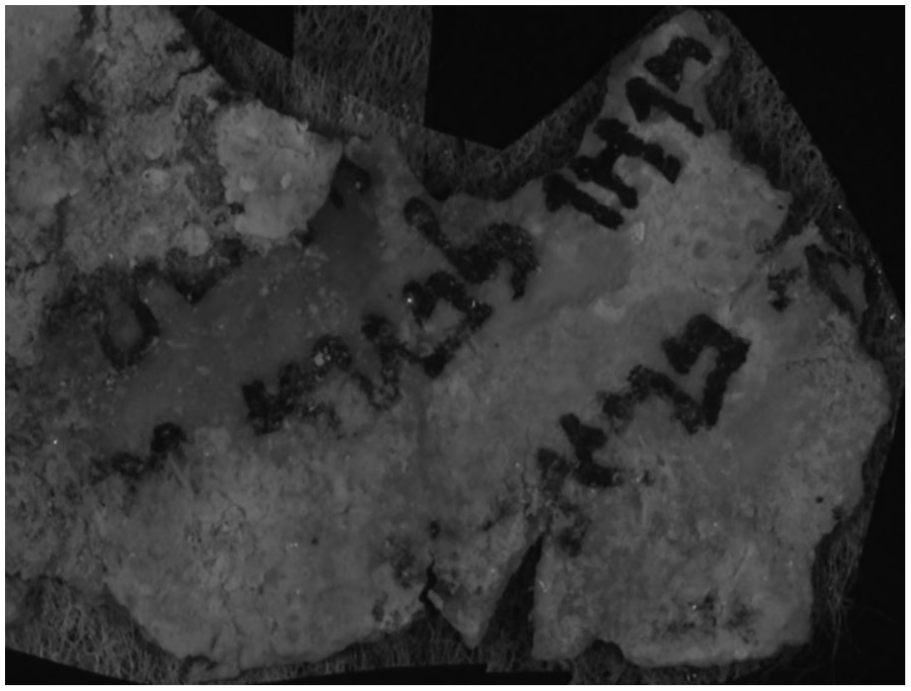
The recent photograph confirms the readings in lines 2 and 3, most notably those that are marked as questionable in the DJD transcription:
Courtesy of the Leon Levy Dead Sea Scrolls Digital Library; Israel Antiquities Authority, Photo: Shai Halevi.
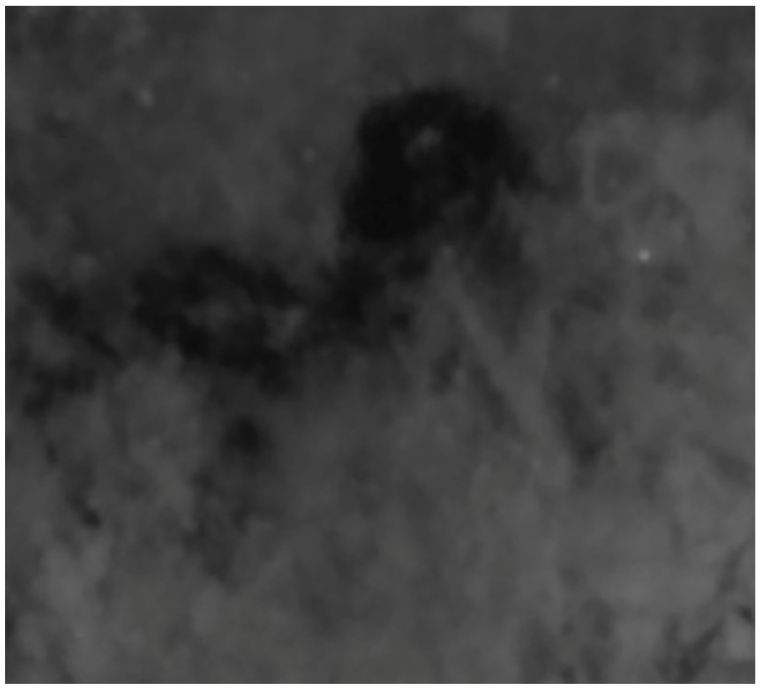
רוחו לבגוד is quite clear in line 2, as is ברא in the middle of line 3. The DJD editors note the difficulty in reading the final letter of line 2, as they see a “long stroke extending upwards above the left side of the crossbar,” which would suggest lamed. 6 A close up of the final letter of line 2 shows that this stroke does not, however, extend very far and is thus better read either as mem or, as the editors suggest, bet with “a larger, longer tick:” 7
Courtesy of the Leon Levy Dead Sea Scrolls Digital Library; Israel Antiquities Authority, Photo: Shai Halevi.
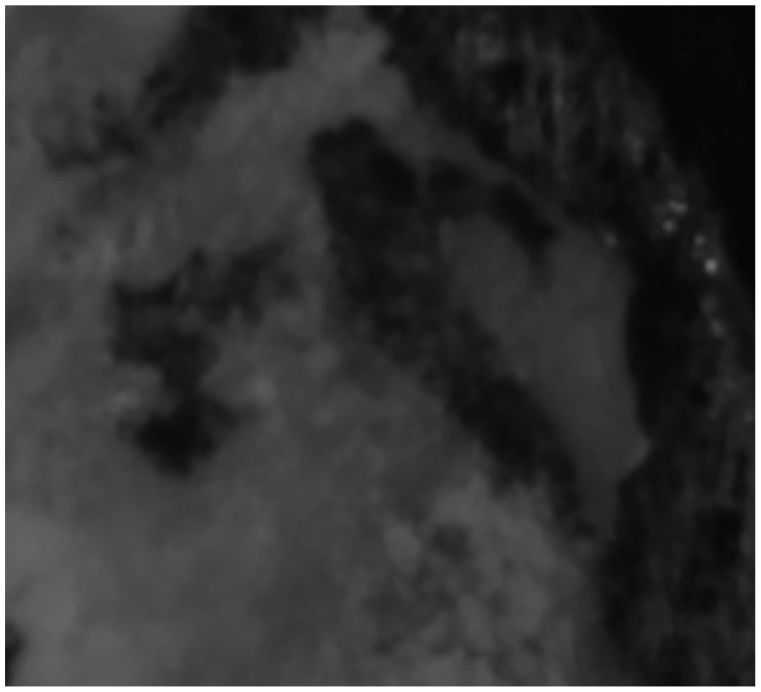
The initial letter of line 3 is clearly final mem with a crossbar extending to the left of the long vertical stroke:
Courtesy of the Leon Levy Dead Sea Scrolls Digital Library; Israel Antiquities Authority, Photo: Shai Halevi.
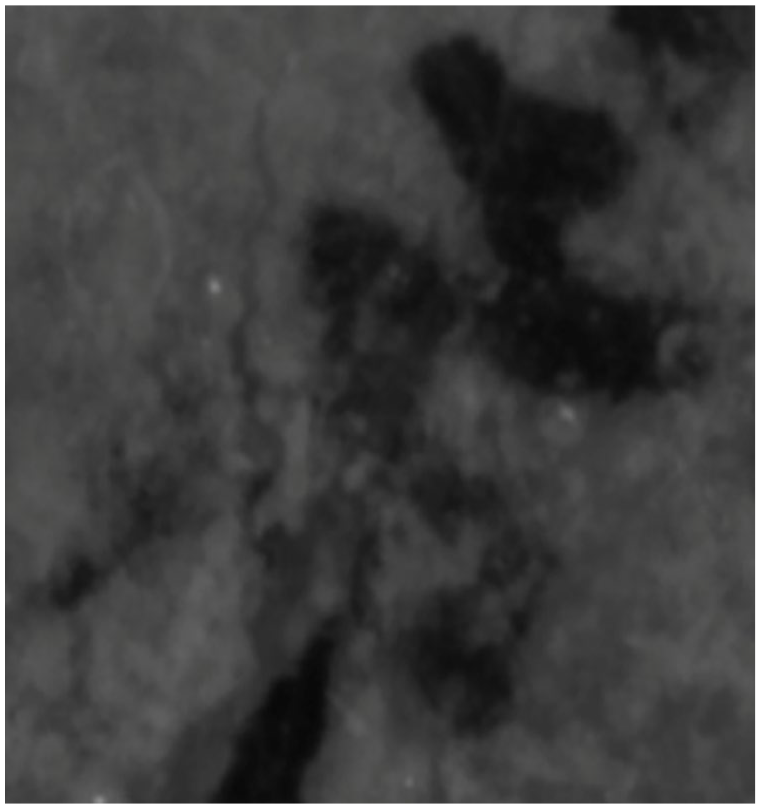
The editors’ suggestion of ברא̊י at the end of line 3 is also supported by the photo:
Courtesy of the Leon Levy Dead Sea Scrolls Digital Library; Israel Antiquities Authority, Photo: Shai Halevi.
The bottom of a vertical stroke is clearly visible here next to the left leg of aleph, and it seems that the left side of the triangular head of yodh is also visible, extending leftward, directly to the left of the top of the aleph. One can also make out the trace of a single letter on line 4, though it is not legible.
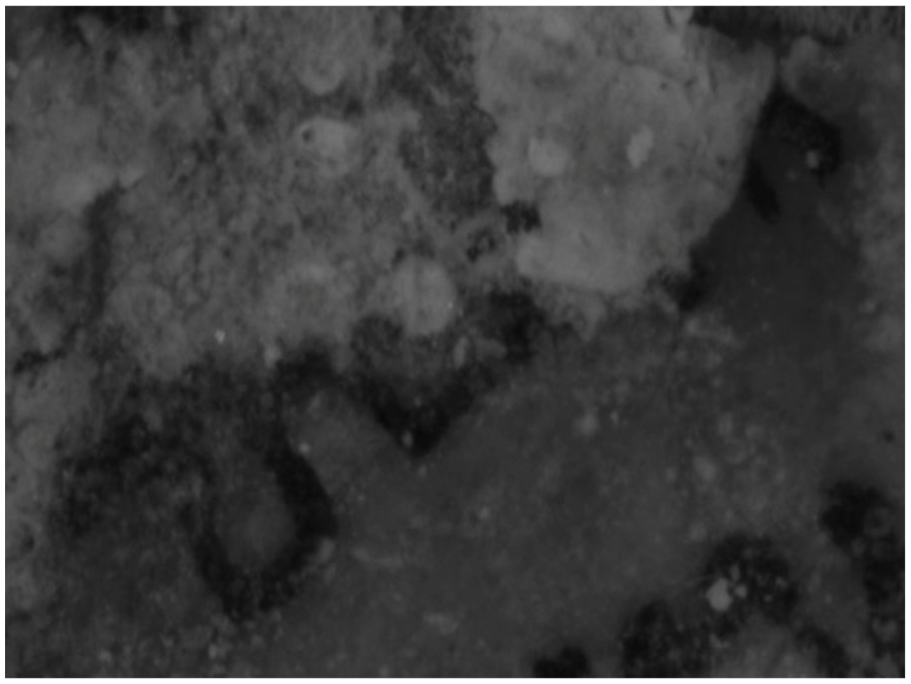
Most important is the new light that the photo sheds on the word in line 1:
Courtesy of the Leon Levy Dead Sea Scrolls Digital Library; Israel Antiquities Authority, Photo: Shai Halevi.
The bottom of final mem is clearly visible at the left, and one can even make out the top crossbar extending past the left-most vertical stroke. Another vertical stroke is visible to the right of this letter, and there seems to be a triangular head jutting toward the final mem. I thus suggest yodh. To the right of this letter is a clear horizontal base of bet, kaph, mem, nun or pe. Ṭet seems to be ruled out by the lack of an additional vertical stroke on the left side of the letter (only the stroke of the suggested yodh is visible). To the right of this letter, one can see the very bottom of a single vertical stroke jutting below the white area of damage. Finally, closest to the right edge of the fragment, there are two vertical strokes in relatively close proximity, representing the bottom half of one or two letters. The tight spacing suggests a single he or ḥet rather than two of waw/yodh/zayin/etc., although waw followed by lamed seems possible given how thin the stroke on the left is. Taken together, these features indicate a five- or six-letter word beginning with he, ḥet, or waw-lamed, and ending with yodh-mem.
Assuming that this fragment does indeed preserve some form of the Serekh, one can work backwards from the preserved text in order to locate a possible parallel for these traces. Tigchelaar reconstructs lines 2 and 3 of 11Q29 as follows on the basis of 1QS 7:18–19:
8
והאיש אשר תזוע ]רוחו לבגוד ב[אמת וללכת בשרירות לבו אם 2 ישוב ונענש שתי שני]ם בראי[שונה ולוא יגע בטהרת הרבים 3
These lines are around 50 letter-spaces in length. Counting backwards 50 letter-spaces in 1QS 7:18 from לבגוד in line 2 (as this lies directly below the first traces on line 1) does not yield an obvious parallel. The only word ending in ים- anywhere near this point is חדשים at 1QS 7:18. This is too close to constitute a parallel if the texts were even relatively similar, and, more important, the traces do not support šin as the third letter. Working backward, the closest candidates for a parallel lie at 1QS 7:16, which reads והבדילהו שנה אחת מטהרת הרבים ונענש ואיש ברבים ילך רכיל לשלח הואה מאתם. The word ברבים in the middle of the line is better, but the initial bet does not fit the strokes of the first letter at 11Q29 1. הרבים earlier in the line, however, aligns very well with the traces on the fragment. In this case, the first strokes on the line would represent the bottom half of he, which are followed by the very bottom of reš. The horizontal base of the third-to-last letter is easily read as the bottom of bet, followed by the proposed yodh-mem. If the occurrence of the word in 1QS 7:16 is understood as the proper parallel, it is clear that much of the 1QS text was missing between הרבים in line 1 and רוחו in line 2. There are 174 letters (including spaces) in 1QS between these two words, and thus 11Q29 must have lacked a substantial portion of 1QS 7:16b–18a for these two words to sit in consecutive lines of about 50 letter-spaces in length.
An examination of 1QS 7:16b–18a, however, shows that there may be good reason to suppose that at least some of this material was lacking in 11Q29. To be specific, it is clear from 11Q29 2 that this fragment lacked the phrase מיסוד היחד. A good portion of the material in 1QS 7:16b–18a consists of two consecutive laws related to this “foundation of the community.” 1QS 7:17 reads והאיש אשר ילון על יסוד היחד ישלחהו ולוא ישוב ואם על רעהו ילון אשר לוא במשפט ונענש ששה חודשים (“Anyone who grumbles against the foundation of the community, they shall send him away and he shall not return. But if it is against his neighbor that he grumbles without justification, he shall be punished for six months”). Both the syntax and the topic of the two stipulations make clear that they are linked with one another, and the phrase יסוד היחד is a core component of the first. Given that this manuscript clearly did not include this phrase in its parallel to 1QS 7:18 immediately following this, it would not be surprising if these two laws, concerned primarily with this same phrase, were also absent. This redactional tendency involving the addition of key terminology is found frequently in the Serekh tradition. 9
The omission of this material brings the interval closer to the expected 50 letter-space mark, but it does not solve the problem completely. Even without these two laws, we are left with 80 letters between the beginning of לבגוד in 1QS 7:18 and the beginning of הרבים in 1QS 7:16. This could be accounted for by aligning the word in line 1 with a variant form of ברבים (בתוך הרבים?) in 1QS 7:16 instead, which would bring it to a 60-letter interval. Alternatively, the stipulation regarding slander in 7:16b–17a could be reworded in many different ways in order to shorten it (omitting ולוא ישוב עוד at 1QS 7:17, e.g. would bring it to 66 letter-spaces). At the same time, caution should be taken when trying to align the text with 1QS, given the fragment’s small size and its other observable variation from S. הרבים is a very common word in the Scrolls (57 full or partially reconstructed occurrences), not to mention the other words that could likewise fit the traces in line 1.
This new reading in line 1 may also reopen the question of whether 1QS 7:23 is the better parallel for the fragment since רוחו לבגוד ביחד occurs there as well. The word הרבים occurs twice before this in 1QS 7:20 and 7:21, at intervals of 170 and 114 letter-spaces before לבגוד in 1QS 7:23, respectively. This part of the text is heavily corrected, is not easily broken up in order to account for a proposed omission, and, as noted above, does not have any clear parallel for the text of 11Q29 3. These factors, taken together, make an identification of the lines with 1QS 7:23 difficult.
Altogether it seems most likely that 11Q29 preserves the text of 1QS 7:16–19 with some omissions. The phrase מיסוד היחד is clearly lacking in line 2. This key term is the topic of two stipulations in 1QS 7:17–18, and thus it seems reasonable to conclude that these were absent as well. The omission of these two stipulations brings the distance between lines 1 and 2 into a more reasonable interval that might preserve the alignment of the text on consecutive lines. On the basis of the new photo, 11Q29 may be transcribed as:
]ים̇ב̊ר̊ה̊[1 ]רוחו לבגוד ̊ב[ 2 שונה]ברא̊י ם̇[ 3