







Abstract
This article examines an early Armenian parabiblical text concerning Noah preserved in manuscript M2679 (981 CE), the oldest surviving paper manuscript in Armenian. The text provides a distinctive interpretation of the biblical name-midrash on Noah found in Genesis 5:29, demonstrating how Armenian exegetical traditions both preserved and transformed biblical source material. In addition to presenting a comparative analysis of the Armenian text and its reading of its biblical source, this study reveals significant hermeneutical aspects of early medieval Armenian biblical interpretation.
Keywords
Introduction
The transmission and interpretation of biblical and parabiblical traditions in early Armenian Christianity present a complex landscape of preservation, adaptation and conceptual innovation. One early witness to this process is manuscript M2679, a Miscellany, clearly dated to 981 CE. It is the oldest surviving paper manuscript in Armenian and preserves a variety of parabiblical materials, among other exegetical and homiletic texts. 1 It is an early direct witness to Armenian parabiblical traditions, only preceded in precise dating by apocryphal texts and traditions preserved in known and dated writers, such as the tenth-century historian Uxtanēs. 2 Within this codex, M2679, lies a brief but conceptually sophisticated text titled, ‘Concerning Noah’ (Վասն Նոյի), which presents a distinctive Armenian interpretation of the biblical name-midrash 3 on Noah found in Genesis 5:29.
The Armenian connection with Noah was rooted in the very identification of Mt. Masis (to give it its ancient name) as Mount Ararat (Gen 8:4) 4 and in the view that the Armenians’ eponymous ancestors were direct descendants of Japheth. 5 Thus, the biblical Noah story became deeply rooted among them. Sites around Mt. Ararat were identified with various incidents in the Noah stories, relics of the Ark were claimed to have been found on the mountain itself and some are revered to this day in a chapel in the Mother Church in Etchmiadzin. 6
Here we examine this early Armenian text called ‘Concerning Noah’ and its continuities and innovations vis-à-vis its biblical source material. This document provides a parade example of medieval Armenian biblical interpretation. From this investigation, it is found that while the Armenian tradition preserves certain core biblical narrative elements, it fundamentally reinterprets the significance of Noah’s name and mission, transforming the biblical promise of relief from agricultural labour, decreed upon human men by the curse of Adam, into a prophetic declaration of divine judgement and spiritual purification.
The biblical source and its Armenian context
The biblical foundation for our text lies in Genesis 5:29, where Lamech explains his son Noah’s name with the following words: ‘Out of the ground which the LORD has cursed this one shall bring us relief from our work and from the toil of our hands’. The Armenian Bible of 1805 7 renders this as: եւ անուանեաց զանուն նորա Նո՛յ. ասէ՝Սա հանգուսցէ զմեզ ի գործոց մերոց եւ ի տրտմութեանց ձեռաց մերոց, 8 եւ յերկրէ զոր անէծ Տէր Աստուած ‘And he called his name Noah: he said, “This one will give us repose from our works and from the sorrows of our hands, and from the earth which the Lord God cursed”’.
The Armenian parabiblical text transmitted by M2679 cites this biblical source more or less word-for-word. However, upon this conservative textual foundation, Concerning Noah constructs a radical reinterpretation of the passage’s meaning.
Text and translation
/ fol. 30r / Վասն Նոյի Concerning Noah
l. 25 Եւ ընդէ՞ր արդեւք զսա միայն որդւոյդ անուամբ յորջորջեաց` իսկ վասն այղոցն ամենեցուն պարզաբար ասաց թե ծնան: զորմէ ընդդէմ իմն մարգարէանայ հայրն. «սա» ասէ «հանգուսցէ զմեզ ի գործոց եւ ի տրտմութենէ ձեռաց, եւ յերկրէ / fol. 30v 1/ զոր անէծ Տէր Աստուած». որ եղեւ ոչ հանգիստ, այլ ջնջումն որ ինչ միանգամ ի վերայ երկրի՝
1/ And why, indeed, did it (Scripture) designate this one person alone by the noun ‘son’, but concerning all the others, it simply said that they were born? 9 His father is prophesying against something with respect to him. ‘He’ he said, ‘will give us repose from the works and the sorrows of hands, and from the earth that the Lord God cursed’, 10 which became not repose but annihilation of all that 11 is upon the earth.
2/ ինձ թուի, հանգուցանելն դադարեցուցանել, իսկ դադարեցուցանել զամպարշտութիւնս եւ զչարիս սատակմամբ մարդկան 5/ երկրագործաց դարու երկրոդի, քանզի գեղեցկաբար ասաց թե ի գործոց մերոց, որ է յանաւրէնութեանց եւ ի տրտմութենէ ձեռաց` որովք կատարեմք զպղծութիւնս:
2/ It seems to me that the ‘giving repose’ (means) ‘to make cease’, indeed, to make the impieties and evils cease, through the slaughter of agriculturalist humans 12 of the second era, 13 because it 14 said beautifully, ‘from our works’, which is from lawlessnesses and from sorrows of hands by means of which we carry out abominations.
3/ բայց արդարեւ հանգչին ըստ այսմ մարգարէութեան ոչ ամենեքեան, այղ կատարեալքն յառաքինութեան 10/ ոգիք, յորժամ չարիք իբրեւ հեղեղաւ ջնջեալ մաքրին, իբր առ Նոյիւ մոլեալքն ի չարիս, իսկ որդւոյդ անուամբ մեծարեաց զնա գիր իբրեւ զյայտնի եւ զնշանաւոր եւ զարժանի ժառանգ հայրենականացն ժառանգութեան։
3/ But, indeed, they find repose according to this prophecy, not all of them, but the souls perfect in virtue, when evil ones, having been annihilated as by a flood, are purged, like those who, in Noah’s days, were frenzied 15 for evil. Indeed, Scripture honoured him with this noun, ‘son’, as a renowned, notable and worthy heir of (his) paternal inheritance.
Hermeneutical innovation in ‘concerning Noah’
The problem of prophetic fulfilment
The Armenian text begins with an exegetical question derived from close consideration of the biblical source: why does Scripture specifically call Noah ‘son’ when the genealogical formula employed for Adam’s other descendants simply states they were ‘born’? 16 The Armenian interpreter’s close attention to scriptural language thus serves as an entry point for exegetical reflection.
The author identifies this linguistic ‘hook’ in the text as being indicative of prophetic significance, stating that ‘His father is prophesying against something with respect to him’. This reformulation transforms Lamech’s naming of Noah from a simple expression of hope into a prophetic pronouncement with eschatological implications.
Reinterpretation of ‘repose’ and divine judgement
The most significant departure from the usual interpretation occurs in the Armenian text’s understanding of the promised ‘repose’ (հանգուցանել). The biblical source is generally understood to speak of relief from the toil of the agricultural labour of growing food from the cursed ground, as is explicit in Gen 3:17–19 and may also be inferred from Gen 4:11–12a. The Armenian interpretation, however, radically redefines this concept: ‘It seems to me’, the author says, ‘that the “giving repose” (means) “to make cease”, indeed, to make the impieties and the evils cease, through the slaughter of agriculturalists of the second era’.
This interpretation introduces several exegetical points at which it goes quite beyond the common understanding of the biblical source:
a.
b.
c.
The Cain-Abel typology
The Armenian text introduces an interpretive element entirely absent from the usual reading of the biblical source: the identification of the pre-flood generation as ‘agriculturalists of the second era.’ 19 This reflects a point of view that connects the conduct of the wicked agriculturalists that brought about the flood with the primordial opposition between Cain (the agriculturalist and the first wicked person) and Abel (the herder, who was viewed positively). 20 This evaluation of the agriculturalists and the herders may also be inferred from the cursing of the earth in the context of God’s curse of Adam and was discussed above in connection with Noah’s name-midrash. On this basis, then, our text views the flood as a divine judgement against the Cain-like, inferior agriculturalists.
What is not in this Noah text?
The paragraphs at the beginning of this essay presented the two chief reasons for the importance the Armenians assigned to the Noah narrative. First, this story asserted the Armenians’ direct descent from Noah, by way of Japheth. This line of descent dated their national roots back to primordial times and permitted the Armenian Church to claim particular distinction. In addition, according to the Bible, Mt. Ararat, traditionally located in the heart of historical Armenia, was where Noah descended from the ark. Thus, Armenia was viewed as the centre from which, after the flood, the repopulation of the world commenced. Many later Noah texts highlight these specific elements and their parabiblical embroideries, including the Japhethite descent of the Armenians and prominent geographical features of central Armenia that were connected to the particular events of Noah’s descent from the ark. Thus, they stressed the Armenians’ early biblical roots. 21 Notably, these key Armenian traditions are barely mentioned in ‘Concerning Noah’, the work preserved in manuscript M2679. Instead of dwelling on these narrative and topographical elements, ‘Concerning Noah’ employs a prophetic and moral interpretative strategy which places total emphasis on Noah’s representation of the renewal of mankind, aspiring to live without the ‘toil’ of sin and evil-doing.
Textual and manuscript context
The preservation of this text in manuscript M2679 provides insights into the circulation, and perhaps into the authority, of parabiblical traditions in early medieval Armenia. The manuscript contains religious texts, including a number that relate to, supplement and expand upon biblical history. In turn, that suggests that, together with other writings, parabiblical narratives and interpretations were considered significant supplements to biblical revelation, not just marginal curiosities. 22
The text in M2679 that we are discussing is embedded within commentary material attributed to Andrew of Crete, but it is clearly distinguished from that commentary by a title at its start and a coronis at its conclusion. These markers indicate the boundary between patristic commentary and what appears to be indigenous Armenian interpretation. This manuscript context suggests that early Armenian biblical interpretation operated within a framework that valued both traditional exegetical authorities and innovative traditions.
Comparative analysis: Biblical source vs Armenian interpretation
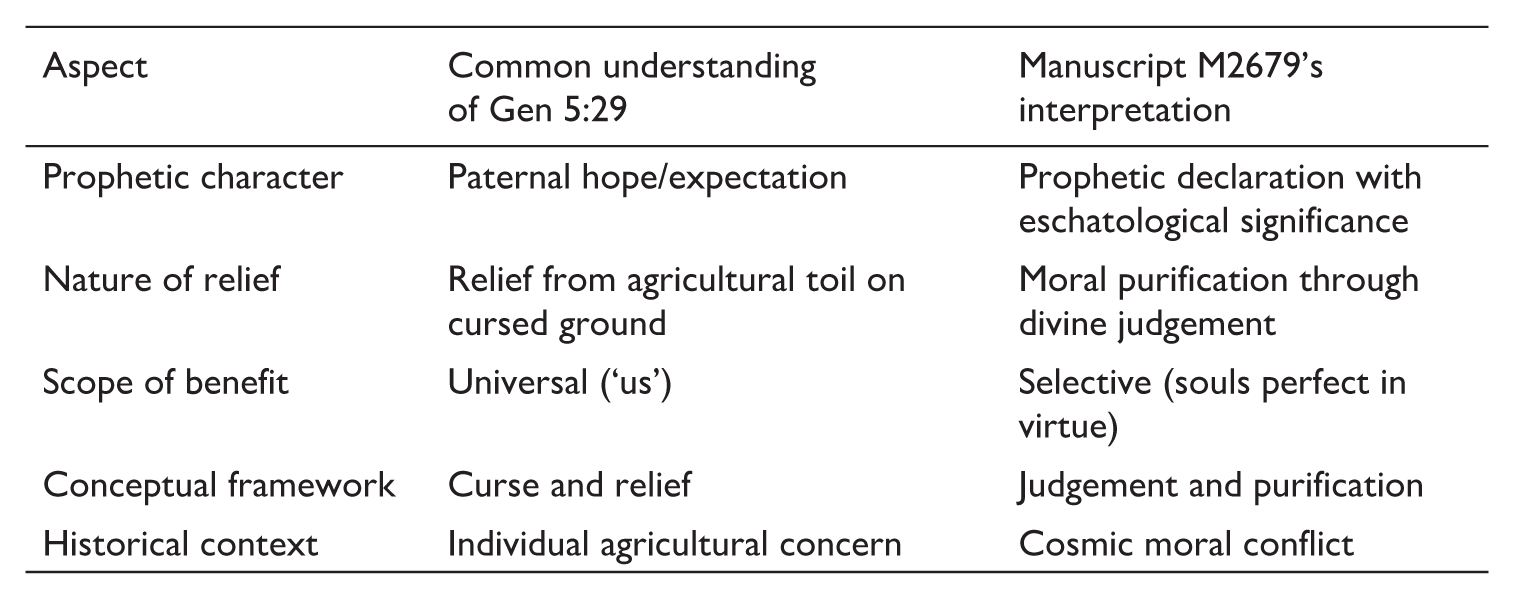
Theological significance and innovation
The Armenian text’s interpretation of Noah’s name-midrash represents a development that transforms the biblical narrative’s more apparent focus from agricultural relief to future judgement. These conceptual innovations demonstrate how early Armenian biblical interpretation engaged creatively with biblical source material to address the nation’s Christian ethos.
Conclusion
The Armenian text, ‘Concerning Noah’, preserved in manuscript M2679, represents a significant witness to early medieval Armenian biblical interpretation. While maintaining textual fidelity to its biblical source in Gen 5:29, the Armenian interpretation demonstrates sophisticated hermeneutical innovation in its reinterpretation of Noah’s prophetic significance. The relief from the agricultural burden becomes the cleansing of the earth from the wicked.
The analysis of this text demonstrates that early Armenian parabiblical traditions represent neither simple preservation nor wholesale innovation, but rather a complex process of interpretive engagement that, honouring biblical authority, expanded its scope, while addressing contemporary moral and religious issues.
Analysis of the exegetical tradition preserved in M2679 advances our understanding of early Armenian biblical interpretation within the larger history of broadly accepted biblical exegesis. Strikingly, as we observed, the document does not address the ark, Mt. Ararat or other Armenian national traditions, thus contrasting with its contemporary telling of the same events by Uxtanēs. 23
Footnotes
Acknowledgements
I am much indebted to Matthew Wilson for his incisive reading of this article that substantially clarified several issues in it. The two reviewers made some helpful remarks of which account has been taken, with thanks.
Funding
The author received no financial support for the research, authorship, and/or publication of this article.
Declaration of conflicting interests
The author declared no potential conflicts of interest with respect to the research, authorship, and/or publication of this article.