Horseradish peroxidaze (HRP)- or N,N′-bis(salicylidene)ethylenediamineiron(III)-catalyzed polymerizations of 4-(4-phenylaminophenylamino)phenol (monomer-1) and 4-[4-(4-phenylaminophenylamino)phenylamino]phenol (monomer-2) caused oxidative coupling at the hydroxyphenyl group to yield polyphenols (PPs) with pendant oligoaniline (OAN) groups. UV-vis measurements suggested that the OAN pendant groups of the polymers were oxidized in air, resulting in the formation of quinoid structures, which were converted into benzonoid structures by treatment with hydrazine monohydrate. The polymers were electrochemically oxidized in solution.
Poly(phenol)s (PPs) have many desirable properties for engineering plastics; however, the resin requires the use of toxic formaldehyde. Enzymatic polymerization using horseradish peroxidaze (HRP) can successfully synthesize PPs with more facile reaction procedures and has fewer harmful effects on the environment as than other reported synthetic methods.1–4 Additionally, HRP-catalyzed polymerization has been applied to obtain functional PPs.5–16 The present authors previously reported the synthesis of PPs with pendant ferrocenophanes, fluorescent aluminum complexes, or oligophenylene groups via HRP-catalyzed polymerization.10,15,16
Oligoanilines (OANs) have been studied as model compounds for polyanilines because of their good electroactivity and excellent stability in air.17 Several polymers containing OAN pendant groups have been synthesized by the reaction of polymers featuring reactive sites with reactants containing an OAN group.17,18 Polymers with OAN pendant groups showed unique optical and electrochemical properties.18 However, the repeating units of these polymers do not always feature OAN pendant groups, because of incomplete polymer reactions. HRP-catalyzed polymerization of phenols with OAN groups is a promising method to obtain PPs with OAN pendant groups in every structural unit. For this reason, HRP-catalyzed polymerization of phenols substituted with OANs was performed. To the best of the authors’ knowledge, there has been no report on PPs containing OAN pendant groups. An investigation of the chemical properties of such PPs will afford information that would be useful for the development of new functional materials. In this study, 4-(4-phenylaminophenylamino)phenol (monomer-1) and 4-[4-(4-phenylaminophenylamino)phenylamino]phenol (monomer-2) were synthesized and their HRP- or N,N′-bis(salicylidene)ethylenediamineiron(III)-catalyzed polymerizations were conducted. It has been previously reported that N,N′-bis(salicylidene)ethylenediamineiron(III) is suitable as a catalyst for the oxidation polymerization of phenols.19
Herein, we report the synthesis of phenols with OAN groups and their HRP- and Fe(III)-complex-catalyzed polymerizations to yield PPs containing OAN pendant groups. The structures and optical and electrochemical properties of the resultant PPs are also discussed.
Experimental section
Materials and measurements
Chemicals were purchased and used without further purification. Solvents were purified by distillation and stored under nitrogen atmosphere.
Microanalysis of C, H, and N was carried out with a Yanagimoto Type MT-5 CHN autocorder. Gel permeation chromatography (GPC) analyses were carried out by a Toso HLC 8020 with polystyrene gel columns (TSKgel G2000HHR and TSKgel GMHHR-M) using a DMF solution of LiBr (0.006 mol L−1) as an eluent with RI and UV detectors and a Jasco 830 refractometer with polystyrene gel columns (K-803 and K-804) using chloroform as an eluent with a RI detector. Infrared and NMR spectra were recorded on a JASCO FT/IR-410 PLUS spectrophotometer and a JEOL AL-400 spectrometer, respectively. UV-vis spectra were obtained on a JASCO V-560 spectrometer. Cyclic voltammetry (CV) of the polymers was conducted in a dimethyl sulfoxide (DMSO) solution containing 0.10 mol L−1 [Et4N]BF4 with a BAS 100B.
Synthesis of monomer-1
A tetrahydrofuran (THF) solution (50 mL) of hydroquinone (0.66 g, 6.0 mmol) and titanium tetraisopropoxide (4.26 g, 10 mmol) was added to a THF solution (40 mL) of 4-aminophenylaniline (0.92 g, 5.0 mmol). After the reaction solution was stirred at 70 °C for 30 h, precipitate from the solution was filtered off and the solvent in filtrate was removed in vacuo. The resulting solid was purified by silica gel column chromatography (eluent = ethyl acetate/hexane (v/v = 1/3)). The solvents were removed in vacuo and resulting solid was dried in vacuo to give monomer-1 as a blue powder (0.21 g, 15%). 1H-NMR (400 MHz, DMSO-d6): δ 8.86 (s, 1H), 7.69 (s, 1H), 7.43 (s, 1H), 7.11 (t, J = 8.4 Hz, 2H), 6.93 (d, J = 8.8 Hz, 2H), 6.85 (t, J = 8.0 Hz, 6H), 6.64 (d, J = 8.4 Hz, 3H). Anal calcd. for C18H16N2O: C, 78.24; H, 5.84; N, 10.14. Found: C, 78.15; H, 5.56; N, 10.25.
Synthesis of monomer-2
An N,N-dimethylformamide (DMF) solution (10 mL) of 4-aminobiphenylamine (2.3 g, 13 mmol) and 4-hydroxydiphenylamine (2.3 g, 13 mmol) was added to a mixture of DMF (20 mL), hydrochloric acid (16 mL), and water (155 mL). After ammonium persulfate (2.9 g, 13 mmol) was added to the solution at −10 to −5 °C, the reaction solution was stirred at the temperature for 5 h. The precipitate from the reaction mixture was collected by filtration and dried in vacuo to give blue solid, which was added to hydrazine monohydrate (5 mL). After the reaction mixture was stirred at room temperature for 12 h, hydrazine was removed in vacuo to give blue solid, which was dissolved in DMF (1 mL). The DMF solution was poured into water (300 mL) and the resulting precipitate was collected by filtration and dried in vacuo to give monomer-2 as a blue powder (2.2 g, 49%). 1H-NMR (400 MHz, DMSO-d6): δ 8.80 (s, 1H), 7.70 (s, 1H), 7.49 (s, 1H), 7.33 (s, 1H), 7.12 (t, J = 8.0 Hz, 2H), 6.95 (d, J = 8.8 Hz, 2H), 6.86–6.89 (m, 14H), 6.83 (d, J = 7.6 Hz, 2H), 6.64 (d, J = 8.4 Hz, 3H). Anal calcd. for C24H21N3O: C, 78.45; H, 5.76; N, 11.44. Found: C, 78.35; H, 5.89; N, 11.26.
Synthesis of polymer-1(HRP)
Monomer-1 (0.17 g, 0.60 mmol) and HRP (2.3 mg, 1000 units) purchased from Sigma Chemical Co. in a mixture of dimethyl sulfoxide (35 mL) and an aqueous phosphate buffer solution (pH 6.9, 15 mL) were placed in a round-bottomed flask. To the mixture, 500 µL of 35% hydrogen peroxide was added dropwise (less than 0.5 mmol H2O2 at each time) over 3 h. After the reaction mixture was stirred at room temperature for 24 h, the solvent was removed in vacuo. The resulting solid was washed with water, dried in vacuo, and reprecipitated from ether. The precipitate was collected by filtration and added to hydrazine monohydrate (5 mL). After the reaction mixture was stirred at room temperature for 12 h, hydrazine was removed in vacuo to give polymer-1(HRP) as a dark brown solid (0.078 g, 47%). 1H-NMR (400 MHz, DMSO-d6): δ 6.79-7.25 (br). Anal calcd. for (C18H14N2O)n: C, 78.81; H, 5.14; N, 10.21. Found: C, 78.57; H, 4.91; N, 9.88.
Synthesis of polymer-2(HRP)
Polymer-2(HRP) was synthesized in an analogous method to polymer-1(HRP). 1H-NMR (400 MHz, DMSO-d6): δ 6.68–7.12 (br). Anal calcd. for (C24H19N3O)n: C, 78.88; H, 5.24; N, 11.50. Found: C, 78.60; H, 5.26; N, 10.23.
Synthesis of polymer-1(Fe)
Monomer-1 (0.28 g, 1.0 mmol) and N,N′-bis(salicylidene)ethylenediamineiron (III) (0.036 g, 0.11 mmol) in DMF (5 mL) were placed in a round-bottomed flask. To the mixture, 500 µL of 35% hydrogen peroxide was added dropwise (less than 0.5 mmol H2O2 at each time) over 3 h. After the reaction mixture was stirred at room temperature for 24 h, the solvent was removed in vacuo. The resulting solid was washed with water, dried in vacuo, and added to hydrazine monohydrate (5 mL). After the reaction mixture was stirred at room temperature for 12 h, hydrazine was removed in vacuo to give polymer-1(Fe) as a dark brown solid (0.26 g, 94%). 1H-NMR (400 MHz, DMSO-d6): δ 6.70–7.25 (br). Anal calcd. for (C18H14N2O)n: C, 78.81; H, 5.14; N, 10.21. Found: C, 78.59; H, 5,09; N, 0.89.
Synthesis of polymer-2(Fe)
Polymer-2(HRP) was synthesized in an analogous method to polymer-1(Fe). 1H-NMR (400 MHz, DMSO-d6): δ 6.69–7.14 (br). Anal calcd. for (C24H19N3O)n: C, 78.88; H, 5.24; N, 11.50. Found: C, 79.21; H, 4.86; N, 11.13.
Synthesis of polymer-1OAc
Acetate anhydrate (0.5 mL) was added to a pyridine (1 mL) solution of polymer-1(HRP) (0.15 g). The reaction solution was stirred at 100 °C for 1 h and reprecipitated from ether (200 mL). The precipitate was collected by filtration and dried in vacuo to give polymer-1OAc as a black powder (0.13 g, 85%). 1H NMR (400 MHz, DMSO-d6): δ 7.00-7.74 (br, 13H), 1.78 (s, 0.50H).
Synthesis of polymer-2OAc
Polymer-2OAc was synthesized in an analogous method to polymer-1OAc. 1H-NMR (400 MHz, DMSO-d6): δ 6.72-7.30 (br, 18H), 1.75 (s, 0.49H).
Results and discussion
Synthesis of monomers and polymers
The reactions of 4-aminophenylaniline with p-hydroquinone and 4-hydroxyphenylaniline yielded monomer-1 and monomer-2, respectively (Scheme 1).
Synthesis of monomers.
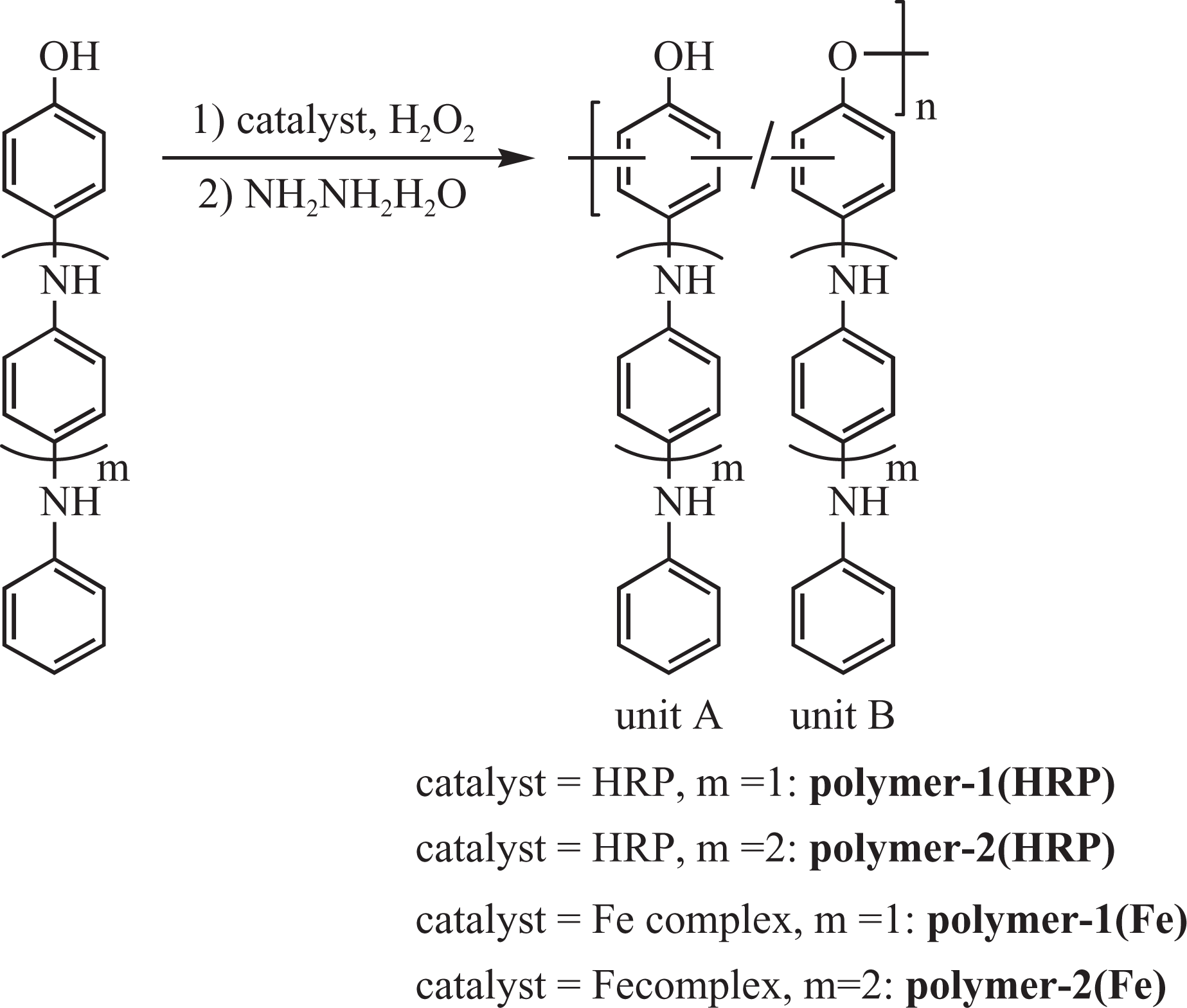
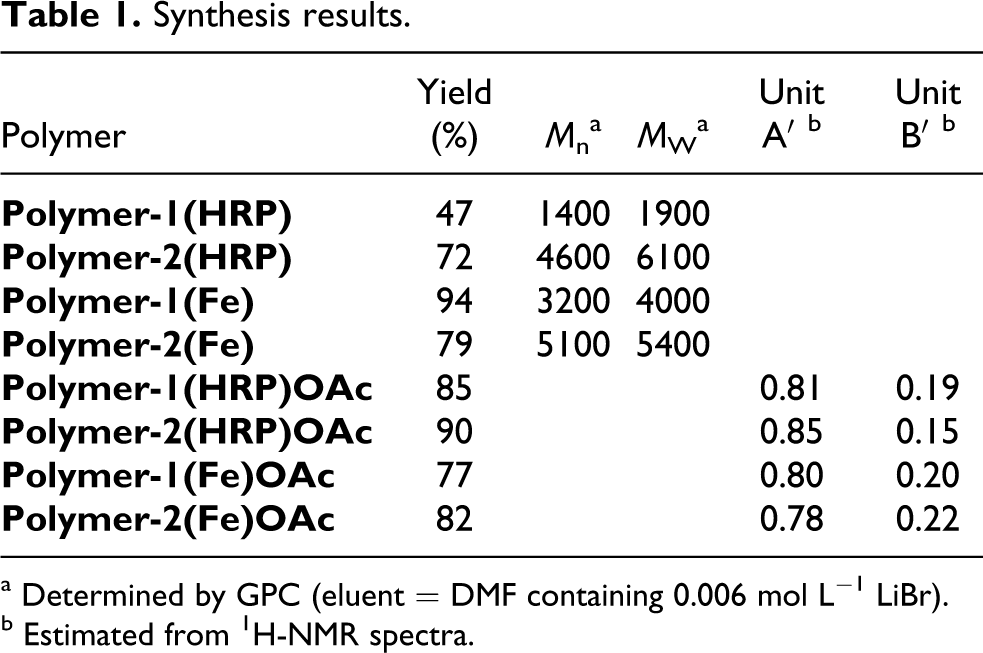
The HRP-catalyzed polymerization of monomer-1 and monomer-2 using hydrogen peroxide as an oxidizing reagent in a mixture of 1,4-dioxane and phosphate buffer (pH = 7.4 or 6.9) resulted in 47 and 94% yields of polymer-1(HRP) and polymer-2(HRP), respectively (Scheme 2). The N,N′-bis(salicylidene)ethylenediamineiron(III)-catalyzed polymerization of the same monomers yielded polymer-1(Fe) and polymer-2(Fe) in 94 and 79% yields, respectively (Scheme 2b). The synthesis results are summarized in Table 1.
Synthesis of polymers.
Synthesis results.
Polymer
Yield (%)
Mna
MWa
Unit A′ b
Unit B′ b
Polymer-1(HRP)
47
1400
1900
Polymer-2(HRP)
72
4600
6100
Polymer-1(Fe)
94
3200
4000
Polymer-2(Fe)
79
5100
5400
Polymer-1(HRP)OAc
85
0.81
0.19
Polymer-2(HRP)OAc
90
0.85
0.15
Polymer-1(Fe)OAc
77
0.80
0.20
Polymer-2(Fe)OAc
82
0.78
0.22
a Determined by GPC (eluent = DMF containing 0.006 mol L−1 LiBr).
b Estimated from 1H-NMR spectra.
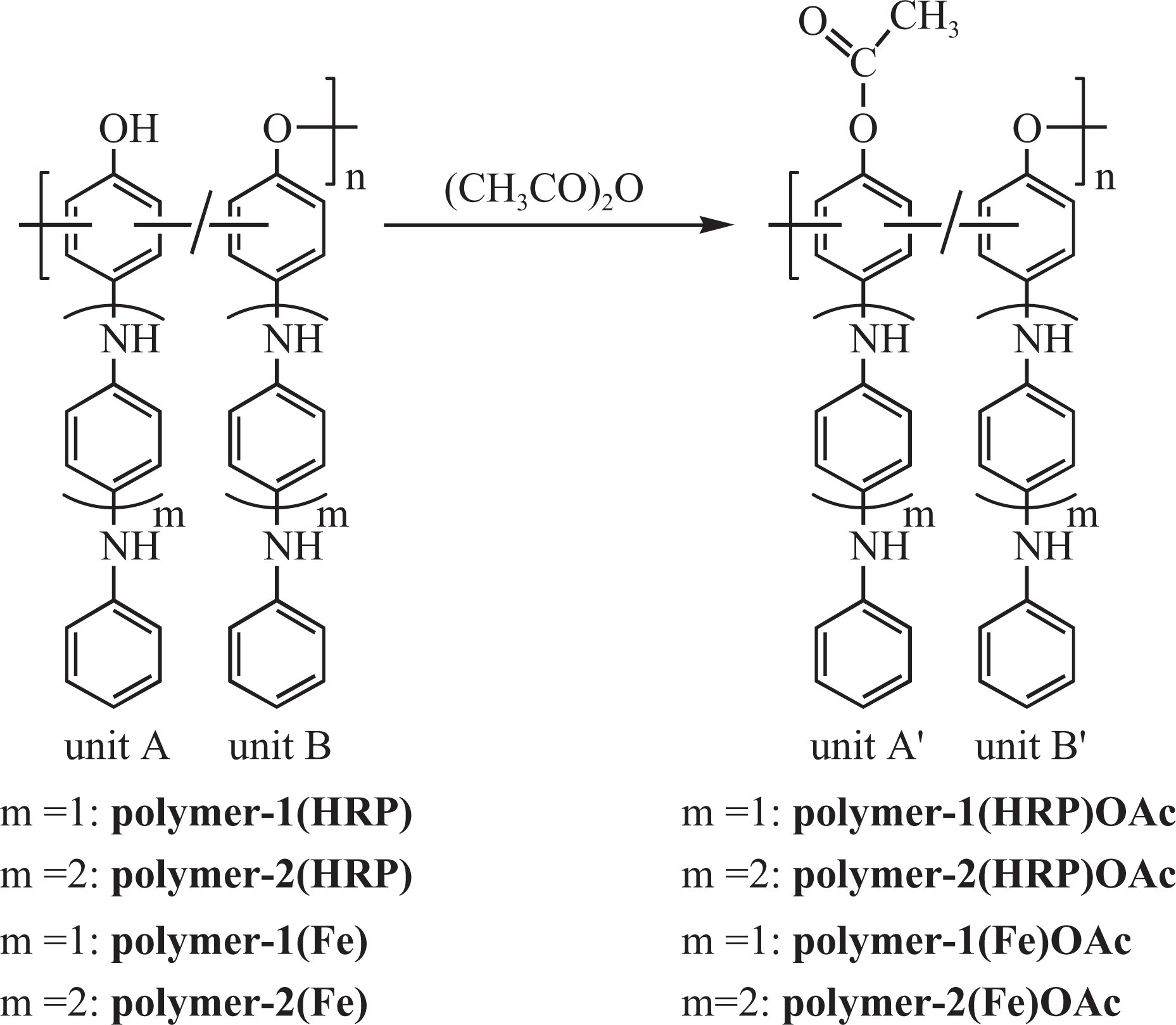
The molar ratios of the hydroxyphenylene (unit A) and oxyphenylene (unit B) units in the obtained polymers were determined using 1H-NMR analysis. Accordingly, O-acetylated polymers, i.e. polymer-1(HRP)OAc, polymer-2(HRP)OAc, polymer-1(Fe)OAc, and polymer-2(Fe)OAc, were synthesized by the reactions of polymer-1(HRP), polymer-2(HRP), polymer-1(Fe), and polymer-2(Fe) with acetic acid anhydride, respectively (Scheme 3).
Synthesis of O-acetylated polymers.
The polymers obtained in this study were soluble in DMF, DMSO, and N-methyl-2-pyrrolidone (NMP). The Mn and Mw values of the obtained polymers determined by GPC measurements are summarized in Table 1. The Mn values of polymer-1(Fe) and polymer-2(Fe) were slightly higher than those of polymer-1(HRP) and polymer-2(HRP). This is in agreement with previous reports that N,N′-bis(salicylidene)ethylenediamineiron(III)-catalyzed polymerization of phenols yielded PPs with higher molecular weights than those synthesized by HRP-catalyzed polymerization.19 The structures of obtained compounds were determined by 1H- and 13C-NMR spectroscopy and elemental analysis.
1H-NMR spectra
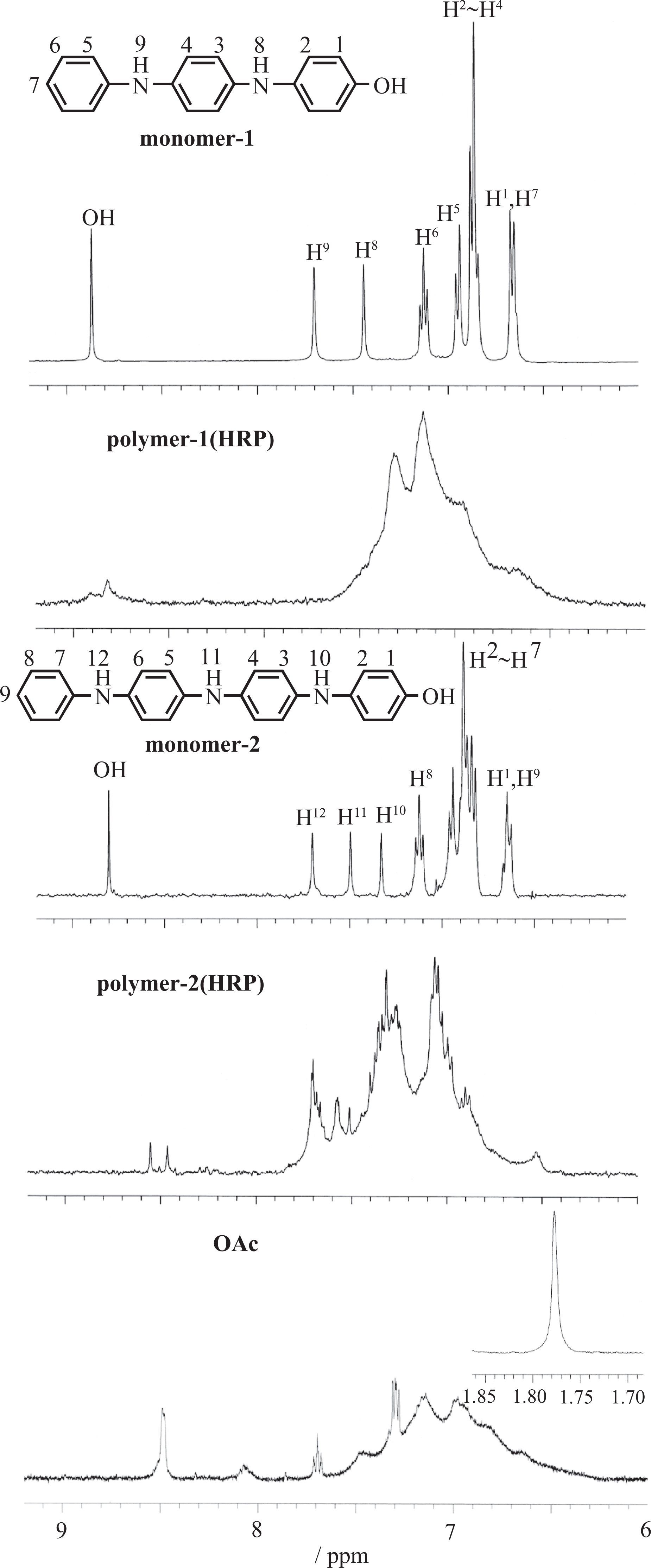
Figure 1 shows the 1H-NMR spectra of the monomers and the polymers in DMSO-d6. Peak assignments are shown in the figure. The OH protons of monomer-1 and monomer-2 were observed at δ 8.86 and 8.80, respectively. Monomer-1 exhibited two peaks corresponding to NH protons at δ 7.69 and 7.43, whereas monomer-2 exhibited three signals corresponding to NH protons at δ 7.70, 7.94, and 7.33. The peak corresponding to the protons adjacent to the hydroxyl group of monomer-1 and monomer-2 was observed at δ 6.64. This peak decreased in the 1H-NMR spectrum of polymer-1(HRP) and disappeared in the 1H-NMR spectrum of polymer-2(HRP), which suggests that oxidative coupling occurred at the 2-positions of the hydroxyphenyl group. This result is consistent with the fact that HRP-catalyzed polymerization of phenols proceeds predominantly at this 2-position.1–4 The phenylene protons of polymer-1(HRP) and polymer-2(HRP) were observed as broad peaks in the range of δ 6.9–7.7. The peaks corresponding to the CH3 groups of polymer-1(HRP)OAc and polymer-2(HRP)OAc were observed at δ 1.78 and 1.75, respectively. The relative integrals of the peaks corresponding to the CH3 and the phenylene protons suggest that the molar ratios of unit A′ and unit B′ in polymer-1(HRP)OAc and polymer-2(HRP)OAc were 81 : 19 and 85 : 15, respectively. The molar ratios of unit A′ and unit B′ in polymer-1(Fe)OAc and polymer-2(Fe)OAc were also estimated from the 1H-NMR spectra to be 80 : 20 and 78 : 22, respectively. These values are in good agreement with the fact that HRP-catalyzed polymerization of phenol derivatives yields polymers with a higher content of the hydroxyphenylene unit.1–4
1H-NMR spectra of monomer-1, monomer-2, polymer-1(HRP), polymer-2(HRP), and polymer-1(HRP)OAc in DMSO-d6.
IR spectra
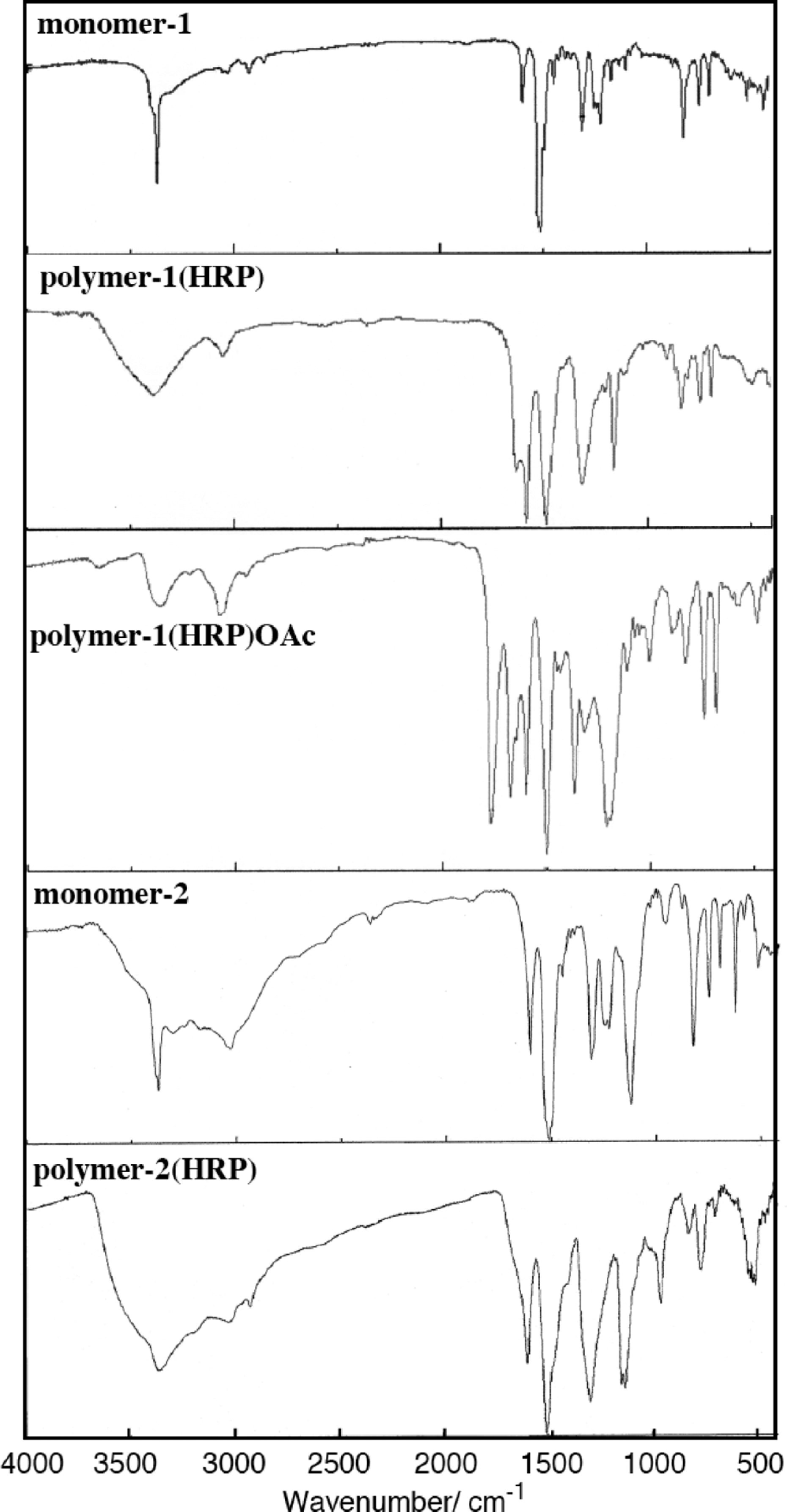
Figure 2 shows the IR spectra of monomer-1, polymer-1(HRP), polymer-1(HRP)OAc, monomer-2, and polymer-2(HRP). An absorption due to N–H stretching vibrations of monomer-1 and monomer-2 was observed both as a sharp peak at 3371 cm−1. In contrast, the absorption due to the N–H stretching vibrations of polymer-1(HRP) and polymer-2(HRP) was observed both as a broad peak at 3365 cm−1. The observation of absorptions corresponding to N–H stretching vibrations in the IR spectra of the polymers suggests that the NH groups remain in the polymers. The stronger absorptions due to the N–H stretching vibrations of monomer-2 and polymer-2(HRP) than those of monomer-1 and polymer-2(HRP) correspond to the greater numbers of NH groups in monomer-2 and polymer-2(HRP). A broad absorption corresponding to the O–H stretching vibrations of polymer-1(HRP) was observed around 3500 cm−1. Additionally, the absorption corresponding to the O–H stretching vibration disappeared and that corresponding to the C=O stretching vibrations of the acetyl group appeared at 1762 cm−1 in the IR spectrum of polymer-1(HRP)OAc. These IR data suggest that O-acetylation proceeded to completion. The IR spectra of polymer-1(Fe) and polymer-2(Fe) were almost the same as those of polymer-1(HRP) and polymer-2(HRP).
IR spectra of monomer-1, polymer-1(HRP), polymer-1(HRP)OAc, monomer-2, and polymer-2(HRP).
UV-vis spectra
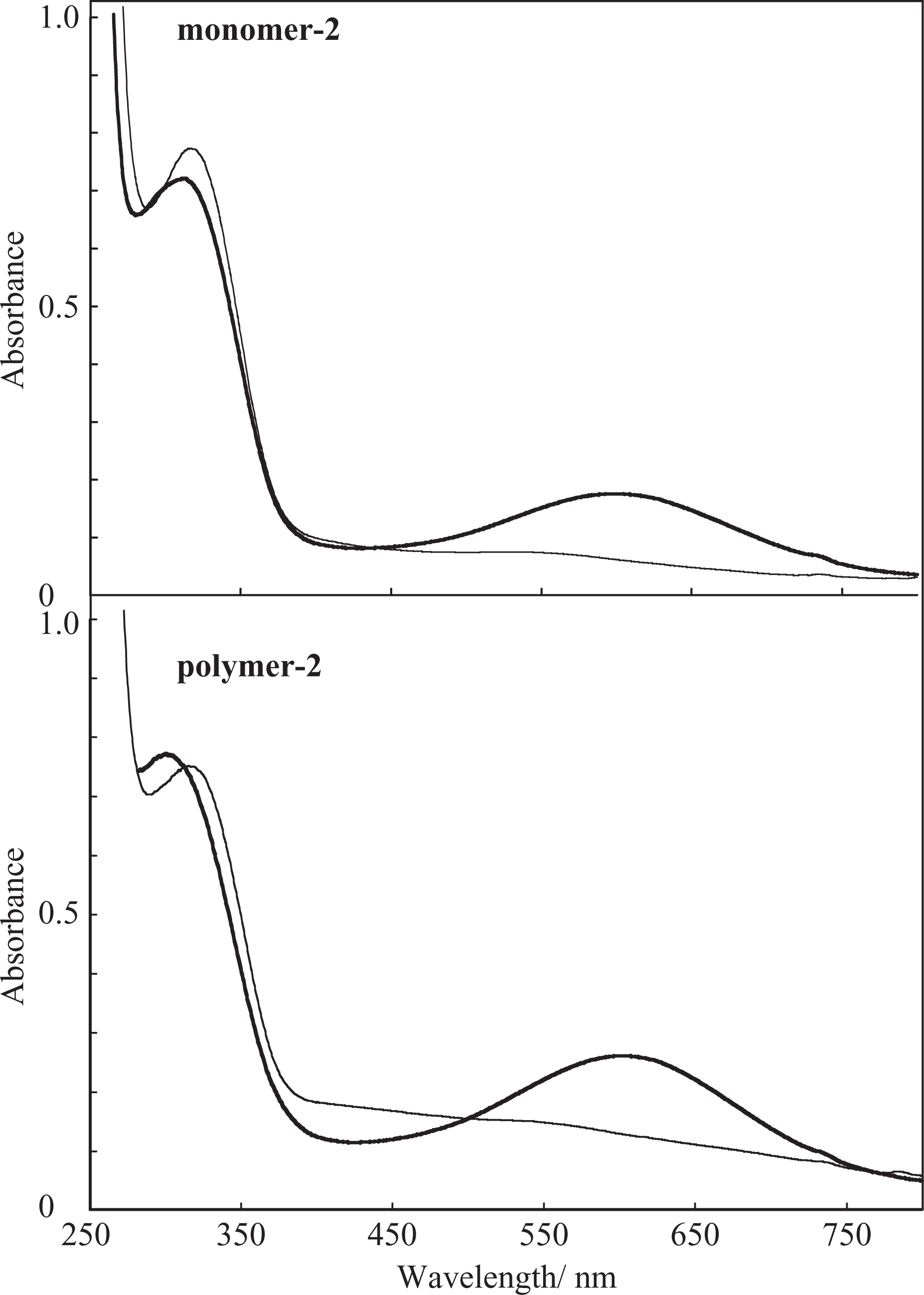
Figure 3 shows the UV-vis spectra of DMSO solutions of monomer-2 and polymer-2(HRP) in the absence and presence of hydrazine monohydrate. The UV-vis spectra of DMSO solutions of monomer-1 and monomer-2 each exhibited an absorption maximum (λmax) at 310 nm corresponding to the π–π* transition of the benzonoid structures in the OANs of the monomers. Additionally, an absorption corresponding to the quinoid structures, which were generated by the oxidation of the benzonoid structures by air, appeared at 600 nm. The DMSO solutions of polymer-1(HRP) and polymer-2(HRP), which were partly oxidized in air, exhibited absorptions corresponding to the benzonoid and quinoid structures in the OAN groups at 300 and 600 nm, respectively. It has been reported that luecoemeraldine-type polyanilines are partly oxidized in air, resulting in the formation of quinoid structures.20,21 The addition of hydrazine monohydrate to the DMSO solutions of the partly oxidized monomers and polymers reduced their quinoid structures to form benzonoid structures. This conversion was confirmed by the disappearance of the absorption at 600 nm after treatment with hydrazine monohydrate, as shown in Figure 3. These spectral changes suggest that the NH groups remained in the polymers. This is also supported by the abovementioned IR results.
UV-vis spectra of DMSO solutions of monomer-2 and polymer-2(HRP) in the absence (thick lines) and presence (thin lines) of hydrazine monohydrate.
Cyclic voltammograms
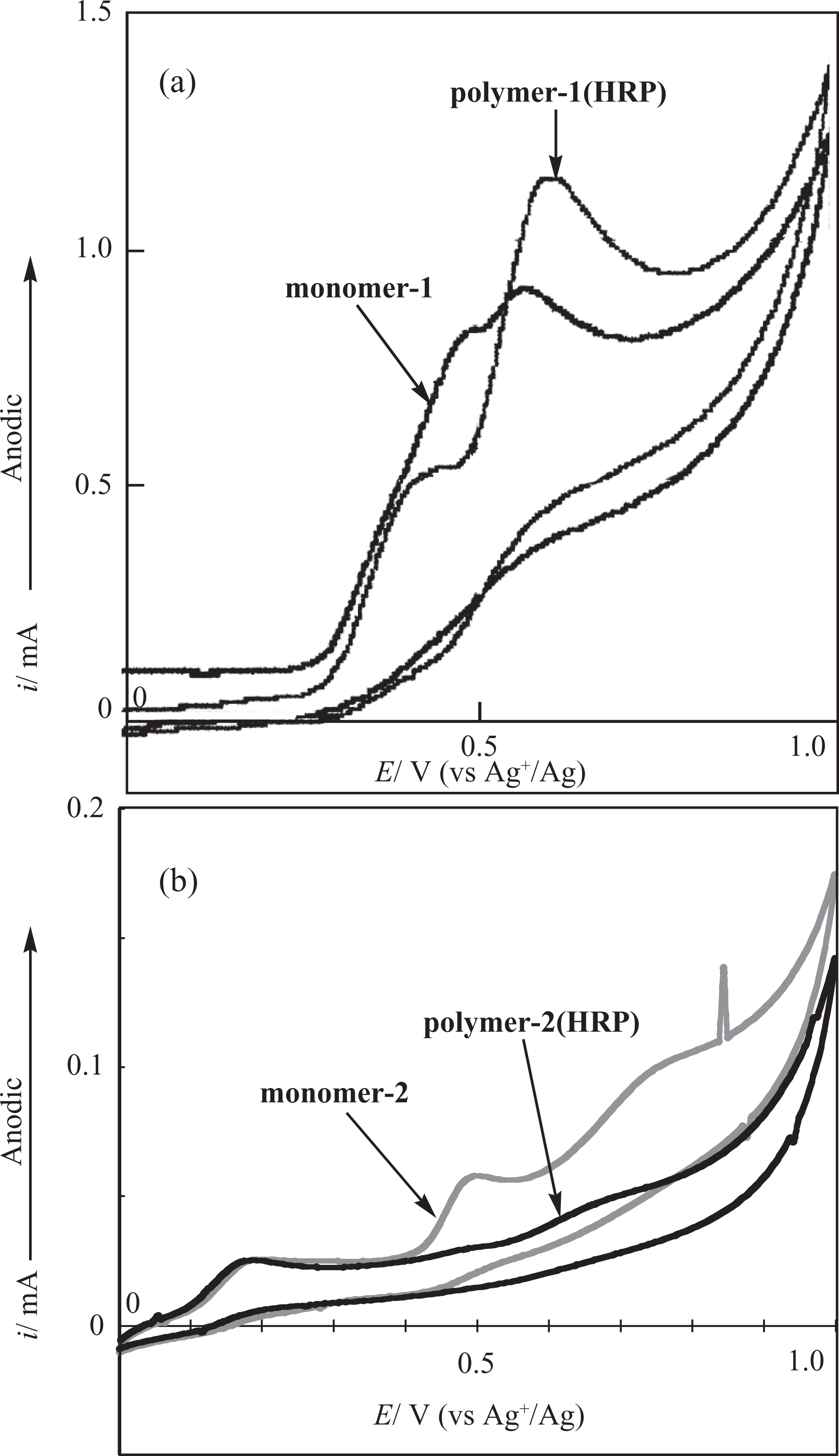
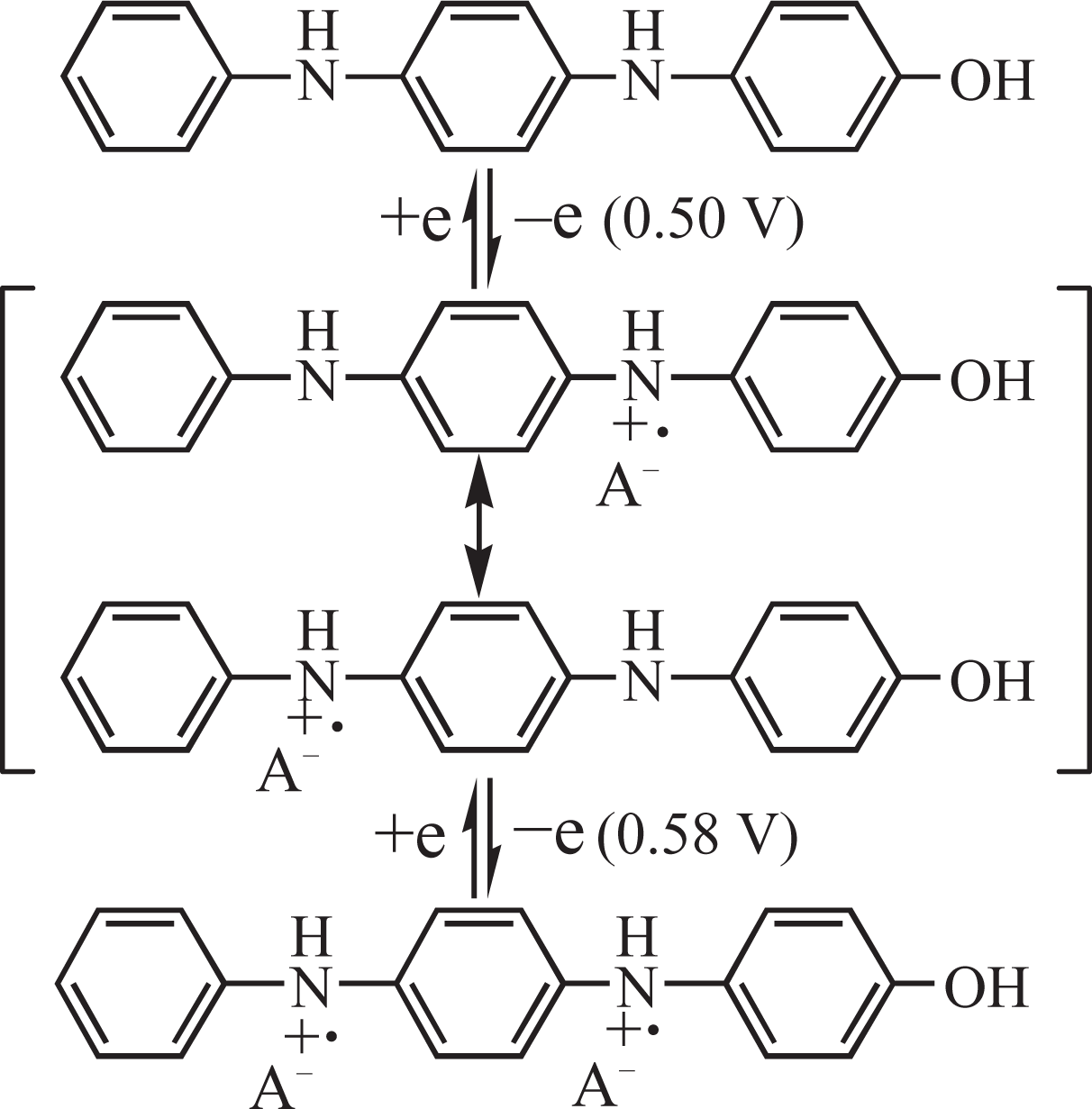
Figure 4 shows cyclic voltammograms (CVs) of monomer-1, monomer-2, polymer-1(HRP), and polymer-2(HRP). The CVs of polymer-1(HRP) and monomer-1 exhibited two peaks corresponding to the electrochemical oxidation of the NH groups in the side chain at 0.45 and 0.62 V and 0.50 and 0.58 V (vs Ag+/Ag), respectively (Figure 4(a)). The fact that the difference between the two oxidation peak potentials of monomer-1 is smaller than that of polymer-1(HRP) is attributed to facile electron exchange between the nitrogen atoms of one-electron oxidized monomer-1, as shown in Scheme 4.
Cyclic voltammograms of monomer-1, monomer-2, polymer-1(HRP), and polymer-2(HRP) in a DMSO solution of [Et4N]BF4 (0.1 mol L−1). Sweep rate was 50 mVs−1.
Electrochemical oxidation of monomer-1.
In contrast, such electron exchange is considered to be difficult in oxidized polymer-1(HRP) because of the presence of units A and B in the polymer. Monomer-2 exhibited three peaks corresponding to the electrochemical oxidation of the NH groups in the side chain at 0.18, 0.50, and 0.76 V (vs Ag+/Ag) (Figure 4(b)), whereas polymer-2(HRP) exhibited a clear peak at 0.19 V and two broad peaks at 0.48 and 0.68 V. However, the corresponding reduction (p-dedoping) peak does not appear in the CVs of the polymers and monomers; this is probably because of the formation of a stable adduct between the electrochemically oxidized polymer and BF4−. Electrochemically oxidized π-conjugated polymers have been reported to form stable adducts with BF4− during cyclic voltammetry measurements.22
Conclusions
PPs containing OAN pendant groups were obtained by HRP- and Fe(III)-complex-catalyzed polymerizations. The ratios of the hydroxyphenylene and oxyphenylene units in the polymers were determined by 1H-NMR spectroscopy. UV-vis measurements suggested that the OAN pendant groups of the polymers were oxidized in air to form quinoid structures, which were converted into benzonoid structures by treatment with hydrazine monohydrate. The polymers obtained in this study were electrochemically active. From the results obtained in this study, it can be concluded that HRP- and Fe(III)-complex-catalyzed polymerizations are useful for the synthesis of PPs with functional OAN pendant groups.
References
1.
KobayashiSMakinoA. Enzymatic polymer synthesis: an opportunity for green polymer chemistry. Chem Rev2009; 109: 5288–5353.
2.
ReihmannMRitterH. Synthesis of phenol polymers using peroxidases, Adv Polym Sci2006; 194: 1–49.
3.
UyamaHKobayashiS. Enzymatic synthesis of polyphenols, Curr Org Chem2003; 7: 1387–1397.
TuracE.SahmetliogluE. Oxidative polymerization of 4-[(4-phenylazo-phenyimino)-methyl.-phenol catalyzed by horseradish peroxidase. Synth Met2010; 160: 169–172.
6.
CuiYHuALuZ. Synthesis of water-soluble polyphenol-graft-poly(ethylene oxide) copolymers via enzymatic polymerization and anionic polymerization. Polym Int2010; 59: 676–679.
7.
CuiYSHanZDingY. Enzymatic synthesis of polyphenols with longer conjugation lengths. Polym Bull2010; 64: 647–656.
8.
TanakaTTakahashiMHaginiH. Enzymatic oxidative polymerization of methoxyphenols. Chem Eng Sci2010; 65: 569–573.
9.
LiZRenneckarSBaroneJR. Nanocomposites prepared by in situ enzymatic polymerization of phenol with TEMPO-oxidized nanocellulose. Cellulose2010;. 17: 57–68.
10.
YamaguchiIGotoKSatoM. Enzyme and transition-metal-complex catalyzed synthesis of polyphenols having pendant oligo(p-phenylene) and their optical and electrochemical properties. Macromolecules2009; 42:7836–7845.
11.
TawakiaSUchidabYMaedabY. HRP-catalyzed polymerization of sugar-based phenols in aqueous organic solvents. Carbohyd Polym2005; 59: 71–74.
12.
FukuokaTUyamaHKobayashiS. Synthesis of poly(amino acid) polyphenol hybrids by oxidative cross-coupling. Macromolecules2004; 37: 8481–8484.
13.
EkerBZagorevskiDZhiG. Enzymatic polymerization of phenols in room-temperature ionic liquids. J Mol Cat B2009; 59: 177–184.
14.
PengYLiuHZhangX. CNT templated regioselective enzymatic polymerization of phenol in water and modification of surface of MWNT thereby. J Polym Sci Part A Polym Chem2009; 47: 1627–1635.
15.
YamaguchiIYamamotoT. Enzymatic polymerization of a ferrocenophane to give poly(oxyphenylene) with ferrocenophane pendant groups. Inorg Chim Acta2003; 348: 249–253.
16.
YamamotoTYamaguchiI. Enzymatic synthesis of poly(quinolinol) and its aluminum complex. Polym Bull2003; 50: 55–60.
17.
WeiZFaulCFJ. Aniline oligomers–architecture, function and new opportunities for nanostructured materials. Macromol Rapid Commun2008; 29: 280–292.
18.
BugaKKepczynskaKKulszewicz-BajerI. Poly(alkylthiophene) with pendant dianiline groups via postpolymerization functionalization: preparation, spectroscopic, and spectroelectrochemical characterization. Macromolecules2004; 37: 769–777.
19.
IkedaRTanakaHUyamaH. A new crosslinkable polyphenol from a renewable resource. Macromol Rapid Commun2000; 21: 496–499.
20.
YamaguchiIYasudaTYamamotoT. Ring-opening graft copolymerization of epoxide with polyaniline: chemical properties and lithium ionic conductivity of the copolymer. J Polym Sci Part A Polym Chem2001; 39: 3137–3142.
21.
AlbuquerqueaJEMattosobLHCFariacRM. Study of the interconversion of polyaniline oxidation states by optical absorption spectroscopy. Synth Met2004; 146: 1–10.
22.
RangerMLeclercM. Optical and electrical properties of fluorene-based pi-conjugated polymers. Can J Chem1998; 76: 1571–1577.