






Abstract
Based on newly synthesized hydroquinone monomers, two series of halogenated polyaryletherketones, PEEKs and PEEKKs, were synthesized through nucleophilic aromatic substitution polycondensations. The chemical structures of the monomers and the polymers were carefully characterized using Fourier transform infrared and 1H-NMR spectroscopies. Some interesting results about the relationships between the structure and properties of these polymers having comparable chemical structures were revealed for the first time. Despite the similar chemical structure of –F, –Cl and –Br substituted polyaryletherketones, they exhibited different thermal behaviors. The thermogravimetric analysis results showed that chlorinated PEEKK had the best thermal stability and its limited oxygen index (LOI) value was 42.80. The results indicated some of them will be promising high-performance polymers.
Introduction
Polyaryletherketones (PAEKs), such as poly(ether ether ketone) (PEEK) and poly(ether ether ketone ketone) (PEEKK), whose backbones are basically composed with benzene rings, ether and ketone linkages, are a family of high-performance polymers. Because of their excellent thermal, mechanical, and electrical properties, they are currently used in aerospace, automobile, electronics, and other high technology fields. 1,2 As one of important members, Victrex PEEK, which was firstly developed by Imperial Chemical Industries (ICI) in 1980s, had gained significant commercial attention and been applied widely. 3,4
Recently, numerous efforts have been made to develop functionalized PAEKs for different purposes. For example, sulfonic acid groups were introduced into the PAEK’s backbones to prepare proton conductive membranes for fuel cell applications. 5,6 Trifluoromethylated PAEKs were synthesized for low-k dielectrics, optical waveguide materials and gas separation membranes. 7 –9 Azobenzene-containing PAEKs were studied for information recording materials. 10,11 In particular, improved solubility and processability are often required for the above-mentioned applications.
The halogens are a series of elements comprising fluorine (F), chlorine (Cl), bromine (Br), iodine (I), and astatine (At). Some of them have been introduced into polymers for performance improvements or further reactions. In spite of the difficulty in the synthesis of the halogen-containing PAEKs, fluorine, chlorine and bromine-containing PAEKs have been successfully synthesized, and they usually showed excellent combined properties including improved solubility, and thermal and chemical stability. 12,13 However, to the best of our knowledge, there are no systematic studies covering all of fluorine, chlorine and bromine-substituted PAEKs reported yet. In this work, two series of halogenated PAEKs, PEEKs and PEEKKs, have been firstly synthesized derived from four hydroquinone monomers. The structure–performance relationships of these high-performance polymers have also been investigated.
Experiment
Materials
4-Fluoroaniline, 4-chloroaniline and 4-bromoanilines were purchased from Aladdin-reagent. 2-Phenylhydroquinone (PHQ) was obtained from Sigma-Aldrich. Hydrochloric acid, sodium bicarbonate, 1,4-benzoquinone, toluene, tetrahydrothiophene (TMS) and N,N-dimethylacetamide (DMAc) were supplied by Beijing Chemical Industry. 4,4′-Difluorobenzophenone and 1,4-di(4-fluorobezoyl)benzene were offered by Jilin University Super Engineering Plastics Research Co., Ltd.. All the other chemicals were obtained from commercial resources and used without further purification.
Instruments and measurements
1H-NMR spectra were recorded on a Bruker 510 instrument with chloroform-d (CDCl3) and DMSO-d6 as the solvents. The Fourier transform infrared (FTIR) spectra were recorded via the KBr pellet method by using a Nicolet Impact 410 FTIR spectrophotometer. The gel permeation chromatography (GPC) analysis was carried with a Waters 410 instrument with N,N-dimethylformamide (DMF) as the eluent and polystyrene as the standard. The glass transition temperatures (T g values) were determined by differential scanning calorimetry (DSC) using a Mettler Toledo DSC821e instrument at a heating rate of 20 °C min−1 under a nitrogen flow of 200 mL min−1. The reported T g values were recorded during the second scan. The thermal gravimetric analysis (TGA) was performed on a Pryis 1 TGA analyzer (Perkinelmer) under a nitrogen atmosphere (100 mL min−1) at a heating rate of 10 °C min−1. The tensile properties of films were measured at room temperature on Shimadiu AG-I 1KN at a strain rate of 2 mm min−1. The size of samples was 50 mm × 5 mm. The samples were put in a vacuum oven for 12 h at 120 °C before measurements.
Synthesis of the monomers
All the halogen-containing hydroquinones were synthesized in the similar procedures, and the synthesis of 4-fluorophenylhydroquinone (FPHQ) was given as example. Into a 1000 mL beaker equipped with a mechanical stirrer, a dropping funnel, and a thermometer were placed water (50 mL), ice (50 g) and 4-fluoroaniline (13.41 g, 0.1 mol). Hydrochloric acid (0.4 mol L−1, 33.6 mL) was added dropwise into the stirred mixture through the dropping funnel, and then a concentrated water solution of sodium nitrile (6.9 g, 0.1 mol) was added dropwise. The mixture was stirred for 2 h at 0–5 °C, and a clear colorless solution was obtained. The resulting solution was filtered and added dropwise to the mixture of 1,4-benzoquinone (8.64 g, 0.08 mol), sodium bicarbonate (25.2 g, 0.3 mol), and water (200 mL). The reaction mixture was stirred at 10–15 °C for 2 h and then at room temperature for 2 h. Next, the precipitate was collected by filtration, and washed thoroughly with water for several time until the water was colorless. Then the obtained powder, Zn powder (19.5 g, 0.3 mol), and 400 mL of the mixture of water and ethanol (1 : 10, v/v) were placed into a 1000 mL, three-necked flask equipped with a mechanical stirred, a condenser and a dropping funnel. The mixture was heated to 90 °C with stirring, which was followed by the dropwise addition of 25.2 mL of hydrochloric acid (0.3 mol). After the addition was completed, the reaction mixture was allowed to reflux for another 3 h. Then, the hot mixture was filtered. The filtrate was cooled to room temperature and poured into a large amount of deionized water. The white solid (FPHQ) was collected and recrystallized from water, and the total yield was 65%.
4-Chlorophenylhydroquinone (ClPHQ) and 4-bromophenylhydroquinone (BrPHQ) were produced in the same procedure, and their yields were 72 and 76%, respectively. The synthetic routines are shown in Scheme 1.
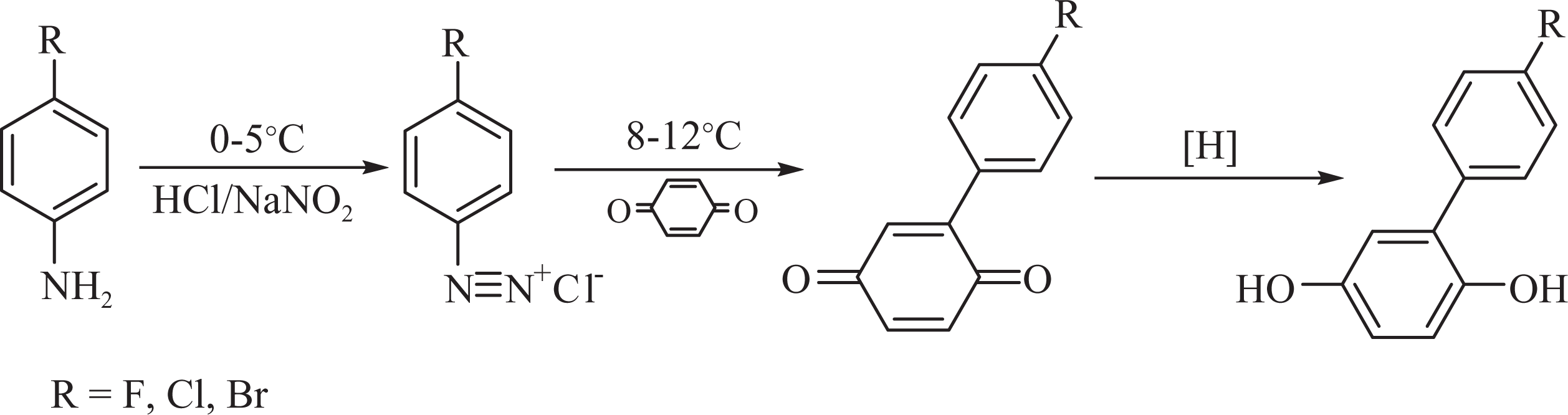
Synthesis of the hydroquinone monomers.
FPHQ. Yield: 65%. m.p.: 133 °C (DSC). FTIR: 3270 cm−1 (–OH), 1119 cm−1, 1028 cm−1 (C–F). 1H-NMR (DMSO-d 6): 8.84 (d, 2H),7.56 (d, 2H, J = 8.4), 7.23 (d, 2H), 6.77 (d,1H), 6.67 (d, 1H), 6.60 (dd,1H) ppm.
ClPHQ. Yield: 72%. m.p.: 120 °C (DSC). FTIR: 3220 cm−1 (–OH), 736 cm−1 (C–Cl). 1H-NMR (DMSO-d 6): 8.93 (d, 2H), 7.55 (d, 2H), 7.45 (d, 2H), 6.77 (d, 1H), 6.67 (d, 1H), 6.63 (dd, 1H) ppm.
BrPHQ. Yield: 76%. m.p.: 135 °C (DSC). FTIR: 3250 cm−1 (–OH), 600 cm−1 (C-Br). 1H-NMR (DMSO-d 6): 8.92 (s, 2H), 7.57 (d, 2H), 7.49 (d, 2H), 6.78 (d, 1H), 6.69 (d, 1H), 6.63 (dd, 1H) ppm.
Synthesis of the polymers
A typical synthesis procedure the polymers was as follows: To a 100 mL three-neck round-bottom flask equipped with a mechanical stirrer, a Dean–Stark trap, a condenser and a nitrogen inlet, were added FPHQ (2.0420 g, 10 mmol), 4,4′-difluorobenzophenone (2.1820 g, 10 mmol), K2CO3 (1.43 g, 12 mmol), TMS (20 mL) and toluene (10 mL). Under an atmosphere of nitrogen, the solution was heated to 130–140 °C and maintained at that temperature for 2 h to remove the water by means of a Dean–Stark trap through toluene. The polycondensation reaction was continued for another 6 h at 150–160 °C. Then the viscous solution was slowly poured into water and stirred vigorously. The silk-like polymer was pulverized into a powder after cooling. Next, the powder was washed with hot methanol and water several times and dried at 120 °C under vacuum for 24 h. Finally, FPh-PEEK powder was obtained.
All the other polymers, PEEK series (ClPh-PEEK, BrPh-PEEK and Ph-PEEK) and PEEKK series (FPh-PEEKK, ClPh-PEEKK, BrPh-PEEKK and Ph-PEEKK) were synthesized using the similar synthetic routines, and 1,4-di(4-fluorobezoyl)benzene was used to replace 4,4′-difluorobenzophenone in PEEKK series (Scheme 2).
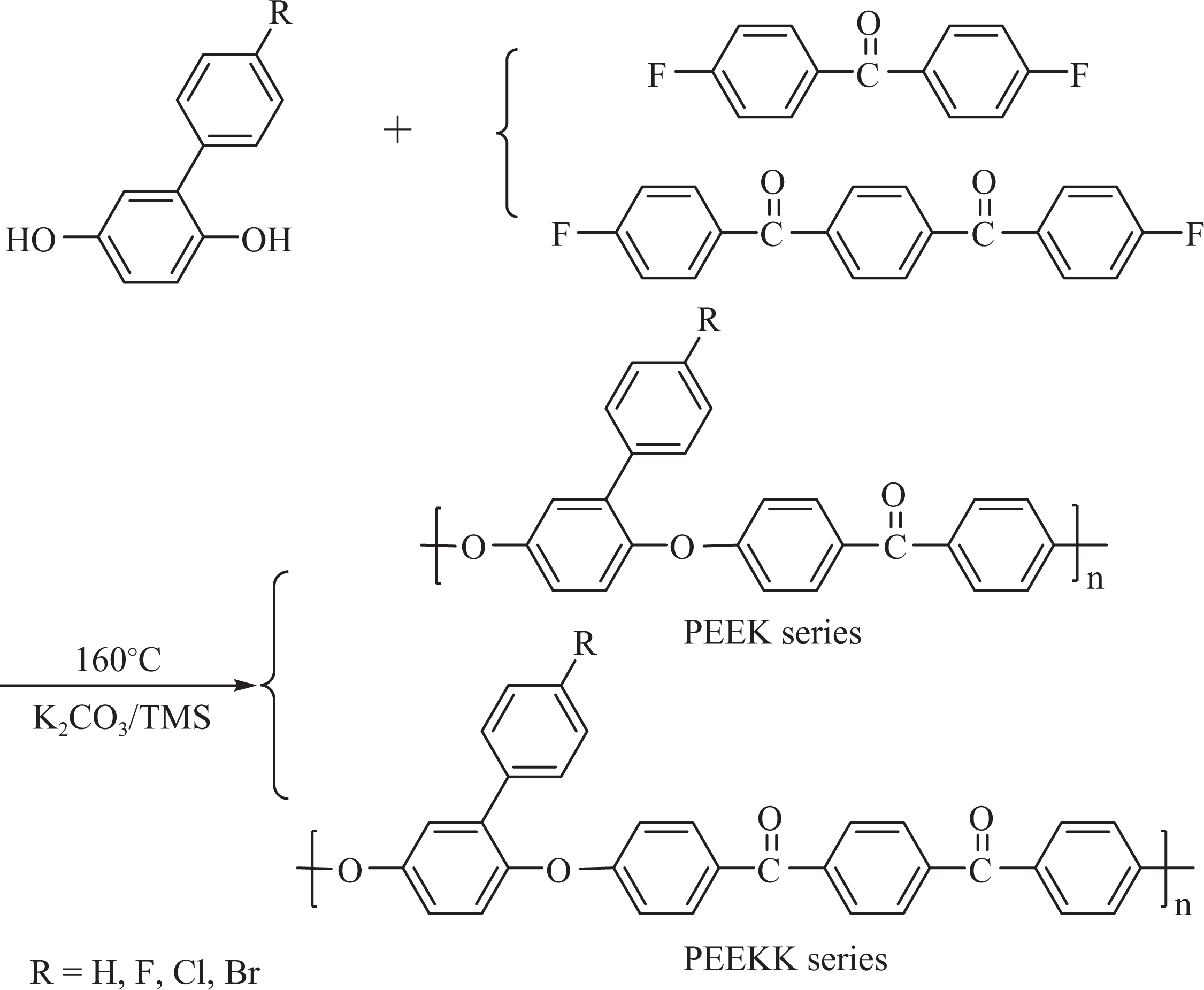
Synthesis of the polymers.
Ph-PEEK. 1H-NMR (CDCl3): 7.86–7.67 (m, 4H), 7.49 (d, 2H), 7.36–7.27 (m, 3H), 7.22–7.12 (m, 5H), 6.78 (d, 2H) ppm.
FPh-PEEK. 1H-NMR (CDCl3): 7.85–7.67 (m, 4H), 7.46 (t, 2H), 7.20–7.07 (m, 5H), 7.05 (t, 2H), 6.93 (t, 2H) ppm.
ClPh-PEEK. 1H-NMR (CDCl3): 7.85–7.67 (m, 4H), 7.43 (d, 2H), 7.32 (d, 2H), 7.20–7.08 (m, 5H), 6.93 (m, 2H) ppm.
BrPh-PEEK. 1H-NMR (CDCl3): 7.85–7.67 (m, 4H), 7.47 (d, 2H), 7.36 (d, 2H), 7.19–7.08 (m, 5H), 6.93 (m, 2H) ppm.
Ph-PEEKK. 1H-NMR (CDCl3): 7.90–7.75 (m, 8H), 7.50 (d, 2H), 7.35 (m, 3H), 7.21–7.10 (m, 5H), 6.97 (d, 2H) ppm.
FPh-PEEKK. 1H-NMR (CDCl3): 7.90–7.75 (m, 8H), 7.48 (m, 2H), 7.23 (d, 2H), 7.15 (m, 3H), 7.06 (t, 3H), 6.94 (d, 2H) ppm.
ClPh-PEEKK. 1H-NMR (CDCl3): 7.90–7.75 (m, 8H), 7.44 (d, 2H), 7.32 (d, 2H), 7.23–7.12 (m, 5H), 6.94 (d, 2H) ppm.
BrPh-PEEKK. 1H-NMR (CDCl3): 7.90–7.76 (m, 8H), 7.48 (d, 2H), 7.37 (d, 2H), 7.22–7.11 (m, 5H), 6.94 (d, 2H) ppm.
Film preparation
The films of the PEEK and PEEKK polymers were cast from their solution in DMAc (10%, w/v). The polymer was first stirred in DMAc for one day, and then the clear and homogenous solution was cast onto clean glass plate and dried at 60 °C overnight. After drying at 120 °C in vacuum oven for another 24 h, the transparent and flexible films (100–140 um) were obtained.
Results and discussion
Synthesis and characterization of the monomers
The hydroquinone monomers, FPHQ, ClPHQ and BrPHQ, were synthesized in two steps by the coupling reaction of diazoniums with 1,4-benzoquinone in the presence of NaHCO3 to yield halogen-phenyl substituted quinones, and then by reduction reaction in Zn/HCl system (Scheme 1).
The structures of all three monomers were confirmed by FTIR and 1H-NMR spectroscopy. In the FTIR spectra, all the hydroquinone monomers showed the characteristic bands of hydroxy groups around 3260 cm−1. The 1H-NMR spectra of the monomers are shown in Figure 1. The chemical shifts in the range of 9.0–8.7 ppm were attributed to the protons of hydroxyl groups, and the chemical shifts from 7.0-6.5 ppm belonged to the protons on the benzenes connected with hydroxyl groups. Obviously, the chemical shifts from 8.0 to 7.0 ppm belonged to the protons of the pendant benzene rings. For halogen substituted benzene rings of FPHQ, ClPHQ and BrPHQ monomers, two groups of signals could be observed in comparison with three absorptions of PhHQ without subsituent on 4-position.
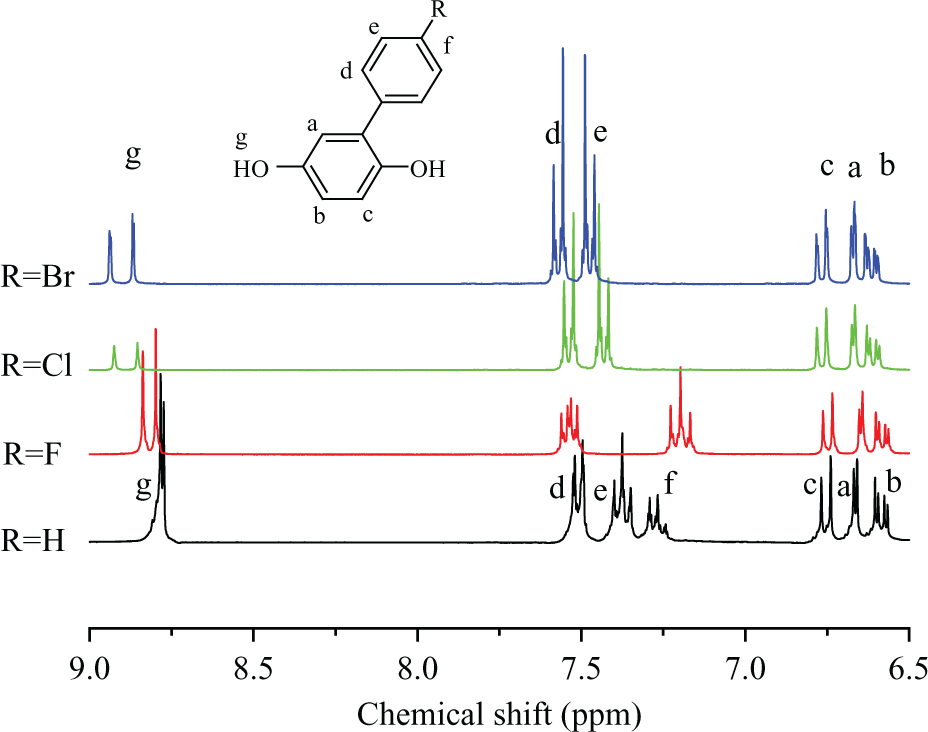
1H-NMR spectra of the monomers.
Synthesis and characterization of the polymers
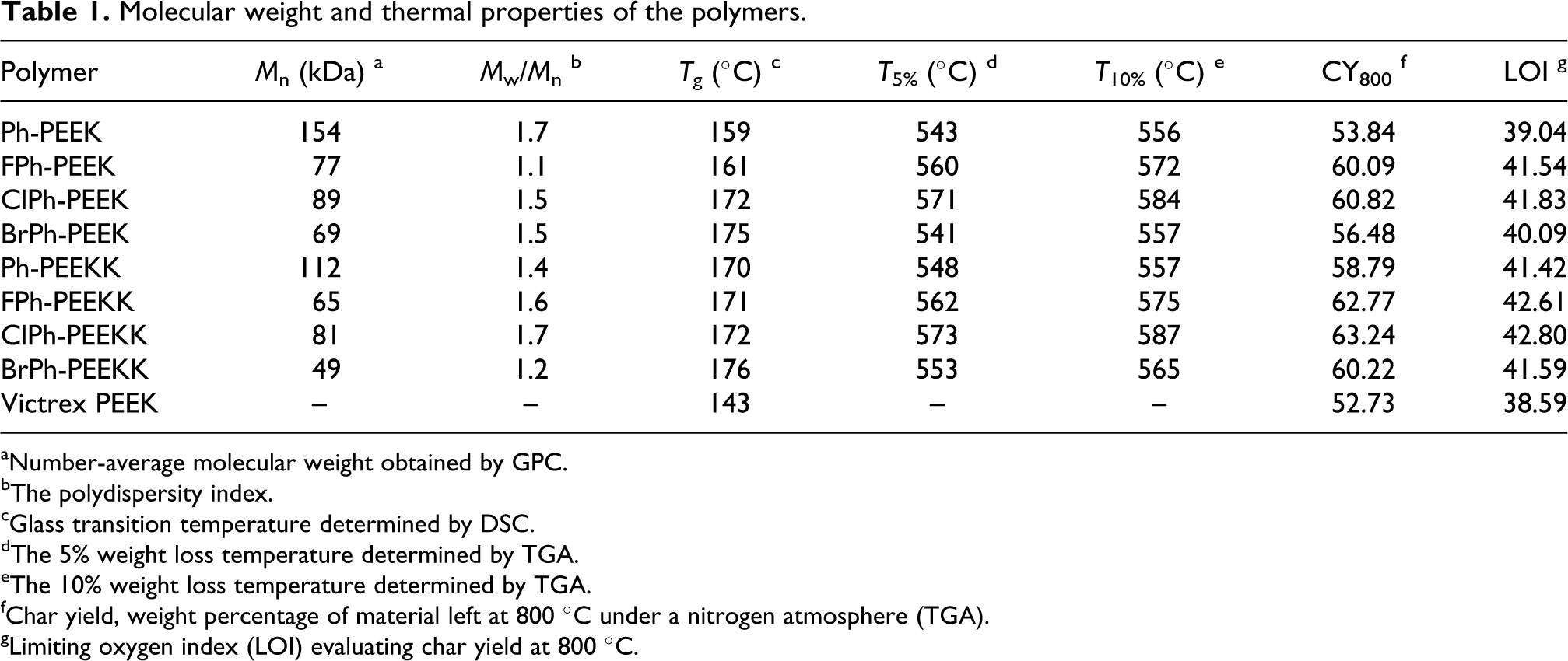
The polymerizations of the obtained hydroquinone monomers with stoichiometric amounts of difluoro-monomers were carried out in the presence of excess K2CO3 in TMS (Scheme 2). At the first stage, the water generated from the reaction system was removed by toluene through the Dean–Stark trap. The reaction temperature was then increased to 150–160 °C. High molecular weight polymers were readily obtained in several hours. The GPC results showed that the number-average molecular weight (M n) was in the range of 49–154 kDa, and the polydispersity (M w/M n) is around 1.1–1.7 (Table 1).
Molecular weight and thermal properties of the polymers.
aNumber-average molecular weight obtained by GPC.
bThe polydispersity index.
cGlass transition temperature determined by DSC.
dThe 5% weight loss temperature determined by TGA.
eThe 10% weight loss temperature determined by TGA.
fChar yield, weight percentage of material left at 800 °C under a nitrogen atmosphere (TGA).
gLimiting oxygen index (LOI) evaluating char yield at 800 °C.
The 1H-NMR spectra of all the polymers are shown in Figure 2(a) and (b), and the assignments of the peaks are in good agreement with the proposed structures. All protons resonated in the region of 6.8–8.0 ppm, due to their aromatic chemical structure. The H-g close to the carbonyl linkages appeared at high chemical shift region of 7.9–7.6 ppm because of the stronger electron withdrawing effect of carbonyl groups. The H-d and H-e on the halogen-substituted benzene rings hand the chemical shifts of 7.5–7.3 ppm. The other protons next to the ether bonds showed relative lower chemical shifts of 7.2–6.8 ppm, because of the electron-donating property of aromatic ethers.
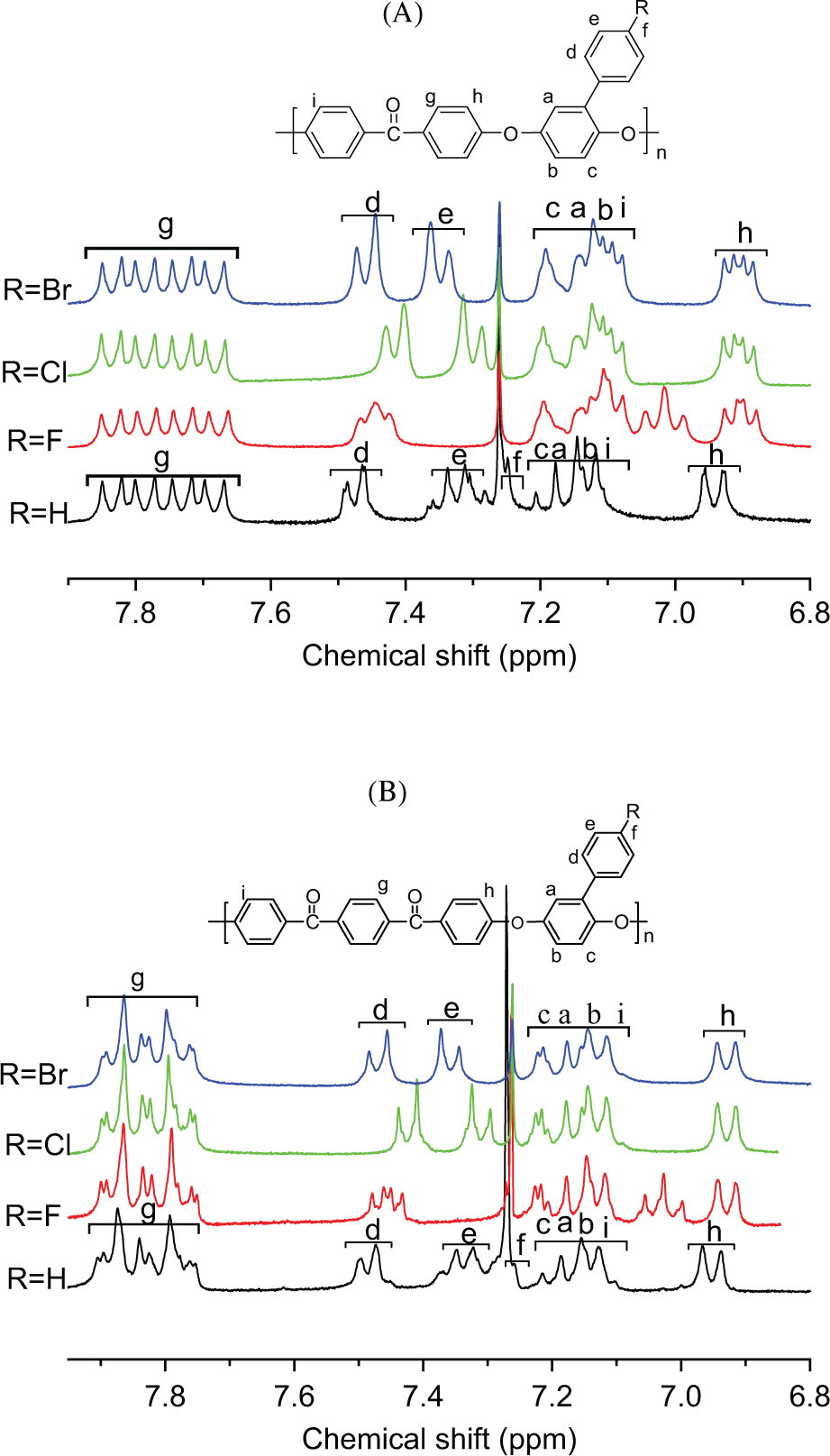
1H-NMR spectra of the polymers: (a) PEEK series; (b) PEEKK series.
Solubility and mechanical properties of the halogen-phenyl substituted polymers
It was well known that conventional Victrex PEEK could not be dissolved in common organic solvents, which limited their wider applications. In the present study, the solubility of the new PAEKs was greatly improved by the incorporation of pendant halogen-phenyl groups. All of the polymers were soluble in NMP, DMF, DMAc, chloroform, and THF at room temperature. Furthermore, transparent, strong and flexible films could be obtained by a solution-casting process.
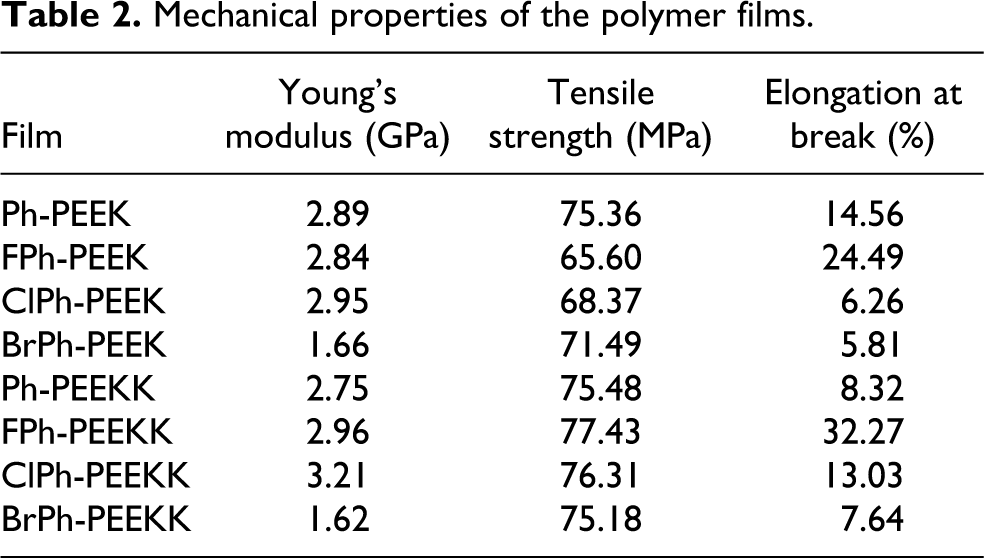
The mechanical properties of these PAEK thin films cast from DMAc are summarized in Table 2. The films had tensile strengths of 65.60–77.43 MPa, Young’s moduli of 1.62–3.21 GPa, and elongations at break of 5.81–32.27%. The results suggested that most of them were rigid and strong materials.
Mechanical properties of the polymer films.
Thermal properties of the polymers
The thermal behaviors of the obtained polymers were investigated by DSC and TGA. As shown in their DSC graphs (Figure 3), it was interesting to observe that the T g values of both the PEEK and PEEKK series exhibited the same order: Ph– < FPh– < ClPh– < BrPh– polymer. One explanation for this phenomenon was that the incorporation of larger halogen atoms would hinder the movement of the polymer chains, which led to the increase of the T g values. In addition, the PEEKK series exhibited higher T g values than the corresponding PEEK ones, because of the higher rigidity of their backbone. No other endothermic peaks were found in their DSC curves, indicating their amorphous structure. These results were well supported by the wide angle X-ray diffraction (WAXD) experiments.
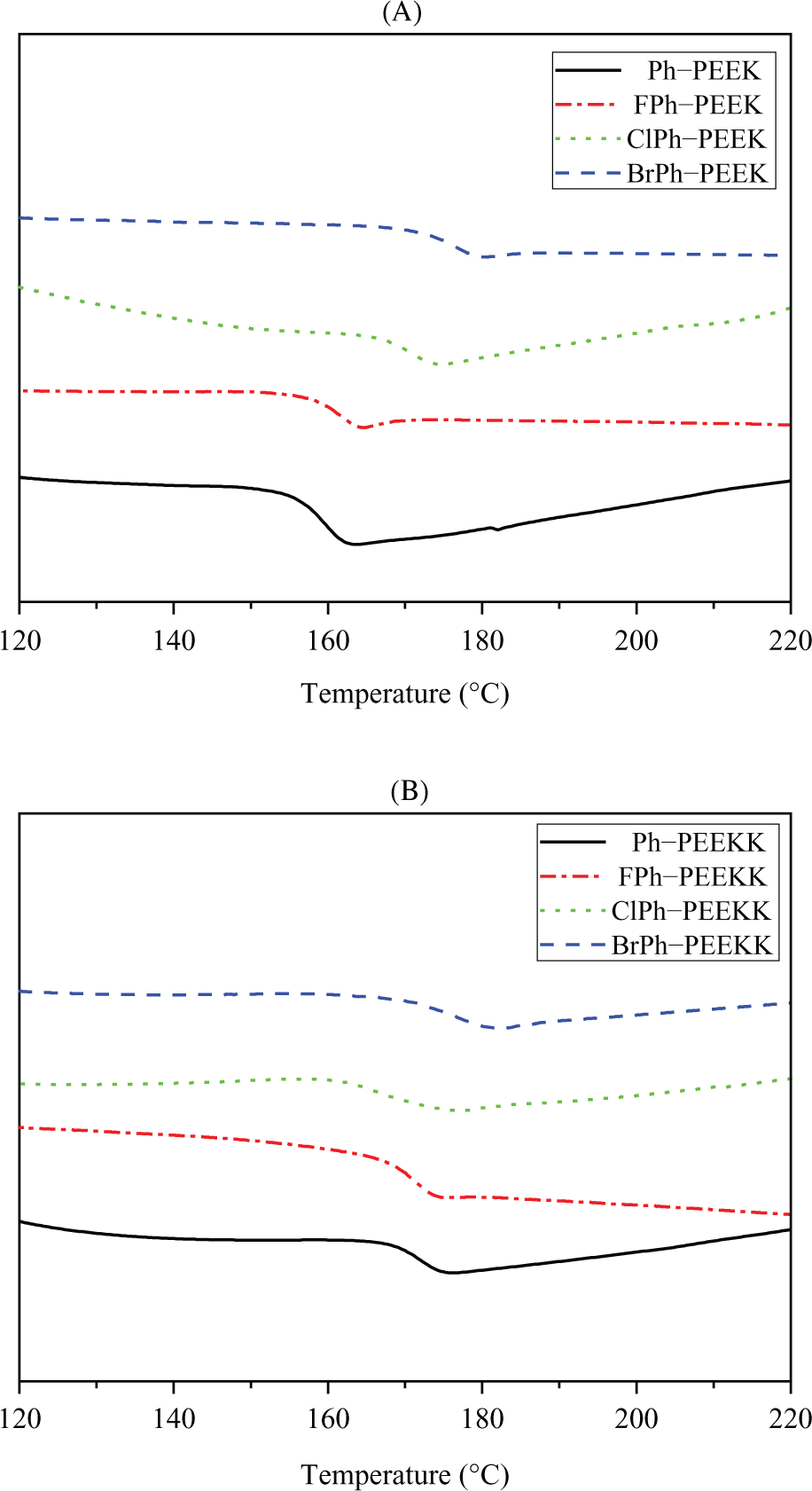
DSC curves of the polymers: (a) PEEK series; (b) PEEKK series.
The thermal stability of the polymers was evaluated using TGA, as shown in Figure 4. Clearly, no obvious weight loss before 400 °C was observed for all the halogenated aromatic polymers, which suggested they were excellent thermally stable materials. As summarized in Table 1, the temperatures at 5% weight loss (T d5%) were above 540 °C and the temperatures at 10% weight loss (T d10%) were above 550 °C under N2. It was also noticed that chlorinated ClPh-PEEK and ClPh-PEEKK exhibited higher thermal stability than other analogues.
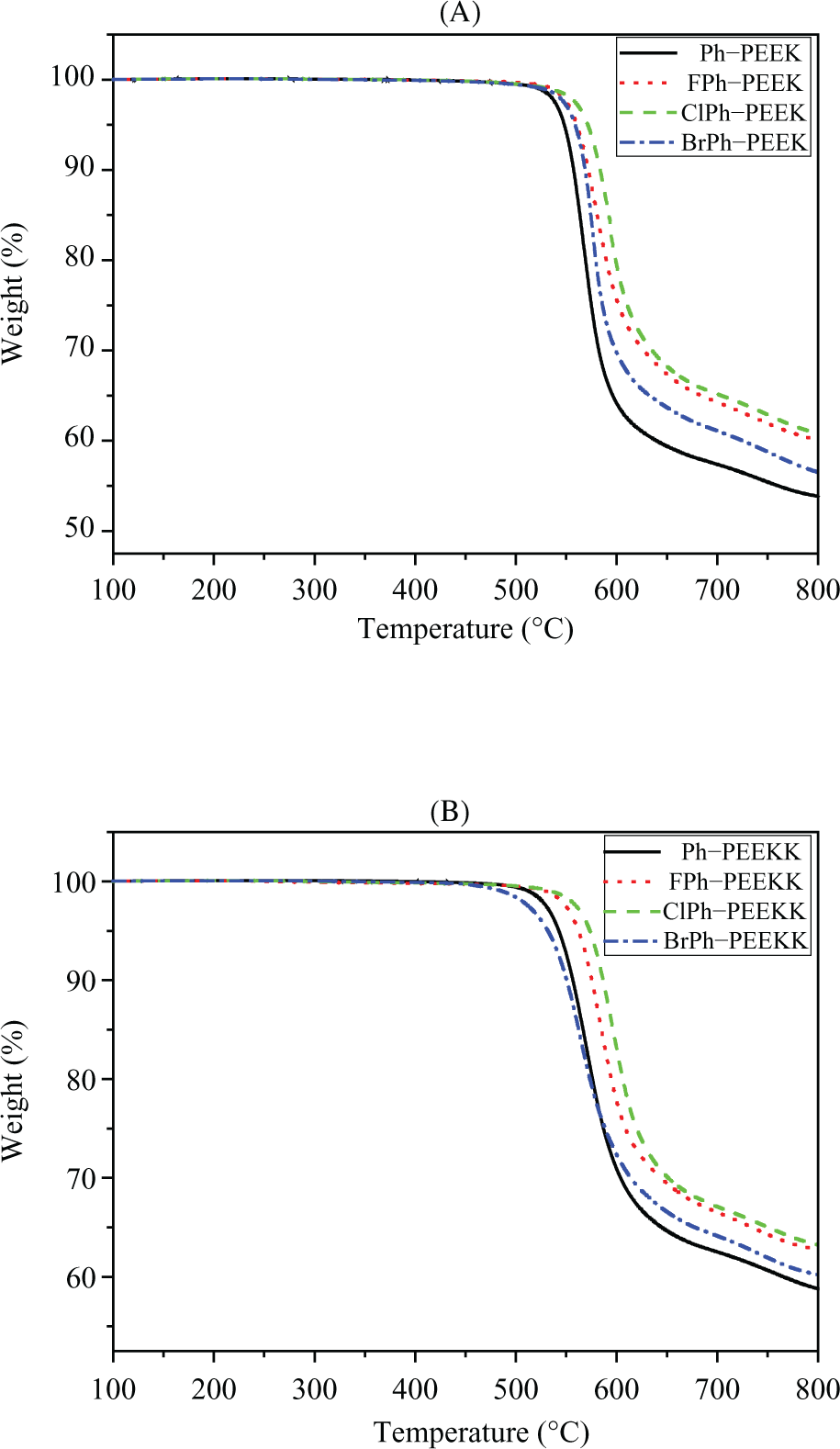
TGA curves of the polymers: (a) PEEK series; (b) PEEKK series.
Commercial Victrex PEEK is one of excellent flame resistant polymers because of its aromatic backbones. It was expected that the introduction of the halogen groups could improve the flame resistance of the polymers. In this study, limiting oxygen index (LOI) was applied to evaluate the flame-resistant properties of the polymers. According to the reported methods, 14 –17 char yield could be related to LOI by the following equation: LOI = 17.5 + 0.4 CR, in which CR is char yield. The TGA results showed halogenated PAEK polymers had estimated LOI values in the range of 38.59 to 42.80, and chlorine-containing polymers exhibited the highest LOI values in their own series (Table 1). It should be noticed that the highest estimated LOI value might not mean the best fire retardancy, because the test method was not based on the burning behaviors of the samples. Obviously, some of the halogen-containing polymers could be considered as excellent flame-resistant polymers.
Conclusions
Based on newly synthesized hydroquinone monomers, two series of halogen-phenyl substituted PAEKs were successfully synthesized. Some interesting relationships between the structure and properties of these polymers having comparable chemical structure were revealed for the first time. It was found that the T g values of both the PEEK and PEEKK series exhibited the same order: Ph– < FPh– < ClPh– < BrPh– polymer. All the halogenated polymers had outstanding thermal stability, and it was also noticed that the chlorinated ones exhibited higher thermal stability than other analogues. Furthermore, these aromatic polymers could be cast into flexible and strong thin films. All the results indicated that some of them may be promising flame-resistant high-performance polymers.
Footnotes
Acknowledgements
Financial support for this project was provided by the National Natural Science Foundation of China (No.: 50973040) and the Science and Technology Development Plan of Jilin Province, China (No.: 20100706 and 20090322), the Scientific Research Foundation for the Returned Overseas Chinese Scholars, State Education Ministry (No.: 5043C1116801412), Industrial Technology Research and Development Funds of Jilin Province (No.: 2011004-1) and the Fundamental Research Funds for the Central Universities of Jilin University (No.: 421031561412).