







Abstract
A new cyanate ester functionalized polyhedral oligomeric silsesquioxane (POSS-Cy) monomer was prepared by reacting hydroxyl functionalized POSS-OH with cyanogen bromide (CNBr) in the presence of triethylamine (Et3N). The precursor POSS-OH and the corresponding cyanate ester POSS-Cy were characterized by Fourier transform infrared (FTIR), 1H and 13C nuclear magnetic resonance (13C-NMR) spectral techniques. Nanocomposites were prepared by reacting diglycidylether of bisphenol-A, POSS-Cy and 4,4’-diaminodiphenylmethane (DDM). The structure of the cross-linked networks was confirmed by FT-IR. The POSS particles formed clusters in some regions leading to phase separation as revealed by scanning electron microscopy (SEM) analysis. Dynamic mechanical analysis (DMA) shows that the glass transition temperature decreases from 161oC to 155oC when the POSS-Cy content was increased from 0% to 15%. But, the T10% of the epoxy resin (369oC) increased significantly (404°C) on incorporating 15% of POSS-Cy. The LOI values indicate that these blends have good flame-retardant properties.
Keywords
Introduction
Nanocomposites of novel functionalized silsesquioxane cores have been the topic of much interest for research works in recent years.1–4 Functionalized polyhedral oligomeric silsesquioxanes (POSS), [RSiO1.5]n, are being prepared for truly molecularly dispersed composites. Functionalized POSS can be incorporated into the polymer chains to modify the local structure and chain mobility of polymeric materials which eventually acquires enhanced mechanical, thermal and other physical properties compared to those of pure polymer systems. Unlike silica, silicones, and other fillers, POSS molecules contain nonreactive organic substituents and one or more covalently bonded reactive functionalities suitable for grafting, polymerizing or blending with common organic polymers. Furthermore, if the polymerizable functional groups are selected properly5–9 to control the cross-linking density about the cube, the segment distances between the cross links, the packing of individual cubes with respect to one another, and the stability of the cube organic bond. The incorporation of POSS reagents that contain reactive groups into organic polymer systems creates the possibility of nanoscale reinforcement, with POSS bound to the polymer chain through chemical bonds. A number of recent reports describe POSS/polymer covalent composites, including POSS/polypropylene, 10 POSS/epoxy,11–14 POSS/polyurethane15,16 and POSS/polycarbonate. 17
Cyanate ester (CE) resin systems have recently attracted increasing attention as the next-generation thermosetting polymer matrices for continuous fiber-reinforced composites due to their excellent properties, such as low dielectric loss, good adhesive properties, high glass transition temperature (Tg; 220°C–290°C), desirable processing characters, and low moisture absorption, finding potential applications in electronic devices, high-temperature adhesives, and structural material in the aerospace industry.18–24 The cured CEs exhibit excellent high-temperature properties, but because of highly cross-linked network structure they are brittle in nature. CE resins are superior to conventional epoxy, polyimide, and BMI resins. For example, the rate of moisture absorption of CEs is lower than that of epoxy, polyimide, and BMI resins and polycyanurates or triazines (i.e., the thermoset network that results from the trimerization of dicyanate monomers) exhibit better mechanical toughness when compared to other thermosetting polymers. Epoxy resin are still used widely for making (i) advanced composites as structural materials, (ii) adhesives and (iii) coatings in the aerospace and in the electronic industry. But they suffer from high brittleness due to extensive cross linking and moisture absorption (upto 4.5%) due to the polar functionalities present in the network structure. The absorbed moisture acts as a plasticizer decreasing (i) the Tg of the cured network and (ii) the dimensional stability at elevated temperatures. CEs are reported to undergo chemical reaction with the epoxy group. In the cured network structure of the epoxy-CE blend system they are reported to be covalently bonded. Such blends are expected to have lower brittleness and moisture absorption and higher thermal stability, because of the inherent toughness (due to the flexible C-O-C linkages) and high thermal stability (due to the symmetric triazine ring) of the cure CE network. In this present work, CE funtionalized POSS (POSS-Cy) was prepared and the prepared POSS-Cy was co-cured with epoxy resin in the presence of DDM (DDM acts as hardener). This way the hard and rigid inorganic POSS nanoparticles are incorporated in the organic polymer namely epoxy network through covalent bonds. The thermal and mechanical properties and morphology of the epoxy/POSS-Cy nanocomposites are reported in this article.
Experimental
Materials
Diglycidyl ether of bisphenol-A, DGEBA (LY 556-epoxy equivalent weight:180) was purchased from Huntsman, India. Diaminodiphenylmethane (DDM-HT 972-amine equivalent = 49.5 eq kg−1) was purchased from Ciba-Geigy. Phenyltrichlorosilane was purchased from Aldrich, India. Methanolic solution of (40%) of benzyltrimethylammonium hydroxide and Pd/C (10 wt. %) were purchased from Lancaster Chemicals, UK. Cyanogen bromide (CNBr), triethyl amine, benzene, phenol and tetrahydrofuran (THF) were purchased from SRL, India. Tetrahydrofuran was used after purification by distillation in the presence of sodium metal. All other chemicals were used without further purification.
Characterization methods
Fourier transform infrared (FTIR) spectra of the samples were obtained using an ABB Bomem (Model MB3000) spectrometer. The cured samples were ground with spectroscopy grade KBr and made into pellets. 1 H (500 MHz), 13 C (125 MHz) and 29 Si (99.98 MHz) nuclear magnetic resonance (NMR) spectra were recorded on a Jeol spectrometer with tetramethylsilane (TMS) as the internal standard. Solutions were prepared in acetone-d6. Differential scanning calorimetry was performed in a TA instruments Q10 model instrument using 5–10 mg of the sample at a heating rate of 10°C/min in nitrogen atmosphere. Dynamic mechanical analysis (DMA) was carried out using a Netzsch 242 DMA at a heating rate of 10°C/min from 30°C to 200°C. Thermogravimetric analysis (TGA) was performed using a TA Instruments Q600 thermal analyzer. Cured samples were analyzed in open (silicon) pan at a heating rate of 20°C/min in N2 atmosphere, up to a maximum temperature of 800°C. Scanning electron microscopy (SEM) pictures of the fractured surface of epoxy and epoxy/POSS-Cy nanocomposites were taken using a JEOL JSM model 6360 microscope. The surface was first coated with gold and exposed to accelerating voltage of 20 kV, before taking the photograph. The impact test specimens, of dimension 65 × 13 × 3 mm, were cut from the laminates as per standard ASTM D256-00 and tested in Izod impact test machine. Flexural test was performed in three-point bending mode as per ASTM D 790, in a Hounsfield (UK) H50KS screw-driven universal testing machine (UTM) equipped with a 5 kN load cell under quasi-static loading at a crosshead speed of 1 mm/min.
Synthesis of octaphenyl silsesquioxane (OPS)
Phenyltrichlorosilane (50 g, 0.024 moles) was placed along with benzene (250 mL), in a 500 mL, three-necked, round-bottomed flask fitted with a magnetic stirrer and dropping funnel. Water (150 g) was added dropwise, and the reaction was carried out at 25°C with constant agitation for 12 h. The reaction mixture was washed with water until it became neutral and the aqueous layer was removed. To the organic layer methanolic solution of benzyl trimethylammoniumhydroxide (40%, 5.2 mL, 0.028 moles) was added and the resulting mixture was refluxed for a further period of 4 h. The reaction mixture was allowed to stand at 25°C for 5 days and was refluxed again for 24 h. A white solid powder weighing 33 g (yield 94.3%) was obtained by filtration, and the product (OPS) was recrystallized using 1,2-dichlorobenzene. 25 FTIR (cm−1): 3,160-2,850 (aromatic C–H vibrations), 1,250–980 stretching Si–O–Si, 735, 507 (aromatic C–H bending vibrations) 29 Si-NMR (TMS, acetone-d6, ppm): - 65.78.
Synthesis of octa (nitrophenyl) silsesquioxane (ONPS)
OPS (25 g, 0.0242 mole) was added in small portions to fuming nitric acid (12.0 ml 0.1936 mole) with stirring at 0°C. After the addition was complete, the solution was stirred for an additional 30 min, allowed to come to room temperature while stirring and stirred for another for 20 h at room temperature. Then the reaction mixture was poured into ice. The light yellow precipitate obtained was removed by filtration, washed with deionized water until neutral pH was obtained, and finally washed twice with ethanol. The solid product obtained (ONPS) was air-dried at 25°C for 12 h and weighed 25 (31 g yield 79%): yellow solid. mp: >350 oC; FTIR (cm−1) 3,160 (aromatic C–H), 1,620 (aromatic C–C), 735, 507 (aromatic C–H bending), 1527 (asymmetric N–O) and 1,340 (symmetric N–O), 1,250–975 (stretching Si–O–Si), 730, 507 (bending vibrations of the C–H bond); 1 H-NMR (acetone-d6, ppm): 8.42 (t), 8.26–8.11 (m), 7.87-766 (m); 7.47 (d); 13 C-NMR (acetone-d6, ppm): 155.2, 152.3, 150.5, 141.9, 137.3, 134.6, 129.3, 128.1, 121.8 120.6; 29 Si-NMR (TMS, acetone-d6, ppm): −79.1, −82.8. GPC (THF): Mn = 1,380, Mw = 1,460, Mw/Mn = 1.05.
Synthesis of octaaminophenyl silsesquioxane (OAPS)
ONPS (10.0 g, 0.0071 mole) and Pd/C (10 wt %) (1.22 g, 0.574 mmol) were taken in a 250-mL Schlenk type flask equipped with a condenser under N2 atmosphere; 80 mL of distilled THF and triethylamine ((Et3N) 80.0 mL, 0.575 mole) were then added. The mixture was heated to 60°C, and distilled formic acid (10.4 mL, 0.230 mole) was added slowly at 60°C. Carbon dioxide evolved and the solution was separated into two layers. After 5 h, the THF layer was separated. Then 50 mL of THF and 50 mL of water were added to the remaining slurry when a black colored suspension was obtained. The suspension and the THF solution separated previously were mixed and filtered through a celite membrane. More THF (20 mL) and water (20 mL) were added to the flask to dissolve the remaining black slurry. Then the suspension was filtered again. All of the filtrates were combined with 50 mL of ethyl acetate and washed 4 times with 100 mL of water. The organic layer was dried over 5 g of anhydrous MgSO4 and precipitated by addition to large excess of hexane. The light yellow precipitate formed was collected by filtration, redissolved in 30:50 ratio of THF/ethyl acetate and reprecipitated in hexane (1 L). The resulting slightly brown powder obtained was dried (6.10 g) under vacuum. 26 Yield 75% and mp: >350°C; FTIR (cm-1) 3,355 (N–H), 3,125–2,825 (C–H), 1,600 (C–C), 1,438 (C–H), 1,220–964 (Si–O–Si), 690, 495 (C–H). 1 H-NMR (acetone-d6, ppm): 7.3-6.2 (m, aromatic), 5.1-4.4 (b, amine); 13 C-NMR (acetone-d6, ppm): 153.2, 151.6, 138.3, 134.1, 131.9, 123.2, 120.8, 118.8, 116.2, 115.4 (aromatic carbons); 29 Si-NMR (TMS, acetone-d6, ppm): −73.5, −77.1
Synthesis of hydroxyl functionalized azo-containing silsesquioxane (POSS-OH)
4.9 g (0.052 mole) of OAPS was taken in a 250-ml three-necked round bottomed flask, 16 ml of con HCl and 16 ml of water were added and stirred continuously for 10 min at 0°C. About 28.70g (0.416 mole) of NaNO2 was weighed and dissolved in 20 ml of water while maintaining the temperature at 0°C. The NaNO2 solution at 0°C was added in drops to the solution of OAPS in HCl flask maintained at 0°C, over a period of 45 min. To the resultant reddish brown solution of benzene diazonium chloride, a solution of phenol (39.10g; 0.416 mole) in aqueous sodium hydroxide (45 ml of 10% solution) maintained at 0°C was added in drops over a period of 45 min. After the addition was complete, the mixture was left as such for 30 min, with occasional stirring. The orange precipitate obtained was washed with distilled water and filtered. The obtained powder was dried under vacuum; the achieved yield is 61% (2.5 g). FTIR (cm−1): 3,367 (OH), 1,116 (stretching Si–O–Si); 1 H-NMR (acetone-d6, ppm): 7.93–7.57 (m), 6.92 (d); 13 C-NMR (acetone-d6, ppm) 160.0, 153.4, 150.8, 145.5, 142.7, 132.4, 130.3, 128.4, 127.6, 124.5, 123.5, 122.7, 116.2 (aromatic carbons); GPC (THF): Mn = 1,894, Mw = 2,080, Mw/Mn = 1.07.
Synthesis of CE functionalized azo containing silsesquioxane (POSS-Cy)
In a 500-mL three-necked round bottomed flask having a magnetic stirring bar, thermometer, nitrogen inlet, and a dropping funnel, 10 g (0.0052 mole) of POSS-OH in 250 ml THF was taken; 4.47 g of CNBr (0.0422 mole) in THF (50 ml) was added. Et3N (5.88 mL, 0.0422 mole) was then added drop wise. The mixture was allowed to react for 1 h°C with stirring and the reaction was continued for 1 h at −15°C. The resulting suspension was filtered under vacuum to separate the triethylammonium bromide. The product in THF was precipitated by adding ice-cold water. The light yellow precipitate formed was collected by filtration and washed with water. The obtained powder was dried under vacuum at 50°C; the yield is 88%. FTIR (cm−1): 2,267 (stretching vibration of OCN), 1,116 (stretching vibration of Si–O–Si) 1 H-NMR (acetone-d6, ppm): 6.65 (d), 6.82-7.35 (m), 6.82-7.35 (m), 7.74-8.15 (m), 8.13-8.79 (m), 13 C-NMR; (acetone-d6, ppm) 108.5, 156.2, 153.4, 152.7, 142.9, 140.5, 132.6, 131.7, 130.3, 128.9, 126.8, 125.6, 123.8, 122.3, 116.2 (aromatic carbons) (Figure 1).
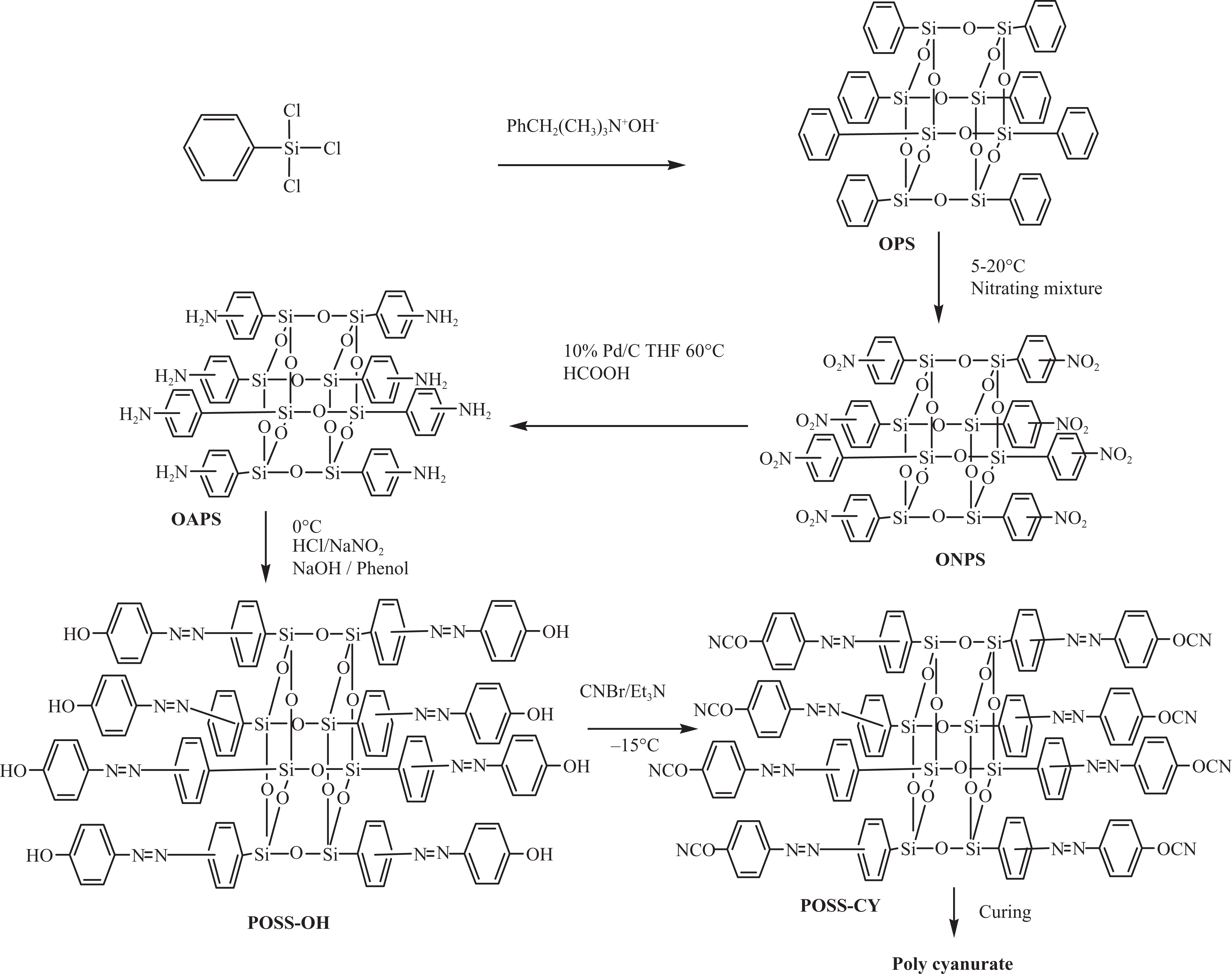
Schematic representation of the synthesis and curing of POSS-Cy. POSS-Cy : cyanate ester functionalized polyhedral oligomeric silsesquioxane.
Results and discussion
Synthesis of POSS-Cy
Phenyltrichlorosilane was converted into OPS in the presence of benzyl trimethyl ammonium hydroxide. The OPS was then treated with fuming nitric acid to yield ONPS. The nitrated ONPS was further reduced to octa (amino) phenyl silsesquioxane (OAPS) using Pd/C catalyst. The OAPS was reacted with phenol in the presence of NaNO2/HCl and NaOH to form hydroxy terminated POSS containing azo group (POSS-OH). The POSS-OH compound was subsequently converted into CE functionalized POSS (POSS-Cy) using CNBr. The synthesized POSS-Cy was characterized by FTIR, 1 H-NMR and 13 C-NMR.
Characterization of POSS precursors and POSS-Cy
In the FTIR spectrum of OPS (Figure 2 (a)), the band at 3,100–3,000 cm−1 corresponds to C-H stretching vibration of the aromatic ring. The bands at 1,250–980 cm−1 are due to the formation of Si–O–Si bonds. The bands at 735 and 507 cm−1 may be attributed to the bending vibrations of the C–H bond. In the 29 Si-NMR spectrum (Figure 3), the signal appearing at −65.78 corresponds to Si-O-Si.
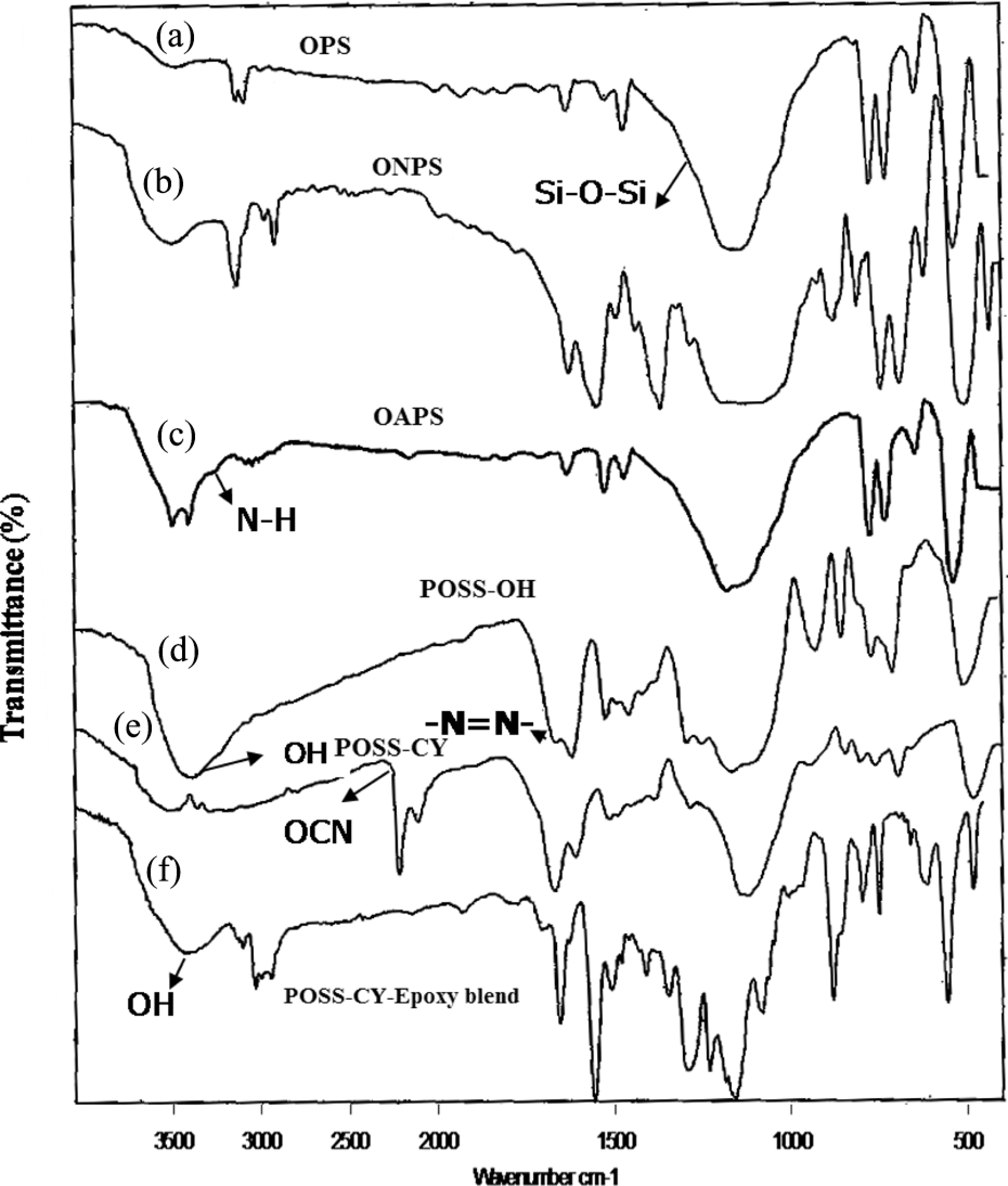
FTIR spectra of POSS precursors and POSS-Cy. FTIR : Fourier transform infrared; POSS-Cy: cyanate ester functionalized polyhedral oligomeric silsesquioxane.
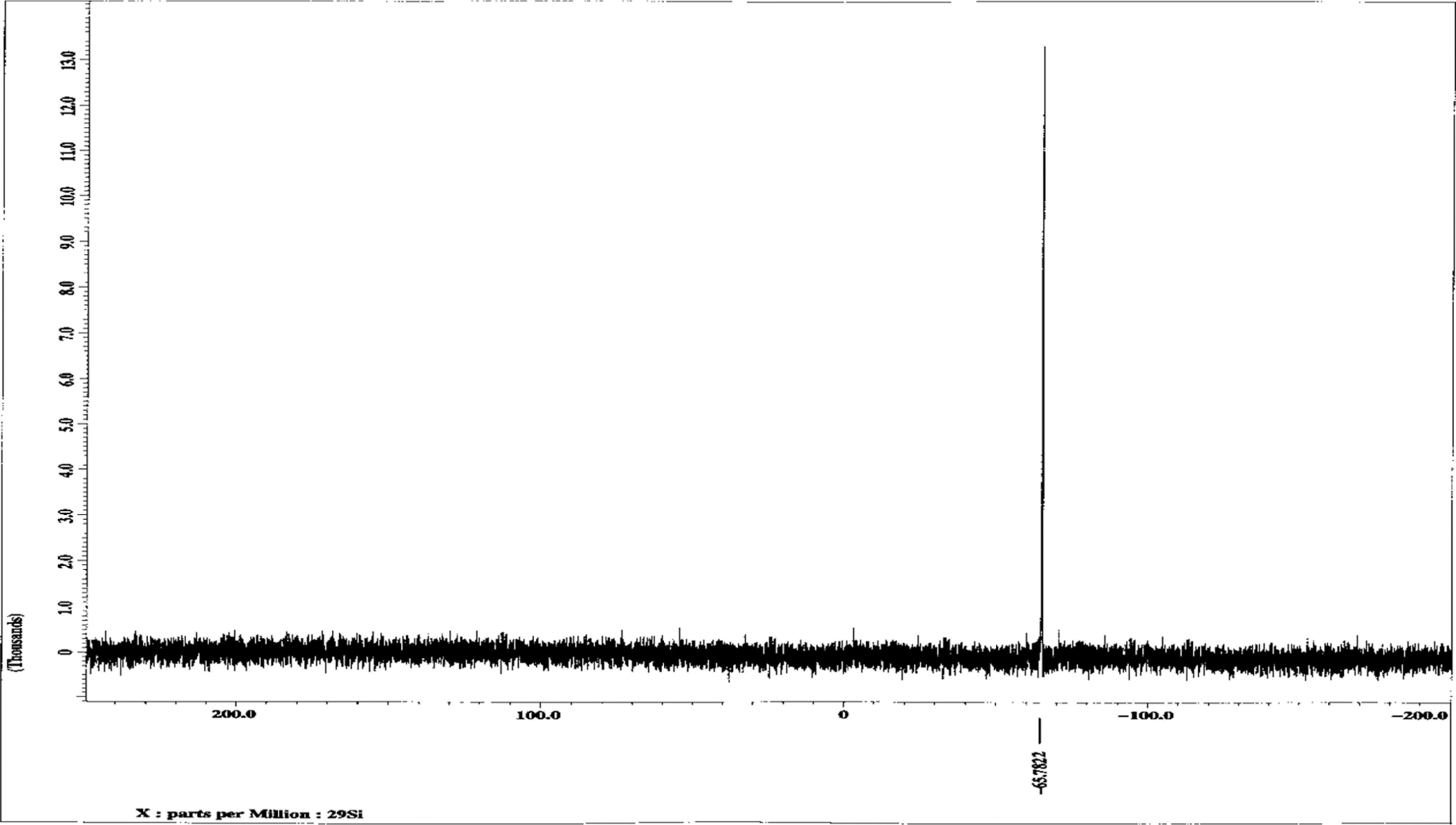
29 Si-NMR spectrum of OPS. NMR : nuclear magnetic resonance; OPS: octaphenyl silsesquioxane.
In the FT-IR spectrum of ONPS (Figure 2 (b)), the band at 3,100–2,850 cm−1 is due to the stretching vibrations of C–H bond. Aromatic stretching vibrations of C–C bond in the ring gives rise to a weak band at 1,620 cm−1. The bands at 1,527 and 1,340 cm−1 may be assigned to asymmetric and symmetric stretching vibrations of N–O bond. The bands observed around 1,250–975 cm−1 correspond to the stretching vibrations of Si–O–Si bond. The absorptions at 730 cm−1 and 507 cm−1 correspond to the bending vibrations of the C–H bond. In the 1 H-NMR spectrum of ONPS, the peaks between 8.42 and 7.47 ppm are assigned to aromatic protons. All the carbon atoms of the phenyl rings appear between 155.2 and 120.6 ppm in the 13 C-NMR spectrum of ONPS. In the 29 Si NMR spectrum of ONPS, the signals appearing at −79.1 and 82.8 correspond to Si-O-Si. The Mn, Mw and molecular weight distribution (MWD) were found to be 1,380, 1,460 and 1.05, respectively, as determined using GPC.
The bands at 3,355, 3,125–2,825, 1,600 and 1,438 cm−1 in the FTIR spectrum of OAPS (Figure 2 (c)) are due to the stretching vibrations of N–H, aromatic (C–H), aromatic C–C in the ring and bending vibrations of (C–H), respectively. The signals at 1,220–964 cm−1 may be assigned to the Si–O–Si bond. The bending vibrations of the C–H bonds show absorptions at 690 and 495 cm−1, respectively. In the 1 H-NMR spectrum (Figure 4) of OAPS, the aromatic proton signals appear between 7.3 and 6.2 ppm and the amino protons appear in the range of 5.1–4.4 ppm. All the carbon atoms of the phenyl rings appear between 115.4 and 153.2 in the 13 C-NMR spectrum of OAPS. In the 29 Si-NMR spectrum, the signals appearing at −73.5 and −79.1 correspond to Si-O-Si.
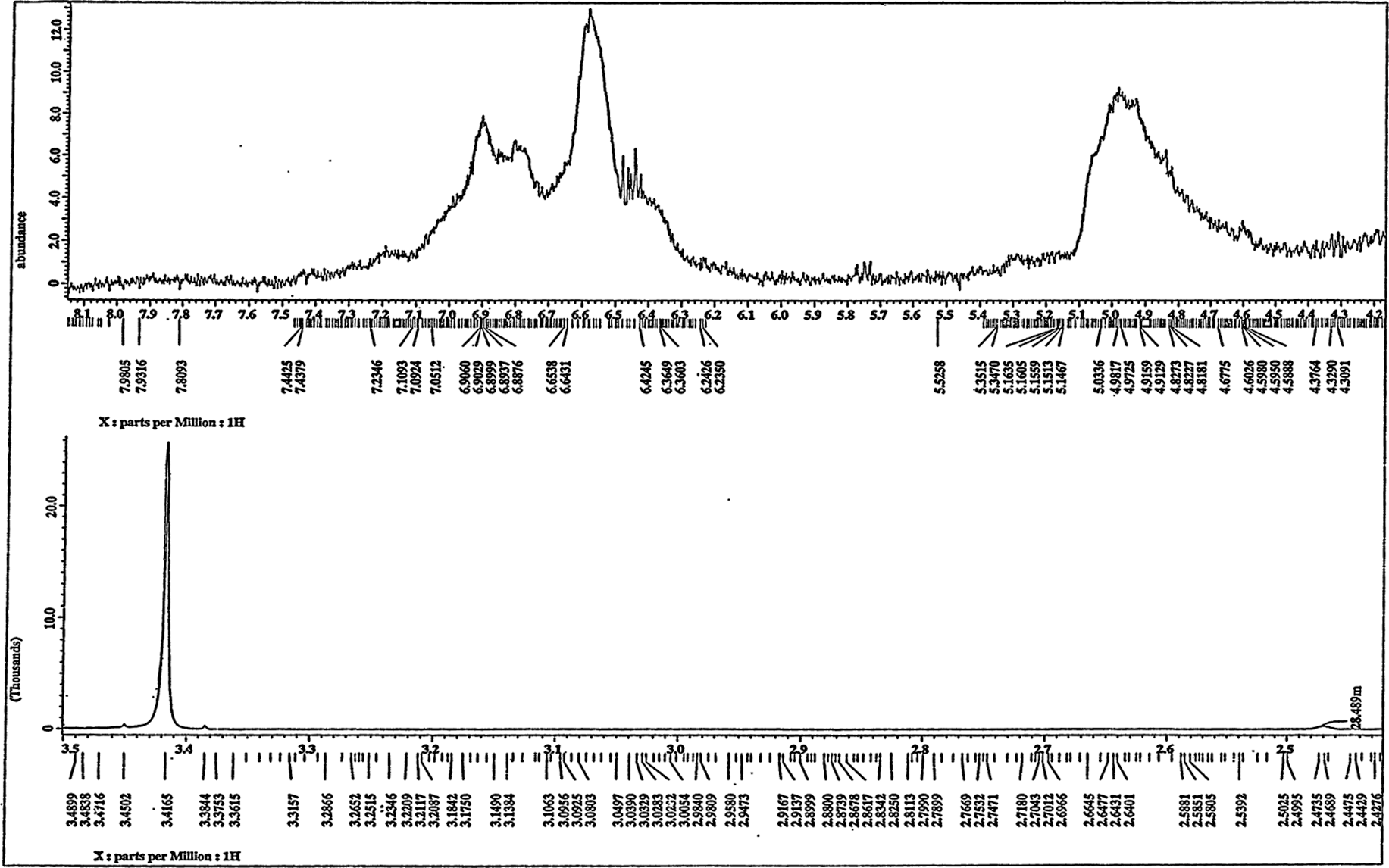
1H-NMR spectrum of octaaminophenyl silsesquioxane (OAPS). NMR : nuclear magnetic resonance.
In the FTIR spectrum (Figure 2) bands observed at 3,367 and 1,116 cm-1 may be attributed to the stretching vibration of the aromatic OH bond and stretching vibration of the Si--O--Si bond respectively. The signals between 6.92 and 7.93 ppm on the 1 H-NMR spectrum of POSS-OH are due to the aromatic protons. All the carbon atoms of the phenyl rings appear between 115.4 and 160.0 ppm in the 13 C-NMR spectrum. The Mn, Mw and MWD of POSS-OH were found to be 1,894, 2,080 and 1.09, respectively, as determined using GPC.
The POSS-Cy was characterized using FTIR, 1 H-NMR and 13 C-NMR. In the FTIR spectrum (Figure 2) bands observed at 2,267 and 1,116 cm-1 may be attributed to the stretching vibration of the OCN bond and stretching vibration of the Si--O--Si bond respectively. In the 1 H-NMR spectrum (Figure 5), the signals between 6.65 and 8.79 ppm are due to the aromatic protons. All the carbon atoms of the phenyl rings appear between 116.2 to 158.5 and 108.5 for OCN in the 13 C-NMR spectrum.
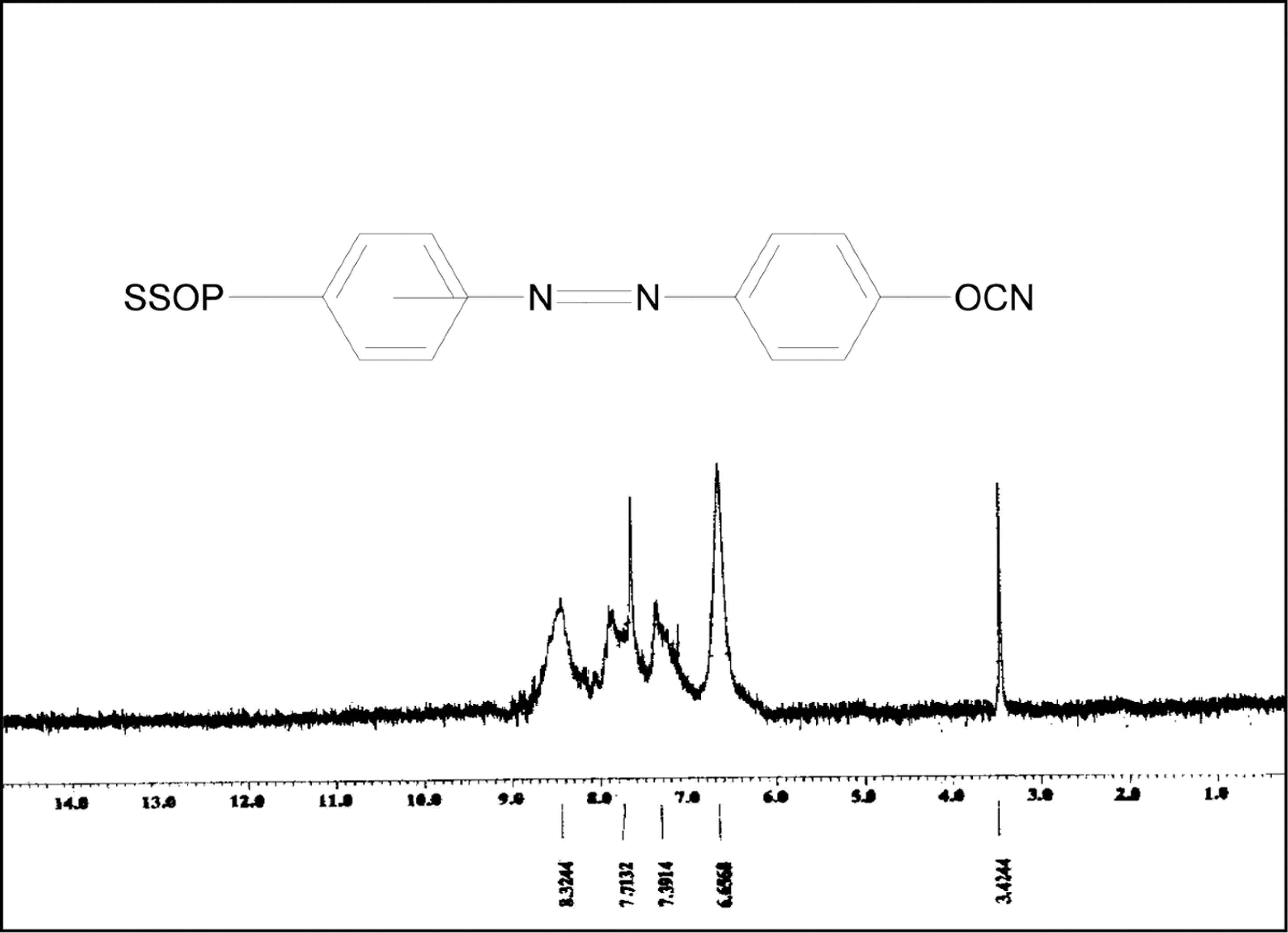
1H-NMR spectrum of cyanate ester functionalized POSS (POSS-Cy). NMR : nuclear magnetic resonance.
Epoxy/POSS-Cy blends
Preparation
Based on the cure data obtained from differential scanning calorimeter (DSC) and literature, the epoxy-DDM/POSS-Cy nanocomposites were prepared by adopting a cure cycle. Moldings of the epoxy/POSS-Cy blends were prepared by curing the molten resin mixture in a rectangular aluminum mold. The molten blend schedule is 120°C/1 h, 180°C/1 h and post cured at 220°C for 1 h.
Characterization
DSC
The curing reaction of epoxy/POSS-Cy/DDM resin system at different compositions was studied using DSC. The data obtained from DSC scans (Ti, Tmax, Tf) are furnished in Table 1. The DSC thermograms of the neat epoxy and blends are shown in Figure 6. All the epoxy/POSS-Cy systems show a single exothermic peak in the temperature range of 120°C–250°C. From Figure 6, it is also observed that 100% POSS-Cy system shows an exothermic peak maximum at 274°C. Heat of reaction of 100% Ep, 95%Ep/5% POSS-Cy, 90%Ep/10% POSS-Cy, 85%Ep/15% POSS-Cy and 100% POSS-Cy obtained from the DSC thermograms are 360, 359, 359, 358 and 354 J/g, respectively. The heat of reactions indicates that all the epoxy groups in the resin were cured with hardener completely. It is observed that 100% commercial epoxy system shows the peak maximum at (157°C). The exothermic peak indicates the curing temperature of the CE. With an increase in POSS-Cy content, onset curing temperature is also shifted to a higher value (105°C–108°C). The exothermic peak maximum of the blends is also shifted to higher temperature with an increase in the POSS-Cy content (157°C–163°C). Hence, the addition of POSS-Cy to commercial epoxy appears to decrease the rate of curing of the blend marginally. The peak maximum (Tmax) for the cure reaction increases with increase in POSS-Cy content in the blend.
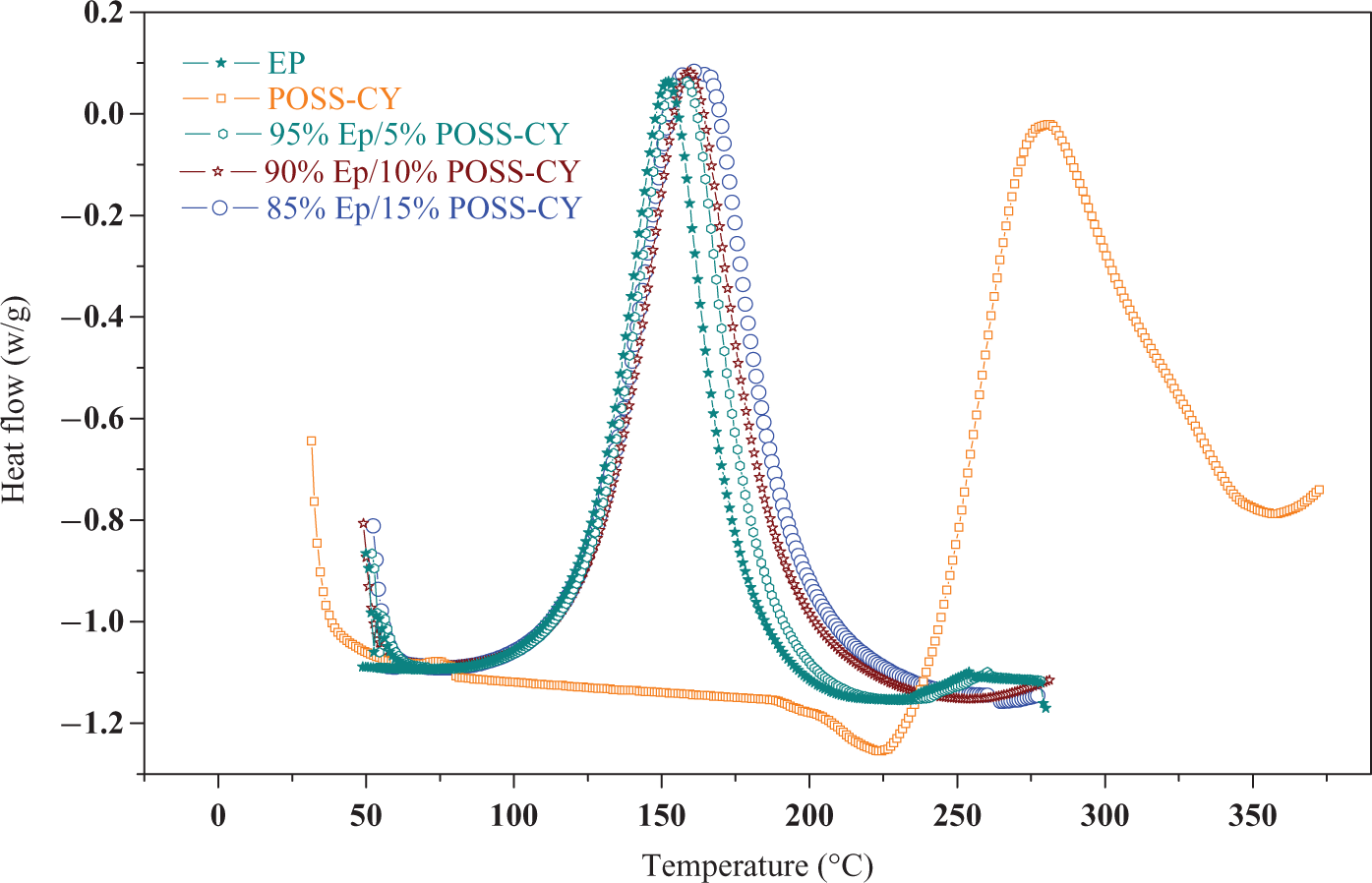
DSC curves of neat epoxy and Ep/POSS-Cy at various compositions. DSC: differential scanning calorimeter; POSS-Cy: cyanate ester functionalized polyhedral oligomeric silsesquioxane; Ep: epoxy.
DSC data of neat epoxy and Ep/POSS-Cy at various compositions.
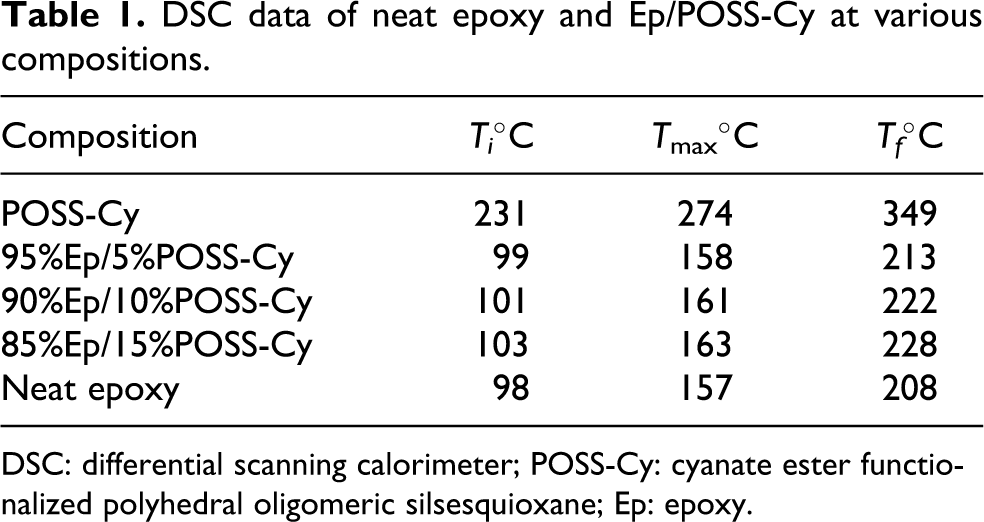
DSC: differential scanning calorimeter; POSS-Cy: cyanate ester functionalized polyhedral oligomeric silsesquioxane; Ep: epoxy.
TGA
TGA is an effective method to characterize the thermal stability of materials. Figure 7 shows the TGA curves of 100% Ep, 95%Ep/5% POSS-Cy, 90%Ep/10% POSS-Cy, 85%Ep/15% POSS-Cy and 100% POSS-Cy at a heating rate of 10°C/min; 10% weight loss temperature (T10%), initial decomposition temperature (Ti) and char yield obtained from the TGA curves are shown in Table 2. As can be seen from Table 2, T10% and char yield increase with increase in POSS-Cy content, indicating the improvement in thermal stability. 27 Similar behavior was observed by other authors also (thermal stability (T5%) and char yield (16.8-35.4 at 450°C) of epoxy/cyanate cured samples increases with increasing CE concentration (344.3°C-345.4°C)). 28 This enhanced thermal stability of the blends may be partly attributed to the excellent thermal stability of POSS-Cy. However, to understand the mechanism of increase in thermal stability by the addition of POSS-Cy further study is necessary.
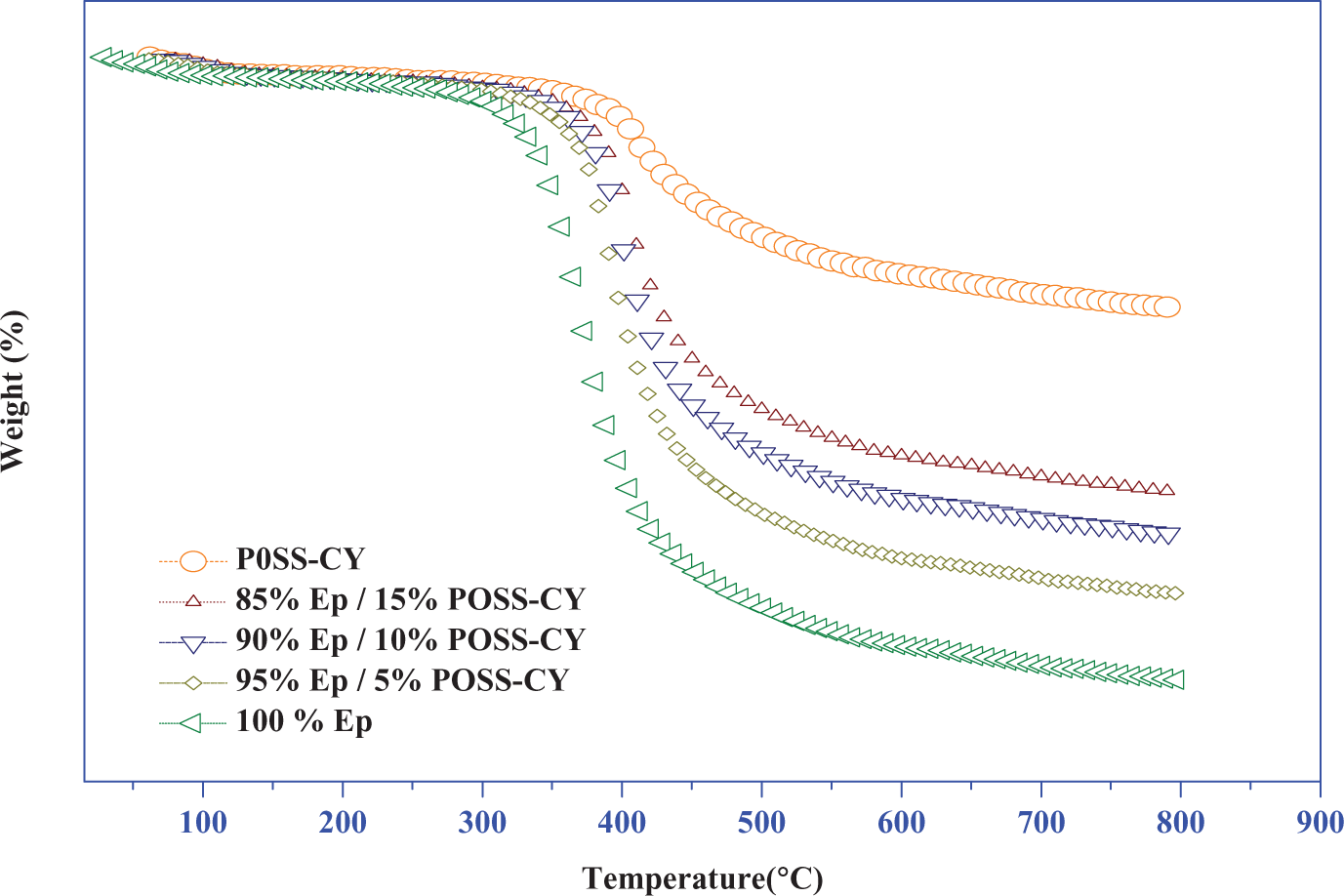
TGA curves of neat Ep and various Ep/POSS-Cy systems. TGA: thermogravimetric analysis; POSS-Cy: cyanate ester functionalized polyhedral oligomeric silsesquioxane; Ep: epoxy.
Thermal and mechanical properties of neat epoxy and Epoxy/POSS-CY at various compositions.
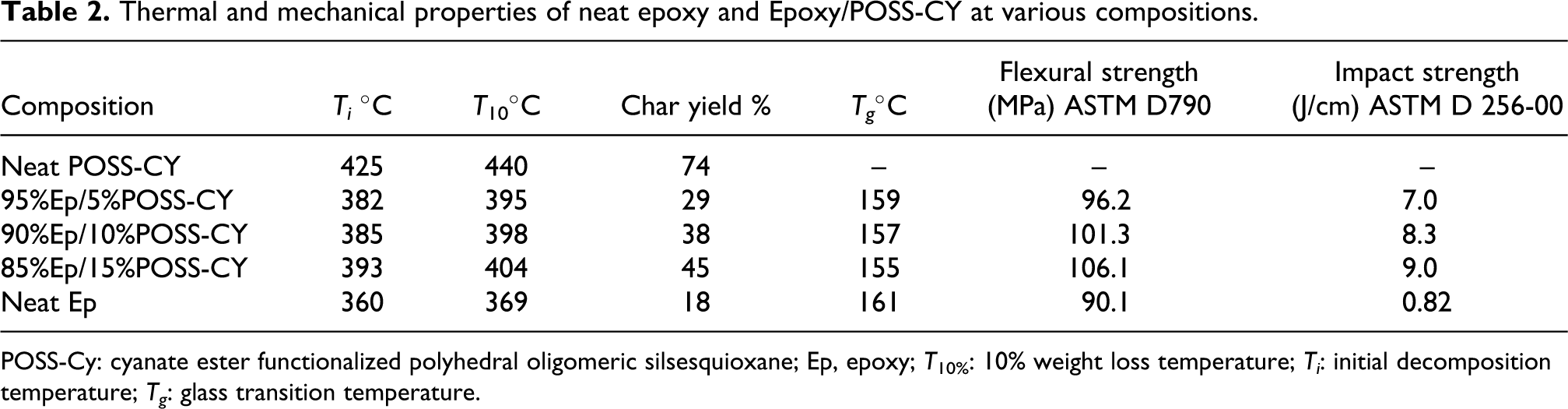
POSS-Cy: cyanate ester functionalized polyhedral oligomeric silsesquioxane; Ep, epoxy; T10%: 10% weight loss temperature; Ti: initial decomposition temperature; Tg: glass transition temperature.
Morphology of composites
The microstructural analysis of the composites was carried out using SEM to observe the dispersion of the POSS particles in the epoxy matrix. The fractured surface of the specimen was covered with gold to deionize the electrons on the surface. Figure 8 (a-d) show the micrographs of fractured surface of neat epoxy, 90% Ep/10% POSS-Cy with different magnifications. It is clear that there are some regions within the sample with well-dispersed POSS-Cy particles. POSS-Cy particles are highly hydrophilic and tend to bind together to form clusters due to agglomeration during processing. Higher magnification was applied to 10% POSS-Cy composite to closely monitor the dispersion of the POSS-Cy particles (Figure 8 (c) and (d)). From Figure 8 (c), it can be seen that the particles exist in small clusters due to agglomeration. The fracture surface of 10% POSS-CY shows that the POSS was dispersed in the epoxy system and phase separation also occurred to some extent.
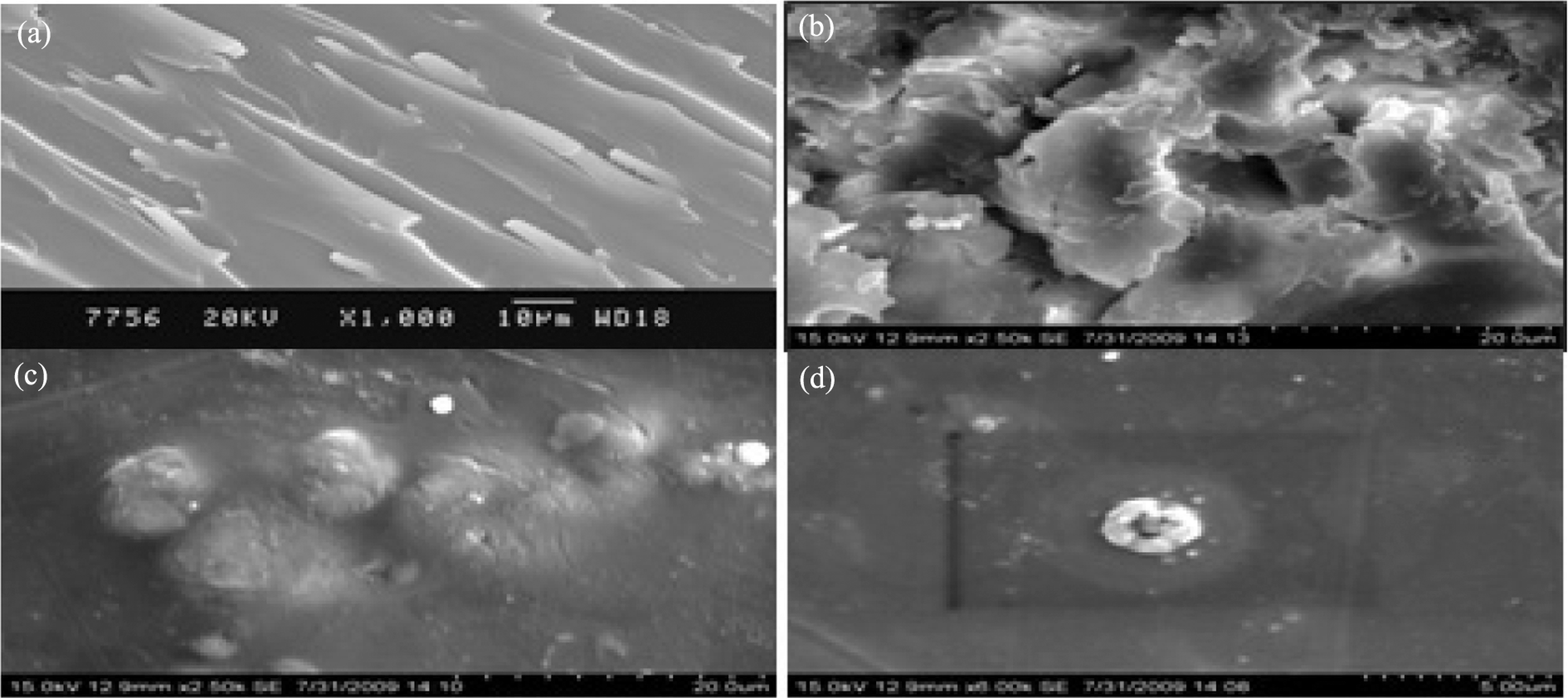
SEM image of impact fractured surface of a) Neat epoxy (10 µm), b) 90%Ep/10% POSS-Cy (20 µm), c) 90% Ep/10%POSS-Cy (20 µm), d) 90%Ep/10% POSS-Cy (5 µm). SEM: scanning electron microscopy; POSS-Cy: cyanate ester functionalized polyhedral oligomeric silsesquioxane; Ep: epoxy.
DMA
Glass transition temperature of cured epoxy/POSS-Cy blend system was studied using DMA. The data obtained from DMA scans are furnished in Table 2. The DMA curves of the epoxy/POSS-Cy blends are given in Figure 9. All the blends with varying cyanate content exhibit single glass transition temperature (Tg) in the range of 155°C–159°C. This observation proves the results that the coreaction of cyanate with epoxy resin is almost complete. Glass transition temperature of pure epoxy system was found to be 161°C. With increasing CE content in epoxy/POSS-cyanate blends (5%–15%), the Tg of the neat epoxy resin decreased to 159°C, 157°C and 155°C, respectively. This may be due to the formation of free volume in cyanate–epoxy blend system29.

DMA of the neat epoxy and Ep/POSS-cy system. DMA: dynamic mechanical analysis; POSS-Cy: cyanate ester functionalized polyhedral oligomeric silsesquioxane; Ep: epoxy.
Mechanical properties
Mechanical properties of neat epoxy system and 5%, 10% and 15% POSS-CY/epoxy system were studied. Flexural strength was measured using universal testing machine (UTM), and the values are furnished in Table 2. The test samples were prepared according to ASTM D790. Neat epoxy system shows the flexural strength of 90.1 MPa; 5%, 10% and 15% POSS-CY/epoxy systems show values of 96.2 MPa, 100.3 MPa and 106.2 MPa, respectively. The flexural strength of cyanate-modified epoxy system is found to increase with increase in cyanate concentration. The impact strength of the neat, 95%Ep/5% POSS-CY, 90% Ep/10%POSS-Cy and 85%Ep/85%POSS-Cy was found to be 0.82, 7.0, 8.3 and 9.0 J/cm. When POSS-Cy was incorporated in neat epoxy system, the impact strength was increased by 8.35 times. It shows that flexural strength and impact strength are found to increase on increasing the weight % of POSS-Cy in the neat epoxy system. The enhancement of impact and flexural strength may be attributed to the incorporation of rigid and hard POSS particles in the epoxy system through covalent bonds and also the formation of free volume and oxazolidine rings. Cured CE networks are known to be inherently tough due to the presence of ether linkages. Hence, incorporation of this material in epoxy resin should have enhanced the impact strength (toughness) of the epoxy resin from 0.82 to 7–9.
Conclusions
POSS functionalized CE (POSS-Cy) was synthesized by the treatment of hydroxy functionalized azo containing POSS (POSS-OH) with CNBr. All synthesized materials were characterized using FTIR, 1 H-NMR and 13 C-NMR. The thermal properties of neat epoxy system were improved while blending with POSS-based CE in various compositions. DSC studies illustrate that the cure temperature of the epoxy system increases with increase in cyanate content. DMA studies show that the Tg value of blend decreases with increase in cyanate content. The SEM studies reveal the presence of clusters of POSS leading to phase separation in the nanocomposite. The mechanical properties increase with increase in POSS-Cy content in the epoxy resin system.
Footnotes
Acknowledgement
The authors wish to thank University Grant Commission (UGC), New Delhi, India, and Council of Scientific and Industrial Research (CSIR), New Delhi, India, for their financial support.