






Abstract
In situ polymerization is an ideal technique to make a perfect dispersion of nanosilica into polymer matrixes. So, in this article, a novel silica-supported β-ketoamine nickel(II) dibromide precatalyst was efficiently prepared and used in in situ slurry polymerizations of norbornene (NB) to afford a highly productive NB addition polymerization system in combination with tris(pentafluorophenyl)borane (B(C6F5)3) cocatalyst. It exhibited productivity of 176.8 kg of polynorbornene (mol Ni)−1 h−1 at a mole ratio of B/Ni = 20, and the catalyst deactivation kinetics in the early stage of polymerization fitted well by the first-order deactivation kinetics up to about 60 min. The catalyst system was also effective for the copolymerization of NB and 5-norbornene-2-carboxylic acid methyl ester to produce the addition-type copolymers with high-molecular-weights (3.28–3.45 × 10⁵ g mol−1) and incorporation rates (8.1–49.1%) as well as narrow molecular weight distributions (polydispersity index = 1.6). The nanoparticles were confirmed to be well-dispersed in the polymer matrix with each individual nanoparticle surrounded by polymer. Transparency of nanocomposites could be kept up to about 60%. The brittleness of polymer was obviously improved, and the tensile strength of polymer film could be as high as 47.8 MPa.
Keywords
Introduction
The vinylic polymerization of norbornene (NB) affords materials with a saturated aliphatic backbone. They exhibit a combination of properties, such as high heat stability and transparency, which make them ideal for many electronic, optical and other applications.1,2 However, these polymers suffer some weakness in brittleness, solubility and adhesion due to the absence of polar groups in the polymer, which is a drawback in the use of the polymers for the construction of devices. Polynorbornenes (PNBs) with polar groups could be accessed by addition polymerization of functionalized NBs or by copolymerization of these monomers with NB. Moreover, late transition metal complexes, such as Ni or Pd derivatives, have been proved to be more resistant to deactivation. Especially, β-ketoamine late transition metal complexes have drawn interest due to their higher thermal stability and versatility, by changing the imine substituents, for tailoring their reactivity and volatility. 3 Since the development of the homogenous catalysts for NB additional polymerization, few studies on heterogeneous catalysts have been carried out. 4 In the mid 1990s, Brookhart introduced α-diimine Ni(II) late transition metal catalysts for the slurry-phase polymerization of ethylene and reported on covalently anchored complexes to enhance activity and prevent leaching from the surface, which is a method that allows ready use of a range of activators and improves the activities.5,6
As we know, heterogenized catalysts possesses advantages of both heterogeneous catalysis and homogeneous reaction, such as good morphology, little reactor fouling, high powder density, high activity, controlling over the polymer microstructure and over molecular weight distribution.
It is well known that the homogeneous catalysts have been successfully supported using various methods on different types of carriers and applied in olefin polymerization.7–10 It is noted that nanoparticles support can offer more advantages over bulk supports, such as increasing surface area, mass transfer, better heat and decreased internal surface area. 11
In addition to the physical properties of PNBs induced by the presence of functional group in the polymer, there is also an interest in functionalized polymers related to supported transition metal catalyst. In this respect, it is desirable to have easy and versatile laboratory methods for preparing polymer nanocomposites with different flexibility. 12 The polymer nanocomposite was prepared via in situ coordination polymerization providing good mechanical properties due to strong interaction between the uniformly dispersed nanosupport and the resin matrix resulted in the formation of a kind of organic/inorganic network. 13 In the present article, we developed an interesting approach to the vinylic addition PNBs nanocomposites with polar functionalities that circumvents the problems of the classical polymerization synthetic approach by supported catalyst. To the best of our knowledge, this is the first study to use nanosilica-supported β-ketoamine Ni(II) complex for addition homopolymerization and copolymerization of NB with 5-norbornene-2-carboxylic acid methyl ester (NB-COOCH3). We also described the influences of polymerization conditions on the copolymers properties of NB and its derivatives.
Experimental sections
Materials
All manipulations of air- and/or moisture-sensitive compounds were performed in a N2-filled glove box or using Schlenk techniques.
3-[3-(Triethoxysilyl)propyl]pentane-2,4-dione was synthesized in our previous work. 14 n-Butyllithium (n-BuLi; 2.5 M in hexane) was purchased from Alfa Aesar (Heysham, UK). (1,2-Dimethoxyethane)nickel(II) bromide ((DME)NiBr2) 15 was synthesized according to the literature procedure. Nanosilica (WACKER HDK N20, SBET = 200 m2 g−1) was compacted with distilled water, then calcined at 500°C under air for 2 h and treated under vacuum (1.34 Pa) at 500°C for 12 h (support referred to as N-20). Tris(pentafluorophenyl)borane (B(C6F5)3, 95%) and NB (98%) were purchased from Aldrich (St. Louis, USA) and were purified by drying over sodium and distilling at 106°C under N2 atmospheres; it was then dissolved in toluene to make a 0.4-g mL−1 (4.25 M) solution. NB-COOCH3 was purchased from Puyang Huicheng Chemical (Puyang, China) and dried over anhydrous calcium chloride and vacuum distilled over calcium hydride under argon atmosphere. Solvents were purified using standard procedures.
Characterization
Infrared spectra of all the samples were performed on potassium bromide (KBr) pellets in the 4000–400 cm−1 region by accumulating 32 scans using a Shimadzu IRPrestige-21 Fourier transform infrared (FTIR) spectrophotometer. The nuclear magnetic resonance (NMR) spectra were collected on a Bruker ARX 400 NMR spectrometer and with deuterated chloroform as the solvent and tetramethylsilane (δ = 0) as the internal reference. Elemental analyses (EAs) were characterized by means of EA with Vario Elementar III. Mass spectra were recorded by electrospray ionization (ESI) methods; high-resolution mass spectra (HRMS (ESI)) were measured on a Bruker Daltonics APEXIII 7.0 TESLA FTMS. Surface areas were determined by the Brunauer–Emmett–Teller (BET) method on a surface area and pore size analyzer (ST-2000). The amount of metals loaded onto the nanosilica particles were determined by inductively coupled plasma-atomic emission spectrometry (ICP-AES, OPTIMA 5300DV); samples were treated with a mixture of hydrogen fluoride, nitric acid and H2SO4 in a Teflon reactor. The x-ray photoelectron spectroscopies (XPSs) were performed on Kratos AXIS Ultra, operating at 15 kV and 15 mA with an alumina target (Al Kα, hν = 1486.71 eV). Gel permeation chromatography (GPC) curves and data were conducted with a Breeze Waters system equipped with a Rheodyne injector, a 1515 Isocratic pump and a Waters 2414 differential refractometer using polystyrenes as the standard and chloroform as the eluent at a flow rate of 1.0 mL min−1 and 25°C through a Styragel column set, Styragel HT3 and HT4 (19 × 300 mm2, 103 + 104 Å) to separate molecular weight (Mw) ranging from 102 to 107. Thermogravimetric analysis (TGA) was performed under nitrogen with TA Q600 SDT at a heating rate of 10°C min−1 and with a sample size of 5–10 mg from room temperature to 800°C. Scanning electron microscopy (SEM) images were carried out on an environmental scanning electron microscope (FEI Quanta 200) and TESCAN vega 3; samples were coated with a gold film. For cross-sectional view studies, the films were fractured under liquid nitrogen first. Transmission electron microscopy (TEM) observations were carried out at 100 kV on a JEOL 1200 EXII microscope. Samples for TEM measurements were dispersed in chloroform in an ultrasonic bath for 10 min, and then a drop of the dispersed solution were deposited on a copper grid. The compositions of the polymers were confirmed by energy dispersive spectroscopy (EDS) attached to the TEM. The glass transition temperatures (Tgs) of the polymers were performed on a Shimadzu DSC-60 differential scanning calorimeter with a constant heating/cooling rate of 10°C min−1. Powder x-ray diffraction patterns were measured on a Bruker D8 Focus x-ray diffractometer operating at 30 kV and 20 mA with a copper target (θ = 1.54 Å) and at a scanning rate of 0.5 min−1. Ultraviolet (UV)–visible spectra of the samples were obtained on a Lambda 750 spectrophotometer (Perkin-Elmer, Wellesley, Massachusetts, USA).
Silica-supported β-ketoamine ligand Ni(II) dibromide catalyst
Synthesis of (E)-4-(phenylimino)-3-(2-(triethoxysilyl)ethyl)pentan-2-one
3-[3-(Triethoxysilyl)propyl]pentane-2,4-dione (15.5 mL, 50 mmol), phenylamine (4.47 mL, 49.0 mmol) and a catalytic amount of p-TsOH were added to 200 mL toluene, 16 then the mixture was heated to reflux to remove water by a Dean-Stark trap for 12 h, after which the solvent was removed under vacuum. Pentane was then added and the resulting suspension was filtered to remove the catalyst. After the solvent was removed under vacuum, the product was distilled under low pressure to afford 10.1 g (26.5 mmol, 54%) as yellow oil. Boiling point 213°C at 0.03 mmHg. Anal. calcd. for C20H33NO4Si: C, 63.29; H, 8.76; N, 3.69. Found C, 63.52; H, 8.56; N, 3.75. Infrared (IR) (cm−1): 3397 (w, νN–H); 3051, 3020 (w, νAr–H); 2974, 2928, 2884 (s, νC–H); 1741 (s, νC=O); 1604, 1506 and 1386 (s, νC–C, Ar); 1104 (s, νC–O); 987 (s, νC–N); 1080 and 956 (s, νSi–O). Proton-nuclear magnetic resonance (1H NMR) (400 MHz, CDCl3, 295 K, δ/ppm): 0.69 (m, 2H, CH2Si), 1.22 (t, 9H, CH3CH2OSi), 1.37 and 1.54 (t, CH2CH2Si), 2.03 (s, 3H, C(N)CH3), 2.23 (s, 3H, C(O)CH3), 2.16, 2.30 (m, CH2CH2CH2Si), 3.81 (q, 6H, CH3CH2OSi), 7.05, 7.15, 7.32 (5H, NHC6H5), 13.6 (NHC6H5). Carbon-nuclear magnetic resonance (13C NMR) (400 MHz, CDCl3, 295 K, δ/ppm): 196.5, 158.9, 139.2, 128.9, 126.0, 125.3, 124.1, 119.8, 106.6, 58.2, 43.3, 32.6, 29.8, 27.7, 27.2, 24.2, 22.5, 18.3, 16.4, 11.9, 10.6. Mass spectra (ESI, m/z): 402.2 [M+Na]+. HRMS (ESI): calcd. for C20H33NO4Si [M+Na]+ 402.22; found 402.22.
Grafting (E)-4-(phenylimino)-3-(2-(triethoxysilyl)ethyl)pentan-2-one onto silica (silica-acai)
N-20 (3.0 g, treated according to the literature procedure 17 ) was immersed into a dry toluene (50 mL) solution under argon, and the mixture was stirred vigorously to form a uniform suspension. (E)-4-(Phenylimino)-3-(2-(triethoxysilyl)ethyl)pentan-2-one (0.76 mL, 2.0 mmol) was added dropwise via syringe and heated to reflux for 18 h. After cooling to the room temperature, the solids were filtered and washed with toluene and dichloromethane (3 × 20 mL each). The solids were Soxhlet extracted with dichloromethane overnight, dried under vacuum and stored in glove box until further use. A 3.5 g (74.4%) of silica-acai, [CH3C(O)][CH3C(NHC6H5)]CH(CH2)3SiO1.3/12SiO2, was obtained as light yellow powder. The content of functional groups was determined by TGA. The weight loss of 11.9% corresponds to 0.6 mmol g−1 content of β-ketoamine ligand groups. Anal. calcd. for [CH3C(O)][CH3C(NHC6H5)]CH(CH2)3SiO1.3/12SiO2 (%): C, 18.62; H, 2.36; N, 1.25. Found (%): C, 18.73; H, 2.01; N, 1.46. IR (cm−1, KBr disk): 1723 (s, νC=O); 1604 (s, νC=C, Ar); 1104 (s, νC–O); 1080 and 956(s, νSi–O). The BET surface area was 158 m2 g−1, so the average β-ketoamine group density was 2.3 ± 0.2 molecules nm−2 or 2888 ± 251 on a particle with a 20-nm diameter.
Synthesis of NiBr2[CH3C(O)][CH3C(NC6H5)]CH(CH2)3SiO1.3/12SiO2 [(silica-acai)NiBr2]
After treating with trimethyl chlorosilane, 2.0 g of silica-acai was suspended in 50 mL of toluene solution and stirred with magnetic stirrer to form a uniform suspension under argon. The suspension was cooled to −78°C and n-BuLi (2.5 M in hexanes, 0.7 mL, 1.8 mmol) was added slowly by stirring for another 10 min. (DME)NiBr2 (0.29 g, 1.2 mmol) was then added slowly. After that, the temperature was raised to −60°C andmaintained at room temperature for 9 h. The product was collected by centrifugation (8000 r min−1, 10 min) and washed with toluene, dichloromethane and ethanol (3 × 20 mL each) under N2 atmospheres, dried and stored under an argon atmosphere in a glove box. IR (cm−1, KBr disk): 1636 (s, νC=O). The BET surface area was 122 m2 g−1. XPS analysis indicated that the nickel loading was 0.52 mmol g−1, so the average coordinated nickel density was 1.98 ± 0.01 molecules nm−2 or 2488.4 ± 12.6 nickel atoms on a particle with a 20-nm diameter.
Polymerization procedure
In a typical experiment, a 100-mL Schlenk flask was charged with 10–20 mg of supported catalyst, a magnetic stir bar and an amount of B(C6F5)3 solid in the glove box. The sealed reactor was then transferred to a hot bath at desired temperature; dry toluene and NB (4.25 M, in toluene solution) were added under argon to maintain the total volume at 10 mL. Copolymerization of NB with NB-COOCH3 was started by the successive addition of NB-COOCH3 and 1 mL solution of the supported catalyst to the solution of B(C6F5)3 and NB. Several hours later, an immediate increase in the viscosity of the mixture was observed, and the mixture was then quenched with 100 mL of a 10:1(v/v) ethanol/hydrochloric acid mixture. The polymeric product was obtained as a white solid by filtration, dried overnight in vacuo at 60°C and weighted. IR (cm−1): 2947, 2866 (νC–H); 1732 (νC=O), 1454 (νC–C), 1261 (δC–H), 1099, 1018, 941. 1H NMR (400 MHz, CDCl3, 295 K, δ/ppm): 0.7–0.9, 0.95–1.11, 1.75–1.9, 2.26–2.38, 2.6–2.8, 3.5–3.7. 13C NMR (400 MHz, CDCl3, 295 K, δ/ppm): 29.8–32.5, 34.4–37.4, 39.0–44.8, 45.5–55.1, 175–178.
Results and discussion
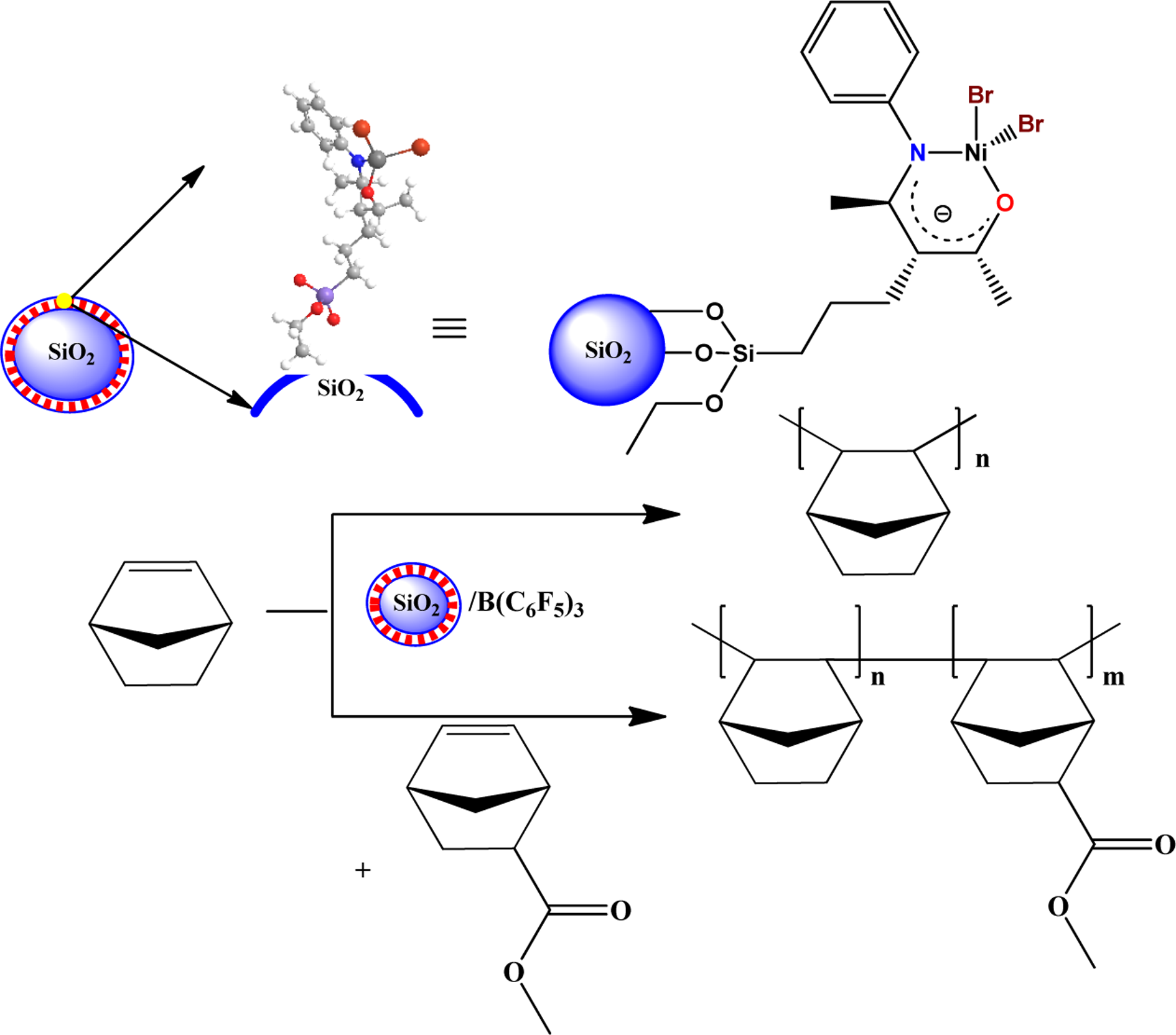
Figure 1 represents the method of grafting the NiBr2[CH3C(O)][CH3C(NC6H5)] onto the nanosilica support. First, N-aryl-substituted β-ketoamine ligand was synthesized by refluxing condensation reaction of the corresponding dione and phenylamine in toluene. Second, (DME)NiBr2 was added to coordinate with the functionalized β-ketoamine ligand. The structures of the products and the polymers obtained in each step were characterized by FTIR, 1H NMR and 13C NMR spectra. Moreover, the different characterizations allow us to monitor the evolution of catalysts at each step of the syntheses.
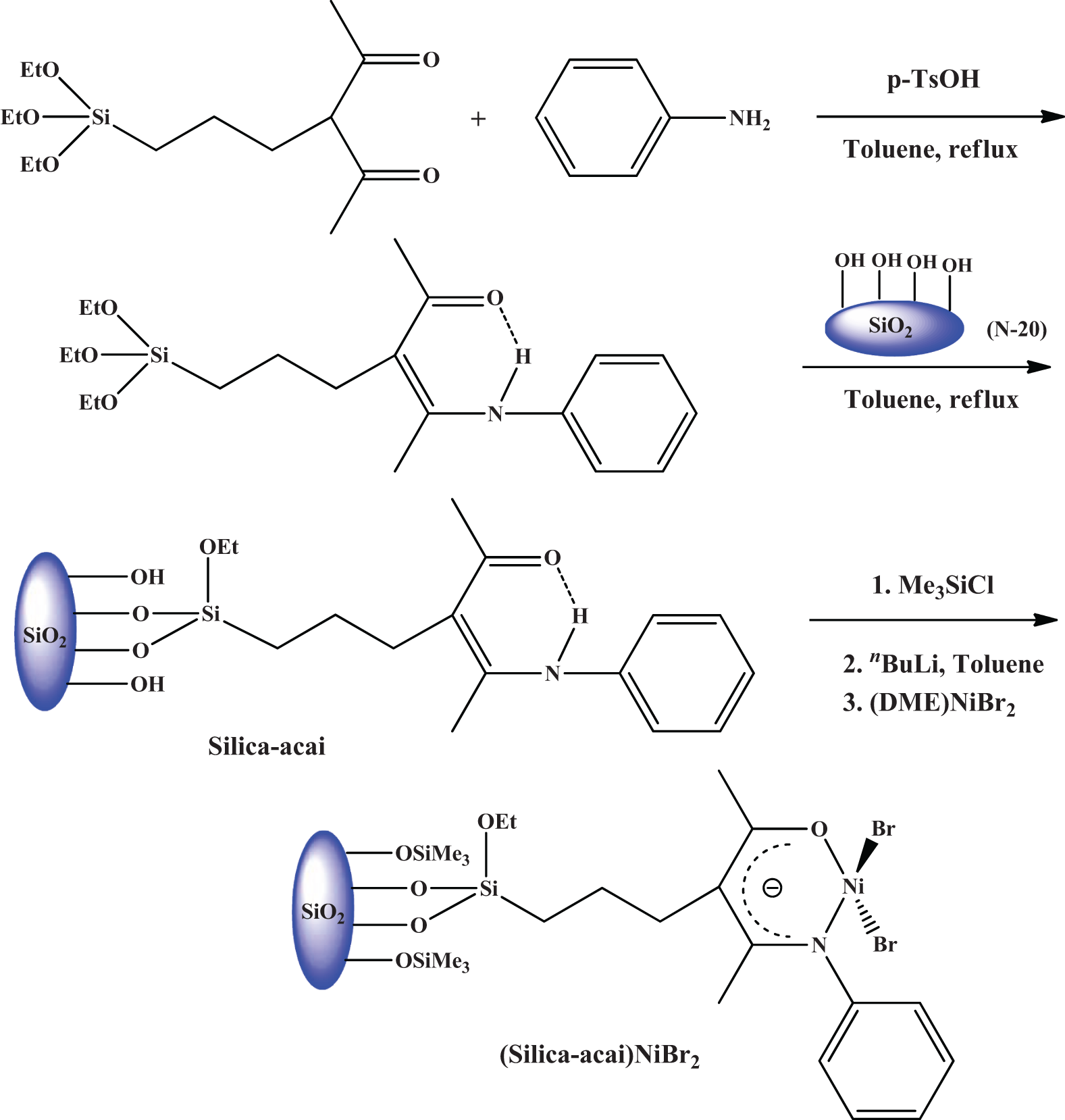
Synthesis of silica-supported β-ketoamine nickel(II) dibromide precatalyst.
Catalyst preparation and characterization
The synthetic route of the supported catalyst is shown in Figure 1. The infrared spectrum of N-20 showed a broad absorption at 3500–3700 cm−1, which attributed to H-bonded silanols. After the reaction with [CH3C(O)][CH3C(NHC6H5)]CH(CH2)3Si(OEt)3, the band of silanols has greatly relieved, while new bands, assigned to ν(C–H) and δ(C–H) vibrations, appear in the 3000–2700 and 1500–1300 cm−1 regions. Moreover, the spectrum can clearly show the carbonyl group stretching vibrations of the β-ketoamine ligand at 1723 cm−1 and SiO2 vibrations bands at 1079, 959, 793 and 469 cm−1 (Figure 2), which indicated that the functional β-ketoamine ligand was successfully grafted onto the silica.
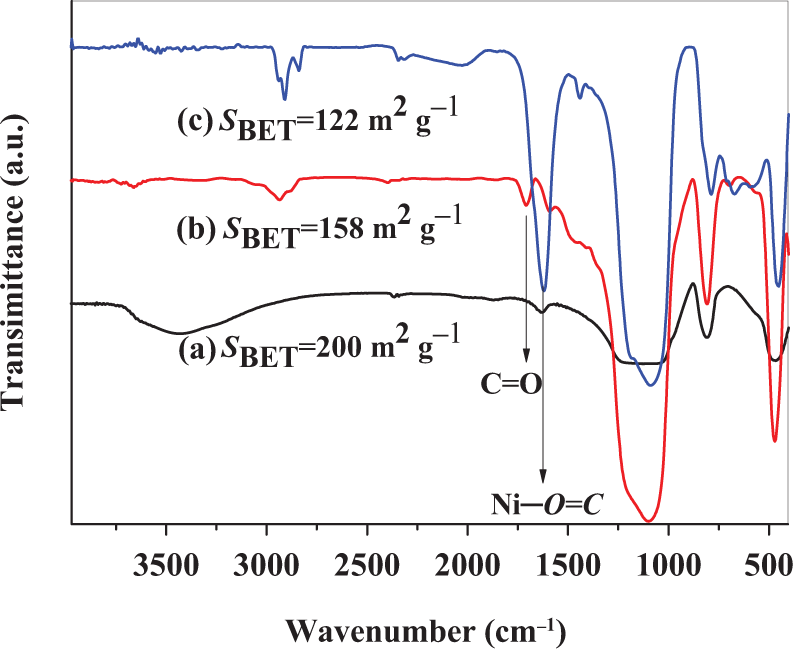
FTIR spectra of (a) N-20, (b) silica-acai and (c) (silica-acai) NiBr2.
The content of β-ketoamine group on the nanosilica was calculated by TGA. The thermogravimetric curve of silica-acai performed under a nitrogen atmosphere from room temperature to 800°C exhibited three pronounced weight loss steps between 0 and 800°C (Figure 4). The first step, below 200°C (6.6%), is corresponding to the loss of water on silica support due to the strong water adsorption of the sample. The second step, between 200 and 500°C (6.6%), is corresponding to the loss of organic moieties on silica support and allows a determination that is equal to 0.6 mmol g−1, giving the stoichiometric formula [CH3C(O)][CH3C(NHC6H5)]CH(CH2)3SiO1.3/12SiO2, and the result is consistent with the EA. The third step, above 500°C (1%), is corresponding to the loss of hydroxyl on the silica surface. The considerable decrease in the SBET area of catalysts compared with the parent support results from the chemical modification of the surface (covering surface OH groups by organosilicon groups). BET surface area of the functional silica with β-ketoamine group is 158 m2 g−1, whereas the average coupling agent density is 2.3 ± 0.2 molecules nm−2 or 2888 ± 251 β-ketoamine groups on a particle with a 20-nm diameter. The FTIR spectrum of silica-supported β-ketoamine Ni(II) precatalyst can clearly show the appearance of two new absorption bands at 1600 and 1520 cm−1, which can be attributed to the Ar and C=O stretching vibrations of the β-ketoamine group coordinated to nickel. Moreover, the decrease in the intensity of the band strengths at 1728, 1701 and 1620 cm−1 observed in the IR spectrum of silica-acai indicated that the silica particles grafted β-ketoamine ligand was further exchanged with [(DME)NiBr2].
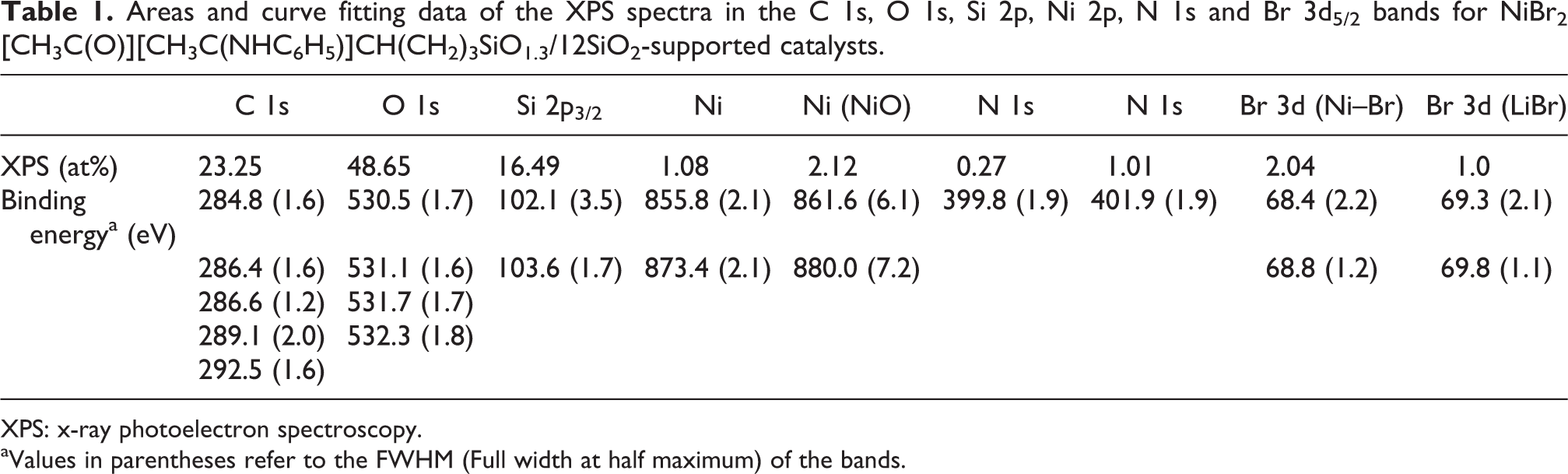
Using XPS as a surface analytical method, with its capability of identifying binding information, the chemical nature of the compositional changes in the samples was investigated. Figure 3 displays XPS survey spectra of silica-supported β-ketoamine Ni(II) precatalyst. The peaks at binding energy are about 68.8, 103.6, 284.8, 401.9, 532.8 and 855.6 eV, which are attributed to Br 3d, Si 2p, C 1s, N 1s, O 1s and Ni 2p. For these surface atoms contents, obtained by the area of the relevant bands in the high-resolution spectrum, their binding energies are presented in Table 1. Moreover, the different components of Br 3d, Si 2p, C 1s, N 1s, O 1s and Ni 2p photoelectron peaks are shown in Figure 3. The different peaks are typically analyzed by Gaussian-resolved for the components shown, and the data are analyzed by looking at total peak ratios.
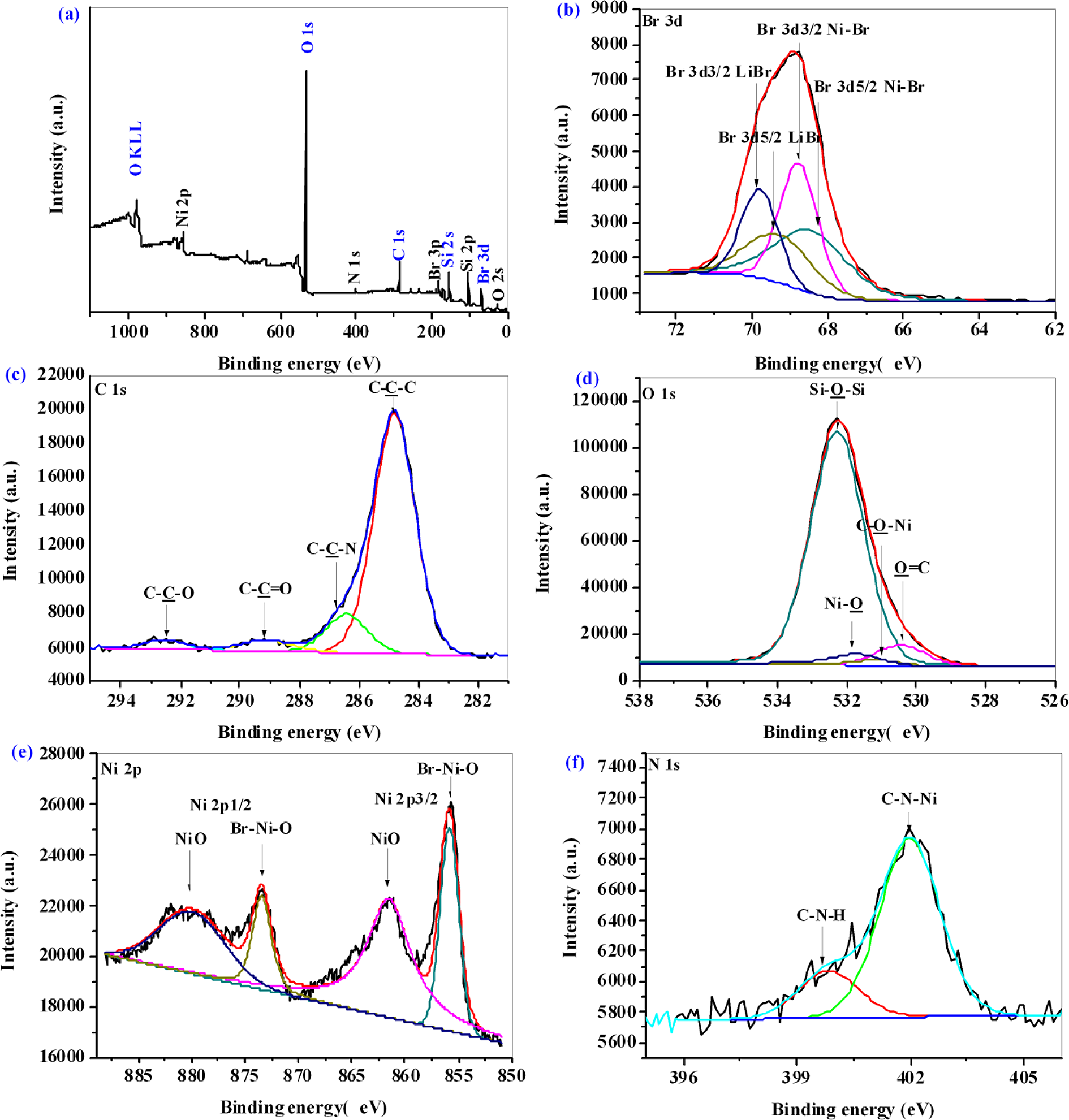
XPS wide scan and each core level spectra of silica-supported β-ketoamine nickel(II) dibromide precatalyst: (a) Wide scan, (b) Br 3d5/2, (c) C 1s, (d) O 1s, (e) Ni 2p and (f) N 1s.
Areas and curve fitting data of the XPS spectra in the C 1s, O 1s, Si 2p, Ni 2p, N 1s and Br 3d5/2 bands for NiBr2[CH3C(O)][CH3C(NHC6H5)]CH(CH2)3SiO1.3/12SiO2-supported catalysts.
XPS: x-ray photoelectron spectroscopy.
aValues in parentheses refer to the FWHM (Full width at half maximum) of the bands.
The total area of the N/Si is 1/12.9 and is in accordance with the formula NiBr2[CH3C(O)][CH3C(NC6H5)]CH(CH2)3SiO1.3/12SiO2. Moreover, Br–Ni–O/Ni–O–C/Ni–N–C/Si = 1/1/1/13.7 is also in accordance with the formula. The Gaussian resolved four peaks were found at 855.8, 873.4, 861.6 and 880.0 eV for Ni with different chemical environment which corresponding to Ni(II) and NiO, respectively. 18 Although the total amount of Ni(II) on the silica should not be obtain from the XPS result because of the information depth, after being calculated according to ICP-AES, the ratio of Ni(II)/NiO could be obtained with 1/1.96 and the loading Ni(II) amount was 0.52 mmol g−1 of catalysts.
In the O 1s region, a band at 530.5 ± 0.1 eV with a low-energy shoulder at about 531.1 ± 0.1, which corresponds to O from the β-ketoamine and to O binding with Ni atom, respectively. In the C 1s region, a band at 289.1 ± 0.1 eV is observed, which is consistent with the double bonded oxygen from β-ketoamine group. The Br 3d5/2 and 3d3/2 band in supported catalysts appears at 68.8 eV, which, respectively, can be attributed to the Br atom bonded to Ni complex and Li. 19 The ratio of Ni–Br/LiBr can be obtained with 2.04. In the Si 2p3/2 region, the result can confirm two different chemical surroundings corresponding to Si–O–Si and C–Si–O. The area ratio is 1/12. 20 The N 1s band in supported catalysts appears at 401.9 eV, which can be attributed to the N atom bonded to Ni complex. 21
Homopolymerization of NB
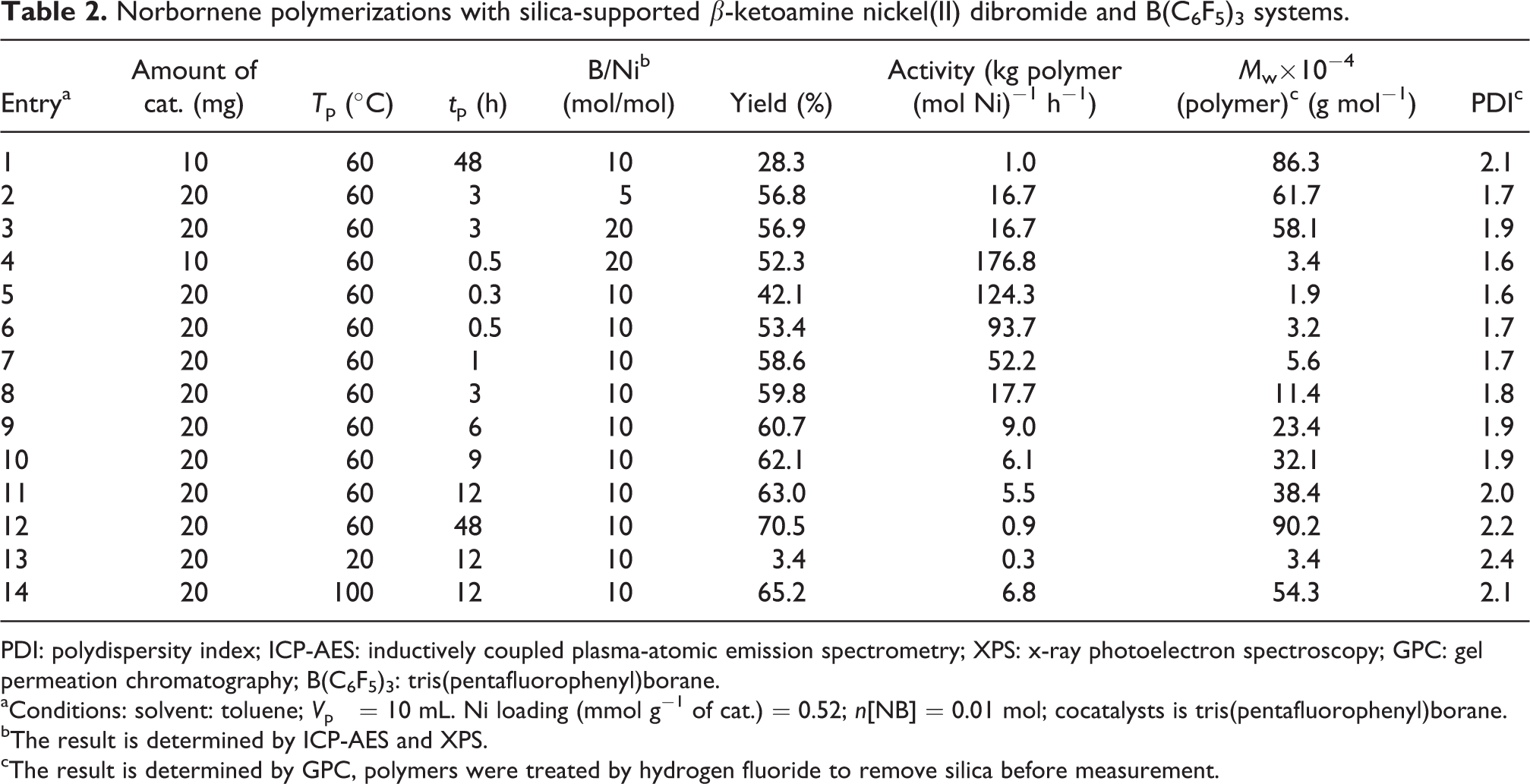
Figure 4 shows the polymerization results of NB with the supported catalysts. Polymerization of NB was carried out for different times at designed temperature using toluene as the solvent catalyzed by the supported catalysts in combination with B(C6F5)3. The vinyl-type polymerization mode of NB was confirmed by infrared spectroscopy, 1H NMR and FTIR spectra of the PNB polymers showed no absorption bands in the region of 5.0–6.0 ppm and 1640 cm−1, respectively, which otherwise would indicate the presence of double bonds 22 (Figures 5 and 6). The polymerization results were summarized in Table 2. To investigate the influence of B(C6F5)3 molar ratio on the homopolymerization activity with certain added catalyst and polymerization time, a series of polymerizations were carried out with the variations in [B]/[Ni] molar ratio, When molar ratio of [B]/[Ni] from 5/1 up to 20/1, a considerably increased activity and a higher conversion of 59.8% was ultimately obtained at 10/1 (entry 8 in Table 2). These results indicated that B(C6F5)3 was sufficient for the reaction of the active species at this ratio. Neither an excess of cocatalyst nor the catalyst was useful for yield improvement, but the polydispersity index (PDI) would become broader when catalyst increases. The highest activities in solution could be obtained at a B/Ni ratio of 20, which was 176.8 kg of PNB (mol Ni)−1 h−1, possibly due to the active species fully activated by adding half of catalyst. A higher amount of nickel centers produce more heat that inhibits activity by insufficient removal. Another explanation is that not every nickel center is accessible for monomer in case of the higher added catalysts. Generally, yield of polymerization grows up with increasing catalyst loading.
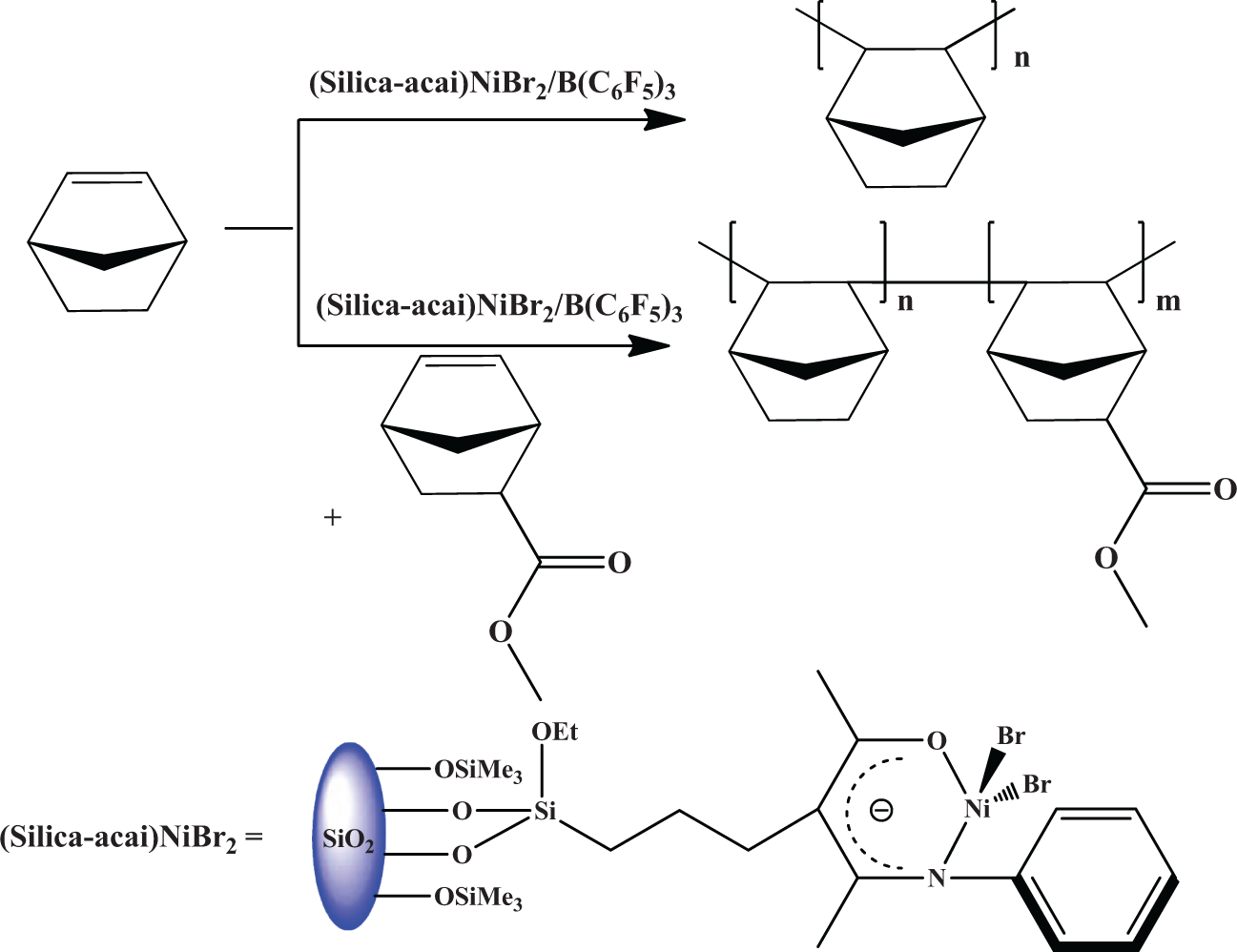
In situ homo- and copolymerizations route of NB with NB-COOCH3 by silica-supported β-ketoamine nickel(II) dibromide and B(C6F5)3 systems.
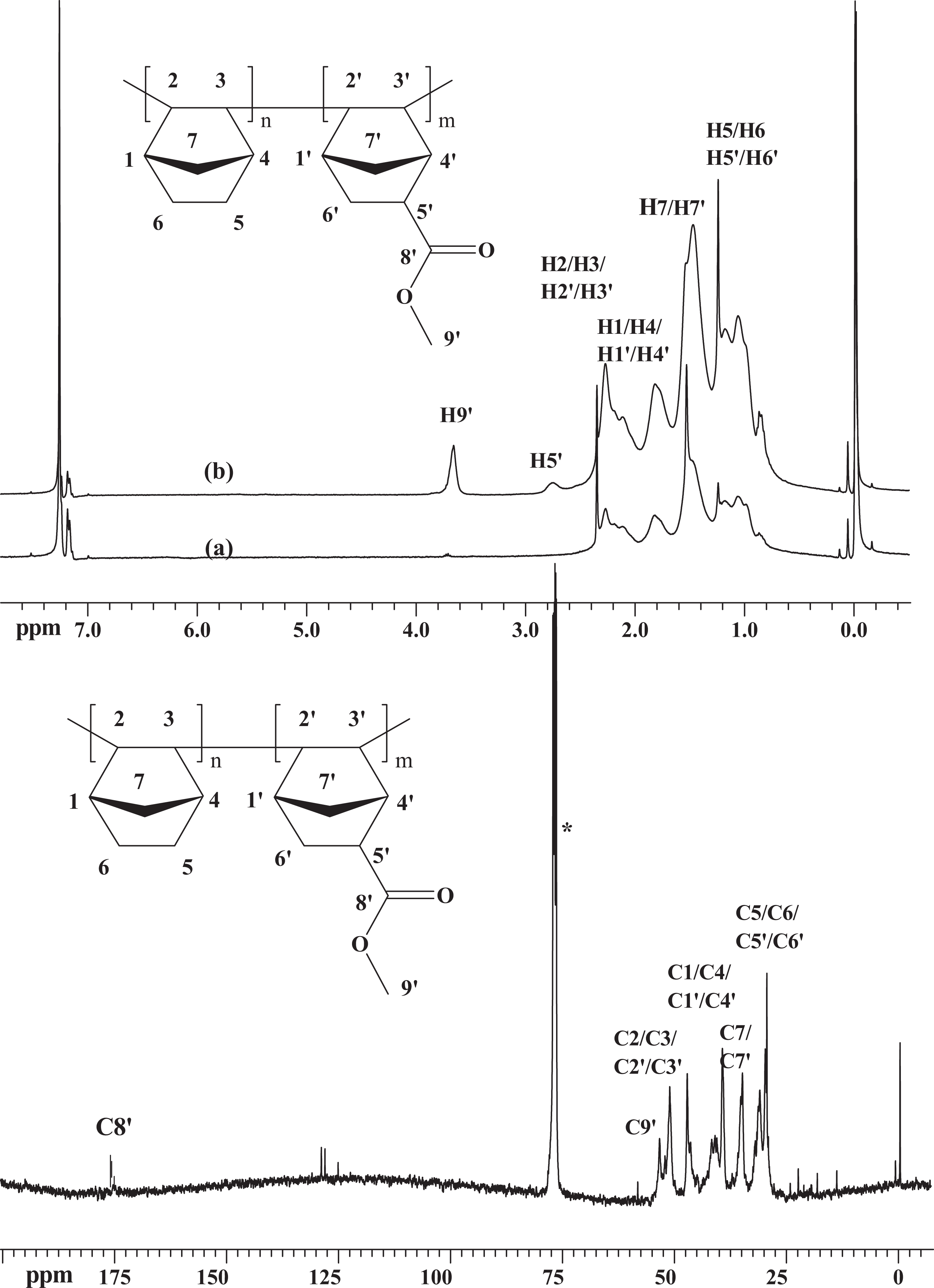
1H NMR and 13C NMR spectra of poly(NB-co-NB-COOCH3) with (a) 0% and (b) 8.1% obtained by silica-supported β-ketoamine nickel(II) dibromide and B(C6F5)3 systems.
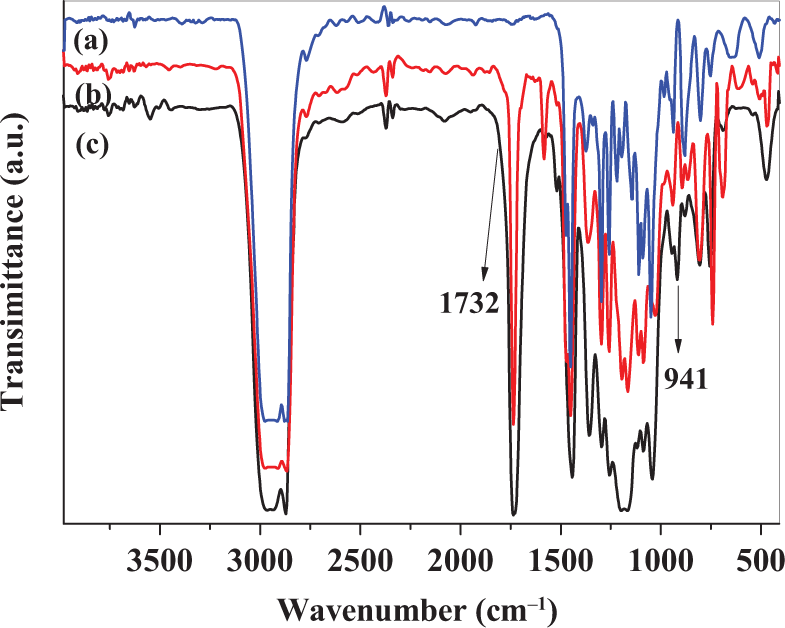
FTIR spectra of poly(NB-co-NB-COOCH3) with (a) 0%, (b) 8.1% and (c) 49.1% of NB-COOCH3 molar ratios by silica-supported β-ketoamine nickel(II) dibromide and B(C6F5)3 systems.
Norbornene polymerizations with silica-supported β-ketoamine nickel(II) dibromide and B(C6F5)3 systems.
PDI: polydispersity index; ICP-AES: inductively coupled plasma-atomic emission spectrometry; XPS: x-ray photoelectron spectroscopy; GPC: gel permeation chromatography; B(C6F5)3: tris(pentafluorophenyl)borane.
aConditions: solvent: toluene; Vp = 10 mL. Ni loading (mmol g−1 of cat.) = 0.52; n[NB] = 0.01 mol; cocatalysts is tris(pentafluorophenyl)borane.
bThe result is determined by ICP-AES and XPS.
cThe result is determined by GPC, polymers were treated by hydrogen fluoride to remove silica before measurement.
The Ni(II) complex that covalently attached to the surface of nanosilica showed very high activity initially and then decreased constantly during whole polymerization time at the same temperature and catalyst weight situation. The activity decreased due to the increase in the active sites embedded in polymer particles, but initially, it has higher activity due to the larger surface area, better heat transfer and mass transfer rates. 23 Moreover, increase in the temperature was helpful for enhancing the activity and has higher conversions of 65.2%, and an activity of 6.8 kg of PNB (mol Ni)−1 h−1 were achieved at 100°C. Compared with homogeneous catalytic system, the nanosilica-supported Ni(II) catalyst was stable, which is quite different from that observed with the homogeneous catalysts showing a typical decay-type kinetics. 24 This shows that the active species generated from the covalently linked metal complex onto the silica surface are thermally more stable than those from the homogeneous catalysts. The active components on the silica surface prevent them from various deactivation processes, such as bimolecular deactivation, which is common with homogeneous catalysts.
Copolymerization of NB and NB-COOCH3
The NB-COOCH3 insertion ratio in copolymers can be controlled to be 8.1–49.1 mol% at a content of 10–50 mol% of the NB-COOCH3 in the monomer feed ratios, and the weight average molecular weights of the copolymers are dependent on the NB-COOCH3 feed content. The results are presented in Table 3. The deactivation effect with an increasing NB-COOCH3 content in the feedstock composition may be caused by the coordination of ester-functional group with nickel atom of catalyst.
Copolymerization of NB and NB-COOCH3 catalyzed by silica-supported β-ketoamine nickel(II) dibromide and B(C6F5)3 systems.
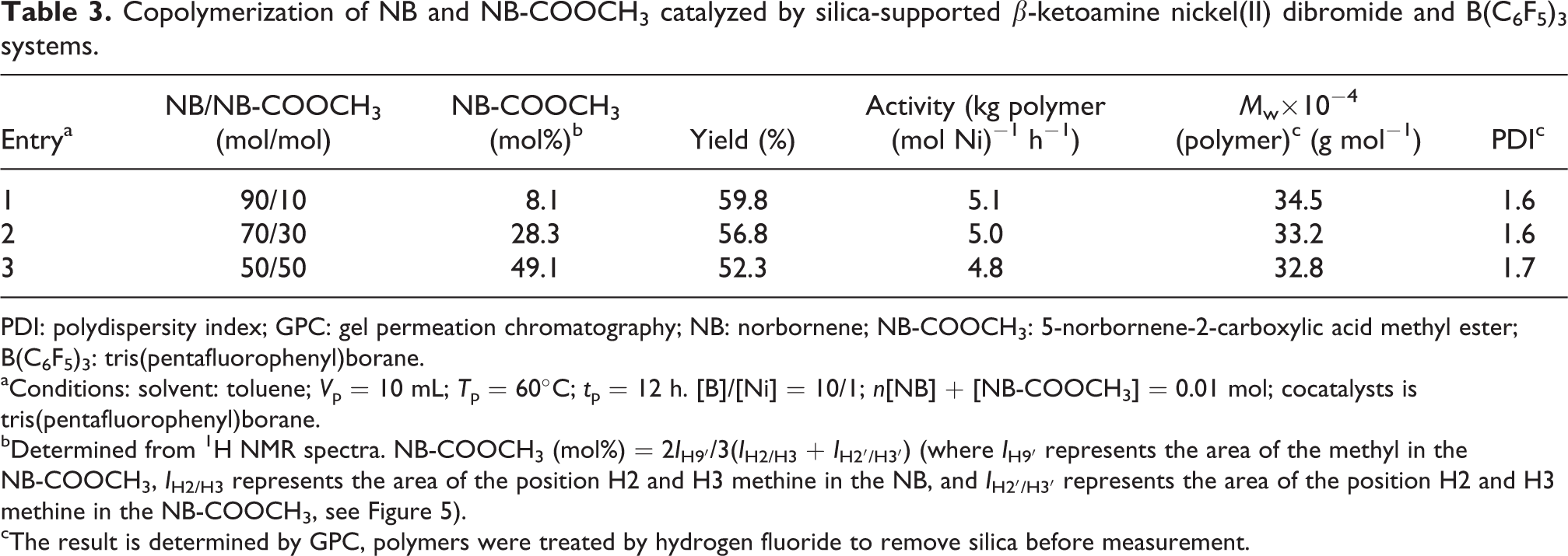
PDI: polydispersity index; GPC: gel permeation chromatography; NB: norbornene; NB-COOCH3: 5-norbornene-2-carboxylic acid methyl ester; B(C6F5)3: tris(pentafluorophenyl)borane.
aConditions: solvent: toluene; Vp = 10 mL; Tp = 60°C; tp = 12 h. [B]/[Ni] = 10/1; n[NB] + [NB-COOCH3] = 0.01 mol; cocatalysts is tris(pentafluorophenyl)borane.
bDetermined from 1H NMR spectra. NB-COOCH3 (mol%) = 2IH9′/3(IH2/H3 + IH2′/H3′) (where IH9′ represents the area of the methyl in the NB-COOCH3, IH2/H3 represents the area of the position H2 and H3 methine in the NB, and IH2′/H3′ represents the area of the position H2 and H3 methine in the NB-COOCH3, see Figure 5).
cThe result is determined by GPC, polymers were treated by hydrogen fluoride to remove silica before measurement.
Compared with our previous work, the insertion ratio is higher than that at the same monomer feed ratios due to the polar tolerate of the active species on the supported increasing.
Catalyst activity and deactivation model
In situ polymerization yields of silica hybrid PNB nanocomposites versus reaction time data are shown in Figure 7. Each data point represents an independent polymerization experiment. The results are in accordance with our previous work with supported palladium catalyst.
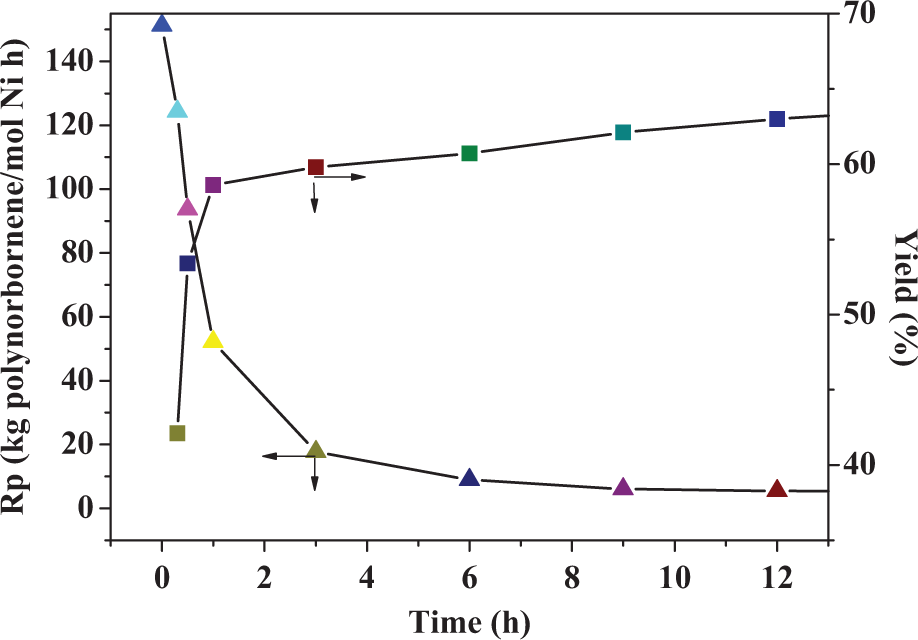
Polymer yields and catalyst activities versus reaction time for norbornene polymerization with silica-supported β-ketoamine nickel(II) dibromide and B(C6F5)3 systems. (Conditions: solvent: toluene; Vp = 10 mL. Tp = 60°C; Ni loading (mmol g−1 of cat.) = 0.52; amount of cat. = 20 mg; n[NB] = 0.01 mol; cocatalysts is B(C6F5)3.) B(C6F5)3: tris(pentafluorophenyl)borane.
To understand the observed phenomena of polymerization rate for the supported catalyst system, we adopt the method used in the literature. 25 Figure 8 showed that the rate data were reasonably well fitted up to about 60 min of reaction time by a single straight line, suggesting that the first-order deactivation model is justifiable for this time period.
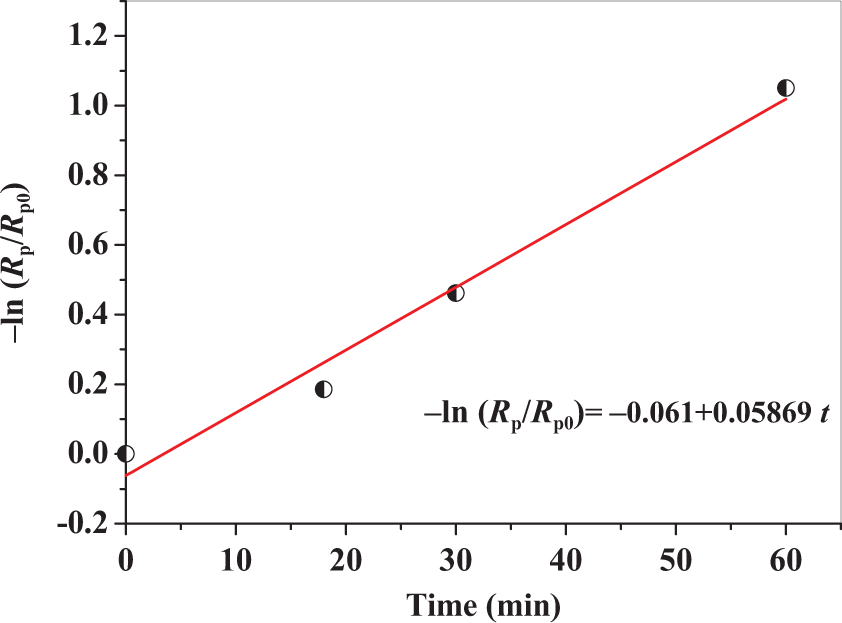
Linear fitting of first-order catalyst deactivation model: Rp0 ≡ Řp0/[Ni]0 = η0ψ0κp[M]bWm, where Řp0 = 1.46 g (gcat min)−1, [M]b = 1.0 mol L−1, η0ψ0κp = 26.8 L mol−1 min−1, Rp0 = 2.52 × 10³ g mol−1 Ni min−1 (obtained by linear fit of Rpt = Rp0 + At), η0, ψ0, κp and A are the empirical parameters; [M]b = constant, which is the monomer concentration at the catalytic site; Wm is the molecular weight of monomer (g mol−1); −ln(Rp/Rp0) = ln η0/η + κdt.
Polymer morphology
Figure 9 shows SEM images of the support catalyst particles and polymers obtained with different polymerization time. No obvious changes in the size and distribution of silica were observed by the immobilization of metal complex, except for the decrease in SBET, which is due to the organic groups grafted onto the nanosilica surface. As the polymerization time increases, the size of polymer particles enlarges (20 nm → 200 nm → 700 nm → 1500 nm). The leaching-free features were confirmed by its no trace of Ni detected from the TEM sample made from the filtrate separated from the reactor in TEM/EDS analyses.
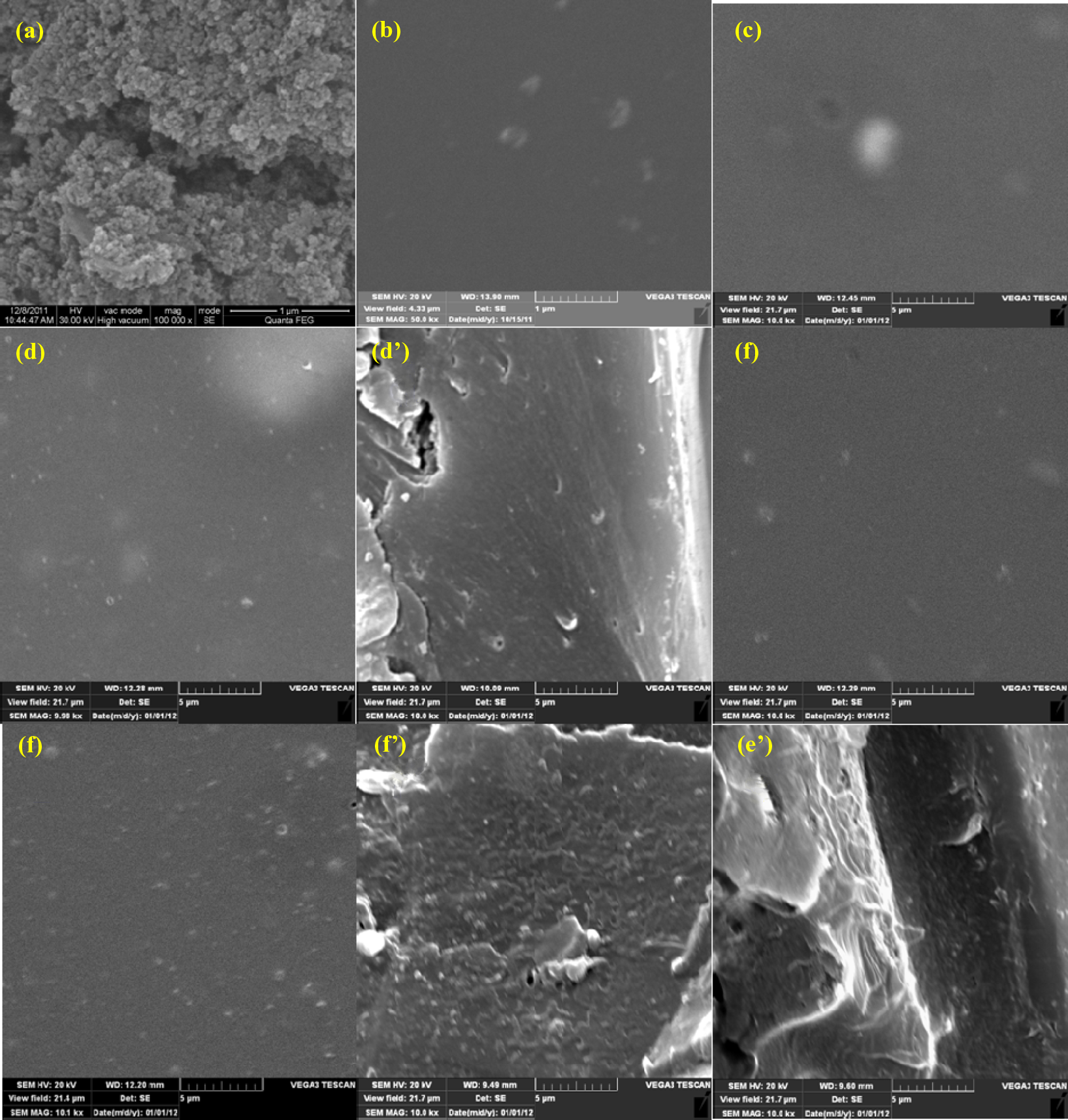
SEM images of (a) silica-supported β-ketoamine nickel(II) dibromide. (b) PNB obtained by silica-supported β-ketoamine nickel(II) dibromide and B(C6F5)3 systems, polymerization time = 3 h. Diameter of polymer particles is average 200 nm. (c) Polymerization time = 48 h. Diameter of polymer particles is average 1550 nm. (d and d′) Polymerization time = 12 h. Diameter of polymer particles is average 700 nm. (e and e′) Poly(NB-co-NB-COOCH3) with 8.1% NB-COOCH3 molar ratios, polymerization time = 12 h. Diameter of polymer particles is average 1000 nm. (f and f′) Poly(NB-co-NB-COOCH3) with 49.1% NB-COOCH3 molar ratios, polymerization time = 12 h. Diameter of polymer particles is average 700 nm. In which (d′), (e′) and (f′) were section view. Scale bars: (a) 1 μm, (b) 10 μm, (c) 10 μm, (d) 5 μm, (d′) 5 μm, (e) 5 μm, (e′) 5 μm, (f) 5 μm and (f′) 5 μm. General polymerization condition: catalyst = 5.8 μmol of Ni, Solvent: toluene; Vp = 10 mL. n[NB] + n[NB-COOCH3] = 0.01 mol.
The PNB sample was analyzed by TEM with an energy dispersive spectrometer. Figure 10 showed that the catalysts particles were located at the center of the spherical polymer particles. EDS indicated that the peaks corresponding to Si and O were attributed to nanosilica support. No peaks assigned to Ni were observed because Ni atom is either wrapped in the polymer or removed by alcohol and acid. Peaks assigned to Cu were attributed to copper grid.
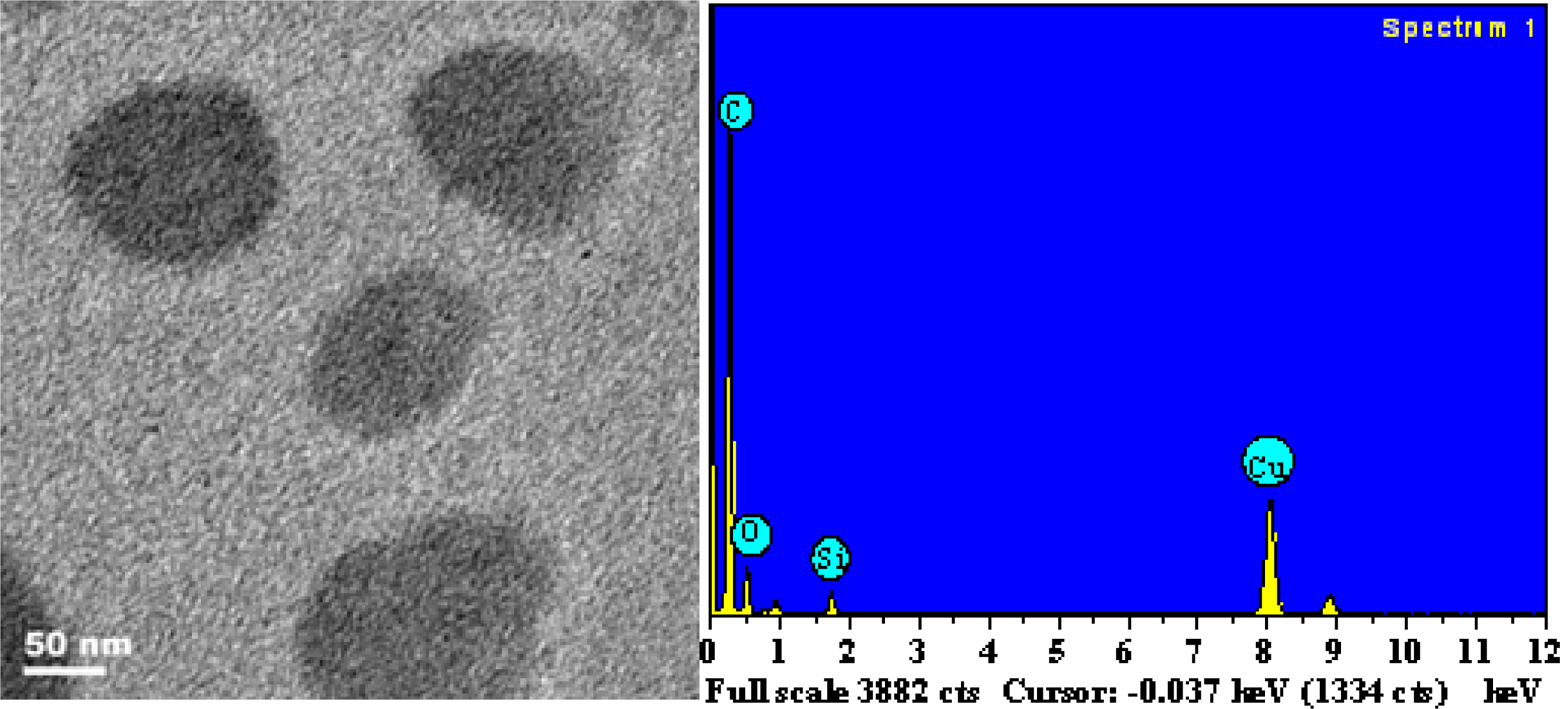
TEM-EDS pattern of PNB obtained by silica-supported β-ketoamine nickel(II) dibromide and B(C6F5)3 system, polymerization time = 3 h.
These results suggest that the polymerization occurs mainly from the coordinated Ni catalyst particles at low polymer yield. If no leaching and no fragmentation occur during whole polymerization, the polymer particles will replicate the catalyst morphology at low activity. However, the Ni coordinating with the functional nanosilica would not be uniform on the surface, which made the polymer particles irregular.
GPC analyses of the polymer
The GPC curves of NB/NB-COOCH3 copolymers with different NB-COOCH3 molar ratios are shown in Figure 11. The PDIs are close to 2.0 and appeared as a single modal in the GPC chromatogram, which indicated that the copolymerization occurred at the single active site and the obtained products are true copolymers instead of blends of the homopolymers. 26
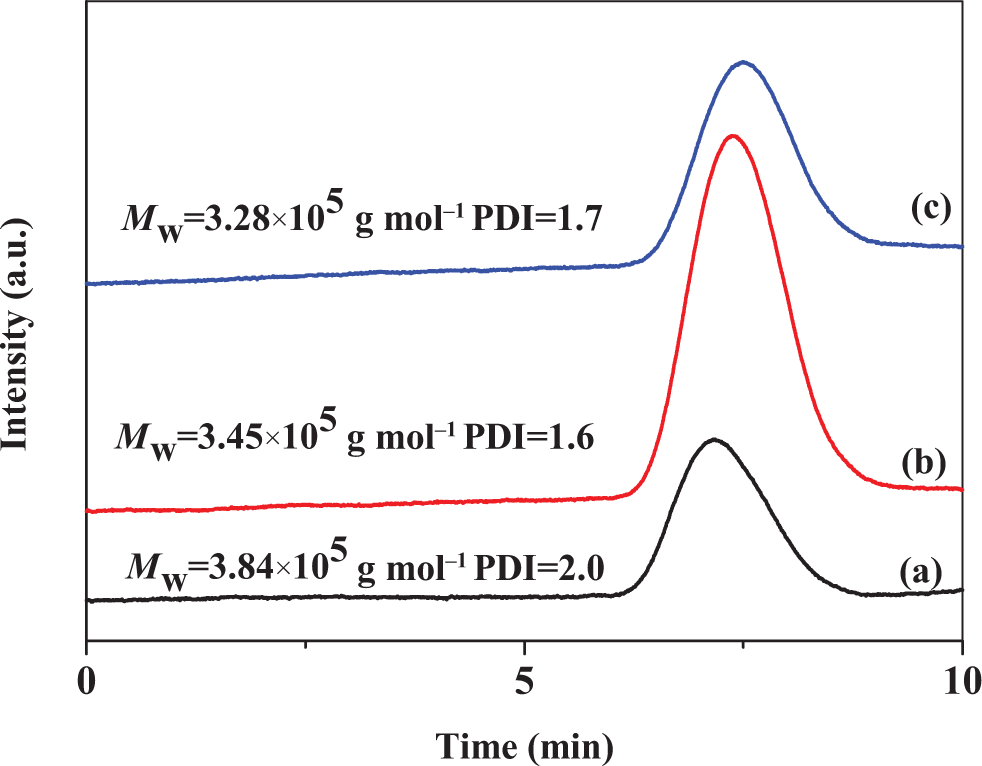
GPC curves of poly(NB-co-NB-COOCH3) with (a) 0%, (b) 8.1% and (c) 49.1% of NB-COOCH3 molar ratios obtained by silica-supported β-ketoamine nickel(II) dibromide/B(C6F5)3 systems at [B]/[Ni] = 10/1 and 60°C.
TGA and DSC analyses of the polymers
TGA curves of PNB with different NB-COOCH3 molar ratios prepared by supported Ni(II)/B(C6F5)3 are shown in Figure 12. Because the weight loss arising from the first thermal degradation depended on the incorporation ratio of the functional group, this degradation could be assigned as a decomposition of pendent NB-COOCH3 chain. The TGA curves exhibited two-step degradations, which corresponds to weight losses of the incorporated functional group (9.7%). The second step (88.7%) between 350 and 500°C corresponds to the loss of PNB around the nanosilica surface. As can be seen, the thermal stability of all polymers were changed with NB-COOCH3 molar ratios, but the polymers were stable up to 240°C and completely decomposed starting to occur at higher temperatures from 350 to 480°C. The residues were associated with β-ketoamine group, which amount was perfectly matching in the amount of the added catalyst.
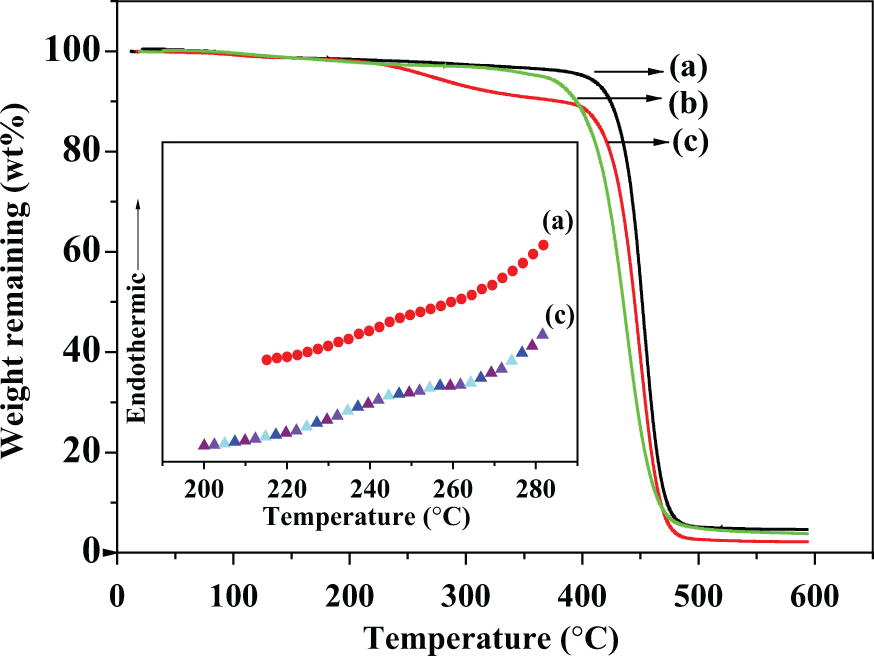
TGA and DSC curves of poly(NB-co-NB-COOCH3) with (a) 0%, (b) 8.1% and (c) 49.1% of NB-COOCH3 molar ratios by silica-supported β-ketoamine nickel(II) dibromide and B(C6F5)3 systems.
Although differential scanning calorimetry (DSC) analyses of both homopolymers and copolymers were also conducted, no glass transition temperature was detected in the study condition. TGA and DSC also showed the polymer possessing good thermostability under nitrogen.
UV–vis measurement and mechanical properties of the polymers
The copolymer films of NB and NB-COOCH3 indicated that the transparency was close about 60% in the visible region, suggesting that the addition of nanosilica had negative effect on the transparency as well as an increase in the content of NB-COOCH3 of the polymer (Figure 13).
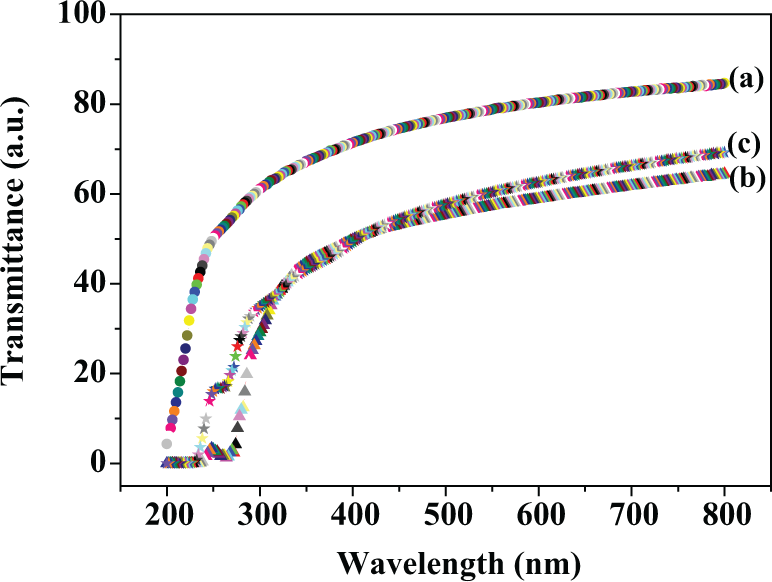
Transmissions of poly(NB-co-NB-COOCH3) film with (a) 0%, (b) 8.1% and (c) 49.1% of NB-COOCH3 molar ratios obtained by silica-supported β-ketoamine nickel(II) dibromide/B(C6F5)3 systems at [B]/[Ni] = 10/1 and 60°C.
Figure 14 also showed that the copolymers of NB and NB-COOCH3 containing different NB-COOCH3 molar ratios and nanosilica hybrid polymer films had good mechanical properties instead of brittleness. The most important factor concerned about mechanical properties is the polymer molecular weight at low levels of added silica. The copolymer film with 8.1% of NB-COOCH3 molar ratio showed best mechanical properties, the tensile strength, which could be as high as 47.8 MPa, and the elastic modulus, which could be as high as 2135.1 MPa. The reason of the phenomenon is that NB-COOCH3 can make the polymer chains flexible and increases the force in between the molecules.
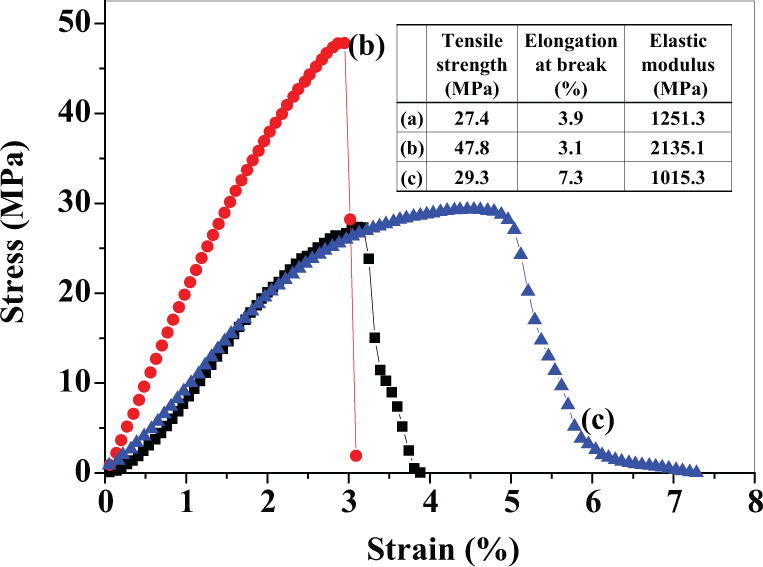
Mechanical properties of the prepared poly(NB-co-NB-COOCH3) films with (a) 0%, (b) 8.1% and (c) 49.1% of NB-COOCH3 molar ratios obtained by silica-supported β-ketoamine nickel(II) dibromide/B(C6F5)3 systems at [B]/[Ni] = 10/1 and 60°C.
Wide-angle x-ray scattering of the polymer films
The results of x-ray investigations confirmed that the polymers prepared by supported Ni(II)/B(C6F5)3 were amorphous and as if apparent from the wide angle x-ray diagram of PNB (Figure 15). The occurrences of two halos are the characteristics of PNBs and show no change in the main peak positions and relative width. 27 The corresponding distances were 4.5 and 11 Å, respectively. The nanosilica obviously did not display any crystalline peaks at that size scale.
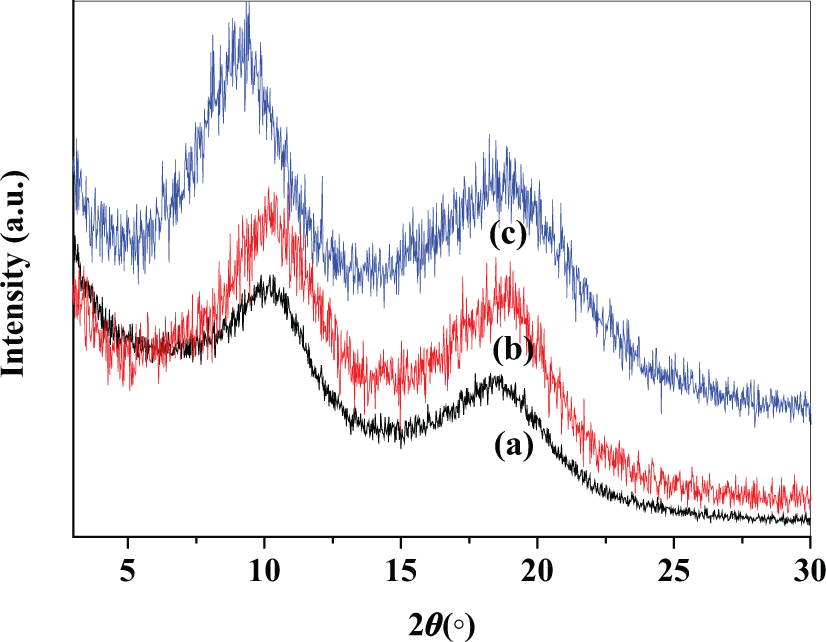
Wide-angle x-ray scattering curves of poly(NB-co-NB-COOCH3) with (a) 0%, (b) 8.1% and (c) 49.1% of NB-COOCH3 molar ratios obtained by silica-supported β-ketoamine nickel(II) dibromide/B(C6F5)3 systems at [B]/[Ni] = 10/1 and 60°C.
Conclusions
Novel covalently immobilized nanosilica-supported β-ketoamine Ni(II) catalyst was efficiently prepared by an optimized and high yielding route. The catalyst Ni(II) metal loading amount could reach 0.52 mmol g−1. In situ homo- and copolymerizations of NB with NB-COOCH3 using silica-supported β-ketoamine Ni(II)/B(C6F5)3 system in different time were investigated via morphology and particle growth mechanism analyses. The activity of supported catalyst was used for studying the deactivation model, and the deactivation kinetics for the supported catalyst system was well-fitted by the decay-type kinetic model during the early period of homopolymerization. The obtained nanocomposite P[NB-co-NBCOOCH3] film had good mechanical properties compared with that PNB catalyzed by homogeneous catalyst as well as film forming ability.
Highlights
Novel covalently immobilized nanosilica-supported β-ketoamine nickel(II) dibromide precatalysts were prepared. Slurry polymerization of norbornene in situ affords nanosilica hybrid polynorbornenes nanocomposite in combination with B(C6F5)3 cocatalyst. The highest activity was up to 176.8 kg polymer (mol Ni)−1 h−1. The productivity and the catalyst deactivation kinetics in the early stage of polymerization were investigated. The obtained nanosilica hybrid nanocomposites exhibited transparency up to 60% as well as tensile strength of 47.8 MPa and 2135 MPa elastic modulus.
Footnotes
Funding
This work was supported by the National Natural Science Foundation of China (21164006).