Polyphenylacetylenes cross-linked with viologen groups (polymers 1a and 1b) were obtained from the reaction of 4-ethynylaniline with 1,1′-bis(2,4-dinitrophenyl)-4,4′-bipyridinium dichloride (salt 1) and the reaction of 4-(1-trimethylsilylethynyl)aniline with salt 1, followed by the deprotection of the trimethylsilyl group. Model compound (model 1) was synthesized by the reaction of 4-ethynylaniline with 1-(2,4-dinitrophenyl)-4,4′-bipyridinium chloride (salt 2). Ultraviolet–visible spectra revealed that the polymers 1a and 1b had an expanded π-conjugation system along the polymer chain: the polymer showed an onset position of absorption at a wavelength approximately 100 nm longer than the corresponding wavelengths of the model compound. Polymers 1a and 1b received a two-step electrochemical reduction in the viologen group within the polymer and an electrochemical oxidation of the polymer backbone.
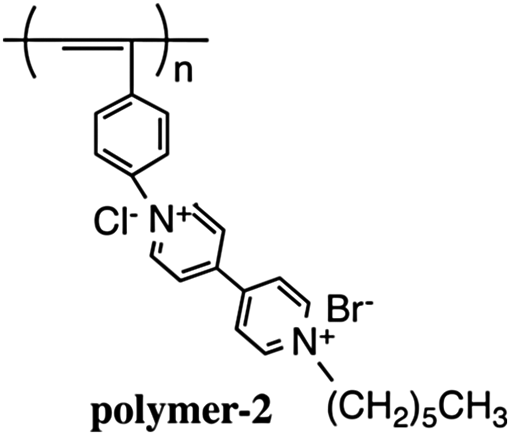
Substituted polyacetylenes (PAs) have attracted considerable attention due to their unique properties, such as paramagnetism, photoluminescence, photoconductivity, high nonlinear optical susceptibility, and high gas permeability.1–8 Polyphenylacetylene (PPA) is one of the widely studied PAs and synthesized using various catalyst systems, including transition metal complexes and Lewis acids.1–8 Recently, we reported the uncatalyzed synthesis of PPA (polymer 2) with viologen (1,1′-disubstituted 4,4′-bipyridinium dications) pendant groups by the self-polymerization of an intermediate compound, 1-hexyl-1′-(4-ethynylphenyl)-4,4′-bipyridinium dihalide, which is yielded by the reaction of 1-hexyl-1′-(2,4-dinitrophenyl)-4,4′-bipyridinium dihalide with 4-ethynylaniline, accompanied by the elimination of 2,4-dinitroaniline.9
Blumstein and colleagues and Gal and colleagues reported the uncatalyzed synthesis of well-defined ionic poly(ethynylpyridine)s through the activated polymerization of ethynylpyridines with alkyl halides.10–22
π-Conjugated polymers with viologen side groups have attracted considerable attention because they exhibit electrochromism and self-doping behavior; in this case, self-doping occurs due to the transfer of electrons from the polymer backbone to the viologen side groups.23–27 Recently, we reported the synthesis of polyanilines and polyphenylenes with viologen side groups and their electrochromism and self-doping properties.26,27 It is found that π-conjugated polymers cross-linked by π-conjugated linkers can have significant benefits for the electronic communication between chains and thus have higher carrier mobility. However, π-conjugated polymers cross-linked by π-conjugated linkers usually exhibit low solubility in organic solvents. In contrast, π-conjugated polymers cross-linked by viologen moiety will exhibit an enhanced solubility in organic solvents owing to the presence of the ionic viologen structure. To the best of our knowledge, there have been no reports on PPA cross-linked by viologen moiety. PPA cross-linked by viologen moiety can be synthesized by the following polymerization: the reaction of 1,1′-bis(2,4-dinitrophenyl)-4,4′-bipyridinium dichloride (salt 1) with 4-ethynylaniline yields an intermediate compound, 1,1′-bis(4-ethynylphenyl)-4,4′-bipyridinium dichloride (1); this intermediate causes self-polymerization of the two ethynyl groups, initiated by the chloride ion in the viologen groups. An investigation of the chemical properties of the PPA cross-linked by viologen moiety would help us to gain greater understanding of the chemical properties of PPA and to develop new functional materials.
Herein, we report the synthesis of PPA cross-linked by viologen moiety through an uncatalyzed system using a Zincke salt. We also describe the optical, electrochemical, and thermoelectric properties of this newly synthesized polymer. In order to compare the chemical properties with PPA cross-linked by viologen moiety, a model compound (model 1) was also synthesized by the reaction of 4-ethynylaniline with 1-(2,4-dinitrophenyl)-4,4′-bipyridinium chloride (salt 2).
Experimental
Materials and measurements
Solvents were dried, distilled, and stored under nitrogen atmosphere. Salts 1 and 2 were prepared according to the method of Yamaguchi et al.28 Other reagents were purchased and used without further purification. Reactions were carried out using standard Schlenk techniques under nitrogen atmosphere.
Infrared (IR) and nuclear magnetic resonance (NMR) spectra were recorded on a JASCO FT/IR-660 PLUS spectrophotometer (Tokyo, Japan) and a JEOL AL-400 spectrometer (Tokyo, Japan), respectively. Elemental analysis was carried out on a Yanagimoto MT-5 CHN corder (Kyoto, Japan). Ultraviolet–visible (UV-Vis) spectra were obtained on a JASCO V-560 spectrometer. Gel permeation chromatography (GPC; Tosoh HLC 8120 (Tokyo, Japan)) analyses were carried out with polystyrene gel columns using N,N-dimethylformamide (DMF) solution of lithium bromide (6 mM) as an eluent with a refractive index detector. Cyclic voltammetry was performed in an acetonitrile solution containing 0.10 M [Et4N]BF4 with a Hokuto Denko HSV-110 (Japan). Electrical conductivity measurements were conducted by an Advantest R8340A ultra-high resistance meter with a two-probe method. The Seebeck coefficient was obtained by measuring the electrical potential difference when a temperature gradient was established between two ends of the molded pellet. The Seebeck coefficient of nickel at 300 K was measured as a reference sample, and the measured value of −19 µV K−1 was in good agreement with the literature value of −19.24 µV K−1.
Synthesis of model 1
Salt 2 (0.36 g, 1.0 mmol) was dissolved in dimethyl sulfoxide (DMSO; 1 mL) at 90°C. 4-(1-Ethynyl)aniline (0.13 g, 1.1 mmol) was added to the DMSO solution. After the reaction, the solution was stirred at 90°C for 32 h and the solvent was removed under vacuum. The resulting solid was washed with acetone and dried in vacuo to yield model 1 as a brown powder (0.22 g, 74%).
Salt 1 (0.56 g, 1.0 mmol) was dissolved in DMSO (5 mL) at 90°C. To the DMSO solution, 4-ethynylaniline (0.26 g, 2.2 mmol) was added. After the reaction solution was stirred at 90°C for 39 h, the solvent was removed under vacuum. The resulting solid was washed with methanol and dried in vacuo to give polymer 1a as a dark brown powder (0.26 g, 60%). 1H NMR (400 MHz, DMSO-d6): 10.2 (2H), 6.64-9.74 (14H), 4.50 (0.32H).
Synthesis of polymer 1b
Salt 1 (0.56 g, 1.0 mmol) was dissolved in DMSO (5 mL) at 90°C. To the DMSO solution, 4-(1-trimethysilylethynyl)aniline (0.47 g, 2.5 mmol) was added. After the reaction, the solution was stirred at 90°C for 12 h and the solvent was removed under vacuum. The resulting solid was washed with acetone and dried in vacuo to yield brown powder, which was dissolved in DMF (3.5 mL) at 90°C. To the DMF solution, tetraethylammonium fluoride (0.39 g, 1.5 mmol) was added at 0°C. After the reaction solution was stirred at 20°C for 4 h, saturated ammonium chloride aqueous solution (2.5 mL) was added and stirred at 20°C for 1.5 h. The reaction solution was poured into water and the resulting precipitate was collected by filtration and dried in vacuo to give polymer 1b as a brown powder (0.12 g, 28%). 1H NMR (400 MHz, DMSO-d6): 10.1–10.2 (2H), 8.88 (2H), 6.62–8.13 (14H).
Results and discussion
Synthesis
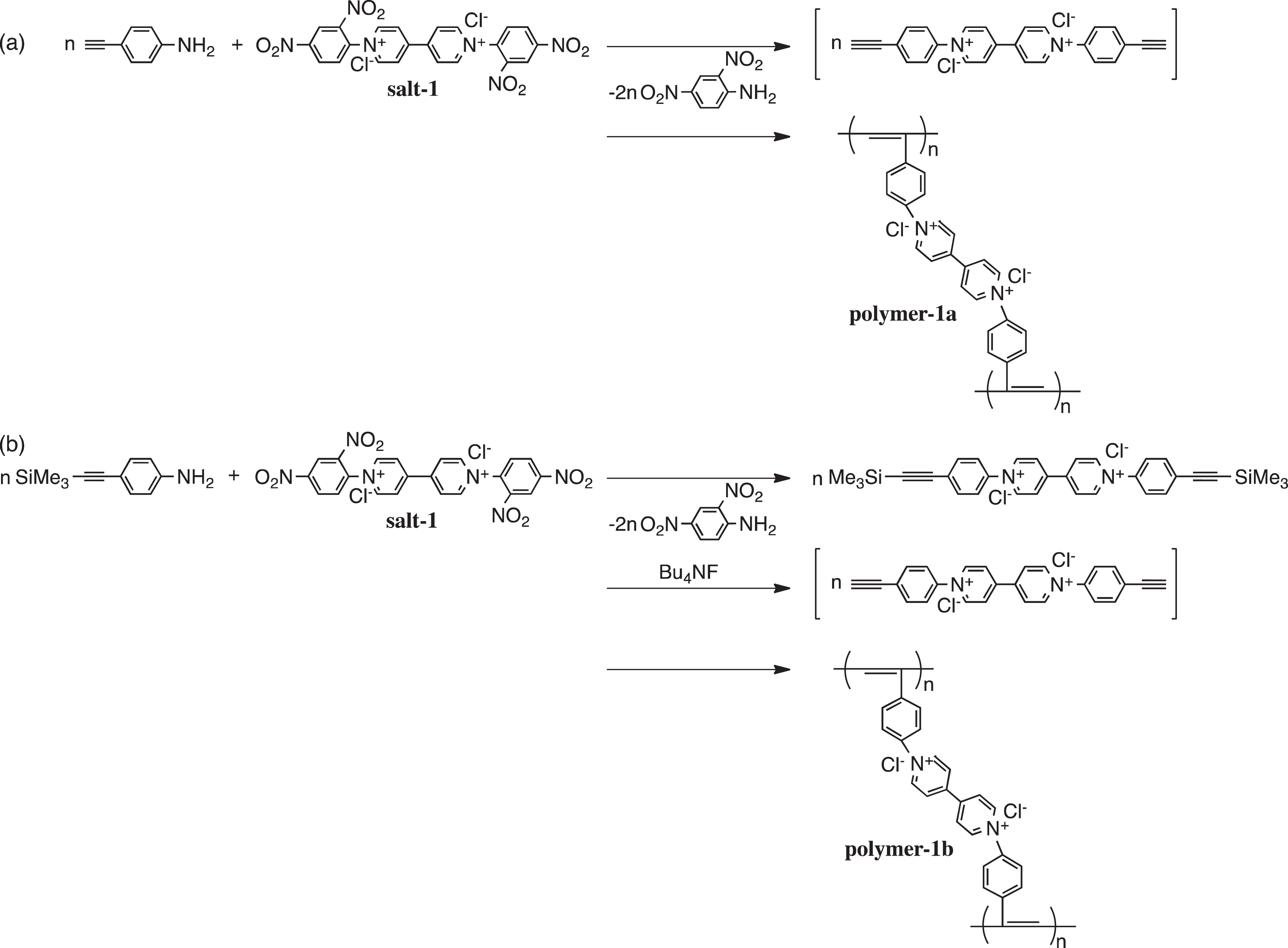
The reaction of 4-ethynylaniline with salt 1 resulted in the elimination of 2,4-dinitroaniline and the polymerization of the ethynyl group, yielding PPA cross-linked by viologen moieties, polymer 1a, in 60% yield (Figure 1(a)). The reaction of 4-(1-trimethylsilylethynyl)aniline with salt 1, followed by the deprotection of the trimethylsilyl groups resulted in the yield of PPA cross-linked by viologen moieties, polymer 1b, in 28% yield (Figure 1(b)). The low yields of the isolated polymers were apparently due to the formation of low-molecular weight products, which were eventually removed during the purification process.
Synthesis of polyphenylacetylenes cross-linked by viologen moieties.
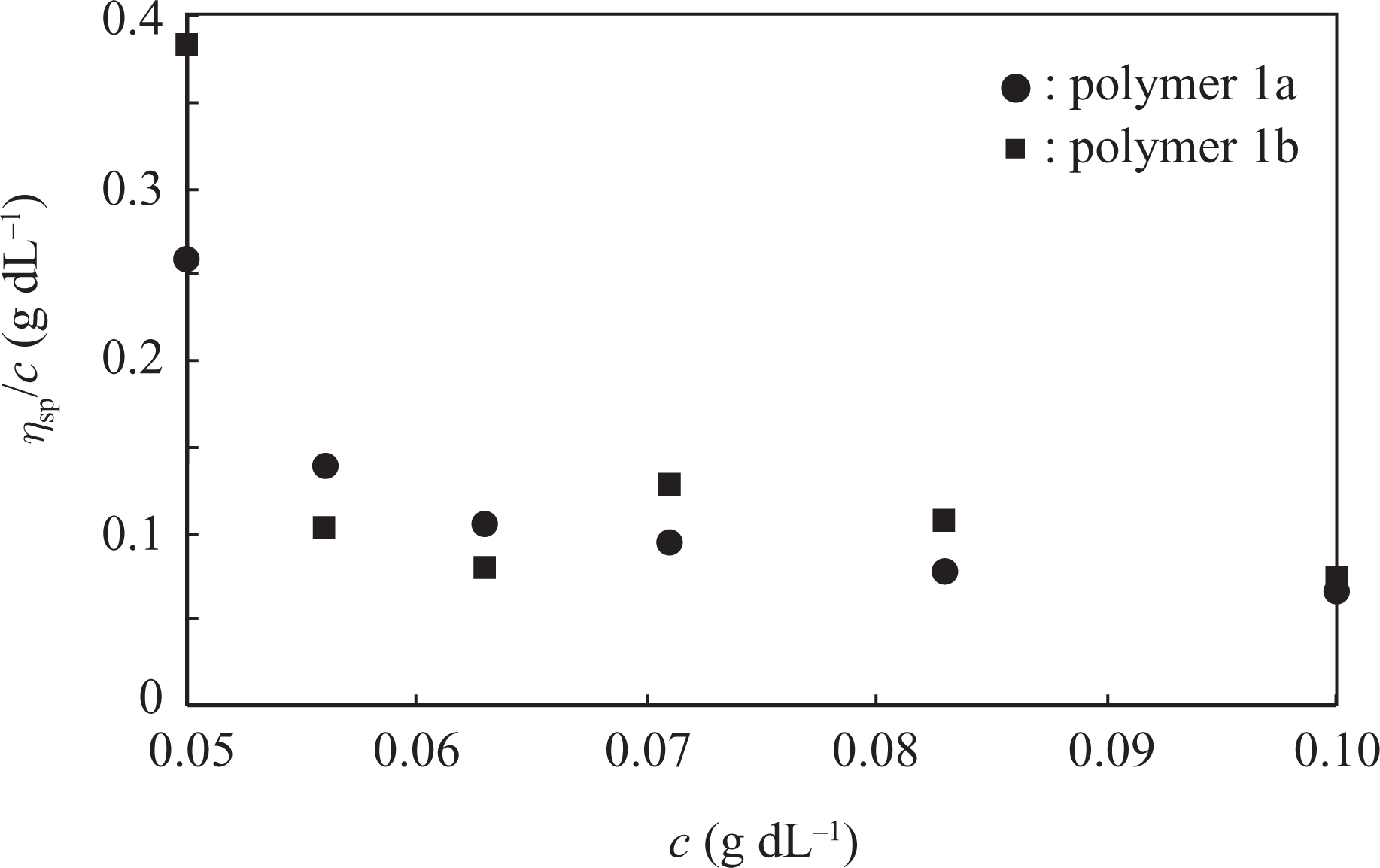
Polymers 1a and 1b were soluble in polar organic solvents such as DMF and DMSO and were insoluble in acetone and chloroform. GPC measurement suggested that the number average molecular weight (Mn) values of polymers 1a and 1b were 10,000 gmol-1 and 18,300 gmol-1, respectively. As shown in Figure 2, the ηsp/c values of polymers 1a and 1b in DMF at 30°CC increased as the concentration c decreased. The ηsp/c values of the polymers change from 0.067 g dL−1 (c = 0.10 g dL−1) for polymer 1a and 0.073 g dL−1 (c = 0.10 g dL−1) for polymer 1b to 0.26 g dL−1 (c = 0.050 g dL−1) for polymer 1a and 0.38 g dL−1 (c = 0.050 g dL−1) for polymer 1b through to values of 0.094 g dL−1 (c = 0.071 g dL−1) for polymer 1a and 0.13 g dL−1 (c = 0.071 g dL−1) for polymer 1b. These results suggest that the polymers behave as a polymeric electrolyte in the dilute solutions.29
ηsp/c versus c plots for polymer 1a in N,N-dimethylformamide at 30°C.
In order to evaluate the structure and chemical properties of polymers 1a and 1b, a model compound was synthesized. The reaction of 4-ethynylaniline with salt 2 yielded the model compound, model 1, with 74% yield (Figure 3).
Synthesis of model compound.
NMR and IR spectra
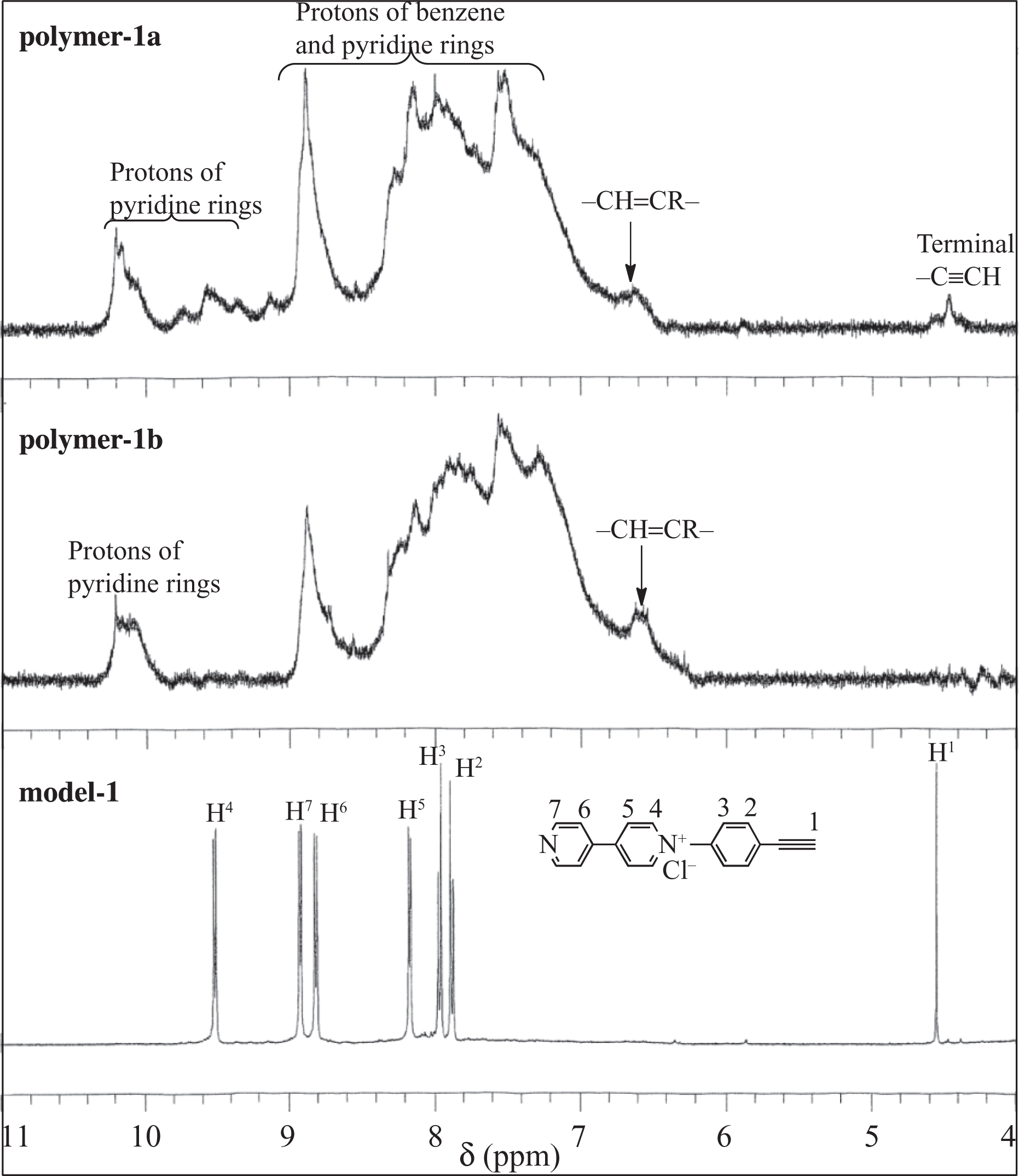
Figure 4 shows the 1H NMR spectra of polymers 1a and 1b and model 1 in DMSO-d6. Peak assignments are shown in the figure. Broad peaks that may be attributed to the benzene and pyridine rings were observed in the range of δ 7.0–8.3 and δ 8.8–10.4 in the 1H NMR spectra of polymers 1a and 1b, respectively. It has been reported that π-conjugated polymers bearing a pyridinium moiety show broadened 1H NMR signals.7 The peaks due to the benzene and pyridine rings in the 1H NMR spectra of polymers 1a and 1b appear at lower magnetic field positions as compared to those in the 1H NMR spectrum of model 1. These observations correspond to the presence of the electron-withdrawing polymer backbone. Peaks assignable to the vinylene proton of the polymer backbone appeared around δ 6.5. The geometric orientation of the vinylene group could not be determined because of the unresolved 1H NMR signals. However, the IR spectra of polymers 1a and 1b suggested that the polymers had a trans-vinylene rich structure as mentioned below. The small peak at δ 4.5 in the 1H NMR spectrum of polymer 1a is assigned to the terminal ethynyl proton. The disappearance of the peak due to the terminal ethynyl proton in the 1H NMR spectrum of polymer 1b corresponds to the larger molecular weight of polymer 1b than polymer 1a.
1H NMR spectra of polymers 1a and 1b and model 1 in DMSO-d6. 1H NMR: proton nuclear magnetic resonance; DMSO-d6: deuterated dimethyl sulfoxide.
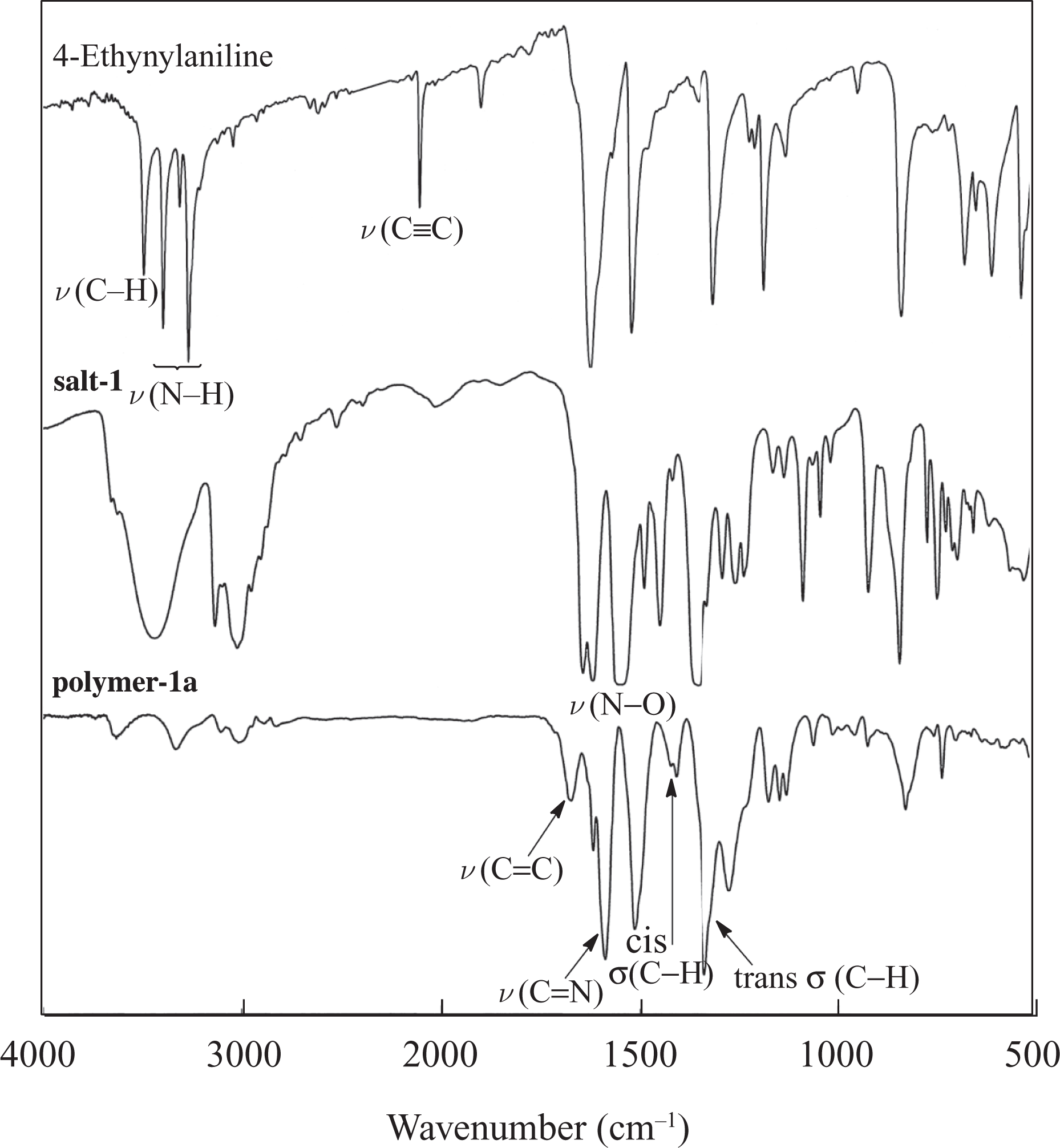
Figure 5 shows the IR spectra of 4-ethynylaniline, salt 1, and polymer 1a. The IR spectrum of polymer 1b is essentially the same as that of polymer 1a. The disappearance of absorptions due to ν(C≡C) and ν(C–H) of the ethynyl group, ν(N–H) of the amino group, and ν(N–O) of salt 1, and the appearance of the new absorption due to ν(C=C) of the polymer backbone at 1671 cm−1 and ν(C=N) of the viologen group at 1619 cm−1 in the IR spectrum of polymer 1a, support the occurrence of the addition polymerization of the ethynyl group and the Zincke reaction between 4-ethynylaniline and salt 1. The absorptions were due to the σ(C–H) of the trans- and cis-vinylene bond of the polymer backbone at 1336 and 1410 cm−1, respectively. These wavelengths are comparable with those of the PPA synthesized by the polymerization with a transition metal complex. The observation that the absorption due to the σ(C–H) of the trans-vinylene bond is larger than that of the cis-vinylene bond suggests that polymer 1a has a trans-vinylene bond-rich structure.
Infrared spectra of 4-ethynylaniline, salt 1, and polymer 1a.
It was reported that cis-PPA caused a cyclic trimerization and pyrolysis of the polymer backbone by heating at 180°C.30 The IR spectra of polymer 1a did not change before and after heating at 150°C for 3 h. This result is attributed to the assumption that the cross-linked structure of polymer 1a prevented thermal isomerization and pyrolysis.
UV–Vis spectra
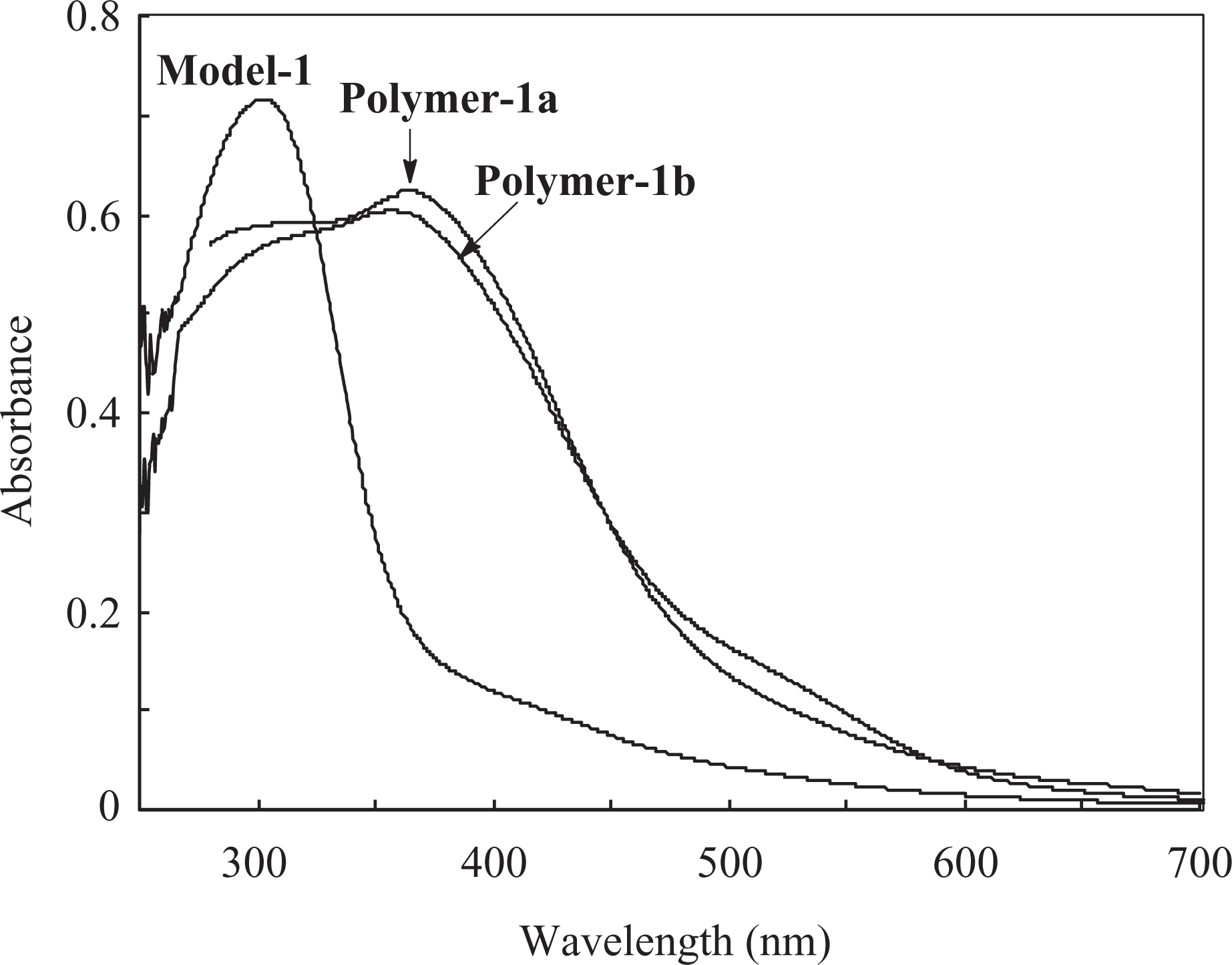
Figure 6 shows the UV–Vis spectra of polymers 1a and 1b and model 1 in DMF. Model 1 exhibits an absorption maximum (λmax) at 302 nm. Polymers 1a and 1b show a very broad absorption in the range of 250–650 nm with a λmax at 366 nm and 357 nm, respectively. The longer onset and λmax wavelengths of the polymers than those of model 1 reveal that they have an expanded π-conjugation system along the polymer chain. The onset positions of polymers 1a and 1b are comparable with that of polymer 2. It has been reported that polyphenylenes bearing viologen side groups show absorptions due to the viologen radical cation in the range of 500–700 nm under nitrogen atmosphere, generated by an electron transfer from the polymer backbone to the viologen group.27 However, no absorption due to the viologen radical cation was observed in the UV–Vis spectra of polymers 1a and 1b under nitrogen atmosphere. This result suggests that there was no transfer of electrons from the polyacetylene backbone to the viologen group in polymers 1a and 1b.
UV–Vis spectra of polymers 1a and 1b and model 1 in DMF. UV–Vis: ultraviolet-visible; DMF: N,N-dimethylformamide.
Electrochemical and electrical properties
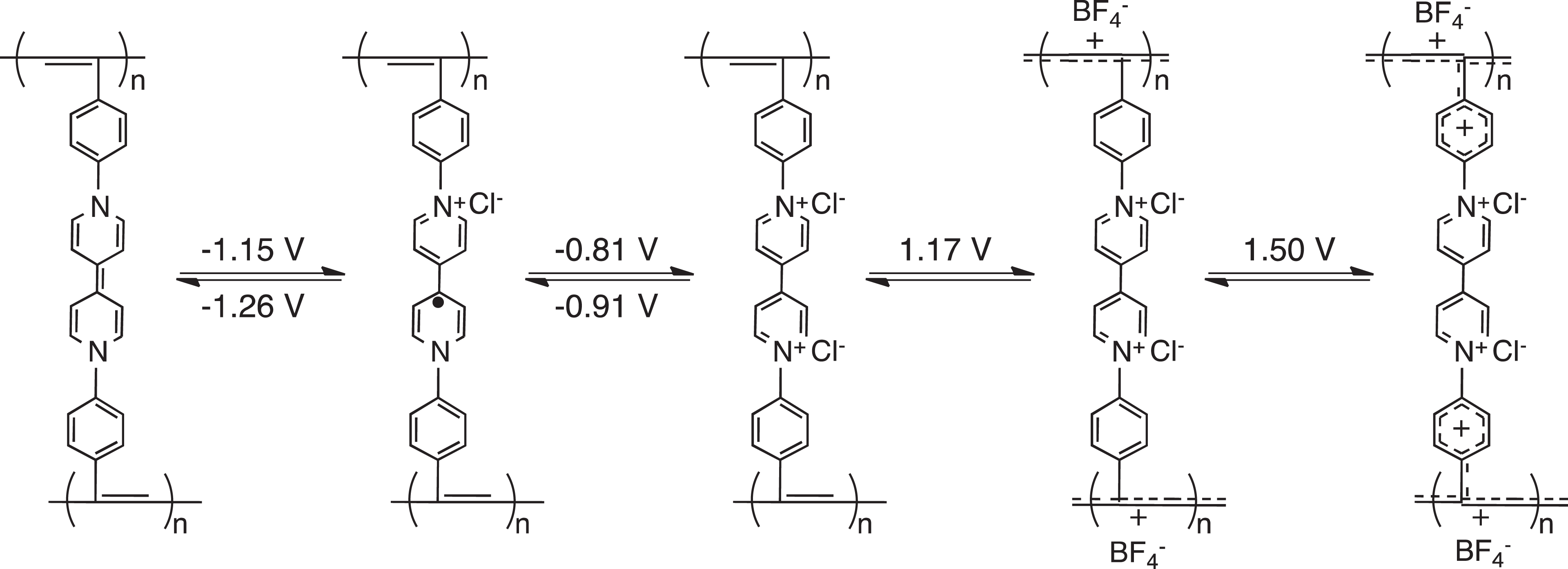
The results of cyclic voltammetry measurements suggest that a cast film of polymer 1a on a platinum plate undergoes a two-step electrochemical reduction in the viologen moiety in an acetonitrile solution of 0.10 M [NEt4]BF4. Figure 7 shows the electrochemical oxidation and reduction reactions of polymer 1a.
Electrochemical oxidation and reduction reactions of polymer 1a.
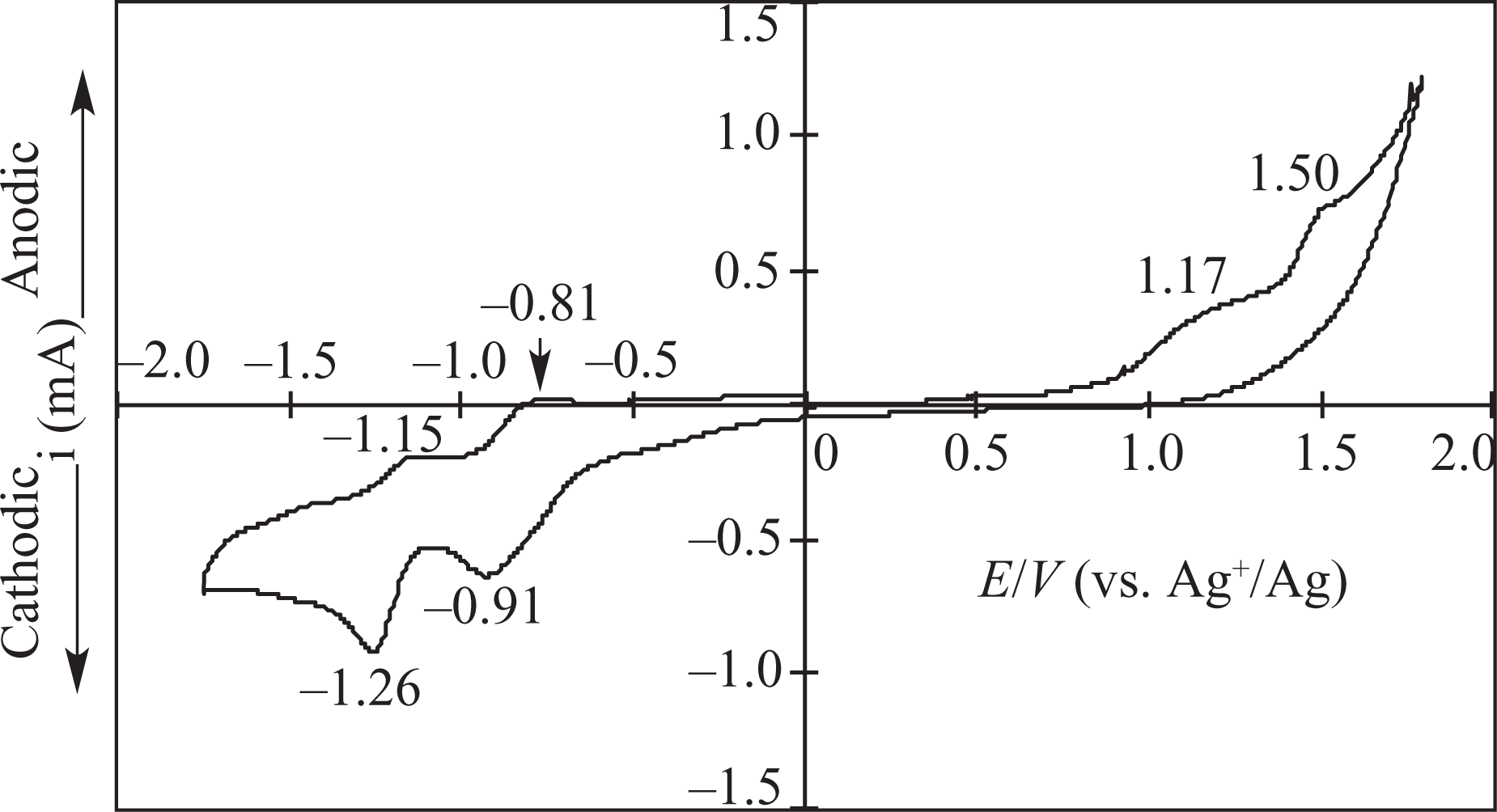
As depicted in Figure 8, the cyclic voltammogram of polymer 1a shows the first peak cathode potential Epc(1) and the second peak cathode potential Epc(2) at −0.91 and −1.26 V versus Ag+/Ag, respectively; these are coupled with anode potentials Epa(1) and Epa(2) at −0.81 and −1.15 V versus Ag+/Ag, respectively. These potentials are more negative than those of polymer 2 because of the presence of the electron-withdrawing polymer backbone bonded to the viologen moiety. This view is consistent with the above-mentioned 1H NMR data. Polymer 1a exhibited peaks due to an electrochemical oxidation of the polymer backbone and benzene rings bonded to the viologen moiety at 1.17 V (vs. Ag+/Ag) and 1.50 V (vs. Ag+/Ag), respectively. The peaks due to the electrochemical reduction and oxidation disappeared in the second scan, indicating that polymer 1a is unstable toward an electrochemical reaction.
Cyclic voltammogram of a cast film of polymer 1a on a platinum plate in an acetonitrile solution of 0.10 M [Et4N]BF4.
The electric conductivities (σs) of polymers 1a and 1b were 2.4 × 10⁻⁹ and 1.4 × 10⁻⁹ S cm−1, respectively. These values are considerably lower than those of iodine-doped PPA (σ = 4.8 × 10⁻⁴ S cm−1)31 and polymer 2 (σ = 2.5 × 10⁻⁷ S cm−1)26. The lower conductivity of polymers 1a and 1b might be due to the ring twisting along the polymer backbone, which in turn was induced by the steric hindrance of the bulky viologen moiety.
Thermoelectric properties
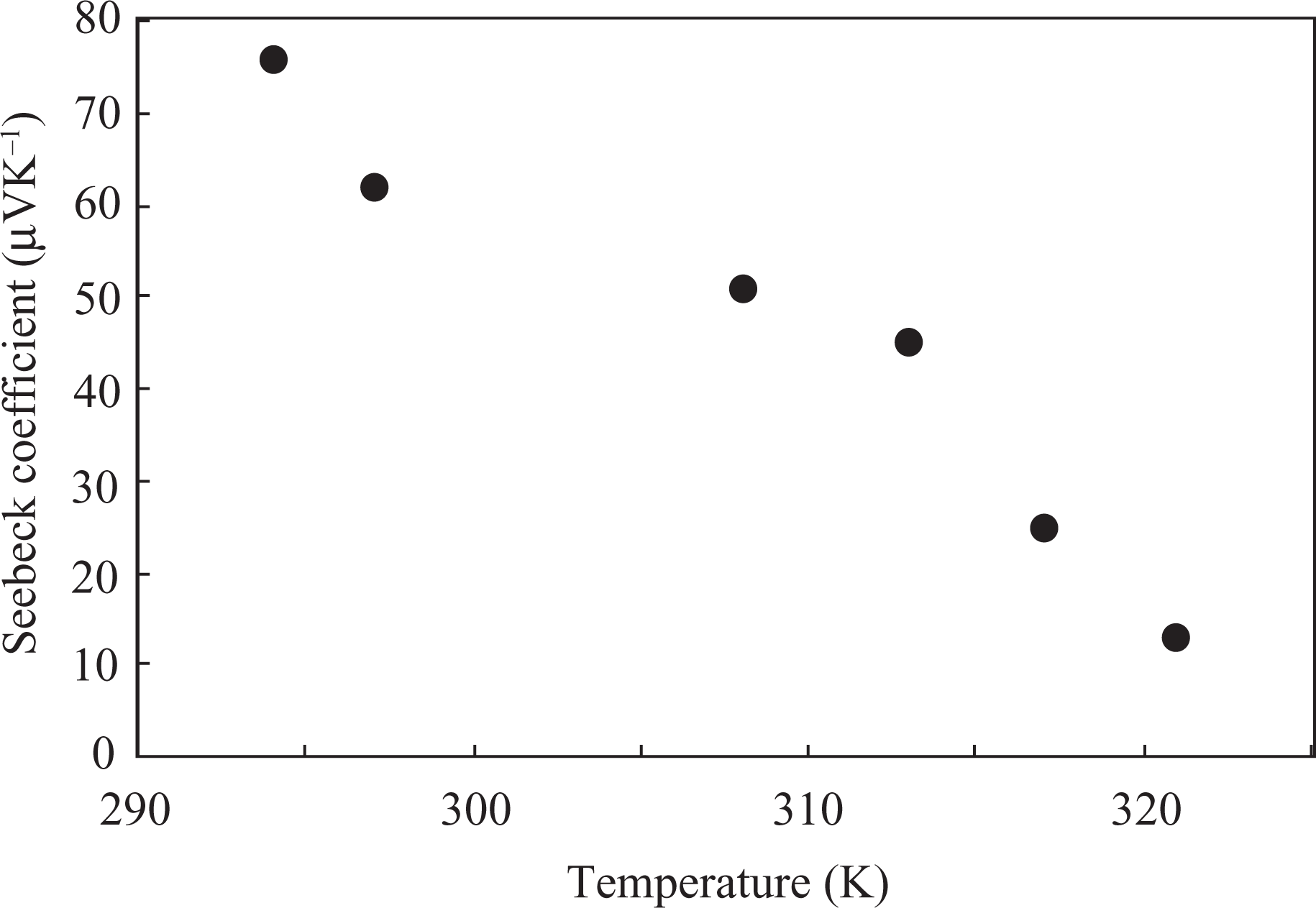
For polymer 1a, temperature dependence of Seebeck coefficient was measured in the range of 295–320 K (Figure 9). The absolute values of Seebeck coefficients of the polymer decrease almost linearly with the temperature. This behavior is contrast to doped conducting polymers such as polythiophenes and polypyrrole.32,33 Seebeck coefficients of the conducting polymers usually increase almost linearly with the temperature. We do not understand well why the Seebeck coefficients of polymer 1a decreased with the temperature. One possible reason is that concentration of carrier in the polymer may increase with temperature by thermal generation of carrier. It has been reported that Seebeck coefficient is inversely proportional to the c2/3 value (c = carrier concentration) of the sample.34
Temperature dependence of Seebeck coefficient of polymer 1a.
Reaction pathway
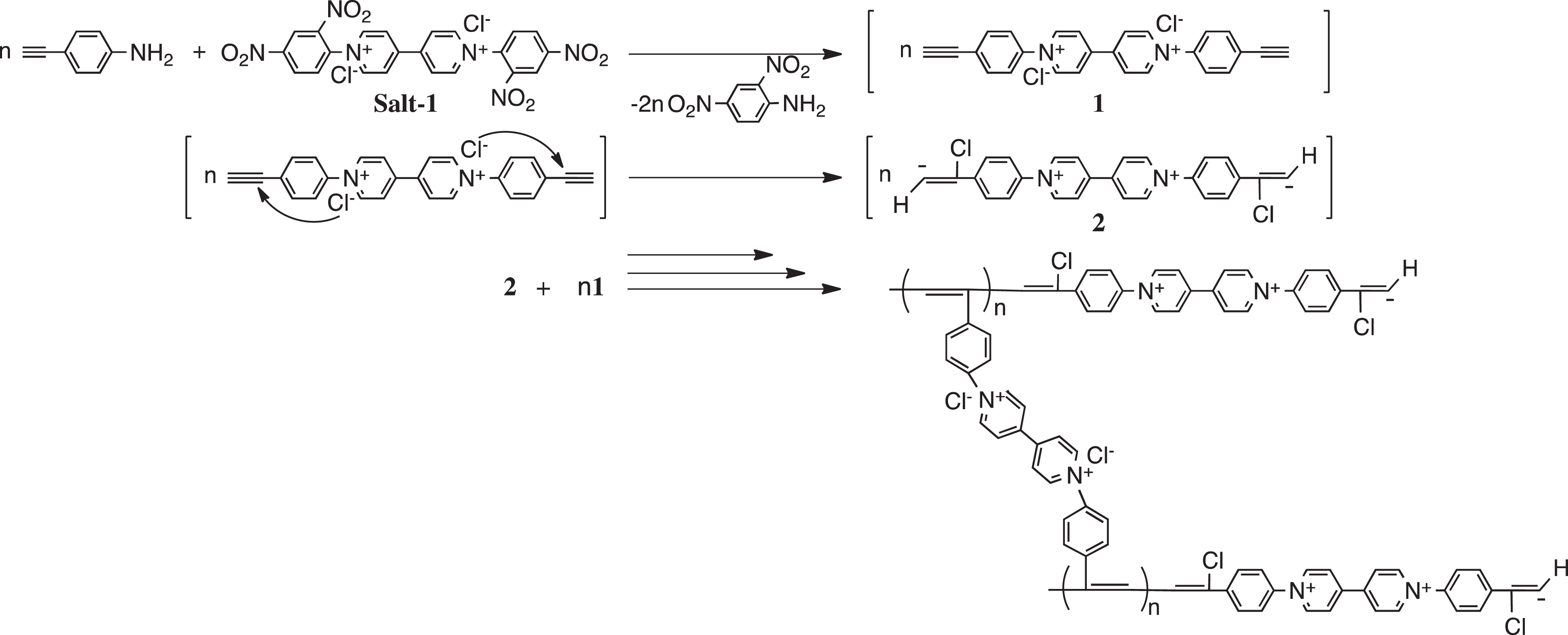
Figure 10 shows a possible reaction mechanism for the polymerization of 4-ethynylaniline with salt 1. This scheme shows the first reaction of 4-ethynylaniline with salt 1, which yields an intermediate species (1). The initial step involves a nucleophilic attack by the chloride anion of the viologen moiety in salt 1 or 1 on the electrophilic triple bond of 1. The activated acetylenic triple bond is susceptible to additional polymerization, followed by an identical propagation step that contains the produced polyanion and quaternized monomeric species. A similar anionic mechanism for the polymerization of 2-ethynylpyridine with alkyl bromide has been proposed in the literature.22
A possible reaction mechanism.
Conclusion
PPAs cross-linked by viologen groups (polymers 1a and 1b) were obtained by the reaction of 4-ethynylaniline with salt 1 and the reaction of 4-(1-trimethylsilylethynyl)aniline with salt 1, followed by the deprotection of the trimethylsilyl group. The UV–Vis spectra suggested that the polymers had an expanded π-conjugation system along the polymer chain. Polymers 1a and 1b were electrochemically active in film and were able to be thermoelectric materials. From the results obtained in this study, it can be concluded that the 4,4′-bipyridinium salts used herein may be used for the uncatalyzed synthesis of well-defined soluble PAs cross-linked by viologen moiety.
Footnotes
Funding
This research received no specific grant from any funding agency in the public, commercial, or not-for-profit sectors.
References
1.
ChoiSKLeeJHKangSJJinSH. Side-chain liquid-crystalline poly (1,6-heptadiyne)s and other side-chain liquid-crystalline polyacetylenes. Prog Polym Sci1997; 22: 693–734.
2.
ChoiSKGalYSJinSHKimHK. Poly(1,6-heptadiyne)-based materials by metathesis polymerization. Chem Rev2000; 100: 1645–1682.
ShiotsukiMSandaFMasudaT. Polymerization of substituted acetylenes and features of the formed polymers. Polym Chem2011; 2: 1044–1058.
9.
YamaguchiIHigashiHSatoM. Uncatalyzed synthesis of polyacetylene with viologen side groups and their chemical properties. React Funct Polym2009; 69: 864–869.
GalYSLeeWCChoiSK. A water-soluble pyridine-containing polyacetylene: poly(2-ethynylpyridinum bromide) having propargyl side chains. Bull Korean Chem Soc1997; 18: 265–266.
16.
GalYSLeeWCKimSYParkJWJinSHKohKN. Synthesis and properties of poly(2-ethynylpyridinium bromide) having propargyl side chains. J Polym Sci A: Polym Chem2001; 39: 3151–3158.
17.
GalYSJinSH. A Self-doped ionic conjugated polymer: poly(2-ethynylpyridinium-N-benzoylsulfonate) by the activated polymerization of 2-ethynylpyridine with ring-opening of 2-sulfobenzoic acid cyclic anhydride. Bull Korean Chem Soc2004; 25: 777–778.
18.
GalYSJinSHGuiTLParkJWLeeSSParkSH. Electro-optical properties of poly(2-ethynyl-N-propargylpyridinium compound) with different counter ions. Curr Appl Phys2006; 6: 675–679.
19.
GalYSLeeWCJangSHLeeJWLyooWSKimSH. Synthesis and electrochemical properties of poly[N-(6-azidohexyl)-2-ethynylpyridinium tetraphenylborate]. Mol Cryst Liq Cryst2007; 472: 271–278.
20.
GalYSJinSHParkJW. Synthesis and properties of an ionic polyacetylene with aromatic heterocycles. J Polym Sci A: Polym Chem2007; 45: 5679–5685.
21.
GalYSJinSHParkJWLimKTKohKHanSC. Synthesis and electro-optical properties of an ionic conjugated polymer: poly[N-(6-azidohexyl)-2-ethynylpyridinium iodide]. Curr Appl Phys2007; 7: 517–521.
22.
KwakGJinSHParkJWGalYS. Ionic polyacetylene with aromatic functional groups: synthesis and properties. Macromol Chem Phys2008; 209: 1769–1777.
23.
MonkPMS. The viologens: physicochemical properties, synthesis and applications of the salts of 4,4’-bipyridineManchester Metropolitan University, UK: Wiley & Sons, 1998.
24.
KijimaMSetohKShirakawaH. Synthesis of a novel ionic liquid crystalline polythiophene having viologen side chain. Chem Lett2000; 29: 936–937.
25.
KoHCParkSAPaikWKLeeH. Electrochemistry and electrochromism of the polythiophene derivative with viologen pendant. Synth Met2002; 132: 15–20.
26.
YamaguchiIShigesueSSatoM. Synthesis of 4,4′-bipyridinium salts of poly(2-methoxyaniline-5-sulfonic acid) and their self-doping and chemical properties. React Funct Polym2009; 69: 91–96.
YamaguchiIHigashiHShigesueSShingaiSSatoM.N-Arylated pyridinium salts having reactive groups. Tetrahedron Lett2007; 48: 7778–7781.
29.
FuossRMStraussUP.Polyelectrolytes. II. Poly-4-vinylpyridonium chloride and poly-4-vinyl-N-n-butylpyridonium bromide. J Polym Sci1948; 3: 246–263.
30.
MatsunamiSWatanabeTKamimuraHKakuchiT. Thermal isomerization of cis-poly(phenylacetylene). Scission of polymer main-chain and formation of 1,3,5-triphenylbenzene as a pyrolysis product. Polymer1996; 37: 4853–4855.
31.
LiuWCuiZMLiuQYanDWWuJYYanHJ. Catalytic synthesis and structural characterizations of a highly crystalline polyphenylacetylene nanobelt array. J Am Chem Soc2007; 129: 12922–12923.
32.
MasubuchiSKazamaSMizoguchiKHondaMKumeKMatsushitaR. Metallic transport properties in electrochemically as-grown and heavily doped polythiophene and poly(3-methylthiophene). Synth Met1993; 57: 4962–4967.
33.
KempTKaiserABLiuCJChapmanBMercierOCarrAM. Thermoelectric power and conductivity of different types of polypyrrole. J Polym Sci, B: Polym Phys1999; 37: 953–960.